If you're reading this, Cognism's contract is probably up for renewal, and the quote is making you look around. Or you've already left, and now you need a replacement that actually holds up in your pipeline.
I've spent the last few months running Cognism side by side with the tools that keep showing up in Cognism alternatives searches. Some undercut Cognism on price, while others go deeper on data. A few actually do the outbound job that Cognism deliberately doesn't touch.
Here are the 8 Cognism alternatives I'd put in front of a paying customer in 2026, with what each does best and where each falls short.
Let's dive in.
Any Cognism alternatives list can find eight tools with a big database. The harder question is which of them actually fixes what pushed you off Cognism in the first place. I weighed four things across every tool on this list.
I looked at total contact counts, coverage across regions, and how each tool handles verification. Waterfall enrichment matters here because it queries multiple providers in sequence, which improves match rates on hard-to-find records. I've covered how waterfall enrichment separates a working prospect file from a static list in a longer B2B email database breakdown, and it's a fair proxy for data quality across this category.
Gated pricing is one of the main reasons teams leave Cognism, so I gave more weight to tools that publish tiered pricing on their site. I also checked for credit gotchas, per-seat traps, and hidden overage costs that quietly push the real monthly bill above the headline number.
A solo SDR running LinkedIn prospecting has very different needs from a RevOps lead standardizing outbound for a 40-rep AE team. I flagged which tools work best for self-serve individuals, which suit central-ops deployments, and which sit uncomfortably in between.
Cognism is data-only, and that's the exact gap most teams are trying to close when they switch. Some of the tools on this list are also data-only, while others come with sequencing, dialing, and AI message writing built in. The right answer depends on how many tools you're trying to replace at once.
Here's how each one stacks up, ranked by where it fits best in a modern outbound stack.
Leadsforge is the Cognism alternative I'd hand a paying customer first, and the reason is simple. It replaces Cognism's data-only scope with a 500 million-plus B2B contact database, waterfall enrichment across multiple providers, and a chat-based AI search engine that translates plain-English ICP prompts into filters. That combination alone solves the two things people leave Cognism for: gated pricing and a stack that stops at data.
Key features I liked:
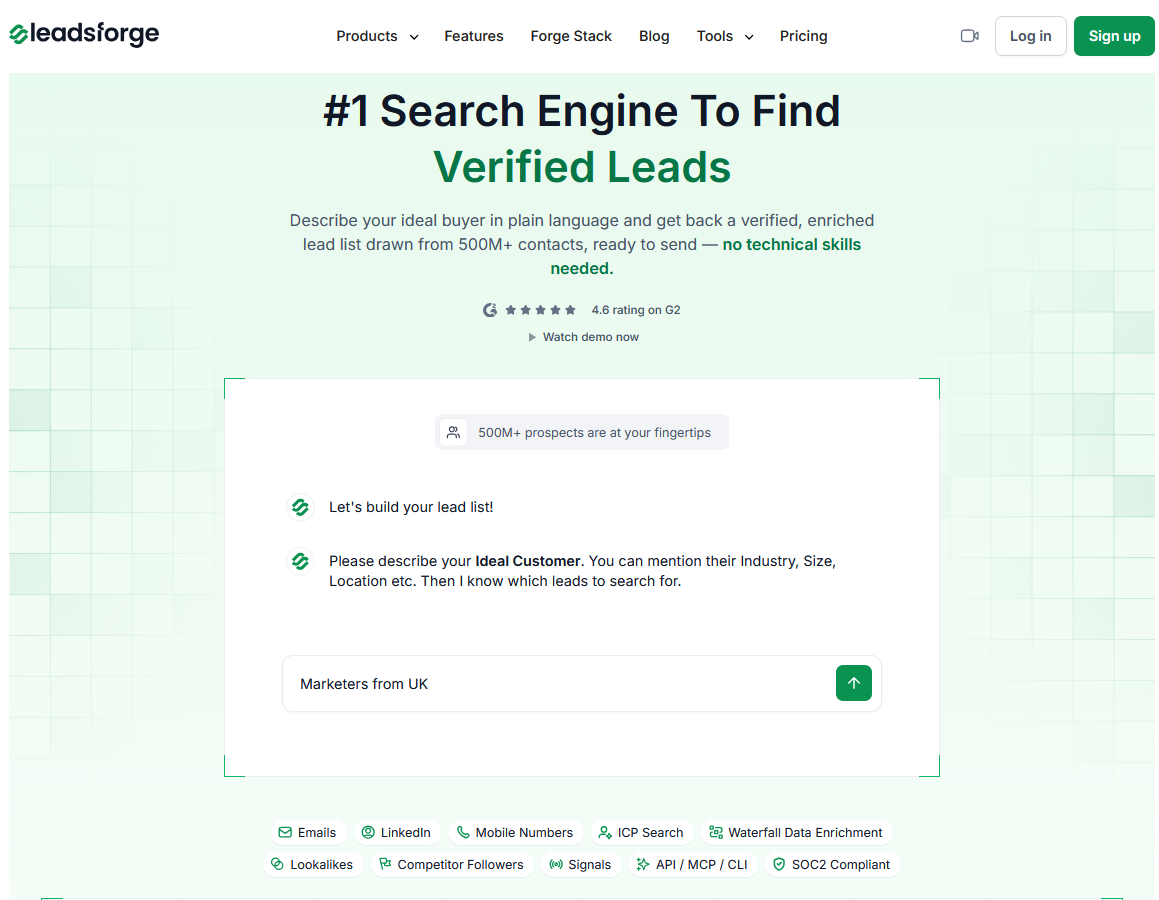
What sold me on this B2B contact database over the incumbents is the handoff. Once a list is built, it exports straight into Salesforge for email and LinkedIn sequencing under a shared login. That means the data-to-outreach handoff stays inside a single workflow, which is precisely the piece Cognism deliberately doesn't touch.
Pricing:
Pros:
Cons:
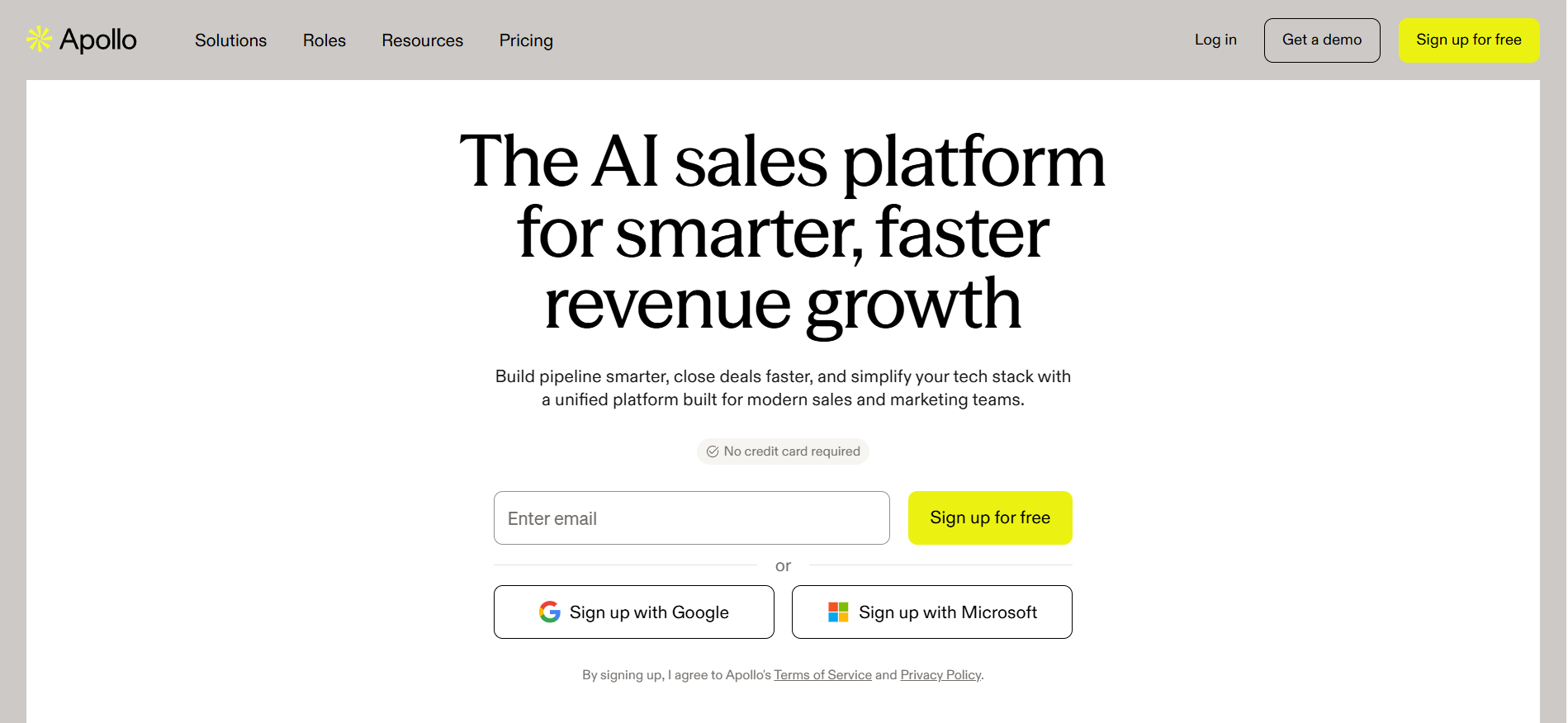
Apollo.io is the sales intelligence platform I see teams switch to most often when a Cognism renewal quote comes in too high. What makes it stick as an alternative rather than a stopgap is that it publishes real per-seat pricing on its site and bundles data, sequencing, and a dialer into one seat, which is the exact stack most Cognism customers were assembling by hand.
Key features I liked:
Bonus read: I've done a longer hands-on look at how this Apollo prospecting tool holds up in a working outbound stack in an Apollo.io review that gets into the data-accuracy trade-offs in more detail, and my full breakdown of the best Apollo.io alternatives covers the swap-in options if it doesn't fit.
Pricing:
Pros:
Cons:
ZoomInfo is almost always in the room when enterprise teams shortlist a Cognism replacement, and honestly, that's because it's the incumbent every sales leader already knows. If Cognism felt too narrow on data or too light on intent for a large US GTM motion, this enterprise sales intelligence platform is the closest like-for-like trade-up you can make without leaving the incumbent category entirely.
Key features I liked:

Bonus read: For a wider view of how ZoomInfo stacks up against the field, my breakdown of the best ZoomInfo alternatives walks through where each tool wins.
Pricing:
Pros:
Cons:
Clay is the Cognism alternative I'd reach for when the real problem was less about price and more about the data itself missing your ICP. This GTM engineering platform treats enrichment as a spreadsheet workbench, letting you orchestrate a waterfall across 150-plus data providers in one workflow instead of trusting a single vendor's dataset. If Cognism kept missing your segment, Clay lets you route each row through the providers most likely to return a verified record, and you only pay for successful matches.
Key features I liked:
Bonus read: If Clay's learning curve or pricing is a blocker, my breakdown of the best Clay alternatives covers the swap-in options for teams that want the enrichment upside without the workflow complexity.
Pricing:
Pros:
Cons:
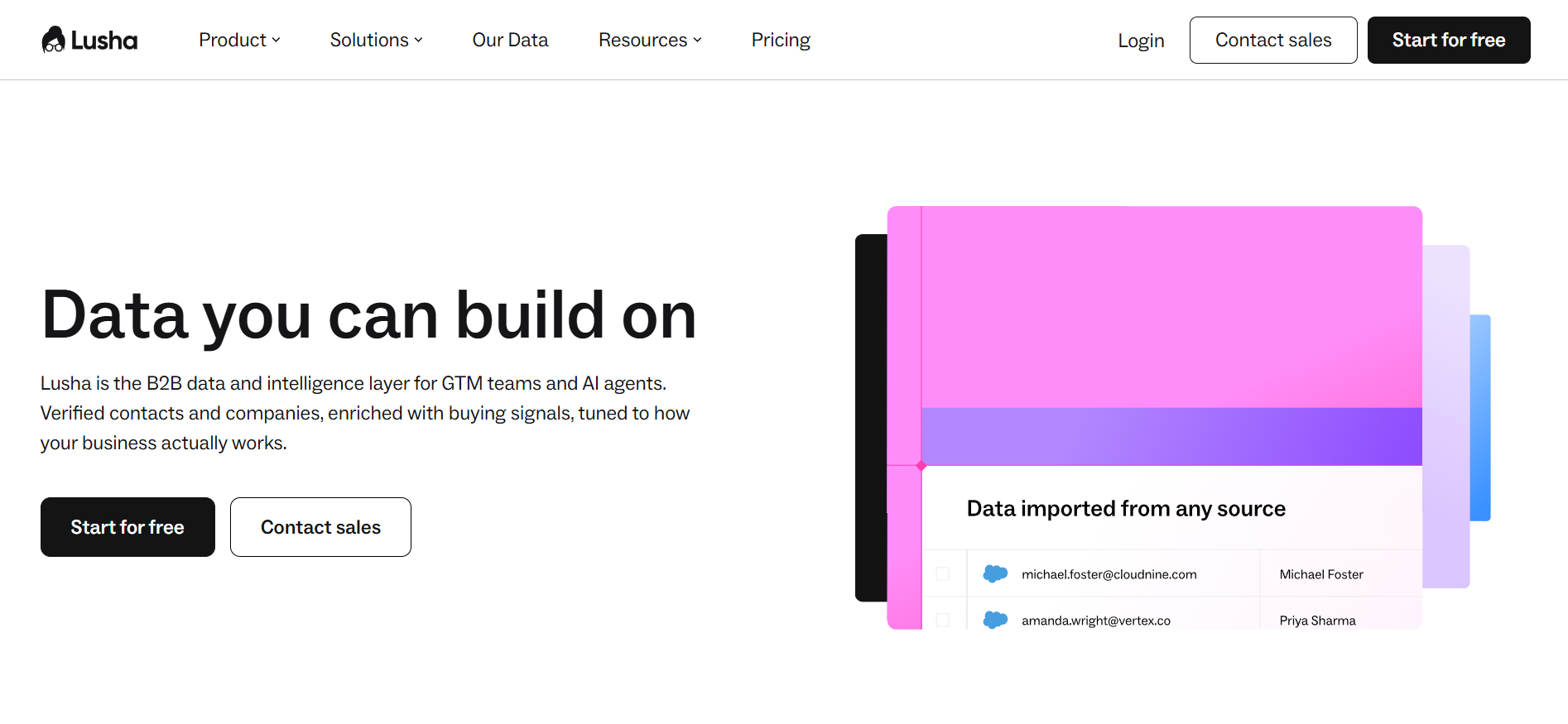
Lusha is where SMB reps usually land when they want a Cognism alternative without an enterprise procurement cycle. This LinkedIn prospecting tool lives inside a Chrome extension, and it pulls verified emails and phone numbers directly from a profile without the tab-switching that most enterprise tools force on you. For a team that just wants contact data fast, that immediacy is the whole pitch.
Key features I liked:
Bonus read: If you're weighing Lusha against similar extension-first tools, my breakdown of the best Lusha alternatives covers where each Chrome-extension prospecting tool wins for SDRs.
Pricing:
Pros:
Cons:
UpLead is the Cognism alternative I'd reach for when data accuracy matters more than raw database size. This verified B2B data provider publishes a 95% data-accuracy guarantee backed by real-time email verification, and it refunds credits on bounces. That's a concrete quality promise Cognism doesn't advertise publicly, and it's the kind of guarantee that actually shifts renewal conversations.
Key features I liked:

Bonus read: If accuracy-first data is your priority, my breakdown of the best lead scraping tools covers where UpLead wins and where other verified-data tools earn a look.
Pricing:
Pros:
Cons:
LeadIQ is the pick for SDR teams that live inside LinkedIn Sales Navigator and Salesforce or Outreach. Rather than positioning itself as a standalone database, this SDR prospecting tool sits between LinkedIn and your CRM, and it turns capture-and-sync into a one-click motion. If your reps spend more time in Sales Navigator than anywhere else, that workflow shift is what makes LeadIQ genuinely feel like a Cognism replacement rather than a lightweight adjacent.
Key features I liked:

Bonus read: If LinkedIn is the center of your prospecting motion, my breakdown of the best LinkedIn email finder tools covers the extension-first tools that work alongside or replace LeadIQ.
Pricing:
*All prices pertain to the yearly billing model.
Pros:
Cons:
Seamless.AI takes a genuinely different technical approach than everything above it, and that's what makes it worth including on any Cognism alternatives list. Instead of serving from a static database, this real-time contact search engine builds contact records on demand by searching the open web. For teams prospecting into fast-moving US tech and SaaS, the on-demand approach can catch records the incumbents miss.
Key features I liked:
Bonus read: For a wider view of similar real-time data plays, my breakdown of the best Seamless.AI alternatives puts them side by side.
Pricing:
Pros:
Cons:
Leadsforge is the best overall Cognism alternative in 2026 because it pairs a 500 million-plus B2B contact database and waterfall enrichment with chat-based AI search and a native handoff into Salesforge for email and LinkedIn sequencing. ZoomInfo goes deeper on US enterprise data, and Apollo bundles a dialer at a lower per-seat price.
But if you want to replace Cognism and close the outbound-execution gap in one move, Leadsforge is where I'd start. Sign up for Leadsforge and get 100 free credits.
Leadsforge is the best Cognism alternative in 2026 for most SMB and mid-market outbound teams. It combines a 500 million-plus B2B contact database, waterfall enrichment, chat-based AI search, and a native handoff into Salesforge for email and LinkedIn sequencing, starting at $49 a month on self-serve pricing.
Yes. Apollo.io is the most common cost-driven switch, with published per-seat pricing from free to $119 a user per month. Leadsforge starts at $49 a month on a flat plan, and Lusha's Starter tier comes in under $50 a month. All three publish their pricing openly, which Cognism does not.
Cognism remains the leader for verified EMEA mobile data and GDPR compliance, which is why many teams keep it specifically for European coverage. Among the alternatives, Clay carries strong enterprise-grade compliance including SOC 2 Type II, GDPR, and ISO 42001, and ZoomInfo has broad global coverage. Verify current data-processing terms with any vendor before committing.
ZoomInfo is the best enterprise Cognism alternative for teams that need the deepest US firmographic and intent data. Its GTM Workspace with Copilot AI, buyer intent, and WebSights visitor identification gives enterprise sellers a broader research surface than Cognism, though pricing is gated and reported entry contracts start above $15,000 a year.
You can start free with Apollo, Lusha, LeadIQ, Seamless.AI, or Clay, and Leadsforge gives 100 free credits at signup with no credit card. Free tiers are enough to test data quality on your ICP, but scaling outbound at volume will almost always require moving to a paid plan.
.png)

.jpg)
.jpg)
