If you've been using Lusha, you've probably run into at least one frustrating issue—limited credits, outdated contact data, missing phone numbers, or pricing that quickly becomes expensive as your team grows.
While Lusha is a popular sales intelligence tool, it's not always the best fit for every business, especially if you're focused on finding accurate B2B contacts at scale or need deeper prospect insights.
The good news? You don't have to settle. There are plenty of powerful Lusha alternatives that offer better data accuracy, larger contact databases, more generous pricing, and features tailored for modern sales teams, recruiters, marketers, and agencies.
In this guide, we'll walk you through the best Lusha alternatives available today, comparing their strengths, pricing, key features, and ideal use cases. Whether you're looking for higher-quality leads, better value for money, or a platform that integrates seamlessly with your existing sales workflow, you'll find an option that fits your needs.
I ran every tool on my list through five checks. These are the same checks I'd use if I were signing the check myself.
Raw contact count is easy to inflate. What matters is verified emails and verified phone numbers, refreshed on a real cadence. I weighted verification method (waterfall vs. single-source), refresh frequency, and third-party accuracy audits over raw database size alone.
Any Lusha alternative that hides pricing behind a sales call fails the "can a solo SDR self-qualify?" test. I noted per-seat vs. flat pricing, credit rollover rules, and hidden add-on costs like phone-number credit multipliers.
Single-source databases hit walls at scale. Waterfall enrichment queries multiple providers in sequence until it finds a verified email or phone. The tools that do this natively hit higher aggregate match rates than pure database lookups.
For EU teams, GDPR alignment is table stakes. DNC scrubbing across multiple countries is the harder bar. I checked ISO certifications, SOC 2, and how each tool documents its data sourcing on public trust pages.
Natural-language ICP search, Chrome extensions, and native CRM integrations shape how much time a rep spends inside the tool. I preferred workflows that surfaced leads where reps already worked, not standalone dashboards.
For a broader look at how these tools fit into a full outbound stack: 16 Best Lead Generation Tools I Tested in 2026.
I ranked these by how well they solve the specific gaps Lusha leaves. My #1 pick handles all four gaps I flagged above. The rest each own a specific angle.
Leadsforge is the best Lusha alternative on my list because credits never expire and pricing stays flat no matter how many seats you add. Where Lusha caps you on annual rollover and charges by the seat, Leadsforge runs on a workspace model with 500M+ verified B2B contacts backed by waterfall enrichment across multiple providers. And it does something none of the tools on this list do out of the box: it lets you find leads by chatting with the platform in plain English.
If Lusha is a Chrome extension bolted onto LinkedIn, Leadsforge is a lead database provider designed for how outbound teams actually work in 2026.
I described my ICP as "SaaS founders in the US doing $1M–$10M ARR" and got a targeted list back inside 30 seconds. It also runs a Local Companies Search that pulls businesses by geography and business type, which is the kind of local prospecting play Lusha has never handled well.
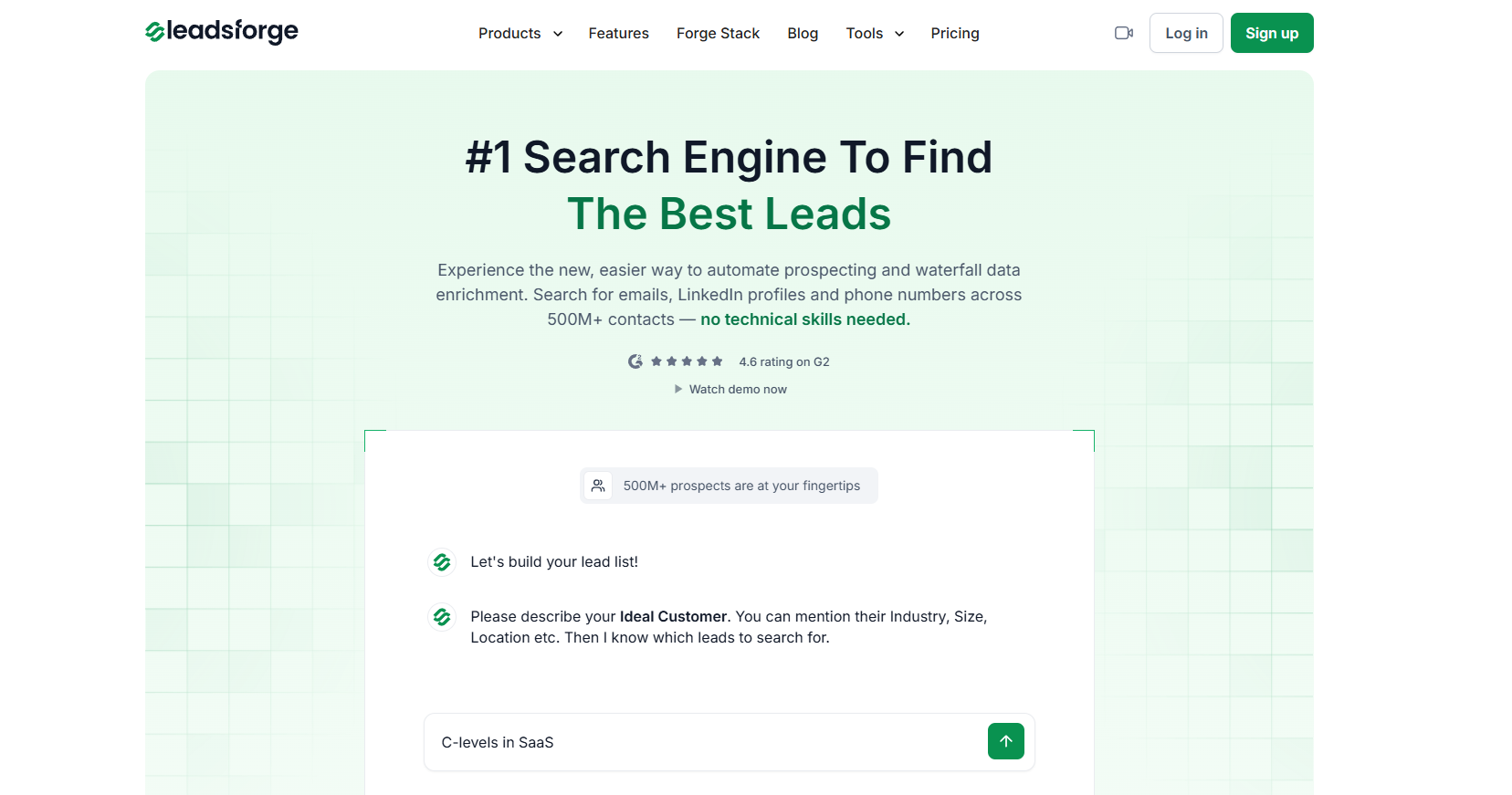
The other unlock is credits that don't expire. On the Essential annual plan, you get 28,000 credits upfront and they stay in your workspace until you use them. No annual burn-and-lose. That alone made it worth switching for me. And because Leadsforge is built by the Salesforge team, enriched lists push directly into email plus LinkedIn sequences without CSV middleware.
Another Lusha alternative worth testing is Apollo.io, and it's the closest structural competitor Lusha has in 2026.
Where Lusha treats itself as a data lookup tool, Apollo treats itself as an all-in-one sales stack: 240M+ contacts, native sequencing, a dialer, and waterfall enrichment from the Basic tier up. If you've ever paid for Lusha plus Instantly plus a warmup tool separately, Apollo is what happens when someone bundles all three under one seat.
Apollo's pitch against Lusha comes straight from Apollo's own comparison page: 400% more phone numbers, 50% more emails, and 64% cost savings.
Those are vendor numbers, not audited ones, but the direction is right. Apollo runs on a per-seat model with credit allocations that scale with the tier. It's still the tool most G2 reviewers name when they say "I outgrew Lusha."
The catch is credit throttling. Phone number credits cost 8× email credits, which adds up fast if you're running dial-heavy campaigns. And the UI has a real learning curve compared to Lusha's clean Chrome extension. You gain surface area, but you pay in complexity.
For a fuller breakdown of where Apollo fits versus everything else: read my detailed breakdown of best Apollo Alternatives in 2026.
Everyone recommends ZoomInfo as the Lusha alternative for enterprise, and nobody warns you about the sales process. But when it comes to raw data depth, ZoomInfo is still the widest B2B database in the category: 500M+ contacts, 135M+ verified phone numbers, 200M+ verified emails, and a GTM Context Graph processing 1.5 billion data points daily.
If Lusha is a Chrome extension, ZoomInfo is the operating system for enterprise revenue teams.
The tradeoff shows up on pricing. ZoomInfo doesn't publish self-serve rates. Multiple 2026 breakdowns from third-party sites put entry-level contracts around $15,000 per year, with typical mid-market spend landing between $15K and $60K depending on seats, intent add-ons, and data-as-a-service usage. You also lock into annual contracts. There's no monthly escape hatch.
What ZoomInfo genuinely does better than every Lusha competitor is intent signals and org chart depth. If your motion is enterprise ABM and you sell into named accounts above $100K ACV, ZoomInfo pays back the price tag. If you're an SMB SDR trying to book meetings at $5K–$50K ACV, this is overkill. For teams weighing this against cheaper options at that price point, read my blog on zoominfo alternatives for lead data in 2026.
Custom Plans
Your outbound motion is Europe-heavy and Lusha's phone data keeps burning credits on wrong numbers. That's the exact pain Cognism was built to solve. Positioned as Europe's most trusted B2B data, this Lusha competitor runs on a 200M+ contact database with 70M+ mobile numbers and 10M+ manually phone-verified "Diamond Data" records that publicly report connect rates in the high-80s to high-90s percent. For EU-focused teams, Cognism is a materially better answer than anything else on this list.
The compliance story is where Cognism separates itself further. GDPR alignment, CCPA compliance, DNC scrubbing across 15 countries, and both ISO 27001 and ISO 27701 certifications are documented on their own data page. That's more explicit compliance disclosure than any other tool I reviewed for this list.
The two catches are pricing opacity and the free tier. Cognism publishes no self-serve dollar figures anywhere. Every plan requires a sales conversation, and there's no free tier or trial to test the data quality first.
Third-party estimates put entry-level Cognism spend around $15,000 per year plus onboarding. Not cheap, and not fast.
Custom Plans
700M professional profiles sounds impressive until you realize 88% of them never get refreshed in a given month.
That's the honest tradeoff with RocketReach, which markets itself as the largest raw contact database of any Lusha competitor and backs it up with 60M company profiles and coverage across 95% of the S&P 500. The scale is real. So is the freshness problem: RocketReach updates roughly 85M of its 700M profiles per month, or about 12% of the database.
For solo reps and recruiters running high-volume email finding, RocketReach still earns its spot. The Chrome extension is clean.
The Essentials tier at $299 per year (email-only) is the cheapest transparent starting point in the category. And their claimed 98% email deliverability holds up on fresh records.
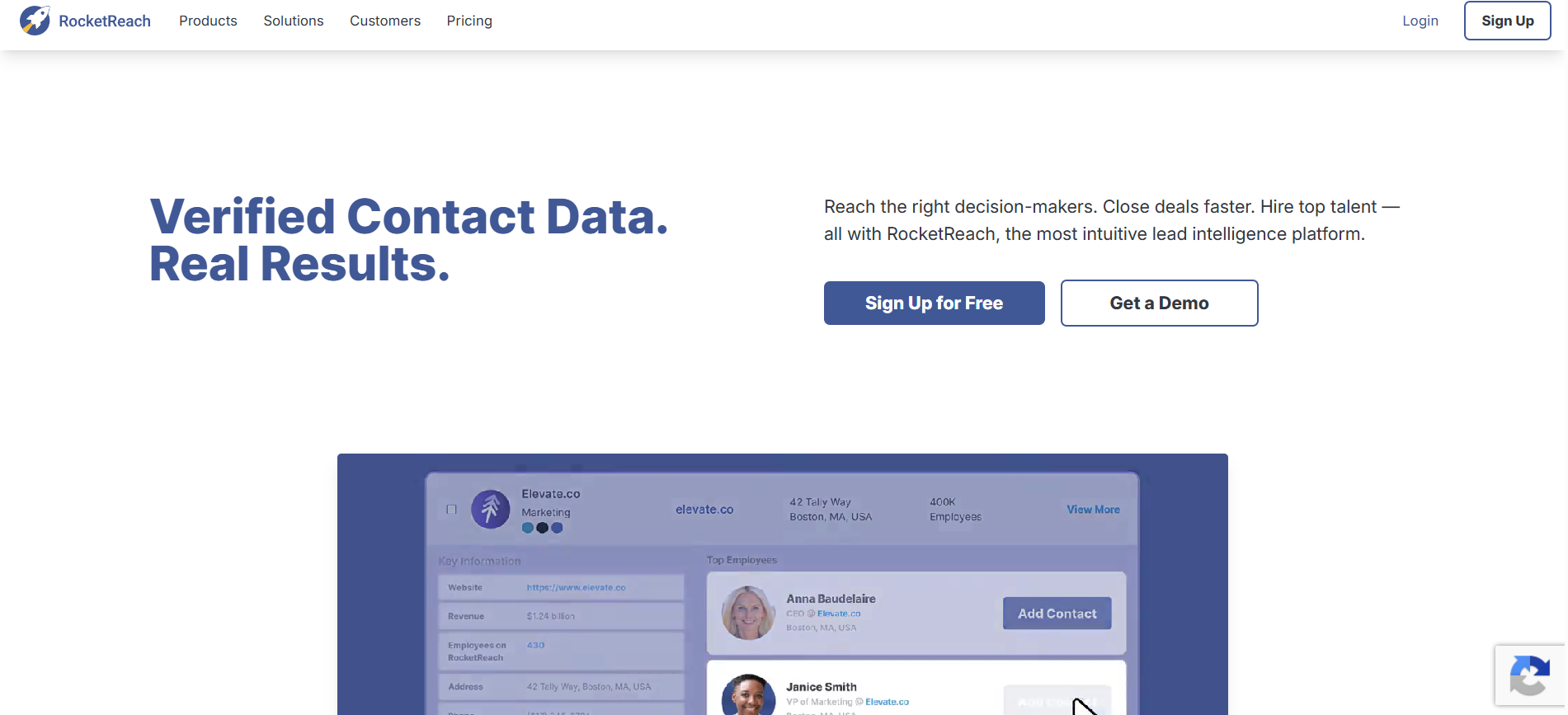
Where RocketReach loses to Lusha is data freshness on job-change signals and the compliance story. RocketReach's public pages don't surface a dedicated SOC 2 or ISO trust center, and the pricing page currency defaults to your local IP, which creates confusing quotes for global teams. It's a broad, budget-friendly tool with real caveats. You can also check out my blog on RocketReach alternatives.
I almost skipped UpLead until I read the fine print on their accuracy guarantee.
Then I realized this Lusha competitor solves a specific problem the bigger databases keep dodging: what happens when the email bounces. UpLead publicly guarantees 95% email accuracy and refunds credits on any verified bounce, which is a real financial commitment none of the tools above will match.
If your motion depends on send rate more than raw volume, that guarantee changes the math.
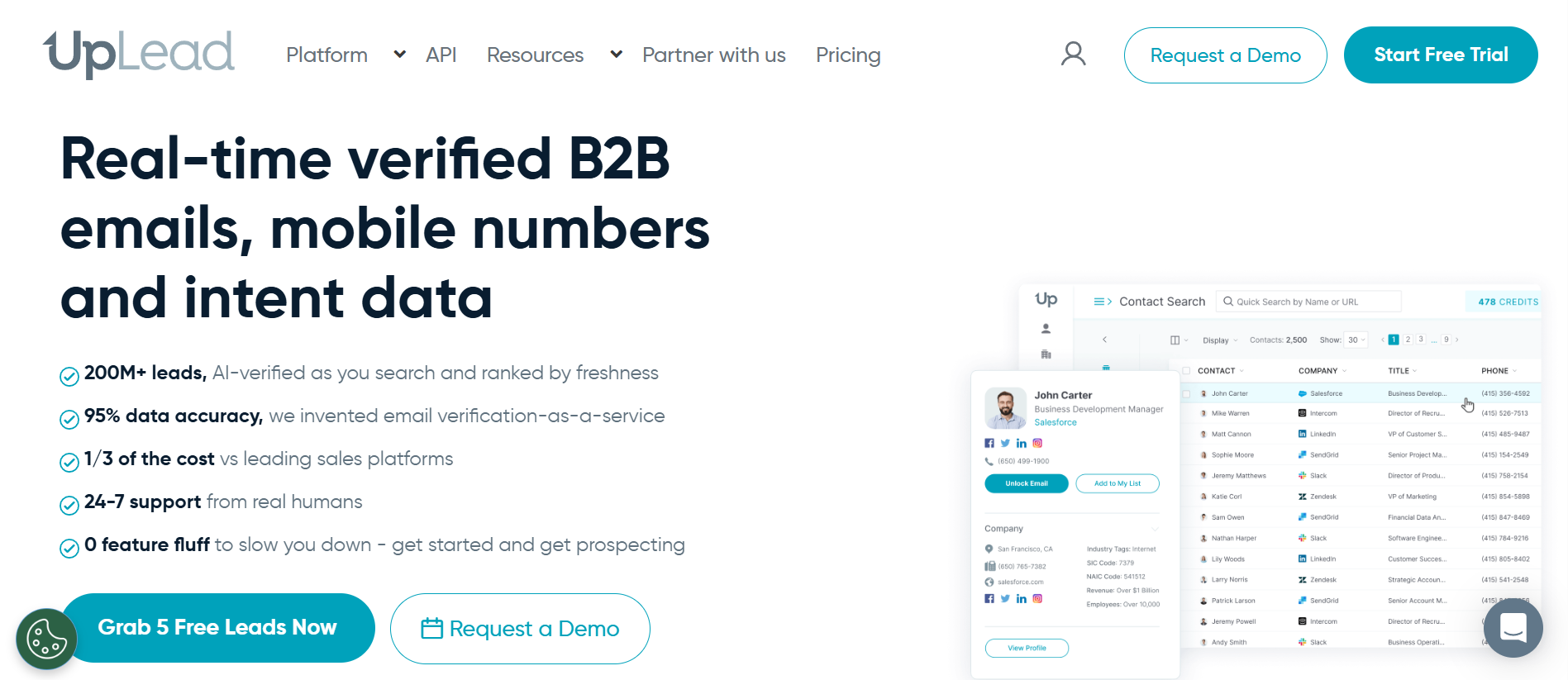
The database sits at 200M+ contacts by UpLead's own claim, though secondary sources put it closer to 155M–180M.
Either way, it's smaller than Apollo, ZoomInfo, or Leadsforge. The tradeoff is that UpLead verifies each contact in real time at the point of download instead of on a batch refresh cycle. So you're trading raw scale for freshness.
Where UpLead falls short is EU coverage and the credit burn on the Essentials tier. Just 170 credits per month at $74 disappears fast if you're doing more than lightweight prospecting. This is a small-team tool for accuracy-obsessed motions, not a scale play..
Clay takes a completely different angle on the Lusha alternative question. It's not a database. It's a data orchestration platform that stitches 50+ contact providers into a single waterfall, running each provider in sequence until it finds a verified email or phone.
If Lusha gives you one source, Clay lets you query ten and pay for what actually returns a hit. That's why technical RevOps teams keep migrating to Clay as their data layer, even when they don't churn from Lusha entirely.
The Clay pitch works if you have someone technical enough to build the tables. Clay uses a spreadsheet-style workflow where you define columns, connect providers, and run enrichments in batches. Claygent, their AI research agent, handles freeform prospect research on top. It's powerful, and it's not simple.

The pricing model is where Clay gets complicated. Their credit system covers both data credits (paid to providers) and platform credits (paid to Clay). One recent teardown estimated a 25-user Clay team lands at $75K–$120K per year in real cost. So this is a Lusha alternative for teams that already have RevOps headcount, not for solo SDRs.
If credit exhaustion is the reason you're leaving Lusha, Lead411 solves it directly. Lead411 built its 450M+ contact database around an unlimited-data promise: pay a flat monthly rate on the Ignite or Blaze tier and pull as much verified data as you can use.
That's the exact reverse of Lusha's credit-metered model. And for SMB outbound teams grinding through US mid-market accounts, this Lusha alternative delivers a genuinely different economic pitch.
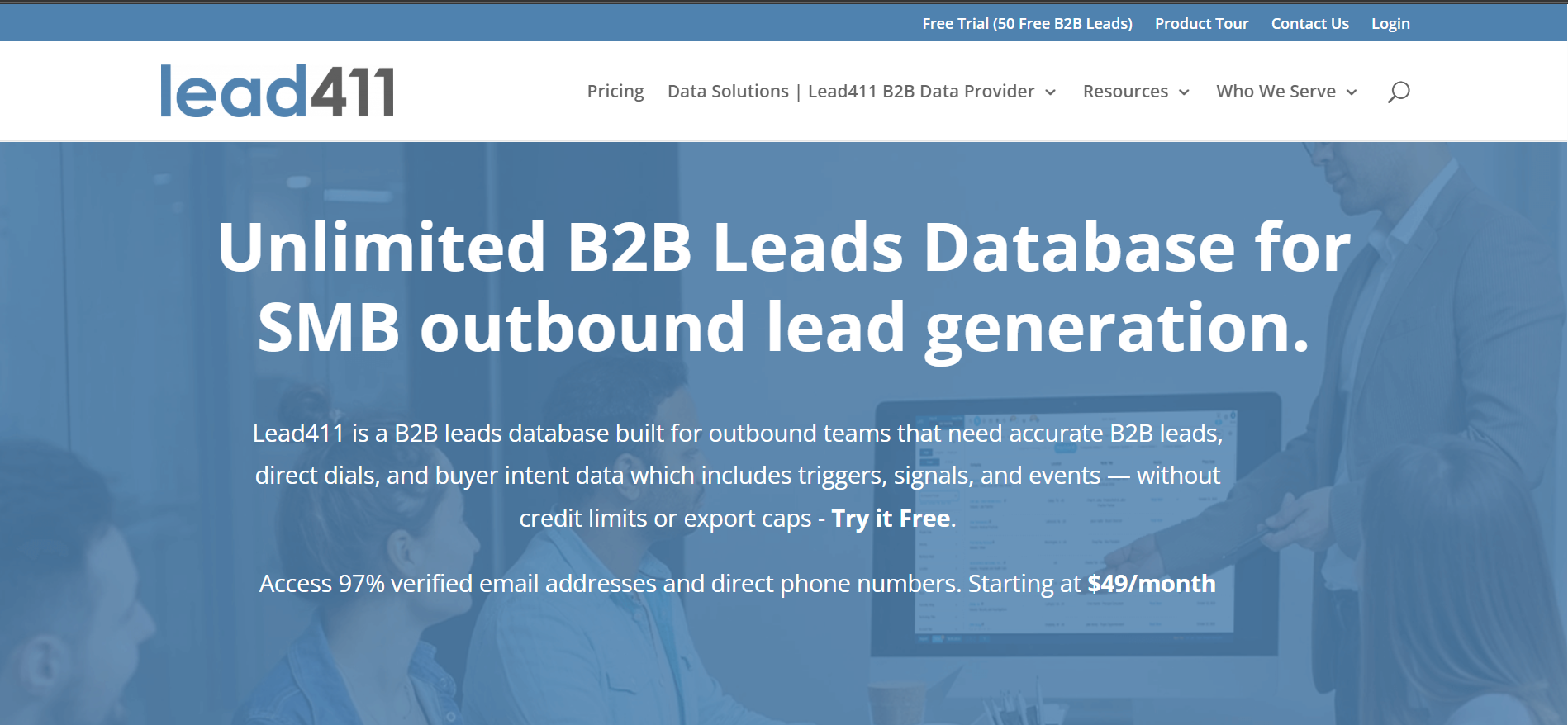
Where Lead411 wins beyond pricing is intent signals. Bombora-powered intent data is bundled inside the tier, not a $500-per-month add-on like ZoomInfo. Trigger events like recent funding, hiring, and mergers get surfaced automatically. That's meaningful for teams running signal-based outbound motions.
The catches are the entry-tier caps and the UI. Spark, the lowest tier at $490 billed annually, caps you at 200 exports per month. And the UI feels dated compared to Apollo or Leadsforge. If you're US-focused and don't need pretty design, Lead411 clears the bar.
Where Lusha stops on European phone data, Kaspr takes over. Kaspr is a Cognism-owned Lusha competitor built specifically around LinkedIn prospecting for EU markets, with 500M+ phone numbers and email addresses concentrated in Europe.
If your motion is heavy LinkedIn Sales Nav plus Chrome extension reveals, and your target list skews to DACH, France, or the Nordics, Kaspr is the cheapest legitimate answer on this list.
The Chrome extension is the whole experience. You browse LinkedIn, click reveal, and Kaspr surfaces verified email and phone data in real time.
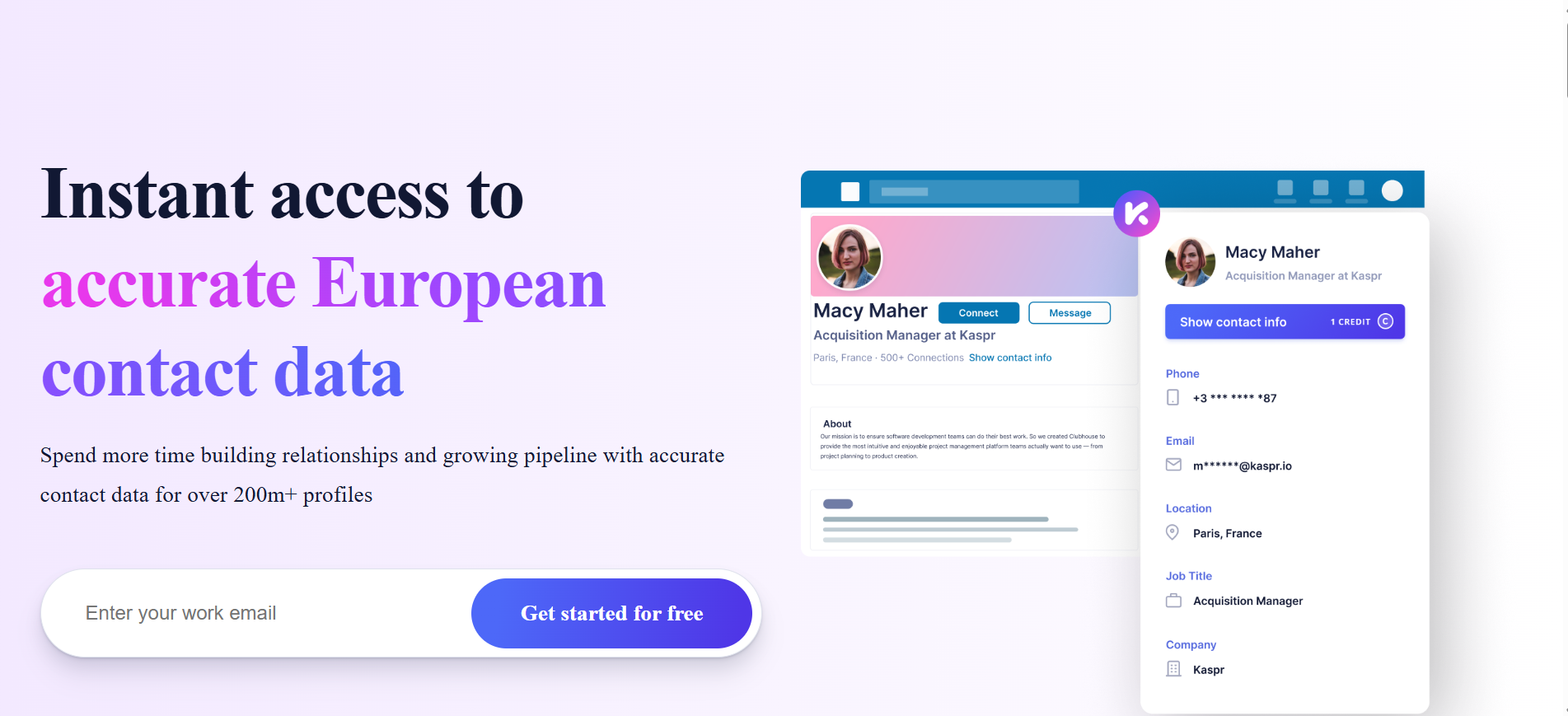
There's a workflow builder for outreach and CRM sync, but the Chrome extension is where 90% of the value lives. That's a narrower value prop than Apollo or Leadsforge, but for the specific job of LinkedIn-to-CRM enrichment in Europe, Kaspr moves faster than anything else.
The free tier is genuinely generous. Kaspr grants unlimited B2B email addresses on their free plan with limited phone credits. That's usable for a solo SDR testing the tool without a credit card. Where it falls short: no waterfall enrichment, no intent signals, and coverage outside Europe thins out.
The last Lusha alternative on my list is the only one that bundles a database directly into a cold email sequencer. Saleshandy built Lead Finder as an add-on inside their existing outreach product, and the combined subscription lands cheaper than paying for Lusha plus Instantly separately.
The database claim is aggressive: 852M+ contacts and 42M+ companies according to their Lead Finder page, though their own blogs have quoted 700M and 800M in the last year, so treat that number as directional.
What Saleshandy does well is bundling. You get the database, sequencing, warmup, and a light CRM under one subscription.
For SMB agencies running 5-rep outbound teams on tight budgets, that math works. Saleshandy Outreach starts around $25–$36/month, and Lead Finder adds $29–$1,999/month depending on volume. Combined, you're at $49–$83/month for a working outbound stack.
The catch is depth. Saleshandy's data quality reputation is thinner than Apollo or Cognism. And once you scale beyond 5 reps or need serious deliverability infrastructure, this Lusha competitor stops keeping up. It's genuinely great for teams starting out. Less great for teams already sending 50K+ emails per month.
Leadsforge is my pick as the best Lusha alternative in 2026 because it fixes the exact three gaps that push most teams to shop for Lusha competitors: credit expiry, per-seat scaling, and single-source data.
The 500M+ contact database with waterfall enrichment and chat-based ICP search handles the modern outbound workflow better than any tool on this list. Apollo remains the closest all-in-one alternative for SMBs, and ZoomInfo owns the enterprise ceiling. But if you want honest pricing that stays flat as your team grows, start with Leadsforge.
Leadsforge is the best Lusha alternative in 2026 for teams that want a 500M+ verified B2B contact database with flat workspace pricing and credits that don't expire on annual plans. Apollo.io is the closest all-in-one alternative for SMB teams, and Cognism is the strongest choice for EU-focused motions requiring GDPR compliance and phone-verified mobile data.
No, Lusha does not offer native multi-provider waterfall enrichment. Lusha queries its own proprietary database only. Leadsforge, Clay, Apollo, and Saleshandy all run waterfall enrichment across multiple providers, which typically delivers higher aggregate match rates on emails and phone numbers than a single-source lookup.
No, Lusha credits do not roll over on annual plans. Lusha's own pricing table marks credit rollover as "Not applicable" on annual billing. Monthly plans allow rollover up to 2x the monthly cap, but annual buyers who don't burn their upfront allocation lose the remainder at renewal.
Yes. Apollo.io offers 900 free credits per year on its Free tier. Leadsforge grants 100 free credits at signup with no credit card required. Kaspr provides unlimited free B2B email reveals on its free plan. ZoomInfo Lite gives limited free credits drawing from the same enterprise database.
Three Lusha alternatives ship a Model Context Protocol server that connects the database to AI clients like Claude, ChatGPT, and Cursor: Leadsforge (API + MCP + CLI), Apollo (Apollo MCP), and Lusha itself. No other tool on this list currently documents MCP support.
Cognism is the best Lusha alternative for European B2B data, with 200M+ contacts, 70M+ mobile numbers concentrated in EMEA, GDPR compliance, DNC scrubbing across 15 countries, and ISO 27701 certification. Kaspr is the cheaper alternative for LinkedIn-focused EU prospecting, with a generous free tier and 500M+ European phone numbers.
.png)

.jpg)
.jpg)
