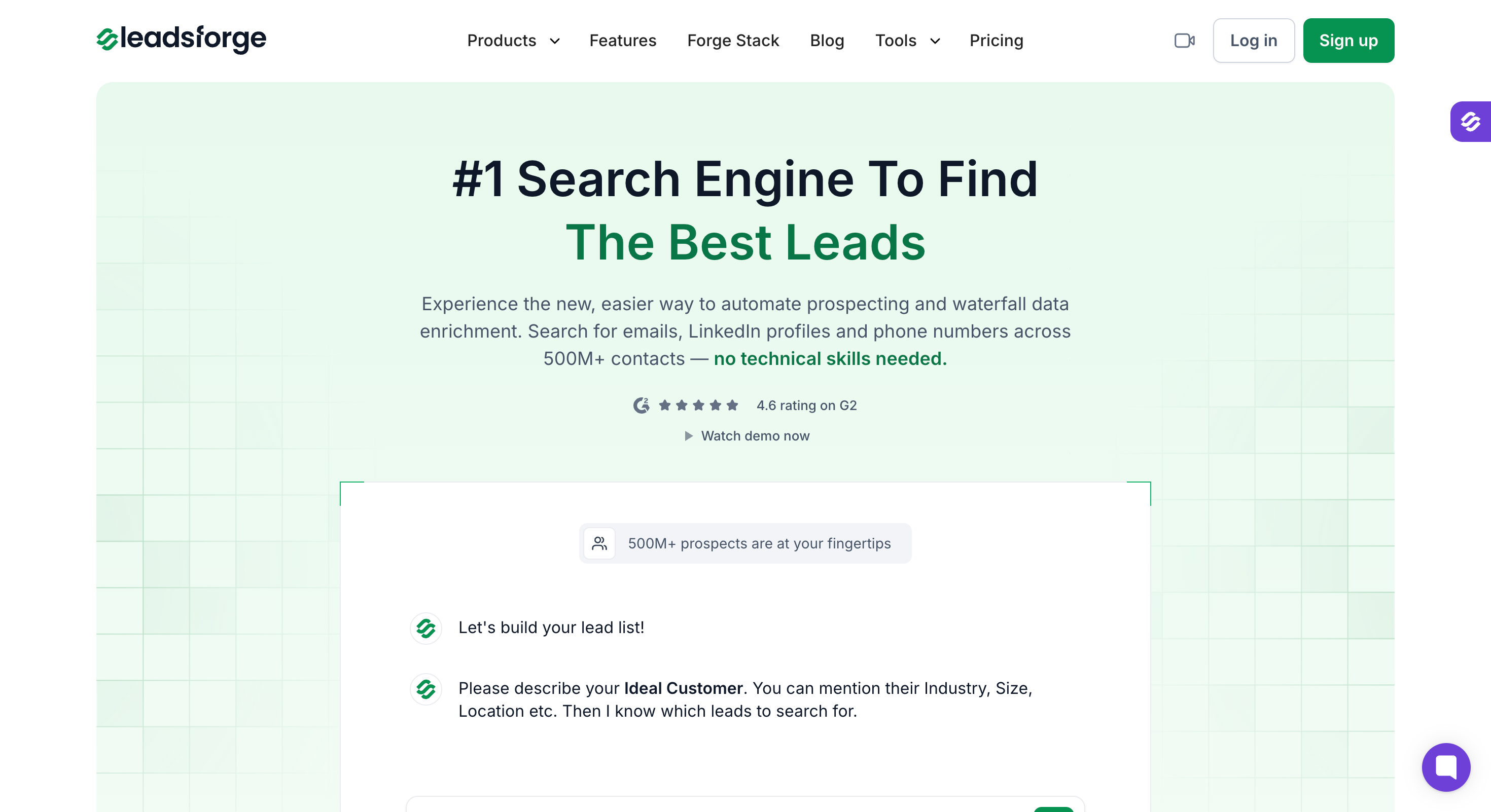
Leadsforge: Best overall for GTM teams and agencies that want cleaner data without losing credits at cancellation. Every lead workflow runs in one tool, with waterfall enrichment across multiple providers.
Cognism: Best for EU coverage and phone verified mobile numbers. Its Diamond data layer verifies priority mobiles by hand, and GDPR compliant DNC screening comes with it.
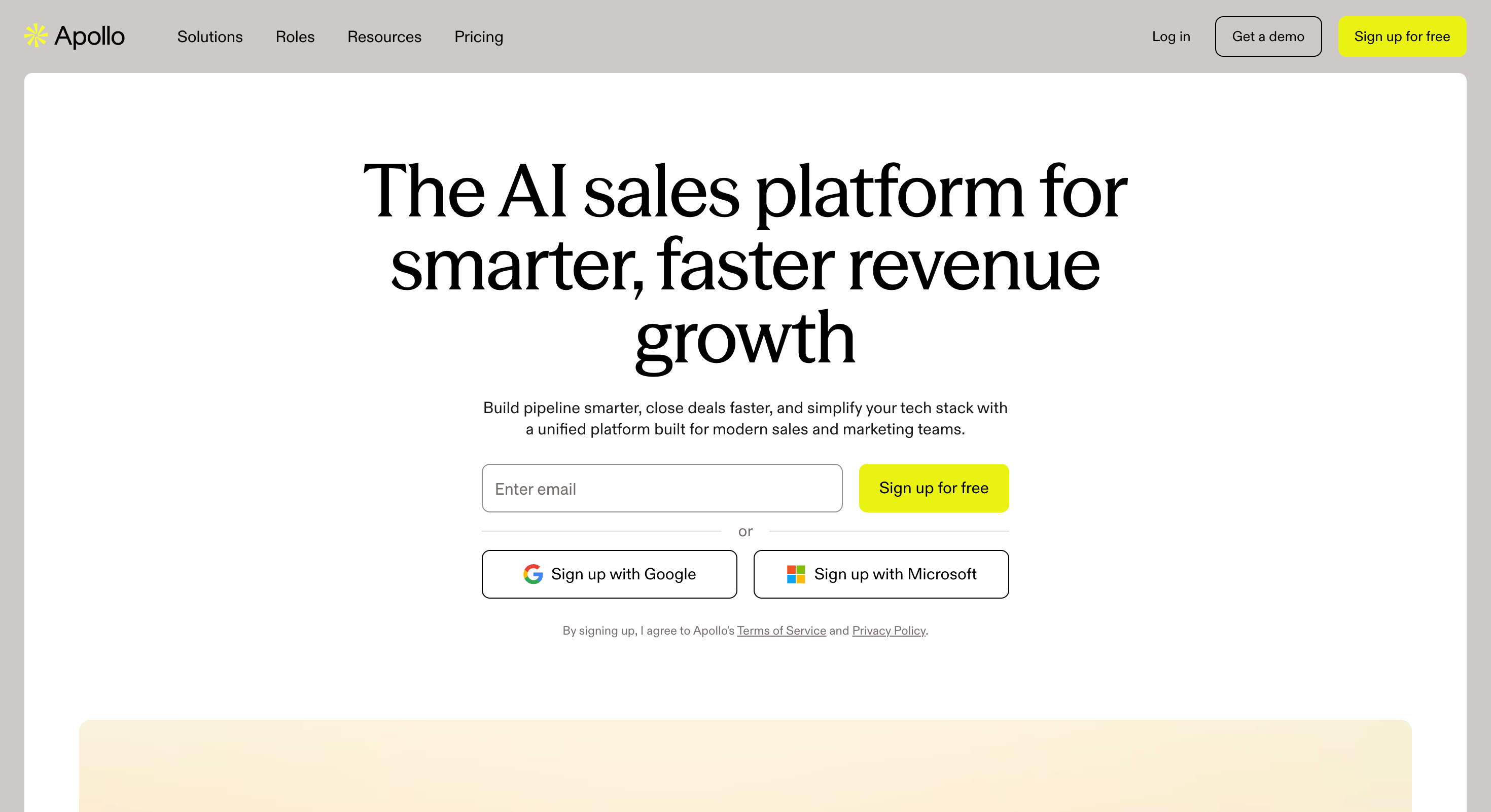
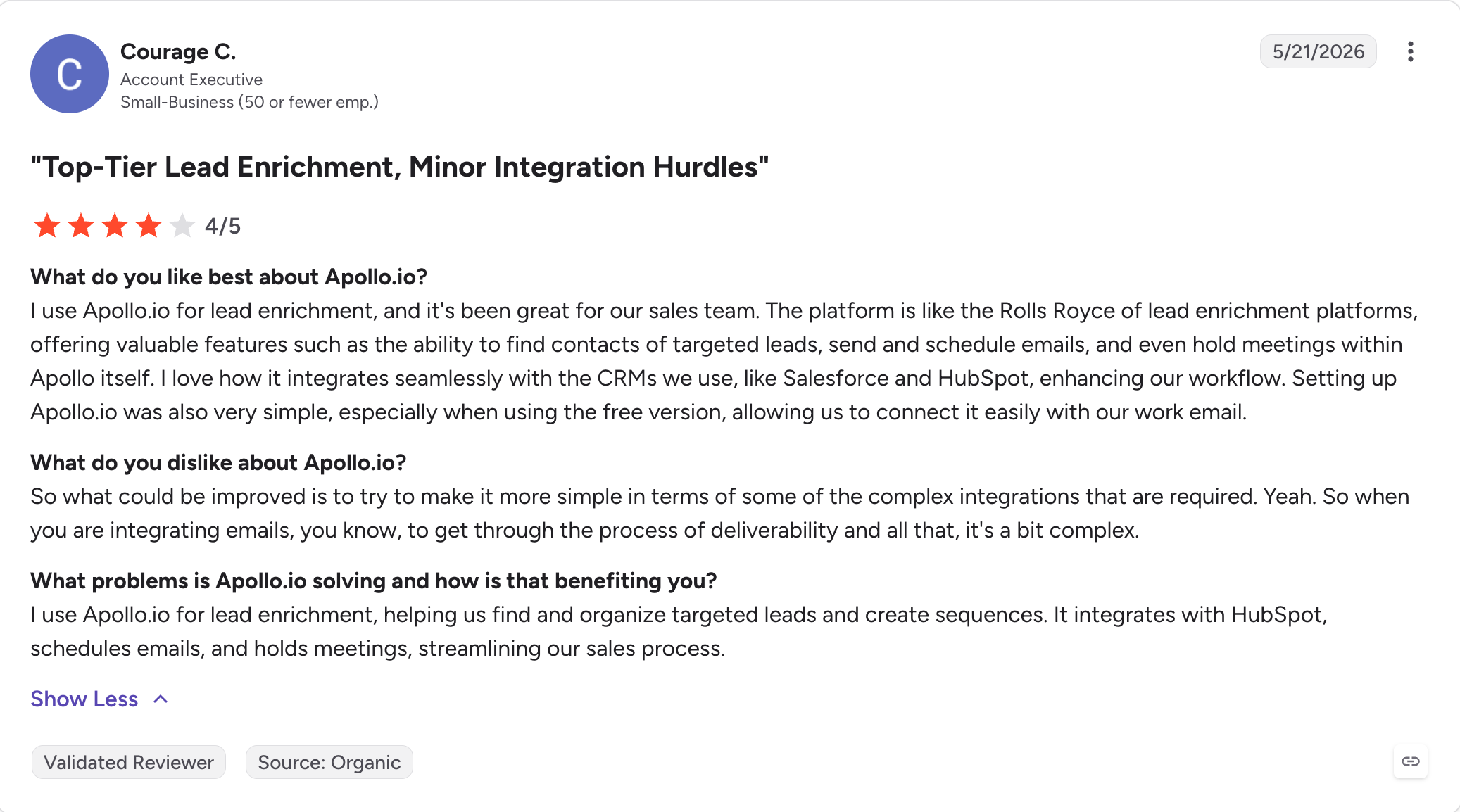
Apollo.io: Best all-in-one pick for data plus built in outreach under one bill. 275M+ contacts, native email sequences and a US dialer on a single per-seat subscription.
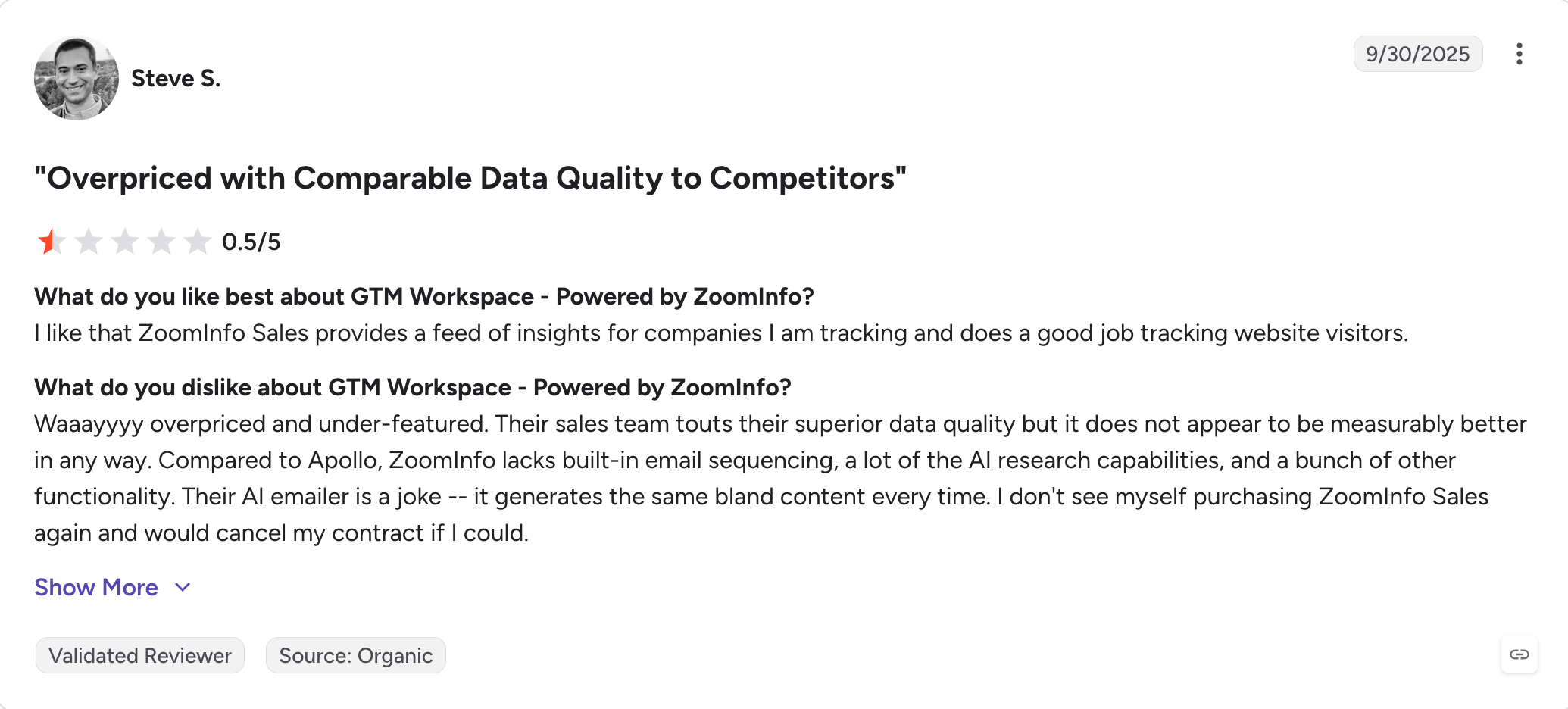
ZoomInfo: Best for enterprise data and buyer intent when budget is not a constraint. Bombora intent, Chorus call recording and org charts sit on top of the deepest US company data here.
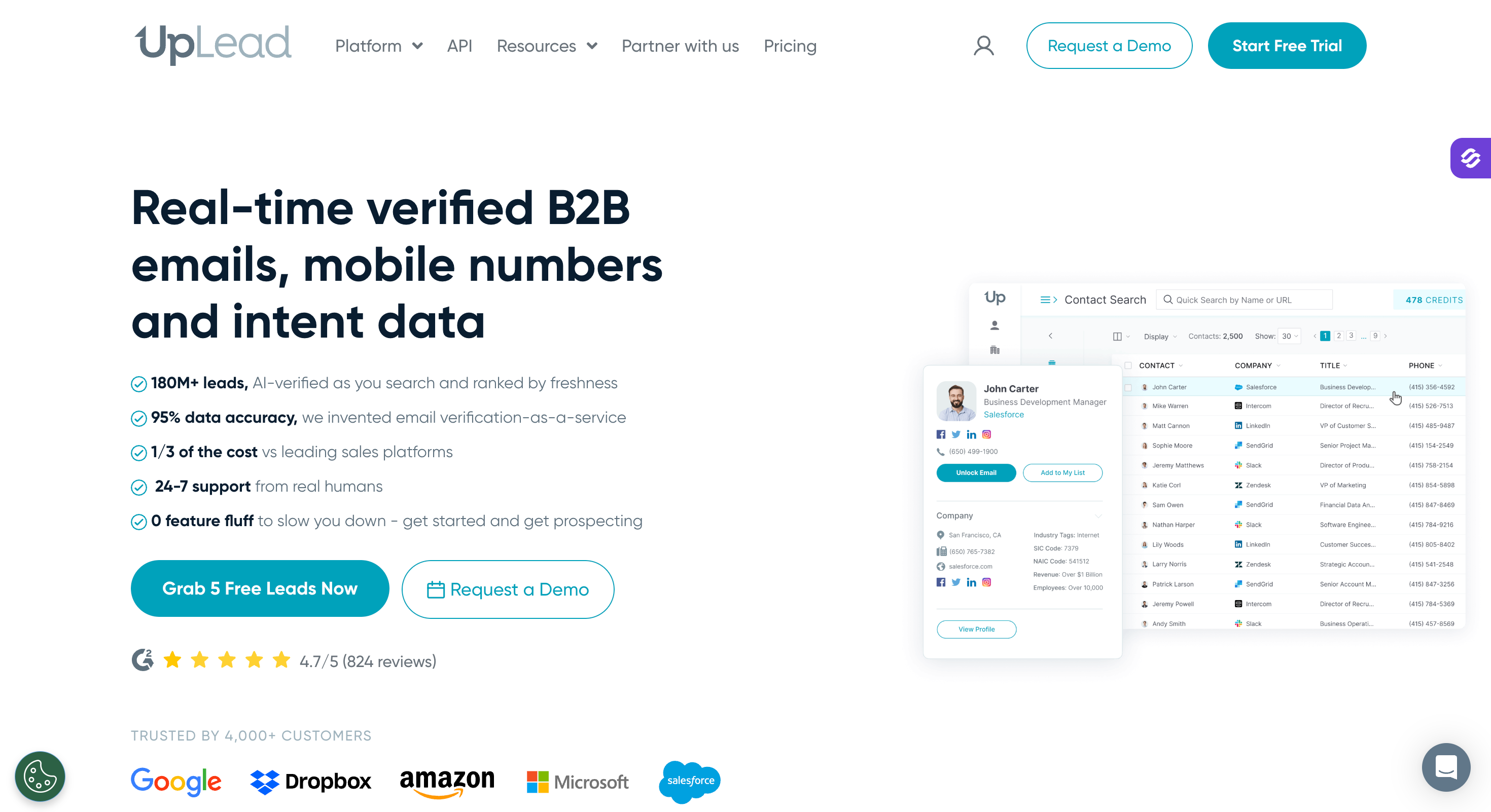
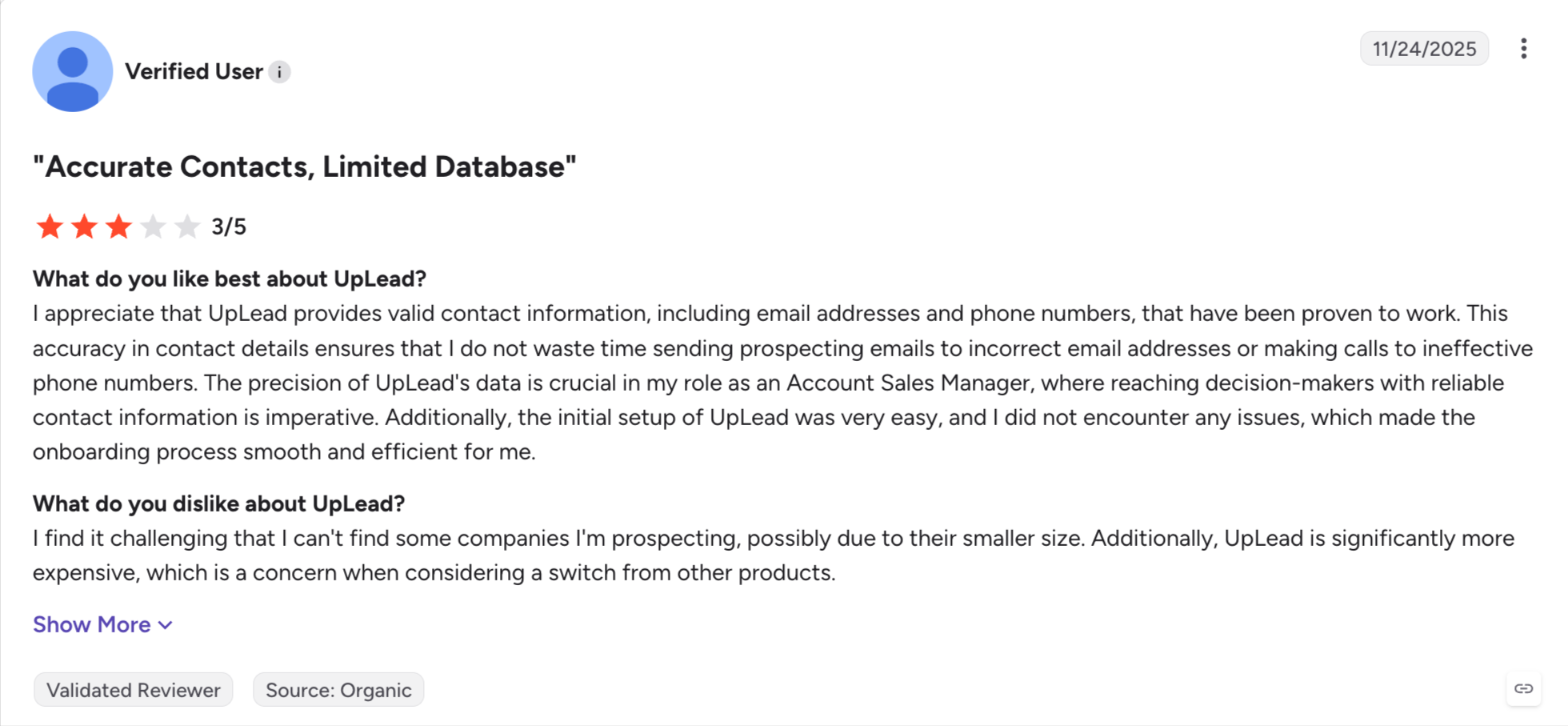
UpLead: Best for verified contact data with a 95% accuracy guarantee and credit back on bounces. The only tool that puts real time verification in the contract.
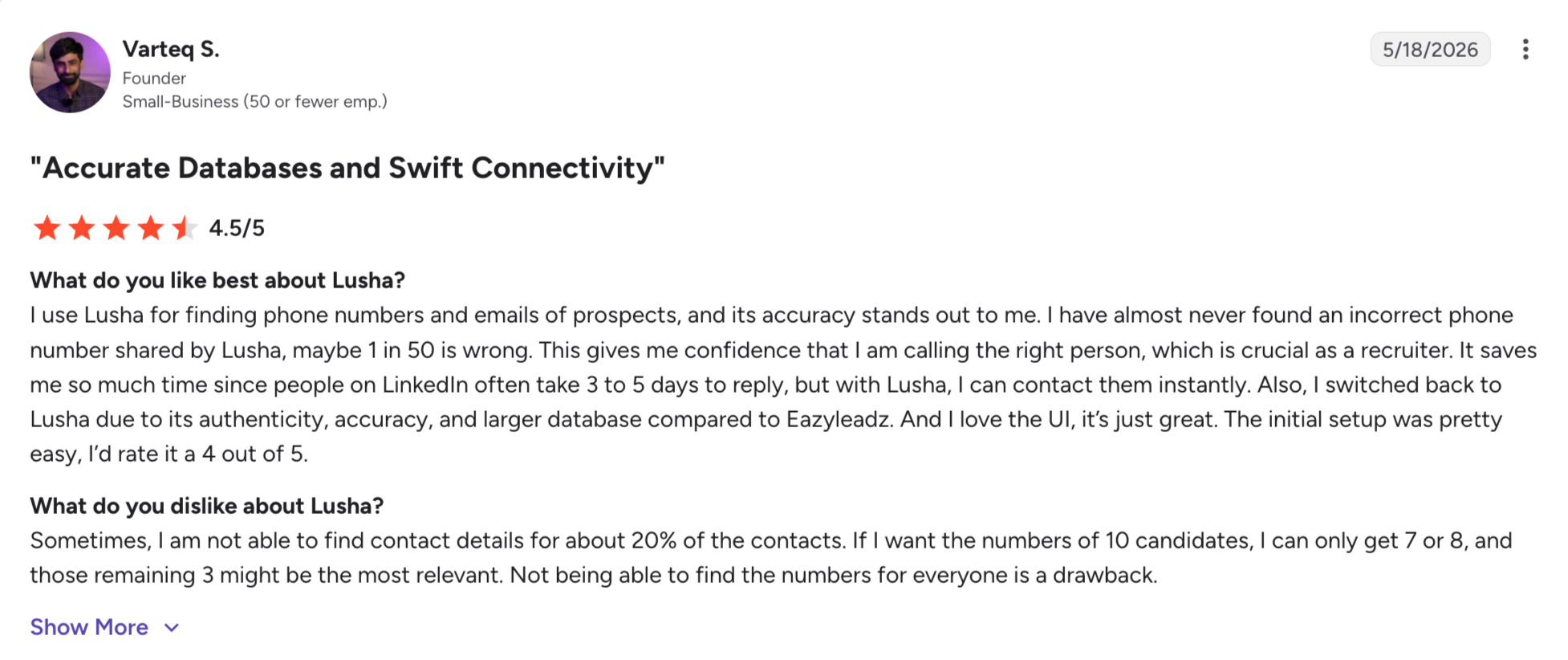
Lusha: Best for one-click lookups through a Chrome extension. Fastest workflow if your sales prospecting starts and stays inside Sales Navigator.
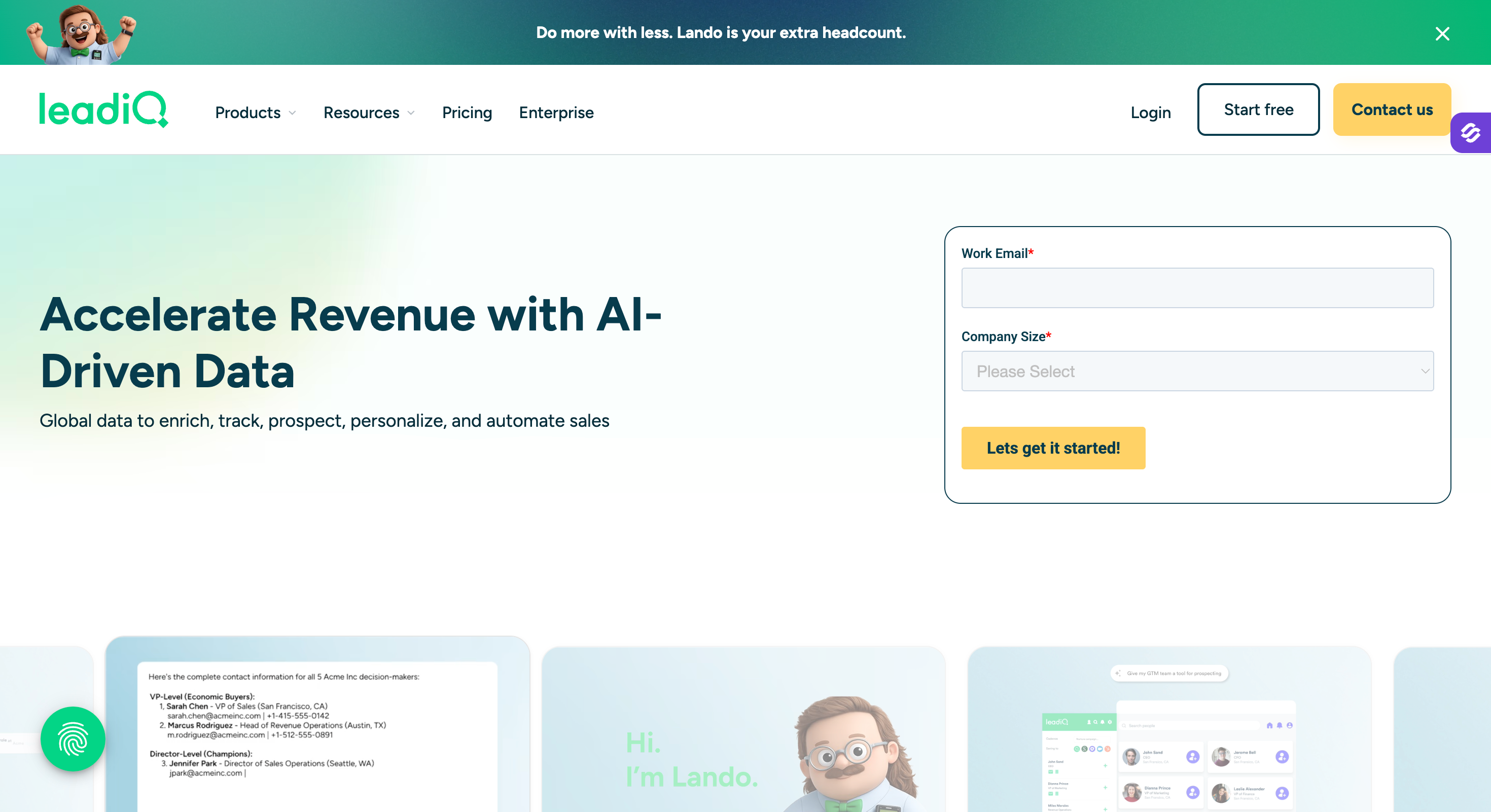
LeadIQ: Best for SDRs working inside Sales Navigator alongside Outreach or Salesloft. Captures a contact's email straight into the CRM and sequencer in one click.
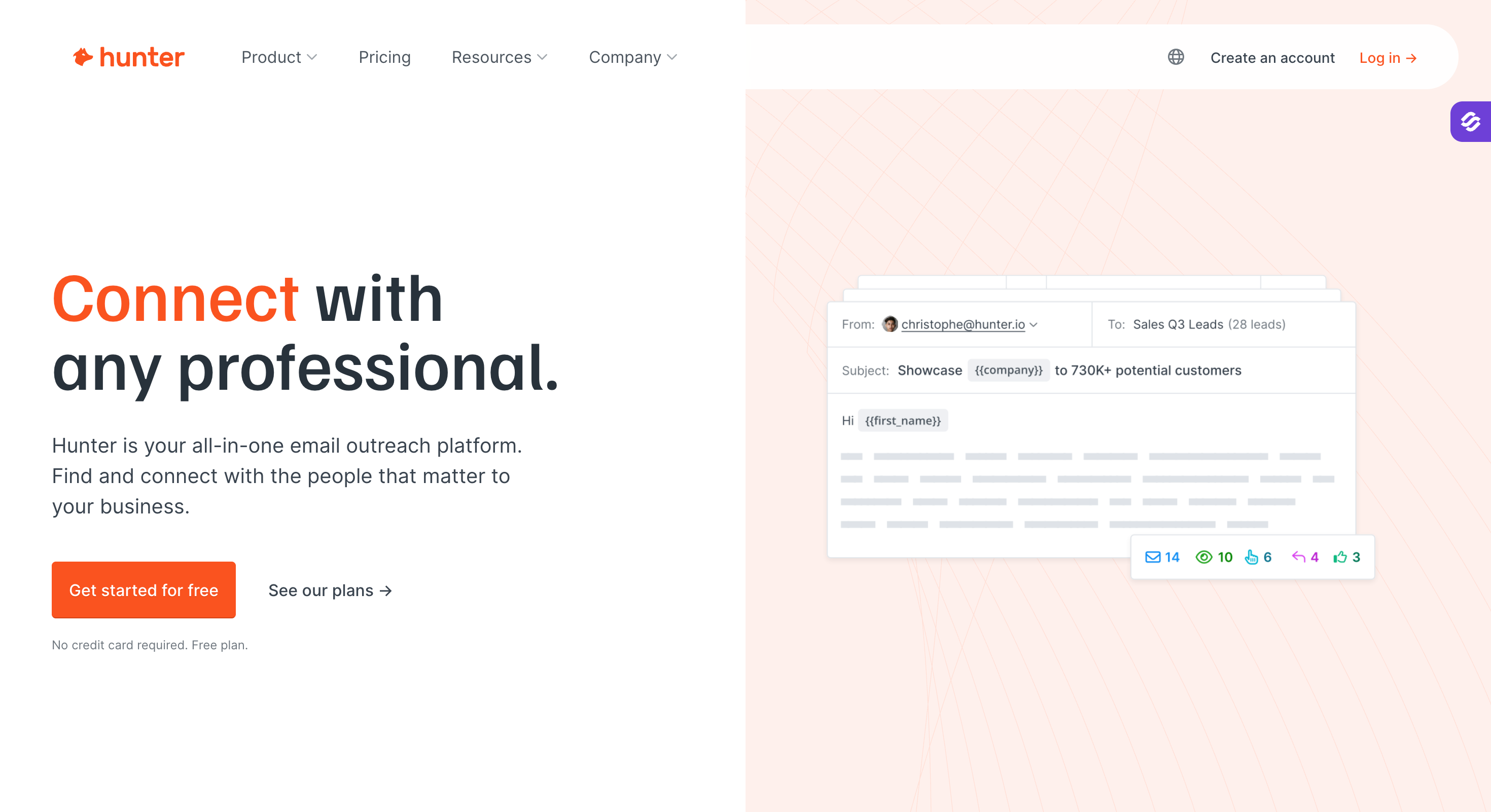
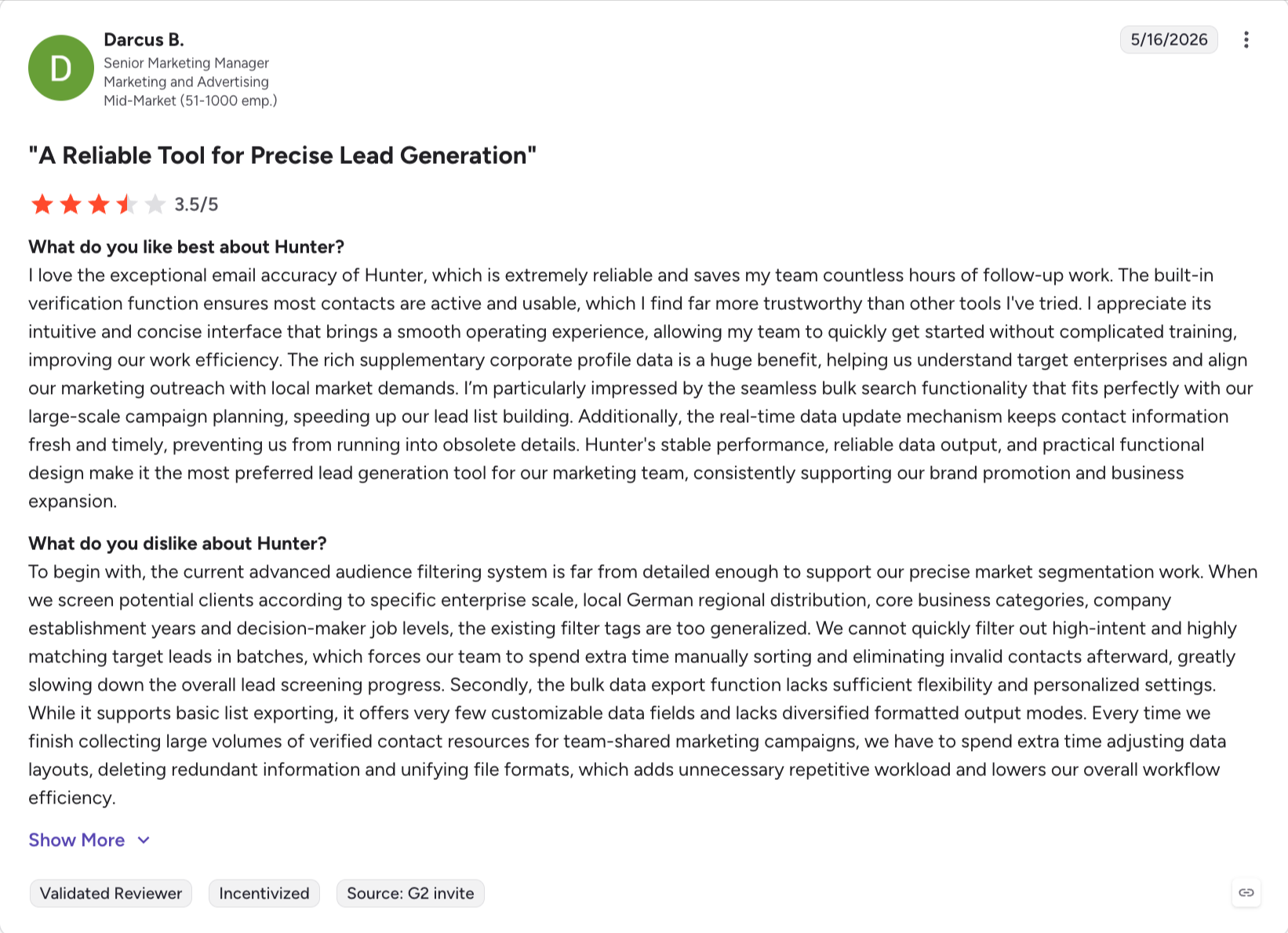
Hunter.io: Cheapest pick for email-only lookups with unlimited users. Every paid plan covers the whole team, so the per-user cost drops fast.
Seamless.AI: Best if you want a real-time search engine and will negotiate on contract terms. Seamless finds contacts other tools miss, though the 60-day cancellation window is real.
Cleanlist AI: Best for teams who care most about data quality. Cleanlist claims 98% verified emails and 85% on phone numbers, both higher than anything else here publishes.
How I Tested These RocketReach Alternatives
I ran every tool below through six checks. Not a scientific benchmark, just the questions I needed answered before paying for any of them.
Find Rate on a Live ICP: I used the same hundred contacts from the RocketReach test. Heads of marketing at Series A to B SaaS companies in the US, 50 to 200 staff. Then I counted how many each tool returned with a verified email.
Bounce Rate: I ran the returned addresses through a validator, then sent and counted the hard bounces. Bounce rate separates the tools, and none of them publish it.
Pricing Transparency. I checked whether the tool publishes pricing on its live page and whether the annual toggle is honest. Then I worked out the real cost once you add the features most sales teams need.
Credit Behavior: I looked at what happens to unused credits at month end, at renewal and on cancellation. I also checked whether a lookup that returns nothing gets refunded.
List Building: I checked whether I could export into a sequencer or CRM without wrestling a CSV file. I also noted which ones offer proper CRM integration.
AI Workflow: I checked whether the tool ships a public MCP server, a CLI or another agent integration. Any of those lets Claude or Cursor run lead discovery without opening a browser tab.
Feature Comparison: 10 RocketReach Alternatives At A Glance
GTM teams and agencies that want cleaner data without losing credits
$49/month, or $588/year billed annually
500M+ B2B contacts, 20+ providers
Credits never expire
100 credits on signup
4.7
Cognism
EU-focused outbound that needs compliant phone data
Custom pricing, five seats included
Not publicly disclosed
Re-reveals are free
None. Kaspr gives 5 phone and 5 email
4.5
Apollo.io
Startups and SMBs that want data and sending on one bill
$49/user/month billed annually
275M+ contacts, 73M+ companies
No
900 credits a year
4.7
ZoomInfo
Mid-market and enterprise revenue teams
Custom pricing, sales contact required
500M+ contacts, 100M+ companies
No
ZoomInfo Lite, 10 credits a month
4.5
UpLead
Teams who care more about bounce rate than list size
$74/month billed annually
160M+ contacts
No
7-day trial, 5 credits
4.7
Lusha
SDRs doing LinkedIn-driven prospecting
$37.45/user/month billed annually
150M+ business profiles
Granted upfront on annual plans
40 credits a month
4.3
LeadIQ
SDR teams working inside Sales Navigator
From $15/month billed annually
Not publicly disclosed
No
Free plan, 50 credits
4.2
Hunter.io
Email-only lookups with no per-seat cost
$34/month billed annually
Not publicly disclosed
No
50 credits a month
4.4
Seamless.AI
Real-time search at volume
Custom pricing, annual contracts
1.3B claimed contacts
No
50 credits, sources conflict
4.4
Cleanlist AI
Teams who care most about data quality
$49/seat/month
No database. 25+ provider waterfall
Credits pool across seats
50 credits a month
5.0, thin sample
1 - Leadsforge
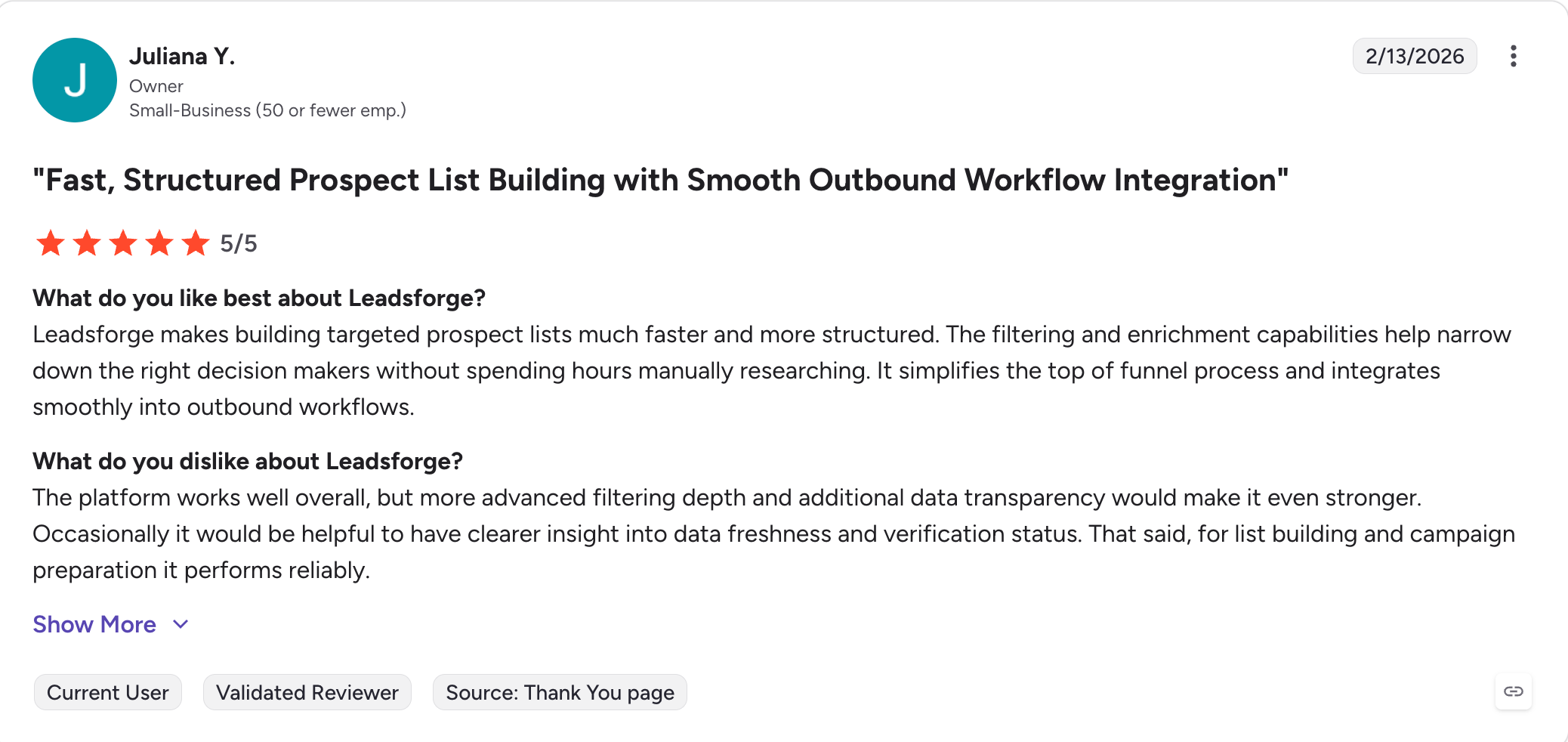
Best for: GTM teams and agencies that want waterfall-enriched leads, AI access through MCP and CLI, and credits that survive cancellation.
G2 Rating: 4.6 out of 5
Leadsforge runs a B2B lead finder on a 500M+ contact database. Every lead workflow sits in the one tool. You search by ICP, enrich a list, pull a competitor's followers or source leads from buying signals.
I put it at the top for one reason. No other lead finder here covers ICP search, waterfall enrichment, Competitor Followers Search and Local Company Search together. The credits also survive cancellation.
The main reason I moved off RocketReach is data freshness. B2B contacts decay at roughly 30% a year as people change jobs, companies rebrand, and phone numbers move. RocketReach queries a single database per lookup, so when a record goes stale between refreshes there is no fallback.
Leadsforge cascades through multiple providers per lookup, so even when one source has a stale record, another usually has the current one.
In addition, Leadsforge, on the other hand, seamlessly integrate with major CRM and email outreach tools like Salesforge multichannel outbound sequences.
Leadsforge Key Features
AI Lead Finder: You describe your ICP or use the standard filters, and verified contacts come back from the database.
Company Lookalikes: Feed it your best customers and it returns similar companies by industry, company size, revenue and tech stack.
Competitor Followers Search: You pull the LinkedIn followers of a competitor's company page, filtered by job title and seniority. Anyone following a competitor already cares about what you sell.
Local Company Search: Find companies inside a city, region or country and enrich them into lead lists. Useful for territory-based outbound.
Waterfall enrichment: Every lookup cascades through 20+ data sources until it finds a verified match. Deeper email verification runs as a separate step and costs extra credits.
Intent signals: Five types cover hiring, job change, acquisition, funding and investor. Every match arrives with evidence from public sources.
Free Chrome extension: Surfaces verified emails and mobile numbers on LinkedIn, then pushes contacts into a Salesforge sequence. Lookups spend Leadsforge credits.
CRM sync and integrations: Native HubSpot and Salesforce, with field mapping on both. One-click export into Salesforge sequences
API access, MCP server and CLI: An API key covers search, enrich and export. The Forge MCP server connects Leadsforge to Claude and Cursor for chat-driven lead discovery.
Leadsforge Pros and Cons
✅ Pros
❌ Cons
Credits never expire, even if you cancel.
Only 100 free credits on signup, no permanent free tier.
Only pay for verified leads
—
Lists move straight into Salesforge for email and LinkedIn outreach.
—
Competitor Followers Search finds people who already follow companies like yours.
—
Local Company Search anchors lists to a geographic area for territory-based outbound.
—
Free Chrome Extension shared across the Forge Stack.
—
Transparent flat pricing.
—
Leadsforge Pricing
Plan
Price
Credits
Notes
Free
$0
100 credits on signup
No credit card required
Pro, monthly
$49 a month
2,000 credits a month
Good for testing before you commit
Pro, annual
$588 a year
28,000 credits granted upfront
Two months free, and credits roll over
Custom
Sales contact required
Custom volume
Includes API access
One credit buys an email and ten buy a mobile number. Mobiles land near $0.245 each on the annual plan.
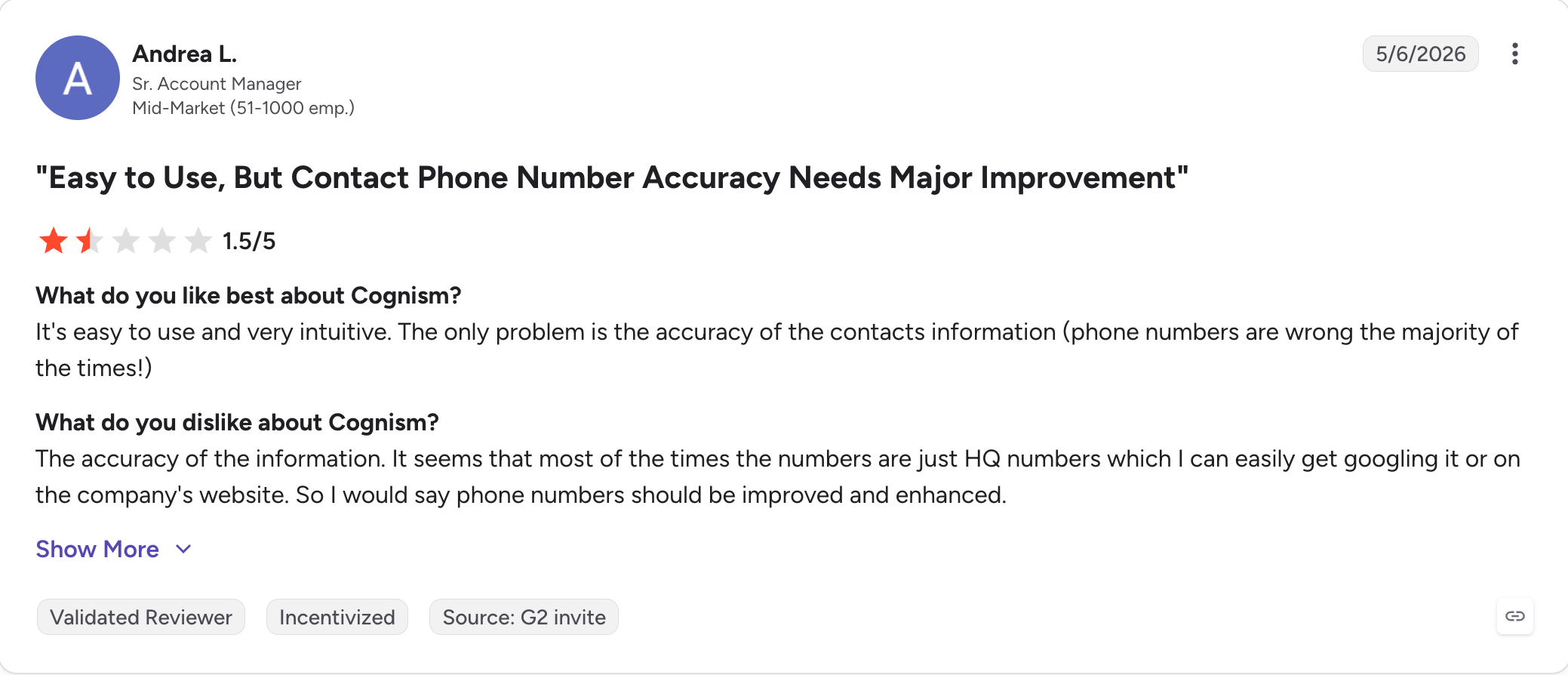
Best for: Outbound and RevOps teams selling into the UK, DACH, France or the Nordics who need phone verified mobile numbers and a GDPR-defensible sourcing story.
G2 Rating: 4.5 out of 5
Cognism runs a B2B contact database built for teams selling into Europe. Its research team calls Diamond data mobile numbers to verify them by hand. The company also designed GDPR compliance in from day one.
I reach for it when the ICP has an EU postcode. US-first databases thin out fast across the Channel, and Cognism built its business on that gap.
Cognism markets a claimed 87% connect rate on those verified phone numbers. No independent test confirms it, so treat the figure as the company's own.
Buying it takes a project plan. Cognism publishes no pricing, every deal runs through a quote, and contracts run annual only. Vendr puts the median at $36,000 a year across 108 purchases.
Cognism Key Features
Phone verified mobile numbers: The research team calls each Diamond data number to confirm it reaches the right person. Coverage runs deepest in the UK, DACH and the Nordics.
GDPR and CCPA compliance: Documented sourcing, DNC screening across covered markets, and a framework built for regulated EU outbound.
Bombora intent data: Layers on top of Cognism's own signals and ties them to buyer intent. Priced separately by topic.
Chrome extension: Surfaces verified contact data on LinkedIn and Sales Navigator without leaving the workflow.
Five seats included: On both the Standard and Pro packages, where most tools here charge per user.
Re-reveal credits: Revealing the same contact again costs nothing unless they changed jobs.
Native CRM integration: Cognism syncs with Salesforce, HubSpot, Outreach and Salesloft.
Kaspr extension: Cognism owns Kaspr, a self-serve LinkedIn capture tool with a free tier that Cognism itself lacks.
Best for: Startups and SMB sales teams that want a contact database and built in outreach under one bill, without procurement calls or annual contracts.
G2 Rating: 4.7 out of 5
Apollo bundles a 275M+ contact database, a native email sequencer and a US dialer into one product.
I point most RocketReach buyers here first, because it turns two invoices into one. RocketReach sells you data and you buy a sending tool separately. Apollo covers both on a single per-seat subscription.
You trade depth for that. Apollo's data works well inside US tech and thins out past it, and G2 reviewers flag that often. The sequencer handles normal volume without matching a dedicated sending tool.
Per-seat pricing also scales fast past five or ten reps. Organization carries a three-user minimum, so the real floor sits at $357 a month.
Apollo.io Key Features
275M+ contacts and 73M+ companies: Verified emails come on every plan. Phone numbers start on the paid tiers.
Built in email sequences: A native sequencer with A/B testing, unlimited daily sends on paid plans, and Gmail or Outlook mailbox integration.
AI email writer: Apollo drafts opening lines from the details already on the contact record.
US dialer: Included on Professional and above. International dialing stays on Organization.
Advanced filtering: Job title, company size, technographics and intent topics. Higher tiers add more filters.
Intent signals: Six topics on Basic, rising to twelve on Organization.
Native CRM sync: Apollo connects to HubSpot, Salesforce, Pipedrive and Outreach.
Free plan: 900 credits a year, two active sequences and Chrome extension access.
Best for: Mid-market and enterprise revenue teams with a procurement function and a workflow that needs intent data, call intelligence and CRM-native enrichment.
G2 Rating: 4.5 out of 5
ZoomInfo runs a sales intelligence platform with the deepest data and company insights here.
One subscription covers a 500M-contact database, Bombora intent data, Chorus call recording and WebSights website visitor tracking.
I see RocketReach buyers move here when budget stops being the limit. ZoomInfo covers everything RocketReach covers, then adds intent signals, call recording and visitor identification on top.
One thing changed this year. ZoomInfo now trades on Nasdaq as GTM instead of ZI, and G2 lists the product as GTM Workspace. The data stayed the same and the name did not.
Price causes the main problem. ZoomInfo publishes none of it, every deal runs through a quote, and contracts run annual only.
ZoomInfo Key Features
500M+ contacts and 100M+ companies: 200M+ verified emails, 135M+ phone numbers and the deepest US company data of anything I tested.
Bombora intent and the ZoomInfo ID Graph: Two buyer intent layers stacked together, priced per topic and per seat.
WebSights: Identifies anonymous website visitors and matches them to accounts in the database.
Chorus call intelligence: Records, transcribes and analyzes sales calls, then surfaces what moved the deal.
Org charts and company news: You see who reports to whom and what changed recently, so you can pick the ideal buyer instead of the first name on the list.
Copilot AI: Available across the Copilot tiers for buying-group identification and predictive analytics.
Deep CRM integration: ZoomInfo syncs records and enrichment into Salesforce, HubSpot, Outreach and Salesloft.
Custom pricing only, and every purchase runs through sales
The deepest intent and signal data here
Annual contracts, with procurement often taking weeks
Chorus call intelligence and Copilot AI come bundled on higher tiers
EU coverage is weaker than Cognism's
ZoomInfo Lite gives individuals a free tier
Intent, Copilot and Chorus each price separately, so the bill grows
ZoomInfo Pricing
Plan
Details
Custom
Quote only. ZoomInfo publishes no prices
Contract
Annual, with seat minimums
Free tier
ZoomInfo Lite, 10 export credits a month
Trial
No self-serve trial. Demo required
Third-party procurement data puts the median contract at $31,875 a year across 1,313 verified purchases. Full-stack deals with intent, Chorus and Copilot commonly run past $60,000.
Best for: Buyers whose main frustration with RocketReach is paying for bounced emails, and who want a written accuracy guarantee with credit back on invalid contacts.
G2 Rating: 4.7 out of 5
UpLead runs a B2B contact database with a written accuracy guarantee.
The tool checks every email at the moment you export it and promises 95% accuracy. Any contact that fails verification or bounces gets the credit refunded.
I recommend it when the RocketReach complaint is specifically about bounces. Nothing else here puts real time verification in the contract.
You pay for that guarantee per contact. Essentials on annual billing works out near $0.44 a verified contact and Plus near $0.37. Both prices look fair for single-source data with a refund behind it. Both also run about twenty times the per-credit cost of a pooled waterfall tool.
I would check the seat structure before buying. Essentials and Plus cover one user each. A team means Professional, sold annual only on a quote.
UpLead Key Features
Real time verification on every export: UpLead checks each contact as you pull it, not against a stale cache. The export returns verified contact information instead of raw records.
95% accuracy guarantee with credit back: Any contact that fails verification or bounces gets refunded. The guarantee sits in the contract.
160M+ contacts and 16M+ company profiles: A smaller database than Apollo or ZoomInfo, with every record verified at export.
Technographic and firmographic filtering: You filter by tech stack, industry, headcount and revenue.
Native CRM integration: UpLead syncs with Salesforce, HubSpot and Pipedrive.
7-day free trial: Five credits, no credit card, enough to test data quality before committing.
UpLead Pros And Cons
Pros
Cons
The credit back guarantee on bounces is the strongest of the twelve
The database is smaller than Apollo's or ZoomInfo's
Real time verification means a cleaner list on day one
Per-contact cost runs higher than Apollo, RocketReach or Hunter
The 95% figure sits in a contract rather than a marketing page
No built in outreach, so you need a separate sending tool
Its users raise data quality problems less often than anyone else's
Essentials and Plus are single-user accounts
UpLead Pricing
Plan
Price
Credits
Free trial
$0
5 credits over 7 days
Essentials
$74/month billed annually, or $99 monthly
2,040 a year, 170 a month
Plus
$149/month billed annually, or $199 monthly
4,800 a year, 400 a month
Professional
Custom, annual only
Custom volume, API access and team management
Essentials and Plus cover one user each. Overage credits cost $0.60 on Essentials and $0.50 on Plus.
Best for: SDRs and account executives who prospect inside LinkedIn and Sales Navigator and want a one-click Chrome extension with a free tier for low-volume days.
G2 Rating: 4.3 out of 5
Lusha works as a LinkedIn contact lookup tool, not a database research platform.
You open a LinkedIn profile, click the Lusha button, and get a contact's email and phone number back. Open a Sales Navigator list and it does the same for every profile on it.
Nothing here beats Lusha on speed if you prospect inside LinkedIn. The easy to use interface is the whole product.
Lusha gets weaker everywhere else. Filtered list building outside LinkedIn does not touch Apollo or ZoomInfo. Lower tiers cap bulk exports, so you will work from a CSV file more than you expect.
A phone number costs ten credits where an email costs one. Calling teams burn an allowance fast.
Lusha Key Features
Chrome extension: One-click reveals of verified emails and verified phone numbers from any LinkedIn profile or Sales Navigator list.
150M+ business profiles: A community-sourced database with real time verification at the moment of reveal.
Credit rollover: Unused credits carry forward up to twice the monthly allowance, though only on the higher tiers.
Free tier: 40 credits a month, including Chrome extension access.
Native CRM integration: Lusha syncs with Salesforce, HubSpot, Outreach and Pipedrive.
Compliance certifications: Every tier carries ISO 27701, GDPR and CCPA.
Best for: SDR teams already running Salesforce or HubSpot alongside Outreach or Salesloft, who want one-click capture from LinkedIn into the CRM.
G2 Rating: 4.2 out of 5
LeadIQ works as a Chrome extension built for LinkedIn prospecting. You click it on a profile and pick a sequence. The contact lands in the CRM and the sequencer at once, with no tab switching.
I recommend it when a team already runs that stack and wants a fast capture layer.
LeadIQ does not build bulk lead lists the way Apollo or ZoomInfo does. The tool sits on top of LinkedIn and your CRM, earning its keep only if your team already works that way.
LeadIQ also repriced in 2026, and most articles about it are out of date. The old per-seat tiers went away. Universal credits replaced them: one pool, a slider, and five users at every step of it.
LeadIQ Key Features
LinkedIn Chrome extension: You capture a contact from any profile or Sales Navigator list in one click.
Scribe AI: Generates personalized email openers from the prospect data already on the record.
CRM enrichment: Keeps Salesforce and HubSpot records fresh with updated job titles, phone numbers and company data.
Job change tracking: Alerts you when a champion at a customer account moves somewhere new.
Universal credits: One pool covers every workflow, with five users included at every pricing step.
MCP integration: A public MCP server launched in early 2026. LeadIQ was among the first prospecting tools to work with Claude and Cursor.
CRM sync and automated workflows: LeadIQ connects to Salesforce, HubSpot, Outreach and Salesloft.
LeadIQ Pros And Cons
Pros
Cons
The fastest LinkedIn-to-CRM capture workflow I tested
Phone number accuracy runs inconsistent, especially outside the US
Five users included at every pricing step, where most tools charge per seat
Not a bulk list builder, so it does not replace Apollo or ZoomInfo
A public MCP server for Claude, Cursor and agent workflows
A phone number costs ten credits against one for an email
A free plan with 50 credits a month for testing
Published prices vary widely across sources
LeadIQ Pricing (Annual)
Plan
Price
Notes
Free
$0
50 credits/month, 1 user, Chrome extension, Scribe AI
Essential
~$39/user/month (billed annually)
Reported range $36-$45/user/month, credit-based; relies on credit based usage, which can get expensive for heavier prospecting
Pro
~$79/user/month (billed annually)
Credit-based, relies on credit based usage, which can get expensive for heavier prospecting; CRM sync across Salesforce, HubSpot, Outreach, Salesloft, Gong Engage
Best for: Small teams and solo founders whose whole workflow is email discovery and verification, with no need for phone numbers or intent data.
G2 Rating: 4.4 out of 5
Hunter does one thing. It finds and verifies email addresses through Domain Search, Email Finder and Email Verifier. A basic Campaigns feature sits alongside them.
Hunter carries no phone numbers on any tier. It skips intent data and advanced filtering too.
If phone numbers are not part of the job, I recommend Hunter without hesitation. Pricing starts at $34 a month on annual billing for 2,000 credits. Every paid plan includes unlimited users.
Hunter does not compete with ZoomInfo or Apollo on breadth. It competes on price per verified email and seat economics, winning both when the workflow fits.
Hunter.io Key Features
Domain search: Returns email patterns and verified contacts from a company domain.
Email finder: You give it a name and a company, and it returns the verified email.
Email verification: Real time checking runs separately from the finder.
Hunter Campaigns: Basic email campaigns with follow-ups, built into the paid plans.
Data Platform: An API-only route where you buy bulk credits outright and they stay valid twelve months.
Unlimited users on every paid plan: Hunter charges no per-seat fee anywhere in the product.
Free plan: 25 searches and 50 verifications a month.
Best for: Buyers who want a real-time contact search engine, will run every result through a validator, and are prepared to negotiate contract terms before signing.
G2 Rating: 4.4 out of 5
Seamless.AI runs a real-time B2B contact search engine.
The engine finds contacts on the fly when you run a search, instead of querying a pre-built database. Doing it that way sometimes surfaces people other tools miss.
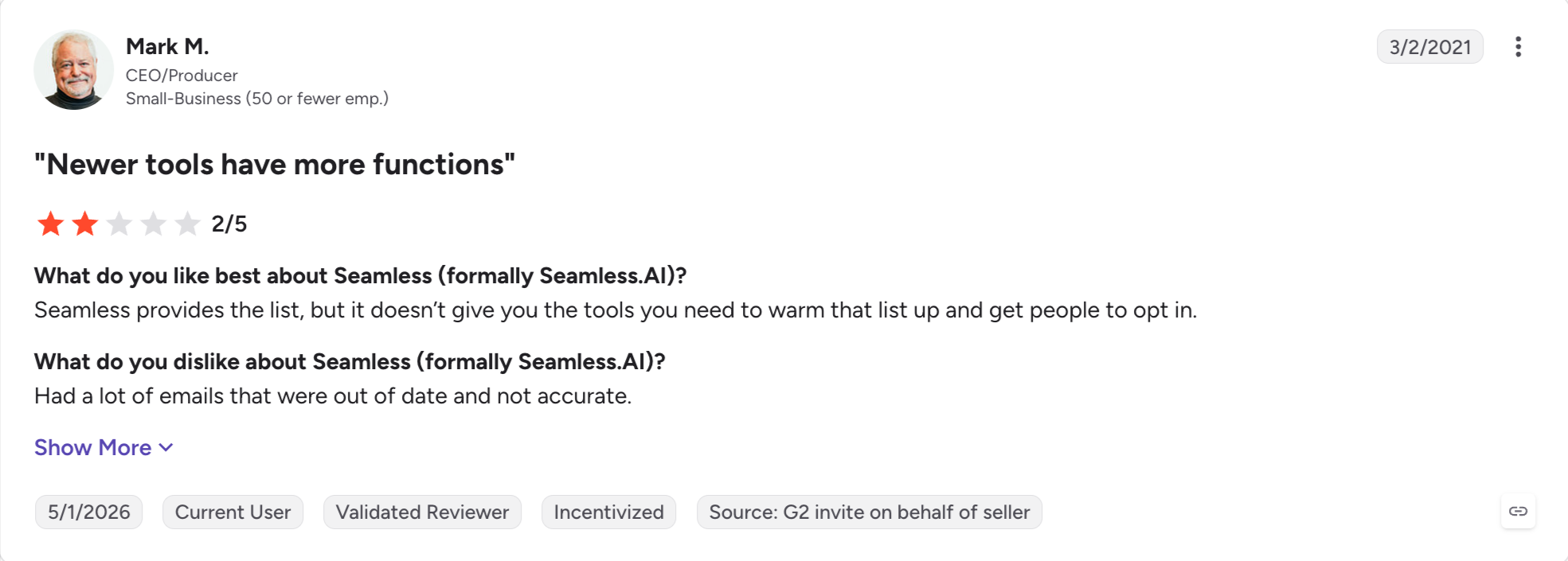
I have complicated feelings about it. G2 sits at 4.4 across more than 5,000 reviews and Trustpilot sits near 1.3. Both scores look honest, and the split says nothing about the product. G2 measures the day-to-day workflow and reviewers rate it well. Trustpilot measures the contract and cancellation experience, and they rate it badly.
Real-time search also means variable accuracy. Seamless markets 98%, while more than one reviewer in eight raises bad or outdated information. No other tool here does worse.
I would read the contract before signing. Seamless runs annual terms with a 60-day cancellation notice, and billing disputes come up often in reviews.
Seamless.AI Key Features
Real time search capabilities: The engine researches contacts on demand instead of serving a static record.
Pitch intelligence: Supplies messaging context on a contact, available on every tier.
Chrome extension: Captures and verifies contacts directly from LinkedIn profiles.
1.3B+ contact records: Marketed database size, with real accuracy varying by search.
Buyer intent, job changes and data enrichment: Three AI features layer on the search engine. All sell as additional tools on the paid tiers.
CRM integration: Seamless syncs with Salesforce, HubSpot, Salesloft and Outreach.
Free plan: 50 credits, enough to test data quality before paying.
Best for: Teams who want waterfall enrichment with published pricing and no per-seat lock on the credits.
G2 rating: 5.0 out of 5, from a small review base
Cleanlist AI runs waterfall enrichment across 25+ providers.
The tool asks each one in turn and stops at the first result that verifies. Leadsforge works the same way, and RocketReach does the opposite with a single lookup.
Search costs nothing and a miss costs nothing. You spend a credit only when an email or a phone number comes back.
Credits also pool across the workspace instead of sticking to the seat that bought them. Every seat adds its allowance to one shared balance.
The numbers need care. Cleanlist publishes 98% verified work emails and 85% direct dial, both from its own 500-lead benchmark. No outside test confirms either figure, and the G2 profile is too thin to check against.
Cleanlist AI Key Features
Waterfall enrichment across 25+ providers: Each provider gets asked in turn until an address verifies.
Verified emails and verified phone numbers: One credit buys an email and ten buy a phone number.
Pay on success: Searching costs nothing, and a failed lookup costs nothing either.
Pooled credits: Every seat adds its allowance to one shared workspace balance.
Email verification for your own lists: Runs at 0.3 credits per check, separate from enrichment.
ICP scoring: Ranks a list by fit, at five credits per qualification.
LinkedIn and Sales Navigator extension: Included on the free plan.
CRM integration: Cleanlist syncs with HubSpot, Salesforce, Pipedrive and Outreach.
Cleanlist AI Pros And Cons
Pros
Cons
Waterfall enrichment with published pricing, which ZoomInfo and Cognism will not give you
Its headline accuracy figures come from its own benchmark
A miss costs nothing, so you never pay for a bounce
The G2 review base is too small to verify anything against
Credits pool across the workspace instead of locking to a seat
No buying signals and no outreach layer
A free plan with 50 credits a month and up to three seats
Provider counts vary between 15+ and 25+ across its own pages
Cleanlist AI Pricing
Plan
Price
Credits
Seats
Free
$0
50 a month
Up to 3
Starter
$49/seat/month, or $444/seat/year
750 a seat each month
Per seat
Pro
$89/seat/month, or $804/seat/year
1,500 a seat each month
Per seat, 14-day trial
Enterprise
Custom
Custom
Custom
One credit buys a verified work email and ten buy a phone number. An ICP qualification costs five, and a standalone verification 0.3. Top-ups start at $49 for 1,000 credits, and those never expire.
Final Verdict: Which RocketReach Alternative is Worth Switching To?
The 10 RocketReach alternatives above each solve part of the RocketReach problem.
The right pick depends on whether you need cleaner data, stronger phone coverage, richer sales intelligence, or built-in workflow automation.
For most agencies, outbound, and GTM teams leaving RocketReach, Leadsforge fixes all four problems at once, and it is the strongest fit for sales and marketing teams running outbound campaigns at scale.
Credits roll over. Bad emails get refunded. The chat-based ICP search replaces the filter stack. And the data flows straight into Salesforge for cold email and LinkedIn outreach under one shared login, which cuts the second-tool cost that hits every RocketReach buyer eventually.
For solo founders doing low-volume email lookups, yes. Essentials costs $329 a year and a lookup that finds nothing gets refunded. A team sending at scale pays more than the pricing page shows. The auto-renewal clause and a 20% to 30% bounce rate do that.
2. Can someone see if you looked them up on RocketReach?
No. RocketReach does not tell people when you view or reveal their details, unlike a LinkedIn profile view. Most people only find out when they search their own name and see themselves listed.
3. Is RocketReach free?
A free account gives you five lookups and nothing more. Paid plans start at $329 a year on annual billing, or $49 a month.
4. Is there a free RocketReach alternative?
Yes. Leadsforge gives 100 free credits on signup with no card, enough to run a real list through it. Hunter.io and Apollo.io both run permanent free tiers if you want to compare before paying.
5. How do I cancel RocketReach and get a refund?
You can cancel in the dashboard. The subscription agreement still says payments are non-refundable once a billing period starts. Reviewers report refusals within a day of a renewal charge, so I would set a calendar reminder.
6. Does RocketReach refund credits for bad data?
Only partly. RocketReach refunds a lookup that returns nothing, and its own pricing page confirms that. A lookup that returns an address which later bounces gets no refund. Leadsforge credits a bounce back.
7. Why do verified emails still bounce?
Because one database answered the question alone. When that record goes stale between refreshes, nothing catches it. Leadsforge checks multiple providers on every lookup. An old record in one source usually gets corrected by another.
8. What happens to credits I do not use?
On RocketReach, annual credits expire after twelve months and do not survive cancellation. On Leadsforge they never expire, and unused credits roll into the next month.
Book more meetings on autopilot
Set up in minutes. No per-seat pricing. No commitment.
Compare the 7 best places to find doctors email lists in 2026. Explore features, pricing, and contact data to choose the right provider for your needs.
Compare six CFO email list providers in 2026, including Leadsforge, Cognism, ZoomInfo, BookYourData, Snov.io, and Apollo.io. Explore their features, pricing, targeting capabilities, and contact verification options to choose the right platform for building targeted B2B prospect lists.