Every outbound team that leaves Seamless.AI has their own reason.
Here are the ones I hear most:
So I put 9 of the strongest Seamless.AI alternatives through real outbound workflows: cold email, calling, enrichment, and a mix of ICP profiles.
A few of these can take Seamless's spot outright. A couple work better sitting alongside it. And two only make sense for a very specific type of team.
In this post, I break down all 9 tools. What each one does well. Where it falls short. And which one I'd actually recommend based on how your team sells.
Let's start with the short version.
Now let's look at how the top 3 compare side by side, then dig into why teams are leaving Seamless in the first place.
If you're short on time, these are the three I'd shortlist first.
Leadsforge for most GTM + outbound teams and agencies. Apollo.io if you want a free way to test data quality before paying. Cognism if you're selling into Europe and can't afford compliance risk.
Here's how they stack up against each other and against Seamless.AI:
Next, let me break down exactly what's pushing teams to switch in the first place.
Seamless.AI works. It has over 5,277 G2 reviews and a 4.4 rating. People use it every day.
But then I checked Trustpilot and the score drops to 1.4.
Personally, what I keep hearing from the people who left comes down to five things.
Seamless.AI markets "98% accuracy." I've never seen a team hit that in practice.
Real numbers from user reports across G2, Capterra, and Reddit put email accuracy between 60% and 85%. Bounce rates land at 20% to 30% on cold sends.
That's well past what Gmail and Yahoo want to see before they start filtering your sender reputation.
You can't cancel Seamless.AI from a dashboard button.
You have to email account management in writing at least 60 days before your annual renewal date.
Miss the 60-day deadline, even by a few days, and Seamless auto-renews you for another 12 months.
Most users don't find out about this until they try to cancel. It's not called out on the signup page, and there's no reminder before the deadline hits.
This is the single most cited complaint on Trustpilot and the main reason the score there is 1.4 while G2 sits at 4.4.
Every reveal costs a credit. It doesn't matter if the email bounces or the phone rings a disconnected line.
You paid for the data. It didn't work. And the credit's gone anyway.
When 20% to 30% of your exports fail, a quarter of your budget going to contacts you can't actually reach.
Leadsforge refund the credit automatically when a reveal turns out to be invalid. Seamless doesn't. The failure cost is yours.
Phone accuracy on Seamless.AI runs 50% to 70% in user reports. The numbers aren't scrubbed against Do Not Call lists.
And here's the bigger problem for European teams: Seamless states directly on its own site that its services are 'not appropriate for use outside the US.' No GDPR focus. No CCPA focus. No international phone verification.
If you're calling into Europe or you sell to teams that care about compliance, that's not a limitation you can work around.
Open seamless.ai/pricing. AI Assistant, Data Enrichment, Autopilot, and Buyer Intent are all listed as add-ons. Not in Pro. Not in Enterprise.
Pitch Intelligence is part of the base plan, but the AI features you'd actually expect from an "AI" tool cost extra.
Seamless did launch a native MCP server in May 2026, but there's no first-party CLI, and every call still pulls from the same data pool driving the bounce rates above.
The AI marketing sounds great. The AI bill tells a different story.
These are the nine I've tested against Seamless.AI across real outbound workflows. Each one solves at least one thing Seamless gets wrong. Some solve all of them.
Best for: Outbound teams who want verified B2B leads without building complex filter queries or paying enterprise prices.
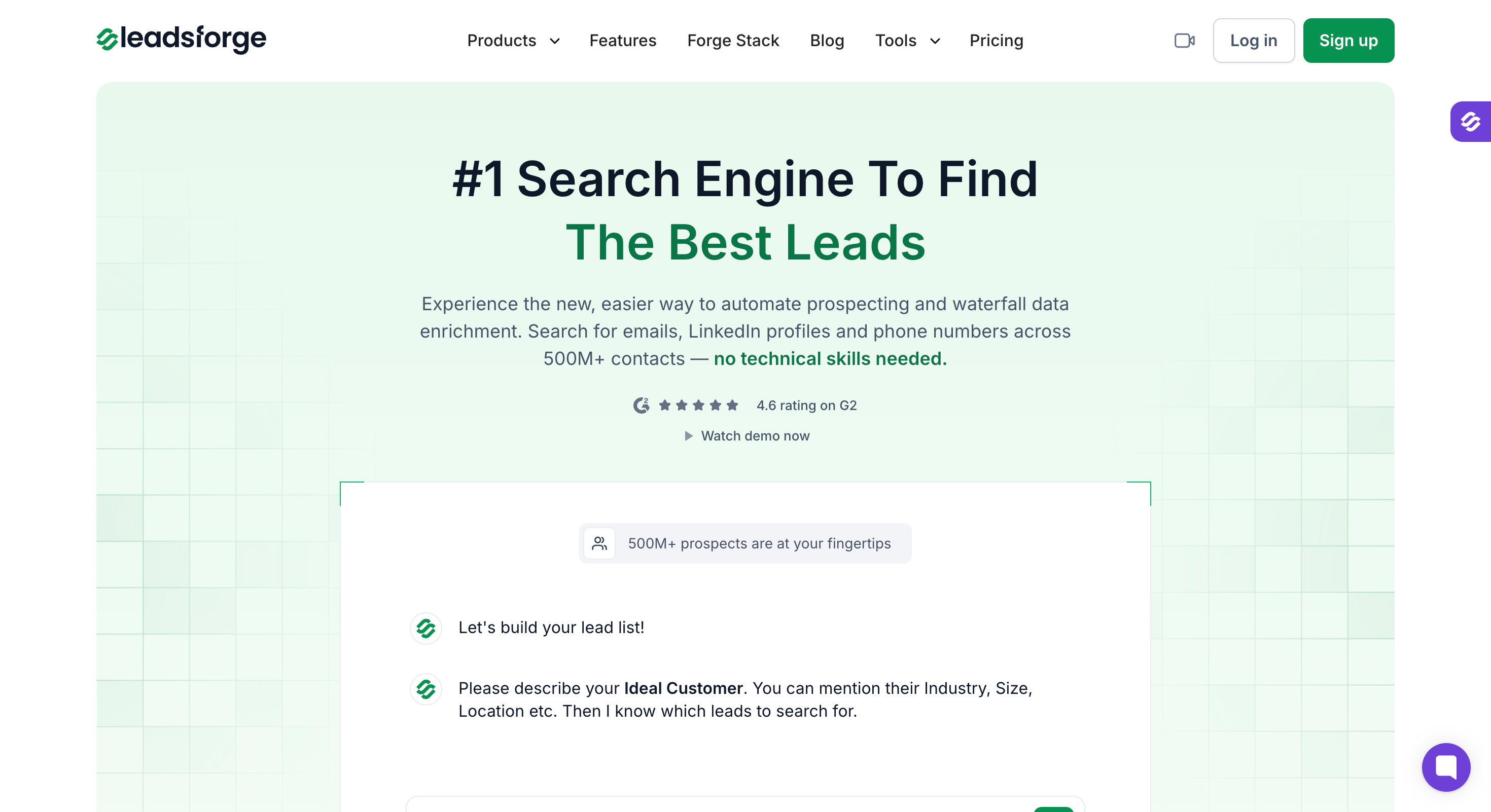
Leadsforge is a lead generation tool that works like a search engine for B2B contacts.
You type what you're looking for in plain English (something like "SDR managers at Series B SaaS companies in the UK") and it returns a list of matching, verified prospects.
I use it as my default when I don't have time to fiddle with 40 filter drop-downs. The search bar does the work. Though if you want hyper-targeting, the standard filter options are there.
Three things stand out when I compare the two side by side.
For the way most outbound teams work today, Leadsforge does everything Seamless does with better data verification, better UX, and a contract that doesn't try to trap you. I've moved most of my list-building here and haven't looked back.
Best for: Teams that want prospecting and cold email sequencing in one platform, with a free plan to test data quality before paying anything.

Apollo.io is a sales platform that combines a 210M+ contact database with built-in email sequences, a lightweight CRM, and basic sales intelligence. It's the tool most SDRs I know start with because the free plan lets you actually work, not just look around.
Search filters cover the basics (job title, industry, company size, tech stack) and go deeper on higher tiers with intent data and lead scoring.
Apollo doesn't stop at data export. That's the biggest gap it fixes.
With Seamless, you find a contact, download the list, then jump into a separate cold email tool, connect your CRM, and manage everything across three platforms. Apollo does all of it in one place. You find a lead, drop them into a sequence, track opens and replies, and log the activity to Salesforce or HubSpot without leaving the tab.
The free forever plan matters too. I can hand Apollo to a new rep, let them run 100 contacts, and see if the data holds up before we commit a dollar. Seamless gives you 50 lifetime credits and then it's a sales call.
The credit model has teeth. Mobile number reveals cost 8 credits each. Credits reset every billing cycle with no rollover. If you're a high-volume team, you'll burn through your allocation faster than you expect.
Per-user pricing also stacks up. A five-person team on Professional costs around $395/month, which starts feeling steep once you factor in the credit top-ups you'll need.
And the advanced filters (technographics, intent data, engagement signals) live behind the higher tiers. The $49/month entry point is real, but you don't get the good stuff at that price.
If I were starting an outbound team from scratch tomorrow, I'd probably run Apollo for the first six months. It's the fastest way to get from zero to sending. Once you scale past 5 or 6 reps, the per-user pricing and credit ceilings push you to look elsewhere.
Best for: Sales teams selling into Europe where GDPR compliance is non-negotiable and phone-verified direct dials matter for outbound calling.
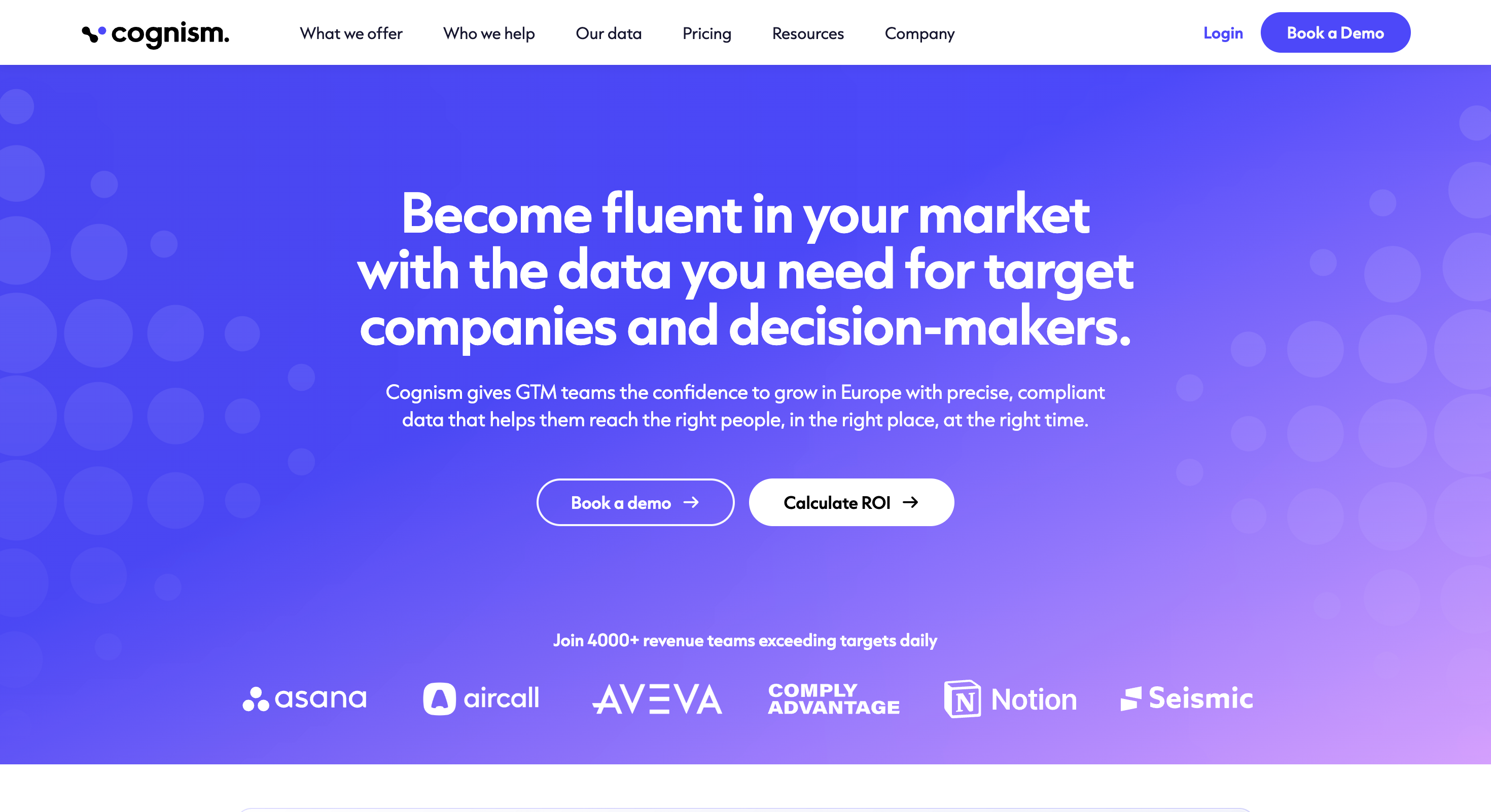
Cognism is a B2B sales intelligence platform built with European outbound in mind.
The database covers 400M+ contacts, with the strongest EMEA coverage on this list. What sets it apart is how the data gets verified: every contact runs through a 16-step process, and phone numbers get cross-referenced against Do Not Call registries across 12 countries.
If your team calls into the UK, Germany, France, or the Nordics, Cognism is the tool I'd shortlist first.
Seamless states directly that its services are "not appropriate for use outside the US." Cognism is built for the opposite problem.
Two things stand out.
First, the compliance posture. Cognism handles GDPR, DNC registries, and consent tracking as core infrastructure, not an afterthought. For teams that could face legal exposure from a bad cold call in Europe, this isn't a nice-to-have. It's the whole reason to buy the tool.
Second, phone accuracy. Cognism's Diamond Data set includes 10M+ mobile numbers that are verified by both AI and human researchers. The reported connect rate is 87%. Seamless phone accuracy runs 50% to 70%. If you're paying reps to call, the difference between "the number rings" and "the number is dead" changes your unit economics.
Custom only. You'll need to book a demo before you see a number.
Based on public reports, annual contracts typically start around $15,000 and scale to $100,000+ depending on team size and features. Diamond Data and intent data usually sit on higher tiers. For teams under 5 reps, the entry cost rarely pencils out.
The pricing model is enterprise-only. There's no self-serve plan, no free trial, no month-to-month option to test the data before committing. If you're a solo founder or running a small SDR team, Cognism will likely price you out.
No built-in outreach either. Cognism is a data and intelligence platform, not a sequencing tool. You'll need to plug in Salesforge, Apollo, Outreach, or SalesLoft to actually run campaigns.
Cognism is the clearest answer to "which Seamless.AI alternative should I buy if I sell into Europe?" There isn't a close second on this list for that use case. The pricing is real (this is not a scrappy-team tool) but if you're paying five reps to dial into EMEA every day, the ROI math usually works out. I'd pair it with Salesforge for the outreach layer and call it a stack.
Best for: Enterprise sales and RevOps teams that need the deepest US contact database, intent data, and integrations across the go-to-market stack, with the budget to match.

ZoomInfo is the largest B2B intelligence platform on this list.
The database covers 260M+ contacts, 100M+ company profiles, and 135M+ verified phone numbers. It's the incumbent most enterprise teams already have in their stack, and the tool other vendors position themselves against.
Beyond the contact data, ZoomInfo bundles in Chorus (conversation intelligence), website visitor identification, and ZoomInfo Copilot (their AI layer for account prioritization). Separate product lines exist for sales, marketing, and RevOps, all pulling from the same database.
The gap between ZoomInfo and Seamless is size and depth.
Seamless gives you contact records. ZoomInfo gives you a full account intelligence system: contact data, conversation transcripts, intent signals, and visitor identification, all tied together. If you're a large sales org that needs to know which accounts to prioritize this week (not which contacts to email), Seamless can't do that. ZoomInfo can.
Data accuracy is also meaningfully better for US enterprise accounts. I've seen bounce rates from ZoomInfo exports run 5% to 10% versus Seamless at 20% to 30%. On a 10,000-contact list, that difference is thousands of extra usable prospects.
Custom only. Every plan starts with a sales conversation.
Public reports put annual contracts at $15,000 as a rough floor, with mid-market deals landing in the $25,000 to $75,000 range and enterprise contracts stretching well past $100,000. Pricing scales by seat count, database access, and which product lines you turn on (Sales, Marketing, Operations, Talent).
The cost is the obvious blocker. For teams under 10 reps, ZoomInfo rarely pencils out. You're paying for infrastructure, not just data, and if you're not using the intent signals, conversation intelligence, and enrichment automation, you're overpaying by a wide margin.
Contracts are also long. Annual is the floor, multi-year is common, and cancellation timelines are similar to what teams complain about with Seamless. The onboarding curve is real too. Most teams need dedicated CS support for the first few months just to configure the platform correctly.
If you're running an enterprise outbound motion with real budget and a RevOps team to operate the stack, ZoomInfo is the incumbent for good reason. The data is deeper, the intelligence layer is genuinely useful, and the integrations are solid.
If you're a startup, a small SDR team, or a founder still figuring out ICP, I'd steer you toward Leadsforge or Apollo. The ZoomInfo bill will eat your runway faster than the platform pays back.
Best for: RevOps and growth teams that want to build custom enrichment workflows across dozens of data providers, not just pull contacts from a single database.
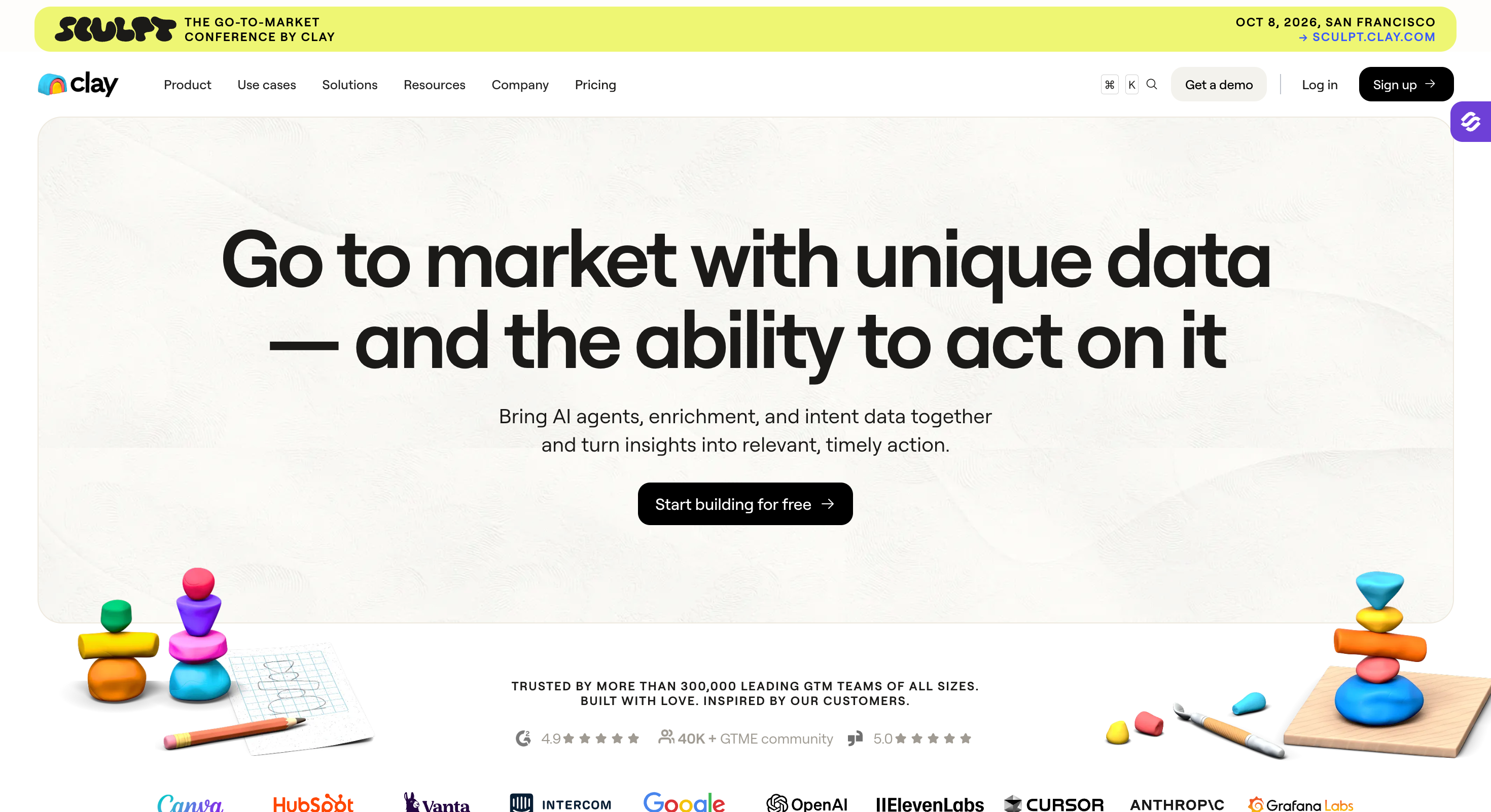
Clay isn't a contact database. It's a data orchestration platform that pulls from 75+ providers (Apollo, ZoomInfo, LinkedIn, Clearbit, Ocean, and many more) and lets you build enrichment workflows on top of them. You start with a list of companies or contacts, then layer on the exact data points you need: tech stack, funding stage, job changes, hiring signals, whatever the workflow calls for.
If Leadsforge and Apollo are search engines, Clay is a workbench. You bring the raw list, Clay enriches it.
Clay solves a completely different problem than Seamless, and that's why it's on this list.
Seamless is a single data source with a single quality bar. If Seamless doesn't have the contact you need or the field you care about, you're stuck. Clay pulls from 75+ sources in parallel, waterfalls through them, and takes the best result. If one provider is missing a phone number, another one might have it. The final row you get is stitched from multiple sources.
For teams doing account-based outbound where every enrichment field matters (revenue, tech stack, recent funding, headcount growth), Clay produces cleaner, richer data than any single-source tool. Seamless can't compete on that.
The credit math is tricky. Every provider you waterfall through costs credits, so a workflow that hits five providers per contact burns five times faster than a single-source tool.
There's a learning curve. Clay is powerful, but you don't just log in and start prospecting. You build tables, configure providers, set up waterfalls, and write formulas. Most teams need a week or two before they're productive.
Cost also scales fast. The Pro tier at $720/month is well past what most SMB outbound teams want to spend on data alone, and the credits run down quickly if you're not careful about workflow design.
Clay is the best tool on this list for RevOps and growth teams that treat data as a build problem, not a buy problem. If your outbound plays depend on precise, multi-signal enrichment (not just "give me VPs of Sales in SaaS"), nothing else comes close.
If you just need a list of verified emails to send cold outreach to tomorrow, Clay is overkill. Use Leadsforge or Apollo instead and come back to Clay when your workflows get more complex.
Best for: Account-based sales teams that care more about email accuracy than database size, especially teams prospecting by technology stack.
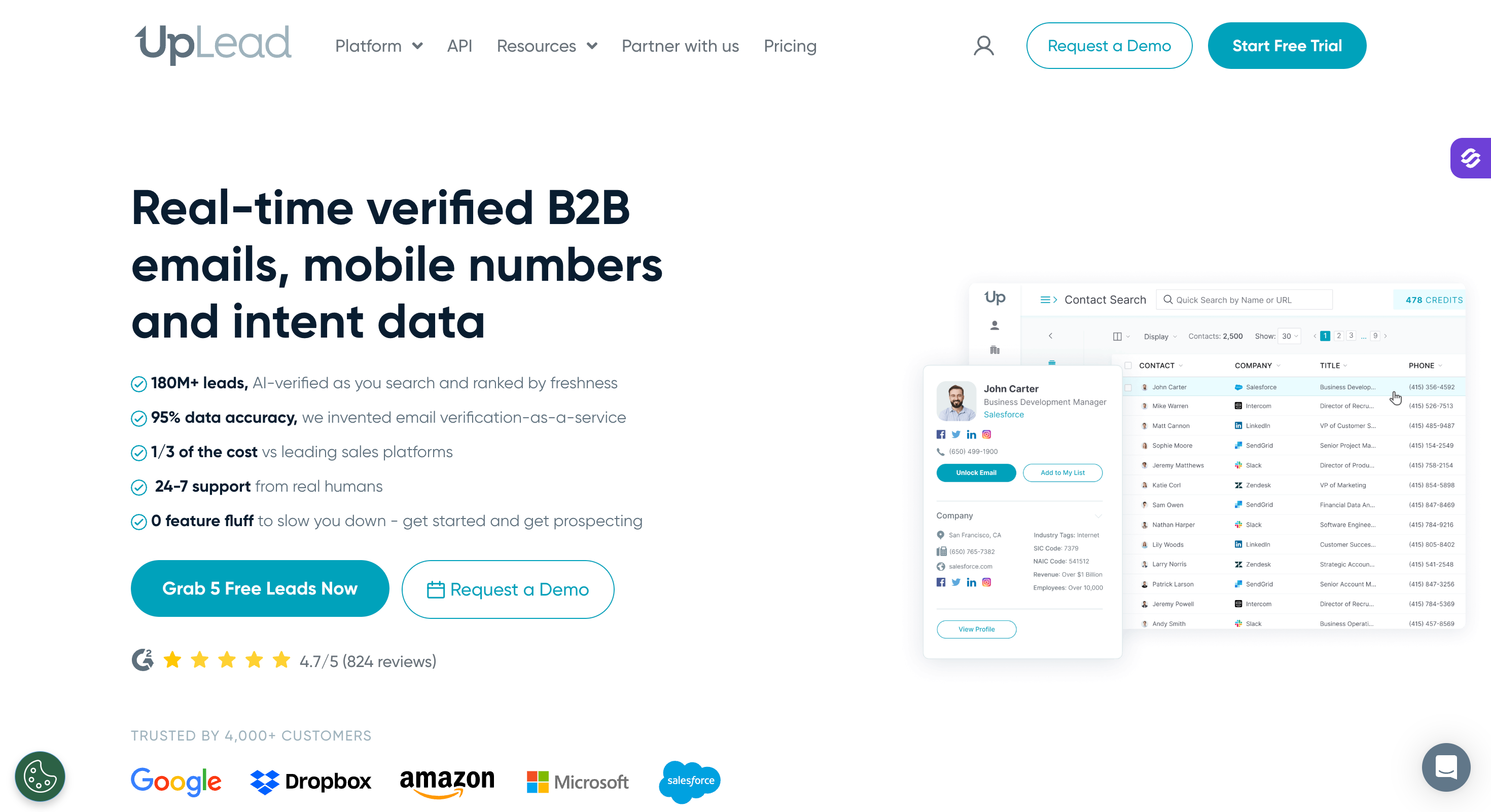
UpLead is a B2B contact database built around one commitment: you only pay for contacts that verify at the moment of download. Every email gets confirmed in real time when you reveal it. If a verified email still bounces after that, UpLead refunds the credit automatically.
The database covers 160M+ contacts and tracks 16,000+ technologies across company profiles, which makes it especially useful for software vendors selling based on the tools a prospect already uses.
UpLead fixes the exact thing that makes Seamless painful: paying for data that doesn't work.
With Seamless, every reveal burns a credit. Bounce rate averages 20% to 30%, which means roughly a quarter of what you pay for is unusable. UpLead flips that model. Emails get verified at the point of download, and if one still bounces after that, the credit comes back to your account. You only pay for contacts you can actually reach.
The technographic depth is a bonus most teams don't realize matters until they need it. If you sell a Salesforce app, being able to filter for companies that already use Salesforce (rather than guessing) changes the shape of your outbound list.
Credit allocations are modest on entry plans. If you're doing focused ABM with a target list under 200 accounts per month, Essentials works. High-volume prospecting will burn through it fast.
The credit ceiling is the biggest limitation. 170 credits/month on Essentials means you're revealing roughly 8 contacts per business day. For teams running high-volume outbound, that's not enough.
No direct dials on the Essentials plan either. If phone is part of your workflow, you're pushed to Plus at minimum, and even then the phone data isn't as deep as what Cognism or ZoomInfo offer.
And there's no built-in outreach. UpLead gets you the data; you'll need to plug in Salesforge, Apollo, or another sequencing tool to actually run campaigns.
UpLead is the tool I'd pick if my main complaint about Seamless was bounce rates and wasted credits. The verified-only model is the cleanest fix on this list for that specific pain, and the technographic filters are legitimately deeper than most alternatives.
Just know what you're buying: a precision instrument, not a volume tool. For ABM teams working small target lists with high accuracy, UpLead is excellent. For high-volume SDR teams that need thousands of contacts a month, Leadsforge or Apollo will get you further for the same budget.
Best for: Account-based sales teams that want to time outreach around real-world buying triggers instead of working from a static contact list.
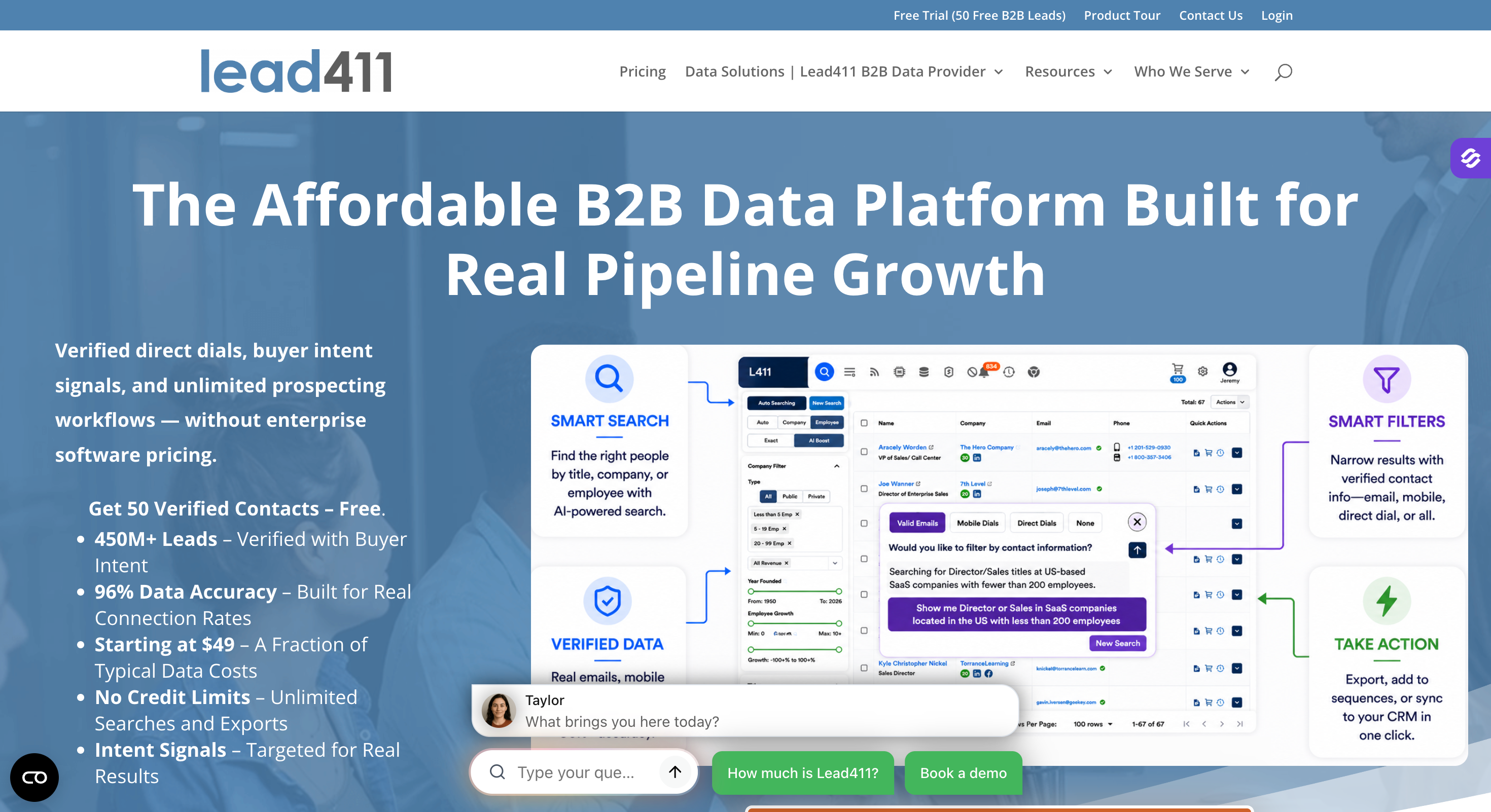
Lead411 is a B2B sales intelligence platform built around timing. The database covers 450M+ contacts, but the real product is the trigger system layered on top: job changes, funding rounds, hiring activity, leadership moves, and company growth events, all tracked in real time.
When a target account hits a trigger you care about, Lead411 flags it. You can then push that account straight into an automated outreach sequence using the built-in Cadence tool.
Seamless gives you a list. Lead411 gives you a reason to reach out.
That's the difference. With Seamless, you find contacts and hope your timing is right. With Lead411, you're notified when a company just raised a Series B, hired a new VP of Marketing, or opened three sales roles in a week. That's not a cold outreach opportunity anymore. That's a warm one.
The unlimited data model on higher tiers also removes the credit anxiety that defines the Seamless experience. If your workflow depends on high-volume prospecting, not counting every reveal against a monthly cap is a meaningful shift.
The Spark tier is where most teams start. The unlimited plans get you to the real value proposition (trigger-based outreach at scale) but you'll need to talk to sales for pricing.
The interface feels dated compared to Leadsforge, Apollo, or Clay. It works, but it doesn't feel like a modern SaaS product. If UX quality matters to your team, this will grate.
Bombora intent data lives on the highest tier, which puts real intent signals out of reach for teams on entry pricing. The Spark plan gets you contact data and basic triggers, but not the deep intent layer that makes Lead411 genuinely powerful.
There's also a learning curve on the trigger system itself. Configuring which signals fire, which cadences they start, and which accounts qualify takes real setup time. Most teams need a week to get it dialed in.
Lead411 is the tool I'd pick for a small team running account-based outbound where timing beats volume. If your ICP is narrow and your outreach depends on hitting accounts at the right moment (post-funding, post-hire, post-leadership-change), the trigger system is worth the setup pain.
If you're doing broad prospecting or you need a slick modern UI, Leadsforge or Apollo will feel better to use day-to-day. Lead411 is a specialist tool for a specialist play.
Best for: Small teams and solo reps who want a clean, fast tool for finding emails and direct dials in the US and Western Europe without a steep learning curve.
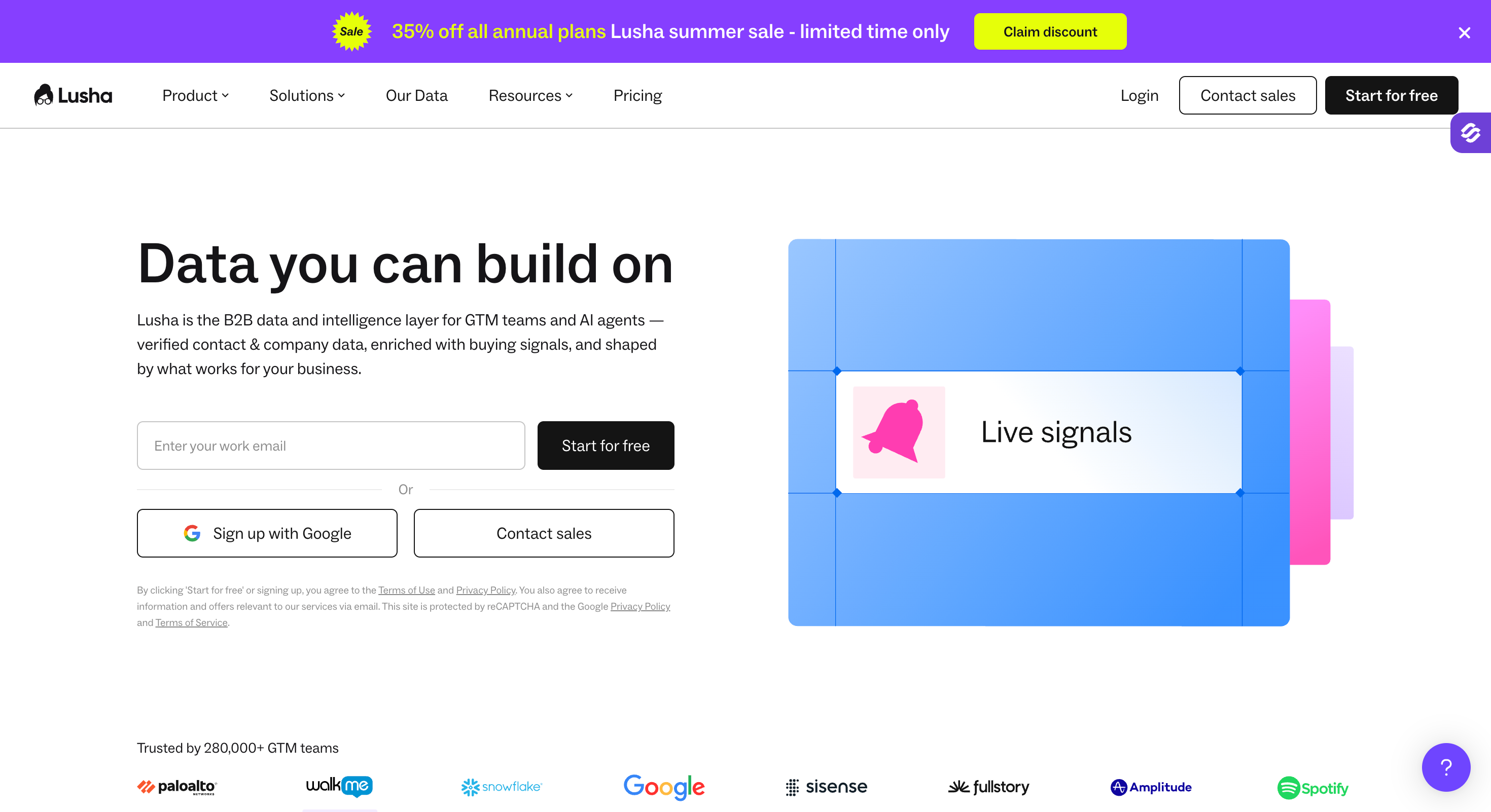
Lusha is a B2B contact database built for ease of use. The interface is simple, the setup takes minutes, and the free plan gives you 70 credits per month with no credit card required.
The database covers 150M+ contacts, with the strongest accuracy in the US, UK, Germany, and France. It's the tool I'd hand to a new SDR who needs to start prospecting today without reading a manual.
Lusha wins on simplicity and price for small teams.
Seamless charges you for every reveal, forces you into an annual contract, and traps you with a 60-day cancellation window. Lusha runs monthly, gives you a free plan that's actually usable, and doesn't ambush you at renewal.
Lusha also recently added AI-powered prospect recommendations and intent scoring. Neither is best-in-class (Cognism and Lead411 both do intent better), but for teams that don't need enterprise-grade signals, the basics are enough.
Phone reveals cost 5 credits each on most plans, so if calling is a big part of your workflow, you'll burn through the allocation faster than the email math suggests.
Data accuracy averages around 81%, which is better than Seamless but noticeably lower than UpLead, Cognism, or Leadsforge. For teams where deliverability directly affects revenue, that gap matters.
Coverage outside the US and Western Europe is thin. If you're prospecting in APAC, LATAM, or Africa, Lusha will leave gaps you'll need to fill from another source.
There's no built-in cold email tool either. Lusha gets you the data; you'll need Salesforge, Apollo, or another sequencing tool to actually run campaigns.
Lusha is the tool I'd recommend to a solo founder or a two-person SDR team that needs to start prospecting this week and doesn't want to spend an afternoon evaluating vendors. The free plan is real, the interface is clean, and the pricing is honest.
For teams that need higher accuracy, deeper filters, or global coverage, look at Leadsforge or Cognism instead.
Best for: Solo founders, freelancers, and small teams who need reliable email discovery at a low price and don't care about phone data or full contact profiles.
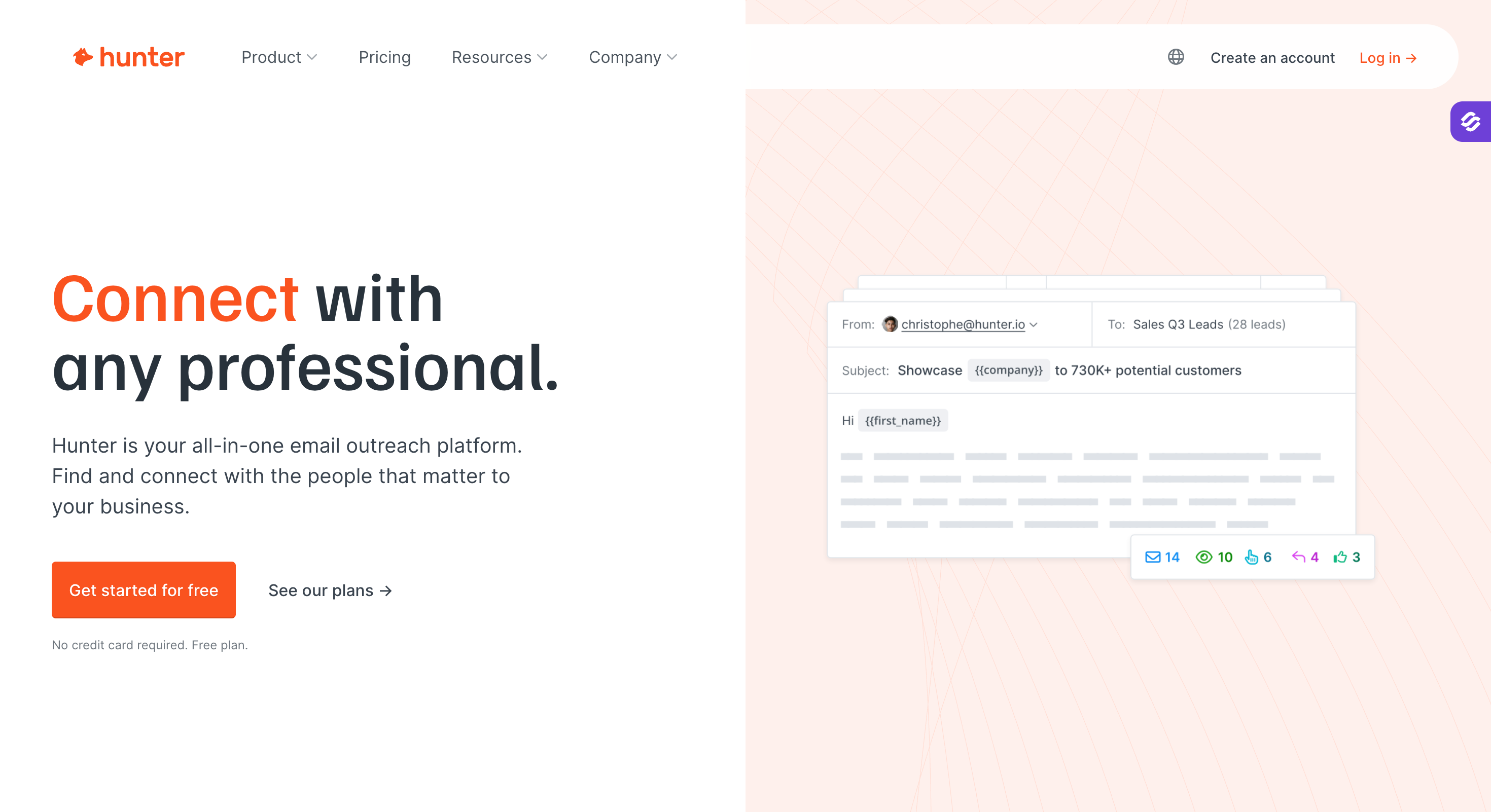
Hunter.io is a purpose-built email finder. It does one thing well: finding and verifying professional email addresses. No phone numbers, no company intelligence, no intent data, no CRM. Just emails.
The database holds 117M+ verified B2B emails. You can search by company domain, look up individuals by name, or run bulk searches across large lists. Every search includes automatic verification, so you're not exporting garbage.
Hunter beats Seamless on cost and simplicity for email-only workflows.
Seamless charges you for a full contact stack (email, phone, LinkedIn, firmographics) whether you need it or not. If your outreach is purely cold email, most of what Seamless bills you for goes unused. Hunter charges you for the one thing you actually use.
The free plan is also honest. 25 searches per month, no credit card, no upsell trap. You can evaluate the data quality with real workflows before spending a dollar. Seamless gives you 50 lifetime credits and then hands you to a sales rep.
Pricing is transparent, no sales calls required, and cancellation is a single click. Refreshing to see after Seamless.
The biggest limitation is right there in the pitch: no direct dials, no phone data at all. If your outbound motion includes calling, Hunter doesn't help you.
The contact search is also shallower than a full database tool. Hunter is best when you already know which company you're targeting and just need the email. It's not the tool to use if you're building an ICP-based list from scratch (Leadsforge or Apollo will serve you better for that).
Firmographic filtering is basic too. You can search by domain and get emails, but you won't get revenue ranges, employee counts, or funding stage without pulling from another source.
Hunter.io is the tool I'd pick for a solo founder or a link-building team where cold email is the entire play and every dollar of the SaaS bill matters. For that specific use case, it's honestly hard to beat.
For anyone running proper outbound with phone, LinkedIn, and multi-channel sequences, you'll outgrow Hunter fast. Use it for what it's built for and pair it with something else if you need more.
Seamless.AI made sense a few years ago when the alternatives were thin. That's no longer the case.
The nine tools I've covered here all fix at least one thing Seamless gets wrong.
Some fix bounce rates. Some fix contracts. Some fix international coverage. A few fix all three at once.
The right pick depends on how your team sells, what your budget looks like, and where your prospects live.
But for most outbound teams I talk to, the answer comes down to Leadsforge.
No 60-day written notice. No auto-renewal ambush.
And it doesn't stop at data export. Leadsforge pairs directly with Salesforge for sequencing, warm-up, and reply-aware follow-ups, so your leads don't sit in a CSV waiting for you to figure out what to do with them.
You go from "I need SDR managers at Series B SaaS companies" to a sent sequence."
Start with the free credits. Run 100 contacts through your real workflow. See the deliverability, the search speed, and the data quality for yourself. That's the fastest way to know if it's the right fit for your team.
If you're serious about fixing the outbound problems Seamless created, this is where I'd start.
Signup today to get 100 free credits.
Leadsforge at $49/month gets you 2,000 verified export credits and full features, with 100 free credits to test before you pay. Apollo.io and Hunter.io both have real free plans if you want to run outreach without spending a dollar.
Cognism leads on phone accuracy with an 87% connect rate on Diamond Data and a 16-step verification process. UpLead leads on email accuracy with point-of-download verification and automatic credit refunds on bounces. Leadsforge sits in the same tier through waterfall enrichment across multiple sources.
Yes. Leadsforge, Apollo.io, Hunter.io, and Lusha all run monthly with self-serve cancellation. No 60-day written notice, no annual lock-in. Cognism and ZoomInfo are the two on this list that still require annual contracts.
Cognism. It's the only tool on this list with 16-step verification, GDPR compliance as core infrastructure, and Do Not Call registry checking across 12 European countries. If your team calls or emails into EMEA, nothing else comes close.
Leadsforge syncs directly with Salesforge for full sequencing, warm-up, and reply management, which is the cleanest setup if you want data and outreach as one stack.
Seamless.AI shipped a native MCP server on May 6, 2026, which wraps their existing API with a 100-requests-per-minute rate limit. There's no first-party CLI, only a community-built wrapper on GitHub. The MCP is useful for connecting Seamless to Claude, ChatGPT, and other AI assistants, but every call still pulls from the same data pool producing 20-30% bounce rates.
Only the free plan (50 lifetime credits) has published pricing. Pro and Enterprise require a sales call. Public reports put Pro contracts at $147 to $299 per user per month, and Enterprise at $13,000 to $91,900+ annually depending on team size. AI Assistant, Autopilot, Data Enrichment, and Buyer Intent are add-ons on top of that.


.jpg)

.jpg)