Every B2B email database promises verified contacts and high accuracy. Then the campaign goes live, 25% of the emails bounce, and sender reputation tanks. Half the sends that land end up in spam.
Independent testing puts real-world accuracy on most "verified" lists at 50 to 80 percent, not the 95 percent the marketing pages promise. That gap between the promise and the delivered accuracy is what I want to fix here.
I ran 9 of the most-searched B2B email databases through the same evaluation. I looked at data accuracy, waterfall enrichment, pricing math, and compliance. I also looked at how each tool plays with the outreach stack that runs after the export.
Here is what I found. Let's break it down.
Every database on this list promises verified contacts and high accuracy. Some hold up under real load, and others do not. Here are the six criteria I scored each tool on before ranking them.
Bounce rate is the honest metric. A vendor can claim 95% accuracy, but if the verification runs on syntax checks alone, the emails still bounce. I looked for tools that run real-time SMTP validation rather than stale batch verification, and I weighted waterfall enrichment even more heavily because it queries multiple sources until it finds a verified result.
Size matters less than most vendors want buyers to believe. A 500 million contact database with 60 percent accuracy is worse than a 200 million database with 90 percent accuracy. I looked at both raw numbers and how vendors describe their coverage by region. Most publish global totals, but only Cognism and Saleshandy break out regional strength on the surface.
Waterfall enrichment is the difference between a static B2B contact database and a working prospect file. Instead of pulling from one source, the tool queries multiple providers in sequence until it finds a verified record. Every tool on this list either does this natively or connects to providers that do, but the quality varies. Leadsforge, Clay, and Saleshandy explicitly build around it.
Pricing tells buyers how much a vendor trusts its own product. ZoomInfo and Cognism refuse to publish prices, which usually means custom quotes above 15 thousand dollars per year. Apollo, Leadsforge, Hunter, and Saleshandy publish tiered pricing that scales predictably. I scored each vendor on transparency first, then on cost per verified contact.
Compliance is not a check-the-box item for teams selling into Europe. GDPR fines can reach 4 percent of global annual revenue. I checked each vendor for GDPR and CCPA sourcing, SOC 2 or ISO certifications, and clear opt-out handling. Cognism leads on this front, while Leadsforge and Saleshandy both carry SOC 2 badges.
A B2B email database is only as useful as what happens next. Data feeds into sending, and sending feeds into deliverability. If the export lands in cold mailboxes with no warmup or domain rotation, the emails still hit spam. So I checked how each tool passes data into the outreach layer, and how easy it is to run the full workflow without stitching together four vendors.
Here is the ranked list. I ordered these by how well each one solved the actual buyer job behind the keyword: finding verified B2B contacts a team can send to today without burning sender reputation.
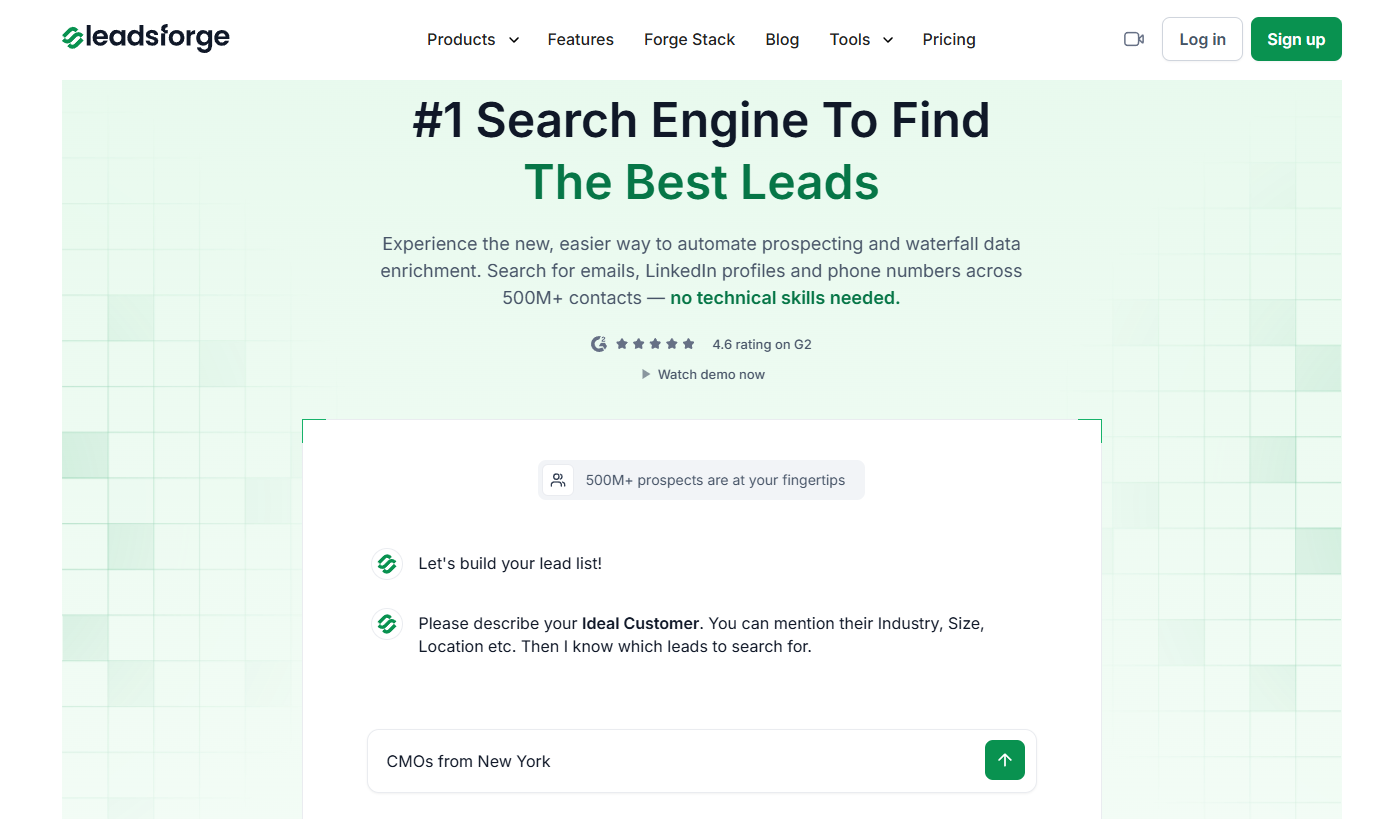
Leadsforge earns the top spot on this list for two concrete reasons. First, it runs waterfall enrichment across multiple providers on every search, which lifts real-world accuracy above what single-source tools deliver. Second, it connects directly to the Forge outreach layer without a CSV in the middle, and that combination is rare in this category.
The platform searches across 500 million contacts using a chat interface. A user describes an ideal customer in plain language, and Leadsforge builds the list from there. There are no filter dashboards to navigate, and no exports to intermediate tools. Emails, LinkedIn profiles, and phone numbers come out enriched in a single workflow, which matters for anyone building targeted B2B email lists at scale.
Key Features
One reviewer specifically called out how the filtering and enrichment help narrow down the right decision makers on a search. Read more on G2.<
Another B2B email database on my list is Apollo, and this is the one that shows up on every buyer's shortlist for a reason. The pitch is verified emails, phone numbers, and outreach sequencing under one login. For teams that want a single-vendor prospecting and outreach stack, Apollo has been the default answer for years.
The platform sits on a 240 million contact database with 30 million company profiles. It offers verified emails and phone numbers, waterfall enrichment on paid tiers, and intent filters that scale with the tier a team pays for. Apollo also has a genuinely usable free plan, which is rare in this category.
Key Features
If a longer read on Apollo before making a decision would help, my 4-week hands-on Apollo review goes deeper on data accuracy under real campaign load.
A senior BD manager praised Apollo as a single platform for prospecting, outreach, and pipeline growth in one place. Read more on G2.
A small-business reviewer rated the billing and credit system harshly, calling it predatory and poorly designed. Read more on G2.
A research analyst weighed in on value, calling Apollo the best-value B2B prospecting tool on the market today. Read more on G2.
The next B2B email database on my list is ZoomInfo, and this is the tool reviewers keep bringing up when the conversation turns to serious enterprise data. The reviews split cleanly along one line: buyers love the depth of the data, and everyone hates the contract structure that comes with it.
Five-figure annual commitments, three-seat minimums, and sixty-day cancellation notices make ZoomInfo enterprise buying rather than self-serve. But for teams with the budget and the RevOps maturity to absorb that structure, the platform delivers coverage nothing else on this list can match.
ZoomInfo positions itself as an AI go-to-market intelligence platform rather than just a B2B contact database. The suite combines verified emails, direct dials, mobile numbers, buyer intent signals, org charts, and website visitor identification. Verification runs through 300+ human researchers alongside the automated pipeline, and that hybrid approach shows up in the direct dial accuracy.
Key Features
If ZoomInfo's contract structure is what pushed a shopping round to begin with, my breakdown of 10 ZoomInfo alternatives worth testing covers the swap-in options at published price points.
A strategic alliance manager described ZoomInfo as a powerful AI tool for inside sales success. Read more on G2.
A small-business VP of Sales flagged Canada data accuracy specifically as an area that needs improvement. Read more on G2.
A cybersecurity trainee summed up the pricing frustration honestly by noting the higher end can be a barrier for smaller teams. Read more on G2.
Another B2B email database on my list is Cognism, and this is the one most enterprise buyers land on after ruling out ZoomInfo on European accuracy. Where ZoomInfo optimizes for North American scale, Cognism optimizes for European coverage and GDPR compliance built into the sourcing layer.
The platform's main pitch is phone-verified mobile numbers, and the verification runs through additional manual and automated checks on top of the standard sourcing. Cognism is also GDPR and CCPA compliant end-to-end, with data sourcing designed around regulated markets rather than bolted on afterward.
Key Features
If Cognism is on the shortlist alongside other AI-first prospecting platforms, my breakdown of AI prospecting tools I ranked covers where Cognism wins and where other tools pull ahead.
A mid-market cofounder called out the accuracy of contact data in European and international regions specifically. Read more on G2.
A mid-market SDR flagged a real problem in the Italian market where large discrepancies between actual company information and what the platform returned kept surfacing. Read more on G2.
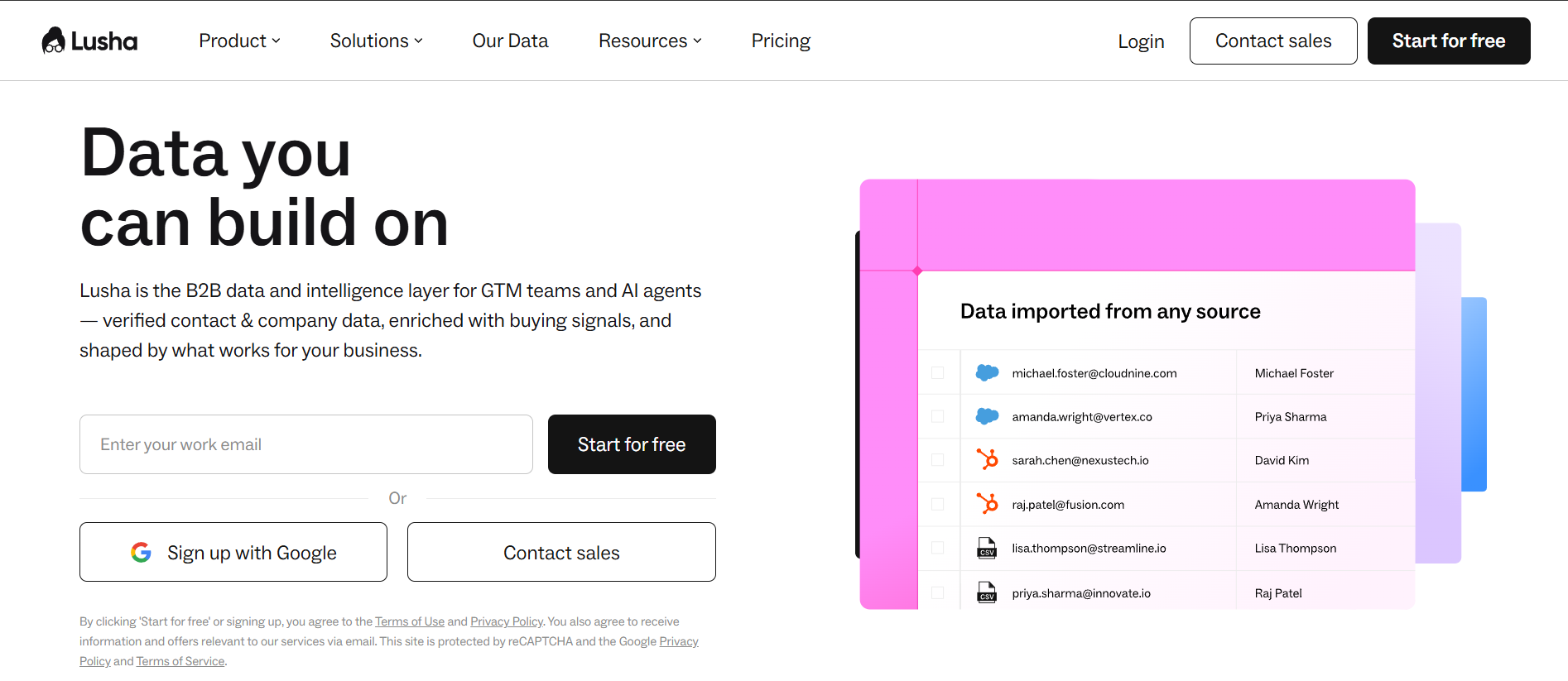
Another B2B email database on my list is Lusha, and it wins on a very specific job: getting a verified email off a LinkedIn profile in three seconds. Not every team needs an enterprise database, and Lusha earns its place by solving the fast-lookup use case without the ZoomInfo price tag.
The tool is built around a Chrome extension that overlays contact data on LinkedIn, Sales Navigator, and company websites. Behind that extension sits a 300 million contact database with buyer intent signals layered on top. For solo SDRs and small teams that live inside LinkedIn, Lusha is often the first B2B email database they buy.
Key Features
If Lusha is on the shortlist for lightweight B2B data workflows, my lead scraping tools breakdown covers where Lusha holds up and where other options earn a look.
A mid-market business development lead specifically praised the ease of use and the accuracy of the contact data returned. Read more on G2.
A GTM manager pushed back on the accuracy claims and called out that contact data is not always current and refresh time runs slow. Read more on G2.
A mid-market BD executive summed up the value proposition simply as simple, affordable, and easy to adopt. Read more on G2.
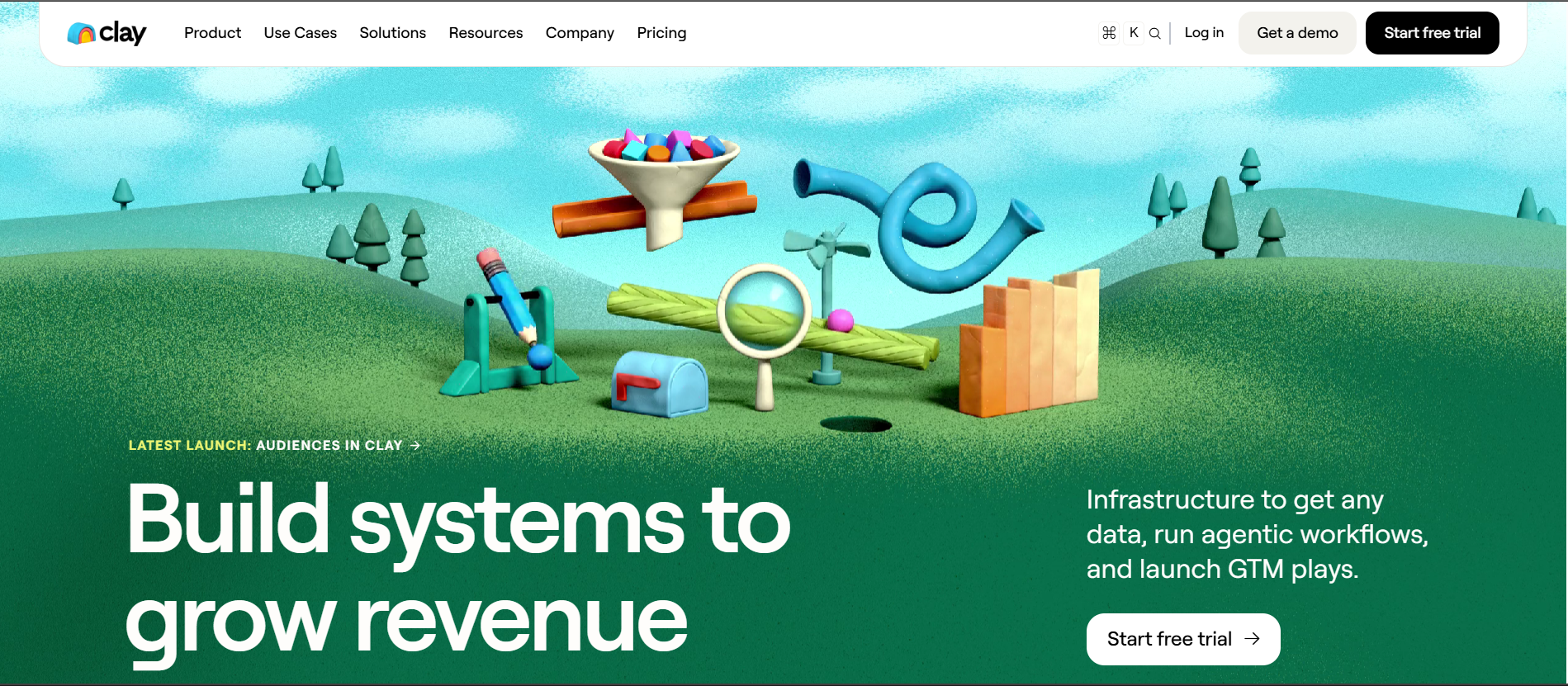
The next B2B email database on my list is Clay, though calling Clay a database is a stretch. It is really a marketplace of 200+ data providers wrapped in a spreadsheet-like workflow builder, and that framing changes everything about how a team should think about pricing and data accuracy.
Nobody uses Clay to find leads the way they use Leadsforge or Apollo. Teams use Clay to enrich leads from wherever they already get them, whether that is Leadsforge, Apollo, LinkedIn exports, CRM data, or website visitor tools. Those records then run through waterfall workflows that pull from multiple providers, apply AI-driven research, and push cleaned data wherever it needs to land.
Key Features
If Clay's learning curve or pricing is a blocker, my breakdown of 7 Clay alternatives worth testing covers the swap-in options for teams that want the enrichment upside without the workflow complexity.
A mid-market growth marketer specifically praised how useful Clay is for building and adjusting data enrichment workflows on the fly. Read more on G2.
An enterprise sales manager called out the learning curve as the biggest drawback, which matches what I saw during testing. Read more on G2.
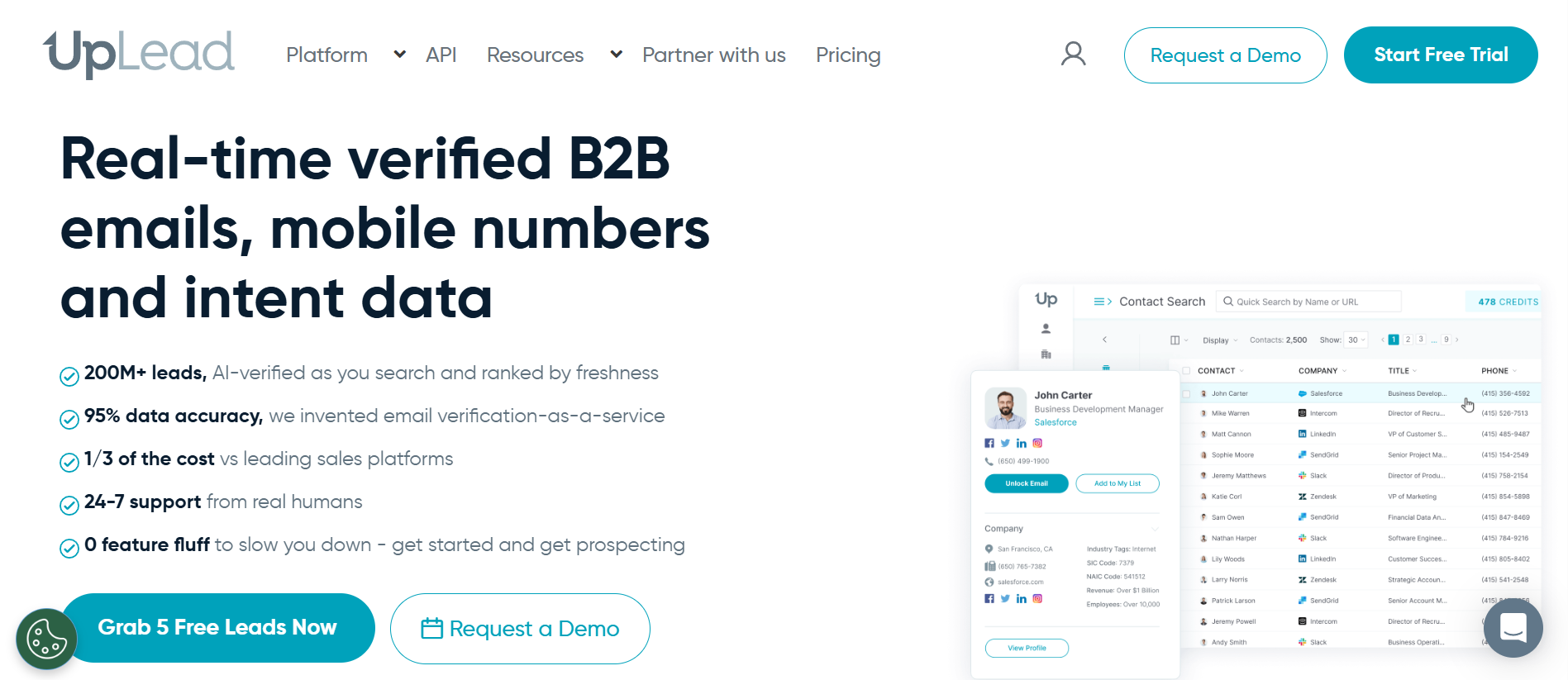
Another B2B email database on my list is UpLead, and I first tested it because a portfolio-company rep mentioned they got credits refunded automatically when contacts bounced. That kind of accountability is uncommon in this category, and it changed how I thought about the "verified data" claim across the entire list.
UpLead runs on a 200 million contact database with real-time email verification applied at the moment a record is unlocked, not in stale batches. The platform pairs that verification with a 95 percent accuracy guarantee backed by credit-back on bounces, and that guarantee is the trust move that made UpLead worth including here.
Key Features
If UpLead is on the shortlist because verified data quality is the priority, my email scraping tools comparison covers where UpLead wins on accuracy and where other tools earn a look for different workflows.
A mid-market sales ops lead specifically praised how UpLead delivers buying intent signals and reports on prospect movement. Read more on G2.
A small-business president and CMO praised the value against competitors while noting the interface could be better and deeper SIC and NAICS coding would help. Read more on G2.
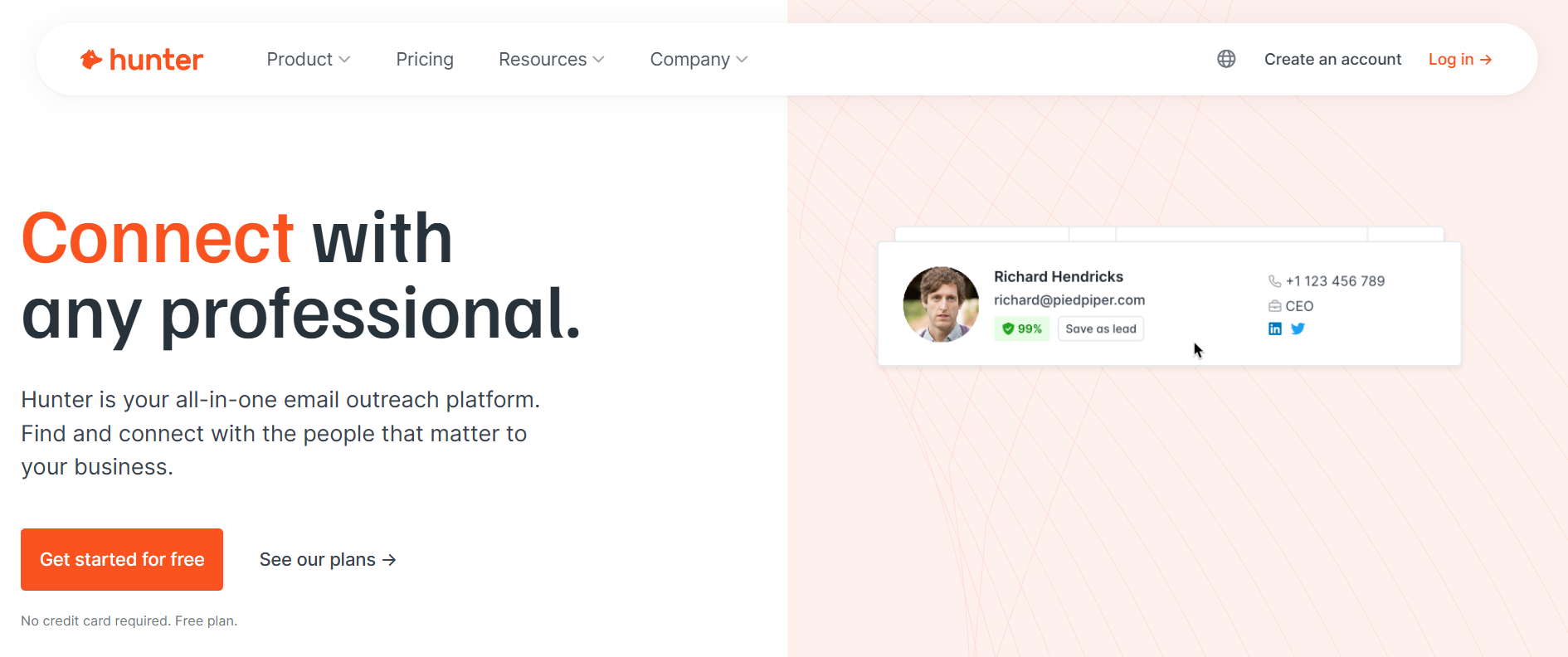
Another B2B email database on my list is Hunter.io, though the thing that almost made me skip it is that Hunter does not publish a contact count at all. Then I remembered why Hunter takes that approach. Hunter indexes 81 million websites instead, and its model is domain-first rather than contact-first.
The workflow is different from every other tool on this list. A user feeds Hunter a company URL, and it returns every verified email pattern the company uses along with named contacts and their roles. That narrow scope is Hunter's strength, and for teams whose workflow is "find emails at these specific companies fast," Hunter beats platform tools three times its price.
The trade-off is scope, because Hunter delivers no phone numbers, no intent data, and no deep firmographic filtering. Hunter is a sniper tool rather than a full B2B email database.
Key Features
If Hunter is being compared against similar mid-tier tools, my RocketReach alternatives breakdown covers where Hunter earns a spot and where other options offer more depth for the same budget.
A small-business sales rep specifically praised how simple and efficient Hunter makes finding and verifying professional email addresses. Read more on G2.
A small-business sonographer left a scorching review, calling the experience extremely disappointing. Read more on G2.
A medical founder called for more affordable pricing models specifically for small clinics and solo practitioners. Read more on G2.
The last B2B email database on my list is Saleshandy Lead Finder, and it bundles the largest published contact database in this comparison with real-time verification and unused credit rollover. For teams that want both a B2B email database and cold email sending in a single tool, this is the closest bundled competitor on the list.
The platform pairs the 852 million contact database with 60 to 75 advanced search filters, waterfall enrichment, and real-time buying signals. Verification runs on contacts as they are unlocked, so a team only pays for records that are current. Credits also roll over to the next month, which matters when outbound volume varies.
Key Features
If Saleshandy is being weighed against dedicated outreach platforms rather than pure databases, my full Saleshandy review covers the trade-offs I flagged in testing.
A small-business owner-operator praised Saleshandy as a solid cold outreach platform for a solo founder, specifically calling out the inbox rotation across multiple mailboxes. Read more on G2.
A small-business user flagged the support wait times and noted responses can take around five hours on average. Read more on G2.
A verified user in education management summed up the value proposition simply as efficient email workflows and value for money. Read more on G2.
For most outbound teams building B2B email lists in 2026, Leadsforge is the pick. The waterfall enrichment, the 100 free credits at signup, and the sync into the Salesforge outreach layer make it the most complete package on this list.
Cognism wins for teams where EMEA compliance is a hard requirement. Clay wins for teams that need custom enrichment pipelines across many providers. Hunter wins for teams that need fast email verification on a small budget. Every other tool solves a real problem, just not as end-to-end as the top pick.
Start With 100 Free Credits on Leadsforge
A B2B email database is a structured collection of business contact information used for outbound sales and marketing. It typically stores verified professional email addresses, job titles, company names, phone numbers, and firmographic details like industry and headcount. Modern databases also include intent signals and enrichment layers that help sales teams prioritize which accounts to reach out to first.
Buying a list itself is legal in most jurisdictions, but sending to that list is where compliance kicks in. Under GDPR, a sender needs a lawful basis to process EU personal data, which typically means legitimate interest paired with a clear opt-out mechanism. CAN-SPAM allows cold outreach in the US but requires accurate sender information and a working unsubscribe link. Reputable databases like Cognism and Leadsforge source data through compliant methods and provide opt-out infrastructure.
Real-world accuracy on most "verified" databases lands between 70 and 85 percent, which is below the 95 percent marketing pages claim. Independent testing consistently shows a gap between advertised accuracy and actual deliverability. Waterfall enrichment tools that query multiple providers per record deliver higher effective accuracy than single-source databases. Real-time verification also outperforms batch verification on delivered accuracy.
Waterfall enrichment is a data lookup method where the tool queries multiple contact providers in sequence until it finds a verified result for each record. Instead of relying on one data source that may be stale or incomplete, waterfall stacks 3, 5, or 10 providers into a single search. The result is materially higher accuracy on emails and phone numbers because it effectively votes across multiple databases rather than trusting one. Leadsforge, Clay, and Saleshandy all build around this pattern.
Entry-level tools like Hunter start at $34 per month for basic email lookups. Mid-market platforms like Leadsforge, Apollo, and Saleshandy sit in the $49 to $99 per month range for solo users and small teams. Enterprise platforms like ZoomInfo and Cognism run from $1,500 to $40,000+ per year and require sales calls to get pricing. Credit-based models are common, so real cost depends on how many contacts a team unlocks per month.
For small teams, the honest answer is to start with a free tier. Leadsforge offers 100 free credits at signup with no credit card required. Apollo grants 900 credits per year distributed monthly, and Hunter's free plan handles 50 lookups per month. Test each option against the actual ICP for a week before committing to a subscription. For most small teams running structured outbound, Leadsforge Essential at $49 per month hits the best value once the free credits run out.


.jpg)

.jpg)