

Apollo.io is a per-seat sales database and engagement platform that meters most data actions with credits, starting at $49 per seat per month. Amplemarket is an annual-contract AI sales platform that starts at $600 a month for two users and quotes its bigger plans by demo.
For multi-channel B2B outbound that scales without per-seat math, Salesforge is the stronger choice. You get email and LinkedIn from one dashboard, unlimited mailboxes and LinkedIn senders, free unlimited Warmforge warm-up, a unified inbox (Primebox™), and an optional AI SDR, Agent Frank. Plans start at $48/mo monthly ($40/mo annual).
I have run outbound on all three of these platforms, and the marketing pages all say the same three words: multi-channel, AI, pipeline. The real differences only show up on the invoice and in how each tool meters what you actually do.
Apollo charges per seat and then bills you in credits every time you reveal a contact or export a list. Amplemarket asks for an annual commitment before you send a single email. Salesforge charges a flat plan price and does not count seats at all.
That gap matters. UniteSync ran its outbound on Salesforge with Mailforge and Warmforge and reported an 85.26% positive reply rate at a $2.86 cost per acquisition. This comparison is about which model gets you there without punishing growth.
Sales Engagement Platform Comparison at a Glance: Amplemarket vs Apollo
Here is the short version before the detail. Every cell is a specific fact, pulled from each vendor's live pricing page and the Salesforge knowledge base.
| Feature | Salesforge | Amplemarket | Apollo.io |
|---|---|---|---|
| Outreach channels | Email + LinkedIn (phone on roadmap) | Email + LinkedIn + phone | Email + LinkedIn + dialer |
| Entry price | $48/mo monthly ($40/mo annual) - Pro | $600/mo annual - Startup (2 users) | $49/seat/mo annual ($59 monthly) - Basic |
| Top published plan | $96/mo monthly ($80/mo annual) - Growth (unlimited users + LinkedIn senders) | Elite - custom quote (10 users) | $119/seat/mo annual ($149 monthly) - Organization (3-seat min) |
| Pricing model | Flat, not per-seat | Per-seat (2/4/10 users), annual only | Per-seat + credits that expire monthly |
| Warm-up | Free, unlimited (Warmforge) | Deliverability tools included | Email warmup (Basic plan and up) |
| AI SDR | Agent Frank (Auto-Pilot/Co-Pilot) - separate subscription $499/mo billed quarterly | Duo AI copilot suite | AI Assistant + AI email writing |
| Unified inbox | Primebox™ (free, included) | Duo Inbox (add-on; included on Elite) | Unified inbox included |
| LinkedIn senders | Unlimited (Growth plan) | Per user | Per seat |
| Lead database | Leadsforge - 500M+ contacts | 200M+ AI-verified contacts | 210M+ contacts |
| Infrastructure options | 3 (Mailforge, Infraforge, Primeforge) | 2 mailboxes per user included | Domain & mailbox purchasing |
| Free trial | 14 days | Free trial (annual contract) | Free plan + 14-day Professional trial |
| SOC 2 compliant | Yes | Yes | Yes |
| Best for | SMB/mid-market B2B, $5K-$100K ACV | Mid-market/enterprise teams consolidating tools | Database-led prospecting at a low entry price |
Amplemarket Overview: Features, Pricing, and Limitations
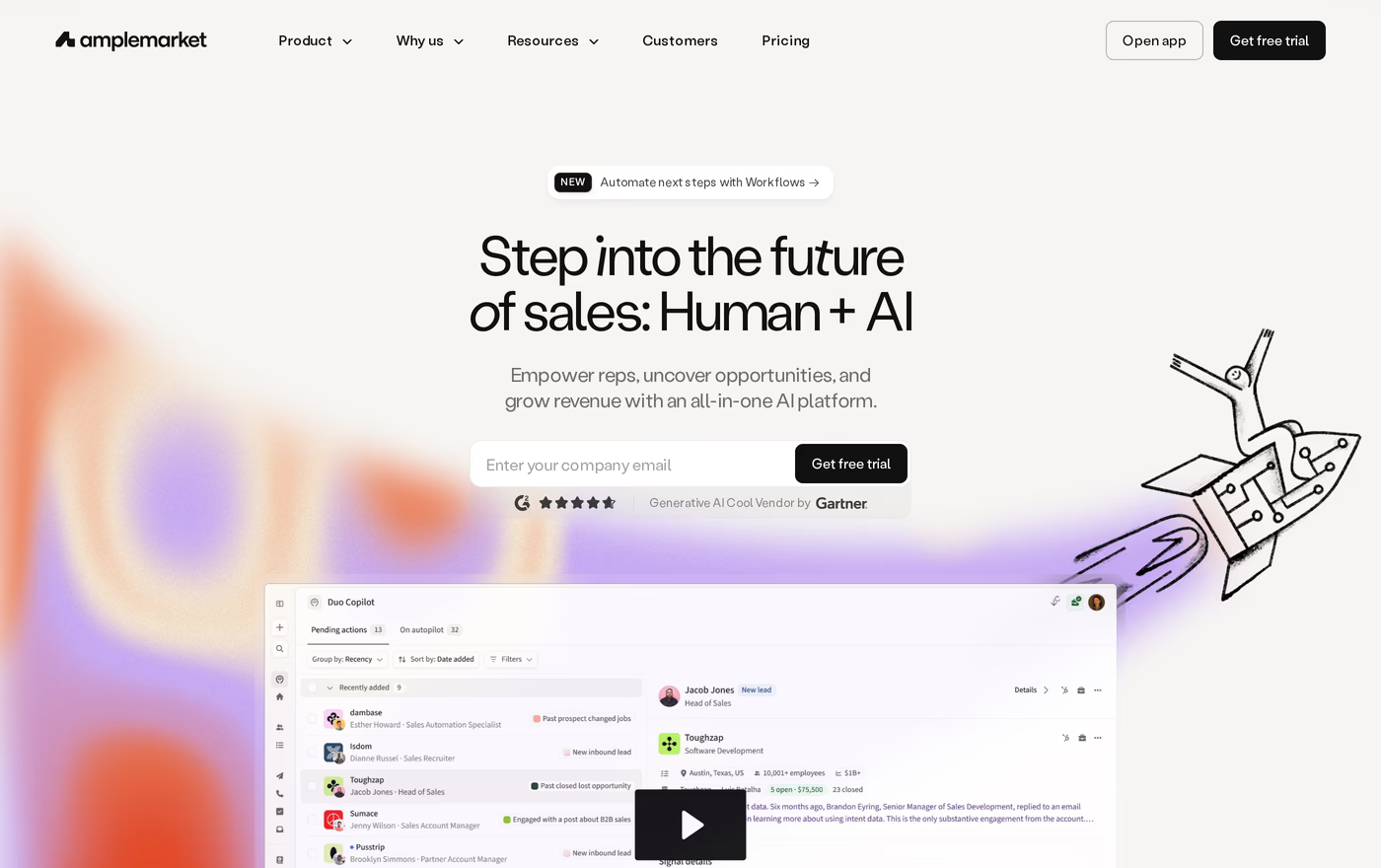
Amplemarket is an AI sales platform built around its Duo copilot. It combines a B2B database, multichannel sequences across email, LinkedIn, and phone, intent signals, and deliverability tooling in one product.
Its core building blocks include:
- Duo Copilot - surfaces high-intent leads and prepares multichannel sequences for review.
- Duo Copywriter - drafts personalized first-touch emails from prospect data.
- Duo Signals - flags buying intent and job changes as they happen.
- Duo Voice - sends AI voice messages at scale (Growth and Elite).
- Duo Inbox - drafts replies to prospect emails (add-on, included on Elite).
- Data - 200M+ AI-verified contacts, with a stated under-3% bounce rate and 96.5% phone-number accuracy.
- Native CRM sync - bi-directional with Salesforce and HubSpot on all plans.
On pricing, only the entry tier is published. The Startup plan is $600 a month on an annual term and includes 2 users, 27,000 contacts, 13,500 email-address credits per user per year, and 600 phone-number credits per user per year. Growth (4 users, 140,000 contacts, plus Duo Voice) and Elite (10 users, 400,000 contacts, plus Duo Inbox) are custom-quoted through a sales call. Every plan runs on an annual term.
Amplemarket fits mid-market and enterprise teams that want to replace three to five separate tools with one contract, and that have the budget and the appetite for an annual commitment.
The honest limitations are mostly about cost and access, not capability:
- There is no true monthly billing. The Startup plan is annual only, which is a $7,200-per-year floor, roughly $300 per user per month (documented across pricing reviews).
- Growth and Elite prices are hidden behind a demo, so comparison shopping is hard.
- Extra seats beyond a plan's included users add up quickly, reported at roughly $300-$400 per seat per month (third-party pricing breakdown).
- Amplemarket says itself that the platform has a learning curve, with most teams live within the first few weeks.
Apollo.io Overview: Features, Pricing, and Limitations
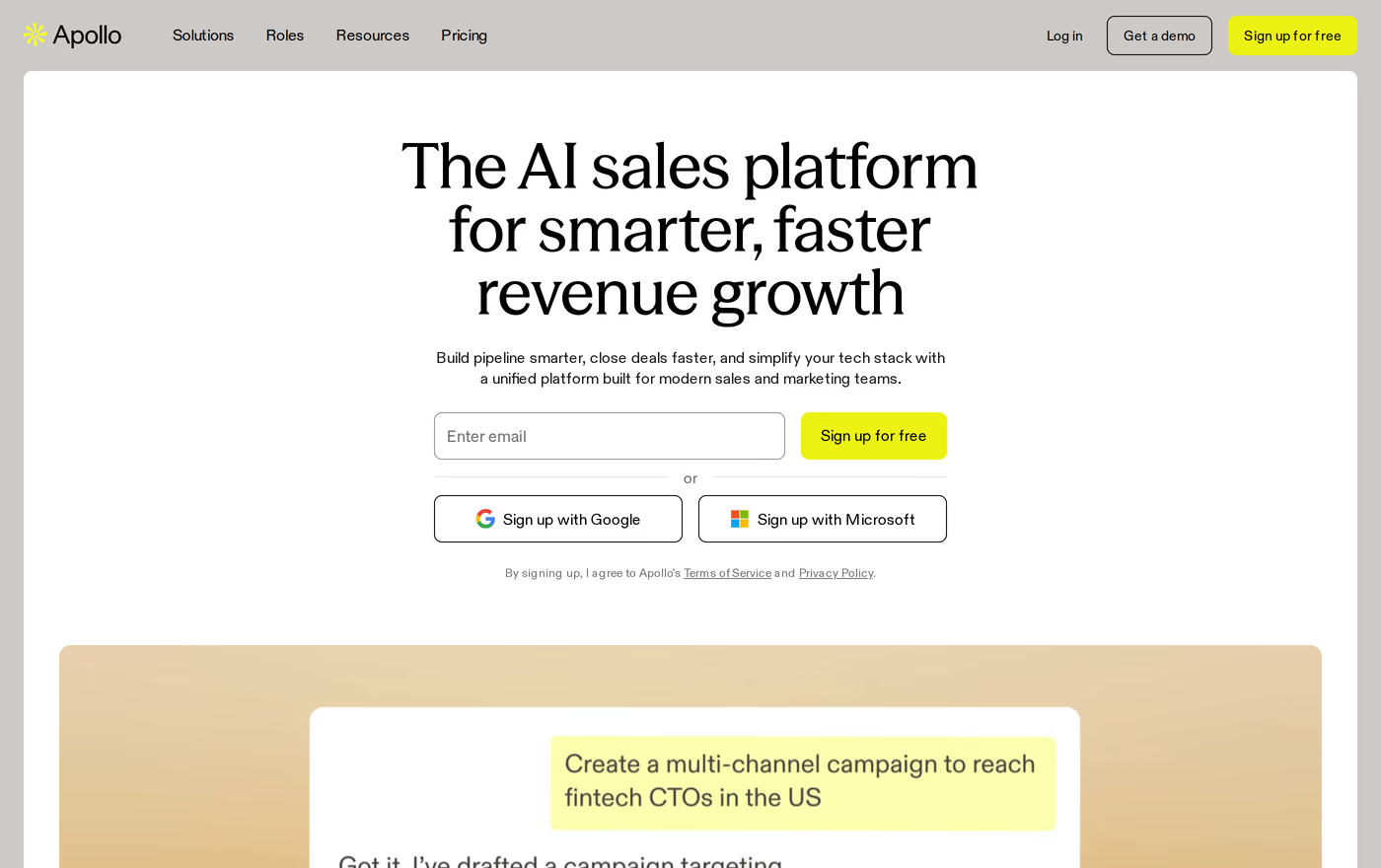
Apollo.io is one of the largest sales-intelligence and engagement platforms, and it lands on most AI sales prospecting tool shortlists. It pairs a contact database of more than 210 million records with sequences, a dialer, and enrichment, and it has a free tier that pulls a lot of people in.
Its main features include:
- Contact database - 210M+ contacts with filters, intent topics, and a Chrome extension.
- Sequences - unlimited email sequences on paid plans, with A/Z testing on Professional and up.
- US dialer - built-in calling, though calls consume credits.
- Deliverability suite and email warmup - included from the Basic plan.
- Waterfall enrichment - multi-source enrichment on paid plans.
- Domain and mailbox purchasing - buy sending infrastructure inside Apollo.
- AI Assistant and AI email writing - assistive AI, not a fully autonomous SDR.
Apollo is priced per seat with a credit system layered on top. Free is $0 with 900 credits per seat per year. Basic is $49 per seat per month billed annually ($59 monthly) with 30,000 credits per seat per year. Professional is $79 per seat per month annual ($99 monthly) with 48,000 credits and is the most popular tier. Organization is $119 per seat per month annual ($149 monthly), with a three-seat minimum and SSO. Credits are granted on a schedule and do not roll over.
Apollo is a strong pick for teams that mainly need a big database at the lowest entry price, especially for email-led prospecting where the free or Basic tier does real work.
What reviewers say about Apollo
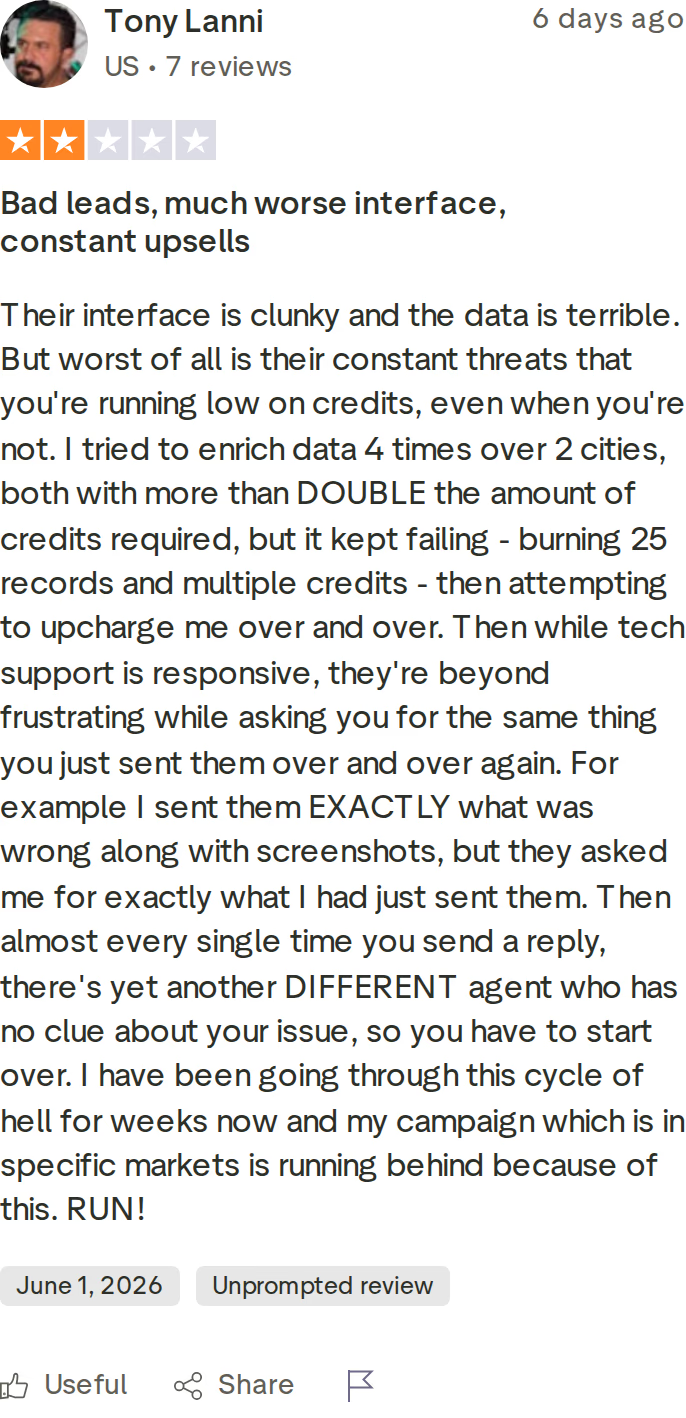
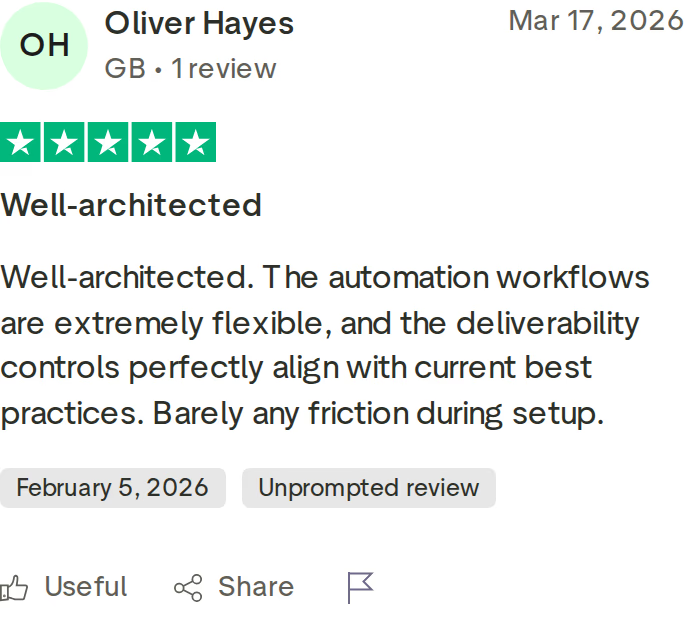
The credit model is where reviews get sharp. The Trustpilot review above describes credits burning on failed enrichments and repeated upsell prompts. Across G2 and Trustpilot summaries, users report real-world data accuracy around 65-70% and email bounce rates of 15-25%, plus credits that expire monthly with no rollover. None of that makes Apollo a bad database; it makes the advertised seat price only part of the real cost.
Salesforge Overview: The Multi-Channel Outreach Layer of the Forge Stack
Salesforge is the outreach layer of the Forge Stack. It runs multi-channel sequences across email and LinkedIn, personalizes them with AI built for cold outreach, and can hand the whole motion to an AI SDR, Agent Frank, when you want it to.
What I lean on most:
- Multi-channel sequences - email and LinkedIn touchpoints branch based on prospect behavior.
- Unlimited mailboxes - on every plan, with smart rotation across them.
- Unlimited LinkedIn senders - on the Growth plan, with no per-seat cap.
- Unlimited users - on the Growth plan, so adding teammates costs nothing extra.
- AI personalization - single-source or all-source Overdrive Mode.
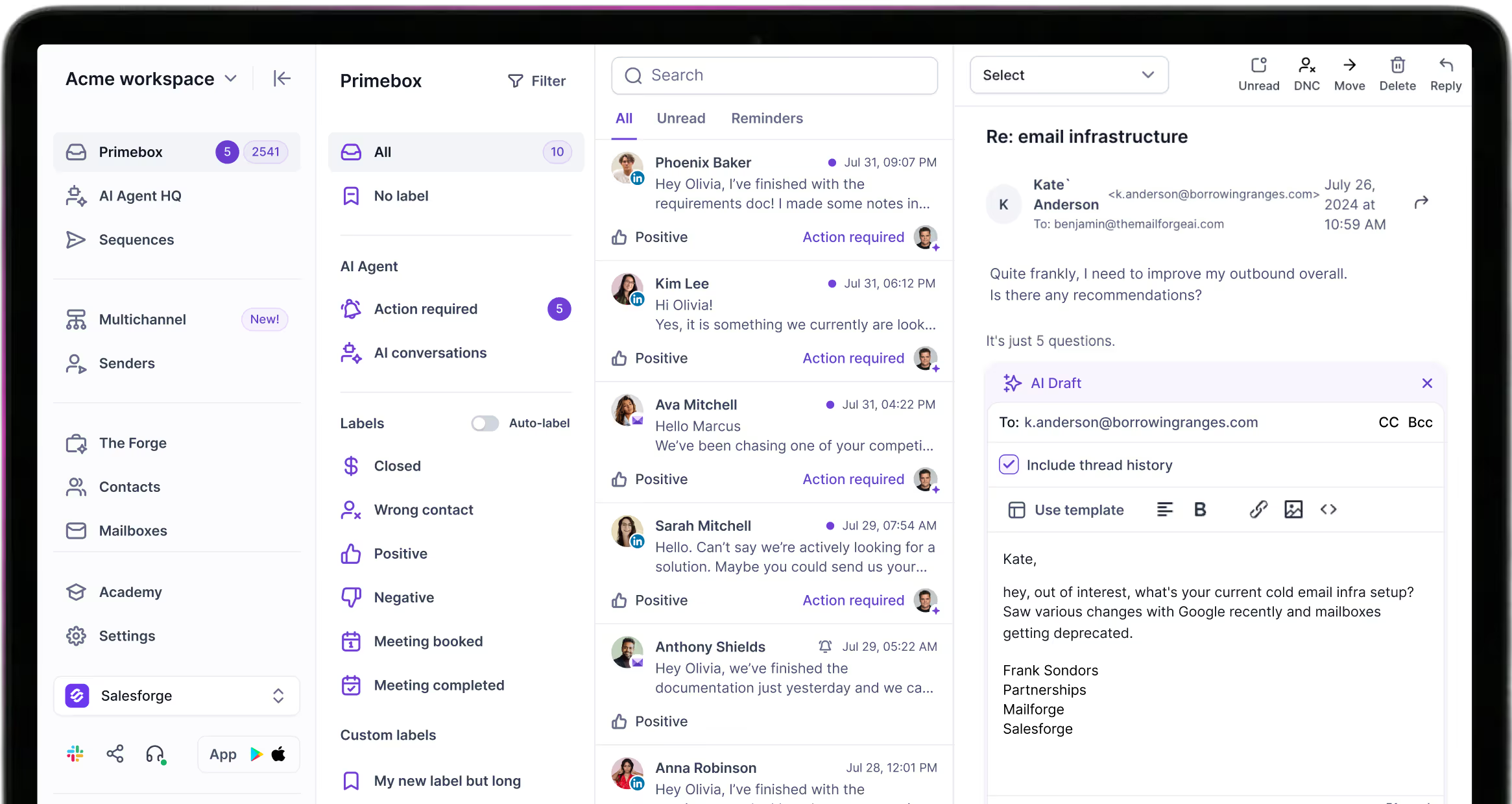
- Primebox™ - a free unified inbox for email and LinkedIn replies with sentiment tagging.
- Free unlimited Warmforge warm-up - premium pool, with a per-mailbox Heat Score™.
- A/B testing, API, and an MCP server - on the Growth plan, plus a Knowledge Base for AI replies.
- Leadsforge access - a 500M+ contact lead search engine feeding sequences directly.
Salesforge is the outreach layer of a wider stack, so deliverability and data are not bolted on with Zapier. Mailforge, Infraforge, and Primeforge handle sending infrastructure, Warmforge handles deliverability, Leadsforge handles leads, and Agent Frank handles autonomous outreach. They share one login and sync natively.
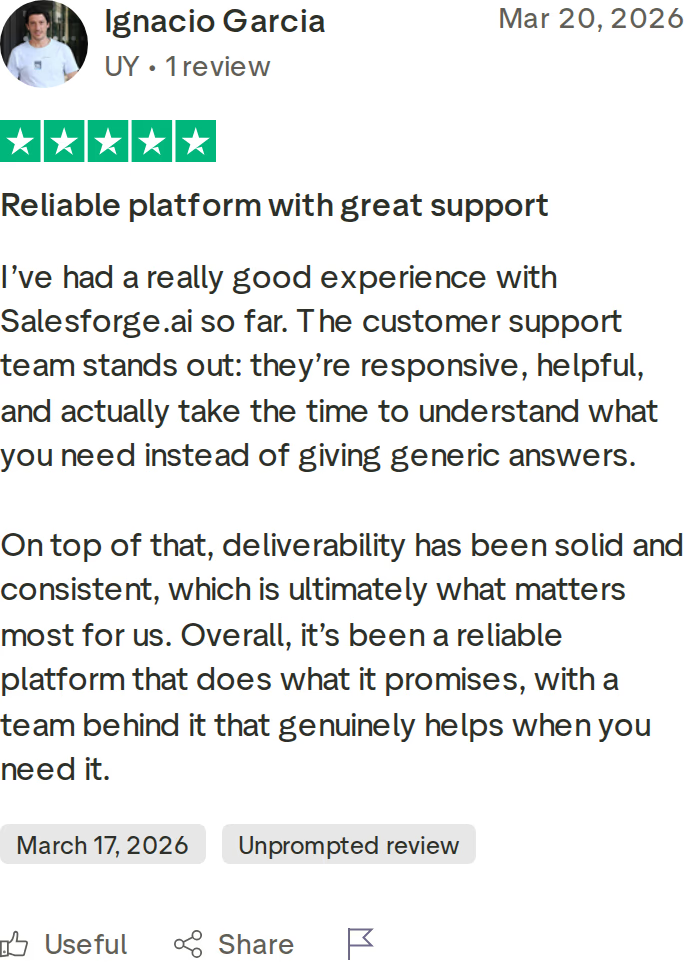
On pricing, the Pro plan is $48/mo monthly or $40/mo annual, with 1,000 active contacts, one LinkedIn sender, and one user. The Salesforge Growth plan is $96/mo monthly or $80/mo annual, and it adds unlimited users and unlimited LinkedIn senders. Agent Frank is a separate subscription from $499/mo billed quarterly ($416/mo annual), not part of Pro or Growth. You can verify the live price any time.
Salesforge is built for B2B teams selling at ACVs between $5K and $100K, to decision-makers at startups, SMBs, and mid-market companies, who target 3,000 businesses or more. It says plainly that it is a poor fit for Fortune 500 enterprise procurement and long RFP cycles.
Honest limitations:
- Email infrastructure is not included in the base plan; you connect your own or add Mailforge, Infraforge, or Primeforge.
- The API, A/B testing, multi-language sequences, and the full integrations library sit on the Growth plan.
- Agent Frank needs a sales-led demo and a two-week warm-up before he starts sending.
in Action
Head-to-Head Feature Comparison: Amplemarket vs Apollo
All three call themselves multi-channel and AI-powered. Here is where they actually differ, point by point.
Multi-channel outreach
All three reach prospects on more than one channel. Apollo pairs email sequences with a dialer and LinkedIn tasks. Amplemarket runs email, LinkedIn, and phone from one place. Salesforge runs email and LinkedIn together, with phone on the roadmap, and is the only one of the three that puts no cap on LinkedIn senders on its top plan. If you manage many LinkedIn profiles, that limit matters.
Email deliverability and warm-up
Salesforge includes free, unlimited Warmforge warm-up on every plan, with a curated pool and a per-mailbox Heat Score™ where 97+ is healthy. Apollo includes a deliverability suite and email warmup from the Basic plan. Amplemarket includes deliverability tooling and claims an under-3% bounce rate. Worth noting: third-party summaries put Apollo's real-world bounce rate at 15-25%, so database size and the inbox result are not the same thing.
AI and personalization
This is the clearest three-way split. Apollo's AI is assistive: an AI Assistant and AI email writing that help you move faster. Amplemarket's Duo is a copilot suite that drafts and suggests. Salesforge ships Agent Frank, an autonomous AI SDR who prospects, writes, sends, and books in Auto-Pilot or Co-Pilot mode. He is a separate subscription, not a free feature, and he is built to work alongside a human team. For day-to-day copy, Salesforge's Overdrive Mode personalizes from all sources at once, with AI built for cold email rather than a repurposed chatbot.
Inbox management and reply handling
Salesforge gives you Primebox™ free on every plan: one inbox for email and LinkedIn replies, with sentiment tagging and AI-drafted replies on the Growth plan. Apollo includes a unified inbox. Amplemarket's Duo Inbox drafts replies too, but it is an add-on on Startup and Growth and only included on Elite. Free versus paid is the difference here.
Pricing and scalability
This is where the models pull apart. Salesforge is flat: the Growth plan is $80/mo annual no matter how many users or LinkedIn senders you add. Apollo multiplies the seat price by headcount and then adds credit overages. Amplemarket multiplies a high per-seat figure and locks it to an annual term. A growing team feels each model very differently, which I break down in the pricing section below.
Integrations and the wider stack
All three connect to the usual CRMs. Salesforge has native HubSpot, Salesforce, and Pipedrive, an API and an MCP server on the Growth plan, and the Forge Stack underneath it for infrastructure and data. Apollo has CRM integrations and an API. Amplemarket has bi-directional Salesforce and HubSpot sync. The difference is that Salesforge's data and deliverability layers are part of one system rather than separate vendors stitched together. If you are weighing the wider category, Salesforge sits among the leading email automation tools for outbound.
Pricing Comparison: What You Actually Pay
The headline numbers hide the real story, which is how each price behaves as your team grows. Here are the published plans side by side.
| Plan tier | Salesforge | Amplemarket | Apollo.io |
|---|---|---|---|
| Entry plan | Pro - $48/mo monthly ($40/mo annual) | Startup - $600/mo annual (2 users) | Basic - $49/seat/mo annual ($59 monthly) |
| Main paid plan | Salesforge Growth - $96/mo monthly ($80/mo annual) | Amplemarket Growth - custom quote (4 users) | Professional - $79/seat/mo annual ($99 monthly) |
| Top plan | Growth is the top tier | Elite - custom quote (10 users) | Organization - $119/seat/mo annual ($149 monthly, 3-seat min) |
| AI SDR | Agent Frank - separate, $499/mo billed quarterly | Duo - included in plan | AI Assistant - included in plan |
| Billing options | Monthly or annual | Annual only | Monthly or annual |
| Pricing model | Flat (unlimited users + LinkedIn senders) | Per-seat (2/4/10 users) | Per-seat + credits (expire monthly) |
Now the scenario. Say you are a three-rep team running multi-channel outbound for one quarter.
On Salesforge Growth, you pay $80/mo annual, flat, because three users cost the same as one. You add sending infrastructure separately, where Mailforge mailboxes run $3 to $2 each per month. On Apollo Professional, three seats is $237/mo annual before any credit overages or dialer credits. On Amplemarket, the Startup plan covers two users at $600/mo annual; a third user is an extra seat, pushing you toward roughly $900/mo or the custom Amplemarket Growth tier, on an annual contract either way.
Who Should Use Which Tool: A Decision Matrix
None of these tools is wrong for everyone. Here is how I would route the decision.
You might consider Amplemarket if
- You are a mid-market or enterprise team consolidating three to five tools into one contract.
- You are comfortable with an annual commitment and a $600-plus monthly floor.
- You want AI-verified data and a dedicated CSM baked into the platform.
You might consider Apollo.io if
- You are early-stage and want the largest possible database at the lowest entry price.
- Your motion is database-led prospecting, mostly over email.
- You are willing to actively manage credit consumption so the bill stays predictable.
Choose Salesforge if
- You sell B2B at ACVs of $5K-$100K to SMB and mid-market buyers, targeting 3,000+ businesses.
- You want flat pricing with no per-seat math and no monthly-expiring credits.
- You need unlimited mailboxes and unlimited LinkedIn senders to run real multi-channel volume.
- You run an agency or multiple clients and want separate workspaces with isolated infrastructure.
- You want the option to hand prospecting to an AI SDR (Agent Frank) without rebuilding your stack.
Final Verdict: Which Sales Platform to Choose
Amplemarket and Apollo are capable platforms with real strengths. Amplemarket bundles high-quality data and an AI copilot, but it asks for an annual contract and starts at $600 a month. Apollo gives you a huge database and a free tier, then meters most of what you do in credits that expire each month.
For multi-channel B2B outbound that scales without per-seat pricing, Salesforge is the stronger choice. At $80/mo for the Growth plan billed annually ($96/mo monthly), you get unlimited users, unlimited LinkedIn senders, unlimited mailboxes, free Warmforge warm-up, and Primebox™ - and an optional AI SDR in Agent Frank that neither alternative matches.
One falsifiable benchmark: UniteSync ran on Salesforge with Mailforge and Warmforge to an 85.26% positive reply rate and a $2.86 cost per acquisition. The case study is public.
If you want to compare the two head to head in more depth, the Salesforge vs Apollo breakdown and the full comparisons library go deeper. You can also browse the Forge Stack overview or the free outreach tools.
Give Salesforge a TryFrequently Asked Questions
Is Salesforge better than Apollo or Amplemarket?
For multi-channel B2B outbound that scales without per-seat pricing, Salesforge is the stronger fit. Its Growth plan is a flat $80/mo annual with unlimited users, unlimited LinkedIn senders, unlimited mailboxes, free Warmforge warm-up, and Primebox™. Apollo and Amplemarket both meter usage with credits and charge per seat, so the same team usually costs more on either of them as it grows.
What is the main difference between Salesforge, Amplemarket, and Apollo?
The difference is the pricing model and what gets metered. Salesforge charges a flat plan price and does not count seats. Apollo charges per seat plus credits that expire monthly. Amplemarket charges per seat on an annual-only contract starting at $600 a month for two users. All three do multi-channel outreach; only Salesforge ships a separate autonomous AI SDR, Agent Frank.
Which is cheaper: Salesforge, Amplemarket, or Apollo?
At entry level, Apollo Basic ($49/seat/mo annual) and Salesforge Pro ($48/mo monthly, $40/mo annual) are close, but Salesforge Pro is flat while Apollo multiplies by seats. Amplemarket is the most expensive entry point at $600/mo annual for two users. For a small team, Salesforge Growth at $80/mo annual usually undercuts three Apollo seats and sits far below Amplemarket's annual floor.
Do Amplemarket and Apollo support LinkedIn outreach?
Yes, both do. Amplemarket runs LinkedIn alongside email and phone. Apollo supports LinkedIn tasks next to its email sequences and dialer. The difference is scale: Salesforge puts no cap on LinkedIn senders on its Growth plan, while both Amplemarket and Apollo tie LinkedIn activity to per-seat or per-user limits.
Can I switch from Apollo or Amplemarket to Salesforge easily?
Yes. You can upload contacts by CSV or connect a Google Sheet, connect unlimited mailboxes, and rebuild sequences inside Salesforge. Warmforge warm-up is free and unlimited, so you can warm new mailboxes while you migrate. Salesforge also runs a 14-day free trial, so you can test the move before committing.
Which tool has better email deliverability?
Salesforge builds deliverability into the platform with free, unlimited Warmforge warm-up and a per-mailbox Heat Score™ where 97+ is healthy. Apollo includes warmup from its Basic plan, and Amplemarket claims an under-3% bounce rate. One public result: ChannelCrawler reached an 85.71% positive reply rate using Salesforge with Infraforge and Warmforge.
Does Salesforge offer a free trial?
Yes. Salesforge offers a 14-day free trial with no credit card required, and it includes email warm-up and unlimited mailbox connections during the trial. The trial caps contacts and credits so you can test the workflow. Agent Frank is the exception: he needs a sales-led demo and a two-week warm-up rather than a self-serve trial.
Who is Amplemarket best for, and who is Apollo best for?
Amplemarket fits mid-market and enterprise teams consolidating several tools into one annual contract, with the budget for a $600-plus monthly floor. Apollo fits early-stage teams that want a large database at the lowest entry price and can manage credit usage. Salesforge fits SMB and mid-market B2B teams selling at $5K-$100K ACVs who want flat, scalable pricing.
.jpg)
.jpg)

.jpg)