You can buy the fastest car on the lot. It still will not move if you pour bad fuel in the tank and drive on flat tires.
AI outreach tools are the car. AI sales infrastructure is the fuel, the tires, and the road.
AI sales infrastructure is the base that makes the tool work. It covers your lead data, sending setup, inbox placement, outreach channels, and tracking.I run this stack at Salesforge. Here is what each tool does, and the order I would build it in.
AI sales infrastructure is the system that supports AI-driven pipeline generation. It is the full set of tools that let AI find prospects, contact them, follow up, book meetings, and report on revenue.
Here is what sits inside it:
Think of it like a building. The outreach tool you see is the top floor. It all starts with the data, the sending setup, the deliverability checks, and the reporting. Remove any one of those and the floor above starts to wobble.
This is different from a normal sales tech stack. A standard stack helps human reps manage their tasks. AI sales infrastructure is built so AI systems can take action across data, outreach, follow-ups, and reporting with far less manual work. For the sending side of this in detail, see my guide on cold email infrastructure.
People mix these two up constantly, so it is worth drawing the line clearly.
AI sales infrastructure gives your motion the raw materials. An AI SDR uses those materials to do the work.
Here is the key line worth remembering. Without infrastructure, an AI SDR has nothing solid to work with. Without an AI SDR, the infrastructure still needs a human driving it.
These are the tools that make up an AI sales infrastructure. Each one has a clear job, and together they run the full motion.
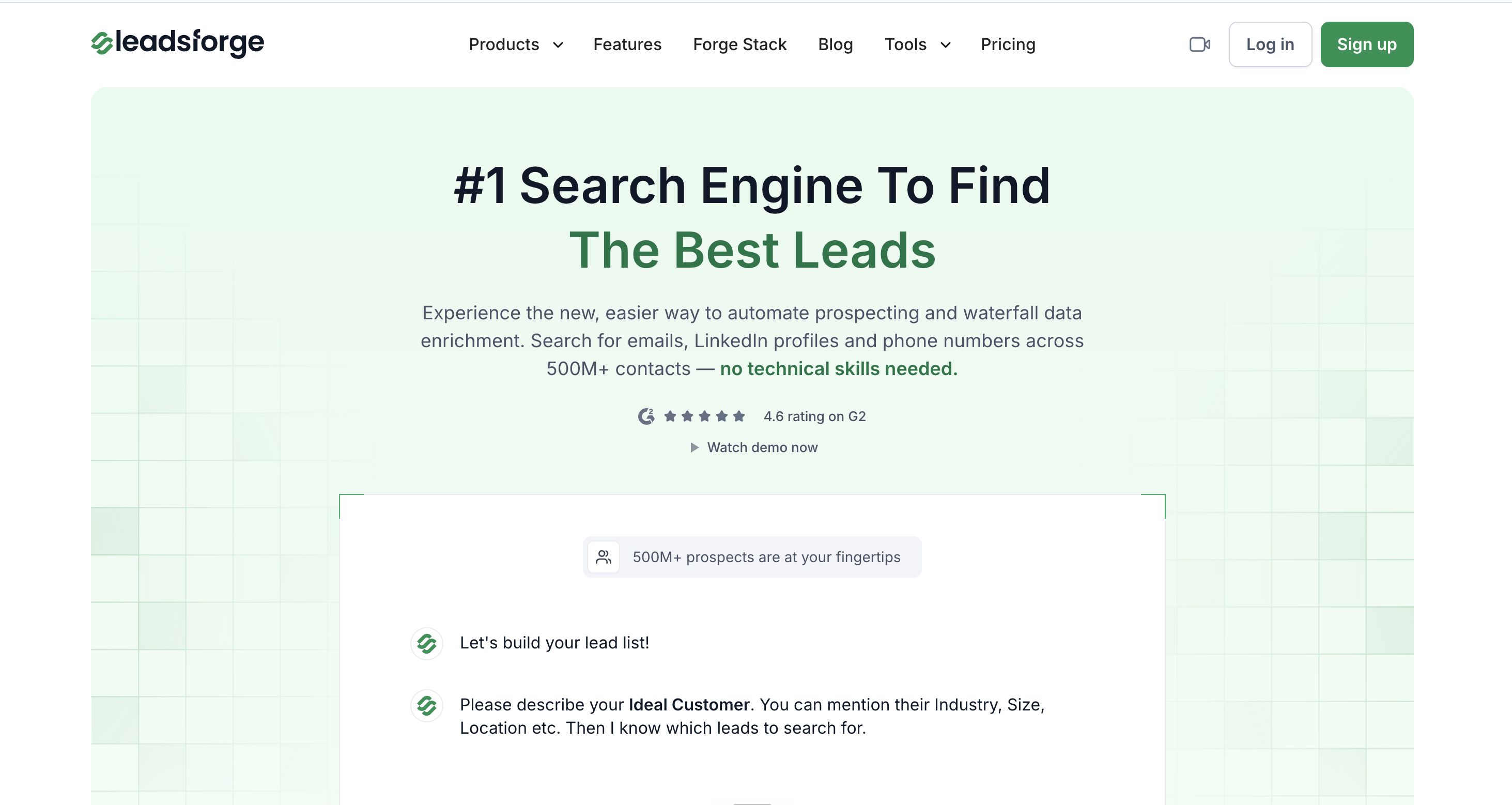
Leadsforge is where you find and prepare the right prospects before any outreach starts. It is the foundation, and it is the part teams most often get wrong.
What it covers:
AI cannot create pipeline from poor data. Feed it a weak list and it just produces weak outreach faster. Leadsforge fits here because it searches across 500M+ contacts and uses waterfall enrichment to pull from multiple data sources, so your hit rate is not stuck with a single provider. You describe your ideal customer and it finds them.
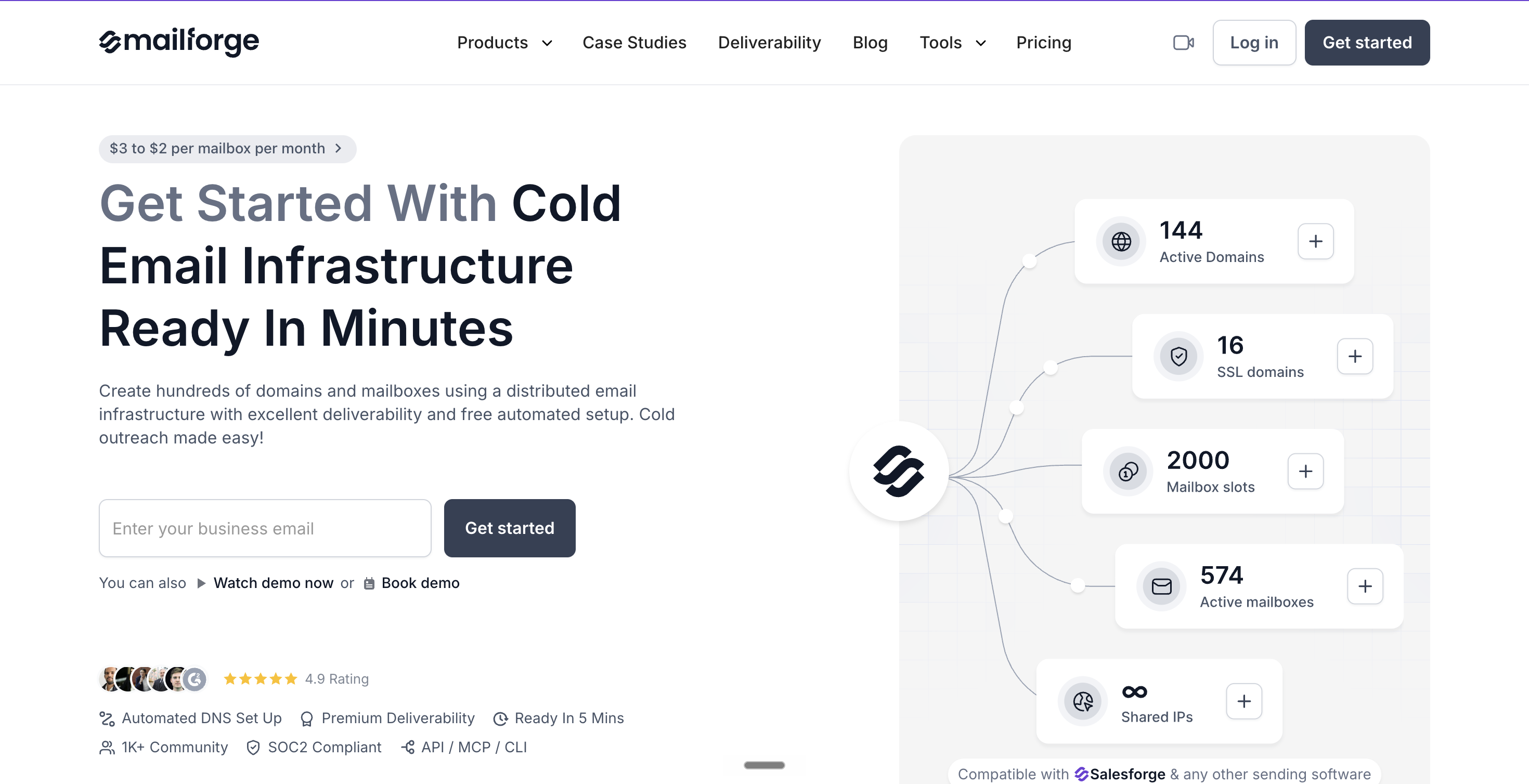
Mailforge gives you the sending setup for cold email at volume. It is the plumbing that decides whether your message reaches an inbox at all.
What it covers:
Cold email outreach is useless if the email never lands. Mailforge fits here because it sets up shared-IP infrastructure with automated DNS in about five minutes, which keeps cost low for teams scaling fast. For high-volume senders who want dedicated IPs and full control instead, Infraforge is the heavier option. If you want real Google Workspace or Microsoft 365 mailboxes specifically, Primeforge covers that.
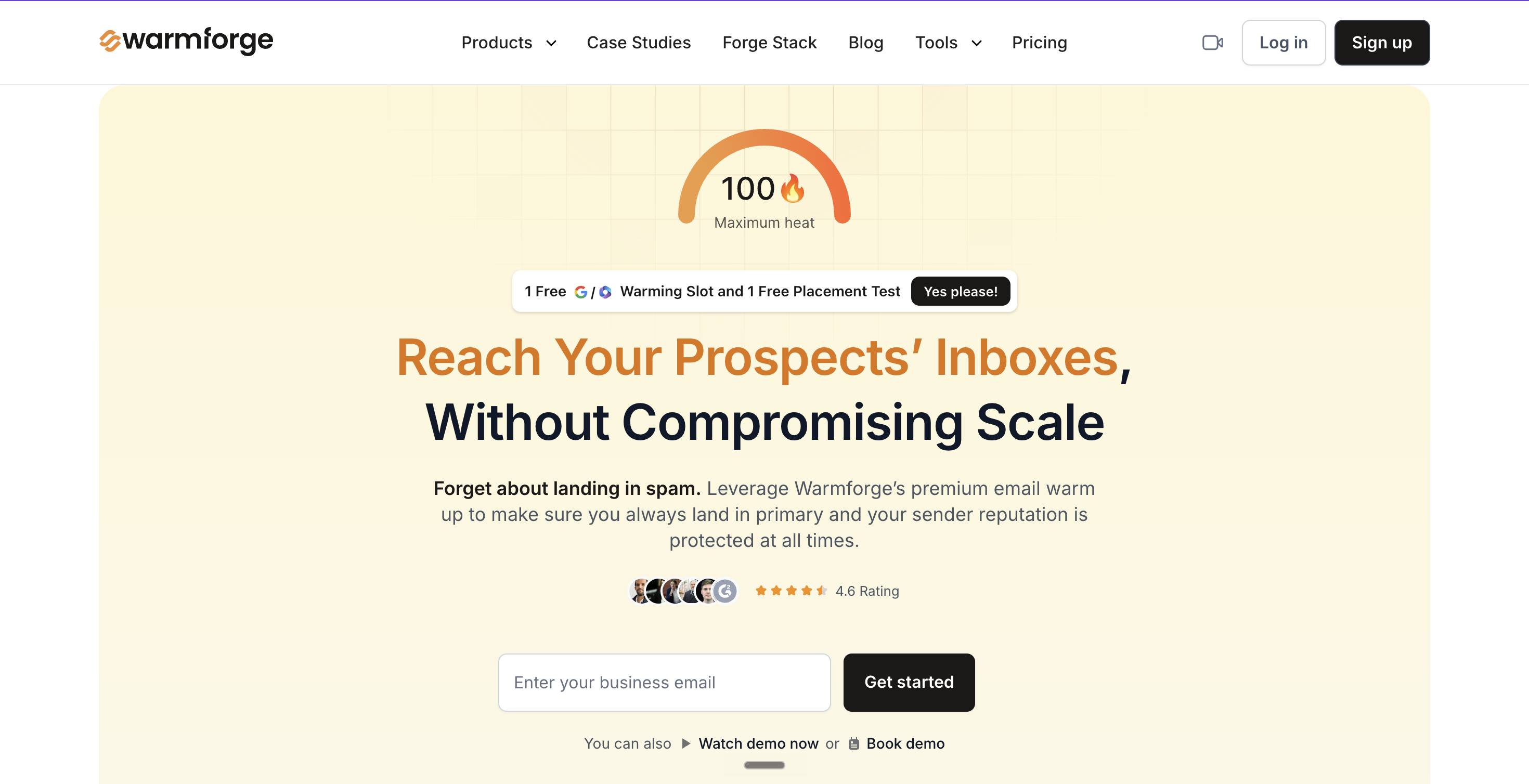
Warmforge protects sender reputation and tells you whether you are actually landing in the inbox. It is the weakest point in most AI outbound setups.
What it covers:
More automation means more risk if sender health is ignored. Warmforge fits here because it warms mailboxes over a recommended 14-day period and tracks a heat score, where 85+ means a mailbox is healthy enough to send. You can start with email deliverability basics if this is new to you. Warmforge also gives one free warming slot and one free placement test, so it costs nothing to check your current health.
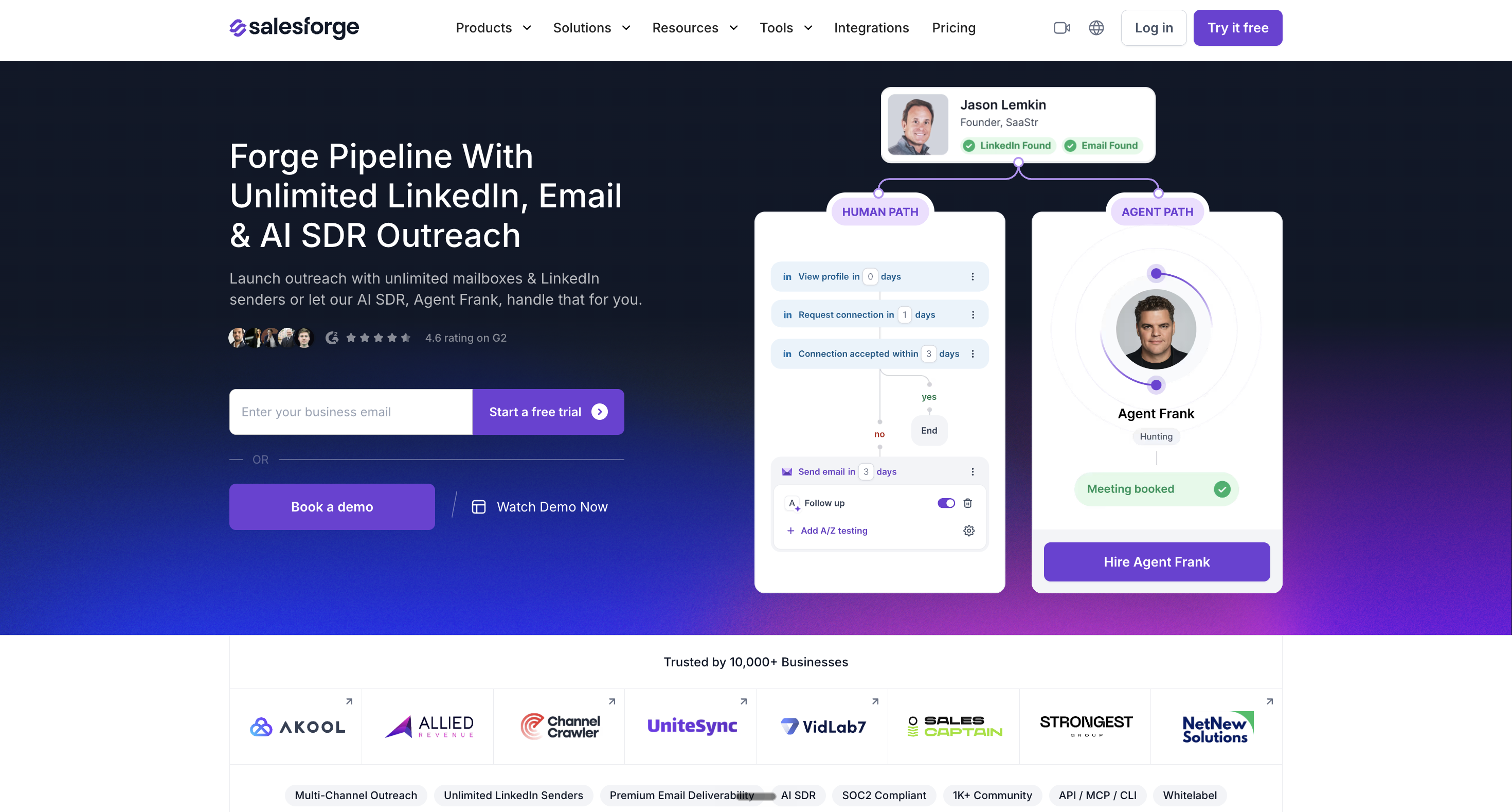
Salesforge runs the actual outreach with email and LinkedIn channels.
What it covers:
Modern outbound cannot lean on email alone. You need email and LinkedIn working together in one motion. Salesforge fits here because it brings both channels into one workspace with unlimited mailboxes and LinkedIn senders, AI personalization, and Primebox, a unified inbox for every reply. If you are weighing options, my cold email AI tools comparison lays out the field.
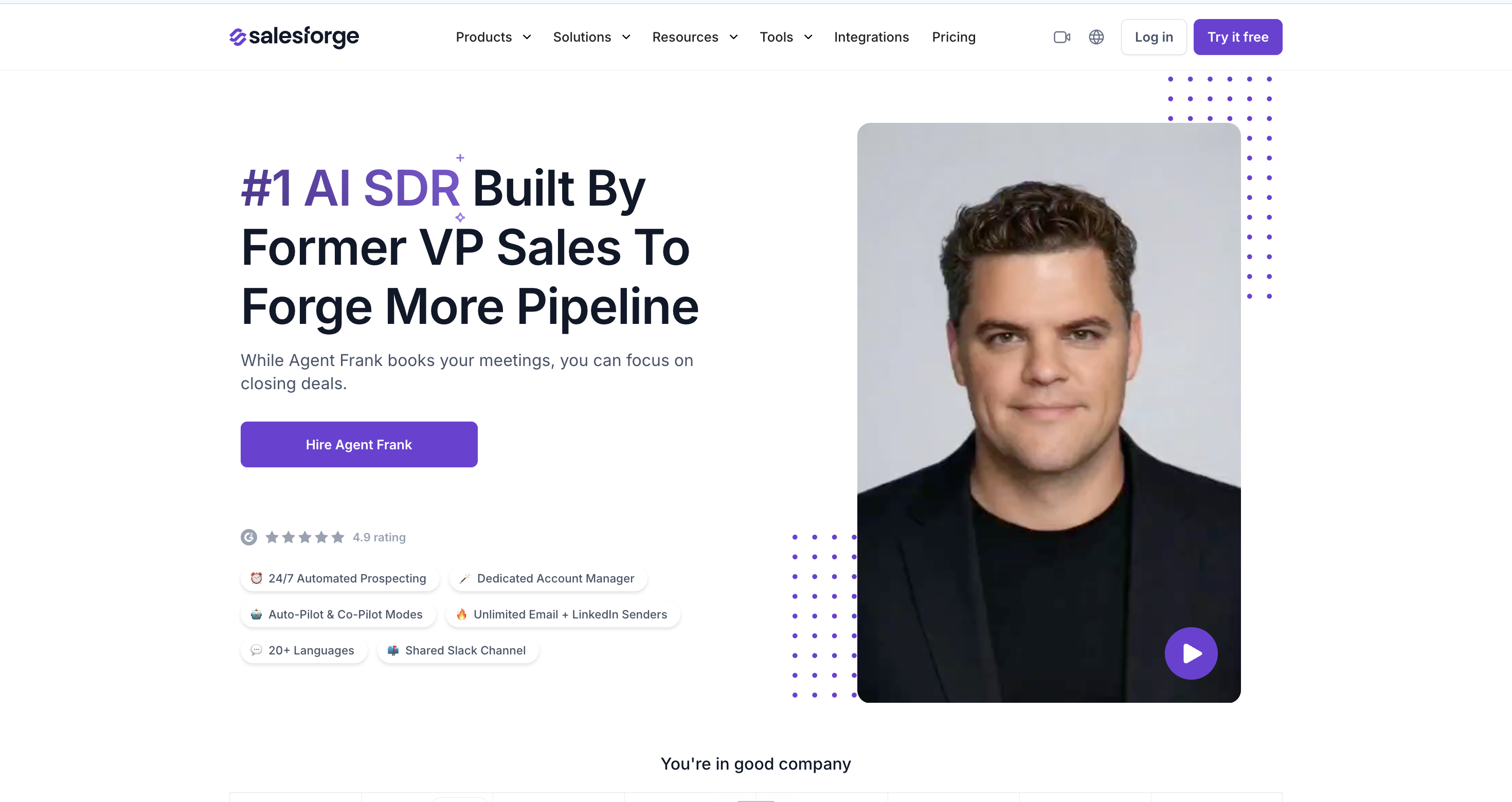
Agent Frank is the operator inside the infrastructure. It is where the article gets more interesting than a normal tools list.
What it covers:
All tools help your team do sales tasks faster. An autonomous AI SDR does the work across the whole system. That is the difference.
Agent Frank sits on top of the infrastructure and acts as that operator. He uses the data, the sending setup, the outreach channels, and the workflows to move a prospect from first touch to booked meeting. He runs in Auto-Pilot, where he prospects and sends on his own, or Co-Pilot, where you approve what goes out first. He is a teammate you hire to scale outbound, not a replacement for your closers. Agent Frank is available after a demo, so the team can fit him to your sales process.

This tracks what happens after outreach starts. Without it, you are flying blind past the reply.
What it covers:
If your team only watches sends, opens, and replies, you miss the part that pays the bills. The real goal is pipeline and revenue. HubSpot fits here because it gives teams a central place to track prospects, deals, and revenue, and it is honestly one of the strongest CRMs for connecting outbound activity to closed business. Salesforge pushes activity into it so the picture stays complete.
These tools are not a menu you pick from at random. They run in order, each one handing off to the next.
The flow looks like this:
One thing stands out here. Agent Frank is not like the other tools in the stack. It does not do one job and stop. It works across the whole infrastructure, using the data, the sending setup, the channels, and the workflows all at once.
I set my domains up in Mailforge, warmed them with Warmforge, loaded leads from Leadsforge, and sent through Salesforge with Agent Frank running the motion.
You do not need all six tools on day one. Add them in order, and bring in the AI SDR once the base works.
Pick a clear ICP and build clean, verified prospect lists. Everything downstream depends on this.
Create the domains, mailboxes, and authentication you need for cold outreach. Automate the DNS so you are not editing records by hand.
Warm your mailboxes and track inbox placement before you raise volume. A healthy heat score now saves a blocklisted domain later.
Run email and LinkedIn together instead of leaning on one channel. Keep replies in one inbox so nothing slips.
Once the base system runs cleanly, add an AI SDR like Agent Frank to take on more of the motion. Start in Co-Pilot if you want to approve sends, then move to Auto-Pilot as trust builds.
Measure meetings, opportunities, pipeline, and revenue. If you cannot tie outreach to closed deals, you cannot improve it.
Start with your ICP, lead data, and email infrastructure. If your targeting and sending setup are weak, adding AI will only create more bad activity faster.
Yes. Small teams do not need a large stack from day one. They can start with lead data, email infrastructure, outreach, and CRM tracking. An AI SDR can be added once the base process is working.
A normal sales tech stack helps reps manage sales tasks. AI sales infrastructure is built to let AI systems take action across data, outreach, follow-ups, and reporting.
In most teams, AI SDRs handle repetitive work like prospecting, research, outreach, and follow-ups. Human reps are still needed for complex conversations, objections, negotiations, and closing.
The biggest risk is increasing volume before the basics are ready. Poor data, weak domains, bad mailbox health, and generic messaging can hurt reply rates and deliverability.
AI sales infrastructure is becoming the foundation for modern outbound teams. The teams that win will not be the ones using the most AI tools. They will be the ones building the strongest system around the AI.
A strong stack gives your team the data, sending setup, deliverability, outreach channels, AI SDR, and revenue tracking needed to turn automation into real pipeline.
AI sales infrastructure is the system. An autonomous AI SDR like Agent Frank is the operator that works on it.


.jpg)

.jpg)