Cold outreach used to be a numbers game. Build a list, hit send, and hope a few people replied.
That playbook doesn't work anymore.
Today's buyers are more informed, inboxes are more crowded, and generic sequences often struggle to get even a 1–3% reply rate. The problem isn't just your copy—it's your timing.
That's why signal-based prospecting is becoming the smarter approach. Instead of reaching out because someone fits your ICP, you reach out when they've shown they're actually in the market.
In this guide, I'll explain what signal-based prospecting is, break down the six signals that convert best in 2026, show you the workflow I use to turn those signals into booked meetings, and rank the five tools worth your budget.
Let’s get into it!
The tools below are ranked on signal coverage, ICP filtering, waterfall enrichment quality, and how quickly a firing signal can be turned into a sending sequence.
Signal-based prospecting is a sales strategy where you reach out to prospects based on real-time buying signals rather than static firmographic fit.
The signals are observable events like a leadership change, a funding round, a competitor comparison page visit, or a technology stack shift. Each event indicates the account has entered or is close to entering a buying window.
The traditional approach asks a single question: does this account match my ICP? The signal-based approach adds a second question: is this account doing something right now that suggests they need what I sell? That timing layer is what changes the entire economics of outbound.
Signal-based prospecting is not just a different approach. It changes the economics of outbound in ways that matter to every part of the funnel. Here is why it deserves the shift in budget and focus.
Traditional outbound bets on the assumption that some percentage of your ICP is in-market at any given moment. That assumption is technically true. The problem is you have no way of knowing which accounts. Signal-based prospecting swaps the bet for evidence. You reach accounts that have done something specific, not accounts that fit a rough profile. That single shift is what turns outreach from a numbers game into a targeting game.
Industry benchmarks put generic cold outreach reply rates in the 1-3% range. Signal-triggered outreach lands closer to 15-25% depending on signal quality and personalization. The gap is not marginal. It is the difference between running a working outbound motion and running a spam machine that occasionally books a meeting by accident. When each email carries a specific reason for existing, replies stop feeling forced.
When you consistently reach accounts at the right moment, your reputation with those accounts improves over time. You stop showing up as noise. You start showing up as someone who noticed something specific about their business. That reputation compounds across quarters. Accounts you cannot close today remember you when the timing shifts. I have covered this strategic angle in the signal-based selling playbook, which is worth reading alongside this guide.
Every deliverability team knows the math. Send volume plus low reply rate equals declining sender reputation. Signal-based prospecting solves this from the top. When each sequence goes to accounts with real intent, reply rates climb and complaint rates fall. Your sender score protects itself because the behavior on the receiving end looks like legitimate business email, not bulk outreach. This matters more in 2026 than it did in 2023, because Google and Microsoft have both tightened bulk-sender rules.
Most B2B buying processes have a small window between the trigger event and the RFP. That window is when the buyer is open to conversation and has not yet built their shortlist. Signal-based prospecting puts you inside that window. You are not pitching against three other vendors on a formal evaluation. You are shaping the buyer's thinking before the evaluation even starts. The teams that consistently win competitive deals are the ones that got the first conversation.
Volume-based outbound produces volatile pipeline. Some weeks the ICP happens to be active and you close deals. Other weeks it does not and you miss forecast. Signal-based prospecting smooths the volatility because you are prospecting against actual buying moments, not against a static ICP definition. The pipeline you build reflects real intent, which makes forecasting cleaner for the sales leader and easier on the SDR team.
You start showing up as someone who noticed something. I have covered the strategic shift in depth in this signal-based selling playbook, which is worth reading alongside this guide.
Not every signal is worth chasing. Some fire too often to be useful. Others correlate so weakly with buying intent that you waste sequences on accounts that were never going to convert. The six below are the ones I have seen deliver a meaningful lift in reply rates when acted on quickly.
When a decision-maker moves to a new company, they carry preferred vendors with them. Every new VP of Sales, Head of RevOps, or Marketing Director walks into their new office with a mental shortlist of tools and partners they trust. That shortlist gets shorter every week they are in the role, because they start making calls to their old vendors on day one.
The window is short. Most job-change buying decisions happen inside the first 90 days, and the highest reply rates come from reaching out inside the first 30. If your CRM tags a former customer moving to a new company, you have a warm lead sitting inside a cold outreach workflow.
Fresh capital does two things. It creates budget, and it creates pressure to deploy that budget against a growth plan. A Series B round almost always triggers a hiring push, an infrastructure buildout, and a tool consolidation exercise. Each of those workstreams is a potential opening for outbound.
The trick is knowing which round matters for your sale. A seed round rarely funds enterprise software purchases. A Series C is often the sweet spot for infrastructure and workflow tools because the company has scale but has not yet locked into a full enterprise stack.
Behavioral signals from your own site are the strongest form of intent data you own, and most teams still ignore them. A pricing page visit is worth more than a blog visit. Three pricing page visits inside seven days is worth more than a single one. A competitor comparison page view means the account is actively shortlisting.
The rule I follow is simple. Any account that hits my pricing page twice in a week gets moved to a priority sequence within 24 hours. The reply-rate decay curve on intent signals falls off a cliff after 72 hours, so speed matters more than personalization polish here.
Adds and removes both signal. When an account installs a new CRM, they usually need to plug in new tools around it. When they drop a tool, the replacement decision is already underway. Technographic data platforms track these changes at scale, and the freshest data is measured in days, not weeks.
The one I watch most closely is when a company drops a competitor of mine. That account is in an active evaluation, and the outreach can reference the exact tool they left. Reply rates on that specific play regularly clear 20%.
Aggressive hiring in one department signals that department is scaling an initiative. Ten open SDR roles at a mid-market company means someone just approved a new outbound program. Five open engineering roles for AI positions means the company is building an AI-adjacent product. Each of those bursts is a buying window for the tools that support that scale-up.
The signal is only useful if you can filter by role and timeframe. Ten open roles posted over 18 months is background hiring. Ten open roles posted in the last 30 days is a mandate.
Earnings calls, press releases, LinkedIn posts from founders, and product roadmap announcements all carry buying intent. When a CEO publicly commits to a new initiative, the operational teams below them are already scoping vendors for it. The gap between a public commitment and a vendor conversation is measured in weeks, not months.
The best guides on this topic catalog every signal in detail. I have written a dedicated one on B2B buying signals in sales that maps each signal type to a response pattern.
Most guides on this topic stop at the signals themselves. That is the easy part. The hard part is turning a firing signal into a booked meeting without leaking the account somewhere in the middle. The workflow below is the one I run, and each step matters.
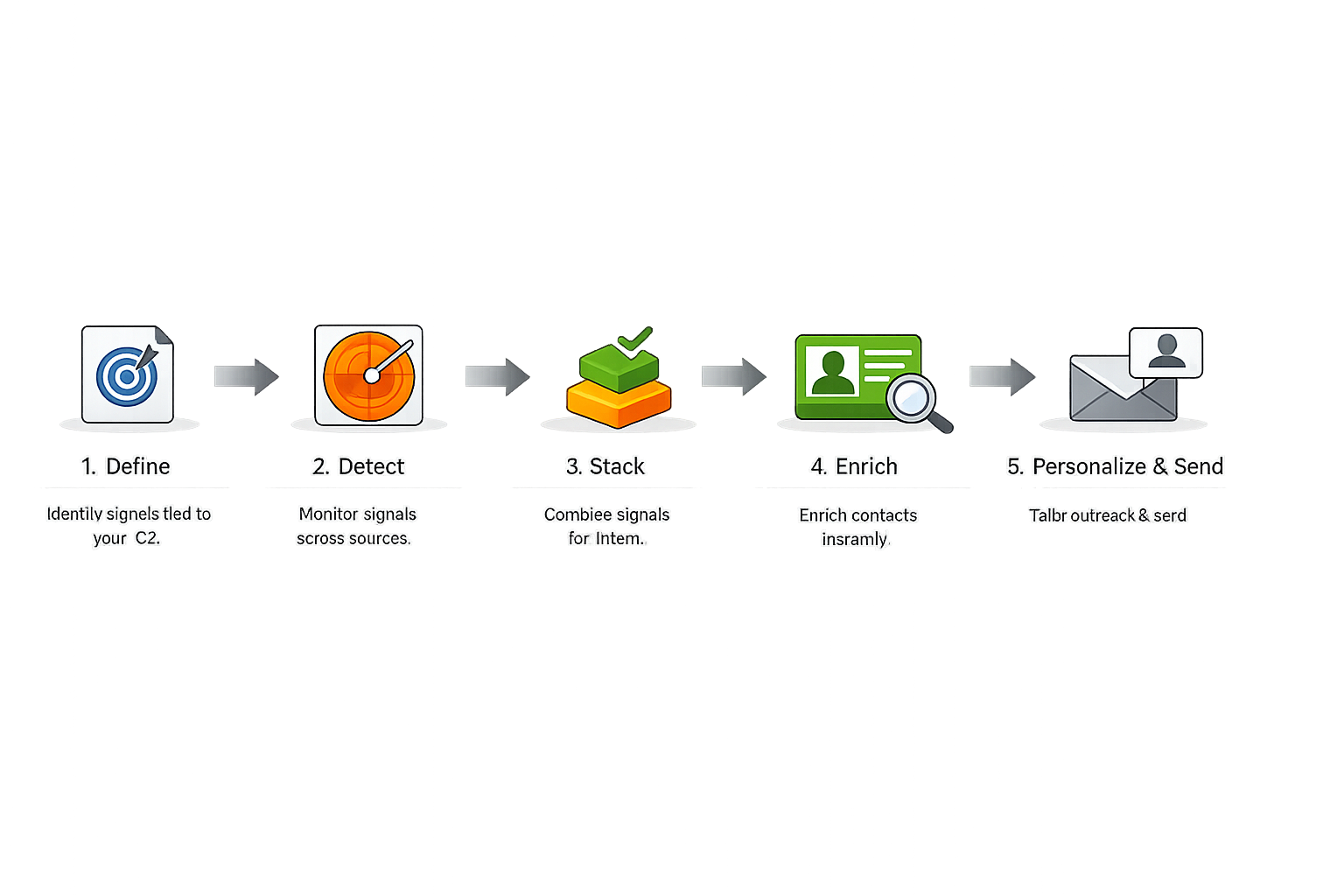
A signal is only useful if the account behind it can actually buy from you. The mistake most teams make is toggling on every available signal in their tool of choice. Then they drown in alerts for accounts that will never convert. The result is signal tourism, not signal-based prospecting.
The fix is to start with your ICP definition and work backwards. Which signals correlate with a buying moment for the specific segments you sell into? A company selling GTM infrastructure cares about RevOps hiring. A company selling security tools cares about compliance certifications and breach news. There is no universal shortlist that works across categories.
Single-source signals underperform. Intent data from one provider will miss half the accounts you care about. LinkedIn job change tracking alone will miss the funding rounds. News and press release scanning alone will miss the behavioral signals.
The tools that consistently deliver combine at least three of the following: intent data, technographic tracking, job change monitoring, funding and news feeds, and first-party website behavior. I break down which tools do this well in the ranking section below.
This is the concept most outbound teams miss, and it is where the highest-converting campaigns live. A single signal is a hint. Two overlapping signals is a strong hint. Three is a near-guarantee that the account is in-market.
My highest-converting stack is a new decision-maker plus a recent funding round. The new hire has a mandate and a 90-day evaluation window, and the company has fresh capital that has to be deployed. Together, the pair signals an account that is ready to evaluate and has the budget to buy. Reply rates on that stack regularly clear 25% in my sequences.
Another strong pair is a competitor comparison page visit plus a technographic signal showing the account already uses a competing tool. That account is actively shopping, and the outreach can name the exact incumbent they are considering leaving. The framework for building high-quality signal stacks is covered in more depth in how to identify buying signals.
A signal you cannot act on is a wasted signal. If you have to wait 24 hours for enrichment before your sequence goes out, you have already lost the timing advantage. Signal-based prospecting only works when the enrichment happens at speed.
Waterfall enrichment matters here. A single-source enrichment tool will hit 40-60% of contacts. A waterfall setup that pulls from three or more providers will hit 80% or more. The gap is not academic. It is the difference between reaching the decision-maker at the account and getting stuck sequencing a marketing coordinator.
The signal has to appear in the first sentence of the first email, and it has to appear naturally. It should not read like a marketing hook or a "congratulations on your recent funding" template. It should read as a specific reference to the specific event that triggered the sequence.
The pattern I use is [signal observation] plus [specific relevance to their new context] plus [ask]. Something like: "Saw you closed the Series B last week. Every Series B I have watched in the outbound-heavy space ends up rebuilding sequence infrastructure inside the first six months. Would 15 minutes help?"
I have covered the tactical execution in how to use intent data for cold email outreach.
The full workflow with the exact tool stack sits in signal-based outbound.
The five tools below are the ones I would put my budget behind for signal-based prospecting in 2026. I have ranked them on signal coverage, ICP filtering, waterfall enrichment quality, and how quickly a fired signal can be turned into a sending sequence.
Every tool on this list has a legitimate use case, but they are not interchangeable.
Leadsforge is the strongest all-round signal-based prospecting tool I have used. Two reasons stand out. It combines waterfall enrichment across multiple providers with a chat-style ICP search you can drive in plain English.
And it has built-in Signals sourcing that surfaces accounts based on the exact events that matter to your motion.
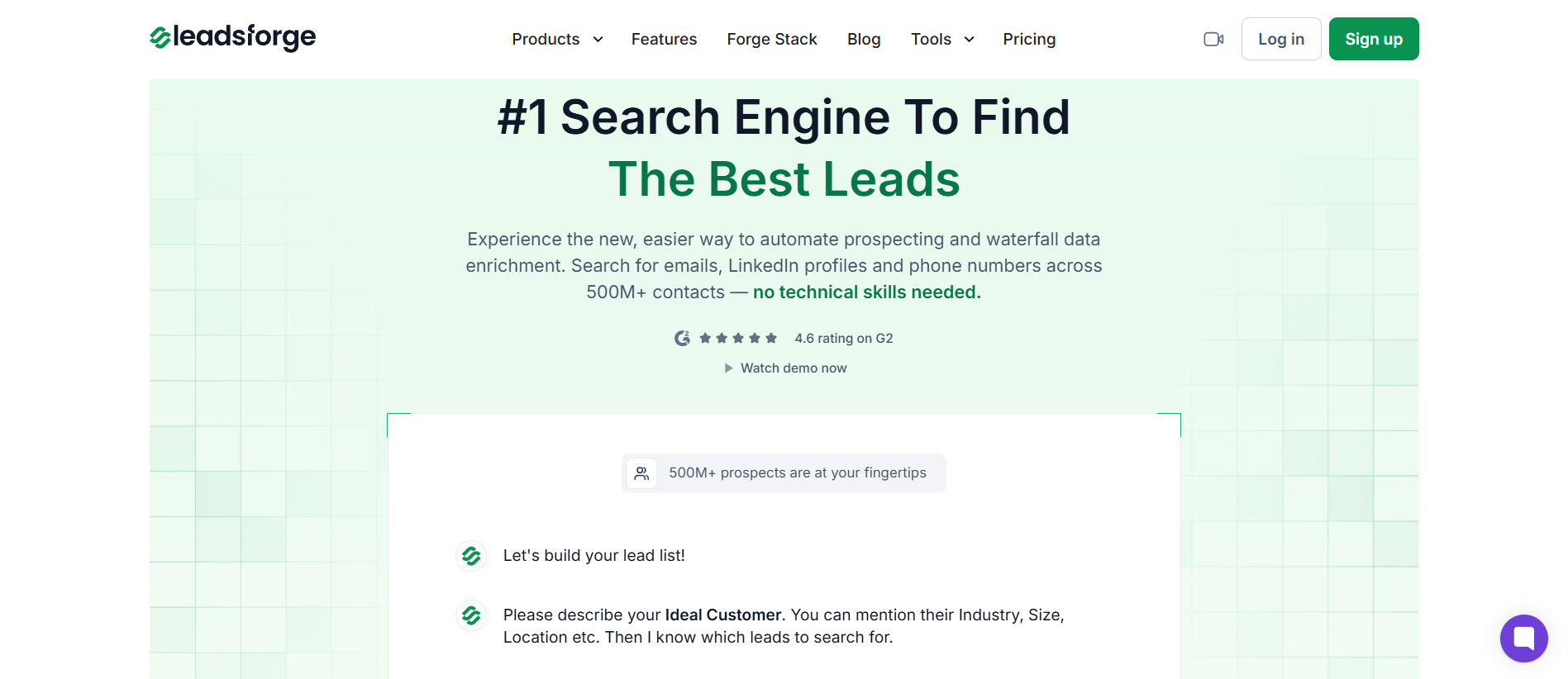
The other reason it sits at the top is speed to sequence. A signal fires, the account gets enriched, and the contacts push into an outreach tool with two clicks.
There is no CSV export step, no separate enrichment run, and no data quality reconciliation. That end-to-end flow is what turns signal detection into booked meetings. Most competing tools break down somewhere in the middle of that chain.
The next signal-based prospecting tool worth naming is ZoomInfo. It is the anchor pick if you are running enterprise outbound with a matching budget.
What ZoomInfo does better than anyone else is depth of firmographic and technographic data on US mid-market and enterprise accounts. The intent data layer, sourced through its acquisition of Bombora, tracks category-level research signals across thousands of B2B sites.
I have used ZoomInfo on multiple engagements. The honest read is that the data quality is unmatched at the top of the market. You get website visitor tracking, native intent data, and direct-dial phone numbers. Enrichment consistently clears 90% hit rates on Fortune 1000 accounts. The catch is what you pay for it.
Pricing is custom based and billed annually..
If you are evaluating ZoomInfo against the broader field, I have written a full ZoomInfo alternatives breakdown that compares 10 competing tools on data accuracy, pricing, and workflow fit.
Another signal-based prospecting tool worth putting on your shortlist is Clay. It sits in a different lane from Leadsforge and ZoomInfo. Clay is the platform to pick when you want to design your own signal-based workflows. It pulls data from dozens of providers into custom logic.
The core idea is a spreadsheet-like table that connects to enrichment providers, AI models, and third-party APIs. You define the signals you care about, chain enrichment calls in sequence, and score accounts based on custom logic. Teams that outgrew Apollo but do not want to move to ZoomInfo often land here.
The next signal-based prospecting tool on the list is Apollo.io. It occupies a different position again. Apollo is the bundled platform for teams that want signal detection, a contact database, and basic sequencing in one place. That saves you from stitching separate tools together.
Apollo pulls from a database of around 275 million contacts, layers on buying signals through firmographic filters and job-change alerts, and lets you push contacts into email sequences from the same interface. For teams running their first outbound motion, Apollo gets you from zero to sending in a single afternoon.
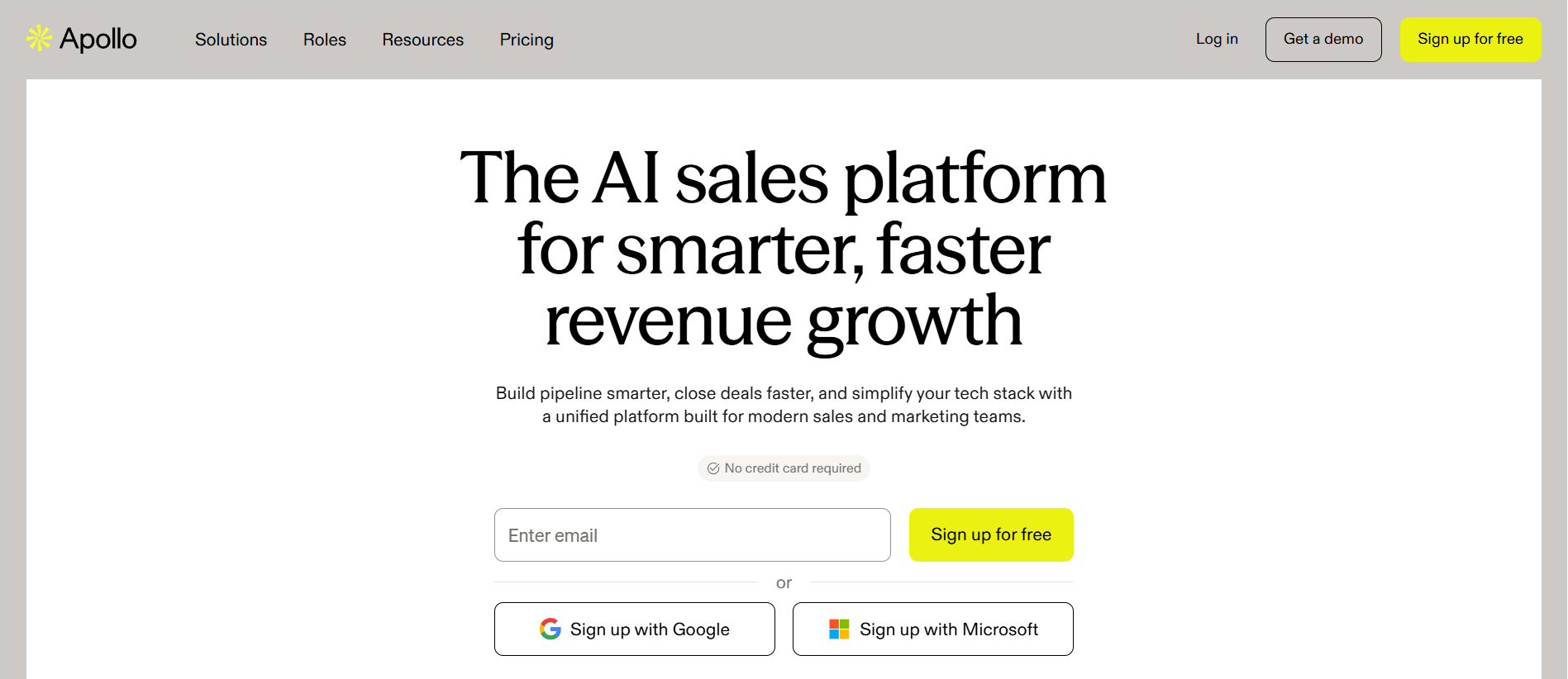
For a full breakdown of where Apollo wins and where it slips, I have compared it against the field in this Apollo.io alternatives guide.
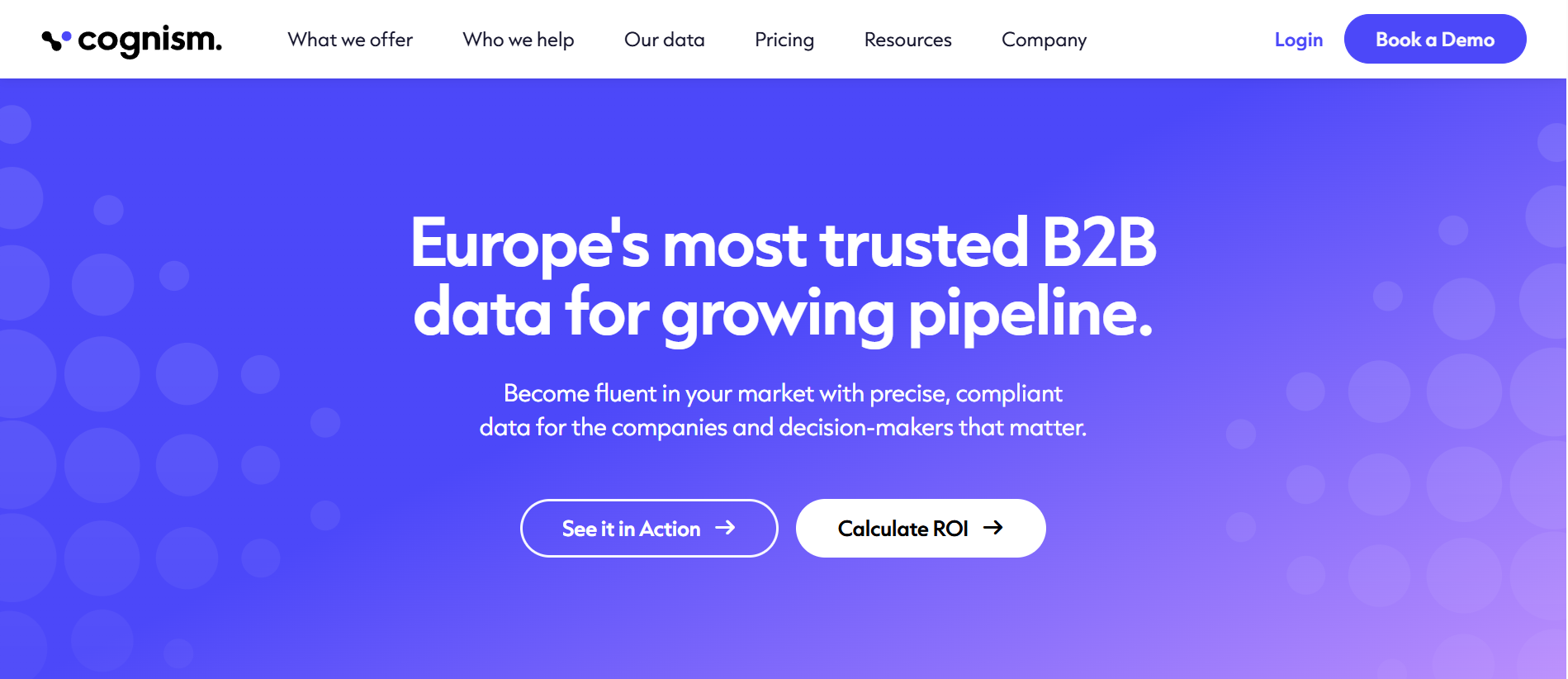
The last signal-based prospecting tool on my list is Cognism. It has built its reputation on two things ZoomInfo is weaker on outside North America: phone-verified mobile numbers and GDPR-compliant European data. That specific position makes it the default pick for outbound teams running EMEA-focused motions.
Cognism combines a verified contact database with intent data through a Bombora partnership, and adds Diamond Data phone verification on top. Sales and marketing teams running account-based motions in Europe consistently shortlist it because the data compliance layer is not an afterthought.
If I had to pick one signal-based prospecting tool to run in 2026, I would pick Leadsforge. It combines the signal coverage of the enterprise tools with the speed to sequence they lack. The pricing also lets you validate before locking in. ZoomInfo wins on enterprise depth, Clay on custom workflow control, Apollo on budget bundling, and Cognism on EMEA compliance. Each one is a legitimate pick for the right team. For most motions I run, Leadsforge is the one that closes the loop end to end.
Try Leadsforge free with 100 credits at signup, no credit card required.
Signal-based prospecting is a sales strategy where you reach out to prospects based on real-time buying signals like job changes, funding rounds, or website visits rather than static contact lists. The goal is to time your outreach to when the account is actively in-market instead of relying on generic firmographic fit.
Intent data is one type of signal, specifically research behavior tracked across third-party sites. Signal-based prospecting is the broader category that includes intent data plus job changes, funding news, technology stack shifts, hiring surges, and executive statements. Intent data is a subset of signal-based prospecting, not a replacement for it.
The highest-converting signals I have seen are a new decision-maker joining a target account, a recent funding round paired with hiring activity, and repeated pricing page visits from an identified account. Signal stacking, or combining two overlapping signals, consistently outperforms any single signal on reply rates.
Speed matters more than most teams realize. Intent signals lose most of their value after 72 hours, and job-change signals lose most of their value after 30 days. If your workflow takes more than 24 hours to move from a firing signal to a sending sequence, you are already losing replies. That gap is where signal-based programs stall.
Not necessarily. A tool like Leadsforge combines signal detection, waterfall enrichment, and native transfer into an outreach ecosystem in one workflow. Teams with specific workflow needs sometimes stack a signal detection tool with a separate sequencer. But the more moving parts you add, the more speed you lose at the handoff.
Signal stacking is the practice of combining two or more overlapping signals. The goal is to filter noise and identify accounts with genuine buying intent. A single signal is a hint. Two overlapping signals is a strong hint. Three is a near-guarantee that the account is in-market. Signal stacking consistently outperforms single-signal alerts on reply rates because the false-positive rate collapses when signals corroborate each other.


.jpg)

.jpg)