Thinking about moving away from Klenty?
You're not alone.
While Klenty remains one of the most popular sales engagement platforms, many growing teams start looking elsewhere because of rising per-user costs, limited prospecting options, or the need for deeper deliverability and automation features.
The good news? You have plenty of options.
In this guide, you'll discover:
Since I was finding Klenty alternatives, I wanted to make this comparison as accurate as possible. I dug through 367 G2 reviews, 562 Reddit discussions, product documentation, pricing pages, and independent comparisons to understand where each platform outperforms Klenty, and where it doesn't.
Let's get started.
Klenty is a capable sales engagement platform. The cadence builder handles email, phone, LinkedIn, and SMS from one screen. The parallel dialer is one of the strongest at this price point.
But three patterns keep showing up when teams start shopping for Klenty alternatives.
Klenty charges per user, every month. Multichannel cadences only start at Growth, which runs $70/user/month billed annually. Five reps on Growth is $350/month before a single message goes out.
The AI features and expanded prospecting credits sit on Pro at around $100/user/month. A team that wants the full feature set pays close to Outreach and Salesloft territory.
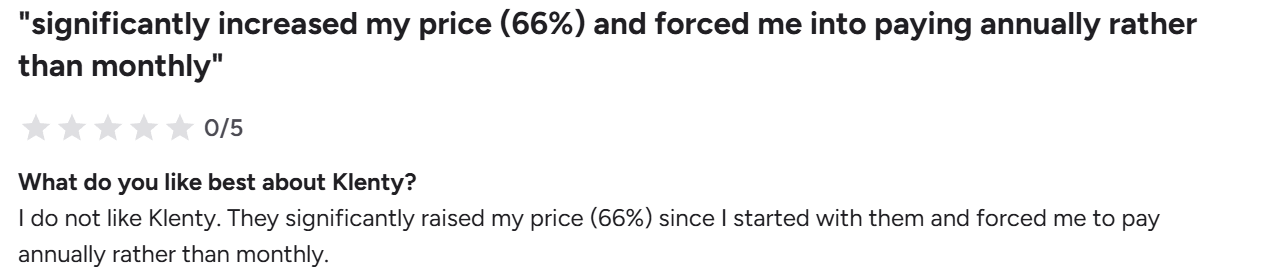
Multiple G2 reviewers describe Klenty as slow and unstable during active campaigns. Features that look good on the pricing page do not always perform the same way inside live sequences.
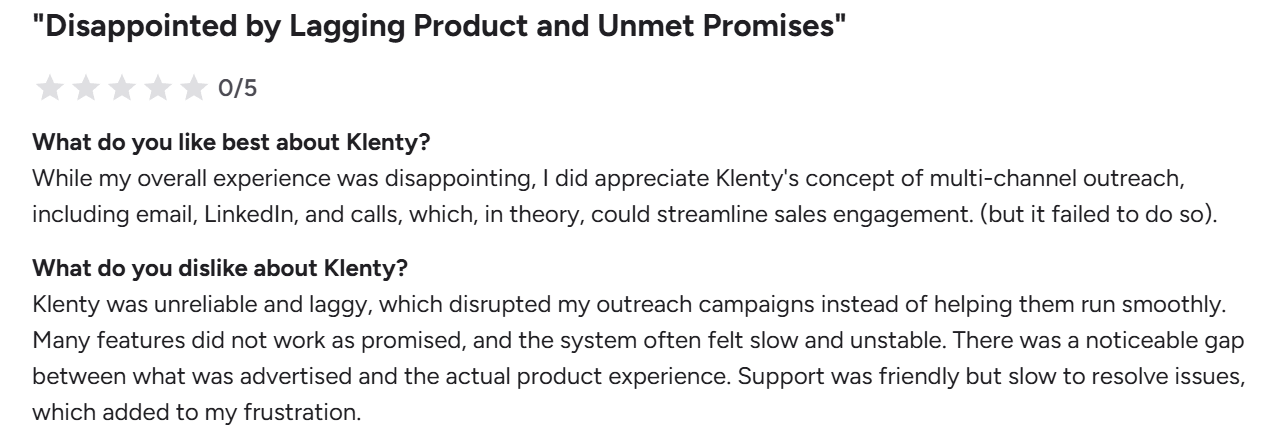
For teams running high-volume outbound across multiple inboxes, product stability is not a nice-to-have. A single lag spike during a live campaign can stall follow-ups and cost booked meetings.
Klenty's Pro plan includes 200 prospecting credits per month. Each lookup burns one credit, so high-volume prospectors run dry within days.
There is no large built-in contact database. No waterfall enrichment pulling from multiple data providers. No built-in tool to clean or enrich prospect data against a target list. Klenty's own users flag this as a gap.

For comparison, several alternatives to Klenty on this list ship databases in the hundreds of millions. Salesforge connects 500M+ with waterfall enrichment inside the Forge stack.
If any of those sound familiar, the rest of this list is for you.
Email and LinkedIn at minimum. Calls and SMS are a plus. A Klenty alternative that drops to email only better make up the difference with volume or pricing.
Warm-up with real placement monitoring, not just a heat score in a separate dashboard. Too many cold email platforms treat deliverability as an afterthought.
Flat or predictable pricing beats per-seat math that punishes team growth. I paid close attention to how costs change at 5, 10, and 20 users.
A real contact database, or clean integration with one. Klenty's 200 credits per month is the bar to clear.
Not just AI-generated copy. I looked for agents that can prospect, follow up, and book meetings on their own. Surface-level email outreach tools did not make the cut.
Verified G2 ratings and review counts. I did not rely on anonymous testimonials or marketing claims.
Each tool below follows the same format: what it does, what makes it different from Klenty, my take after testing it, pricing (billed annually), and an honest read on where it fits.
Best for: outbound teams that want email + LinkedIn, free warm-up, and an AI SDR without per-seat pricing.
Salesforge is the best alternative to Klenty because it closes the three gaps that push most teams to shop for Klenty competitors: per-seat pricing, deliverability depth, and thin prospecting data.
Of every Klenty alternative I tested, this is the one I kept coming back to.
It runs cold email and LinkedIn outreach from one platform, trusted by 10,000+ businesses. Warm-up is included free through Warmforge with heat score targets above 85, Bounce Shield, Dynamic ESP matching, and placement monitoring inside the same dashboard as your sequences. Klenty's warm-up exists, but it does not give you that level of visibility.
The Primebox™ unified inbox is the feature I did not expect to matter as much as it did. Email and LinkedIn replies for the same prospect show up in one thread with two AI modes. Co-Pilot drafts replies and waits for your approval.
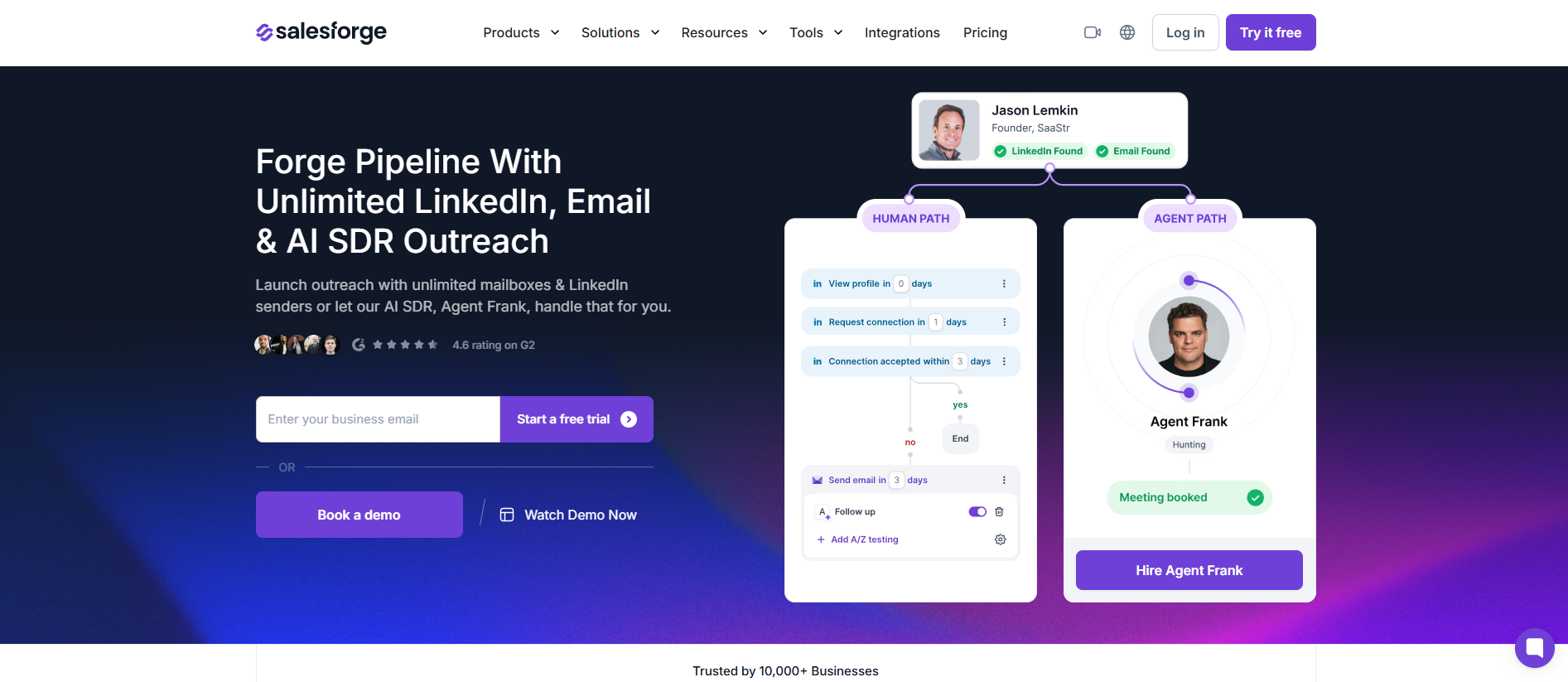
Auto-Pilot keeps conversations moving on its own. Klenty routes LinkedIn replies through a separate workflow, so you toggle between views instead of reading one conversation.
Agent Frank is the other piece Klenty has no answer for. He is an autonomous AI SDR who prospects, writes personalized outreach in 20+ languages, follows up, and books meetings without human intervention.
Co-Pilot mode lets you review what he drafts before it goes out. Auto-Pilot mode lets him run the workflow end-to-end.
The bigger shift is pricing. Klenty charges per seat. Salesforge Growth includes unlimited mailboxes, unlimited LinkedIn senders, and unlimited users on one flat plan. Five reps on Klenty Growth is $350/month. Five reps on Salesforge Growth is $80/month.
The Forge stack fills the rest. Mailforge handles shared IP infrastructure. Infraforge gives you dedicated IPs. Primeforge provides real Google Workspace and Microsoft 365 mailboxes. Leadsforge connects a 500M+ contact database with waterfall enrichment. All under one login.
Best for: teams that want Klenty's exact multichannel shape with warm-up and an AI agent included.
Another Klenty alternative worth testing is Reply.io, and it is the closest like-for-like multichannel Klenty competitor on this list.
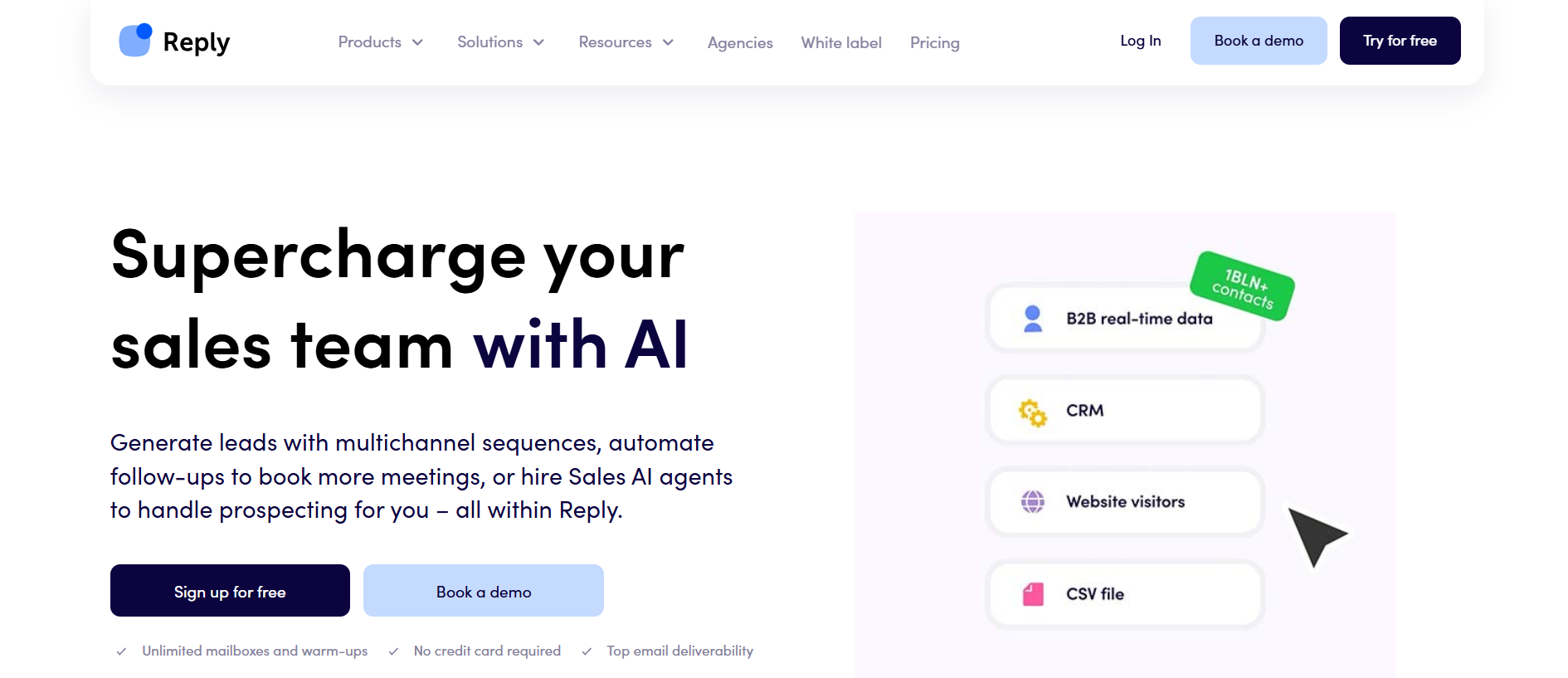
I found that if your reason for leaving Klenty is channel coverage, Reply.io is where you land. It runs cadences across email, LinkedIn, SMS, WhatsApp, and calls with conditional logic that branches on prospect behavior. The sequence builder felt familiar on day one, which matters when migrating a team mid-quarter.
Where this alternative to Klenty pulls ahead: warm-up is included on every plan, Jason AI handles email writing, reply detection, and meeting booking, and the 1B+ contact database is built in. These are three things Klenty either charges extra for or does not offer at the same depth.
What I did not expect was the add-on math. The Multichannel plan starts at $89/user/month billed annually, which is roughly the same as Klenty's Pro tier. But LinkedIn automation and cloud calling stack as paid extras. A single fully loaded multichannel seat can climb past $180/month. The per-seat pricing scales the same way Klenty's does.
Read the full Reply.io review on Salesforge.
Best for: mid-market and enterprise revenue teams that want forecasting alongside outreach.
The next alternative to Klenty on my list is Salesloft, but I would not call it a lateral move. It is a step up in scope.
I found that teams shopping for Klenty alternatives at this level are not frustrated with cadences. They have outgrown them.
They need pipeline visibility, deal tracking, and coaching alongside their sequences. Salesloft is a full revenue platform: cadences, deal management, forecasting, and conversation intelligence in one place.
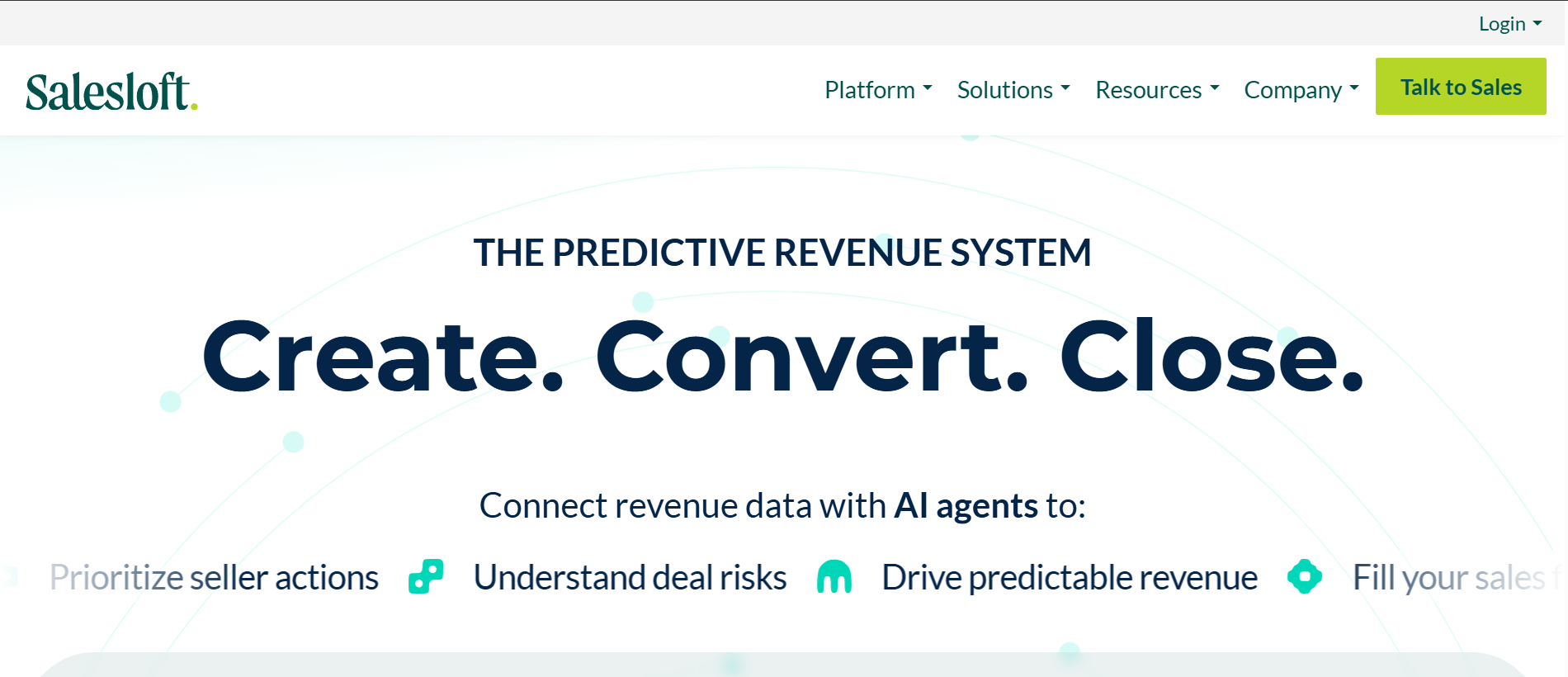
What bugs me about Salesloft for most teams reading this: it is built for orgs with 20+ reps and a dedicated ops function. The pricing is custom and quote-based. Onboarding takes weeks, not hours. If you are a five-person SDR team looking for a cheaper Klenty competitor, Salesloft is the wrong direction.
Where Klenty still wins: far cheaper, faster to set up, and friendlier for SMB teams that just need cadences.
See more Salesloft alternatives I tested.
Best for: large orgs with a dedicated ops function and a real sales-tech budget.
If Salesloft is the enterprise Klenty alternative with a revenue focus, Outreach is the one built for process-driven orgs running structured sequences at massive scale.
From my experience evaluating Klenty competitors in this tier, Outreach and Salesloft overlap more than either vendor would admit.
The real difference is Outreach leans harder into sequence structure and deal intelligence, while Salesloft leans into coaching and forecasting.
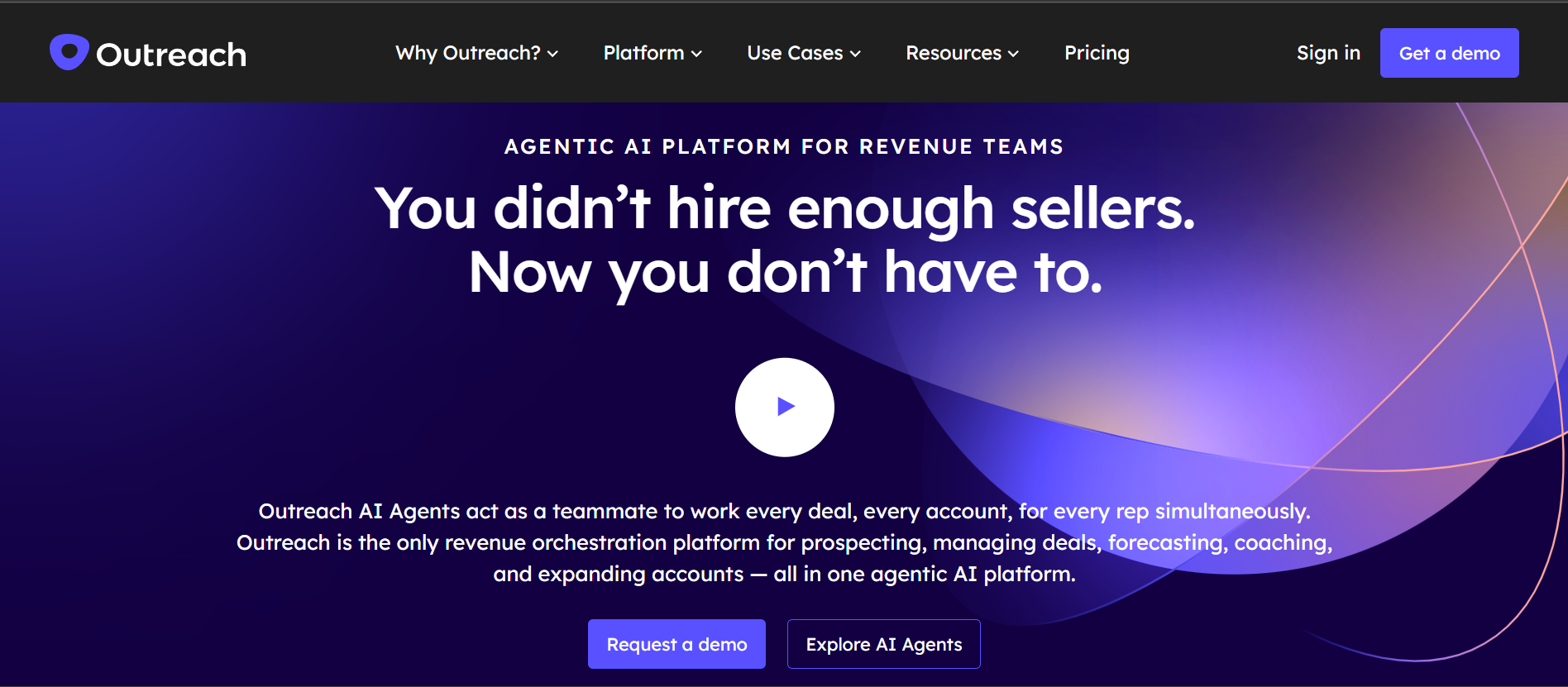
Pricing lands around $120/user/month on annual contracts, with a two-to-four-week onboarding. That depth is overkill for teams under roughly 20 reps. As an alternative to Klenty, it prices out startups and lean SMB teams by design.
Where Klenty still wins: lower cost, no long onboarding, and a gentler learning curve.
See all 10 Outreach alternatives I compared.
Best for: small teams that want multichannel cadences without enterprise pricing.
I nearly skipped Outplay as a Klenty alternative because the pricing page went quiet in 2026. But small SMB teams kept recommending it, and after testing it I can see why.
It covers email, LinkedIn, calls, and SMS in a cleaner, lighter package than Klenty. The UI is less cluttered. The support is responsive. For teams that just need multichannel cadences without enterprise weight, Outplay is the Klenty competitor that trades feature depth for simplicity.
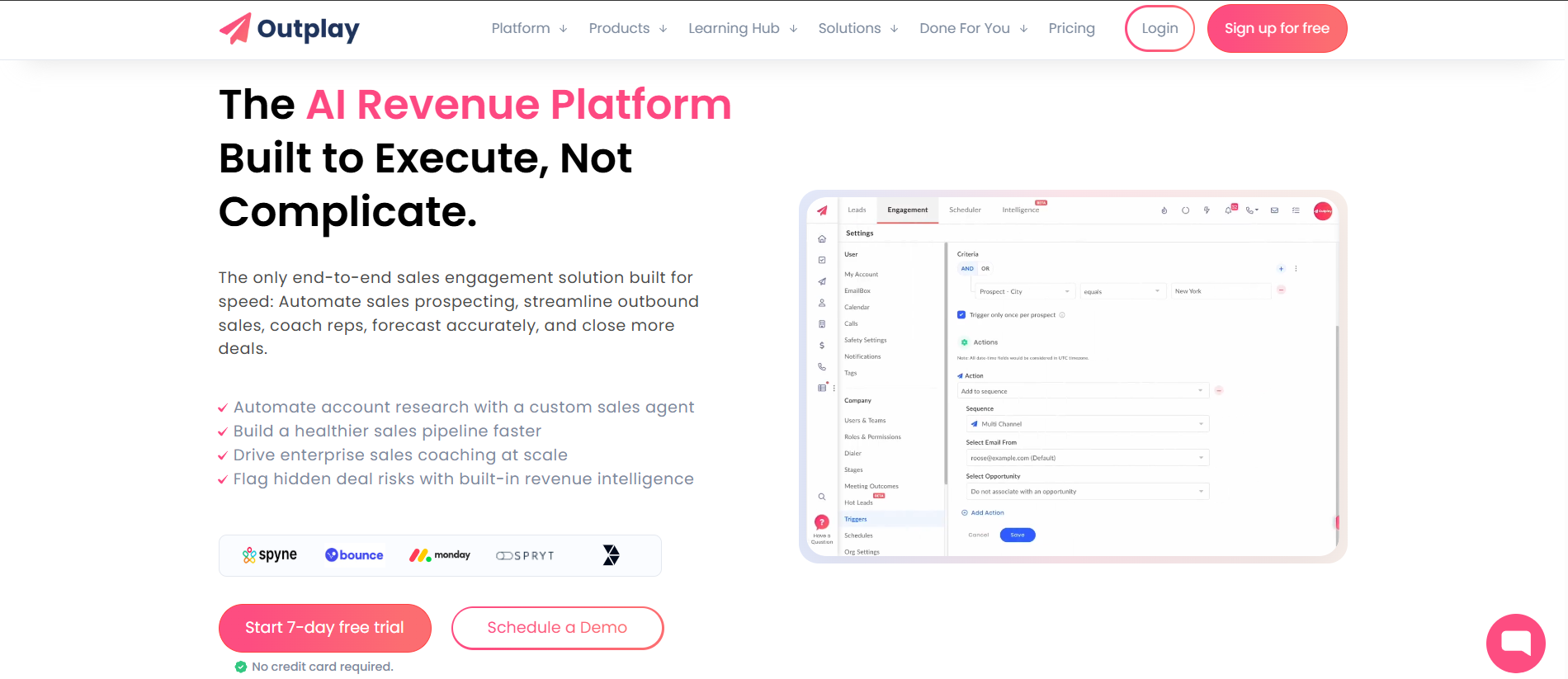
The pricing is what bugs me, though. Public plans have moved behind a demo request, so you cannot compare cost upfront. And the user base is smaller than Klenty's, which means fewer community resources when you get stuck.
Where Klenty still wins: a more mature feature set and a larger, more active user community.
See more Outplay alternatives I tested.
Best for: SDRs who want a contact database and outreach in the same tool.
275 million contacts is a lot of data to ship inside an outreach tool. Apollo.io flips the order most cadence platforms follow, and that is what makes it a different kind of Klenty alternative.
I particularly enjoyed the search filters. Over 65 filters including job title, tech stack, funding stage, and intent signals. The AI Assistant launched in March 2026 lets you describe your ICP in plain English and get a prospecting list back. For teams frustrated by Klenty's thin 200 credits per month, that is the headline.
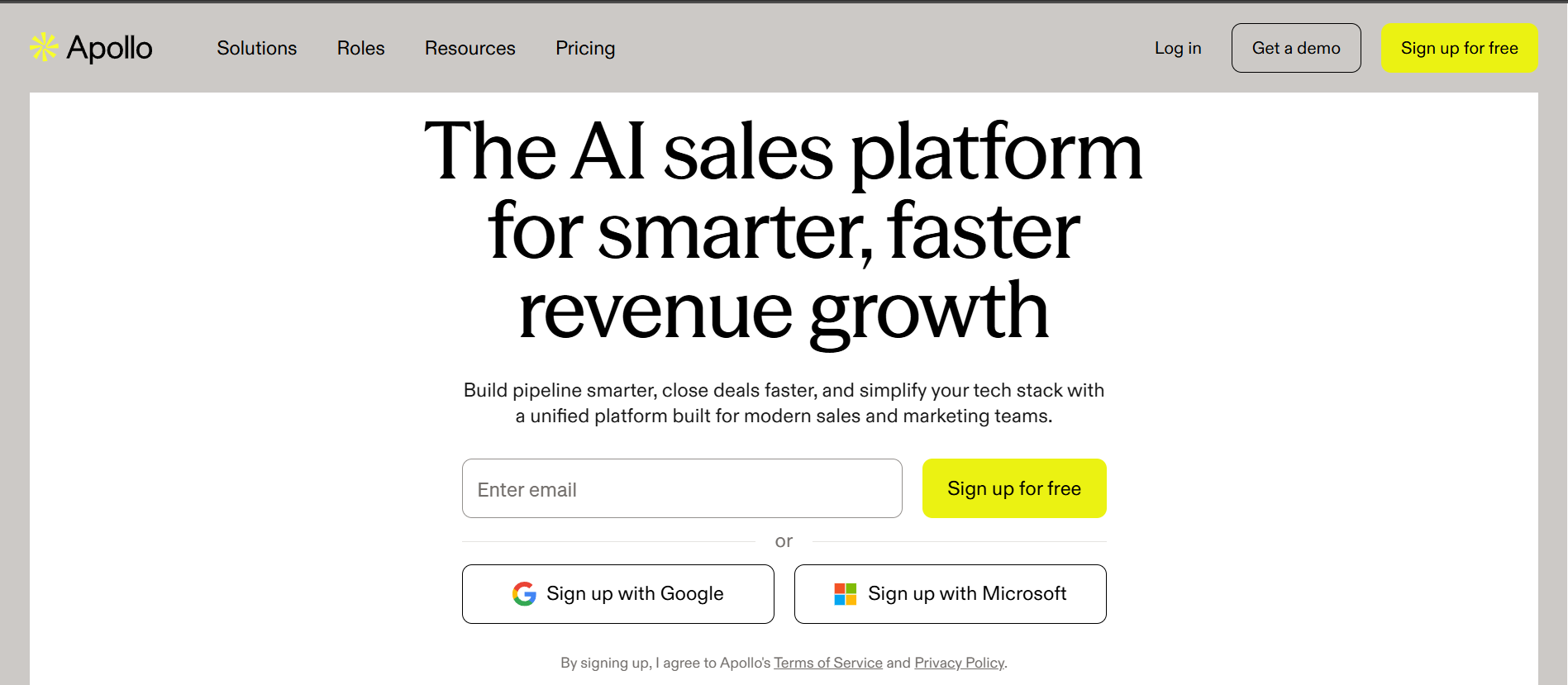
The trade-off I did not like: Apollo removed native LinkedIn automation on January 30, 2026. LinkedIn steps are now manual tasks. And cold email deliverability is lighter than dedicated senders. Data accuracy outside North America is inconsistent, with bounce rates of 15-to-35% reported in APAC and the Middle East.
On the data side, Leadsforge fills a similar role inside the Forge stack. It connects a 500M+ contact search engine with waterfall enrichment that feeds into Salesforge for sending.
Read my Apollo vs Salesloft breakdown for a deeper comparison.
Best for: teams where creative email personalization drives reply rates.
I set up a Lemlist campaign with dynamic images and personalized landing pages, and reply rates jumped compared to text-only sends. This is the Klenty alternative built around making cold email feel one-to-one.
From my experience, no
other Klenty competitor on this list matches Lemlist for creative personalization. Dynamic images, custom landing pages, and video in a cold message is something most tools do not even attempt. Lemwarm warm-up is included on every plan. A 450M+ contact database is built in.
What I did not like was the per-seat pricing scaling. Multichannel Expert at $87/user/month billed annually for five reps is $435/month. That is close to where Klenty's pricing pushed those same teams to start shopping. LinkedIn and calls are gated behind that tier.
For teams who want warm-up depth inside an email and LinkedIn stack, Warmforge plays the same role for Salesforge, included free.
See all 6 Lemlist alternatives I tested.
Best for: high-volume cold email senders who do not need other channels.
Everyone recommends Instantly as a Klenty alternative for volume. But nobody mentions what you give up by going email only.
I found the setup quick and painless. Unlimited sending accounts and warm-up included across a 4M+ account network. Entry price is low at $37/month. For solo founders and small teams pushing 50,000+ emails per month across many inboxes, Instantly is built for that exact pattern.
But there is no LinkedIn, no calls, and no SMS. And because it runs on shared IPs, you do not control the infrastructure your sender reputation rides on. Community discussions through Q1 2026 also report inconsistencies between warm-up heat scores and actual inbox placement at scale.
For senders who want control over their infrastructure, Mailforge (shared IPs, set up in minutes) and Infraforge (dedicated IPs) are the Forge stack answer, paired with Salesforge for the actual email outreach.
See all 7 Instantly alternatives I compared.
Best for: budget-conscious teams and agencies that want a lead database, outreach, and CRM in one bill without per-seat pricing.
If Instantly is the volume play, Saleshandy is the consolidation play. It is the cheapest Klenty competitor on this list that bundles prospecting, outreach, and pipeline management under one roof.
I can safely say that for agencies rotating many domains, the per-workspace pricing is hard to beat. Unlimited sending accounts on every plan.
An 852M+ B2B contact database with waterfall enrichment. TrulyInbox warm-up included. A built-in outbound CRM so you do not need HubSpot or Pipedrive in the loop. All starting at $25/month on annual billing.
Saleshandy has also added multichannel sequences in 2026. You can now layer LinkedIn tasks, calls, and WhatsApp steps into the same sequence alongside email. The catch: LinkedIn and calling steps are task-based, not automated.
The AI Copilot generates the full sequence, but when it reaches a LinkedIn or call step, it creates a task reminder for you to execute manually. If email carries 80% of your outreach and you follow a structured process, the task-based approach works in practice. But it is not the same as automated LinkedIn outreach in Salesforge or Reply.io.
Read the full Saleshandy alternatives comparison.
Klenty is a fair sales engagement tool. The cadence builder works. The parallel dialer is real. SMB teams running phone-heavy outbound still get value from it.
If voice is central to your motion, Reply.io is the closest like-for-like Klenty alternative with warm-up and an AI agent included.
If you are scaling email and LinkedIn and tired of per-seat math that punishes team growth, Salesforge is the Klenty alternative I would start with. Flat pricing, free Warmforge warm-up with real placement monitoring, and Agent Frank when you want outreach to run on its own.
For email and LinkedIn at scale without per-seat pricing, Salesforge is my pick. It includes free warm-up via Warmforge and an AI SDR (Agent Frank). For a near-identical multichannel cadence tool with phone and SMS, Reply.io is the closest match.
Per-seat pricing that climbs with headcount, a deliverability suite that is thinner than dedicated warm-up platforms, capped prospecting credits at 200/month, and support timing lag for US-based teams.
Klenty includes email warm-up as part of its deliverability suite with inbox rotation and SPF/DKIM/DMARC configuration. For teams that need deeper placement monitoring and heat score tracking, Salesforge (via Warmforge), Reply.io, and Lemlist (via Lemwarm) offer more visibility.
Saleshandy starts at $25/month billed annually with unlimited sending accounts. Instantly starts at $37/month. For multichannel, Outplay is the budget option, though pricing is now quote-based.
Salesloft and Outreach. Both include forecasting, deal management, and structured sequencing. Both price higher and take longer to onboard than Klenty.
Salesforge ships Agent Frank, an autonomous AI SDR that prospects, writes, follows up, and books meetings. Reply.io has Jason AI. Apollo, Salesloft, and Outreach offer partial AI features rather than a full autonomous agent.
Klenty's native parallel dialer is one of its real strengths. Reply.io and Apollo include calling. Salesloft and Outreach have enterprise-grade dialers. Salesforge focuses on email and LinkedIn, so a separate dialer is needed if voice is core.
.jpg)

.png)
.jpg)