Outbound sales agencies in the United States are the most expensive in the world, and also the most mature. Structured SDR programmes and disciplined reporting are the norm rather than the exception.
That maturity makes the shortlist harder, not easier. Eleven agencies here all do credible work, so the question becomes which model fits your motion.
I judged them on channel mix, who actually does the dialling, and how honestly they report pipeline. Three are certified Forge Experts and sit near the top of the list.
If you want city-level depth, I also have breakdowns of agencies in New York and outbound sales agencies in Chicago. There is a section below for running outbound in-house too.

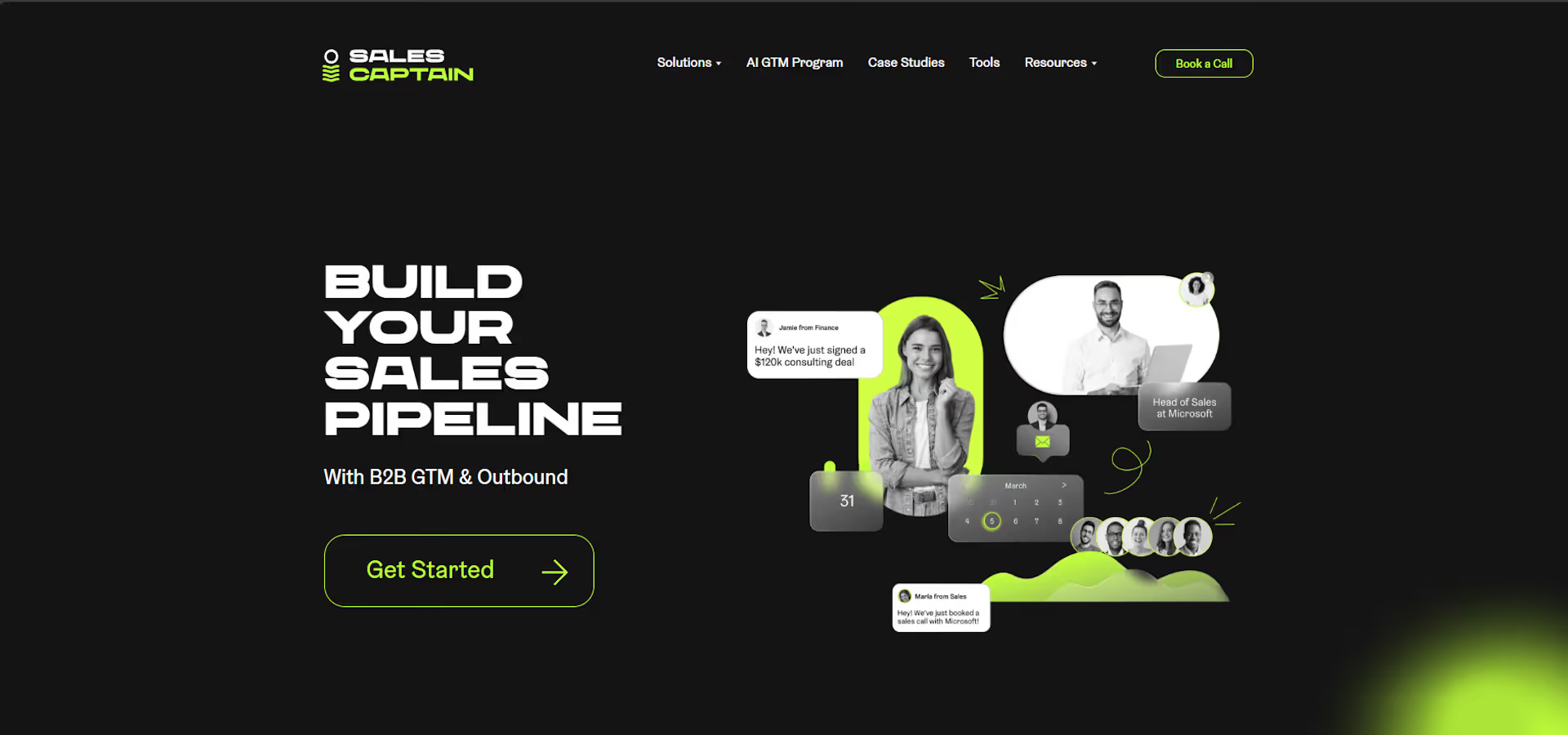
SalesCaptain is an outbound marketing and go-to-market agency built specifically for B2B companies that want to reach buyers at the right moment. Their innovation lies in using data to trigger outreach when real buyer signals appear, not from static lists.
Their system runs three simultaneous layers: AI-insight campaigns that target accounts not yet problem or solution aware; intent-signal campaigns that engage prospects already showing demand signals like hiring activity or funding rounds; and inbound reactivation campaigns that convert accounts already familiar with your brand but not yet sold.
What separates SalesCaptain from other outbound sales agencies is how they align messaging, timing, and offer to where each prospect sits in their buying journey. They also build market-specific offers that differentiate you from competitors, then run outbound like performance marketing: test fast, scale what works, cut what doesn't.
The result is consistent pipeline generation regardless of TAM size or market saturation. SalesCaptain performs best in environments where innovation matters, which is why B2B SaaS companies are typically the strongest fit.
Clutch ranks them the number one B2B outbound and GTM agency. They send about 1.2 million emails a month and have opened conversations with Uber, ESPN and BlackRock. Their targeting leans on B2B intent data rather than static lists.
Cleverly is a B2B lead generation agency that runs outbound across LinkedIn, cold email and cold calling. Rather than treating each channel as a separate campaign, the team can build them into a coordinated outbound motion around the same ICP and sales goals.
The process starts with targeting and messaging. Cleverly identifies the right prospects, builds outreach lists, writes the copy and handles campaign execution. On the cold email side, that also includes the infrastructure and deliverability setup needed to scale outreach without simply pushing more volume.
Cold calling adds a more hands-on SDR layer. Cleverly places a dedicated appointment setter into the campaign, provides the data and dialing technology, develops call scripts and supports reps with ongoing coaching. LinkedIn can then be used alongside email and calls to create additional touchpoints with the same target accounts.
The model works well for companies that want outbound handled end to end rather than buying data, software and SDR support from different providers. Campaigns are supported by dedicated account management, regular reporting and ongoing strategy adjustments as results come in.
Cleverly has been running outbound campaigns for more than eight years and says it currently works with 1,000+ active clients. Its broader track record includes more than 224,000 leads generated and $312M in pipeline.
Growth Alliance blends account-based strategy with outbound execution. The team works from Prague and serves US mid-market clients remotely, which keeps their rates below domestic equivalents.
Their sweet spot is B2B companies between $5M and $50M ARR. They also take on system implementation for enterprise accounts above that line. Named specialisms include B2B SaaS and PE-backed portfolio companies.
Managed SDRs run playbook-driven appointment setting across email, calling and social selling. Marketing and sales alignment is treated as part of the deliverable rather than a nice-to-have.
Delivery runs as 90-day sprints with weekly strategy sessions and tracked KPIs. Retainers carry a 60-day rolling cancellation, which is unusually flexible for this segment.
The underlying work is CRM and data enrichment wired into the outbound motion. That plumbing is the part that usually gets skipped, and it is why their campaigns hold up over time.

Published reply rates and meeting counts give SalesAR something most national agencies avoid. Numbers that specific invite scrutiny, which is why they carry weight.
Global coverage includes the US explicitly rather than as a secondary market. Data-driven prospect research decides who gets contacted before anyone writes copy.
End-to-end delivery suits companies with closers but no prospecting bench.
Agree the outbound sales strategy before engaging them, because structured campaigns need a defined target.
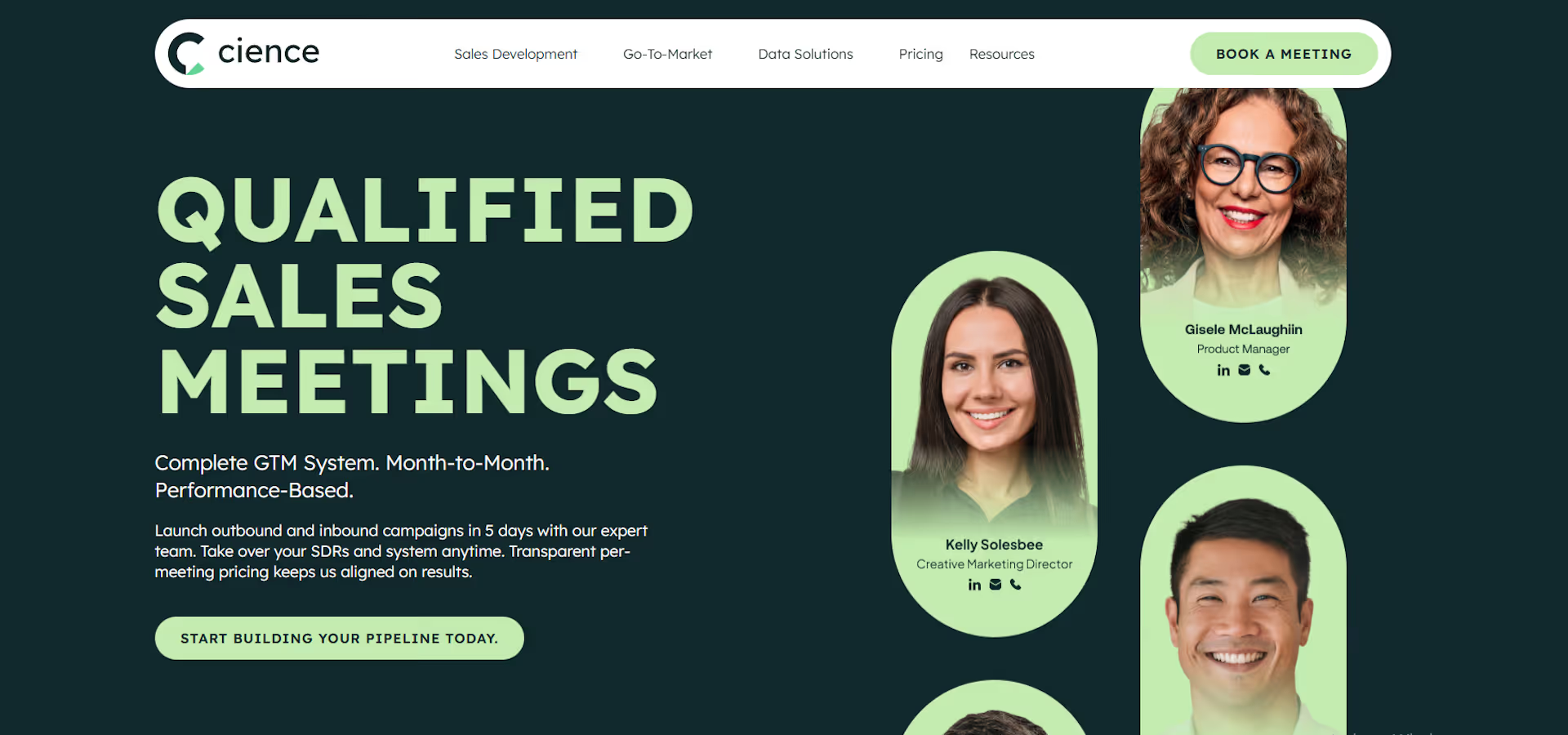
CIENCE pairs human researchers and SDRs with its own orchestration software. That combination lets them run outbound at genuine scale. Few agencies here own their own tooling.
List building, contact data enrichment and lead sourcing all happen in-house. Targeting is data-backed rather than bought off a list broker. Research capacity is the real moat, more than the software is.
Campaigns run across cold email, LinkedIn and phone with KPI-driven management. CRM integration is part of the standard setup. Sales development specialists handle the conversations end to end.
The scale is the appeal and also the caveat. Large programmes can feel more industrial than a boutique build, and personalisation depth varies.
If you want the software side without the headcount, my roundup of multichannel outreach tools covers the same ground. Owning the stack changes the cost curve once volume climbs.
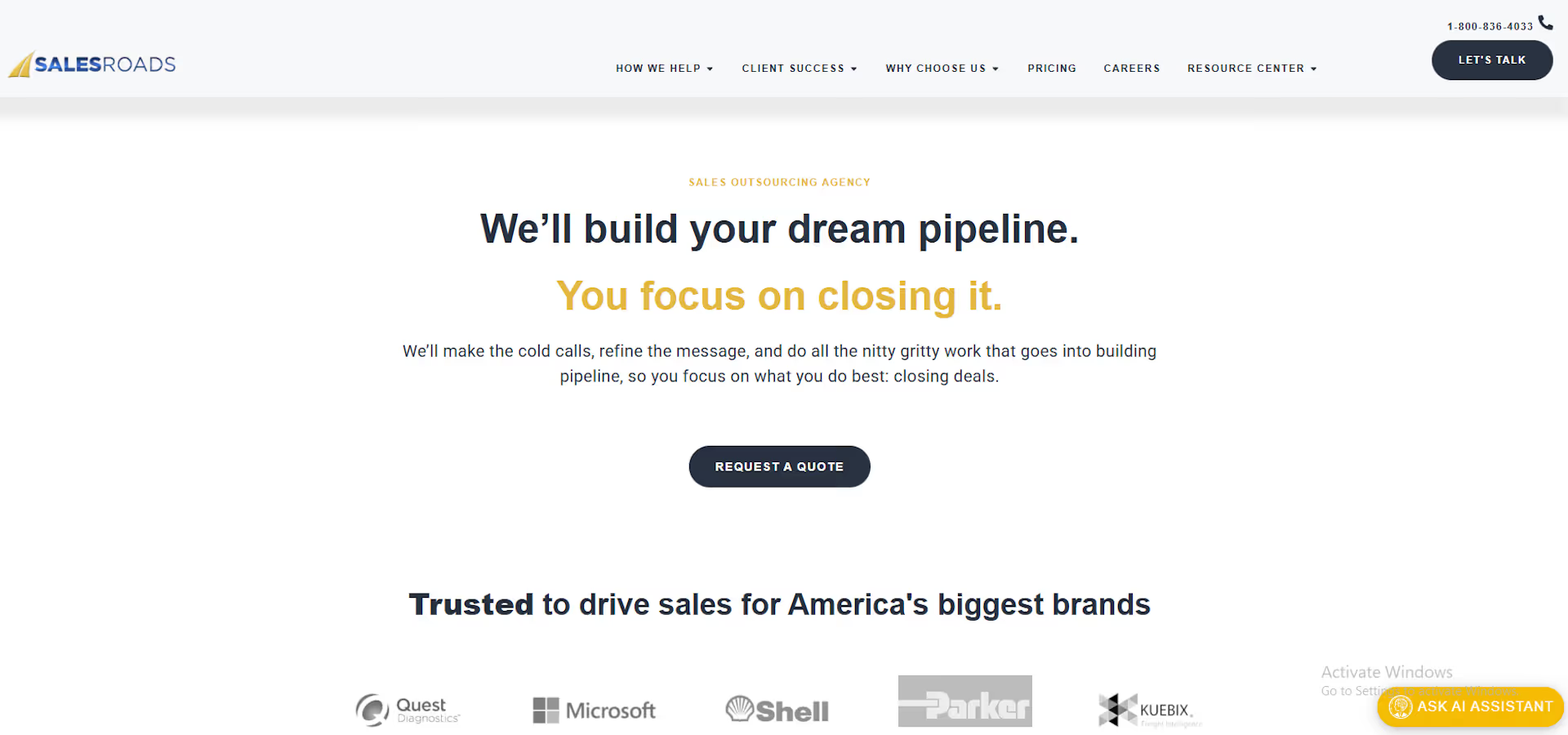
SalesRoads runs appointment setting and sales outsourcing out of Boca Raton. Phone-based prospecting is the core competency here. They have run this model long enough to have a real track record.
Market research and bespoke prospect lists come before any dialling starts. That sequencing shows up in the quality of the conversations. Guessing at the list is what sinks most phone campaigns.
Dedicated SDRs fill the top of the funnel, then hand meetings to your own closers. The pitch is lower overhead alongside better conversion. Overhead reduction is the commercial argument they lead with.
They work across a wide range of industries and integrate with client CRMs. Reporting centres on booked meetings and conversion rate rather than activity counts.
For plenty of US enterprise buyers the cold email vs cold call balance still favours a live conversation. A sequence rarely reaches a busy operations director.
MarketStar sells Sales as a Service, meaning embedded teams that operate like your own staff. That framing is closer to outsourcing a department than buying a campaign.
Outbound sits alongside partner and channel activation plus inside-sales programmes. Few agencies on this list cover that spread. Demand generation, acquisition and retention all fall in scope.
The model suits enterprise programmes and cross-industry rollouts. Quality assurance and KPI reporting are built into how they operate. Cross-industry rollouts are where they are strongest.
Reps integrate with your marketing and sales teams rather than working at arm's length. That matters when the product is complex. Expect governance and process rather than scrappy experimentation.
This is the heaviest option here. Read my AI SDR vs agency comparison before committing to headcount at this scale. Budget accordingly, because this is a multi-quarter commitment.
memoryBlue is a sales development specialist with offices across several US metros. Sales development is the entire proposition rather than one service line.
Outsourced SDR programmes are the whole business. They recruit, coach and then execute rather than simply supplying bodies on a contract. That recruit-and-coach model is unusual in this category.
Cold calling sits alongside personalised outreach and multichannel sequences. First qualified meetings are the deliverable they measure against. Sequences are personalised rather than templated at volume.
The coaching layer is the part worth paying for. Their reps integrate with your sales process and CRM instead of running a parallel system. Rep quality varies far less when the coaching happens in-house.
Tech and public sector are both named strengths. Weigh the AI SDR vs SDR economics before signing a multi-rep contract. Public sector work also carries different compliance handling.
EBQ runs appointment setting and outbound lead generation from Austin, with CRM operations attached. The combination of outreach and operations is the real differentiator.
Outreach, list building and data enrichment are delivered as one service. Campaigns run across email, phone and social channels. Contact data management runs alongside the campaigns themselves.
The CRM consulting side is what separates them from the pure outreach shops. Handoffs between marketing and sales get fixed rather than tolerated. A clean handoff is worth more than extra meetings.
They position as an extension of your internal teams rather than an external vendor. Reporting focuses on measurable pipeline contribution. Sales productivity is the metric they anchor on.
Their consulting work overlaps with the GTM tools a modern revenue team already runs. Expect CRM advice alongside the outbound reporting.
Leadium builds and runs SDR teams with research-driven list building underneath the outreach. That research layer distinguishes them from a pure dialling shop.
Their emphasis is ICP fit rather than raw volume. Qualified appointments get matched against the profile you define upfront. Poor ICP definition is the most common reason outbound stalls.
Scripts, campaign management and handoff processes all come as part of the engagement. That removes most of the friction of hiring in-house. Handoff processes get documented rather than improvised.
Data-driven list building is the foundation everything else rests on. Targeting quality is treated as the lever rather than send volume. Fewer contacts that actually fit beats a longer list.
A sensible option when hiring and training SDRs is the actual bottleneck. My guide to B2B lead generation covers the in-house route.
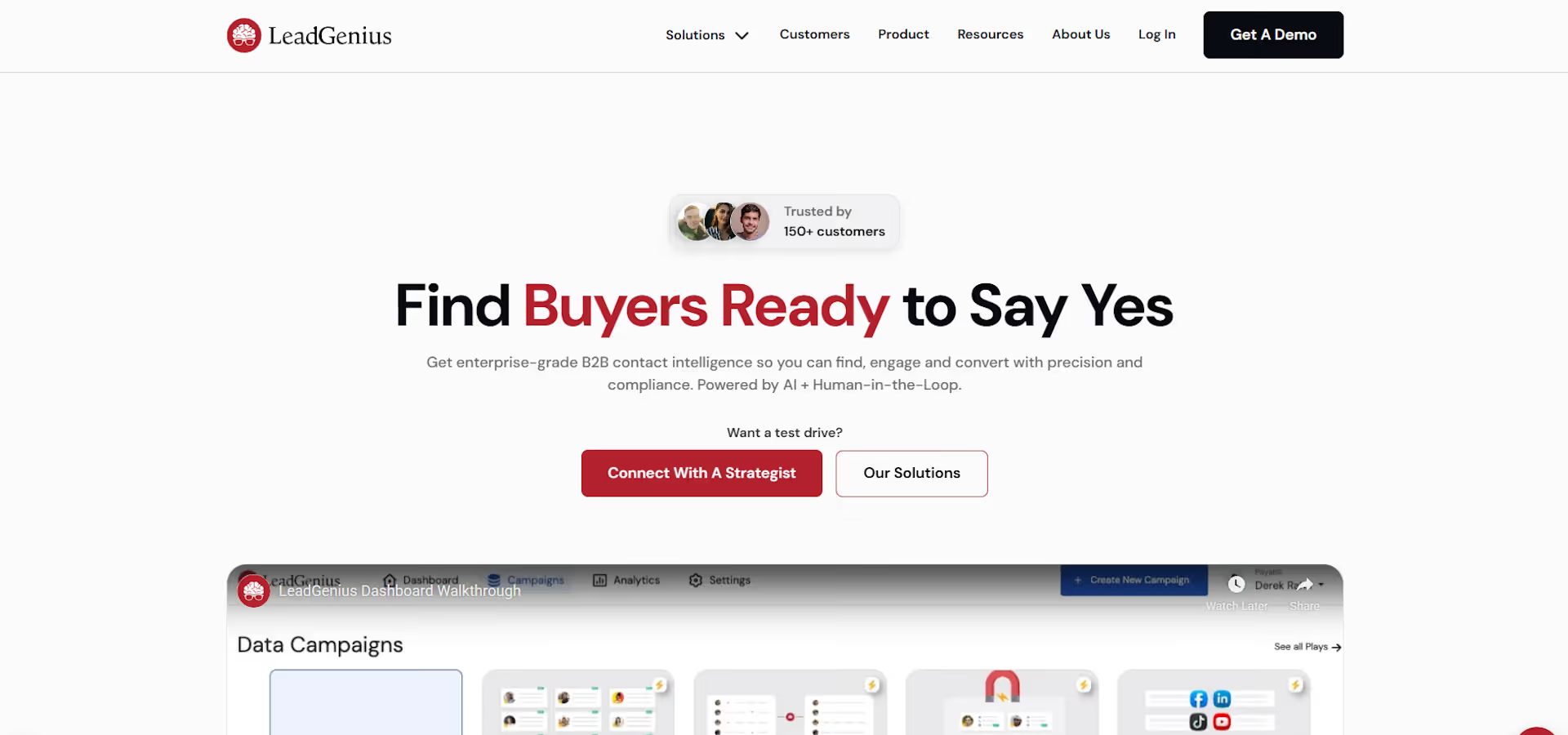
LeadGenius is a data company that enables outbound rather than an agency in the usual sense. Treating them as an agency would set the wrong expectation.
Human research feeds their contact data and buyer intelligence. The output is cleaner data instead of booked meetings. That is a feature if you already have SDRs in place.
That distinction matters more than it first appears. You still need someone to run the campaigns their data feeds. Budget for execution separately.
Market research supports targeted campaigns across multiple industries. Conversion improves because the data is both accurate and timely.
Pair them with sequences you own. My roundup of AI prospecting tools covers that execution layer. Data quality compounds across every campaign you run.
US retainers are high enough that building in-house often wins on maths alone. The question is whether you want to own the process.
The Forge stack covers the same ground, for a fraction of one monthly retainer.
Building intent-based lead lists before running outbound sequences with Salesforge.
All the agencies on this list can run effective outbound sales on your behalf. But if your goal is to own the process, control the data, and scale without growing headcount, Salesforge gives you the infrastructure to do it. Try the 14-day free trial - no credit card required.
One platform costs less than one week of a US retainer.
Try Salesforge free →14-day trial. No credit card, no commitment.
Or if you're still weighing agencies, browse the certified Forge experts for vetted partners.
| Agency | Location | Best For | Key Focus |
|---|---|---|---|
| SalesCaptain ✓ Forge Certified | US & UK | Intent-Triggered B2B Outbound | Intent Signals, GTM Strategy |
| Cleverly | Los Angeles, CA | Done-For-You Multichannel Outbound | Cold Email, LinkedIn Outreach, Cold Calling |
| Growth Alliance ✓ Forge Certified | Prague, Czechia | Account-Based Outbound | Account-Based, Managed SDRs |
| SalesAR ✓ Forge Certified | Global, US coverage | Documented National Results | Prospect Research, Appointment Setting |
| CIENCE | United States | Large-Scale Outbound Campaigns | SDR Teams, Multichannel |
| SalesRoads | Boca Raton, FL | Phone-Led Appointment Setting | Appointment Setting, Phone Prospecting |
| MarketStar | Ogden, UT | Enterprise Sales As A Service | Sales As A Service, Enterprise |
| memoryBlue | US (multi-office) | Outsourced SDR Programs | Outsourced SDRs, Coaching |
| EBQ | Austin, TX | CRM-Backed Sales Operations | Appointment Setting, CRM Consulting |
| Leadium | Las Vegas, NV | Research-Driven List Building | SDR Teams, List Building |
| LeadGenius | United States | Contact Data And Enrichment | Contact Data, Buyer Intelligence |
Rather put an AI SDR on the team?
Hire Agent Frank →He prospects, writes and books meetings around the clock.
The US market gives you deep talent and mature process at the highest rates anywhere. Picking well matters more than picking fast.
SalesCaptain is the strongest signal-led option, with Growth Alliance and SalesAR also certified. For done-for-you multichannel outbound go to Cleverly, for phone-first outreach SalesRoads, for enterprise scale MarketStar, and for data quality LeadGenius.
If the retainer maths does not work, run outbound yourself. Two weeks of warmup and a fortnight of sending tells you most of what you need.
Two weeks is enough to see the difference.
Start your free trial →


.jpg)