

Gojiberry is a LinkedIn-only outreach agent that finds prospects from buying signals and messages them automatically. Apollo is a large contact database bundled with email sequences and a phone dialer. Neither runs native multi-channel sequences, and neither includes email warm-up.
For real multi-channel B2B outbound, Salesforge is the stronger choice. Email and LinkedIn from one dashboard, no per-seat pricing, free unlimited Warmforge warm-up, a unified inbox (Primebox™), and an optional AI SDR, Agent Frank. Plans start at $48/mo monthly ($40/mo annual).
I have run outbound for B2B teams selling into SMB and mid-market, and I get asked this a lot: pick one tool for the whole motion. Gojiberry, Apollo, and Salesforge land on the same shortlist because all three promise "find leads and reach them." They actually solve very different parts of the job.
Gojiberry watches LinkedIn for buying signals and sends connection messages on its own. Apollo hands you a big contact database with sequences and a dialer attached. Salesforge runs email and LinkedIn together and keeps the deliverability side in-house.
Below I compare what each one does, what it costs in 2026, and who each fits, with real numbers instead of marketing lines.
Sales Outreach Tools at a Glance: Gojiberry vs Apollo
Here is the fast version across the dimensions that decide most outbound tooling calls.
| Feature | Salesforge | Gojiberry | Apollo |
|---|---|---|---|
| Outreach channels | Email + LinkedIn (one sequence) | LinkedIn only (email = enrichment for discovery) | Email + phone dialer + LinkedIn tasks |
| Entry price | $48/mo monthly ($40/mo annual) - Salesforge Pro | $99/mo - Gojiberry Pro (2 LinkedIn senders) | $0 Free; $49/user/mo annual ($59 monthly) - Apollo Basic |
| Top plan | $96/mo monthly ($80/mo annual) - Salesforge Growth (unlimited users + LinkedIn senders) | Custom (contact sales) | $119/user/mo annual ($149 monthly) - Apollo Organization (3-seat min) |
| Warm-up / deliverability | Free, unlimited (Warmforge, Heat Score) | None | None built-in |
| AI SDR | Agent Frank (Auto-Pilot/Co-Pilot) - separate subscription from $499/mo billed quarterly | Autonomous LinkedIn agent (built into Gojiberry Pro) | No autonomous AI SDR (AI email writing on Professional+) |
| Unified inbox | Primebox™ (free, email + LinkedIn) | Unibox (email + LinkedIn) | Sequencer + CRM views |
| LinkedIn senders | Unlimited (Growth plan) | 2 (Gojiberry Pro plan) | Not a native sender (LinkedIn tasks) |
| Infrastructure options | 3 (Mailforge, Infraforge, Primeforge) | None | None |
| Lead database | Leadsforge 500M+ contacts | 15+ provider waterfall enrichment (no owned DB) | ~275M contact database |
| Pricing model | No per-seat; unlimited users on Growth | Per seat; 2-sender cap on Pro | Per seat + credits; 3-seat min on Org |
| Free trial | 14 days | Free trial | Free plan + paid trials |
| SOC 2 compliant | Yes | Not publicly stated | Yes (Type II) |
| Best for | SMB/mid-market B2B, $5K-$100K ACV | Solo founders / tiny LinkedIn-active teams | Teams wanting a bundled database + sequencer |
Gojiberry Overview: Features, Pricing, and Limitations

Gojiberry (gojiberry.ai) is a LinkedIn-first outreach agent built around buying signals. You give it your website, it learns your ICP, then it watches LinkedIn for intent and sends AI-written connection messages on its own. It launched in 2025, is Y Combinator-backed, and is based in San Francisco.
Core features Gojiberry highlights:
- 30+ intent signals tracked across LinkedIn (funding rounds, hiring, role changes, post activity, group activity)
- ICP-based lead filtering, so only matching prospects enter outreach
- AI-written LinkedIn messages tied to the signal that triggered them
- Up to 2 LinkedIn sender accounts on the Pro plan
- Email waterfall enrichment across 15+ data providers, used for finding contacts rather than native email sending
- Unibox, a unified inbox for LinkedIn and email replies
- Chrome extension for pulling LinkedIn and Sales Navigator lists
- CRM sync with HubSpot and Pipedrive, plus API access and Slack alerts
On pricing, Gojiberry lists two plans. Gojiberry Pro is $99/month and includes 30+ intent signals, 2 LinkedIn senders, unlimited campaigns, unlimited warm leads, and the enrichment feature, with a free trial. The Custom plan (sometimes shown as Elite) adds more senders, more signals, and a dedicated success manager, but the price is not published, so you contact sales.
Gojiberry fits a solo founder or a one-to-two-person team whose buyers are active on LinkedIn and who wants prospecting and first-touch handled automatically. My full write-up sits in this in-depth Gojiberry review.
What reviewers say about Gojiberry
The honest caveats are specific:
- Outreach runs on LinkedIn only. There is no native email sending, so email-led motions need another tool.
- Results depend entirely on LinkedIn activity. If your audience is not posting or engaging there, the signal engine has little to work with.
- The Pro plan caps you at 2 LinkedIn senders, which teams with three or more SDRs outgrow quickly.
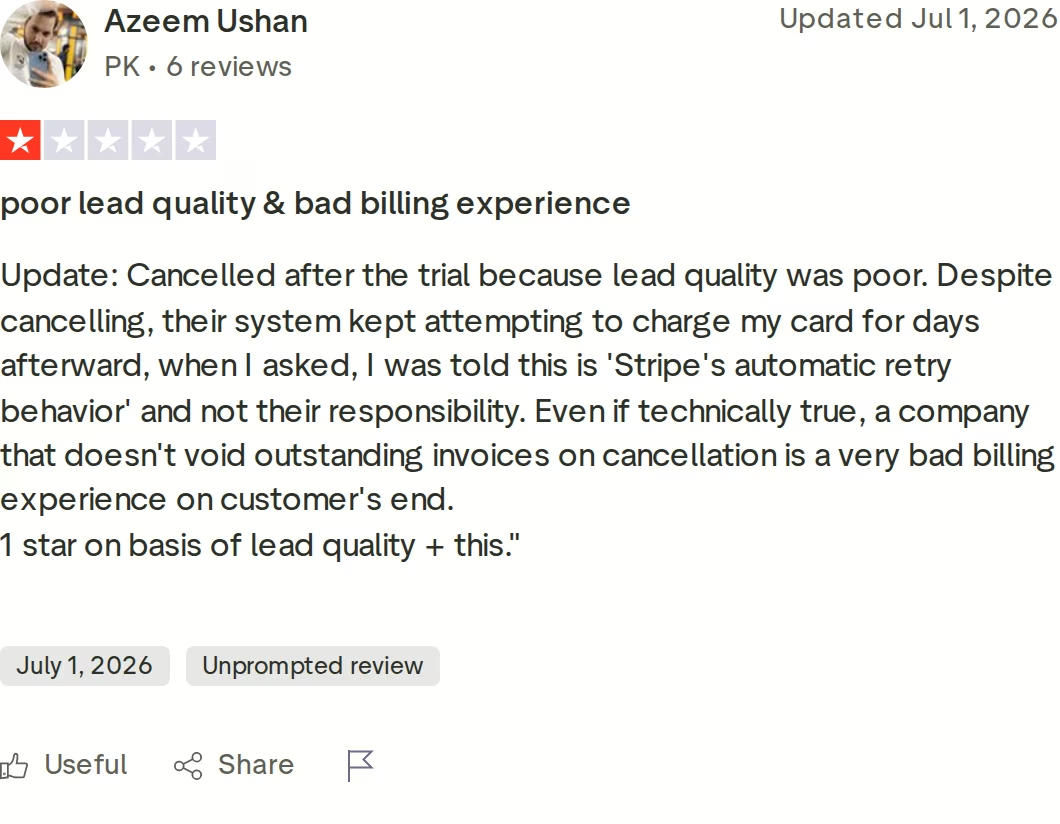
- One Trustpilot reviewer cancelled after the trial over lead quality and reported charges continuing after cancellation.
If your outbound leans on LinkedIn automation, it is worth reading around the category first, including other LinkedIn automation tools.
Apollo Overview: Features, Pricing, and Limitations
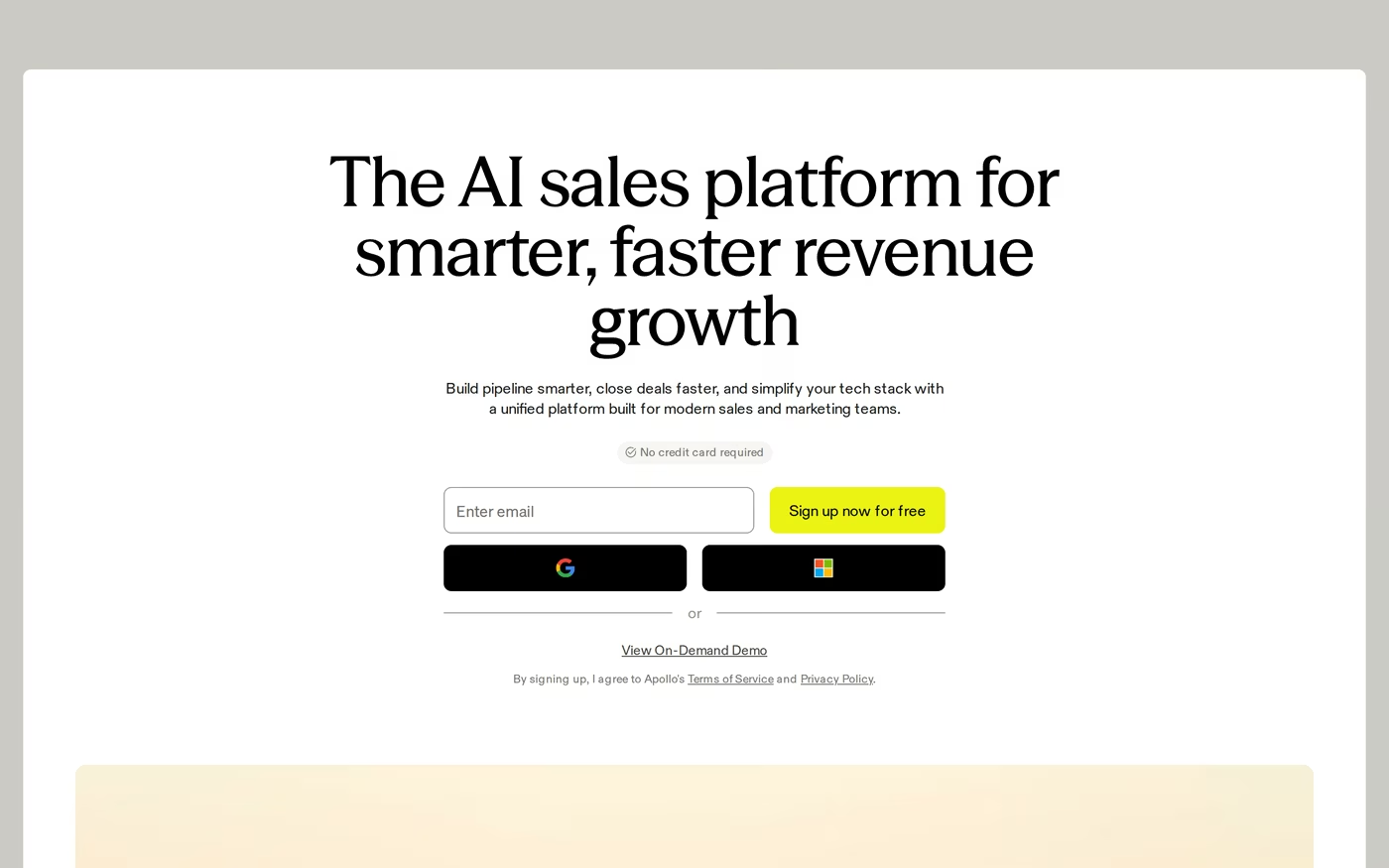
Apollo (apollo.io) is an all-in-one sales platform built on a large B2B contact database. It pairs roughly 275 million contacts with email sequences, a phone dialer, LinkedIn tasks, and a meeting scheduler, plus a Chrome extension for pulling contact info off the web. Most teams use it to build a list fast and start sequencing from the same place.
Core features Apollo offers:
- A contact database of about 275M contacts and 73M companies
- Email sequences with A/B testing (unlimited on paid plans)
- A built-in phone dialer with call recording (Professional and up)
- AI-assisted email writing (Professional and up)
- LinkedIn tasks and a Chrome extension for prospecting
- CRM sync with HubSpot and Salesforce
- A meeting scheduler plus basic reporting and analytics
- A unified credit system covering email, mobile, and export lookups
Apollo has a free plan and three paid tiers, all priced per user. Apollo Basic is $49/user/month annual ($59 monthly), Apollo Professional is $79/user/month annual ($99 monthly), and Apollo Organization is $119/user/month annual ($149 monthly) with a 3-seat minimum, a floor of about $357/month. Data, mobile, and export credits are metered separately and expire at the end of each cycle, so heavy users often pay overages on top.
Apollo fits a team that wants a big database and a sequencer under one bill, and is comfortable managing credits and per-seat costs as it grows. If you are weighing the wider category, these sales engagement alternatives add useful context.
What reviewers say about Apollo
The recurring caveats are well documented:
- Real-world data accuracy is often reported around 65-70%, with email bounce rates of 15-25% cited across review sites. Mobile numbers are weaker, especially outside the US.
- There is no dedicated warm-up or deliverability infrastructure, so senders usually add a separate sending stack to keep emails landing.
- Pricing multiplies per seat, and the credit system (phone lookups cost far more than emails, credits expire monthly) makes the real bill hard to predict.
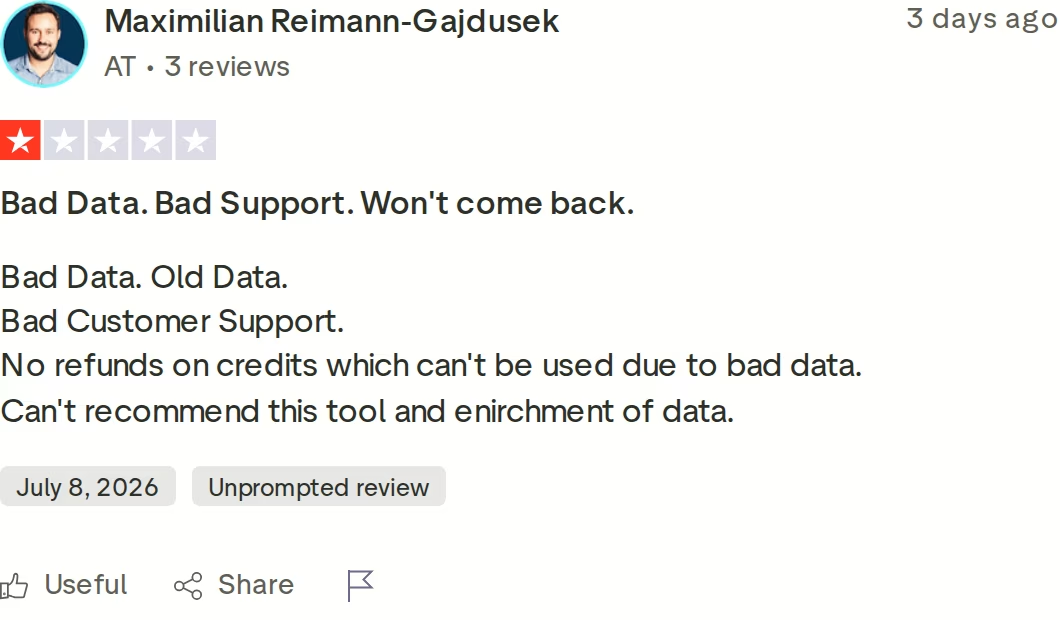
- One Trustpilot reviewer flagged old data and no refunds on credits that could not be used.
Because mobile accuracy is a known gap, teams that rely on dials often add a dedicated phone number lookup tool alongside it.
Salesforge Overview: The Multi-Channel Outreach Platform
Salesforge (salesforge.ai) is the outreach layer of the Forge Stack, a set of products built to run cold outbound end to end. It runs email and LinkedIn in one sequence, keeps warm-up and inbox management in-house, and can hand the whole motion to an AI SDR if you want.
Core features:
- Multi-channel sequences that combine email and LinkedIn in one workflow (phone is on the roadmap)
- Conditional sequences that branch on prospect behavior, pain points, and goals
- Unlimited mailboxes on every plan, with smart rotation and dynamic IPs
- Unlimited LinkedIn senders and unlimited users on the Growth plan
- Free, unlimited Warmforge warm-up with a per-mailbox Heat Score
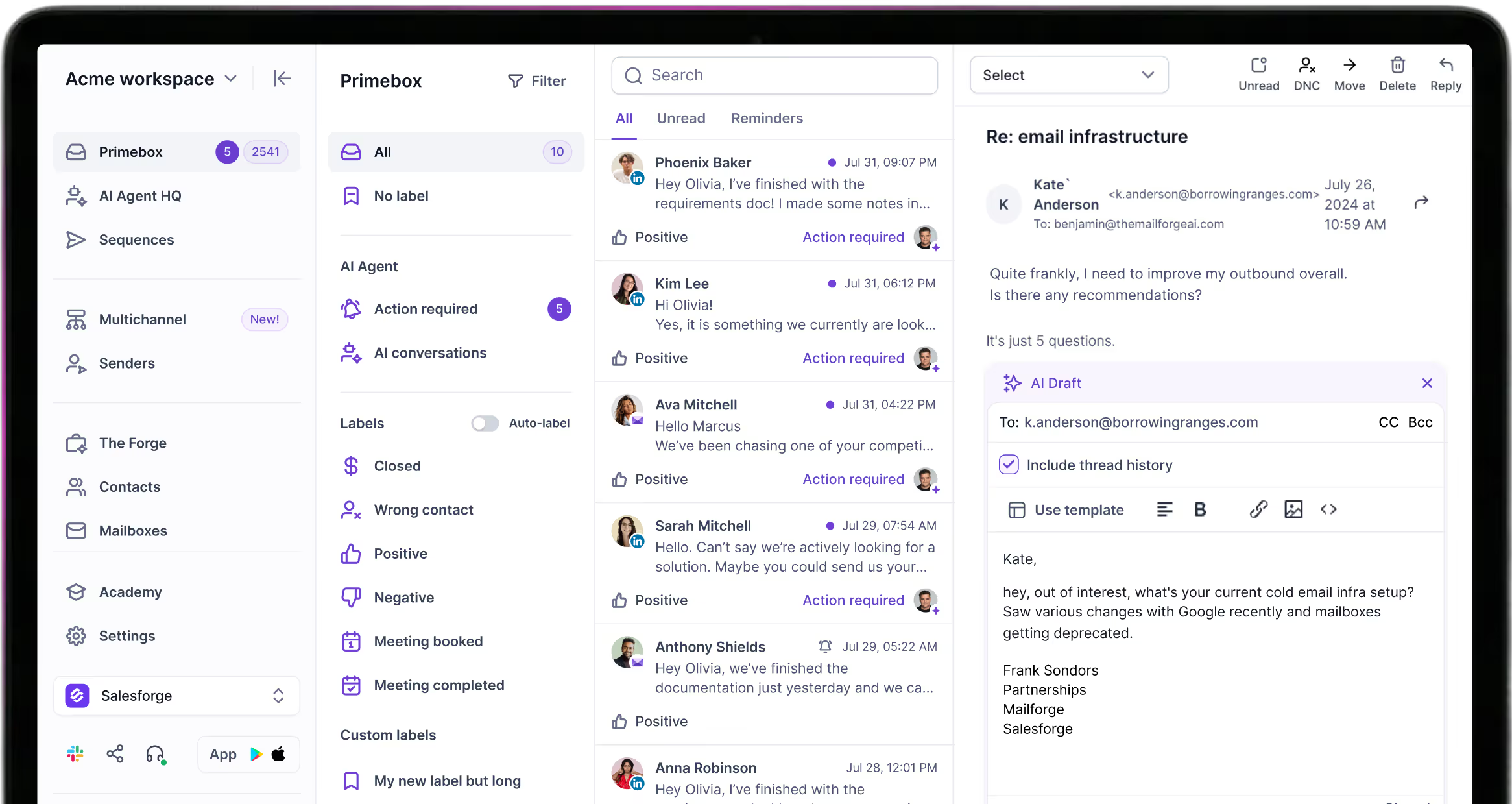
- Primebox™, a free unified inbox for email and LinkedIn with sentiment tagging
- Overdrive Mode personalization that pulls from multiple sources per prospect
- Agent Frank, an optional AI SDR with Auto-Pilot and Co-Pilot modes
- Leadsforge access to a 500M+ lead database with waterfall enrichment
- Native integrations with HubSpot, Salesforce, Pipedrive, and Clay, plus API and an MCP server
- Multi-language sequences in 20+ languages
- Unlimited workspaces for separating clients or projects
Salesforge does not include email infrastructure in the base price. You connect your own mailboxes or add one of three Forge options: Mailforge (shared IPs), Infraforge (dedicated IPs), or Primeforge (real Google and Microsoft 365 mailboxes). Warm-up, the unified inbox, and the lead database all plug into the same login, which is what makes the stack feel connected for B2B lead generation and sending in one place.
On pricing, Salesforge has two plans plus an optional AI SDR. Salesforge Pro is $48/month billed monthly or $40/month billed annually, with 1 LinkedIn sender and 1 user. Salesforge Growth is $96/month billed monthly or $80/month billed annually, and adds unlimited LinkedIn senders, unlimited users, the API, ESP matching, and Primebox AI. Agent Frank is a separate subscription from $499/month billed quarterly ($416/month billed annually) and needs a demo plus a two-week warm-up before he starts sending. There is a 14-day free trial.
Salesforge is built for B2B teams selling products with ACVs of $5K-$100K into startups, SMBs, and mid-market, usually targeting 3,000 businesses or more. Salesforge itself says it is a poor fit for Fortune 500 procurement, long RFP cycles, and six- to seven-figure bespoke deals. Named proof: UniteSync ran on Salesforge with Mailforge and Warmforge to an 85.26% positive reply rate and a $2.86 CAC.
Honest limitations worth knowing:
- Email infrastructure is not included in the base price. It is a separate per-mailbox cost.
- API, A/B testing, ESP matching, Primebox AI, and multi-language sequences are gated to the Growth plan.
- Agent Frank requires a sales-led demo and a two-week warm-up, so there is no instant self-serve start for the AI SDR.
in Action
Head-to-Head Feature Comparison: Gojiberry vs Apollo
Here is how the three stack up on the dimensions that actually move outbound results.
Multi-channel outreach
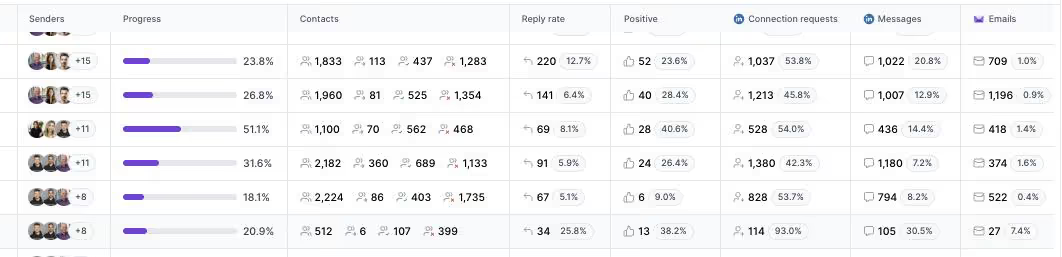
Salesforge runs email and LinkedIn in the same sequence, so a prospect can get a LinkedIn profile view on day one, a connection request, an email on day three, and a LinkedIn message on day five, all coordinated automatically. Its sequences are conditional, branching on prospect behavior, pain points, and goals rather than firing identical steps at everyone. Gojiberry sends on LinkedIn only; its email feature is waterfall enrichment across 15+ providers for finding contact data, not a native email sender. Apollo can send email and dial phones, and it can queue LinkedIn tasks, but those LinkedIn steps are manual to-dos rather than automated sends. Phone is on the Salesforge roadmap, so for a true email-plus-LinkedIn motion from one place today, Salesforge covers the most ground.
Email deliverability and warm-up
This is where the gap is widest. Salesforge includes Warmforge free and unlimited, with a per-mailbox Heat Score from 0 to 100 (97+ signals a healthy mailbox) and placement tests that report inbox versus spam versus promotions. The warm-up pool is premium by default: curated, aged, real Google and Microsoft mailboxes, with recycled inboxes and external SMTP vendors excluded. A Deliverability Boost even removes warm-up emails that land in spam to rebuild trust. Gojiberry has no email sending, so there is nothing to warm. Apollo sends email but has no dedicated warm-up or deliverability infrastructure, and reviewers report 15-25% bounce rates, which is why teams often pair it with a separate sending stack. If inbox placement matters, Salesforge is the only one of the three that owns the deliverability layer. This SaaS cold email guide explains why that layer decides whether cold email lands.
AI and personalization
All three lean on AI, but differently. Salesforge has Overdrive Mode, which personalizes each message from multiple sources per prospect, their website, blog posts, and LinkedIn posts, across 9 tonalities and 20+ languages. It also has Agent Frank, an AI SDR who finds prospects, writes outreach, follows up, and books meetings; he runs on Auto-Pilot with no human review, or Co-Pilot where you approve his drafts before they send. Gojiberry's agent writes LinkedIn messages tied to the exact signal that triggered them, which is its core strength. Apollo adds AI-assisted email writing and AI power-ups on Professional and up, but has no autonomous SDR that prospects and books on its own. For context on the category, see these AI SDR tools. As a data point, VAI Consulting booked 3 calls in a single week with Agent Frank.
Inbox management and reply handling
Salesforge includes Primebox™ free: one inbox for every email and LinkedIn reply, even when a prospect answers from a different address than the one you contacted. It auto-tags threads by sentiment (positive, neutral, negative), lets you save replies as templates, sets follow-up reminders, and offers three reply modes, Co-Pilot, Auto-Pilot, and Reply-as-Human, with AI-drafted replies (Primebox AI) on the Growth plan. Message status tracking shows opens, clicks, and views on each thread, and a mobile app lets you reply on the go. Keeping both channels in one inbox saves switching between LinkedIn and an email client to see where each conversation stands. Gojiberry has a Unibox that also unifies LinkedIn and email replies, which suits its LinkedIn-led motion. Apollo keeps replies inside its sequencer and CRM views rather than a dedicated unified social inbox, so cross-channel triage is less centralized there. For handling email and LinkedIn conversations in one place, both Salesforge and Gojiberry do it; Apollo is more CRM-centric.
Pricing and scalability
The models scale very differently. Salesforge does not charge per seat: the Growth plan is $80/month annual for unlimited users, unlimited LinkedIn senders, and unlimited mailboxes, with warm-up and Primebox™ included. Gojiberry Pro caps you at 2 LinkedIn senders, and adding more means the unpublished Custom plan, so pricing past a two-person team becomes a sales conversation. Apollo charges per user and meters credits: credits expire at the end of each cycle, phone lookups cost about eight times an email lookup, and overages run $0.20 each. Its Organization tier also enforces a three-seat minimum, a floor near $357/month. A five-person team on Apollo Professional is closer to $4,740/year before those overages. As headcount grows, Salesforge's flat model usually gets cheaper per user while the other two climb.
Infrastructure, lead data, and compliance
Salesforge offers three infrastructure options, so you control sending reputation: Mailforge (shared IPs, roughly $484 for 200 mailboxes), Infraforge (dedicated IPs with a Masterbox view across accounts), and Primeforge (real Google and Microsoft 365 mailboxes on US IPs). Neither Gojiberry nor Apollo sells email infrastructure at all. On lead data, Salesforge's Leadsforge taps a 500M+ database with waterfall enrichment and competitor-follower extraction; Apollo owns roughly 275M contacts, though reviewers put real-world accuracy near 65-70%; and Gojiberry has no owned database, enriching across 15+ providers instead. On compliance, Salesforge and Apollo are both SOC 2 compliant, while Gojiberry does not publicly state a SOC 2 status. As a scale proof point, Woodpecker scaled to 2,500+ mailboxes on Infraforge.
Pricing Comparison: Salesforge, Gojiberry, and Apollo
All competitor pricing below is taken from each vendor's live pricing page and cross-checked against third-party sources. Note the shared plan name: both Salesforge and Gojiberry have a "Pro" plan, so I prefix the vendor everywhere.
| Plan area | Salesforge | Gojiberry | Apollo |
|---|---|---|---|
| Free option | 14-day free trial | Free trial | Free plan ($0) |
| Entry paid plan | Salesforge Pro - $48/mo ($40/mo annual) | Gojiberry Pro - $99/mo | Apollo Basic - $49/user/mo annual ($59 monthly) |
| Mid / top paid plan | Salesforge Growth - $96/mo ($80/mo annual) | Gojiberry Custom - contact sales | Apollo Professional - $79/user/mo annual ($99 monthly); Apollo Organization - $119/user/mo annual ($149 monthly), 3-seat min |
| AI SDR | Agent Frank - from $499/mo billed quarterly ($416/mo annual), separate | Included in Gojiberry Pro (LinkedIn agent) | None |
| Seats | Unlimited users (Growth) | Per seat; 2 LinkedIn senders (Gojiberry Pro) | Per seat; 3-seat min (Organization) |
| Warm-up / infrastructure | Free Warmforge; infra add-on ($2-$4.50/mailbox) | None | None |
Say you are a 5-person team running email and LinkedIn to a few thousand prospects a month. On Salesforge Growth billed annually, that is $80/month total for all five users, unlimited LinkedIn senders, free warm-up, and Primebox™; infrastructure is the only add-on at $2-$4.50 per mailbox.
On Apollo Professional, five seats is about $395/month ($4,740/year) before credit overages, and you would still need a separate sending setup for deliverability. On Gojiberry, five users push you past the 2-sender Pro cap into the unpublished Custom plan, and email sending is not native at all. The flat model is why Salesforge's cost per user drops as the team grows.
You can verify the current Salesforge figures on the Salesforge pricing page.
Start Your 14-Day Free TrialWho Should Use Which Tool
All three can build pipeline, but each fits a different shape of team. I would match them on channel mix, team size, and how much of deliverability you want handled for you.
You might consider Gojiberry if:
- Your outbound is LinkedIn-led and your buyers are active there
- You are a solo founder or one-to-two-person team that wants signal-based prospecting handled automatically
- You do not need native email sequences or more than two senders
You might consider Apollo if:
- You want a large contact database and a sequencer under one subscription
- Your team is comfortable managing per-seat costs and a credit system
- You mainly run US phone-and-email outreach and can add your own deliverability layer
Choose Salesforge if:
- You sell B2B at $5K-$100K ACV into SMB or mid-market and target 3,000+ businesses
- You want email and LinkedIn in one sequence with warm-up built in
- You are scaling a team and do not want per-seat pricing (unlimited users and LinkedIn senders on Growth)
- You run an agency or multiple clients and need separate workspaces and infrastructure options
- You want the option of an AI SDR (Agent Frank) without stitching tools together
Want to see the field more broadly? You can compare more tools or browse the free cold outreach tools library.
Final Verdict: Which Outreach Tool to Choose
Gojiberry and Apollo each do one part of outbound well. Gojiberry is a LinkedIn signal engine that finds and messages in-market prospects automatically. Apollo is a large contact database with sequencing and a dialer attached. Neither runs native multi-channel sequences, and neither owns the deliverability layer that decides whether cold email lands.
For a complete multi-channel B2B outbound motion, Salesforge is the stronger choice. At $80/month for Growth billed annually you get unlimited users, unlimited LinkedIn senders, unlimited mailboxes, free Warmforge warm-up, and Primebox™, a combination neither alternative offers at any price.
One falsifiable benchmark: UniteSync ran on Salesforge with Mailforge and Warmforge to an 85.26% positive reply rate and a $2.86 CAC. ChannelCrawler hit 85.71% positive replies on the same kind of stack. Both case studies are public.
If you are running email and LinkedIn together and care about deliverability, this is the one to try. For a direct one-on-one look, see the Salesforge vs Apollo page.
Give Salesforge a Try TodayFrequently Asked Questions
Is Salesforge better than Gojiberry or Apollo?
It depends on the motion, but for multi-channel B2B outbound, Salesforge is the more complete tool. Gojiberry only sends on LinkedIn, and Apollo is a database-plus-sequencer with no built-in warm-up. Salesforge runs email and LinkedIn together, includes free Warmforge warm-up and Primebox™, and offers an AI SDR (Agent Frank). Salesforge plans start at $48/month monthly ($40/month annual).
What is the main difference between Salesforge, Gojiberry, and Apollo?
The core difference is channel coverage and infrastructure. Gojiberry is LinkedIn-only signal outreach. Apollo bundles a roughly 275M contact database with email sequences and a dialer. Salesforge runs multi-channel email and LinkedIn sequences, owns the deliverability layer through Warmforge, and offers three email infrastructure options (Mailforge, Infraforge, Primeforge). Only Salesforge combines outreach, warm-up, and infrastructure under one login.
Which is cheaper: Salesforge, Gojiberry, or Apollo?
On sticker price, Apollo's free plan and Gojiberry's $99/month Pro look cheap, but the models differ. Salesforge Pro is $48/month monthly ($40/month annual) with no per-seat pricing. Apollo charges per user, so five Professional seats run about $4,740/year before credit overages. Gojiberry Pro caps you at two LinkedIn senders. For a growing team, Salesforge's flat pricing is usually cheaper per user.
Does Gojiberry support email outreach?
Not as native email sequences. Gojiberry sends outreach on LinkedIn only. Its email feature is waterfall enrichment across 15+ providers for finding contact data, not a built-in email sender. If you want to run cold email sequences, you would need a separate tool. Salesforge, by contrast, runs email and LinkedIn in one sequence and includes free warm-up through Warmforge.
Does Apollo include email warm-up?
No. Apollo sends email but has no dedicated warm-up or deliverability infrastructure, so teams usually add a separate sending stack to protect inbox placement. Salesforge includes Warmforge free and unlimited, with a per-mailbox Heat Score and a premium warm-up pool of real Google and Microsoft mailboxes. That built-in deliverability layer is a key difference between the two.
Can I switch from Gojiberry or Apollo to Salesforge easily?
Yes. Salesforge lets you connect unlimited mailboxes on any plan and import contacts by CSV or Google Sheets, so moving campaigns over is straightforward. You can also add Forge infrastructure (Mailforge, Infraforge, or Primeforge) if you are leaving a tool that bundled sending. Warm-up runs automatically through Warmforge, and there is a 14-day free trial to test the switch first.
Which tool has the best email deliverability?
Salesforge has the strongest deliverability story of the three because it owns the layer. Warmforge provides free, unlimited warm-up, a per-mailbox Heat Score, and placement testing, and Salesforge offers dedicated infrastructure through Infraforge. Gojiberry sends on LinkedIn, so email deliverability does not apply. Apollo sends email but relies on your own setup. UniteSync reached an 85.26% positive reply rate on the Salesforge stack.
Does Salesforge offer a free trial?
Yes. Salesforge offers a 14-day free trial with no credit card required. The trial includes unlimited mailbox connections and warm-up, capped at a small number of contacts, emails, and credits so you can test the workflow. Agent Frank, the AI SDR, is separate: he requires a demo and a two-week warm-up rather than a self-serve trial.
.jpg)


.jpg)
