One question keeps coming up whenever someone asks me about Gong Engage. "Do I actually need everything Gong Engage offers?" For some teams, the answer is yes. If you want conversation intelligence, AI coaching, and sales engagement in one platform, Gong Engage is a strong choice. But many sales teams are trying to solve a different problem.
They need better outbound, built-in prospecting, email and LinkedIn outreach, and a platform that helps them book more meetings without paying for features they may never use.
That's why I compared the best Gong Engage alternatives. I looked at seven platforms to see which one delivers the best mix of outbound capabilities, AI, prospecting, pricing, CRM integrations, and overall value.
If you're short on time, these are my top recommendations:
🥇 Salesforge – Best overall for AI-powered outbound, email and LinkedIn outreach, and cold email deliverability.
🥈 Outreach – Ideal for enterprise sales teams that need advanced sales engagement and workflow automation.
🥉 Apollo – Best all-in-one platform for prospecting and sales engagement.
Other Great Gong Engage Alternatives
Salesloft – Great for enterprise sales engagement, coaching, and sales execution.
ZoomInfo Engage – Ideal for teams already using ZoomInfo's B2B data and sales intelligence.
HubSpot Sales Hub – Best for businesses that want sales engagement built into their CRM.
Revenue.io – Ideal for AI-guided selling and conversation intelligence.
Why Look for a Gong Engage Alternative?
Gong Engage is a strong choice for sales teams that want sales engagement, conversation intelligence, and AI coaching in one platform. But it isn't the right fit for everyone.
You might want to consider an alternative if you:
Need stronger outbound capabilities, such as cold email and LinkedIn outreach.
Want built-in prospecting instead of using separate tools.
Prefer transparent pricing before talking to sales.
Want a platform that's better suited to your team's workflow and budget.
Depending on why you're considering a switch, one of the alternatives below may be a better fit for your sales team.
How I Evaluated the Best Gong Engage Alternatives
To make this comparison useful, I evaluated each platform on the factors that matter most when choosing a Gong Engage alternative. Here's what I looked at:
Sales engagement features – Email sequences, calling, task automation, and multichannel outreach.
Sales Prospecting – Whether the platform includes built-in lead discovery and contact data.
AI capabilities – AI for personalization, coaching, conversation insights, and workflow automation.
Integrations – Compatibility with popular CRMs and other sales tools.
Pricing – Transparency, flexibility, and overall value.
Best fit – The type of sales team each platform is best suited for.
Best for: AI-powered multichannel outbound with email and LinkedIn.
G2 Rating: 4.6/5
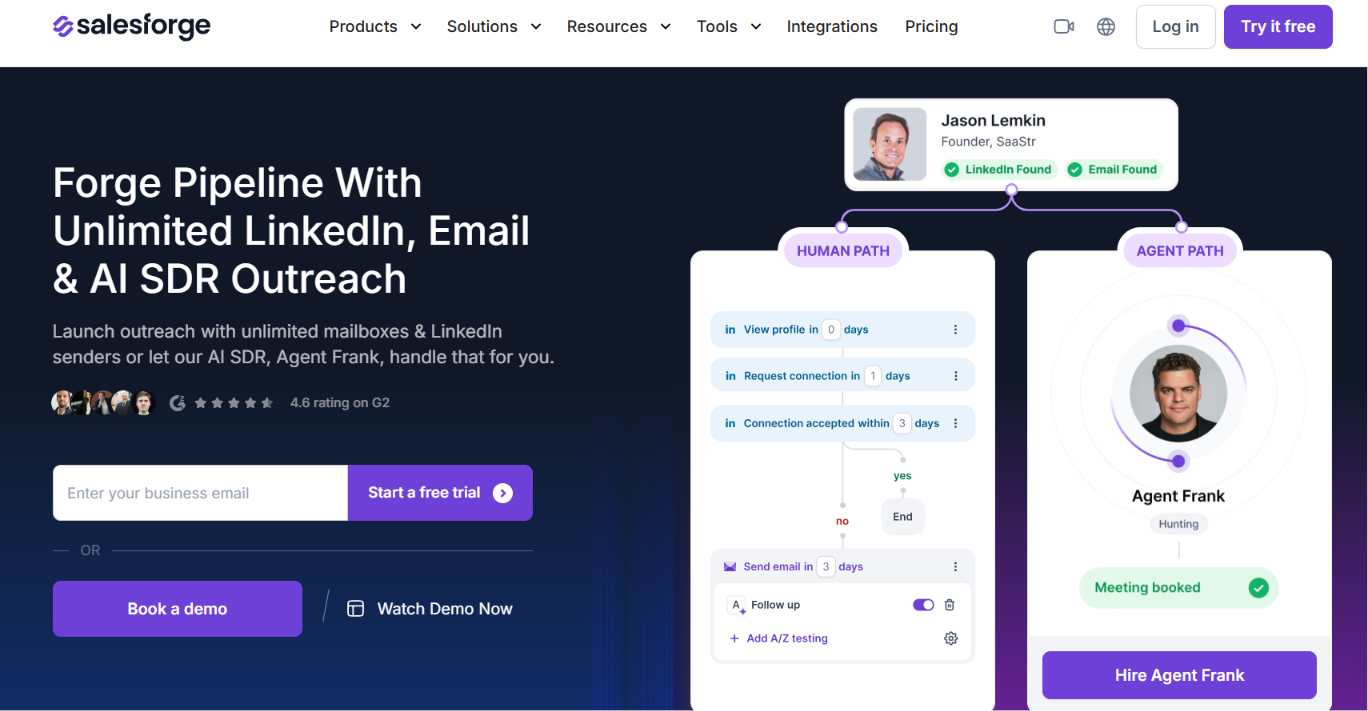
This image shows the Salesforge homepage
Salesforge is my top pick if your main goal is outbound. Unlike Gong Engage, which combines sales engagement with conversation intelligence and revenue insights, Salesforge is built to help sales teams generate more pipeline through email and LinkedIn outreach.
It includes API, MCP Server, and CLI support, making it a good choice for teams building AI-powered outbound workflows. You can run multichannel sequences, connect unlimited mailboxes and LinkedIn accounts, and improve deliverability with built-in warm-up and smart mailbox rotation.
Key Features of Salesforge
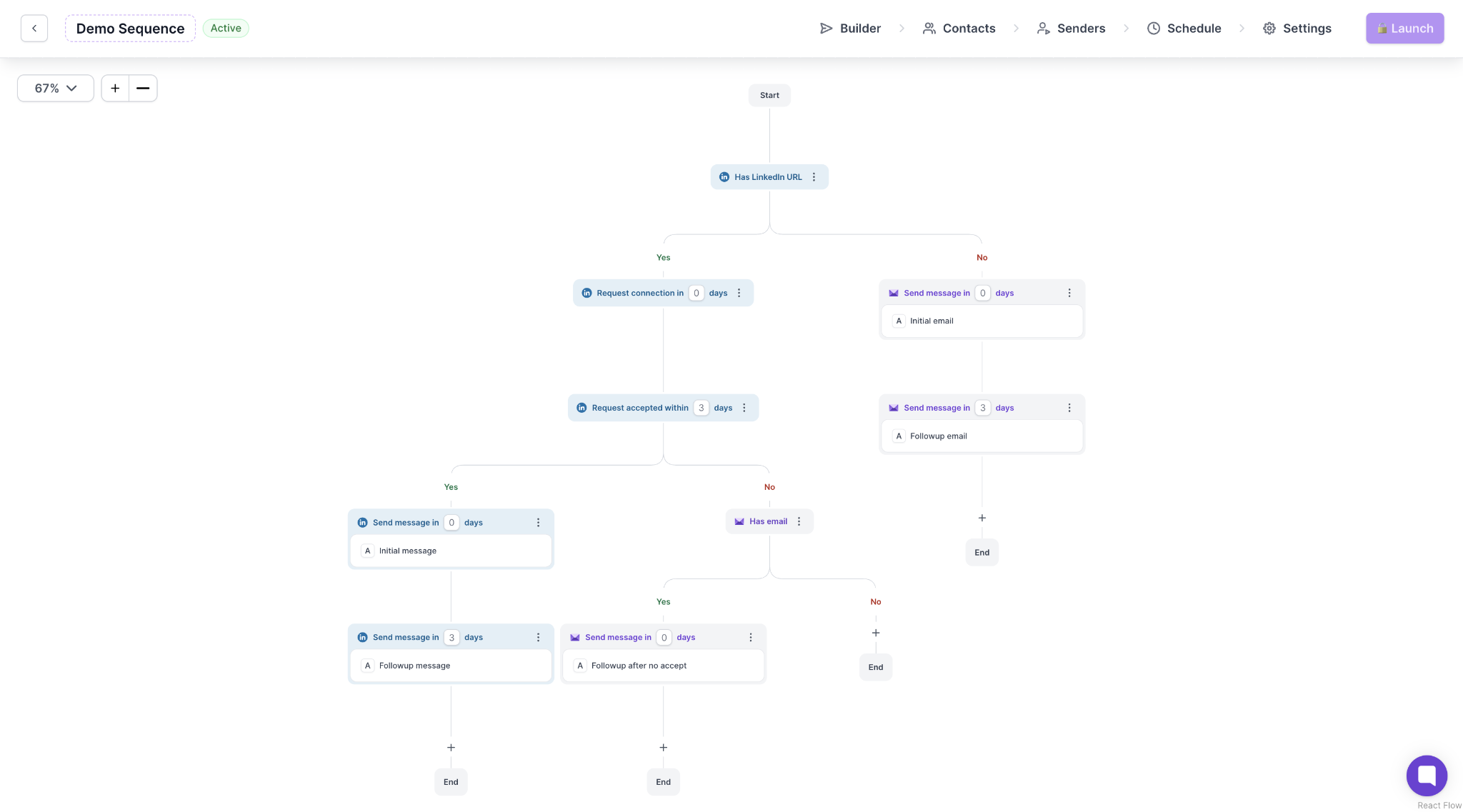
Run email and LinkedIn outreach from the same sequence.
This image shows the Salesforge Multichannel allows you to reach out to your leads on LinkedIn and Email.
Connect unlimited mailboxes and LinkedIn senders without per-seat limits.
Improve deliverability with unlimited Warmforge warm-up, smart mailbox rotation, and dynamic IPs.
Connect with HubSpot, Salesforce, Clay, Attio, folk, GoHighLevel, Breakcold, and 1,000+ other tools.
Use the Salesforge API, Forge MCP Server, and CLI to automate outbound workflows with AI assistants.
Built-in warm-up, mailbox rotation, and dynamic IPs
Basic email deliverability features
AI focus
AI personalization and AI SDR
AI coaching, conversation intelligence, and deal insights
Pricing
Starts at $48/month
Custom pricing
Choose if...
You want to scale outbound and book more meetings
You want AI-driven coaching and revenue insights
Pros and Cons of Salesforge
Pros
Cons
Unlimited mailboxes and LinkedIn senders
Multichannel email and LinkedIn sequences
Excellent deliverability with Warmforge included
No built-in B2B contact database (requires Leadsforge or another data source)
Native calling and conversation intelligence aren't its primary focus
Advanced AI features like Agent Frank require a separate plan
Salesforge Pricing
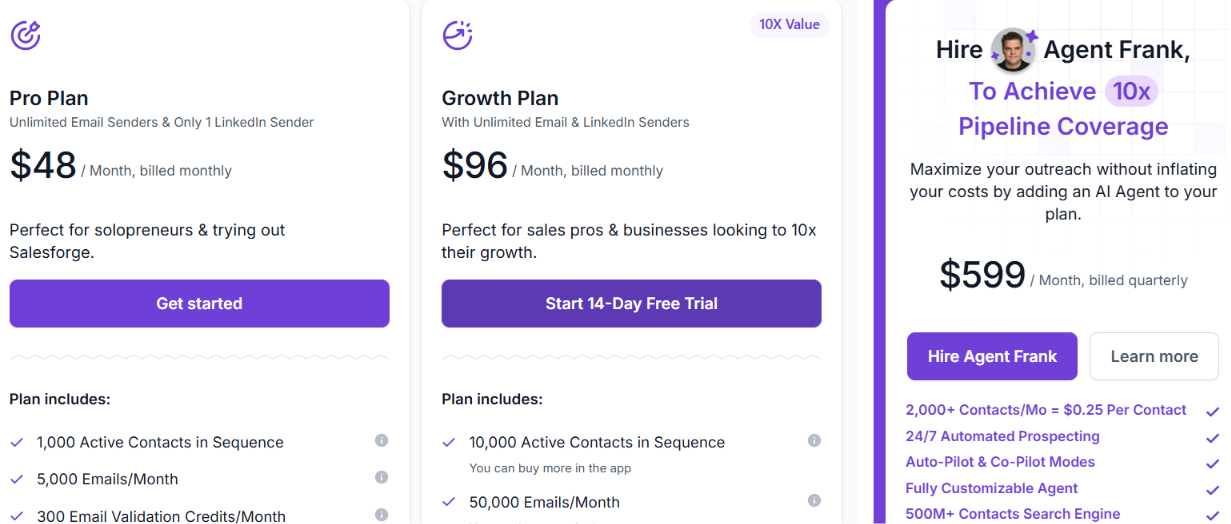
This image shows the Salesforge pricing
Salesforge offers transparent pricing with a free 14-day trial.
Pro – $48/month for solo users. Includes one LinkedIn sender, unlimited mailboxes, Primebox™, unlimited Warmforge warm-up, and smart mailbox rotation.
Growth – $96/month. Includes unlimited LinkedIn senders, unlimited users, API access, A/B testing, Primebox AI, multi-language sequences, and higher usage limits.
Agent Frank starts at $599/month (billed quarterly) for teams that want an AI SDR to handle prospecting and outreach.
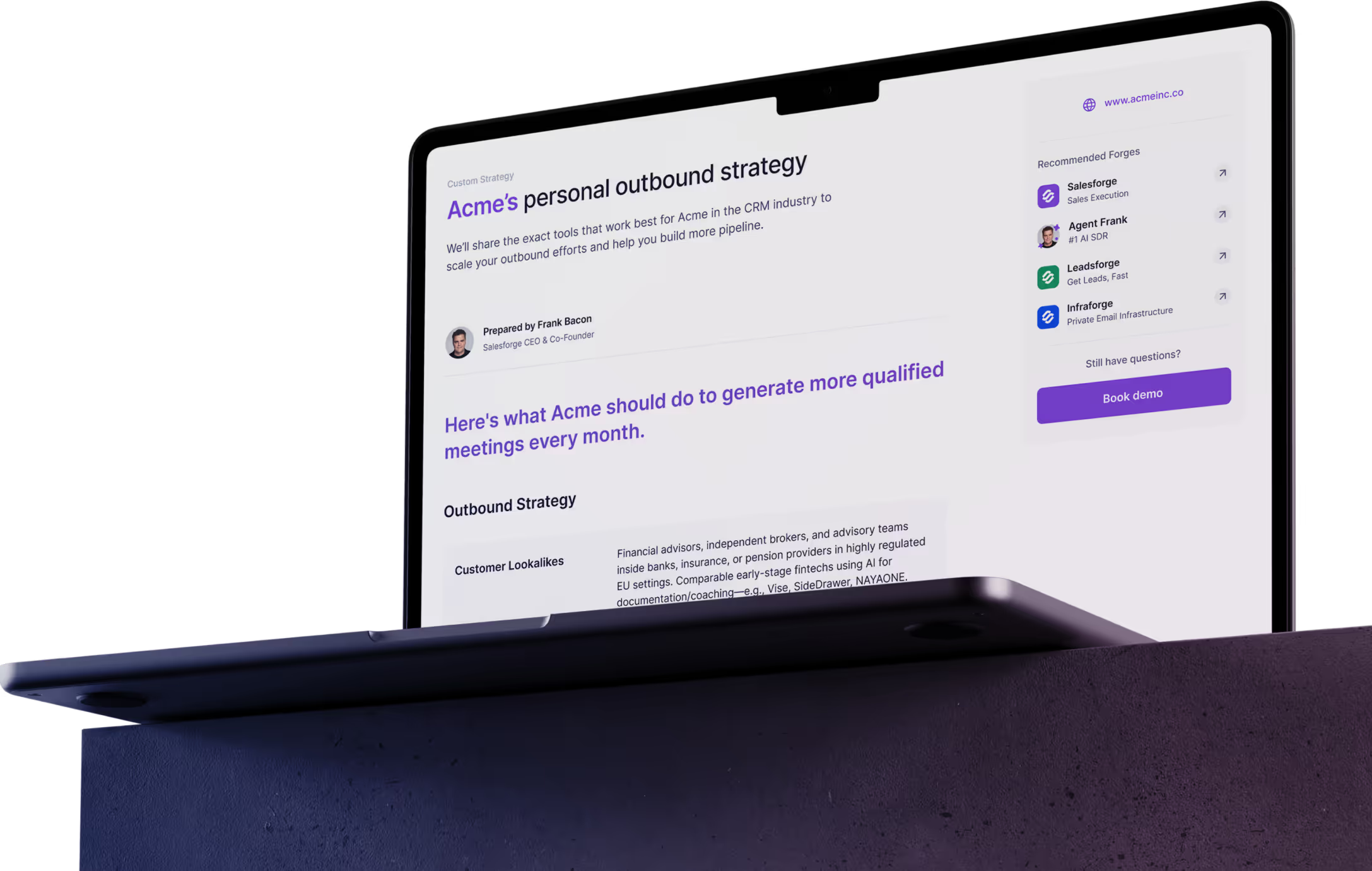
Personalized Outbound Strategy
Get The Right Outbound Strategy In Minutes
Enter your email to get a custom plan & stack recommendation for your
business
It's being carefully crafted by AI
Please check your mailbox in 5 minutes
2. Outreach
Best for: Enterprise sales engagement, revenue workflows, and AI-powered sales execution.
G2 Rating: 4.3/5
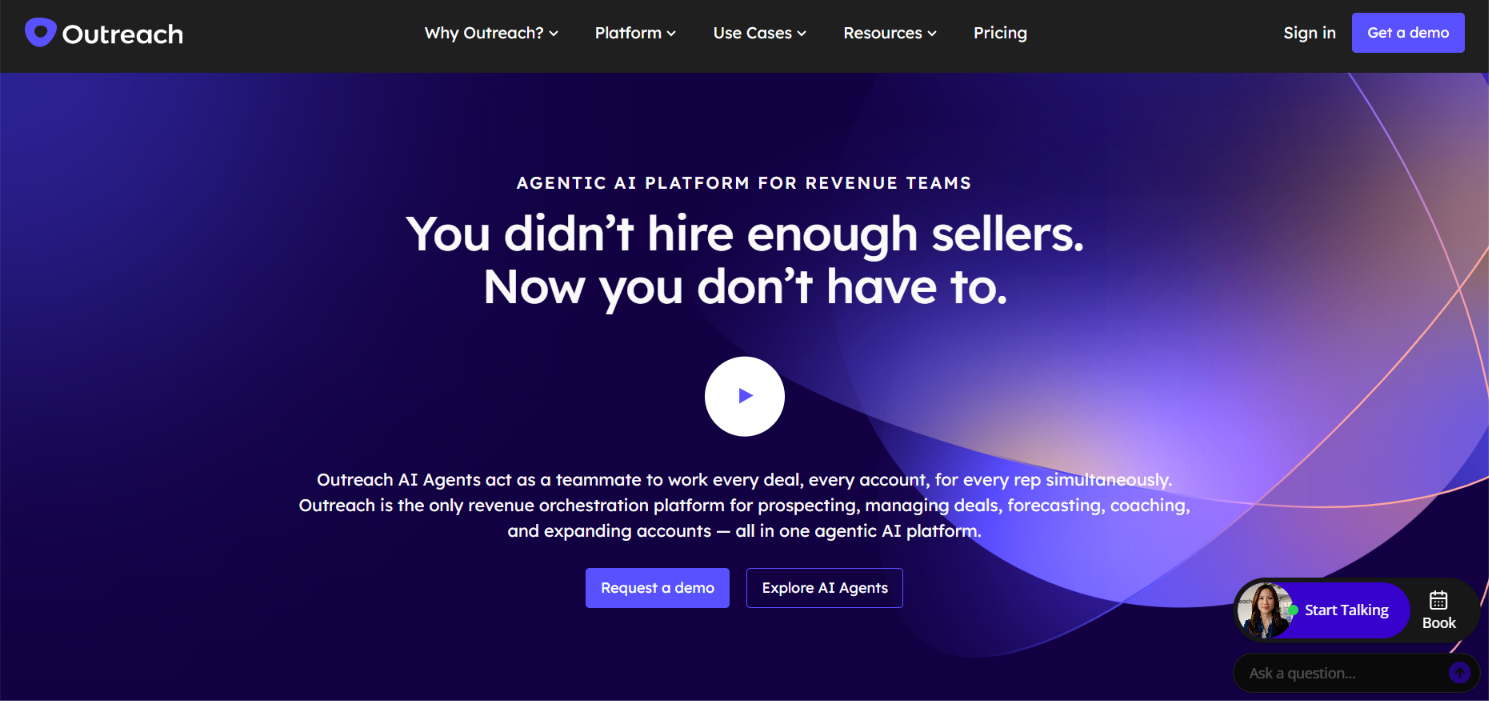
This image shows the Outreach homepage
Outreach is a strong Gong Engage alternative for sales teams that want more than a sales engagement platform. It combines sales engagement, conversation intelligence, AI agents, pipeline management, forecasting, deal management, rep coaching, and mutual action plans in one platform.
What I like about Outreach is that it covers the entire revenue workflow instead of focusing only on outreach. Sales reps can engage prospects across multiple channels, while managers get AI-powered insights, coaching, forecasting, and pipeline visibility from the same platform.
I wouldn't recommend Outreach if you're only looking for a simple outbound tool. It may be more than smaller teams need. But for mid-market and enterprise sales organizations that want one platform to manage the full sales process, Outreach is one of the strongest Gong Engage alternatives.
Key Features of Outreach
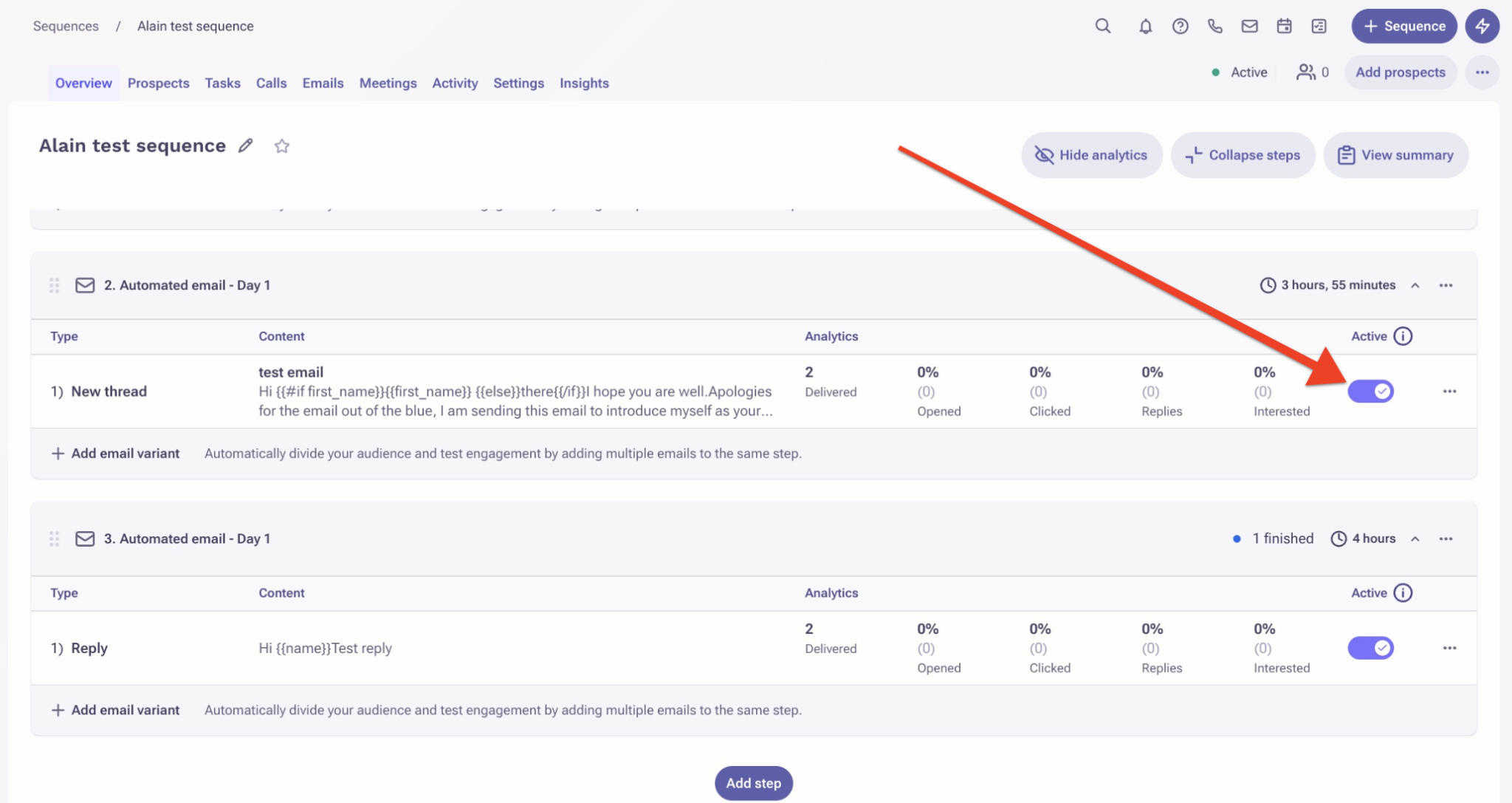
Run multichannel sales sequences across email, calls, LinkedIn, SMS, and meetings.
This image shows the Multichannel sequence by Outreach
Automate sales workflows with AI Agents for prospecting, research, meeting preparation, and deal management.
Use conversation intelligence, buyer sentiment analysis, and AI-powered rep coaching.
Manage pipeline, forecasting, deal management, and mutual action plans from one platform.
Connect with Salesforce, HubSpot, and more than 90 integrations.
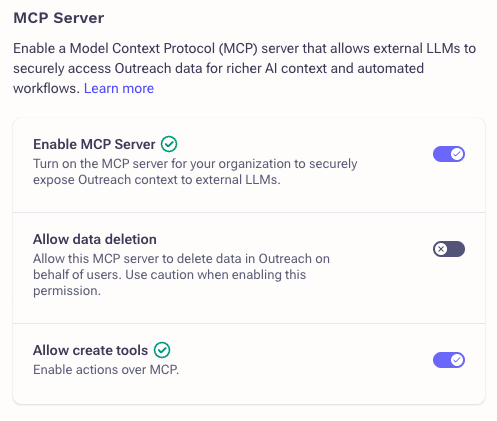
Build AI-powered workflows with APIs and Outreach MCP.
This image shows Connecing Outreach MCP server
Outreach vs Gong Engage: Quick Comparison
Factor
Outreach
Gong Engage
Best for
End-to-end sales execution and revenue workflows
AI-powered sales engagement and conversation intelligence
AI capabilities
AI Agents, rep coaching, forecasting, and pipeline insights
AI Composer, AI Tasker, and conversation intelligence
Revenue workflows
Pipeline management, deal management, forecasting, and mutual action plans
Strong AI Agents, coaching, forecasting, and pipeline management
Supports email, calls, LinkedIn, SMS, meetings, and CRM workflows
Custom pricing with no public plans
Can be more complex than standalone engagement tools
Better suited for mid-market and enterprise teams than small businesses
Outreach Pricing
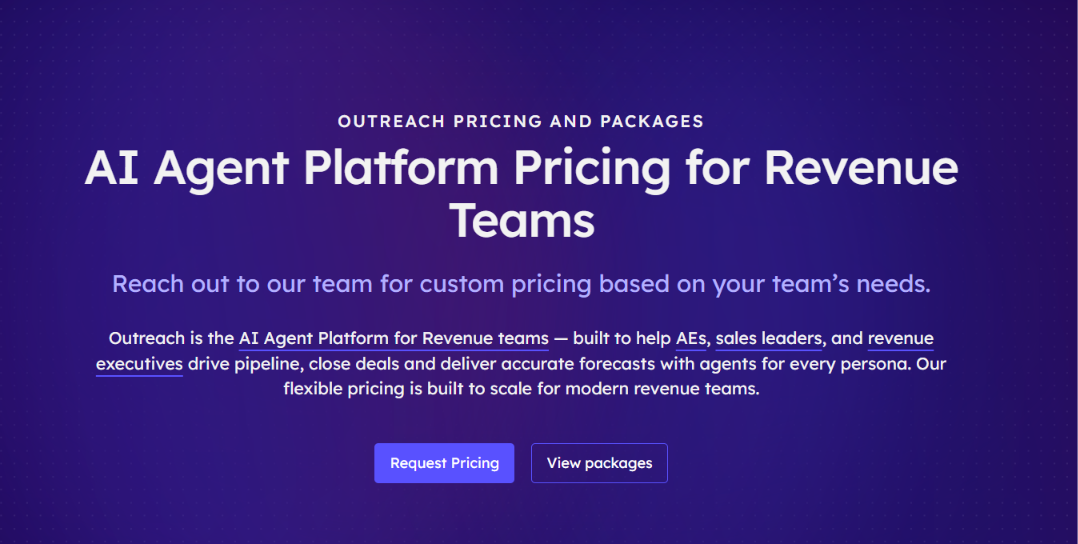
This image shows the Outreach pricing
Outreach uses custom pricing based on seats, AI usage, and platform capabilities instead of fixed monthly plans. Its current packages include:
Amplify Core – AI-powered sales execution with core AI agents, sales engagement, conversation intelligence, and 25,000 AI credits.
Amplify Plus – Adds advanced AI agents, pipeline management, rep coaching, and 50,000 AI credits.
Amplify Pro – Adds forecasting, advanced revenue orchestration, managed services, and 100,000 AI credits.
3. Apollo
Best for: Prospecting, data enrichment, and sales engagement in one platform.
G2 Rating: 4.7/5
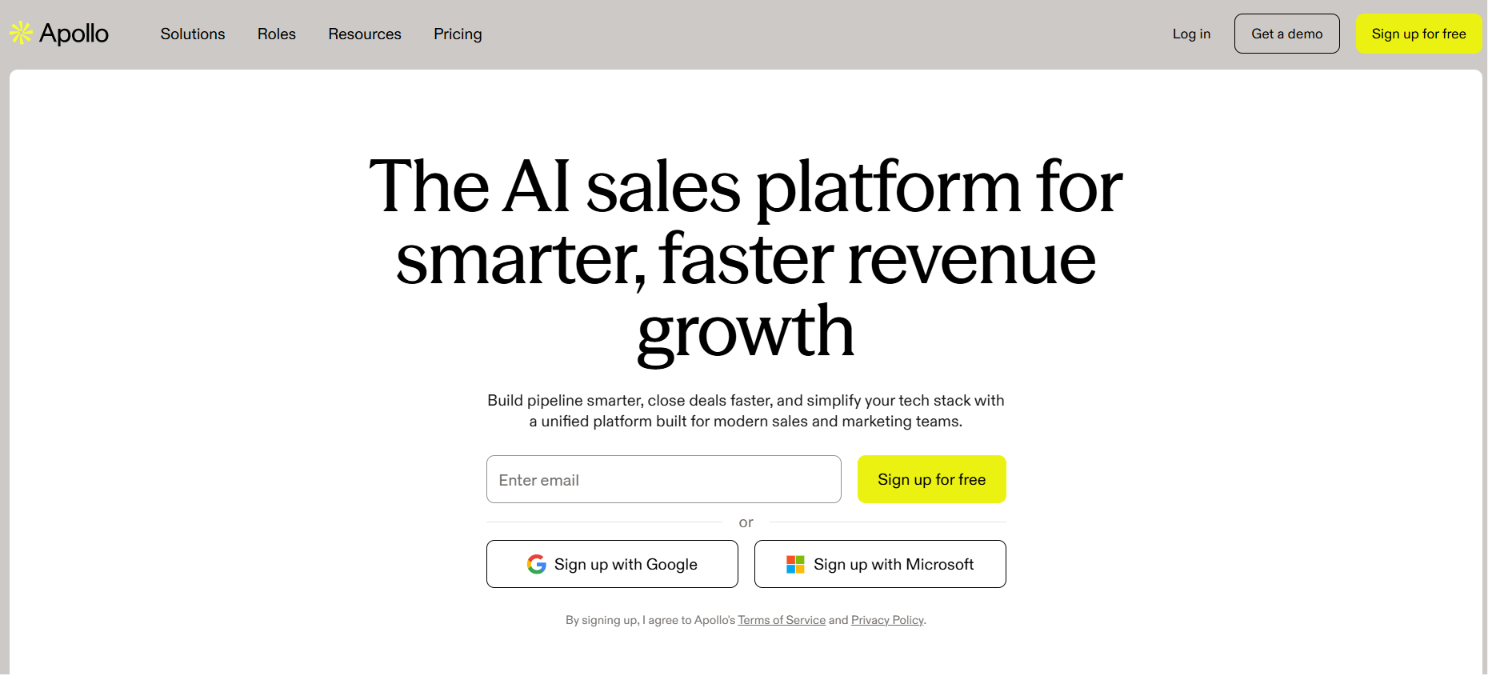
This image shows the Apollo homepage
Apollo takes a different approach than Gong Engage. Instead of starting with sales engagement, it starts with finding the right people to contact. You get access to a large B2B database, built-in enrichment, multichannel outreach, AI prospecting, and basic deal management in one platform.
If your team is paying separately for lead data and an engagement tool, Apollo can simplify your stack. You can search for prospects, enrich contact data, launch email and call sequences, monitor deliverability, and track deals without switching between multiple tools.
It doesn't match Gong's depth in conversation intelligence or sales coaching. But for teams that care more about generating pipeline than analyzing calls, I think Apollo offers better overall value.
Key Features of Apollo
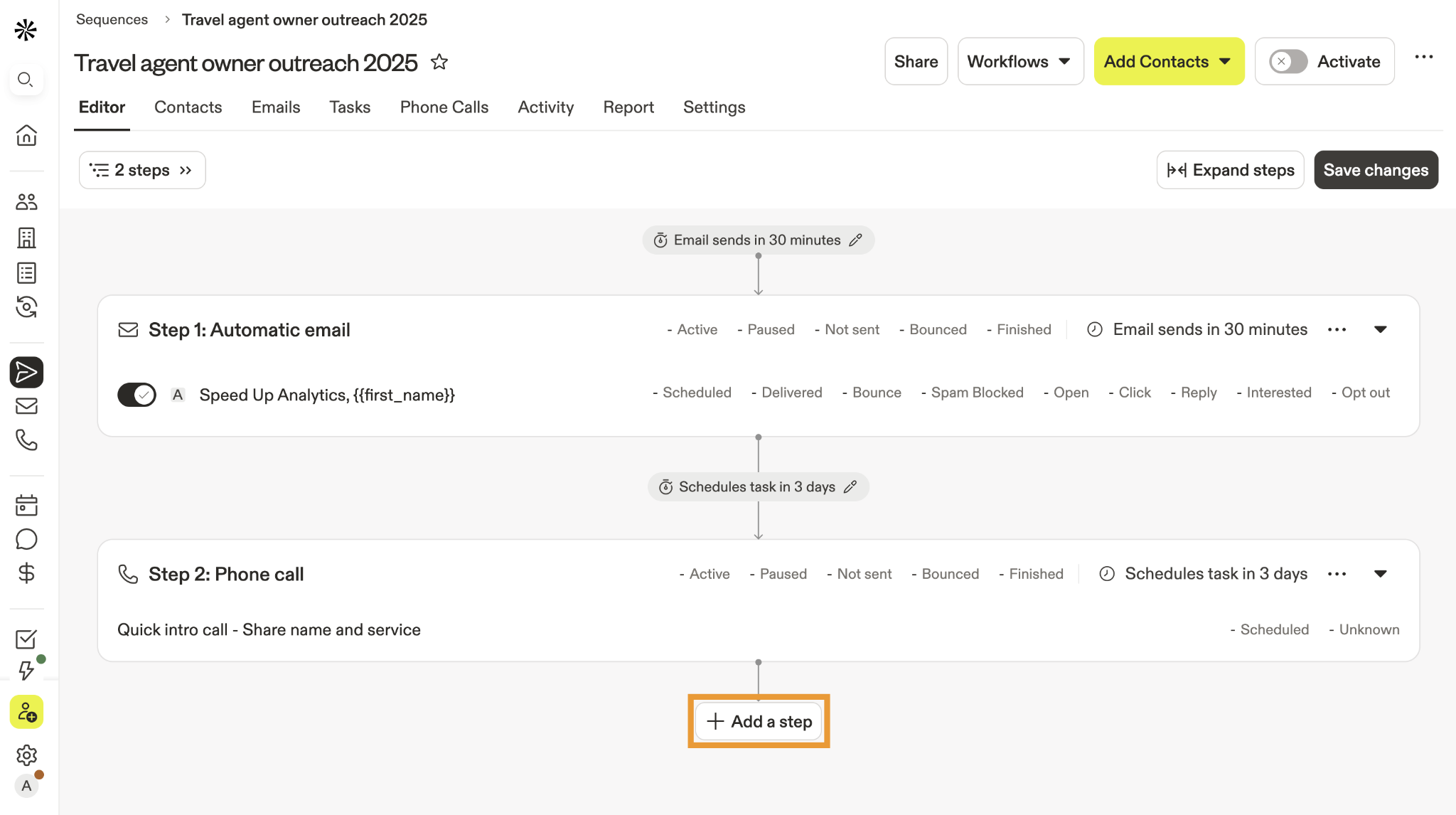
Build outbound sequences with email, calls, LinkedIn tasks, and follow-ups.
This image shows an example of outbound sequence at Apollo
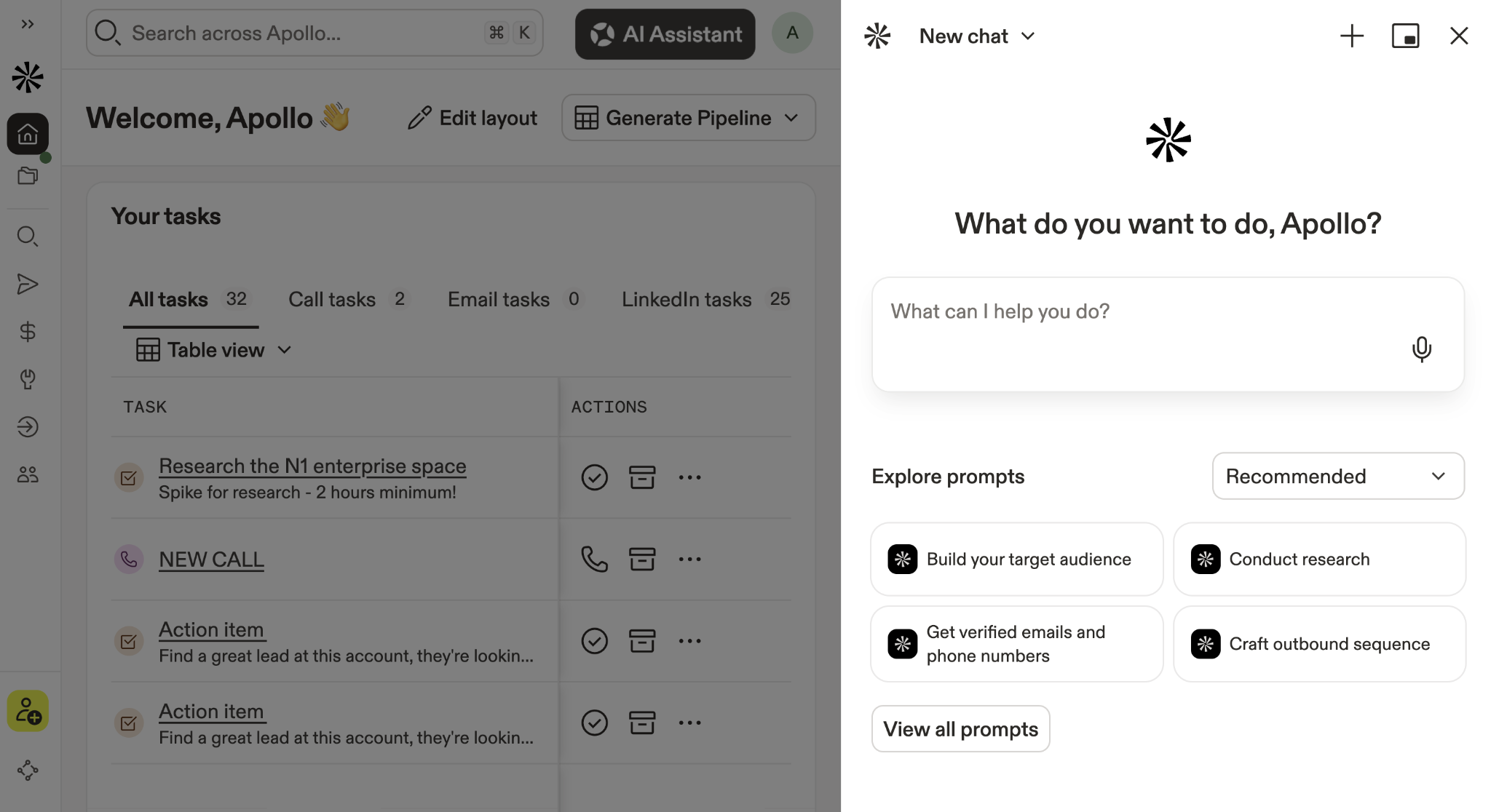
Use AI Assistant, AI Research, and AI Lead Scoring to speed up prospecting.
This image shows the AI assistant by Apoll
Monitor deliverability with email warmup, deliverability scoring, sending limits, and mailbox health tools.
Use call recordings, AI insights, analytics, meetings, and workflow automation.
Connect with Salesforce, HubSpot, Gmail, Outlook, Chrome Extension, API, and Apollo MCP.
Apollo vs Gong Engage: Quick Comparison
Factor
Apollo
Gong Engage
Best for
Prospecting + outbound engagement
AI-powered sales engagement
Lead database
230M+ verified contacts
No native B2B database
Outreach
Email, calls, LinkedIn tasks, sequences
Email, calls, flows, AI guidance
AI focus
AI research, lead scoring, enrichment, MCP
AI Composer, AI Tasker, conversation insights
Deliverability
Warmup, scoring, mailbox health tools
Basic email deliverability guidance
Pricing
Free plan, paid plans from $65/user/month
Custom pricing
Pros and Cons of Apollo
Pros
Cons
Large B2B database with enrichment
Combines prospecting, outreach, enrichment, and basic deal workflows
Free plan and transparent paid pricing
Includes deliverability tools and mailbox warmup
Conversation intelligence is not as deep as Gong
Credits apply to emails, phone numbers, enrichment, AI research, and dialer usage
Some important features sit on higher-tier plans
Can feel heavy if you only need simple sequencing
Apollo Pricing
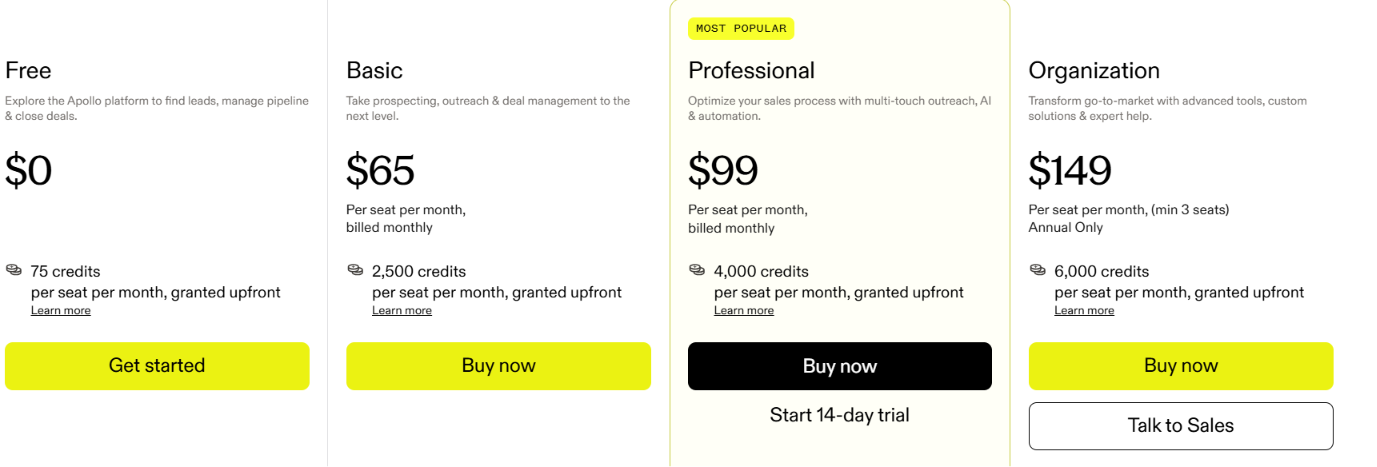
This image shows the Apollo pricing
Apollo has a free plan and three paid plans:
Free: $0 with 75 credits per seat/month.
Basic: $65/user/month with 2,500 credits, unlimited sequences, CRM integrations, email warmup, deliverability suite, waterfall enrichment, and domain/mailbox purchasing.
Professional: $99/user/month with 4,000 credits, A/B testing, automated workflows, call recordings, AI insights, analytics, and unlimited Google and Microsoft mailboxes.
Organization: $149/user/month, annual only, minimum 3 seats. Includes 6,000 credits, advanced reporting, SSO, customizable dashboards, and advanced security.
Apollo also offers Inbound and Advanced Dialer add-ons at $149/team/month each.
4. Salesloft
Best for: Enterprise sales engagement, coaching, and revenue orchestration.
G2 Rating: 4.5/5
This image shows the Salesloft homepage
Salesloft is a revenue orchestration platform built for B2B sales teams. It combines sales engagement, conversation intelligence, deal management, forecasting, coaching, and AI workflows to help teams manage the entire sales process from one place.
What makes Salesloft stand out is its focus on execution. Instead of only helping you send emails or make calls, it helps you understand which deals need attention, what actions to take next, and where managers should coach their teams.
If your sales team manages a large pipeline, Salesloft gives you better visibility into every stage of the sales process.
Key Features of Salesloft
Build multichannel sales cadences across email, calls, meetings, and seller tasks.
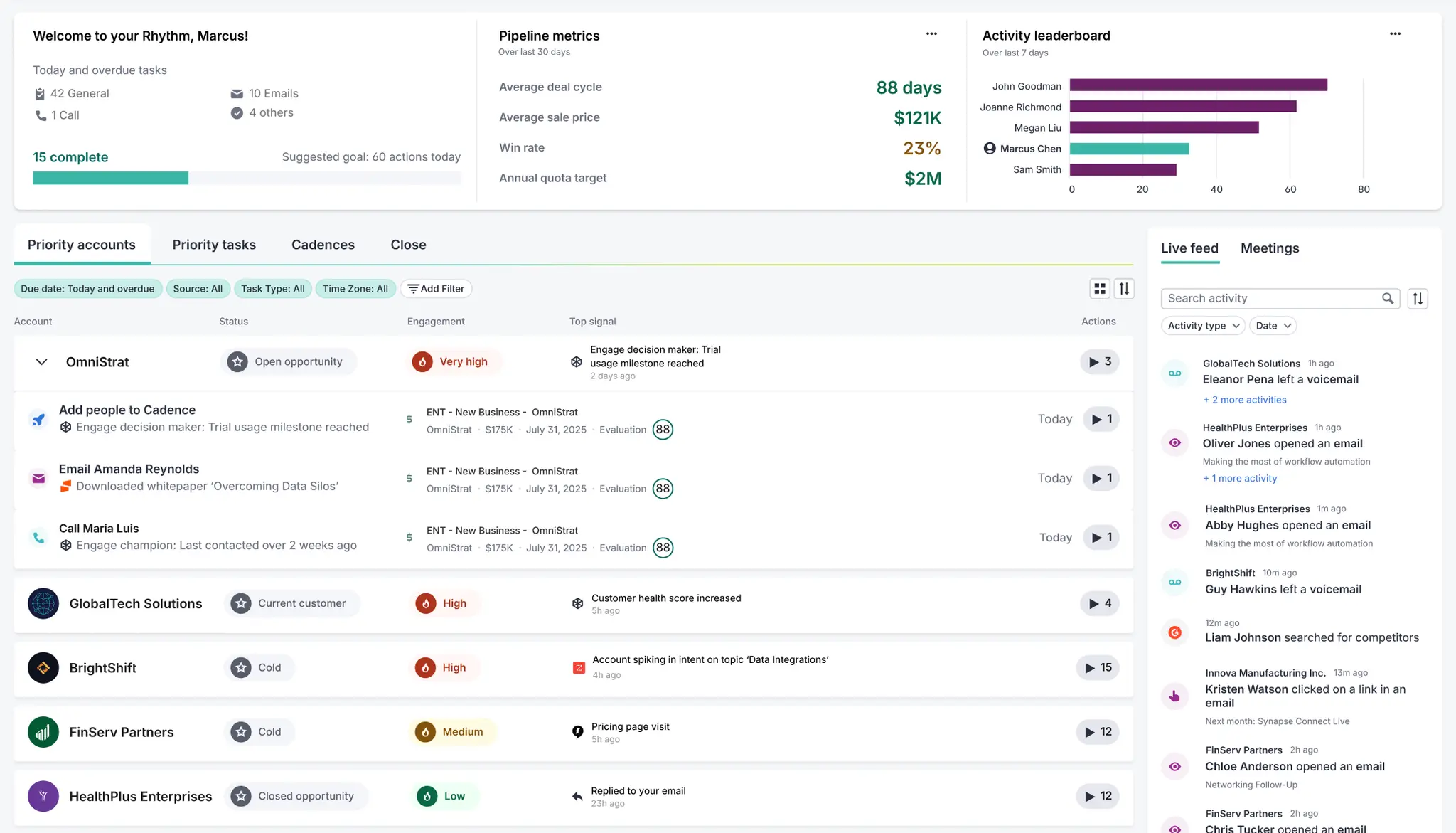
Use Rhythm to prioritize the most important seller actions.
Analyze calls with conversation intelligence, call recording, transcripts, summaries, and action items.
Manage deals, spot risks, and understand which opportunities need attention.
This image shows Prioritize the deals closest to close on Salesloft
Forecast revenue with AI-powered deal and pipeline insights.
Connect Salesloft with CRM, conferencing, dialer, email, calendar, mobile, and other sales tools.
Salesloft vs Gong Engage: Quick Comparison
Factor
Salesloft
Gong Engage
Best for
Enterprise sales engagement and revenue orchestration
AI-powered sales engagement inside Gong
Sales engagement
Cadences, calls, emails, meetings, and seller workflows
Flows, emails, calls, and AI-guided engagement
Conversation intelligence
Built into Salesloft Conversations
Core part of the Gong platform
Pricing
Custom pricing
Custom pricing
Pros and Cons of Salesloft
Pros
Cons
Strong enterprise sales engagement platform
Includes conversation intelligence, forecasting, deal management, and coaching
Rhythm helps reps prioritize the right actions
Good fit for complex revenue teams and long sales cycles
Pricing is not publicly listed
May be too heavy for small teams
Best value comes when connected to your existing CRM and sales tools
Setup may require more planning than simpler tools
Salesloft Pricing
Salesloft does not publish fixed monthly pricing. You need to contact sales for a quote. Its pricing page lists packages built around different needs:
Pipeline Generation – For structured outreach workflows, engagement analytics, and pipeline performance.
Seller Coaching – For team insights, coaching, and performance improvement.
Full Customer Lifecycle Workflows – For progressing pipeline, closing opportunities, and growing customer accounts.
Conversation Intelligence – For call recording, AI insights, and analytics inside the seller workflow.
Opportunity Management – For pipeline visibility and deal intelligence.
Advanced – For connected sales workflows.
Elite – For teams that need more flexibility and customization.
5. ZoomInfo Engage
Best for: Teams that already use ZoomInfo data and want sales engagement in the same workflow
G2 Rating: N/A
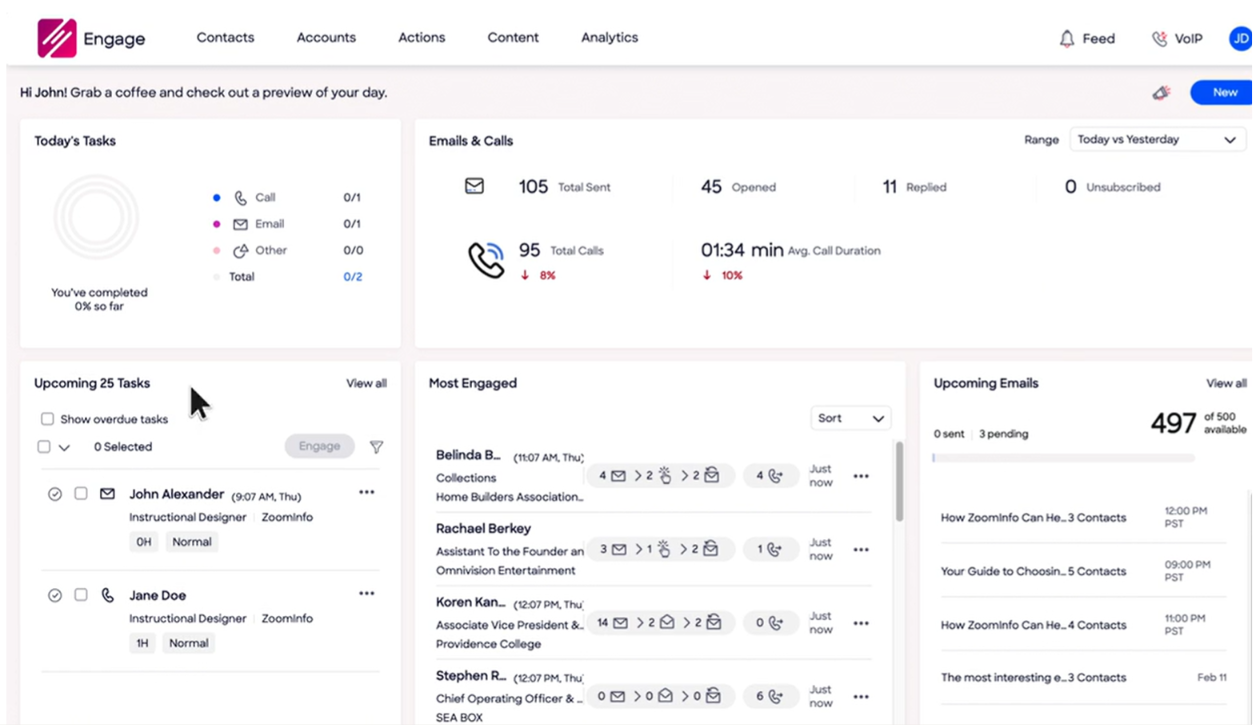
This image shows the ZoomInfo Engage dashboard
ZoomInfo Engage is built for teams that want to combine prospect data with outreach. Its biggest advantage is that it connects ZoomInfo’s company and contact data with emails, calls, tasks, Salesflows, templates, and engagement analytics.
This makes it useful if your team already uses ZoomInfo Sales. Reps can find contacts, view firmographic details, send emails, make calls, add prospects to Salesflows, and track engagement without moving between too many tools.
Key Features of ZoomInfo Engage
Build Salesflows for email, call tasks, and other outreach steps.
Use ZoomInfo contact and company data inside the engagement workflow.
Send emails, make calls, and track engagement activity.
Create email templates and use analytics to see which messages work.
Use the Chrome Extension to email or add prospects to Salesflows from ZoomInfo, Salesforce, LinkedIn, and company websites.
Sync with your CRM and keep sales activity updated across your workflow.
ZoomInfo Engage vs Gong Engage: Quick Comparison
Factor
ZoomInfo Engage
Gong Engage
Best for
ZoomInfo users who want data + outreach
Teams using Gong for AI sales engagement
Data advantage
Strong ZoomInfo contact and company data
Uses Gong conversation data
Outreach
Emails, calls, tasks, Salesflows
Emails, calls, flows, AI guidance
AI focus
Prospecting and engagement support
AI Composer, AI Tasker, conversation-based outreach
Analytics
Tracks calls, emails, templates, and Salesflows
Tracks flows, reps, calls, emails, and engagement
Pricing
Custom pricing
Custom pricing
Pros and Cons of ZoomInfo Engage
Pros
Cons
Strong fit for teams already using ZoomInfo Sales
Combines contact data with outreach workflows
Good analytics for emails, calls, and Salesflows
Works best if your team already uses ZoomInfo Sales
Conversation intelligence is not its primary focus
Pricing is not publicly listed
ZoomInfo Engage Pricing
ZoomInfo does not publish fixed pricing for Engage. You need to contact sales for a quote. The pricing usually depends on your ZoomInfo package, number of users, data access, and whether you use Engage with ZoomInfo Sales or other ZoomInfo products.
6. HubSpot Sales Hub
Best for: Businesses that want a CRM with built-in sales engagement and AI tools.
G2 Rating: 4.4/5
This image shows the HubSpot Sales Hub homepage
HubSpot Sales Hub is a sales platform built on top of HubSpot CRM. It helps sales teams manage leads, automate outreach, track deals, record customer interactions, and forecast revenue from one place.
Sales Hub combines CRM, sales engagement, automation, forecasting, and reporting in one platform, while also integrating with existing CRM systems if needed.
A big advantage of HubSpot Sales Hub is its flexibility. Small businesses can start with the free plan and upgrade as they grow, while larger teams can unlock AI-powered prospecting, conversation intelligence, forecasting, and advanced automation in higher plans.
Key Features of HubSpot Sales Hub
Manage leads, contacts, deals, and sales activities in one CRM.
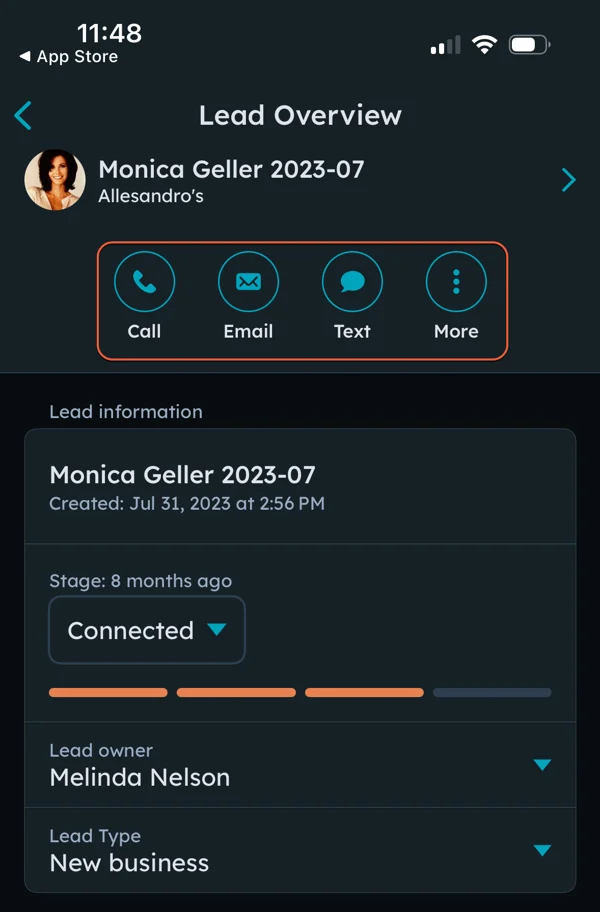
This image shows the Lead Overview page HubSpot Sales Hub
Build automated email sequences and sales workflows.
Use Breeze Prospecting Agent to find accounts, identify buying committees, and personalize outreach.
Track calls with built-in calling, conversation intelligence, and AI meeting summaries.
Manage pipelines with deal scoring, forecasting, analytics, and AI-guided selling.
Connect with more than 2,000 integrations and use Sales Hub alongside your existing CRM if needed.
HubSpot Sales Hub vs Gong Engage: Quick Comparison
Factor
HubSpot Sales Hub
Gong Engage
Best for
CRM with built-in sales engagement
AI-powered sales engagement
CRM
Native HubSpot CRM
Integrates with Salesforce and HubSpot
Sales engagement
Email sequences, workflows, calling, meetings
AI-powered outreach, flows, calls, and emails
AI focus
Prospecting, forecasting, lead scoring, meeting prep, deal insights
AI Composer, AI Tasker, conversation-driven outreach
Conversation intelligence
Available in Professional and Enterprise plans
Core part of the Gong platform
Pricing
Free plan available, paid plans from $10/user/month
Custom pricing
Pros and Cons of HubSpot Sales Hub
Pros
Cons
Free plan available for small teams
Combines CRM, sales engagement, and reporting in one platform
Strong automation, forecasting, and pipeline management
Large integration marketplace with 2,000+ apps
Advanced AI features require higher-tier plans
Professional and Enterprise plans become expensive as teams grow
Some advanced features require onboarding fees
AI features use HubSpot Credits
HubSpot Sales Hub Pricing
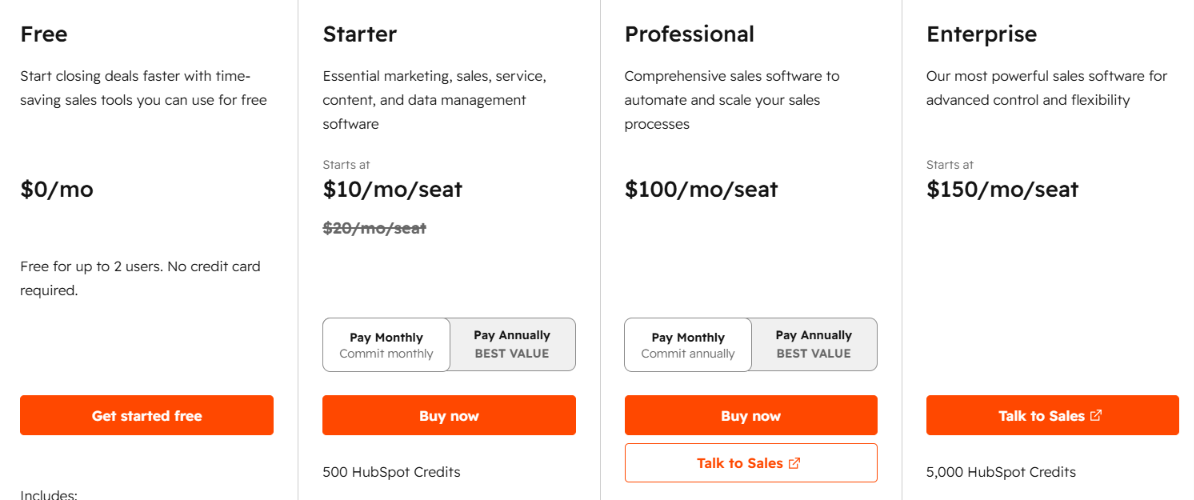
This image shows the HubSpot Sales Hub pricing
HubSpot Sales Hub offers four plans:
Free – $0/month for basic CRM, deal tracking, live chat, and meeting scheduling.
Starter – Starts at $10 per user/month and adds sales automation, calling, task queues, and AI Prospecting Agent.
Professional – $100 per user/month with conversation intelligence, forecasting, sales analytics, Smart Deal Progression, and advanced automation. Requires a one-time $1,500 onboarding fee.
Enterprise – Starts at $150 per user/month with AI lead scoring, custom objects, advanced analytics, conversation intelligence, and enterprise controls. Requires a one-time $3,500 onboarding fee.
7. Revenue.io
Best for: Salesforce teams that want sales engagement, conversation intelligence, real-time coaching, and AI in one platform.
G2 Rating: 4.7/5
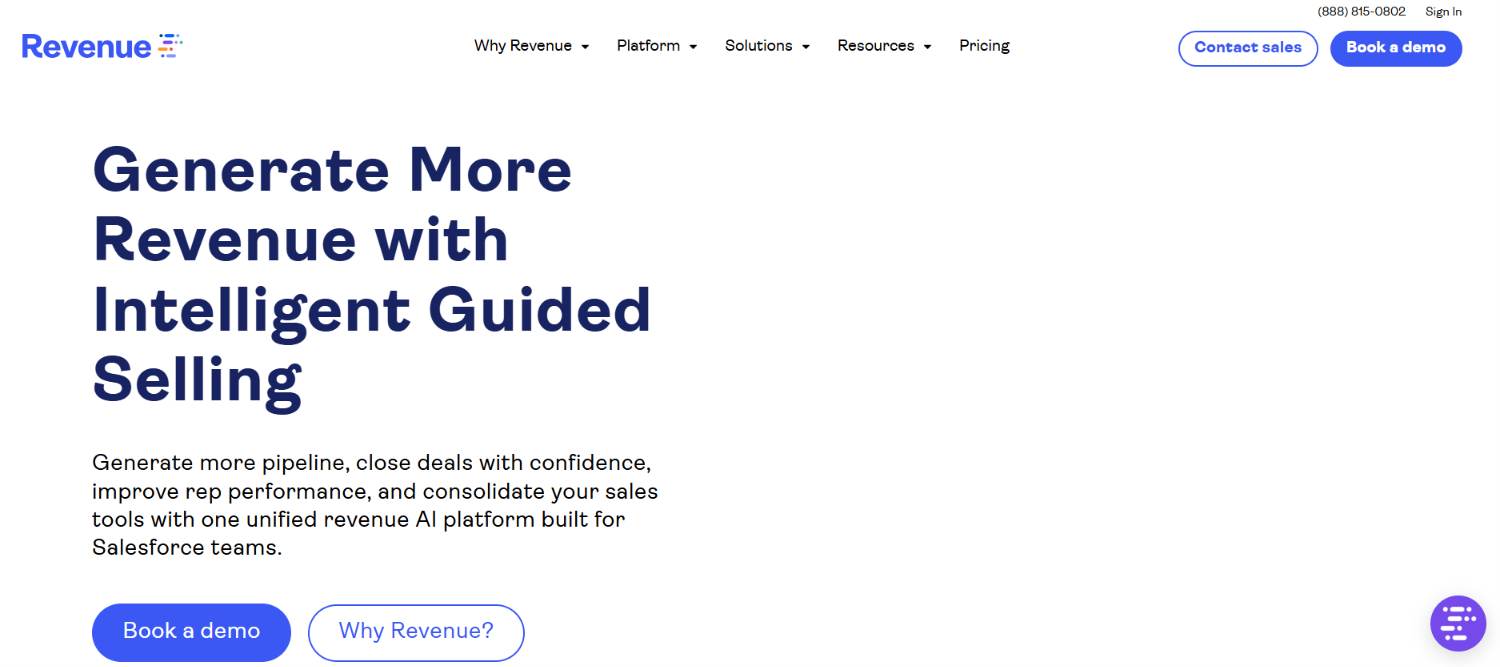
This image shows the Revenue homepage
Revenue.io is a Salesforce-native revenue platform for teams that want to manage outreach, calling, coaching, and pipeline execution from one place. I like that most of the sales workflow stays inside Salesforce instead of relying on several connected tools.
For Salesforce users, that makes the sales process simpler and gives managers better visibility into what their teams are doing.
Key Features of Revenue.io
Salesforce-native sales engagement with email, calling, SMS, and multichannel sequences.
Real-time coaching with Moments™ that surfaces live guidance during calls and meetings.
Conversation intelligence with call recording, transcription, AI summaries, scorecards, and coaching insights.
AI-powered forecasting, deal health scoring, pipeline analysis, and next-best actions.
AI assistants including Ask Revenue, AI conversation agents, follow-up writing, and forecasting tools.
Built-in Salesforce dialer, revenue intelligence, mobile selling, and integrations with Microsoft Teams, Zoom, Google Meet, Gmail, HubSpot, LinkedIn, and more.
Email, calling, AI-powered sequences and workflows
AI focus
Real-time coaching, forecasting, AI agents, deal intelligence
AI Composer, AI Tasker, conversation insights
Conversation intelligence
Native platform capability with coaching and scorecards
Core Gong platform capability
Pricing
Custom pricing
Custom pricing
Pros and Cons of Revenue.io
Pros
Cons
Built natively inside Salesforce
Combines engagement, conversation intelligence, coaching, and forecasting
Real-time AI coaching during live calls
Replaces multiple point solutions with one platform
Best suited for Salesforce users
Pricing is only available through sales
Best suited for Salesforce teams with more complex sales processes
Smaller teams may not need every capability
Revenue.io Pricing
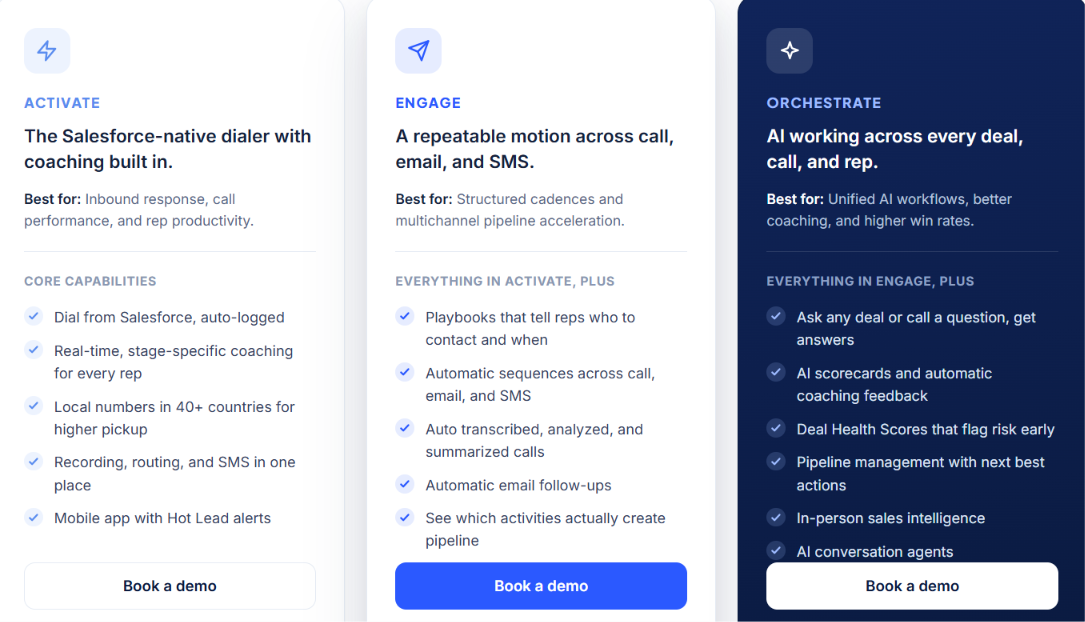
This image shows the Revenue pricing
Revenue.io doesn't publish fixed pricing. Instead, it offers custom quotes based on team size and requirements. Its platform is organized into three product tiers:
Activate – Salesforce dialer with real-time coaching, call recording, routing, SMS, and mobile selling.
Engage – Everything in Activate plus multichannel sequences, playbooks, AI call summaries, automatic follow-up emails, and engagement analytics.
Orchestrate – Everything in Engage plus AI scorecards, Ask Revenue AI, conversation agents, deal health scoring, pipeline management, forecasting, and advanced AI workflows.
Which Gong Engage Alternatives for Sales Teams Should You Choose?
Every tool on this list solves a different problem. Some help you find prospects, while others focus on sales engagement, coaching, CRM, or revenue intelligence. Before you decide, think about what your team needs most. This quick guide can help you narrow down the right choice.
If you need...
Choose...
AI-powered email and LinkedIn outreach
Salesforge
B2B prospecting with a contact database
Apollo.io
Enterprise sales engagement
Outreach
Revenue orchestration and sales coaching
Salesloft
Outreach with ZoomInfo data
ZoomInfo Engage
CRM with built-in sales engagement
HubSpot Sales Hub
Salesforce-native revenue execution
Revenue.io
Personalized Outbound Strategy
Get The Right Outbound Strategy In Minutes
Enter your email to get a custom plan & stack recommendation for your
business
It's being carefully crafted by AI
Please check your mailbox in 5 minutes
Conclusion
Gong Engage is a strong platform, especially if your team already uses the Gong ecosystem and wants AI-powered sales engagement backed by conversation data. But it is not the best fit for every business. Some teams need better prospecting, others need a built-in CRM, and many simply want a platform that is easier to use or more affordable.
The best Gong Engage alternatives depend on what your sales team is trying to fix. If your main goal is outbound, Salesforge is worth a closer look. If outbound is your priority, Salesforge is worth considering. It brings together email and LinkedIn outreach, AI personalization, reply management, and deliverability tools in one platform, so you can manage your outbound process without relying on multiple tools.
Compare 7 Gojiberry AI alternatives for LinkedIn outreach. See pricing, buying signals, prospecting, automation, and email features to find the right fit.
Compare 5 LinkedFusion alternatives for LinkedIn outreach, with a clear look at pricing, automation, account safety, reply handling, and multichannel features.


.jpg)

.jpg)