

Unify GTM is an AI prospecting tool where agents build lists and draft sequences for reps, with paid seats from $20/mo. Common Room, now owned by Zoom, is a buyer intelligence platform from $2,500/mo billed annually. Neither one sends LinkedIn messages for you.
For SMB and mid-market teams that want outbound run for them, Agent Frank is the stronger choice. He prospects, writes, follows up by email and LinkedIn, and books meetings from $499/mo billed annually, with free Warmforge warm-up and every reply in Primebox™.
If you're weighing Unify GTM vs Common Room, you're choosing how much outbound work your reps still do by hand. I priced one job on all three tools: reaching about 2,000 new prospects a month by email and LinkedIn.
Unify GTM is a chat-based outbound tool: describe a buyer, and its agents build the list and write the sequence. Common Room turns product, website, CRM, and community activity into ranked buyers and draft messages. Agent Frank is Salesforge's autonomous AI SDR, and he runs the whole job himself.
On that 2,000-lead job, Agent Frank on annual billing plus 20 Megaforge mailboxes costs about $568/mo. Common Room's entry plan alone is $2,500/mo, before you add a sequencing tool.
AI Outbound Comparison at a Glance: Unify GTM vs Common Room
| Feature | Agent Frank | Unify GTM | Common Room |
|---|---|---|---|
| What it is | Autonomous AI SDR built by Salesforge that books meetings | AI prospecting and sequencing tool for reps | Buyer intelligence platform, owned by Zoom since July 2026 |
| Sending | Agent Frank sends and follows up 24/7, on Auto-Pilot or Co-Pilot | Reps approve each sequence; email steps then send | Reps send 1:1 messages; sequences run in a connected tool or Zoom's Engage add-on |
| Automated LinkedIn steps with unlimited senders | Manual tasks: reps send messages and invites | Tracks LinkedIn page engagement as a signal; no automated sending listed | |
| Personalization | Writes from your Knowledge Base, prospect sites, and LinkedIn posts in 21+ languages | AI copy based on research and 25M+ past messages | RoomieAI drafts from person-level intent and account context |
| Lead data and enrichment | Leadsforge search engine with 500M+ contacts, enriched and verified | 1.1B+ people and 65M+ companies from 40+ sources | Person360 profiles plus 2.5k Prospector credits on Common Room Essential |
| Buying signals | Researches signals and timing before each message | Job changes, hiring, tech stack, and news; web intent on Unify Business | Web visits, product usage, CRM, community, and Bombora topics |
| Warm-up | Free 2-week warm-up via Warmforge | Warm-up and rotation on Unify Business only | None listed; no mailboxes included |
| Infrastructure | Your mailboxes, Infraforge, or Megaforge (from $69/mo for 20) | 1 mailbox per seat; managed mailboxes $25/mo each on Unify Business | None included |
| Reply inbox | Primebox™ for email and LinkedIn replies | Task dashboard; no unified inbox listed | Replies go to the mailbox or tool that sent them |
| Analytics | Reply rate, positive replies, and LinkedIn activity per campaign | Sequence and rep analytics on Unify Pro; attribution on Unify Business | Custom reports, Slack and email alerts |
| Pricing | $499/mo billed annually or $599/mo billed quarterly, for 1,000 Active Contacts | Free; $20 or $60/seat/mo; Unify Business custom | $2,500/mo billed annually; higher tiers custom |
| Free trial | No; starts with a demo | Free plan plus 14-day Unify Pro trial | None on its pricing page; demo request |
Unify GTM Overview: AI Agents, Credits, and Plans
Unify GTM is an AI outbound tool built for sales reps. It was founded in January 2023, joined OpenAI's Converge Accelerator, and later raised a $40M Series B from Battery Ventures.
In June 2026, Unify relaunched as a self-serve, chat-based product. A rep types one prompt, and its agents build a list, enrich it, and draft email, call, and social steps for the rep to review.
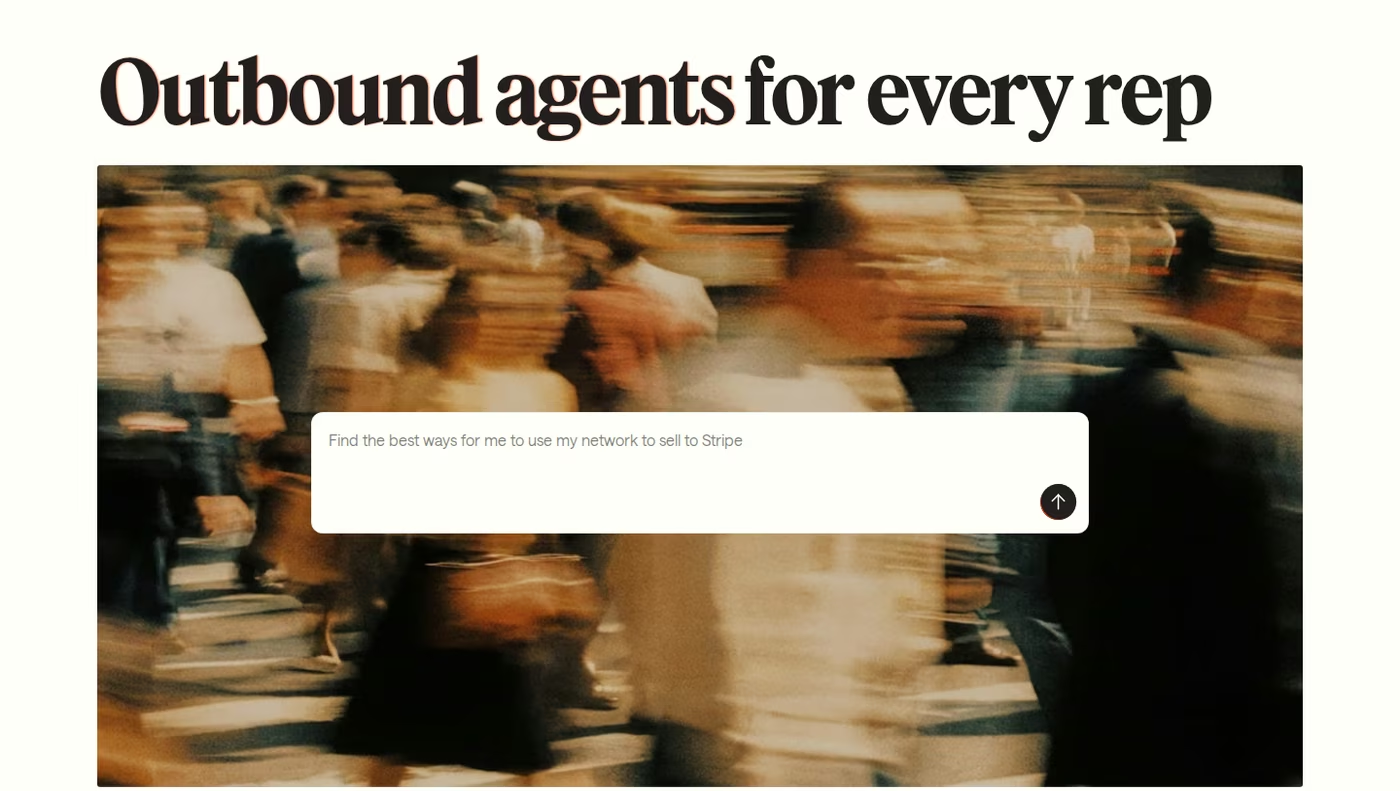
Unify GTM core features
- Prompt-driven prospecting: describe a buyer in plain English, and agents find accounts, pull contacts, and qualify the list.
- B2B data: 1.1B+ people and 65M+ companies, with email and phone lookups across 7+ contact data providers.
- Signals: 40+ data and signal vendors cover hiring, job changes, tech stack, and news, with website intent and product usage signals on Unify Business.
- Multi-channel sequences: email, call, and social steps in one sequence, with LinkedIn steps as manual tasks.
- AI copywriting: drafts based on your research and data from 25M+ messages, so reps review instead of writing from scratch.
- Managed deliverability: on Unify Business, Unify creates and warms mailboxes and checks every email for bounces before it sends.
- Security: SOC 2 Type II, with SSO as a Unify Business add-on.
Unify GTM pricing
Unify's self-serve plans charge per seat, and every plan includes credits for data and AI work. An email lookup averages 1 credit, and a phone lookup averages 4.
- Unify Free: $0 for up to 3 seats, with limited credits.
- Unify Base: $20/seat/mo billed monthly, with 800 credits per seat.
- Unify Pro: $60/seat/mo billed monthly, with 2,400 credits per seat, read-only HubSpot and Salesforce sync, and a 14-day free trial.
- Unify Business: custom pricing billed annually, with managed mailboxes at $25/mo each, a power dialer, automated plays, and API access.
Older review sites still quote a Unify Growth plan at $1,740/mo. That plan no longer appears on Unify's live pricing page.
Who Unify GTM fits
Unify fits reps and small sales teams who want to prospect and write faster themselves. Unify even pitches Unify Base as a plan a rep can put on a personal card.
Unify GTM limitations
- No LinkedIn automation. Unify's help center says it can't automate LinkedIn messages or connection requests, so reps send them by hand.
- Warm-up, mailbox rotation, bounce checks, and managed mailboxes sit on Unify Business. Lower plans get 1 mailbox per seat.
- Credit use varies a lot. Unify's own FAQ warns that deep agentic workflows can use credits quickly.
- A rep still runs the motion: someone has to review drafts, start sequences, and work the task list.
What reviewers say about Unify GTM
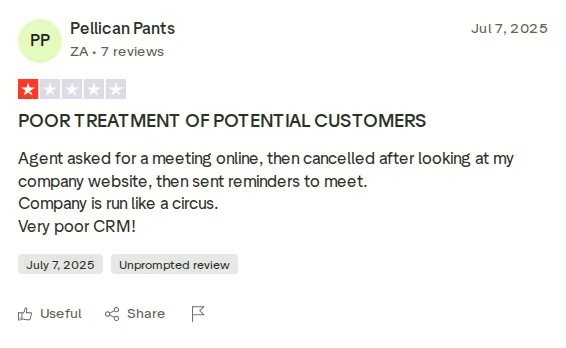
Unify's only Trustpilot review is a 1-star post from July 2025 about a cancelled sales meeting. G2's comparison pages list Unify at 4.7 out of 5 from 42 reviews, so treat one review as a data point, not a verdict.
For other options, see these Unify GTM alternatives or the two-way Agent Frank vs Unify page.
Common Room Overview: Buyer Intelligence, RoomieAI, and Plans
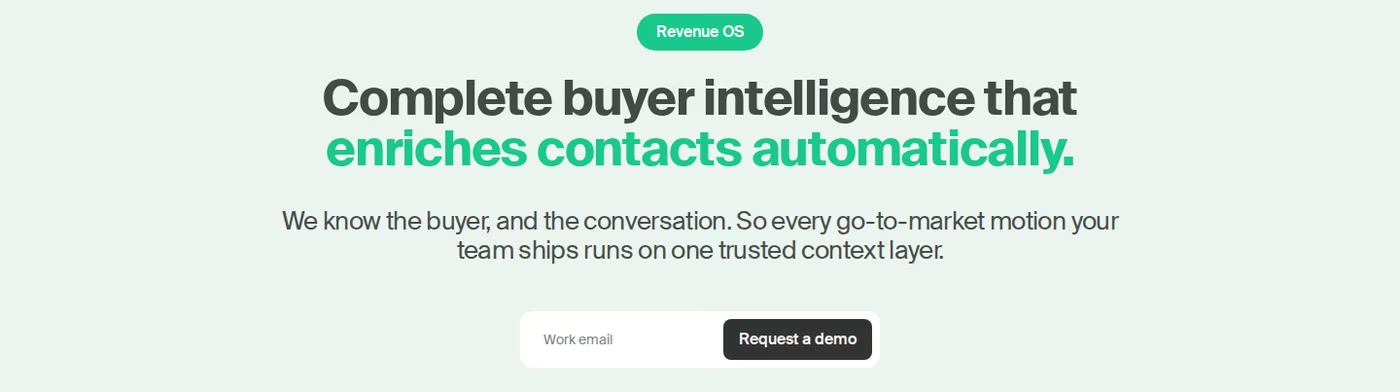
Common Room is a buyer intelligence platform founded in Seattle in 2020. It joins CRM, product, marketing, and engagement data with outside buying signals, then ties each signal to a real person.
Zoom agreed to acquire Common Room on July 2, 2026, and the deal closed that month. Zoom calls it an extension of its Revenue Accelerator platform, and Common Room's site now sells that platform's dialer, Engage, and forecasting tools too.
Common Room core features
- Person360: person-level profiles that tie web, product, CRM, and community activity to real people and accounts.
- Signals from 50+ channels: website visits, product usage, CRM data, LinkedIn and X engagement, GitHub, Slack, Discord, and Bombora intent topics.
- RoomieAI agents: Capture researches accounts, Orchestrate and Spark Brief rank who to contact, and Activate drafts warm outbound that reps can send in one click or push into a sequence.
- Prospector: a contact database that Common Room pitches at about 20% of ZoomInfo's cost.
- AI Scoring and Buying Committee: AI-based account scoring and buying committee mapping.
- Integrations: CRMs, Slack, and engagement tools like Outreach, Salesloft, and Apollo, plus an MCP server on every plan and a CLI.
- Security: SOC 2 certified and GDPR compliant.
Common Room pricing
- Common Room Essential: $2,500/mo billed annually ($30,000 a year), with 5 seats, up to 100k contacts, 5k RoomieAI research credits, and 2.5k Prospector credits.
- Common Room Advanced: custom pricing, with 15 seats, up to 250k contacts, and 7.5k Prospector credits.
- Common Room Enterprise: custom pricing, with 30 seats, up to 750k contacts, and 15K Prospector credits.
Every tier includes unlimited alerts, workflows, and segments. Each plan starts with a demo request, and the pricing page lists no self-serve trial.
Who Common Room fits
Common Room fits mid-market and enterprise teams with rich first-party signals, like product-led or developer-focused companies. It works best when reps already send from Outreach, Salesloft, or Zoom.
Common Room limitations
- Its pricing page lists no mailboxes, warm-up, or sequencing engine, just integrations with sales engagement tools. Reps can send 1:1 messages, but multi-step sequences run in a connected tool like Outreach or Salesloft.
- Engage covers email and call steps for reps, but it's a paid add-on below Revenue Accelerator's custom-priced Elite plan.
- Common Room's own FAQ says RoomieAI is not a replacement for sellers, so you still need reps to act.
- Website deanonymization is capped at 1k a month on Common Room Essential and Advanced, and product signals cost extra on Essential.
What reviewers say about Common Room
Common Room has no Trustpilot reviews yet. On Software Finder, a 3-star review from July 2026 says support issues took more than three months to resolve.
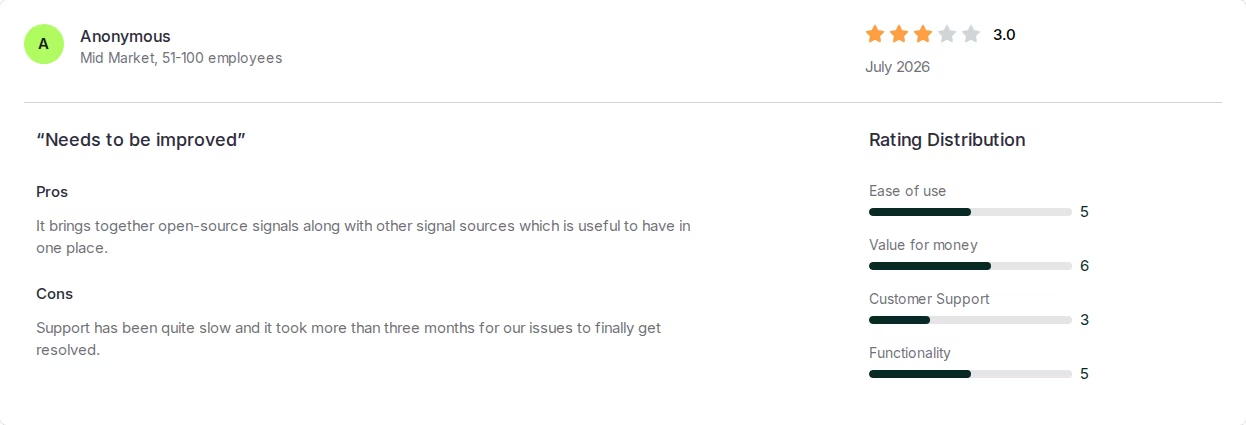
G2's AI summary of Common Room reviews flags slow response times, a clunky interface, and tricky CRM setups. For a wider sample, see this analysis of Common Room reviews.
Agent Frank Overview: The Autonomous AI SDR on the Forge Stack
Agent Frank is Salesforge's AI SDR. He finds prospects, researches them, writes personalized emails and LinkedIn messages, follows up, handles replies, and books meetings, 24/7.
He works inside a free Salesforge workspace, which acts as his office. You can let him run on Auto-Pilot, or switch to Co-Pilot and approve his drafts first.
Agent Frank core features
- 24/7 prospecting: he searches the Leadsforge database of 500M+ contacts for your ICP, or works the lists you upload.
- Enriched, verified data: he enriches and verifies contact and company data before any outreach.
- Research before writing: he studies each prospect, their company, buying signals, timing, and likely objections. Your feedback shapes what he remembers next time.
- Personalized email and LinkedIn messages: he writes from your Knowledge Base, prospect websites, and LinkedIn posts in 21+ languages.
- Multichannel sequences: email and LinkedIn steps run in one sequence, and he handles every follow-up.
- Unlimited senders: unlimited email and LinkedIn senders, with no seat-based pricing.
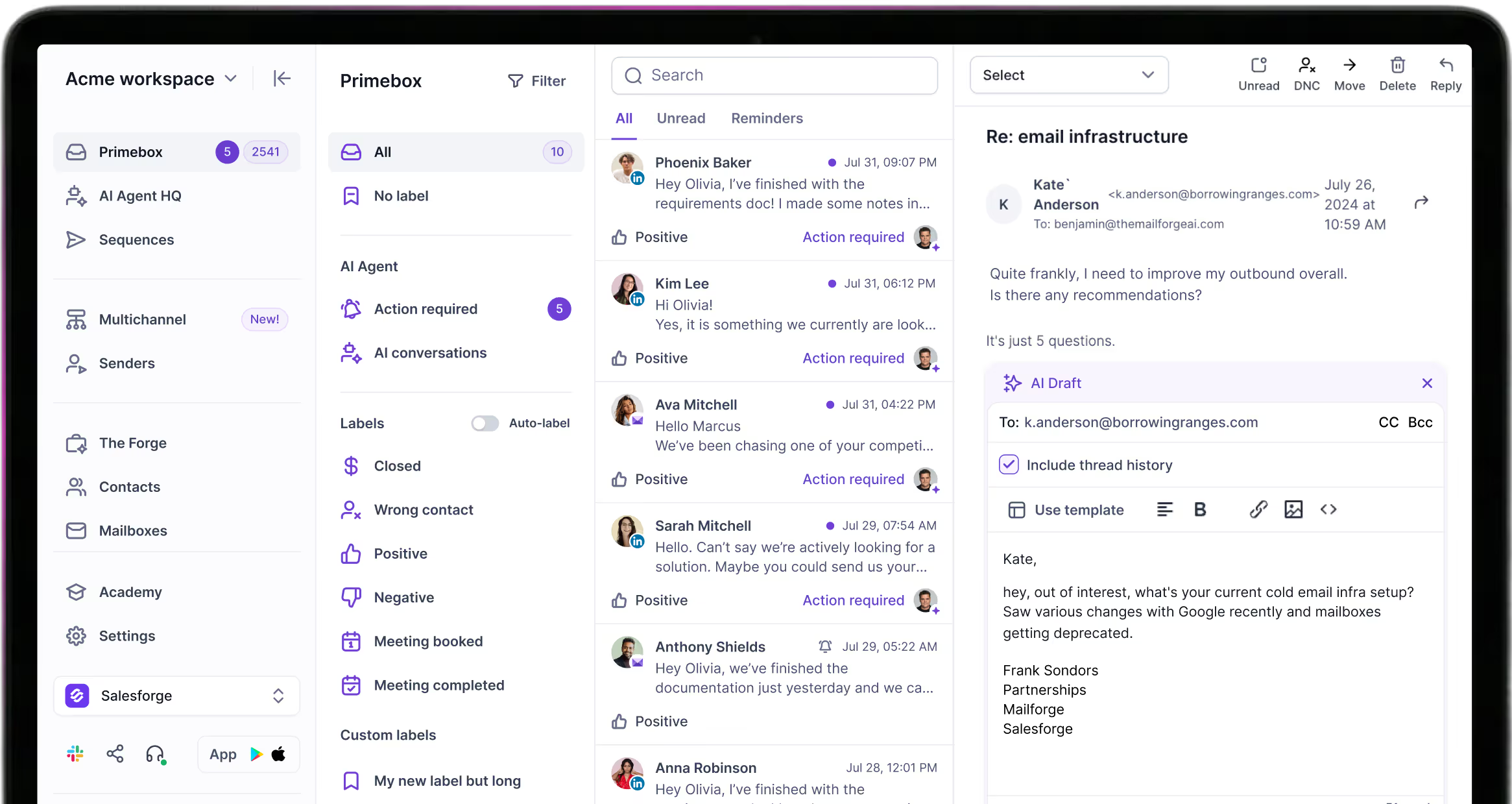
- Replies in Primebox™: email and LinkedIn replies land in one unified inbox with sentiment tags.
- Meeting booking: he books meetings directly on your reps' calendars.
- Infrastructure choice: connect your own mailboxes or use Infraforge from $33/mo billed annually for 10 mailboxes. Megaforge starts at $69/mo for 20 mailboxes split across Gmail, Outlook, Mailforge, and Infraforge.
- Human backup: a dedicated Account Manager and a shared Slack channel.
Agent Frank is one layer of the Forge Stack. Leadsforge finds leads and sends them straight into Salesforge, with no CSV export.
Warmforge warms the mailboxes, and Salesforge runs the sequences. Mailforge, Infraforge, and Primeforge supply mailboxes, all under one login with separate subscriptions.
You can run the stack three ways: with your own team, with Agent Frank, or through a Forge Expert agency. Here is Salesforge's full Agent Frank tutorial:
Agent Frank pricing
Agent Frank costs $599/mo billed quarterly, or $499/mo billed annually with 2 months free. That covers 1,000 Active Contacts at any time, which Salesforge says means about 2,000-2,500 new leads and 6,000-7,500 emails a month.
Infrastructure costs extra, but the 2-week warm-up runs on Warmforge at no extra cost. Salesforge plans for your own reps are separate: Salesforge Pro is $48/mo ($40/mo annual), and Salesforge Growth is $96/mo ($80/mo annual).
Start Your Free Salesforge TrialWho Agent Frank fits
Salesforge says Agent Frank fits B2B teams selling at $5K-$100K ACVs to startups, SMBs, and mid-market companies, with 3,000+ target businesses. After a pivot to a tighter ICP, VAI Consulting booked 3 calls with him within the first week.
Agent Frank limitations
- There's no free trial or self-serve signup. He is only available after a Salesforge demo.
- New mailboxes need a 2-week warm-up before he starts sending.
- Infrastructure is not included in his price.
- He covers email and LinkedIn; Salesforge lists no phone channel for him.
- Salesforge lists Fortune 500 targets, long RFP cycles, and six- to seven-figure deals as a not-so-good fit.
in Action
Head-to-Head Feature Comparison: Unify GTM vs Common Room
I compared the three on six areas that decide whether outbound actually gets done, using each vendor's own docs and pricing pages.
Who runs the outreach
Agent Frank: runs the whole loop himself, from finding leads to booking the meeting. On Co-Pilot, you approve his drafts before they go out. You set his goal, working hours by time zone, tone, and personalization sources.
Unify GTM: automates the prep work. Agents build the list and draft the sequence, then a rep reviews it, starts it, and works the manual tasks. A task dashboard queues those steps for each rep.
Common Room: tells reps who to contact and drafts the message, which a rep can send in one click or push into a sequence. Spark Brief emails reps a daily list of the hottest buyers, and RoomieAI is built to support sellers, not replace them.
My view: signals and drafts save time, but they don't book meetings on their own. Someone still has to approve sends, answer replies, and book the call, and that is the work Agent Frank takes off your team.
Multichannel outreach: email, LinkedIn, and calls
Agent Frank: runs email and LinkedIn steps in one sequence, with unlimited senders on both channels. It's multichannel outreach without a rep clicking through LinkedIn tasks. LinkedIn steps use conservative daily limits, and Salesforge never stores your LinkedIn password.
Unify GTM: mixes email, call, and social steps in one sequence, and every plan includes a click-to-call dialer. LinkedIn steps are manual: Unify drafts the copy, and the rep sends each message and invite.
Common Room: lets reps send 1:1 messages and push contacts into sequences in tools like Outreach. Multi-step email and call sequences run there or in the Engage add-on, with no automated LinkedIn sending listed.
One concession: if cold calling is core to your motion, Unify covers phone today and Agent Frank does not.
Buying signals and lead data
Agent Frank: researches buying signals and timing for each prospect before he writes. His lead source, Leadsforge, also offers B2B intent data like funding rounds, job changes, and tech stack shifts, plus waterfall enrichment.
Unify GTM: pulls from 40+ data and signal vendors, covering job changes, hiring, tech stack, and news. First-party website intent, product usage signals, and signal-triggered plays need Unify Business.
Common Room: has the deepest first-party signal coverage of the three. It joins product usage, web visits, CRM, and community activity into one profile per person.
If your best leads come from your own product and community data, Common Room is the stronger signal tool. But signal-based outbound pays off only when someone acts on each signal fast.
Deliverability and warm-up
Agent Frank: every new mailbox gets a 2-week email warm-up on Warmforge at no extra cost. Warmforge uses a premium pool of aged IMAP/SMTP, Google Workspace, and Microsoft 365 mailboxes, and tracks each one with a Heat Score™. It also runs inbox placement tests and DNS, MX, and blacklist health checks.
Megaforge spreads his sending across four providers, so if one burns, there's a fallback. The Forge Stack has a track record here: UniteSync hit an 85.26% positive reply rate and a $2.86 CAC on Salesforge, Mailforge, and Warmforge.
Unify GTM: offers managed mailboxes, warm-up, rotation, and bounce checks on Unify Business only. Unify says its customers see 3-6x lower bounce rates than the industry standard.
Common Room: has nothing here. It offers no mailboxes or warm-up, so deliverability depends on the mailbox or tool your reps send from.
AI personalization and reply handling
Agent Frank: writes each message in 21+ languages from your Knowledge Base and the prospect's own website, blog, and LinkedIn posts. Replies from both channels land in Primebox™, where he answers on Auto-Pilot or drafts answers for you on Co-Pilot.
Unify GTM: bases its AI copy on your research and data from 25M+ messages, and says personalized emails get 57% more replies. Manual email steps let a rep edit each draft, and Unify Business adds more advanced AI models.
Common Room: RoomieAI Activate drafts outreach from person-level intent, and Common Room says human review stays in the loop. Replies go to the mailbox or tool that sent the message.
Neither Unify nor Common Room lists a unified reply inbox on its pricing page. Agent Frank works every reply from one unified inbox.
Integrations, security, and the wider stack
Agent Frank: works inside Salesforge, which connects natively to HubSpot, Salesforce, Pipedrive, and Attio, with the full library on Salesforge Growth. Salesforge is SOC2 compliant, and every Forge product exposes an MCP server, so your own AI agents can run the stack too.
Unify GTM: syncs with HubSpot and Salesforce, read-only on Unify Pro and read-write on Unify Business, which also opens the API and webhooks. It holds SOC 2 Type II and offers a browser extension on every plan.
Common Room: connects to CRMs, Slack, and engagement tools, with an MCP server on every plan, plus a CLI and Chrome extension. It is SOC 2 certified.
The bigger difference is scope. Agent Frank runs on a stack that also owns the mailboxes, warm-up, and lead data, so nothing needs stitching together.
AI Outbound Pricing Comparison: What 2,000 New Leads a Month Costs
Every plan price below comes from each vendor's live pricing page on October 9, 2026.
| Pricing detail | Agent Frank | Unify GTM | Common Room |
|---|---|---|---|
| Entry price | $499/mo billed annually or $599/mo billed quarterly | Unify Free: $0; Unify Base: $20/seat/mo | Common Room Essential: $2,500/mo billed annually |
| Higher tiers | Larger Active Contact tiers | Unify Pro: $60/seat/mo; Unify Business: custom, annual | Common Room Advanced and Enterprise: custom |
| What you pay for | 1,000 Active Contacts (about 2,000-2,500 new leads a month, or roughly $0.25 per contact) | Seats plus credits (800 or 2,400 per seat) | Seats, contacts, and AI credits |
| Mailboxes and warm-up | Mailboxes extra (Megaforge from $69/mo); warm-up free | 1 mailbox per seat; managed mailboxes $25/mo each on Unify Business | Not included |
| Sending tool | Included: he sends | Included | 1:1 sends only; sequences need another tool or Zoom Engage |
| Trial | Demo first, no trial | Free plan; 14-day Unify Pro trial | None on its pricing page |
The models scale differently. Agent Frank's price follows Active Contacts, not seats or senders. Unify's bill grows with seats and credits, and Common Room's grows with seats, contacts, and custom tiers.
Cost scenario: 2,000 new prospects a month
- Agent Frank: $499/mo billed annually plus Megaforge from $69/mo comes to about $568/mo, or $6,816 a year, if 20 Megaforge mailboxes cover your volume.
- Unify GTM: matching Megaforge's 300 emails a day takes 6 to 10 inboxes at the 30-50 sends per inbox Salesforge recommends. With 1 mailbox per seat, that is $120-$200/mo on Unify Base or $360-$600/mo on Unify Pro, plus a rep to run it.
- Common Room: $2,500/mo covers signals and 1:1 sends, but multi-step sequences need another tool. Engage is an add-on to Zoom Revenue Accelerator, which starts at $66/user/mo billed annually.
On software price alone, Unify is the cheapest way to start. But a person still runs it, and Salesforge's ROI calculator puts a classic SDR at about $8,000/mo, including a $6,500 salary. That is why the AI SDR vs SDR question matters more than seat prices.
Agent Frank vs Unify GTM vs Common Room: Which Should You Choose?
The real question is who does the outbound work: your reps, or an AI SDR.
You might consider Unify GTM if:
- Your reps want to prospect and write faster themselves, and you'd rather start free or at $20 a seat.
- Cold calling matters, since every Unify plan includes a click-to-call dialer.
- You're fine sending LinkedIn messages and connection requests by hand.
You might consider Common Room if:
- Your best leads come from first-party product, website, and community data, where Common Room is the strongest of the three.
- You already run Zoom Revenue Accelerator, Outreach, or Salesloft, and can spend $30,000+ a year on the intelligence layer.
- Your reps already work signals daily and mainly need sharper prioritization, not someone to send.
Choose Agent Frank if:
- You sell B2B at $5K-$100K ACVs to startups, SMBs, or mid-market companies, and target 3,000+ businesses.
- You want outbound done for you: prospecting, writing, follow-ups, replies, and meetings, 24/7.
- You need email and LinkedIn in one sequence, with unlimited senders and no manual LinkedIn tasks.
- You want deliverability handled, with free Warmforge warm-up and Megaforge or Infraforge mailboxes.
- You'd rather pay per Active Contact, from $499/mo billed annually, than per seat plus credits.
Still comparing? The full comparison library and the sales tools directory cover more options.
Final Verdict: The Best AI Outbound Tool for SMB and Mid-Market Teams
Unify GTM and Common Room both make reps faster. Unify turns a prompt into a list and a draft sequence, but a rep still runs it and sends every LinkedIn step by hand. Common Room finds the right buyers and drafts the first message, but its sequences run in another tool, with reps in the loop.
For SMB and mid-market teams that want outbound run for them, Agent Frank is the stronger choice. He prospects, researches buying signals, writes, follows up by email and LinkedIn, handles replies in Primebox™, and books meetings.
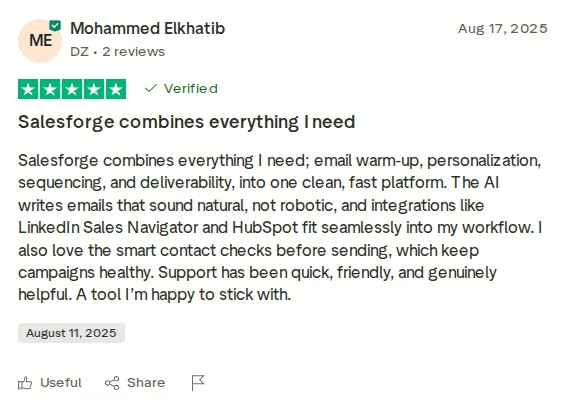
Here is a claim you can hold me to: at about 2,000 new leads a month, Agent Frank on annual billing plus Megaforge costs about $568/mo. That is less than a quarter of Common Room's $2,500/mo entry price, which includes no mailboxes, warm-up, or sequencing engine.
For proof that he books meetings, VAI Consulting got 3 calls from him within the first week after a pivot to a tighter ICP.

Frequently Asked Questions About Agent Frank, Unify GTM, and Common Room
Is Agent Frank better than Unify GTM and Common Room?
For SMB and mid-market teams that want outbound done for them, yes. Agent Frank prospects, writes, follows up by email and LinkedIn, and books meetings from $499/mo billed annually.
Unify GTM drafts lists and sequences for reps, who still send LinkedIn steps by hand. Common Room finds in-market buyers from $2,500/mo billed annually but runs multi-step sequences through another tool. Common Room is the stronger pick if first-party product and community signals drive your pipeline.
What's the main difference between Unify GTM and Common Room?
Unify GTM helps reps run outbound, while Common Room helps them find and rank the right buyers. Unify's agents build lists, enrich contacts, and draft multichannel sequences, and Unify sends the email steps, from a Free plan or $20/seat/mo.
Common Room ties product, website, CRM, and community signals to real people. It then drafts messages that reps send one at a time or push into sequences in tools like Outreach. It starts at $2,500/mo billed annually.
Which is cheaper: Agent Frank, Unify GTM, or Common Room?
Unify GTM has the lowest entry price, with a Free plan and Unify Base at $20/seat/mo, but a rep still runs it. Agent Frank costs $499/mo billed annually or $599/mo billed quarterly, and he does the outreach himself; Megaforge mailboxes start at $69/mo. Common Room is the most expensive, with Common Room Essential at $2,500/mo billed annually and no mailboxes or sequencing engine included.
Can Unify GTM or Common Room send LinkedIn messages automatically?
No: Unify's help center says it can't automate LinkedIn messages or connection requests, so reps send them from a task list. Common Room tracks LinkedIn page engagement as a signal, and I found no automated LinkedIn sending on its site. Agent Frank runs LinkedIn steps in the same sequence as email, with unlimited LinkedIn senders, and handles every reply in Primebox™.
Who owns Common Room now?
Zoom owns Common Room. It announced a definitive agreement to acquire the company on July 2, 2026, and its own blog says the deal closed that month.
Common Room now serves as the buyer intelligence layer for Zoom Revenue Accelerator, and its site also sells tools like Engage. Its own plans still start at $2,500/mo billed annually.
Can I switch from Unify GTM or Common Room to Agent Frank easily?
Yes, but plan for about two weeks. Agent Frank starts with a demo, then your Account Manager helps you set up a free Salesforge workspace, a Knowledge Base, and infrastructure.
New mailboxes need a 2-week warm-up on Warmforge before he sends. After that, you can upload your own contact lists or let him prospect continuously from 500M+ contacts.
Which tool has better email deliverability?
Agent Frank has the most built in. Every new mailbox gets a free 2-week warm-up on Warmforge, and Megaforge spreads sending across Gmail, Outlook, Mailforge, and Infraforge mailboxes, from $69/mo for 20.
Unify GTM offers managed mailboxes, warm-up, and bounce checks only on Unify Business. Common Room offers no mailboxes or warm-up, so deliverability depends on the mailbox or tool your reps send from.
Does Agent Frank offer a free trial?
No: Agent Frank is only available after a demo with the Salesforge team, and there is no self-serve trial. Salesforge itself, where your own reps can run outreach, has a 14-day free trial.
Unify GTM offers a Free plan and a 14-day Unify Pro trial with no credit card required. Common Room's pricing page lists no trial and asks you to request a demo.
Who are Unify GTM and Common Room best for?
Unify GTM fits reps and small sales teams who want to prospect and write faster themselves, starting free or at $20 a seat. Common Room fits mid-market and enterprise teams with rich product, website, and community signals, and a budget of $30,000+ a year.
Teams that want outbound run for them, not just sped up, are a better fit for Agent Frank.
.jpg)

.jpg)

.jpg)
