
Personalized Outbound Strategy
Get The Right Outbound Strategy In Minutes
Enter your email to get a custom plan & stack recommendation for your business
It's being carefully crafted by AI
Please check your mailbox in 5 minutes

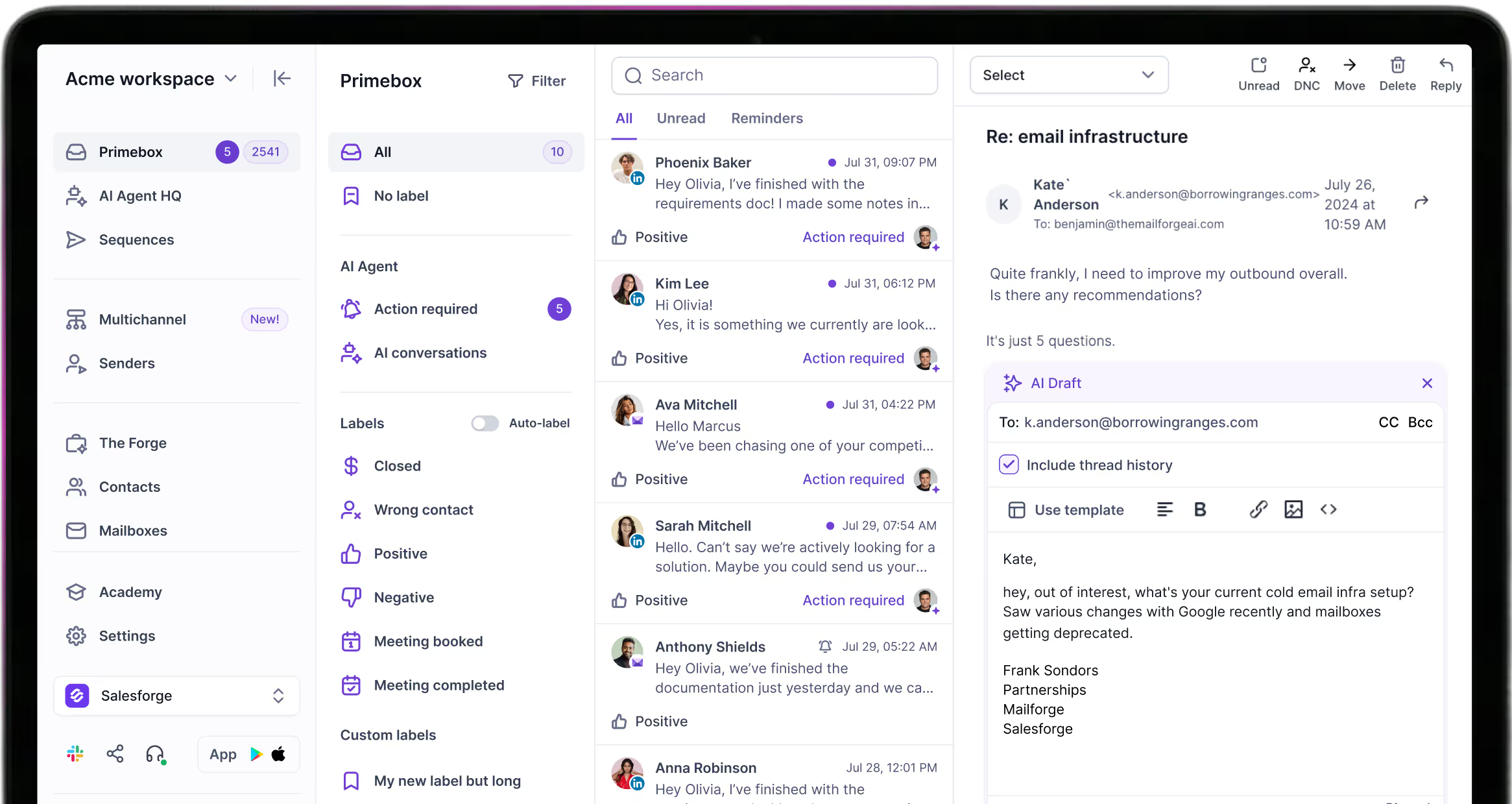
For a thorough understanding of what each option offers, a simplified comparison table isn't enough to grasp all intricacies that come with each tool, so let's dive deeper into what makes Unify GTM and Salesforge's Agent Frank unique.
The message is operational simplicity: hire an AI agent to augment sales reps, reduce overhead compared to traditional SDR hires, and let your revenue team focus on closing while Agent Frank drives outreach and meeting bookings.
Unify emphasizes orchestrating outbound workflows so marketing, sales and RevOps can act on intent signals together and attribute pipeline accurately across sales marketing teams.
Both are AI agents in the sense of AI-powered automation:
Agent Frank provides flexible pricing oriented around outreach scale. Pricing is charged by Active Contacts (the number of prospects the Agent is processing at any given time), and annual billing includes 2 months free. There is no free trial and demos are required before purchase.
Note that infrastructure to process those contacts via email is not included in this base price. Recommended infrastructure options include:
The Forge team will help set up the mailboxes and the Mailforge (shared IP) and Primeforge (Gmail and Outlook) email infrastructure options are also available. Additionally, teams can connect their own mailboxes from other providers if desired.
Unify uses a credit-based pricing model, only annual billing, and bundles features by plan. Many plans are billed on an annual commitment and some line-items (credits, mailboxes, users) are sold as add-ons.
Unify’s core playbook revolves around intent data and signals: they highlight 25+ intent signals, AI Infinity Signals, web traffic, product usage and other data sources that help identify buyers at the right time.
It bundles B2B contact data, enrichment, and AI personalization into plays and sequencing so marketing teams and revenue teams can run personalized outbound informed by real-time signals.
That model is built to help teams capture and act on intent - in other words, turn intent data into outreach.
Agent Frank offers intent data while focusing on multi-source hyper-personalization that is directly tied to message crafting:
And many more... All of this feeds Agent Frank’s personalization so each outreach is prospect-aware and brand-aligned.
Agent Frank’s approach is pragmatic: rather than underwriting dozens of intent feeds, it uses the knowledge base you provide and signals to create personalized outbound at scale without chaining multiple disparate data providers.
Unify documents deliverability as part of engagement tooling and lists deliverability as one of its action components - their core emphasis is on sequencing, plays, and AI personalization tied to intent, less so on avoiding spam folders.
Unify orchestrates outreach at the platform level and leverages contact data and plays to improve send quality and reply rates. Otherwise, they rely on standard email warm-up on actually landing in the primary inbox.
But if your company prefers deliverability and infrastructure capabilities from a vendor that offers multi-ESP fallback and premium warm-up as part of an integrated product...
Deliverability is the linchpin of cold outreach success - a brilliant sequence is worthless if emails land in spam - and this is one area where Agent Frank intentionally differentiates itself.
And more. Building sender reputation gradually while spreading volume across addresses and IPs to avoid single-mailbox throttles or sudden reputation hits is crucial for a scaling business. And that's paired with proprietary infrastructure options:
Those infrastructure features reduce the risk of landing in spam and make multi-channel outreach more reliable, especially when you have a leads database and want to integrate email at scale.
For sales teams or lead generation agencies focused on large scale operations and high-volume cold outreach, the difference matters. Agent Frank’s model minimizes the operational burden of maintaining email metrics, domain health, and warm-up cycles so teams can scale sends across many mailboxes with less risk.
Enter your email to get a custom plan & stack recommendation for your business
Please check your mailbox in 5 minutes
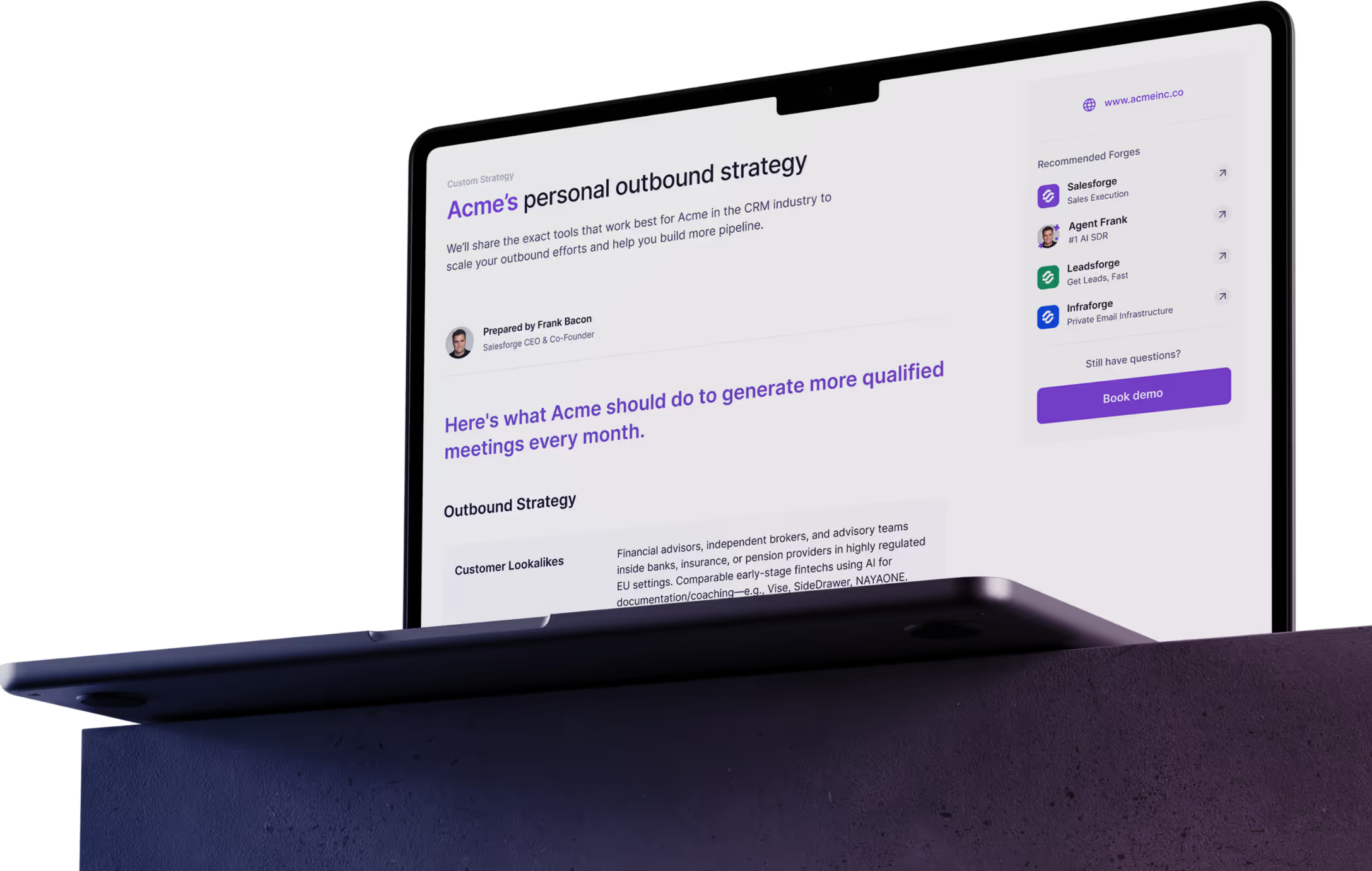
Unify’s "plays" concept is central: orchestrate outbound workflows, blend human touch with automation, and monitor play-specific dashboards and analytics.
It’s an end-to-end approach to automated outreach where plays connect signals to action - useful for growth teams that want a system to run multi-step, multi-channel campaigns and iterate based on leading and lagging indicators.
Agent Frank, on the other hand, offers two operative modes:
This is an important distinction.
Unify’s plays are orchestration-first, enabling sequence-level control across channels, while Agent Frank’s autonomy is agent-first, enabling teams to offload the repetitive outreach work and let a single AI SDR keep a prospect pipeline full without constant sequence orchestration from humans.
For sales organizations where the goal is to minimize the manual lift on outreach, Agent Frank’s autonomy and reliance on a well-defined knowledge base are practical advantages.
When picking a tool to drive pipeline at the company level, support and learning resources aren’t just comforts. They determine how fast new hires ramp, how well revenue teams capture intent signals, and whether your sales organization can turn intent data into meetings without months of engineering work.
Unify’s resource surface consists of:
Alongside playbooks and analytics that help marketing teams, growth teams and RevOps translate signals into automated plays, and an email support channel in case issues arise nonetheless.
Salesforge's approach reduces the manual tasks sales teams often struggle with - no separate deliverability vendor, fewer manual data entry steps, and a partner focused on ironing out initial list hygiene and infrastructure.
Besides that, Agent Frank customers also get:
For growing sales teams and lead generation agencies that prefer to shift heavy operational overhead away from internal staff, Agent Frank’s model is a strong fit.
They offload the manual tasks that consume SDR time and let reps focus on higher-value activities like closing deals and handling qualified leads.
Both Agent Frank and Unify are modern tools for AI-enhanced outbound, but they answer different buyer questions.
It’s especially attractive to smaller sales organizations, early-stage growth teams that want to avoid hiring multiple SDRs, or companies that prefer one system for prospecting, enrichment, sequences and mailbox infrastructure.
The dedicated account manager, Auto-Pilot mode, 20+ languages and the Forge Stack’s infrastructure options are practical features for teams that want a fast, pragmatic path to pipeline.
That also makes it a particularly strong fit for teams that want to capture prospects based on ICP, enrich data internally, and run personalized outbound without stitching together disparate data sources.
In short:
If you value reduced overhead, mailbox-level pricing transparency, and an integrated infra stack that captures deliverability as part of the product experience, Agent Frank is the secret weapon for growth teams that want to move fast and scale outreach without adding headcount.
Still doubtful? Let Agent Frank's results speak for themselves

Agent Frank ingests intent signals and applies sales intelligence so marketing and growth teams can push timely, personalized engagement to potential buyers. Unlike pure research platforms, it turns signals into warm outbound sequences, AI-written messages, and follow-ups that fit your go-to-market plays. The platform helps teams research prospects, prioritize high-value segments, and expand outreach so your message reaches the right person at the right time.
Yes - Agent Frank integrates with CRM data and complements existing AI tools to keep contact records, phone numbers, and activity synced. That bi-directional flow helps revenue teams automate lead handoffs, track meetings, and run warm outbound campaigns without manual data entry. The result: cleaner CRM data, faster follow-ups, and less friction between sales and sales marketing ops.
In week one you’ll typically see setup, knowledge base ingestion, and pilot sends; early wins come from optimized messaging and quick A/B testing. Agent Frank calibrates tonal options and personalization sources so the platform delivers the right message to potential customers faster. Measurable growth and revenue depend on ICP fit and cadence, but many teams report faster meeting bookings once sequences warm up.
Agent Frank frees SDRs from repetitive tasks so the revenue team's creativity can focus on strategy and closing. Teams can share ideas, tweak messaging, and iterate playbooks with a Dedicated Account Manager. For companies backed by existing investors (Emergence Capital appears in industry commentary), Agent Frank offers a scalable, cost-effective path to expand outreach, preserve brand voice, and accelerate pipeline without hiring many new reps.
Choose Agent Frank when you want an autonomous AI agent that executes outreach, handles deliverability, and books meetings with minimal orchestration. If your priority is platform-driven research, multi-signal plays and heavy intent modeling, Unify or research-heavy platforms may fit. If your goal is to expand quickly, centralize sales marketing execution, and convert potential customers through personalized engagement and pragmatic automation, Agent Frank is the faster, operationally lean option.