Before you pick a LinkedIn AI tool, you need to know what job you need it to do.
LinkedIn AI tools cover four different jobs:
Buying the wrong category wastes budget.
The four jobs run on different tools.
A tool that that goes deep in one category rarely goes deep in the others, , so every tool I cover here specializes in one of the four.
When someone asks me for "the best LinkedIn AI tool," they almost always mean outreach.
They want to book more meetings from cold LinkedIn outbound, with less manual grind and lower account risk. Fair, because outreach is what most teams buy first in this category.
But sourcing, content, and engagement matter too, and a specialist tool for each beats one tool trying to do everything.
I've mapped the 8 tools below across the four jobs.
Let's jump in!
| Tool | Best For | What It Helps With |
|---|---|---|
|
Salesforge
Best Overall
|
AI-personalized multichannel outreach | LinkedIn and email sequences, AI personalization, and reply management in Primebox |
| Leadsforge | LinkedIn profile and follower sourcing | Finding verified LinkedIn profiles, competitor followers, event signals, and contact data across 500M+ contacts |
| Clay | AI prospect research and enrichment | Researching LinkedIn prospects and adding account context via Claygent |
| Expandi | LinkedIn outreach workflows | Connection requests, messages, follow-ups, and smart conditional campaigns |
| Supergrow | LinkedIn content and employee advocacy | Voice-matched AI drafts from interviews, team approvals and analytics, and AI comments on prospect posts |
| Taplio | LinkedIn content creation | Post ideas, AI writing, scheduling, and viral post research |
| Kleo | LinkedIn personal branding | Post research, idea generation, and voice-memory AI writing |
| Engage AI | LinkedIn engagement | Drafting contextual comments and monitoring prospect posts |
I've been in and out of these products across the last 18 months, and this year I ran a structured re-test against the criteria below.
I put every tool through at least two weeks of real use on a live LinkedIn profile or sequence.
I pulled pricing from live vendor pricing pages in the week of August 2026, and I verified every rating against live G2 page.
The question I asked myself: does the AI operate on data specific to the prospect, or does it run a general template with variables?
Tools that pulled from a prospect's post history, a recent job change, a funding round, or a trained voice model scored high; tools that swapped {{first_name}} into a generic message scored low.
LinkedIn behaves differently from cold email in every way: rate limits, action types, conversation threading, viewership rules.
I checked whether each tool supported the six native LinkedIn actions (connection request, message to 1st connection, InMail, post like, follow, withdraw request) and marked down tools that faked them through browser scraping.
LinkedIn account safety is non-negotiable in 2026.
Tools that published via LinkedIn's official API or ran on cloud infrastructure with dedicated IPs scored higher than tools that scraped or automated the browser, and the safest third-party automation tools stay within LinkedIn's guidelines.
The listed price is rarely the real price. I looked at:
Every price on this page is annualized so the comparison stays honest.
I pulled live ratings from G2 (product review pages) along with review counts and real user quotes covering both positive and critical sentiment.
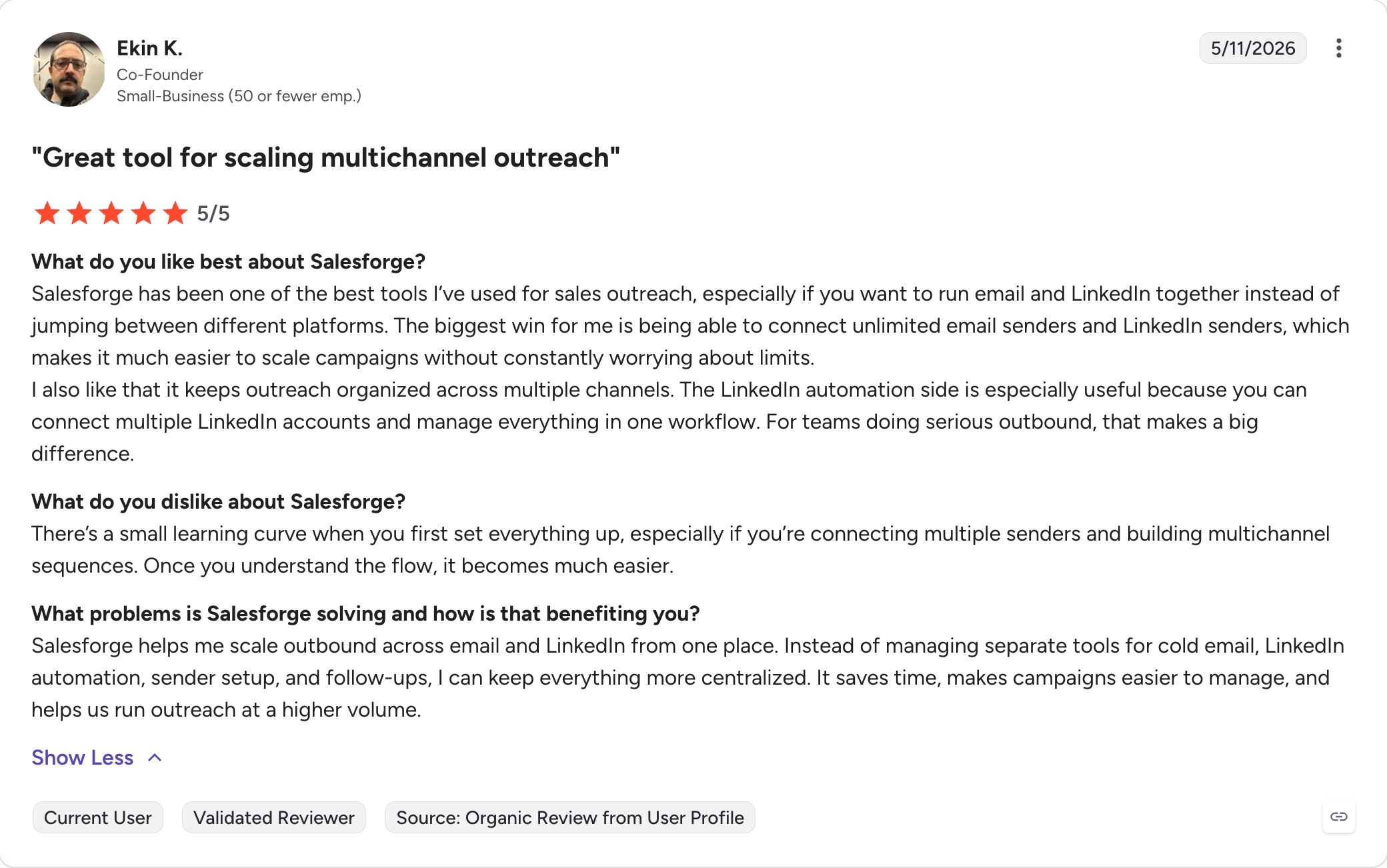
Best fit: B2B sales teams, GTM teams, and agencies running LinkedIn and email together at high-sending volume, who want unified AI personalization and one reply inbox rather than a stack of point tools.

Salesforge is the only tool on this list that treats LinkedIn and email as one workflow with safety instead of two separate channels stitched together.
Salesforge tops this list because it ticks every box that matters for LinkedIn outreach.
AI features: prospect-specific personalization across 21+ languages plus the Localized Greeting variable.
Account safety: cloud infrastructure, rate-limited native LinkedIn actions, no Chrome-extension workarounds.
Pricing: $40/mo Pro or $80/mo Growth (billed annually), with unlimited mailboxes and unlimited LinkedIn senders on Growth.
Note on the Forge Stack: Salesforge shares one login with Leadsforge, Warmforge, Mailforge, Infraforge, and Primeforge, but each product is a separate subscription.
The Chrome extension is Salesforge-branded, and lookups run on Leadsforge credits.
| ✅ Pros | ❌ Cons |
|---|---|
| Unlimited sending addresses and mailboxes on every paid plan. | No free plan; only a 14-day free trial is available. |
| Native multichannel sequences with conditional branching across email and LinkedIn. | LinkedIn automation requires a browser extension, making it less reliable than fully server-side automation. |
| Supports 21+ languages with the Localized Greeting variable for personalized outreach. | No built-in contact database, so prospect data must come from an external source. |
| Primebox unified inbox with Co-Pilot and Auto-Pilot modes simplifies reply management. | No free contact credits or lead enrichment included with the platform. |
| Unlimited email warm-up through Warmforge is included at no extra cost. | MCP and CLI workflows are powerful but mainly benefit technical teams using AI agents. |
| MCP and CLI support enable AI-agent workflows and automation. | Advanced automation features have a steeper learning curve than traditional cold email tools. |
| Plan | Price | Includes |
|---|---|---|
| Pro | $40/month (billed annually) |
1,000 active contacts, 5,000 emails/month, 1 LinkedIn sender, unlimited mailboxes, and unlimited email warm-up. |
| Growth | $80/month (billed annually) |
10,000 active contacts, 50,000 emails/month, unlimited LinkedIn senders, unlimited users, and unlimited shared workspaces. |
| Agent Frank | $499/month (billed annually) |
Fully autonomous AI SDR for prospecting, outreach, and follow-ups, plus a dedicated Account Manager. |
Every plan includes unlimited warm-up, mailbox rotation, dynamic ESP matching, email validation, and Primebox. 14-day free trial, no credit card required.
Verified G2 rating: 4.6/5 across 130+ reviews on the sellers page.
Best fit: SDRs, founders, and small outbound teams who want fast, chat-based prospecting on a real budget.
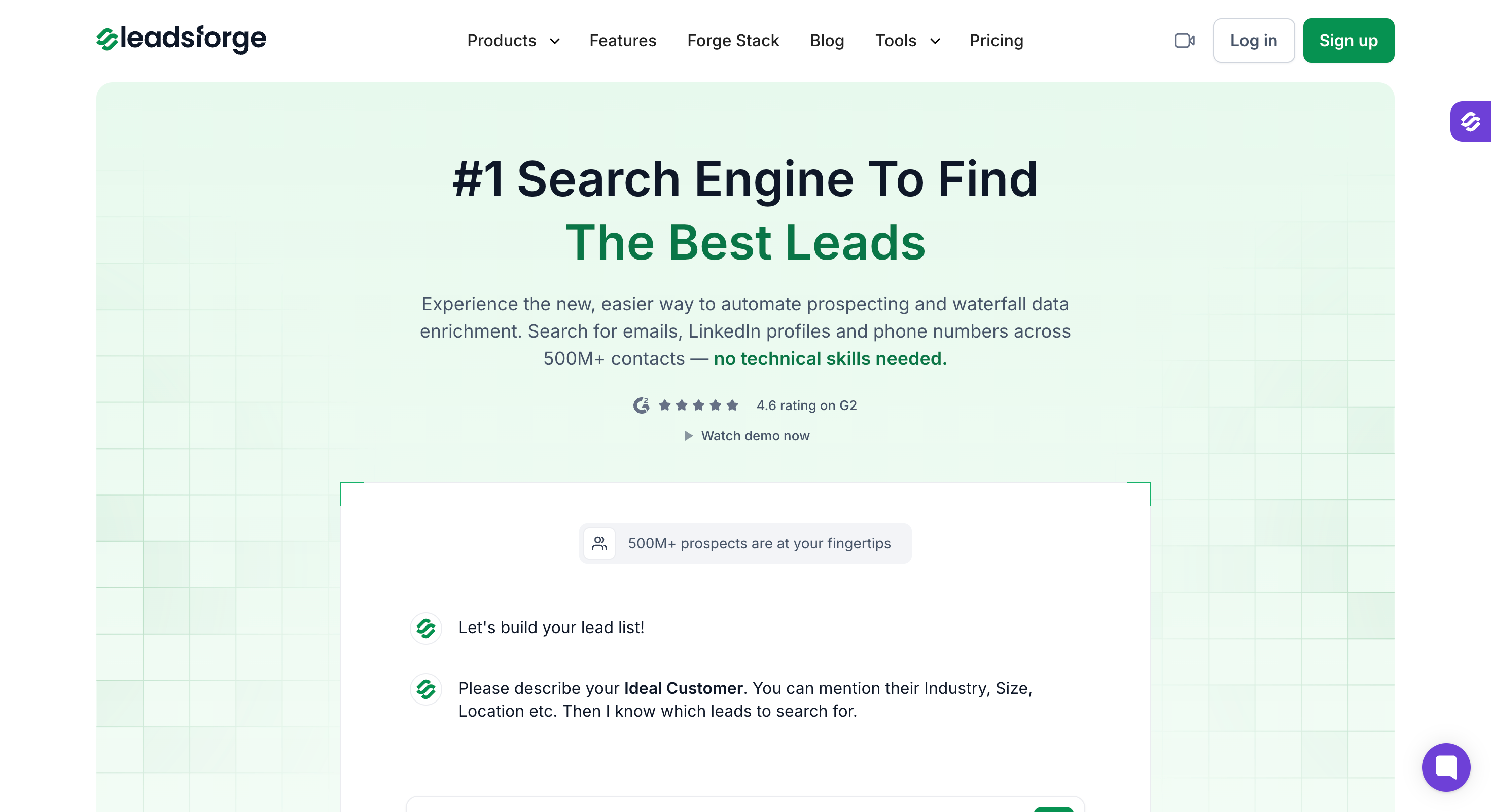
Leadsforge is a chat-based B2B lead search engine sitting on top of a 500M+ contact database.
It lets you describe your buyer in a sentence and Leadsforge translates it into the underlying filters (job title, seniority, industry, headcount, revenue band, geography, keyword), then returns matching contacts with their LinkedIn URLs, verified emails, and mobile numbers across a 500M+ B2B database.
The differentiator is how many angles you can source LinkedIn profiles from.
Lists push directly into Salesforge under the same Forge login, so there's no CSV export step between sourcing and outreach.
Credit costs: 1 email = 1 credit; 1 LinkedIn profile URL = 1 credit; 1 mobile number = 10 credits; 1 competitor follower + LinkedIn URL = 1 credit; 1 company lookalike = 1 credit.
| ✅ Pros | ❌ Cons |
|---|---|
| Chat-based ICP search across a database of 500M+ contacts. | No free plan, although new users receive 100 free credits on their first signup. |
| Competitor Followers Search helps identify prospects using competitor audiences as an intent signal. | Works best alongside Salesforge, so it is less valuable as a standalone prospecting platform. |
| Event-based Signals cover job changes, acquisitions, funding rounds, hiring activity, and investor updates. | No built-in sequencing or outreach features without Salesforge. |
| Waterfall enrichment combines multiple data providers to improve contact coverage and accuracy. | Credits are consumed for enrichment, so heavy usage can increase monthly costs. |
| One-click push to Salesforge under a single Forge login creates a seamless prospecting-to-outreach workflow. | Primarily designed for outbound prospecting rather than full CRM or sales engagement management. |
| Plan | Price | Credits Included |
|---|---|---|
| Essential (Monthly) | $49/month | 2,000 credits per month. |
| Essential (Annual) | $588/year (billed annually) |
28,000 credits granted upfront for the year. |
| Add-on Credit Packs | Tiered pricing from $0 | Purchase additional credit packs ranging from 2,000 to 200,000+ credits. |
Annual billing saves over 14% and grants credits upfront. Credits never expire. 100 free credits on signup, no credit card required.
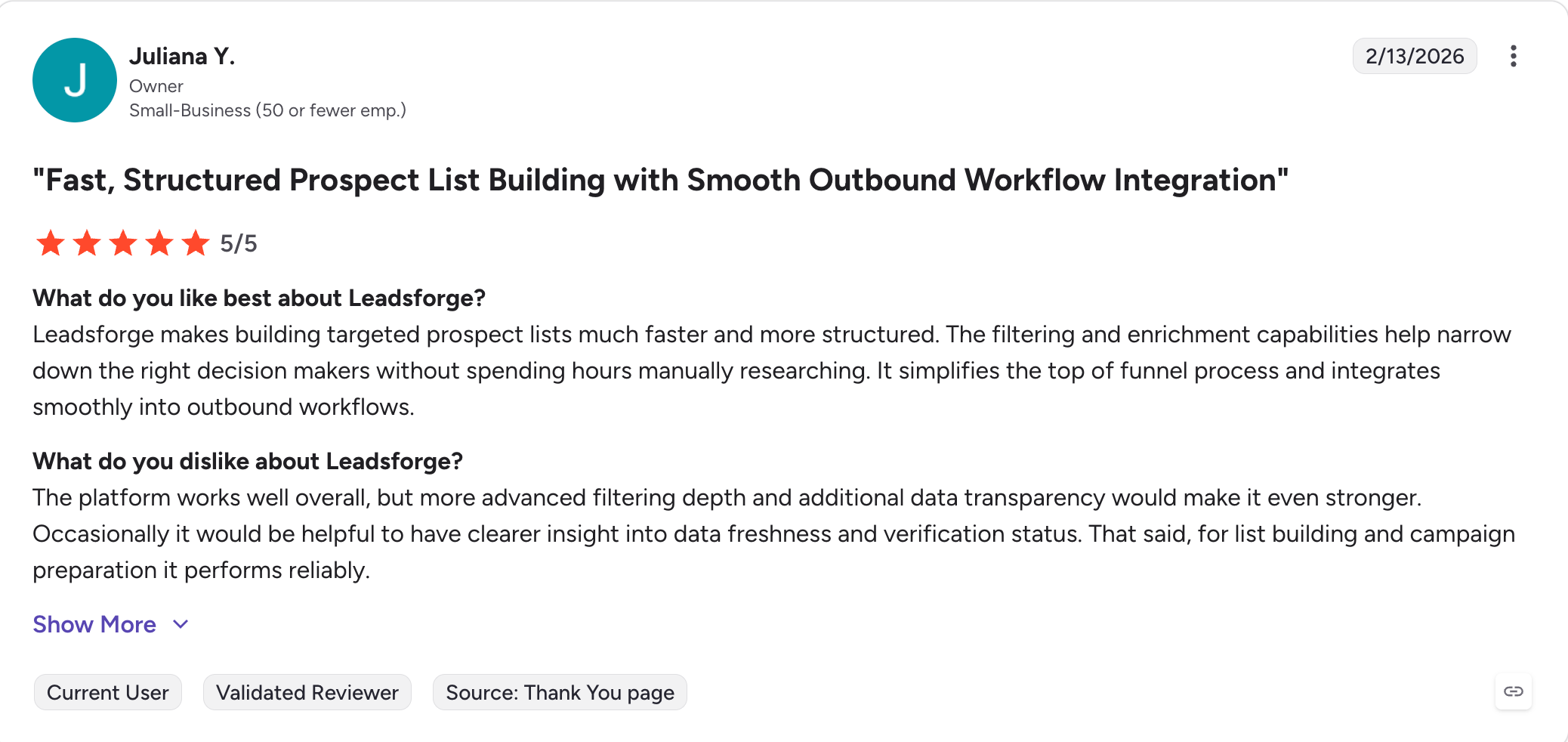
Verified G2 rating: 4.5/5 across 18 reviews.
Best fit: Technical RevOps and GTM teams (and growth-minded solo operators willing to climb the learning curve) who want a customizable enrichment and AI-research layer sitting on top of LinkedIn Sales Navigator, not a plug-and-play SDR tool.
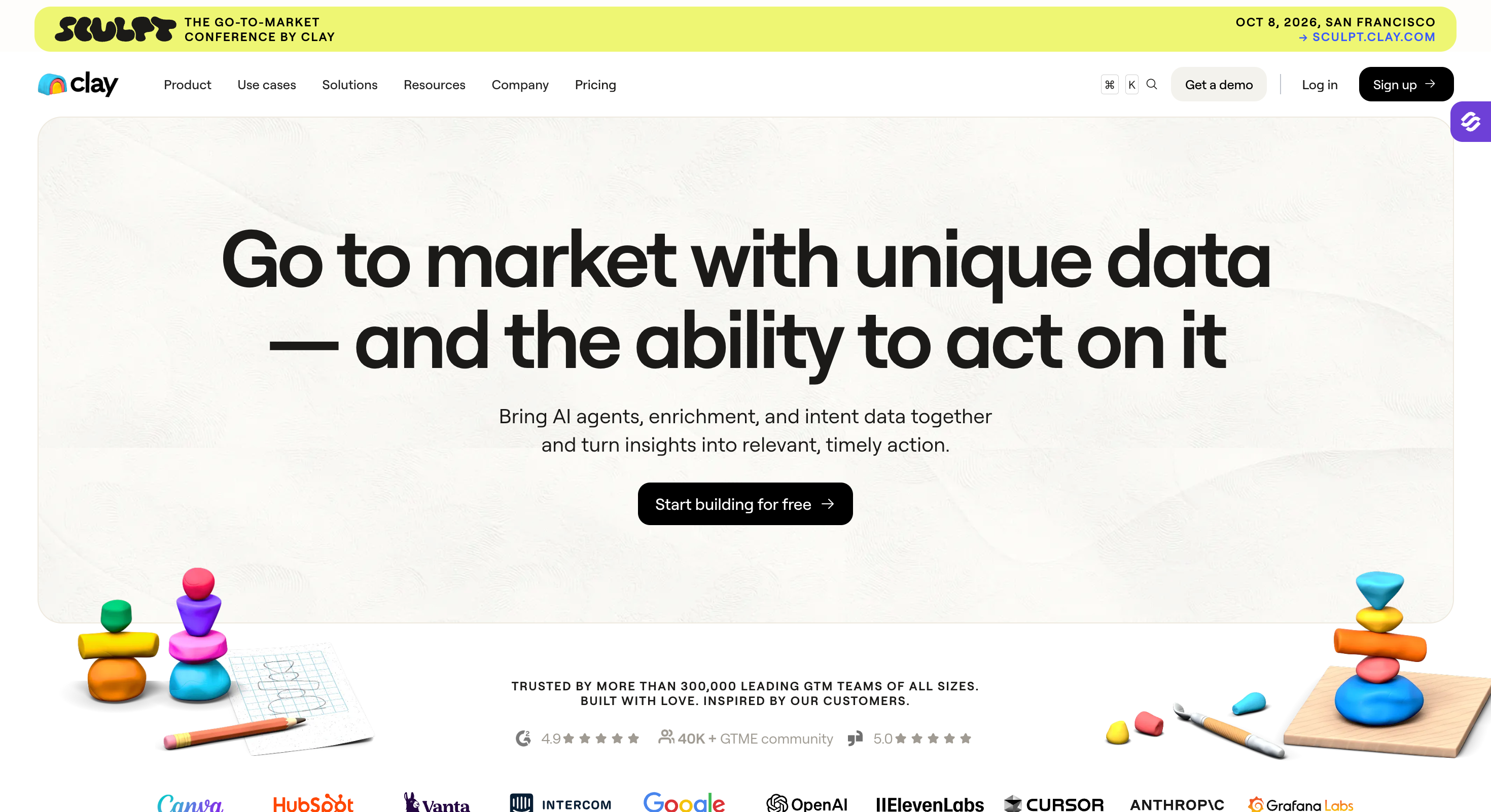
Clay is the tool I reach for when the outreach engine isn't the problem, the data quality is.
It's a spreadsheet-shaped enrichment layer that runs waterfall lookups across 150+ data providers and drives an AI research agent called Claygent that visits live LinkedIn profiles, career pages, and news to write personalized first lines at scale.
The upside is control and depth. The downside is that Clay is the least beginner-friendly tool on this list, and every failed lookup on smaller plans still burns credits.
Clay overhauled its pricing on March 11, 2026, replacing the old Starter/Explorer/Pro tiers with Free/Launch/Growth/Enterprise and splitting usage into Data Credits (marketplace data) and Actions (workflow steps).
| ✅ Pros | ❌ Cons |
|---|---|
| Waterfall enrichment across more than 150 data providers improves coverage. | Steep learning curve that makes it difficult for new users to become productive quickly. |
| Claygent AI research agent generates personalized first lines and prospect research. | Can become expensive at scale, especially for smaller teams. |
| Works seamlessly with Sales Navigator through its Chrome extension. | Failed enrichment lookups still consume credits on lower-tier plans. |
| Free plan available for testing and experimentation. | Phone and mobile number match rates are relatively weak at roughly 30–35%. |
| Custom signals platform tracks events such as job changes, funding rounds, and hiring activity. | Trustpilot reviews frequently mention credit usage concerns and AI API key issues. |
| Plan | Monthly | Annual | Notes |
|---|---|---|---|
| Free | $0 | $0 | 100 Data Credits and 500 Actions per month, with a 200-row table limit. |
| Launch | $185/month | $167/month (billed annually) |
Approximately 2,500 Data Credits and 15,000 Actions per month. |
| Growth | $495/month | $446/month (billed annually) |
Approximately 6,000 Data Credits and 40,000 Actions per month, plus CRM integrations. |
| Enterprise | Custom | Custom (annual commitment) |
Includes SSO, Snowflake integration, RBAC, and a median Vendr contract value of approximately $30,000 per year. |
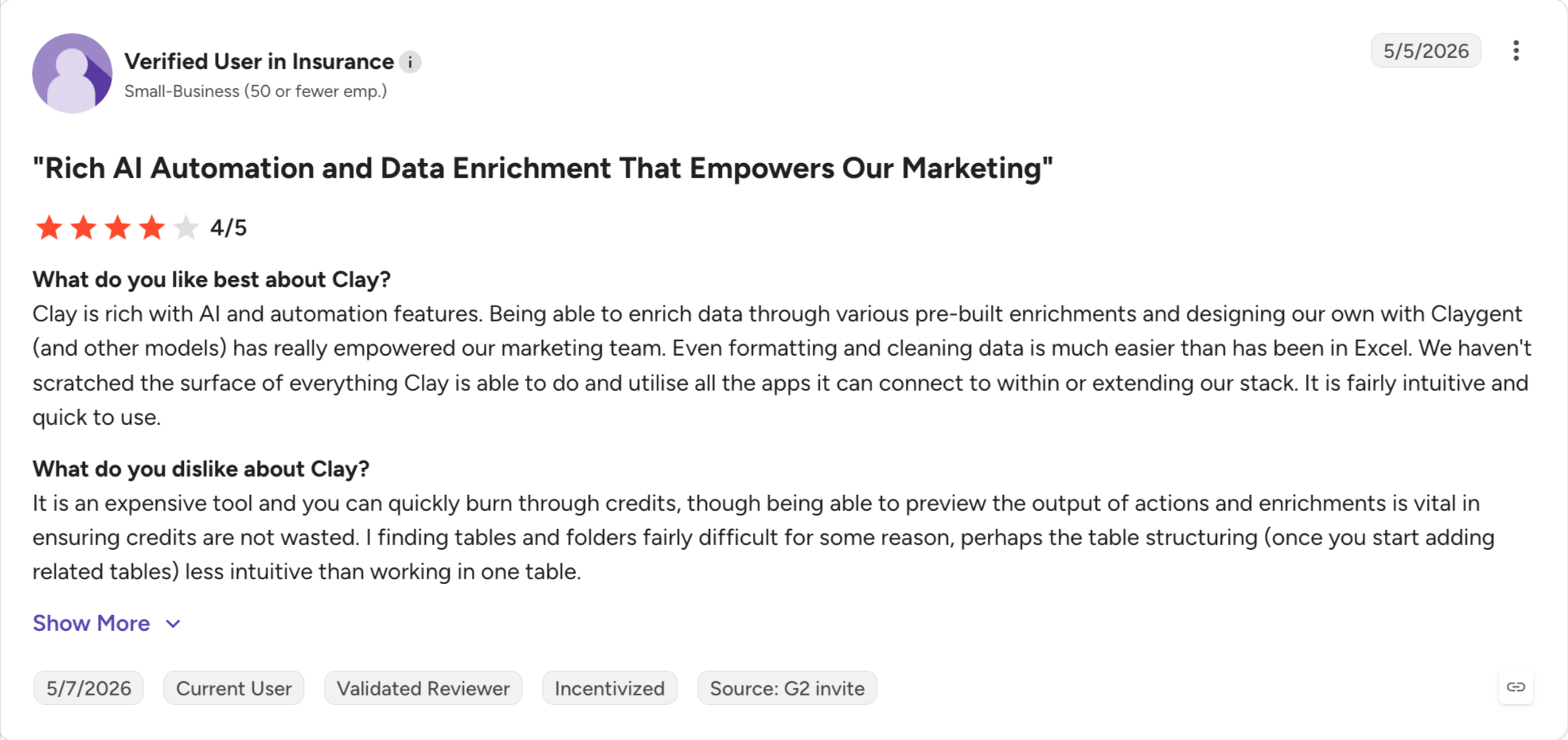
Verified G2 rating: 4.6/5 across 226 reviews.
Best fit: Solo operators and small teams (1 to 5 LinkedIn accounts) who want conditional multi-step LinkedIn sequences with dedicated-IP infrastructure and don't need a first-class email channel in the same tool.
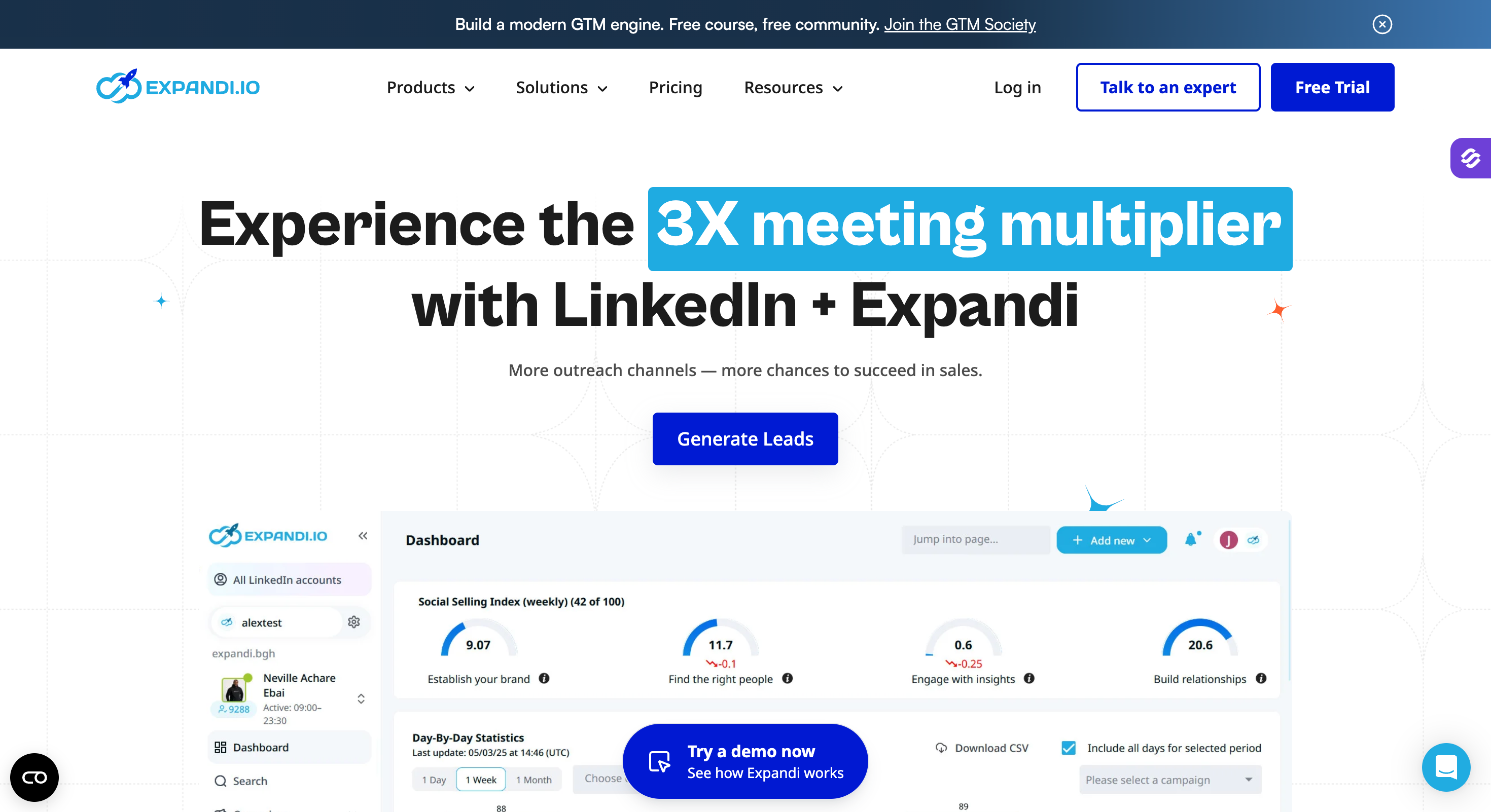
Expandi is the tool I recommend when someone asks for LinkedIn-only automation with the safest possible defaults.
Every account runs from a dedicated country-based IP address, which is closer to how a real human uses LinkedIn from a fixed location, and the campaign builder supports genuine conditional logic (if the prospect accepts, do X; if they don't reply in Y days, do Z).
It's cloud-based, not a Chrome extension, which removes one of the largest safety risk categories in this category.
That said, Expandi is LinkedIn-only. Email follow-ups exist, but the tool isn't built to run parallel email cadences the way Salesforge is.
If email is a meaningful channel for the team, this is a partial solution.
This kind of outreach automation is best for users who want a LinkedIn-only automation tool for sequencing rather than a standalone outreach tool.
| ✅ Pros | ❌ Cons |
|---|---|
| Dedicated country-based IP address for every LinkedIn account. | Primarily a LinkedIn automation platform; email is an add-on rather than a fully integrated channel. |
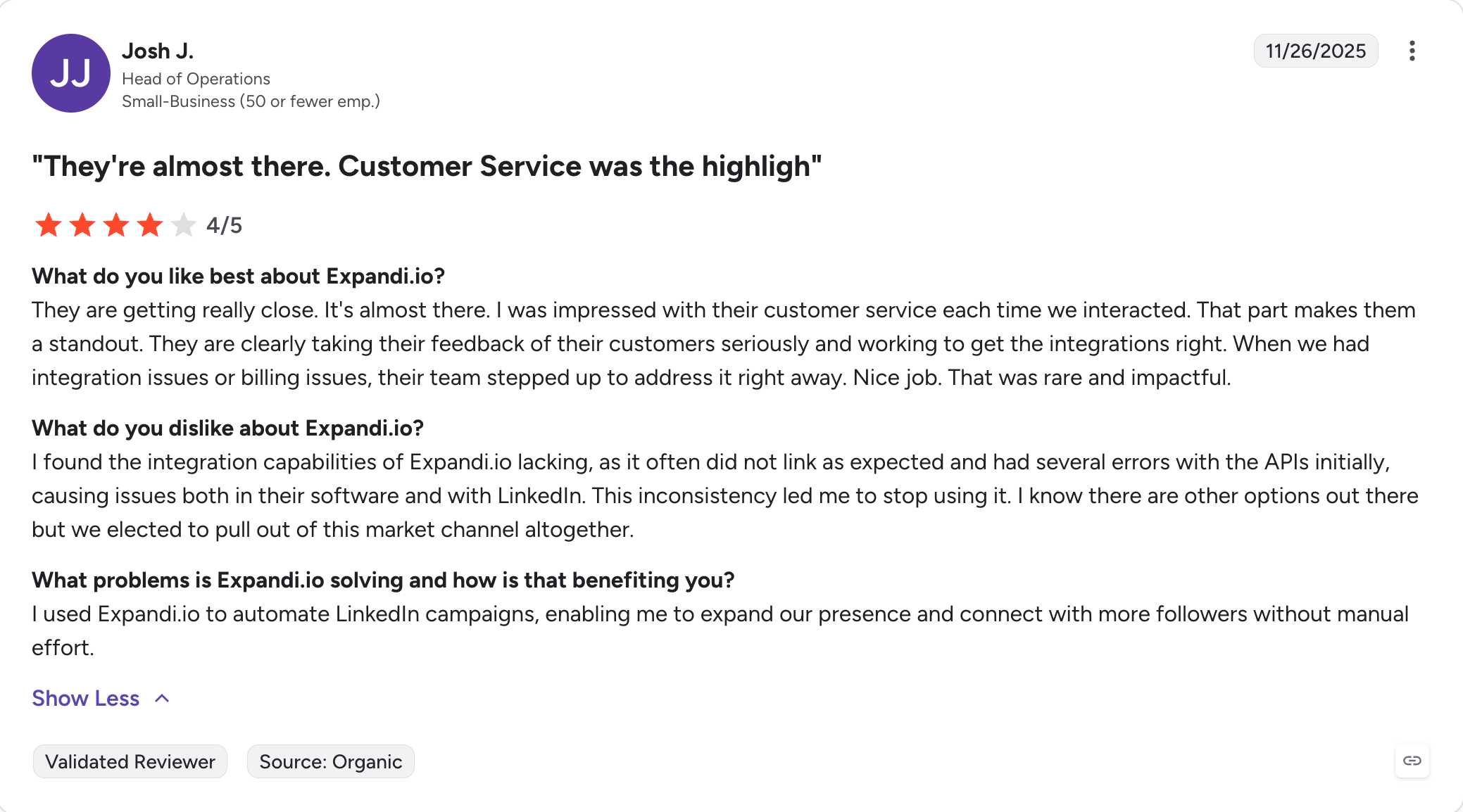
| Cloud-based architecture removes the need for a Chrome extension. | Reddit and G2 users still report LinkedIn account restrictions despite the platform's safety claims. |
| Supports true conditional logic within outreach sequences. | Expect a learning curve of around 3–4 hours before campaigns are configured properly. |
| Team workspaces make it suitable for agencies managing multiple clients. | Personalization tools such as Hyperise and Sendspark require additional paid subscriptions. |
| Multi-step campaigns with branching allow more advanced LinkedIn automation. | Billing and subscription management are recurring complaints in negative G2 reviews. |
| Plan | Price | Notes |
|---|---|---|
| Business | $99/month per LinkedIn account | Standard plan for individuals and small teams. Larger agency requirements are handled through custom plans. |
| Business (Annual) | $79/month per account (billed annually) |
Approximately 20% savings compared to monthly billing. |
| Agency | Custom pricing | Designed for agencies and teams managing 10+ LinkedIn accounts with centralized multi-account management. |
G2 rating in the 4.0 to 4.4/5 range across 120+ reviews.
Best fit: B2B founders, marketers, and teams who need employees posting original LinkedIn content consistently (not just resharing brand posts) and want a team layer that runs it at scale without becoming a full-time job.
Supergrow is the tool I reach for when the problem isn't scheduling. It's the blank page.
Taplio's full AI allowance sits behind the Pro plan at $149/mo (billed annually), and its drafts still need heavy editing to sound personal. Kleo trains on your voice well, but at $99/mo with no team plan it tops out at solo creators.
Supergrow is built for a different job: getting people who aren't writers to produce credible, original LinkedIn content in their own voice, whether that's one executive or twenty.
The AI runs on two features. PostCast walks each person through a 10 to 15 minute interview. They talk, and Supergrow returns 3 to 5 LinkedIn-ready drafts. Content DNA builds a voice profile per user so every AI-generated post sounds like them, not a template.
The Post Generator turns PDFs, videos, and articles into posts matched to that same profile. Everything publishes through LinkedIn's official API, so there's no Chrome extension or scraping in the loop.
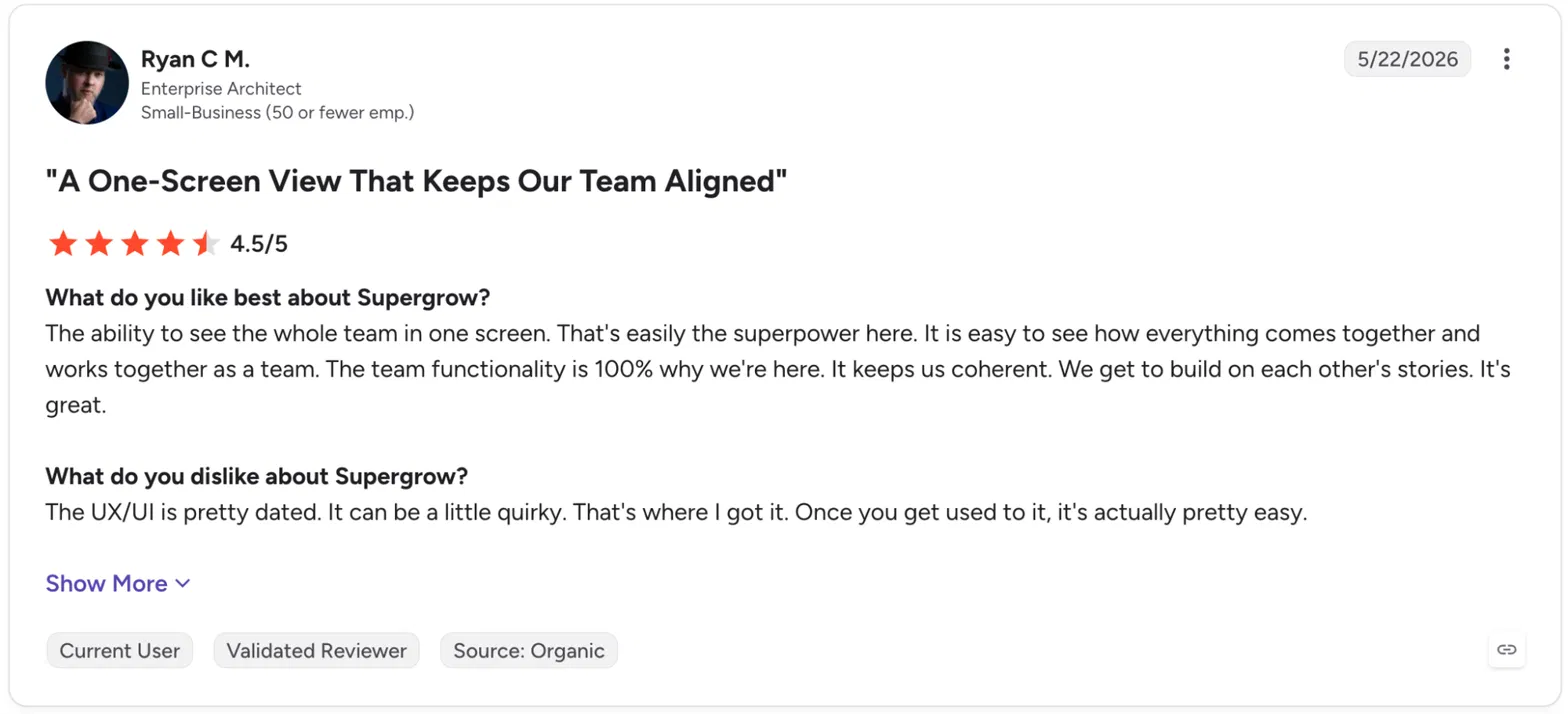
For teams, the Content Board moves drafts through approval workflows, Team Analytics shows which employees drive the most reach in real time, and Challenges keep participation alive after launch week.
Engage adds a Focus Mode for AI-drafted comments on prospect posts in each user's voice. That makes Supergrow the only tool on this list that pairs voice-matched writing, engagement, and a team layer in one plan.
| ✅ Pros | ❌ Cons |
|---|---|
| PostCast AI interviews are unlimited on every plan, with no credit caps or tier gating on content generation. | LinkedIn only, with no cross-platform publishing to X, Facebook, or other channels. |
| Content DNA makes every AI-generated post sound like the individual, not a shared template. | No built-in viral post library or research feed for inspiration (unlike Taplio's 4M+ post library). |
| Covers content creation and LinkedIn engagement (Engage) under one subscription. | Carousel design options are limited compared with dedicated design tools. |
| Official LinkedIn API partner. No Chrome extension and no browser scraping. | Pro covers one account only, and Teams starts at $199/month with 5 accounts, so teams of 2 to 4 pay for seats they may not use. |
| Team layer (Content Board, Team Analytics, Challenges) is built for marketing leads running employee advocacy, not just solo creators. | The 7-day trial is short for testing team features like approvals and challenges with real employees. |
| Plan | Monthly | Annual | Notes |
|---|---|---|---|
| Pro | $39/month | $31/month (billed annually) |
1 LinkedIn account. Includes Content DNA, unlimited PostCast, Engage, scheduling, carousel maker, and MCP. |
| Teams | $199/month | $189/month (billed annually) |
5 accounts included. Adds approval workflows, team analytics, challenges, leaderboards, and Slack notifications. |
| Enterprise | Custom | Custom | For organizations with more than 5 executives. Adds custom integrations, SLA, dedicated onboarding, and invoice billing. |
7-day free trial on every plan, no commitment.
G2 rating currently sits at 4.8/5.
Best fit: Founders, sales leaders, and creators building a LinkedIn personal brand who want a broad content platform (library, writer, scheduler, analytics, light lead gen) in one tool and can either pay for the Pro tier or accept editing time on cheaper plans.
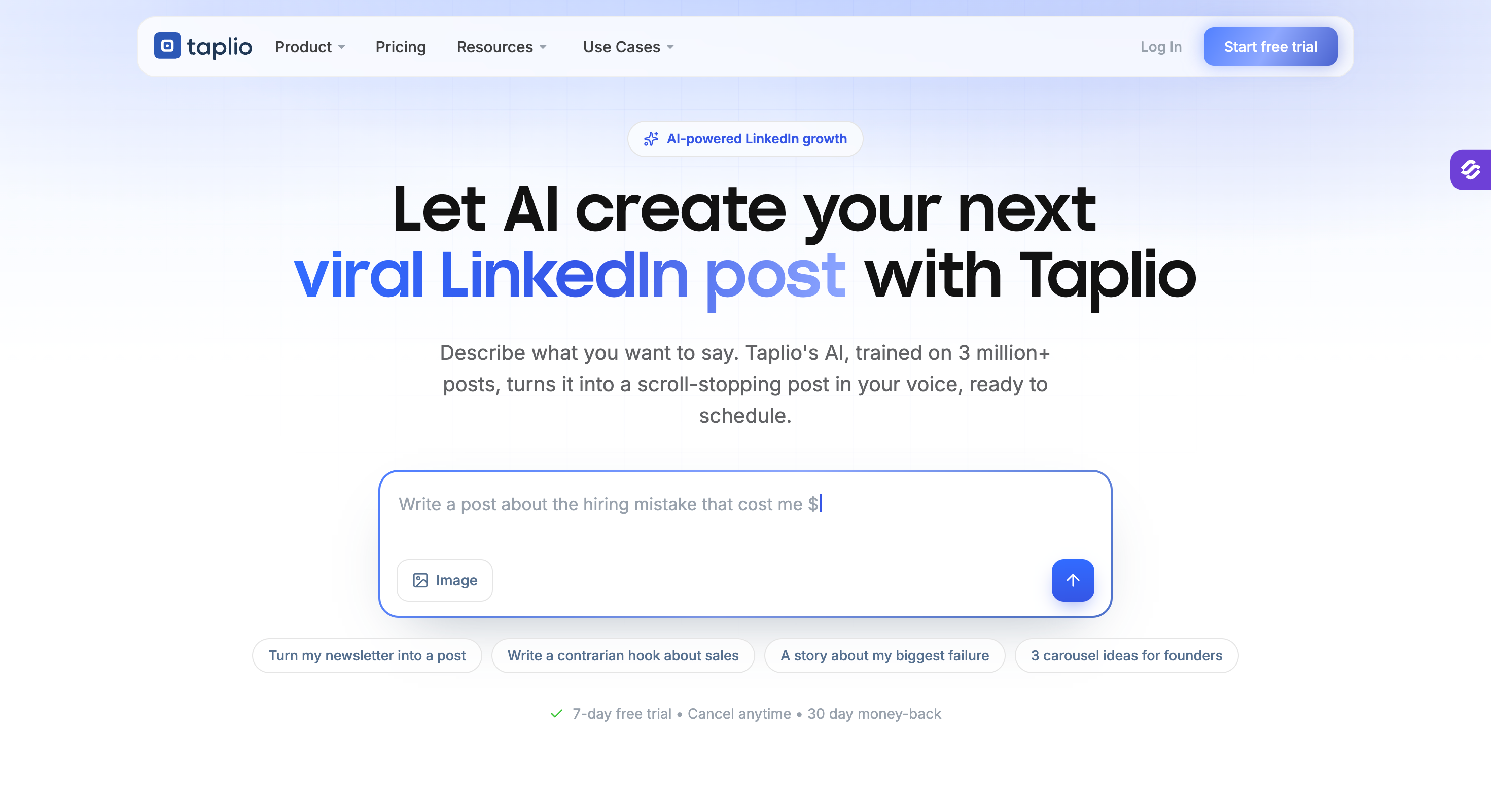
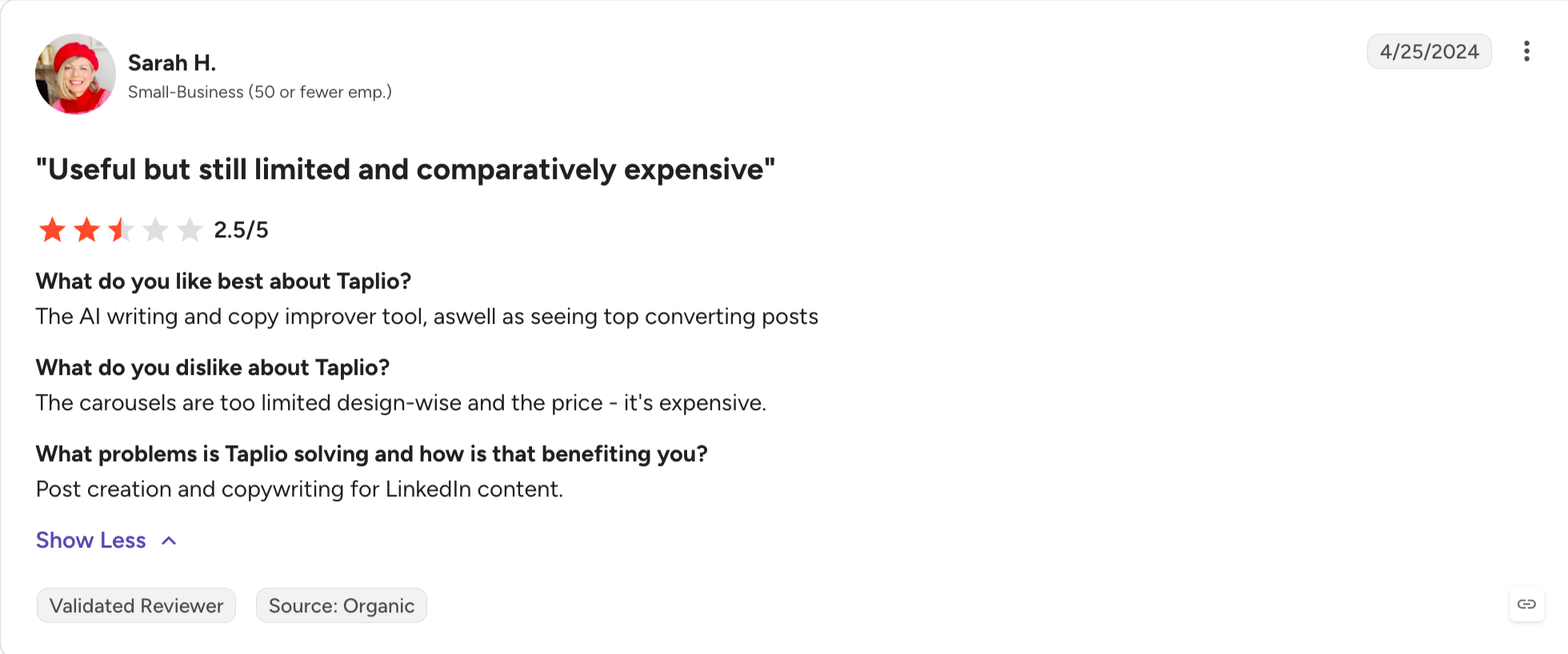
Taplio is the biggest content platform on LinkedIn by name recognition.
That's because it has a viral post library of roughly 4 million LinkedIn posts, an AI writer that trains on user-selected style inputs, a full scheduler, and a lead-generation module.
If the goal is to run a personal-brand engine and a light lead-gen motion from the same tool, Taplio covers more ground than any other single product in the content lane.
The problem is what's included at each tier. Taplio's entry plan doesn't include the AI writer at all; the mid tier caps AI credits at 250 a month, and the full 5,000-credit allowance is only on Pro at $149/mo (billed annually).
That's worth naming before anyone signs up expecting the demo experience at the starter price.
Video content on LinkedIn grew by 36% year-over-year, which makes multi-format content support more valuable.
| ✅ Pros | ❌ Cons |
|---|---|
| Access to a library of more than 4 million viral LinkedIn posts for content research and inspiration. | AI features are not included in the entry-level Analytics plan. |
| Comprehensive toolkit including AI writing, carousel creation, scheduling, analytics, and lead generation. | The full AI allowance (5,000 credits/month) is only on the Pro plan at $149/month (billed annually). |
| Chrome extension integrates Taplio directly into the LinkedIn interface. | AI-generated content often feels generic without significant voice training and editing. |
| Built-in carousel generator simplifies creating LinkedIn carousel posts. | Trustpilot ratings trail G2, with recurring complaints about billing and cancellations. |
| Strong content analytics for tracking post performance and audience engagement. | Because it relies on a Chrome extension, it carries some LinkedIn compliance risk. |
| Plan | Monthly | Annual | Notes |
|---|---|---|---|
| Starter | $39/month | ~$32/month (billed annually) |
Scheduling and analytics only. No AI content generation. |
| Growth | $69/month | ~$49/month (billed annually) |
Includes AI writing, 250 AI credits per month, and automated direct messages. |
| Pro | $199/month | ~$149/month (billed annually) |
Includes 5,000 AI credits per month, auto-DMs, and automatic connection requests. |
G2 rating currently sits at 3.9/5.
Best fit: Solo personal-brand creators posting 3 to 5 times per week who specifically want voice-memory AI plus a live creator-coaching community, and who can justify a premium price for the ecosystem rather than just the writing tool.
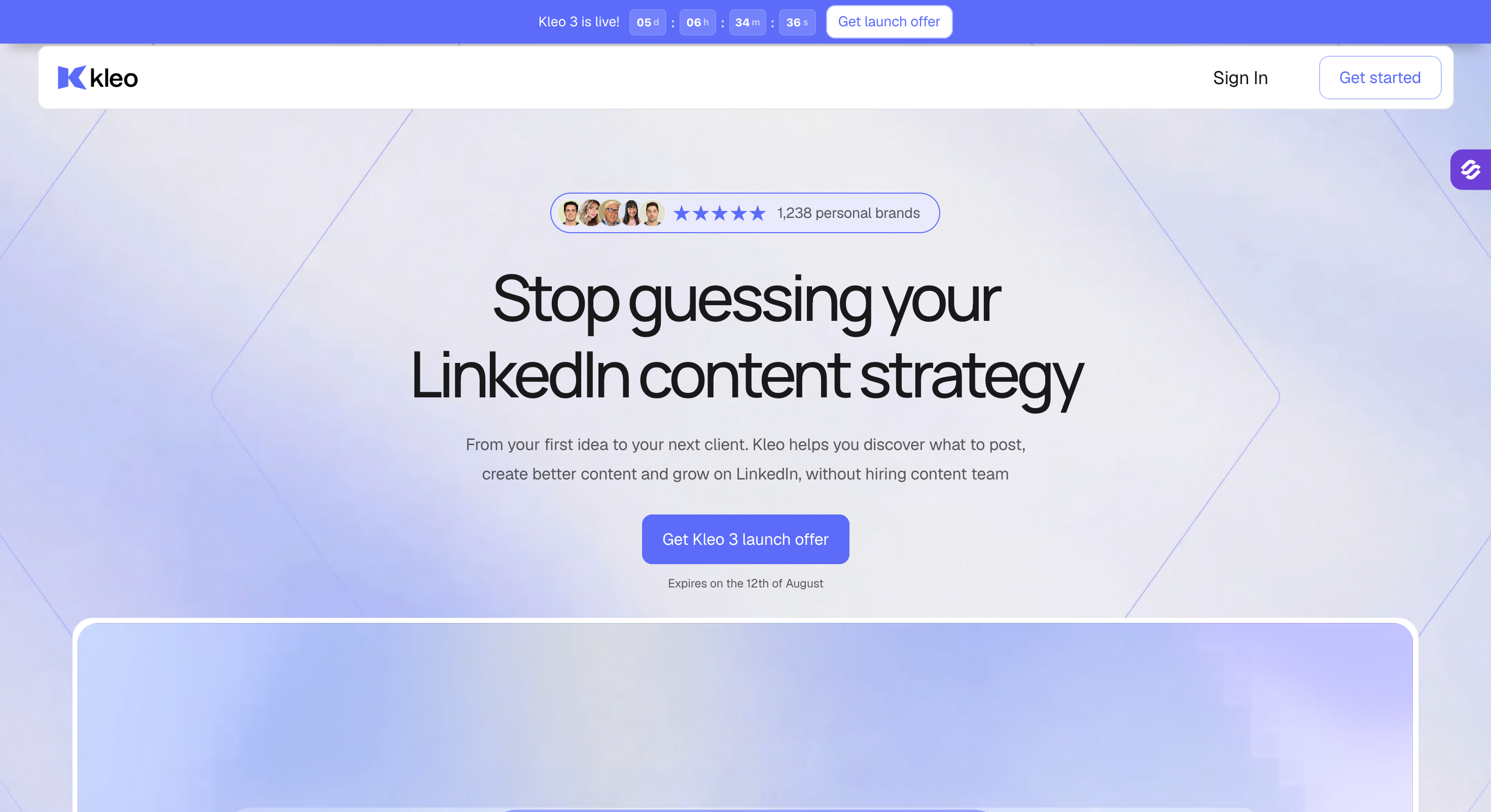
Kleo is the premium option in the content lane, and its edge is memory.
The AI trains on the user's own voice and identity across sessions, so the second month of writing looks different from the first month, and the platform pairs the writing tool with a live creator-coaching community and a large swipe file of proven LinkedIn posts.
That combination (voice-memory AI plus community plus swipe file) is unique, and it justifies the price for creators who post frequently.
A history note that matters: LinkedIn shut down Kleo's original free Chrome extension in June 2025 after it grew past 70,000 users.
The team rebuilt as Kleo V3 in October 2025 as a paid web app that no longer automates LinkedIn account actions; the new Chrome extension only saves inspiration to a swipe file.
| ✅ Pros | ❌ Cons |
|---|---|
| Persistent voice-memory AI continuously learns and adapts to your writing style. | Premium pricing at $99/month with no free trial available. |
| Includes a creator coaching community and a library of swipe examples. | Requires a draft-in-Kleo, publish-in-LinkedIn workflow, adding an extra step. |
| Comes with more than 170 swipe examples, 200+ hook templates, and 160+ content formats. | Analytics are only available from the date you sign up, with no historical LinkedIn data. |
| Updated Chrome extension is compliance-friendly because it does not automate LinkedIn actions. | Graphics generation is capped at 20 images per month. |
| Annual plans include a 30-day money-back guarantee. | Designed for individual creators only—no team or agency plans, and a limited independent review footprint outside the Chrome Web Store. |
| Plan | Price | Notes |
|---|---|---|
| Kleo (Only Plan) |
$99/month | Single subscription with access to the complete feature set. |
| Kleo (Annual) | $999/year (≈ $83/month effective, billed annually) |
Includes the same features as the monthly plan, plus a 30-day money-back guarantee. |
No free trial.
Kleo has no dedicated G2, Capterra, or current Product Hunt review page.
Best fit: Founders, SDRs, and sales professionals building visibility through strategic commenting on target accounts before running outbound sequences, especially those who post less than they engage.
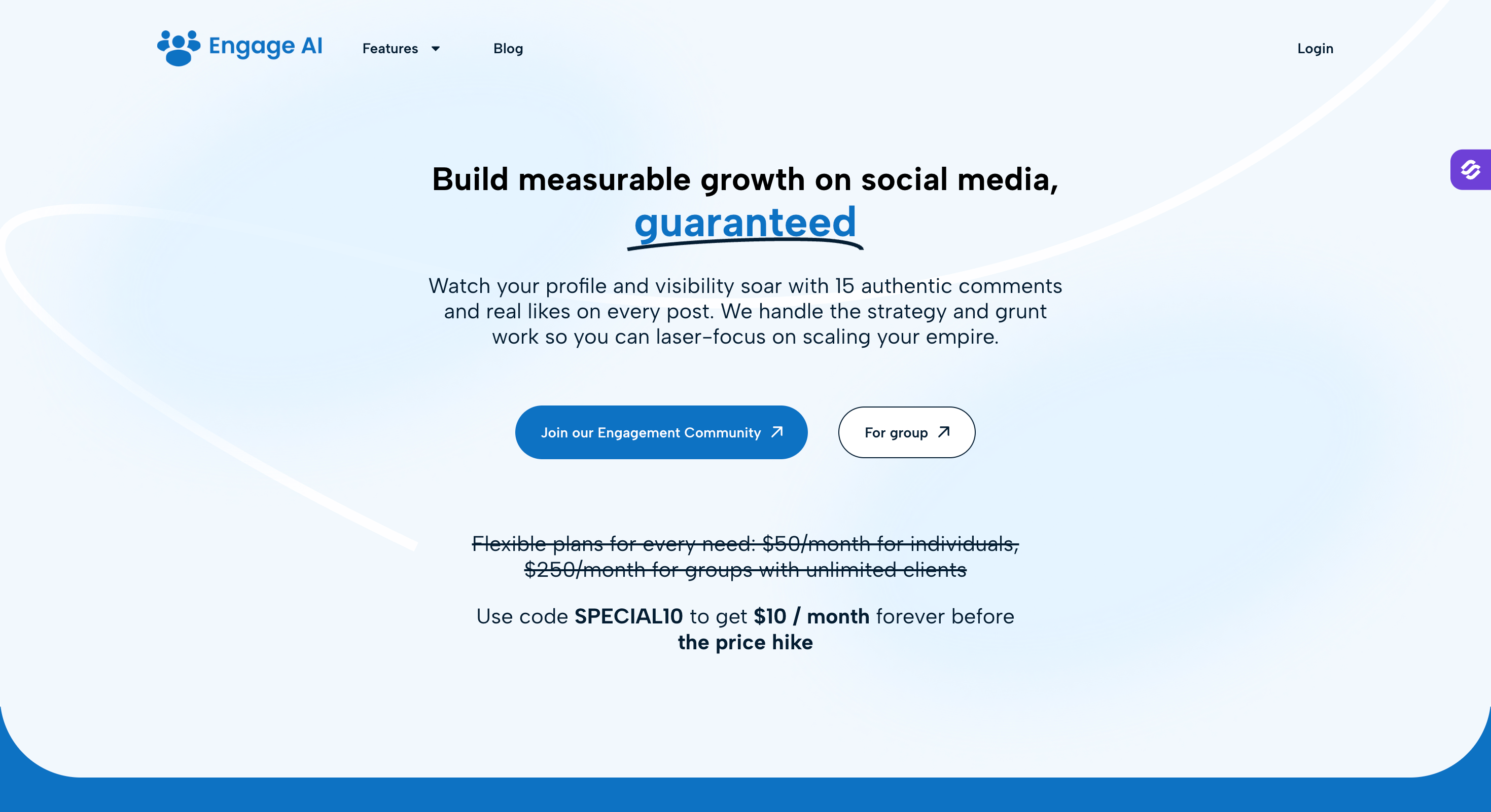
Engage AI is the only tool on this list that isn't trying to publish anything.
It works on LinkedIn as a Chrome extension and drafts contextual comments on prospect posts, which is the missing step in most outbound plays: engage warm before pitching cold.
For founders and sellers who want to build visibility on target-account posts before running an outbound sequence, this is a real workflow, and the free tier is generous enough to test the pattern before paying anything.
Engage AI analyzes the post content (not just the author's name) and offers tone-adjusted comment drafts, which is closer to real AI than the connect-and-spam category.
It also monitors prospect posts, so it doubles as a light social-selling signal layer.
This workflow can also improve LinkedIn visibility before direct outreach starts.
| ✅ Pros | ❌ Cons |
|---|---|
| Generous free tier makes it easy to evaluate before paying. | Focused on engagement only—no content creation, scheduling, or outreach features. |
| Generates context-aware LinkedIn comments instead of generic replies. | Less effective on posts that contain only videos or images. |
| Includes multiple tone options for tailoring comment style. | Delivered through a Chrome extension, although it performs only minimal LinkedIn actions. |
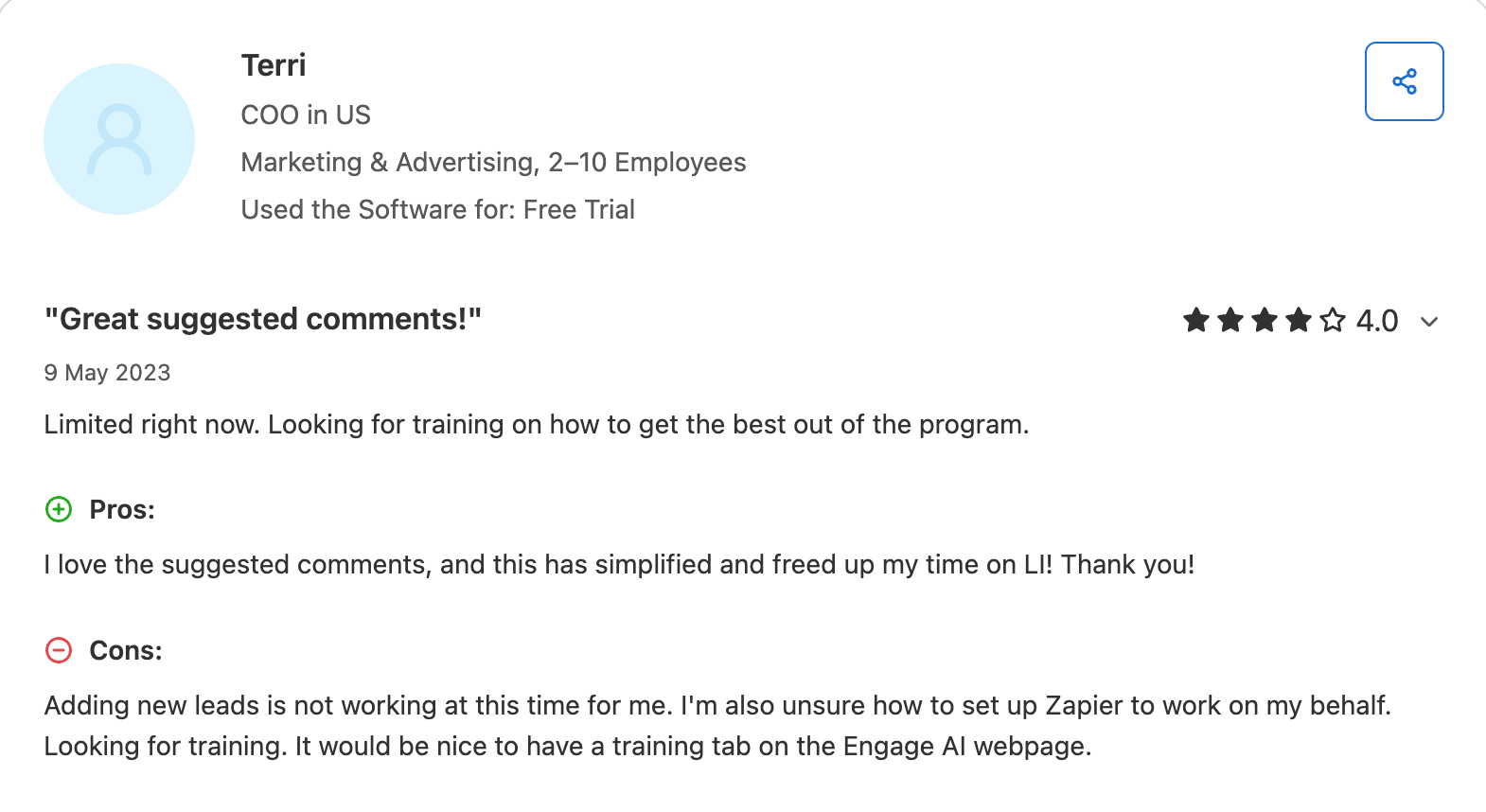
| Monitors posts from prospects to help identify engagement opportunities. | No meaningful G2 review presence; Capterra is the primary independent review source. |
| Integrates with CRMs such as HubSpot and Pipedrive. | Relatively small independent review footprint compared with larger competitors. |
| Plan | Price | Notes |
|---|---|---|
| Free | $0 | Includes a limited number of AI-generated LinkedIn comments each month. |
| Paid | From $12.90/month (monthly billing) |
Higher AI comment limits, tone selection, and support for multiple LinkedIn accounts. |
Engage AI has a Capterra listing.
Account safety is the biggest single variable in this category, and it's the one buying guides skip most often.
Below is how I think about it in 2026, informed by the enforcement pattern this year.
In 2025 LinkedIn removed Apollo.io's LinkedIn automation, took down Seamless.AI's brand presence and executive profiles, and issued similar actions against La Growth Machine and Evaboot.
In March 2026, LinkedIn removed HeyReach's own company page along with the CEO, CTO, and CRO profiles.
HeyReach the product kept running (per CEO Nikola Velkovski), but the corporate signal was hard to miss: LinkedIn is willing to escalate enforcement against companies whose tooling it disagrees with, even when the tool itself keeps working.
The takeaway isn't "don't use LinkedIn automation." It's that the platform's tolerance envelope shrank, and the tools that survived built either official-API integrations, dedicated IPs, or safer daily-action defaults.
Tools that scaled through browser extensions and aggressive daily limits took more of the hit.
LinkedIn's own limits sit around 100 to 200 connection requests per week for most accounts (weekly, not daily), with tighter limits for new accounts.
Every safety-first tool on this list defaults to below that limit: Salesforge rate-limits its 6 native LinkedIn actions by design, Expandi's smart sequences default to conservative send patterns, and Kleo's new product doesn't touch account actions at all. HeyReach can keep the product running through a connected account model built around multiple linkedin accounts, but that scaling setup still needs conservative pacing.
Anyone running above 100 connection requests per week from a single account is fishing, and while running multiple accounts can scale LinkedIn outreach, it also raises enforcement exposure if limits are pushed.
Cloud-based tools that run from a dedicated infrastructure server generally look more like a human user to LinkedIn than a browser extension automating clicks does.
That's the core structural reason Expandi's dedicated-country-IP setup and Salesforge's cloud-based sending are safer than the Chrome-extension category (Waalaxy, Dux-Soup, and older versions of Kleo).
The Chrome-extension category isn't dead. It just carries higher risk, and I weigh that trade-off (usually a lower price) against the cost of losing a 5-year-old profile with thousands of connections.
Dedicated IPs matter for two reasons.
Salesforge Growth support this pattern. Free-tier and Chrome-extension tools generally don't.
The right tool depends on which of the four jobs you're hiring for.
The best LinkedIn AI tool depends on the job.
But for the largest job on the list (running LinkedIn and email outreach together at any real volume), Salesforge is the tool I keep coming back to.
It's the only platform on this list that treats LinkedIn and email as one workflow, personalizes messages in 21+ languages using the Localized Greeting variable, unifies every reply in Primebox, and includes free unlimited warm-up via Warmforge inside the subscription.
Under one Forge login, Leadsforge handles sourcing on a separate $49/mo subscription, and the Chrome extension surfaces verified contacts from LinkedIn directly into a Salesforge sequence.
Try Salesforge free for 14 days, no credit card required, at app.salesforge.ai/signup.
1) What is the best AI tool for LinkedIn in 2026?
It depends on the job. Salesforge is the best for AI-personalized multichannel outreach across LinkedIn and email. Leadsforge is the best for lead sourcing. Supergrow or Taplio for content. Engage AI for engagement.
2) Are LinkedIn AI tools safe to use in 2026?
Some are, some aren't. Tools that publish via LinkedIn's official API (like Supergrow) or run cloud-based with dedicated IPs (like Salesforge and Expandi) are materially safer than Chrome-extension tools that automate browser actions. The 2026 enforcement wave hit the second category harder.
3) Is there a free LinkedIn AI tool?
Yes. Engage AI has a free tier for AI-drafted LinkedIn comments. Leadsforge grants 100 free credits on signup with no credit card required. Clay offers a free tier with 100 Data Credits and 500 Actions per month. Salesforge and Agent Frank include a 14-day free trial with no credit card required.
4) Does LinkedIn have its own AI?
Yes. LinkedIn Sales Navigator (Advanced tier) includes Account IQ and Lead IQ, which summarize account activity and identify relationship paths. LinkedIn Premium includes an AI writing assistant for profile and job-description copy. LinkedIn also launched conversational AI search in January 2026.
5) Can AI tools get my LinkedIn account banned?
Yes, if they operate outside LinkedIn's tolerance envelope. High-volume automation from a Chrome extension is the highest-risk pattern; official-API integrations and cloud tools with dedicated IPs and conservative daily limits are the lowest-risk pattern.
6) What's the difference between LinkedIn AI tools and LinkedIn automation tools?
LinkedIn automation tools schedule and send templated actions (connection requests, messages) at scale. LinkedIn AI tools use data specific to the prospect or user (post history, job changes, voice-trained content models) to personalize what's being sent. The best products in 2026 do both.
7) Which LinkedIn AI tool is best for content creation?
Supergrow if the priority is original posts in each person's voice, with a team layer for employee advocacy ($31/mo billed annually). Taplio if the priority is a broad content platform with a viral library and scheduler. Kleo if voice-memory AI and community coaching are worth the premium price.