AI GTM tools are everywhere in 2026.
If you search for the best AI GTM tools online, you’ll find plenty of lists.
But most leave you with the same question: Which one should I actually use?
That’s why I put this list together.
I’ll walk you through the 11 AI GTM tools worth considering in 2026, what each one does well, where it falls short, how much it costs based on its pricing page, and which teams are most likely to benefit from it.
Let’s get into it.
Every tool on this list has to answer a specific GTM question. Who to reach. When to reach them. What to say. How to follow up. What worked. I cut anything that only assists at the edges without owning one of those core questions.
Vendor marketing calls everything "AI-powered." I split the AI layer into three real tiers. Rules-based automation is just triggers with a chat interface. Predictive AI scores accounts and ranks them. Agentic AI runs multi-step autonomous work end-to-end. Only the last one earns the "AI-native" label most of these tools claim.
The fastest a small team can go from signup to a real qualified lead. Some tools ship pipeline in a week. Some need a full quarter of implementation before they earn back the setup fee. I flagged both.
Sticker price plus credit overages, seat scaling, mandatory onboarding fees, and the hidden tax of tools that need a dedicated admin to keep running. A cheap tool with a $7,000 onboarding fee is not a cheap tool.
The AI layer is only as good as the data underneath it. Verified, continuously refreshed data is what makes agent decisions trustworthy. Stale data breaks everything downstream, and the AI just spreads the errors faster.
Here is the ranked list. Order reflects how strongly each tool held up against the five criteria above during my testing.
Salesforge is the best AI GTM tool for 2026 because it is the only platform that combines a prospecting database, an autonomous AI SDR, and native sending infrastructure under one login. Most tools on this list solve one of those three jobs and leave you to figure out the other two.
The moment I saw Agent Frank book meetings in auto-pilot mode against a 200-contact test list, I knew we had built something the category actually needed.
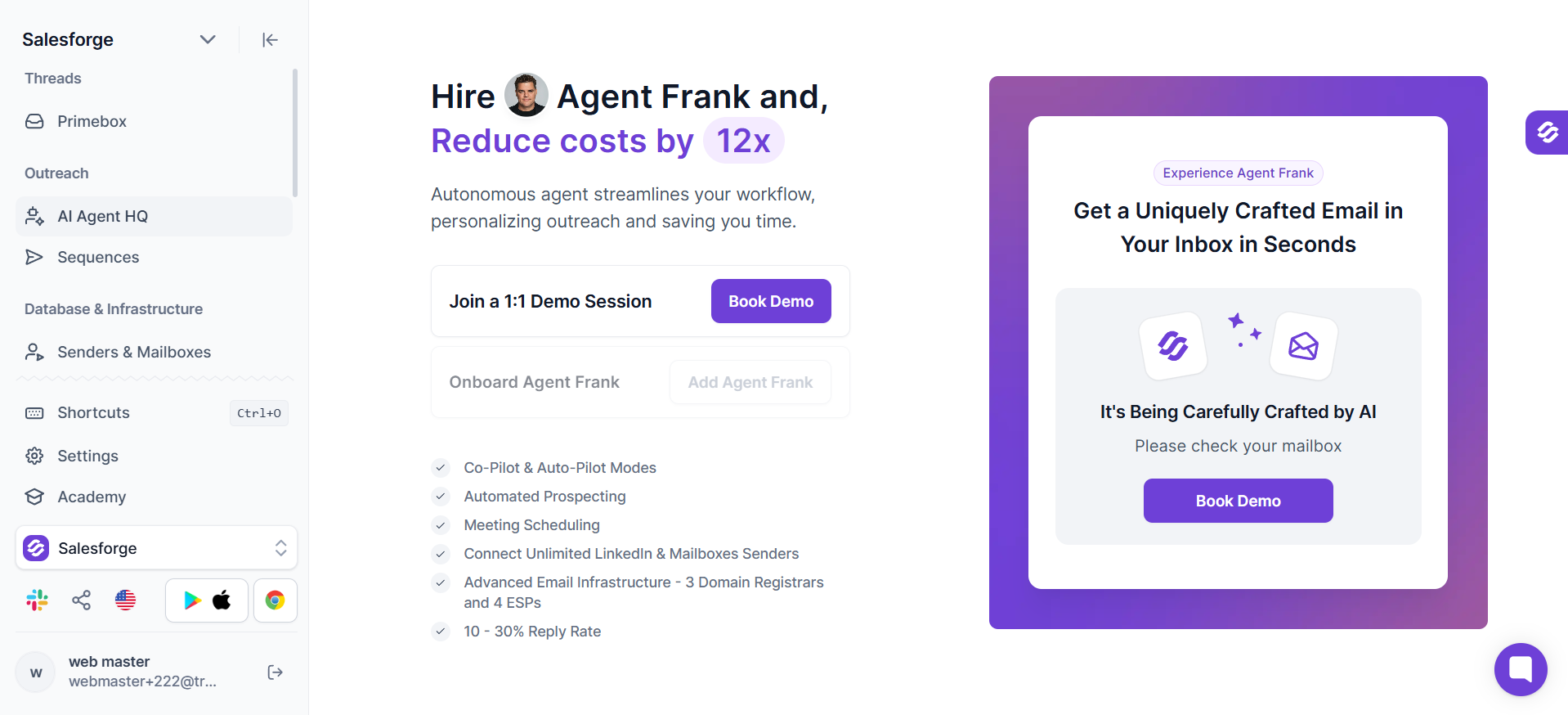
Two weeks in, he had booked meetings I did not have to touch, and Primebox tagged every reply by sentiment so I only jumped in when a positive reply needed a human. That is the workflow every AI SDR promises and this one delivers.
Key features I like:
Pricing (billed annually):
The next solid AI GTM tool on my list is Apollo. Apollo earns its spot because it covers more of the outbound stack under one seat than any competitor at its price point, which is exactly why it is the most-adopted platform among growth-stage teams.
The catch is that its ceiling shows up fast once you scale past a few hundred contacts a month.
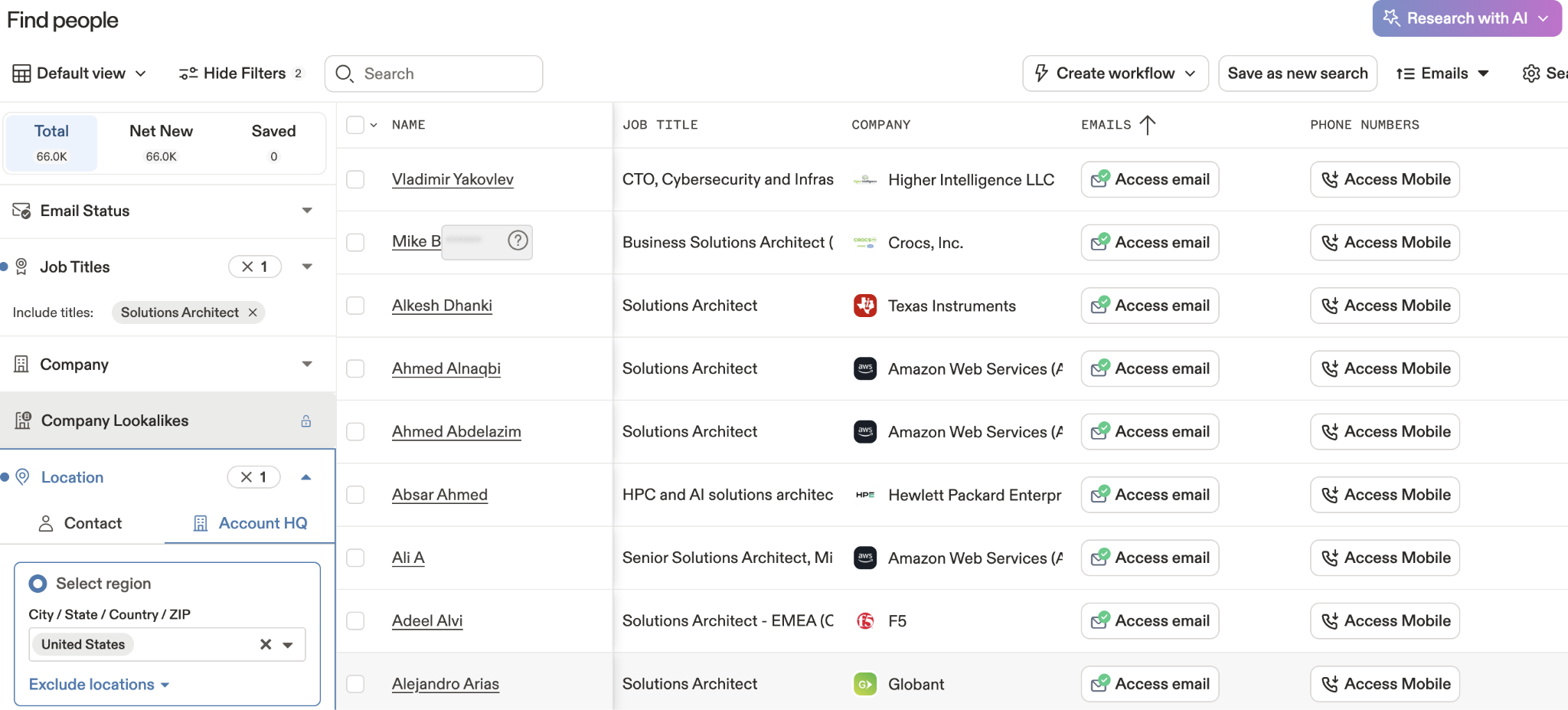
I ran a 500-contact prospecting test on Apollo last quarter. The database returned clean US contacts, the sequencer launched without a hiccup, and the Chrome extension made LinkedIn prospecting genuinely fast.
Then I tried the same run on a UK list and data accuracy dropped noticeably. On January 30, 2026, Apollo also removed native LinkedIn actions from the platform, so LinkedIn steps are now manual tasks.
Key features I like:
Pricing (billed annually):
Bonus read: 13 best Apollo.io alternatives in 2026, tested and ranked
Another AI GTM tool that earned its spot is Outreach.
Outreach is here because its sequencing engine is the most mature in the enterprise category, and the Amplify AI credit tiers now bring named agents (Meeting Prep Agent, Revenue Agent, Deal Agent) into the same workflow. It rebranded to outreach.ai this year to lean fully into the "agentic AI platform" story.
I ran Outreach with a 30-seat SDR team at a previous company.
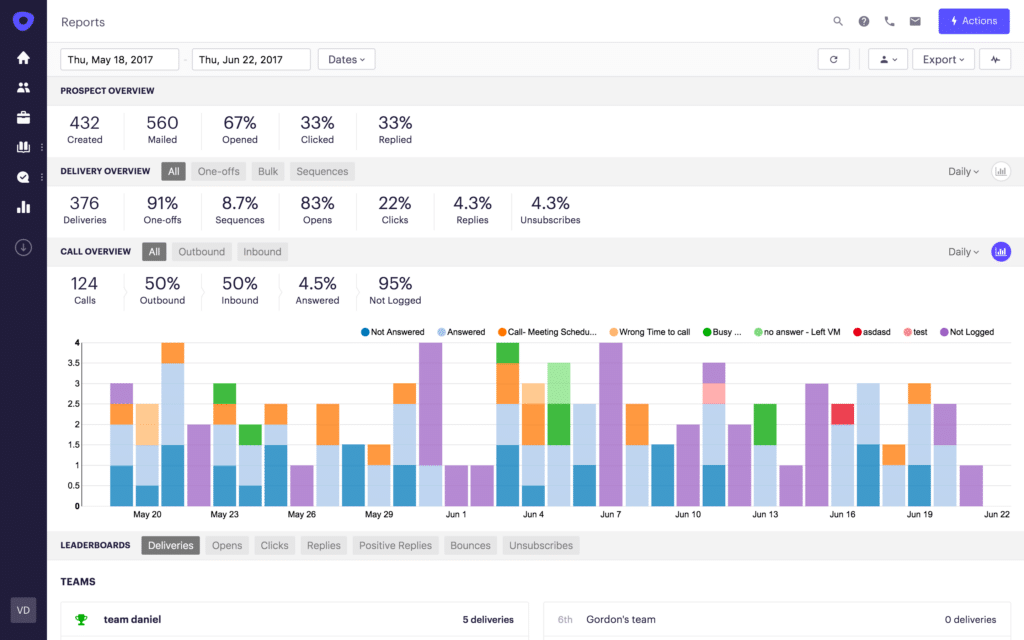
The governance controls and Salesforce activity logging were genuinely enterprise-grade, and the cadence engine handled complex sequences that would have broken Apollo. But the AI agents needed constant supervision. I still manually checked what the Revenue Agent flagged before acting on it, which is not what "digital teammate" is supposed to feel like.
Key features I like:
Pricing:
Bonus read: 8 best Outreach alternatives I tested for 2026
One of my favorite AI GTM tools in the workflow category is Copy.ai. It earns its spot because it stopped being a marketing copy tool and became a workflow platform for codifying GTM plays across teams. That pivot is the reason it belongs on this list, not the AI copywriting it launched with.
I tested Copy.ai's Workflows on an account research use case where I wanted every new inbound lead automatically enriched, categorized, and routed to the right rep with a research brief attached.
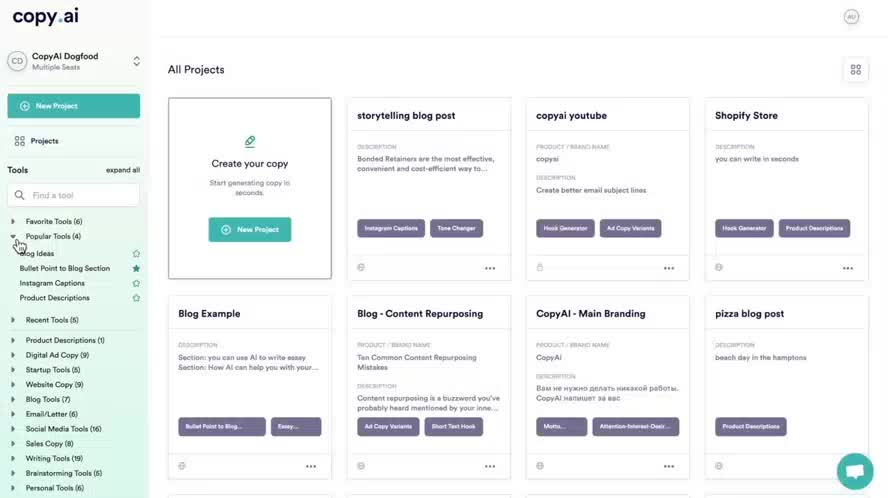
Setting it up took an afternoon. Once running, it worked. The Infobase feature was the surprise. Once I uploaded our positioning docs, the AI stopped generating generic slop and started referencing our product correctly in every output.
Key features I like:
Pricing (billed annually):
The next pick on this list is Gumloop, and I need to be honest about why. Gumloop is not a GTM product. It is a general-purpose AI agent builder with 300+ connectors including every major CRM.
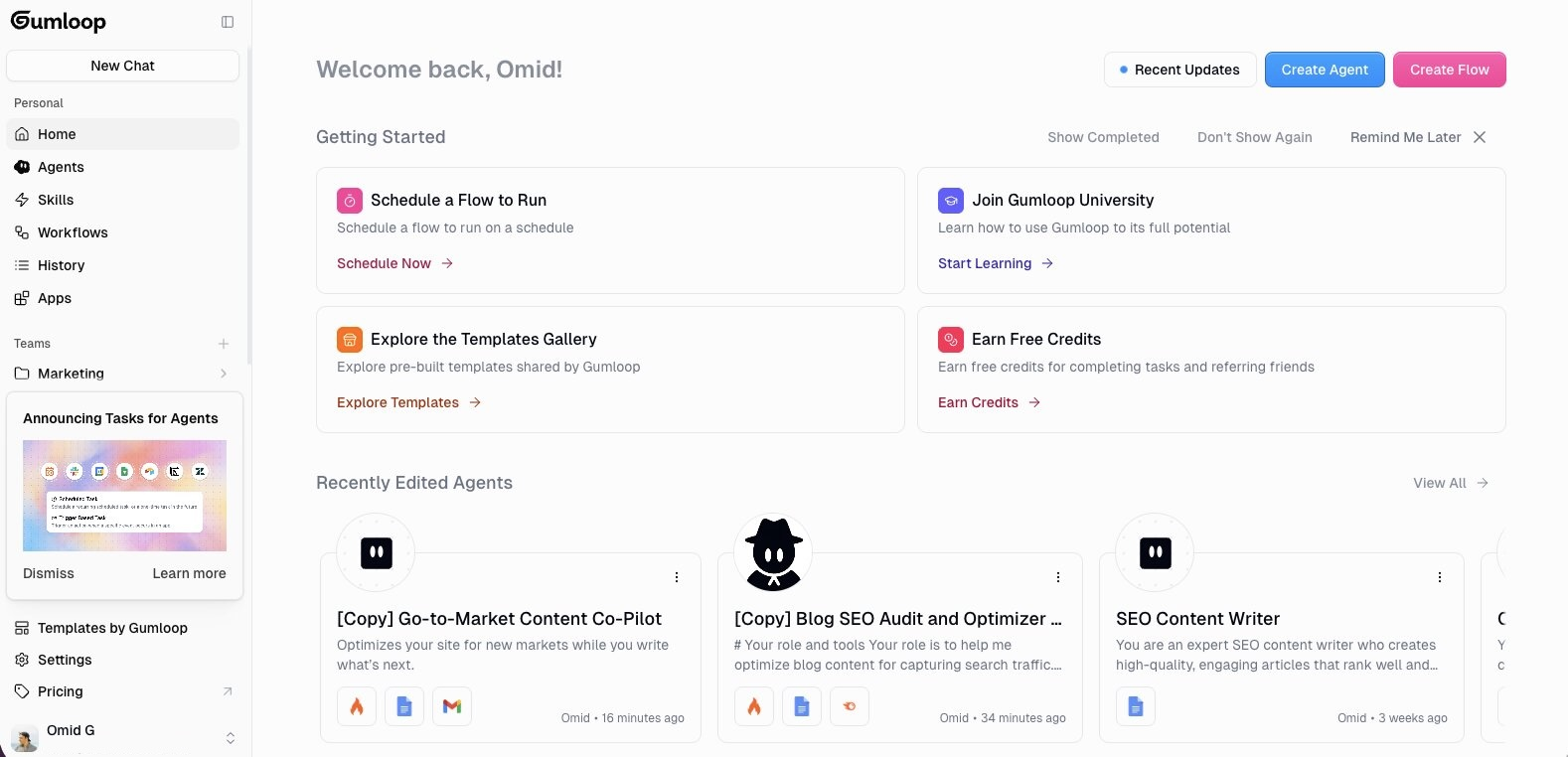
If you are looking for pre-built sales workflows, this is not it. But if you are a RevOps team that keeps hitting the ceiling of off-the-shelf tools, Gumloop is where you build the workflow no vendor has shipped yet.
A friend of mine on a RevOps team built a custom lead-scoring agent in Gumloop that pulled Clay-enriched data, ran it through their qualification logic, and pushed the score into HubSpot.
It took him an afternoon and he did not write a single line of code. If he had tried to buy that workflow as a product, he would have spent three weeks in vendor demos and still compromised on the output.
Key features I like:
Pricing (billed annually):
Bonus read: We tried 5 AI sales agents (AI SDRs) for B2B lead generation
A tool that deserves a serious look on this list is Clay.
Clay earns its rank because it collapsed waterfall enrichment across 150+ data providers into a spreadsheet interface, and became the default enrichment layer for every AI-native GTM team. Before Clay, running that same workflow meant writing Python and burning a week of engineering time to save five percent on hit rate.
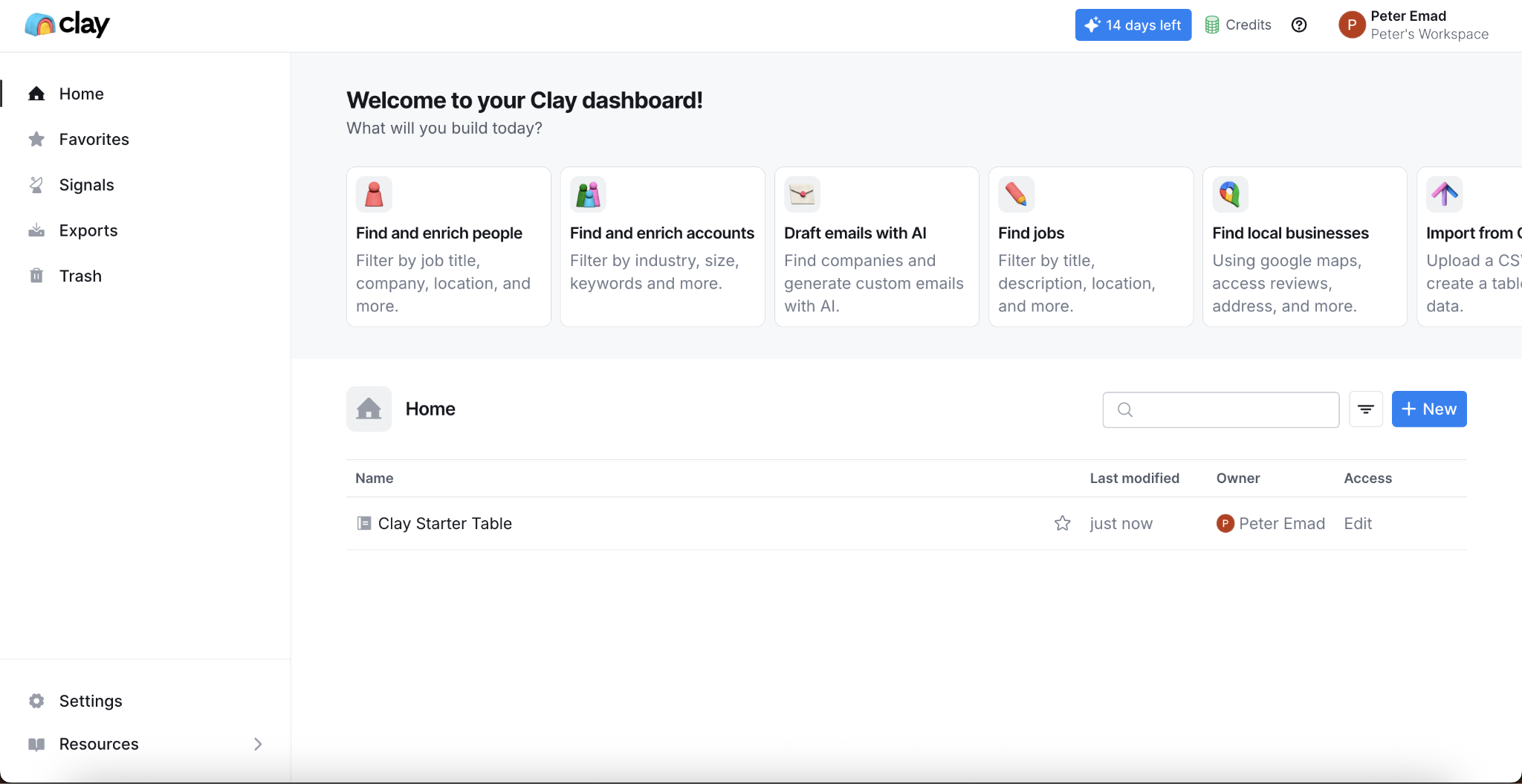
One of my favorite features is the waterfall itself.
I ran a Clay waterfall on a 2,000-contact list where our primary data source was returning 40% match rate. Clay pulled it up to 78% by querying three additional providers in sequence until it found a match. The catch is the credit meter. I once burned $200 in credits testing a single Claygent workflow because I forgot to cap the row count. That mistake is common enough that reviewers flag it constantly.
Key features I like:
Pricing (billed monthly):
Bonus read: 7 best Clay alternatives in 2026, tested and ranked
One AI GTM tool I did not expect to include is ZoomInfo, but its GTM AI product earns a spot for a specific buyer.
ZoomInfo spun out its data foundation as a separate product this year and pitched it as "infrastructure for AI agents" rather than a tool for human sellers. That framing is the most honest read of where enterprise data is going.
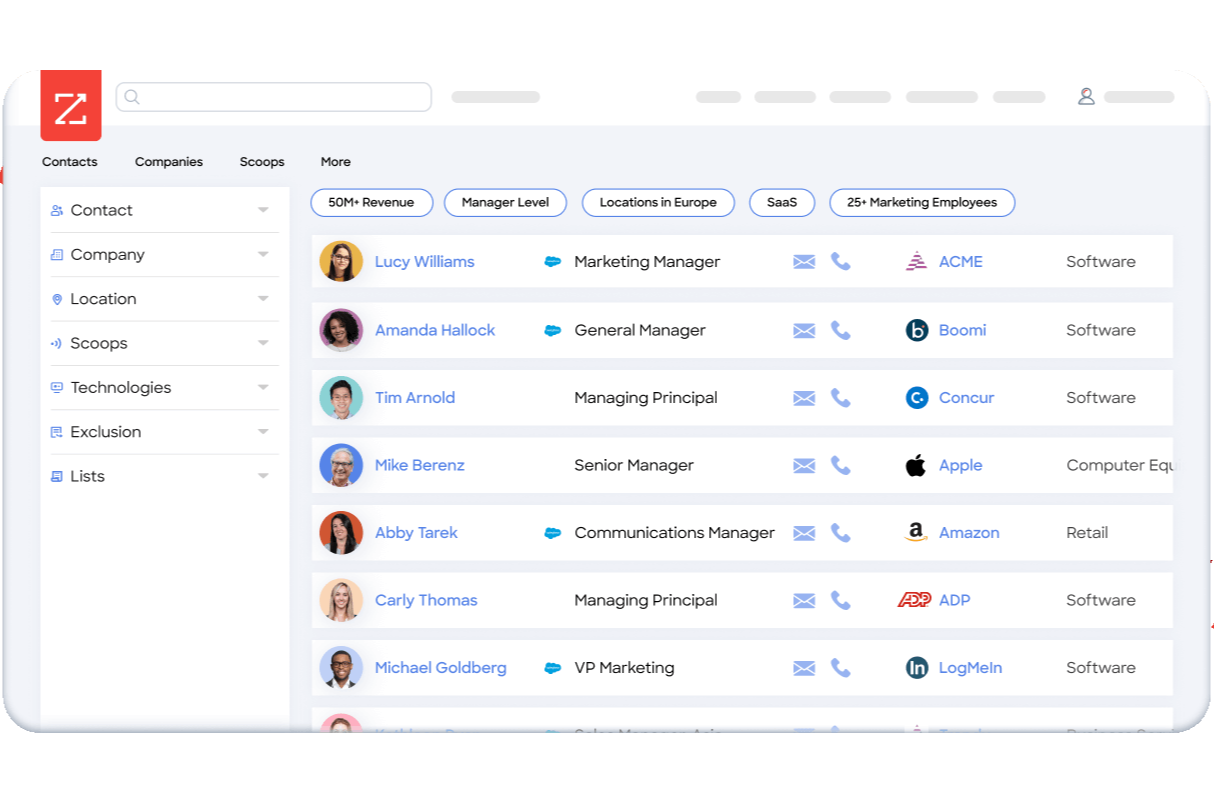
The Context Graph is what makes it work. I ran a test where three of our internal agents were returning different company IDs for the same parent-subsidiary structure, and GTM AI reconciled them cleanly in one query.
That was the killer moment. The trade-off is data accuracy outside North America. I ran the same list against European contacts and hit noticeable drops, so any global team is going to need a secondary source.
Key features I like:
Pricing:
Bonus read: Apollo vs ZoomInfo, which is the better data and outreach platform in 2026
Another tool worth your attention is 6sense.
6sense is on this list because it identifies the anonymous companies researching your category weeks before they fill out a form, and for enterprise ABM teams that visibility is genuinely worth the enterprise price tag. For anyone smaller, it is a Ferrari in a school zone.
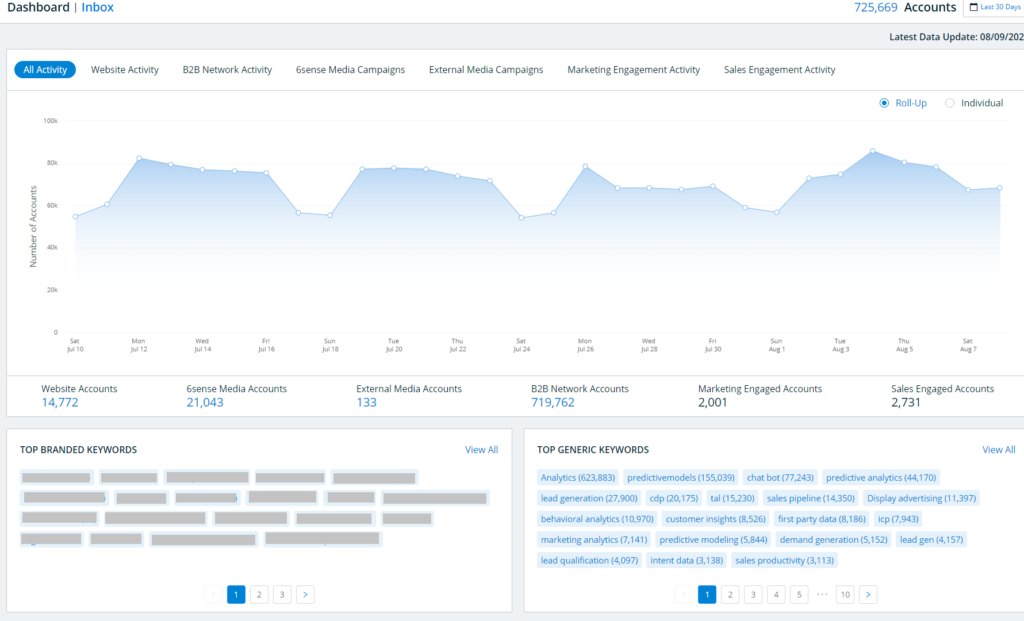
I have watched 6sense in action at an enterprise marketing org, and the keyword-level intent granularity is genuinely more useful than the topic-level intent competitors sell.
When RevvyAI surfaced that a target account had spiked on our exact competitor's product keywords three weeks running, our SDR team got a warm meeting from a cold email the next day. That is the workflow the vendor pitches, and it works when the setup is done right. The setup is the problem.
Key features I like:
Pricing:
Bonus read: 13 AI sales intelligence tools for smart prospecting in 2026
The next AI GTM tool that earned its rank is Gong.
Gong is still the standard in the conversation intelligence category because nobody has caught up to the depth of its call analysis, and the platform expansion into Engage, Forecast, and Enable makes it harder to displace than ever.
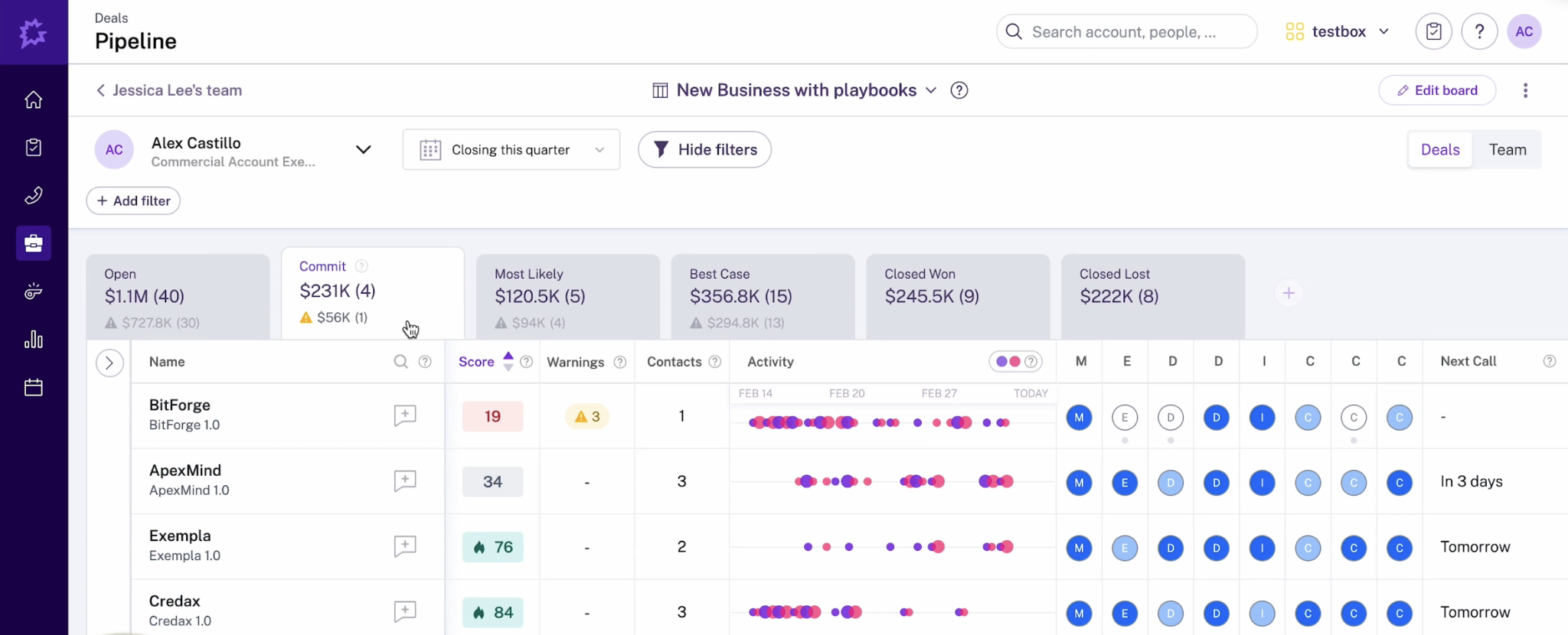
I have used Gong at two different companies, and the "aha" moment is always the same. The first time you watch it flag a competitor mention you missed on a call and auto-tag it for coaching review, you understand why enterprise buyers keep renewing.
The AI recommendations still need double-checking, and the UI is fragmented enough that even 5-star reviewers complain about it. But when your GTM bottleneck is understanding what actually happens in customer conversations, nothing else is close.
Key features I like:
Pricing:
Bonus read: 7 best Gong Engage alternatives for sales teams
One AI GTM tool that surprised me in testing is HockeyStack. Every attribution tool promises to end the "whose numbers are right" debate between sales and marketing.
Most just move the argument to a different dashboard. HockeyStack is the first one I have tested that actually holds up under scrutiny because the identity resolution underneath is real infrastructure, not a bolted-on last-touch model.
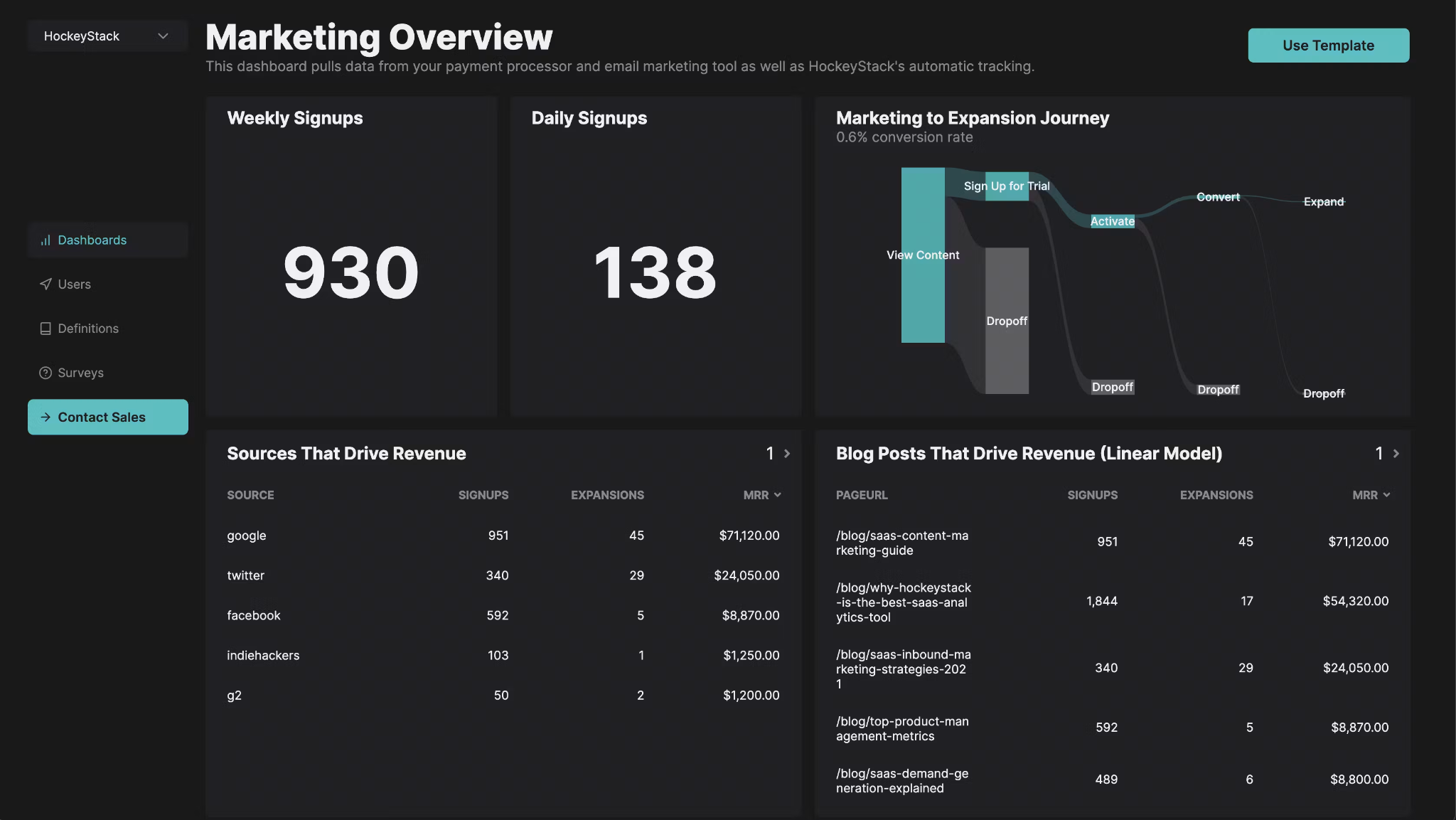
A friend running a B2B SaaS marketing team set up HockeyStack last quarter, and the Odin AI analyst was the feature that landed. Instead of asking her data team to write a SQL query for "which campaigns influenced our enterprise deals last quarter," she asked Odin in plain English and got a real answer with visualizations in under a minute. The catch is implementation. Multiple G2 reviewers report they could never get their data connected at all, so a proof-of-concept before commitment is critical.
Key features I like:
Pricing:
Bonus read: 10 best AI sales tools in 2026, tested and ranked by category
Wrapping up my list is HubSpot's Breeze, now living inside Agent Hub. HubSpot earns a spot because Breeze gives HubSpot customers native AI agents (Content Agent, Prospecting Agent, Customer Agent, Data Agent, Campaign Agent, Nurture Agent, Revenue Agent) operating directly on live CRM data, with zero integration lift.
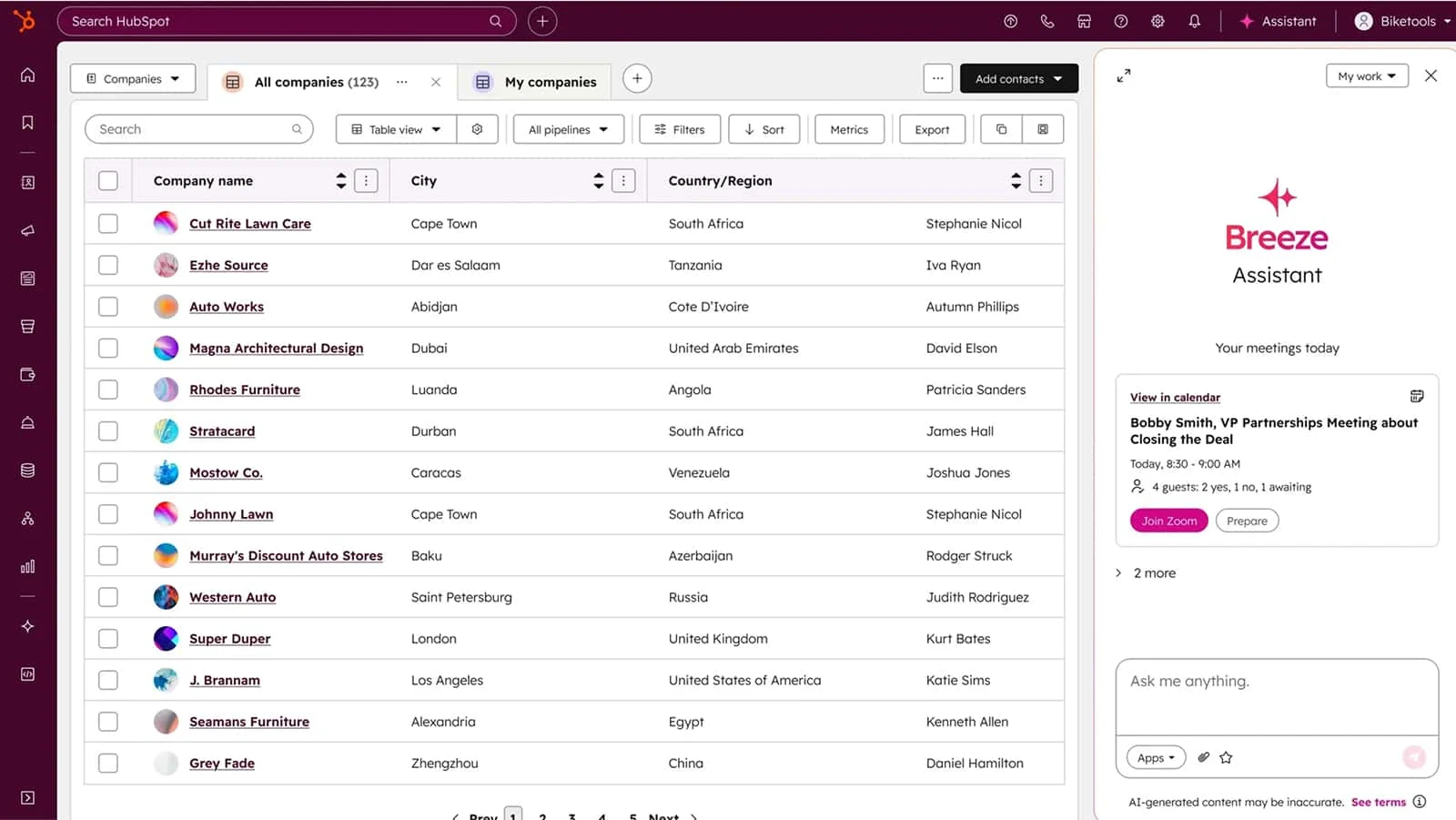
If you are already standardized on HubSpot as your system of record, turning on Breeze is a shorter path to AI value than adding a new tool.
I turned on Breeze at a client running HubSpot Professional last quarter. Because everything runs on live CRM data from day one, setup was truly instant. Agent Builder let me create a custom nurture agent via natural-language prompts in about twenty minutes. What HubSpot never puts on the pricing page is the $3,000 one-time onboarding fee at Professional and $7,000 at Enterprise. Factor those in before you sign anything.
Key features I like:
Pricing (Marketing Hub, billed annually):
Bonus read: 7 best AI prospecting tools for driving sales in 2026
Salesforge is the #1 AI GTM tool for 2026. It is the only platform on this list that pairs a 500M-contact prospecting database, an autonomous AI SDR in Agent Frank, and native sending infrastructure under one login.
Unlimited mailboxes and LinkedIn senders at flat pricing, free Warmforge warm-up on every plan, and Primebox handling every reply with AI sentiment tagging. That is the full outbound motion, built to work at real volume without the sender-reputation collapse that kills most AI SDR tools by month three.
An AI GTM tool is software that uses artificial intelligence to run go-to-market work that used to be done manually. That includes finding target accounts, researching prospects, drafting outreach, analyzing sales calls, and predicting pipeline. The best AI GTM tools use agentic AI to complete multi-step workflows on their own, not just single-task automation.
Traditional sales software relies on manual work and rules-based triggers. AI GTM tools use predictive analytics and agentic workflows to prioritize accounts, personalize outreach, and act on buying signals without a rep clicking through every step. The most advanced tools run full outbound cycles autonomously with a human checking in only at decision points.
Depends on your stage. Early-stage teams get more from a small, tightly integrated stack (Salesforge for outbound, Apollo for prospecting, HubSpot as the CRM). Enterprise teams often benefit from a dedicated platform like ZoomInfo GTM AI as the data foundation and add point tools like Gong and HockeyStack for specific jobs. The mistake is buying every category leader and expecting them to integrate cleanly.
Not entirely, but they can handle the mechanical work SDRs used to spend hours on. Prospecting, research, sequence drafting, and follow-up all run on autopilot with tools like Salesforge's Agent Frank. What SDRs do best (nuanced replies, discovery, objection handling) still needs humans. The right framing is augmentation, not replacement.
A few days for lightweight tools like Salesforge, Apollo, and Copy.ai Chat. Several weeks to a full quarter for enterprise platforms like ZoomInfo, 6sense, Gong, and HockeyStack. Aligning your team on which signals to prioritize usually takes longer than the technical setup.
Salesforge, because it is the only tool that pairs an autonomous AI SDR with native sending infrastructure. Most AI SDR tools assume your mailboxes and warmup just work. Salesforge ships the Warmforge, Mailforge, and Infraforge integrations that keep sender reputation intact at scale.
Rules-based automation fires a fixed action when a condition is met (if lead score above 80, assign to rep). Predictive AI reads behavioral signals and scores accounts by likelihood to buy. Agentic AI runs multi-step research and outreach on its own, checking in with a human only at the decisions that matter. The strongest tools on this list use agentic AI.
.png)

.jpg)
.jpg)