

Zevenue sells a go-to-market system, not booked meetings. Their own FAQ answers the question about guaranteed meetings with a single word: no.
That makes them hard to shop for. If you have been searching for Zevenue reviews, you have mostly found directory pages that read like a model wrote them.
I hit the same wall. So this Zevenue review covers what I found across their site, their blog, and a domain registration record. It also covers the three review platforms where they do not appear.
Their careers page describes Zevenue as a remote GTM engineering firm based in Toronto, helping venture-backed startups build repeatable outbound and revenue systems.
Their blog tells the origin story: a B2B software product built in 2020 failed to find users, and the founder pivoted into Zevenue.
Below: what they actually sell, what it costs, what their site does not tell you, and the questions to ask on the call.
At a Glance: Should You Hire Zevenue?
| Decision Factor | Our Assessment |
|---|---|
| Best For | Venture-backed B2B startups with a GTM or sales team already in place, plus one person who can own the system after handover. |
| Standout Strength | They publish their own model evaluation, scoring a panel of models against 243 funded AI companies and claiming accuracy only on the 133 rows a human judged. |
| Things to Consider | No pricing anywhere on their site, no third-party review footprint on Clutch, G2, or Trustpilot, and no cold calling channel. |
| Not the Right Fit If... | You need meetings on the calendar next month, nobody internally can own a build, or your buyers convert on the phone. |
| Before You Decide | Compare a few agencies on industry expertise, pricing model, outbound channels, and client size before choosing. |
| Compare Certified Agencies | Explore the Forge Expert Network to find agencies specializing in cold email, LinkedIn outreach, AI-powered outbound, deliverability, and GTM consulting. Browse by industry, market, language, and expertise. |
Our Verdict on Zevenue
Hire Zevenue if you already have a sales team and you want to own the outbound system they build, rather than rent it month to month.
Two things support this verdict. Their FAQ states that everything runs on your accounts and nothing sits locked behind theirs. And they publish work that can be checked: their benchmark ran a model panel against 243 funded AI companies on frozen evidence.
A third point is smaller but real. A domain registration lookup shows zevenue.com was registered on 1 October 2020, paid through October 2027.
Several things hold it back:
- No pricing is published. Their site has no pricing page at all.
- No independent reviews exist on Clutch, G2, or Trustpilot.
- There is no cold calling channel anywhere in their published services.
- They state plainly that they do not guarantee meetings.
So treat this as a conditional yes. Get the sprint scope, the full monthly cost, and who owns the domains in writing. If you need meetings committed to a number, compare other certified agencies.
How I Evaluated Zevenue
I have not been a Zevenue client, so this review is research-based.
I read their homepage, services, testimonials, benchmarks, Applied AI, contact, and careers pages, plus several posts on their blog. I checked the founder's public LinkedIn profile. I pulled a registration record for their domain, and I searched Clutch, G2, and Trustpilot for reviews.
I also tried the Canadian federal corporate registry. It blocked automated access, so I could not complete a company registration check.
I judged them on four things: who owns the infrastructure, how leads get qualified, what the contract terms are, and whether the published numbers hold up. Everything below marked "reports" or "says" comes from their own published material.
Zevenue Services Reviewed
The outcome Zevenue sells is an outbound system your own team can run after they leave.

GTM Sprint
Their site describes a two-week engagement that ships one working piece of your GTM system, live on your data. Examples they name are a list built to spec, an enrichment pipeline, or a scoring model on your CRM.
They say you keep the build, the architecture map, and a backlog of what to build next. Ask what the sprint costs and what one working piece means for your stack.
GTM Engineering
This is the ongoing retainer. Their site describes an embedded team that builds signal pipelines, agent workflows, and scoring, then runs and improves them weekly.
Their homepage names Clay, Claude Code, Codex, HubSpot, and Salesforce as tools they work in. AI handles research while people keep the judgment, they say.
The channels described across their pages are cold email and LinkedIn outreach. Ask how many experiments ship per week and what counts as one.
AI Enablement
This is a four to eight week program that trains your team to build workflows instead of buying them. Their site describes a two-tier structure: one tool for SDRs and AEs, and Claude Code for the ops lead.
The stated end point is an independence test, where each person builds a new workflow with Zevenue out of the room. This is training, not pipeline. Ask who is actually being trained, and what happens if that person leaves.
What You Get With Zevenue (and What You Don't)
| Criteria | Zevenue | Certified Forge Experts |
|---|---|---|
| Channels | Email, LinkedIn, and AI research workflows. No calling channel is mentioned. | Outbound Pros lists cold calling and PPC alongside cold email and LinkedIn. |
| Lead guarantee | None. Their FAQ says they do not guarantee meetings. | Outbound Pros states a guarantee of 50 to 75 qualified meetings per month. |
| Outbound stack | Clay, Claude Code, Codex, HubSpot, and Salesforce, per their homepage. | Certified on the Forge Stack, with each profile listing its own tools. |
| Infrastructure ownership | Their FAQ says everything runs on your accounts, nothing on theirs. | B2B Boosted says it builds every system under accounts the client owns. |
| Independent reviews | None found on Clutch, G2, or Trustpilot. | Public profiles listing guarantees, pricing, markets, and years active. |
| Pricing transparency | No pricing page. Engagements start with a 30-minute call. | Relevance publishes one plan from $8,000 per month plus a $6,000 setup fee. |
| Market coverage | Toronto base. Named clients are mostly North American startups. | Outbound Pros covers US, EU, and CA. B2B Boosted covers UK, EU, and US. |
| Team depth | Not published. Their careers page is hiring an entry-level SDR. | Profiles state years active, from 3+ to 5+ on the ones I read. |
| Best for | Teams that want to own a GTM system and run it. | Teams that want meetings booked for them on stated terms. |
Every Zevenue cell comes from their public material, every expert cell from live profiles I read. Confirm the details on your discovery calls.
How Zevenue's Process Works
Zevenue publishes a four-stage process: diagnose, build, ship, hand off. Here is how that maps onto the six stages a client actually experiences.
Discovery and ICP Definition
Their site says the diagnose stage maps your ICP, data flows, and channels, and produces a prioritized build plan.
Ask what happens if the diagnosis says your ideal customer profile is wrong. A good partner tells you before taking a retainer.
Prospect List Creation
Their site describes enrichment pipelines and signal-based targeting built in Clay. One blog post argues the industry filter is outdated.
Ask to see a sample list before launch. Even a quick check of 50 rows will tell you more than any sales call.
Copy and Campaign Approval
Their site describes messaging experiments that test what resonates, rather than one fixed sequence or a library of cold email templates. A 2025 post says they tested 10,000 emails in one quarter and watched deliverability fall, which is why they moved off spintax.
Their published material does not say whether you approve copy before it sends. Ask for sign-off rights on both copy and lists, in writing. Your domain carries the consequences of personalization that misses.
Campaign Launch
Their FAQ says the sprint puts something working in front of you inside two weeks, with experiments running by week three or four. A repeatable system, they say, lands around week six to eight.
That timeline assumes healthy infrastructure. From new domains, budget two weeks for email warm-up first. Ask whether warm-up sits inside or outside their schedule.
Reply Handling and Meeting Booking
This is the biggest gap in their published material. Their site describes building the system that produces replies, but never says who reads the inbox or books the meeting.
Their FAQ on existing SDR teams hints the answer is your reps: they describe handing reps a prioritized queue rather than replacing anyone.
Ask directly whether a Zevenue person replies to interested prospects. The answer changes what you need to staff.
Reporting and Optimization
Their site says experiments launch with measurement built in. They say every workflow ships with an SOP, handoff docs, and a scheduled test, so it still works months later.
Their published material states no reporting cadence or format. Ask for a sample report from a current client, with the numbers redacted.
Zevenue Pricing and Contract Terms
Zevenue does not publish pricing. Their site has no pricing page, and no figure appears on any service page I read.
Engagements start with a 30-minute call booked through Calendly, or an email to the founder. Their contact page lists no phone number and no address beyond Toronto, Canada.
Comparable managed outbound agencies tend to charge monthly retainers in the low four figures and up. I will not invent a number for Zevenue.
What's Included at Each Price Point
Their three published engagements are a two-week GTM Sprint, an ongoing GTM Engineering retainer, and a four to eight week AI Enablement program. Only the sprint has a fixed length and one defined deliverable.
No lead guarantee is attached to any of them. What they say they guarantee instead is a working system, weekly shipped experiments, and a feedback loop.
That is an unusually honest position to publish. It is also the thing to price against: you are buying build hours, not meetings. Ask what a month of the retainer costs and how many hours it assumes.
Hidden and Additional Costs to Watch
Their FAQ says everything runs on your accounts. That is good for ownership and it means the tool bills are yours.
- Domains and mailboxes: ask who buys them and who pays the monthly cost.
- Data and enrichment credits: Clay and enrichment providers bill separately, and signal-based workflows consume more credits than filtered lists.
- Setup or onboarding fees: ask whether the sprint fee is credited against a later retainer.
- LinkedIn accounts and Sales Navigator seats: not mentioned anywhere on their site.
- Ownership at exit: ask in writing who keeps the domains, mailboxes, and lists when the engagement ends.
One warning applies to every agency. If the agency owns your sending domains, leaving means starting your email deliverability from zero. Zevenue states the opposite, so get it in the contract.
Who Should Hire Zevenue?
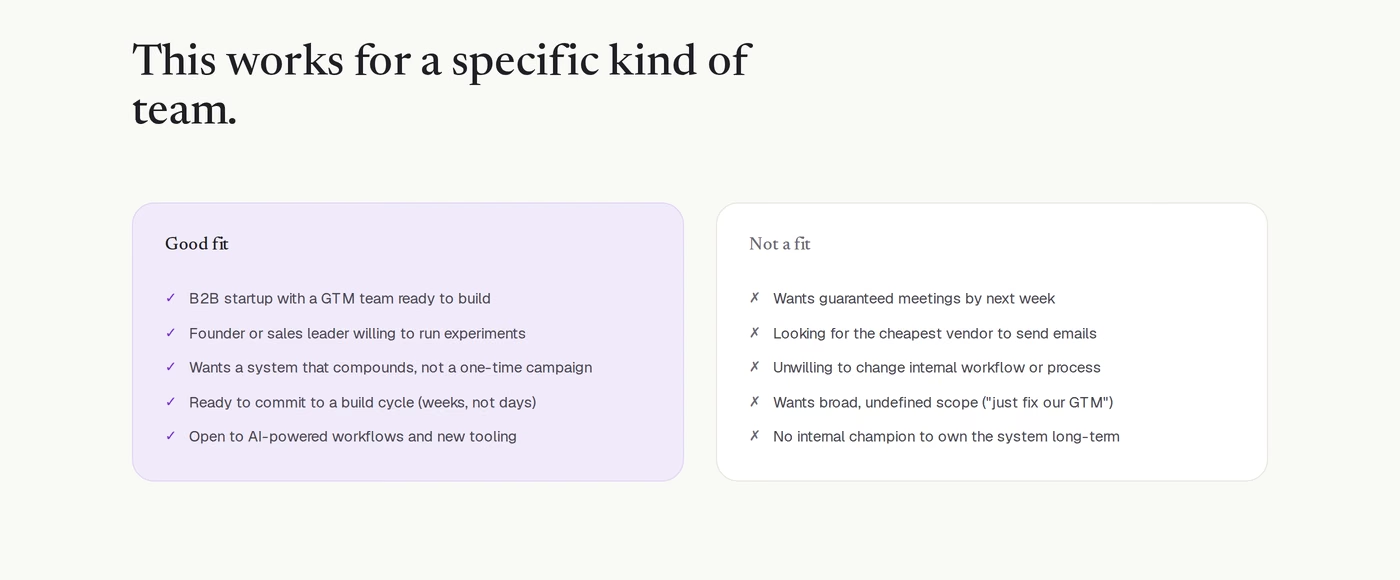
- Venture-backed B2B startups with a sales team. Their careers page names venture-backed startups as the client base, and their FAQ frames the system as support for existing reps.
- Teams that want to keep the system. If you expect to run outbound in-house within a year, their handover model fits.
- Founders willing to run experiments. Their own good-fit list names a founder or sales leader who will test things, not just approve a plan.
- Companies that want reps using AI properly. The AI Enablement program is a training product, and few outbound agencies sell one.
- Teams with a messy data layer. Their published work leans heavily on enrichment, scoring, and CRM hygiene rather than volume.
If two or more describe you, the two-week sprint is a low-commitment test. Ask its price on the first call.
Who Should Not Hire Zevenue?
- You need meetings on a number. They say plainly that they do not guarantee meetings, and their anti-fit list names buyers who want guaranteed meetings quickly.
- Your buyers answer the phone. No calling channel appears anywhere in their published services. For outbound sales into trades, logistics, or local business, that matters.
- Nobody internally can own the system. Their own anti-fit list names this, and handover only pays off if someone catches it.
- You want a fixed, published price before talking to anyone. That does not exist here.
- You need third-party proof before signing. There is no Clutch, G2, or Trustpilot record to read.
One more case. If you are sending under a few hundred emails a month, you may not need an agency at all. Running Salesforge yourself at $48 per month covers that volume with warmup included.
Zevenue Case Studies and Reported Results
Zevenue publishes no client case studies: no results pages, no before-and-after numbers, no named engagements with figures.
What exists instead is a testimonials page with named people, job titles, logos, and three videos. Here are its three most specific claims.
| Client | Named By | Reported Result |
|---|---|---|
| DemandHub | Brian Estioko, Director of Sales | Reports that campaign tips alone doubled their open rates, and that messaging opened new industries. |
| Breakr | Anthony Brown, CEO | Reports meetings booked in the first three months, and says the volume forced a change of approach. |
| Kolena | Mohamed Elgendy, CEO | Reports that their biggest customer at the time came from a meeting Zevenue set. |
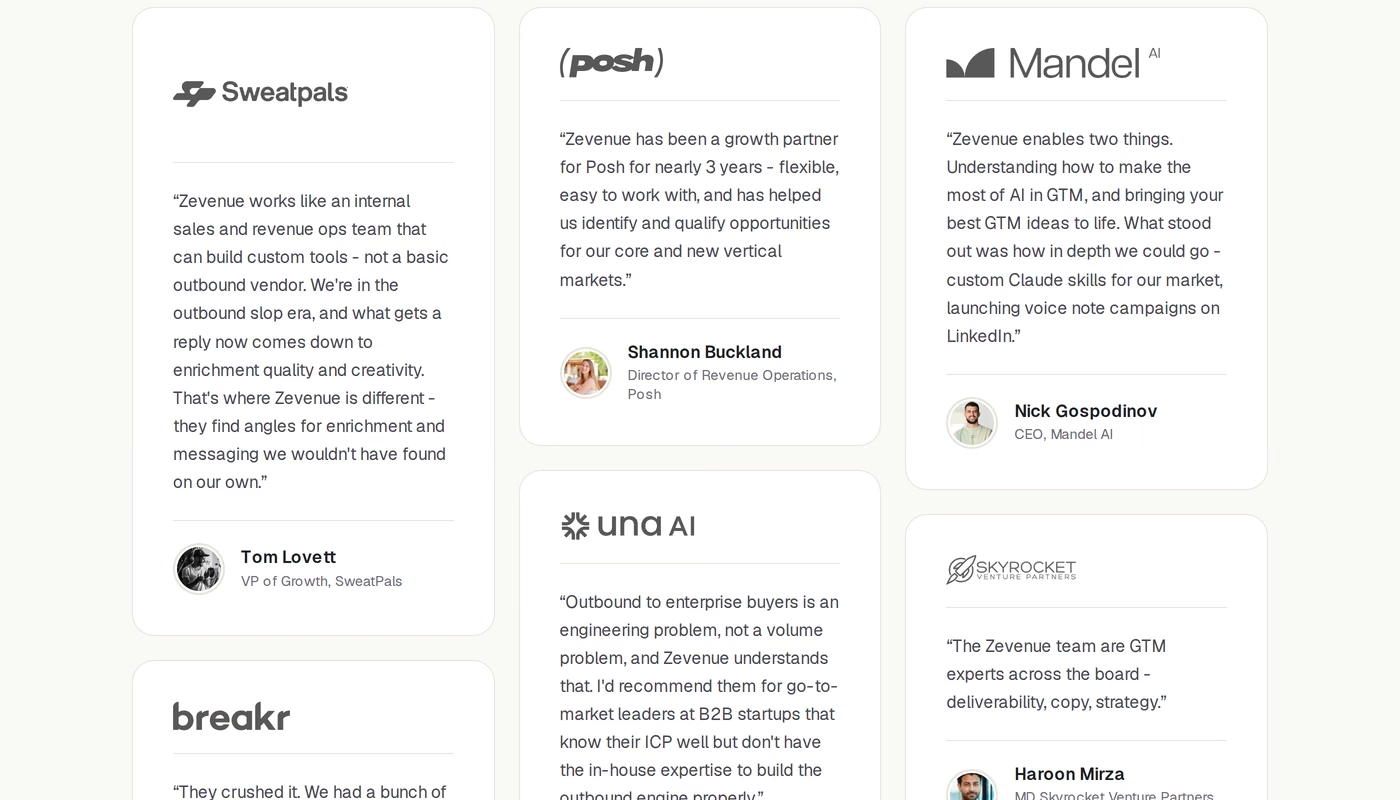
Two things stand out. First, only one is close to a number, and doubled open rates is the softest metric in outbound. No reply rate, meeting count, or pipeline figure appears anywhere on the site.
Second, the most useful signal is not a metric. Shannon Buckland, Director of Revenue Operations at Posh, reports a relationship of nearly three years. Retention is harder to manufacture than a testimonial.
Where Zevenue does publish hard numbers is on its own methods, not its clients. Their benchmarks page reports a model panel run against 243 funded AI companies on identical frozen evidence. Accuracy is claimed only on the 133 rows a human judged.
They report a top score of 83.5% agreement with human judgment. They also note the most accurate judge disagreed with itself on 14% of companies between runs.
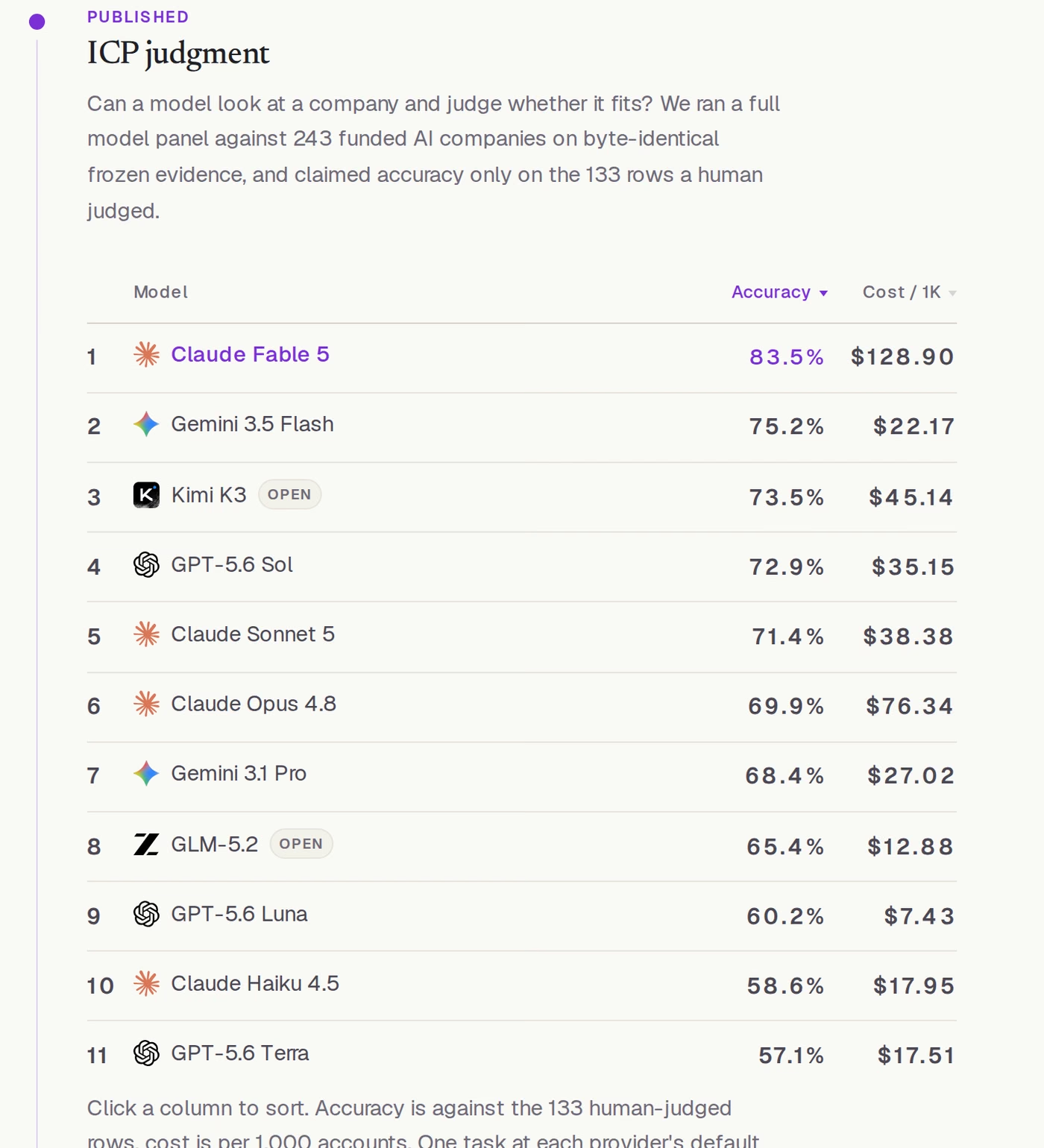
I have not seen another outbound agency publish an eval like this. It is evidence of method, not of client outcomes.
Every figure above is company-reported. No independent platform has verified any of it. Ask for a reference call with a client who has been with them longer than a year.
Zevenue Limitations to Consider Before Signing
- No independent review footprint: Clutch's own search returns no Zevenue profile, and Trustpilot returns a not-found page for their domain. Several AI-written directory pages claim Clutch reviewers praise them, and those claims do not hold up. Ask for three client references instead.
- No public pricing: nothing on their site states a rate, range, or minimum. Ask for the sprint and retainer prices in writing.
- No calling channel: their published services cover email, LinkedIn, and AI workflows only. If calling is part of your motion, you need a second vendor.
- No published team size: their site names no team beyond the founder, whose email is the contact address. Ask who works on your account and what else they run.
- Results are qualitative, not countable: the testimonials describe outcomes without numbers. Ask for one anonymized campaign report with reply rates and meetings.
- Company registration unverified: the federal Canadian registry search blocked automated access. Ask for the legal entity name that will appear on your contract.
None of these should rule them out on its own. But if two or more matter to you, compare agencies that already answer these questions on their public profiles. That is exactly what the certified agencies below do.
Zevenue Alternatives: Certified Forge Experts Worth Considering
Do not search for a B2B lead generation agency and pick the first result. Compare a few with verified practices, the way you would read a Martal Group review or an Abstrakt Marketing Group review first.
The Forge Expert Network is a directory of agencies certified on the Forge ecosystem. Certification requires completing Salesforge's cold email training and meeting program eligibility requirements, so every listed agency has a disclosed, modern outbound stack.
The directory is younger and smaller than Clutch, so treat it as a curated starting point rather than a complete market map.
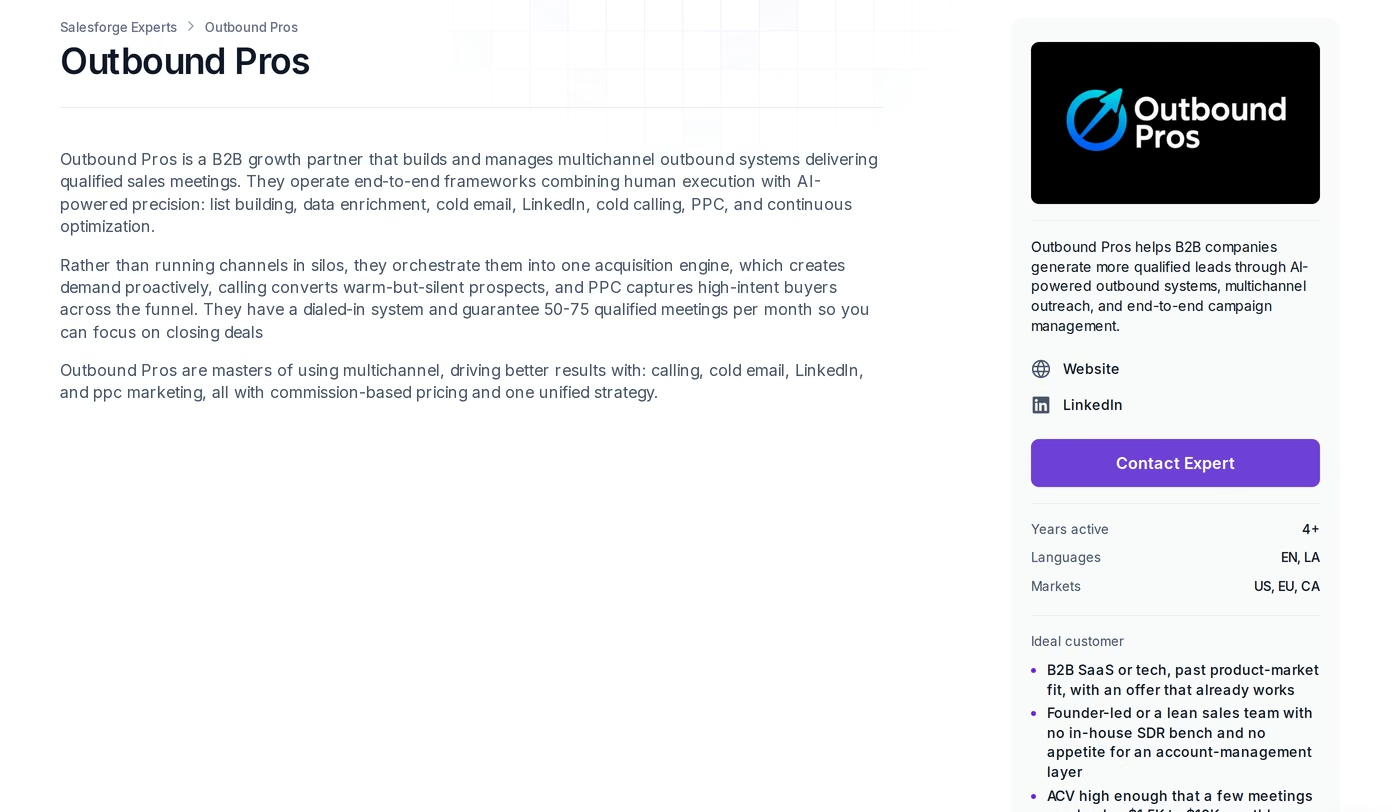
1. Outbound Pros
Best for: teams whose buyers convert on a call, not just in an inbox.
This is the option if calling matters to your market. Zevenue publishes no calling channel, and commits to no meeting count.
Outbound Pros runs list building, enrichment, cold email, LinkedIn, cold calling, and PPC as one motion rather than separate channels. Their profile states a guarantee of 50 to 75 qualified meetings per month, and commission-based pricing alongside a $1.5K to $10K monthly retainer.
Their profile also reports dedicated owned domain infrastructure with documented SPF, DKIM, and DMARC. It states a four to six week warm-up aimed at 85 to 95% inbox placement. They say going live takes roughly 21 days.
In their Outbound Pros case study, founder Jānis Plūme reports zero downtime across client campaigns and onboarding new clients without extra licenses.
2. Relevance
Best for: teams with nobody free to own an internal build.
Zevenue's own anti-fit list names buyers with no internal champion. A fully managed model fits them better than a handover model.
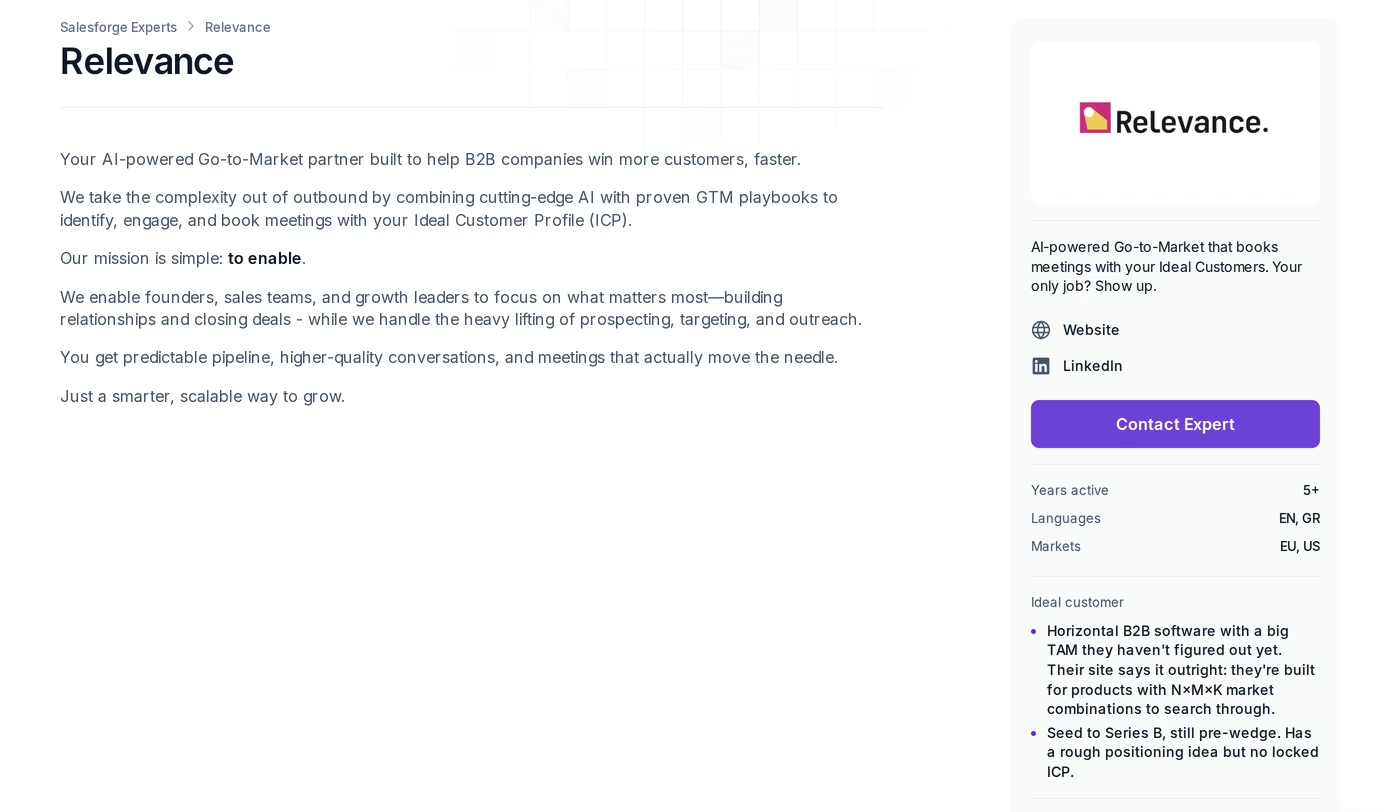
Relevance describes a managed service that handles deliverability, infrastructure, reply agents, and CRM sync, asking roughly an hour a week from the client. Their profile states one plan starting at $8,000 per month plus a one-time $6,000 setup fee, and reports going live in about three weeks.
Their profile reports 6 to 12 variants per campaign, with control groups and kill rules. That runs across more than 100,000 emails a month, and they say roughly 70% of what ships gets killed. They state that your data exports whenever you want it, which is the term to confirm in writing.
3. B2B Boosted
Best for: buyers who want a cheap, short, priced way to test an agency first.
Zevenue's smallest commitment is a two-week sprint with no published price. This is the closest alternative on model, with numbers on the page.
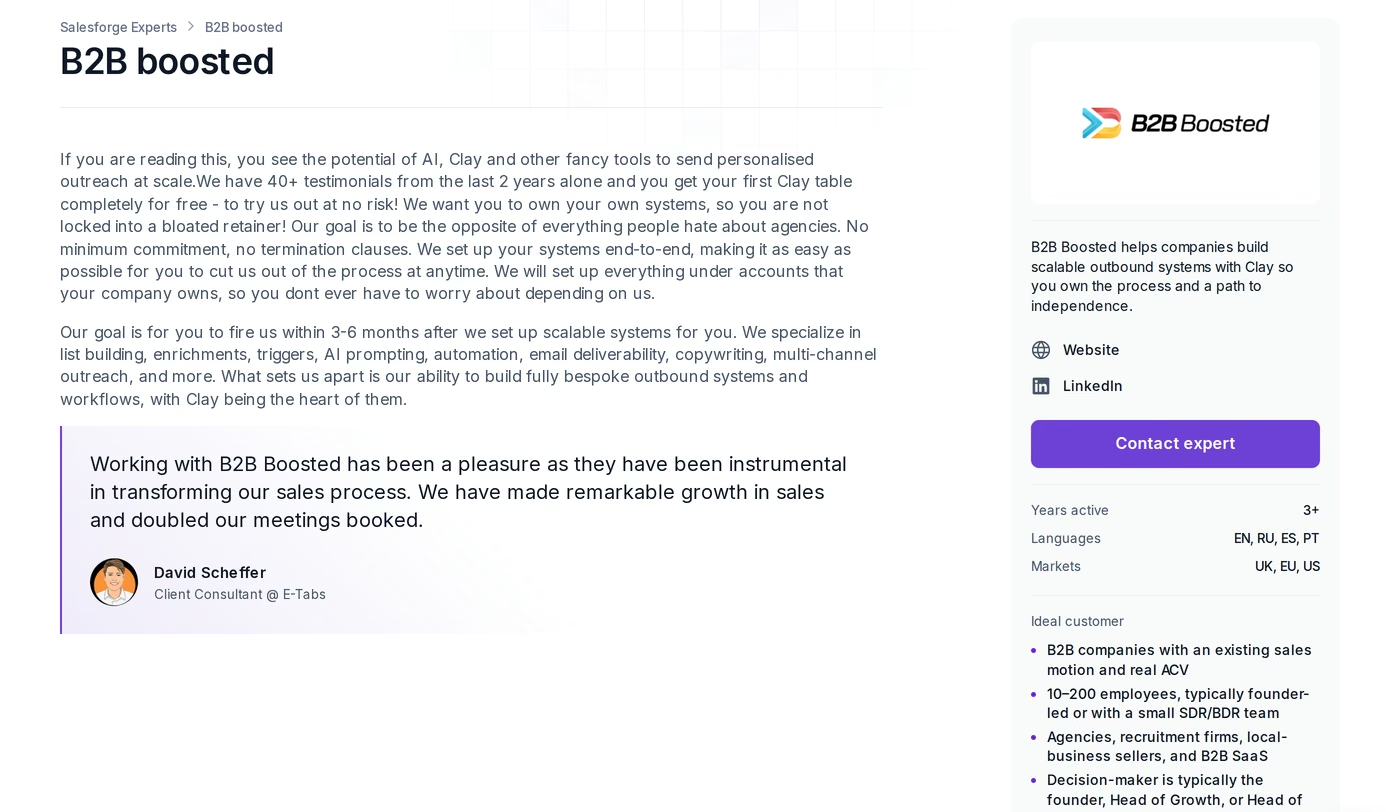
B2B Boosted builds bespoke outbound systems around Clay and hands them over. Their profile states a 30-day pilot at £1,999 or a three-month sprint at £1,749 per month, with no minimum commitment and no termination clauses.
Their profile says every system is set up under accounts the client owns. It adds that everything is documented and handed over, and that human approval is required on every send. They report 40+ testimonials from the last two years, and their profile carries a named quote from David Scheffer at E-Tabs reporting doubled meetings booked.
Prefer Not to Hire an Agency at All?
Two routes work without a retainer.
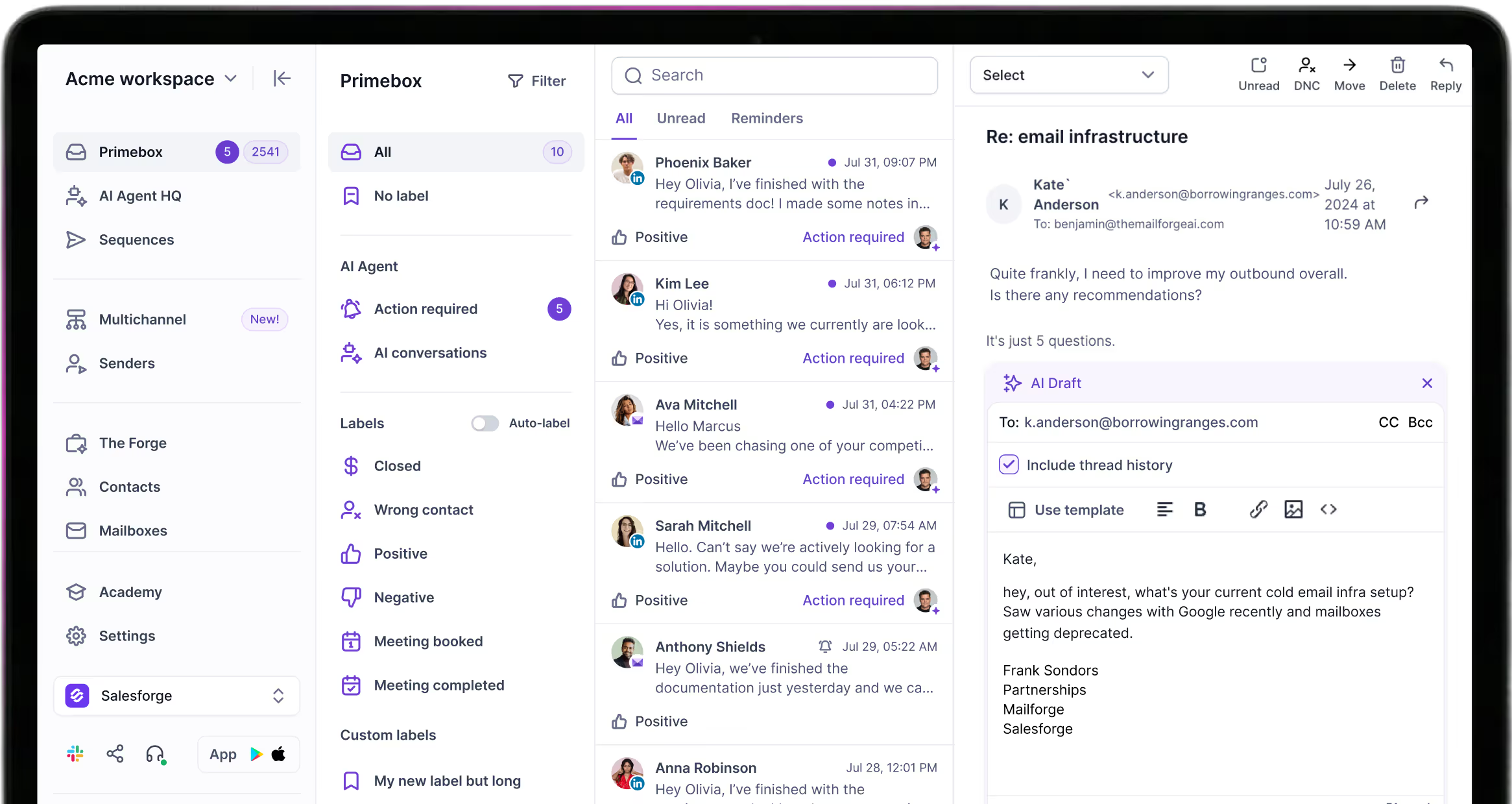
Run outbound yourself with Salesforge. It starts at $48 per month with unlimited mailboxes and free unlimited warmup included, plus a 14-day free trial.
Or hire Agent Frank, Salesforge's autonomous AI SDR, from $499 per month billed quarterly. He handles prospecting, sequencing, replies, and meeting booking on his own. He is a separate subscription, and he needs a demo plus a two-week warm-up before he starts sending.
Worth reading both sides here. Zevenue publishes a post arguing that AI SDR tools churn at 50 to 70% a year because they cannot hold a company's internal context. That is their stated view, not a verified figure, and it is a fair question to put to any AI SDR vendor before buying.

in Action
Questions to Ask Before Hiring Zevenue
Their answers will tell you more than any review, including this one.
- What does the two-week sprint cost, and what does the ongoing retainer cost per month?
- Who owns the domains, mailboxes, Clay workspace, and lists on the day the engagement ends?
- What is my total monthly spend including tools, data credits, and domains, not just your fee?
- Who replies to interested prospects and books the meeting, your team or mine?
- What is the minimum commitment, and what notice period ends it?
- Do I approve the prospect list and the copy before anything sends?
- What do reports contain, how often do they arrive, and can I see a redacted sample?
- Which clients in my industry can I speak to, and how long have they been with you?
Write the answers down. If question two or four gets a vague answer, ask again before signing.
Final Verdict: Is Zevenue Worth It?
Zevenue is worth considering if you are a venture-backed B2B startup with a sales team. The draw is an outbound system you keep, rather than a vendor you keep paying.
Two things set them apart. Their FAQ states that everything runs on your accounts, and they publish a model benchmark scored against a human-judged set rather than model grading. I would shortlist them for a Series A or B software company with a RevOps or growth hire who can own the build after handover.
If you need meetings committed to a number, want a calling channel, or need third-party reviews before you sign, compare certified agencies instead.
Compare Certified AgenciesFrequently Asked Questions
1. Is Zevenue a Legitimate Company?
The evidence says yes, with one check I could not complete. A domain registration lookup shows zevenue.com was registered on 1 October 2020 and is paid through October 2027. Their founder, Yusuf Ahmed, lists Zevenue on his public LinkedIn profile, and their testimonials page names real people with job titles at named companies. I could not verify their Canadian company registration, because the federal registry blocked automated access. Ask for the legal entity name on your contract.
2. How Much Does Zevenue Cost?
Zevenue does not publish pricing. Their site has no pricing page, and no figure appears on any service page. Engagements start with a 30-minute call. Remember that the retainer is not the full price. Their FAQ says everything runs on your accounts, so Clay, enrichment credits, domains, and mailboxes bill to you separately. Ask for the sprint price, the monthly retainer, and an estimate of tool costs on the same call.
3. Does Zevenue Guarantee Leads?
No, and they say so directly. Their FAQ answers the meetings question with a flat no. They argue that anyone guaranteeing meetings is either misleading you or running a model that burns out. What they say they guarantee instead is a working system, weekly shipped experiments, and a clear feedback loop. That is honest, but it is not a commercial commitment. Ask what happens if six weeks pass with no meetings booked.
4. Who Owns the Lead Data and Campaign Assets?
Their FAQ states that everything runs on your accounts, and nothing is locked behind theirs. They say you own the system, the SOPs, and the handoff docs. That is a stronger public position than most agencies take. It is still a website claim, not a contract term. Domain ownership matters most, because if an agency owns your sending domains, leaving means rebuilding your sender reputation from zero.
5. What Are the Best Zevenue Alternatives in 2026?
Three certified agencies in the Forge Expert Network cover the gaps. Outbound Pros adds cold calling and states a guarantee of 50 to 75 qualified meetings per month. Relevance is fully managed at a published $8,000 per month for teams with nobody free to own a build. B2B Boosted publishes a 30-day pilot at £1,999 with no minimum commitment. For smaller volumes, running Salesforge in-house from $48 per month is the cheaper route.
6. Should You Hire a Lead Generation Agency or Build Outbound In-House?
Hire an agency when you need pipeline fast and do not want to recruit and train SDRs. Build in-house when you want to own the system, the data, and the learning long-term. The middle path is running Salesforge yourself or hiring Agent Frank as an AI SDR, then moving to an agency once volume justifies it. Zevenue sits closer to the build-in-house end, since their whole model ends in handover.
.jpg)
.jpg)

.jpg)
