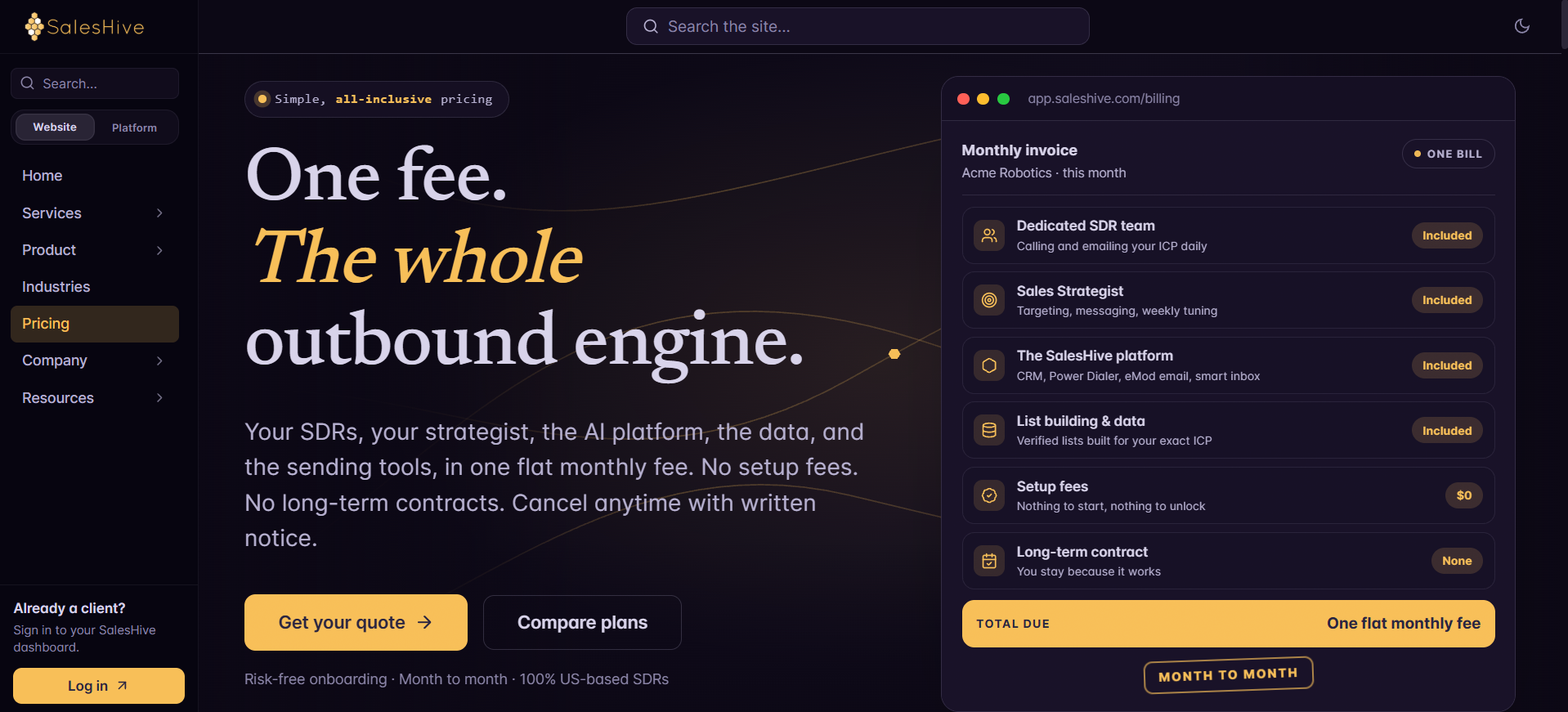
SalesHive promises the biggest published claim in outsourced SDR: 117,000+ meetings booked for 1,500+ B2B clients since 2016, plus $2.1B+ in generated pipeline. Their site lists prices openly, which is rare, and their contracts are month-to-month, which is rarer.
That is a lot to work with, and unlike most agencies in this space, they actually publish the numbers.
But when I searched for recent SalesHive reviews, I hit a wall. Trustpilot has 36. Clutch has exactly one, and it is a devastating March 2026 review from a client who paid $7,000/month and got a 13-day campaign running under the wrong company name and a script built for the wrong CRM.
So this SalesHive review covers what I found across their site, three review platforms, and public pricing analyses.
They are a Denver-based outsourced SDR agency founded in 2016 by Adam Rosen and Brendan Burnett. Their homepage credits proprietary AI tech (eMod for email personalization, Power Dialer for calls), plus US-based and Philippines-based SDR teams.
Below: what they actually sell, what their published pricing looks like, what the reviews expose, and the questions to ask before you sign.
The review footprint is asymmetric. Clutch has exactly one review, and it is the loudest signal in the entire footprint.
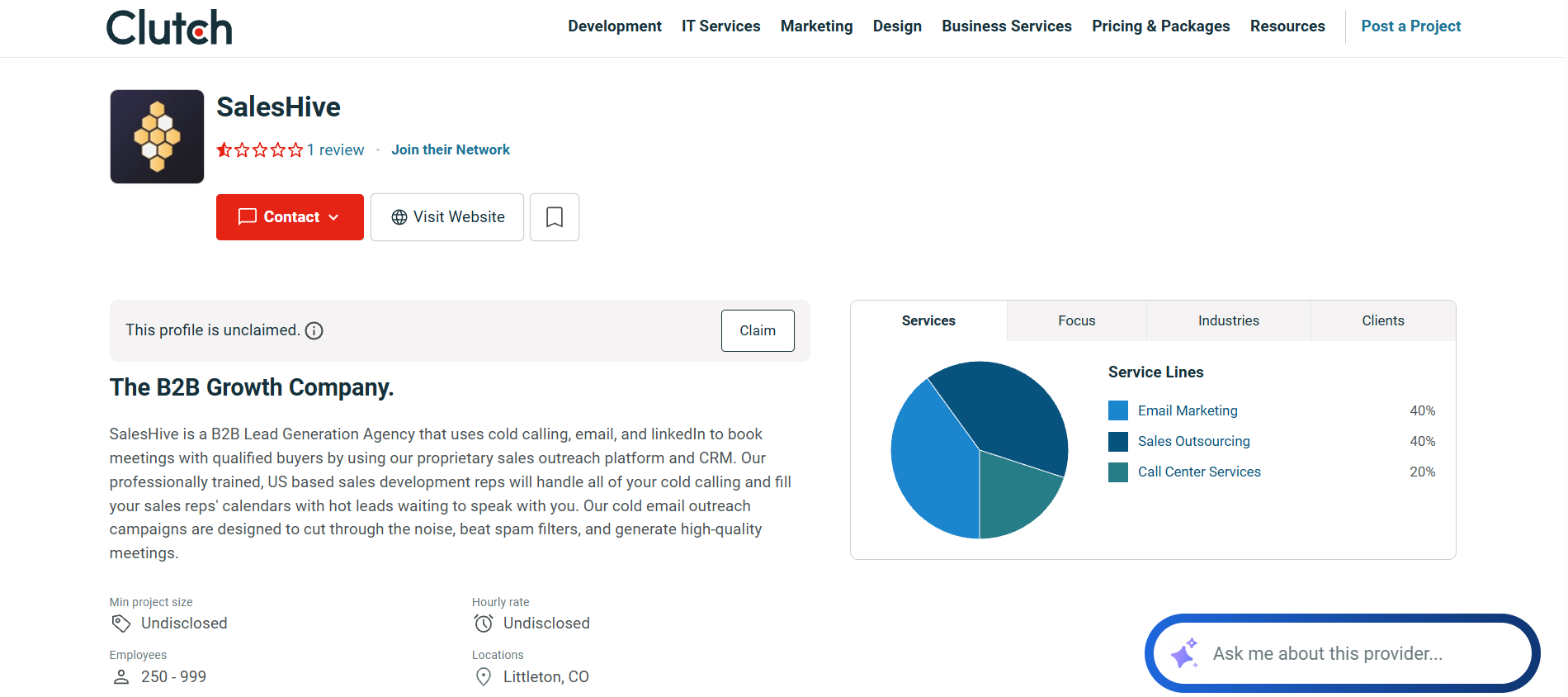
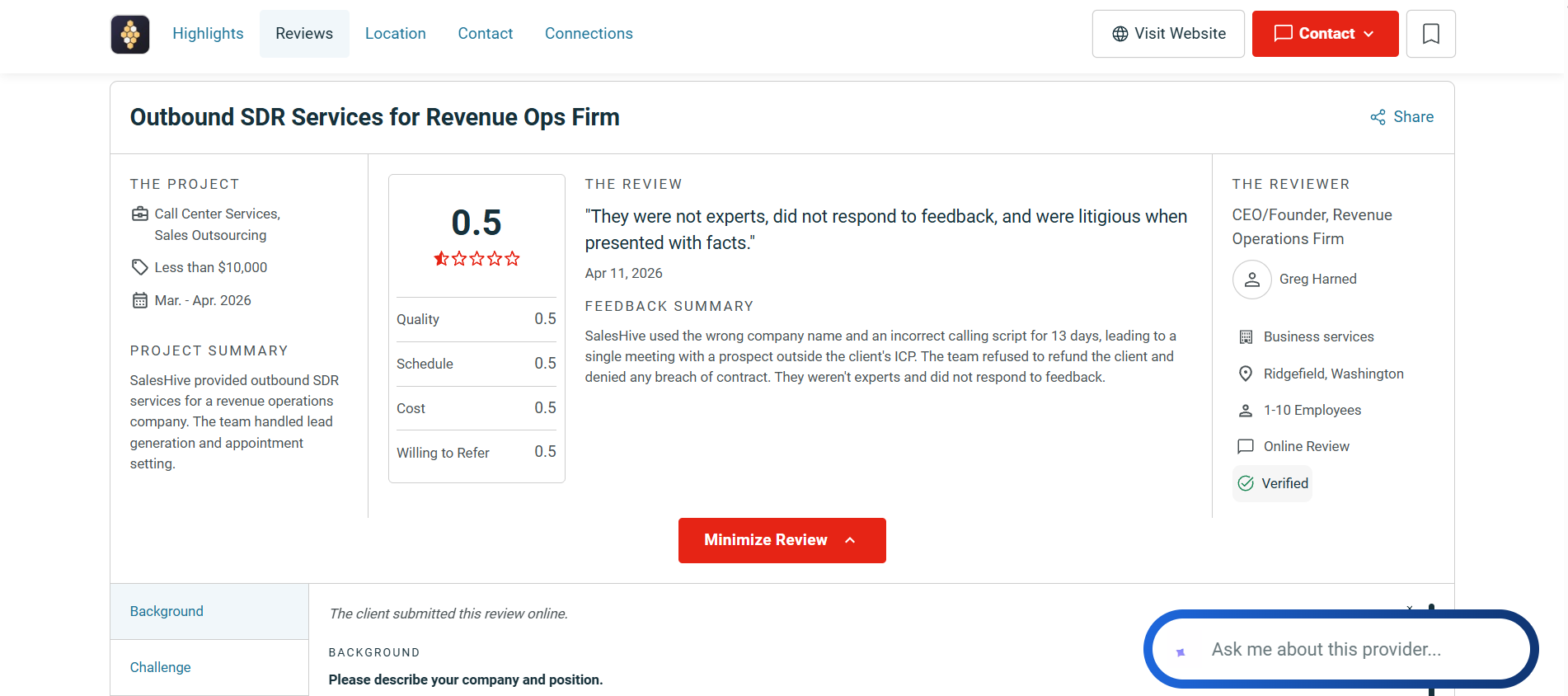
Two things matter about this review pattern. One damning review is one data point. But when total independent reviews across three platforms number 37, one bad review carries disproportionate weight in the decision.
Ask for two callable client references in your industry from the last 12 months, and specifically ask how they validated the SDR script and ICP quality in weeks one through four.
Hire SalesHive if you sell into US mid-market, need phone-based SDR capacity ramped fast, and value published pricing plus month-to-month flexibility over long-term system ownership.
Two things support this verdict. Their published pricing (Launch $5K, Grow $8K, Crush $12K on the site) is genuinely rare in this space. And their 30-day cancellation with month-to-month contracts is a real advantage versus competitors requiring 3-6 month minimums.
A few things hold it back:
Get the ICP validation process, script sign-off procedure, and week-one QA checklist in writing before signing. If any answer is vague, look at other certified agencies here.
I have not been a SalesHive client, so this review is research-based.
I read their homepage, pricing page, service pages, industry pages, and glossary content. I pulled Trustpilot (36 reviews), G2, Clutch (one review), and third-party analyses on LeadHaste, Outbound Sales Pro, CIENCE competitor pages, and Sales So.
For pricing, I cross-referenced SalesHive's own pricing page against three third-party benchmarks: LeadHaste, Sales So, and Outbound Sales Pro. All four sources agree on the tier structure (5K/8K/$12K US, $4K Philippines).
I judged them on four things: pricing transparency, script quality control, contract flexibility, and whether the published claims (117,000 meetings, 1,500 clients, $2.1B pipeline) hold together in reference reviews.
Everything below marked "reports" or "says" comes from their own material.
SalesHive sells outsourced sales development: qualified meetings booked with decision-makers, delivered by managed SDR teams (US or Philippines-based) inside your CRM.
Their homepage says US-based SDRs make 150+ dials per day using proprietary Power Dialer software with real-time insights and built-in compliance features. Higher-tier plans (Grow, Crush) hit 300 to 500+ touches per day per rep.
Every SDR is backed by a dedicated strategist, inbox support, and campaign management, per their site.
Their eMod technology reportedly turns templates into hyper-personalized emails at scale. SalesHive claims open rates around 68% versus industry averages of 15-25%, though these are self-reported figures.
Email sequences include A/B testing, deliverability optimization, and dynamic personalization pulled from company news and buying signals.
The full SDR outsourcing bundle combines cold calling, email, and LinkedIn outreach into one managed program. Reporting runs through a real-time dashboard covering meetings booked, response rates, and pipeline generated.
They say they work inside your existing stack, naming Salesforce, HubSpot, Salesloft, and Outreach as native integrations.
End-to-end meeting booking with calendar integration and show-rate optimization is included across all tiers per their homepage.
Every SalesHive cell comes from public material or third-party verified data. Confirm the specifics on your discovery call.
Their homepage describes a five-step onboarding path. Here is how that maps onto what a client actually experiences.
Their sales team runs a discovery call covering ICP, positioning, differentiators, and success metrics. This becomes the foundation for list building and script development.
Ask them to define what counts as a qualified meeting in writing. A reply, a booked meeting, and a held meeting are three different things.
SalesHive builds prospect lists using their internal data providers, enrichment tools, and ICP filters agreed during discovery.
Ask to see a sample list of 50 prospects before launch. Given the March 2026 Clutch reviewer's experience (SDR contacting a consultant at an implementation firm they sell into), sample list validation matters.
Copywriters draft the calling scripts and email sequences using your positioning. eMod personalizes emails at scale.
Ask who signs off on the script before it goes live, and what the QA checkpoint looks like in the first calling week. The Clutch review documented a 13-day misfire that better first-week QA would have caught. If you want to compare against retainer-model agencies, my Belkins review covers what US-focused retainer scale looks like.
Programs typically go live within two to three weeks of contract signing, per their homepage.
Confirm the ramp timeline in writing. Onboarding delays are common per Trustpilot reviews, especially when integrations require CRM setup.
SDRs handle the full conversation flow through booked meeting. Reporting runs through the client dashboard in real time. If you want to run this same channel mix with your own team instead of outsourcing it, my roundup of the best multichannel outreach tools covers the software side of the same problem.
Ask for a sample report from a live account before signing. Verify it separates held meetings from booked ones.
Weekly strategy calls with your account manager cover script iteration, list refinement, and channel mix adjustments.
Ask what happens in weeks one through four if the meeting quality is off. Given the documented pattern, the first-month recovery process matters more than the standard optimization cadence.
SalesHive publishes custom pricing
The good news versus other reviews in this series: SalesHive owns and maintains the calling infrastructure and dialer software, so you're not carrying domain reputation risk the way you would with email-heavy agencies.
But you also don't get to keep the SDR playbook, scripts, or process assets when you leave.
If you are sending under a few hundred emails a month, you may not need an agency at all. Running Salesforge yourself at $48 per month covers that volume with warmup included.
SalesHive publishes case studies and testimonials on their site, though the individual client-level pipeline numbers are lighter than what agencies like Belkins or ColdIQ show. Here are the headline figures from their homepage.
All figures are company-reported. No independent audit exists.
Two things stand out. The aggregate scale numbers are believable given the pricing tier structure and 10-year track record. But named client case studies with specific pipeline figures are lighter than competitors publish. SalesHive leans on aggregate volume, not case-study depth.
1. The single Clutch review is a real signal
One review is one data point, but the documented failure (wrong company name for 13 calling days, wrong CRM script, one meeting with a prospect entirely outside ICP) is exactly the failure mode you hire an SDR partner to prevent. If total independent reviews were 300, one bad review could be dismissed. At 37 total, it carries disproportionate weight.
2. Script quality control appears inconsistent
Both LeadHaste and Outbound Sales Pro's third-party reviews flag ICP and script quality as recurring concerns in critical reviews. The volume-focused delivery model (150-500+ touches per day) creates pressure that can produce misfires.
3. No infrastructure ownership at contract end
LeadHaste's review puts it directly: "you're renting headcount, not building an asset." Scripts, playbooks, and process improvements stay with SalesHive when you leave.
4. Trustpilot review recency is not disclosed
Some Trustpilot reviews may be several years old. Ask for two callable references from clients who signed in the last 12 months.
5. Philippines tier quality is not publicly detailed
The $4K Philippines tier is significantly cheaper than US tiers, but reviews specifically about the Philippines-based SDR quality are scarce. If you're considering that tier, ask for Philippines-specific references. My CIENCE review covers a competitor that also uses offshore delivery models if you want to compare.
6. Geographic coverage limited to US and Philippines
If you need EMEA or APAC delivery, SalesHive isn't the fit. My best lead generation agencies in the USA breakdown covers domestic-first alternatives.
7. The AI positioning is real but not unique in 2026
eMod and Power Dialer are proprietary, but many agencies now claim AI personalization. Ask specifically what eMod does that off-the-shelf tools like Instantly, Smartlead, or Apollo don't.
None of these should rule SalesHive out on their own. But if two or more matter to you, compare agencies that answer these questions on their public profiles.
Do not Google "SDR agency" and pick the first result. Compare a few agencies whose practices you can actually verify.
The Forge Expert Network is a directory of agencies certified on the Forge ecosystem. Certification requires completing Salesforge's cold email training and meeting program eligibility requirements, so every listed agency has a disclosed, modern outbound stack.
Here are three certified agencies matched to different SalesHive gaps.
Best for: Buyers who want outbound execution plus sales team training so the outbound engine doesn't break when SDR quality is inconsistent.
Forge rating: 5/5
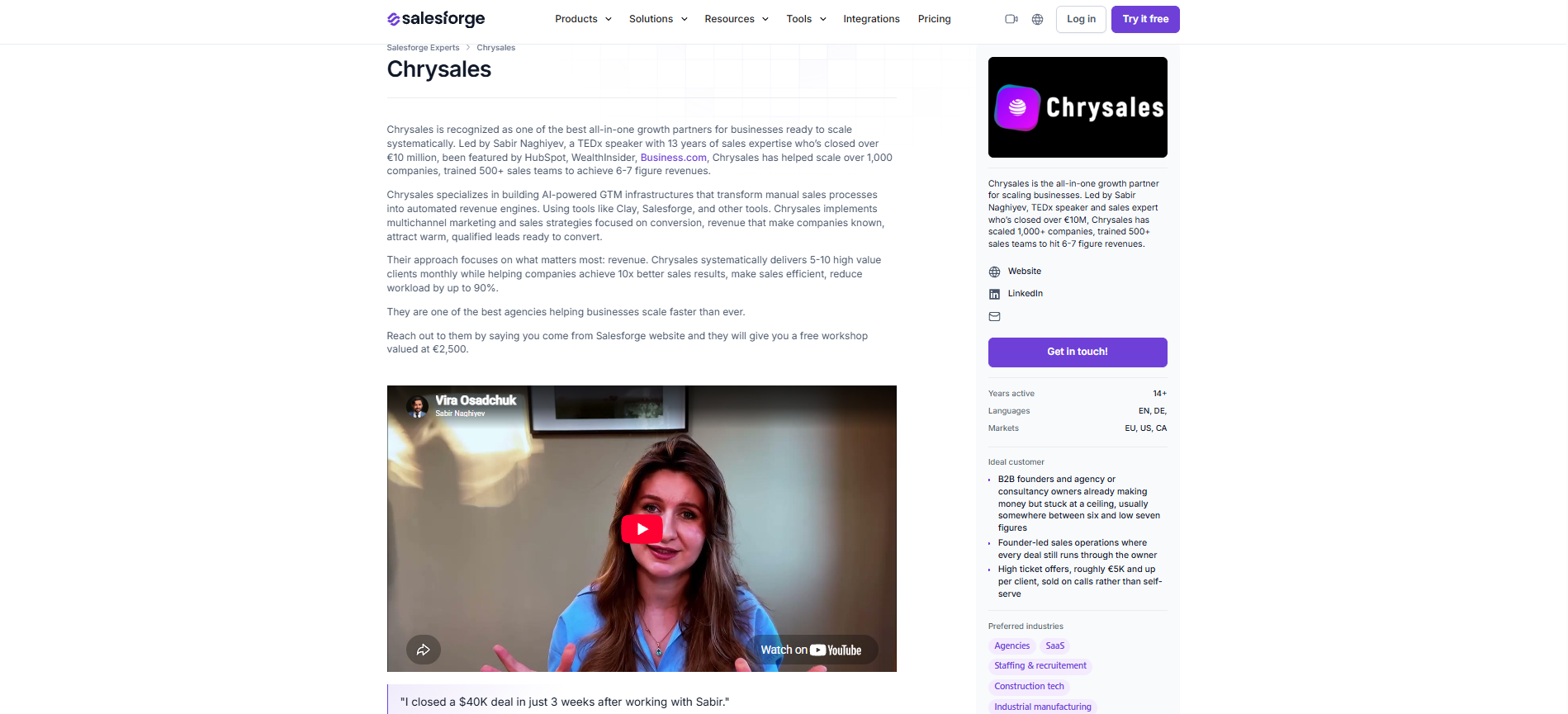
Chrysales is the all-in-one growth partner for scaling businesses. Led by Sabir Naghiyev, TEDx speaker and sales expert who has closed over €10M, Chrysales has scaled 1,000+ companies and trained 500+ sales teams to hit 6-7 figure revenues.
This is the direct answer to SalesHive's script quality inconsistency. If you're worried about the pattern documented in the Clutch review, Chrysales bundles sales enablement and coaching alongside outbound execution. Same fully-managed convenience, deeper investment in what actually gets said on the calls.
Best for: $5M to $50M ARR companies that want to keep the system after the engagement ends.
Forge rating: 5/5
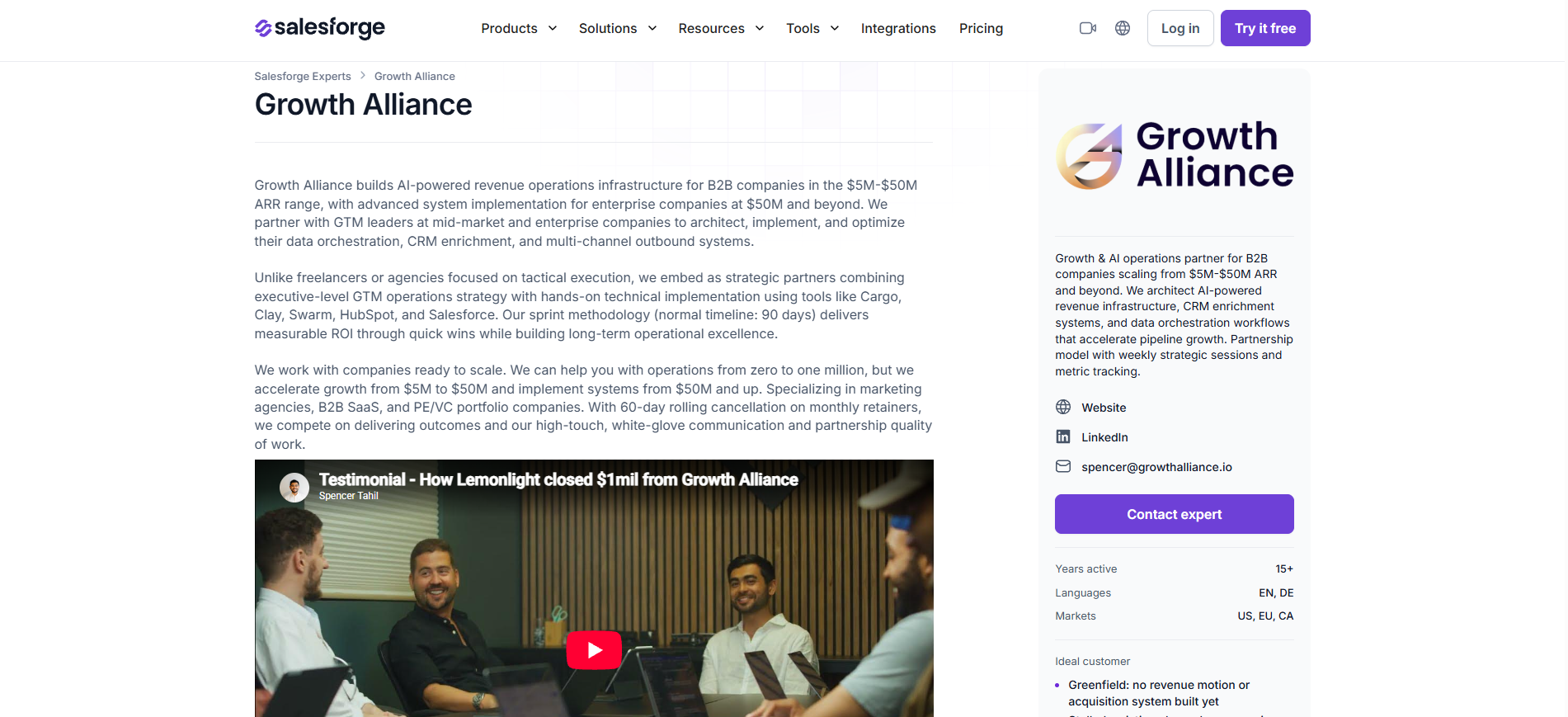
Growth Alliance is a growth and AI operations partner for B2B companies scaling past $5M ARR. Programs start at $10K per month with 60-day rolling cancellation and a 90-day sprint methodology.
Their profile says systems are built to become the client's own and keep running afterwards. They cap engagements at four to six clients with 100 to 120 hours each per month, which is the direct answer to SalesHive's "renting headcount" model. You end the engagement with something you own.
Best for: Smaller budgets that need a published entry price and European coverage that SalesHive doesn't offer.
Forge rating: 5/5
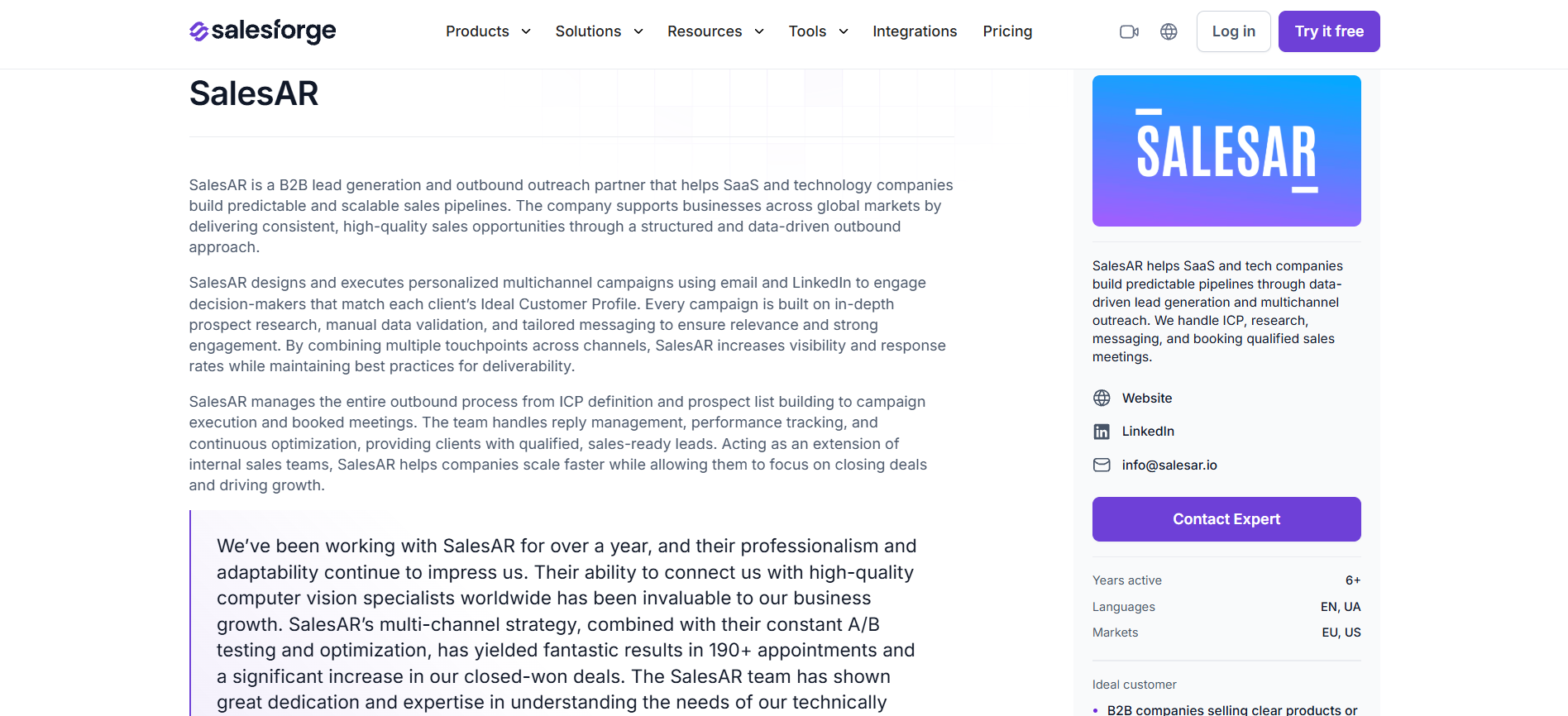
Look here if SalesHive's $5,000 US tier is above your ceiling or if you need EMEA delivery. The SalesAR profile publishes a starting price of $2,500 per month and lists EU and US markets, against SalesHive's US and Philippines-only delivery.
Their profile reports 700+ clients served, 30,000+ appointments set, and an 80% contract renewal rate. It also carries a named client testimonial from Akridata reporting 190+ appointments and a rise in closed-won deals.
Two routes skip the agency entirely.
Run outbound yourself with Salesforge. It starts at $48 per month with unlimited mailboxes and free warmup included, plus a 14-day free trial.
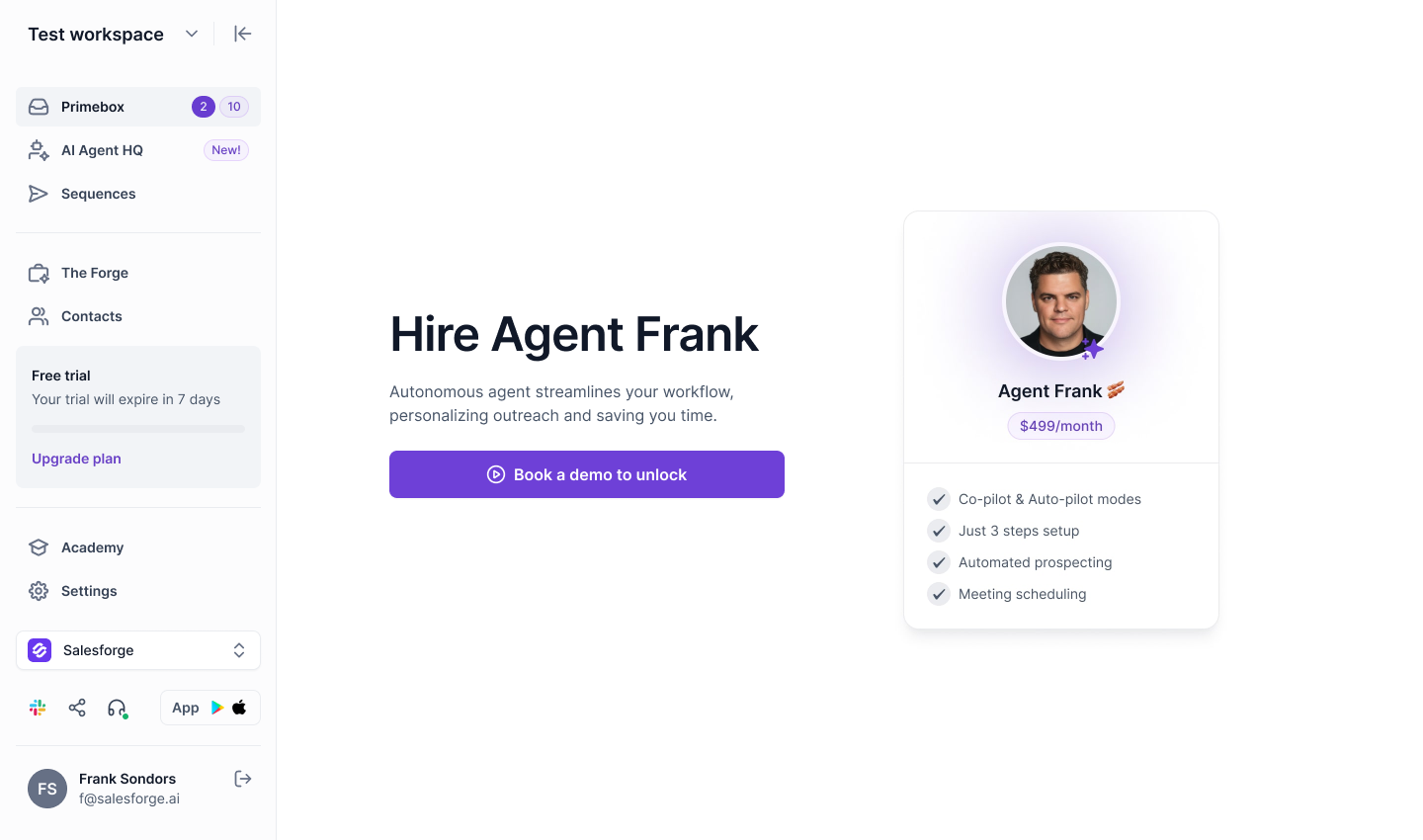
Or hire Agent Frank, Salesforge's autonomous AI SDR, from $499 per month billed quarterly. He handles prospecting, sequencing, replies, and meeting booking on his own. He is a separate subscription, and he needs a demo plus a two-week warm-up before he can send.
Their answers will tell you more than any review, including this one.
SalesHive is worth considering if you're a US mid-market B2B seller who values pricing transparency, wants month-to-month flexibility, and needs phone-based SDR capacity ramped in 2-3 weeks.
Their published pricing tiers (5K/8K/$12K) and 30-day cancellation are genuine differentiators in an industry built on multi-month minimums and hidden quotes. The 117,000+ meetings and $2.1B+ pipeline aggregate figures suggest the operational model works at scale.
I would shortlist them for a US mid-market SDR ramp where the deal size supports the retainer and speed to pipeline matters more than long-term asset ownership. I would not shortlist them for a technical niche where script accuracy is life or death, or for any market outside the US and Philippines.
If you need EMEA delivery, script quality guarantees, or an outbound system you actually own at the end, compare certified agencies that already publish those terms.
Yes. SalesHive is a US-based sales development agency founded in 2016 in Denver, CO, by Adam Rosen and Brendan Burnett. They report 1,500+ clients served, 117,000+ meetings booked, and $2.1B+ in generated pipeline. They operate SDR teams in the US and the Philippines and have built proprietary AI tech (eMod for email personalization, Power Dialer for calls).
SalesHive publishes their pricing openly, which is rare in the agency space. US SDR tiers run $5,000 (Launch), $8,000 (Grow), and $12,000 (Crush) per month. Philippines-based options start near $4,000/month. Contracts are month-to-month with 30-day cancellation, and a 6-month commitment reportedly saves about 10%.
No formal lead volume guarantee is published. The closest commitment is the standard weekly reporting on meetings booked, and month-to-month contracts mean you can cancel in 30 days if quality is off. Ask specifically how they define a "qualified meeting" and get it in writing before signing.
A verified Clutch reviewer signed a $7,000/month contract, provided ICP documentation before launch, and reported that SalesHive's SDR used the wrong company name and a calling script built for the wrong CRM for 13 calling days before the client caught the error. The one meeting delivered was with a prospect entirely outside the reviewer's ICP. This is currently the only Clutch review on SalesHive's profile.
SalesHive rents you headcount and infrastructure. When the engagement ends, scripts, playbooks, and process improvements stay with SalesHive. This is different from build-your-own-system agencies like Growth Alliance or B2B Boosted where transfer to your team is part of the engagement design.
Three certified agencies in the Forge Expert Network answer specific gaps. Chrysales bundles sales team training alongside outbound execution for buyers worried about script quality. Growth Alliance offers 60-day rolling cancellation and builds systems clients keep. SalesAR publishes a $2,500 starting price and covers EU + US markets. For smaller volumes, running Salesforge in-house from $48/month is a leaner alternative.
Hire an agency when you need SDR capacity fast without the 3-6 month hiring and ramp cycle. Build in-house when you want to own the system, the data, and the learning long term. SalesHive's month-to-month structure makes it a reasonable "try before you build" option compared to agencies requiring 12-month contracts. There is a middle path: run Salesforge yourself from $48/month, or hire Agent Frank as an AI SDR from $499/month billed quarterly, and move to an agency once volume justifies it.
.png)