Email verification is a job most teams do a few times a year, which is why the credits you buy for it need to still be there when you come back.
That is the part of NeverBounce that changed, because prepaid credits now expire 12 months after purchase, and the people who bought before that rule existed describe it as a term they never signed up for.
Add the price increases reviewers report after the ZoomInfo acquisition, and the occasional verifier ends up paying subscription economics for a tool they open twice a year.
The tool still works, so if you verify monthly through a CRM sync there is little reason to move. If you do not, the question becomes which verifier to replace it with, and every vendor here claims to be the accurate one.
So I compared the things that decide the bill instead: cost per email at real volumes, whether credits expire, how unknown and catch-all results are charged, and what each tool does with a domain that accepts every address.
That table gives you the shortlist, but the reasoning behind the order needs unpacking before the individual tools make sense.
How I Compared These NeverBounce Alternatives
Every verifier in this category markets itself on accuracy, and that makes accuracy a weak way to separate them. So I looked at the terms instead, because the terms are where these tools actually differ.
1. What You Actually Pay Per Email at Your Volume
Headline prices are set at the smallest tier, which flatters the cheap-looking tools and hides where they get expensive. A verifier that wins at 1,000 addresses can lose badly at 50,000, so I checked the cost at the volumes real lists arrive in.
2. Whether Your Credits Expire Before You Use Them
This is the term that sent most people looking in the first place, and it is worth checking on every tool you shortlist. If you clean a list twice a year, an expiry date quietly changes the value of every block you buy.
3. How Each Tool Bills Unknown and Catch-All Results
The primary thing I would like to highlight here is that an unknown result gives you nothing to act on. Some vendors still take a credit for returning one, while others refuse to and say so on the pricing page. On a messy list, that single policy moves the bill more than the headline rate does.
4. How Each Tool Resolves a Catch-All Domain
B2B lists are full of domains that accept every address and confirm none of them. Some tools stop there and mark the address risky, and others run a second pass that sorts those addresses into valid or invalid.
5. Whether Verification Reaches the Tool You Send From
A clean list only helps once it reaches your sender, and for most verifiers that means export, upload, download and re-import every campaign. One tool on this list skips that loop completely, which is worth weighing against the price per email.
6. What Each Guarantee Actually Covers
Most vendors say something reassuring about your bounce rate without attaching a number to it. I checked which guarantees come with published terms, because that difference only shows up when you try to claim one.
If you want the wider category rather than NeverBounce replacements specifically, this comparison of email verification tools covers eight options across cold outreach and newsletters.
5 Best NeverBounce Alternatives in 2026
1. Salesforge
The first alternative to NeverBounce on my list is Salesforge, and I ranked it first because it solves the problem behind the problem.
Most people shopping for a replacement verifier are not really unhappy with verification itself. They are tired of the loop around it, which is exporting a list, uploading it somewhere else, downloading the result and importing it back before every campaign.
Salesforge is the best NeverBounce alternative for outreach teams because it removes that loop entirely. Each contact gets validated as it enters a sequence, so the check happens inside the tool that does the sending.
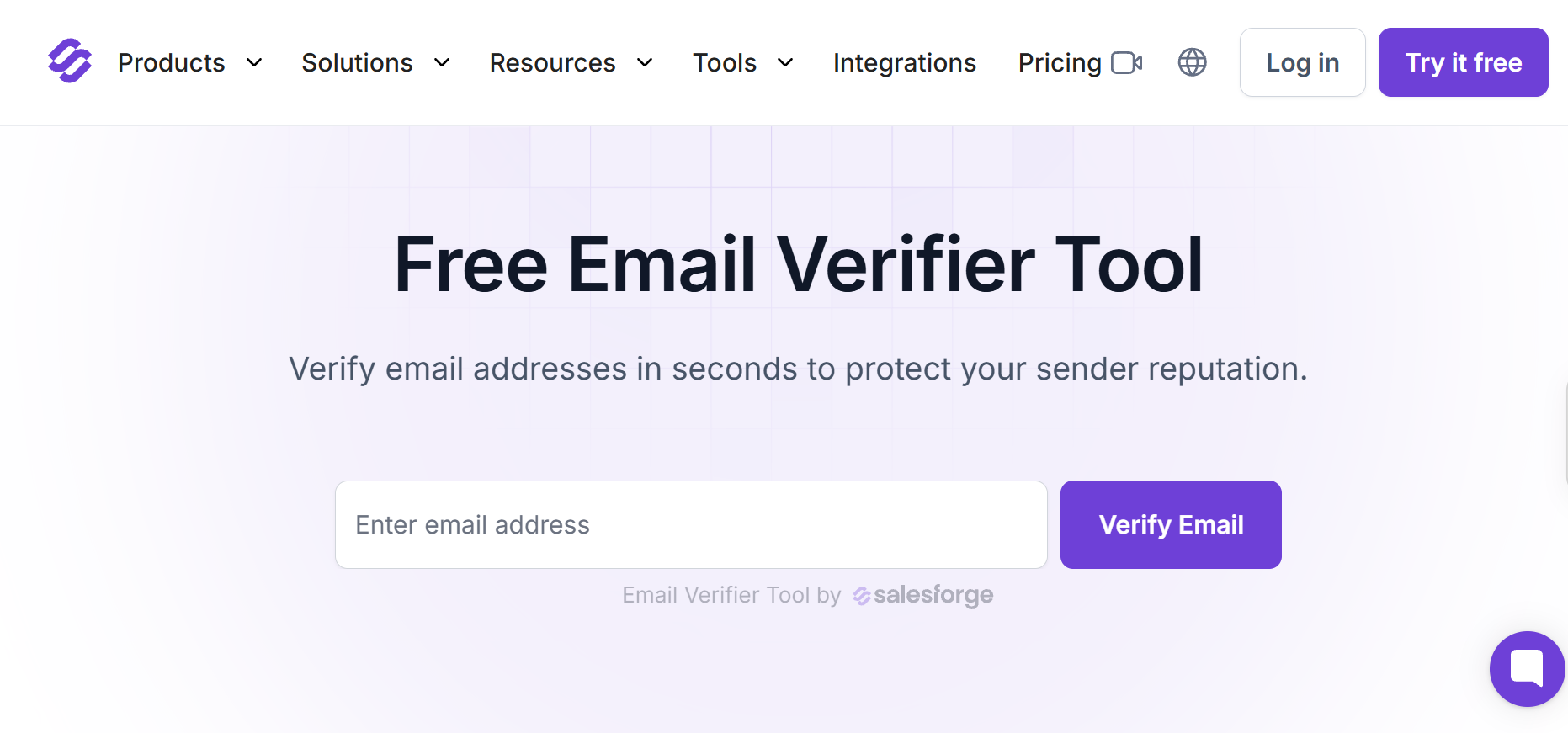
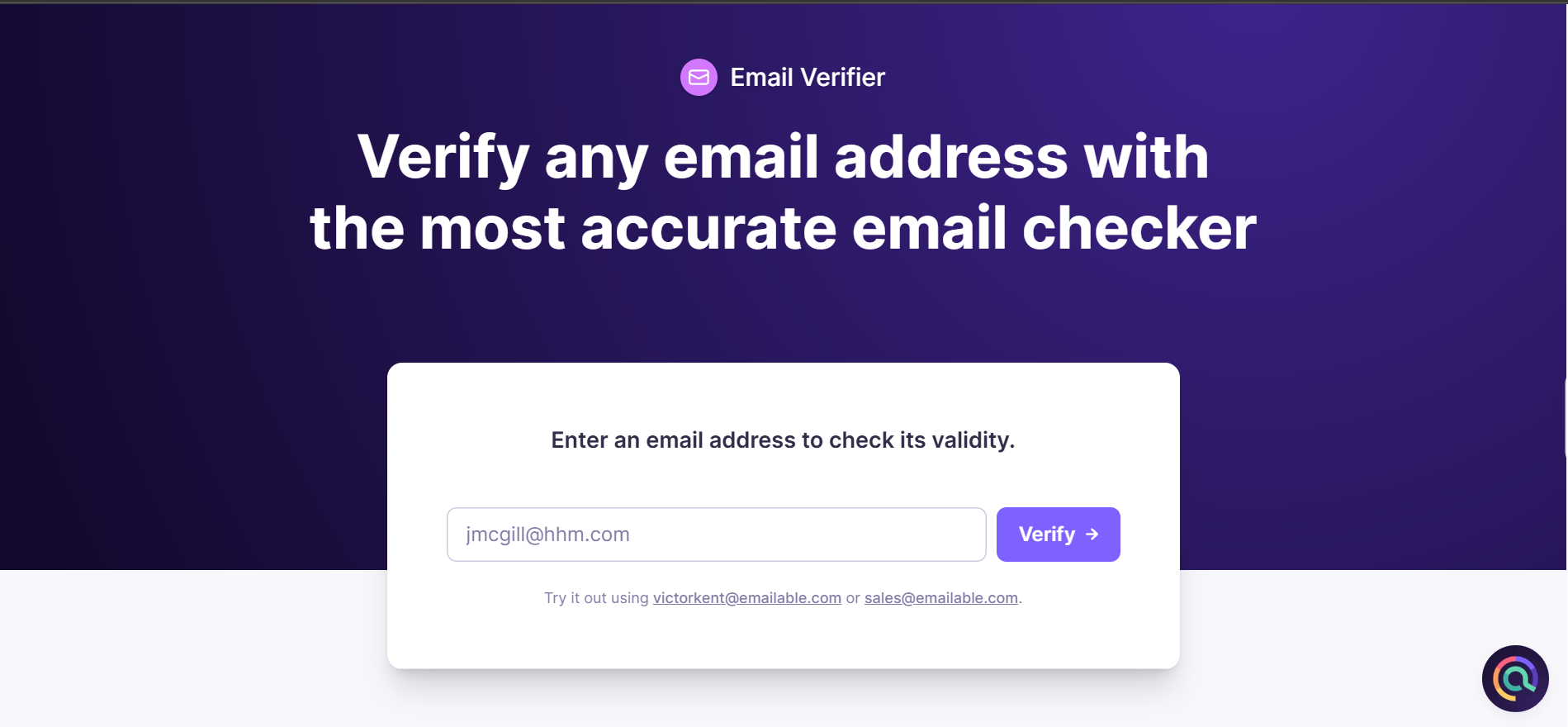
There is also a free email verifier you can use without an account, and the thing I would highlight about it is the breakdown. It returns a score from 0 to 100, and then shows which individual check failed, so a risky address arrives with a reason attached.
That is more useful than it sounds. When an address scores 40, you can see whether it is a full inbox or a spam trap, and those two results deserve very different decisions.
Key features I liked:
Eight checks on every address, covering syntax, deliverability, MX records, catch-all, disposable, spam traps, full inbox and free provider
A score from 0 to 100, where the 90s means the address is safe to send to
A per-check breakdown explaining why an address scored low
Automatic validation when a contact enters a sequence, with no file to export
Free warmup through Warmforge on paid plans
Unlimited mailboxes and LinkedIn senders on every plan
Pricing:
Free email verifier: up to 10 checks per month, with no card required
Pro plan: $40 per month, including 300 validation credits and 5,000 emails per month
Growth plan: $80 per month, including 1,000 validation credits and 50,000 emails per month
Free trial: 14 days with 50 validation credits included
All prices pertain to the yearly billing model, and the current tiers sit on the Salesforge pricing page.
Pros
Verification runs inside the sending tool, so no file moves between two products before a campaign
The free verifier names the failed check instead of returning a bare pass or fail verdict
Validation credits come bundled into the plan rather than being bought as a separate product
Warmup through Warmforge is included, which covers the step that follows list cleaning
Cons
The free verifier covers 10 addresses a month, so it suits spot checks rather than cleaning a list
The Pro plan includes 300 validation credits, so bigger lists need extra credits bought in the app
There is no standalone verification API, so this will not replace a verifier if you send elsewhere
To put it simply, Salesforge fits when you want verification folded into outreach rather than bolted onto it. That said, plenty of teams need a dedicated verifier that works regardless of where they send from, and the next four are built for exactly that.
The next alternative to NeverBounce on my list is ZeroBounce, and I put it second because of one line on its pricing page.
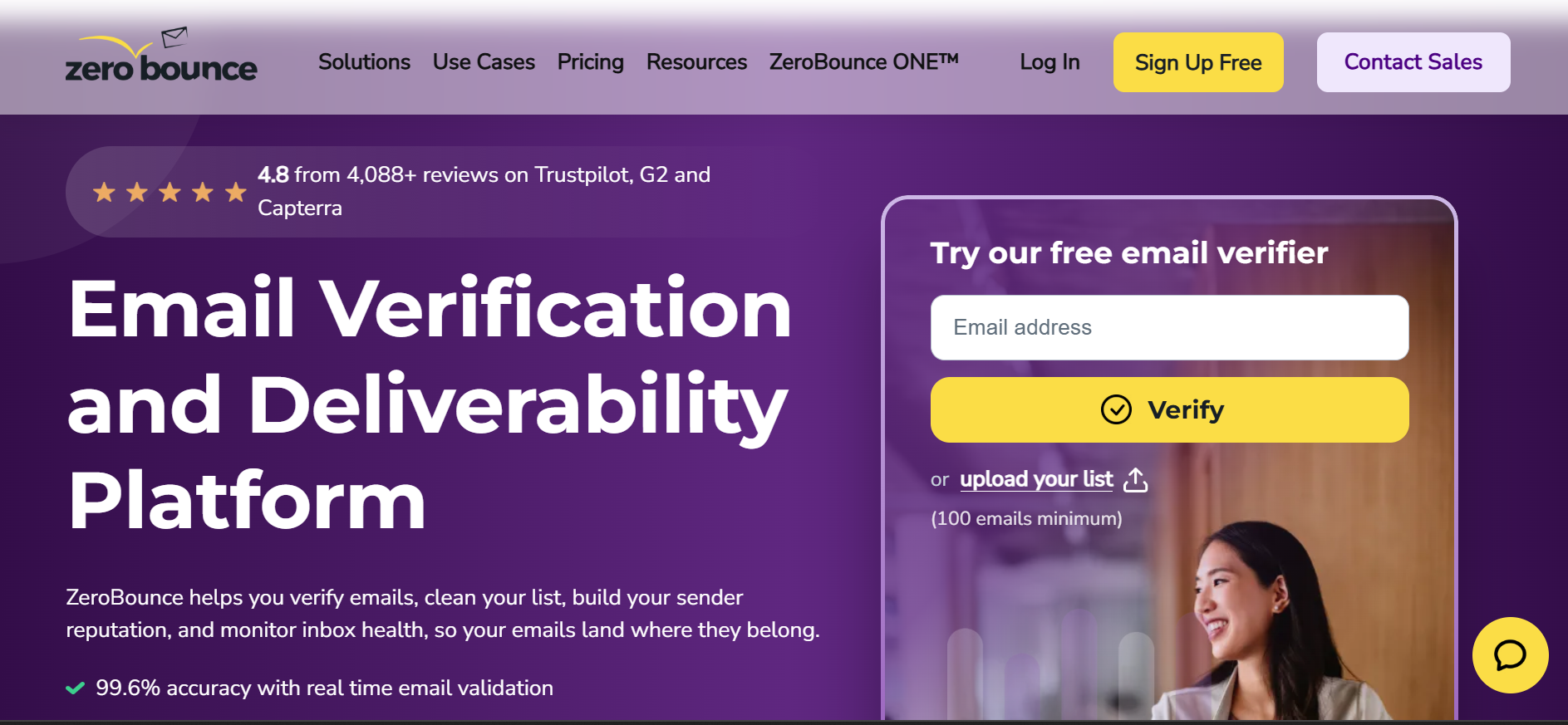
The primary thing I would like to highlight is its unknown-result policy. ZeroBounce states that it will never charge you for an unknown result, and it is the only tool here that commits to that in writing rather than leaving it to support.
That matters more than it looks on a slide. An unknown tells you nothing you can act on, so paying a credit for one is paying for a non-answer.
Around that, you get a wider deliverability suite than NeverBounce offers. Inbox placement testing, blacklist monitoring across more than 200 lists and DMARC monitoring all sit in the same account as verification.
I would also flag the compliance gap, because it decides the question for some buyers outright. ZeroBounce publishes SOC 2 Type II, ISO 27001, GDPR, HIPAA and CCPA compliance, while NeverBounce lists none of these publicly.
Key features I liked:
No charge for unknown results, stated directly on the pricing page
AI scoring that rates catch-all addresses from 1 to 10 by engagement probability
Inbox placement tests and monitoring across more than 200 blacklists
Named integrations with HubSpot, Salesforce, Mailchimp, Zapier and Shopify
Single-email verification in roughly three seconds through the API
Pricing:
Free plan: 100 validation credits that refill every month
Pay-as-you-go: starts at $39 for 2,000 credits, which is the smallest pack sold
ZeroBounce ONE plan: $99 per month for 10,000 credits
AI scoring: one extra credit per address on top of the validation credit
Enterprise: custom quote above one million credits
Pros
The unknown-result exemption is written into the pricing terms rather than handled case by case
Compliance certifications cover what most enterprise procurement reviews ask for
AI scoring turns a catch-all into a usable signal instead of a risky label
The 100 free credits refill monthly, so you can keep testing without a card
Cons
The smallest pay-as-you-go pack is 2,000 credits, which is a high floor for one small check
Reviewers consistently describe the pricing as high at larger volumes
Catch-all results still consume a credit, and scoring those addresses costs another
3. Bouncer
The next alternative to NeverBounce on my list is Bouncer, and it answers the exact complaint that starts most of these searches.
The primary thing I would like to highlight is that Bouncer credits never expire, and the pricing page says so plainly. Where NeverBounce gives prepaid credits a 12-month shelf life, Bouncer lets you buy a block and come back to it whenever your next campaign happens.
For an occasional verifier, that one term resolves the whole problem. You stop buying on a schedule set by the vendor and start buying on the schedule set by your own campaigns.
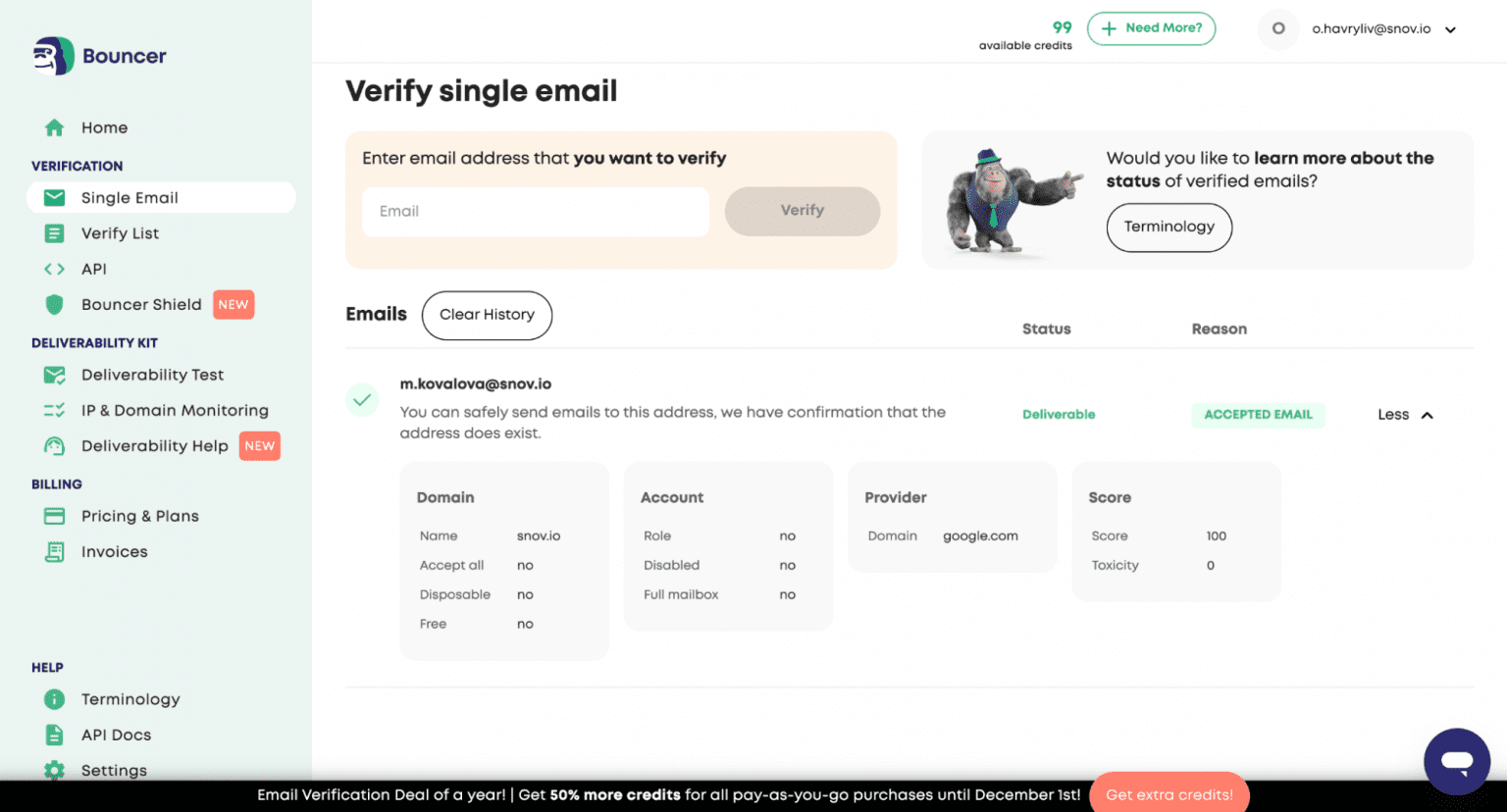
I also like how it handles catch-all domains. Bouncer runs a proprietary negotiation against Google Workspace and Microsoft 365 infrastructure specifically, which resolves a good share of the catch-alls on a typical B2B list.
The third thing worth knowing is where your data sits. The company is based in Poland, hosts in Frankfurt, deletes uploaded data after 60 days and holds SOC 2 Type II certification.
Key features I liked:
Credits that never expire, stated explicitly on the pricing page
Catch-all negotiation on Google Workspace and Microsoft 365 domains
A toxicity check covering spam traps, known complainers, litigators and breached addresses
Throughput of up to 200,000 verifications per hour
Bouncer Shield for blocking invalid addresses at the signup form
Free list sampling before you spend credits on a full run
Pricing:
Free credits: 100 at signup, with no card required
1,000 credits: $8
5,000 credits: $35
Bouncer Shield: from $2 per month for 1,000 form checks
Deliverability Kit: from $25 per month for 250 test emails
Pros
Credits that never expire remove the exact term that pushes people off NeverBounce
Unknown results and duplicates are not charged, which lowers the real cost on a messy list
EU hosting with 60-day deletion covers GDPR requirements without extra paperwork
The catch-all negotiation covers Google and Microsoft domains, which is most of a B2B list
Cons
Reviewers report that verified lists are removed after a period, which surprises people expecting to re-download them
Some reviewers see a higher share of unknown results on certain verification methods
Bouncer Shield and the Deliverability Kit are billed separately from verification credits
The catch is that Bouncer resolves the common catch-all domains rather than all of them. For the addresses sitting behind corporate security gateways, the next tool goes a step further.
4. Clearout
The next alternative to NeverBounce on my list is Clearout, and it earns its place on one specific category of address.
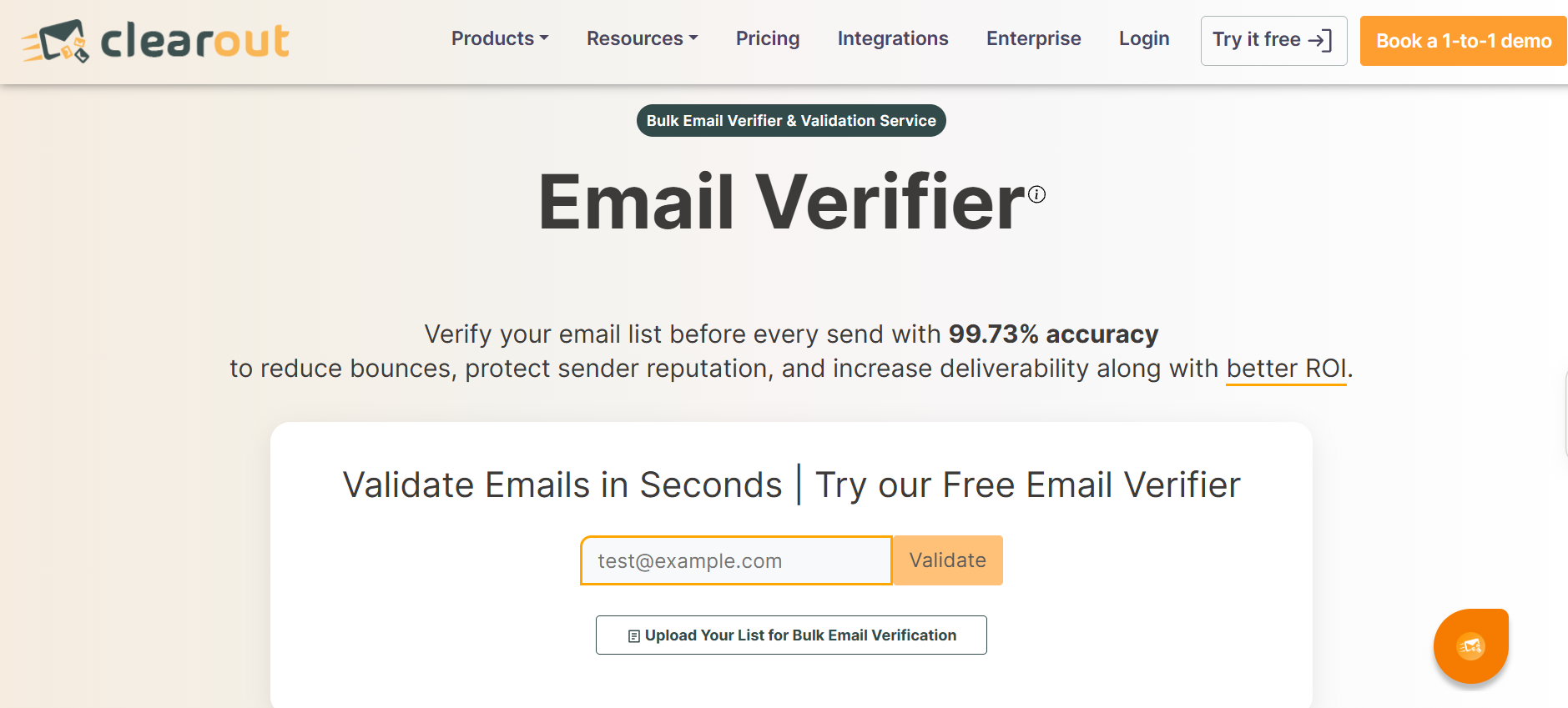
The primary thing I would like to highlight is its Deep Verify mode. Clearout detects secure email gateway signatures from Proofpoint, Mimecast, Barracuda and Microsoft EOP, then runs multi-layer analysis to sort those protected addresses into valid or invalid.
That matters if you sell into mid-market and enterprise accounts. Those are precisely the companies running gateways, and their addresses are the ones that come back unresolved from most verifiers.
Speed is the second thing I would flag. Clearout processes 10,000 addresses in roughly three to four minutes, and it accepts files up to 2GB with as many as one million addresses in a single upload.
That said, there is one term here that does not improve on NeverBounce at all. Clearout charges a credit for catch-all results, which is the same billing treatment you may be leaving in the first place.
Key features I liked:
Deep Verify for catch-all addresses and secure email gateway detection
Claimed accuracy of 99.73% on verification results
Anti-greylisting handling, with a choice between fastest turnaround and highest accuracy
Form Guard for checking emails, phone numbers and names on signup forms
HubSpot Certified integration, plus Salesforce, Apollo, Lemlist and Pipedrive
Automatic deduplication, so you only pay for unique addresses
Pricing:
Free credits: 100 at signup
Starter plan: $16 per month, including 3,000 credits per month
Pro plan: $32 per month, including 10,000 credits per month
Credits never expire, and unused subscription credits roll forward
One-time credit packs are available alongside the subscription plans
Pros
Secure email gateway detection resolves addresses that other verifiers hand back as unknown
Processing 10,000 addresses in three to four minutes is the fastest speed I found here
Credits never expire and roll forward between subscription months
Upload limits of 2GB and one million addresses suit large one-off cleaning jobs
Cons
Catch-all results consume a credit, which matches NeverBounce rather than improving on it
Reviewers report slowdowns at peak hours, so large lists need starting well before a campaign
Reviewers also describe the dashboard filters as limited compared with the depth of the checks
Clearout also runs an email finder alongside verification, and if that part interests you, this comparison of email finder tools ranks it against 13 others by accuracy.
5. Emailable
The last alternative to NeverBounce on my list is Emailable, and it is here because of something none of the others publish.
The primary thing I would like to highlight is its guarantee. Emailable states that no more than 1% of addresses it verifies as deliverable will bounce, which puts an actual number against a promise every vendor makes vaguely.
That is worth weighing carefully if the guarantee is why you are leaving. NeverBounce reviewers describe a guarantee that was difficult to claim, so a published figure with terms behind it is a meaningful difference.
I also like its billing on unclear results. Credits spent on unknowns and duplicates are returned, so you are only paying for answers you can use.
The integration list is the third point in its favour. Emailable names 87 integrations including HubSpot, Salesforce, Mailchimp, Zapier, Make, Klaviyo and Pipedrive.
Key features I liked:
A published guarantee capping bounces at 1% of addresses verified as deliverable
Credits refunded on unknown results and duplicates
A quality score from 0 to 100 on every address
Secure email gateway detection alongside role-based and full-mailbox checks
A real-time widget for validating addresses at the signup form
87 named integrations, with all data deleted after 30 days
Pricing:
Free credits: 250 at signup, with no card required
5,000 credits: $38 on pay-as-you-go
Credits never expire, and unused subscription credits roll over
Larger volumes are priced on a slider, so check the current rate on its pricing page
Pros
It is the only tool here with a published bounce figure rather than a general promise
Unknowns and duplicates are refunded, which keeps the real cost close to the quoted one
Credits never expire, so an unused balance stays available
The integration list is the broadest in this comparison at 87 named tools
Cons
Volume pricing above 5,000 credits is not published, so you cannot compare it without a quote
The accuracy claim is not backed by a published percentage, unlike Clearout and ZeroBounce
Reviewers describe the dashboard analytics as shallow, with little trend data over time
What I did not like is the pricing opacity. Being the only tool here that publishes a guarantee while not publishing its volume rates is an odd combination.
Final Verdict on NeverBounce Alternatives
Salesforge is my pick, because verification that happens inside your sequences removes the export and import loop entirely.
That said, it is not a standalone verifier, so the others earn their places. Bouncer wins on credits that never expire, Clearout on gateway-protected addresses, ZeroBounce on compliance and unknown-result billing, and Emailable on the only published bounce guarantee here.
1. What are the best NeverBounce alternatives in 2026?
The five strongest options are Salesforge, ZeroBounce, Bouncer, Clearout and Emailable. Salesforge suits cold email teams who want validation inside their sequences, Bouncer suits occasional verifiers who need credits that never expire, and Clearout handles catch-all addresses behind secure email gateways. ZeroBounce covers compliance requirements, while Emailable publishes a bounce guarantee.
2. Why did my NeverBounce credits expire?
NeverBounce pay-as-you-go credits expire 12 months after purchase. Reviewers who bought before this term existed report that it was applied to balances they had already paid for. If you verify a few times a year, pick a tool with credits that never expire, such as Bouncer, Clearout or Emailable.
3. Is NeverBounce still worth using in 2026?
For some teams, yes. It verifies lists in bulk, corrects common typos and syncs new CRM contacts automatically, so marketing ops teams on a monthly plan get steady value. The expiry term mainly hurts occasional users who buy credits in blocks and verify a few times a year.
4. Which NeverBounce alternative is cheapest for large lists?
Bouncer publishes the clearest volume pricing, at $400 for 100,000 credits and $2,000 for one million. Clearout's annual plans also work out low per address at higher tiers. Prices change often, so confirm the current rate on each tool's pricing page before you buy.
5. Do I need a separate email verifier if my cold email tool verifies contacts?
Not always. If your sending platform validates contacts and includes enough credits for your lists, a separate verifier adds a step without adding much. Salesforge includes 300 validation credits per month on Pro and 1,000 on Growth. A standalone tool makes more sense for very large lists or newsletter contacts held elsewhere.
6. How do catch-all addresses affect email verification accuracy?
A catch-all domain accepts mail at any address, so no verifier can confirm whether a specific mailbox exists. Tools handle this differently. Bouncer negotiates with Google and Microsoft servers, Clearout runs Deep Verify on gateway-protected domains, and ZeroBounce scores catch-alls rather than resolving them.
7. Can I switch from NeverBounce without losing my remaining credits?
NeverBounce credits cannot be transferred to another provider. If you have a balance with time left on it, use it on your current lists before you move. Then start the new tool on its free credits, which range from 100 with Bouncer and Clearout to 250 with Emailable.
Book more meetings on autopilot
Set up in minutes. No per-seat pricing. No commitment.
Compare 8 email verification tools by features, limits, and pricing. See which verifier works for cold outreach, newsletters, or large list verification.