Enterprise sales cycles typically run anywhere from 6 to 18 months for deals worth $50K to $500K in annual contract value (ACV).
The last thing you want is to lose that time because your sales stack can't support the complexity of enterprise selling.
To identify the platforms that actually deliver, I evaluated 11+ enterprise sales software solutions.
I signed up for free trials, compared enterprise features and pricing, analyzed recent G2 reviews, and went through Reddit discussions to understand how these tools perform in real enterprise sales environments.
The research made one thing clear: many platforms market themselves as enterprise-ready, but only a few are built to handle long sales cycles, multiple stakeholders, and large outbound teams.
Here are the 7 best enterprise sales software that made the cut.
Not every tool that calls itself enterprise-ready actually is.
Here's the framework I used to separate real enterprise sales solutions from the rest.
An enterprise sales tool is only as good as its contact accuracy. I checked verified email rates, direct-dial coverage, and how often each database gets refreshed. Stale data burns campaigns fast.
Per-seat pricing looks fine at 5 reps. At 50, the math changes. I compared what a team of 50 pays on each platform, including hidden platform fees and add-ons.
Enterprise buyers don't respond to a single cold email. I looked for platforms that run email, LinkedIn, and calls inside one sequence, not three separate tools duct-taped together.
Warmup, sender rotation, and inbox placement tracking should be baked in. If deliverability lives in a separate tool with a separate bill, the total cost jumps and reporting fragments.
SOC 2 Type II, GDPR, and ISO 27001 are standard for enterprise procurement. I confirmed each vendor's certifications before including them.
Salesforce and HubSpot sync depth matters for enterprise revenue ops. Two-way sync with custom-object support is table stakes at this level.
I ordered these by how well they cover the full enterprise sales workflow, not just a single slice of it.
The tools higher on the list solve more problems in one platform. The ones lower down are strong in a specific lane.
✅ Best for : Enterprise outbound teams (5 to 100+ reps) that want multichannel outreach, AI SDR coverage, and deliverability in one platform without per-seat pricing.
Salesforge is the best enterprise sales software in 2026 for two reasons.
That combination matters at enterprise scale. Most competitors force teams into four separate contracts. Each covers one piece: the sequencer, the data source, warmup, and AI SDR coverage.
A 50-rep team stacking those contracts easily spends $8,000 to $15,000 a month before sending a single email. Salesforge collapses everything into one login at flat pricing.
I spent three weeks testing the platform on a live enterprise-style campaign. The setup used 12 mailboxes, six LinkedIn senders, and three ICPs split across US and EMEA. Configuration took under an afternoon.
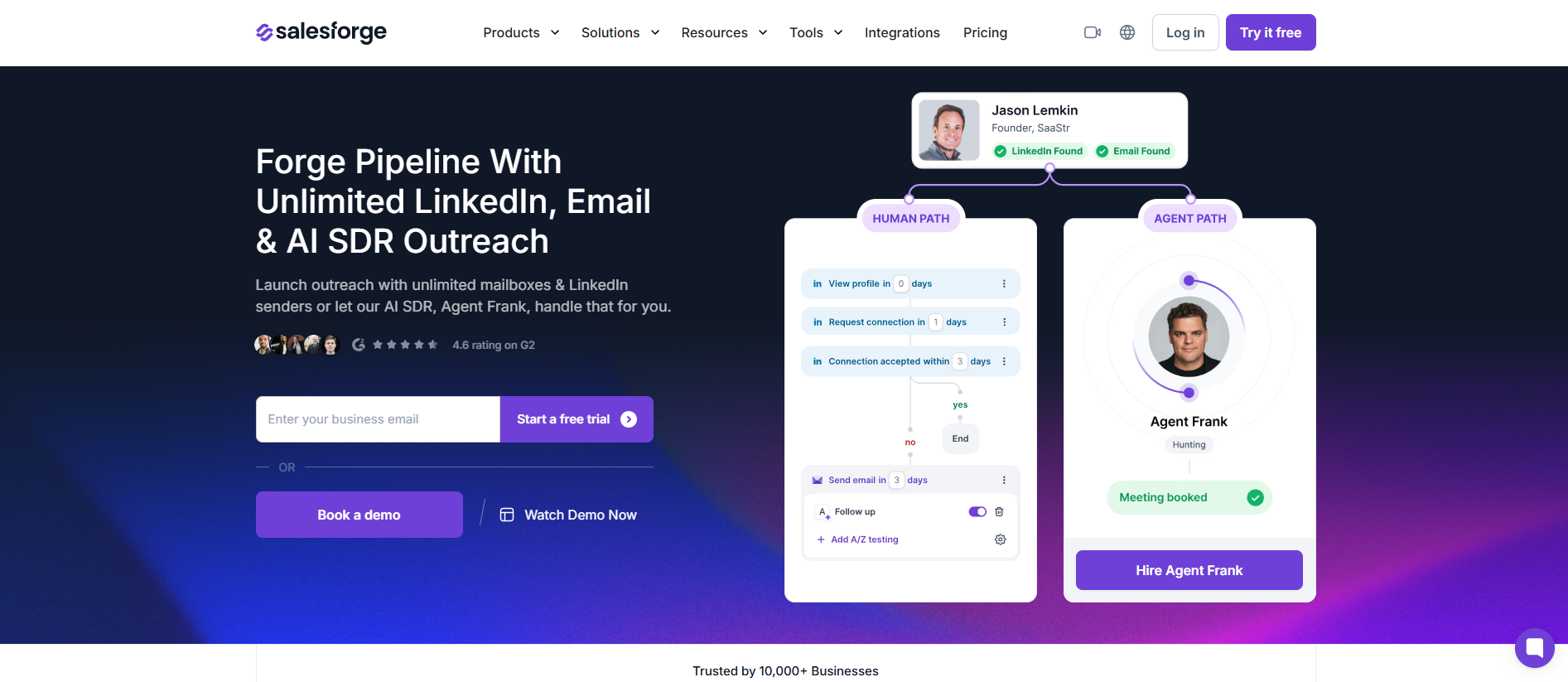
Agent Frank ran in Co-Pilot mode for the first week so I could approve every send. Once the messaging was landing, I flipped him to Auto-Pilot.
Two features earned their keep in that test. Primebox™ pulled email replies and LinkedIn DMs for the same prospect into one thread. That saved my ops lead from stitching context out of five inboxes. Warmforge ran deliverability inside the same dashboard, with heat scores, inbox placement tests, and Bounce Shield. I never had to open a second tool to check why open rates dipped.
Enterprise compliance is the third thing procurement will ask about. SOC 2 Type II, GDPR, and ISO 27001 are covered on every plan. None of it is gated behind a bespoke Enterprise SKU.
✅ Best for : Mid-market to enterprise revenue teams (15+ seats) with five-figure budgets running account-based enterprise sales.
Another enterprise sales software worth serious consideration is ZoomInfo.
It is where most large sales orgs still benchmark contact data. If your account-based motion runs on verified US contacts, org charts, and buyer intent, ZoomInfo is usually the default answer.
There is no self-serve trial. ZoomInfo runs a demo-first process, which already tells you who the platform is built for.
The database is what earns the price tag. You get verified direct dials, funding events, org charts, Scoops, and a Copilot AI assistant. When I compared its intent data against smaller sales intelligence tools, the US signal quality was noticeably deeper.
The tradeoffs are real, though. Contact data outside the US, especially in APAC, can lag. Contracts are annual and pricing is quoted, not published. Data staleness is the most consistent complaint I read across G2 in Q1 of 2026.
Custom
Recommended Read: ZoomInfo Alternatives
✅ Best for : SMB to mid-market sales teams (1 to 200 reps) that want prospecting, outreach, and pipeline in one transparent per-seat platform.
Apollo.io takes a different angle on enterprise sales software: bundle data and outreach into one per-seat product.
For mid-market teams that want prospecting, sequences, and a dialer in one product, it hits the value sweet spot on this list.
I ran the free plan for a US-focused campaign to test the workflow end to end. Search filters go deep, the sequence builder is straightforward, and the native dialer handles US numbers cleanly. Data quality on US contacts held up well against the paid tiers of larger databases.
The friction shows up outside the US. Data accuracy in APAC and the Middle East drops noticeably. Credits get consumed even when the returned data is incomplete, which stings on high-volume prospecting.
Per-seat pricing is the other thing to model early. Fifty reps at $79 a month is $47,400 a year before you add a warmup tool or a dialer credit pack. If that math worries you, I compared 9 Apollo alternatives that price differently at scale.
✅ Best for : Mid-market and enterprise SDR and AE teams (15+ reps) on Salesforce that need structured cadences and coaching.
Next up on my list of enterprise sales software is Salesloft.
Where Apollo bundles data and outreach, Salesloft goes all-in on execution. It is a sales engagement platform for enterprise teams that need structured, repeatable cadences across email, calls, and LinkedIn.
There is no contact database inside it. Salesloft assumes you already have a data source (ZoomInfo, Cognism, or Leadsforge). It layers cadence discipline on top for the SDR and AE teams executing against it.
The cadence system itself is one of the most opinionated in the category. Salesforce sync is tight and bidirectional, which is one reason large enterprise orgs stay locked in. Coaching features help ramp new reps faster than most competitors.
The gaps show up in call recording and forecasting. Both are functional but shallow compared to dedicated conversation intelligence tools. I've read a stack of mid-market ops leaders on G2 flag the forecast module as buggy in the last two quarters.
If you're weighing this against alternatives to Salesloft.
Custom
✅ Best for : Enterprise revenue orgs (25+ reps on Salesforce) that want AI execution, conversation intelligence, and forecasting in one place.
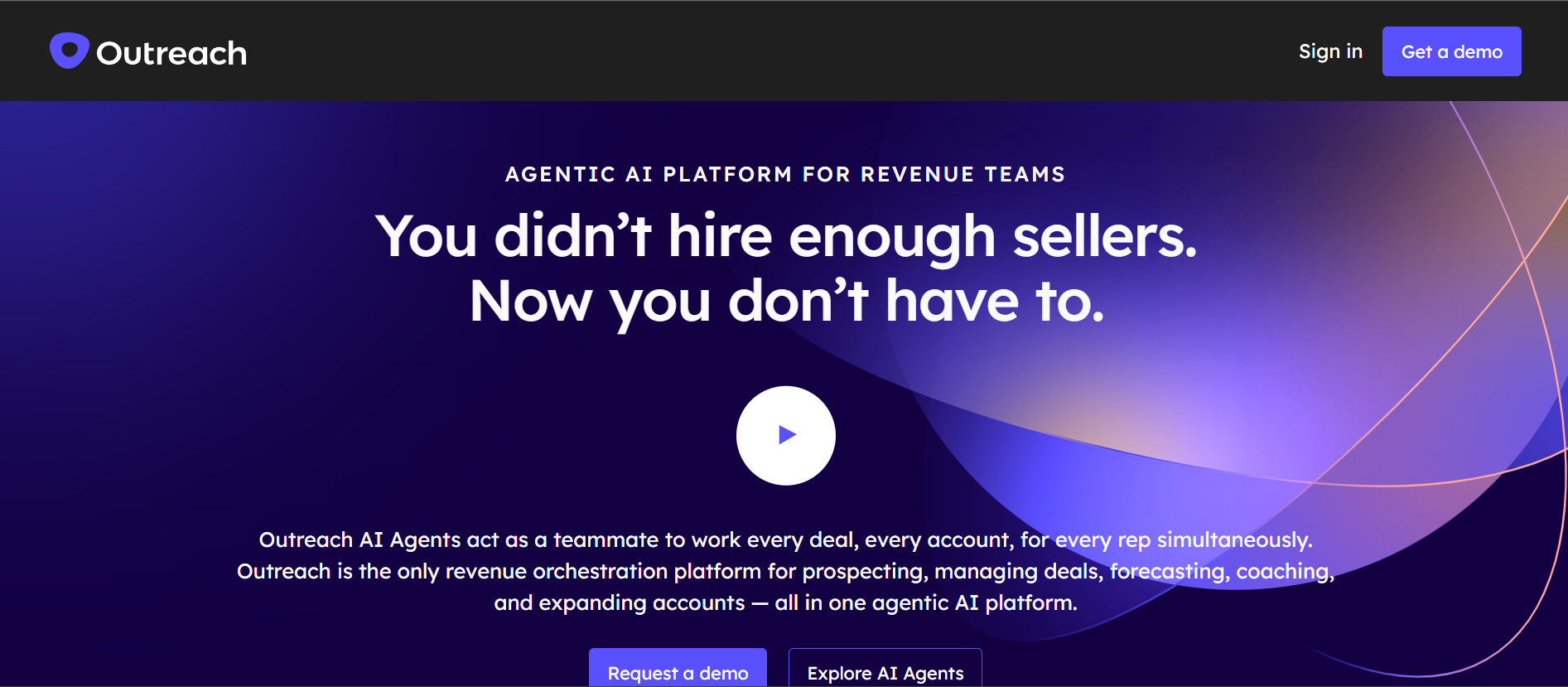
Outreach.io competes directly with Salesloft in the enterprise sales software space, but it leans harder into AI. Multi-channel sequences pair with Kaia (their conversation intelligence engine), deal health scoring, and AI-driven forecasting.
For enterprise revenue orgs managing multi-stakeholder deals, that visibility is the pitch.
Like Salesloft, Outreach is an execution layer. You bring your own data.
Kaia is the real differentiator in daily use. It listens on calls, surfaces buying signals, drafts structured summaries, and coaches reps in real time.
For managers watching a large deal pipeline, that context is hard to replicate elsewhere.
The consistent friction points show up in the review data. Salesforce sync lag comes up repeatedly. Contracts are rigid, with G2 reviewers flagging billing disputes. Setup usually requires a dedicated RevOps resource, which small teams don't have.
If those tradeoffs land badly with your procurement team, I ranked 10 Outreach alternatives that solve the same jobs with less overhead.
Custom Pricing
✅ Best for : Mid-market and enterprise teams selling into EMEA that need GDPR-compliant, phone-verified data.
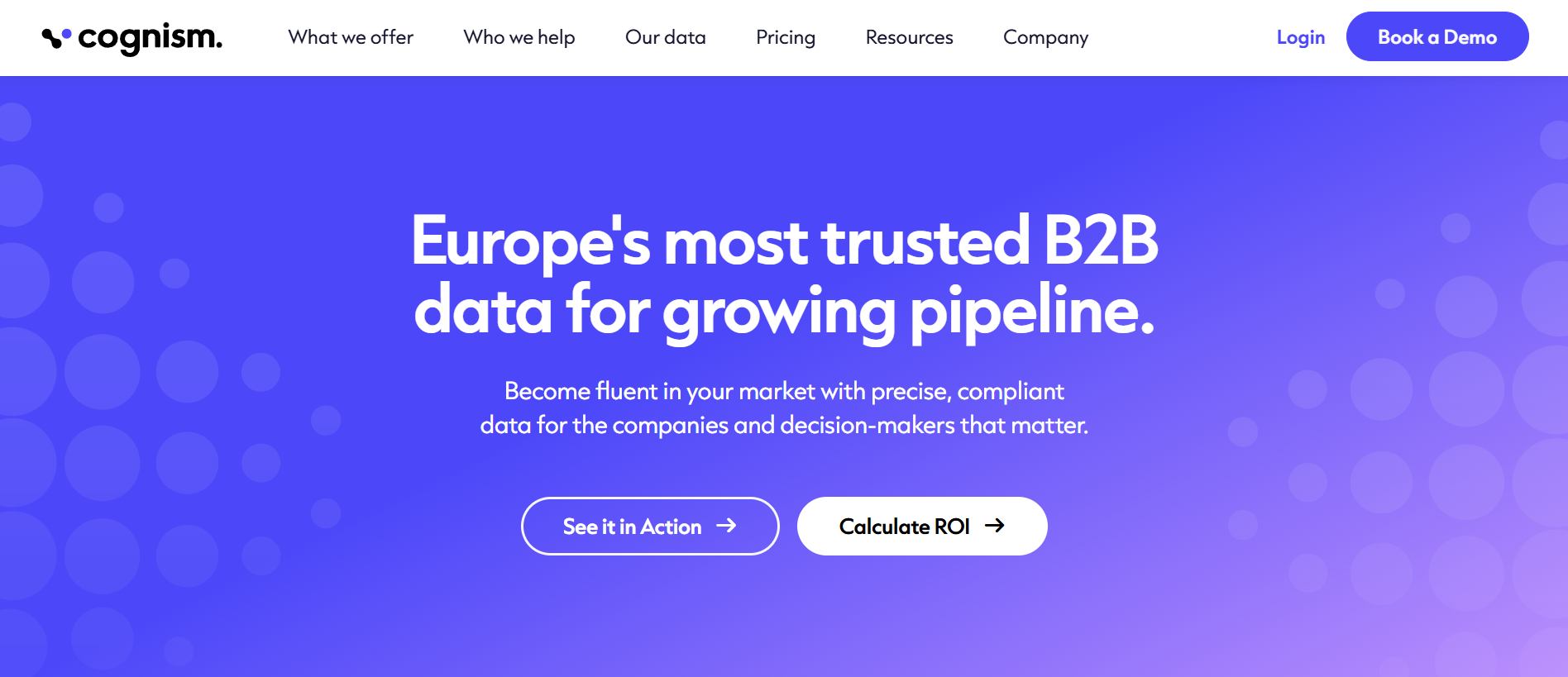
For enterprise sales teams selling into Europe, Cognism enters the conversation as the most defensible pick on this list.
Its phone-verified Diamond Data is built for markets where getting a decision-maker on a direct dial is harder than in the US.
There is no self-serve trial. Cognism runs a demo-first process like ZoomInfo. But the EMEA-focused reviews on G2 are consistent on one point: European data accuracy holds up under real prospecting volume.
The platform is GDPR and CCPA compliant by design. For regulated industries and cross-border enterprise deals, that shows up in procurement conversations, not marketing decks.
The catches are worth flagging. Diamond credits deplete quickly on high-volume outreach, and there is no native email sequencing inside the platform.
Cognism is a data provider, not an engagement layer, so you'll still need a Salesloft, Outreach, or Salesforge on top. US contact depth is decent but does not match ZoomInfo's.
Custom Pricing
✅ Best for : SMB agencies and lean outbound teams (1 to 15 reps) that want prospecting and cold email bundled at a flat cost.
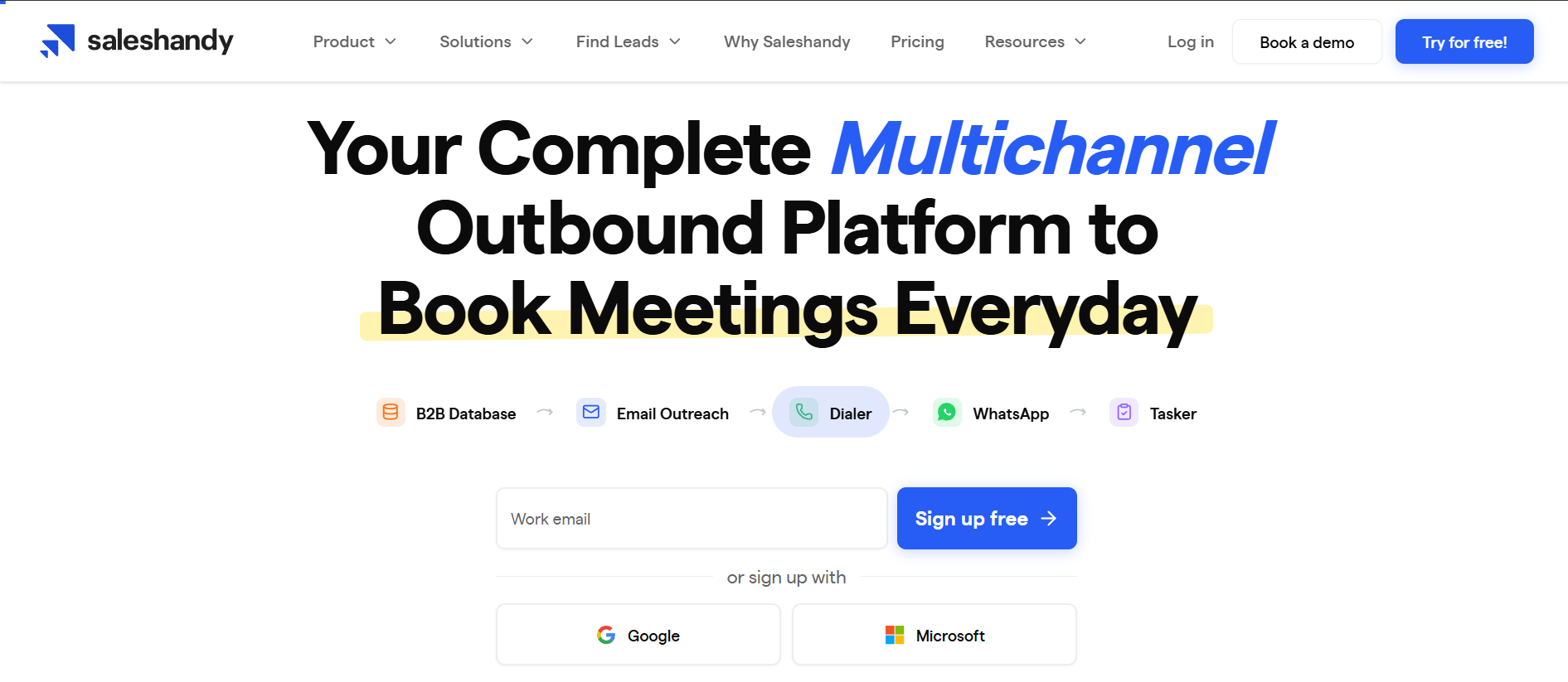
Saleshandy rounds out my list of enterprise sales software, though "enterprise" is a stretch here. It is honest bundling for SMB agencies and lean outbound teams. You get prospecting, cold email, and a light outbound CRM under one flat bill.
For a 5-rep agency running high-volume email campaigns, the math is genuinely attractive. Flat pricing, unlimited email accounts on paid plans, and a built-in B2B database sit inside the same subscription.
Where it stops being enterprise-ready is depth. Compliance certifications are thinner than ZoomInfo or Cognism. Salesforce sync depth trails Salesloft and Outreach on complex custom-object workflows.
Support response times can stretch during peak hours, which is fine for a startup but painful for a 100-rep sales org. Saleshandy earns its place at the lean end of the spectrum, not the enterprise end.
If you're a lean team looking to consolidate, Saleshandy earns its spot. If you're running enterprise motions with a large SDR team, it likely won't scale with you.
Recommended Read: Check out these 5 Best Saleshandy Alternatives
After comparing features, pricing, user feedback, and hands-on testing, Salesforge stands out as the strongest enterprise sales software in 2026.
If your team wants to simplify its sales stack without giving up advanced functionality, Salesforge is the platform I'd recommend evaluating first. You can start with the free trial to test it with your own workflows or schedule a demo to see whether it fits your sales process before making a commitment.
Start a 14-day free trial with no credit card, or book an Agent Frank demo to see the AI SDR workflow live.
Enterprise sales software is a category of B2B sales tools built for teams running long, complex deal cycles with multiple decision-makers. These tools cover prospecting, multichannel outreach, deliverability, pipeline management, and CRM sync at scale. The goal is to help enterprise sales teams find the right contacts, run coordinated outreach, and close larger deals faster.
A CRM like Salesforce or HubSpot stores customer data and tracks deal progress. Enterprise sales software sits earlier in the workflow. It helps teams find prospects, run outreach sequences, manage deliverability, and engage buyers before they enter the CRM pipeline. Most enterprise sales tools integrate with CRMs but serve a different function.
For lean teams (1 to 20 reps), Salesforge and Apollo offer the strongest value. Salesforge bundles multichannel outreach, AI SDR, and deliverability at flat pricing with no per-seat charge. Apollo works well if you want a per-seat model with a generous free plan and a built-in database.
Costs vary widely. Salesforge starts at $40/mo with flat pricing. Apollo runs $49 to $119/user/mo. Premium enterprise platforms like ZoomInfo and Cognism typically start at $15,000/yr with custom pricing. Engagement platforms like Salesloft and Outreach run $75 to $170/user/mo. Total cost depends on team size and how many tools you stack.
Yes. Salesloft and Outreach are sales engagement platforms. They handle sequences, calls, and coaching but don't include a contact database. You'll need a separate data source like ZoomInfo, Cognism, Apollo, or Leadsforge to feed prospects into your outreach workflows.
For EMEA and European markets, Cognism has the strongest phone-verified data and GDPR compliance. For US-focused teams, ZoomInfo offers the deepest data coverage. For teams selling across multiple regions that want outreach and AI SDR coverage in one platform, Salesforge scales globally with AI personalization in 20+ languages.
.jpg)

.jpg)

.jpg)

