

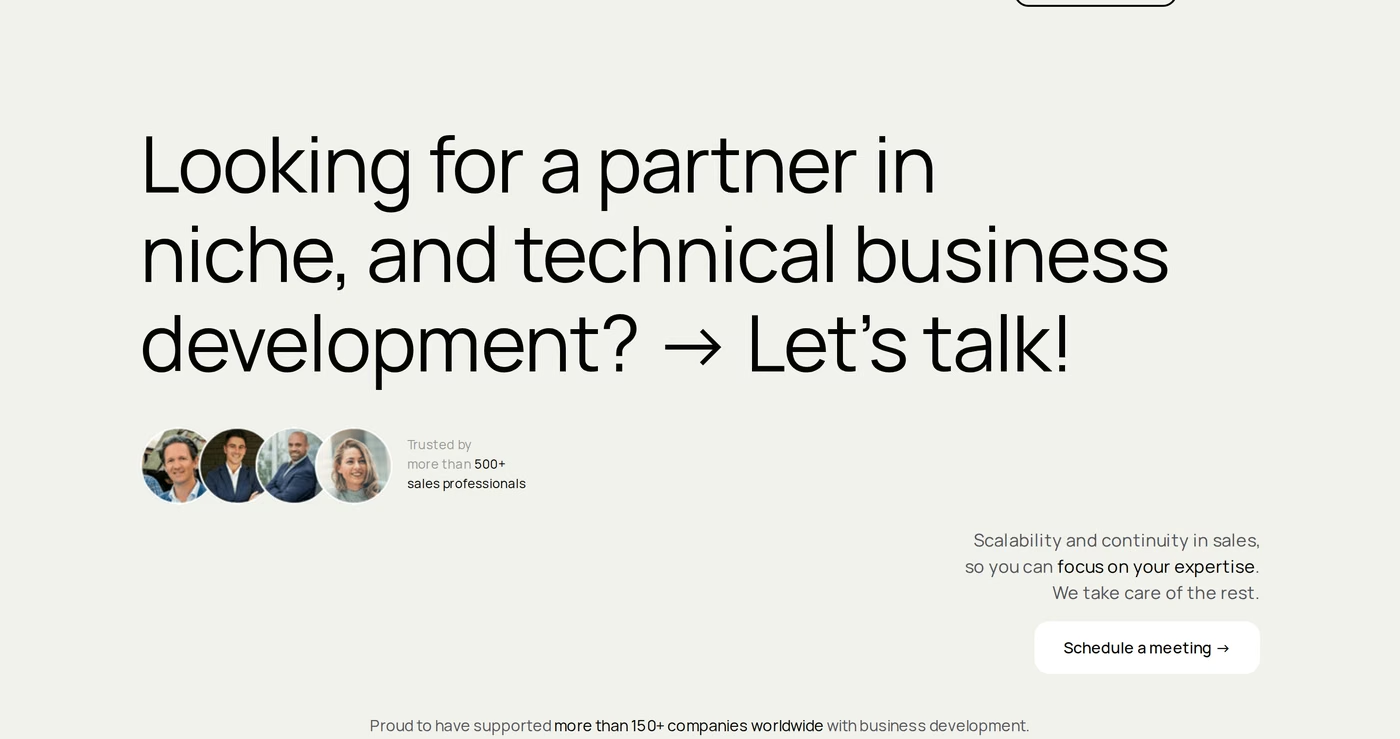
De Grijff promises continuity in B2B sales for companies selling niche and technical products. Their site sets the target at a 5 to 10% conversion from target account to lead.
Searching for De Grijff reviews turns up almost nothing independent. Their Clutch profile sits empty, and there is no Trustpilot page at all.
I hit that wall myself when I started digging. So this De Grijff review covers what I found across their site, their published contract terms, the Dutch business register, and three review platforms.
De Grijff B.V. is a business development agency near Rotterdam, working in English and Dutch, mostly for European B2B companies.
Their about page says Sander de Grijff started the business in May 2018, then narrowed it to sales only in 2021.
Below: what they sell, what their contract actually says, who should hire them, and what to ask before you sign.
At a Glance: Should You Hire De Grijff?
| Decision Factor | Our Assessment |
|---|---|
| Best For | Dutch and European B2B companies selling technically complex products with long sales cycles, that want a sales process built inside HubSpot rather than a monthly meetings quota. |
| Standout Strength | Marketing and contract agree. The site FAQ says plainly they cannot offer an absolute guarantee, and Article 7.3 of their published terms disclaims any promise of leads or conversions. |
| Things to Consider | No pricing published anywhere, no outcome figure on any of the 30-plus clients on their projects page, and terms that keep strategy materials with De Grijff once the agreement ends. |
| Not the Right Fit If... | You want a fixed meetings-per-month commitment, a rolling monthly contract, US market proof, or an agency that publishes its sending infrastructure. |
| Before You Decide | Compare a few agencies on industry expertise, pricing model, outbound channels, and client size before choosing one. |
| Compare Certified Agencies | Explore the Forge Expert Network to find agencies specializing in cold email, LinkedIn outreach, AI-powered outbound, deliverability, and GTM consulting. Browse by industry, market, language, and expertise. |
De Grijff Customer Reviews: What Real Users Are Saying
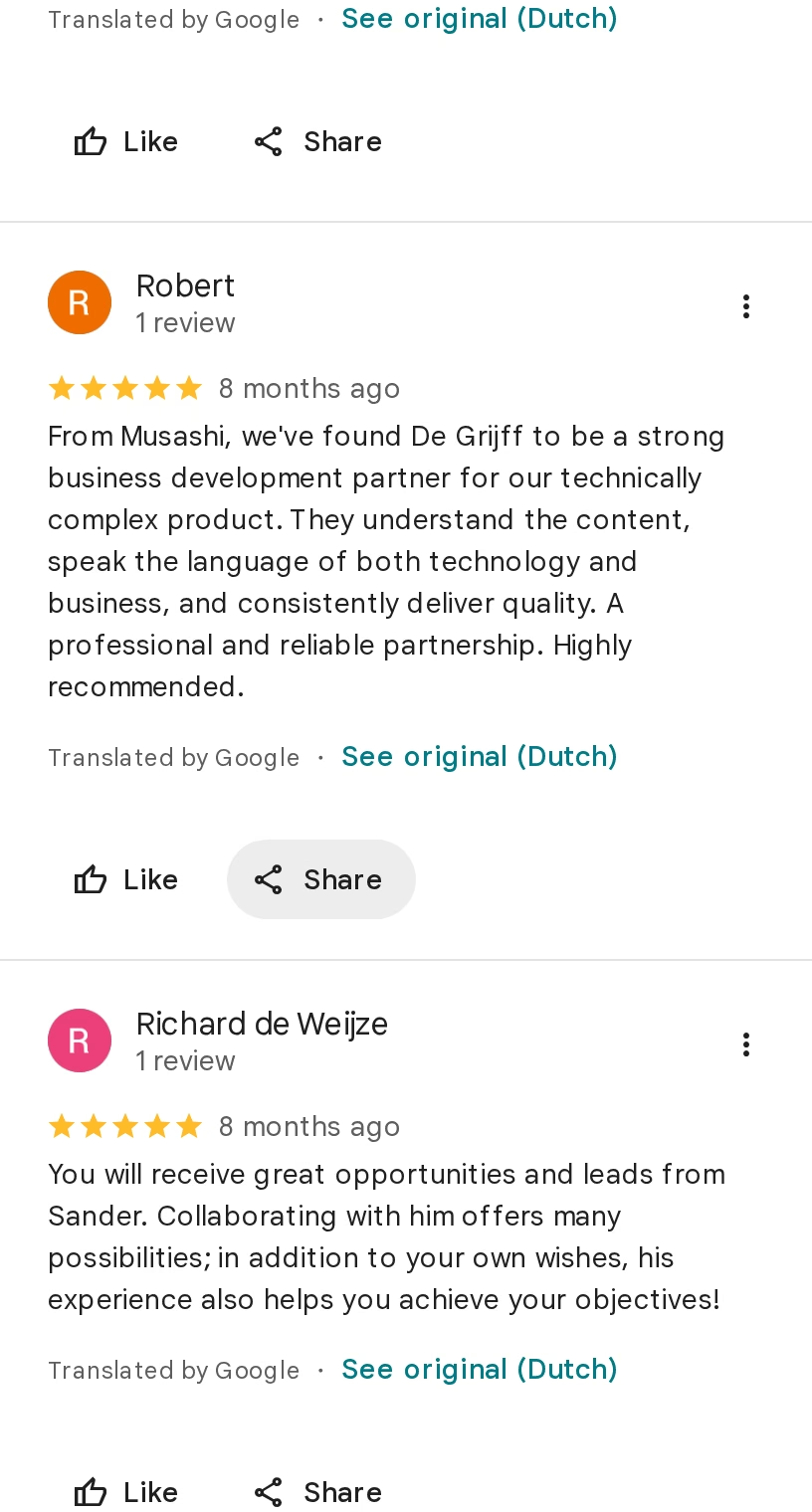
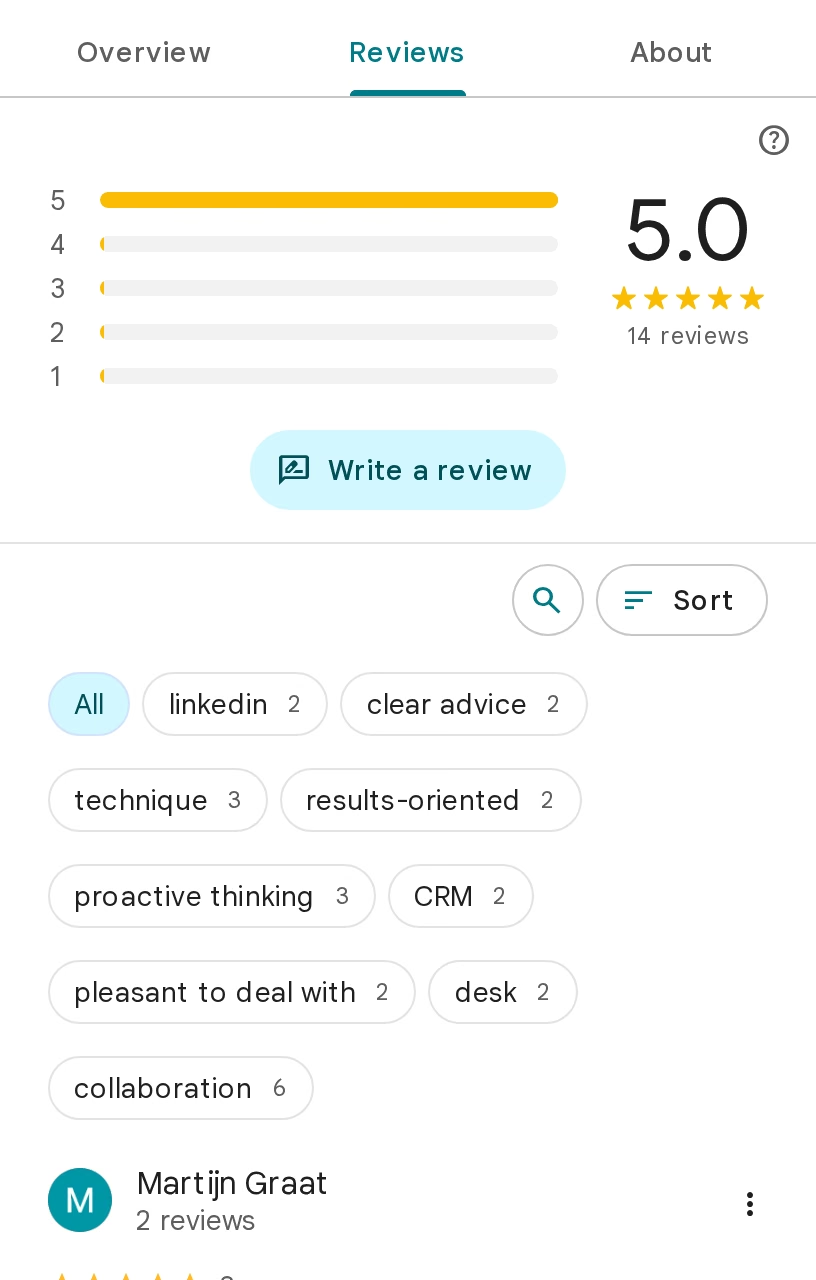
De Grijff has one real review footprint, and it is small. Their Google Business Profile shows a 5.0 rating from 14 reviews, and their own site links straight to it.
Everywhere else is empty. They have a Clutch profile that Clutch labels as not yet reviewed, with project size and hourly rate both undisclosed. I found no Trustpilot page for degrijff.com on either the global or Dutch site, and no G2 listing.
What Customers Like
- Technical fluency. A reviewer named Robert, posting eight months ago and identifying with Musashi, credits the team with understanding a technically complex product and speaking both the technology and the business language.
- Responsiveness. A reviewer posting as Capitalize2day B.V. about a year ago describes easy contact, quick responses, and clear advice.
- Messaging help, not just volume. Martijn Graat, reviewing two years ago, credits Sander de Grijff with turning a company story into messaging that converts.
- Google's own top-mention tags on the profile lean the same way: collaboration appears in six reviews, with proactive thinking and technique in three each.
What Customers Don't Like
This is the honest answer: there is no public criticism of De Grijff anywhere I could find. All 14 Google reviews sit at five stars, with nothing below in the distribution.
That is not the same as a clean record. Fourteen reviews is a thin sample for an agency that reports supporting more than 150 companies. Several of those reviewers also appear as named testimonials on De Grijff's own site, so the two sources are not fully independent.
Ask for two references the company did not pick for you, ideally one engagement that has ended.
Our Verdict on De Grijff
Hire De Grijff if you sell a technically complex B2B product in the Netherlands or wider Europe, and you want a sales process built around HubSpot rather than a meetings quota.
Two things support this verdict. Their review sentiment praises technical comprehension rather than volume, and their named clients fit: Musashi Energy Solutions, Semansys, and Tecnify are engineering-heavy businesses.
The second is rarer. Their FAQ says they cannot offer an absolute guarantee, and Article 7.3 of their terms rules out guaranteeing revenue, profit, leads, or conversions. Marketing and contract agree.
One thing holds it back:
- No price is published anywhere, and Clutch leaves project size undisclosed too.
- Not one of the 30-plus clients on their projects page carries a reported outcome.
- Their terms grant a right of use for the agreement's duration only, so strategy materials do not travel with you at exit.
Before signing, get the fixed term length, the total monthly cost, and a written answer on who keeps the prospect lists and sending domains. If those answers disappoint, look at other certified agencies here.
How I Evaluated De Grijff
I have not been a De Grijff client, so this review is research-based.
I read their English and Dutch homepages, services page, projects page, about page, and the general terms and conditions they publish in full. I expanded every answer in their homepage FAQ. I checked the Dutch Chamber of Commerce record and the S-BB work placement register, and I searched Clutch, G2, Trustpilot, and Google for independent reviews.
I judged them on four things: whether the numbers hold up, how lead quality is defined, what the contract actually commits to, and who owns the assets at exit.
Everything below marked "reports" or "says" comes from their own published material.
De Grijff Services Reviewed
De Grijff sells one outcome: a steady flow of qualified conversations for companies whose product is hard to explain. Their site organizes that into three services.
Sales Strategy
Their site describes strategic sessions led by experienced sales professionals, aimed at agreeing goals before any outreach starts. Their FAQ says target accounts are selected on strategic fit, market potential, and relevance to the proposition.
That is a reasonable description, but not a method you can inspect. Nowhere does De Grijff name the b2b lead generation channels it actually runs, or the volume on each.
Sales Software
This is the clearest part of their offer. They are a listed HubSpot partner, two of their team page profiles hold HubSpot Engineer titles, and their FAQ reports real-time client updates through HubSpot plus round-the-clock Slack access.
A Google reviewer posting as Capitalize2day praised a CRM migration that ran without delays, which is the kind of specific detail this service should attract.
Business Development
Their site frames this as a structured, scalable new business approach built on long-term relationships rather than a meeting count. The FAQ is where the numbers live: measurable results often inside the first 30 days, a working horizon of 3 to 24 months, and a KPI of 5 to 10% conversion from target account to lead.
One wrinkle to raise on the call. Their first FAQ answer calls that 5 to 10% a target-account-to-opportunity rate, while the fourth calls the same range target account to lead. Those are different denominators, so ask which one your campaign is modeled on.
What You Get With De Grijff (and What You Don't)
| Criteria | De Grijff | Certified Forge Experts |
|---|---|---|
| Channels | Not published. The site names three services, not channels. | Named per profile. Outbound Pros lists cold email, LinkedIn, cold calling, and PPC as one motion. |
| Lead guarantee | None, stated openly. FAQ says no absolute guarantee; Article 7.3 disclaims outcomes. | Stated. Outbound Pros advertises 50 to 75 qualified meetings per month. |
| Outbound stack | HubSpot is the only tool named publicly. | Published. Growth Alliance lists Cargo, Clay, Swarm, HubSpot, and Salesforce. |
| Infrastructure ownership | Not addressed on the site or in the terms. | Outbound Pros reports owned domain infrastructure with documented SPF, DKIM, and DMARC. |
| Independent reviews | 14 Google reviews at 5.0. Clutch profile empty, no Trustpilot or G2. | Outcomes named. RevSculpt reports 6,000-plus qualified meetings across 15-plus verticals. |
| Pricing transparency | Nothing public. Clutch lists project size and hourly rate as undisclosed. | Published ranges. RevSculpt from $5k a month, Growth Alliance from $10K. |
| Market coverage | Netherlands and Europe. Named clients are almost entirely Dutch or European. | Wider. RevSculpt lists US, UK, UAE, CA, and EU. |
| Team depth | 19 on the team page. S-BB register lists 2 to 9 employees, Clutch 10 to 49. | Stated. Growth Alliance caps at 4 to 6 clients, 100 to 120 hours each per month. |
| Best for | Technical European B2B with long cycles and HubSpot at the center. | Buyers who want the stack, guarantee, and market proof visible before the first call. |
Every De Grijff cell comes from their public material, and every expert cell comes from profiles I fetched this session. Confirm the details on your discovery calls.
How De Grijff's Process Works
De Grijff does not publish a stage-by-stage process. Here is how their described work maps onto the six stages a client actually experiences.
Discovery and ICP Definition
Their site opens with strategic sessions led by senior sales people. The FAQ says onboarding includes training their own team intensively on your proposition, market, and audience, supported by AI.
Ask how many hours that training takes and who delivers it. A shared ideal customer profile document by the end of week one is fair to request.
Prospect List Creation
Their FAQ says target accounts are chosen on strategic fit, market potential, and relevance. No data source or enrichment vendor is named anywhere on the site.
Ask to see a sample list before launch. Even a quick check of 50 rows will tell you more than any sales call.
Copy and Campaign Approval
Their site does not say whether clients sign off on messaging before it sends. Their terms say results may be used for marketing unless you object in writing in advance, which suggests campaign material is theirs by default.
Ask for written approval rights over both copy and list. If they run cold email personalization at scale, ask for three real examples from another technical account.
Campaign Launch
Nothing on the site describes sending domains, mailboxes, or warm-up. For an agency selling continuity that gap matters, because email warm up and domain setup are what keep a first campaign out of spam.
Ask who buys the domains, how long warm-up runs before the first send, and what happens to those domains when you leave.
Reply Handling and Meeting Booking
Their FAQ describes transparency running from phone calls through to KPIs, which implies their people handle conversations rather than routing every reply back to you.
Ask who replies to an interested prospect, how fast, and what happens to a reply that lands while your account manager is away.
Reporting and Optimization
This is their strongest published stage: real-time HubSpot updates, 24/7 Slack access, and strategies they say are refined continuously on current data.
Ask for a sample report from a live account with client details removed, and check whether email deliverability metrics appear in it. Most agency reports stop at replies.
De Grijff Pricing and Contract Terms
De Grijff publishes no pricing. There is no pricing page, no starting figure, and no range anywhere on the site in either language.
Their Clutch profile leaves both minimum project size and hourly rate undisclosed, so the gap looks deliberate. Engagements start with a scheduled call, and their terms say a quotation stays valid for 14 days. Comparable managed European agencies tend to charge retainers in the low four figures, but I found no figure for De Grijff and will not invent one.
What's Included at Each Price Point
Without published tiers, the most reliable guide is their own contract, which they publish in full. It is more informative than most agency pricing pages.
Agreements run for a fixed term set in the quotation, then extend indefinitely, and cancelling after that needs 30 days' written notice. During the fixed term, early termination is not permitted unless agreed in writing, invoiced amounts are not refunded, and the full agreed amount stays payable.
Article 7.2 calls the services a best-efforts obligation rather than an obligation of result, and Article 7.3 rules out any guarantee of revenue, profit, leads, or conversions. Read next to their 3 to 24 month horizon, you are buying effort over a defined period, not a number. Two more clauses to price in: Article 6.6 allows annual rate indexation from 1 January, and Article 12 blocks you from hiring their people, or their subcontractors, for 12 months after the agreement ends.
Hidden and Additional Costs to Watch
- Domains and mailboxes. Never mentioned on the site or in the terms. Ask whether email infrastructure sits inside the retainer.
- Data and enrichment credits. No provider is named, so assume a separate line until told otherwise.
- Setup and onboarding fees. Their FAQ describes an intensive onboarding period. Ask whether it is billed.
- LinkedIn accounts or Sales Navigator seats. Not addressed publicly, and seats add up across a team.
- Who keeps the domains and lists at exit. Article 11 keeps strategies, materials, models, software, and documents with De Grijff, granting a non-transferable right of use for the duration of the agreement only. Prospect lists and sending domains are not named either way.
That last point is the one to settle in writing. If the agency owns your sending domains, leaving means starting your deliverability from zero.
Who Should Hire De Grijff?
- Technical and industrial B2B companies in Europe. Named clients include Musashi Energy Solutions in energy storage, Tecnify in ship design, Semansys in e-invoicing compliance, and Castelein Sealants in facade construction.
- Long, consultative sales cycles. A 3 to 24 month horizon, per their FAQ, suits deals measured in quarters.
- Teams that want HubSpot built properly at the same time. The partnership plus two in-house HubSpot Engineers makes this a genuine dual offer.
- Buyers who want senior people on the phone. Their FAQ reports sales professionals with at least 10 to 15 years of experience each.
- Dutch-language markets. The site, team, and most named clients are Dutch, which is harder to buy than it sounds.
Who Should Not Hire De Grijff?
- You need a committed meetings number. Their FAQ and Article 7.3 both rule that out. If your board wants 40 meetings a quarter contracted, look elsewhere.
- You want to exit quickly if it is not working. The fixed term blocks early termination, and the full amount stays payable.
- You need US pipeline. I found no named US client and no US market claim on their site.
- You want to own the playbook afterwards. Article 11 keeps the strategies and materials with De Grijff.
- You want to inspect the outbound stack before signing. Beyond HubSpot, nothing is published about how outbound sales gets executed.
If you're sending under a few hundred emails a month, you may not need an agency at all. Running Salesforge yourself at $48 per month covers that volume with warmup included.
De Grijff Case Studies and Reported Results
De Grijff publishes a large client roster and no case studies. Their projects page names more than 30 companies, each with a one-line description of what that company does, and nothing about what De Grijff achieved for them.
The roster itself is checkable and varied. It includes PSV, SC Heerenveen, Basketball Feyenoord, Blockrise, Duotank, Oppr.ai, De Nieuwe Zaak, Dimanex, and CTalents alongside the industrial names. The project cards are not links, so no deeper page sits behind any of them.
The only performance figures anywhere on the site are the 5 to 10% target account conversion range and the note that measurable results often appear inside 30 days. Neither is tied to a named client.

Treat everything here as company-reported. No independent platform has verified any of it, and with an empty Clutch profile there is no third-party engagement detail to cross-check against.
Ask for one written case with numbers in it before you sign: accounts targeted, leads produced, meetings held, and over what period.
De Grijff Limitations to Consider Before Signing
- No published results for any client. More than 30 named companies, zero reported outcomes. Ask for one anonymized campaign report covering a full quarter.
- No public pricing. Nothing on the site, undisclosed on Clutch. Ask for the total monthly figure including data, domains, and setup.
- A contract weighted toward the agency. No early exit during the fixed term, full amount payable if you leave, annual rate indexation, and a 12-month non-solicitation clause. Get the term length in writing first.
- Asset ownership stays with them. Article 11 grants a right of use for the duration of the agreement only. Ask explicitly whether prospect lists and sending domains are yours at exit, since the clause does not name them.
- Unclear team depth. The team page shows 19 people, the S-BB register lists 2 to 9 employees, and Article 7.4 permits subcontracting. Ask who specifically works your account.
- A thin, non-independent review footprint. Fourteen Google reviews, an empty Clutch profile, no Trustpilot, and reviewer overlap with their own testimonials.
None of these should rule them out alone. But if two or more matter to you, compare agencies that already answer these questions on their public profiles. That's exactly what the certified agencies below do.
De Grijff Alternatives: Certified Forge Experts Worth Considering
Do not just Google "lead generation agency" and pick the first result. Compare a few agencies whose practices you can actually verify before the first call.
The Forge Expert Network is a directory of agencies certified on the Forge ecosystem. Certification requires completing Salesforge's cold email training and meeting program eligibility requirements, so every listed agency has a disclosed, modern outbound stack.
The directory is younger and smaller than Clutch, so treat it as a curated starting point rather than a complete market map. If you are comparing managed outbound providers more broadly, the martal group review and abstrakt marketing group review on this blog cover two larger North American options.
I picked these three because each answers a specific gap I found in De Grijff.
1. Outbound Pros
Best for: buyers who want the sending infrastructure and the meetings number both stated before signing.
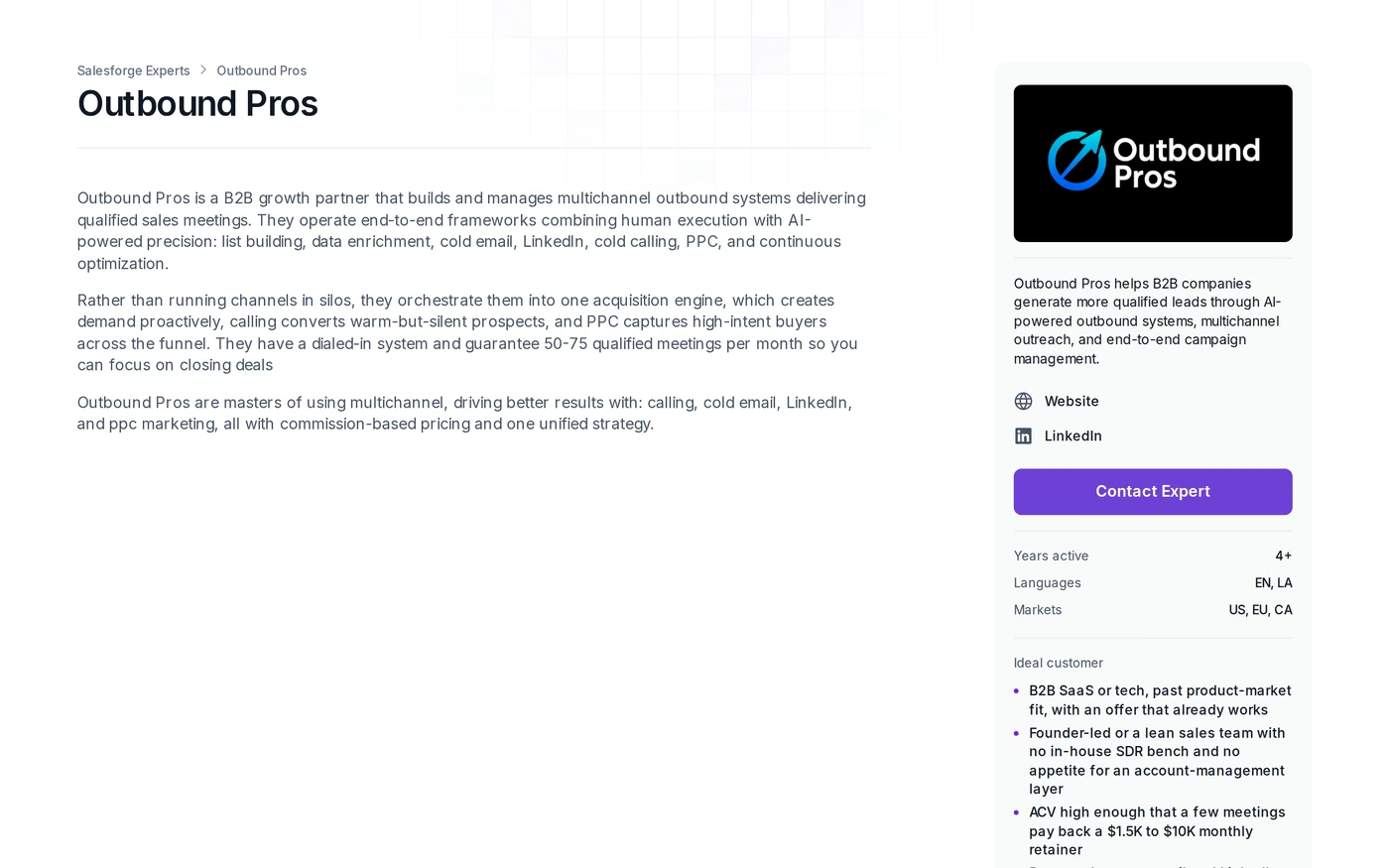
This is the option to look at if you need a committed meetings figure. De Grijff states openly that it cannot offer one. Outbound Pros takes the opposite position: their profile advertises a guarantee of 50 to 75 qualified meetings per month, on commission-based pricing. It describes an ideal client whose deal size can pay back a $1.5K to $10K monthly retainer.
They also publish what De Grijff leaves out. Their profile reports dedicated, owned domain infrastructure with documented SPF, DKIM, and DMARC, a 4 to 6 week warm-up targeting 85 to 95% inbox placement, and 8 to 15% positive reply rates. Cold calling, cold email, LinkedIn, and PPC run as one motion across US, EU, and Canadian markets, with roughly 21 days to go live. Their Outbound Pros case study reports onboarding new clients without extra licenses.
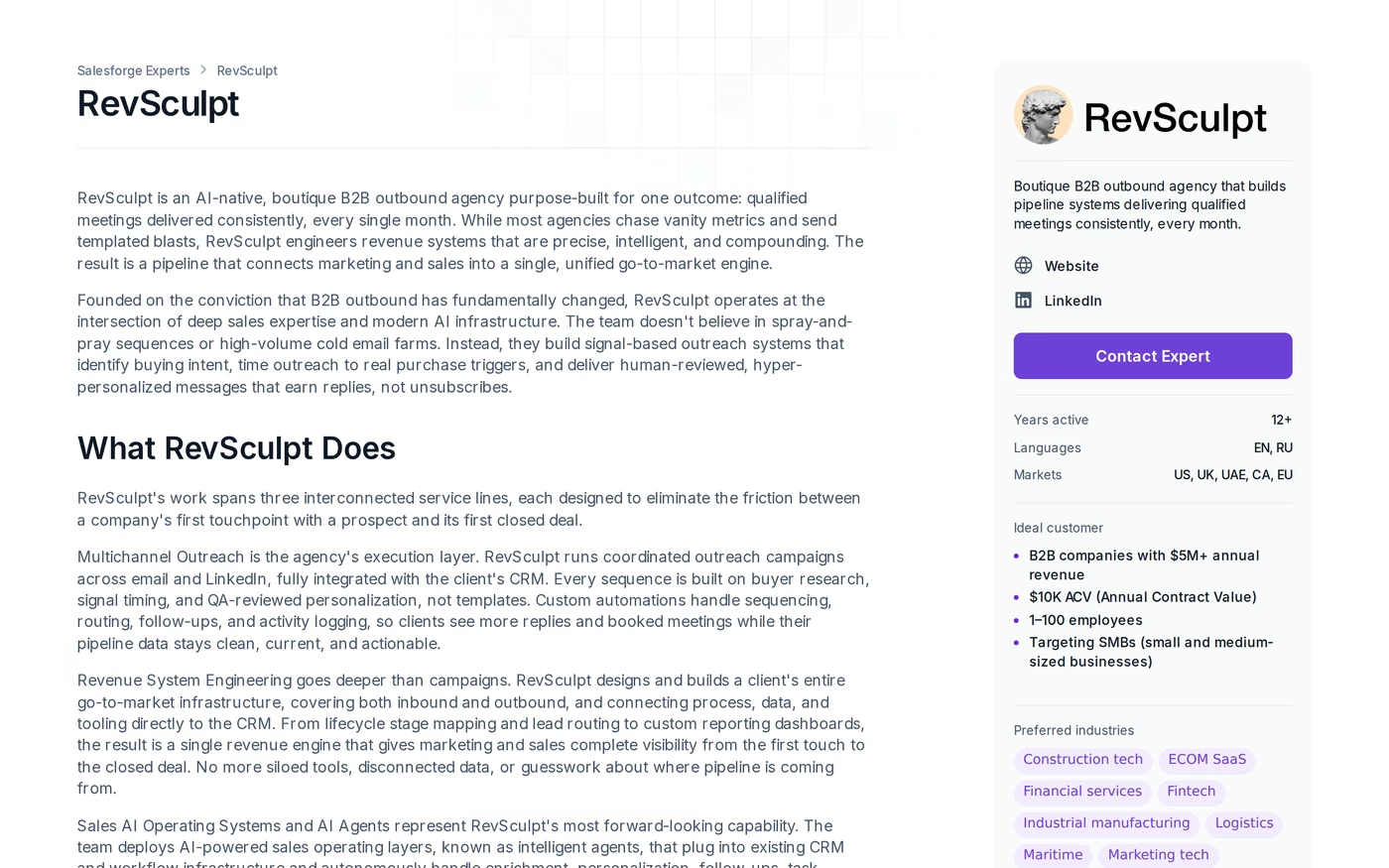
2. RevSculpt
Best for: buyers who want named client outcomes and US market proof on the page before the first call.
This one answers De Grijff's biggest gap. Where De Grijff lists 30-plus clients with no results, RevSculpt's profile reports over 6,000 qualified meetings scheduled across more than 15 B2B verticals, with most clients seeing a first qualified meeting within 18 days of onboarding.
The profile attaches numbers to specific engagements. It reports outbound built from zero for an AEO/SEO agency, delivering over 300 qualified meetings in six months. It also reports a 14x return on outbound spend for a digital asset infrastructure company selling into compliance-heavy financial institutions. They list US, UK, UAE, Canada, and EU markets, pricing from $5k a month, and verticals spanning HealthTech, FinTech, RegTech, and industrial IoT. There is no Salesforge case study page for RevSculpt, so those figures come from the directory profile alone.
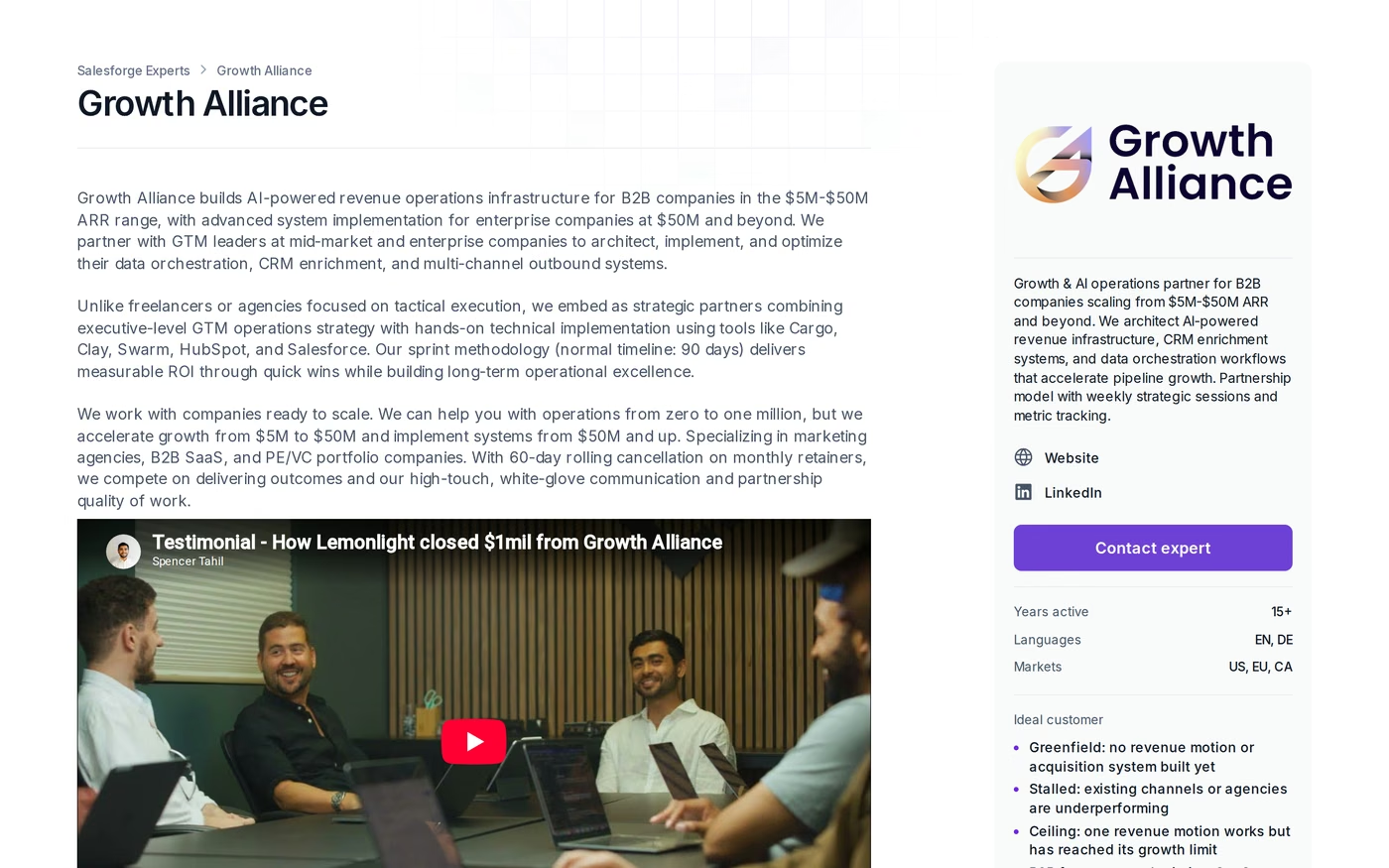
3. Growth Alliance
Best for: buyers who want to keep the system after the engagement ends, on a contract they can leave.
This is the direct counterweight to De Grijff's Article 11 and its fixed-term exit rules. Growth Alliance states a 60-day rolling cancellation on monthly retainers, and its profile says systems are built to become the client's own and continue running after the engagement.
They position as an embedded partner rather than a campaign vendor, with 15-plus years active, a 90-day sprint methodology, and a cap of 4 to 6 clients at 100 to 120 hours each per month. Programs start at $10K a month. A named testimonial from Matteo Fois, CEO of TAM Acceleration, reports over 800 leads in under two months and more than $200k in pipeline. Their Growth Alliance case study reports 1,000-plus client domains and mailboxes holding above an 89 Heat Score™.
Prefer Not to Hire an Agency at All?
If your volume is modest, or you want to own the motion yourself, there are two routes that skip the retainer entirely.
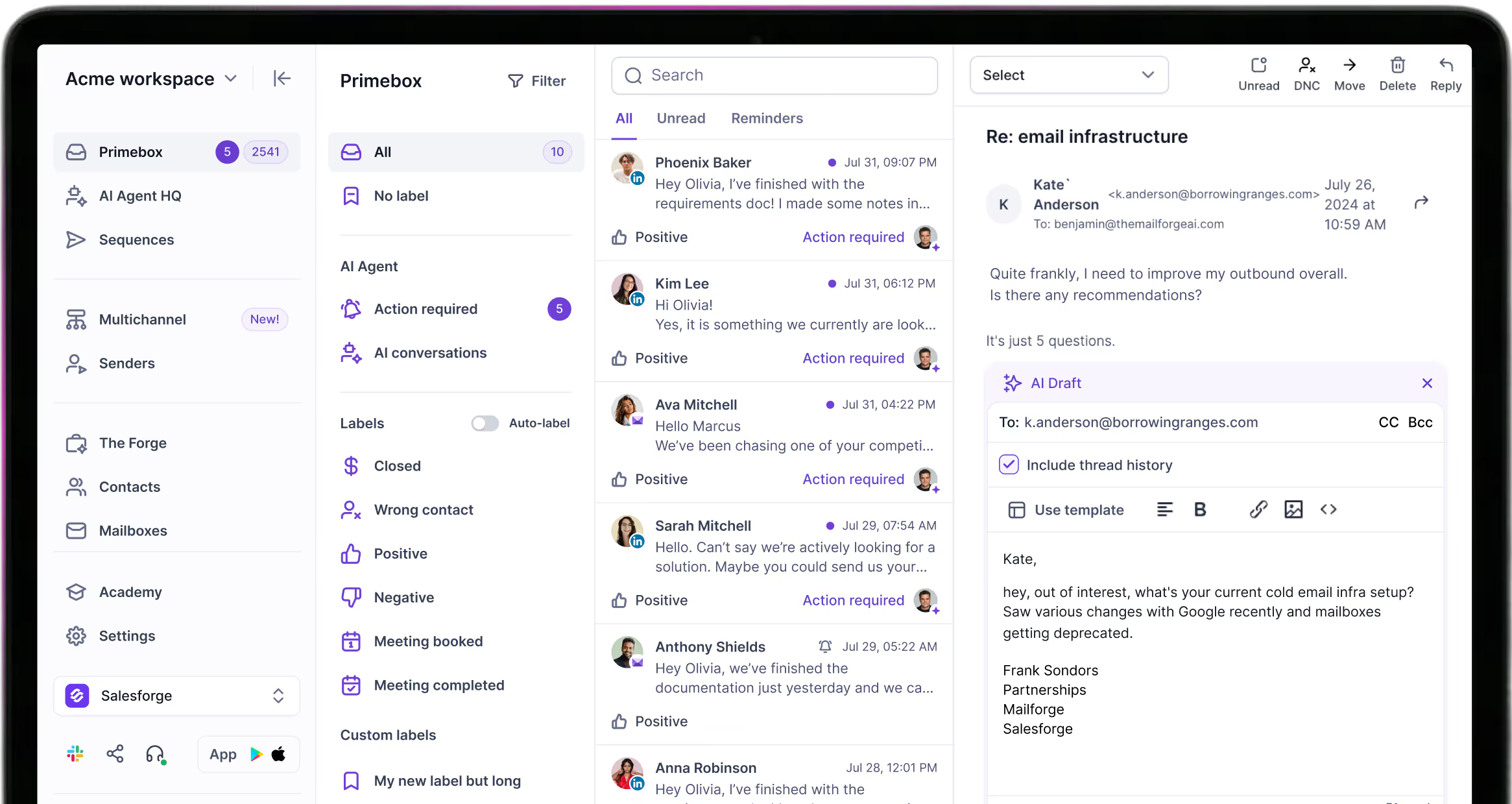
Run outbound yourself with Salesforge. It starts at $48 per month with unlimited mailboxes and free unlimited warmup included, plus a 14-day free trial. For a founder testing a market before committing to an agency, that is a cheap way to learn what your reply rates actually look like.
Or hire Agent Frank, Salesforge's autonomous ai sdr, from $499 per month billed quarterly. He handles prospecting, sequencing, replies, and meeting booking on his own. Agent Frank is a separate subscription, never bundled with a Salesforge plan price, and he needs a sales-led demo plus a two-week warm-up before he can start sending.

If you have never run outbound before, this walkthrough covers the setup from scratch.
in Action
Questions to Ask Before Hiring De Grijff
Their answers will tell you more than any review, including this one.
- What exactly counts as a lead in your 5 to 10% target, and is that the same as the opportunity figure in your first FAQ answer?
- Who owns the sending domains, mailboxes, and prospect lists at exit? Article 11 does not name them, so please confirm in writing.
- What is the total monthly cost including data, domains, LinkedIn seats, and onboarding?
- Which channels will run on my account, and at roughly what weekly volume on each?
- How long is the fixed term, and what are my options if results are flat at month three?
- Do I approve the prospect list and the copy before anything sends?
- Who replies to an interested prospect, how fast, and what is in the weekly report?
- Which of your named clients is closest to my market, and can I speak to them?
Final Verdict: Is De Grijff Worth It?
De Grijff is worth considering if you sell something technically complex into Dutch or European B2B markets and you value process over volume.
Two things set them apart. Their reviewers praise technical comprehension rather than meeting counts, and they are unusually straight about the limits of what they promise, with the FAQ and Article 7.3 saying the same thing. I would shortlist them for a Dutch or German engineering, industrial, or compliance software company with a six-month sales cycle and a HubSpot instance that needs fixing too.
I would not shortlist them for a US launch, a board that wants a contracted meetings number, or a team that needs to own the playbook afterwards. If any of those describe you, compare a few certified agencies that publish their stack, guarantees, and client outcomes before you sign anything.
Compare Certified AgenciesFrequently Asked Questions
1. Is De Grijff a Legitimate Company?
Yes. De Grijff B.V. is registered with the Dutch Chamber of Commerce under number 91198380, classified in public relations and communications consultancy. The registered address at Rietbaan 2 in Capelle aan den IJssel matches their website, and the same number appears in Article 1 of their published terms. They are also a recognized S-BB work placement company, approved since 11 March 2025. Their 150-plus companies and 500-plus sales professionals figures are self-reported.
2. How Much Does De Grijff Cost?
De Grijff does not publish pricing. There is no pricing page on the English or Dutch site, and their Clutch profile lists minimum project size and hourly rate as undisclosed. Engagements start with a call and a quotation valid for 14 days. The retainer is not the full price: ask whether domains, data credits, LinkedIn seats, and onboarding sit inside it, and note that Article 6.6 allows annual rate indexation.
3. Does De Grijff Guarantee Leads?
No, and they say so plainly. Their homepage FAQ states they cannot offer an absolute guarantee, and Article 7.3 of their terms says they do not guarantee revenue, profit, leads, or conversions. Article 7.2 calls the work a best-efforts obligation, not an obligation of result. What they publish instead is a target of 5 to 10% conversion from target account to lead. Get the definition of a lead in writing.
4. Who Owns the Lead Data and Campaign Assets?
Partly answered, and it leans toward the agency. Article 11 keeps all intellectual property in advice, strategies, materials, models, software, and documents with De Grijff, granting the client a non-transferable right of use for the duration of the agreement only. Prospect lists, sending domains, and mailboxes are not named either way. Domain ownership matters most: if the agency owns your sending domains, leaving means starting your deliverability from zero.
5. What Are the Best De Grijff Alternatives in 2026?
Three certified agencies in the Forge Expert Network answer the gaps I found. Outbound Pros advertises a 50 to 75 qualified meetings per month guarantee with owned domain infrastructure. RevSculpt reports over 6,000 qualified meetings across more than 15 verticals, covering US and UK markets. Growth Alliance offers 60-day rolling cancellation and builds systems designed to become the client's own. For smaller volumes, running Salesforge in-house from $48 per month is the cheaper start.
6. Should You Hire a Lead Generation Agency or Build Outbound In-House?
Hire an agency when you need pipeline fast and don't want to hire and train SDRs. Build in-house when you want to own the system, the data, and the learning long-term. The middle path is running Salesforge yourself from $48 per month, or hiring Agent Frank as an AI SDR from $499 per month billed quarterly, then moving to an agency once volume justifies it.
.jpg)

.jpg)

.jpg)