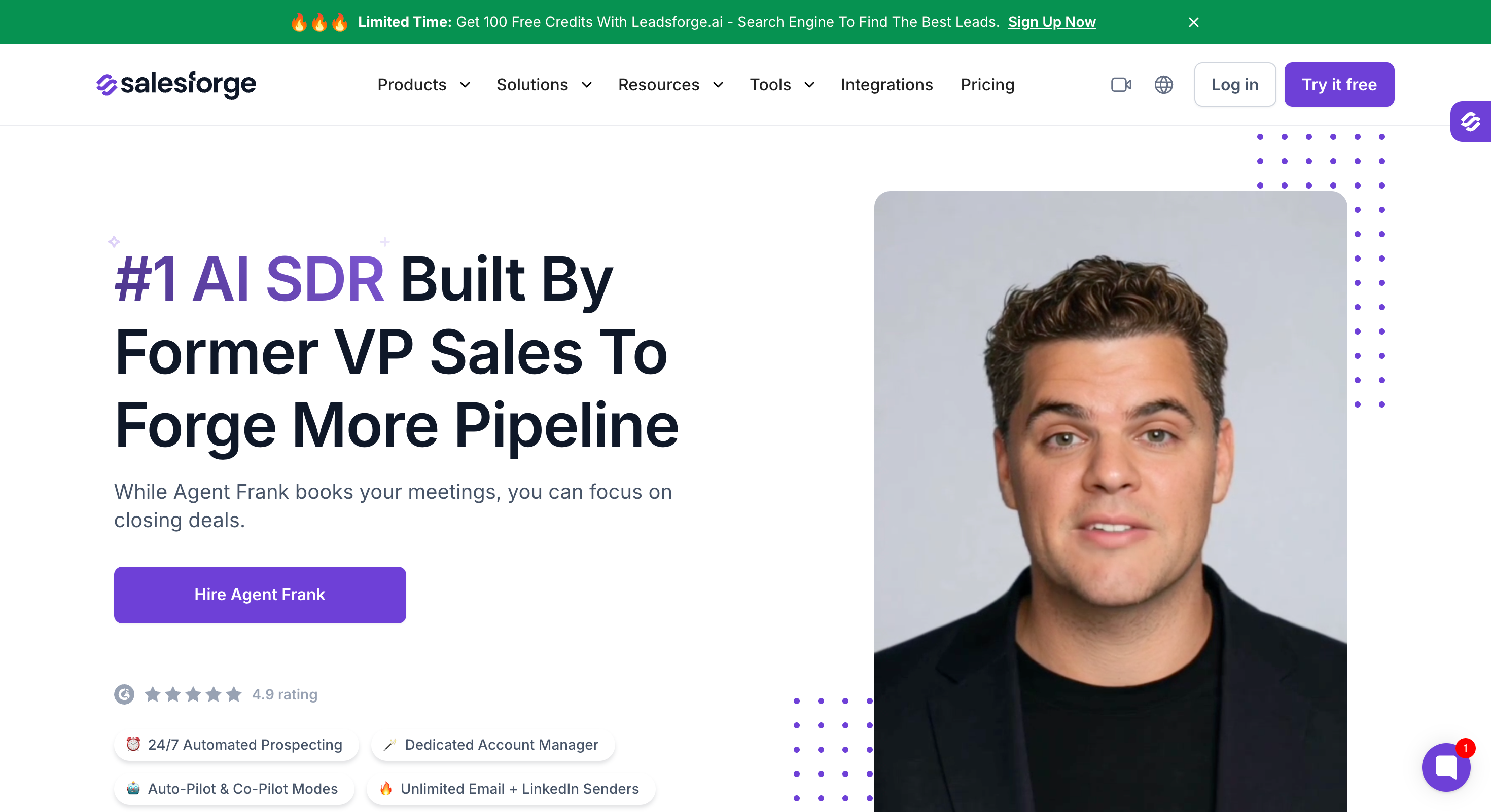
Agent Frank: Best overall AI SDR for full funnel outbound. He covers prospecting, multichannel outreach and the sending infrastructure underneath it, running on Auto-Pilot or Co-Pilot.
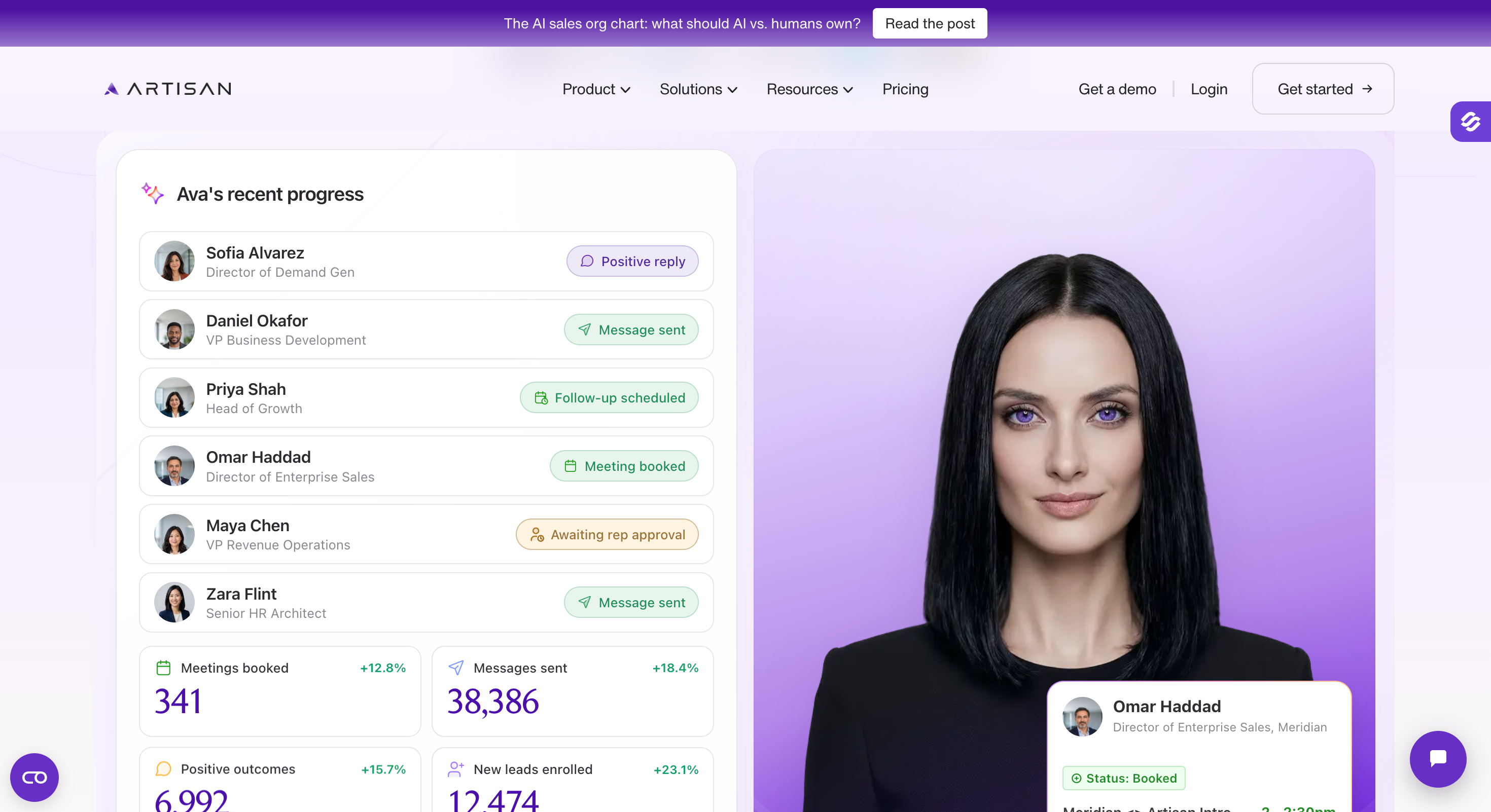
Artisan AI: Best for individual sales reps & small teams who want the same autonomous model from a different vendor, with a 300M contact database built in. Reviews split hard between people who love it and people who do not.
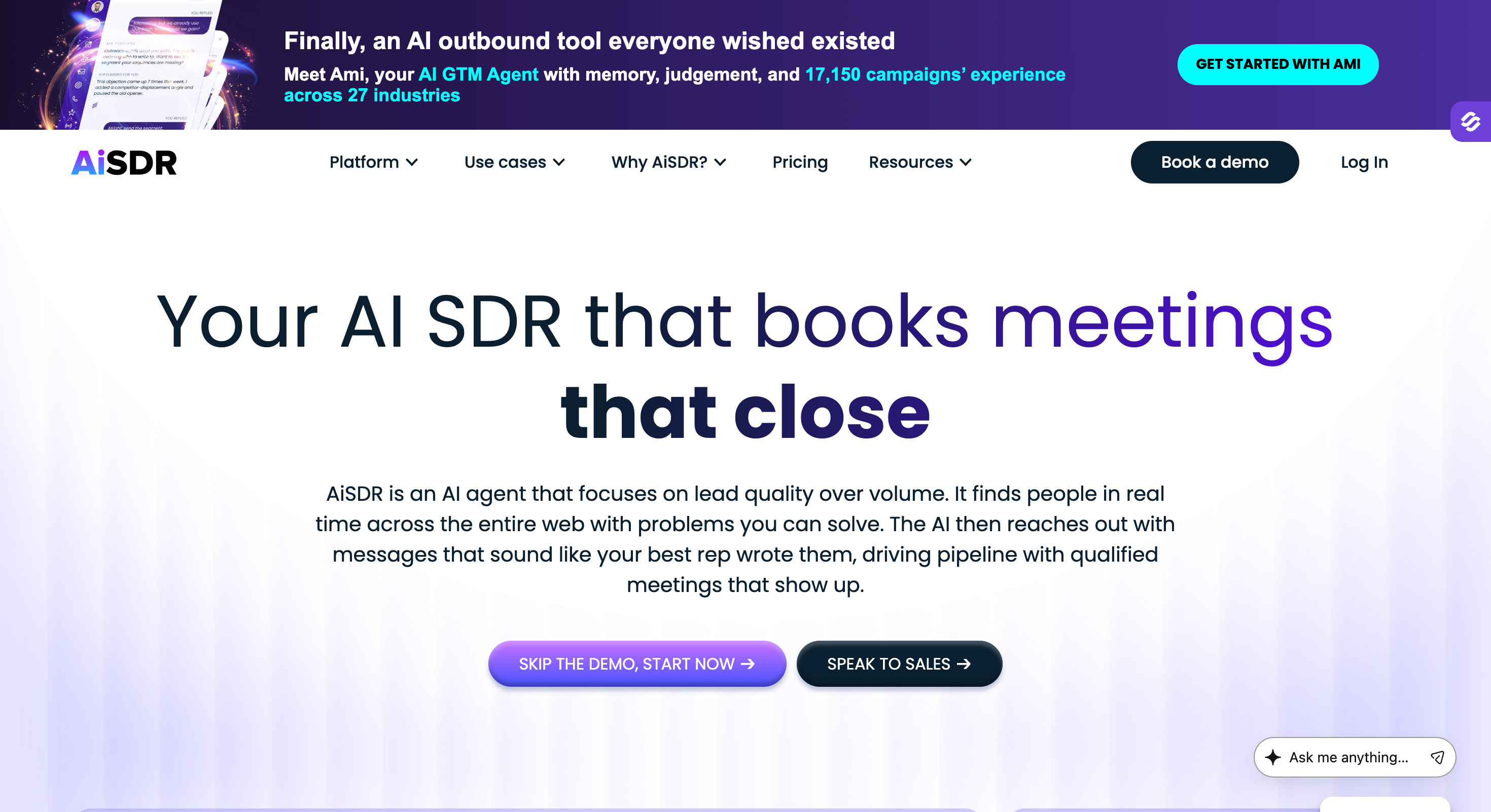
AiSDR: Best for mid market teams who want to start small and cancel if it fails, with month-to-month billing and native HubSpot sync. The contact caps bite as you scale.
Regie.ai: Best for enterprise sales teams who want agents to prospect while reps keep selling, with a dialer in the same platform. Seat minimums push the real entry cost well above the starting price.
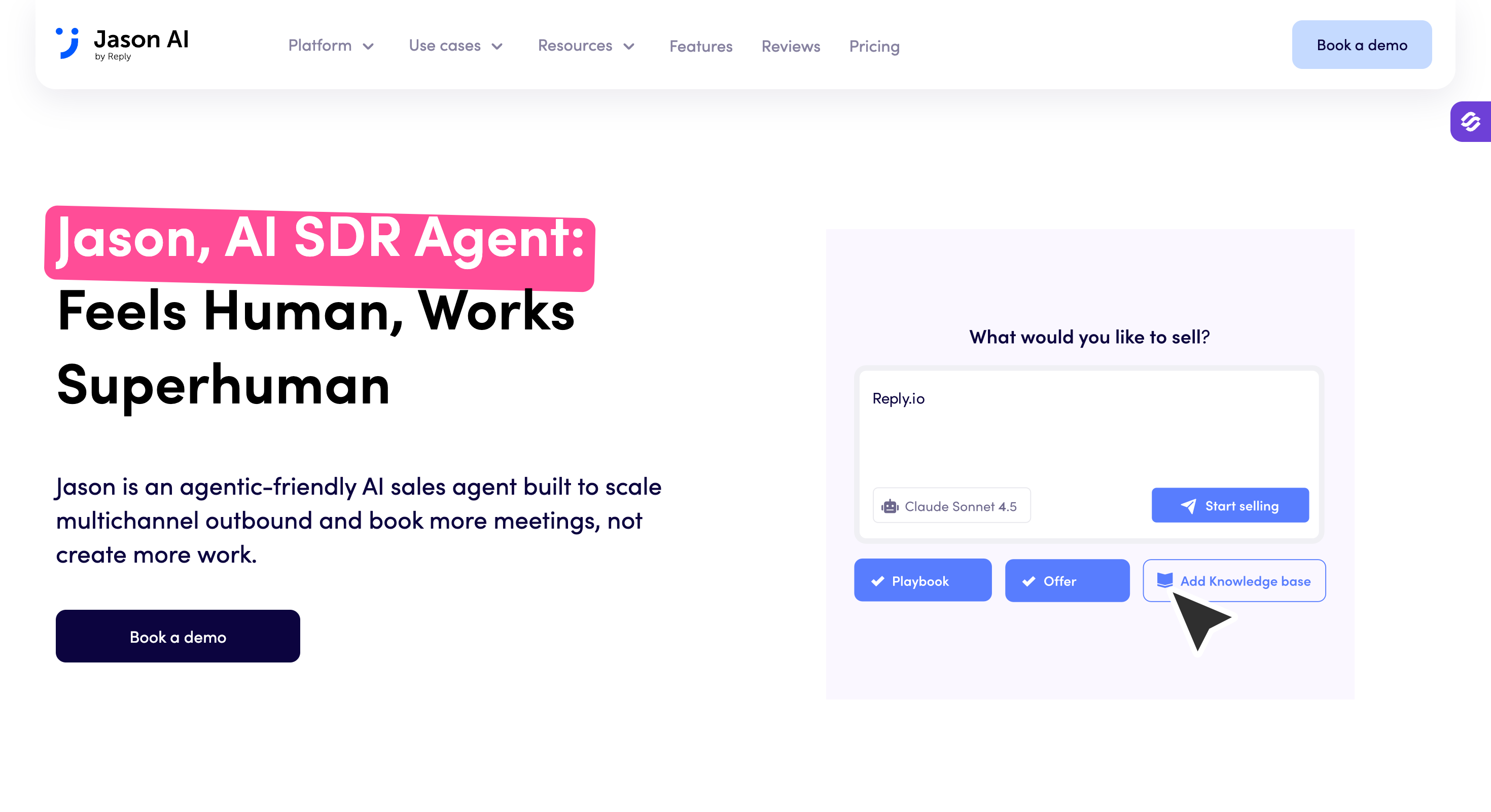
Reply.io: Best for teams who want an AI SDR on top of a mature sequencer, with a billion-contact database behind it. Jason bills separately from the seats.
Jazon: Best for enterprise teams who need the agent running on their own servers, as finance and healthcare often do. Lyzr quotes him by deployment, so there is no price to compare.
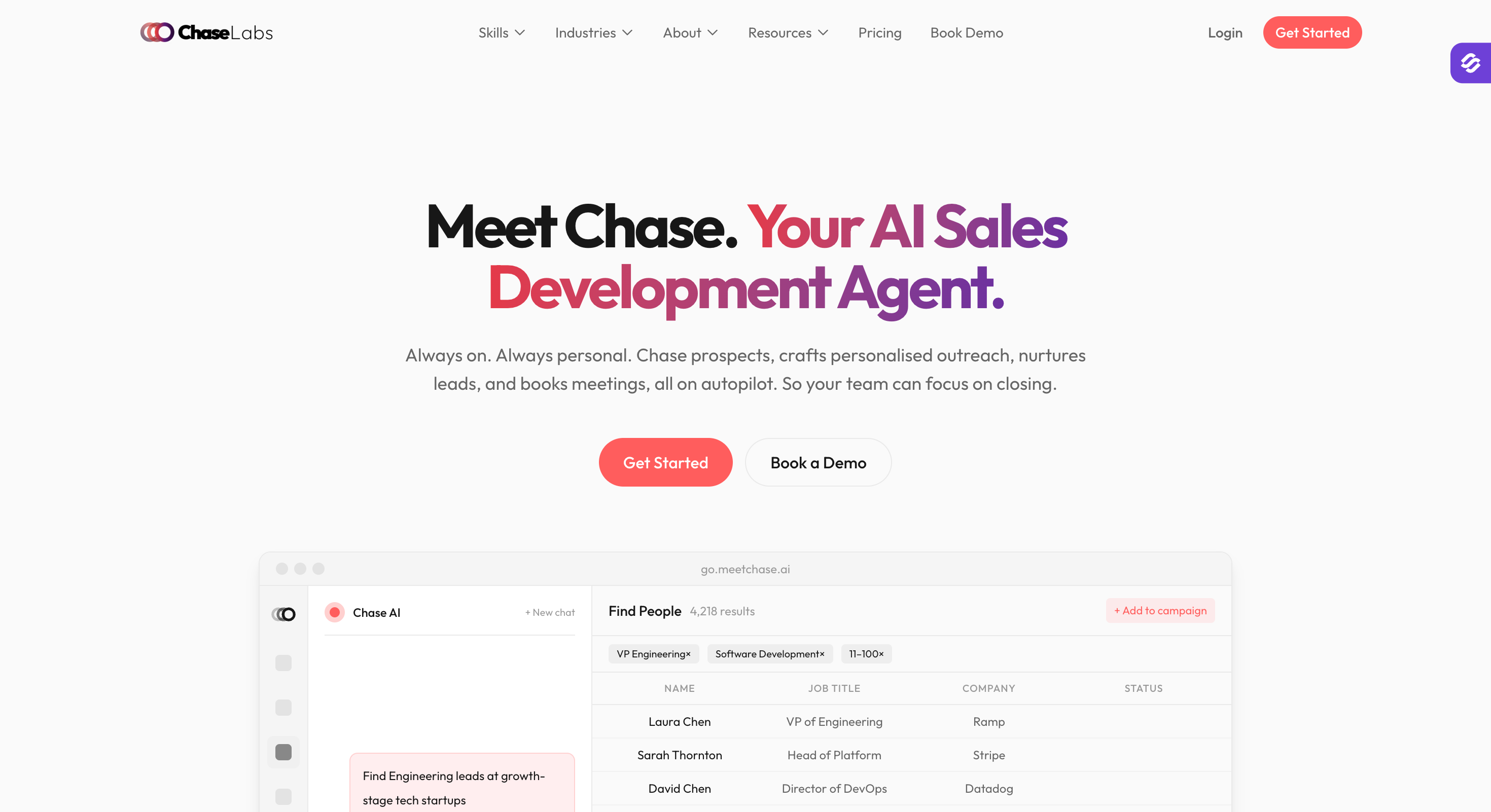
Chase: Best for growth hackers who want to pay per meeting held instead of per month. Weigh that model against a company this small.
Feature Comparison: Top 7 11x.ai Alternatives At A Glance
Teams automating the whole meeting-booking process
$499/mo annual
Yes, same sequence
Yes, 500M+ with buying signals
Own domains and mailboxes
Signals plus your corrections
Auto-Pilot or Co-Pilot
Artisan
Teams who need contacts and sending on one bill
$250/mo self-serve
Yes
Yes, 250M+
Own mailboxes
Signal-based targeting
Both
AiSDR
SMB teams who need email and text in one agent
$250/mo
Yes
Yes, 700M+
Partial
Reads 323+ sources
Both
Regie.ai
SDR teams who want drafting without losing control
$180/user/mo
No
Yes, 220M+
Mailboxes on top plan
Intent signals
Approval by default
Reply.io Jason AI
Teams already running Reply.io
Add-on to Reply.io
Yes
Yes, 1B+
Own mailboxes
Research Agents
Both
Jazon
Technical teams who want to shape the agent
Not published
Yes
Partial
Your own servers
Email-trained model
Both
Chase
Founders who only pay for held meetings
$39/mo + $250 per meeting
No
Yes
Sets up your domains
No
Autonomous only
Why People Leave 11x.ai
There are 3 main reasons why users leave 11x.ai for its alternatives.
Meeting Quality
11x publishes case studies showing 20 to 40 meetings a month from Alice. Buyers do not dispute that number.
The argument starts afterwards. Sales teams on Reddit put it at 60 to 70% curiosity calls. Someone takes the meeting, hears the pitch and never enters the pipeline.
A meeting count looks good on a dashboard. Your CRO asks about pipeline, and whether those meetings are actually helping with closing deals.
Personalization
G2 summarises its own reviews in one line. The messaging reads robotic and stilted unless you prompt it carefully, and it tends to struggle beyond basic personalization.
I would read that last clause twice. The output improves when someone works at it. Teams still need to personalize messages themselves if they want the outreach to feel credible. So the agent needs an operator instead of replacing one.
One reviewer spent $9,000 and sent 9,000 messages without booking anything. He concluded that using it properly needed a full-time person watching the targeting and the copy.
Price And Contract Terms
Alice Growth starts at $3,750 a month, billed annually. You hand over $45,000 before you send a single email. The tiers above it run on two and three year terms.
Nobody gets a self-serve trial. You talk to sales, you sign for a year, then you find out whether it works.
Their own site prints two different numbers. The Alice pricing page says $3,750 a month billed annually, or $45,000 a year. The FAQ underneath it says 11x starts at $36,000 a year.
Procurement data gives a third answer. Vendr records a median contract of $40,125, with deals running from $38,250 to $65,550.
Three numbers for one plan. I would get the figure in writing before signing anything.
How I Tested These 11x AI Alternatives
I gave every tool the same prospect data list, the same offer and the same sending setup to see what actually improves lead generation and which ones best automate workflows across prospecting, outreach, and booking. Then I scored each one on five things.
What happened to the meetings: Every tool here books meetings. I tracked which ones turned into opportunities a month later. No feature list tells you as much.
Are they real AI SDRs: A real agent sources the leads and finds the contact data, then writes the messages, sends them and books the meeting, covering the whole sales process instead of just one step. Several here stop short and hand part of that back to you. I say where each one stops in its own section.
What it really costs: You rarely pay the starting price. I counted the mailboxes, the domains, the credits and the contact data you buy on top, since some consolidate more into one tool while others still make you rely on separate tools around the core agent.
What you sign: I checked the term, the trial and how hard you find it to leave. Most people end up on this page for exactly that reason.
What it does to your domains: Most AI SDR tools sending thousands of outbound email messages a month can hurt deliverability and damage sender reputation. I checked whether each tool warms its own mailboxes, splits sending across them and stops when bounces rise.
1. Agent Frank
Best for: Outbound GTM teams and founders who want the agent and the sending infrastructure from one place with true conversation intelligence layer.
G2 rating: 4.6 out of 5
Agent Frank is an AI SDR for outbound sales outreach that books meetings autonomously. He finds the prospects matching your ICP, writes personalized messages, chases the follow-ups and books the meeting.
He runs in two modes:
Auto-Pilot: He picks the leads, drafts the messages and sends them without checking in. Replies land in your inbox and you step in whenever you want.
Co-Pilot: Every message waits for your approval before it leaves. Slower, and where I would start.
Outbound usually starts with two things: infrastructure and prospecting. Frank brings both in one outreach platform.
He prospects from a 500M+ contact database with buying signals built in, so you never open a second data subscription. Megaforge then spreads his sending across several email hosting providers, which keeps deliverability high and stops one domain failure from killing a campaign.
You set how many contacts he works at once, anywhere from a thousand to fifty thousand. Even the entry plan pushes 6,000 to 7,500 emails a month, and he writes each one for the person opening it.
11x folds mailboxes into the contract, so you send from whatever that contract hands you. Frank warms his own, so your company domain never carries the volume.
Setup stays simple enough for a non-technical team, manageable for non technical users, and every plan comes with a dedicated account manager.
Agent Frank Key Features
All-in-One AI SDR: He handles lead sourcing, finds the addresses, writes the copy, sends it and books the meeting in one tool. Nothing lands back on your desk.
Auto-Pilot or Co-Pilot: Pick whether he sends by himself or holds every message until you sign it off.
500M+ contacts included: The lead database comes with the plan, so your data bill stays at zero.
Builds ABM lists: Give him named accounts and he finds the decision makers inside each one, then works them in order using signals such as intent data.
Prospects continuously: He keeps looking for leads that fit your ICP, so no list ever runs dry.
Buying signals built in: Five types cover hiring, job change, acquisition, funding and investor. He works the accounts showing movement first.
Prospecting workflows: Competitor Followers Search, Company Lookalikes and Local Company Search all feed his lists.
Trained on your material: Upload your decks, docs and site, and he picks up the product from them.
Improves on your edits: Whatever you fix in Co-Pilot sticks, and he carries it into the next campaign.
20+ languages: He drafts natively in the prospect's language. Nothing arrives translated from English.
Nine tones of voice: Choose how he sounds, anywhere from formal to playful.
Intelligence layer: He writes from the sources you give him, never from a stock template.
Working hours: You set his time zone, his working days and his sending windows. Messages arrive during office hours instead of overnight.
Multichannel: Email and LinkedIn steps branch together for multi channel outreach instead of running as separate campaigns, giving you AI driven outreach from one flow.
Unlimited senders: Connect every mailbox and LinkedIn profile you own, and your price remains same.
Free Warm-up: Warmforge handles email warmup before a single send, helping protect sender reputation, and the plan covers it.
Megaforge splits the sending volume: Sending spreads across Gmail, Outlook, Mailforge and Infraforge, so losing one domain never stops a campaign and higher outreach volume stays safer.
Dedicated account manager: Every plan comes with one, plus a shared Slack channel and dedicated support for onboarding and ongoing help.
Why Frank Beats 11x
I put Frank first because it is a strong alternative to 11x for teams that want lower cost and fewer separate tools without giving up autonomy.
He costs a tenth of Alice: Alice Growth costs $3,750 a month, so $45,000 a year. Frank costs $499 a month, so $5,988. One year of Alice pays for seven years of Frank.
Intelligence Layer: Frank runs an intelligence layer built from your product docs, your Co-Pilot corrections and account signals. Every campaign starts from what he already learned.
No per-seat pricing: 11x charges by seat and by lead volume. I added three people to Frank last quarter and paid the same, so costs do not jump with team size or show up later as hidden fees. That matters most for large sales teams as headcount grows.
What I Liked About Agent Frank
The data came with him. I could also build a list any way I wanted, from competitor followers to lookalikes.
He read the product once from the Knowledge Base, and no campaign needed fresh prompts.
Co-Pilot let me watch the first two weeks before handing over the sending, with routine tasks offloaded so it kept teams focused on live opportunities instead of admin.
I opted into Megaforge. It spreads sending across several providers, so my own domain stayed clean.
What Are The Cons Of Agent Frank
There is no free trial. You book a demo before you can buy.
The mailboxes and domains cost extra.
Agent Frank Pricing
Plan
Price
What you get
Annual
$499/month, billed annually
1,000 active contacts at any time
Quarterly
$599/month, billed quarterly
The same, paid every three months
Volume
$0.25 per contact
Applies above 2,000 contacts a month
No free plan or free tier exists. The three paid plans above cover everything.
A thousand active contacts works out at 2,000 to 2,500 new leads a month. Mailboxes and domains cost extra.
2. Artisan
Best for: Teams who want the same autonomous model from a different vendor.
G2 rating: 3.9 out of 5
Artisan sells an AI BDR called Ava. She picks the accounts worth chasing, writes the outreach, sends it and books the meeting.
Among AI outbound platforms, Artisan is one of the closest matches to 11x’s model.
Of everything here, Ava comes closest to what 11x sells. She makes the same promise with the same hands-off pitch, at a very different price. Artisan cut its entry plan to $250 a month in May 2026, which also makes it a plausible 11x alternative for small businesses. Alice starts at $3,750.
She earns the second slot on what comes in the box. Ava draws on 250M+ contacts and fills each record from 22+ sources for data enrichment. The plan covers warm-up too.
Replies defeat her sooner than you would like. The system is strong for cold outreach, but once the conversation gets complex, a buyer who wants to argue about your pricing needs a person.
Artisan Key Features
250M+ contact database: Prospecting arrives with the platform, so no separate data subscription appears on your card.
Enriches from 22+ sources: Each record gets filled in from more than twenty places before a single word gets written.
Picks leads by signal: A funding round or a new hire at the top moves someone to the front of her queue.
Writes and tests variants: She runs dozens of message versions per campaign and sends more of whichever one wins.
Email and LinkedIn: She works both channels out of one platform.
Native dialer: Reps call from inside Artisan, with a brief beforehand and a summary afterwards.
Handles replies: She answers simple objections and books the meeting without passing it back to you.
Warm-up built in: The plan covers mailbox warming and deliverability monitoring.
CRM sync: HubSpot and Salesforce both take her data.
The interface beats everything else here, and technical setup took me under an hour.
One bill covered data and sending, where 11x bundles the mailboxes but leaves the data question open.
Variant testing earned its keep. My winning message was not the one I would have bet on.
She answered prospects in minutes, while my team took until the next morning.
What Are The Cons Of Artisan
Reviewers flag data accuracy repeatedly. I hit stale records often enough that weaker lead data quality became the practical issue, so I had to re-verify before sending.
The writing reads like AI more often than the marketing admits.
Complex replies defeat her, so real deals still need a person in the thread.
G2 reviews split hard between five stars and one star. That pattern usually means a tool suits some teams and not others.
Support shows up as a complaint often enough to take seriously.
Artisan Pricing
Plan
Price
What you get
Self-serve
From $250/month
Ava, the contact database and sending
Enterprise
Custom
Higher volume, priced on a call
Artisan cut its entry price from $2,500 to $250 a month in May 2026.
Best for: Teams who want to start small and cancel if it fails.
G2 rating: 4.6 out of 5
AiSDR runs email, LinkedIn and text from one agent.
As an autonomous AI SDR, it fits teams wanting to start with a lighter commitment. The agent researches each prospect, writes the message, answers the reply and books the meeting.
AiSDR does one thing better than anyone here, and the product has nothing to do with it. The company publishes its prices. Three tiers sit on the website, and AiSDR Solo costs $250 monthly for 200 contacts, with cancel-anytime billing.
Alice costs $3,750 a month on a year-long contract with no trial. Readers who left 11x over the commitment should start here.
AiSDR has no dialer, so phone outreach runs through Aircall or not at all, which still makes it a practical option for outbound motion when you want monthly billing.
AiSDR Key Features
Email, LinkedIn and text: Three channels work from one agent, with support for multi channel outreach across email, LinkedIn, and text rather than isolated sends, and the text messages come included.
700M+ lead database: Every plan carries the data, so no second subscription appears on your card.
Researches from 323+ sources: The agent reads widely before writing, and reviewers say the output avoids the template feel.
Replies in minutes: A positive reply gets an answer in five to ten minutes instead of the next morning.
Two-way HubSpot sync: Lists, account scoring and activity logging move both directions on every tier.
A GTM engineer sets it up: A person builds your ICP, your messaging and your sync before launch, so the workflow is fully autonomous once configured and still accessible for non technical users.
Credits roll over: Unused messages carry into the next quarter while the plan stays live.
60+ languages: The agent writes in whichever language your prospect reads.
Ami builds the strategy: A second agent writes the ICP, the angles and the sequences for you.
Best for: SDR teams who want AI drafting without handing over control.
G2 rating: 4.4 out of 5
Regie.ai took the opposite bet to 11x as a sales execution platform, combining sales outreach with pipeline management for teams that want more control than 11x gives.
Its agents do account research, rank them and write the drafts for personalized outreach. A rep then decides what actually goes out.
The difference matters if you left 11x because Alice sent things you would not have sent. Nothing reaches a prospect here without a person reading it first.
My reps noticed the dialer first. Nine lines ring at once, so nobody sits through nine rings waiting for a pickup.
I would read the contract before getting excited. Regie bills annually and asks for ten seats minimum on the entry plan, aimed at revenue leaders managing larger SDR organizations. The real floor lands near $21,600 a year, so the commitment problem follows you here.
Regie.ai Key Features
Agents draft, reps approve: Every email outreach message passes a person before it passes to a prospect.
220M+ contact database: The platform carries its own contact data.
Nine-line parallel dialer: The dialer rings nine numbers at once and connects the rep to whoever picks up.
Email, phone and LinkedIn: All three channels work inside a single sequence.
Intent signals: The agents reorder your list so reps hit the warmest accounts first.
Writes more than emails: Call scripts, voicemail drops and social messages all come out of the same tool.
Mailboxes on the top plan: Ten mailboxes come with Force Multiplier.
Fits your existing stack: Salesforce, HubSpot, Outreach, Salesloft, Gmail, Outlook and LinkedIn all connect.
Campaign health score: One number tells a manager whether a campaign works, which is one of the platform's biggest advantages for visibility and control.
What I Liked About Regie.ai
Nothing went out without a person seeing it, and the first month felt far calmer for it.
The parallel dialer changed how my reps spent an afternoon. Nine lines beats nine rings.
Building a sequence took two or three minutes against the twenty it used to.
Regie slotted into Salesforce and Outreach without me rebuilding anything.
What Are The Cons Of Regie.ai
Ten seats minimum on the entry plan puts the real floor near $21,600 a year.
Contracts run annually. Regie offers no monthly plan and no self-serve trial.
Per-user pricing punishes you for hiring, where the agent-priced tools do not.
Reviewers flag a robotic tone, and reps edit more than the time savings suggest.
G2 reviews mention wrong phone numbers and prospect mismatches. I would test the data on your own list first.
Regie.ai Pricing
Plan
Price
What you get
AI SEP
$180/user/month
Sequencing, intent sorting, power dialer, 10-seat minimum
Force Multiplier Rep
$499/user/month
Parallel dialing, enrichment and 10 mailboxes, 5-seat minimum
RegieOne
From $35,000/year
The full platform, priced on a call
The parallel dialer costs $150 per user a month on the cheaper plan. Both tiers bill annually.
5. Reply.io Jason AI
Best for: Teams who want an AI SDR without learning a new platform.
G2 rating: 4.6 out of 5
Reply.io builds its AI SDR into the sequencer your reps already use. Jason sources the leads, writes the outreach, works the follow-ups and answers what comes back.
Nobody learns a new tool. For some teams that beats a better standalone agent.
Reply also runs more channels than anything else here. Email, LinkedIn, calls, SMS and WhatsApp share one cadence. Alice covers the first two plus SMS, so calling and WhatsApp are what he adds.
Jason bills on top of your Reply plan. The published figures for him vary enough that you need a quote before you budget.
Jason AI Key Features
Lives inside Reply.io: Your team works in the same AI-powered sales engagement workspace and the same screen as before.
Five channels: Email automation, LinkedIn, calls, SMS and WhatsApp all run from one cadence, built for sales outreach at scale.
1B+ contact database: He pulls leads from Reply's own records, covering 150+ countries.
Research Agents: You give him up to three angles to write from, such as company news or recent activity.
Handles replies: He answers questions, books meetings, and uses real time insights from engagement to adjust follow-ups, including calls from one cadence.
Scores your prospects: He sorts leads by engagement, so your reps start with the warmest.
Deep CRM sync: Salesforce, HubSpot, Pipedrive and Copper sync both ways, refreshing every two hours.
700+ integrations: Zapier and Make connect whatever else your stack runs.
Built-in deliverability: The platform covers warm-up and watches your sending health.
Best for: Technical teams who need the agent running on their own servers.
G2 rating: Too few reviews to score
Lyzr built Jazon on top of its own agent platform. He researches the prospects, writes the emails, works LinkedIn and books the meetings.
Deployment sets him apart from everything else here. Jazon installs into your private cloud or onto your own hardware, which also makes him workable for autonomous AI-driven outbound in regulated environments where hosted tools are not allowed. Nothing else on this list does that.
Banks, hospitals and government teams live under rules about where customer records sit. Most AI SDRs fail that review before anyone sees a demo. Alice runs on 11x servers.
The trial terms give you the second contrast. Lyzr gives eligible customers a three-month pilot. 11x asks for a year up front with no trial at all.
Jazon starts slower than anything else here. Lyzr sells a platform first and an SDR second. You buy a toolkit and build him out of it, so it is better suited to enterprise teams than to small businesses.
Jazon Key Features
Runs on your own servers: He installs into a private cloud or on-premises, so your data never leaves the building and teams keep tighter control over compliance in outbound workflows.
Email-trained model: Lyzr trained a model on outreach instead of adapting a general one to the job.
Email and LinkedIn: Both channels work from the same agent, including connection requests on LinkedIn where supported in the workflow.
Books meetings: Calendar integration handles the scheduling without a person stepping in.
SOC 2 and ISO 27001: The certifications your security team asks for before anything else.
Model-agnostic: He runs on whichever language model you prefer, and you can swap it later.
PII redaction built in: He strips sensitive data out before anything reaches the model.
Other agents included: The same platform ships agents for marketing, HR and support.
Three-month pilot: Eligible customers get a trial period longer than anyone else offers.
What I Liked About Jazon
Running him on my own servers answered a security question that killed three other tools.
The email model wrote better first drafts than the general-purpose agents managed.
Three months of pilot gave me long enough to judge it. A 14-day trial never does.
I could change how he behaved instead of picking from nine preset tones.
What Are The Cons Of Jazon
Setup takes real technical work. Without an engineer on hand, you will struggle.
Lyzr sells a platform, so Jazon gets less attention than a product built only for outbound.
Lyzr publishes no price for Jazon. You ask, and the answer depends on your deployment.
Jazon has too few public reviews to judge him against the bigger tools.
Teams who want pipeline this month should look further up this list.
Jazon Pricing
Plan
Price
What you get
Agent Studio Free
$0
The platform, for building and testing
Agent Studio Pro
$99/month
The platform with production limits lifted
Jazon
Quoted on request
The SDR agent, priced by deployment
Lyzr publishes Agent Studio pricing and quotes Jazon separately. Cloud runs bill at around $0.08 each.
7. Chase
Best for: Founders who want a lighter, cost-controlled way to run cold emails and only pay for meetings that actually happen.
G2 rating: Not listed
Chase Labs sells outcomes instead of software. A small base fee covers the account. After that you pay roughly $250 for every qualified meeting held.
The model flips the risk. 11x asks for $45,000 up front and hopes the meetings follow. Chase charges nothing until someone sits down with you.
So I would work out your own number first. At $250 a meeting, $45,000 covers 180 meetings, or fifteen a month. Below that, Chase costs less. Above it, 11x does.
People write the campaigns here, and the copy reads better than most agents manage. The agent handles only the sending and the scheduling, so this setup favors cold emails over broader multichannel sales outreach.
Chase Labs is also tiny. A pre-seed round and very few staff sit behind it, and the company keeps narrowing its focus.
Chase Key Features
Pay per meeting held: You pay when a qualified meeting happens, not when a campaign runs.
People write the campaigns: A human drafts your messaging before any agent sends it.
Sets up your domains: Chase buys the sending domains and sets them up for you.
Own contact data: Prospecting comes with the service, so you bring no list.
Books into your calendar: The agent handles scheduling without passing anything back.
Runs on its own: You set the direction, and nobody approves individual messages.
Email only: Everything runs through email.
Low base fee: Around $39 a month covers the account before any meeting lands.
What I Liked About Chase
I paid for outcomes. No other tool on this list offers that.
The copy read like a person wrote it, because a person did.
They bought and set up the domains, so I never touched DNS.
The math stayed simple. Fifteen meetings a month tells you whether this model fits.
What Are The Cons Of Chase
Chase Labs runs on a pre-seed round with very few staff. I would weigh that against a multi-year plan.
Nobody approves messages before they send, so you give up the control Regie.ai hands you.
The company has no public review profile, so you judge it on a sales call alone.
Chase keeps narrowing toward specific industries, so I would check whether yours is one of them.
Chase Pricing
Plan
Price
What you get
Base
Around $39/month
The account and the sending setup
Per meeting
Around $250
Charged for each qualified meeting held
Above fifteen meetings a month, this model costs more than Alice. Below that, it costs much less.
Final Verdict: Which 11x.ai Alternative Should You Pick?
You came here for one of three reasons.
If you want the best 11x alternative for AI-driven outreach without the 11x contract risk, Agent Frank answers all three.
The price climbed too high, the contract locked you in too long, or the meetings went nowhere.
Agent Frank answers all three.
On price, he costs $499 a month against Alice at $3,750. One year of Alice pays for seven years of Frank. Your bill then stays flat however many people you add.
On the contract, I would take the quarterly term. Three months beats a year up front, and you find out early whether he works.
On the meetings, he sends from his own warmed domains instead of yours.
The rest comes with him:
The 500M+ contact database, so no second data bill arrives.
Warm-up on every mailbox, where most tools here charge extra.
Email and LinkedIn in one sequence, branching on what each prospect does.
Co-Pilot while you learn to trust him, then Auto-Pilot when you do.
The key benefits are lower cost, owned sending infrastructure, and less operational overhead than 11x.
Agent Frank, for most teams. He does the same job at $499 a month against Alice at $3,750. He also sends from his own warmed domains, so your company domain stays clean.
2. How much does 11x.ai cost in 2026?
Alice Growth starts at $3,750 a month on annual billing, or $45,000 a year. The FAQ on that same page says $36,000. Procurement data puts the median contract at $40,125. I would get the figure in writing before signing.
3. Does 11x.ai offer a free trial?
No. You book a demo, talk to sales and sign before you send a single email. Agent Frank also starts with a demo. Salesforge itself runs a 14-day free trial, so you can test the platform before adding Frank.
4. Can you get out of an 11x contract?
Only at renewal, unless your deal has a break clause. 11x has said enterprise customers get a twelve-month contract with a three-month opt-out. Terms differ by deal, so read yours.
5. What is the cheapest 11x.ai alternative?
AiSDR and Artisan both start at $250 a month. Agent Frank costs $499 and includes the contact data, the warm-up and the sending domains. The cheaper tools bill separately for all three, so compare the full bill instead of the entry price.
6. Is Chase Labs worth it against 11x?
Below fifteen meetings a month, yes. Chase charges around $250 per meeting held, so $45,000 buys 180 meetings a year. Above that number 11x costs less. Agent Frank costs $499 a month whatever your meeting count.
7. How many meetings should an AI SDR book?
Ask how many turned into opportunities, not how many got booked. Alice books 20 to 40 a month in 11x's own case studies. Sales teams on Reddit say 60 to 70% are curiosity calls. A meeting count without a conversion number tells you nothing.
8. What makes a real AI SDR?
A real agent sources the leads and finds the contact data, then writes the messages and books the meeting. A sequencer with AI writing drafts the copy and leaves the rest to you. Several tools sold as AI SDRs stop somewhere in between.
Book more meetings on autopilot
Set up in minutes. No per-seat pricing. No commitment.
Discover the 7 best LinkedIn AI SDRs to scale outreach in 2026. Compare features, pros, cons, pricing, and find the right tool to book more meetings fast.