Summarize this article
Table of contents
Get insights delivered straight into your inbox every week!

9 Best Email Scraping Tools for Sales and Marketing Teams (2026)

Sales reps, marketers, founders, and recruiters all turn to email scraping tools to quickly find verified contact details and fuel outbound campaigns. 

These tools claim to uncover real business emails, automate prospecting, and save hours of manual research.

But with dozens of platforms promising accuracy and scale, which email scraping tools actually work in 2026?

To find out, we compared leading solutions, tested their features, reviewed user experiences, and looked at how well they fit modern sales workflows, including AI, data quality, automation, and compliance.

In this guide, you’ll get a clear breakdown of the 9 best email scraping tools, who they’re built for, how they perform, and which one is worth your time.

TL;DR

  • Salesforge is best if you want scraped leads to actually turn into replies without juggling tools.
  • Leadsforge works well when you need a large database to source leads in bulk.
  • Snov.io is a good starting option if you want email finding and outreach in one place.
  • Skrapp.io is useful for quickly pulling work emails from LinkedIn at a low cost.
  • Kaspr fits teams that live inside LinkedIn and need emails or phone numbers on the spot.
  • Apollo.io is strong when you want a big database with filtering, enrichment, and outreach together.
  • Hunter.io is reliable for finding and verifying emails at the domain level.
  • UpLead is a solid choice when email accuracy and direct dials matter more than volume.
  • Lusha helps sales teams quickly access direct phone numbers while prospecting on LinkedIn.
  • Saleshandy works best when your main goal is sending cold emails at scale after finding emails.

What Makes a Good Email Scraping Tool in 2026?

  • A good email scraping tool starts with accurate data, so you get real emails, not bounced ones.
  • Next, it should be easy to use, because nobody wants a tool that feels complicated or slow.
  • Then, it must find emails from many places, like websites, LinkedIn, and company domains.
  • After that, it helps if it verifies emails, so you know which ones are safe to send to.
  • Plus, the best tools connect with your sales or CRM software, making work faster.
  • Also, they should save you time by automating tasks you used to do manually.
  • Finally, a great tool keeps your outreach safe and legal, so you follow rules like GDPR and avoid spam issues.

Top 10 Email Scraping Tools for Sales & Marketing Teams

Lead Data Tools Comparison
Tool Source LinkedIn Verify Phones Enrich Outreach
Salesforge Import ⚠️
Leadsforge Database
Snov.io Mixed ⚠️
Skrapp.io LinkedIn ⚠️
Kaspr LinkedIn ⚠️
Apollo.io Database ⚠️
Hunter.io Domain ⚠️
UpLead Database
Lusha LinkedIn ⚠️ ⚠️
Saleshandy Finder ⚠️

1. Salesforge

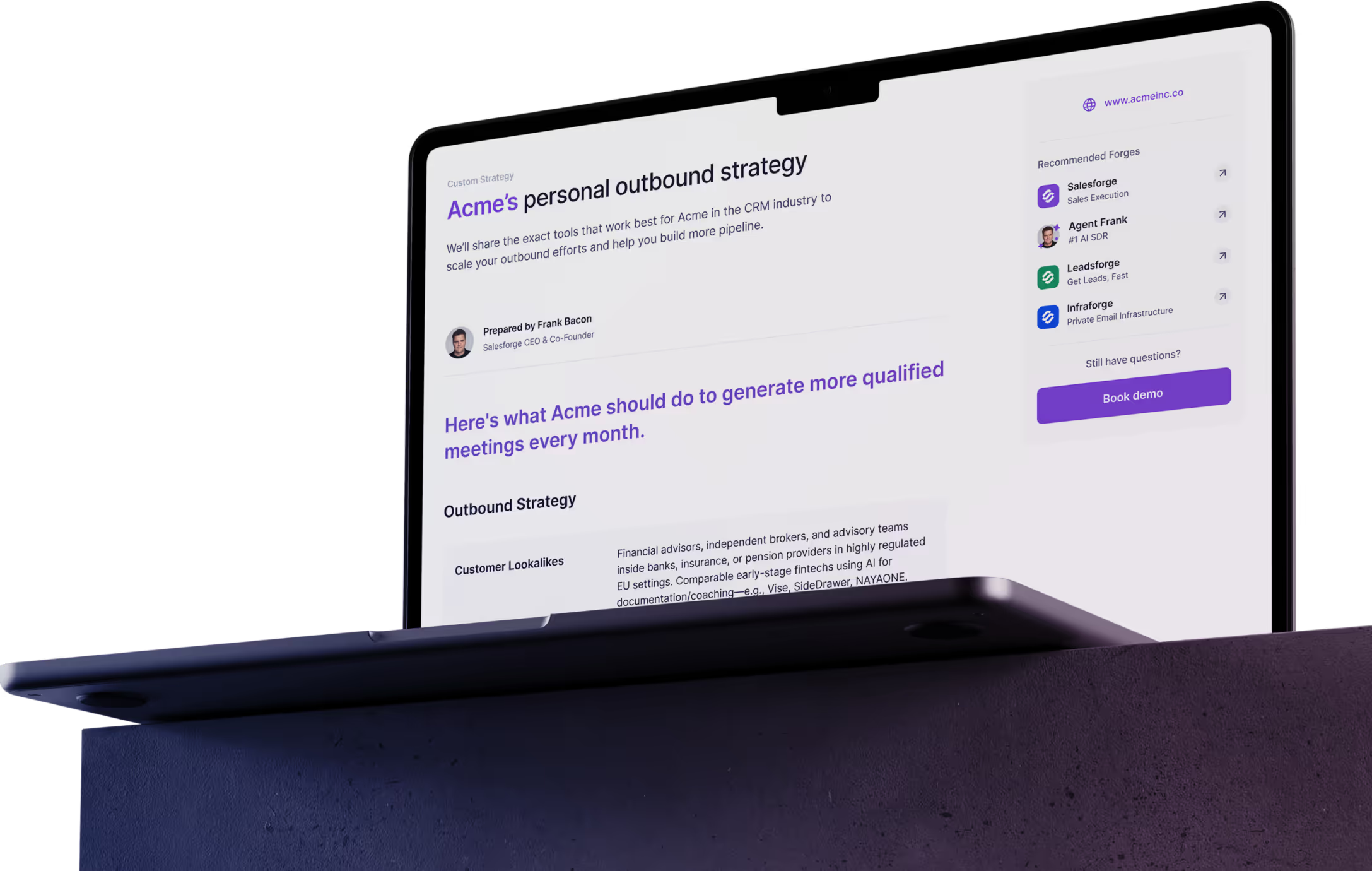
Salesforge Homepage
This image shows the Salesforge Homepage

Salesforge is a multichannel outreach platform that also functions as an email scraping and activation system.

It lets you source leads, validate emails, warm up mailboxes, sequence outreach, and manage replies, all in one place, so scraped data doesn’t sit unused.

It works as the “activation layer” for scraped contacts:

you can plug in leads from databases, find emails, validate them, and push them straight into outbound campaigns without exporting spreadsheets.

What Salesforge Provides & How It Works?

Salesforge connects lead sourcing, email scraping, validation, deliverability, and reply handling together, meaning you don’t just collect emails; you can actually turn them into conversations.

For scraping and activation workflows, it can:

Validate scraped emails automatically using built-in monthly credits (100–1,000 depending on plan), so you remove bad addresses before sending.

Warm up your mailboxes via Warmforge, a premium internal warm-up network that protects your sending reputation before emailing scraped data.

Send scraped leads straight into outreach with unlimited mailboxes and unlimited LinkedIn senders, useful for scaling sequences without paying per user.

Manage all replies across channels in Primebox™, which consolidates email and LinkedIn responses so scraped prospects don’t get lost.

Salesforge Primebox™ to manage all replies across LinkedIn and Email
This image shows the Salesforge Primebox™ to manage all replies across LinkedIn and Email

Use AI to send outreach for you with Agent Frank, useful if you scrape data but don’t have the team to run campaigns yourself.

All contacts can be imported, enriched, sequenced, or handed off to the AI agent without switching tools, positioning Salesforge as the execution engine after scraping.

Pros of Salesforge

  • Salesforge eliminates tool-hopping by combining email validation, warm-up, sequencing, personalization, and reply management in one place.
  • Unlimited mailboxes and LinkedIn senders make it easier to scale scraped datasets into outreach without seat fees.
  • Primebox™ ensures scraped leads don’t fall through the cracks because replies from any address are captured and analyzed.

Cons of Salesforge

  • Salesforge doesn’t scrape LinkedIn or websites directly, you still need to bring data in from sources like Leadsforge or other databases.
  • Its strongest value appears after scraping, not as a standalone scraper.

Salesforge Pricing

Salesforge pricing
This image shows the Salesforge pricing

Salesforge offers two main subscription paths:

  • Pro Plan – $48/month

Suitable for solo users testing scraping + outreach, includes validation credits, personalization credits, unlimited mailboxes, Primebox™, and email warm-up.

  • Growth Plan – $96/month

Built for larger outreach volumes with higher validation credits, unlimited users, unlimited LinkedIn senders, advanced targeting, onboarding, and API access.

There is also the AI SDR (Agent Frank) at $599/month, which automates outreach from prospecting to meeting booking for users who want scraping + execution done for them.

Users can start with a free trial and scale by purchasing additional credits as needed.

Try Salesforge now to validate scraped leads, run multichannel sequences, and manage all replies in one place.

2. Snov.io

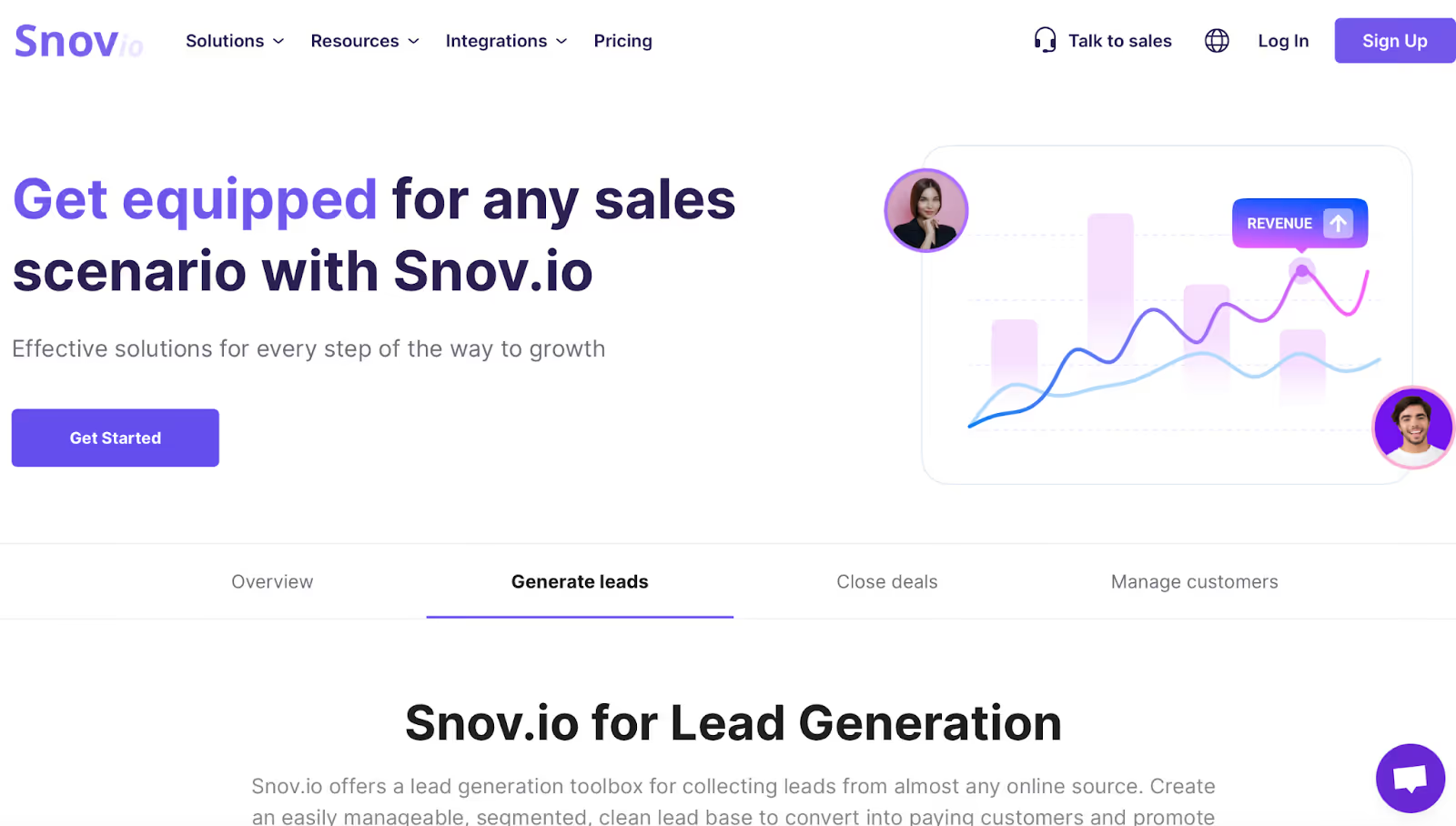
Snov.io Homepage
This image shows the Snov.io Homepage

Snov.io is an all-in-one cold outreach platform that includes tools for finding emails, verifying them, automating sequences, and managing CRM data. 

Many teams use it as a combined email scraping and outreach system because it lets you collect contacts and then message them from the same dashboard.

It works by pulling emails from company domains, LinkedIn profiles (via its browser extensions), and bulk prospect searches, then verifying them using a multi-step system before you add them into campaigns.

What Snov.io Provides & How It Works

Snov.io is built around the idea of collecting leads and activating them inside the same platform. 

Its scraping features work through domain searches, LinkedIn extraction, and bulk prospect uploads.

For email scraping workflows, it can:

Find work emails through domain search, bulk company search, and its Email Finder extension.

Pull emails from LinkedIn via the LinkedIn Prospect Finder extension, which extracts profile-based data such as job title, company name, and basic contact details.

Verify scraped emails using a 7-tier verification system that detects bounce risk before you send.

Warm up new mailboxes, which helps reduce the chance of scraped emails landing in spam.

Export data or move it into CRM, since the tool includes its own lightweight CRM and integrations.

Snov.io’s interface is straightforward and allows users to gather emails, check their accuracy, and push them into sequences without switching tools.

Pros of Snov.io

Snov.io keeps everything in one place, finding emails, verifying them, building sequences, sending outreach, and tracking engagement.

The Gmail integration and Chrome extensions make it convenient to scrape emails directly from websites and LinkedIn.

Users say the tool is generally easy to adopt and the built-in warm-up feature helps protect deliverability, especially for new email accounts.
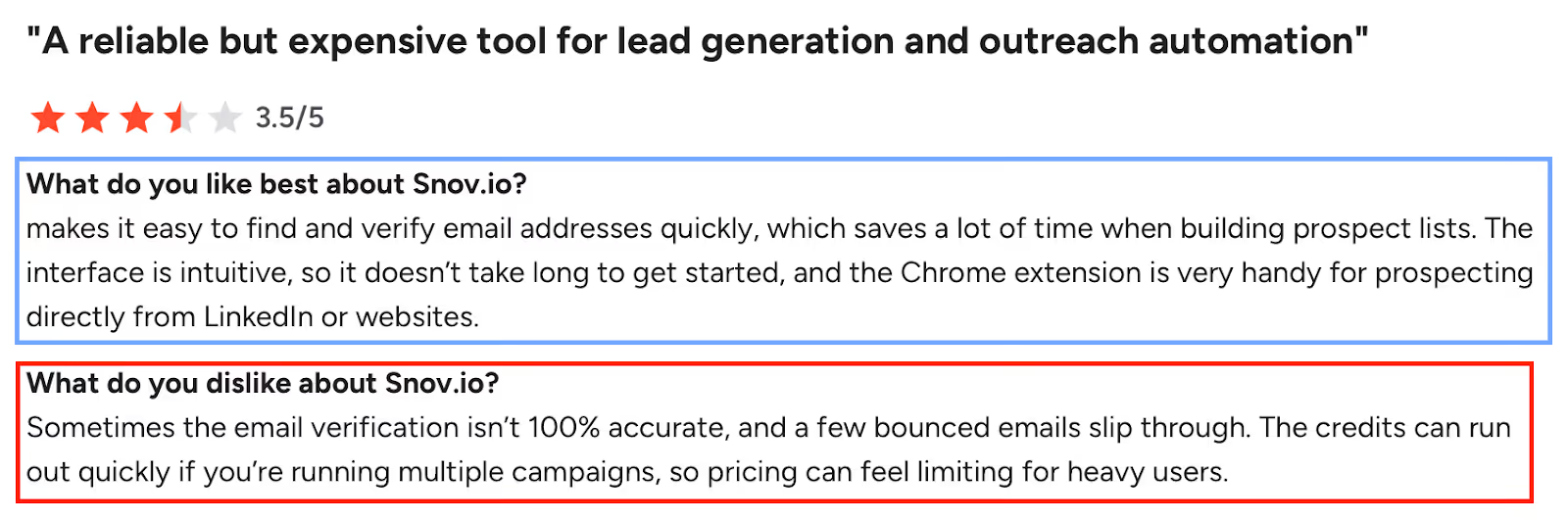
Screenshot of a review praising Snov.io’s fast email finding but noting inaccurate verification and costly credit limits.
This image shows the Screenshot of a review praising Snov.io’s fast email finding but noting inaccurate verification and costly credit limits.

Cons of Snov.io

Some users report that pricing becomes expensive depending on region or credit usage, especially for heavy scraping.

A few reviewers mention occasional technical issues, including a serious case where a campaign was resent automatically, which created trust concerns for client-facing teams.

Others note limited database coverage in niche industries, inaccurate matches on some profiles, or basic reporting that may not suit larger teams.

There are also complaints about the dashboard feeling cluttered and some uncertainty about integrations outside the Google ecosystem.
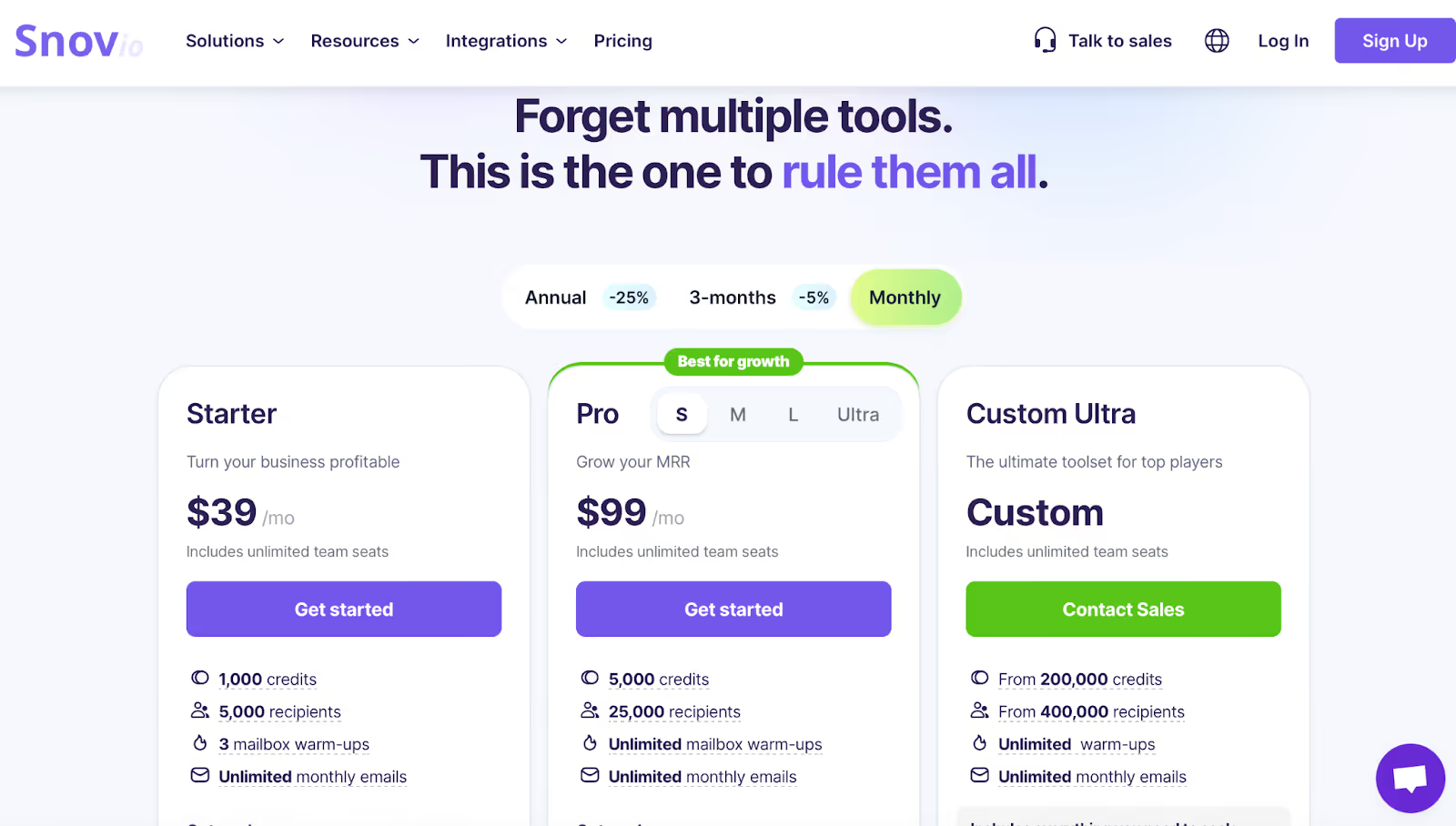
Snov.io Pricing

Snov.io Pricing
This image shows the Snov.io Pricing

Snov.io offers three main plans:

  • Starter – $39/month

Includes 1,000 credits, 5,000 recipients, 3 warm-up slots, unlimited emails, and basic scraping and outreach features.

  • Pro – $99/month

Includes 5,000 credits, 25,000 recipients, unlimited warm-ups, more detailed personalization, A/B testing, LinkedIn automation, and expanded reporting.

  • Custom Ultra – Custom pricing

Designed for teams needing over 200,000 credits and large sending volumes, with priority support and unlimited storage.

Credits are used for scraping (finding emails, verifying them, checking deliverability), and recipients are used for campaigns.

LinkedIn automation is available as a paid add-on.

5 Best Snov.io Alternatives & Competitors of 2025
3. Skrapp.io

Skrapp.io Homepage
This image shows the Skrapp.io Homepage

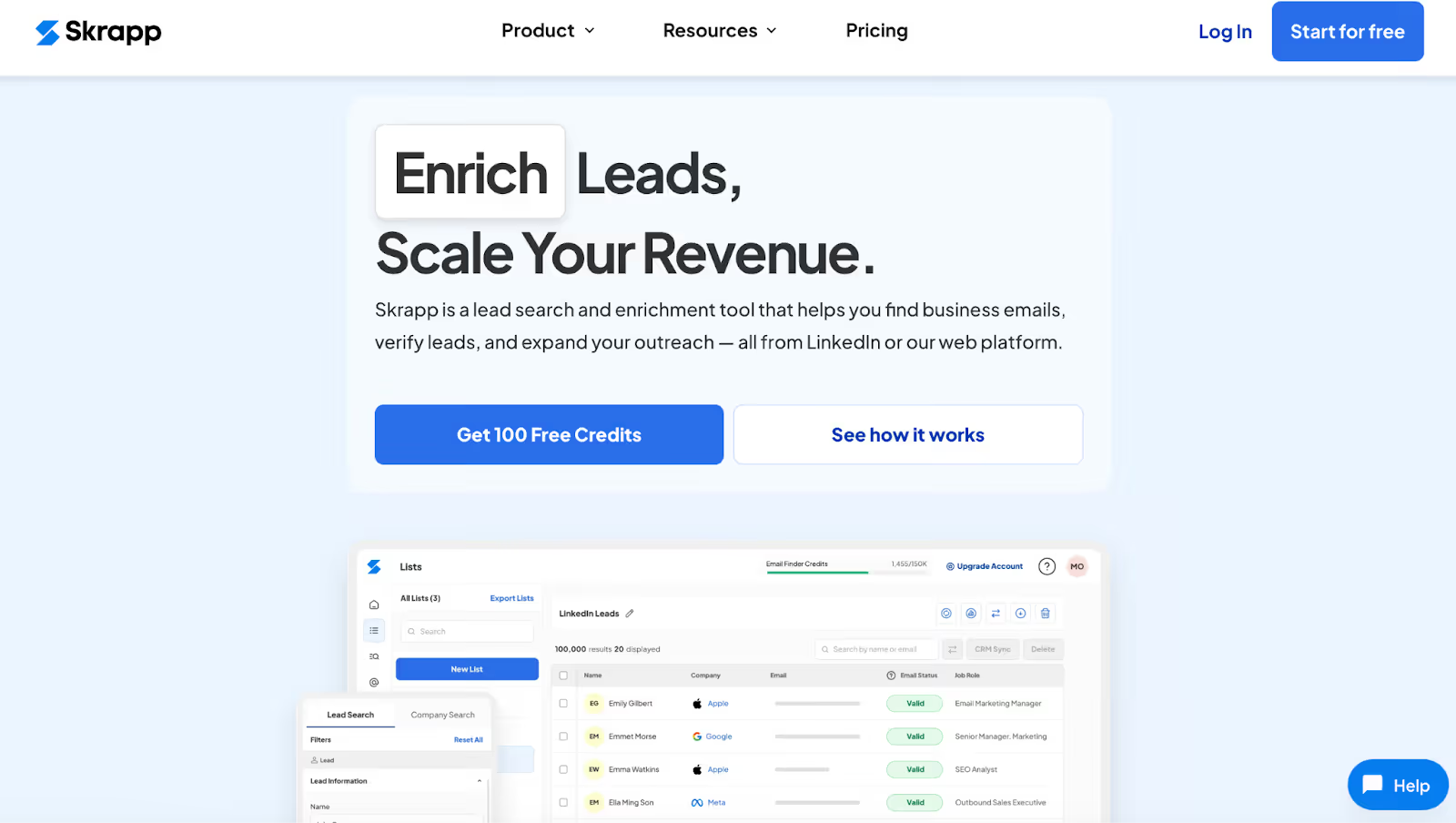
Skrapp.io is a B2B email-finding tool known for scraping professional emails from LinkedIn, Sales Navigator, LinkedIn Recruiter, and company websites. 

Many teams use it because it focuses on one thing: returning deliverable business emails at a low cost, without adding complex outreach features.

It works through Chrome extensions and bulk search tools that extract verified emails directly from profile lists, company pages, or domain-level searches.

What Skrapp.io Provides & How It Works?

Skrapp.io operates as a straightforward email scraping and verification system. 

Its browser extensions and web tools allow users to capture emails while browsing LinkedIn or company websites.

For email scraping use cases, Skrapp.io can:

Find business emails from LinkedIn profiles, Sales Navigator lists, Recruiter searches, and multi-page LinkedIn results.

Scrape emails from company websites, identifying deliverable addresses for people working at a specific domain.

Verify email deliverability, using a built-in verification engine that flags risky or invalid emails before export.

Enrich profiles with basic data such as name, role, company website, and industry.

Export and sync lead lists to CRMs, which helps teams pass scraped data directly into their pipelines.

It is designed to be lightweight and simple, so most workflows involve clicking the Chrome extension, scraping a list, verifying the data, and exporting it.
Pros of Skrapp.io

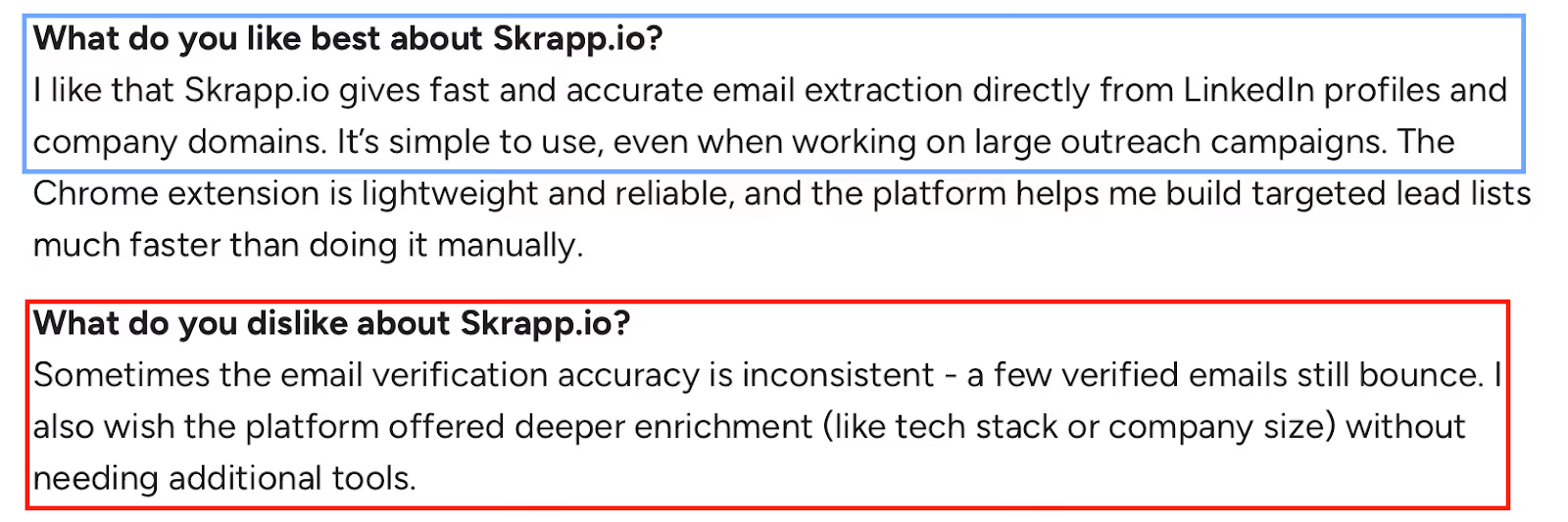
  • Users appreciate Skrapp.io for its speed and simplicity, especially when scraping large Sales Navigator lists.
  • The platform’s free 100 monthly credits and low-cost paid plans make it accessible for small teams or early-stage prospecting.
  • The tool is easy to navigate, integrates smoothly with CRMs like HubSpot, and supports convenient list exports.
  • Bulk list management, multi-page scraping, and auto-connect features make it practical for high-volume LinkedIn lead collection.
Screenshot of user feedback on Skrapp.io listing pros (fast LinkedIn email extraction, easy-to-use Chrome extension) and cons (inconsistent email verification, limited data enrichment).
This image shows the Screenshot of user feedback on Skrapp.io listing pros (fast LinkedIn email extraction, easy-to-use Chrome extension) and cons (inconsistent email verification, limited data enrichment).

Cons of Skrapp.io

Some users report inconsistent verification accuracy, where a few “verified” emails still bounce.

Others note that Skrapp.io could offer deeper enrichment, such as firmographic or technographic data, without needing external tools.

A few reviewers mention wanting more advanced filters, improved CRM integrations, and better documentation for new users who find certain features confusing.

In niche industries or small companies, email accuracy can vary, and credits may run out quickly during heavy scraping or verification.
Skrapp.io Pricing

Skrapp Pricing
This image shows the Skrapp Pricing

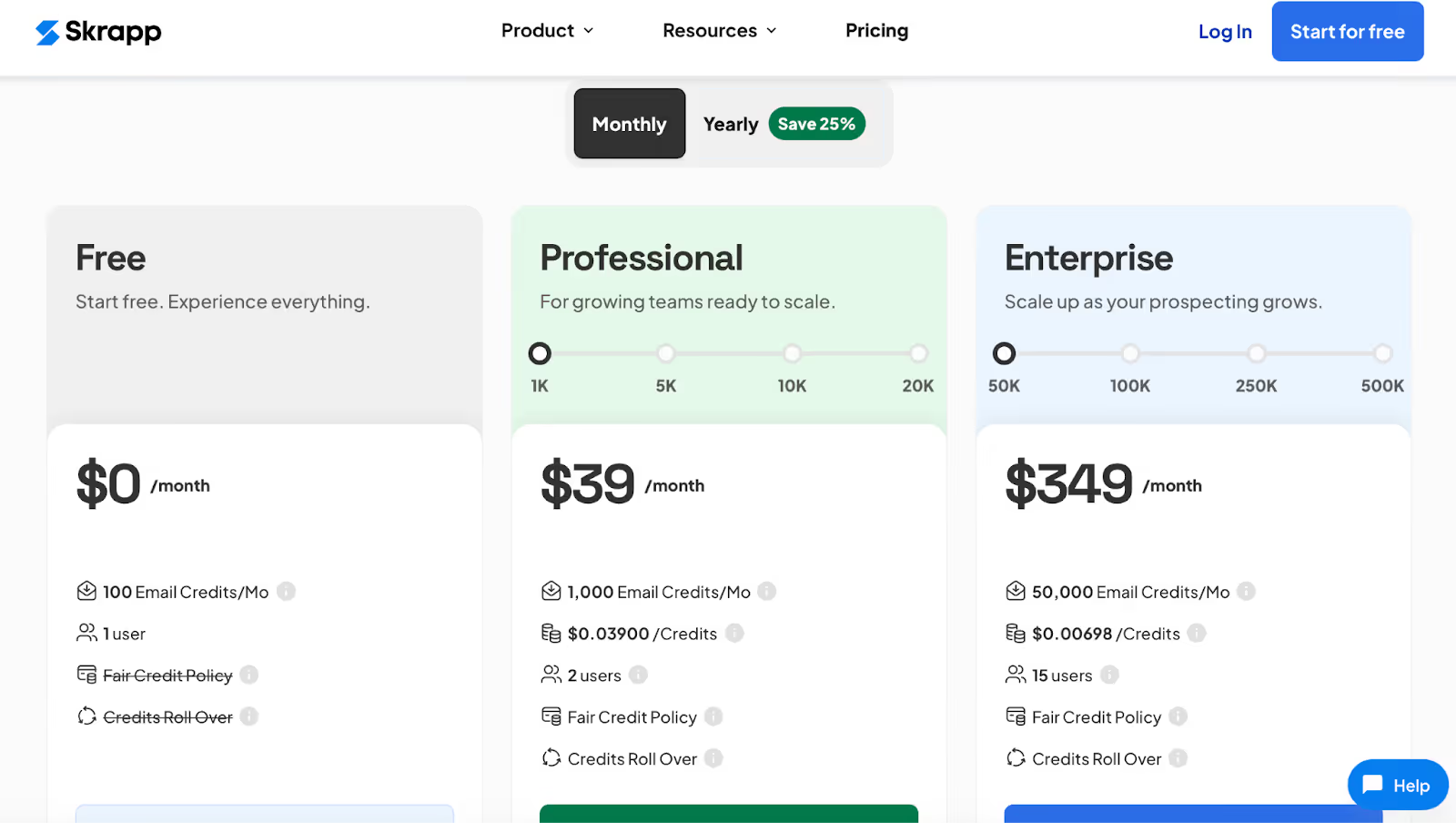
Skrapp.io’s pricing is credit-based and rolls unused credits over each month:

  • Free – $0/month

    100 email credits per month, one user, basic extensions, and core scraping features.
  • Professional – starts at $39/month for 1,000 credits

    Includes LinkedIn multi-page enrichment, auto-connect, unlimited searches, CRM sync, and AI enrichment.
  • Enterprise – starts at $349/month for 50,000 credits

    Adds API access, SSO, dedicated support, and account management, suitable for large prospecting teams.

All plans follow a “pay only for deliverable emails” policy, and additional credits can be purchased if scraping volume increases.
4. Kaspr

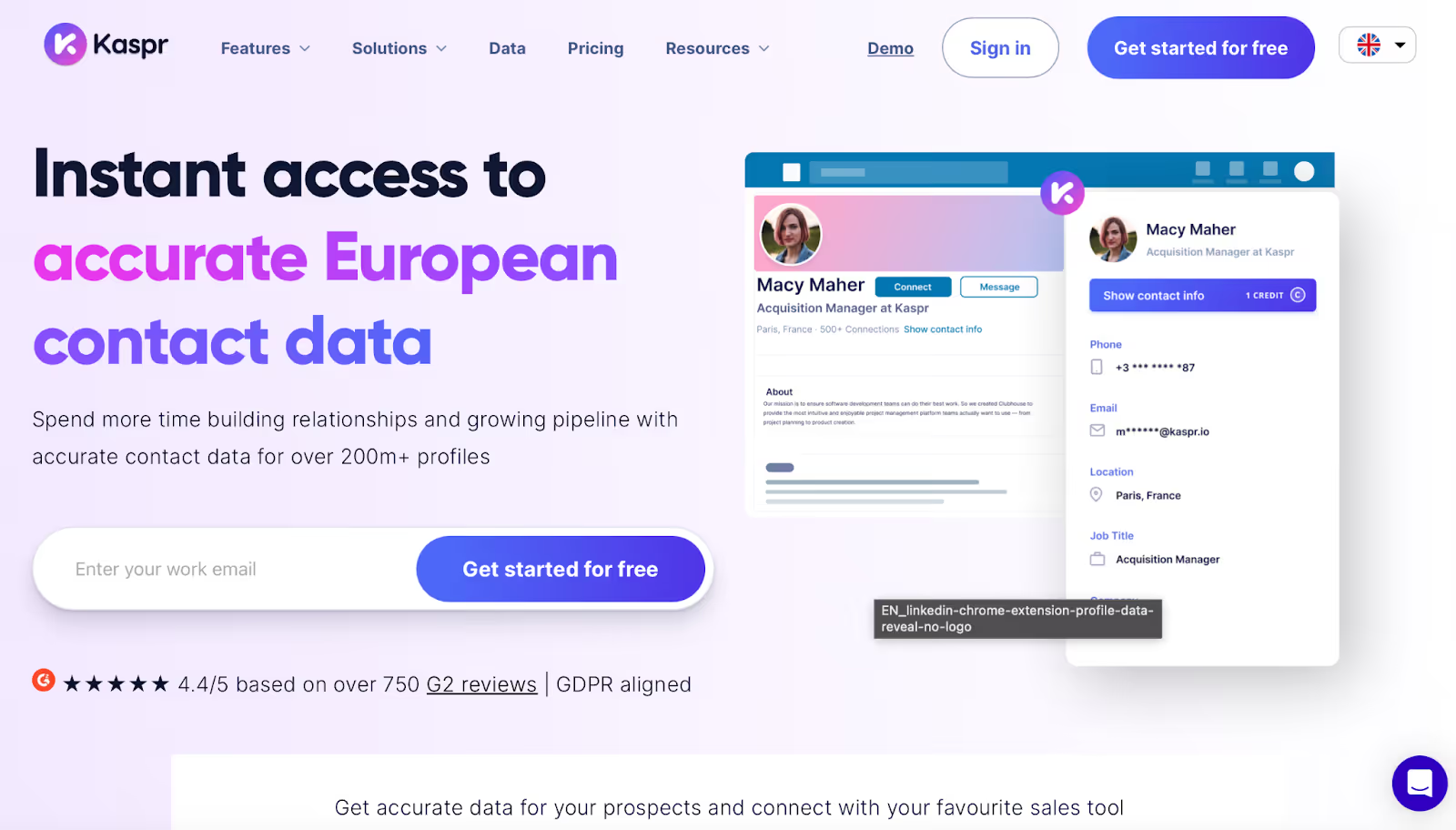
Kaspr Homepage
This image shows the Kaspr Homepage

Kaspr is a LinkedIn-focused contact scraping tool that helps users extract B2B emails and phone numbers directly while browsing LinkedIn profiles. 

It’s commonly used by sales teams who spend most of their time prospecting inside LinkedIn rather than working from uploaded lists or databases.

Kaspr works primarily as a Chrome extension that appears alongside LinkedIn profiles and allows users to pull contact details with a few clicks.

What Kaspr Provides & How It Works

Kaspr is designed for real-time scraping while you are actively browsing LinkedIn. 

Instead of building large databases, it focuses on on-the-spot contact extraction.

For email scraping workflows, Kaspr can:

✔ Extract B2B email addresses directly from regular LinkedIn profiles using its browser extension.

✔ Pull phone numbers (mobile or landline when available), alongside email data.

✔ Work inside LinkedIn, Sales Navigator, and Recruiter Lite, depending on the plan.

✔ Allow CSV enrichment and exports, so scraped contacts can be used in other tools.

✔ Share credits across team members, making it usable for small sales teams.

Kaspr relies on a credit-based system, where scraping emails and phone numbers consumes monthly credits.
Pros of Kaspr

  • Kaspr’s Chrome extension loads directly inside LinkedIn, letting users scrape B2B emails without leaving the profile view or opening a separate dashboard.
  • Paid plans offer unlimited B2B email credits, which is useful for reps scraping many individual LinkedIn profiles manually.
  • Kaspr works on regular LinkedIn profiles without requiring Sales Navigator, making it usable for basic prospecting without extra subscriptions.
  • The tool supports CSV exports and shared team credits, allowing scraped emails to be passed into external CRMs or outreach tools.
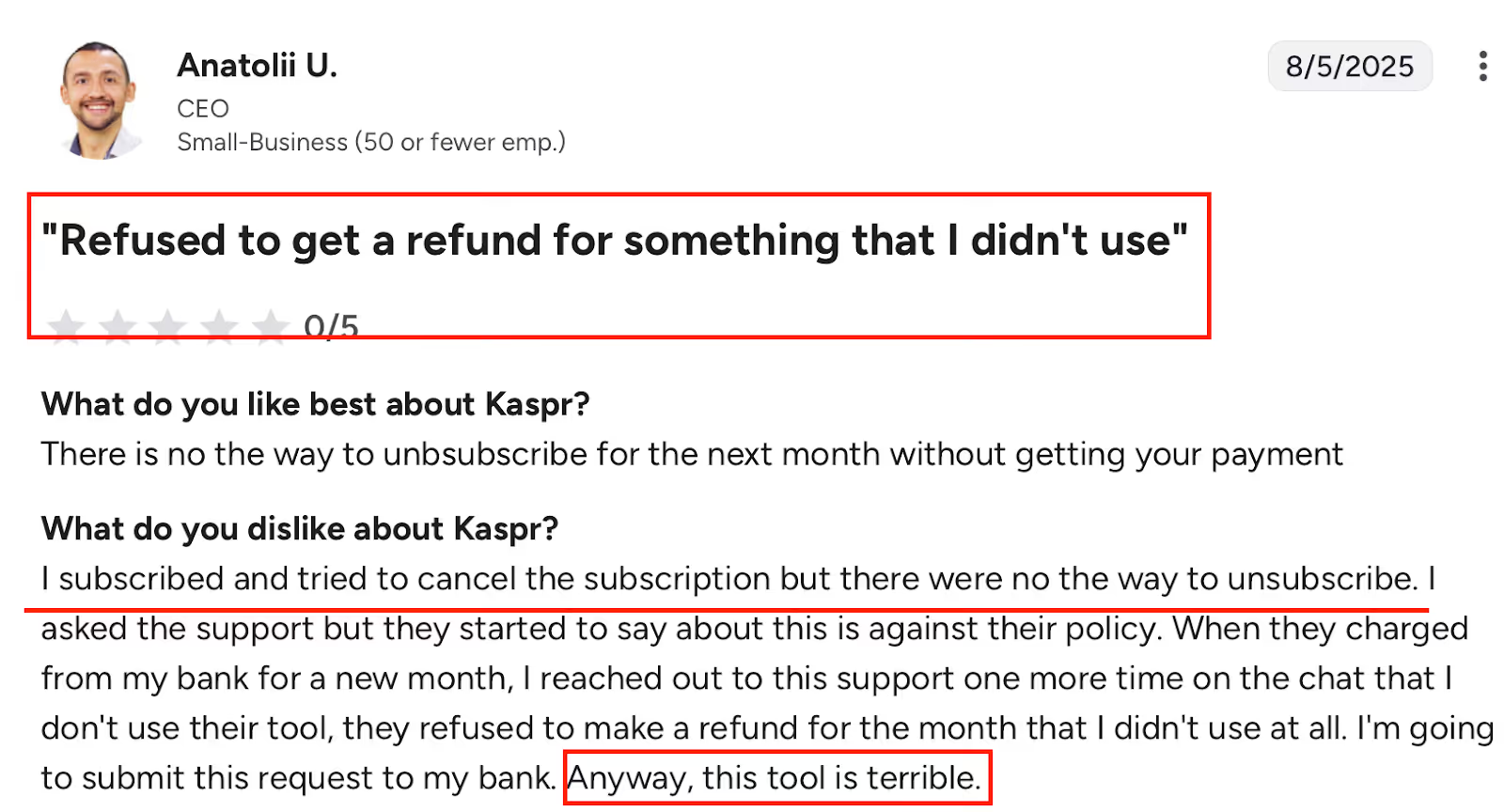
Screenshot of a 0-star on G2 on Kaspr review complaining about forced subscription renewal, denied cancellation, and refused refund for unused service.
This image shows the Screenshot of a 0-star on G2 on Kaspr review complaining about forced subscription renewal, denied cancellation, and refused refund for unused service.

Cons of Kaspr

  • Kaspr’s bulk enrichment is limited, as it only accepts regular LinkedIn URLs and does not reliably support Sales Navigator list URLs, which restricts large-scale scraping.
  • The credit-based system for phone numbers and direct emails can become expensive for users doing high-volume prospecting.
  • Contact data, especially phone numbers, is sometimes outdated or incomplete, reducing usefulness for call-heavy workflows.
  • Some users report LinkedIn blocking issues when scraping frequently, which can interrupt prospecting sessions.
  • Subscription management and cancellation workflows have caused billing complaints, which may be a concern for teams managing multiple seats.

Kaspr Pricing

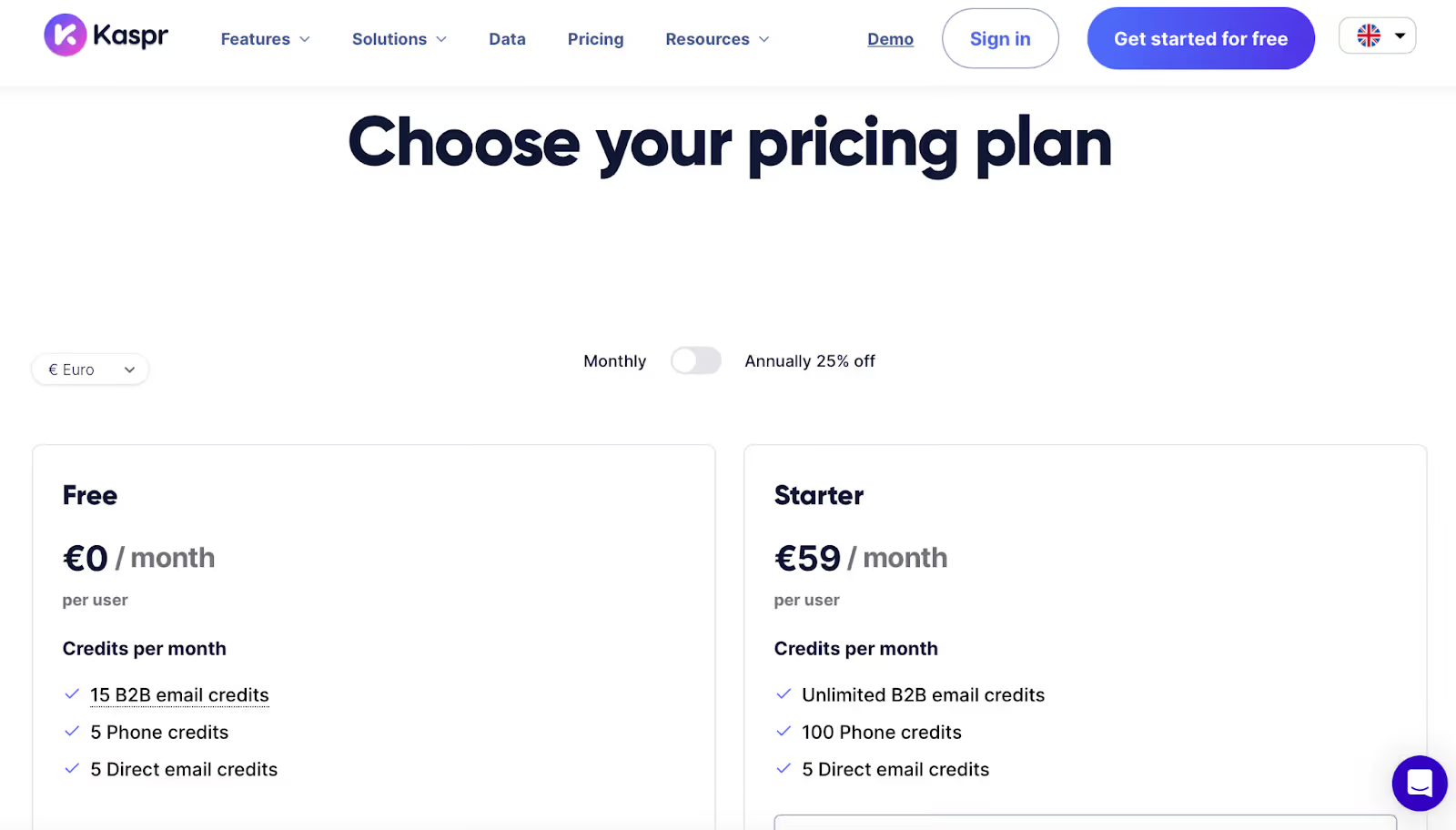
Kaspr Pricing
This image shows the Kaspr Pricing

Kaspr uses per-user pricing with monthly credit limits:

  • Free – €0/month

    Includes 15 B2B email credits, 5 phone credits, and limited exports.
  • Starter – €59/month per user

    Unlimited B2B email credits, 100 phone credits, Sales Navigator access, and up to 12,000 exports per year.
  • Business – €99/month per user

    Adds Recruiter Lite support, higher export limits (30,000/year), API access, and advanced team controls.
  • Enterprise – Custom pricing

    Designed for larger teams needing unlimited credits, intent data, and enterprise compliance features.

Kaspr is best suited for users who want to scrape emails directly from LinkedIn profiles one-by-one, rather than running large-scale bulk enrichment campaigns.
5. Apollo.io

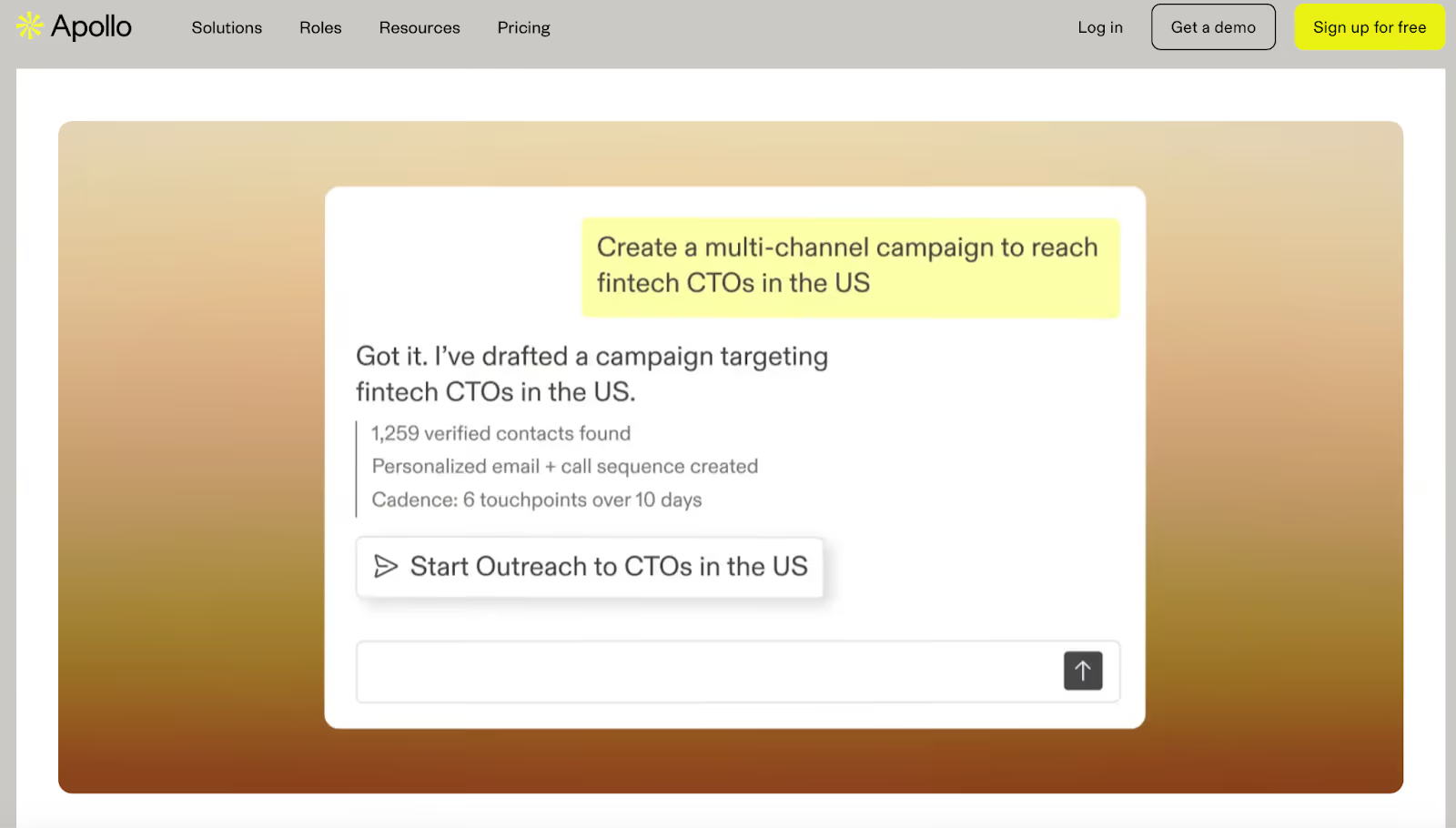
Apollo.io Homepage
This image shows the Apollo.io Homepage

Apollo.io is a large B2B contact database and email scraping platform that combines prospect discovery, data enrichment, and outreach inside one system. 

It’s commonly used by teams that want to scrape emails at scale from a pre-built database rather than relying only on LinkedIn or manual searches.

Apollo works by letting users search its database of contacts and companies, apply filters, and unlock verified emails and phone numbers using credits.

What Apollo.io Provides & How It Works?

Apollo.io is built around a centralized B2B database that users can query, enrich, and export. 

Email scraping happens through database searches, Chrome extensions, and enrichment workflows.

For email scraping workflows, Apollo.io can:

✔ Provide verified emails and phone numbers from its internal database using a credit-based system.

✔ Support advanced filtering (job title, company size, industry, location, intent signals) to narrow down scraped contacts.

✔ Use waterfall enrichment, meaning Apollo checks multiple sources before returning an email or phone number.

✔ Enrich CSVs, CRM records, or API data, allowing teams to scrape missing emails for existing leads.

✔ Scrape while browsing using Chrome extensions for LinkedIn, Gmail, and Salesforce.

Contacts can then be exported, synced to CRMs, or activated inside Apollo’s outreach tools.
Pros of Apollo.io

  • Apollo’s large contact database allows users to scrape emails without visiting LinkedIn or company websites, which speeds up list building.
  • The waterfall enrichment system improves the chance of finding an email when one source fails.
  • Advanced filters and intent data make it easier to scrape contacts that closely match a target ICP.
  • CSV, CRM, and API enrichment let teams fill missing email fields instead of rebuilding lists from scratch.
  • The Chrome extension enables on-the-fly email scraping while browsing LinkedIn or websites.
Apollo.io review highlighting powerful prospecting tools but noting data inaccuracies, email bounces, and usage limits.
This image shows the Apollo.io review highlighting powerful prospecting tools but noting data inaccuracies, email bounces, and usage limits.

Cons of Apollo.io

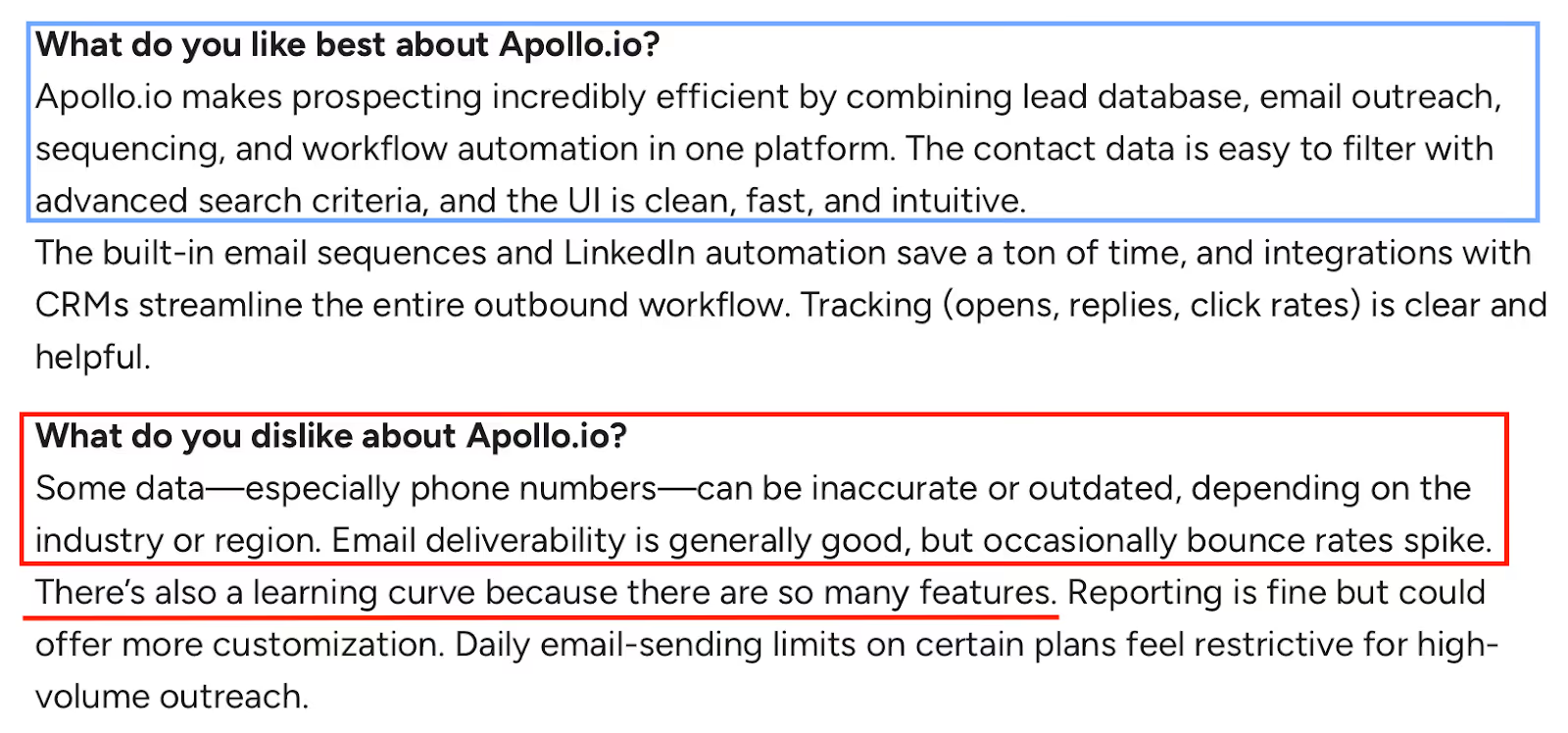
  • Email and phone data can sometimes be outdated or inaccurate, especially for smaller companies or specific regions.
  • Credits are consumed quickly when scraping phone numbers, enrichment data, or AI research, which can increase costs at scale.
  • Bulk scraping is limited by record selection caps and daily email-sending limits on some plans.
  • Some users report bounce rate spikes despite emails being marked as verified.
  • The platform has a steeper learning curve due to the number of features packed into the interface.

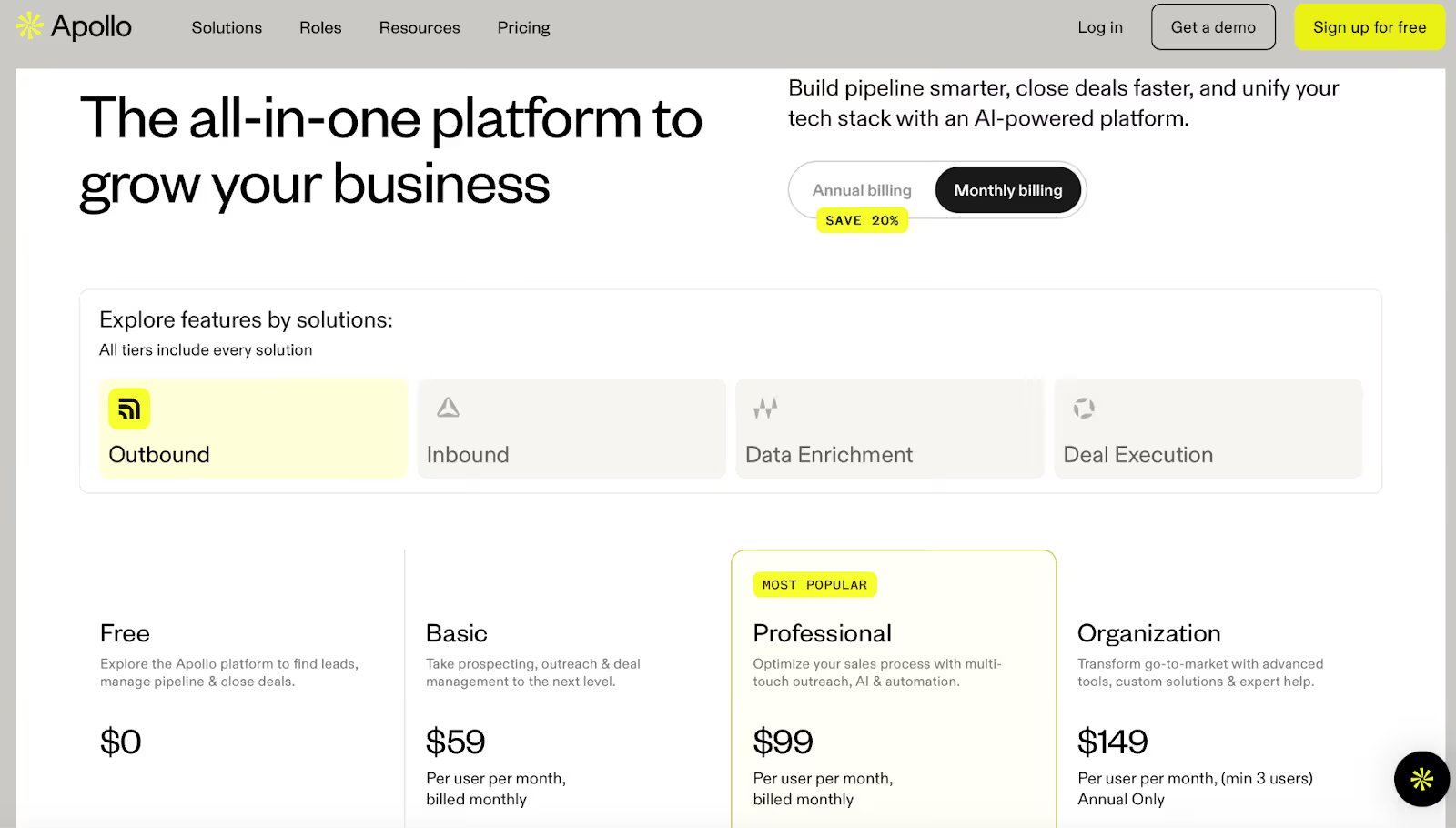
Apollo.io Pricing

Apollo.io Pricing
This image shows the Apollo.io Pricing

Apollo.io uses per-user pricing with monthly credit limits:

  • Free – $0/month
    100 credits per user, basic filters, and limited scraping and enrichment.
  • Basic – $59/month per user

    2,500 credits, advanced filters, CRM integrations, and waterfall enrichment.
  • Professional – $99/month per user

    4,000 credits, unlimited sequences, advanced enrichment, automation, and dialer features.
  • Organization – $149/month per user (annual only, minimum 3 users)

    6,000 credits, higher intent data limits, advanced security, and enterprise controls.

Credits are used to unlock emails, phone numbers, enrichment data, and AI research.

Apollo.io is best suited for teams that want to scrape emails from a large B2B database using filters and enrichment, rather than scraping one profile at a time from LinkedIn.

5 Best Apollo.io Alternatives & Competitors in 2025
6. Hunter.io

Hunter.io Homepage
This image shows the Hunter.io Homepage

Hunter.io is a domain-based email scraping and verification tool that helps users find and validate professional email addresses linked to a company website. 

It’s commonly used for quick domain lookups, single email searches, and email verification, rather than large-scale database prospecting.

Hunter works by scanning company domains to surface public email addresses, identifying common email patterns, and verifying whether an email address is deliverable.

What Hunter.io Provides & How It Works

Hunter.io focuses on email discovery at the domain level, rather than deep contact databases or LinkedIn-first scraping.

For email scraping workflows, Hunter.io can:

✔ Perform Domain Search, showing all known email addresses associated with a company website and the email pattern used (e.g., firstname@domain).

✔ Find individual emails using name + company inputs through the Email Finder.

✔ Verify email deliverability automatically or in bulk using the Email Verifier.

✔ Run bulk tasks via CSV uploads to find or verify emails at scale.

✔ Scrape emails while browsing using browser extensions and a Google Sheets add-on.

Hunter’s data is auto-verified and designed to return deliverable emails quickly, without heavy enrichment or segmentation.
Pros of Hunter.io 

  • Hunter’s Domain Search is fast and reliable for discovering company-wide email patterns and publicly available addresses.
  • The Email Verifier is one of Hunter’s strongest features, making it useful for cleaning scraped lists and reducing bounce rates.
  • The Chrome extension and Google Sheets add-on make lightweight scraping easy without needing complex setups.
  • Free monthly credits allow users to test email finding and verification before committing to a paid plan.
  • Unlimited users on all plans make it easy to share access across teams without per-seat costs.
Hunter review calling the tool outdated with shallow, less-fresh data compared to competitors.
This image shows the Hunter review calling the tool outdated with shallow, less-fresh data compared to competitors.

Cons of Hunter.io

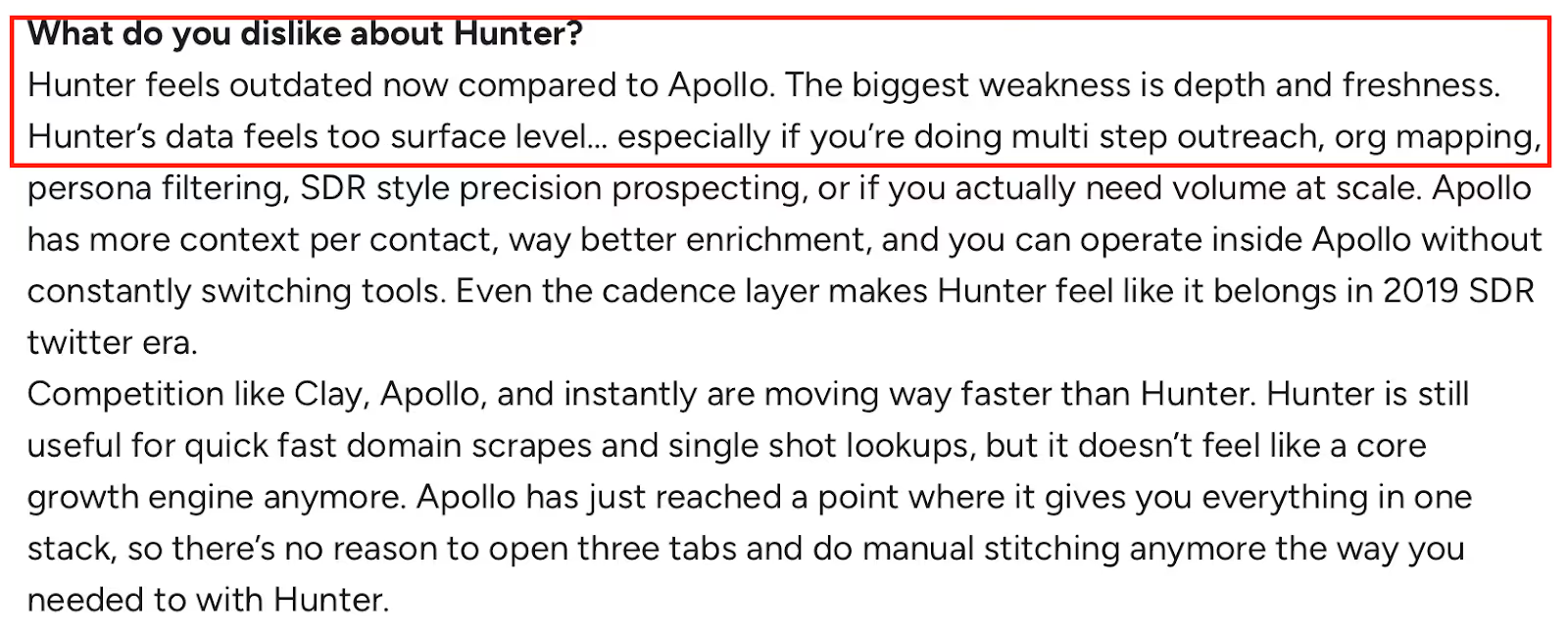
  • Hunter’s data is surface-level, with limited enrichment, no org charts, intent data, or detailed persona context.
  • Email freshness and depth can lag behind larger databases, especially for multi-step outreach or SDR-style prospecting.
  • Hunter does not support advanced ICP filtering, lookalike audiences, or role-based discovery at scale.
  • Outreach and sequencing features are basic compared to newer all-in-one platforms, making Hunter feel like a supporting tool rather than a core growth engine.
  • Subscription tier jumps can feel steep for solo users who only need moderate scraping volume.

Hunter.io Pricing

Hunter.io Pricing
This image shows the Hunter.io Pricing

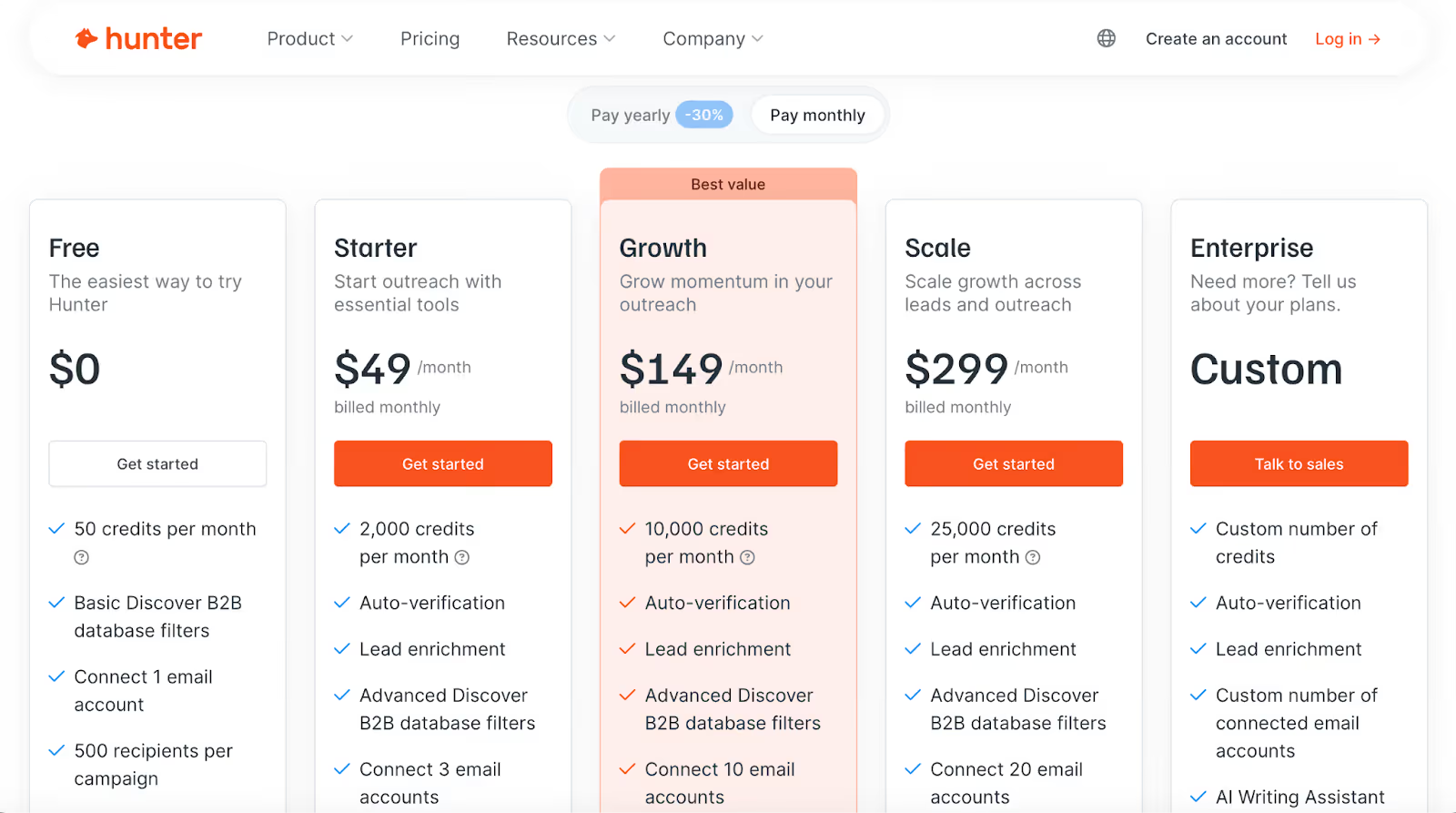
Hunter.io uses a credit-based model with unlimited users:

  • Free – $0/month

    50 credits per month, basic domain and email search, and verification.
  • Starter – $49/month

    2,000 credits, advanced filters, auto-verification, and outreach features.
  • Growth – $149/month

    10,000 credits, more connected email accounts, and higher campaign limits.
  • Scale – $299/month

    25,000 credits, large campaign volumes, and priority support.
  • Enterprise – Custom pricing

    Custom credits, account manager, and advanced integrations.

Credits are used for Email Finder, Domain Search, and Email Verifier actions.

Hunter.io is best suited for teams that need fast domain-based email scraping and reliable verification, rather than deep enrichment or large-scale outbound execution.
7. UpLead

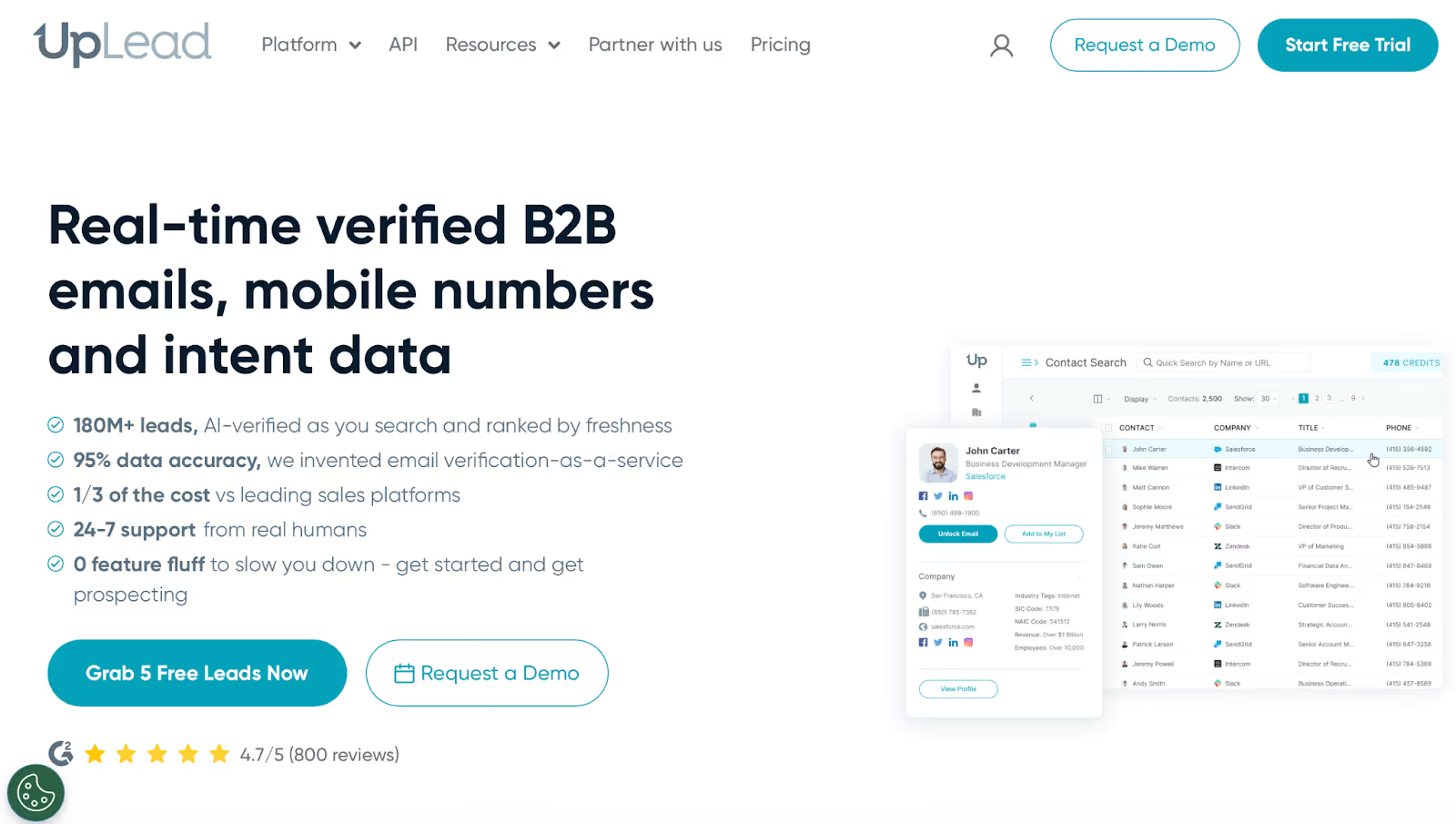
UpLead Homepage
This image shows the UpLead Homepage

UpLead is a B2B contact database and email scraping platform focused on verified emails and direct phone numbers

It’s commonly used by teams that want high data accuracy and don’t want to spend credits on contacts that bounce.

UpLead works by letting users search its database, apply filters, and unlock contacts using credits, with real-time verification applied before a contact is delivered.

What UpLead Provides & How It Works

UpLead is built around real-time data verification, meaning contacts are checked at the moment they are unlocked rather than pre-verified in bulk.

For email scraping workflows, UpLead can:

✔ Provide verified emails and mobile direct dials, with credits only deducted when valid data is found.

✔ Verify emails in real time, reducing bounce risk before outreach begins.

✔ Offer advanced filtering by job title, industry, company size, location, and technologies used.

✔ Enrich contacts with firmographic and technographic data on higher plans.

✔ Exclude existing leads using suppression list uploads to avoid duplicate scraping.

✔ Export contacts to CSV or sync directly with CRMs using native integrations or Zapier.

Email scraping is primarily database-driven, rather than LinkedIn-first or browser-based.
Pros of UpLead

  • UpLead’s real-time email verification prevents credits from being wasted on invalid or bouncing emails.
  • The platform includes mobile direct dials, which adds value for teams running call-heavy outbound.
  • Technographics and advanced filters allow users to scrape contacts based on tools and technologies a company uses.
  • The suppression list feature helps teams avoid re-purchasing contacts they already have.
  • CRM integrations and bi-directional sync make it easier to activate scraped emails without manual exports.
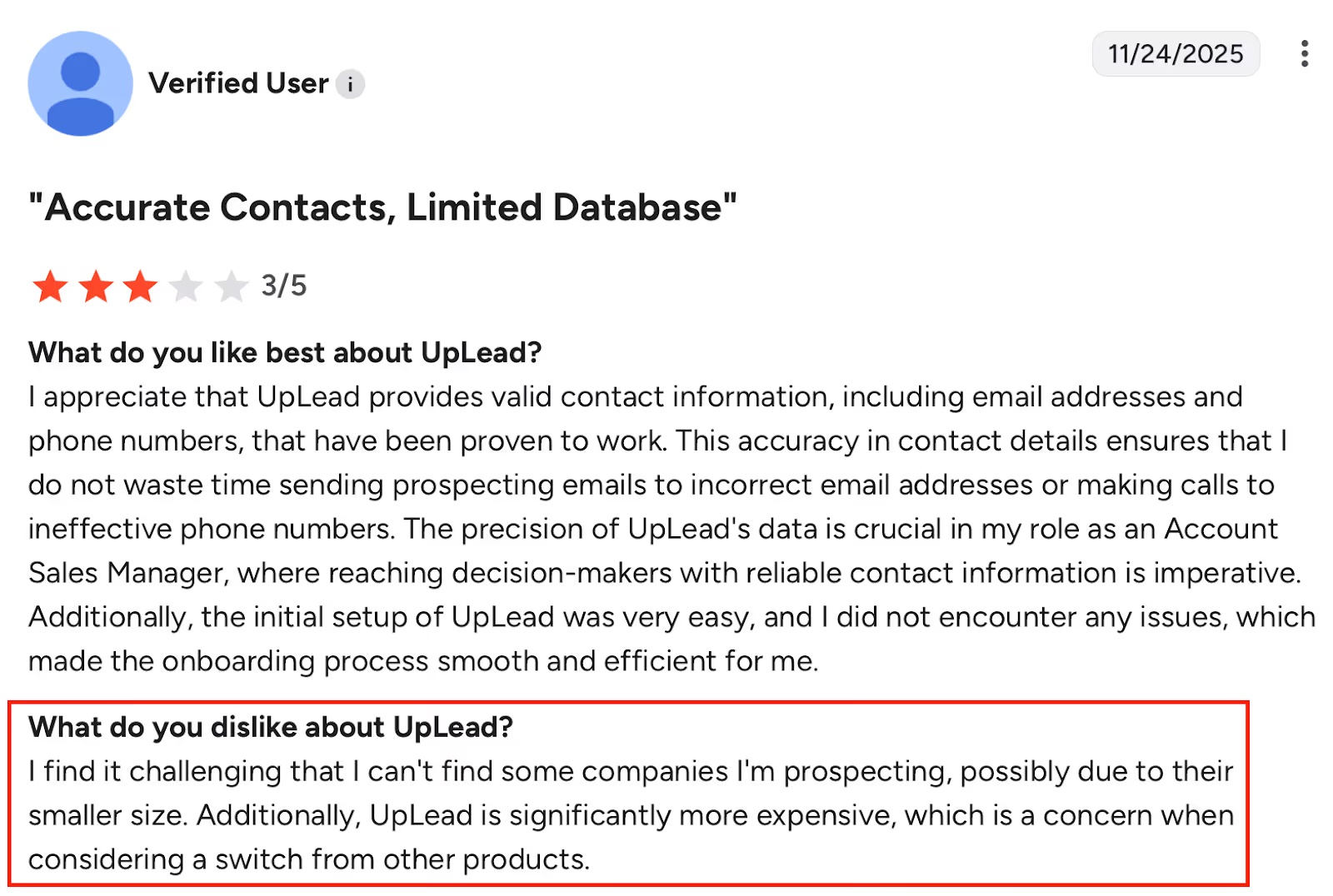
UpLead review praising accurate contacts but criticizing limited coverage and high cost.
This image shows the UpLead review praising accurate contacts but criticizing limited coverage and high cost

Cons of UpLead

  • The free trial includes only 5 credits, which limits how much testing users can do before upgrading.
  • Some small or niche companies are missing from the database, which can restrict certain prospecting use cases.
  • Credits can feel expensive for high-volume scraping, especially compared to tools with larger bundled databases.
  • Search performance can slow down when running complex queries with many filters.
  • The interface can feel filter-heavy, making very specific searches harder to refine without trial and error.

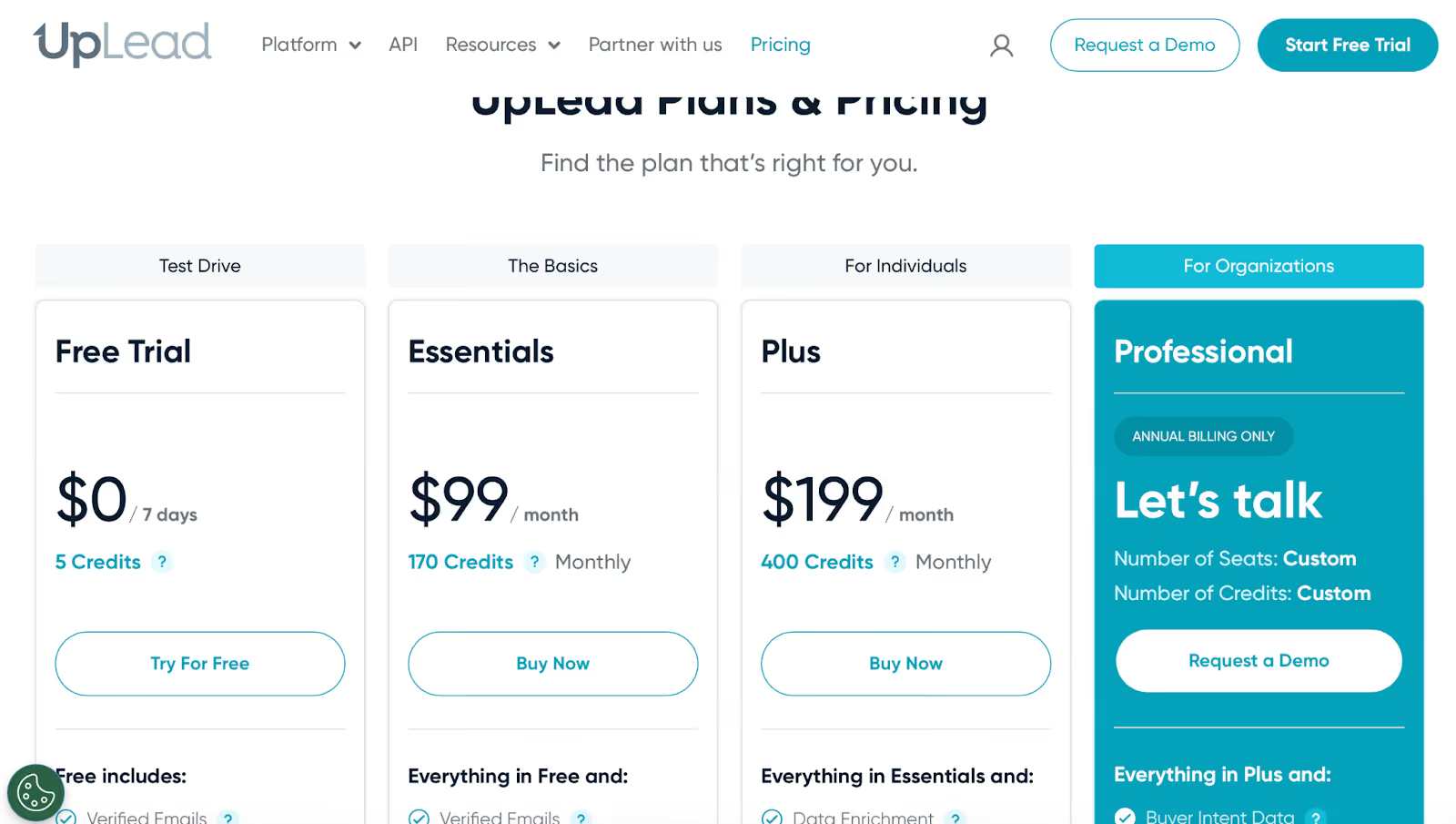
UpLead Pricing

UpLead Pricing
This image shows the UpLead Pricing

UpLead uses a credit-based pricing model:

  • Free Trial – $0 for 7 days

    Includes 5 credits with access to verified emails, mobile phones, and the Chrome extension.
  • Essentials – $99/month

    170 credits, CRM integrations, verified emails, and mobile numbers.
  • Plus – $199/month

    400 credits, data enrichment, technographics, email pattern intel, and advanced filters.
  • Professional – Custom pricing (annual only)

    Adds buyer intent data, full API access, competitor intelligence, and dedicated account support.

Credits are deducted only when a valid contact is delivered, with one credit typically equal to one contact.

UpLead is best suited for teams that prioritize email accuracy and direct dials over sheer database size or LinkedIn-based scraping.
8. Lusha

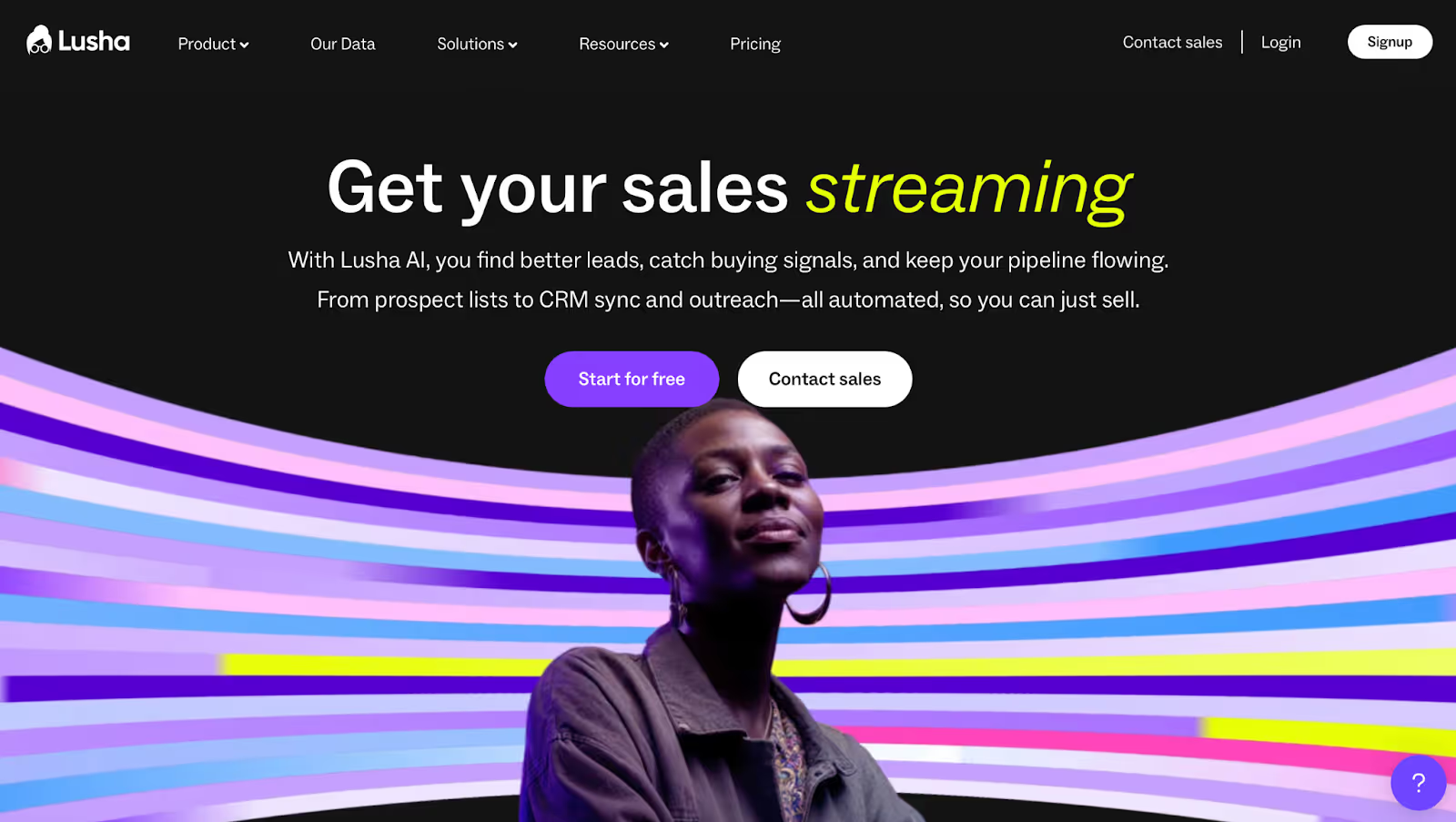
Lusha Homepage 
This image shows the Lusha Homepage 

Lusha is a sales intelligence and email scraping tool focused on direct dials and verified business emails, with strong emphasis on LinkedIn-based prospecting

It’s commonly used by SDR and sales teams that want fast access to contact details without building complex searches.

Lusha combines a browser extension, a searchable database, and CRM integrations to surface contact data directly where prospecting happens.

What Lusha Provides & How It Works?

Lusha operates primarily through its Chrome extension and database, revealing contact data when users visit LinkedIn profiles or company pages.

For email scraping and contact discovery, Lusha can:

Reveal verified business emails at the contact level (1 credit per email).

Provide direct phone numbers and mobile dials (5 credits per phone).

Work directly inside LinkedIn and Sales Navigator via the browser extension.

Support bulk enrichment for LinkedIn lists and CSV uploads on higher plans.

Apply intent signals and intent filters to identify accounts showing buying behavior.

Sync scraped contacts to CRMs like HubSpot and Salesforce in real time.

Offer AI-based recommendations and playlists to suggest similar contacts and accounts.

Credits are consumed each time data is revealed, regardless of whether the contact is later usable.
Pros of Lusha

  • Lusha’s LinkedIn Chrome extension is fast and frictionless, making one-click contact scraping possible without switching tools.
  • The platform is especially strong at direct phone numbers, often providing mobile dials instead of company switchboards.
  • Bulk reveal and CSV enrichment features allow teams to process Sales Navigator lists at scale.
  • Built-in CRM syncing reduces manual data entry by pushing scraped contacts directly into pipelines.
  • Intent signals and technology filters add context beyond basic email scraping for outbound prioritization.
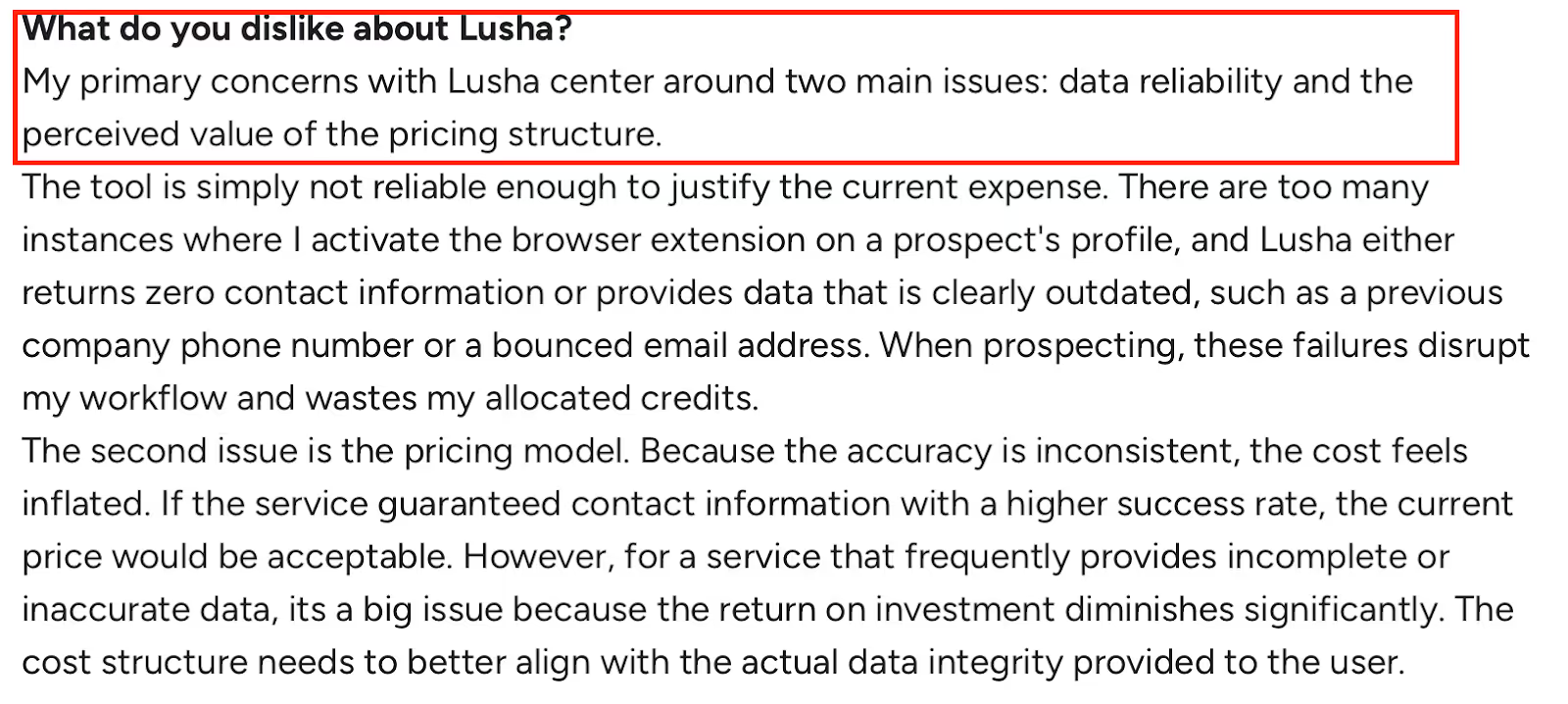
Lusha criticism citing unreliable contact data and overpriced plans.
This image shows the Lusha criticism citing unreliable contact data and overpriced plans.

Cons of Lusha

  • Credits are consumed quickly, especially when revealing phone numbers, which cost significantly more than emails.
  • Credits are still deducted even when contact data is outdated or incorrect, reducing efficiency for high-volume users.
  • Data coverage can be inconsistent outside North America, particularly for smaller companies or niche roles.
  • Some advanced filters, bulk limits, and analytics are locked behind higher-tier plans, limiting flexibility for small teams.
  • Occasional extension glitches or missing data can interrupt LinkedIn-based workflows.

Lusha Pricing

Lusha Pricing
This image shows the Lusha Pricing

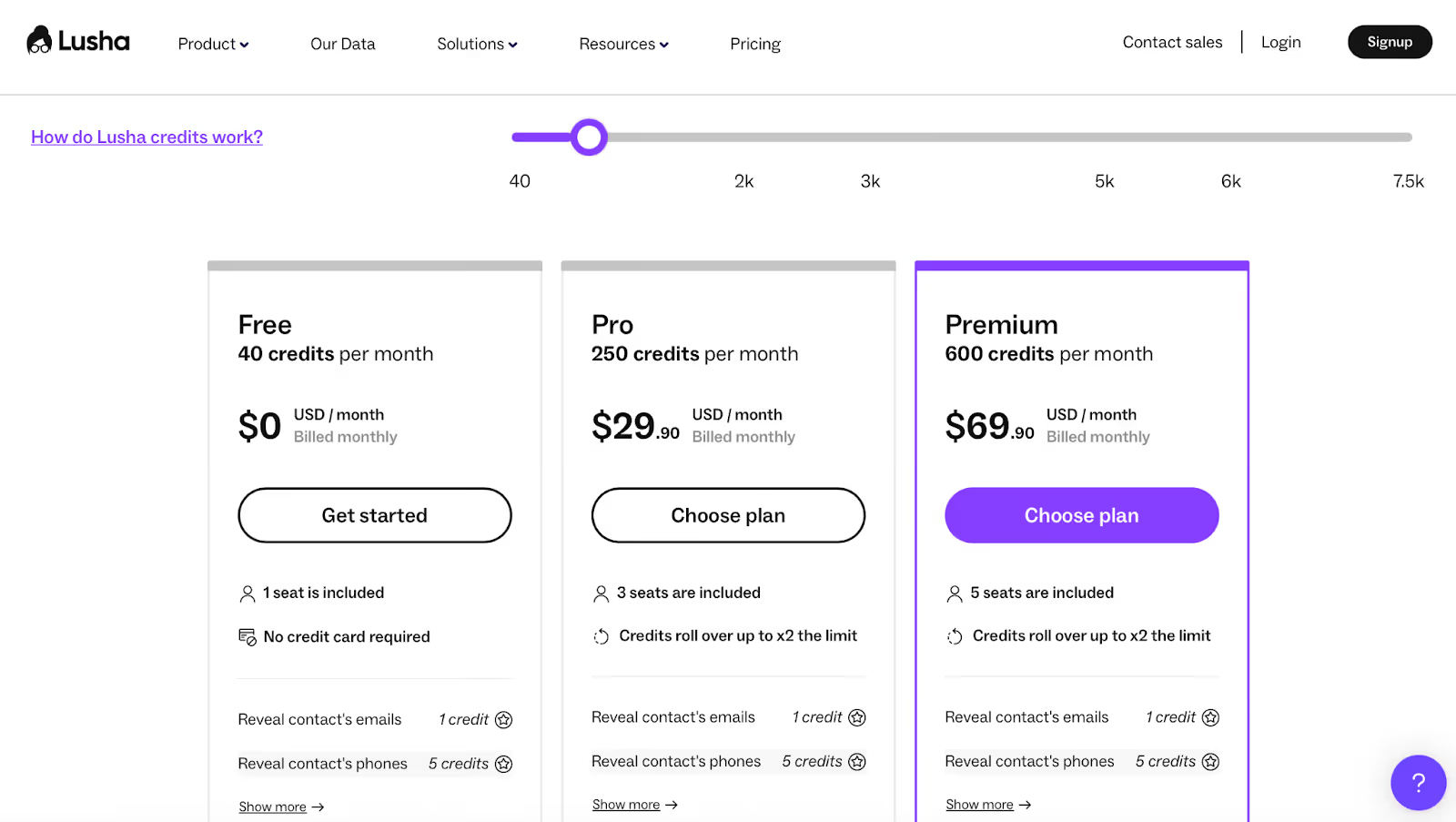
Lusha uses a credit-based pricing model, with credits rolling over on paid plans:

  • Free – 40 credits/month

    Includes verified emails, phone numbers, LinkedIn extension, and basic filters.
  • Pro – 250 credits/month ($29.90)

    Adds CSV enrichment, bulk reveal, shared credit pool, and basic analytics.
  • Premium – 600 credits/month ($69.90)

    Includes larger bulk limits, advanced analytics, and expanded enrichment.
  • Scale – Custom pricing

    Grants all credits upfront with large-scale CSV enrichment, unlimited intent filters, SSO, and a dedicated success manager.

Email reveals cost 1 credit, while phone numbers cost 5 credits, which heavily impacts usage patterns.

Lusha is best suited for teams that prioritize fast LinkedIn scraping and direct phone access, rather than deep multi-layer enrichment or long-term database building.

9. Saleshandy

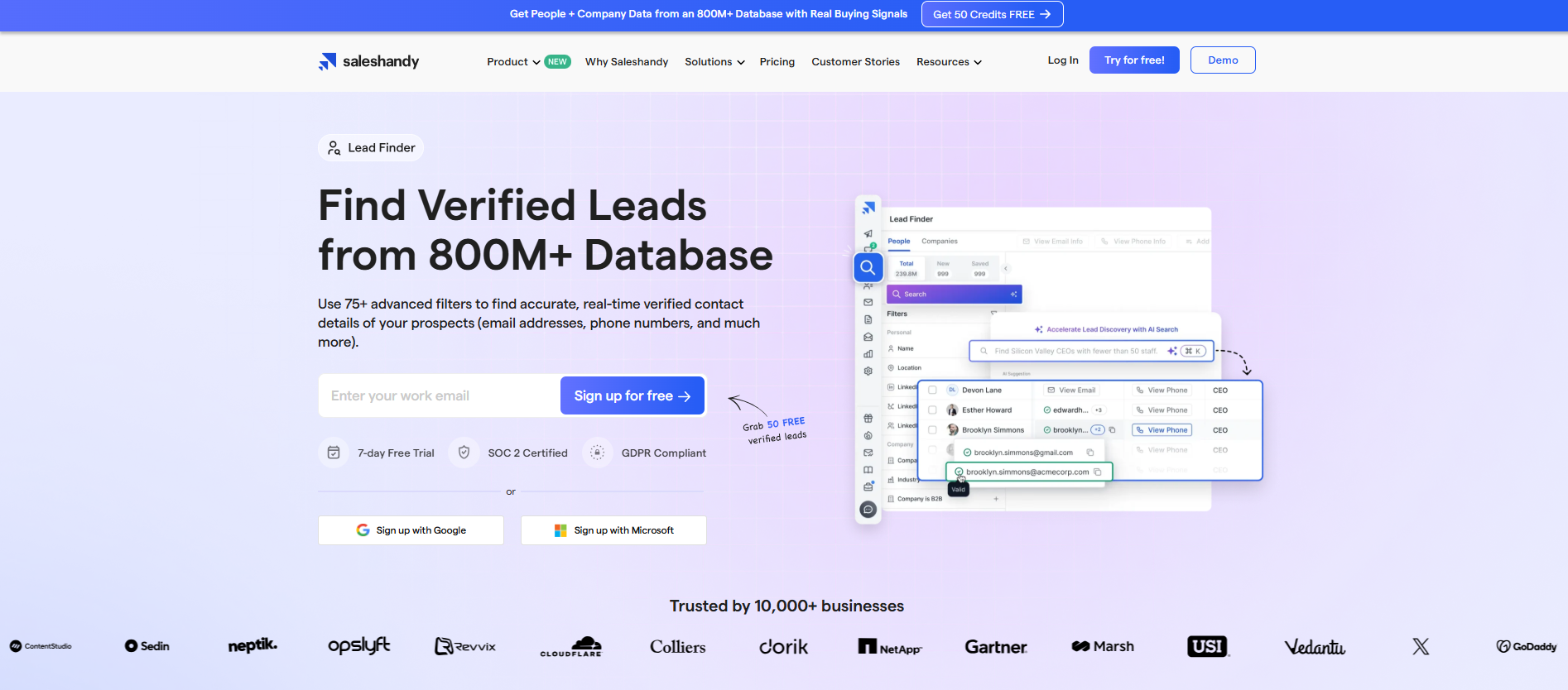
Saleshandy Homepage
This image shows the Saleshandy Homepage

Saleshandy is a cold email outreach platform that combines email finding, email verification, and large-scale sending infrastructure in one tool. 

While it’s not a pure data database like Apollo or UpLead, Saleshandy includes built-in lead finder credits and email verification, making it usable for basic email scraping tied directly to outreach.

It’s mainly used by founders, agencies, and sales teams that want to find emails, verify them, and send at scale without stitching multiple tools together.

What Saleshandy Provides & How It Works?

Saleshandy focuses on email-based prospecting, with scraping and verification tightly coupled to sending.

For email scraping and validation, Saleshandy can:

✔ Find business emails using Lead Finder credits, including LinkedIn email discovery.

✔ Verify emails in bulk using monthly email verification credits before sending.

✔ Rotate multiple email accounts and IPs to protect deliverability while scraping and sending.

✔ Warm up inboxes automatically to reduce spam risk on newly scraped emails.

✔ Support high-volume outreach with sender rotation and dynamic IP addresses.

✔ Track opens, replies, clicks, and bounces from scraped and verified emails.

Saleshandy is less about deep enrichment and more about making scraped emails usable at scale.

Pros of Saleshandy

  • Saleshandy offers built-in email verification credits, allowing users to validate scraped emails without exporting to another tool.
  • The platform supports unlimited email accounts and sender rotation, which helps maintain deliverability when sending to large scraped lists.
  • Unlimited inbox warm-up is included on all plans, reducing the risk of spam placement when using newly found emails.
  • The Lead Finder credits allow basic email scraping directly inside the platform instead of relying entirely on third-party tools.
  • Unified inbox and real-time tracking make it easy to monitor replies from scraped leads in one place.

Cons of Saleshandy

  • Saleshandy’s lead database and enrichment depth are limited, making it unsuitable for complex ICP filtering or org mapping.
  • Advanced personalization or multi-source enrichment requires external tools, as Saleshandy does not provide deep firmographic or intent data.
  • Email scraping is credit-limited, and Lead Finder credits can feel restrictive for heavy prospecting.
  • Reporting lacks advanced breakdowns by ICP, persona, or enrichment source, which limits analysis of scraped data quality.
  • Some users report deliverability interruptions (e.g., inbox throttling or shutdowns) during very high-volume sending.

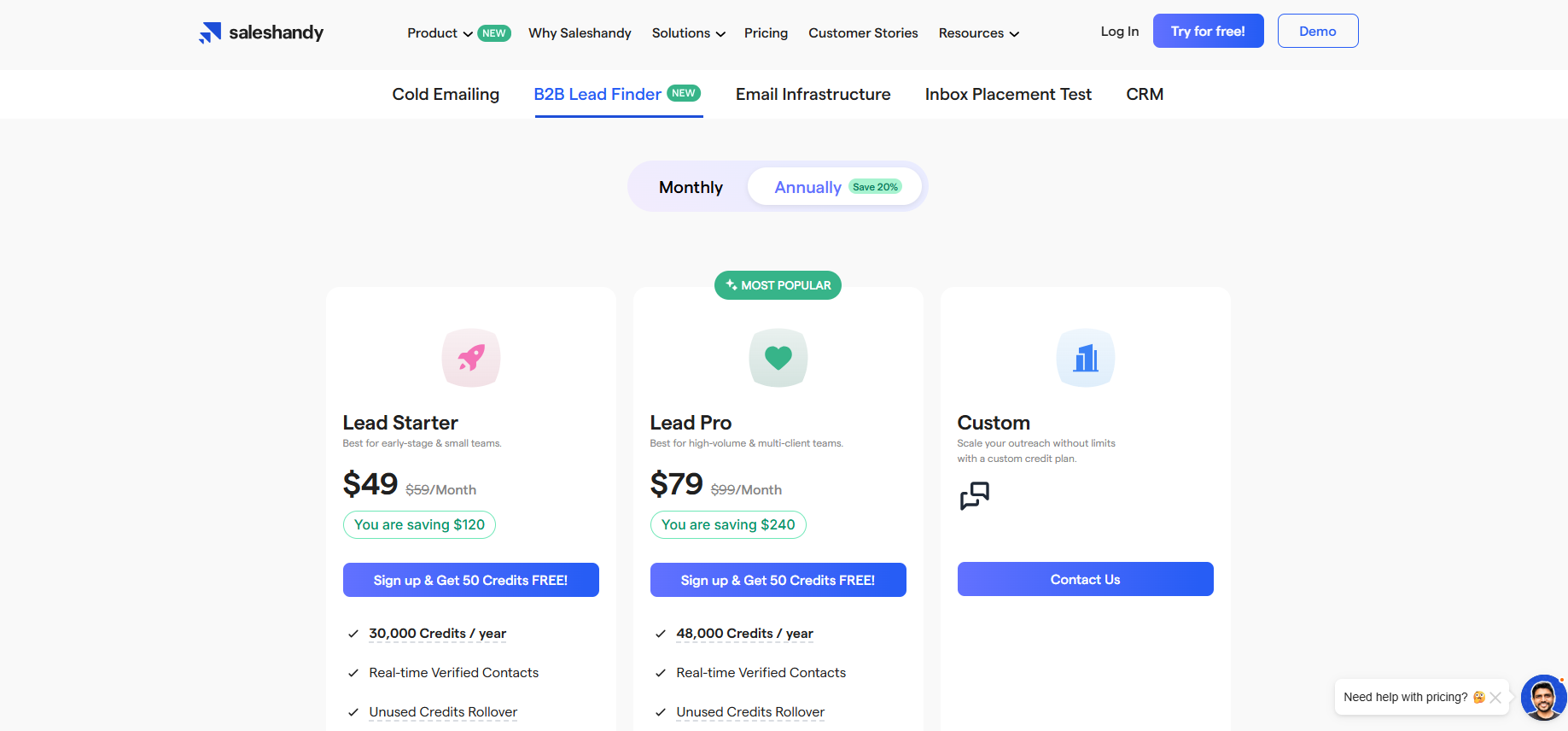
Saleshandy Pricing

Saleshandy pricing
This image shows the Saleshandy pricing

Saleshandy pricing is based on outreach volume plus scraping and verification credits:

  • Outreach Starter – $36/month

    Includes Lead Finder credits, email verification credits, unlimited inbox warm-up, and basic sender rotation.
  • Outreach Pro – $99/month

    Adds higher sending limits, more verification credits, integrations, APIs, and subsequences.
  • Outreach Scale – $199/month

    Supports larger prospect lists, higher monthly sends, and whitelabel options for agencies.
  • Outreach Scale Plus – $299/month+

    Custom prospect limits, dedicated success manager, and enterprise controls.

Saleshandy works best for teams that want email scraping tightly connected to sending, rather than standalone data enrichment.

Conclusion

To wrap it up, the best email scraping tool is the one that actually helps you start conversations, not just collect emails.

If your goal is only to grab a few emails fast, tools like Hunter, Skrapp, or Kaspr will get the job done. If you need a big database with filters, Apollo or UpLead make more sense. 

And if you live inside LinkedIn, Lusha and Kaspr feel natural.

But here’s the part most teams miss: scraping emails is only step one. The real work starts after that.

That’s where many tools stop, and where things usually break. Emails sit in spreadsheets, inboxes don’t warm up, replies get missed, and good leads go cold.

Salesforge is built for that exact gap. It doesn’t just help you use scraped leads, it helps you turn them into replies. 

You can validate emails, warm up inboxes, send campaigns, manage replies, and even let AI run outreach for you, all in one place.

Now this will help you decide:

  • If your scraped leads usually end up unused, pick Salesforge.
  • If your inbox reputation scares you, pick Salesforge.
  • If you want replies without managing five tools, pick Salesforge.

If you already have leads or scrape them using other tools, Salesforge becomes the engine that makes them work.

Try Salesforge today

And turn scraped emails into real conversations, not dead lists.