
Personalized Outbound Strategy
Get The Right Outbound Strategy In Minutes
Enter your email to get a custom plan & stack recommendation for your business
It's being carefully crafted by AI
Please check your mailbox in 5 minutes
SyncGTM lets you track buying signals like hiring, funding, and job changes, then enrich prospects for outreach.
But its Solo plan costs $49/month and gives you just 1,000 credits. Finding one verified email costs 1 credit, while finding a mobile number can cost 10 credits.
If you're tracking multiple buying signals and enriching hundreds of prospects, those credits can run out quickly.
You may want an alternative with more contact data, different buying signals, or a simpler way to find prospects ready for outreach.
So, I compared 5 SyncGTM alternatives based on their buying signals, prospecting features, outreach options, and pricing.
Let's see how they compare.
SyncGTM covers signals, enrichment, scoring, and workflow automation in one system. That can be more than you need if your outbound process is centered on one specific type of buying signal.
Users may look elsewhere when they want:
The right alternative depends on which part of SyncGTM you actually need most — signal-based prospecting, signal stacking, custom signals, account intent, or outreach.
SyncGTM helps with buying signals, prospecting, enrichment, and sales workflows. So, I used these same areas to compare the alternatives. I looked at:
I also looked at what each tool does differently from SyncGTM. This makes it easier to see which alternative fits the part of your prospecting or outreach process you want to change.
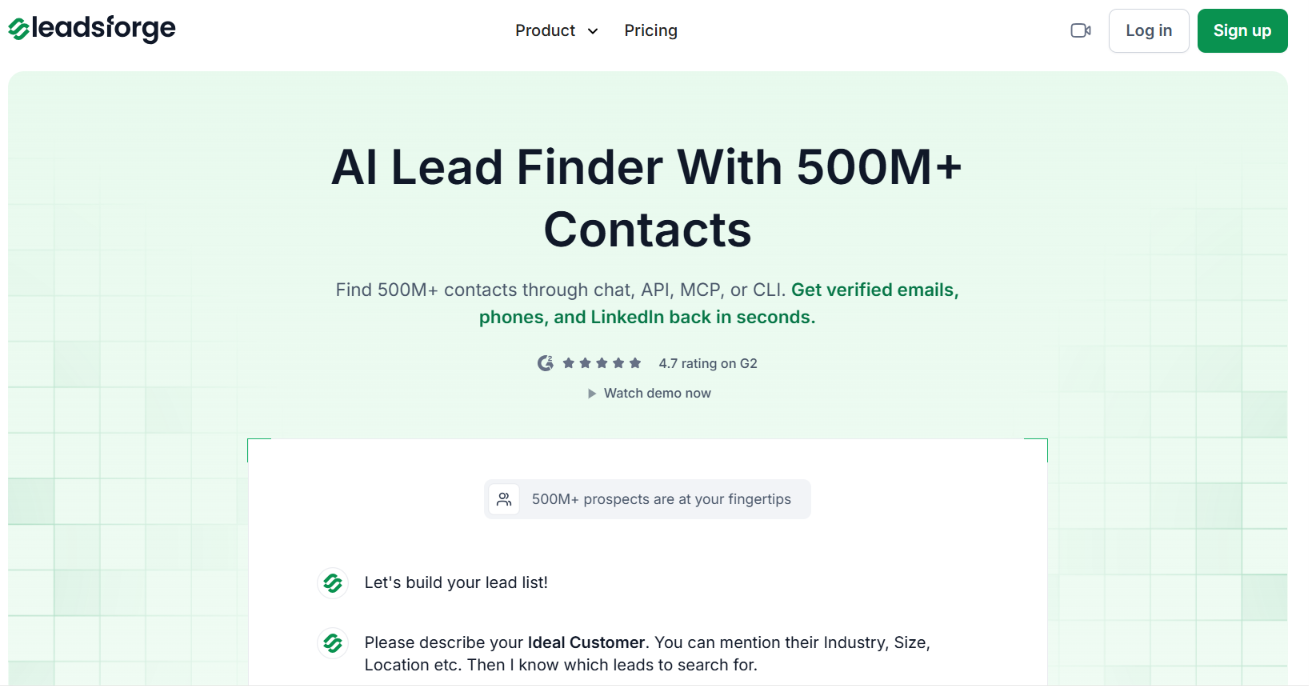
Leadsforge is a SyncGTM alternative if you mainly want to find prospects from buying signals instead of building complex GTM workflows. You can find prospects based on funding, hiring, job changes, acquisitions, and investor activity, then narrow the results using company and contact filters.
Leadsforge then checks 20+ data providers for verified emails, phone numbers, and LinkedIn profiles. From there, you can send the list to Salesforge or export it to another outreach tool.
So, if buying-signal prospecting is the main part of SyncGTM you need, Leadsforge gives you a more focused option.
SyncGTM covers more signal types and can use them inside automated GTM workflows. Leadsforge is more focused on using signals to build prospect lists.
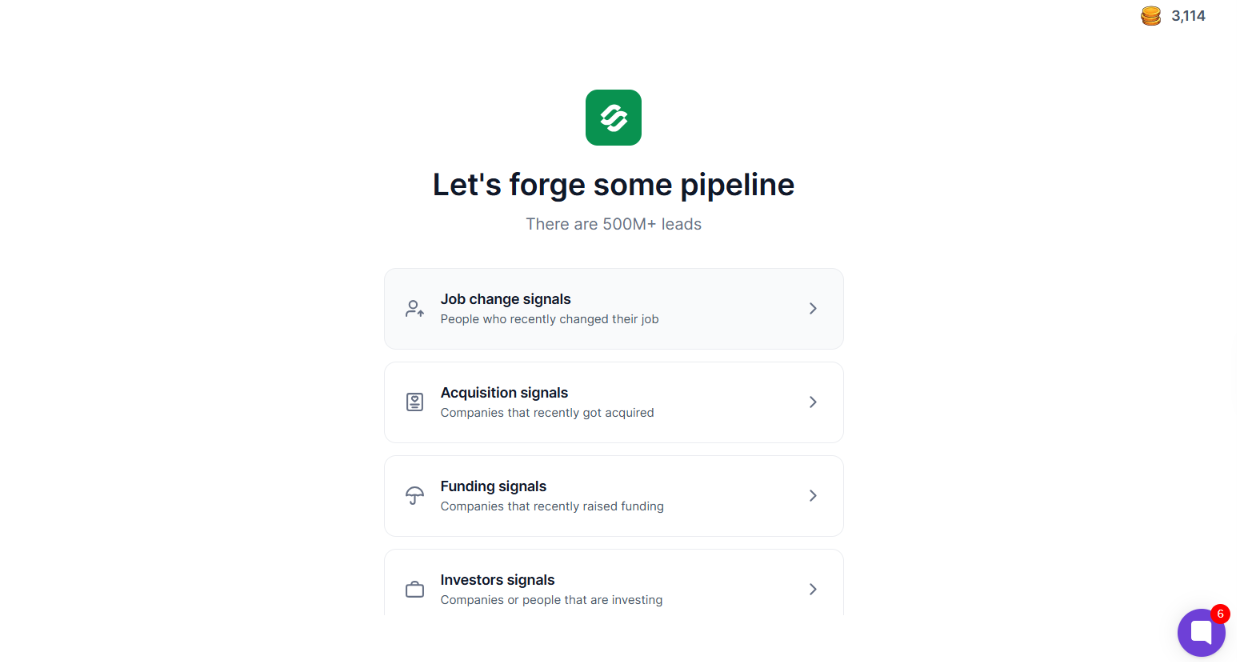
For example, you can find recently funded companies and filter them by funding round, funding amount, industry, country, and company size. For job changes, you can narrow prospects by position, seniority, department, and location.
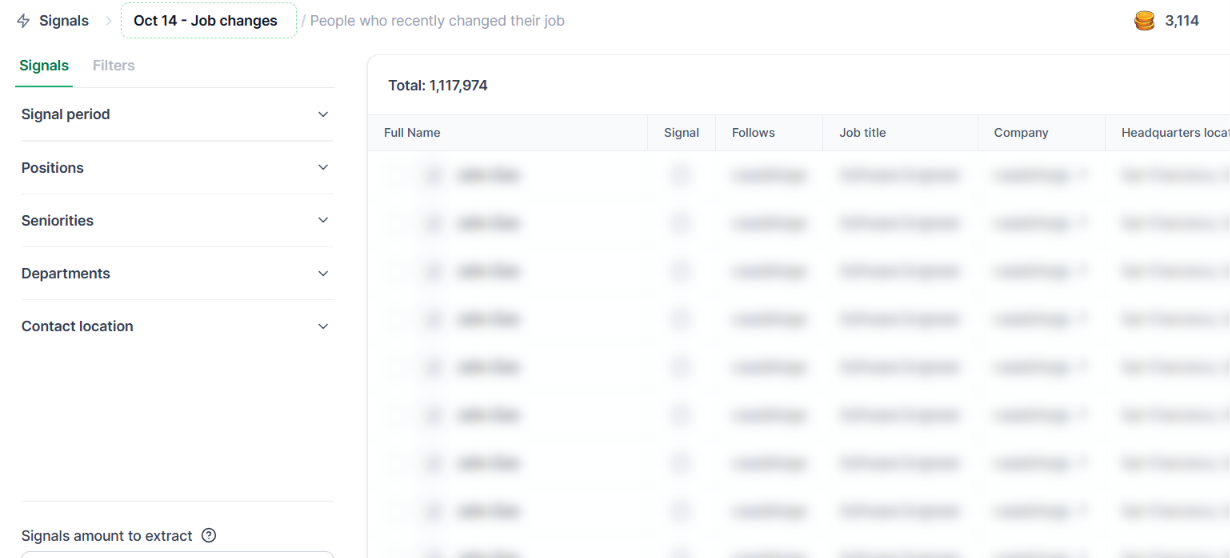
Once you have the right prospects, you can then enrich the prospects with work emails, LinkedIn profiles, or mobile numbers and move the list into outreach.
So, Leadsforge is a better SyncGTM alternative if you mainly need buying signals to find and enrich prospects, rather than to run multi-step GTM workflows.
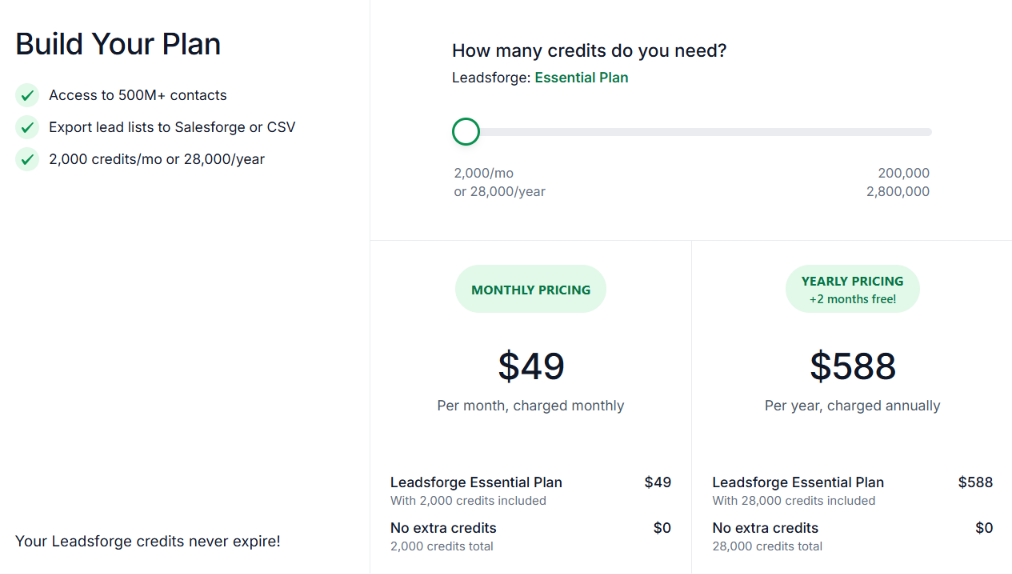
Leadsforge starts at $49/month with 2,000 credits per month. You can search and filter prospects without using credits. Credits are used when you extract or enrich contact data.
The annual plan costs $588/year and gives you 28,000 credits upfront. For comparison, SyncGTM's Solo plan also costs $49/month, but includes 1,000 credits. So, Leadsforge gives you twice the starting credits if your main need is prospecting and contact enrichment.
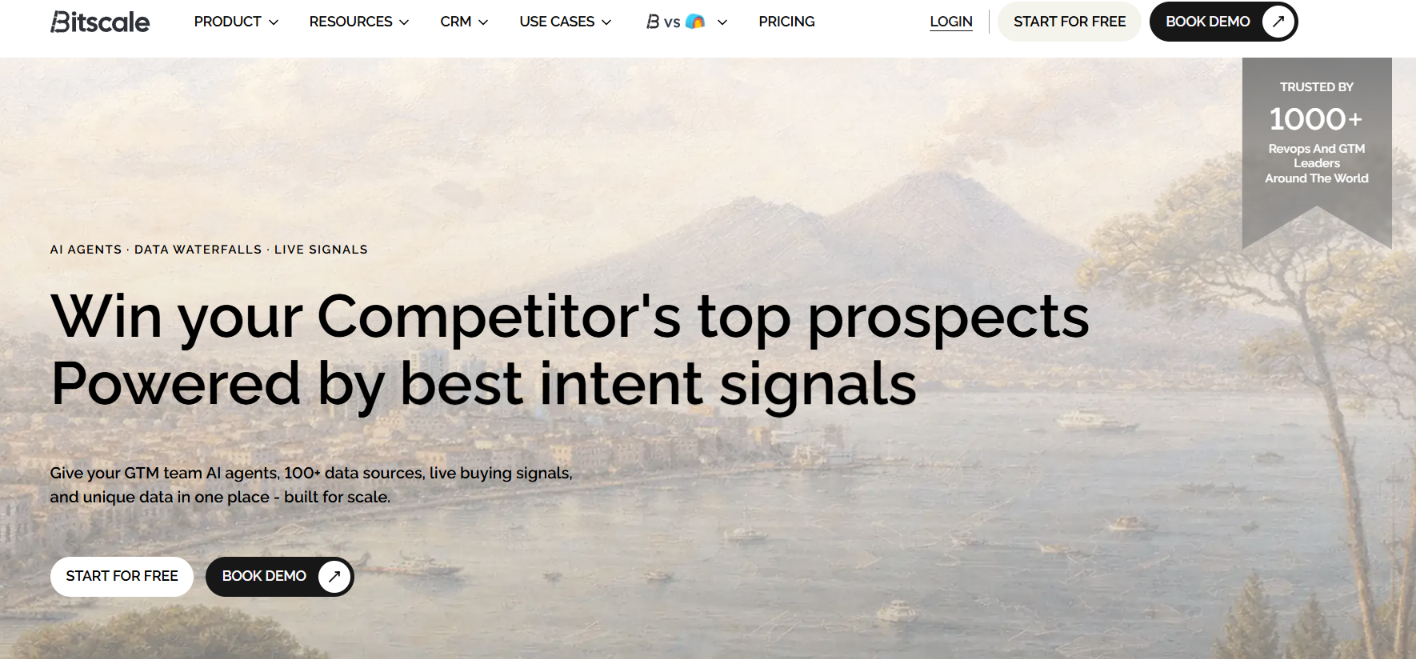
Bitscale is a B2B prospecting and data enrichment platform that lets you find prospects, track buying signals, and enrich contact data.
It tracks 15 buying signals, including funding rounds, hiring activity, executive hires, job changes, tech-stack changes, LinkedIn activity, and website visits.
You can combine signals in the same search. For example, you could look for companies that recently raised a Series B, are hiring SDRs, and brought in a new VP of Sales. After finding those accounts, Bitscale can pull contact data through 100+ data sources and send prospects to Instantly, Smartlead, or HeyReach.
Bitscale gives you some useful signals beyond common company events. You can track viral LinkedIn activity, website visitors, champion job changes, and account engagement.
You can also stack these signals. Instead of contacting every recently funded company, you could narrow the list to funded companies that are also hiring for a certain role or have recently hired a new executive.
SyncGTM covers more of the workflow after a signal appears. It can source prospects, enrich records, score leads against your ICP, keep records updated, and trigger outreach actions.
Bitscale makes more sense if you want several buying signals to determine which accounts make your outreach list.
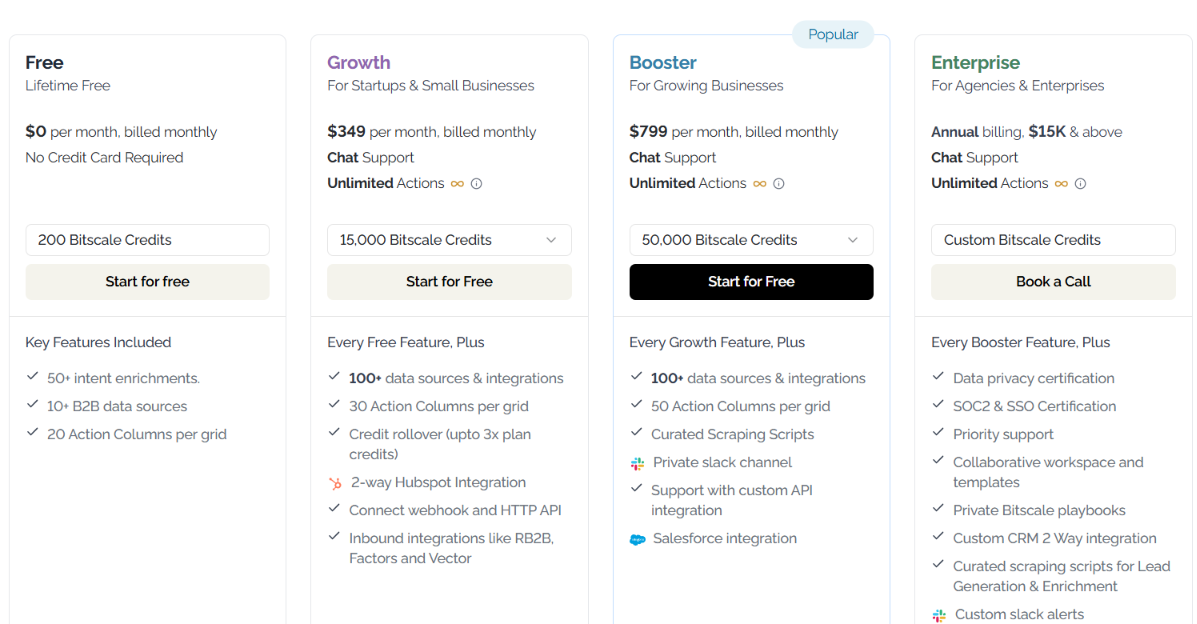
At $349/month, Bitscale only really makes sense if you plan to use signal stacking regularly, rather than relying on one trigger at a time.
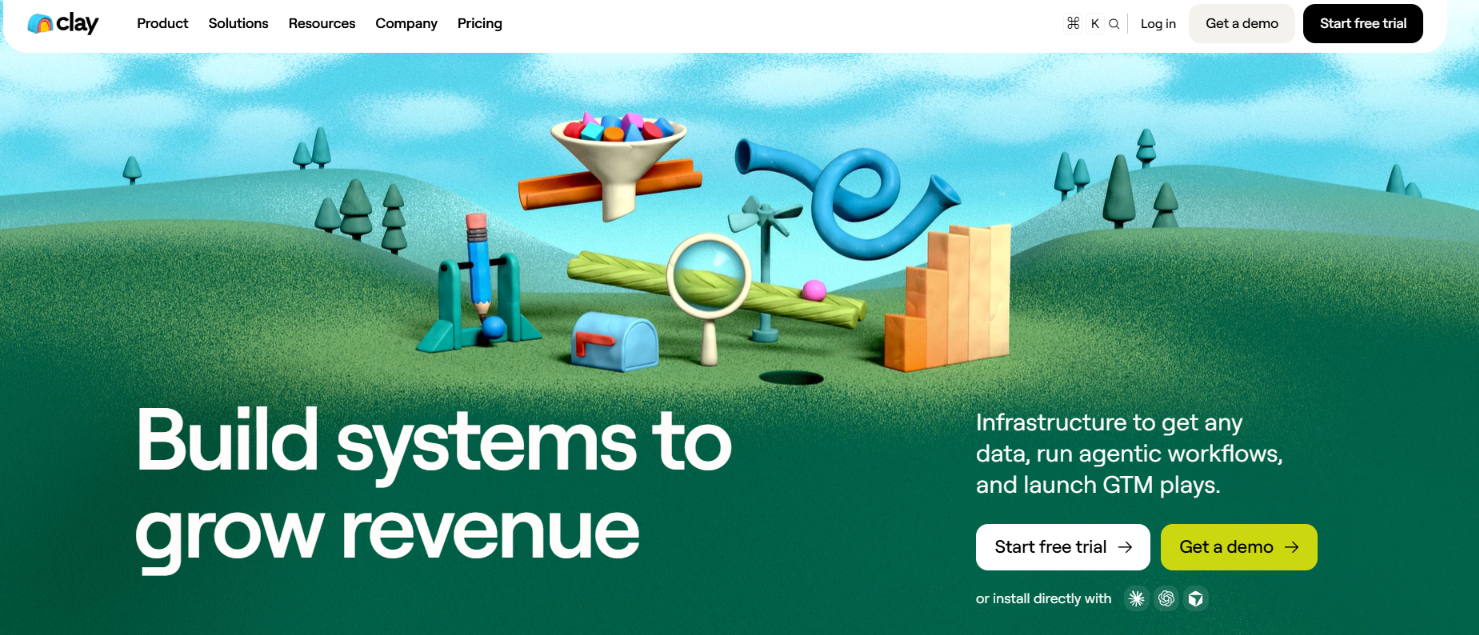
Clay is a GTM platform for finding prospects, enriching lead data, tracking buying signals, and building outreach workflows. You can track signals such as website visits, job changes, new hires, funding, social mentions, tech-stack changes, and company news.
Clay also lets you create custom signals from its 200+ enrichments or from specific information found through its research agents. Once a signal appears, you can add more company and contact data, score the account, find decision-makers, and use the results in your outreach.
Clay is a better fit if you want to build buying signals around data that matters specifically to your business. You can turn any of Clay’s 200+ enrichments or custom research into a signal. That could be a website change, product usage, a competitor mention, specific hiring activity, or another data point you want to watch.
You can then combine several signals with your CRM data, enrich the matching accounts, score them, and decide what action should happen next.
SyncGTM also supports custom signals, but its main signal offering centers on ready-to-use company and person signals such as funding, hiring, tech-stack changes, website traffic, job changes, and promotions.
So, Clay is the stronger alternative when you need to define your own buying signals and build detailed workflows around them.
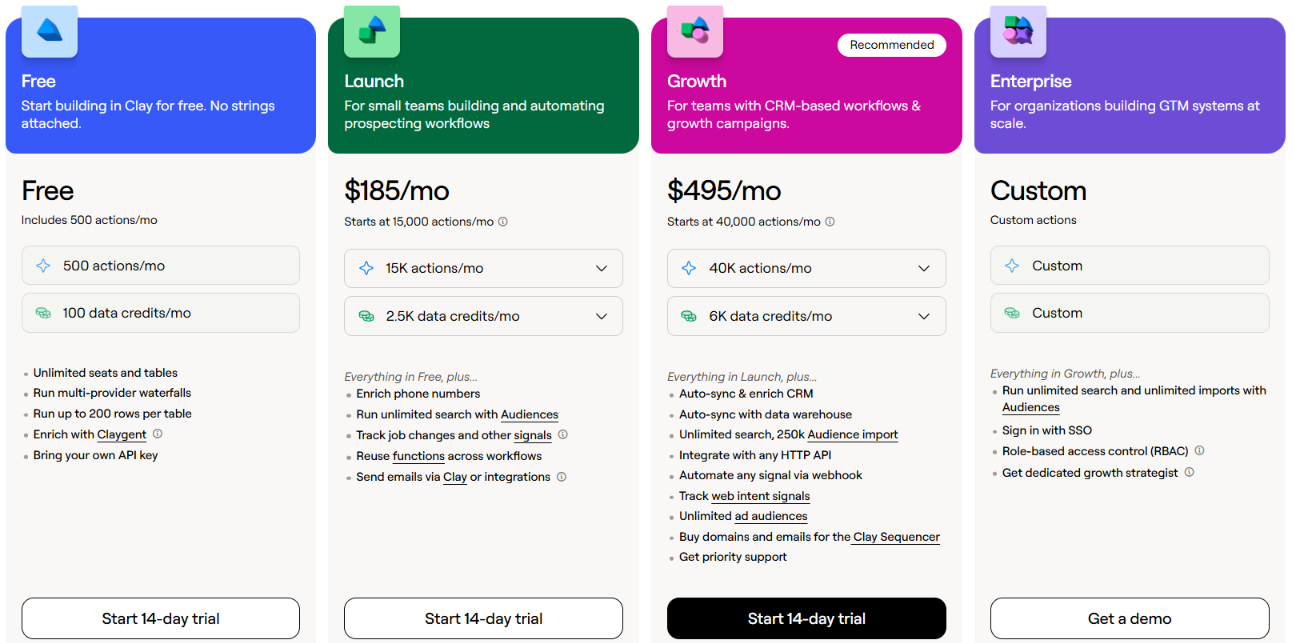
Clay separates usage into Actions and Data Credits. Actions cover enrichment and GTM workflow usage, while Data Credits are used to buy data and AI from providers in Clay’s marketplace.
There is a lot more you can build with Clay, but that also means more setup and a higher starting price once you move beyond the Free plan.
6sense is built around account-level buying intent. It tracks research activity across B2B publisher sites and intent sources such as G2, TrustRadius, Bombora, PeerSpot, and Gartner.
It combines that activity with website, CRM, company, and contact data to identify in-market accounts. Its predictive models then assign ICP fit, buying stage, and persona engagement, so you can see which accounts deserve attention and who within the buying group is involved.
6sense also provides company and people search, verified business emails, direct-dial numbers, sales alerts, and workflows for acting on these accounts.
6sense makes more sense if you already have a target account list and need to decide which accounts sales should work first.
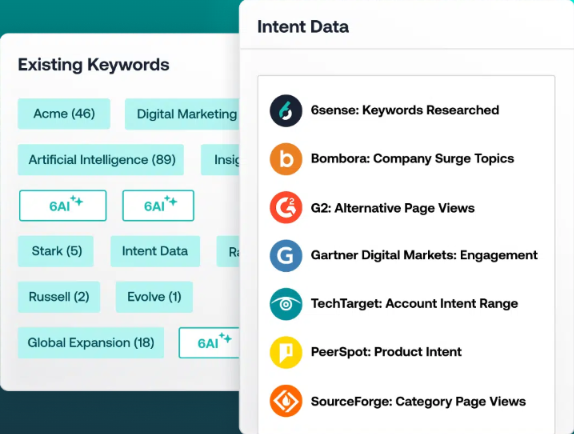
It can take intent activity, CRM history, website activity, and other account signals and turn them into an ICP fit, buying stage, and persona engagement for each account. Sales can then see which accounts are in-market, how far they may be into the buying process, and which members of the buying group are active.
That is a different use case from SyncGTM, where you can source prospects and build workflows around signals such as funding, headcount growth, job openings, tech-stack changes, job changes, and promotions.
So, 6sense is the better fit if account prioritization comes before prospecting in your outbound process.
6sense does not publish fixed monthly prices. You need to contact sales for a quote. It offers three Sales Intelligence configurations:
Data credits are used to unlock and export emails, phone numbers, and enriched records. Credit allocations depend on your contract, and unused credits do not roll over between allocation periods.
Apollo.io is a B2B sales intelligence platform with built-in outreach. Its database covers 240M+ contacts and 30M+ companies, which you can search by company and contact filters.
For buying signals, Apollo uses Bombora intent data to identify companies researching any of 15,000+ topics. It scores company-level intent as high (75-100) or medium (61-74) and shows how that activity has changed over time.
From those companies, you can find relevant contacts, access emails and phone numbers, and use 20+ data partners through waterfall enrichment to fill missing details. You can then add those prospects directly to Apollo sequences.
Apollo.io is a stronger option if you want to start with accounts already showing research intent and move straight into prospecting and outreach.
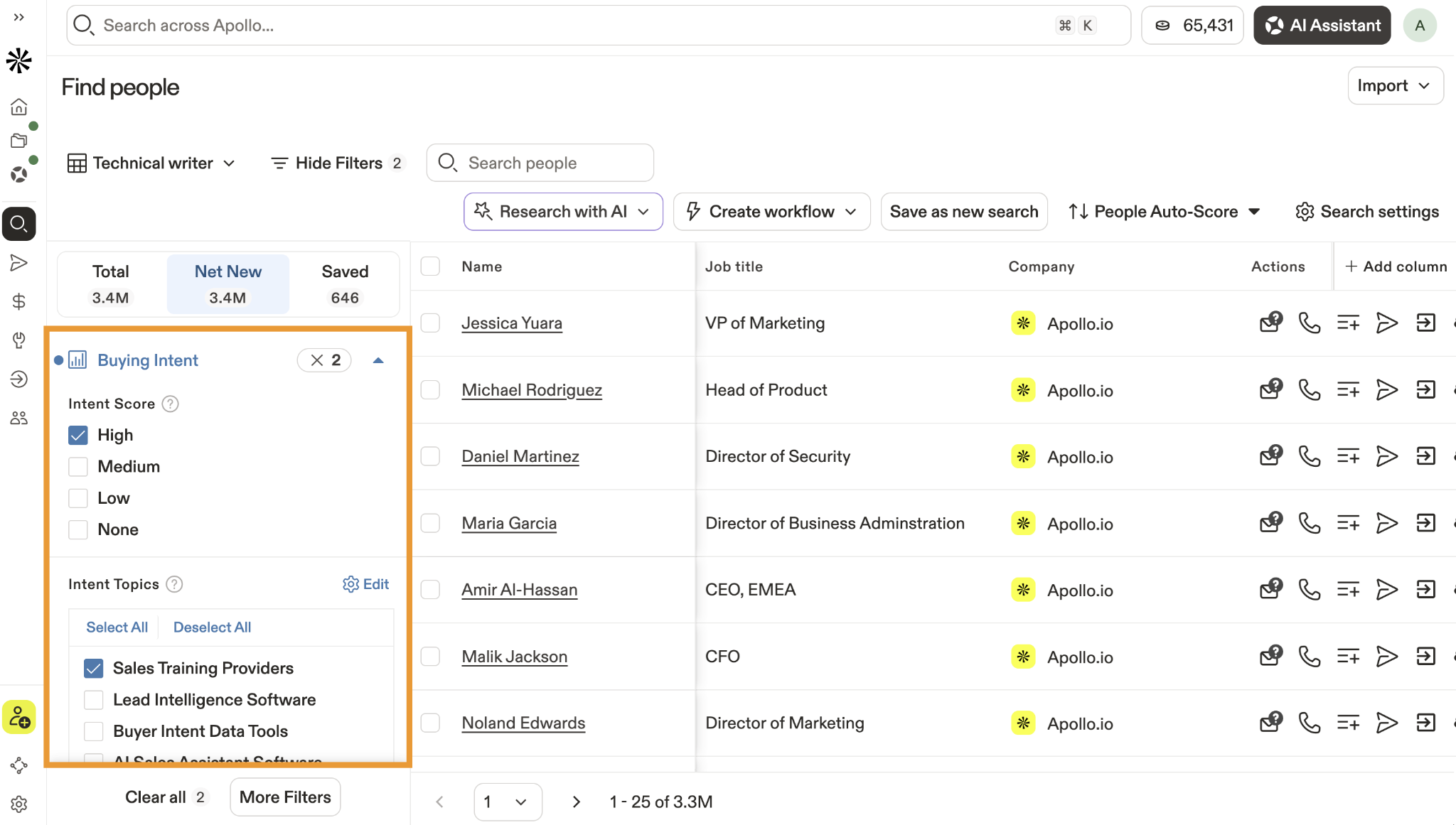
Its Bombora data helps you find companies researching specific topics, then Apollo lets you open those accounts, find the right contacts, enrich missing details, and add them to a sequence from the same platform.
SyncGTM is broader around signal-based prospecting across events such as hiring, funding, job changes, and tech changes. Apollo is the better fit if you mainly want topic-level intent connected directly to contact data and built-in sales engagement.
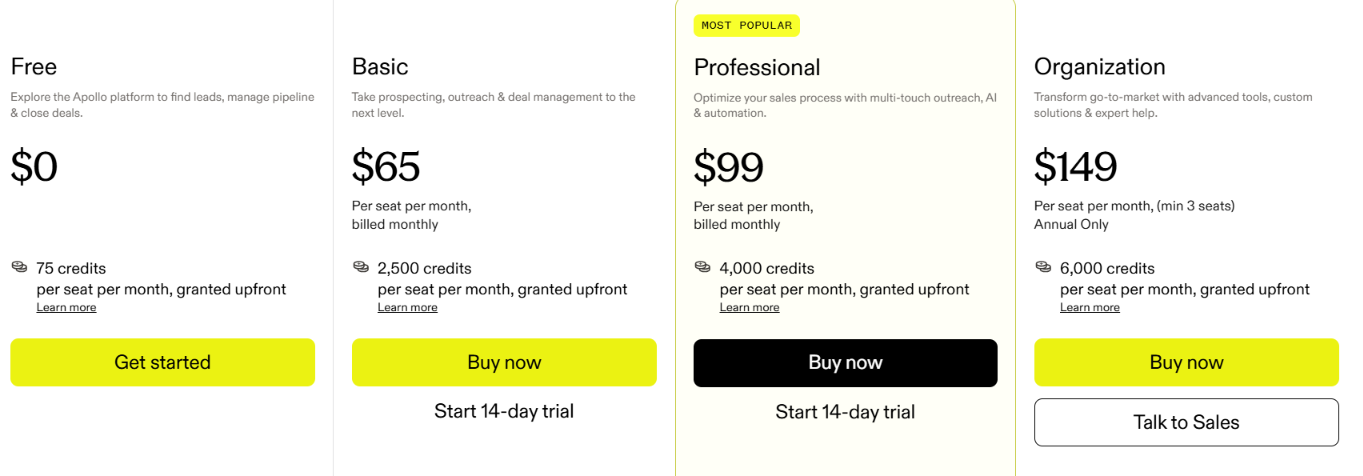
Apollo is the more practical choice here if Bombora intent is enough for your use case and you also want prospect data and outreach without adding another tool.
There is no direct replacement here because each tool takes buying signals in a different direction. The choice comes down to how you want to find the opportunity and what you want to do with it next.
Enter your email to get a custom plan & stack recommendation for your business
Please check your mailbox in 5 minutes
SyncGTM is not short on buying signals or workflow features. The question is whether you need all of them for the way you prospect.
The five alternatives in this list solve that differently. Bitscale is useful when you want to stack several signals. Clay gives you more freedom to create your own. 6sense is geared toward identifying and prioritizing in-market accounts, while Apollo connects Bombora intent with prospect data and outreach.
Leadsforge is the simpler choice if your goal is to find prospects when a relevant buying event happens and get their contact details. You can search by funding, hiring, job changes, acquisitions, and investor activity, then enrich the prospects you want to contact through 20+ data providers.
And at $49/month for 2,000 credits, you get twice the starting credits of SyncGTM's $49/month Solo plan.
If prospecting and contact enrichment are the parts of SyncGTM you need most, try Leadsforge and build your first list from buying signals.
.jpg)

.jpg)