Personalized Outbound Strategy
Get The Right Outbound Strategy In Minutes
Enter your email to get a custom plan & stack recommendation for your business
It's being carefully crafted by AI
Please check your mailbox in 5 minutes
Maybe your manager tracks it. Maybe you hit a connection limit and read that a low SSI was the reason. Either way, you are here because a number on LinkedIn has you wondering if it is quietly costing you deals.
So let me settle it for you. Your SSI is built from four factors, each worth 25 points, and I will break down exactly what moves each one.
But the question I really want you to sit with is whether the number deserves your time at all. Even LinkedIn now admits a high score does not always mean more sales.
I will walk you through how to read every factor, and show you when chasing the score stops helping and starts wasting your day.
Your SSI is a score from 0 to 100. It runs on four factors worth 25 points each how you show up, who you reach, how you engage, and who you build with.
It is a fair mirror for your LinkedIn habits. It is not proof you can sell, and LinkedIn itself now says a high score does not always mean more deals.
So treat it as a diagnostic, not a target. Find your weakest factor, fix that behavior, and move on.
Watch SSI if you are new to social selling and want a simple way to spot which habit you are neglecting.
Ignore the number itself once you already use LinkedIn well. At that point, your acceptance rate, replies, meetings, and pipeline tell you far more than the score does.
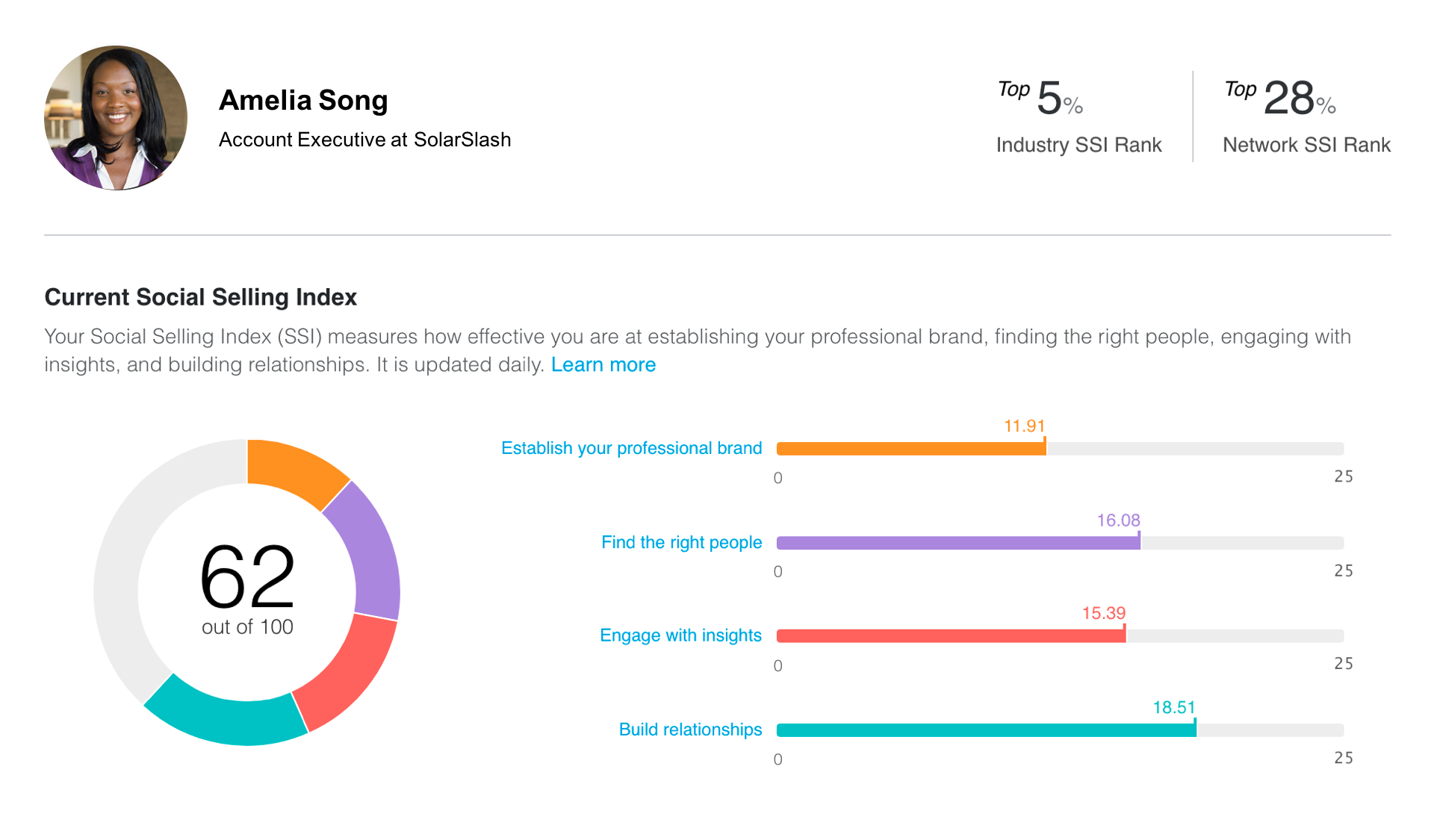
Think of your SSI as LinkedIn grading your homework. It is a score from 0 to 100 that rates how you use the platform to sell. Notice the word "how." It watches your habits, not your results.
LinkedIn built it by watching its best salespeople. It studied what they actually did on the platform, then turned those behaviors into a score.
So when your SSI goes up, it means you are doing more of what LinkedIn thinks good sellers do: fixing up your profile, finding real prospects, sharing useful things, and staying in touch with people.
Those four habits are the whole score. Each one is worth 25 points, and they add up to your total of 100.
Now for the part that trips people up. Plenty of things on LinkedIn look like your SSI but are not:
And here is the catch. LinkedIn will show you the four areas, but it will not tell you the math. Post a comment, send an invite, publish an article, you have no idea how many points any of it earns. That part stays locked.
So what do you actually do with the number? Read it as a hint, not a grade. It tells you which habits you are neglecting.
It does not tell you whether you can close, which is exactly why two people can sit at the same score and get completely different results.
Use it to find your weak spot. Nothing more.
10 n8n LinkedIn Automation Workflow Examples + Templates
Checking your SSI takes about a minute. Here is how to do it.
Sign in to LinkedIn with the account you want to check.
Open the SSI dashboard directly at https://www.linkedin.com/sales/ssi. Type it into your browser or click the link while you are logged in.
Look at the “Current Social Selling Index” section on the left of the page. That big number is your total SSI score, out of 100.
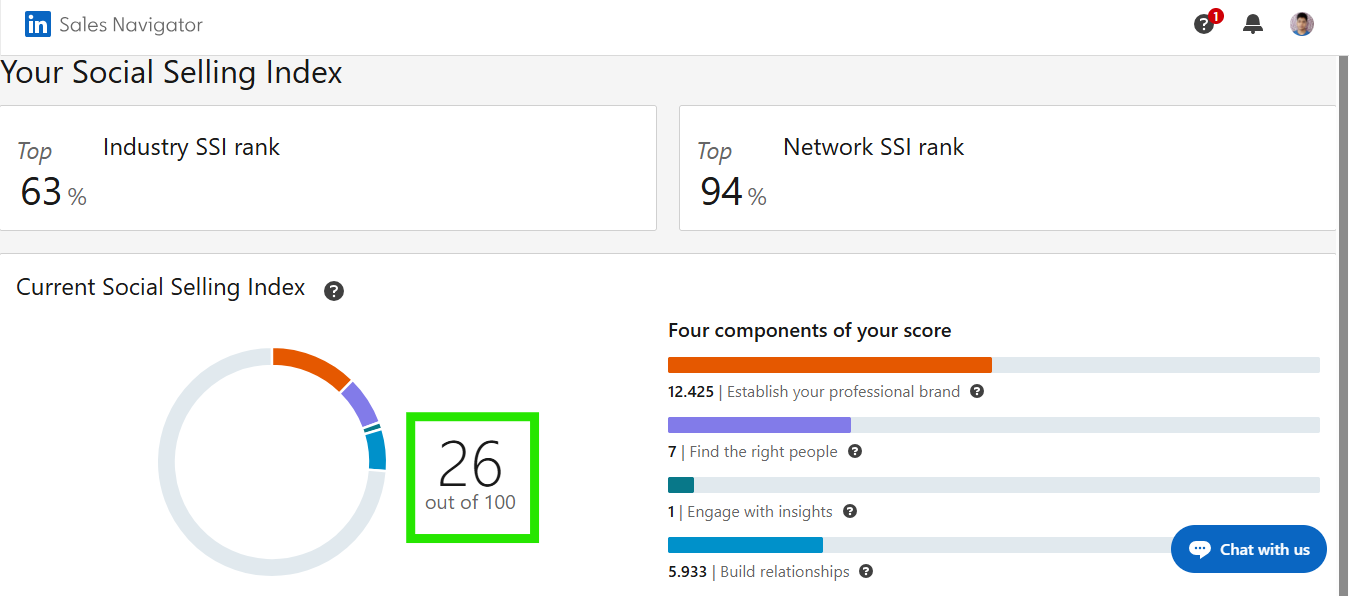
Right to it, you will see your four factor scores: professional brand, finding the right people, engaging with insights, and building relationships. Each one shows how many of its 25 points you have earned.
Above those, check your two comparisons. One shows how you rank against your industry. The other shows how you rank against your own network.

Save a dated screenshot before you leave the page. LinkedIn does not keep a long history for you, so your own screenshots become the record you compare against later.
Take one every few weeks. When your score changes, you will have proof of what it looked like before, making any change easier to read.
This is where most articles get things wrong. So let us separate what LinkedIn actually confirms from what people only guess.
Start with what LinkedIn itself states. Four things, straight from LinkedIn, no guessing involved.
First, the range. Your score falls between 0 and 100, and that is the entire scale.
Second, where it comes from.
The score is built from four factors: your professional brand, finding the right people, engaging with insights, and building relationships.
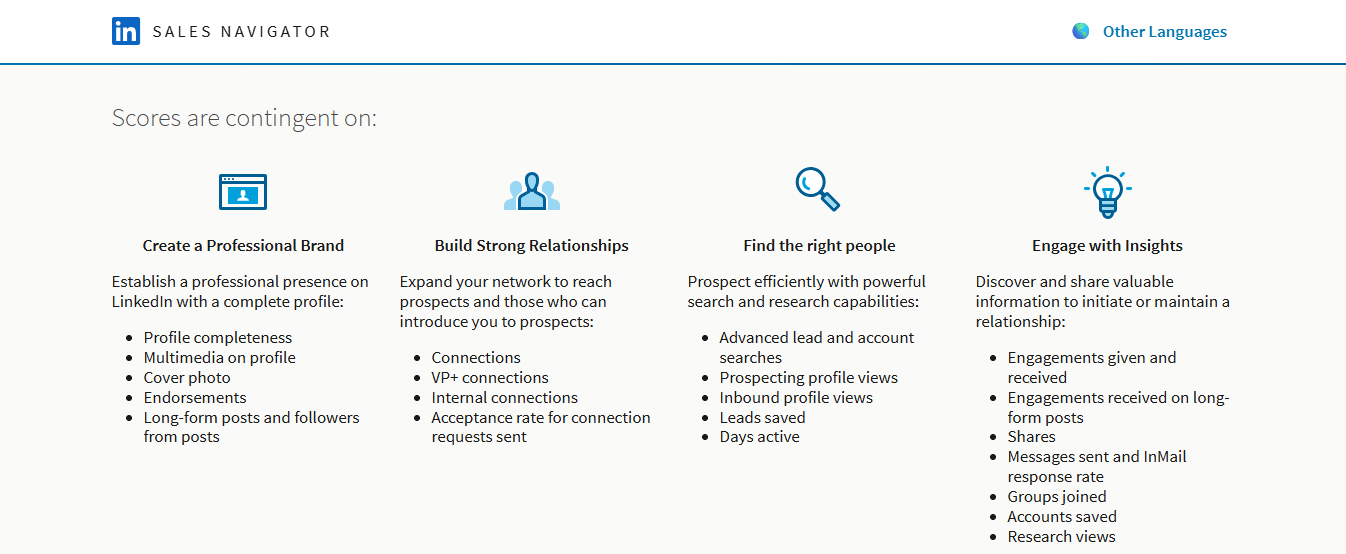
Third, the split. Each of those four factors is capped at 25 points, so max them all and you land at 100. That is the only math LinkedIn hands you.
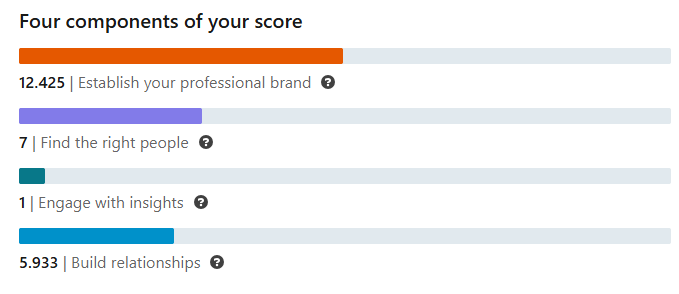
Fourth, the comparisons. Your dashboard also ranks you two ways, against your industry and against your own network. Those are the two percentages you saw earlier.
Everything past these four points is where the guessing starts, which is exactly what the next part is about.
How to Automate LinkedIn Outreach
Past those four points, the shutters come down. This is where LinkedIn stops explaining and you stop knowing.
Take the points themselves. Edit your profile, fire off a post, drop a comment, run a search, send a message, add a connection, and not one of those has a point value you can see. The action-level math is private.
Timing is just as murky. Some actions probably count over a few days, others over weeks, but LinkedIn never says which is which. Same with the refresh: it tells you the score updates daily, yet the exact moment it recalculates can differ from one account to the next.
And you will never get a formula to rebuild the score yourself. No tool, plugin, or spreadsheet can reproduce the official number, because the recipe stays with LinkedIn.
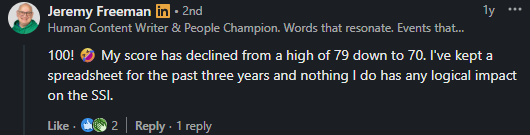
This is why people who track the score closely often cannot explain their own results. Jeremy Freeman put it plainly after years of watching his number:
Because the formula is hidden, a lot of confident advice floats around that does not hold up. Here are the common ones to ignore.
See any of these stated as fact and treat it as a guess. The honest version is short: you know the four factors and the 25-point split. The rest stays with LinkedIn.
This one comes down to a single question. When the right person lands on your profile, can they tell you understand their problem?
LinkedIn is checking whether your profile is complete, built for your customer, and backed by real proof you know your field. How much each piece counts, it will not say.
Usually it is the basics. Your profile is half-finished or out of date. Your headline says your job title instead of who you help. Your About section talks about you, not the reader.
Or there is little to back you up: no results, no recommendations, no featured work, and your posts wander off-topic for the people you want to reach.
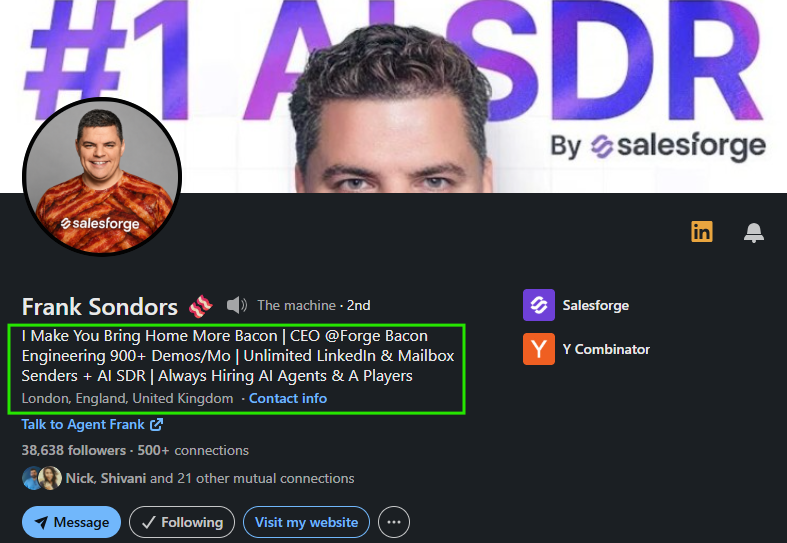
Start with the headline. Write it around your audience and what you help them do, not your title.
Then fill in the rest. Give your About and Experience sections real proof.
Add recommendations and featured work, and post observations tied to problems your buyers actually have.
One thing moves this factor more than daily posting: long-form content. Mic Adam tracked it against his own score:

The trap here is reading this as "find more people." It rewards finding the right people.
LinkedIn looks at how you use search and research to spot prospects who actually fit your market. A tight list of real buyers beats a thousand random connections every time.
It usually traces back to volume over quality. Your ICP is fuzzy, your searches are too wide, you connect with people outside your market, or you skip the account research entirely.
And piling on the wrong contacts is not a harmless mistake.
Get specific about who you want: role, seniority, industry, company size, geography, and the buying signals that matter. Match that with Boolean searches and filters.
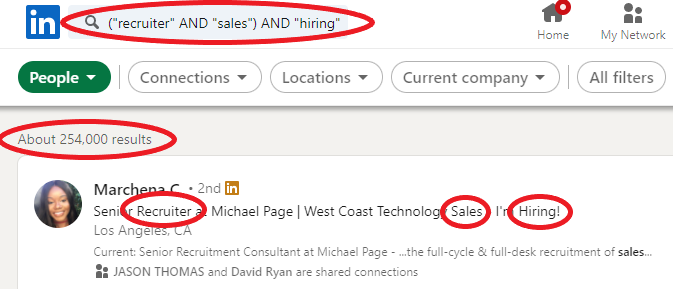
Build a short, qualified list before you invite anyone, and research more than one stakeholder inside each account. That filtering is the whole game.
Manual LinkedIn search caps out fast, and building a clean list by hand eats your day. Two tools from the Forge Stack take that work off you.
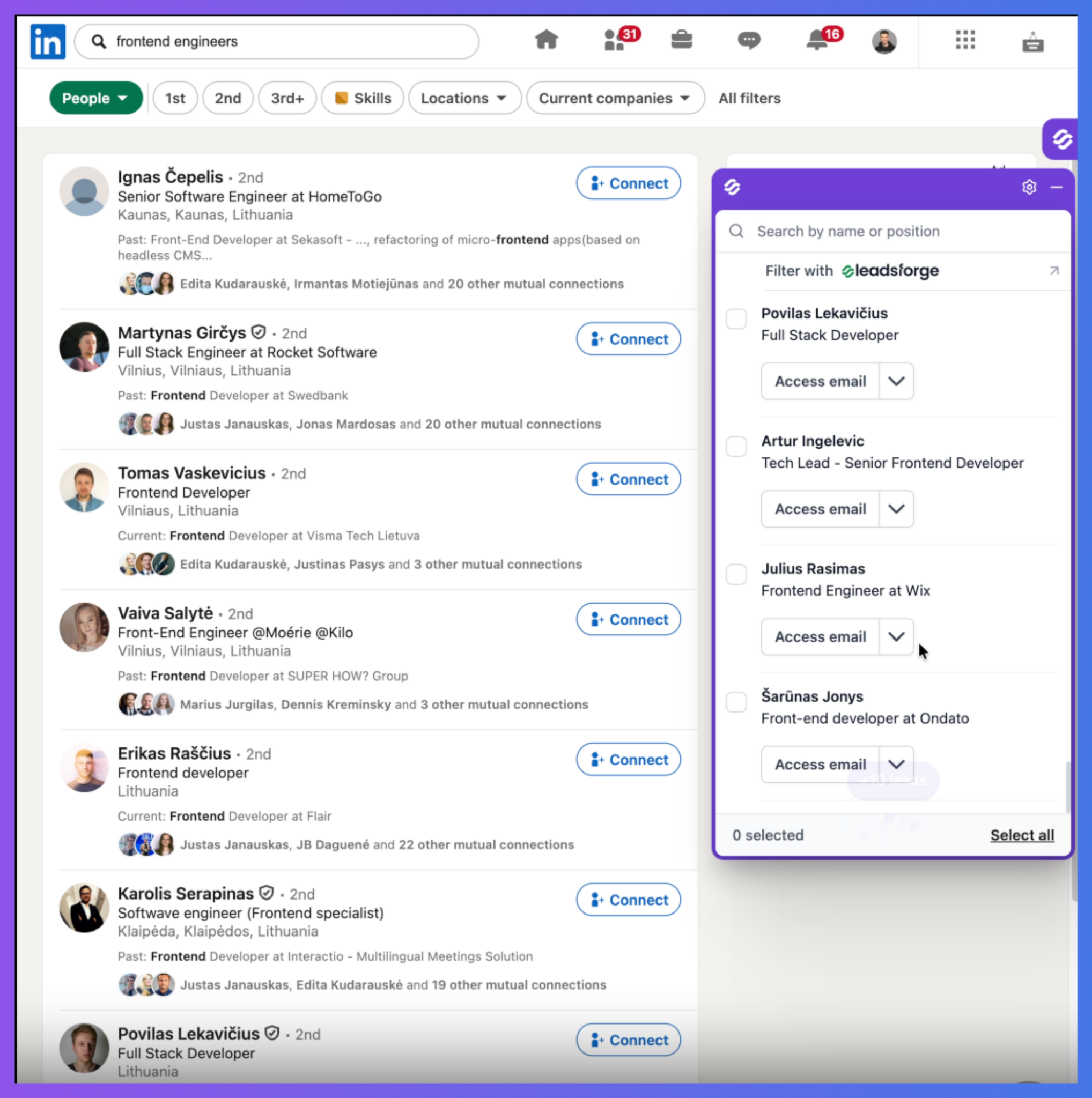
The Leadsforge Chrome extension turns a LinkedIn People Search or Sales Navigator search into a lead list without opening a single profile.
You run your search, open the extension, select the visible contacts or grab the whole page, then enrich and push them straight into your Salesforge workflow.
Page through the results and it keeps adding more, so a targeted search becomes a ready list in minutes.
Leadsforge comes at the same job from the data side. You describe your ICP in plain language, the way you would explain it to a colleague, and it returns a verified list from a database of 500M+ contacts.
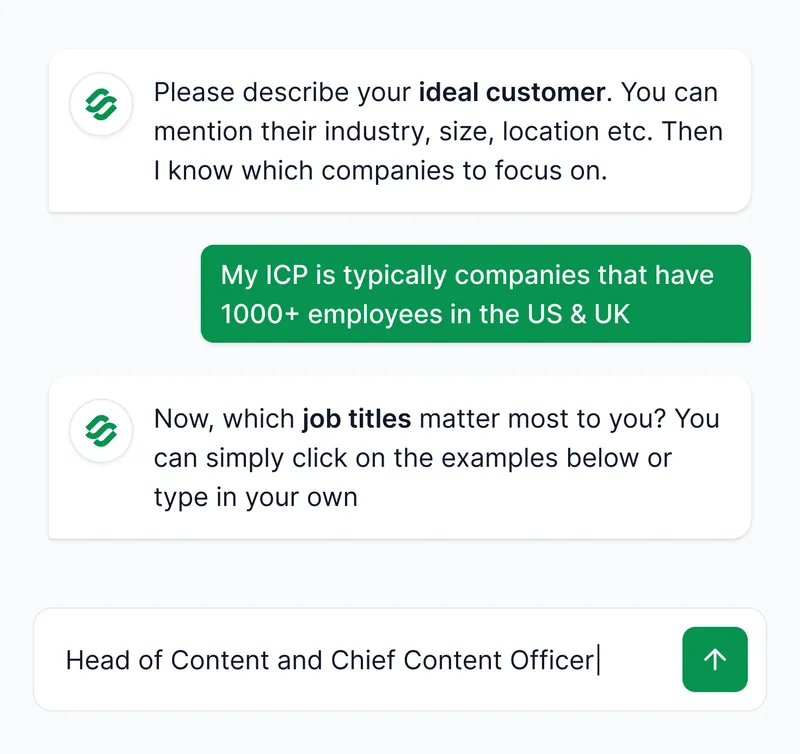
Two features matter most for this factor.
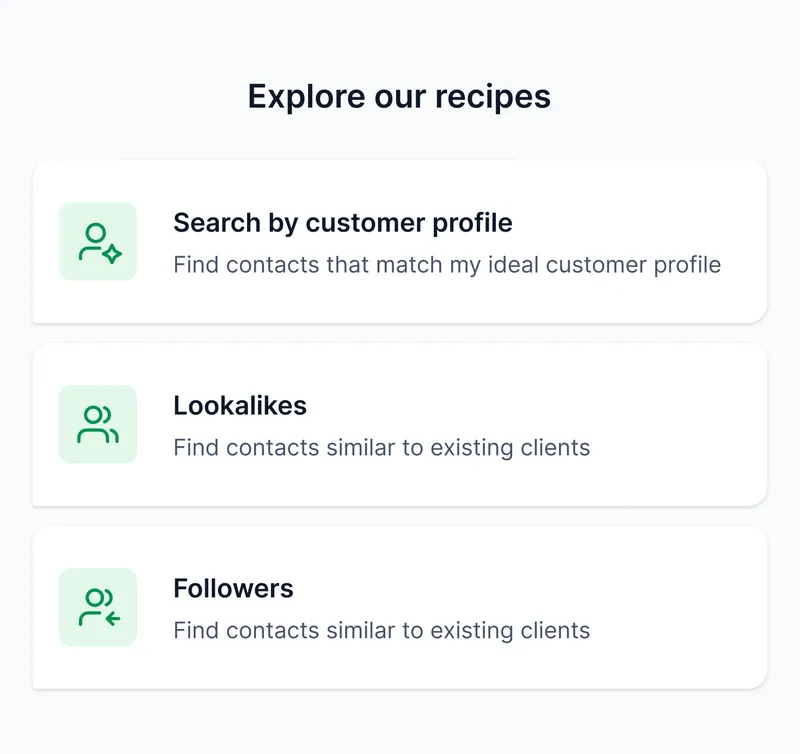
Lookalikes takes a customer you have already won and finds companies that match on industry, size, and tech stack, so one good account becomes a list of similar ones.
Followers pulls the people who follow a competitor's page, an audience that already knows your category, so your outreach can skip the education and go straight to why you are different.
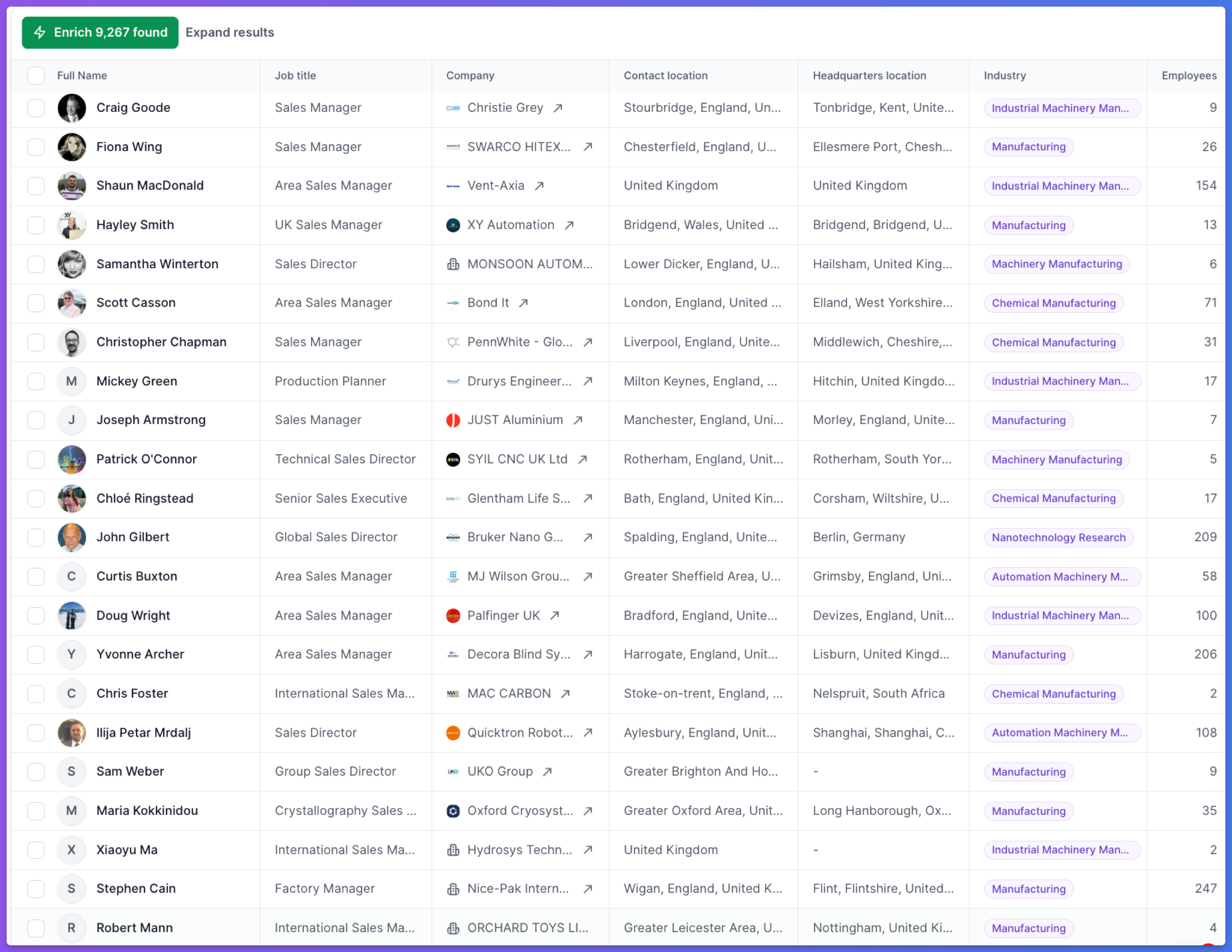
One habit protects your budget here: search and preview cost nothing in Leadsforge, and you only spend credits when you enrich.
So review the preview list first, enrich a small batch of five to ten, check the results, and scale only once the quality looks right.
That is the same "small qualified list first" discipline this factor rewards, now with a workflow behind it.
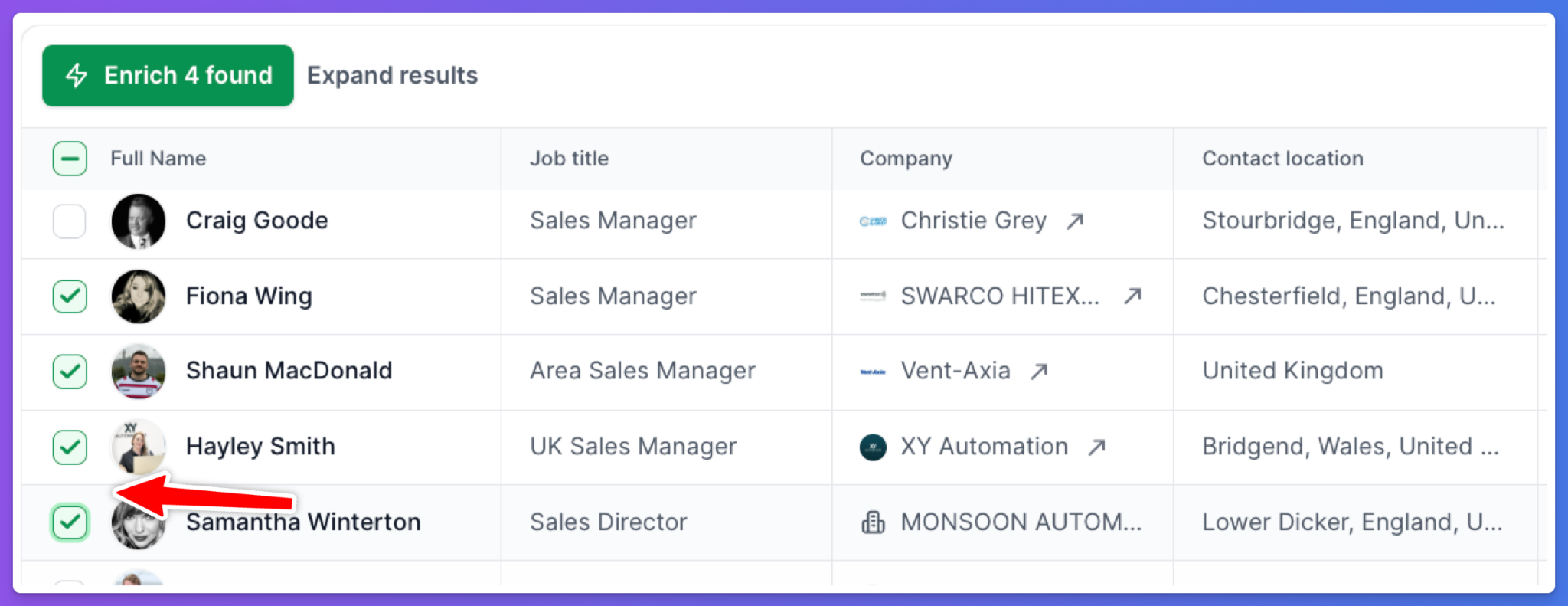
From there, lists export straight into Salesforge, so targeting and outreach live in one place instead of four disconnected tools. Cleaner input lifts your acceptance and reply rates, which matter far more than the score.
To be clear, none of this changes or guarantees your SSI number. It improves who you find and reach, which is what this factor was always meant to reward.
5 Tools To Automate Your Sales Workflow in 2026
This factor cares about the quality of your engagement, not the volume. A hundred empty comments do nothing here.
LinkedIn watches whether you share relevant content, leave comments worth reading, and hold real professional conversations. What each action is worth, it does not publish.
Most of the time you are too passive or too generic. You scroll without joining in, your comments say "great post," you drop links with no take of your own, your posts only sell, or your attention is scattered instead of aimed at the accounts that matter.
Comment on posts from relevant prospects, customers, and experts, and add a concrete example or question each time.
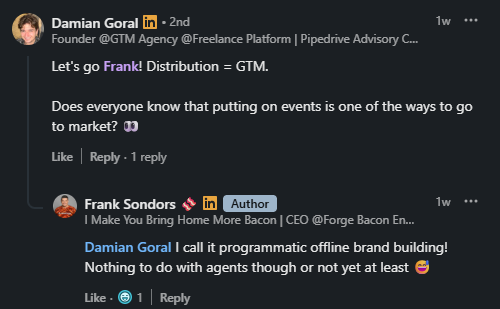
Publish content built on real problems from your sales conversations. Reply when people respond, and keep the discussion going. Choose relevance over frequency.
There is a way to turn that engagement into pipeline. The people who follow the leaders and competitors in your space are already warm to your topic.
With Leadsforge Followers, you can pull that audience into a list, enrich it, and push it into a Salesforge sequence that speaks to the interests they have already shown, rather than reaching out cold.
You engage where your market pays attention, then follow up with the people who were paying attention too.
This is the one that separates a big network from a useful one. LinkedIn rewards real relationships with the right people, not a headcount.
LinkedIn looks at how you connect, earn trust, and keep relationships going, especially inside your target market. Five hundred relevant, active connections outweigh five thousand strangers.
Your network might be large but pointed at the wrong market. Your invites get weak acceptance. You pitch the second someone connects. You never follow up. You ignore the warm contacts you already have, or you chase only the top decision-maker and miss everyone else who shapes the deal.
Send invitations that fit, instead of firing off as many as you can, and personalize when you have a real reason to. Keep the conversation alive after the first hello. Build ties with several stakeholders in an account, and circle back to past customers and old colleagues.
Skip the mass activity done purely to move a number, and keep an eye on your acceptance rate, because a weak acceptance rate is a warning sign that reaches well past this score.
And does not only drag this factor down, it quietly limits how many invitations LinkedIn lets you send at all. Leaning on connection requests alone is what puts you there. This is where running more than one channel helps.
Salesforge blends email and LinkedIn into a single sequence, so you reach a prospect through both instead of betting everything on one invite.
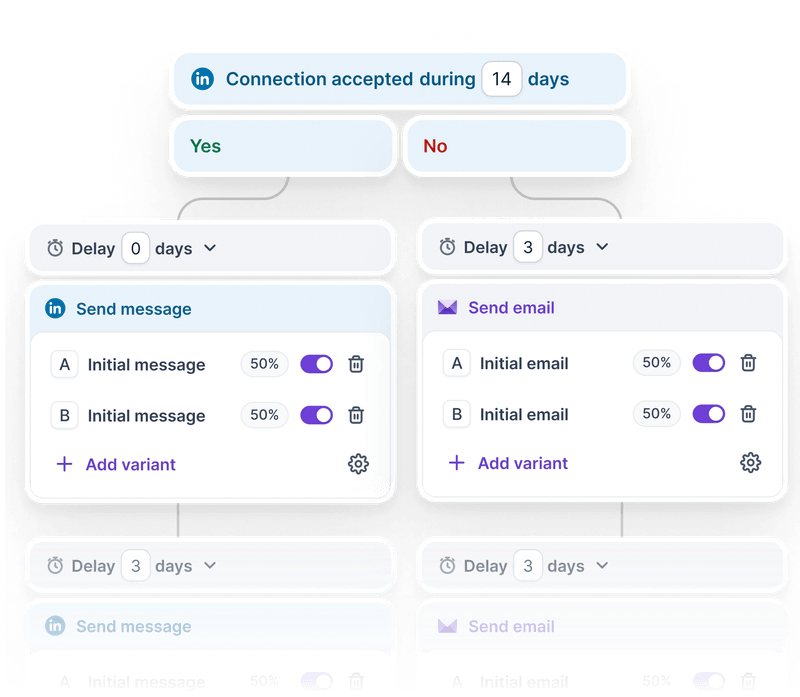
And every reply from either channel lands in one inbox called Primebox.
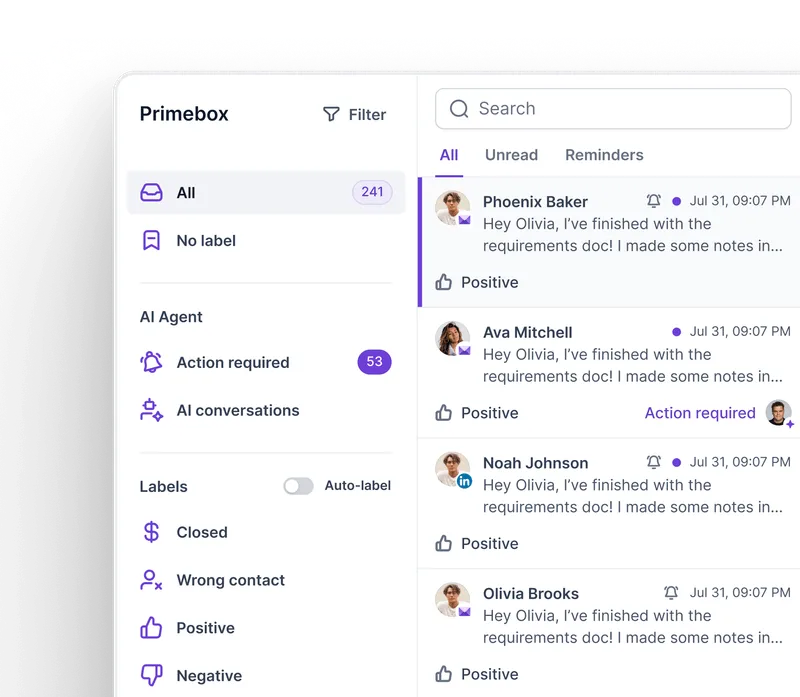
Fewer wasted requests, less pressure on your acceptance rate, and more of the steady follow-up that actually builds the relationships this factor measures.
Short answer: it still has a use, but not the one most people give it. The clearest signal comes from LinkedIn itself, which has revised its account of the score.
When SSI launched, LinkedIn presented it as a measure of good social-selling behavior. The idea was that if you built a strong profile, found the right people, engaged well, and grew real relationships, you were doing what effective sellers do.
LinkedIn backed this with its own performance data, noting that sellers with higher SSI tended to hit targets more often.
Read those as LinkedIn's first-party, correlational claims. They show a pattern LinkedIn observed, not proof that raising your score causes you to hit quota.
LinkedIn's own position has shifted. On its current pages, it says the score no longer reflects the modern sales environment well.

It goes further. A high SSI does not always reflect a seller's effectiveness, nor does it always align with actual sales outcomes.
LinkedIn also warns that time spent chasing the score can pull sellers away from closing deals and building relationships.
Users noticed the drift long before the messaging changed. Richard van der Blom, who studies LinkedIn closely, flagged the reliability problem directly:
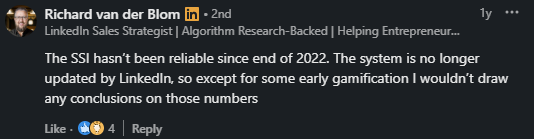
This is the heart of it. Successful sellers may do the behaviors SSI measures. That does not mean pushing the number up creates better sales.
Tony Restell made the point sharply about what actually drives sales performance:
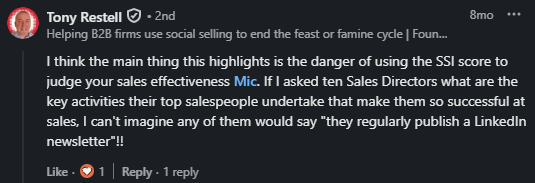
Your results still depend on things the score never touches: whether your product fits the market, how well you target, how good your offer and messaging are, and your sales skill. Those sit outside SSI entirely.
As Gehan Haridy-Ardanowski put it after years of watching the number
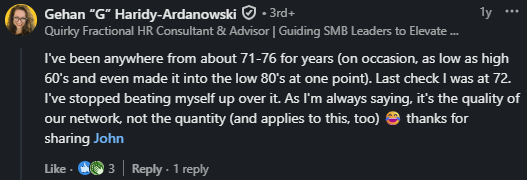
The score does earn its place in a few situations.
Use it to audit your basic LinkedIn habits and spot a factor you have neglected. It works well for coaching people who are new to social selling, and it gives a team a simple starting point for a conversation about profile, research, engagement, and relationships.
In each case, the value is diagnostic. The score tells you where to look, not how good you are.
It turns into a vanity metric the moment you treat the number as the goal.
That happens when it is set as an individual or team quota, when it is pushed up with no matching gain in pipeline, when it drives irrelevant connecting or empty engagement, when it is compared across roles that use LinkedIn differently, or when it is read as proof of sales skill.
Leon McDonald cut straight to what actually counts:
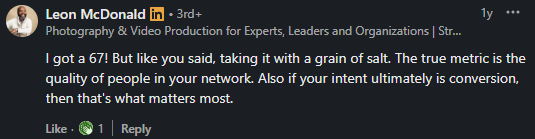
So the honest 2026 answer is this. SSI still matters as a mirror for your habits. It does not matter as a scoreboard for your selling. Use it to find your weakest area, fix the behavior, then judge the result by pipeline, not by the number.
Enter your email to get a custom plan & stack recommendation for your business
Please check your mailbox in 5 minutes
Your SSI is a read on your habits, not the result you care about. It points to what to fix, nothing more.
So do not chase all four factors at once. Open your dashboard, find the shortest bar, and start there. That is where the easy gains sit.
Then watch the right things. As you fix a factor, track your acceptance rate, replies, meetings, and pipeline. If those move, the work was real. If only the score moves, you were chasing a number.
Fix the behavior first, and let the score follow.