
Personalized Outbound Strategy
Get The Right Outbound Strategy In Minutes
Enter your email to get a custom plan & stack recommendation for your business
It's being carefully crafted by AI
Please check your mailbox in 5 minutes
Salesforce has added a new outbound sales agent called Hunter to Sales Cloud this September.
Salesforce says Hunter can learn how your team sells, find the right prospects, handle outreach, follow up, and keep working as deals move forward. Rather than stopping after a single task, it can work toward the same sales goal for weeks or even months.
But can a new AI agent really take that much work off your SDRs’ plates without giving them another tool to manage?
That’s what I wanted to find out in this Hunter by Sales Cloud review. I’ll cover what Hunter actually does, where your reps still need to step in, how the setup works, and what it costs.
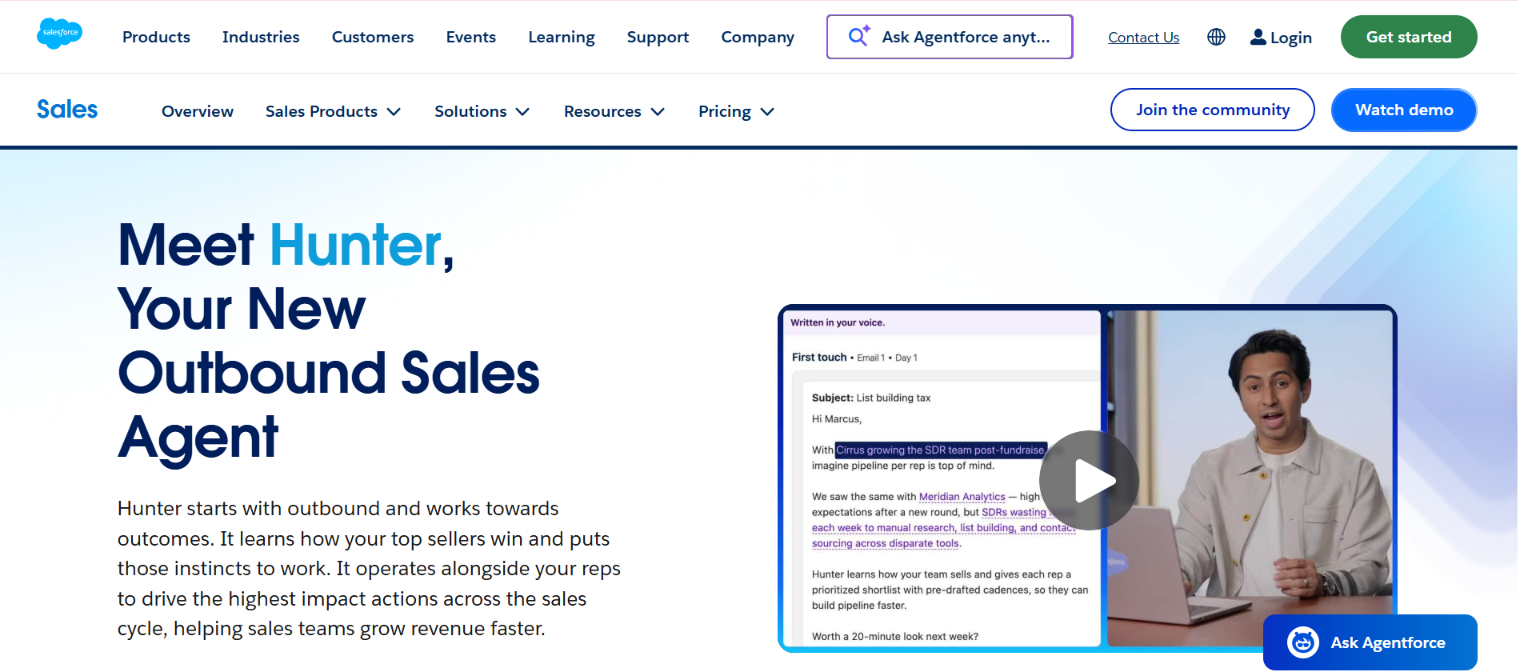
With Hunter, you get an AI sales agent that works inside Salesforce and can handle work from prospecting to later stages of a deal.
You can give Hunter a goal, such as building pipeline, engaging leads, moving deals forward, or preparing a forecast. It can then plan the work, research prospects, take approved actions, track progress, and adjust what it does as things change.
It can also learn from the sales data you already have in Salesforce, including CRM data, customer conversations, sales content, and rep activity. When it needs more information, it can use approved outside data about companies and contacts.
Here is what you get compared with Agent Frank:
The biggest difference is where each agent is meant to spend its time.
Agent Frank is focused on outbound. It finds prospects, reaches out, follows up, and works toward booking meetings so your sales team can focus on closing.
Hunter is being built for more of the sales process. It starts with prospecting and outreach, but Salesforce also says it can work on opportunities, proposals, pipeline, and forecasts.
What you do not get yet is much proof of how well Hunter does all of this in day-to-day use. Hunter was introduced in September 2026, with general availability starting this fall. That makes Salesforce’s feature list useful for understanding what Hunter can do, but it is still early to judge how well those features work in real sales teams.
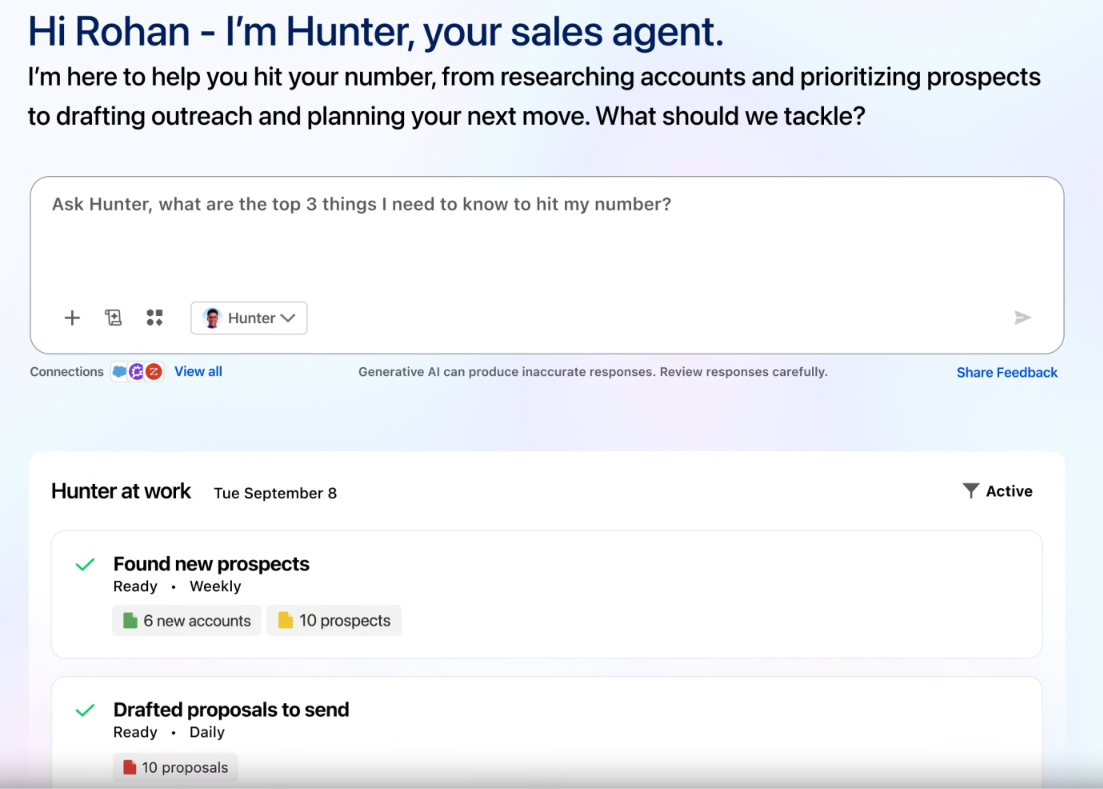
Hunter is meant to cut down the work your reps do before and after talking to a prospect. Instead of researching accounts, planning every next step, and updating Salesforce themselves, they can give Hunter a goal and let it handle much of that work.
Hunter uses your Salesforce data, including past deals, customer conversations, sales content, and rep activity. It can also use approved outside data when it needs more information about a prospect.
Salesforce says Hunter does not need weeks of configuration, but your team still sets its rules, permissions, and approvals.
You can give Hunter a goal such as building pipeline, engaging leads, or moving deals forward.
Hunter then plans the work needed to get there instead of waiting for your rep to give it one task at a time.
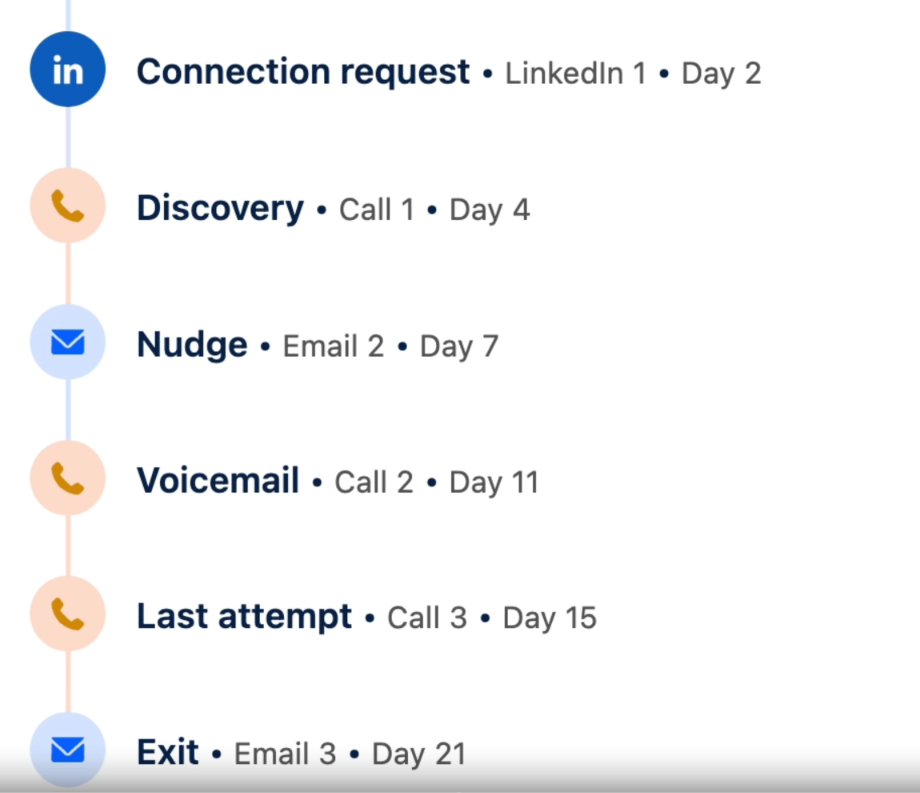
For outbound, Hunter can research accounts, prioritize prospects, prepare outreach, and follow-ups. If the prospect moves forward, it can also update opportunities, prepare proposals, and help with pipeline and forecasts.
The useful part is that Hunter keeps the same account and deal context, so it does not start from zero every time something changes.
Your team decides what Hunter can do on its own. Customer-facing actions, such as sending an email or proposal, can require a rep’s approval first.
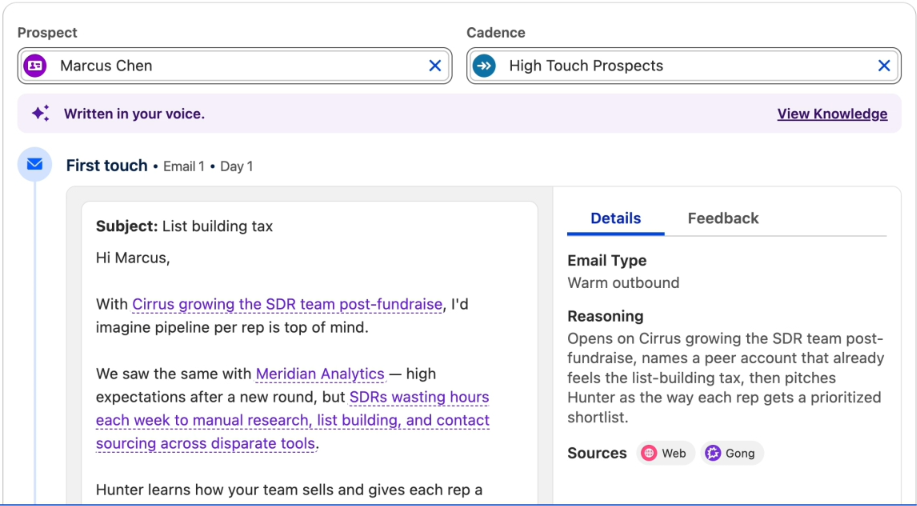
So Hunter is not there to remove your reps from the deal. It is there to take more of the research, follow-up, and sales admin work off them while they handle the conversations that need a person.
Based on what Salesforce has shared so far, Hunter can handle work on both sides of the first meeting, from finding prospects to helping with active opportunities.
Hunter can take a lot of research, prospecting, outreach, and deal work off your reps’ plates. But your sales team still needs to build relationships and make the key calls as each deal progresses.
If you already use Salesforce for outbound, Hunter could remove a good chunk of the work your reps still do by hand. It can research accounts, find and prioritize prospects, prepare outreach, and follow up. That means your reps do not have to spend as much time researching who to contact or working out what to do next.
But the bigger reason to consider Hunter is what happens after a prospect shows interest. Hunter does not stop once a lead enters the pipeline. It can keep working with the same context as the deal moves through qualification, proposals, pipeline reviews, and forecasting. Your reps stay involved in the conversations and decisions that need them.
That makes Hunter especially relevant if Salesforce already holds most of your sales data. You are not adding an AI agent that only handles the first few steps of outbound. You are adding one that can stay involved as the prospect turns into an active opportunity.
The main reason not to rush into it is proof. Hunter is still in pilot, with general availability planned for November 2026. That makes it too early to know how consistently it will handle this work across different outbound teams.
The idea is strong. The real test is whether Hunter can do this work reliably enough that your reps actually spend less time managing outbound, rather than managing the agent.
Salesforce has not announced standalone pricing for Hunter yet.
Hunter is currently in pilot, with general availability planned for November 2026. Salesforce has not said whether Hunter will be included with certain Sales Cloud plans, sold as an add-on, or priced through another model.
For now, there is no confirmed pricing of Hunter.
Hunter makes the most sense when Salesforce already sits at the center of your sales process and you want AI involved beyond the first few outbound steps.
If you are considering Hunter mainly to take outbound work off your SDR team, Agent Frank is worth looking at.
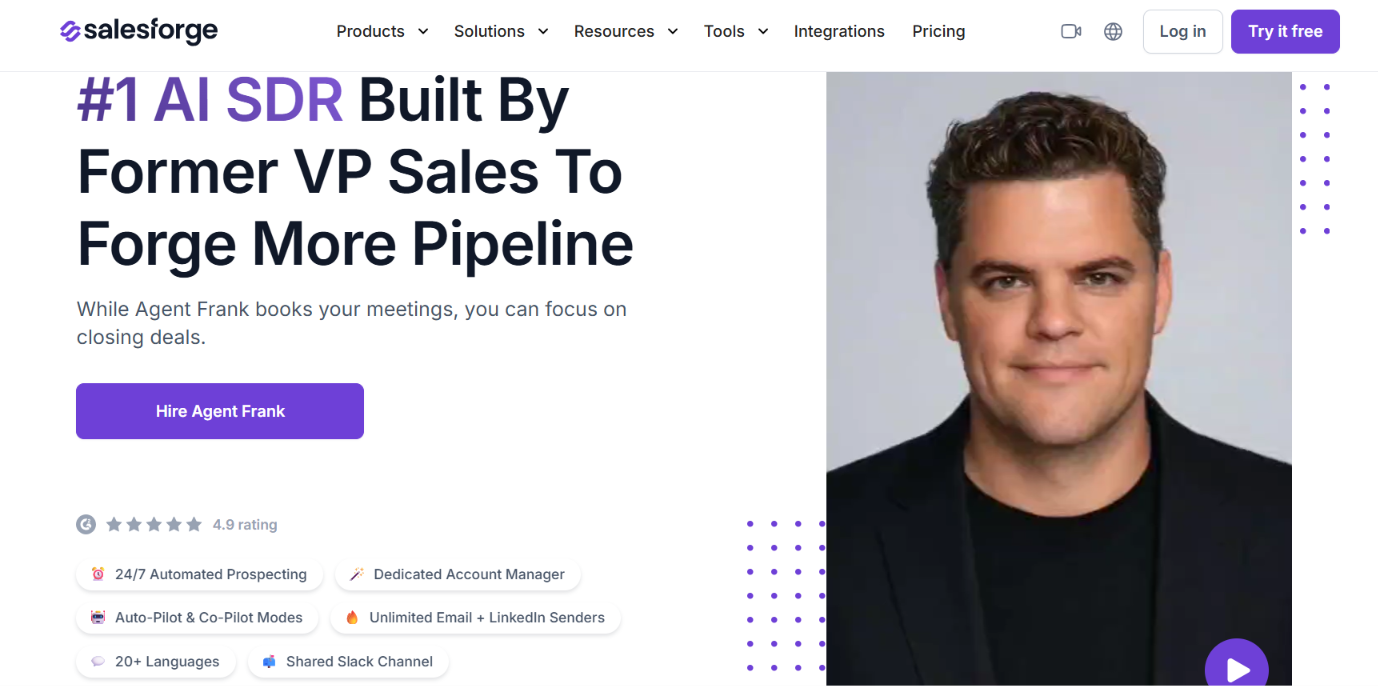
Hunter covers more of the sales cycle, including opportunities, proposals, pipeline, and forecasting. Agent Frank has a narrower job. It focuses on finding prospects, reaching out, following up, and booking meetings.
Here is what you get with Agent Frank:
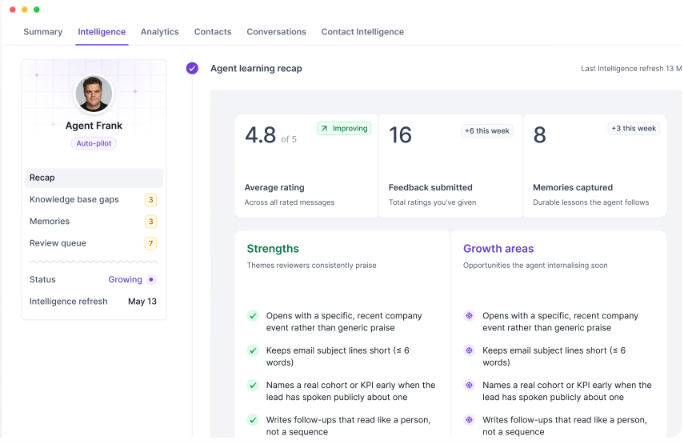
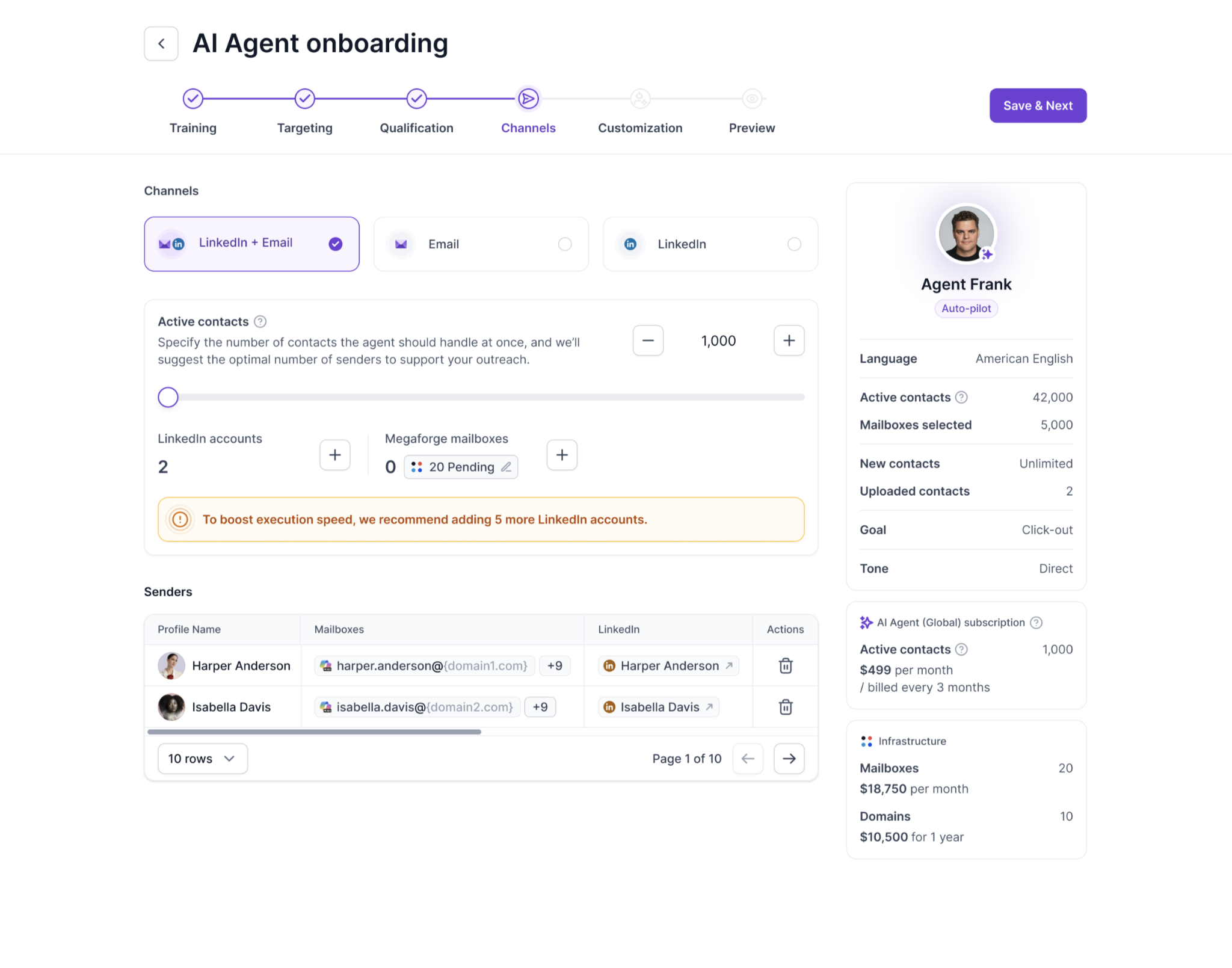
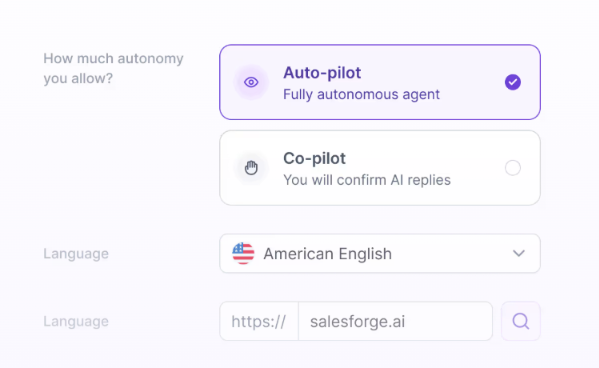
The main difference is simple. Hunter stays involved further into the deal. Agent Frank focuses on getting prospects into meetings.
If that is the part of outbound you want to take off your SDRs’ plates, Agent Frank is an ideal alternative.
Enter your email to get a custom plan & stack recommendation for your business
Please check your mailbox in 5 minutes
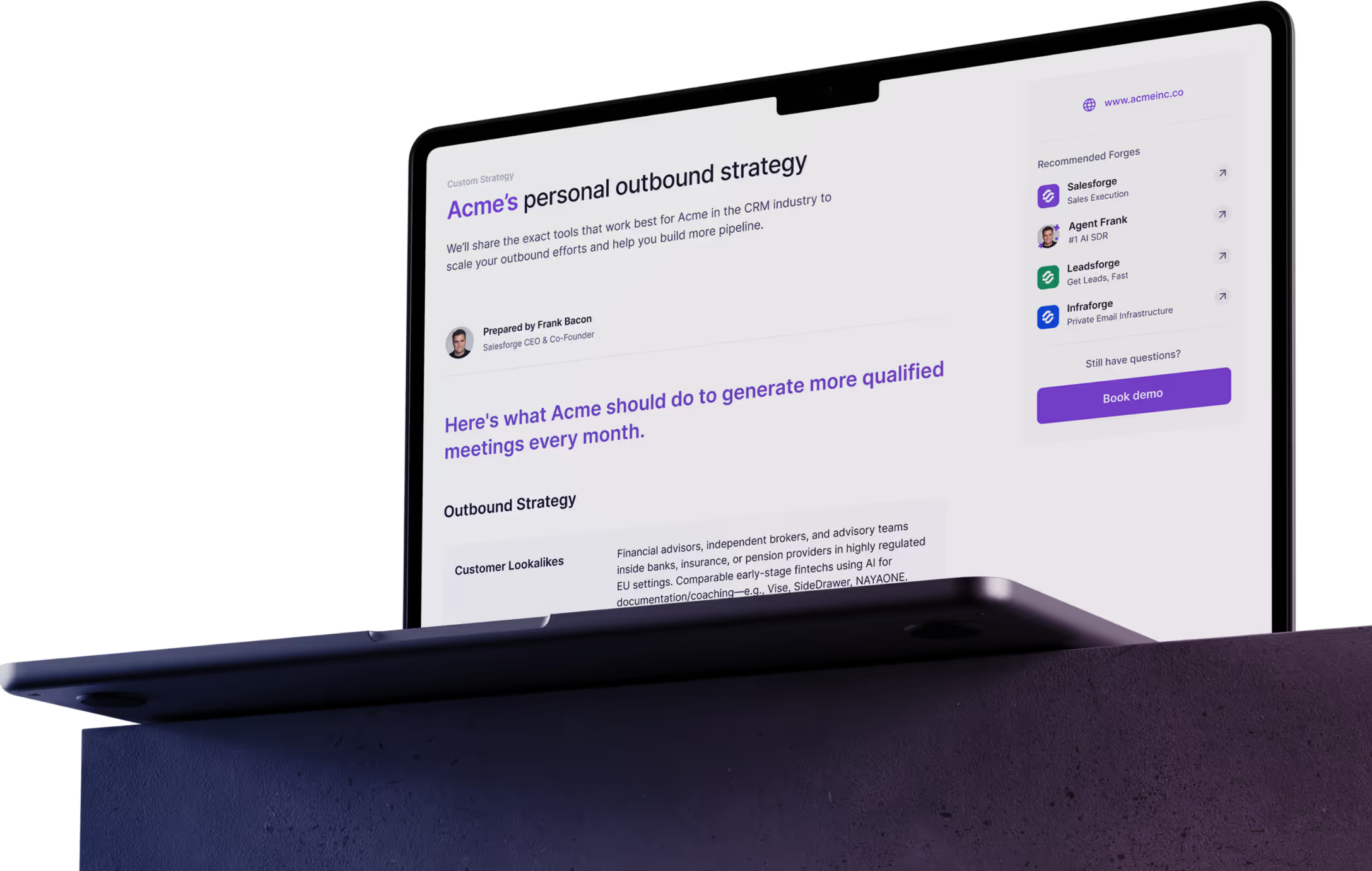
Hunter brings an interesting idea to Salesforce. Instead of helping with one sales task at a time, it can keep working toward the same goal across prospecting, outreach, opportunities, proposals, pipeline, and forecasting.
That makes it worth watching if your sales team already works heavily inside Salesforce and you want to cut down the research, follow-up, and sales work your reps handle by hand.
The main question is how well Hunter will perform once more teams start using it. It is still new, so there is not enough independent feedback yet to judge how reliable it is in day-to-day sales work.
If your need is more specific and you mainly want to automate prospecting, email and LinkedIn outreach, follow-ups, and meeting booking, Agent Frank is the more focused option. Your sales team can then take over when it is time to work and close the deal.
If that is the part of your sales process you want to automate, try Agent Frank.
.jpg)

.jpg)
.jpg)