

DemandScience promises more pipeline with less platform. Their homepage says they remove what they call the Platform Tax by combining buyer intelligence and managed campaign execution in one program.
If you've been searching for DemandScience reviews, you've probably found star ratings scattered across three G2 profiles and an old PureB2B listing. What sits underneath those stars is much harder to find.
I hit the same wall when I started researching this company. So this DemandScience review covers everything I found across their site, four review platforms, press coverage, and public breach records.
DemandScience is a B2B demand generation company headquartered in Danvers, Massachusetts, with a UK office in London. Their LinkedIn page says the company was founded in 2012 and employs 600+ people across seven countries.
The company previously operated as Pure Incubation, running lead generation under the PureB2B brand. In November 2024, ABM platform Terminus merged into DemandScience, per their own press release.
Below: what they sell, what reviewers say, what it costs, and what to ask before signing.
Need More Meetings?
At a Glance: Should You Hire DemandScience?
| Decision Factor | Our Assessment |
|---|---|
| Best For | Mid-market and enterprise B2B marketing teams, especially in technology and healthcare, that need guaranteed volumes of compliant top-of-funnel leads plus managed ads and data. 57% of their G2 reviews come from mid-market companies. |
| Standout Strength | A large, checkable review footprint: 762 G2 reviews at 4.4 stars and a TrustRadius score of 8.3 from 134 ratings, with account management the most consistent praise. |
| Things to Consider | No public pricing. Leads are early-stage MQLs, not booked meetings. A 2024 leak from a decommissioned legacy system exposed business contact data on 122 million people. |
| Not the Right Fit If... | You want booked sales meetings, cold calling done for you, or an outbound system your team owns afterward. Or you send a few hundred emails a month. |
| Before You Decide | Compare a few agencies on industry expertise, pricing model, outbound channels, and client size before choosing. Discovery calls reveal more than websites do. |
| Compare Certified Agencies | Explore the Forge Expert Network to discover agencies specializing in cold email, LinkedIn outreach, AI-powered outbound, deliverability, and GTM consulting. Browse by industry, market, language, and expertise. |
DemandScience Customer Reviews: What Real Users Are Saying
DemandScience has one of the largest review footprints I've seen for a lead generation vendor. G2 hosts 762 reviews at 4.4 stars on the main profile, and 935 reviews at 4.3 across the seller's three product pages. TrustRadius shows 8.3 out of 10 from 134 ratings, and Capterra lists 4.2 stars from 32 reviews, still filed under the old PureB2B name.
Two gaps stood out. I checked Trustpilot directly and found no DemandScience profile, and a Clutch search returned no company page either.
What Customers Like
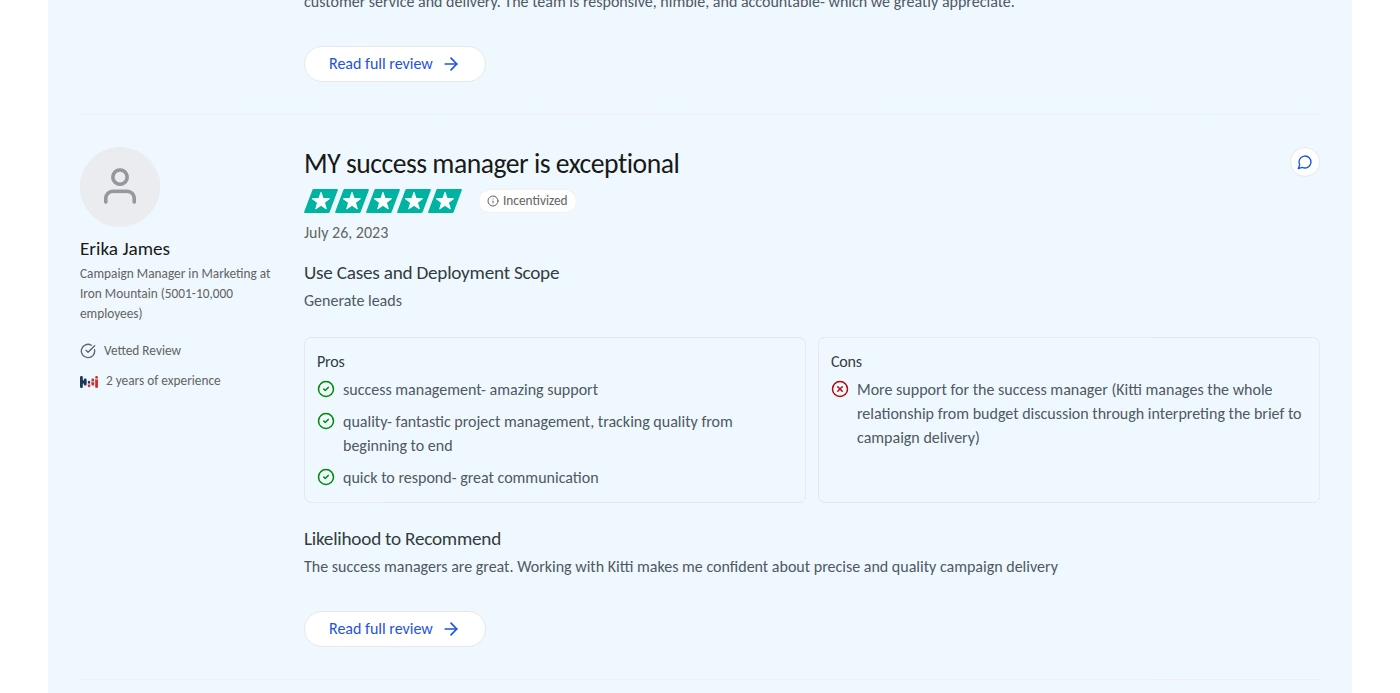
- Account management. This is the most consistent theme. G2's comparison reports score their quality of support at 9.2 to 9.3, and a July 2023 TrustRadius reviewer credited one success manager with the whole campaign, budget to delivery.
- Targeting depth. An August 2023 TrustRadius reviewer said reps push clients to tighten targeting, reply within an hour, and keep cost per lead competitive with rival syndication partners.
- Lead replacement. Reviewers on TrustRadius and Capterra describe substitute leads supplied when contacts bounce or miss the brief.
- Speed. G2 lists average time to implement at one month, and their press releases cite repeated Fastest Implementation awards.
What Customers Don't Like
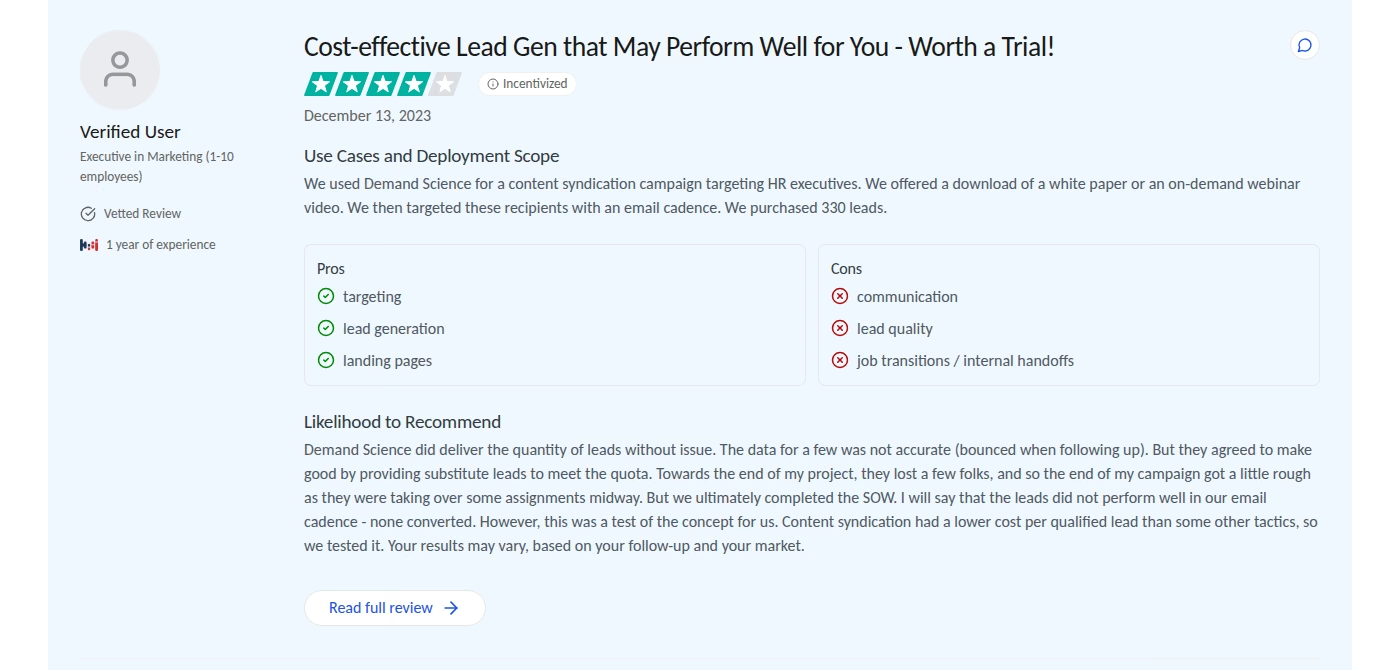
- Lead quality variance. G2's own review-topic counts include Poor Lead Quality with 15 mentions. A December 2023 TrustRadius buyer purchased 330 leads, received substitutes for bounces, and reported none converted in their email cadence.
- Account team churn. That same reviewer described staff departures mid-campaign. A September 2023 TrustRadius review asked them to stop changing account managers so often.
- Contract pressure. An otherwise glowing August 2023 TrustRadius reviewer said contracts get pushed on DemandScience's timing rather than the client's.
- Early-stage leads. Capterra reviewers from 2021 note syndication leads arrive early-stage, with bounced emails and an unclear qualification process the main complaints.
Before any sales call, read the three-star reviews in your own segment. They show exactly where delivery wobbles.
Our Verdict on DemandScience
Hire DemandScience if you're a mid-market or enterprise B2B marketing team that needs guaranteed volumes of compliant, top-of-funnel leads across syndication, ads, and email - and you already have the nurture engine to work them.
Two things support this verdict. The review footprint is unusually large and holds up: 762 G2 reviews at 4.4 stars and a TrustRadius 8.3 out of 10, with support the standout theme. And their published pairing study reports 2.5x more leads per account and an 81% cheaper cost per lead when ads run alongside syndication.
One thing holds it back:
- Pricing isn't public, and reviewers describe contracts pushed on the vendor's timing.
- The leads are MQLs. One TrustRadius buyer of 330 leads saw none convert in their cadence.
- A 2024 leak from a decommissioned system exposed data on 122 million people. The company says no current operational systems were exploited.
Get the qualified-lead definition, the replacement SLA, and data ownership in writing before signing. If those answers wobble, you can look at other certified agencies here.
How I Evaluated DemandScience
I have not been a DemandScience client, so this review is research-based. This session I read their homepage, About page, solutions and product pages, their case studies, and their Terminus merger press release.
I read their reviews on G2, TrustRadius, Capterra, and Gartner Peer Insights, and checked Trustpilot and Clutch directly, where no profiles exist. I also read the Have I Been Pwned entry and press coverage of the 2024 data leak, including DemandScience's statements. A direct company registry lookup wasn't possible from my research setup, so I say that rather than guess.
My criteria: data and asset ownership, lead qualification, contract terms, and whether the numbers hold up. Everything below marked "reports" or "says" comes from their own published material.
DemandScience Services Reviewed
DemandScience sells managed pipeline generation: verified top-of-funnel leads, plus the data and media around them, run for you as a service.
Content Syndication and Lead Generation
Their Demand line covers content syndication, HQL and BANT programs, in-market buyer activation, and propensity-based leads. Their syndication page states leads arrive opted-in and compliant, at a guaranteed cost per lead.
One DemandScience page says lists can be built from over 200 million verified B2B buyers. Their site also claims syndication customers average an MQL-to-SQL conversion rate above 77%. Both are company figures, and this is classic B2B lead generation at volume.
Ask which publishers will run your content and whether you can suppress specific ones.
Ionic, VID, and Buyer Intelligence
Ionic is described as the intelligence layer that unifies verified buyer data and AI. VID turns anonymous website traffic into identified accounts, per their product page, and the Data line adds Audience Builder, enrichment, and cleansing.
In July 2026 they announced a partnership layering their services onto ZoomInfo's data architecture, per the joint release. Ask which sources feed your account scores and how disputed records get fixed.
Advertising, Content, and Web Services
Their Advertising line handles media placement and management, with a claimed ad fraud rate under 3% across campaigns, per their homepage. Content-IQ, announced in early 2026, bundles AI visibility, content strategy, and web personalization.
Studio adds content creation, translation, and creative work, while Events and email outreach round out the channels. Ask for view-through versus click-through reporting before funding display.
Labs: The Managed Services Team
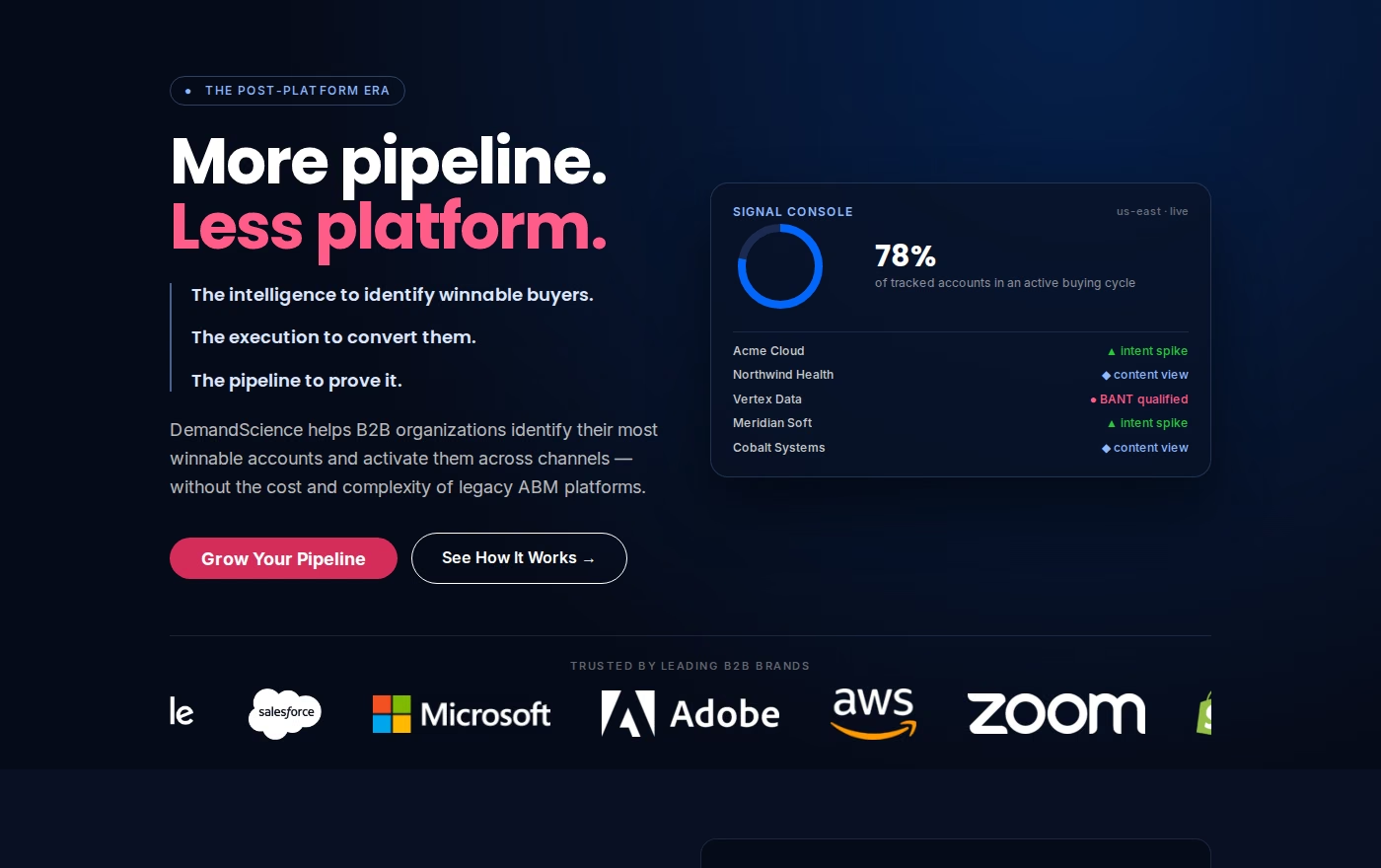
Labs is their expert services team of strategists, campaign managers, and channel specialists who plan and run campaigns, per their solutions page. The homepage pitch: no software to buy, no new headcount, results in weeks.
Ask who exactly staffs your account, in which time zone, and what the handoff plan is when they leave.
What You Get With DemandScience (and What You Don't)
| Criteria | DemandScience | Certified Forge Experts |
|---|---|---|
| Channels | Syndication, programmatic ads, email, web, content, events (their site) | Cold email, LinkedIn, calling, and PPC, depending on the expert |
| Lead guarantee | Guaranteed cost per lead on syndication; "qualified" not defined publicly | Stated on profiles, e.g. Outbound Pros' 50-75 qualified meetings per month |
| Outbound stack | Proprietary Ionic layer; tooling not itemized publicly | Disclosed, e.g. Growth Alliance lists Cargo, Clay, HubSpot, Salesforce |
| Infrastructure ownership | They run everything; post-exit ownership not stated | Varies; several experts build systems the client keeps |
| Independent reviews | 762 G2 reviews at 4.4; TrustRadius 8.3/10; no Trustpilot or Clutch pages | Younger footprints; certification requires training plus live Forge usage |
| Pricing transparency | Not published; demo-led sales | Several profiles state models, e.g. commission-based at Outbound Pros |
| Market coverage | US and EMEA programs cited by reviewers; 7 countries (their LinkedIn) | Filterable by market and language in the directory |
| Team depth | 600+ employees (their LinkedIn) | Boutique teams with deeper per-account involvement |
| Best for | Enterprise-scale MQL volume, fully managed | Booked meetings, owned systems, niche verticals |
Every DemandScience cell comes from their public material, and every expert cell from live profiles I pulled today. Confirm the details on your discovery calls.
How DemandScience's Process Works
Their homepage describes a three-step Science of Demand method: Diagnose, Narrow, Activate. Their About page describes a four-step GROW method: Gather, Resonate, Orchestrate, Win. The pages don't reference each other, so I've mapped both onto the six stages a client actually lives through.
1. Discovery and ICP Definition
They say Ionic reveals buying activity and surfaces winnable accounts, and you confirm lead counts, budget, and criteria up front, per their syndication page.
Bring your own list of past won deals to that call. It sharpens any ideal customer profile faster than a vendor's intent topics can.
2. Prospect List Creation
Their site says lists come from a verified buyer database with intent layering. Buys are block-based: the December 2023 TrustRadius reviewer purchased a fixed block of 330 leads.
Ask to see a sample list before launch. Even a quick check of 50 rows tells you more than any sales call.
3. Copy and Campaign Approval
Their syndication page states campaign design includes the landing page, promotional emails, and telephone scripts they build for you. A September 2023 TrustRadius reviewer flagged proofreading gaps on Korean-language landing pages.
Get written approval rights on every asset, in every language you run.
4. Campaign Launch
Sending runs across their publisher network and ad channels, and their homepage claims results in weeks, not quarters.
Leads only pay off if your follow-up lands. Check your own email deliverability before the first batch arrives.
5. Reply Handling and Meeting Booking
This is the boundary of the model: DemandScience delivers contacts, not conversations. Their MX case study describes leads flowing straight into the client's marketing automation, which MX called "lead generation while we sleep."
Your team books the meetings. Confirm internally who owns follow-up SLAs before you buy volume.
6. Reporting and Optimization
Their G2 seller description says customers get a central reporting hub with AI-recommended next steps. Their cloud-leader study reports A/B testing across ad-exposed and unexposed account groups.
Ask for monthly rejection and replacement counts inside the standard report, in writing.
DemandScience Pricing and Contract Terms
DemandScience does not publish pricing. Engagements start with a demo request, and Capterra's listing shows contact-vendor pricing with no free trial.
Their November 2024 merger page said the commercial model doesn't tie you into 12-month contracts on day one. Treat that as dated marketing language and get current terms in writing. Reviewers describe cost-per-lead blocks and call the CPLs competitive; comparable managed demand generation programs typically run five-figure annual commitments, which is a market anchor, not a DemandScience quote.
What's Included at Each Price Point
Per their syndication page, campaign design includes your landing page, promotional emails, telephone scripts, and targeting setup. Delivery is guaranteed by cost per lead, but what counts as qualified is not defined publicly.
Reviewers report replacement leads for bounces and off-brief contacts. That's observed practice, not a published policy, so get the replacement SLA and rejection window in writing.
Hidden and Additional Costs to Watch
- Nurture costs: MQLs need cadences, SDR hours, and retargeting budget before they become meetings.
- Data and enrichment credits: anything beyond the contracted lead block.
- Creative and setup fees: assets beyond the included landing page and emails.
- Media budgets: display and ABM ad spend billed separately from lead blocks.
- Exit terms: whether lead data and creative transfer outright or are licensed for the term.
Their model doesn't touch your sending domains, which removes one common exit risk. The data question replaces it: if leads are licensed rather than owned, leaving means starting your database from zero.
Who Should Hire DemandScience?
- Enterprise and mid-market tech or healthcare marketers with MQL quotas. Their homepage frames results around enterprise technology and healthcare customers, and 57% of G2 reviews come from mid-market companies.
- Teams with a working nurture engine. Reviewers who win run cadences on delivered leads; the buyer with zero conversions called it a concept test and pointed to follow-up fit.
- Marketers consolidating vendors. One program spans syndication, ads, data, web, content, and events, per their G2 seller description.
- Global campaigns that need compliance. Their syndication page stresses opted-in leads compliant with global privacy rules, and reviewers run US and EMEA programs.
- Teams that want the vendor to run it. No platform to license or administer, their homepage states.
Who Should Not Hire DemandScience?
- You need booked meetings, not MQLs. Nothing on their site books sales calls for you.
- You want cold calling or LinkedIn done as outreach. Telephone scripts appear only inside syndication campaign design, per their page.
- You want to own the system afterward. The pitch is we-run-it-for-you; nothing public describes handing the machine over at exit.
- Your pipeline is a few bespoke deals a year. Volume-based lead blocks fit quota machines, not five-deal years, and a leaner outbound sales motion serves you better.
And if you're sending under a few hundred emails a month, you may not need an agency at all. Running Salesforge yourself at $48 per month covers that volume with warmup included.
DemandScience Case Studies and Reported Results
| Client | Industry | Reported Result |
|---|---|---|
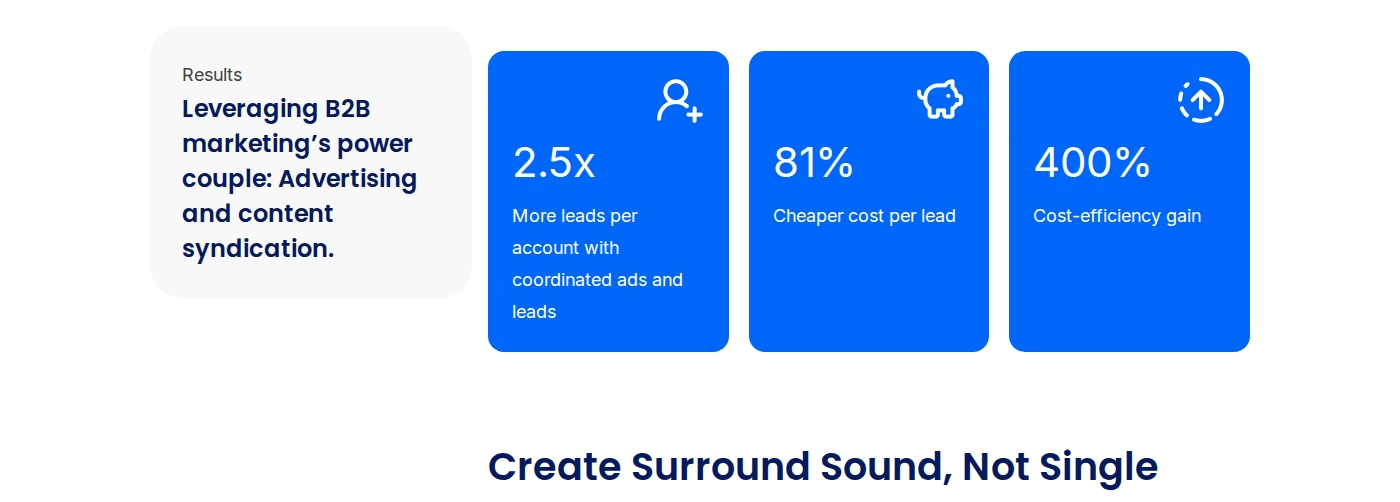
| Unnamed global cloud leader | Enterprise cloud technology | 2.5x more leads per account, 81% cheaper cost per lead, 400% cost-efficiency gain from pairing ads with syndication |
| MX | Financial services technology | Immediate lead flow from three targeted audiences on its ABM list, delivered into marketing automation |
| Spanning | SaaS data protection | Doubled the scale of its demand generation program after adding intent-layered syndication, per the case study title |
Two things stand out. Their most detailed current study carries the strongest numbers but no client name, while the named studies carry testimonials but thinner numbers.
Separately, their homepage banner claims 2,400% syndication ROI, a 417% lift in marketing-influenced pipeline, and 39% shorter sales cycles across enterprise technology and healthcare customers, without naming anyone.
All of these are company-reported figures that no independent platform has verified. Ask for a reference call with a named client in your vertical, not a PDF.
DemandScience Limitations to Consider Before Signing
- No public pricing: the Capterra listing shows contact-vendor pricing and no free trial. Demand one written quote covering leads, media, data, and setup.
- Top-of-funnel lead model: their site claims a 77%+ average MQL-to-SQL rate for syndication customers, while one TrustRadius buyer saw zero conversions from 330 leads. Ask which end of that spread your campaign is modeled on.
- The 2024 data leak: Have I Been Pwned confirmed business contact data on 122 million people from a decommissioned DemandScience system in November 2024. The company said no current operational systems were exploited. Ask what changed in their data handling since, and read their public Trust Center.
- Anonymized flagship proof: the strongest current case study names no client. Ask for named, referenceable results in your vertical.
- Account team turnover: 2023 TrustRadius reviewers describe mid-campaign departures and rotating account managers. Ask who staffs your account and for the documented handoff plan.
- Post-merger consolidation: Terminus merged in during November 2024, and the CEO named in that announcement differs from the CEO quoted in their July 2026 partnership release. Ask which products on your proposal are core versus being consolidated.
None of these should rule them out alone. But if two or more matter to you, compare agencies that already answer these questions on their public profiles. That's exactly what the certified agencies below do.
DemandScience Alternatives: Certified Forge Experts Worth Considering
Don't just Google "lead generation agency" and pick the first result. Compare agencies with verified practices, and read how each one answers the gaps above. I review managed outbound shops the same way, so my Martal Group review and Abstrakt Marketing Group review are worth a look if you're comparison shopping.
The Forge Expert Network is a directory of agencies certified on the Forge ecosystem. Certification requires completing Salesforge's cold email training and meeting program eligibility requirements, so every listed agency has a disclosed, modern outbound stack.
The directory is younger and smaller than Clutch, so treat it as a curated starting point rather than a complete market map. Each pick below answers a specific gap in DemandScience's model.
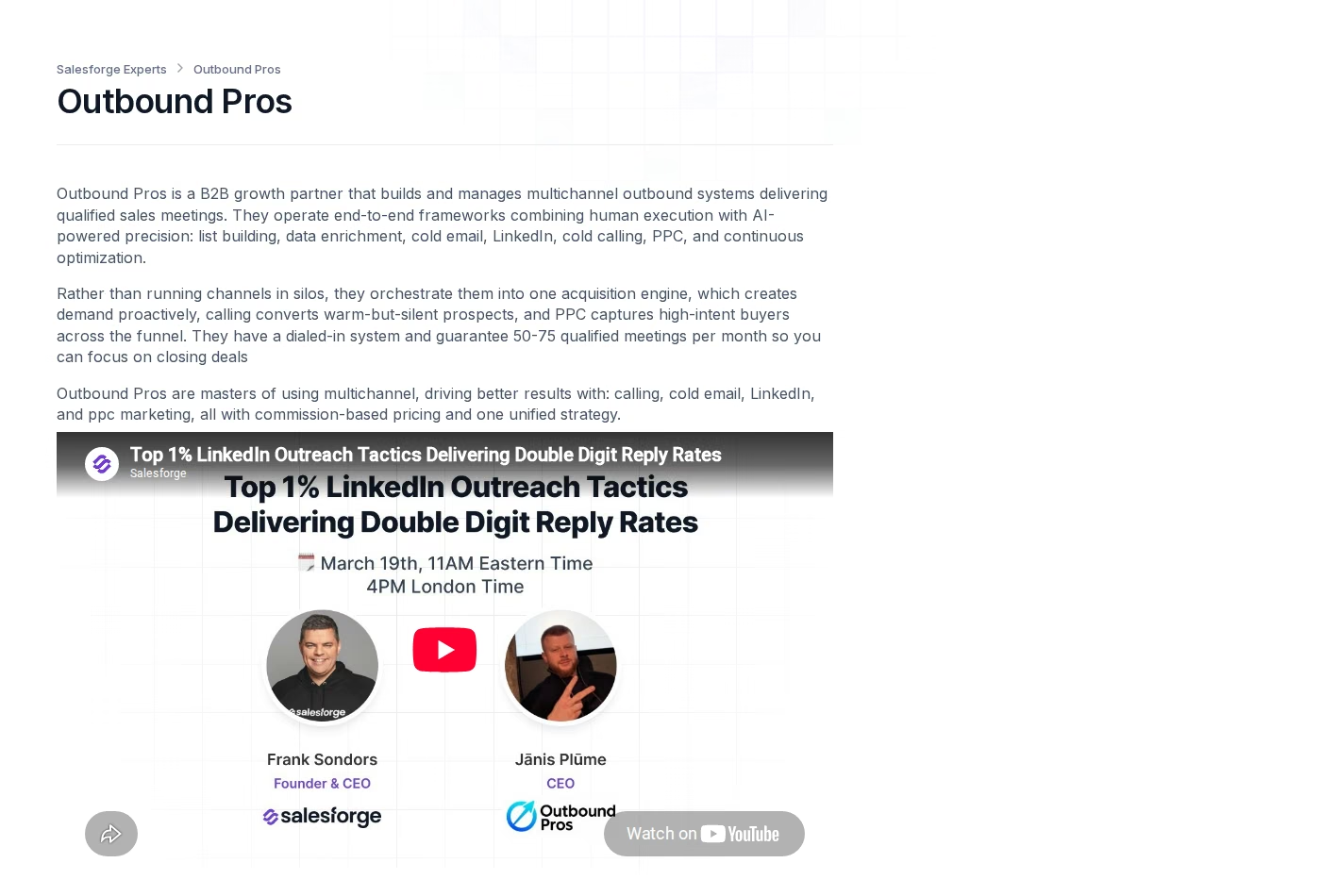
1. Outbound Pros
Best for: teams that want guaranteed sales meetings, with calling in the channel mix.
The live Outbound Pros profile describes multichannel outbound systems spanning cold email, LinkedIn outreach, cold calling, and PPC, run as one engine. The profile states a guarantee of 50 to 75 qualified meetings per month, with commission-based pricing.
This is the option if you need conversations, not contact lists, since DemandScience's public materials stop at delivered leads. In the Outbound Pros case study, founder Jānis Plūme reports zero downtime across client campaigns and onboarding new clients without extra licenses.
2. RevSculpt
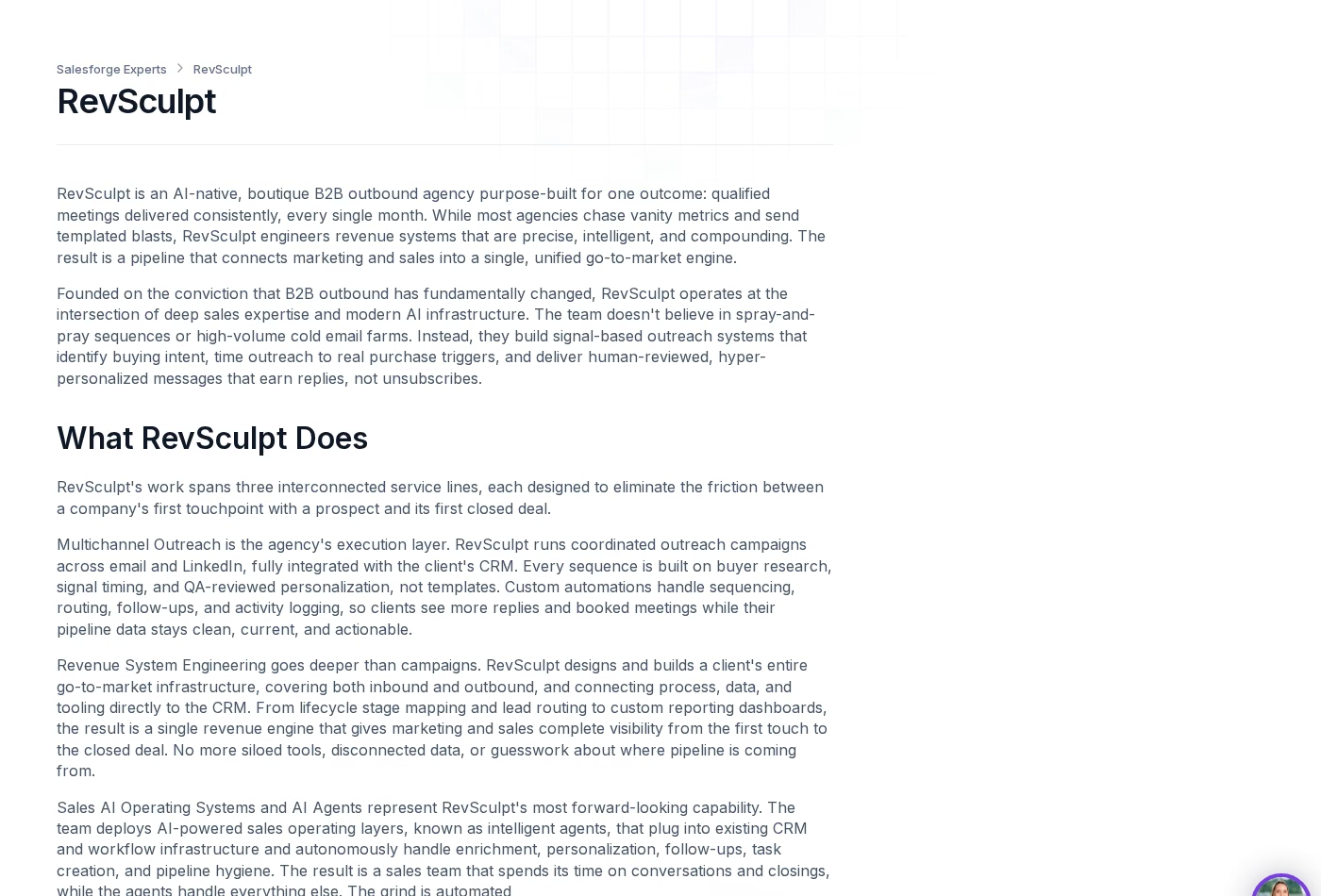
Best for: teams that want signal-based outreach and named outcomes instead of volume blocks.
The live RevSculpt profile says plainly it is not a staffing agency or SDR outsourcer but a revenue systems builder. It reports 6,000+ qualified meetings across 15+ B2B verticals, with most clients seeing a first qualified meeting within 18 days.
The profile cites 300+ qualified meetings in six months for one agency client and a 14x return on outbound spend for a digital asset infrastructure firm. Their playbook leans on cold email personalization timed to buying signals, the opposite of volume-first blocks.
3. Growth Alliance
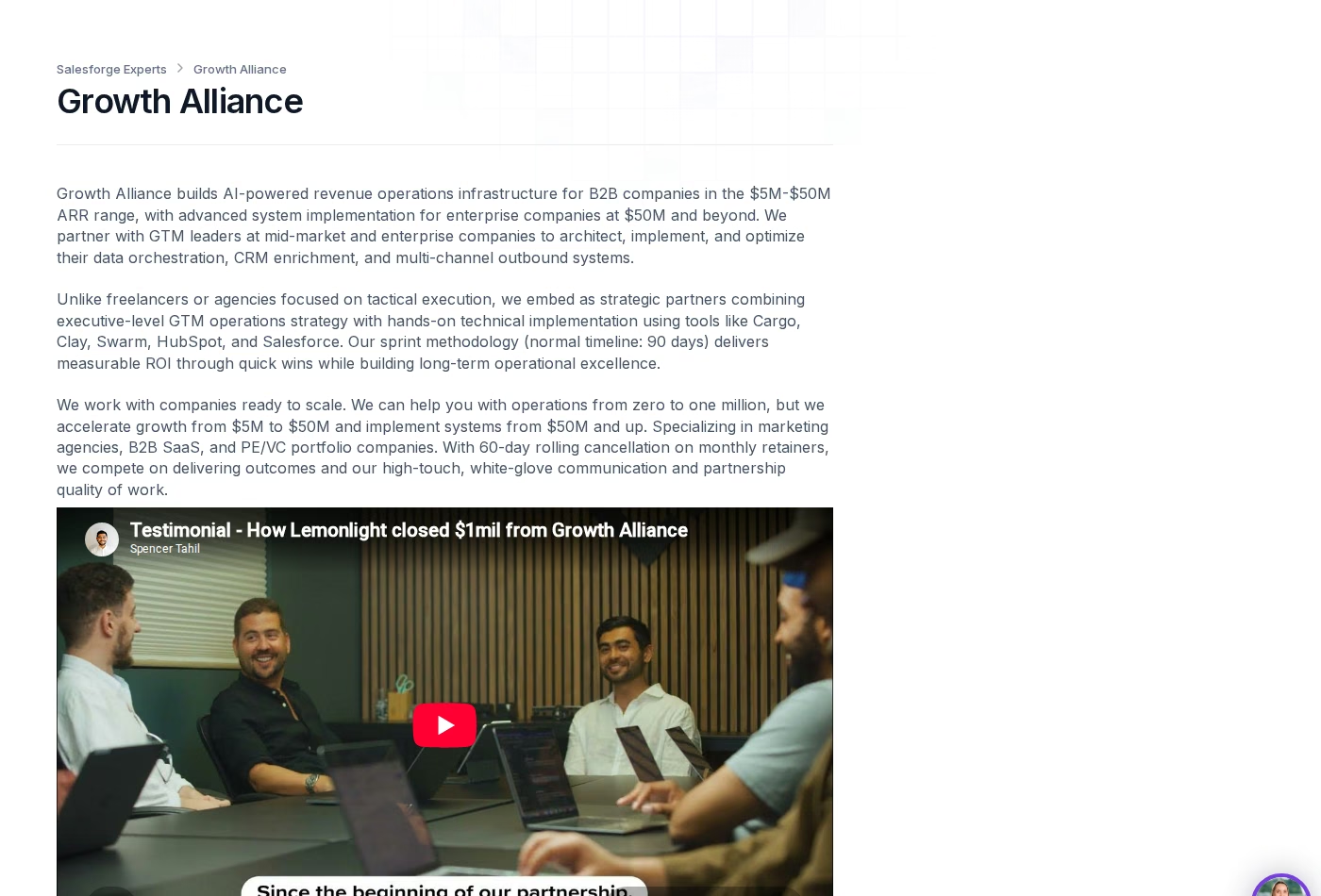
Best for: $5M-$50M ARR companies that want to own the outbound system afterward.
The live Growth Alliance profile describes embedded revenue operations partnership: 90-day sprints, openly named tools (Cargo, Clay, Swarm, HubSpot, Salesforce), and 60-day rolling cancellation on monthly retainers.
That answers the we-run-it-for-you gap, because they build infrastructure your team keeps. In the Growth Alliance case study, founder Spencer Tahil reports a portfolio of 1,000+ client domains and mailboxes, warmed to Heat Score™ 89 and above.
Prefer Not to Hire an Agency at All?
Two routes work without an agency.
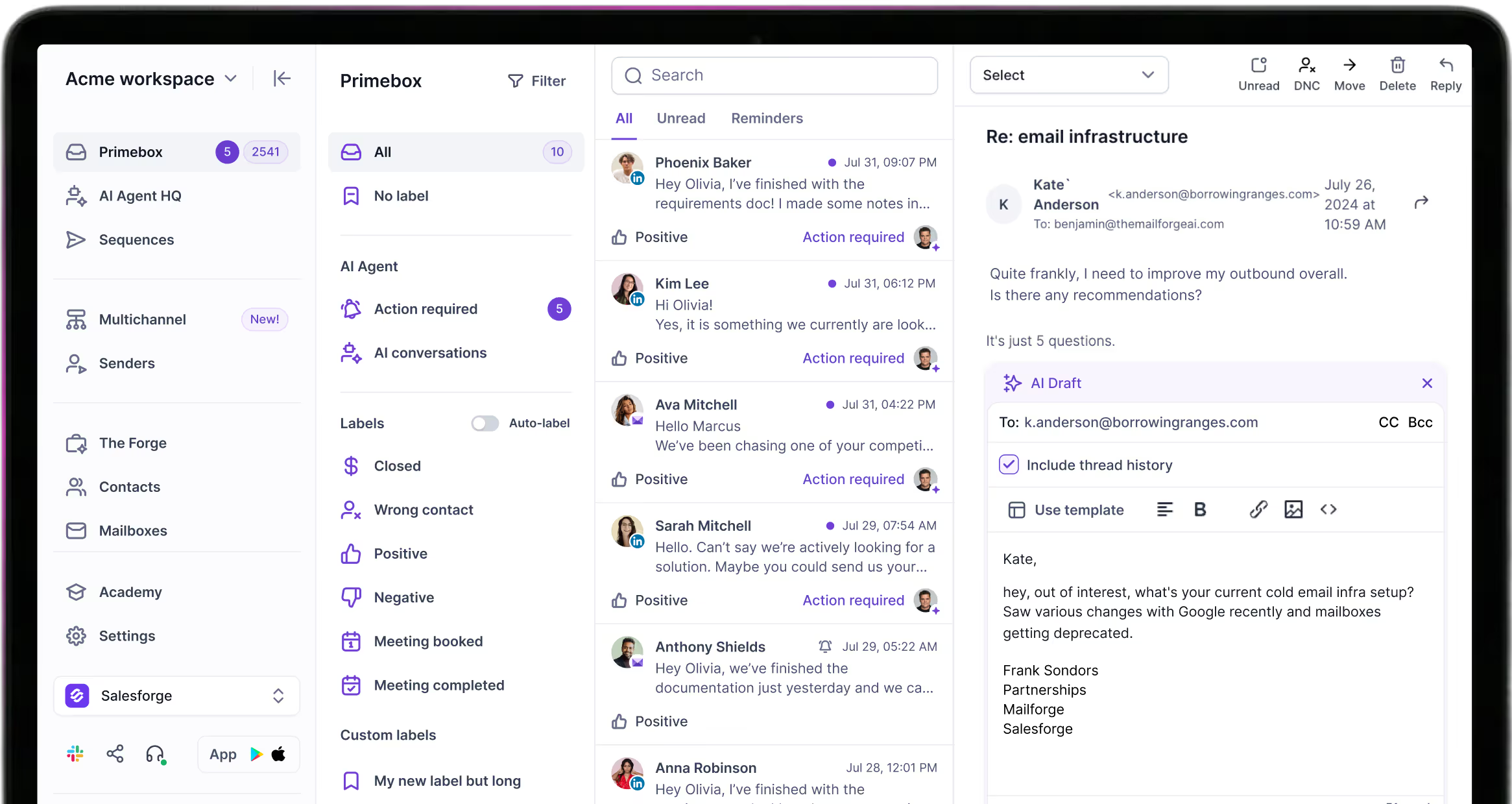
Run outbound yourself with Salesforge. It starts at $48 per month with unlimited mailboxes and free unlimited email warm-up included, plus a 14-day free trial. The cold email guide covers the craft end to end.
Or hire Agent Frank, Salesforge's autonomous AI SDR, from $499 per month billed quarterly. He handles prospecting, sequencing, replies, and meeting booking on his own, 24/7. Agent Frank is a separate subscription, and onboarding includes a sales-led demo plus a two-week warm-up before he sends.

in Action
Questions to Ask Before Hiring DemandScience
- What exactly counts as a qualified lead here, and who verifies BANT answers before delivery?
- Is delivered lead data transferred to us outright, or licensed for the contract term?
- What is the total monthly cost including media, data, creative, and setup?
- Who replies to and nurtures these leads, and what handoff do you recommend?
- What is the minimum commitment, and what notice period ends the engagement?
- Do we approve every list, asset, and publisher, and can we suppress specific publishers?
- What is the reporting cadence, and what are the rejection window and replacement SLA?
- Can we speak to a named client in our vertical, and what changed after the 2024 legacy-system incident?
Their answers will tell you more than any review, including this one.
Final Verdict: Is DemandScience Worth It?
DemandScience is worth considering for mid-market and enterprise B2B marketing teams with an MQL quota, a staffed nurture engine, and budget for a managed multi-channel program.
What sets them apart is checkable scale: 762 G2 reviews at 4.4 stars, and a published pairing study reporting 2.5x more leads per account with an 81% cheaper cost per lead. I'd shortlist them for an enterprise software or healthcare-tech campaign needing several hundred compliant top-of-funnel leads per quarter across the US and EMEA, with SDR follow-up already staffed.
If you need booked meetings, a system you keep, or pricing before a sales call, compare certified agencies that publish those answers on their profiles first.
Compare Certified AgenciesFrequently Asked Questions
1. Is DemandScience a Legitimate Company?
Yes, by every public signal I could check. Their LinkedIn says the company was founded in 2012, and their About page lists headquarters at 222 Rosewood Drive, Danvers, Massachusetts, plus a London office. The site footer names DemandScience US, LLC, and November 2024 merger coverage names Demand Science Group, LLC acquiring Terminus Software, Inc. A direct registry lookup wasn't possible from my research setup. Self-reported: 600+ employees across seven countries. 935 verified G2 reviews back a real operating business.
2. How Much Does DemandScience Cost?
DemandScience doesn't publish pricing. Capterra's listing shows contact-vendor pricing and no free trial, and reviewers describe cost-per-lead blocks, like one TrustRadius buyer's 330-lead purchase. Remember the quoted lead block is not the full price: media budgets, data credits, and your own nurture costs sit on top. Get one all-in written quote before comparing vendors.
3. Does DemandScience Guarantee Leads?
They guarantee delivery volume and cost per lead, not outcomes. Their syndication page states a guaranteed cost per lead and opted-in, compliant leads, and reviewers report replacement leads for bounces and off-brief contacts. What's undefined publicly is what qualifies a lead and the replacement SLA. Get both definitions in writing before signing.
4. Who Owns the Lead Data and Campaign Assets?
Their public pages don't say. Ask whether delivered lead data transfers to you outright or is licensed for the term, and who keeps the landing pages and creative they build. If data is licensed, leaving means starting your database from zero. One upside: their model doesn't touch your sending domains, which removes a common exit risk.
5. What Are the Best DemandScience Alternatives in 2026?
Three certified Forge Experts answer its gaps. Outbound Pros guarantees 50 to 75 qualified meetings per month with calling in the mix. RevSculpt runs signal-based outreach, with most clients seeing a first qualified meeting within 18 days, per its profile. Growth Alliance builds systems you keep, with 60-day rolling cancellation. Browse more on the Forge Expert Network, or run Salesforge in-house from $48 per month for smaller volumes.
6. Should You Hire a Lead Generation Agency or Build Outbound In-House?
Hire an agency when you need pipeline fast and don't want to hire and train SDRs. Build in-house when you want to own the system, the data, and the learning long-term. The middle path is running Salesforge yourself from $48 per month, or hiring Agent Frank as an AI SDR from $499 per month billed quarterly. You can always move to an agency once volume justifies it.

.jpg)

.jpg)