Let me guess.
You've been told cold email is dead.
That no one reads unsolicited emails anymore.
That everything is about TikTok, LinkedIn messages, and the latest trendy platform.
That's completely wrong.
While everyone else is busy chasing new platforms, smart salespeople are quietly winning with cold emails.
20% response rates. $36 return for every dollar spent.Lead generation that actually works. Deals that close faster than any other channel. Cold email remains one of the best ways to close sales.
But here's the catch (and why most people fail): the cold email game has completely changed in 2026.
What works now is the exact opposite of what “gurus” have been teaching for years.
Instead of sending more emails, you send fewer.
Instead of casting a wide net, you go ultra-targeted.
Instead of generic templates, you go hyper-personalized.
In this guide, I'll show you exactly how to do it right, get results, and share proven cold email best practices you can use.
A cold email is an unsolicited outreach message sent to someone you have no existing relationship with, usually with the goal of starting a business conversation, whether that is booking a meeting, exploring a partnership, or driving a sale.
The cold emails that actually work tend to share three traits. They are short, typically between 50 and 125 words. They are personalized to the specific recipient instead of being blasted out as a generic template. And they lead with something useful for the reader rather than diving straight into a pitch.
In other words, the strongest cold emails feel less like a sales attempt and more like a relevant, considered message worth replying to.
To achieve this, it's crucial to understand your reader's needs, preferences, and context so you can craft a message that resonates and is relevant to them.
That’s what sets cold email apart from other outreach methods.
But here’s the crucial part: a cold email is not a sales pitch.
The moment you make it about you and your product, you’ve lost.
The most effective cold emails focus entirely on the prospect. They ask questions, spark curiosity, and invite conversation, often by referencing the recipient’s job title, company name, or a specific pain point in a personalized cold email.
When done right, a cold email doesn’t feel cold at all. It feels warm, relevant, and welcome.
Short answer: yes, cold emailing is 100% legal.
Cold email has been legal in the United States since the introduction of the CAN-SPAM Act in 2003. In Europe, it is legal under GDPR as long as you have a “legitimate business interest” in contacting someone.
But there’s a huge difference between legal cold email and spam.
Spam is when you buy a random list of 100,000 email addresses and send generic offers. Cold email is when you research specific prospects, personalize your approach, and provide real value.
To stay on the right side of the law:
If you follow these basic cold email rules, you can send cold emails every day without any legal issues.
Both the CAN-SPAM Act and GDPR set standards for lawful cold emailing. GDPR, however, imposes stricter standards for B2C outreach in the EU, requiring prior consent or proof of legitimate interest before contacting individuals.
There are several reasons why cold email remains the best B2B sales channel.
To start, 43% of salespeople consider email their most effective sales channel. That means nearly half of top performers rely on email for results. Not social media. Not paid ads. Not the latest growth hack everyone’s talking about. Email.
The most surprising part?
The people you’re trying to reach (CEOs, VPs, directors, and other decision-makers) actually prefer email over phone calls, LinkedIn messages, or any other outreach method.
Why?
Because email gives them control. They can read your message when it suits them, forward it to their team if needed, and respond thoughtfully instead of being caught off guard by an unexpected call.
If you're still sending cold emails the way you did in 2020, you're doing it wrong.
The game has completely changed, and most people haven't gotten the memo yet.
The old approach was all about volume. More emails meant more replies, right? Wrong.
That strategy isn't just dead—it's toxic. It will destroy your sender reputation faster than you can say “unsubscribe.”
Email providers like Gmail and Outlook have become extremely good at detecting mass emails, and they'll send your messages straight to spam.
The new approach is actually better than the old one. Hyper-targeted campaigns sent to 50–100 prospects now get higher response rates than large-scale blasts.
The reason is simple.
When you only have 50 prospects to reach out to, you can actually research each one and gather key details like their name, email address, and job title. You can personalize your message.
You can reference something specific about their company, industry, or challenges.
You can make your email feel like it was written specifically for them—because it was.
So now, the question isn't whether you should adapt to this new approach. The question is how quickly you can make the transition.
Now that you understand why cold email works and what’s changed, let’s get into the meat of it.
How do you actually build a cold email campaign that generates consistent results?
Most people jump straight to writing emails. That’s a mistake. Before you write a single word, you need to build the foundation that ensures your emails actually reach your prospects’ inboxes.
The best-written email in the world is worthless if it ends up in spam.
That’s why a successful cold email campaign in 2026 follows a specific 5-step process. These steps will help you write effective cold emails that drive results. Failing to include a clear call to action (CTA) in your cold email can lead to confusion for the recipient and lower your response rates.
Skip any of these steps, and you’re setting yourself up for failure.
Follow all five, and you’ll have a system that consistently generates 20%+ reply rates.
Your email infrastructure is the foundation that determines whether your carefully crafted emails land in the inbox or disappear into the spam folder.
This isn't just about having an email account – it's about creating a technical setup that email providers like Gmail and Outlook trust.
Email infrastructure includes several critical components: domain setup, DNS records (SPF, DKIM, DMARC), IP reputation, email authentication, and sending patterns. Each piece works together to establish your credibility as a legitimate sender.
The challenge is that setting up proper email infrastructure traditionally required technical expertise and hours of manual configuration.
You'd need to understand DNS management, configure multiple records across different providers, and monitor deliverability metrics constantly.
For most businesses, this was either impossible or prohibitively expensive.
That's where specialized email infrastructure tools come in.
Instead of spending weeks learning DNS management and risking critical mistakes, you can have enterprise-grade email infrastructure running in minutes.
Here are top three email infrastructure tools you can rely on:
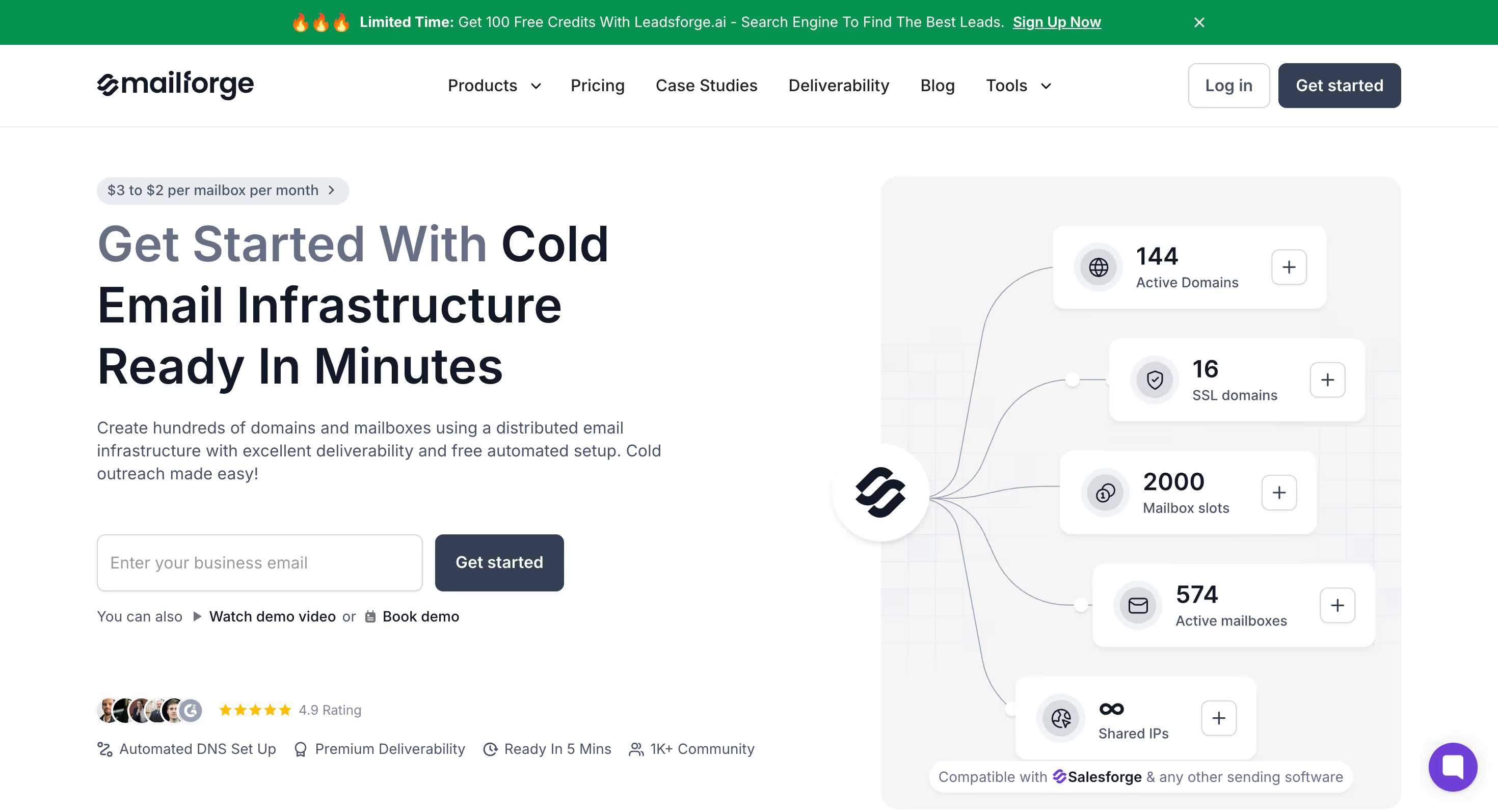
Mailforge.ai, for example, is designed for businesses that need reliable email infrastructure without the complexity.
It's a shared IP infrastructure solution, similar to Gmail or Outlook, but specifically optimized for cold email outreach. it handles all the technical heavy lifting automatically.
When you add a domain to Mailforge, the platform automatically configures DMARC, SPF, DKIM, and custom domain tracking according to industry best practices. This process that normally takes hours happens in minutes.
The platform uses a distributed infrastructure model, spreading your mailbox accounts across a shared IP pool with millions of other businesses. This approach provides excellent deliverability because your emails benefit from the collective reputation of the entire network.
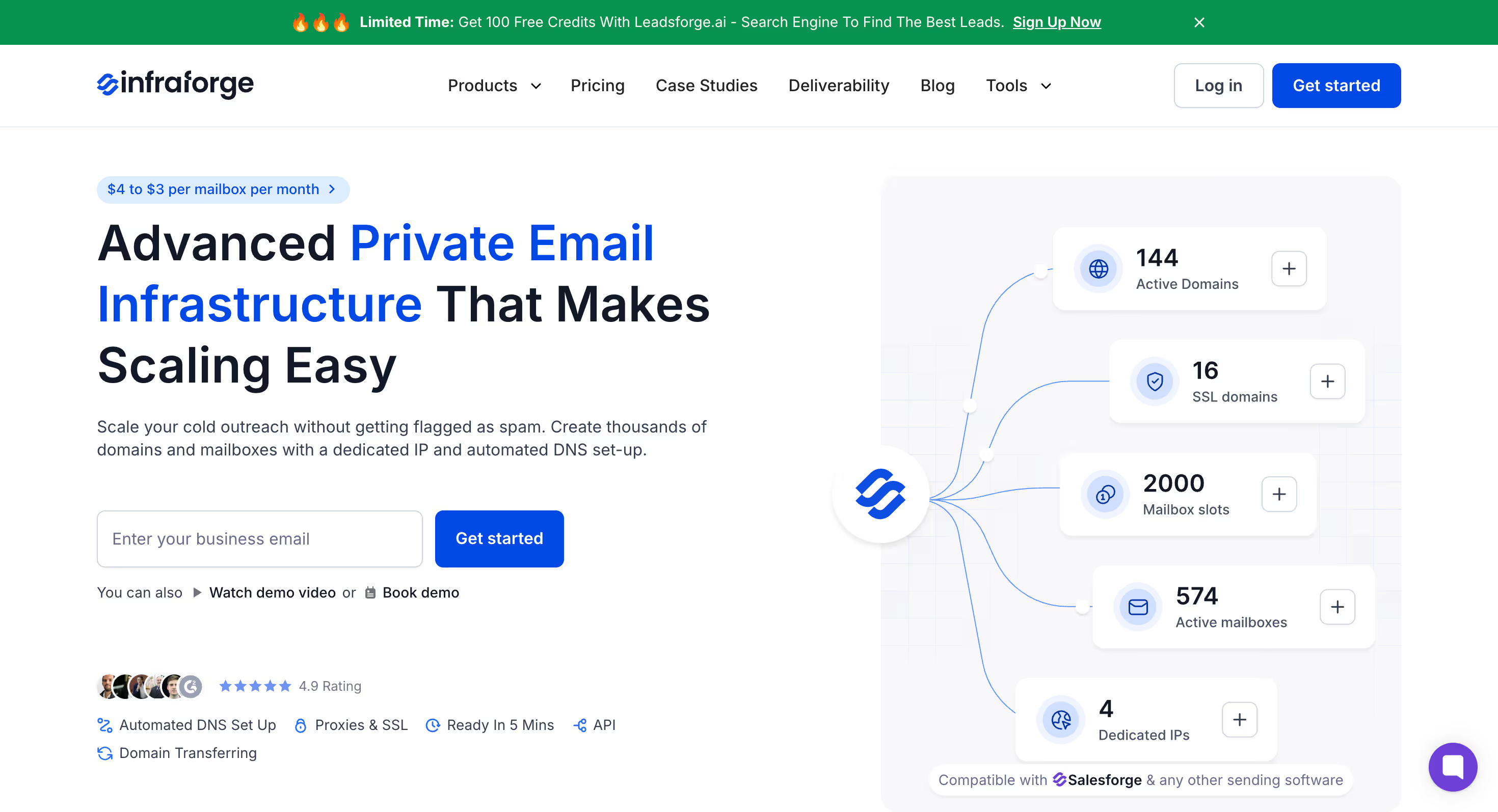
While Mailforge uses shared infrastructure, Infraforge provides dedicated, private email infrastructure for businesses that need maximum control and customization.
Infraforge provides dedicated servers and IPs exclusively for your campaigns. This means your sender reputation is entirely under your control. No one else's poor sending practices can affect your deliverability, and you can scale your sending volume based on your own performance.
The platform includes advanced features like multi-IP provisioning, SSL certificates, domain masking proxies, and API access.
Infraforge is ideal for larger sales teams, agencies, or businesses sending high volumes of emails. The dedicated IP approach means you can send more emails per domain while maintaining high deliverability rates.
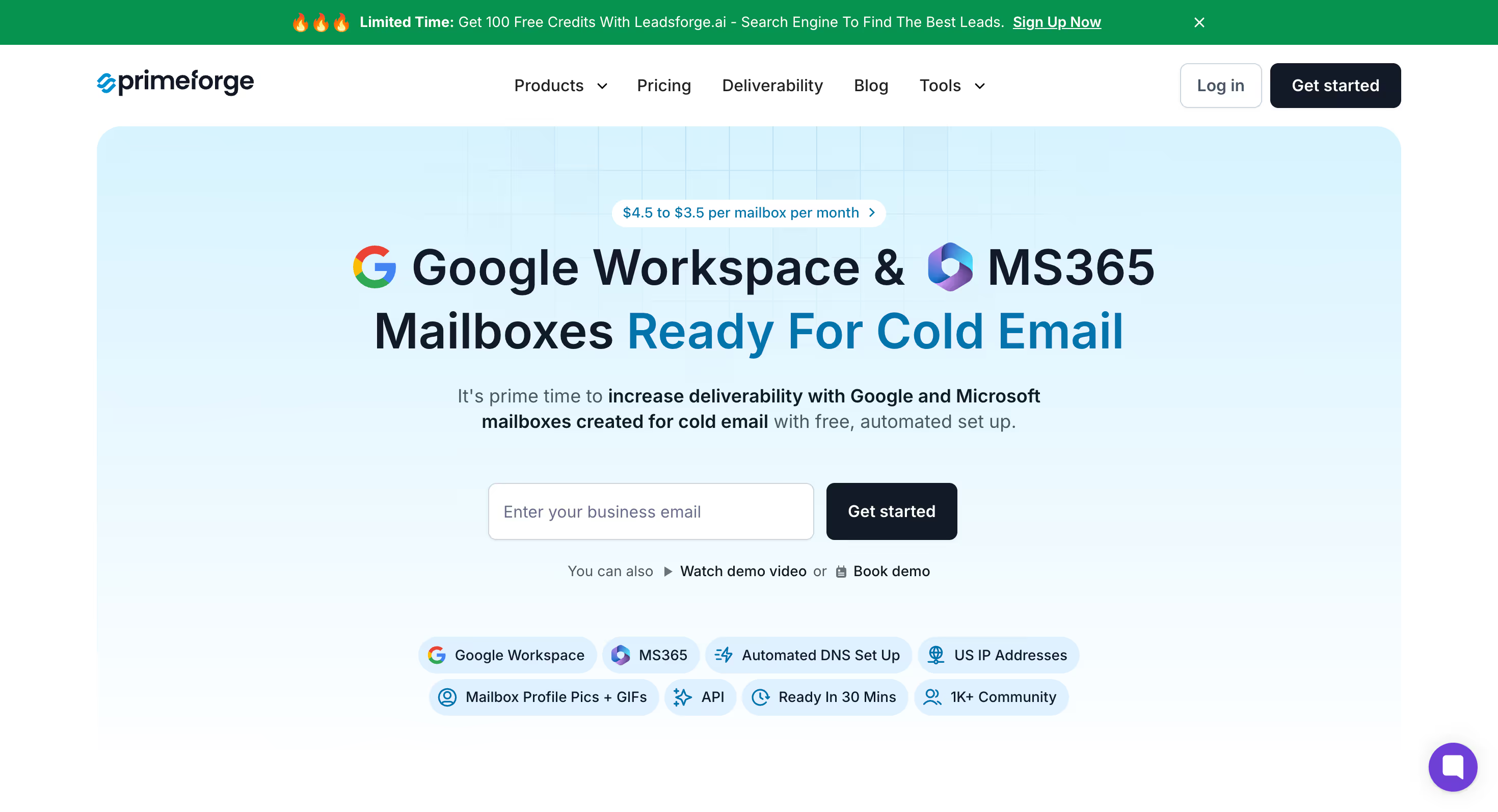
Primeforge takes a different approach to email infrastructure by providing Google Workspace and Microsoft 365 mailboxes specifically optimized for cold outreach.
This is particularly powerful because of ESP (Email Service Provider) matching – when you send emails from the same provider your prospects use, deliverability increases significantly.
Most B2B professionals use either Google Workspace or Microsoft 365 for their business email. By sending from these same platforms, you're more likely to land in their primary inbox because the email providers recognize the communication as legitimate business correspondence.
Primeforge mailboxes come with US-based IP addresses and are battle-tested for cold outreach. Unlike consumer Gmail or Outlook accounts, these are professional-grade business accounts that maintain high sender reputation even with cold email campaigns.
The platform provides the same automated DNS setup and management features as Mailforge and Infraforge, but with the added benefit of mainstream provider credibility. You can also set up profile pictures and even GIFs at scale for each mailbox, which can increase reply rates by 3-15% according to internal testing.
The value proposition is clear: you get the deliverability benefits of mainstream providers without the restrictions that typically come with using these platforms for cold outreach.
Building great email infrastructure is only half the battle.
The other half is warming up your email accounts to establish trust with email service providers before you start sending cold emails.
Brand new email accounts have zero reputation with Gmail, Outlook, Yahoo, and other email providers. If you immediately start sending cold emails from a fresh account, you'll land in spam faster than you can say "unsubscribe."
This happens because email providers use sophisticated algorithms to detect and block suspicious sending patterns.
Proper email warmup simulates natural email activity over a period of weeks. This includes sending emails, receiving replies, marking messages as important, organizing emails into folders, and demonstrating the kind of engagement patterns that real users exhibit.
The goal is to convince email providers that your account is used by a legitimate human, not a spam bot.
The traditional approach to email warmup required manually sending emails between different accounts, creating realistic conversations, and gradually increasing volume over time. This process was incredibly time-consuming and required careful attention to avoid patterns that might trigger spam filters.
Modern email warmup tools, on the other hand, use AI to automate realistic email interactions at scale while maintaining the human-like behavior patterns that email providers expect.
Warmforge, for example, is a comprehensive email deliverability platform designed to ensure your messages consistently reach the primary inbox.
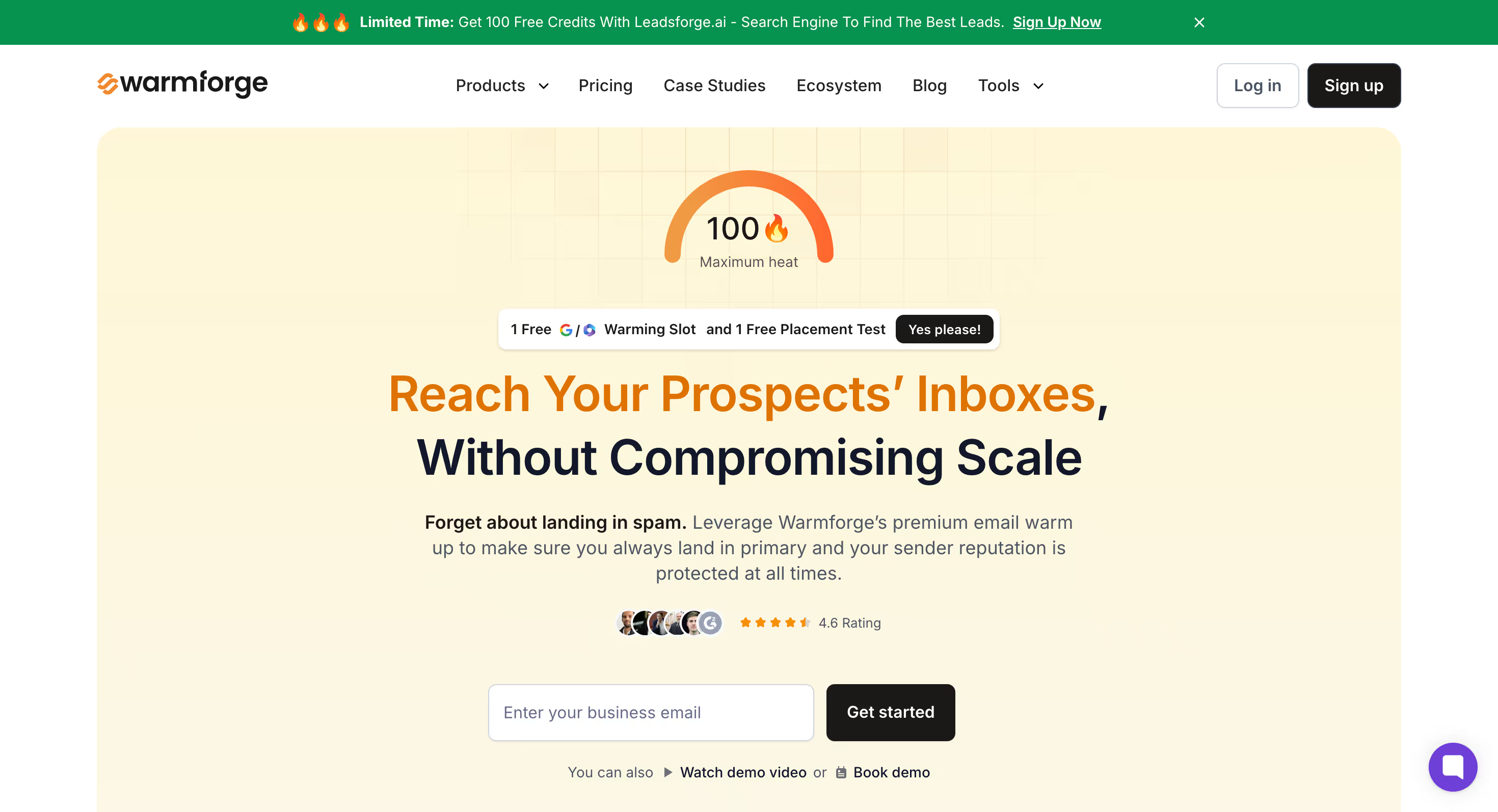
The platform automates the entire warmup process while providing real-time monitoring and optimization tools.
The platform simulates realistic user behavior by opening messages, marking emails as important, organizing them into folders, and generating replies. This comprehensive interaction pattern signals to email providers that your account is actively used by a real person.
The warmup process typically takes 2-4 weeks depending on your sending volume goals.
During this period, your daily sending limits gradually increase while maintaining high engagement rates.
Your email infrastructure is solid. Your accounts are warmed up and ready.
Now comes the make-or-break moment: finding the right people to email.
This is where most cold email campaigns live or die. You can have perfect infrastructure and brilliant copy, but if you’re emailing the wrong people, none of it matters.
Building an accurate, targeted prospect list is the difference between 20% reply rates and 2% reply rates. Identifying your target audience and thoroughly researching their company website or site is crucial to gather accurate information and ensure your outreach is relevant. You need to decide whom to contact based on this research to maximize your chances of success.
Sending cold emails without proper research can lead to irrelevant messaging, which decreases the chances of getting a response.
The traditional approach to list building was painful. You’d buy outdated databases full of bad contacts, never really knowing if you were reaching the right decision-makers.
This is where AI-powered B2B lead databases like Leadsforge have completely changed the game.
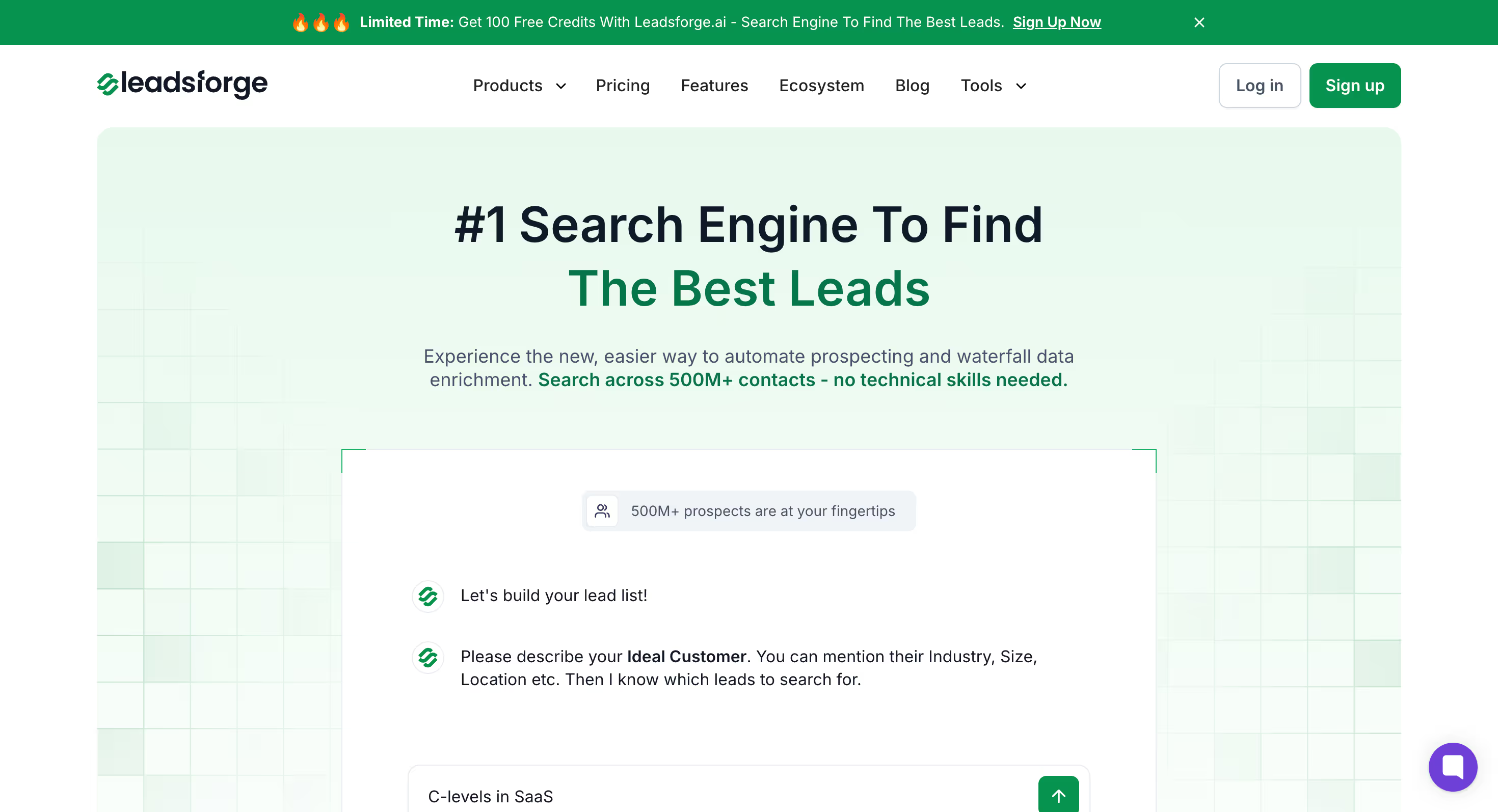
Leadsforge uses AI to understand your requirements and automatically searches through over 500 million contacts to find prospects that match your criteria.
You can describe your ideal customer like this:
“I’m looking for marketing directors at SaaS companies with 50 to 200 employees in the United States that have raised funding in the last 18 months.”
The AI then translates this into precise search parameters and delivers highly targeted results.
Writing high-converting cold emails is both an art and a science.
It requires understanding psychology, mastering persuasion techniques, and optimizing for deliverability – all while maintaining a human, authentic voice that cuts through the noise of crowded inboxes.
The biggest mistake most people make is thinking that cold emails are about selling. They're not. Cold emails are about starting conversations with people who don't know you exist yet.
Your goal isn't to close a deal in the first email – it's to earn enough interest to get a reply.
Modern cold email sequences typically include 4-7 emails sent over 2-3 weeks. The first email introduces you and sparks curiosity. Follow-up emails provide additional value, address common objections, and create urgency. Each email serves a specific purpose in moving prospects through your sales funnel.
Successful cold email sequences require extensive testing and optimization. You need to test subject lines, email length, personalization levels, call-to-action placement, and send timing.
This is where cold email software like Salesforge comes into picture.
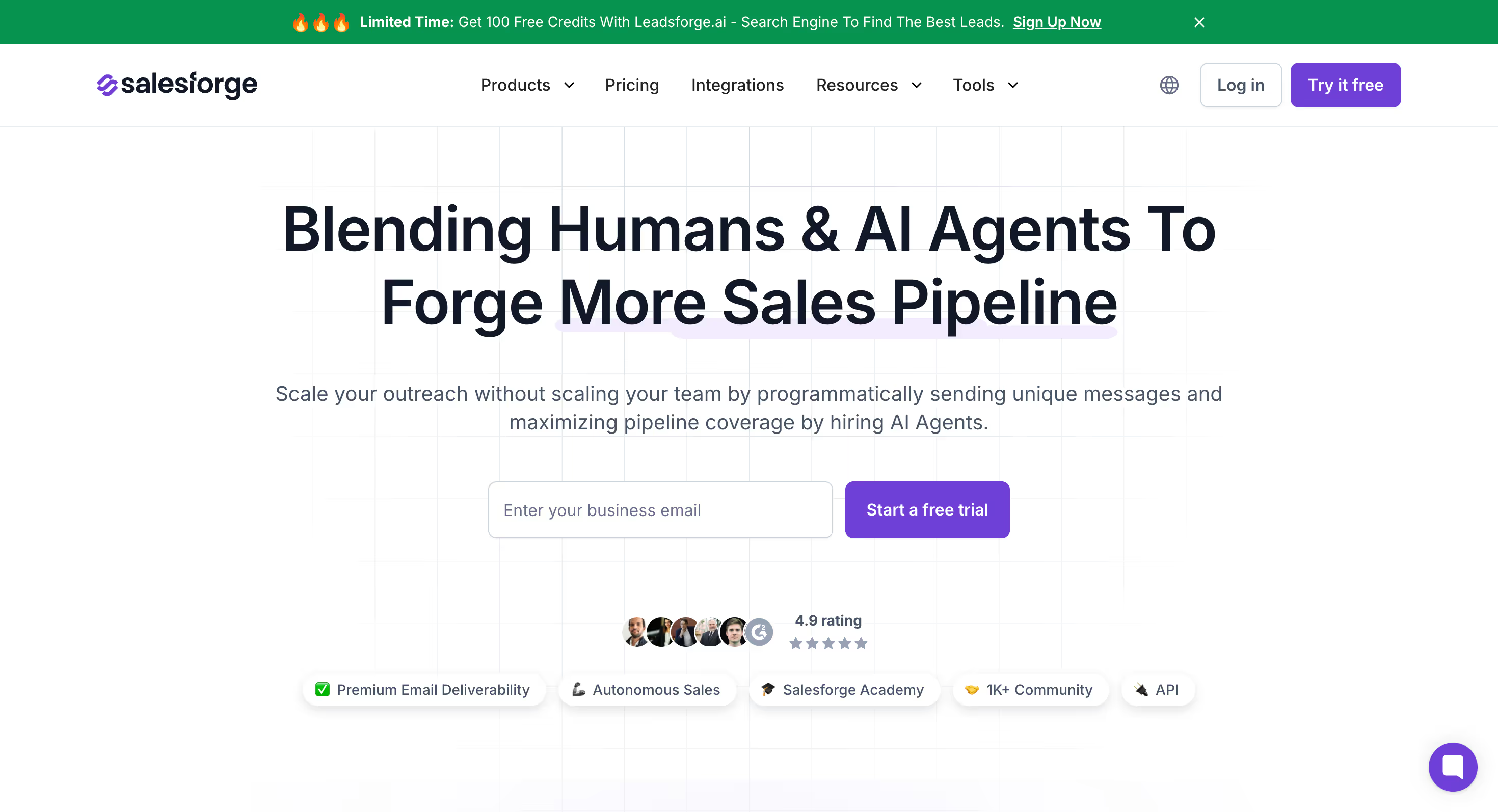
Salesforge uses advanced AI technology to create cold email sequences that consistently generate high reply rates.
Instead of just inserting first names or company names, it analyzes prospect information including company news, industry trends, social media activity, and recent company events to craft personalized opening lines and value propositions that feel like they were written specifically for that individual.
For example, the AI might reference a recent company expansion when emailing a hiring manager, or mention industry-specific regulations when reaching out to compliance officers.
This level of personalization makes emails feel relevant and timely rather than generic and salesy.
The final piece is automating your cold email campaign so you can scale your outreach while maintaining the personal touch that makes cold email effective. When done correctly, cold emailing allows you to scale your outreach efforts significantly, with the potential to send up to 10,000 emails daily.
Manual email outreach doesn’t scale. Sending personalized emails to 50 prospects takes hours. Following up with prospects who don’t respond takes even longer. Managing multiple cold email campaigns across different market segments becomes impossible without automation.
But automation isn’t just about saving time – it’s about creating consistent, professional experiences for your prospects while eliminating the human errors that can damage your campaigns.
Automated systems never forget to follow up, never send emails at inappropriate times, and never accidentally email the same prospect twice.
Fortunately, AI SDR tools like Agent Frank can handle the entire cold outreach process from prospecting to booking meetings.
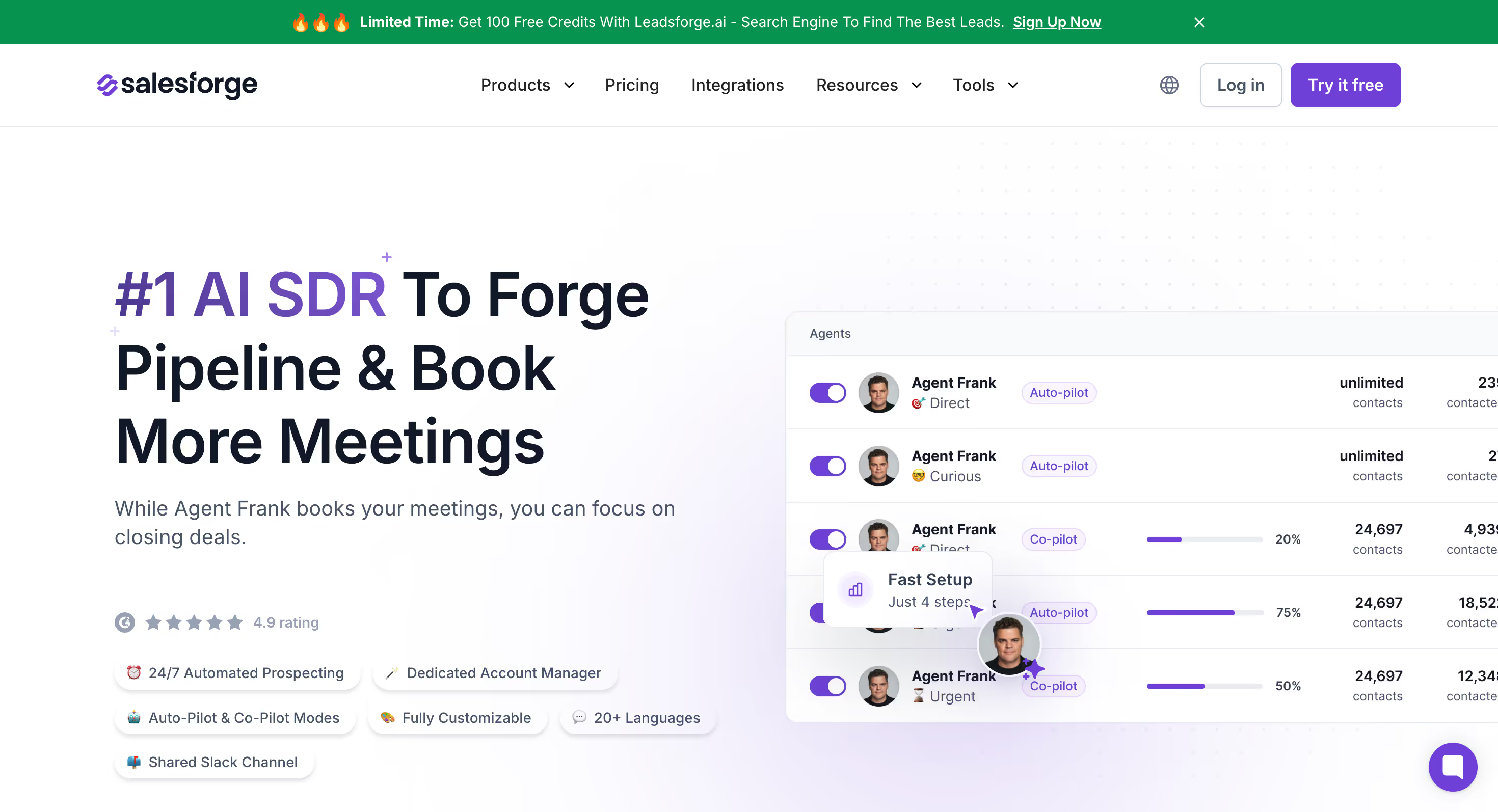
Agent Frank isn’t just an email automation tool he’s a complete AI Sales Development Representative.
He can research prospects, craft personalized messages, handle objections, and book meetings.
The AI agent operates in two modes: Auto-Pilot and Co-Pilot. In Auto-Pilot mode, Agent Frank works completely independently, making decisions about who to email, what to say, and when to follow up. In Co-Pilot mode, you maintain oversight and approval over his activities while he handles the execution.
Agent Frank analyzes which messages get responses, which prospects engage most, and which approaches work best for different types of companies. This learning feeds back into future cold email campaigns, making him more effective over time.
For businesses running multiple products or services, Agent Frank can manage separate cold email campaigns with different messaging, targeting, and goals. He keeps each campaign focused while identifying cross-sell opportunities and coordinating outreach to avoid conflicts.
These five steps work together as an integrated system—the whole thing functions cohesively to maximize your cold email success.
Your infrastructure ensures deliverability, warmup builds trust, accurate prospect lists target the right people, compelling sequences drive engagement, and intelligent automation scales everything efficiently.
The businesses dominating cold email in 2026 understand that this isn’t about choosing one tool or tactic – it’s about building a complete system where each component amplifies the others, making the whole thing more effective.
Gathering feedback at each stage allows you to refine your cold email system for even better results, ensuring the whole thing continually improves, while ongoing communication helps nurture prospects from initial outreach to long-term customer relationships.
When you get all five steps right, you don’t just improve your results incrementally – you achieve breakthrough performance that transforms your entire sales operation.
Now that you’ve built your cold email foundation, let’s talk about the tactical best practices that separate the pros from the amateurs. Cold emailing can open doors to valuable job opportunities, new clients, partnerships, and more. However, success in cold emailing now depends on technical deliverability, extreme brevity, and deep personalization based on specific signals.
Many sales people try to send all their cold emails from one account.
When that one account gets flagged or blocked, your entire cold email operation shuts down. Game over. You're back to square one, and you've wasted weeks of work building up that account's reputation.
Smart sales people spread their risk across multiple email addresses. This isn't about gaming the system – it's about building a sustainable, scalable outreach operation that can handle volume without breaking.
Multiple addresses matter because email providers have sending limits. Gmail and Outlook typically allow 200-300 emails per day from business accounts. If you want to send 1,000 emails per day, you need at least 3-4 accounts to stay within safe limits.
But it's not just about volume. Different email addresses allow you to test different approaches, segment your campaigns, and protect your main business domain.
You can run aggressive campaigns from secondary domains while keeping your primary domain squeaky clean.
Sending emails to invalid addresses result in bounced emails.
Every bounced email damages your sender reputation. Email providers track your bounce rate, and if it gets too high, they'll start sending all your emails to spam. Even for valid addresses.
So if you don’t verify your email list and send, let’s say, 1,000 emails, and 150 of them bounce because the addresses are invalid. That's a 15% bounce rate.
Gmail sees this and thinks, "This sender has bad data and is probably a spammer." Your next campaign gets filtered to spam before prospects even see it.
The safe bounce rate is under 2%. Anything higher puts your sender reputation at risk.
This means that for every 100 emails you send, fewer than 2 should bounce. That's only possible with verified email lists.
Most modern prospecting platforms include built-in verification. When we talked about Leadsforge earlier, one of its key features is real-time email verification using multiple validation methods.
This includes syntax checking, domain verification, mailbox existence confirmation, and spam trap detection.
We covered email warmup in the 5-step process, but it's so critical that it deserves emphasis in the best practices section.
Email warmup isn't optional. It's not something you do if you have extra time. It's the foundation that makes everything else possible.
The traditional manual approach is time-consuming and error-prone. You'd need to manually send emails between different accounts, remember to reply to messages, and gradually increase volume over weeks.
Most people give up or make mistakes that hurt rather than help their reputation.
Automated warmup platforms like Warmforge handle this complexity automatically. The AI creates realistic email conversations, simulates natural user behaviors, and gradually builds your reputation according to best practices.
The key metrics to monitor during warmup are open rates (should be 80%+), reply rates (should be 30%+), and spam folder placement (should be 0%).
Remember, warmup is an investment in your long-term success.
A few weeks of proper warmup can enable months or years of successful cold email campaigns. Skip warmup, and you'll spend more time fixing reputation problems than generating leads.
Your prospects are busy. They're getting dozens of emails every day.
If your email looks like a Wall Street Journal article, they're hitting delete before they finish the subject line.
The sweet spot for cold emails is 100-150 words. That's about 2-3 short paragraphs. Enough to communicate value, but short enough that people will actually read it.
This cold email length works well because 1) it shows respect for your prospect's time. 2) it forces you to be clear and concise. When you only have 150 words, every word has to count.
Let me show you what this looks like in practice:
"Hi [Name], I noticed [Company] just expanded into the European market – congrats on the growth!
I've been helping SaaS companies like yours reduce customer acquisition costs during international expansions. We recently helped [Similar Company] cut their CAC by 40% in their first six months in Europe.
I'd love to share the specific strategy we used – it might be relevant for [Company]'s expansion plans.
Worth a quick 15-minute call this week to discuss?"
That's 67 words. Personal, relevant, valuable, and direct. No fluff, no long explanations, no desperate pitching.
The length also improves deliverability. Spam filters often flag extremely long emails as promotional content.
Shorter emails look more like normal business correspondence, which helps with inbox placement.
I get it. The last thing you want is to give prospects an easy way to opt out before they've even considered your offer.
But including unsubscribe links isn't just legally required – it actually improves your results.
For starters, the CAN-SPAM Act requires all commercial emails to include a clear, functional unsubscribe link. This isn't optional. If you're sending cold emails without unsubscribe links, you're breaking federal law. The penalties can be severe: up to $46,517 per email.
Apart from the legal requirements, unsubscribe links actually help your campaign performance.
Here's why: recipients who don't want to hear from you have two options. They can either click unsubscribe, or they can mark your email as spam.
Guess which one is better for your sender reputation?
When someone clicks unsubscribe, they're telling you they're not interested.
When someone marks you as spam, they're telling Gmail that you're a spammer.
One hurts your feelings. The other destroys your deliverability.
Every cold email needs a call-to-action. But not just any CTA – a clear, specific, low-pressure CTA that makes it easy for prospects to take the next step. A low-friction CTA, such as a simple, engaging question like "Worth a chat?" or "Open to a quick chat?", is highly recommended to reduce barriers and encourage responses.
Yet, most people either don’t include a CTA at all, or they include a CTA that’s way too aggressive for a first email.
Here are some CTA formulas that work:
Notice what these CTAs have in common? They’re specific, they focus on value for the prospect, and they feel low-pressure. You’re not asking them to commit to anything major. You’re just asking for a conversation.
Remember, the goal of your CTA isn’t to get a yes.
The goal is to make it easy for interested prospects to say yes.
There’s a big difference.
If you're not testing your cold emails, you're flying blind.
A/B testing is how you turn good campaigns into great campaigns. It's how you discover what resonates with your audience and what falls flat.
The truth is, A/B testing doesn't have to be complex. You can start with simple tests that take minutes to set up but provide insights that improve your results for months.
Start with subject lines. This is the easiest element to test and often provides the biggest impact. Your subject line determines whether your email gets opened at all. A 5% improvement in open rates can double your overall campaign results.
Test one element at a time.
Don't test subject lines AND email length AND CTAs simultaneously. You won't know which change caused the difference in results.
Pick one variable, test it thoroughly, implement the winner, then move on to the next element.
Most modern cold email platforms include built-in A/B testing.
When we discussed Salesforge earlier, A/B testing is integrated into the platform. You can test multiple variations simultaneously and the system automatically identifies winning combinations.
You’ve learned the best practices.
You understand the fundamentals.
Now it’s time to put it all together with a platform that can automate your entire cold email campaign while maintaining the personal touch that drives results.
The problem with most cold email platforms is that they’re just glorified mail merge tools. They can send emails in bulk, but they can’t think, adapt, or optimize based on results. They’re automation without intelligence.
That’s where Salesforge.ai changes the game.
Salesforge isn’t just another cold email tool.
It’s a complete cold email ecosystem that connects and controls your entire cold email operation.
Most cold email platforms focus on sending volume. Salesforge focuses on generating results. The difference shows up in every aspect of the platform.
Setting up Salesforge is straightforward, especially if you're already using other tools in the Forge ecosystem. Your email infrastructure, prospect lists, and warmup processes integrate seamlessly.
Salesforge gives you the automation, intelligence, and integration you need to dominate your market through strategic cold email.
Sign up for a 14-day free trial on Salesforge and experience the difference first-hand.
A good cold email is simply one that works, and the emails that work tend to share a few clear qualities. They are personalized, relevant to the reader, and short enough to respect their time, usually somewhere between 100 and 150 words. A strong message will reference something specific about the prospect's company, acknowledge a challenge they are likely dealing with, and end with a clear next step the reader can take.
Cold email outreach, often executed as a cold email campaign, is the systematic process of contacting prospects who don’t know your business yet, with the goal of starting conversations that lead to business relationships.
Yes, cold email is legal including the US and Canada, and Europe. You just need to follow specific regulations.
.jpg)



.jpg)