
Personalized Outbound Strategy
Get The Right Outbound Strategy In Minutes
Enter your email to get a custom plan & stack recommendation for your business
It's being carefully crafted by AI
Please check your mailbox in 5 minutes
Clay has become the default tool for GTM teams, yet I keep meeting companies that get little from it.
The pattern is always the same: an unused seat, a few half-built tables, and nobody with the time or training to turn Clay enrichment into a self-running system.
Hiring a GTM engineer can solve that, if you can find one and afford to wait. Most teams I speak with turn to an agency instead, which makes the decision harder.
Plenty will run campaigns for you. Far fewer will build a system your team still owns when the invoices stop.
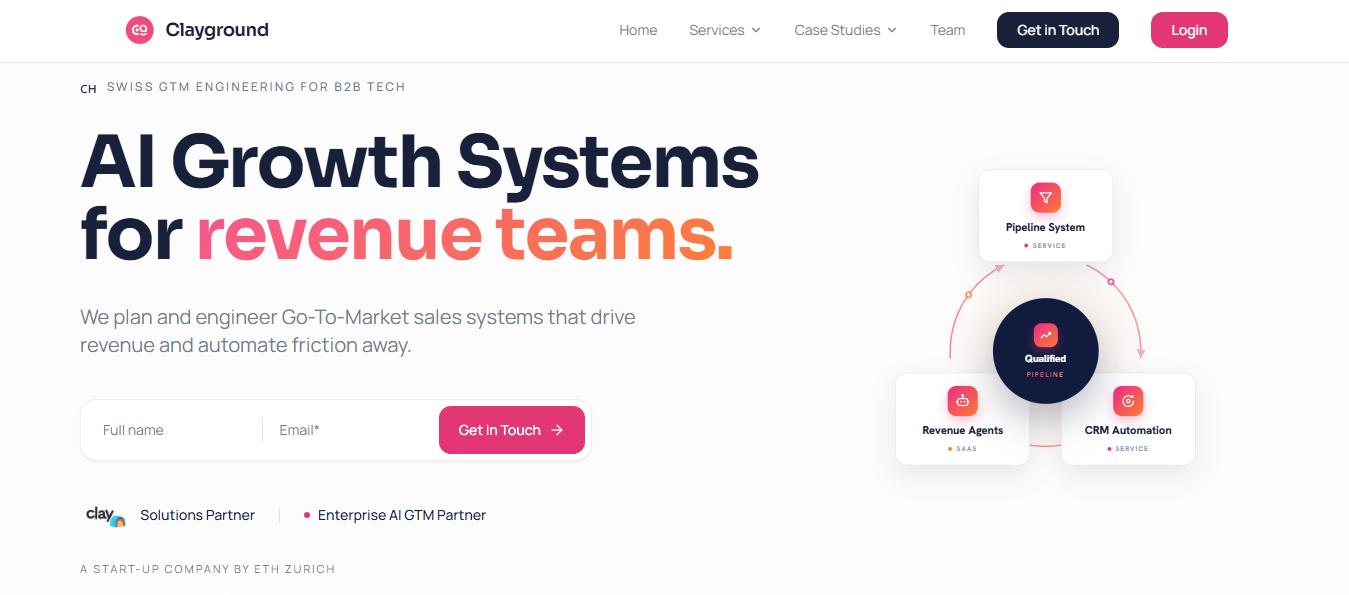
That’s what I wanted to learn about Clayground, a Swiss GTM engineering agency and listed Clay partner.
I reviewed its three service lines, three case studies, full testimonial wall, and the pricing published on its Clay profile rather than its website.
Here’s what I found: where the work is strong, where the evidence thins, and who Clayground suits.
Here’s the short version, so you can decide whether the full review is worth your time.
I couldn’t find an independent review profile for Clayground. Nothing on G2, Clutch, or Trustpilot.
Everything below comes from the 16 testimonials on its website, so I’m treating them as curated material with no critical feedback.
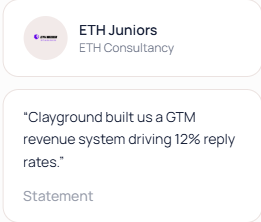
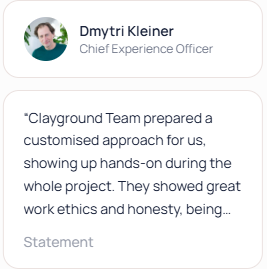
Still, the evidence is stronger than most self-published testimonial pages. Twelve entries include a full name, title, and company, while four link to case studies with supporting numbers.
Hire Clayground if you’re a B2B company that needs GTM systems built in Clay and wants to own them afterward.
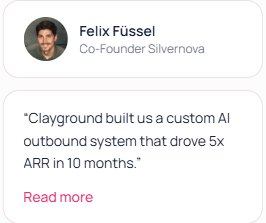
First, its case studies focus on outcomes rather than activity. Silvernova reports 5x ARR growth in 10 months, while Archlet shows time spent per workstream falling from 8 hours to 1.2 hours.
Second, Archlet says every part of the system was handed back to its internal team, with no black box or vendor lock-in. That’s rare in this category.
My verdict is yes, but with homework. Get the pricing in writing, speak with a client your size, and confirm what happens to the systems when you stop paying.
If you mainly need more sending volume, not GTM engineering, or want enterprise references you can call, consider one of the other agencies reviewed here.
I haven’t worked with Clayground, so this review is based entirely on research. I approached it as I would any GTM partner before recommending them to a client.
I read the three service pages covering its pipeline system, CRM cleanup, and Tricle AI, followed by the Silvernova, Acathia, and Archlet case studies.
I also reviewed every testimonial, noting which included a name, company, and measurable result, and which were simple one-liners.
Then I checked what was missing from the website: pricing, independent reviews, and clear company details.
I found two of those elsewhere. Clayground’s partner profile lists pricing starting at $5k per month, with a three-month minimum.
Its blog footer lists Clayground GmbH in Schaffhausen, Switzerland, while the Clay directory lists it in Zurich.
Whenever I say Clayground “reports” something or a client “said” it, the information comes from its website or partner profile. I couldn’t verify any of it independently because I found no independent sources to compare it against.
So what are you actually buying?
I see three service lines, and the order feels deliberate rather than optional.
Their partner profile puts Clay integration and n8n at the center. I also found a build that combines HubSpot, HeyReach, and Tricle.
Every Clayground cell comes from their own site or their Clay partner profile. I'd confirm each one on your discovery call.
Here’s how a typical engagement works, using their CRM and pipeline projects as the reference.
Clayground doesn’t publish its process. I mapped these six stages from its service pages and the phases I found across three case studies.
This takes two weeks on the shortest engagement and a month on larger projects. I’d flag that upfront because you’re paying before anything ships.
The process relies on knowledge already inside your business. Clayground can organize it, but they can’t provide it.
Ask: How many hours will my team need to commit, and who from your team will participate?
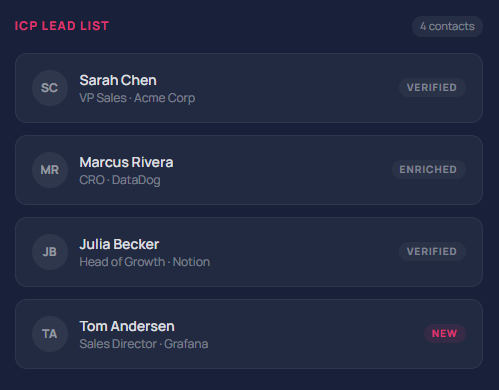
They fix duplicates, missing fields, and outdated employment data. Two of their three case studies began here, and one client said automating on an unstable foundation wasn’t an option.
If your CRM is messy, expect one to four months of cleanup before the more interesting work starts.
Ask: Can I buy the pipeline build without cleanup, and what does each cost separately?
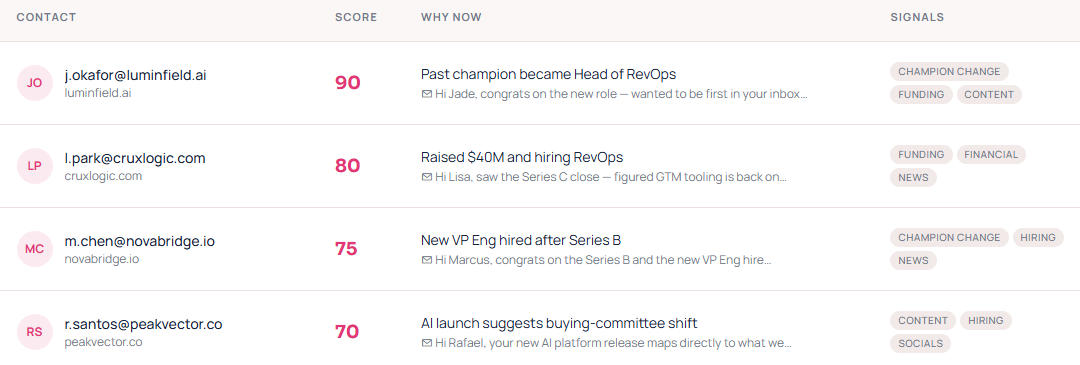
They score accounts based on your ICP, deal history, and engagement patterns, then assign them to tiers so inbound leads reach the right rep.
I’d watch for decay. A scoring model reflects the market as it was when it was built.
Ask: Who retunes it after handover, and how often?
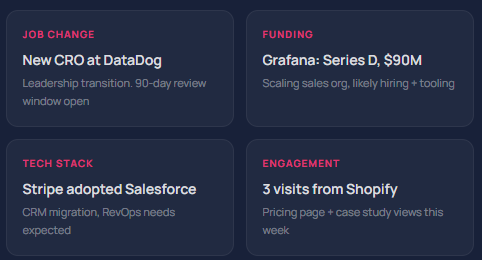
Its B2B lead finder match and enrich lists against your ICP, then monitor more than 50 sources for job changes, funding rounds, and tech-stack shifts. Triggers launch outreach instead of a fixed calendar.
I consider this standard GTM engineering now. Source quality creates the difference, and I can’t assess that from their website.
Ask: Which sources power the signals, and can I review 200 leads before launch?
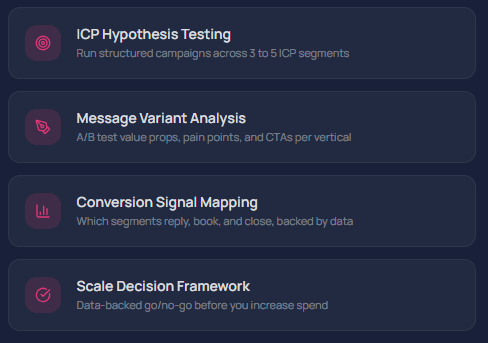
The engagement splits here, but I don’t think their website explains that clearly.
If you know your ICP, they launch campaigns with AI agents handling replies. If not, they test three to five segments and give you a go/no-go recommendation before you increase spending.
These are different purchases. One client found more than 300 interested leads in a market with no existing database. That’s validation, not campaign execution.
Ask: Which option am I buying, and how will you decide before we begin?
Clayground does not publish pricing on its website. No rates, ranges, or engagement models.
I found the numbers on its Clay partner profile instead: $5k+ per month with a three-month minimum. That puts the starting cost at roughly $15,000 before you have a working system.
That’s useful to know before booking a call, and worth asking why it isn’t published on Clayground’s own website.
The timelines provide a rough guide. Acathia’s eight-week build represents about two months of fees.
A four-month engagement covering several workstreams would exceed $20,000. Silvernova’s 10-month partnership would cost at least $50,000 at the starting rate.
None of those totals are confirmed. The profile says $5k+, and that plus sign leaves plenty of room.
That final question matters most. Clayground’s case studies emphasize handover and internal ownership, so make sure those rights appear in the contract rather than relying on the case studies.
Based on Clayground’s published work, it could be a strong fit if:
Skip Clayground, or compare alternatives carefully, if:
I found three case studies. Unlike most agencies in this category, they focus on what changed rather than just what was delivered. Every figure below comes from Clayground:
Two things stood out. First, the case studies use before-and-after numbers rather than activity counts, so there’s something meaningful to examine.
Second, the scope is clear enough to show what four months of work delivers compared with ten.
The Silvernova case study goes further than most. Felix Füssel says the growth helped close his investment round. He describes going from struggling to fill his calendar to introducing group demos because it became too full.
There are two caveats. All three case studies are self-published and independently unverified. The reported 5x ARR growth also started from a low six-figure base, so the multiple sounds more impressive than the absolute gain.
Clayground’s partner profile also mentions that Nextesy generates 70+ qualified meetings per month, but there’s no case study to support that claim.
Clayground won't fit every budget or every stage, and $5k a month across three months rules them out for plenty of teams.
The Forge Expert Network lists agencies certified on the Forge ecosystem, with the stack and channels disclosed on each profile.
I picked these three because they build systems rather than sell meeting volume, which is the closest match to what Clayground does.
Best for: Teams that want Clay expertise with a deeper partner tier behind it.
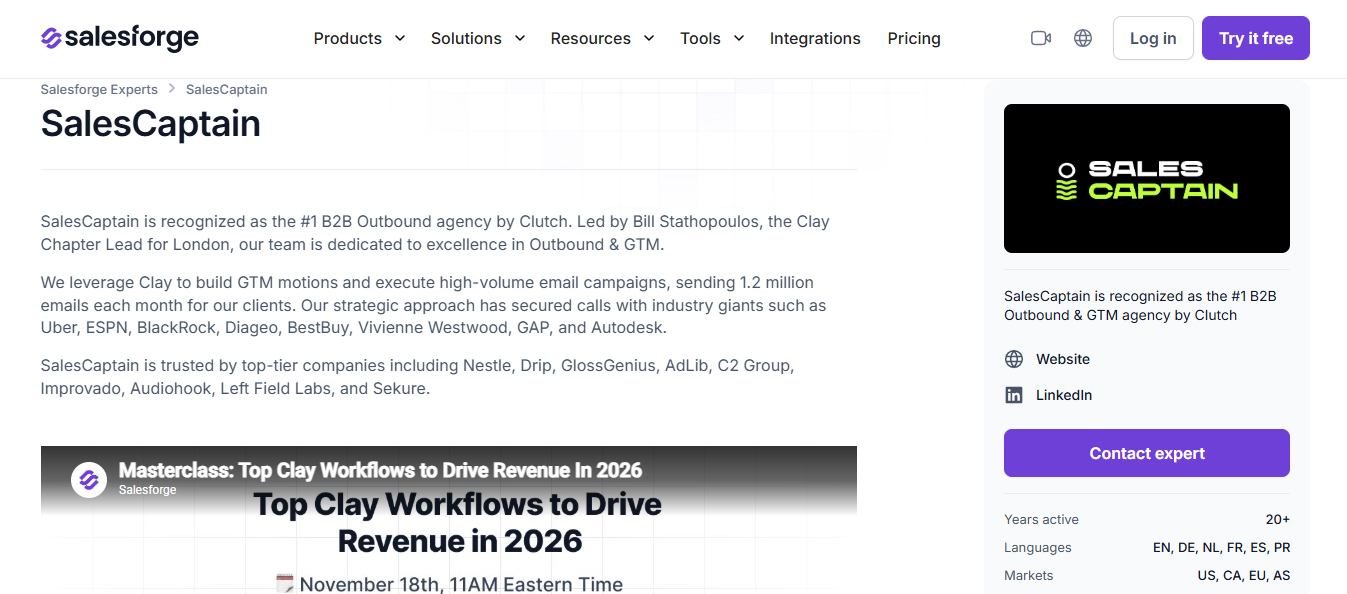
SalesCaptain builds Clay tables and automated prospecting systems, and their founder Bill Stathopoulos is the Clay Chapter Lead for London.
They're a Clay Enterprise Partner, which sits above Clayground's Artisan tier in the same directory.
Their profile names calls secured with Uber, ESPN, BlackRock and Autodesk, which covers the enterprise gap in Clayground's published roster.
Best for: Companies between $5M and $50M ARR that want exit terms published upfront.
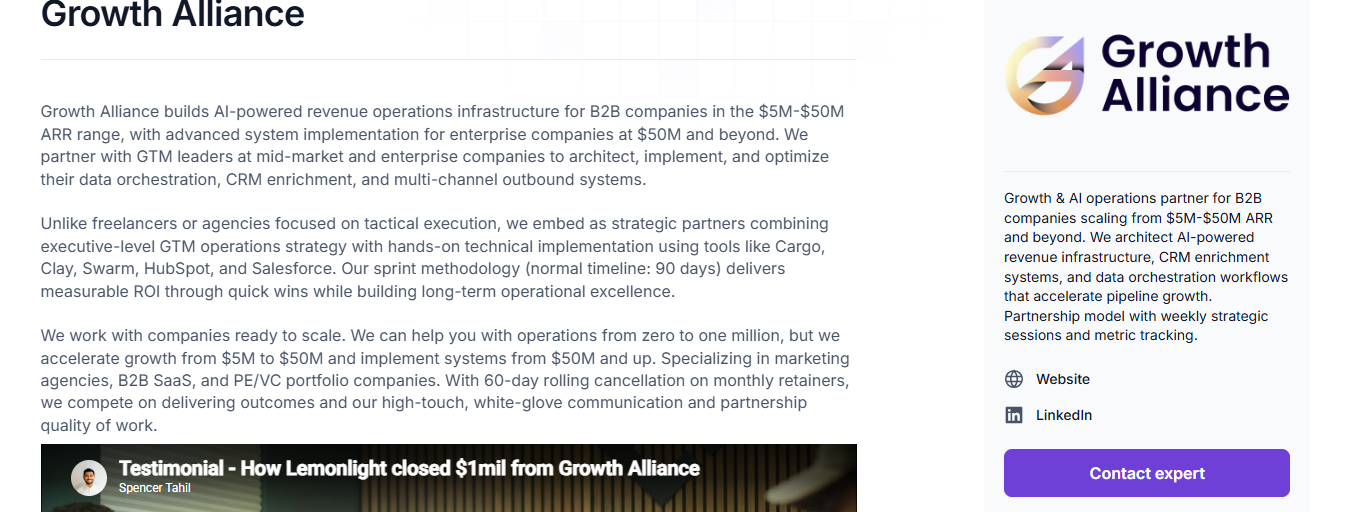
Growth Alliance builds RevOps infrastructure covering data orchestration, CRM enrichment and multichannel outbound, using Cargo, Clay, Swarm, HubSpot and Salesforce.
They run 90 day sprints and state 60-day rolling cancellation.
Clayground publishes a 3 month minimum and nothing about what follows it, so this is the comparison to make on contract terms.
Best for: Founders who want GTM strategy alongside the build rather than after it.
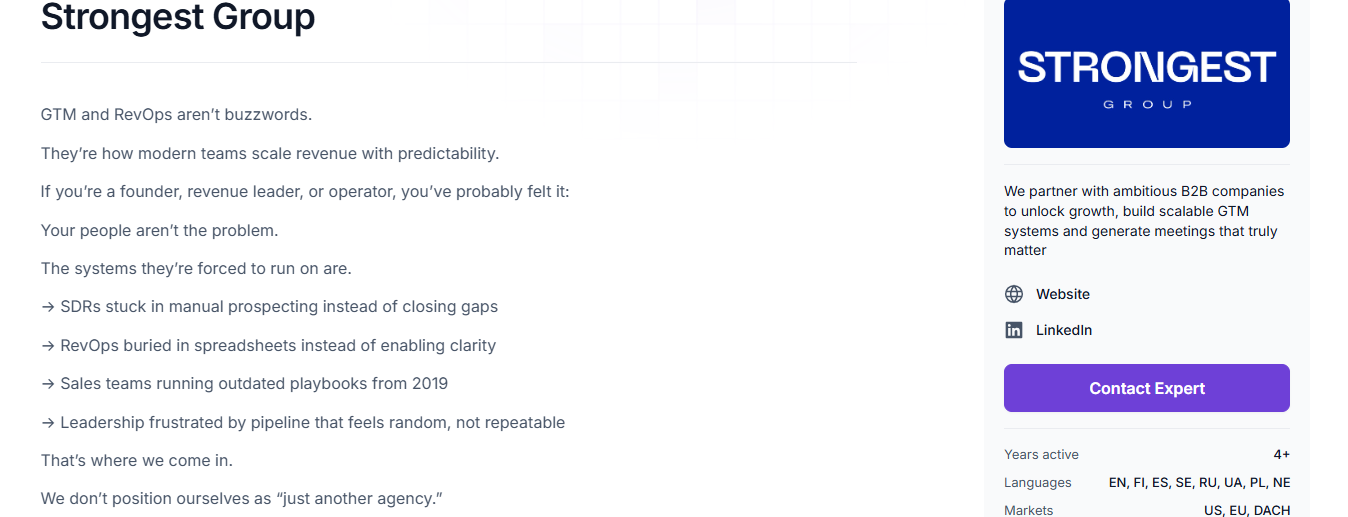
Strongest Group embeds across GTM strategy, Clay-powered outbound workflows, RevOps infrastructure and sales enablement.
Their profile frames the problem the same way Clayground's case studies do. The people aren't the bottleneck, the systems are.
I'd shortlist both and let the discovery calls separate them.
Take these questions to the discovery call:
Enter your email to get a custom plan & stack recommendation for your business
Please check your mailbox in 5 minutes
For me, it comes down to whether you want a system or a supplier.
If you want a system, I’d say yes. Clayground’s case studies end with clients running the work themselves, which is one of the rarest outcomes in this market.
Before signing, get four things in writing: what the $5k starting price includes, why no independent reviews exist, whether they can provide a reference at your stage, and whether Tricle requires a separate license after the project.
Still comparing partners? The Forge Expert Network is where I’d shortlist next.
.jpg)

.jpg)

.jpg)