Personalized Outbound Strategy
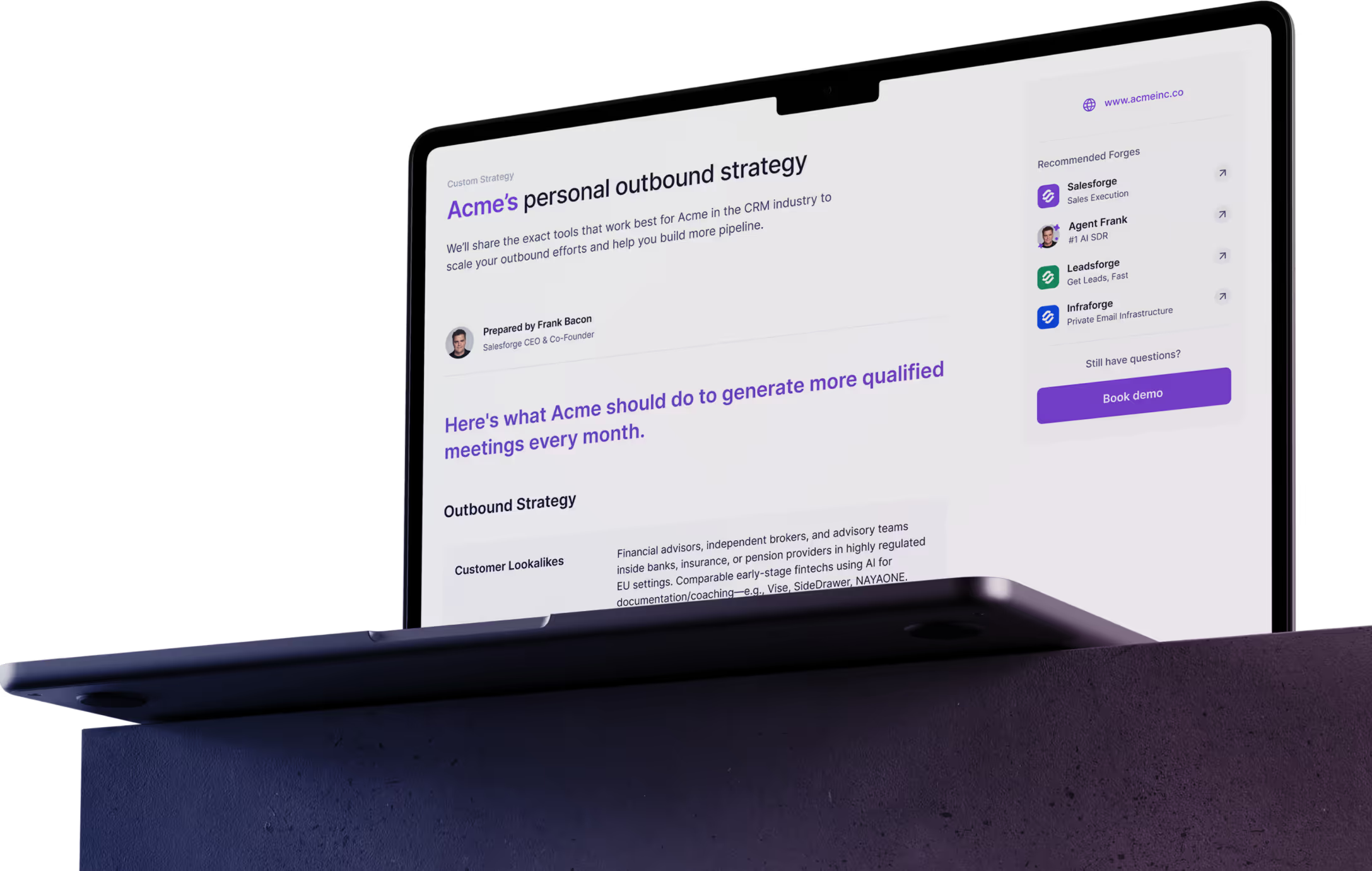
Get The Right Outbound Strategy In Minutes
Enter your email to get a custom plan & stack recommendation for your business
It's being carefully crafted by AI
Please check your mailbox in 5 minutes
Top 0.2% of SDRs. Live in 10 days. More than 350 companies served.
If you're comparing SDR agencies, you've seen claims like these everywhere and probably wondered which ones hold up in a real pipeline. That makes this decision difficult. You sign based on the pitch, then discover what you bought around month three.
Whistle Ltd makes its claims easier to check than most, almost by accident. They publish three detailed case studies with real numbers. So I compared their marketing claims directly with their own case studies.
Some claims hold up. The 30-day terms are real, and they publish a number most agencies avoid: how many booked meetings actually happened.
Others don't. The reps in their case studies have far less experience than the homepage promises, and one case study gives two different meeting totals on the same page.
Here's where the promise matches the delivery, where it doesn't, and what that means if you're close to signing.
If you read only one section, make it this table.
Every Whistle entry comes from their site or case studies. I'd confirm each one during your intro call.
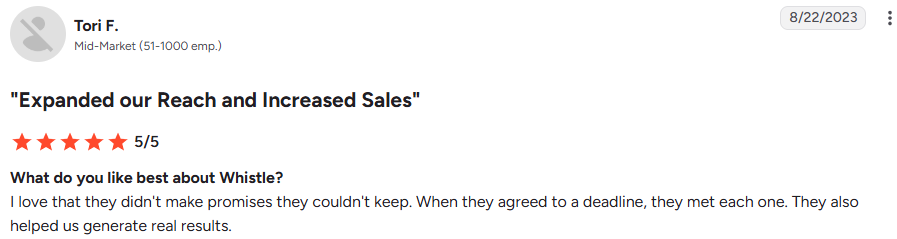
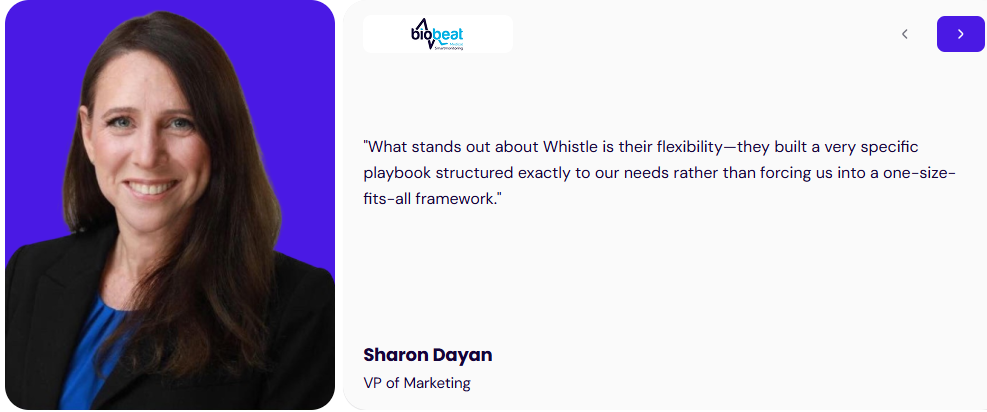
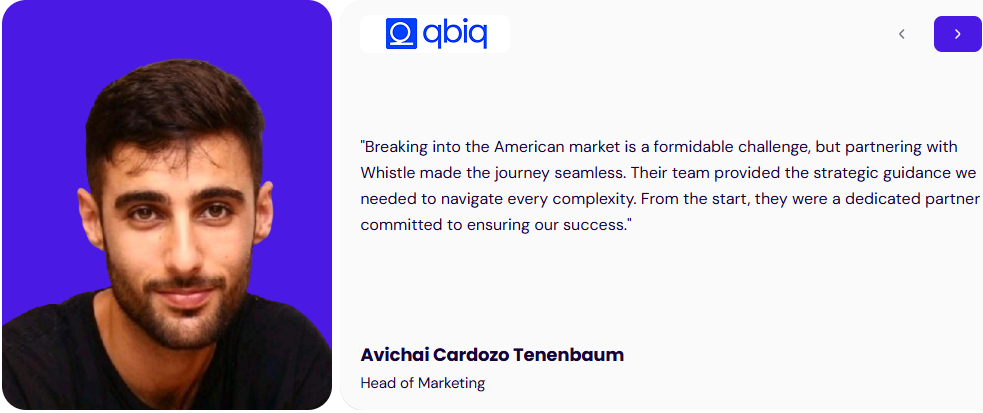
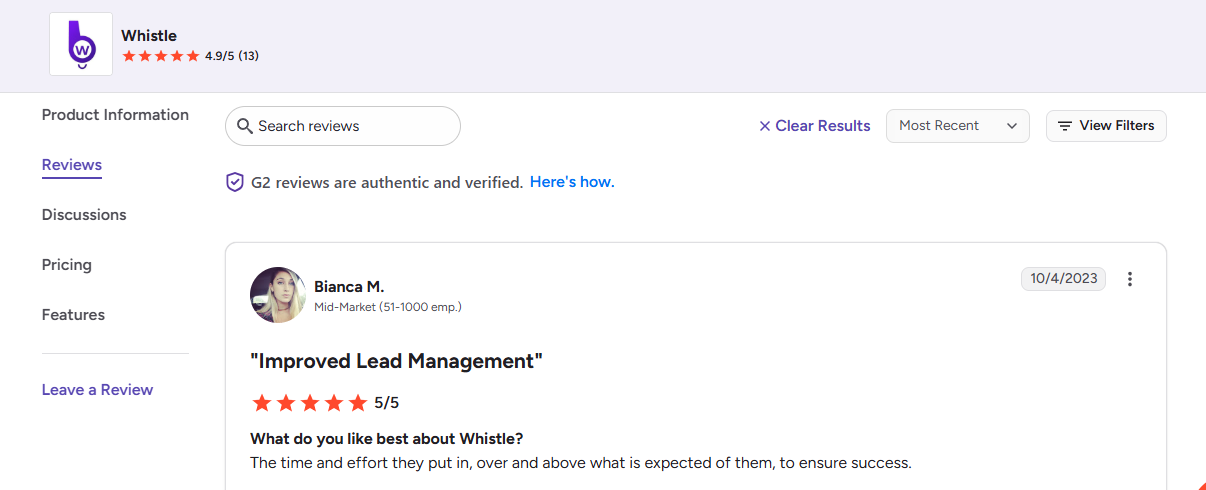
Of Whistle's latest G2 reviews, nine gave 5/5, and one gave 4/5. Their site includes twelve testimonials, each with a name, photo, and company logo.
Before the details, I noticed three things that affect how much weight I'd give them.
Every G2 review appeared between August 1 and October 4, 2023. None were added in the three years since. Katia T. reviewed them twice during that period, so ten reviews represent nine people. None of the G2 reviewers name their company, making them impossible to verify.
Richard Nischk at Cue first noticed the consistent delivery and clear project tracking.
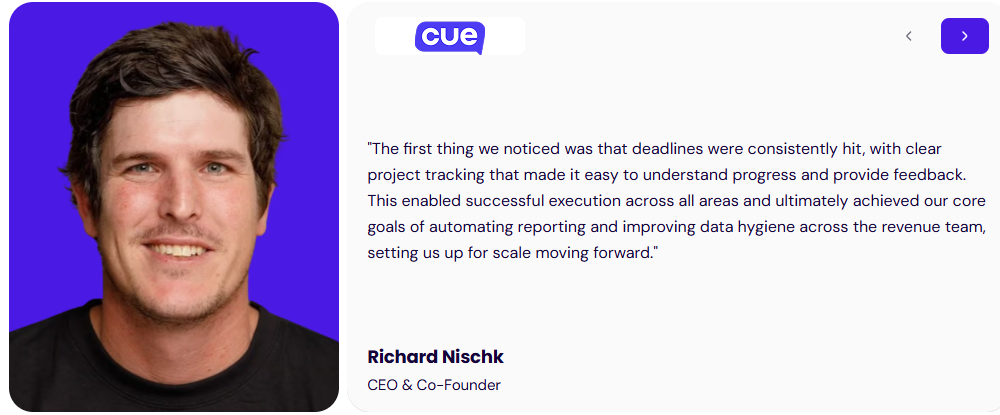
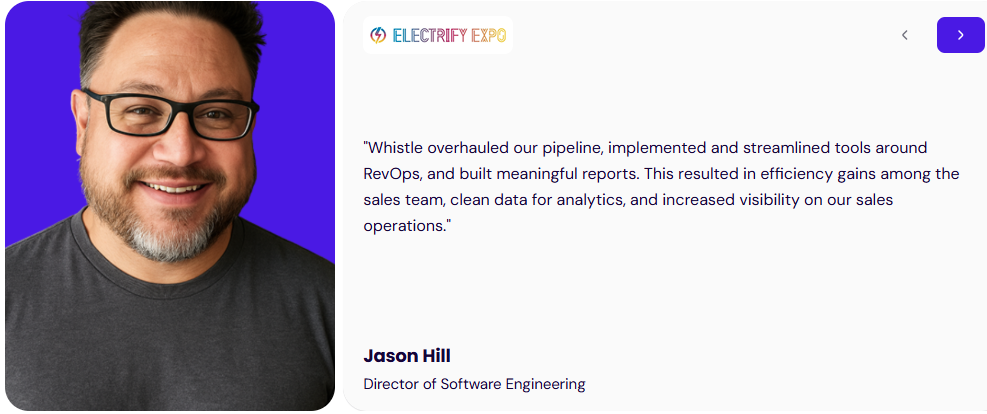
Richard Nischk at Cue mentions automated reporting and data hygiene. Neither appears as a service on their site.
Here's the problem. Almost nothing, and that's the issue.
Hire Whistle if you want one or two SDRs on 30-day terms and plan to manage them yourself. Think more carefully before choosing the fully managed model.
Two things convinced me about the Talent model. A 30-day contract for a placed SDR is genuinely low risk, and they handle offboarding and reassignment if the person doesn't work out. Armadillex's case study says you can replace a rep within five days.
They also adapt the deal structure. Ariox wanted direct control of its SDR with some strategic oversight, so Whistle offered a bank of hours instead of pushing a fully managed package.
Three things make me cautious:
I'd start with the smallest option. Use one rep for 30 days and judge the results before scaling.
If you need a managed department producing a predictable number of meetings, ask for the held-meeting rate before signing, not the booked number.
I haven't hired Whistle. This review comes from desk research, and one approach shaped the entire assessment.
I treated their marketing pages and case studies as if different companies wrote them, then compared them.
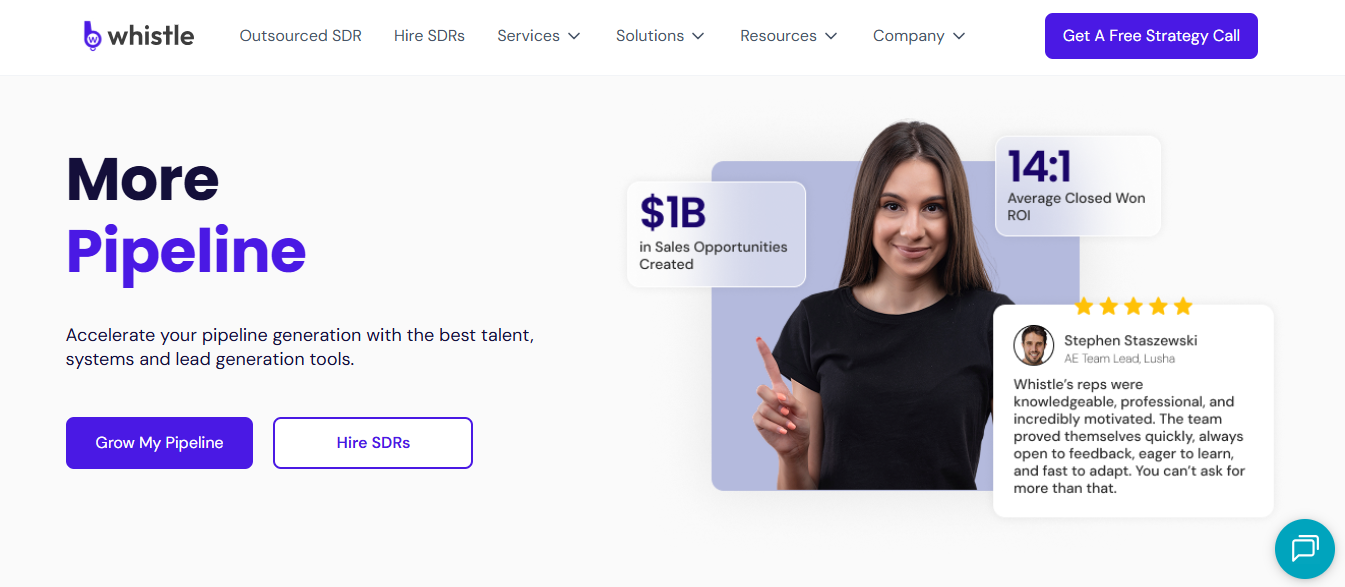
That may sound pedantic. It isn't, and here's why. Their hire-SDR page says they accept 1 in 500 applicants with 5+ years of average experience.
The Bonusly case study says they sourced reps with 1 to 2 years. Armadillex says 3 to 5. Nobody outside the company made these claims. Whistle published all three.
After finding one gap, I looked for others. I checked every figure in the three case studies against the other numbers on the same page. That's how I found Ariox reporting 40 meetings in one section and 32 elsewhere.
For the reviews, I ignored star ratings and read the dislike section. That's where a genuine review earns credibility, and where these reviews say little.
I also checked the dates because an agency's review history shows when customers were encouraged to post. Every Whistle review appeared within nine weeks in 2023.
I couldn't find pricing beyond an FAQ stating that you receive a quote during the intro call.
Everything attributed to Whistle comes from its own pages. The contradictions do too, which is the point.
Whistle sells SDR capacity in two forms, and choosing the wrong one could be your most expensive mistake.
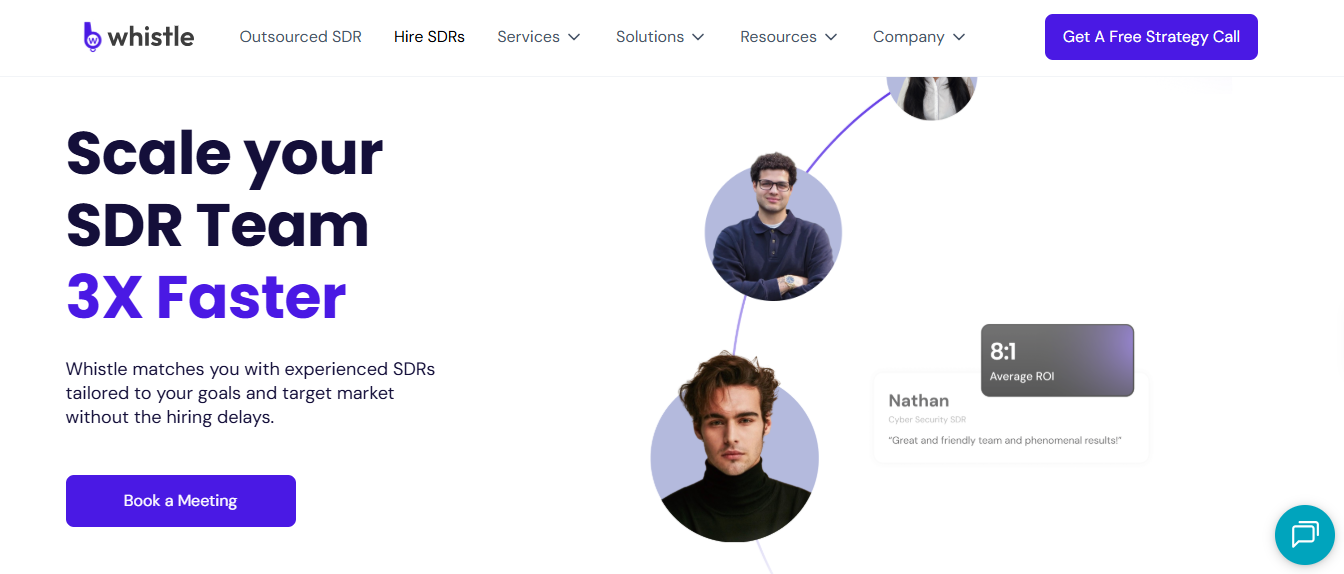
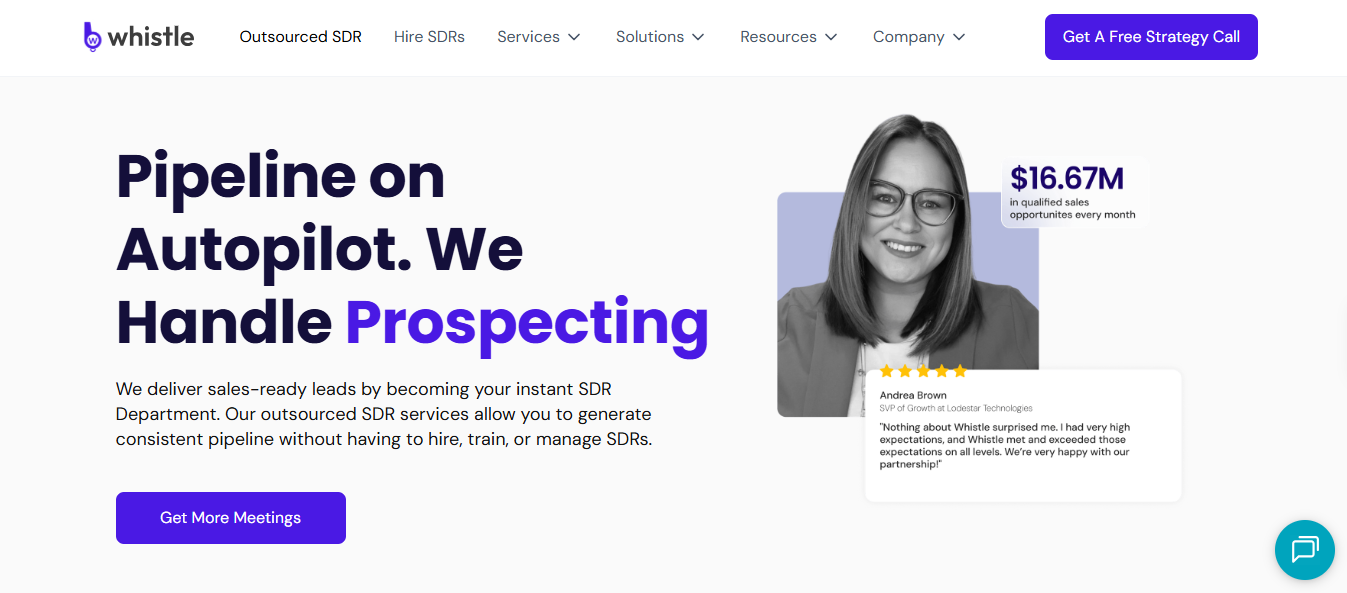
Cold email, LinkedIn outreach, and data each have dedicated pages, but they aren't separate products. They're channels the SDR uses and inputs that support their work. With Talent, you're buying the person, not the tools behind them.
I'd question the data service closely. Whistle claims 98% accuracy through AI filtering and human review. Ask for a sample before buying a list because nobody outside the company can verify that figure.
Whistle describes a six-step process and repeats it across three service pages. I've shortened it to the four stages where your money and attention matter, along with one question for each.
They ask about your lead sources, ICP, average deal size, and existing conversion rates, then build an outreach plan around them.
Pay attention to the deal-size question. It helps them balance volume against quality and shaped the Bonusly engagement, where AEs weren't pursuing deals below $5,000.
Ask this: based on our deal size, how many monthly meetings should we realistically expect?

Managed engagements take 10 days, while a placed SDR takes 5. During this period, they configure outreach systems, build target lists, write messages, and assign the rep.
Ten days is fast, and speed comes at a cost. Domain warmup alone usually takes longer. If cold email is a main channel, ask what infrastructure they'll use and how long it has warmed.
Ask this: which domains and inboxes will send our campaign, and were they warmed for us or already being used
Your SDR contacts prospects through phone, email, and LinkedIn.
Set expectations carefully. Their FAQ says most clients see initial meetings within two to three weeks and consistent volume after month one.

Ariox's case study shows the real ramp: its campaign started in June, but 21 of 32 meetings came in September. Month one was slow, and the average hides that.
Ask this: what did the first month look like for your three latest clients?
They provide daily, weekly, monthly, and quarterly reports, plus a weekly call with your customer success manager.
The reporting is genuinely detailed. What matters is the figure they report. Ariox's page shows 32 meetings booked but only 14 held, two very different measures.
Ask this: do your reports show meetings booked or held, and what's the normal gap between them?
That covers the process. Now let's look at the cost.
Whistle doesn't publish prices. Its FAQ says rates depend on scope, and you'll receive a quote during the intro call.

It does publish contract length, which is more useful here. Terms run for 30 days with no long commitment, and you can scale up or down as needed.
I'd take that seriously. Most SDR agencies ask for 3 to 6 months because they need time to deliver strong results. A 30-day term lets you stop after month one if meetings don't appear, shifting real risk back to them.
Placing an SDR covers one person's cost plus Whistle's margin. Fully managed adds a customer success manager, senior team lead, tools, data, and reporting, creating a wide price gap.
Ariox provides a useful example. It chose a placed SDR, then bought Team Lead hours separately from a bank. This let the team use more support during onboarding and later reduce it to weekly check-ins, instead of paying a fixed management fee all year.
If you receive a managed quote, ask whether the unbundled option is also available.
The last point matters more than it seems. Armadillex's case study says you can replace a rep within five days. Put that in the contract because a poor SDR on a 30-day term still costs a month of pipeline.
Based on its published material, Whistle could suit you if:
Skip them, or at least compare harder, if:
If you need sending capacity rather than another person, Salesforge provides sequencing, sending, and warmup from $48 monthly, without a rep to onboard.
Three case studies, all naming the client, all publishing numbers.
Everything below is reported by Whistle:
The important details appear when you compare the three
More SDRs produced fewer meetings per person.
Armadillex generated 22 meetings with one rep over two months, or roughly 11 per month.
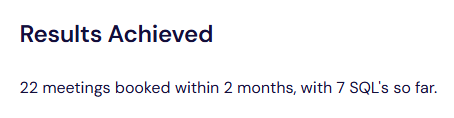
Bonusly generated 23 meetings with three reps over the same period, fewer than four per rep per month.
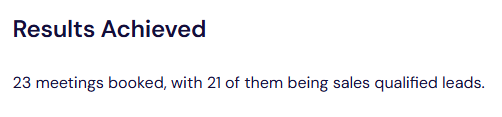
If you're offered a team, ask why three people will outperform one because they didn't here.
Ariox's page contradicts itself.
The KPI panel shows 40 scheduled meetings.
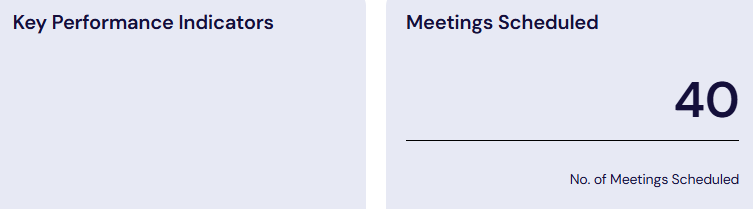
The results section says 32 were booked and 14 had happened. It's the same engagement and page, with two different totals.
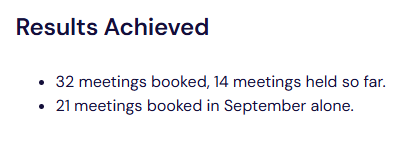
Those 14 held meetings from 32 bookings may be Whistle's most useful published number.
That's a 44% show rate, and no other agency I've reviewed shares one. Before signing, confirm whether your meeting forecast means booked or held because the difference here exceeds half.
Month one moved slower than the headline suggests.
Ariox started in June, but 21 of its 32 meetings came in September. The FAQ's promise of first meetings within two to three weeks may be true, but meaningful volume took three months.
The revenue figures are unusually similar. Three companies across different industries and team sizes report $22,000, $20,000, and $20,000 in revenue. The ROI multiples are marked as estimates. Ask how Whistle calculated them before treating them as results.
Another contradiction appears within the Bonusly page. The introduction says the company received a couple of monthly inbound leads, while the challenges section says 30 to 40.


Both statements appear in the same case study.
None of this proves the results are false. It means you should request the raw numbers behind your forecast instead of relying on these examples.
Whistle's main gaps are an unguaranteed meeting total, a review history ending in 2023, and a ramp that took three months to reach volume. If any is a dealbreaker, these three alternatives address it directly.
Each agency below belongs to the certified Forge Expert Network, so its channels and technology are listed on the profile before you schedule a call.
Best for: Teams that want calling in the mix and a meeting count written into the deal.
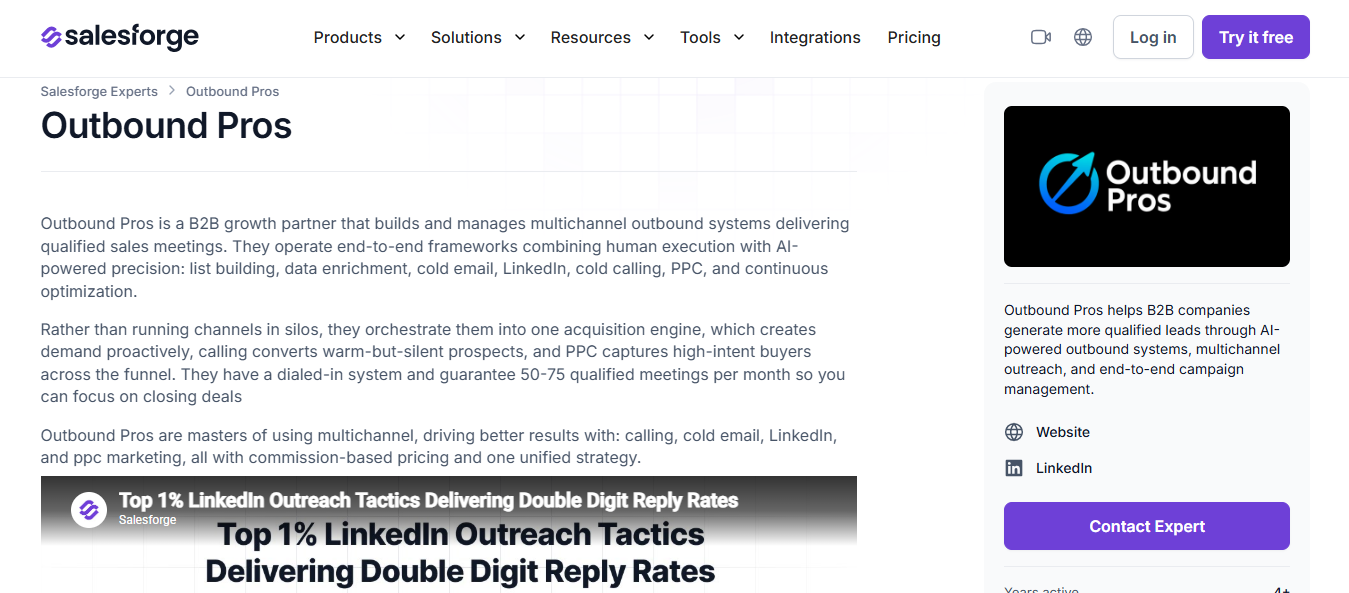
Outbound Pros uses the same channels as Whistle, phone, email, and LinkedIn, plus PPC.
The key difference is its commitment. The profile guarantees 50 to 75 qualified monthly meetings, with commission-based pricing.
Whistle's most productive published SDR generated around 11 monthly meetings. If you need a number you can plan a quarter around, I'd begin here.
Best for: Buyers who want to read what clients said this year, not three years ago.
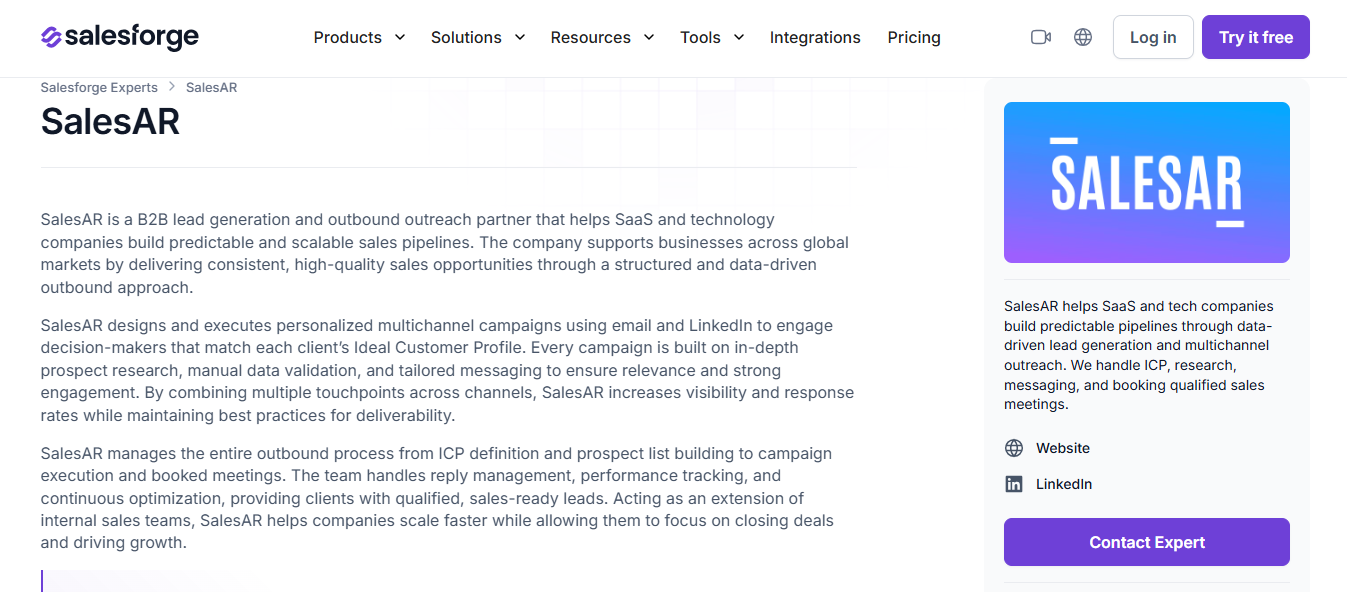
SalesAR manages email and LinkedIn campaigns from ICP definition through reply handling and booked meetings, with every contact manually verified.
It has a 4.9 rating from 33 G2 reviews. One client, Akridata, reports more than 190 appointments after working together for over a year.
That's the comparison I'd make. Whistle received ten reviews within nine weeks, with nothing added afterward.
Best for: Teams who can't wait three months for meetings to pick up.
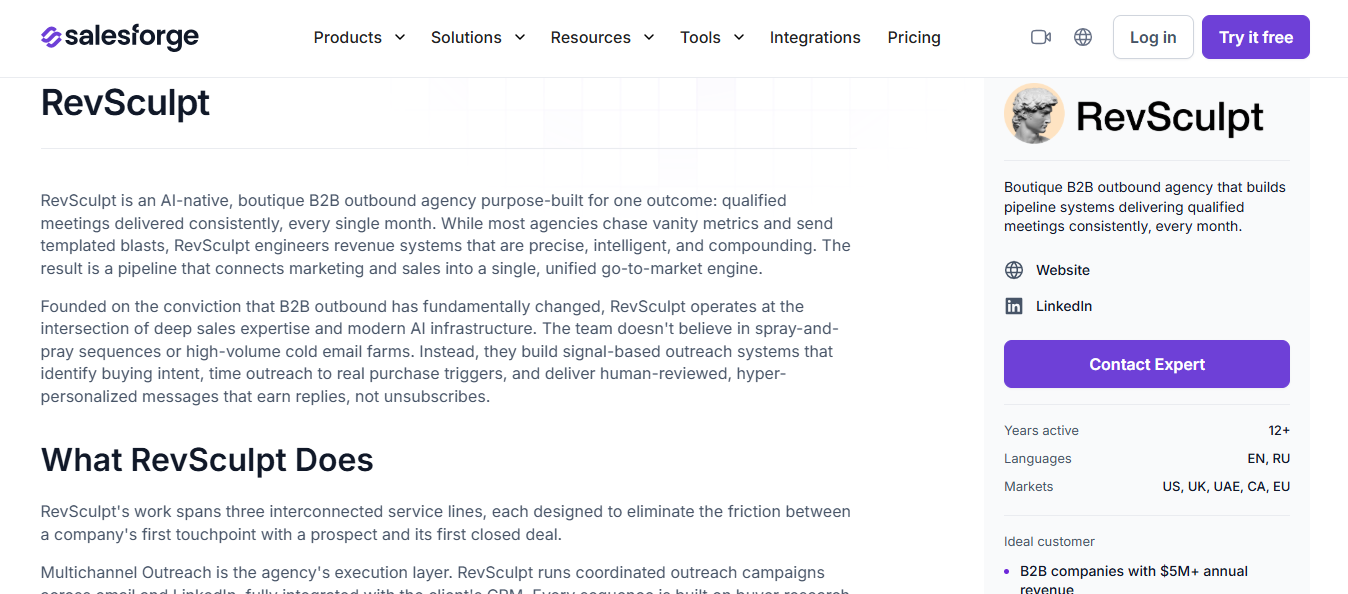
RevSculpt times outreach around buying signals such as funding rounds and regulatory changes, with a person reviewing each message before it sends.
Its profile says most clients receive their first qualified meeting within 18 days of onboarding, while one client generated more than 300 meetings in six months.
Compare that with Ariox, where most volume arrived during month three, and the difference becomes clear.
Take these questions to your intro call. Most come directly from gaps in Whistle's published material, so the team should answer them easily.
If I could ask only one question, I'd choose the second. Whistle is the only agency I've seen publish a show rate, and at 44%, it changes the value of every meeting forecast.
Enter your email to get a custom plan & stack recommendation for your business
Please check your mailbox in 5 minutes
The contract is stronger than the claims.
Thirty-day terms, a five-day rep replacement, and a placed SDR you manage make Whistle inexpensive to test. That part of the promise holds. The claim about elite, experienced reps doesn't match the people described in its case studies, so I wouldn't pay for the pitch.
I'd pay for one month. Start with one rep, manage them directly, and measure meetings held. If the results arrive, scale. If they don't, you've lost 30 days instead of a quarter.
Want a guaranteed meeting total or reviews from this year? Certified agencies in the Forge Expert Network publish both on their profiles.