
Personalized Outbound Strategy
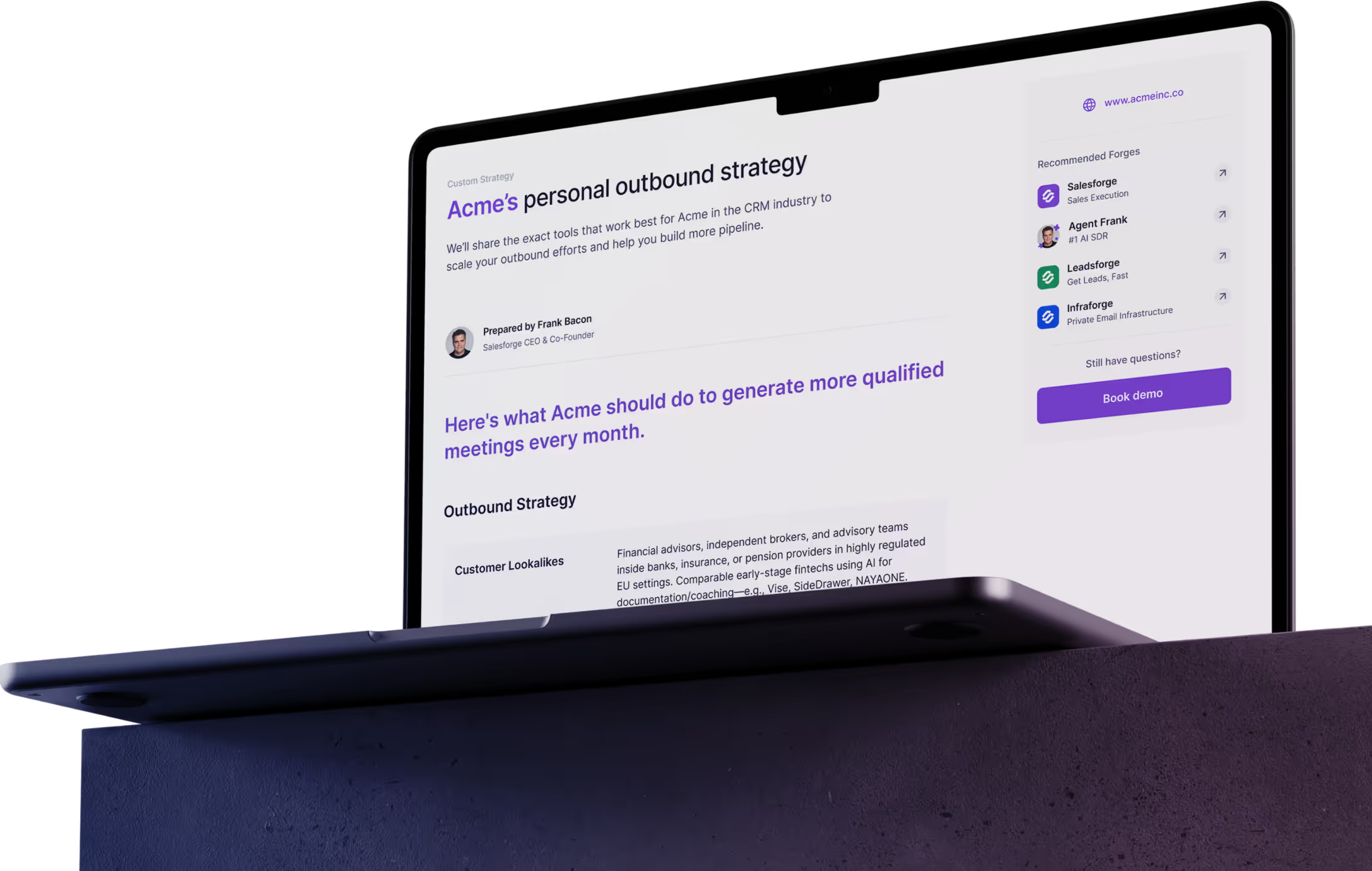
Get The Right Outbound Strategy In Minutes
Enter your email to get a custom plan & stack recommendation for your business
It's being carefully crafted by AI
Please check your mailbox in 5 minutes
You’re a founder handling your own marketing, and it isn’t working.
Not because the tactics are wrong. There are simply too many, and you’re trying to hold everything together while running the business. SEO stays half-finished, outbound happens when you remember, and content stops whenever a customer call runs long.
Eventually, you decide to hand it over. Then you have three choices: hire a CMO, manage several specialists, including an outbound agency, or find one team that handles everything.
Cactus Marketing offers the third option. They serve as your marketing team across six channels, with a fractional CMO available if you want someone to own the strategy as well.
That’s a big promise, so I looked at what clients actually say and what the case studies prove. Here’s what I found.
Here’s the short version, so you can decide whether the rest is worth reading.
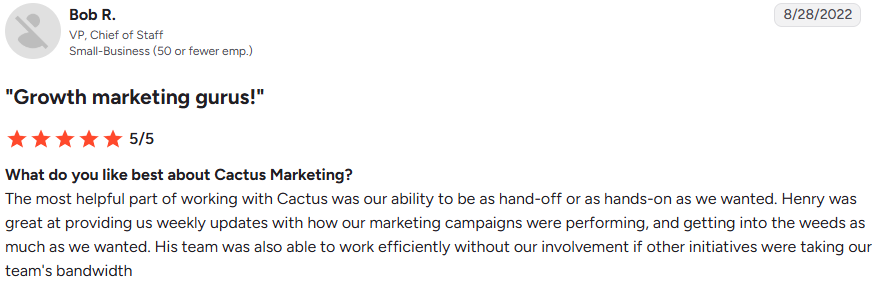
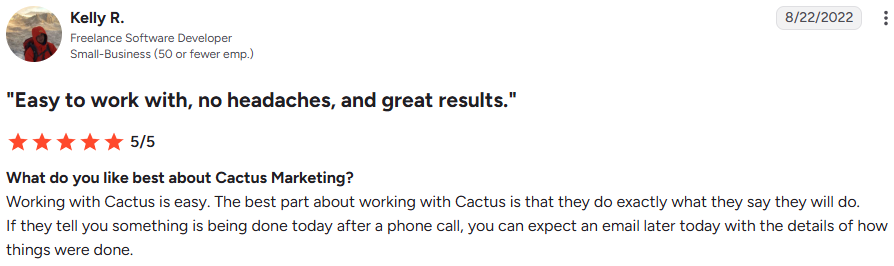
I found six five-star G2 reviews and six named testimonials on the company’s website.
Two things stood out. The G2 reviews stop in September 2023, so there’s nothing from the past two years. Bob Reish also appears in both sets, making the twelve entries closer to eleven people.
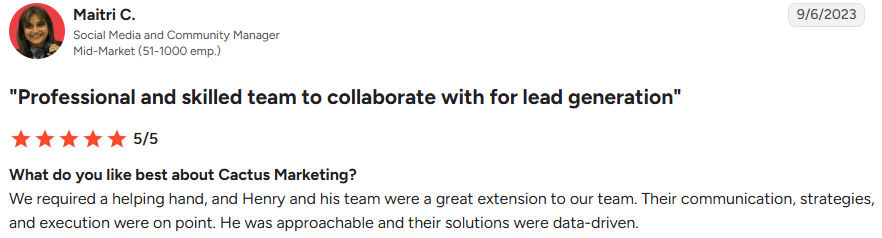
Bob R. appreciated the weekly updates and the freedom to be as involved as he wanted to be.

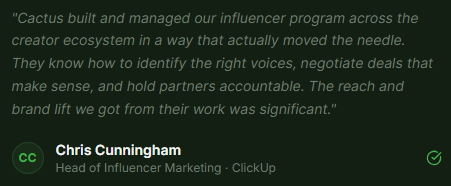

Hire Cactus Marketing if you’re a startup without a marketing function and want one team to handle strategy, outbound, SEO, and content.
First, clients repeatedly describe someone who explains the process, sends updates without having to be chased, and delivers as promised. It isn’t glamorous, but it’s where many agencies fail.
Second, Cactus seems to sequence the work properly. Grata asked for demand generation, but Cactus said the CRM needed to be fixed first. Many agencies would have taken the campaign budget and run outreach through broken infrastructure.
My answer is yes, but start with a narrower scope than they may suggest. Choose one or two channels, confirm who will manage them, and ask for a recent client reference.
If you need documented results before committing, or deep expertise in a single channel, compare other agencies first.
I haven’t hired Cactus, so this review is based on desk research. I started with the reviews, then read the case studies.
That order mattered. Four of six G2 reviewers mention the same person, while the company’s own positioning doesn’t. When customer evidence and marketing tell different stories, I trust the customers.
I also checked the reviews against each other. One reviewer was an employee. Two reviews were incentivized. One person appears on both G2 and the company website. Another reviewer shares a name with a case-study founder.
For the case studies, I wanted one thing: a measurable before-and-after result. I read all three twice and found none.
I couldn’t find pricing on the website or anywhere else.
Everything attributed to Cactus therefore comes from its own pages or published reviews, without independent supporting data.
Cactus offers six service lines, the broadest range I’ve seen in this category.
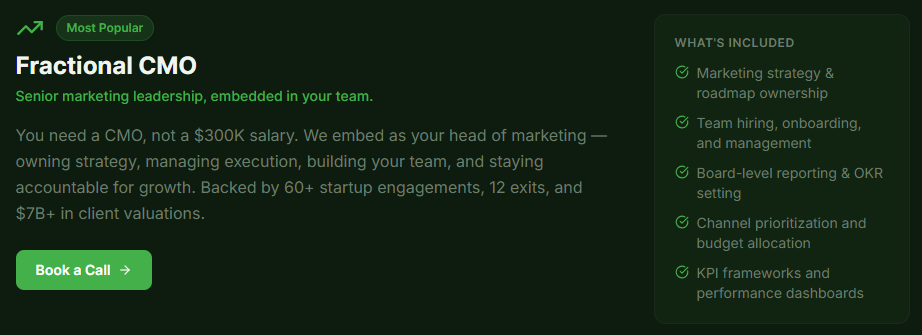
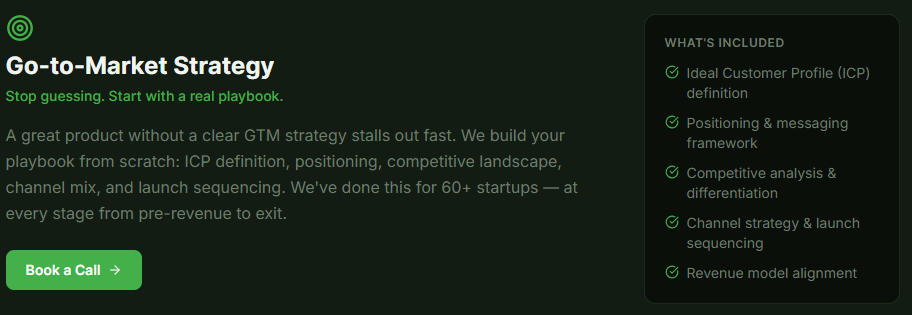

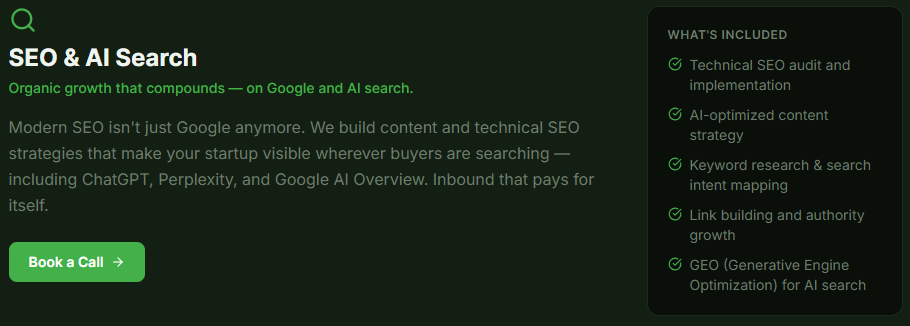
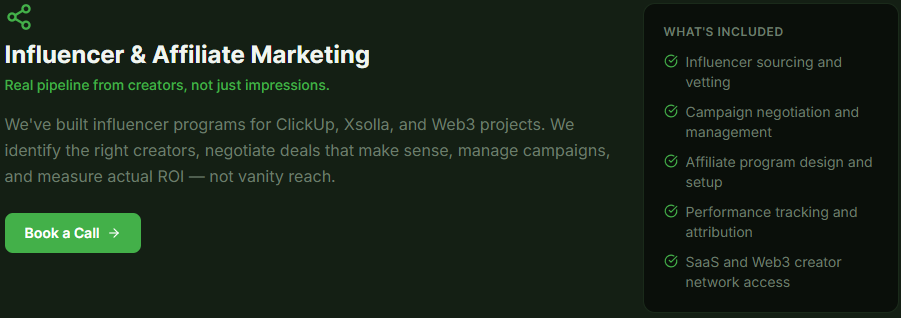
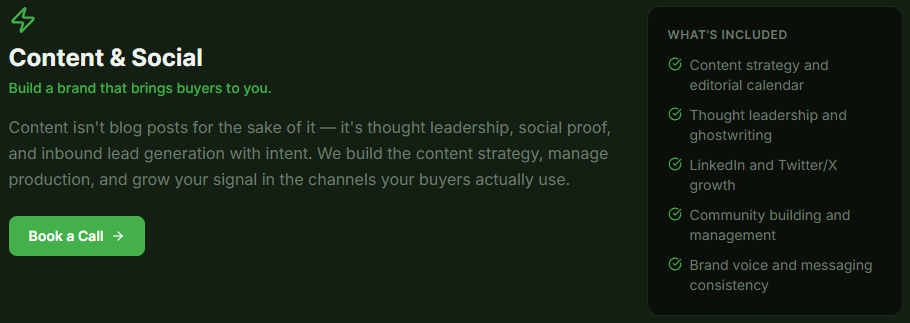
The breadth is what I’d examine most closely. Covering six channels requires either a large team or limited depth, while the reviews keep pointing to one person. Ask who handles each service.
AI also appears throughout the positioning, from autonomous outbound agents to automated CRM follow-up. Yet none of the three case studies mentions an agent doing the work.
Every detail in the Cactus column comes from its website or a published review. Confirm each one during your discovery call.
Here’s how a typical engagement appears to work, using its demand-generation and GTM projects as the model.
Cactus doesn’t publish a formal process page. I built these six stages from patterns across its client work.
You hire Cactus for demand generation. They open your CRM and find duplicate records, dead contacts, and lead scoring that doesn't reflect who actually buys.
I like this approach, but it takes time. Your first few weeks may go into fixing systems rather than launching campaigns.
Ask: What does the audit cost on its own, and do I keep the findings if I stop there?
Most agencies give you one ICP document. Cactus divides the market into segments, ranks them by likely adoption speed, and identifies the people who approve purchases.
The ranking is the useful part. It tells your sales team where to start.
Ask: How do you validate the ranking before we spend money on it?
Once Cactus knows who you’re targeting, they decide what to say. The framework begins with the buyer’s hesitation rather than your product’s strengths.
A bank compliance officer and a Series A founder need different messages. One wants confidence that you won’t create risk. The other wants proof that you’ll drive growth. Marketplaces may need separate messages for each side.
Ask: Who writes the messaging, and how many rounds of revision are included?
Next, Cactus builds the systems that support the campaigns. That includes routing leads to the right salesperson, triggering follow-ups, and defining when marketing should hand a lead to sales.
They also set up attribution, connecting campaigns to the pipeline they generate. I’d insist on this. Without it, you may never know which part of your budget worked.
Ask: Do we own the workflows, and can our team edit them without you?
Cactus then launches separate email sequences for each segment, nurture emails for different buying stages, inbound content, and retargeting for prospects who showed interest but went quiet. They continue testing subject lines and calls to action.
Reviewers mention weekly updates during this stage. They also say clients can stay hands-off or get involved in the details.
Ask: What’s included in the weekly update, and who joins the call?
This is the stage I’d value most. Cactus works with sales to define a good lead, set response expectations, and agree on quality standards. They then create sales decks and objection-handling guides.
Marketing generating leads that sales won’t touch is a common failure. This stage is designed to prevent it.
Ask: How much sales team time will this require, and who will own the playbook afterward?
I found no pricing anywhere. There’s no range, engagement model, setup fee, or minimum term on its site, directories, case studies, or reviews.
That matters because the services vary widely. A fractional CMO retainer and a one-off GTM playbook are different purchases with different price points.
The only clue comes from Cactus itself: you need a CMO, not a $300,000 salary. That positions the fractional service against a senior hire, likely placing it above a single-channel agency.
Based on its published work, Cactus may suit you if:
Skip them, or at least compare harder, if:
Cactus publishes three named case studies, each with a customer quote. Everything below comes from the company.
The closest thing to a measurable outcome comes from Sapien founder Kelly Ryan.
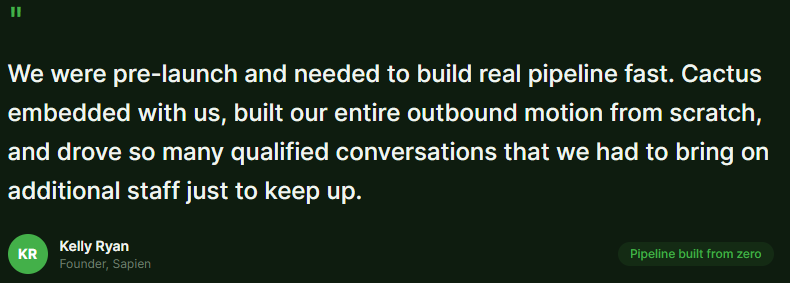
Ryan says Cactus drove enough qualified conversations that the company needed extra staff. It sounds positive, but it still isn’t a number.
The variety is useful. Sapien was pre-launch; Uplinq had a product, but no clear target segment; and Grata had traction but was sitting on broken infrastructure.
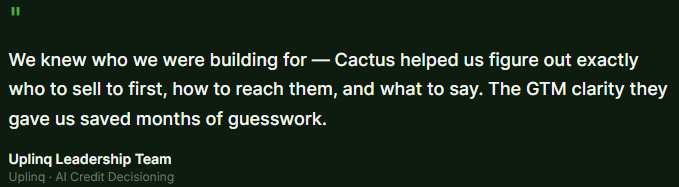
Those different starting points suggest that Cactus diagnoses the problem rather than applying a single template.
The Grata quote is the most convincing.
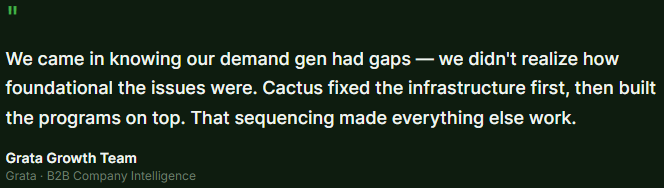
Its team knew there were gaps in demand generation but didn’t realize how deep the issues ran. It credits Cactus with fixing the infrastructure before launching programs.
Cactus covers six channels with one team. If you prefer deeper expertise or want recent proof, compare these alternatives.
The Forge Expert Network lists certified agencies alongside the tools and channels they support.
Best for: Founders who want GTM strategy and RevOps handled together.
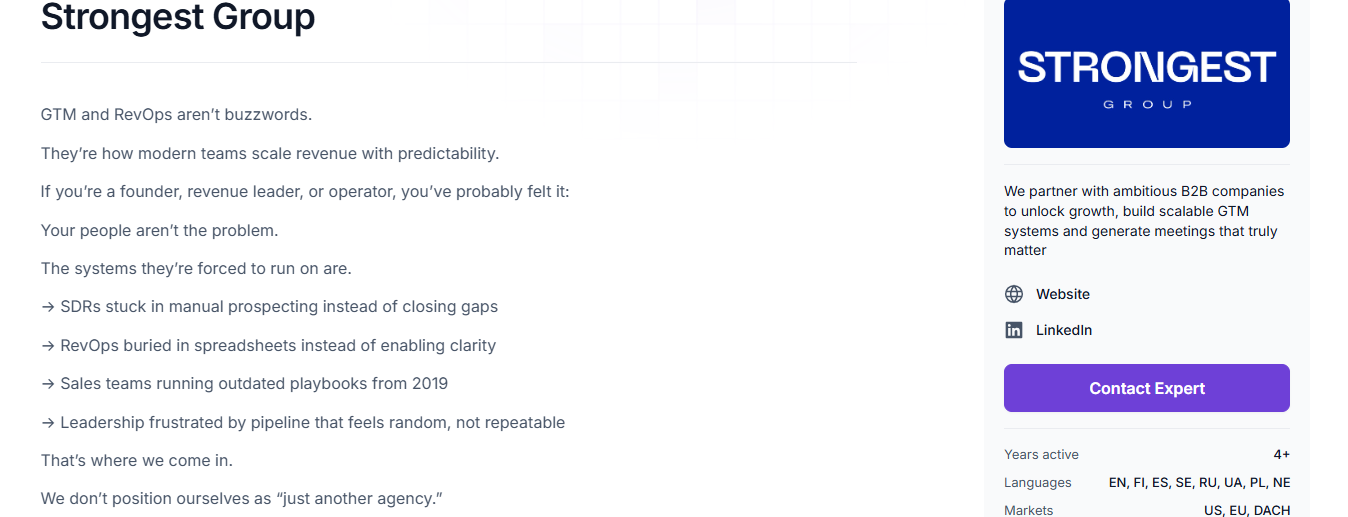
Strongest Group works across GTM strategy, Clay-powered outbound, RevOps infrastructure, and sales enablement.
That’s narrower than Cactus, offering fewer channels but potentially more depth in each.
If you want a focused partner rather than a complete marketing department, it may be the closer fit.
Best for: Companies with $5 million to $50 million in ARR that want clear contract terms.
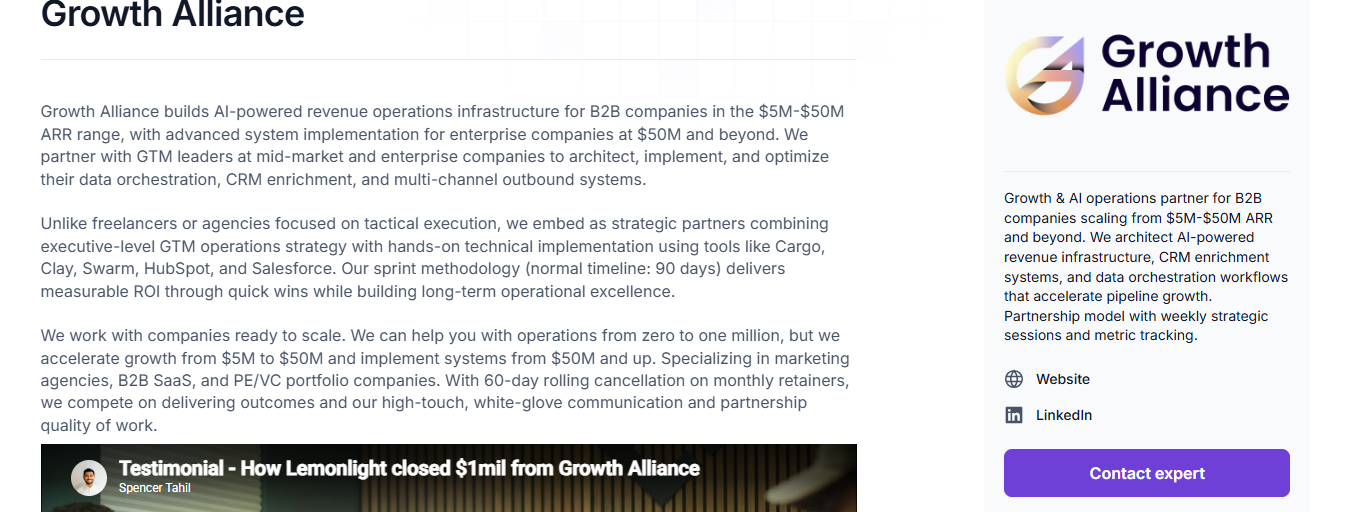
Growth Alliance builds RevOps systems across data orchestration, CRM enrichment, and multichannel outbound using Cargo, Clay, Swarm, HubSpot, and Salesforce.
It runs 90-day sprints and publishes a 60-day rolling cancellation policy.
Cactus publishes no pricing or terms, making Growth Alliance stronger on commercial clarity.
Best for: Teams wanting a recent, independent review history.
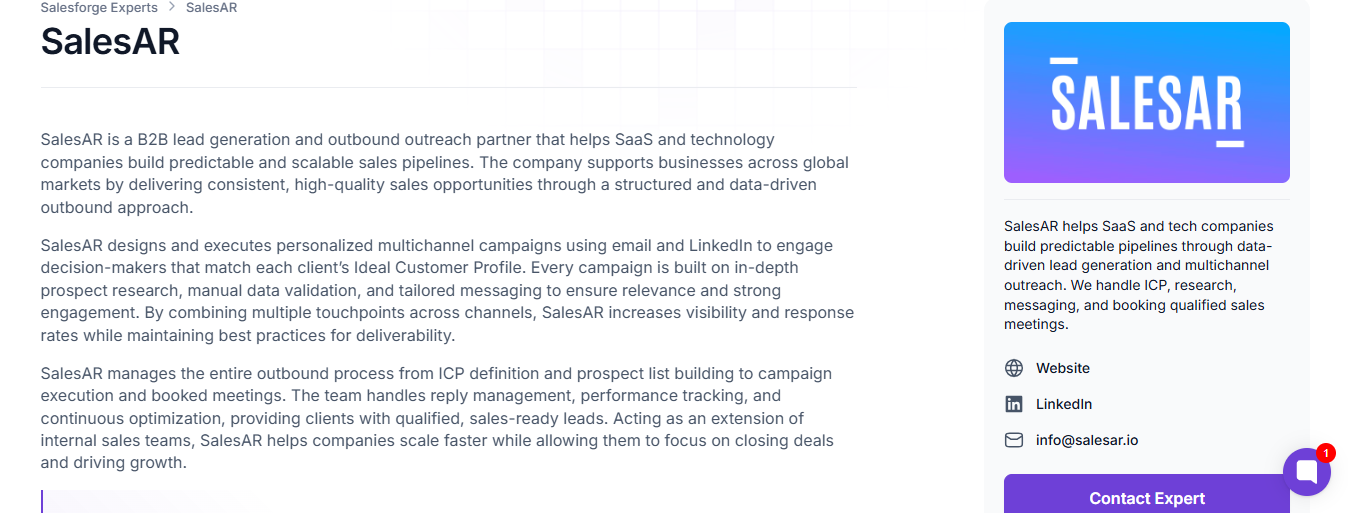
SalesAR runs email and LinkedIn campaigns backed by manual data validation.
It has a 4.9 rating based on 33 G2 reviews collected over time, rather than in a single cluster.
Cactus has six reviews and none since September 2023. If recency matters, that’s the key difference.
Take these questions to your discovery call:
Enter your email to get a custom plan & stack recommendation for your business
Please check your mailbox in 5 minutes
Clients clearly trust the people doing the work. I couldn’t verify the results.
Both points matter. If you need someone to build your marketing function, a reliable person who communicates clearly is worth their weight in gold.
If you must justify the investment to a board next quarter, three case studies without numbers may not be enough.
I’d start small. Buy one channel or one audit, then see how useful the weekly updates are.
Before signing, ask for a recent client reference and make sure every software subscription is in your name from day one.
Still deciding between an embedded team and running outbound in-house, the AI SDR vs agency comparison works the numbers for both.
.jpg)

.jpg)

.jpg)