
Personalized Outbound Strategy
Get The Right Outbound Strategy In Minutes
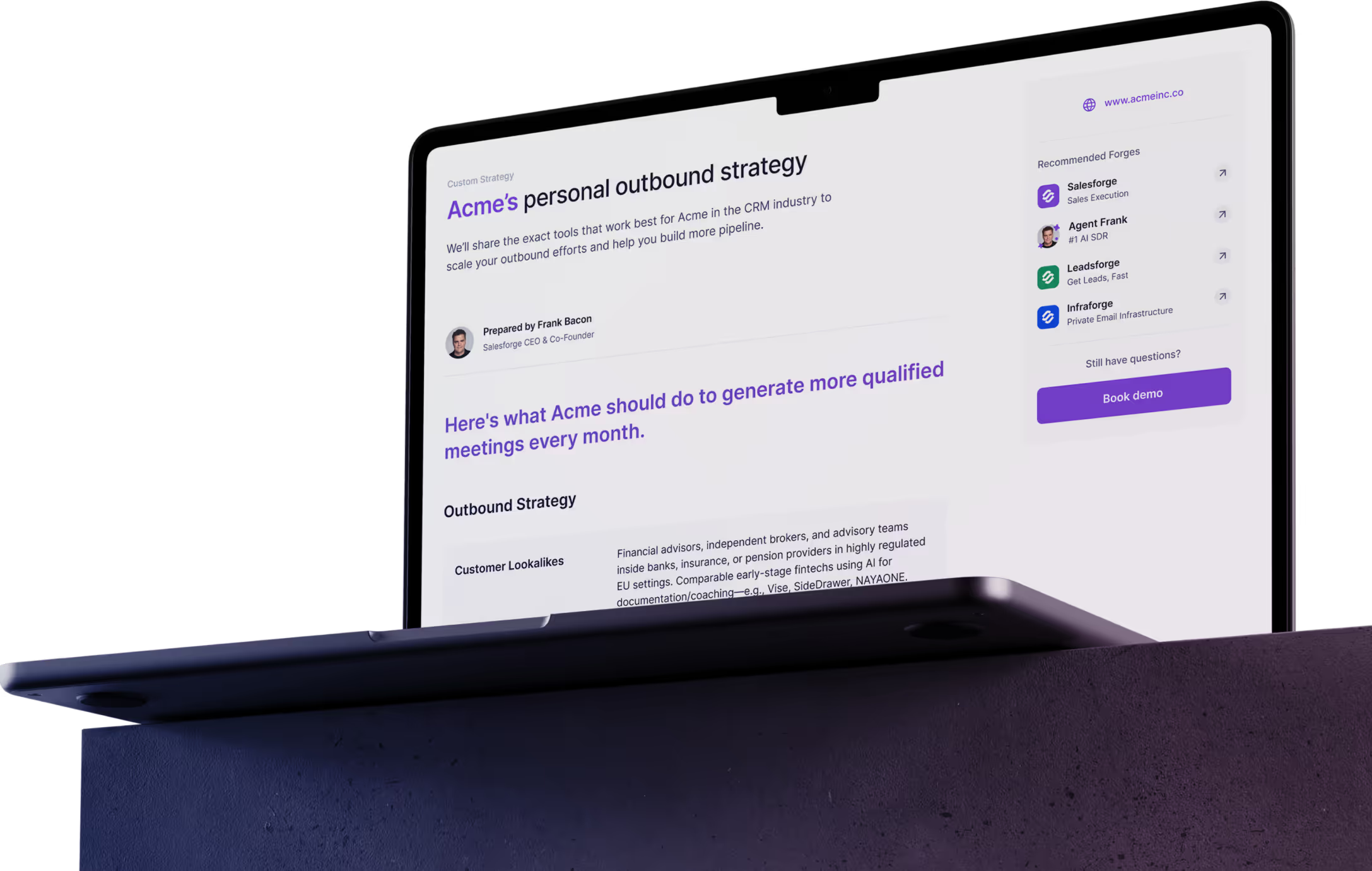
Enter your email to get a custom plan & stack recommendation for your business
It's being carefully crafted by AI
Please check your mailbox in 5 minutes
Your reply rates dropped, and you don’t know why.
The same copy worked last year. Your list quality hasn’t changed. But replies slowly dried up, and now you’re rewriting subject lines, hoping something lands.
Usually, copy isn’t the problem. Google and Microsoft have tightened their spam filters. The old playbook of one domain, a few inboxes, and a 10,000-name list can get you filtered before anyone reads a word.
You won’t necessarily notice, either. Your sequencer still shows emails as sent and delivered while they quietly pile up in a folder nobody checks.
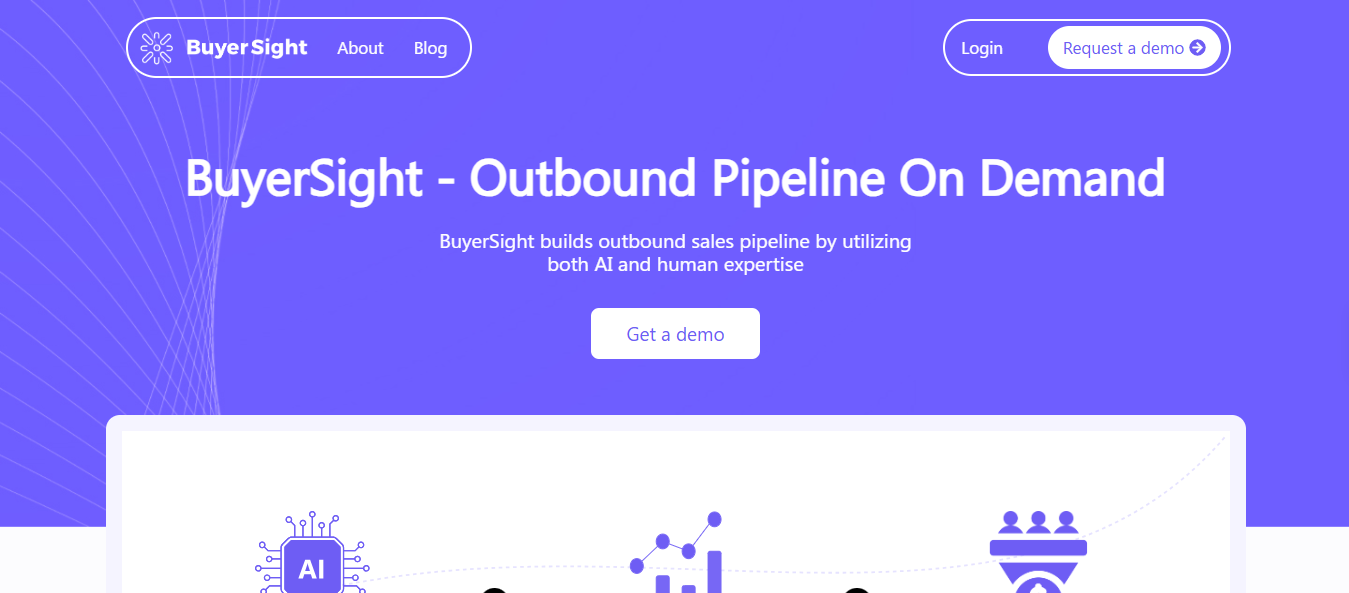
That’s the problem BuyerSight built its business around. They run hundreds of inboxes across rotating domains, keeping volume low on each. Humans handle the messaging strategy, while AI supports research and personalization. Their argument is simple: many outbound failures are really deliverability failures disguised as copy problems.
The customer who made me take BuyerSight seriously had already failed twice. He spent six months with each of two done-for-you agencies, and the last one generated zero meetings.
So I read BuyerSight’s case studies, launch post, and Clay profile to see whether their solution holds up. Here’s what I found.
Here’s the short version, so you can decide whether the rest is worth reading.
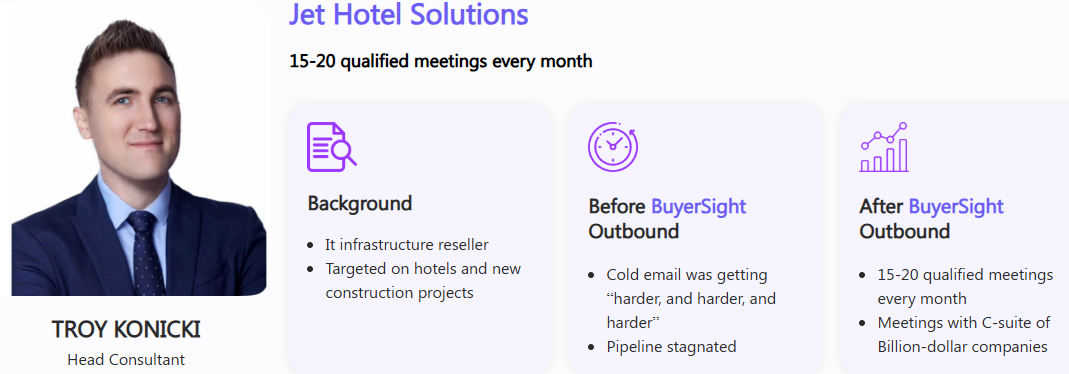
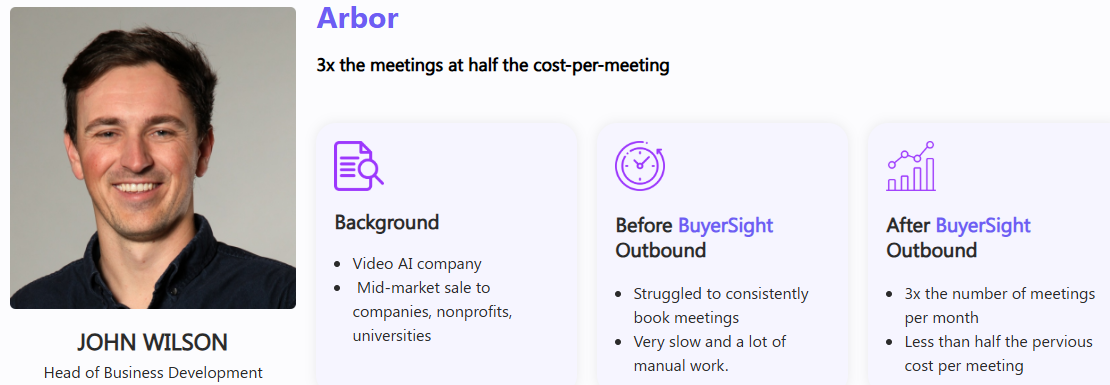
I found two customers on record. Both are named, pictured, and backed by before-and-after results.
That’s the entire public record. There’s no G2 profile, Clutch listing, or Trustpilot page. BuyerSight’s launch post says they left beta with more than 20 paying customers, so only two have publicly shared their experiences.
Hire BuyerSight if cold email once worked for you but has since stopped, and you think the issue is technical rather than with your offer.
First, they treat email deliverability as the product itself. They use hundreds of inboxes across rotating domains, keep volume low, and test them daily. Most agencies treat that as setup work. BuyerSight treats it as what you’re paying for.
Second, their strongest customer reference comes from someone who failed twice before hiring them. Troy Konicki spent six months with each of two other agencies and got nothing. That’s more useful than praise from a first-time customer because he knows what failure looks like.
My answer is yes, with one condition: ask for a reference call with another customer and find out how long it took for meetings to start.
If your real problem is the offer rather than inbox placement, rotating domains won’t fix it.
I haven’t hired BuyerSight, so this review is based on desk research. Unlike most agency reviews, I spent more time reading their blog than their sales pages.
Their launch post explains the thinking behind the business and reveals more than anything else they’ve published. It compares two competing models, AI SDRs and outsourced junior teams, explains why each falls short, and admits something most agencies wouldn’t: fully AI-led outbound is coming, but it isn’t ready yet.
That’s a company openly describing when its own model may expire. I read everything else with that in mind.
I then reviewed the two customer stories and checked what each actually claimed. One provides a monthly meeting count, while the other gives a multiple. Neither includes a timeline, which matters when the contract's three-month minimum.
I also found a separate analytics product on their domain aimed at sales managers rather than outbound teams.
I couldn’t find pricing or any reviews on independent platforms.
BuyerSight sells one main service, managed outbound, split into three parts.
The deliverability work is where I’d focus. BuyerSight says most outbound problems are really deliverability problems. If that’s true for you, everything else they offer depends on fixing it.
One thing to know before visiting the site: BuyerSight promotes another of its products. It’s a sales-coaching tool that monitors rep behavior, email length, and stalled deals.
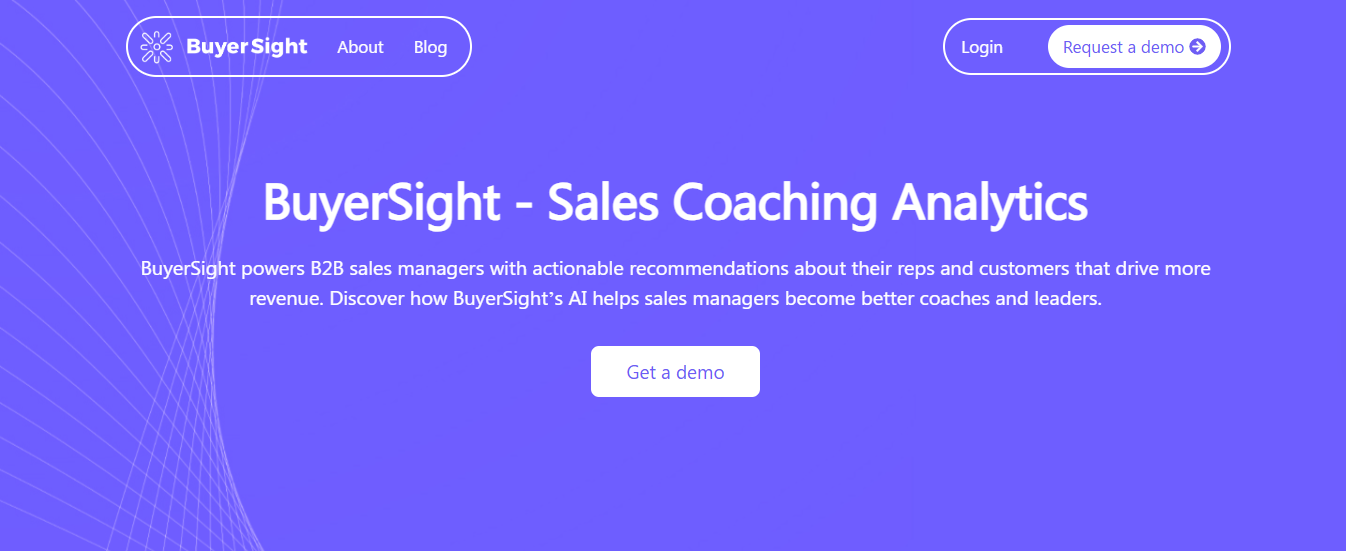
It’s aimed at sales managers, not outbound clients. BuyerSight doesn’t explain how the two services connect, so don’t assume the analytics product is included.
Every BuyerSight detail above comes from its website or Clay partner profile. I’d confirm each one during your discovery call.
Here’s how a typical engagement appears to work based on BuyerSight’s descriptions.
BuyerSight doesn’t publish a dedicated process page. I pieced these five stages together from its service descriptions and customer stories.
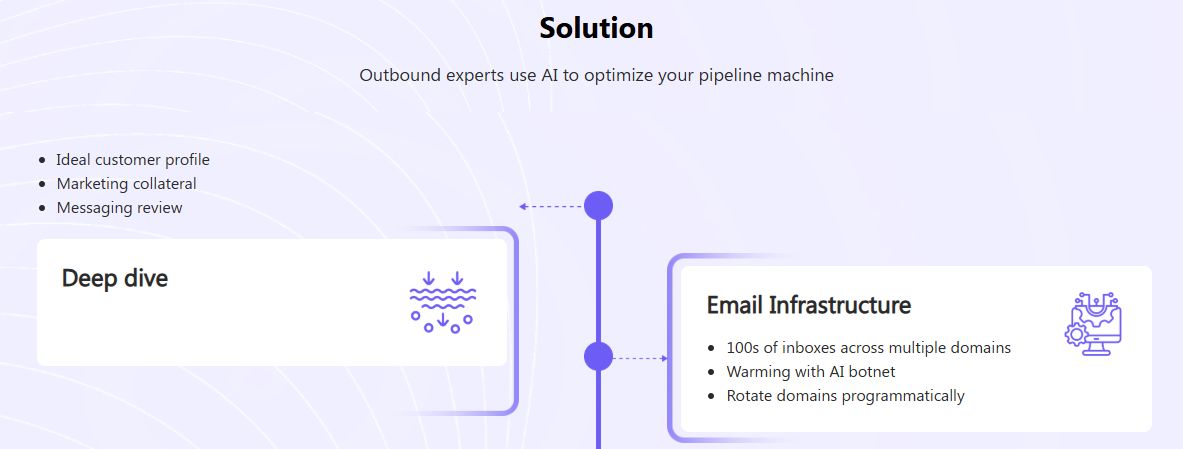
Before launching campaigns, BuyerSight sets up domains and inboxes. They may use hundreds or thousands, each sending small volumes so no single inbox appears suspicious to Google or Microsoft.
This is what you’re really buying. If your emails land in spam, better copy won’t help, and most teams can’t diagnose that problem themselves.
Ask: Whose name are the domains registered under, and do I keep them if I leave?

Human experts develop the message strategy and sequence. AI handles prospect research and personalization.

That split is central to BuyerSight’s approach. They believe AI is good at research but weaker at sales nuance, so humans remain responsible for strategy.
Ask: Which expert will work on my account, and how many other accounts do they manage?
BuyerSight lead finder watches your target market for events such as funding rounds, job postings, SEC filings, and product launches. When a signal appears, they build the message around it instead of sending generic scheduled outreach.
Ask: Which signals matter in my market, and how many target accounts realistically produce one each month?
They improve copy through controlled experiments and conversion data rather than changing it on instinct.
Ask: What experiment results will I see, and how often will I receive them?
A human schedules each meeting and gives you a report covering the conversation so far.
I’d look closely at this handoff. A meeting booked by an agency isn’t always a meeting the prospect genuinely plans to attend.
Ask: What does the handoff report include, and what is your no-show rate?
I found only one commercial term: a three-month minimum engagement listed on BuyerSight’s Clay partner profile. There are no published rates, tiers, or setup fees.
That minimum makes some sense. Deliverability infrastructure takes weeks to warm up before it can send properly, so part of your fee covers the ramp-up period before meetings arrive. Three months may be the shortest realistic engagement rather than a simple lock-in tactic.
What I can’t tell you is the price. The two published results also suggest very different budgets. Generating 15 to 20 meetings per month requires a serious program. Tripling results from a smaller starting point may not.
Domain ownership matters more here than with most agencies. BuyerSight builds your sending reputation across hundreds of inboxes. If they own that asset, you may have to start again when you leave.
Based on what BuyerSight has published, it could suit you if:
Skip BuyerSight, or compare it carefully, if:
BuyerSight publishes two case studies, each with a named customer and photo. All results below are reported by BuyerSight.
Troy Konicki’s full quote deserves attention. He says he built his business through cold email, watched it become harder, and then tried two separate six-month engagements with done-for-you agencies. Both failed. The agency immediately before BuyerSight produced zero meetings in six months.
That tells you how often this category fails, which is more useful than the praise alone.
I’d want two details clarified. Neither case study says how long the results took, despite the three-month minimum.
Arbor’s three-times figure also has no starting number, so I can’t tell whether it means three meetings or thirty.
BuyerSight offers email and nothing else. If your buyers need another channel, or you want transparent pricing before speaking to sales, consider these alternatives.
The Forge Expert Network lists agencies certified in the Forge ecosystem, including the tools and channels each uses.
Best for: Teams that want calling and PPC to support email.
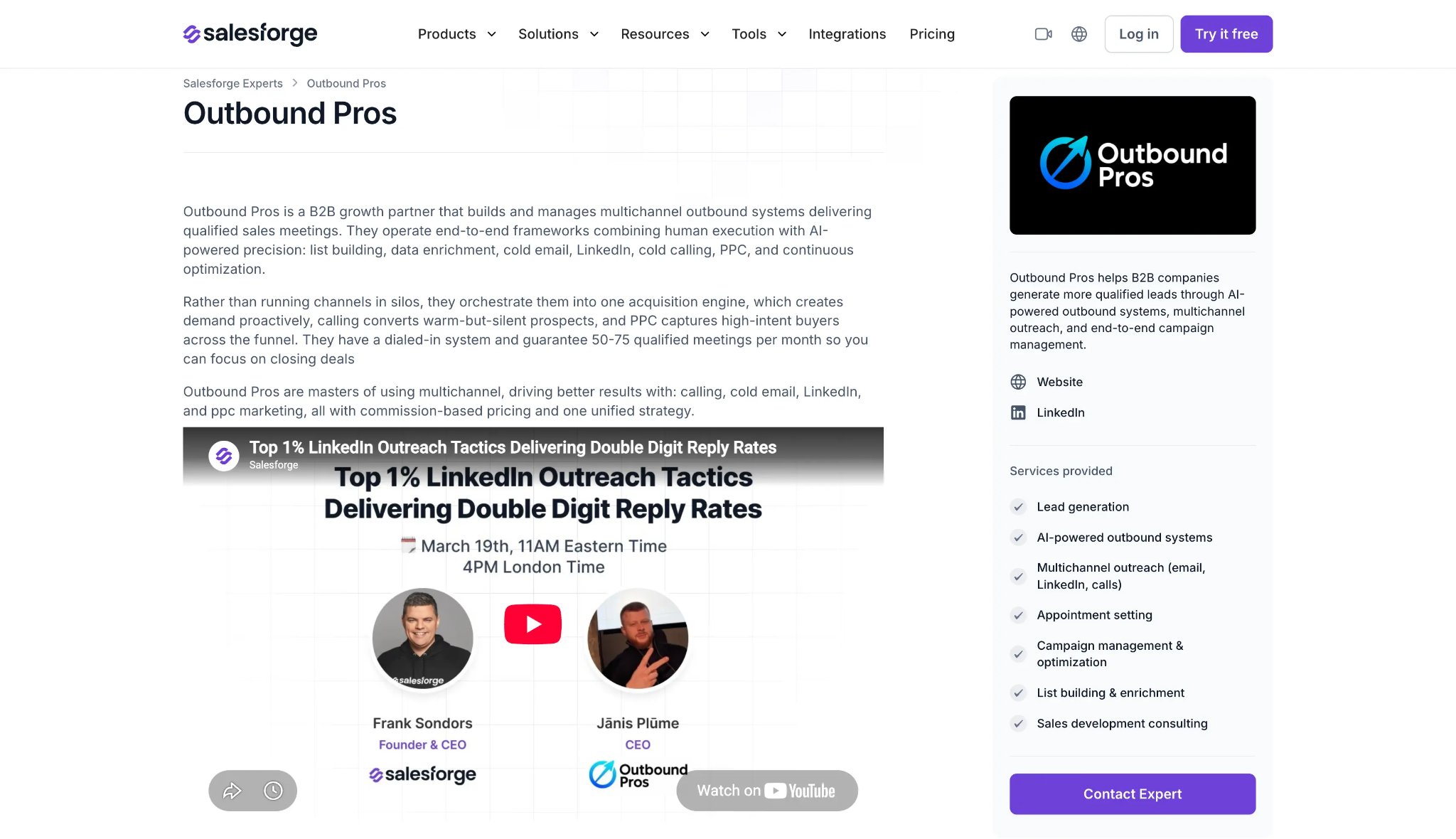
Outbound Pros combines list building, enrichment, cold email, LinkedIn, cold calling, and PPC into one coordinated program.
Its profile guarantees 50 to 75 qualified meetings monthly, with commission-based pricing.
BuyerSight publishes no guarantee. If you want a specific number written into the contract, start here.
Best for: SaaS and technology teams that want an independent review history before committing.
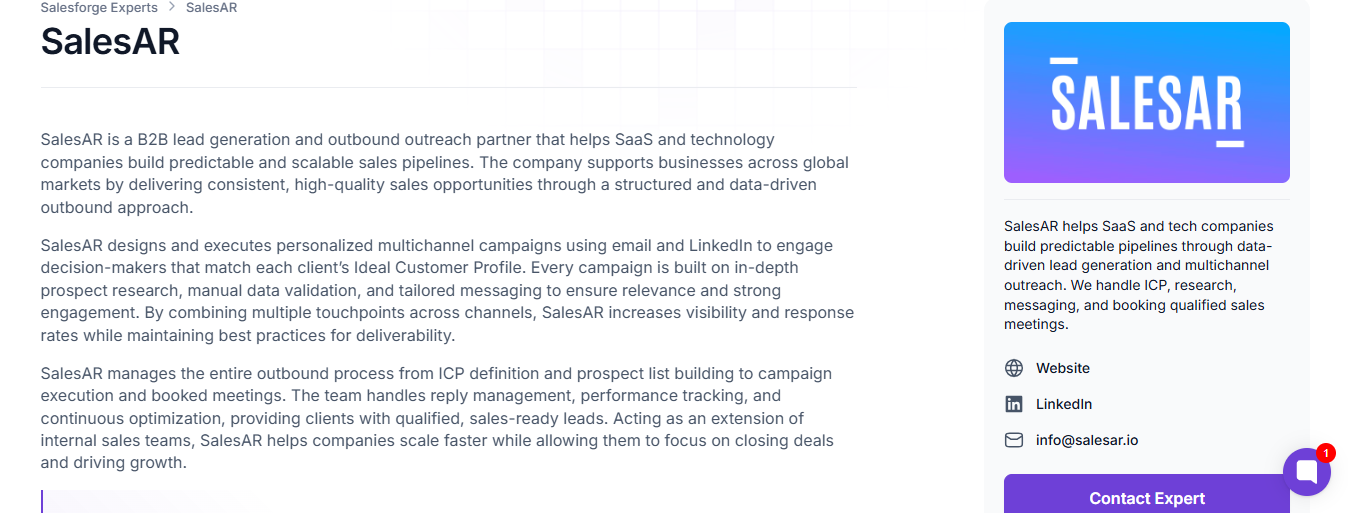
SalesAR runs multichannel email and LinkedIn campaigns supported by manual data validation and prospect research.
It has a 4.9 rating from 33 G2 reviews, while client Akridata reports more than 190 appointments.
That’s the key difference. BuyerSight has two published customers and no independent review profile.
Best for: Technical industries where timing matters more than volume.
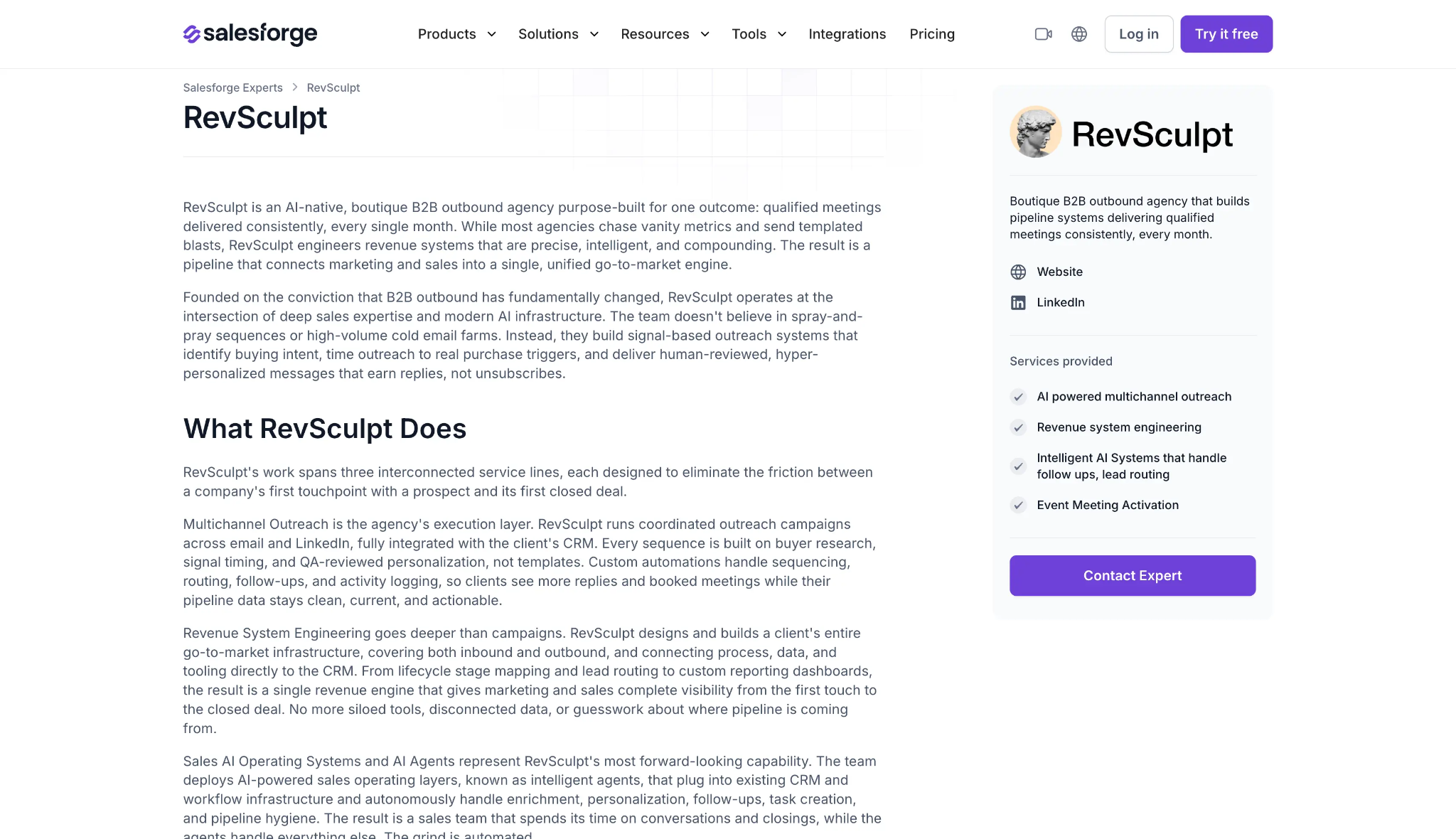
RevSculpt builds signal-based campaigns across email and LinkedIn, using events such as funding news and regulatory changes. A person reviews every message before it goes out.
BuyerSight also uses signal detection, making RevSculpt the closest comparison in terms of approach.
RevSculpt’s profile reports more than 6,000 meetings across 15+ industries and a 14-times return on outbound spending for one customer.
Take these questions to your discovery call:
Enter your email to get a custom plan & stack recommendation for your business
Please check your mailbox in 5 minutes
Everything comes down to one question: is your inbox placement broken, or is your offer the problem?
If placement is the issue, BuyerSight is built specifically to fix it. Its sending infrastructure would be difficult for most teams to recreate internally.
If the offer is the problem, hundreds of warmed domains will only deliver an unwanted message faster.
Work out which problem you have before the call. Then ask for domain ownership, a realistic ramp-up timeline, and a reference from a customer BuyerSight hasn’t featured publicly.
.jpg)

.jpg)

.jpg)