If your LinkedIn pipeline lives across Sales Navigator searches, copied profile URLs, a messy inbox, and a spreadsheet, Kanbox is trying to solve the right problem. It gives LinkedIn-first operators one place to import prospects, manage replies, move conversations through a visual pipeline, and run basic follow-ups.
This Kanbox review is for buyers deciding whether that is enough. I will cover Kanbox features, pricing, pros and cons, LinkedIn account-safety tradeoffs, and three alternatives worth comparing if your outbound system needs more than LinkedIn workflow management.
Kanbox is worth considering if LinkedIn is your main prospecting channel and your biggest problem is keeping imports, replies, follow-ups, and pipeline stages in one place. It is not the right first pick if pipeline coverage depends on email infrastructure, mailbox rotation, deliverability monitoring, or coordinated outbound across email and LinkedIn. That is the category boundary to understand before you buy.
Question
Verdict
Best for
Solo founders, recruiters, consultants, and small teams running LinkedIn-first prospecting
Main strength
LinkedIn imports, Smart Inbox, Kanban pipelines, and basic campaign tracking in one workflow
Main watch-out
It manages LinkedIn pipeline better than it runs a full outbound system
Pricing fit
Good entry price, but the useful plans depend on import volume, campaigns, team needs, and connected LinkedIn accounts
Do not choose it for
High-volume email outbound, deliverability infrastructure, mailbox/domain management, or AI SDR coverage
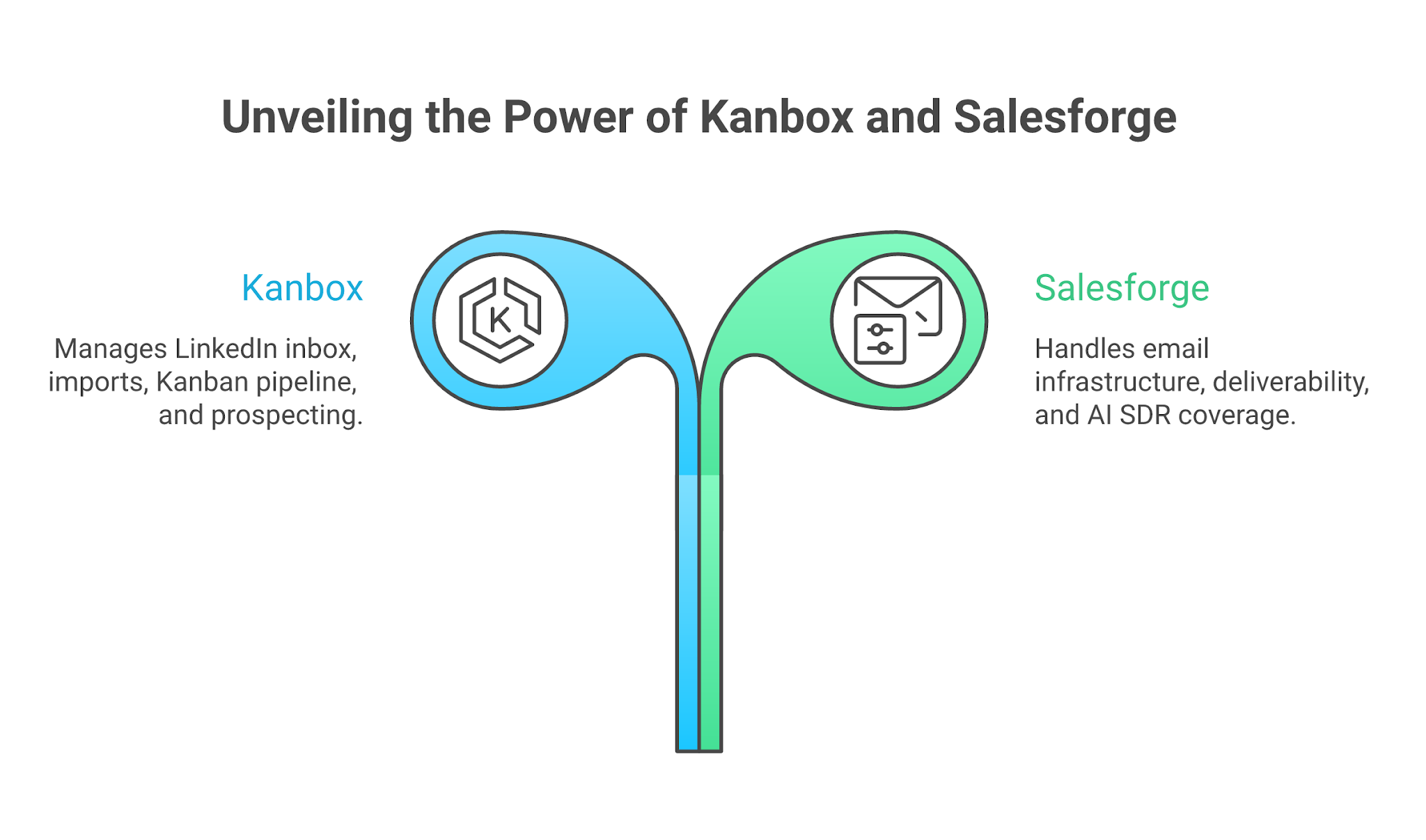
If LinkedIn replies are getting buried and every prospect lives in a different tab, Kanbox is practical. If your real bottleneck is getting thousands of emails into the primary inbox while coordinating LinkedIn touches around that motion, Kanbox stops too early. In that case, Salesforge is the better choice when the buyer problem is pipeline coverage.
Alt text: Kanbox buyer verdict
Dimension
Kanbox
Salesforge
Primary channel
Email plus LinkedIn
Best use case
LinkedIn imports, Smart Inbox, visual pipeline, basic LinkedIn sequences
Pipeline coverage across channels with email infrastructure and AI SDR execution
Automation depth
LinkedIn actions and follow-ups
Email and LinkedIn sequences, mailbox rotation, warmup, deliverability workflows, Agent Frank
Outbound infrastructure
Limited
Core part of the system
Deliverability
Email finder and enrichment support, but not a full deliverability stack
Warmup, mailbox infrastructure, sender rotation, ESP matching, and related controls
Team/agency fit
Useful on Essential, Pro, and Agency plans
Better for teams running outbound volume across multiple senders and mailboxes
Wrong-choice profile
Not enough for serious email outbound
Too much system if all you need is a cheap LinkedIn pipeline
Also Read: Salesforge vs Kanbox: Outreach Automation Tool Comparison
Alt text: Kanbox LinkedIn prospecting product page
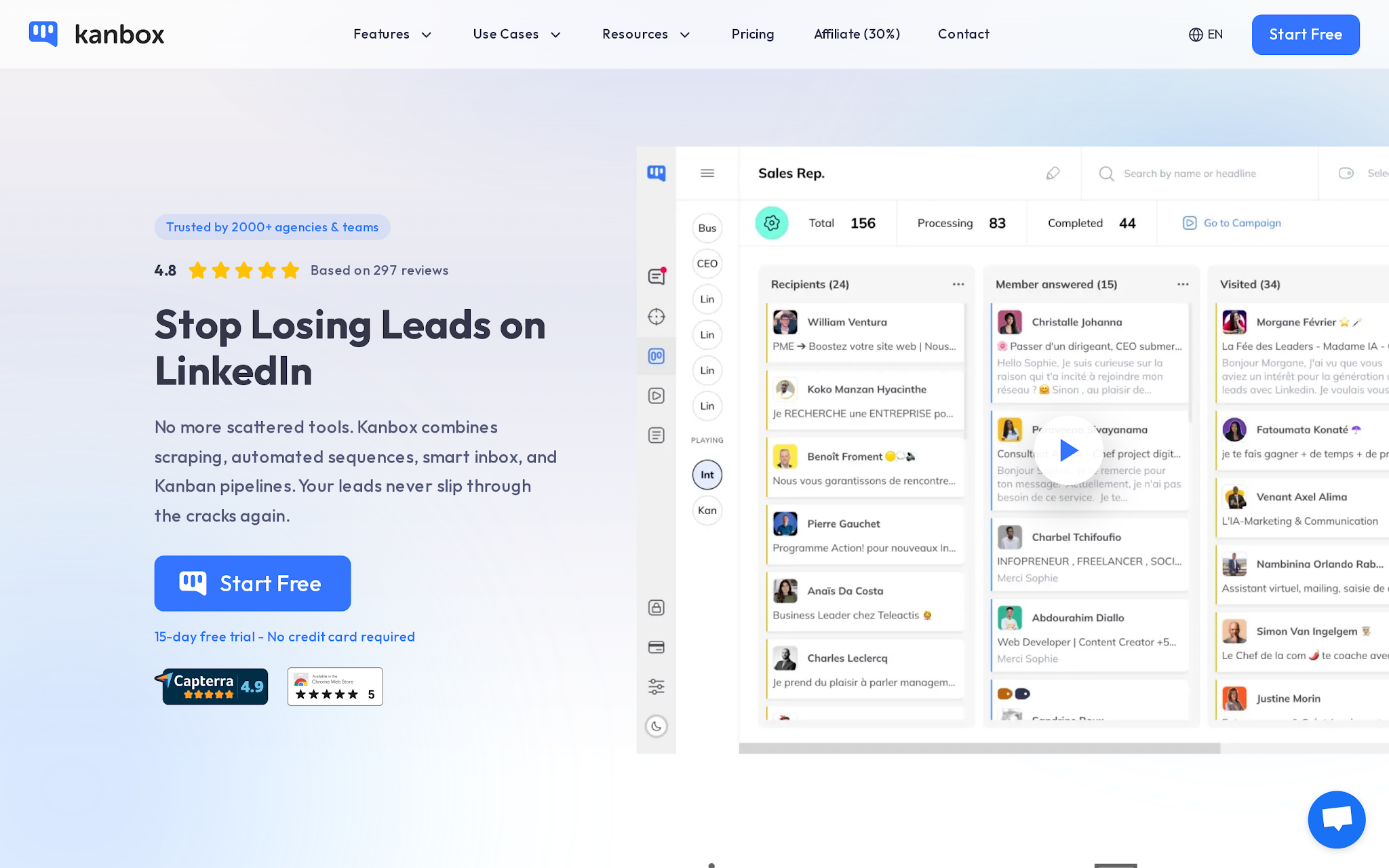
Kanbox is a LinkedIn prospecting tool that combines LinkedIn and Sales Navigator imports, a Smart LinkedIn Inbox, Kanban-style lead management, automated LinkedIn sequences, email finding, filters, exports, and team or agency controls on higher plans.
Kanbox positions itself as a way to stop losing LinkedIn prospects across scattered tools, with a product set covering scraping, automated sequences, a smart inbox, and visual pipelines. Kanbox reports 2,000+ agencies and teams using the product, plus a 4.8 rating based on 297 reviews in its own site presentation of customer feedback.
The product is best understood as a LinkedIn workflow layer. It helps you import the right people, organize conversations, see pipeline stage, and run follow-up steps. It is not mainly an email infrastructure platform, even though it includes email finding and some campaign-adjacent features.
Alt text: Kanbox Imports and Automation Limits on LinkedIn
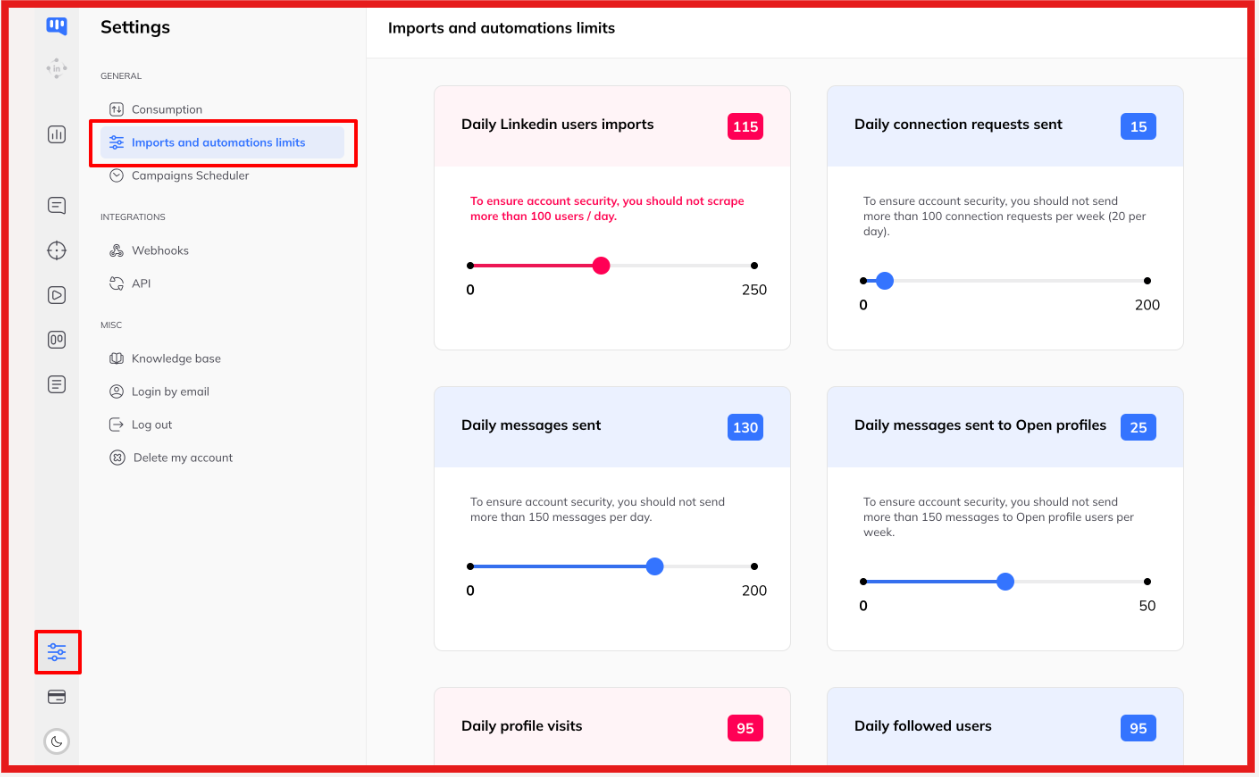
Kanbox lets users import prospects from LinkedIn, Sales Navigator, LinkedIn Recruiter, event attendees, post contributors, and profile URL lists. Sales Navigator and Recruiter imports require those separate LinkedIn subscriptions.
This is one of Kanbox’s strongest use cases. If your ICP work starts inside Sales Navigator, Kanbox gives you a way to move those people into a working pipeline without living inside spreadsheets. The watch-out is that import limits change plan economics. Starter gives 300 imports per month, Essential gives 600, and Pro or Agency moves to 75K imports per month.
For a founder doing careful outbound, 300 to 600 monthly imports can be enough. For an agency or SDR team, those limits push you toward Pro or Agency fast.
Alt text: Smart LinkedIn Inbox by Kanbox
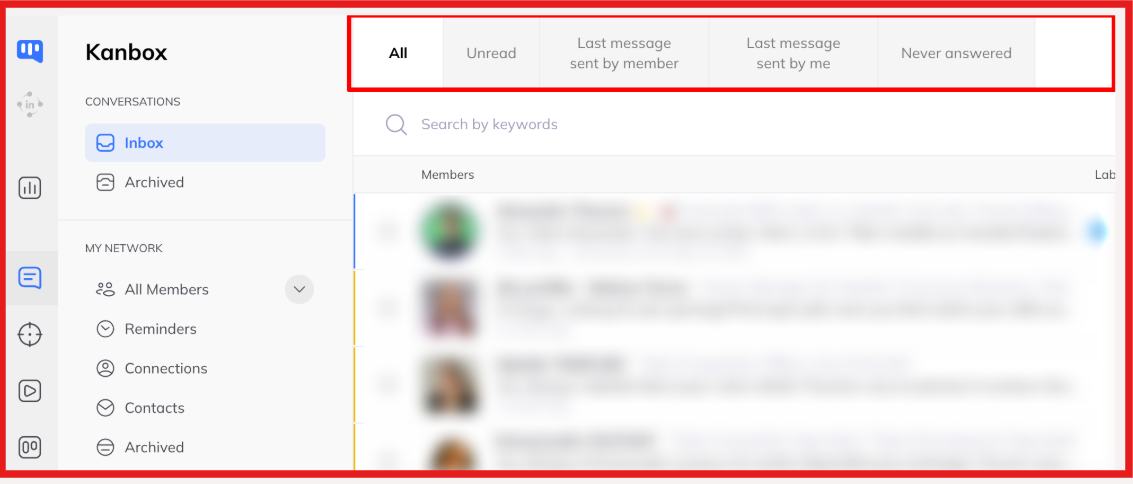
Kanbox’s Smart Inbox is the feature that will feel most practical if LinkedIn is already noisy. The plan comparison includes auto-sync conversations, reminders, labels, filters, fullscreen chat, notes, bulk actions, and templates. That solves a real operator problem. LinkedIn’s native inbox is weak for pipeline work. Once you have accepted connections, open conversations, follow-ups, and candidate or sales threads mixed together, the inbox becomes the bottleneck.
Kanbox looks strongest when the buyer values a cleaner LinkedIn workspace and fair price more than deep email coverage or enterprise-grade routing logic.
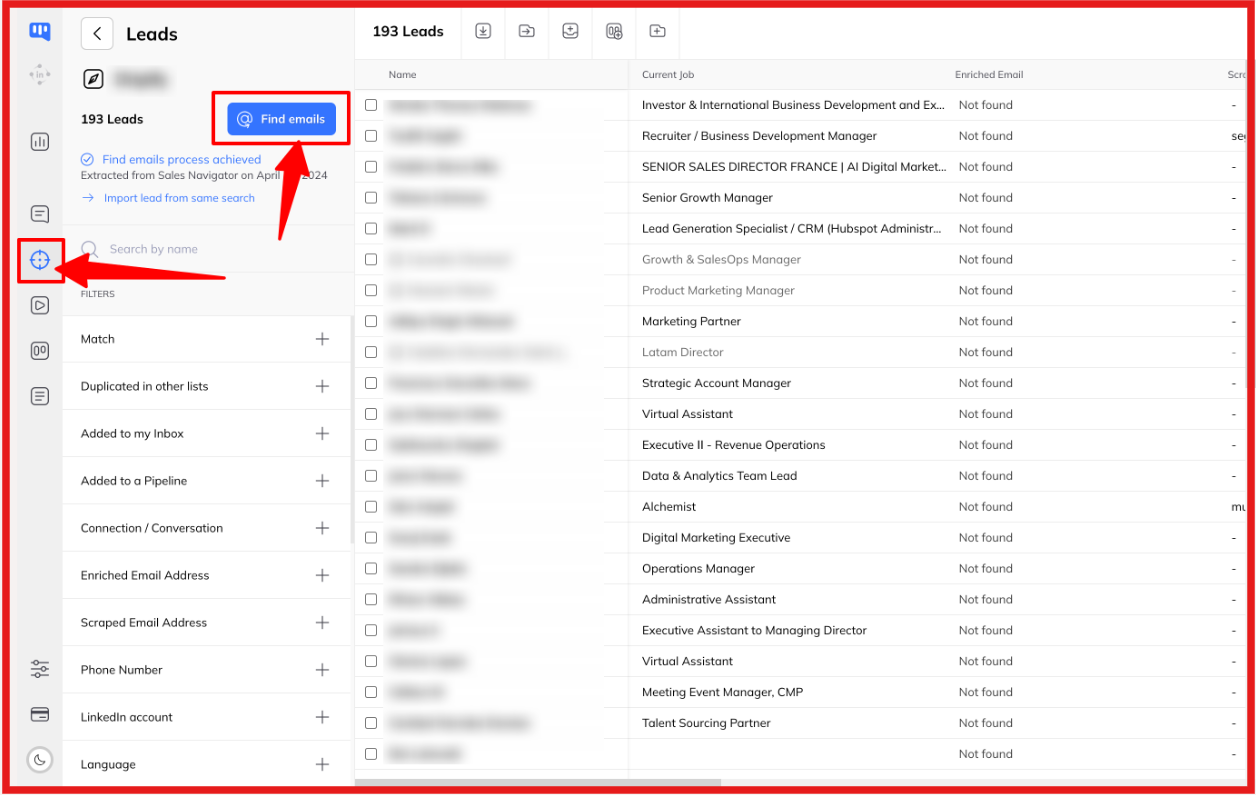
Alt text: Lead management by Kanbox
The Kanban pipeline is the reason Kanbox feels different from a narrow scraper. It lets you move prospects through acquisition stages and connect pipeline movement with campaign progress. This is useful for recruiters and consultants because the workflow is visual. You can see who was imported, contacted, replied, qualified, or parked. The risk is that visual clarity does not replace CRM depth. If you need advanced opportunity forecasting, revenue attribution, or full CRM customization, Kanbox should sit before or beside your CRM rather than replace it.
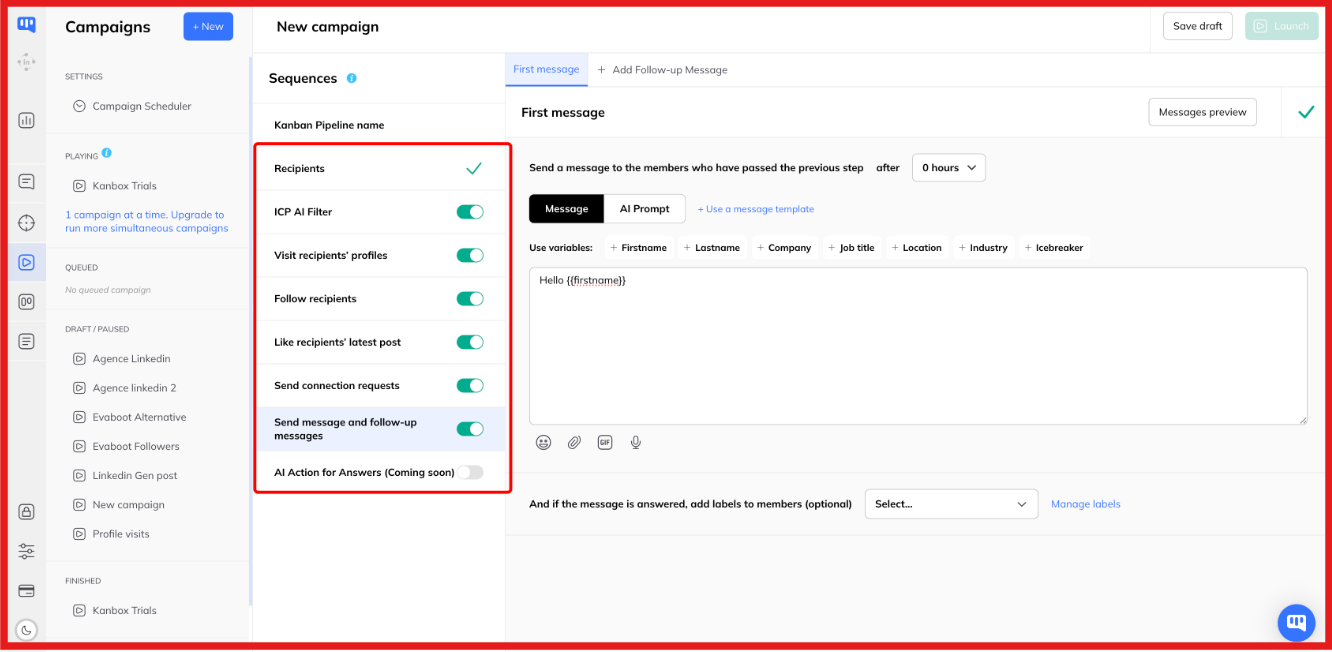
Alt text: Kanbox campaigns and sequences
Kanbox supports automated LinkedIn campaign sequences including profile visits, follows, post likes, connection requests, messages, and up to 6 follow-up messages. It also lists smart delays, cloud 24/7 execution, and automatic campaign pipelines in the plan comparison. That is enough for LinkedIn-first outreach. You can build a sequence, let Kanbox move prospects through stages, and manage replies in one place.
Kanbox includes an Email Finder and sells credit packs for finding professional emails. The credit model is simple, 1 email found equals 1 credit spent, and credits do not expire. This is useful as a bridge from LinkedIn prospecting into email outreach. It is not the same as running cold-email infrastructure. Finding an email address does not solve domain setup, mailbox health, warmup, sender rotation, inbox placement, ESP matching, bounce control, or reply handling.
That distinction matters. A LinkedIn tool with email enrichment can support outbound. It does not automatically become the outbound engine.
Team and multi-account features start becoming relevant on Essential and above. Essential includes team or multi-account support and unlimited account managers. Pro adds Webhooks/API and AI prompt templates. Agency 10 adds unlimited simultaneous campaigns and bring-your-own proxies for 5 to 10 LinkedIn accounts.
This makes Kanbox more useful for agencies than a basic solo extension. The workflow is still LinkedIn-centered, though. If you manage many client LinkedIn accounts, Kanbox can help keep those accounts organized. If you also manage email domains, mailboxes, warmup, and deliverability per client, you need a separate infrastructure layer.
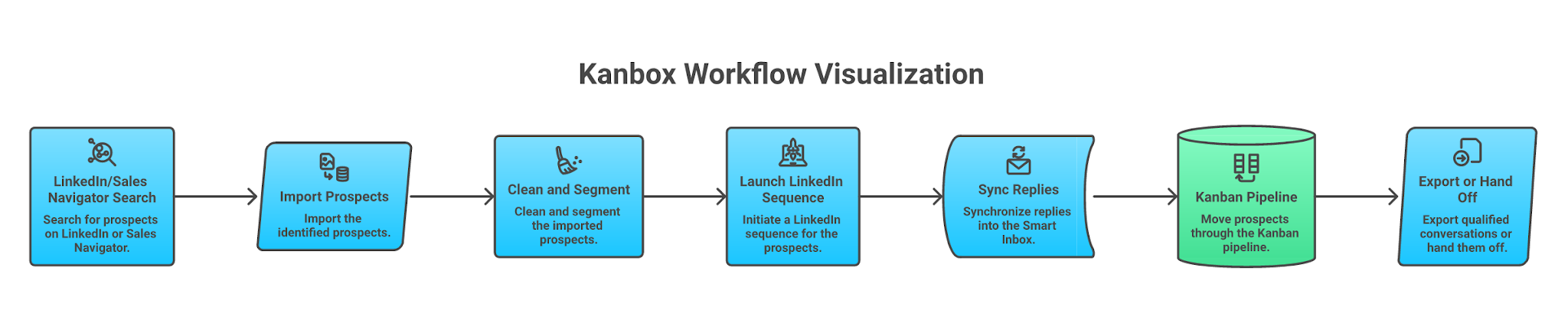
Alt text: Kanbox workflow from import to reply
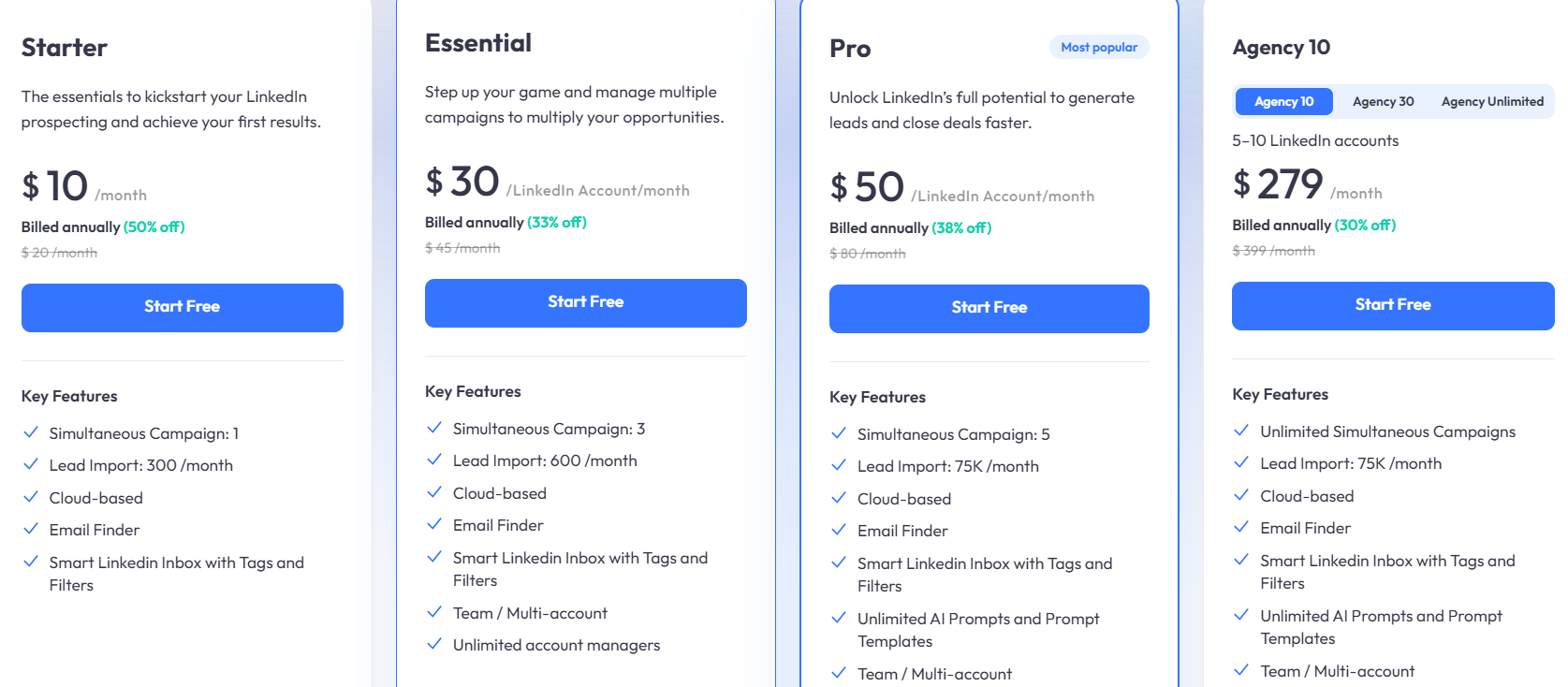
Alt text: Kanbox annual pricing
Kanbox pricing starts low, but the practical plan depends on volume and team structure. The public plans include a 15-day free trial and these current price points.
Plan
Public price
Practical fit
Watch-out
Starter
$10/month annually or $20/month monthly
Solo user testing Kanbox with one campaign and 300 imports per month
Too small if prospecting is a daily motion
Essential
$30 per LinkedIn account/month annually or $45 monthly
Small team or solo operator needing 3 campaigns, 600 imports, and multi-account/team support
Import limit is still modest
Pro
$50 per LinkedIn account/month annually or $80 monthly
Serious LinkedIn-first seller needing 5 campaigns, 75K imports, API/webhooks, and AI prompts
Better volume, but still LinkedIn-first
Agency 10
$279/month annually or $399 monthly
Agency managing 5 to 10 LinkedIn accounts
Bring-your-own proxies and agency setup add operational work
Agency 30 / Unlimited
Pricing shown as tier options/custom path
Larger agencies managing 11+ accounts
Confirm terms directly, especially above 100 active accounts
The Starter plan is attractive because it is cheap. But for most commercial prospecting, Essential is the more realistic minimum because it adds team or multi-account features. Pro is where the import limit stops being the blocker.
The hidden buying question is not “Can I afford Kanbox?” It is “How many LinkedIn accounts, imports, active campaigns, and enriched emails do I need every month?” If that answer includes serious email volume, Kanbox pricing is only one part of the outbound cost.
Pros of Kanbox
Cons of Kanbox
Low entry price compared with many LinkedIn automation tools
LinkedIn-first scope, not full outbound infrastructure
Strong fit for LinkedIn imports, inbox organization, and visual pipeline tracking
Email finder does not replace deliverability, mailbox rotation, or domain infrastructure
Useful for recruiters, consultants, founders, and small teams
Advanced team, API, and agency features require higher plans
Public user-review sentiment is positive on ease of use and value
Review feedback also mentions confusing licensing, limited guidance, and learning curve
Pro and Agency plans raise import volume meaningfully
Chrome-extension and LinkedIn dependence add channel risk
Kanbox gives LinkedIn operators a cleaner way to turn searches, imports, and replies into a pipeline. GetApp review snippets point to low cost, LinkedIn integration, and swimlane organization as strengths, while Capterra’s category scores reinforce ease of use and support as part of the value case.
The negative case is also real. GetApp’s con snippets mention limited manuals and confusing licenses. Capterra review examples mention email-scraping limits and longer scrape times on large LinkedIn lists. Kanbox’s own review page also admits it does not yet offer email plus LinkedIn multichannel outreach.
Kanbox earns its praise when you judge it as a LinkedIn operating workspace. The more you expect it to behave like a sales engagement platform, CRM, enrichment engine, and deliverability stack at once, the more those limits matter.
I.Good fit: LinkedIn-first sellers, recruiters, solo founders, and small teams
Choose Kanbox if the work starts and mostly stays on LinkedIn. That includes recruiters sourcing candidates from LinkedIn Recruiter, consultants managing warm conversations, agency operators running client LinkedIn accounts, and solo founders who want a visual pipeline without paying for a heavier sales engagement stack.
II. Poor fit: Teams that need pipeline coverage across email and LinkedIn
Do not choose Kanbox as your main system if your outbound motion depends on multiple domains, mailboxes, email warmup, deliverability monitoring, sender rotation, email plus LinkedIn sequencing, and centralized reply handling across channels. Also be careful if you need deep CRM integration, custom analytics, or heavy multi-client reporting. Kanbox can support parts of that workflow, especially on Pro and Agency, but it is not built around the same problem as a full outbound infrastructure stack.
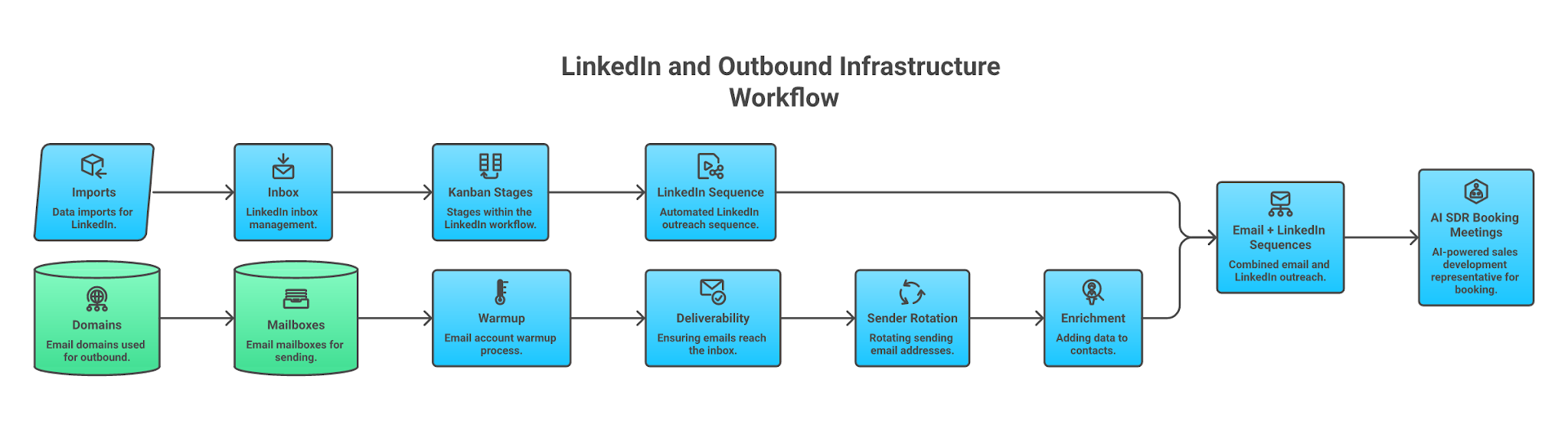
LinkedIn workflow tools help you manage a channel. Outbound infrastructure helps you create repeatable pipeline coverage across channels. That difference shows up the moment volume increases. At small scale, you can live with one LinkedIn account, a few sequences, and manual email follow-up.
At serious scale, the bottleneck becomes infrastructure, domains, mailboxes, warmup, bounce control, inbox placement, mailbox rotation, enrichment, campaign governance, and reply workflows. Salesforge is built around that broader operating system. The product promise is unlimited LinkedIn, email, and AI SDR outreach, with Agent Frank available to handle prospecting through booked meetings. The Forge Stack includes Mailforge, Warmforge, Infraforge, Primeforge, and Leadsforge as the infrastructure layer around outbound.
This is where the buyer choice becomes clear. Kanbox helps you manage the LinkedIn pipeline. Salesforge helps you forge pipeline coverage when email deliverability, mailbox infrastructure, LinkedIn senders, and AI SDR execution all matter together.
Alt text: LinkedIn workflow vs outbound infrastructure
.jpg)

.jpg)

.jpg)
