
Personalized Outbound Strategy
Get The Right Outbound Strategy In Minutes
Enter your email to get a custom plan & stack recommendation for your business
It's being carefully crafted by AI
Please check your mailbox in 5 minutes


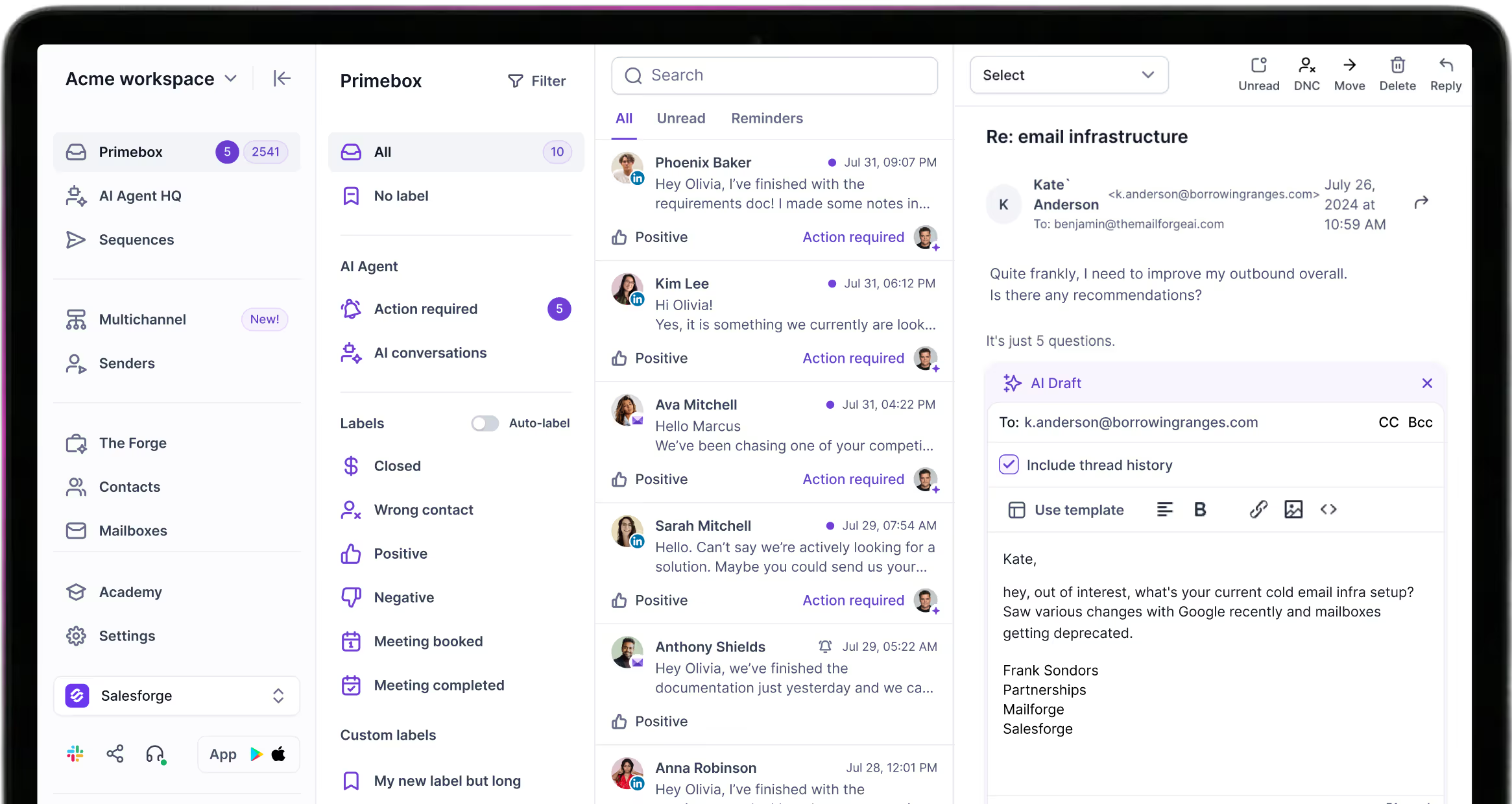
For a thorough understanding of what each option offers, a simplified comparison table isn't enough to grasp all intricacies that come with each tool, so let's dive deeper into what makes Alta's Katie and Salesforge's Agent Frank unique.
Both Agent Frank and Katie are pretty similar, in the sense that they're both AI SDR agents designed to increase meetings booked and create more pipeline while saving time and reducing manual work for sales teams.
But the way they approach this differs.
Alta positions Katie as part of a broader Alta AI revenue workforce alongside:
Emphasizing unified data-driven workflows and enterprise-grade trust and integrations.
Agent Frank highlights include:
And a tightly integrated Forge Stack (Leadsforge for lead generation, Mailforge/Infraforge/Primeforge for email infrastructure, Warmforge for deliverability).
Alternatively, you can let Agent Frank's results speak for themselves:

Those points make Agent Frank feel like an AI SDR that’s sold together with email infrastructure and prospecting tools - not just an overlay on top of your existing stack.
The distinction matters:
Agent Frank provides flexible pricing oriented around outreach scale. Pricing is charged by Active Contacts (the number of prospects the Agent is processing at any given time), and annual billing includes 2 months free. There is no free trial and demos are required before purchase.
Note that infrastructure to process those contacts via email is not included in this base price. The Salesforge Stack offers multiple infrastructure options based on your budget/needs, so you don't need to stitch third-party products to make it work. The best options for Agent Frank include:
The Forge team will help set up the mailboxes and, additionally, the Mailforge (shared IP) and Primeforge (Gmail and Outlook) email infrastructure options are also available. Additionally, teams can connect their own mailboxes from other providers if desired.
Katie requires contacting for pricing and provides custom quotes based on volume, team size and channels used.
They don't sell their own email infrastructure, so you need to bring your own.
That data-driven discovery means Alta's Katie can identify your ICP and high-value prospects while leveraging historical wins and campaign performance to prioritize outreach that’s more likely to convert.
Salesforge also calls out features like enrichment, list cleaning, and automated lead list workflows as part of what Agent Frank can automate, which reduces manual data tasks that otherwise fall on SDRs.
Agent Frank’s approach is outbound-first (continuous prospecting with automated sequences), which makes it strong where teams rely on targeted outbound outreach and want the AI SDR to own the end-to-end flow from list building through meeting scheduling.
When weighing which approach suits your sales teams, if you want an AI SDR tightly paired with high quality lead generation, verification and qualification, and dedicated email infrastructure so prospecting + deliverability are provisioned together - Agent Frank is the perfect option.
Enter your email to get a custom plan & stack recommendation for your business
Please check your mailbox in 5 minutes
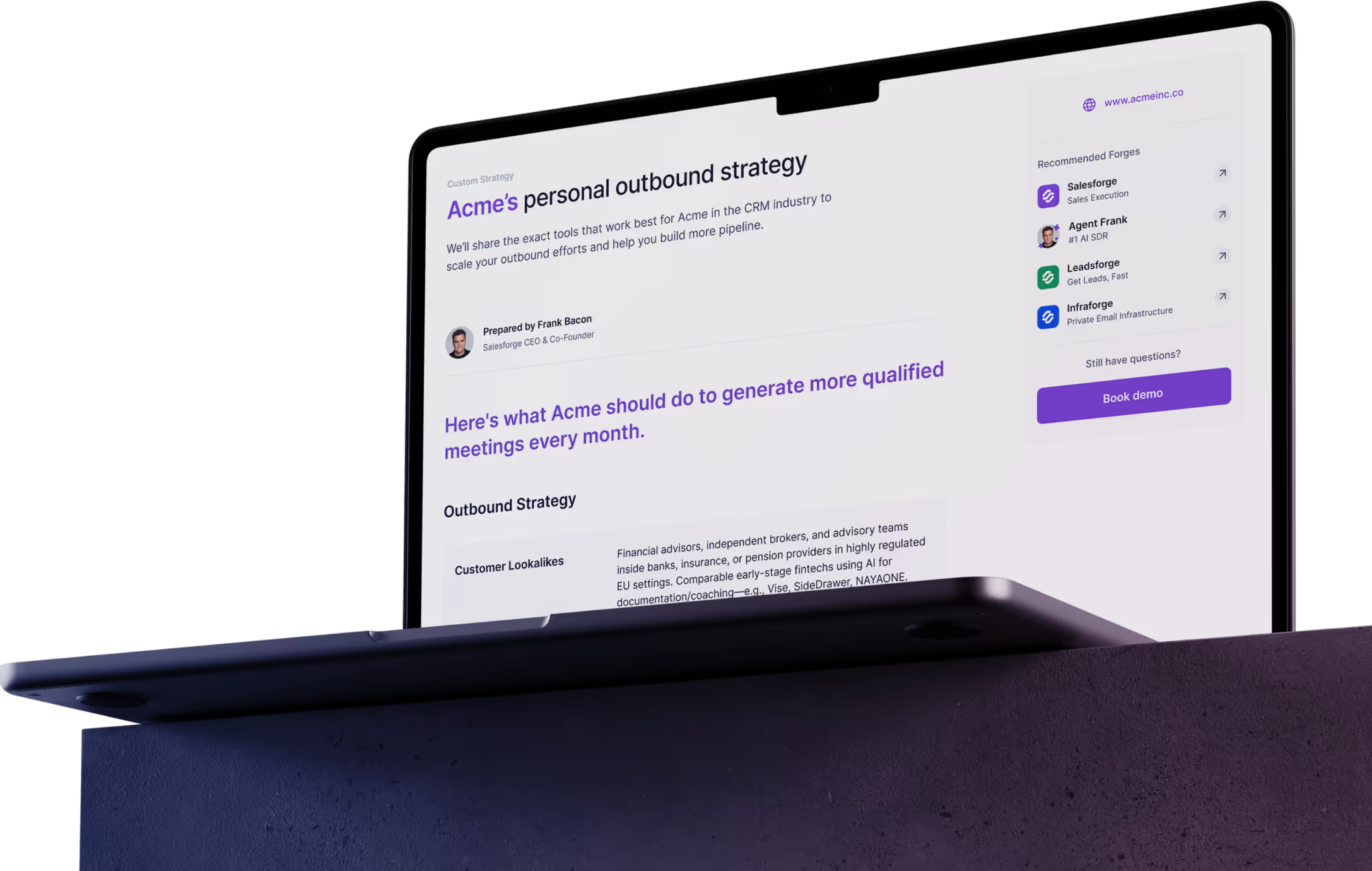
Agent Frank’s outreach emphasis is a slightly different but complementary one.
If your primary goal is an AI SDR that prioritizes high-volume, localized, brand-safe outbound outreach with tight control over sending and a hands-on account manager to minimize manual follow-ups and ops headaches, Agent Frank is the perfect option.
Deliverability and infrastructure are where differences become operationally decisive. Deliverability is the linchpin of cold outreach success - a brilliant sequence is worthless if emails land in spam - and this is one area where Agent Frank intentionally differentiates itself.
And more. Building sender reputation gradually while spreading volume across addresses and IPs to avoid single-mailbox throttles or sudden reputation hits is crucial for a scaling business. And that's paired with proprietary infrastructure options:
Those infrastructure features reduce the risk of landing in spam and make multi-channel outreach more reliable, especially when you have a leads database and want to integrate email at scale.
For sales teams or lead generation agencies focused on large scale operations and high-volume cold outreach, Agent Frank’s model minimizes the operational burden of maintaining email metrics, domain health, and warm-up cycles so teams can scale sends across many mailboxes with less risk.
Customer support is a practical part of the business case for any AI SDR - support quality affects onboarding speed, how reps adopt the tool, and how quickly you can scale outreach without damaging sender reputation or interrupting the outreach process.
Alta’s support model for Katie emphasizes self-service resources + formal support channels:
With the site noting that their team will respond within the next 3 business days after form submission. Besides that, they also offer an AI chat assistant, but otherwise not much.
Salesforge's approach further reduces the manual tasks sales teams often struggle with - no separate deliverability vendor, fewer manual data entry steps, and a partner focused on ironing out initial list hygiene and infrastructure.
Besides that, Agent Frank customers also get:
For growing sales teams and lead generation agencies that prefer to shift heavy operational overhead away from internal staff, Agent Frank’s model is a strong fit.
They offload the manual tasks that consume SDR time and let reps focus on higher-value activities like closing deals and handling qualified leads.
Both platforms are credible AI SDR agents with overlapping capabilities: they identify prospects, personalize outreach, automate follow ups, and aim to create more pipeline and meetings.
Those are concrete features that drive better execution, fewer interruptions from deliverability issues, and ultimately more reliable meetings booked from outbound outreach.
For many sales teams looking to increase pipeline, save time, and book more meetings while minimizing hiring and manual execution, Agent Frank delivers better results and tighter execution.
Agent Frank is an outbound-first AI agent that pairs prospecting, sequence automation and deliverability with a tightly integrated platform. Alta’s Katie focuses on multi-source research and CRM-driven insights as part of an AI revenue workforce. Agent Frank emphasizes automation that streamlines tasks for sales reps, integrates with your tech stack, and turns prospect signals into meetings - helping entire revenue teams get smarter outreach, faster pipeline and operational efficiency without rebuilding revenue operations.
Agent Frank primarily automates outbound prospecting, reply handling and meeting scheduling, while integrating with CRM and inbound routing. Alta’s Alex specializes in AI calling and inbound call qualification that books meetings directly. You can combine Agent Frank with inbound workflows in your tech stack to route high-intent inbound leads, sync qualification data, and let Agent Frank or your reps follow up - reducing hiring needs while improving lead-to-meeting conversion and team productivity.
Yes - Agent Frank automates continuous prospecting, multi-source personalization and follow-ups to engage prospects at scale. It captures signals from prospect activity to prioritize sequences, which drives higher engagement and conversion. Paired with your data and CRM, it enables smarter outreach strategies that increase meetings, pipeline and revenue growth while improving team efficiency and freeing sellers from repetitive tasks so they can focus on closing.
Agent Frank integrates with CRM systems and outreach platforms to sync leads, responses, and meeting outcomes. Use cases include outbound list building, personalized follow ups, reply routing, and pipeline acceleration. Examples: a sales team automates ICP-driven prospecting; a RevOps team monitors insights and mailbox health; a customer success team reviews handoffs. Salesforge also provides account managers and onboarding support to align the platform with your revenue operations and growth strategies.
Watch for breadth of data vs. execution focus: Alta excels at CRM + 50+ sources and inbound analytics; Agent Frank bundles prospecting with sending infrastructure, warm-up and deliverability. Evaluate metrics (response rates, meetings/week, pipeline), integration ease with your tech stack, support and scalability, and whether the solution reduces hiring or shifts tasks to automation. Match the platform to your market and growth goals - smarter outreach and cleaning of leads often trumps raw volume for long-term revenue.