Last verified: 10th September 2026. Commission terms change often, so always confirm the numbers before signing up.
SaaS affiliate programs are the ones affiliate marketers talk about most, and recurring revenue is the reason. Software bills the customer every month, and a recurring program pays you a cut of every invoice for as long as the terms allow.
Most affiliate work pays once and then sends you looking for the next customer.
One referral who stays two years can out-earn fifty one-off bounties.
The hard part is picking which programs to back. Most affiliates write for one niche, so the tool has to fit the audience before the rate matters at all. Then you still have to weigh the commission against the cookie window, the payout threshold, and how long the payments actually last.
That last one catches people out. "Recurring" almost never means forever. Most SaaS programs run a fixed term of six or twelve months, and then the payments stop, whatever the landing page implies.
So I picked the sixteen strongest programs across the niches affiliates actually write in, and checked every one against the same parameters.
Commission, duration, cookie window, attribution model, payout threshold, and what the percentage applies to.
Let's jump in.
TL;DR: 16 SaaS Affiliate Programs at a Glance
What each program pays, and what it pays it on.
Salesforge (Forge Ambassador): 15% for the first 12 months on every Forge product from a single link, with domain purchases excluded. The commission covers mailboxes and email infrastructure, not just the software subscription.
Systeme.io: 60% for as long as the referral stays subscribed, with permanent attribution instead of a cookie. There is no application to clear, but plans start at $17 a month.
HubSpot: 30% recurring for up to 12 months, on a 180-day cookie, the longest here. The free CRM removes the price objection before you pitch a paid plan.
Semrush: $200 per subscription sale through Impact, paid once rather than monthly. Last-click attribution on a 120-day cookie.
Webflow: 50% of a new customer's first subscription for up to 12 months, on a 90-day window. Webflow excludes one-to-one client referrals and sends freelancers to its Certified Partner Program instead.
Kit: 50% for the first 12 months, then 10% to 20% ongoing once you hold Bronze, Silver or Gold status. Referrals from paid ads do not count toward that status.
GetResponse: 40% for 12 months at Bronze, 50% at 50 sales a year, and 60% at 100 sales a year. GetResponse runs the program on PartnerStack with a 90-day cookie.
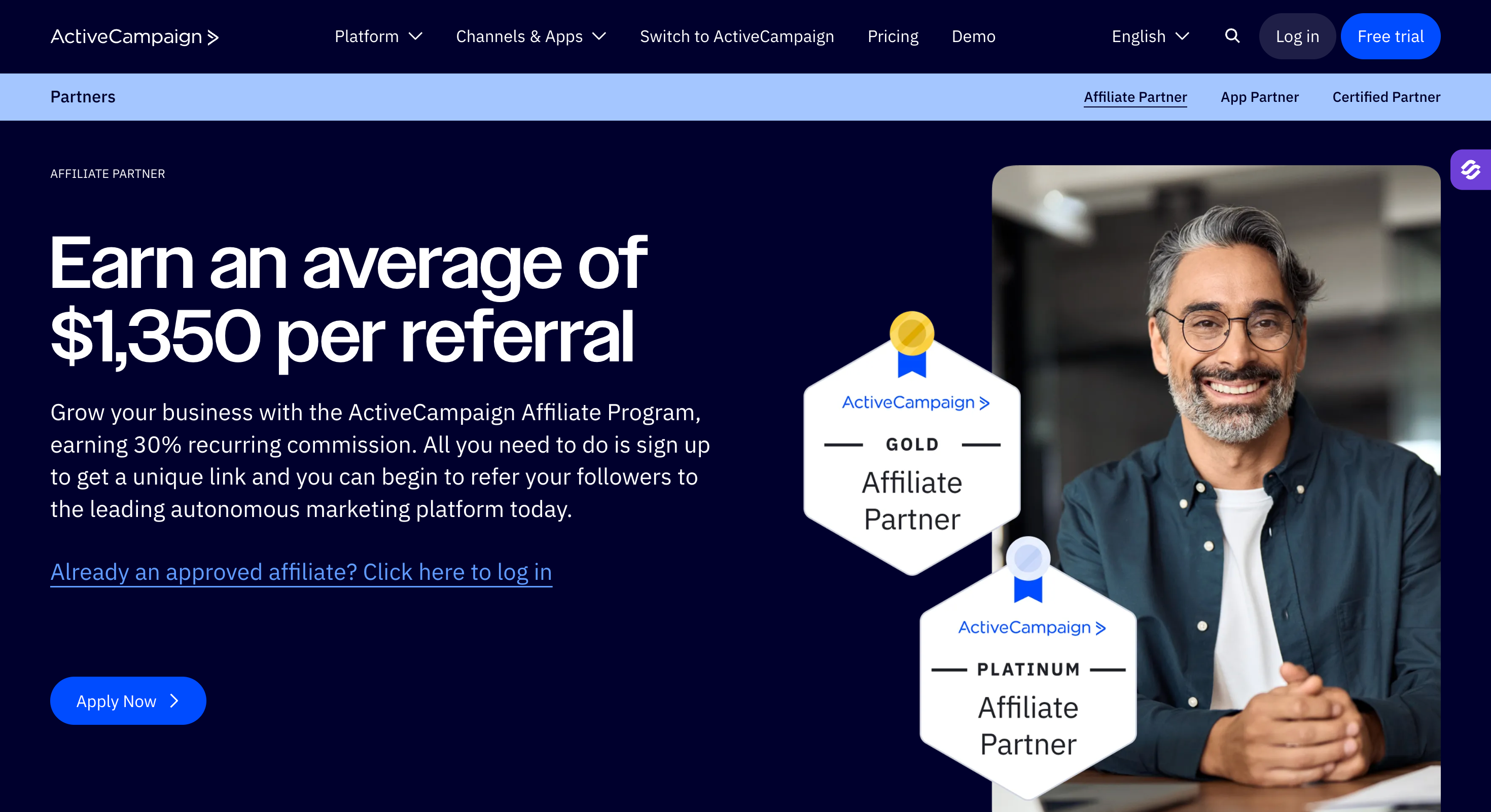
ActiveCampaign: 20% to 30% for up to 12 months, on a 90-day cookie that restarts if the visitor clicks again. It will not pay you until you have two active referred accounts.
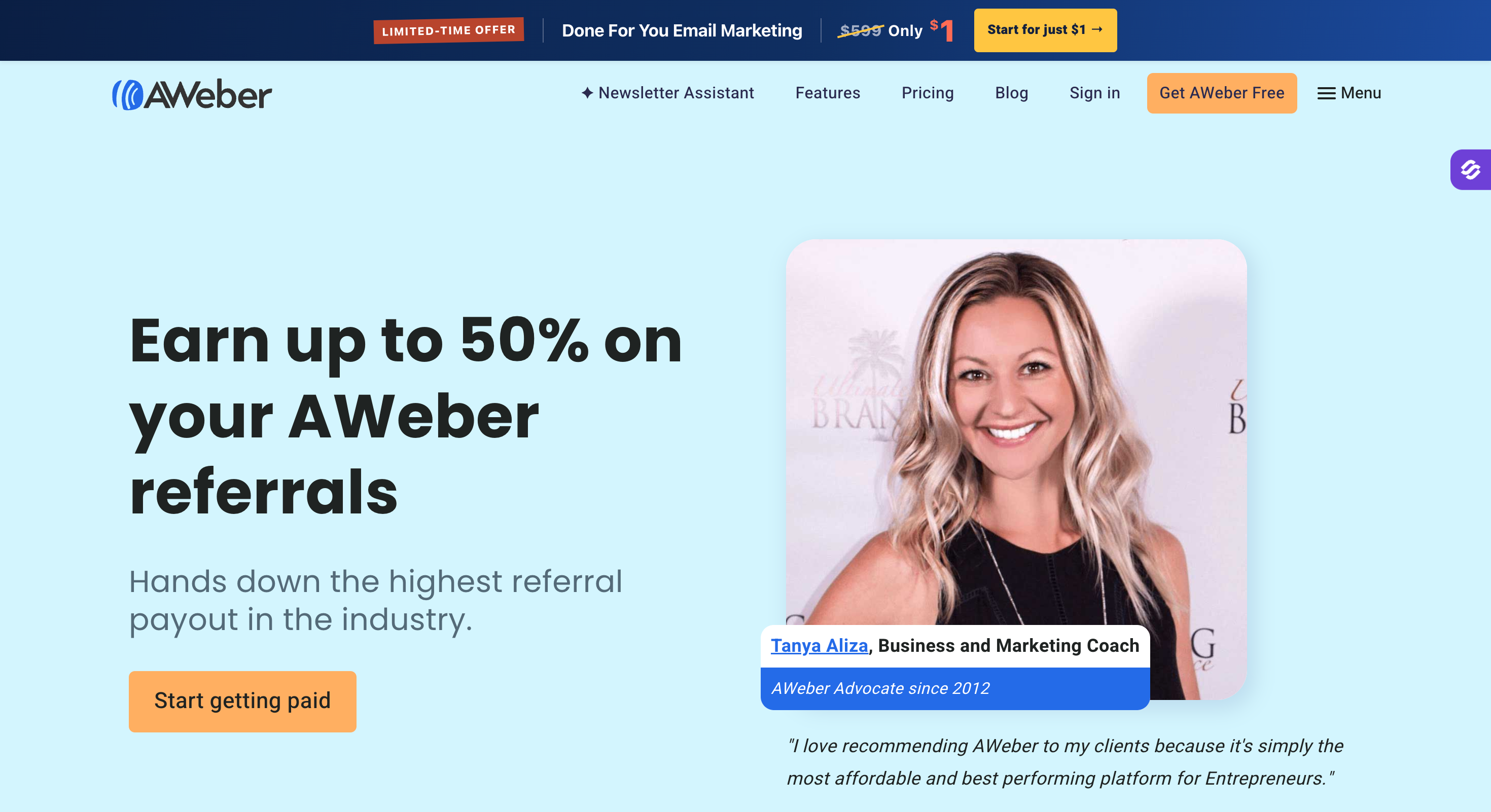
AWeber: 30% recurring for the lifetime of the account, rising to 40% and then 50% at volume. The 50% tier needs 500 new paid accounts in a trailing 12 months.
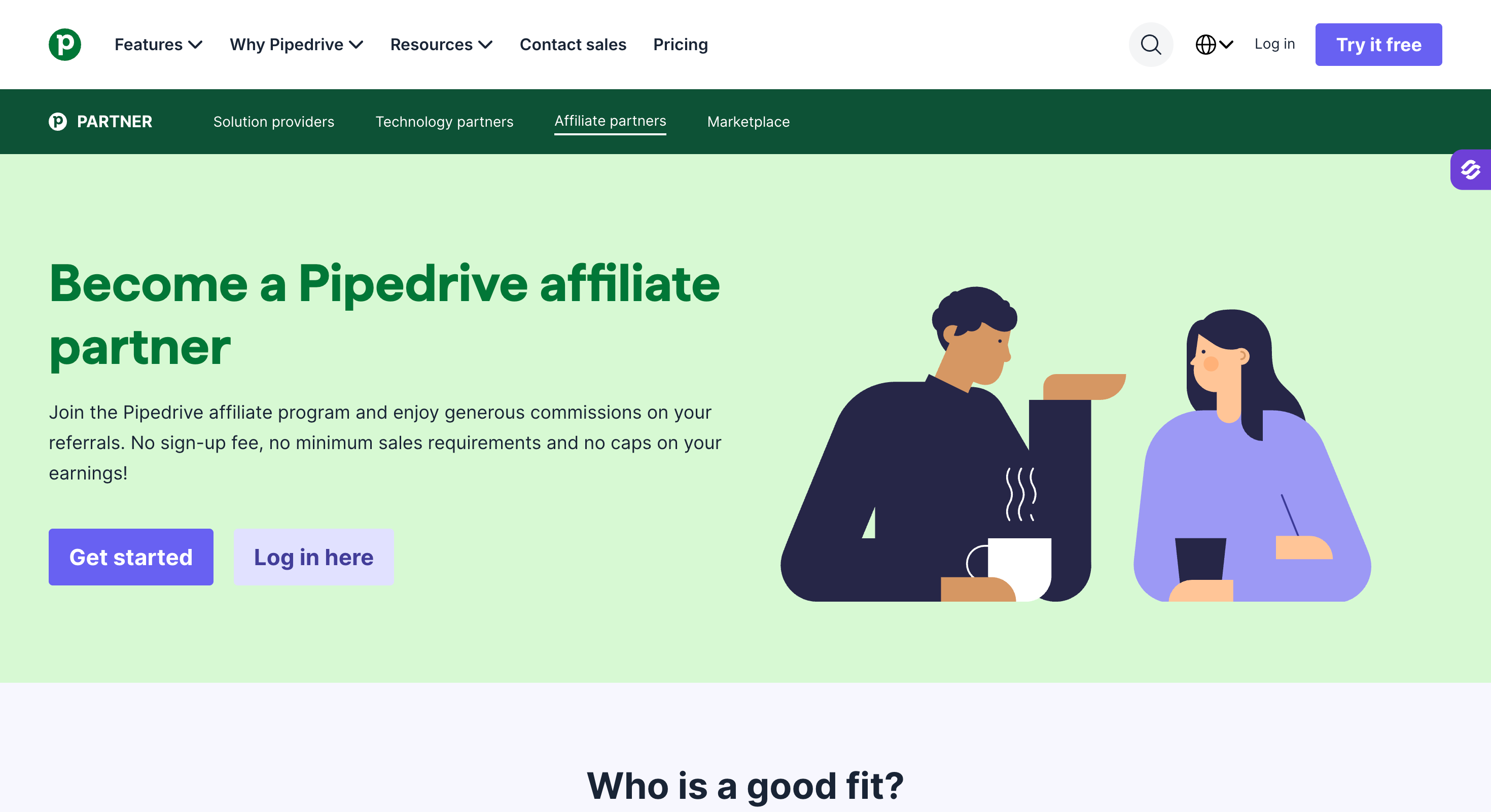
Pipedrive: 20% of a customer's first-year revenue at the entry tier, 30% at the tier above it. The $5 payout threshold is the lowest on this list.
Shopify: $150 per referral on Basic, Grow or Advanced plans, once per customer. Shopify tracks clicks for 30 days, and extends that to 400 days once a referral starts a paid trial.
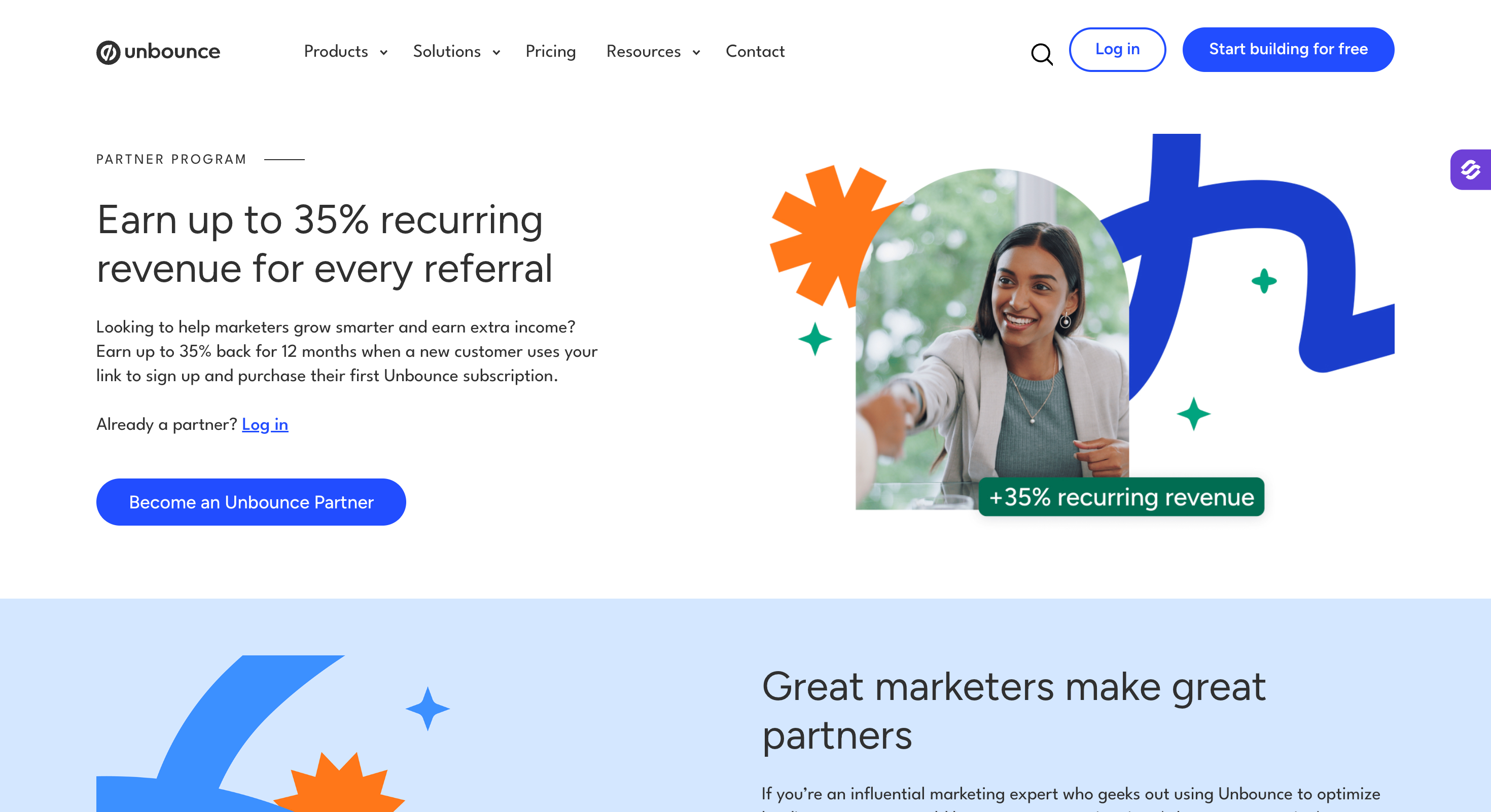
Unbounce: 25% to 35% of every transaction for 12 months, on a 90-day cookie that restarts on a repeat click. Your referral gets 20% off three months or 35% off an annual plan.
Teachable: 30% of what the customer pays across their first year. The 30-day cookie is the shortest here, which hurts if your audience takes time to decide.
beehiiv: 50% after your first conversion, 55% at Silver and 60% at Gold, for a full year. beehiiv pays on the 15th of each month through PayPal only, on a 60-day cookie.
Rewardful: 25% of every payment a referred customer makes in their first 12 months. Rewardful tracks it in-house on a 60-day cookie rather than through a network.
Guideflow: 20% of what a referred account spends, and the average account is close to $2,000. Their partner page says lifetime and their marketplace listing says 12 months.
Feature Comparison: Top 5 SaaS Affiliate Programs at a Glance
All six Forge products from one link. Domains excluded
$100
Open, no manual approval
Systeme.io
All-in-one platform for creators
60% for the life of the account
None. Permanent tagging at signup
Every plan sale, annual included
$30
Open, no application
HubSpot
CRM and marketing platform
30% for up to 12 months
180 days
Paid subscriptions only
$10, per third-party reports
Open, reviewed in a few days
Semrush
SEO and marketing visibility
$200 per sale, paid once
120 days
New subscription sales
Not published
Open, reviewed in about two days
Webflow
Website builder
50% of the first subscription, up to 12 months
90 days
New site and workspace plans. Client referrals excluded
$100, per third-party reports
Open
Kit
Email platform for creators
50% for 12 months, then 10% to 20% at status
Not published. 60 to 90 days per third parties
Paid plan payments
Not published
Open
GetResponse
Email marketing and automation
40% to 60% for 12 months, by tier
90 days
Plan sales
Not published
Open
ActiveCampaign
Email marketing and automation
20% to 30% for up to 12 months, per third parties
90 days, restarts on a repeat click
Subscription payments
$100, plus two active referrals
Open
AWeber
Email marketing
30% for the life of the account, up to 50% at volume
Not published
Paid account payments
Not published
Open
Pipedrive
Sales CRM
20% to 30% of year-one revenue
90 days, restarts on a repeat click
Subscription revenue including add-ons
$5
Open
Shopify
Ecommerce platform
$150 per referral, paid once
30 days, extending to 400 on a paid trial
Basic, Grow and Advanced signups
Not published
Open, approval required
Unbounce
Landing pages and CRO
25% to 35% for 12 months
90 days, restarts on a repeat click
Every transaction
Not published
Open
Teachable
Course and digital product platform
30% of the customer's first year
30 days
Creator subscription payments
$50, per third-party reports
Open, approval required
beehiiv
Newsletter platform
50% to 60% for 12 months, by tier
60 days
Plan payments
Not published
Open
Rewardful
Affiliate management software
25% for the first 12 months
60 days, configurable per campaign
Every payment
$50
Open
Guideflow
Interactive product demos
20%. Lifetime per the partner page, 12 months per the marketplace
Not published. 60 days per the marketplace
Account spend
Not published
Open
How I Compared These SaaS Affiliate Programs
I checked all sixteen programs against the same seven things.
Audience fit: whether your readers already buy this kind of tool.
Affiliate commission: the rate, and what it is calculated on.
Duration: twelve months, the life of the account, or a single payment.
Cookie window: how long a click stays credited to you, and whether it restarts.
Payout threshold: how much you have to earn before any money moves.
Application status: whether the program takes new affiliates today.
Published terms: whether the company states its terms or keeps them behind an application.
1. Salesforge (Forge Ambassador Program)
Best for: Creators, consultants and outbound agencies or outbound audiences, where one referral pays on the platform, the AI SDR and everything underneath.
The Forge Ambassador Program is the only bundled program on this list. One link covers six products, and you earn 15% whichever one the customer buys.
No other program here pays commission on email infrastructure. Everyone else pays you on a single software subscription.
Salesforge is an AI-powered cold outreach platform: sequences, personalization at scale, multichannel follow-up, and Agent Frank, an AI SDR that handles prospecting, copywriting and follow-ups.
It is also the front end of a stack that includes Mailforge (shared cold email infrastructure), Primeforge (real Google Workspace and Microsoft 365 mailboxes on US IPs), Infraforge (private infrastructure with dedicated IPs), Warmforge (warm-up and deliverability) and Leadsforge (lead sourcing).
Here is what each one pays you.
What You Earn
Product
What the customer pays
Your 15%
Salesforge Pro
$40 per month (billed annually)
$6 a month
Salesforge Growth
$80 per month (billed annually)
$12 a month
Agent Frank
$499 per month (billed annually)
$74.85 a month
Mailforge
$484 a month for 200 mailboxes
$72.60 a month
Primeforge
Priced per mailbox
15% of the invoice
Infraforge
Priced per setup
15% of the invoice
Leadsforge
$49 per month (billed annually)
$7.35 a month
Warmforge
Free inside Salesforge
Nothing on the free tier
Domains
Sold at cost
No commission
One agency running Salesforge Growth, Agent Frank, Leadsforge and 200 Mailforge mailboxes spends $1,112 a month.
This pays you $166.80 a month, or $2,002 across the first year, from a single link.
What I Liked About the Forge Ambassador Program
Agent Frank is the largest single line you can refer here. One seat pays you $74.85 a month on its own.
One link covers six products, so a referral who starts on Salesforge Pro and adds mailboxes in March pays you on both.
There is no application to clear and no follower minimum, so the program is usable on day one of a newsletter.
The materials are real. Logos, decks, case studies and suggested post templates come in a shared folder, along with a named partnerships contact rather than a support queue.
A separate Forge Partner tier opens up once you pass $500 in referred monthly revenue. It replaces the affiliate link with a warm hand-off, where you send a name and an email address instead.
Commission Terms
Term
Detail
Commission
15% of invoice value
Duration
First 12 months of the customer's payments
Cookie window
30 days
Commissionable
Salesforge, Agent Frank, and all four remaining Forge products. Domains excluded
Payout threshold
$100
Payout schedule
Monthly
Payment method
Wire transfer through Tolt
Paid traffic
Prohibited on any ad network
Application status
Open, no manual approval
2. Systeme.io
Best for: Affiliates who want the highest rate on this list and income that keeps arriving in year three.
Systeme.io pays 60% on every plan sale and keeps paying for as long as the customer stays subscribed. No other program in this article matches either half of that.
What caught my attention was the attribution rather than the rate. Systeme.io runs no cookie window at all, so signing up through your link tags that account to you permanently. A reader who takes eight months to decide still pays you, which closes the biggest leak in affiliate income.
The limit here is the size of the invoice. Systeme.io publishes the sums on its own affiliate page, so nobody has to estimate them. The Startup plan costs $17 a month and pays you $10.20, and the top plan at $97 a month pays you $58.20. You need real volume before either number turns into an income.
What You Earn
Rate: 60% of every payment, the highest in this article.
Duration: For as long as the referred account stays subscribed.
What counts: Every plan sale. Annual purchases pay you on the full annual amount.
Cost to join: Nothing, and there is no application at all. A free Systeme.io account gives you an affiliate ID.
What I Liked About Systeme.io
Permanent attribution means a slow buyer still pays you, which no cookie window can promise.
Payouts run on the 10th of every month with no holding period, and the minimum is only $30.
The product replaces four or five separate subscriptions, so the pitch writes itself for a solo-creator audience.
What Are the Cons of Systeme.io
Small invoices: 60% of $17 is $10.20, so the highest rate here still produces one of the smallest payments.
Wrong audience for B2B: Systeme.io sells to course creators and solo founders, so a sales or RevOps readership will not convert.
Terms move: Systeme.io dates its own affiliate page and tells you to check current payout minimums in the dashboard. Take that warning seriously.
Commission Terms
Term
Detail
Commission
60% of every payment
Duration
Lifetime, while the account stays subscribed
Cookie window
None. Permanent tagging at signup
Attribution
Last cookie, then locked to your account
Payout threshold
$30
Payout schedule
Monthly, on the 10th, no holding period
Payment method
PayPal or wire transfer
Tracking platform
In-house
Application status
Open, with no application
3. HubSpot
Best for: B2B writers whose readers evaluate business software slowly and buy it expensively.
HubSpot suits you if your readers search for the best CRM for small business and get through three comparison posts before they decide. The 180-day cookie is the longest window in this article, and it exists because that is roughly how long the decision takes.
The free CRM then does most of the work for you. Your reader starts at no cost and grows into a paid tier. The window stays open long enough that you still hold the credit when they upgrade.
Commissions run for up to twelve months and then stop. A referral who turns into a six-figure account in year two pays you nothing at all. That is the trade you accept in return for the long cookie.
What You Earn
Rate: 30% of every monthly payment.
Duration: Up to twelve months per referred customer.
What counts: Paid subscriptions across the customer platform. The free CRM earns nothing until that account upgrades.
Tiers: Standard affiliate, Super Affiliate at 100 or more signups a month, and Elite on custom terms.
What I Liked About HubSpot
180 days of attribution covers a long B2B evaluation without you doing anything else.
The free tier removes the price objection before you write a word about cost.
HubSpot supplies a large creative library, so you are not building assets from scratch.
What Are the Cons of HubSpot
Twelve-month cap on a product people keep for years: The accounts that grow the most pay you the least.
Crowded to rank for: HubSpot is the default recommendation in half the B2B content on the internet.
Slow conversions: The long cookie exists because deals here take months to close, so plan your cash flow around that.
Threshold and tracking are third-party figures: Reviewers report a $10 minimum on Impact, and HubSpot does not publish either on its program page.
Commission Terms
Term
Detail
Commission
30% of every payment
Duration
Up to 12 months
Cookie window
180 days
Attribution
Last click
Payout threshold
$10, per third-party reports
Payout schedule
Monthly
Payment method
PayPal or direct deposit, per third-party reports
Tracking platform
Impact, per third-party reports
Application status
Open, reviewed in a few business days
4. Semrush
Best for: SEO and marketing publishers who would rather bank a large payment now than bet on retention.
Semrush pays a flat fee for each sale instead of a percentage. That leaves it as the only program here with no recurring element. You get paid once per customer, then you go and find another one.
Semrush publishes $200 for every new subscription sale. It runs the program on Impact with last-click attribution and a 120-day cookie, and applications clear in about two working days.
The figure I would check before joining is the one that changed. Semrush used to pay 40% recurring under its old BeRush program and retired that model some time ago. Plenty of lists published this year still quote the 40%, so affiliates keep joining on the strength of income that no longer exists.
What You Earn
Rate: $200 per new subscription sale, as a fixed fee.
Duration: One payment per customer. Nothing recurs.
What counts: New subscription sales. Semrush also pays for trial activations, though that figure appears only on third-party sites.
Tiers: Third-party listings describe a loyalty structure rising toward $450 per sale, which Semrush does not publish on its program pages.
What I Liked About Semrush
$200 for one conversion beats a year of 20% on a small account, and it lands immediately.
The 120-day cookie is generous for a program with no recurring tail to protect.
Semrush is one of the most searched tools in marketing, so the intent is there before you write.
What Are the Cons of Semrush
No month two: Every dollar you earn needs a new customer, which is the treadmill recurring commission exists to end.
Stale figures everywhere: The retired 40% recurring model still circulates widely, so check any list that quotes it.
The rates arrive as a graphic: Semrush's help centre shows its commission structure in an image rather than text. That makes the per-trial and tier figures hard to verify.
Commission Terms
Term
Detail
Commission
$200 per subscription sale
Duration
One-time per customer
Cookie window
120 days
Attribution
Last click
Payout threshold
Not published
Payout schedule
Monthly
Payment method
Not published
Tracking platform
Impact
Application status
Open, reviewed in about two working days
5. Webflow
Best for: Web design educators and no-code creators who publish tutorials rather than take on client work.
Webflow pays 50% of a new customer's first subscription, which is the richest first-year rate here after Systeme.io.
The mechanics change with the billing cycle, and that detail matters more than the headline rate does.
On monthly plans you earn 50% every month for the lesser of twelve months or cancellation. On annual plans you earn 50% of that first annual purchase and it arrives as a single payment. An annual referral therefore hands you one large amount, while a monthly referral hands you twelve smaller ones.
The restriction is easy to miss. Webflow excludes one-to-one client referrals from the affiliate program and routes freelancers to its Certified Partner Program instead.
If you build sites for clients, you are at the wrong door.
What You Earn
Rate: 50% of a new customer's first subscription.
Duration: Monthly plans pay for up to twelve months. Annual plans pay once, on the first annual purchase.
Tiers: Pro adds 10% and Premium adds 15% of renewal revenue for up to twelve further months.
Tier thresholds: 25 new customers in a year for Pro, and 100 for Premium.
What I Liked About Webflow
50% is the second-highest rate in this article, and Webflow's buyers are professionals with real budgets rather than free-plan browsers.
The renewal share at Pro and Premium extends your income past the first year, which few capped programs offer.
Webflow publishes its full terms in its help centre, so almost nothing here depends on third-party reports.
What Are the Cons of Webflow
Client referrals earn nothing: Freelancers and agencies get pushed to a different program entirely.
Annual plans pay once: A customer who pays yearly gives you one payment and no monthly income.
Tier thresholds are steep: Premium wants 100 new customers a year, which rules out most part-time affiliates.
Threshold and attribution are third-party figures: Reviewers report a $100 minimum and first-touch attribution, and neither appears in Webflow's own docs.
Commission Terms
Term
Detail
Commission
50% of the first subscription
Duration
Up to 12 months monthly, or one payment annually
Cookie window
90 days
Attribution
First touch, per third-party reports
Payout threshold
$100, per third-party reports
Payout schedule
Monthly
Payment method
PayPal or Stripe through PartnerStack
Tracking platform
PartnerStack
Application status
Open
6. Kit
Best for: Newsletter writers and course sellers who already run their own list on Kit.
Kit is an email platform built for creators instead of marketing departments, and that focus is why it converts.
If your readers are building an audience of their own, recommending Kit is a natural move rather than a pitch.
The rate is 50% for the first twelve months. After that Kit keeps paying at 10% to 20%, but only while you hold Bronze, Silver or Gold status. Status runs on active paid referrals, starting around ten and rising to fifty, so you have to keep referring to keep it.
Two details in the terms cost affiliates money. Referrals from paid ads do not count toward status, so an affiliate running ads can earn well for a year and still never qualify.
Kit also publishes no cookie window anywhere, which leaves you trusting third-party reports of 60 to 90 days.
What You Earn
Rate: 50% of every payment for the first twelve months.
After twelve months: 10% to 20% recurring, but only while you hold a status tier.
What counts: Paid plan payments. Kit prices on subscriber count, so your commission grows as your referral's list grows.
What does not count toward status: Anything referred through paid advertising.
What I Liked About Kit
Kit charges by subscriber count, so a referral who succeeds pays you more every month without you doing anything.
You can show your own forms and sequences, which makes the recommendation easy to make in good faith.
Commission past twelve months gives a committed affiliate a real reason to concentrate here instead of spreading thin.
What Are the Cons of Kit
The lifetime tail depends on you: Stop referring and you lose status, and losing status ends the ongoing 10% to 20%.
No published cookie window: Kit's own pages stay silent, so treat the 60 to 90 day figure as unconfirmed.
Legacy figures still circulate: Some directories list Kit at a flat 30% recurring, which no longer matches the program.
Commission Terms
Term
Detail
Commission
50% for 12 months, then 10% to 20% at status
Duration
12 months, extended while status holds
Cookie window
Not published. Third-party reports say 60 to 90 days
Attribution
Last click
Payout threshold
Not published
Payout schedule
Monthly, with roughly 30 days to approve per third-party reports
Payment method
Through PartnerStack
Tracking platform
PartnerStack
Application status
Open
7. GetResponse
Best for: Email marketing writers with enough volume to climb past the entry tier.
GetResponse runs the clearest tier structure on this list. Bronze pays 40%, Silver pays 50%, and Gold pays 60%, and every partner starts at Bronze.
GetResponse also states the thresholds openly, which most programs here avoid doing. Fifty sales in twelve months moves you to Silver, and a hundred sales moves you to Gold.
Even the entry tier pays well above the market. 40% is roughly double the 20% to 25% band that most SaaS programs offer, and it runs for twelve months on a 90-day cookie.
The structure suits an affiliate who concentrates. Send three sales a year and you stay on 40% indefinitely. Gold stays out of reach unless GetResponse is one of your two or three main offers.
What You Earn
Rate: 40% at Bronze, 50% at Silver, 60% at Gold.
Duration: Twelve months per referred customer at every tier.
Tier thresholds: 50 sales in twelve months for Silver, 100 for Gold.
Cost to join: Nothing, through PartnerStack.
What I Liked About GetResponse
The tier thresholds come as plain numbers rather than a vague reference to volume.
40% at the entry tier is roughly double what the average SaaS program pays.
The 90-day cookie fits the way small businesses actually shop for an email tool.
What Are the Cons of GetResponse
Twelve months at every tier: Gold pays you more per customer, and it does not pay you for longer.
Gold is out of reach for most people: A hundred sales a year is a full-time affiliate operation.
Lists still quote the old bounty model: GetResponse replaced its previous either-or structure, so ignore anything describing a flat per-sale fee.
Commission Terms
Term
Detail
Commission
40% Bronze, 50% Silver, 60% Gold
Duration
12 months
Cookie window
90 days
Attribution
Last click
Payout threshold
Not published on the program page
Payout schedule
Monthly through PartnerStack
Payment method
Through PartnerStack
Tracking platform
PartnerStack
Application status
Open
8. ActiveCampaign
Best for: Affiliates writing automation and migration content who can clear two live referrals before seeing a payment.
ActiveCampaign has more gates than any other program in this article, and I would want to know all of them before writing about it.
The rate is 20% to 30% recurring, tiered on the revenue your referrals generate, and it runs for up to twelve months.
The conditions are where it gets awkward. The payout threshold is $100, and commissions wait roughly sixty days before they approve. ActiveCampaign also pays nothing until you hold two active referred accounts, so your first successful referral earns you nothing on its own.
The product is the easy part of the pitch. Once a company builds its tags, automations and customer journeys in ActiveCampaign, moving out gets painful, and that stickiness protects a recurring commission.
What You Earn
Rate: 20% to 30%, tiered on referred revenue.
Duration: Up to twelve months per referred account.
Cookie: 90 days, and the window restarts if the same visitor clicks again.
Gate: Two active referred accounts before any payment clears.
What I Liked About ActiveCampaign
The cookie restarting on a repeat click is rare, and it favours long consideration cycles.
Low churn on automation platforms means a referral that converts tends to keep paying.
Automation teardowns make excellent affiliate content, because readers can import a blueprint and see it work.
What Are the Cons of ActiveCampaign
The two-referral gate: One conversion pays you nothing until a second one arrives.
A sixty-day hold on a $100 threshold: Expect months between your first sale and your first payment.
ActiveCampaign publishes none of it: Rate, threshold, hold and tracking platform all come from reviewers rather than from the company.
Commission Terms
Term
Detail
Commission
20% to 30%, per third-party reports
Duration
Up to 12 months, per third-party reports
Cookie window
90 days, restarting on a repeat click
Attribution
Last click
Payout threshold
$100, plus two active referred accounts
Payout schedule
Monthly, after roughly a 60-day hold
Payment method
PayPal
Tracking platform
Reported inconsistently as in-house and as PartnerStack
Application status
Open
9. AWeber
Best for: Affiliates who value duration over rate and want commission with no end date.
AWeber pays 30% for the lifetime of the paid account, and only two other programs in this article never stop paying.
That duration is worth more than it looks on a comparison table. A referral from 2024 still pays you this month, while Kit, HubSpot, GetResponse and Webflow all stopped paying after a year.
The rate climbs to 40% and then 50% at volume. The top tier needs 500 new paid accounts in a trailing twelve months, so treat 30% as the number you will actually earn.
What I could not find is almost everything else. The program page names no cookie window, no payout threshold, and no tracking platform, which leaves AWeber in the same position as ActiveCampaign.
What You Earn
Rate: 30% recurring, rising to 40% and 50% at volume.
Duration: The lifetime of the paid account.
Top tier threshold: 500 new paid accounts in a trailing twelve months.
What counts: Payments on paid accounts.
What I Liked About AWeber
Lifetime duration on a mid-range rate beats a high rate that expires, once you pass month eighteen.
AWeber sells to small businesses rather than to enterprises, so referrals convert faster than they do on HubSpot.
The tier structure raises your rate on future referrals without you renegotiating anything.
What Are the Cons of AWeber
Treat 30% as the real rate: The 50% headline needs 500 new paid accounts a year.
The cookie window stays unpublished: You cannot plan around an attribution period nobody states.
It is the fourth email tool on this list: If you already promote Kit or GetResponse, adding AWeber splits your own traffic.
Commission Terms
Term
Detail
Commission
30%, rising to 40% and 50% at volume
Duration
Lifetime of the paid account
Cookie window
Not published
Attribution
Not published
Payout threshold
Not published
Payout schedule
Monthly
Payment method
Not published
Tracking platform
Not published
Application status
Open
10. Pipedrive
Best for: Sales consultants and SMB advisers whose readers buy a CRM for a whole team rather than for themselves.
Pipedrive charges per seat, and that changes the arithmetic of a referral. A six-person sales team is worth six times a solo user, from the same piece of content.
CRM referrals also tend to stay. A company keeps its pipeline data in the CRM, so ripping it out means retraining the team and risking deals in flight.
The rates are 20% at Rising, 30% at Growth, and custom terms at Power. Every tier pays on the customer's first twelve months, add-ons included, and the 90-day cookie restarts if the same visitor clicks again.
Pipedrive also has the lowest payout threshold here at $5, which gets you paid on your first conversion instead of your tenth. The trade is a slow lock cycle. Commissions lock on the 7th of the month two months after the sale, then pay on the 13th.
What You Earn
Rate: 20% at Tier 3 Rising, 30% at Tier 2 Growth, custom at Tier 1 Power.
Duration: The customer's first twelve months.
What counts: Subscription revenue including add-ons.
Cookie: 90 days, restarting on a repeat click.
What I Liked About Pipedrive
Per-seat pricing means one good referral can be worth several small ones.
The $5 threshold gets you paid on your first conversion instead of your tenth.
Pipedrive states its tier rates and its lock and payment dates, which most programs here do not.
What Are the Cons of Pipedrive
Twelve months only. CRM customers stay for years and you get paid for one of them.
30% needs Tier 2. The entry rate is 20%, which is at the bottom of the market band.
Two-month lock before payment. Money earned in January locks in March and pays mid-March.
Commission Terms
Term
Detail
Commission
20% Rising, 30% Growth, custom at Power
Duration
First 12 months, including add-ons
Cookie window
90 days, restarting on a repeat click
Attribution
Last click
Payout threshold
$5
Payout schedule
Locks on the 7th two months after the sale, pays on the 13th
Payment method
PayPal or Stripe through PartnerStack
Tracking platform
PartnerStack
Application status
Open
11. Shopify
Best for: Ecommerce educators and store-build tutorial creators.
Shopify pays $150 for each referral, once per customer, with no percentage and no monthly component. Every dollar you earn here requires you to go and find another store owner.
The flat fee applies to signups on Basic, Grow or Advanced plans, and Shopify notes that the amount varies by the referral's location. There is no cap on how many you can earn.
Tracking works differently here from anywhere else on this list. Shopify follows clicks for 30 days, then extends that to 400 days once your referral starts a paid trial. You get a narrow window to make someone sign up and a very wide one to wait for them to pay.
Shopify approves applications rather than accepting everyone, and the program suits ecommerce audiences specifically. A sales or outbound readership will not convert here, whatever the fee.
What You Earn
Rate: $150 per referral, as a fixed fee.
Duration: One payment per customer. Nothing recurs.
What counts: Signups to Basic, Grow or Advanced paid plans.
Cap: None on volume.
What I Liked About Shopify
$150 for one signup is a strong single payment for a low-priced product.
The 400-day trial window is the most generous conversion runway in this article.
Shopify is one of the most searched brands in commerce, so readers arrive already knowing it.
What Are the Cons of Shopify
No recurring element: Every dollar needs a new store.
The 30-day click window is tight: A reader who researches for six weeks earns you nothing unless they start a trial.
Narrow audience fit: This is an ecommerce program, so a B2B sales readership is the wrong list to send it to.
The Plus figure is third-party: Reports of up to $2,000 for Shopify Plus referrals do not appear on Shopify's own affiliate page.
Commission Terms
Term
Detail
Commission
$150 per referral, varying by location
Duration
One-time per customer
Cookie window
30 days, extending to 400 days once a paid trial starts
Attribution
Last click
Payout threshold
Not published
Payout schedule
Monthly
Payment method
Direct deposit or PayPal
Tracking platform
Impact
Application status
Open, with approval required
12. Unbounce
Best for: Paid media and CRO writers whose readers are already losing money on a bad landing page.
Landing page tools sell quickly because the problem is expensive and easy to see.
Someone spending on ads with a page that does not convert is losing money today, and that shortens the decision to days.
Unbounce pays 25% to 35% of every transaction for twelve months. The 90-day cookie restarts if your reader clicks again, which suits a category people research in bursts.
The customer-side incentive is worth putting in your copy. Your referral gets 20% off three months, or 35% off the first year on annual billing. You are offering a discount rather than just a link.
I could not confirm who runs the tracking. Sources split between Impact and PartnerStack, and the program page names neither, so check it in your dashboard before you plan around it.
What You Earn
Rate: 25% to 35% of every transaction.
Duration: Twelve months after the referral converts to paid.
Referral incentive: 20% off three months, or 35% off the first year on annual billing.
Cookie: 90 days, restarting on a repeat click.
What I Liked About Unbounce
The urgency comes with the product, because a broken landing page costs money every day it stays broken.
The customer discount gives you something to offer beyond a recommendation.
25% at the floor still lands inside the market band, so the low end is not punishing.
What Are the Cons of Unbounce
The 35% top rate has no published threshold: You cannot tell what moves you up the range.
Twelve months on a tool teams keep for years: Same cliff as most of this list.
Nobody names the tracking platform: Impact and PartnerStack both get cited, including by directories that should know.
Old figures persist: Some listings still show a flat 20%, which no longer matches the program page.
Commission Terms
Term
Detail
Commission
25% to 35% of every transaction
Duration
12 months from conversion to paid
Cookie window
90 days, restarting on a repeat click
Attribution
Last click
Payout threshold
Not published
Payout schedule
Monthly
Payment method
PayPal or Stripe
Tracking platform
Reported as both Impact and PartnerStack
Application status
Open
13. Teachable
Best for: Course creators who have launched on Teachable and can show the result.
Teachable is the only program in this article that publishes what its affiliates earn.
Its partner page states an average of $450 a month, with many partners above $1,000. No other program here will tell you that much.
The terms are simple. Teachable pays 30% of what a referred creator spends across their first year, on a 30-day cookie.
That 30-day window is the shortest on this list, and it is the main thing working against you. Anyone who has launched a course has opinions about the platform, so the content converts well. A reader who deliberates for six weeks still pays you nothing.
Several third-party listings claim a 90-day cookie, and Teachable's own page says 30.
What You Earn
Rate: 30% of the referred creator's payments.
Duration: Their first year.
Published earnings: $450 a month on average, per Teachable's partner page.
Cookie: 30 days, the shortest in this article.
What I Liked About Teachable
Published average earnings let you judge the program before joining rather than after.
"Which platform should I use" is one of the highest-intent questions in the creator economy.
A launch case study with real numbers converts far better here than a feature comparison.
What Are the Cons of Teachable
A 30-day cookie on a considered purchase: Course platforms get compared for weeks.
One year, then nothing: A creator who scales to a six-figure course pays you for the first twelve months only.
Approval required: Not every applicant gets in.
Third-party sources contradict the official cookie: Several list 90 days, which does not match Teachable's own page.
Commission Terms
Term
Detail
Commission
30% of payments
Duration
The customer's first year
Cookie window
30 days
Attribution
Last click
Payout threshold
$50, per third-party reports
Payout schedule
Monthly through PartnerStack
Payment method
Through PartnerStack
Tracking platform
PartnerStack
Application status
Open, with approval required
14. beehiiv
Best for: Newsletter writers recommending the platform their own newsletter runs on.
beehiiv is the one program here whose customers are the people reading this article.
If you publish a newsletter, your audience probably publishes one too.
The rate starts at 50% and the first step up costs you almost nothing. Every partner begins at Launch, and your first conversion moves you to Bronze at 50%. Silver pays 55% and Gold pays 60%, and every tier runs for a full year on a 60-day cookie.
Your readers get something out of it as well. beehiiv gives them a 14-day trial plus 20% off their first three months, which is a better offer than a bare link.
Two limits are worth planning around. Payouts arrive on the 15th of each month through PayPal only, so no PayPal account means no payment. beehiiv also does not publish the thresholds for Silver and Gold, so nobody can tell you what the climb past 50% takes.
What You Earn
Rate: 50% at Bronze, 55% at Silver, 60% at Gold.
Duration: A full year per referred customer.
Reader incentive: 14-day trial and 20% off the first three months.
First step: One conversion moves you off Launch and onto 50%.
What I Liked About beehiiv
The 50% tier arrives after a single conversion rather than after fifty.
The terms page is the most complete of any program I checked for this article.
The page bans self-referral in plain language, which tells you somebody runs this program properly.
What Are the Cons of beehiiv
PayPal only: No alternative payment method appears on the page.
Silver and Gold thresholds stay unpublished: You get the rates without the requirements.
One year, then nothing: A newsletter that grows into an enterprise plan pays you for twelve months.
Commission Terms
Term
Detail
Commission
50% Bronze, 55% Silver, 60% Gold
Duration
12 months
Cookie window
60 days
Attribution
Last click
Payout threshold
Not published
Payout schedule
Monthly, on the 15th
Payment method
PayPal only
Tracking platform
In-house
Application status
Open
15. Rewardful
Best for: Publishers writing for SaaS founders and growth teams who need a program running this week.
Rewardful is the software a founder buys when they want an affiliate program live in days rather than next quarter.
It handles the messy subscription cases natively, including trials converting to paid, upgrades, downgrades and refunds.
There is a neat overlap in promoting it. You can recommend Rewardful inside the same article where you disclose your own affiliate links.
Terms are 25% of every payment a referred customer makes in their first twelve months, on a 60-day cookie. Payouts run on the 1st through PayPal, with a $50 minimum. Rewardful tracks everything on its own platform rather than through a network.
The figures in circulation need care. At least one affiliate directory lists Rewardful at 25% lifetime with a $25 minimum, while Rewardful's own pages say twelve months and $50.
The company's own pages are the ones to trust.
What You Earn
Rate: 25% of every payment.
Duration: The referred customer's first twelve months.
Cookie: 60 days by default, and configurable per campaign.
Threshold: $50, paid on the 1st through PayPal.
What I Liked About Rewardful
Rewardful states its full terms, including the payout date, which most programs here leave vague.
The audience overlap is strong, because anyone writing about affiliate marketing already talks to people who need the tool.
Stripe and Paddle integrations mean the product installs in an afternoon, which shortens the buyer's decision.
What Are the Cons of Rewardful
25% is mid-market: The rate lands inside the 20% to 25% band rather than above it.
Narrow buyer: The customer has to bill through Stripe or Paddle, which rules out a slice of your readers.
Directories misquote it as lifetime: Check any list that promises you commission past month twelve.
Commission Terms
Term
Detail
Commission
25% of every payment
Duration
First 12 months
Cookie window
60 days, configurable per campaign
Attribution
Last click
Payout threshold
$50
Payout schedule
Monthly, on the 1st
Payment method
PayPal
Tracking platform
In-house
Application status
Open
16. Guideflow
Best for: Product marketing and RevOps writers whose readers buy at higher price points.
Guideflow turns a product into a clickable, guided walkthrough for sales, onboarding or marketing.
The buyers are product marketing, growth and enablement teams, and they spend accordingly.
20% looks modest until you see the invoice it applies to. Reditus reports the average revenue per Guideflow account at close to $2,000. A fifth of one good account beats a generous rate on a dozen small ones.
The problem is that two sources give two different durations. Guideflow's own partner page promises 20% for as long as the customer stays active. Its Reditus marketplace listing says 20% for twelve months on a 60-day cookie.
I would ask before I promoted it. A lifetime 20% on a $2,000 account is one of the best offers in this article, and the twelve-month version is worth considerably less.
What You Earn
Rate: 20% of what the referred account spends.
Duration: Disputed. The partner page says lifetime and the marketplace listing says twelve months.
Average account value: Close to $2,000, per Reditus.
Open to: Agencies, consultants, creators, communities and existing customers.
What I Liked About Guideflow
20% of a $2,000 account is $400, which beats 60% of most plans on this list.
The program accepts service businesses as well as publishers, unlike Webflow.
Interactive demos bundle naturally into a client engagement, so implementation partners can sell the work around it.
What Are the Cons of Guideflow
Two sources give two different durations: Neither Guideflow nor its marketplace listing has corrected the other.
Small program, thin documentation: The partner page names no cookie window and no payout threshold.
Narrow readership: Product marketing and enablement is a smaller audience than email or CRM.
Commission Terms
Term
Detail
Commission
20% of account spend
Duration
Lifetime per the partner page, 12 months per the marketplace listing
Cookie window
Not published on the partner page. 60 days per the marketplace listing
Attribution
Not published
Payout threshold
Not published
Payout schedule
Monthly, once past the minimum
Payment method
Not published
Tracking platform
Partner dashboard, also listed on Reditus
Application status
Open
How to Choose the Right SaaS Affiliate Program for Your Audience
You need to work through following four questions in this order:
Would this tool appear in your last ten pieces of content without you forcing it? Read them back and check. Anything that fits naturally goes on your shortlist, and everything else is a distraction.
Is the commission recurring, and for how long? Given a choice between a $100 bounty and 20% recurring on a $200 a month account, take the recurring deal. It passes the bounty in month three. Then check the duration, because "30% for 12 months" and "20% for life" look almost identical on a comparison table. By year three they are completely different deals.
Which attribution model applies, and does the cookie restart? Ask both before you commit. Under last click, a competitor's coupon popup can take your commission at the final step. A restarting cookie quietly extends your real window every time a reader comes back.
How long until the first payment actually arrives? Add the threshold, the holding period and any extra conditions together. On this list that ranges from $5 with a two-month lock to $100 on NET 60 terms plus two live referrals.
Final Note: Pick the Right SaaS Affiliate Program for Your Traffic
I read all sixteen program pages for this article, and the ranking came down to one question:
What does the percentage apply to?
The Forge Ambassador Program answers that better than anything else here. One link covers six products. A single referral can pay you on the outreach platform, the AI SDR, the mailboxes, the warm-up and the lead data.
An agency running Salesforge Growth, Agent Frank, Leadsforge and two hundred mailboxes spends $1,112 a month, and all of it is commissionable. You earn $166.80 a month, or $2,002 across the first year, from one referral.
This works if your readers run outbound. If they do, joining takes about five minutes. There is no approval queue, no minimum audience and no cap on what you earn.
1. What is a good commission rate for a SaaS affiliate program?
Rewardful analysed 250 SaaS and AI programs and found most pay 20% to 25% recurring, so treat that as the market rate. Anything at 30% or above is strong. The 50% to 60% deals from Systeme.io, GetResponse, Webflow, Kit and beehiiv are the top of the market.
2. What is the difference between recurring and one-time commissions?
A one-time commission pays a flat fee when the referral converts, then stops. A recurring commission pays a percentage of every invoice while the window runs. Recurring almost always wins, because 20% of a $200 a month account passes a $100 bounty in month three.
3. How long do SaaS affiliate cookies usually last?
Thirty to 90 days is normal, and 90 is the most common. HubSpot runs 180 days, Semrush runs 120, and Shopify and Teachable stop at 30. Ask about the attribution model too, because a 90-day first-click cookie beats a 180-day last-click one.
4. Which SaaS affiliate program pays the most?
That depends what you mean by most. Systeme.io pays the highest rate at 60% and never stops. Semrush pays the largest single amount at $200 per sale. The Forge Ambassador Program pays 15% across six products, so it applies to the largest customer bill.
5. Do I earn affiliate commission on mailboxes and email infrastructure?
With most outbound programs, no. They pay on the sequencer subscription only. The Forge Ambassador Program pays 15% on every Forge product for the first twelve months, so Salesforge plans, Agent Frank and mailbox spend all count. Domains are the one carve-out.
6. How much can I earn from one cold outreach referral?
It depends what they switch on. Salesforge Growth at $80 per month (billed annually) pays you $12 a month, and Agent Frank at $499 per month (billed annually) pays you $74.85. Add Leadsforge and two hundred Mailforge mailboxes and that customer spends $1,112 a month, paying you $2,002 across the first year.
7. How long until I actually get paid?
It takes longer than you would like. Thresholds run from $5 at Pipedrive to $100 at Salesforge and ActiveCampaign, and holds run from nothing to sixty days. Plan on three to six months between your first published piece and your first real payment.
8. Can I join multiple SaaS affiliate programs at once?
Yes, and exclusivity is rare. The trade-off is tiers, because nine of the sixteen programs here pay more as your volume grows. Two or three promoted properly usually out-earn ten promoted casually.
9. Can I run paid ads to my affiliate links?
Check every program separately, because this term varies more than any other. Salesforge prohibits paid advertising through any ad network, and the penalty is account closure plus cancelled commissions. Kit allows paid traffic but excludes it from the status levels.
10. Do I have to disclose affiliate links?
Yes. The FTC requires a clear and conspicuous disclosure wherever you have a material connection to what you recommend. Put it above the links rather than in a footer, and say it in plain words.
11. Will I need to fill out tax forms?
You should expect to. Most programs collect a form before the first payout, usually a W-9 in the United States and a W-8BEN outside it. Impact and PartnerStack handle it in the dashboard, so do it when you join.
Book more meetings on autopilot
Set up in minutes. No per-seat pricing. No commitment.
Boardy is an AI superconnector that makes double opt-in introductions from its own network of more than 248,000 people. I run it next to an AI SDR and both work from the same ICP. This review covers how to set Boardy up and what its intro emails look like. It also covers Boardy Pro pricing and where Boardy falls short. It ends with how I hand each intro pattern to my AI SDR for outbound at volume.





.jpg)

.png)