

memoryBlue promises more than booked meetings. Its site says the firm recruits and trains B2B sales talent, then runs the revenue programs itself.
It also does something almost no agency does: it publishes a live, uncensored feed of the lead scores its clients give it, including the bad ones.
Search for memoryBlue reviews and you mostly find award badges and their own case studies. Not the price, and not who keeps your data.
I had those questions too. So this memoryBlue review covers what I found across their site, their case studies, review platforms, and the company register.
memoryBlue is a sales development and recruiting firm founded in 2002 in Tysons, Virginia. Their 2023 acquisition announcement names co-founders Chris Corcoran and Marc Gonyea as Managing Partners.
Below: what they sell, what their numbers say, and the four questions their site never answers.
Need More Meetings?
At a Glance: Should You Hire memoryBlue?
| Decision Factor | Our Assessment |
|---|---|
| Best For | Funded B2B tech, cybersecurity, and public-sector vendors with a proven product and defined ICP, buying a pod of five or more SDRs. |
| Standout Strength | A live public feed of client-submitted lead scores, reporting a 7.9 average across the 1,000 most recent. Low scores stay visible. |
| Things to Consider | No published pricing, contract length, or notice period. The fee to hire your SDR in-house is never quantified. Rep turnover is the top review complaint. |
| Not the Right Fit If... | You are pre-product-market-fit, sell at low deal value, need published pricing, or want to own the system. |
| Before You Decide | Compare a few agencies on industry expertise, pricing model, outbound channels, and typical client size before choosing. |
| Compare Certified Agencies | Browse the Forge Expert Network for certified agencies by industry, market, language, and expertise, from cold email to deliverability and GTM consulting. |
memoryBlue Customer Reviews: What Real Users Are Saying
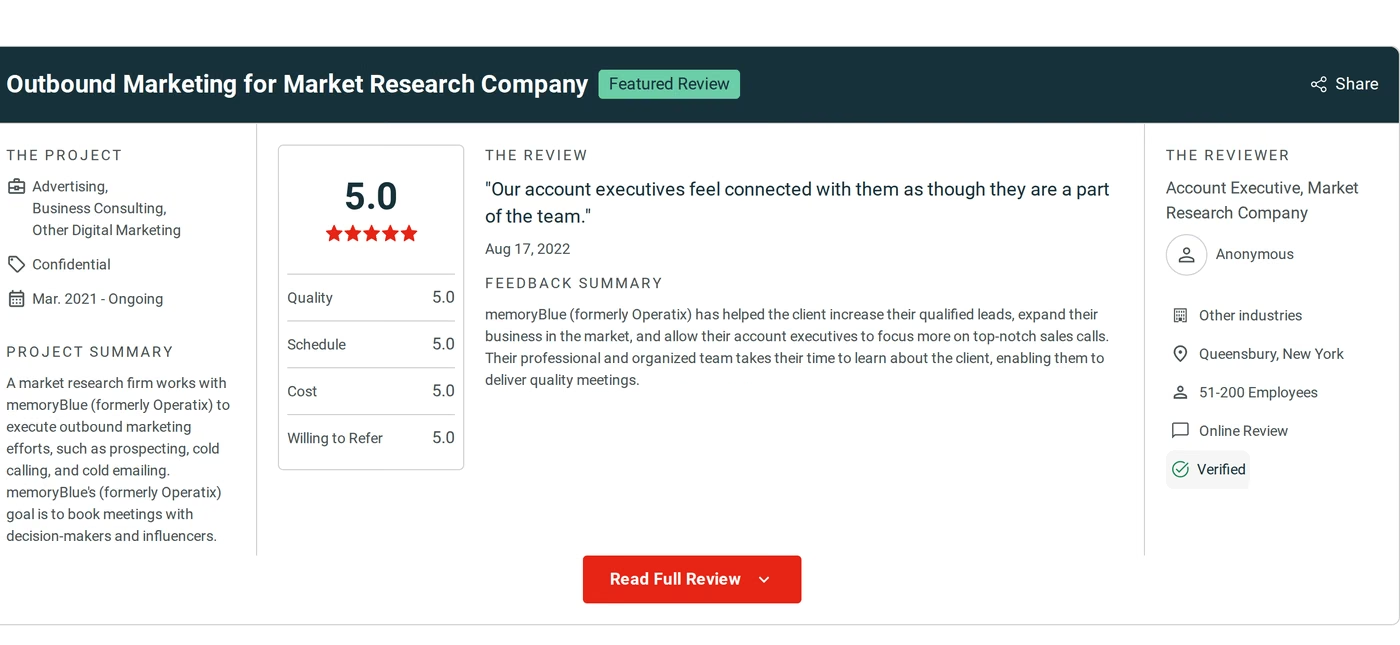
memoryBlue has a real independent review footprint, which is rare here: 4.6 out of 5 on G2 from just over 300 reviews, and 4.7 on Clutch from 23. There is no Trustpilot profile and no client discussion on Reddit.
Their own landing page claims over 300 verified G2 reviews and 96% satisfaction, though its headline still reads 287. Their case study pages link straight to those profiles, which most agencies do not invite.
What Customers Like
- Access to accounts clients could not reach alone. One G2 reviewer describes double-digit meetings in the first two weeks.
- Strong marks on engagement mechanics. G2's dimension scores put responsiveness at 9.7 and communication at 9.6.
- Working as an embedded extension of the team, which reviewers name as the condition for success.
What Customers Don't Like
- Rep turnover is the most repeated complaint on G2, with disruption when reps leave mid-campaign, sometimes because the client hired them.
- Early churn and inconsistent rep quality at the start of engagements.
- Difficulty using the reps for anything beyond top-of-funnel outreach.
- Rigidity. A TrustRadius reviewer called the team uncomfortable working outside its own workflows, and reported losing money.
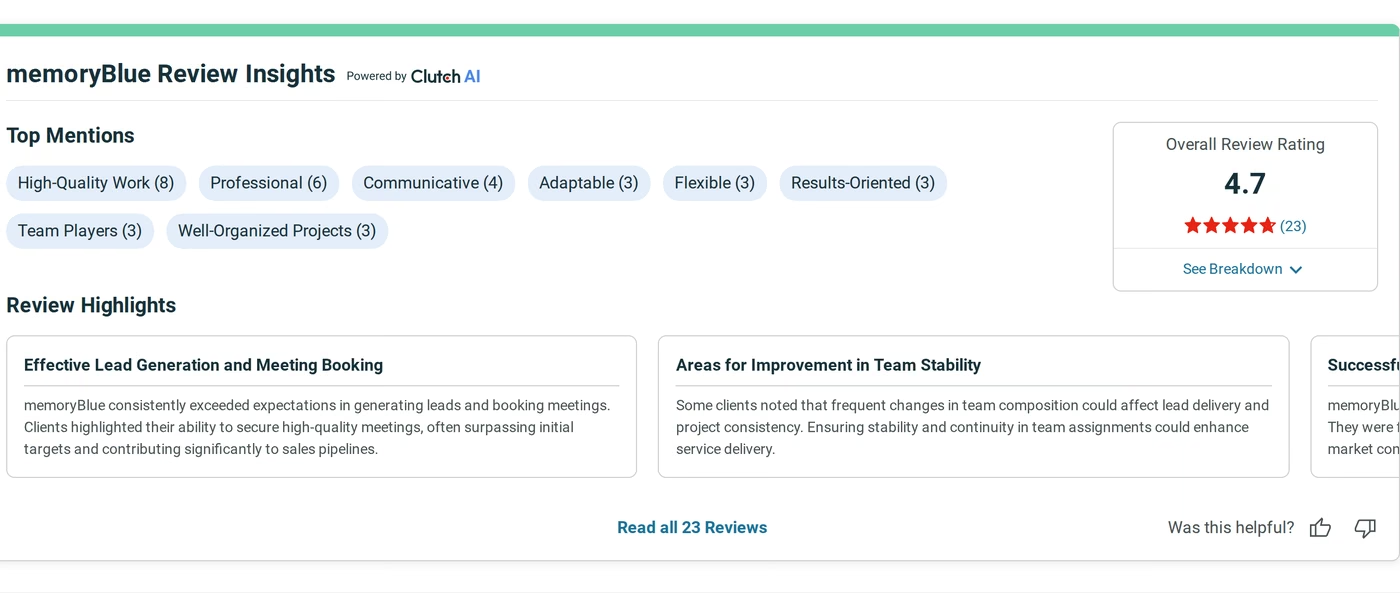
That cuts both ways: Clutch's tag counts list adaptable and flexible three times each, so expect variation by team. Two caveats: some G2 entries are incentivized and seller-invited, and 23 Clutch reviews is a thin sample.
The turnover theme is corroborated from the other side. On Glassdoor, memoryBlue scores 3.4 across 988 employee reviews, with SDRs rating it 2.0 and pay 2.5. Culture scores 4.0, so complaints center on pay and campaign assignment.
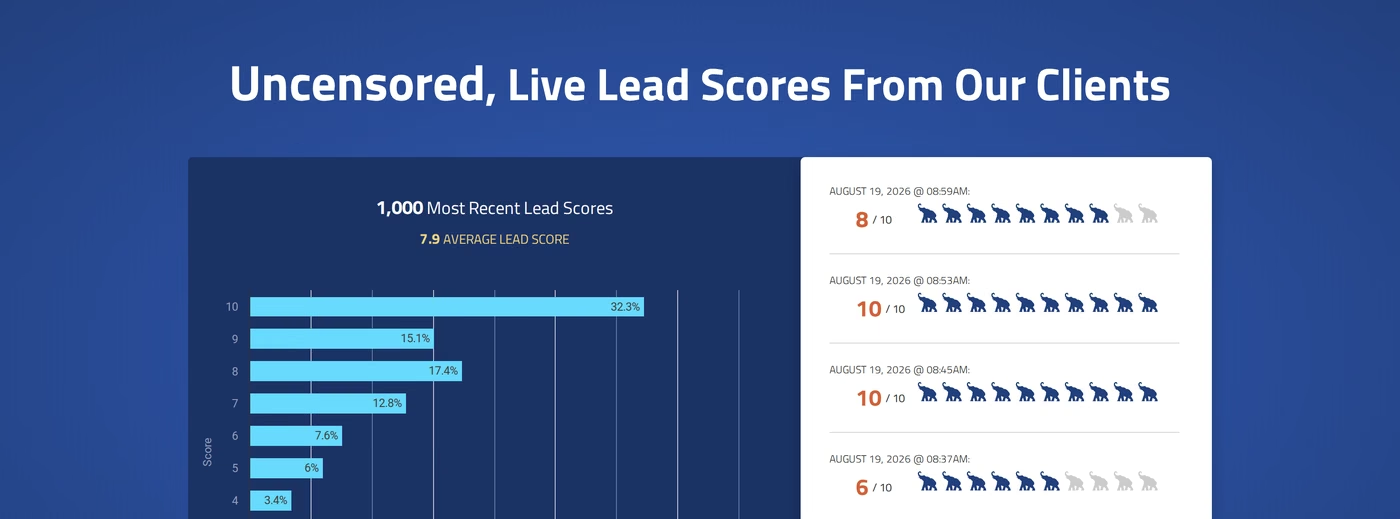
That feed is the strongest thing on their site. It reports a 7.9 average across the last 1,000 client scores, with 32.3% scored a perfect 10, 77.6% at 7 or better, and roughly one lead in seven at 5 or worse.
Publishing the bad ones is unusual, and it hands you a baseline. You are buying people here, so ask about rep tenure on accounts like yours, who your named rep will be, and what happens if they leave in month three.
Our Verdict on memoryBlue
Hire memoryBlue if you are a funded B2B tech, cybersecurity, or public-sector software vendor that needs a dedicated SDR pod now and wants the option to hire those reps in-house later.
Two things support this. Their case studies name enterprise brands with countable outcomes: 988 outbound SQLs over 33 months for CentralSquare, and 1,339 for Motorola Solutions at a 9.1 out of 10 lead score. And at 4.6 on G2 across just over 300 reviews, the independent evidence is thicker than most rivals can show.
One thing holds it back. The commercial terms are invisible:
- No pricing published anywhere, only three engagement models.
- No stated contract length, minimum term, or notice period.
- A fee to convert your SDR to your own payroll, acknowledged but never quantified.
- Nothing published about who owns the domains, mailboxes, and lead data at exit.
Treat this as a conditional yes. Get those four answers in writing first, and if the terms come back rigid, compare certified agencies that publish theirs.
How I Evaluated memoryBlue
I have not been a memoryBlue client, so this review is research-based.
I read their homepage, service and about pages, then opened individual case studies to check the numbers on the summary cards. I searched G2, Clutch, Trustpilot, TrustRadius, Glassdoor, and Reddit, looked up their UK entity at Companies House, and traced ownership through their announcements.
I judged them on four things: who owns the infrastructure and data, how a qualified lead is defined, what the contract commits you to, and whether the numbers hold up at the source.
Everything below marked "reports" or "says" comes from their own published material.
memoryBlue Services Reviewed
memoryBlue sells one outcome: qualified meetings booked by dedicated SDRs who work only your accounts.
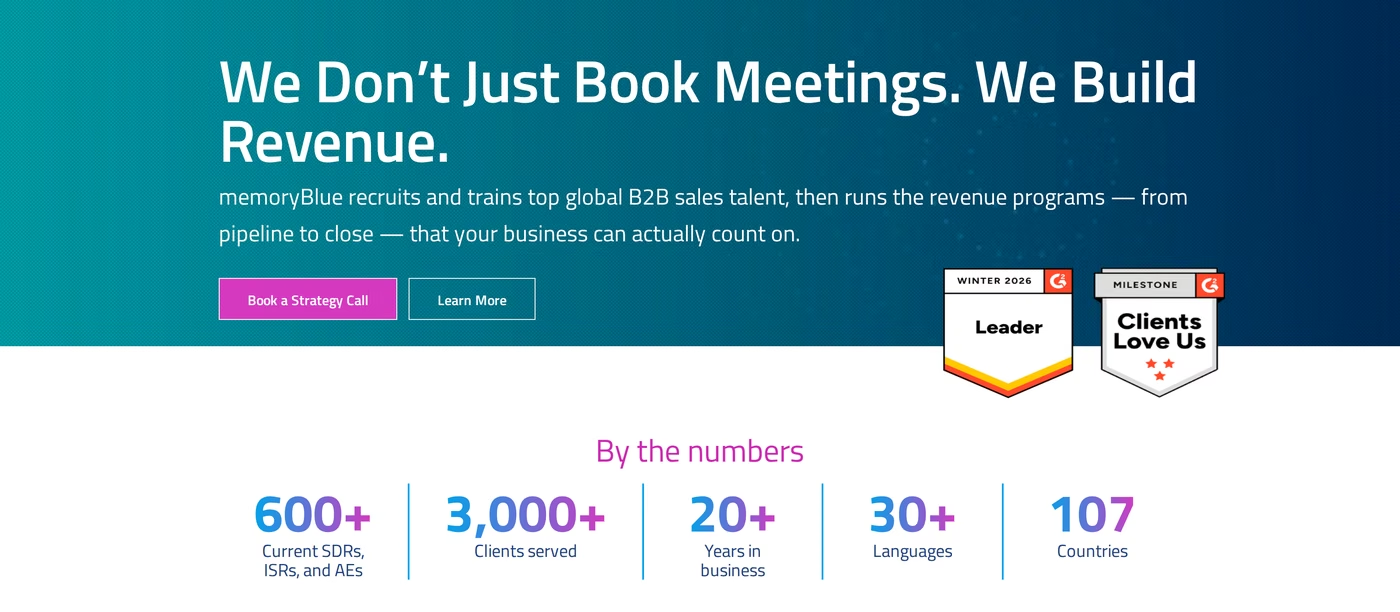
Their site organizes everything under an acronym they call SMART: Sales, Marketing, Academy, Recruiting, and Technology.
Outsourced Sales Development
Their site says trained SDRs run a multi-touch cadence to identify, qualify, and engage decision-makers, then book meetings. The cadence blends cold email with calling, and their marketing arm adds LinkedIn outreach.
Their case studies show pods rather than single reps: five SDRs on Motorola Solutions, eight growing to nine on CentralSquare. The public-sector practice runs from Virginia, naming Booz Allen Hamilton, AWS, Infoblox, and Splunk.
Recruiting and Direct Hire
Competitors cannot easily copy this. memoryBlue trains reps in its Academy, deploys them on your campaigns, then lets you hire them.
Their site reports 176 companies hired their memoryBlue SDR permanently in 2024. Their Darktrace study says they placed 216 sales professionals over three years, averaging one every five days.
If you plan to build in-house eventually, that pathway has real value. Ask what the conversion fee is in dollars, at month six and at month twelve.
Marketing, Academy, and Technology
Their site also sells demand generation, paid search, and content, plus Academy training sold separately.
It describes a data store and reporting suite but never names the platform that sends your email. Ask which platform sends and who owns the domains. This email deliverability guide covers what to check.
What You Get With memoryBlue (and What You Don't)
| Criteria | memoryBlue | Certified Forge Experts |
|---|---|---|
| Channels | Cold calling and email via dedicated SDRs, plus demand gen and paid search | Outbound Pros: email, LinkedIn, cold calling, and PPC as one motion |
| Lead guarantee | None published. Live client lead scores instead | Outbound Pros states 50 to 75 qualified meetings per month |
| Outbound stack | Describes a tech stack and data store, but never names the sending platform | Profiles name tools: Salesforge, Clay, Leadsforge, Infraforge, HubSpot |
| Infrastructure ownership | Not stated publicly | Outbound Pros states owned domain infrastructure with documented SPF, DKIM, DMARC |
| Independent reviews | 4.6 on G2 from just over 300 reviews, 4.7 on Clutch from 23 | Named client testimonials, though the directory is newer than the big platforms |
| Pricing transparency | No prices published. Fixed-fee, pay-for-performance, or hybrid | RevSculpt from $5k per month, Growth Alliance from $10K |
| Market coverage | Reports 107 countries, 30+ languages, seven offices listed | RevSculpt: US, UK, UAE, Canada, EU. Growth Alliance: US, EU, Canada |
| Team depth | Reports 600 or more current SDRs, ISRs, and AEs | Boutique. Growth Alliance caps at four to six clients, 100 to 120 hours each |
| Best for | Funded tech and public-sector vendors buying a multi-SDR pod | Lean teams that want a documented system they keep |
Every memoryBlue cell comes from their public material, every expert cell from live profiles I opened while writing. Confirm details on your discovery calls.
How memoryBlue's Process Works
1. Discovery and ICP Definition
Their site says onboarding starts with a deep dive into your product, brand voice, and goals.
Ask who writes the ICP and who signs off. On CentralSquare they report targeting named entities such as Tempe, Omaha, and Charlotte.
Bring your own ideal customer profile to that first call. It keeps the targeting yours, not theirs.
2. Prospect List Creation
Their site says SDRs can work your existing database or prospect independently.
Ask to see a sample list before launch. Fifty rows tell you more than any call.
3. Copy and Campaign Approval
Their site describes building scripts, sequences, and collateral.
Get approval rights in writing. You want sign-off on copy and list before anything sends.
Ask how the copy gets personalized at volume. Good cold email personalization is the difference between a reply and a spam complaint.
4. Campaign Launch
I could not find a stated setup timeline anywhere on their site. Ask for a dated launch plan.
Also ask who owns the sending domains and how long warm-up runs. Skipping it is the fastest route to spam, as this email warm-up guide shows.
5. Reply Handling and Meeting Booking
The stated goal is a meeting booked on your salesperson's calendar, with the SDR qualifying first.
Ask who answers an interested prospect at 9pm, and how a no-show counts.
6. Reporting and Optimization
This is where they are strongest: weekly huddles, real-time dashboards, and the client scores that feed the public feed.
Ask for the scoring definition in writing. Two 10s only compare if the rubric is fixed.
memoryBlue Pricing and Contract Terms
memoryBlue publishes no prices. Engagements start with a strategy call, and their site offers a cost calculator comparing in-house against outsourced SDRs.
What they do publish is the structure: a fixed-fee model they call the most popular, pay-for-performance, or a hybrid. They add that pay-for-performance suits mature markets with limited budget, which means fixed-fee is the default for everyone else.
Because the model is dedicated headcount, cost scales with pod size, not send volume. A five-person pod is very different from a one-person pilot, so get the per-rep figure.
What's Included at Each Price Point
With no published tiers, scope is negotiated. Their described engagement covers a dedicated SDR or pod, an account manager, list building, copy, sequencing, huddles, and dashboard reporting.
There is no lead guarantee anywhere on their site. The lead score feed measures quality after delivery, so nothing obliges them to hit a meeting number.
Hidden and Additional Costs to Watch
- SDR conversion fees. Their site says the fee to hire a rep sits in the original agreement and drops based on various factors, but never says what it is.
- Domains and mailboxes. Not addressed publicly. Confirm whether infrastructure is billed through or on your own.
- Data and enrichment credits. Ask whether contact data is included or billed at cost.
- Setup and onboarding. Ask whether the ramp period is billed at the full rate.
- Academy training. Sold separately, so confirm it is not assumed in scope.
One warning matters most. If the agency owns your sending domains, leaving means starting your deliverability from zero.
Who Should Hire memoryBlue?
- B2B tech and cybersecurity vendors with a proven product. Their library leans heavily to security and data, naming Trend Micro, Symantec, Darktrace, Malwarebytes, and Venafi.
- Public-sector software vendors. Their strongest documented work is B2G, with CentralSquare and Motorola as the evidence.
- Companies that want a hire-out path. If you plan to build in-house within two years, the recruiting arm makes the money work harder.
- Teams expanding into EMEA or APAC. The Operatix acquisition brought the UK and Singapore operations and multilingual coverage.
- Deals big enough to absorb a pod. Reported output per rep swings widely between accounts, so the math only works at a healthy contract value.
Who Should Not Hire memoryBlue?
- Pre-product-market-fit startups. Their model assumes a defined ICP and messaging that converts.
- Low deal value or transactional sales. A dedicated pod cannot pay itself back on small contracts.
- Buyers who need published pricing or a short trial. There is no rate card and no stated minimum term.
- Teams that want to own the system. You rent trained people, and the asset walks out with them unless you pay to convert.
- Anyone needing reps to do more than prospect. Reviewers found the role hard to stretch.
And if you are sending under a few hundred emails a month, you may not need an agency at all. Running Salesforge yourself at $48 per month covers that volume with warmup included.
memoryBlue Case Studies and Reported Results
memoryBlue publishes more than forty case studies with named clients, far more than most agencies show.
| Client | Industry | Reported Result |
|---|---|---|
| CentralSquare | Gov Tech | 988 outbound SQLs over 33 months at an 8.8/10 average lead score, $57.6M pipeline, $836K ARR closed, and all nine SDRs hired in-house |
| Motorola Solutions | Public safety | 1,339 outbound SQLs over 20 months at a 9.1/10 average lead score, using five dedicated SDRs |
| Gainsight | Customer success software | More than $500K in closed-won deals, an average lead score above 7, and quota attainment reported at 170% |
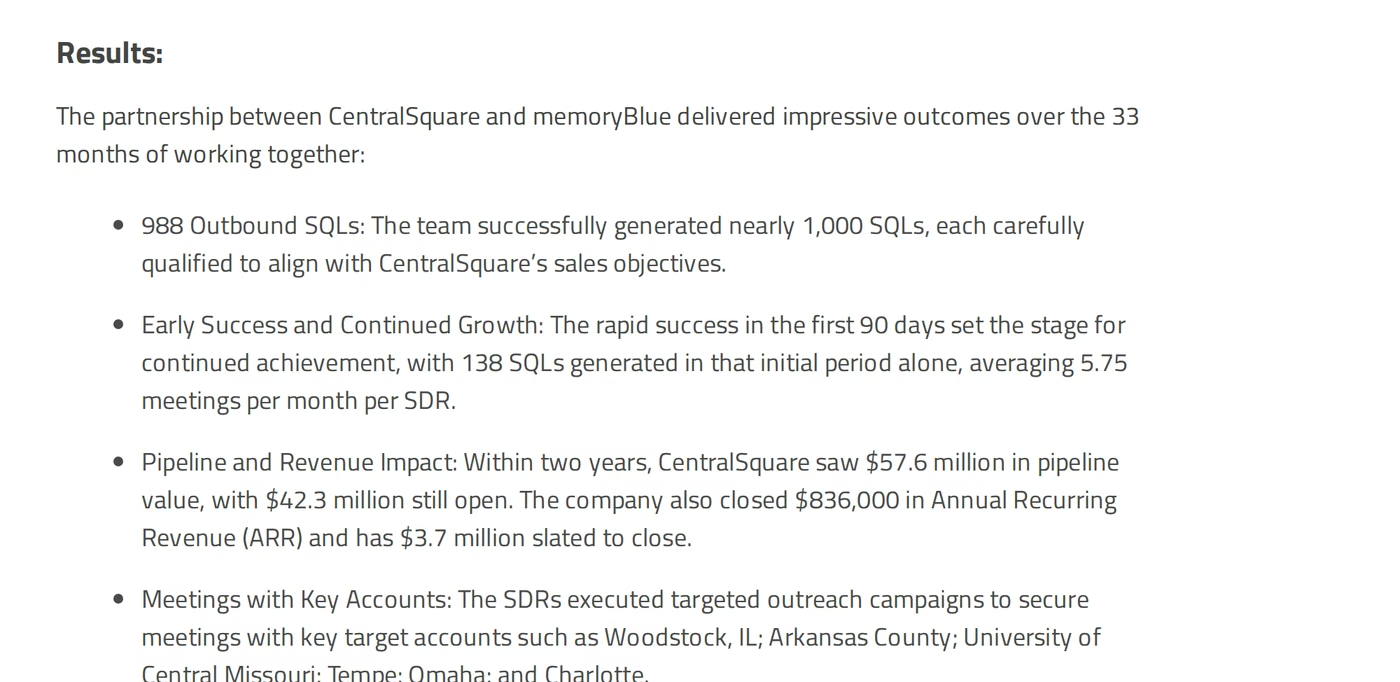
What stands out is the granularity. CentralSquare reports 138 SQLs in the first 90 days, or 5.75 meetings per SDR per month.
Motorola implies a very different rate: 1,339 SQLs across five SDRs is roughly 13 per rep per month. Ask which end your campaign is modeled on.
The vertical range is wide, from cybersecurity and gov tech to fintech. Their Adobe study reports 60 target accounts and 80% penetration over six months.
One caution: several summary cards do not match the studies they link to. The Adobe card describes a travel marketplace hitting 106% of goal, which belongs to another client.
The Motorola card carries CentralSquare's 988 SQLs at 8.8, while its own page says 1,339 at 9.1. The APImetrics and Qualpay cards describe each other.
These look like content management errors rather than inflation, and the studies are usually stronger than the cards suggest. Still, open the study before quoting a number back. And all of it is company-reported, audited by no independent platform, including the lead scores clients submit themselves.
memoryBlue Limitations to Consider Before Signing
- No published pricing or contract terms: nothing states cost, minimum term, or notice period, and the fee to hire a rep is never quantified. Ask for the per-rep rate, minimum commitment, exit clause, and conversion fee in one document.
- Rep turnover is the top client complaint: it recurs across G2 reviews, and employee-side ratings support it. Ask for average rep tenure and the replacement process.
- Data and domain ownership unaddressed: nothing public says who keeps the domains, mailboxes, and data at exit. Put ownership in the contract, not the kickoff deck.
- No lead guarantee: the score feed measures quality after the fact but commits them to no volume. Agree a monthly meeting target and a remedy.
- Case study summaries are unreliable: at least four index cards carry another client's copy or figures. Verify against the source page.
- Private equity ownership: their 2023 announcement identifies memoryBlue as a portfolio company of Avesi Partners. That brings capital and stability, and it also means pricing and account structure can shift with the investment thesis.
None of these should rule memoryBlue out alone. But if two or more matter to you, compare agencies that already answer these questions on their public profiles, which is exactly what the certified agencies below do.
memoryBlue Alternatives: Certified Forge Experts Worth Considering
Do not Google "lead generation agency" and pick the first result. Compare agencies whose practices you can verify. This Martal Group review and this Abstrakt Marketing Group review cover two more options on the same criteria.
The Forge Expert Network is a directory of agencies certified on the Forge ecosystem. Certification requires completing Salesforge's cold email training and meeting program eligibility requirements, so every listed agency has a disclosed, modern outbound stack.
The directory is younger and smaller than Clutch, so treat it as a curated starting point rather than a complete market map. Each pick below answers a specific gap above.
1. Outbound Pros
Best for: buyers who want a committed meeting number and calling in the mix.
Look here if you need a volume commitment. memoryBlue publishes no lead guarantee, while Outbound Pros states a guarantee of 50 to 75 qualified meetings per month, on commission-based pricing so the agency carries risk.
Their profile also answers the ownership question memoryBlue leaves open. It states owned domain infrastructure with documented SPF, DKIM, and DMARC, plus client sign-off on every sequence and list.
Warm-up runs four to six weeks, targeting 85 to 95% inbox placement. It reports 8 to 15% reply rates, 21 days to go live, and a $1.5K to $10K retainer.
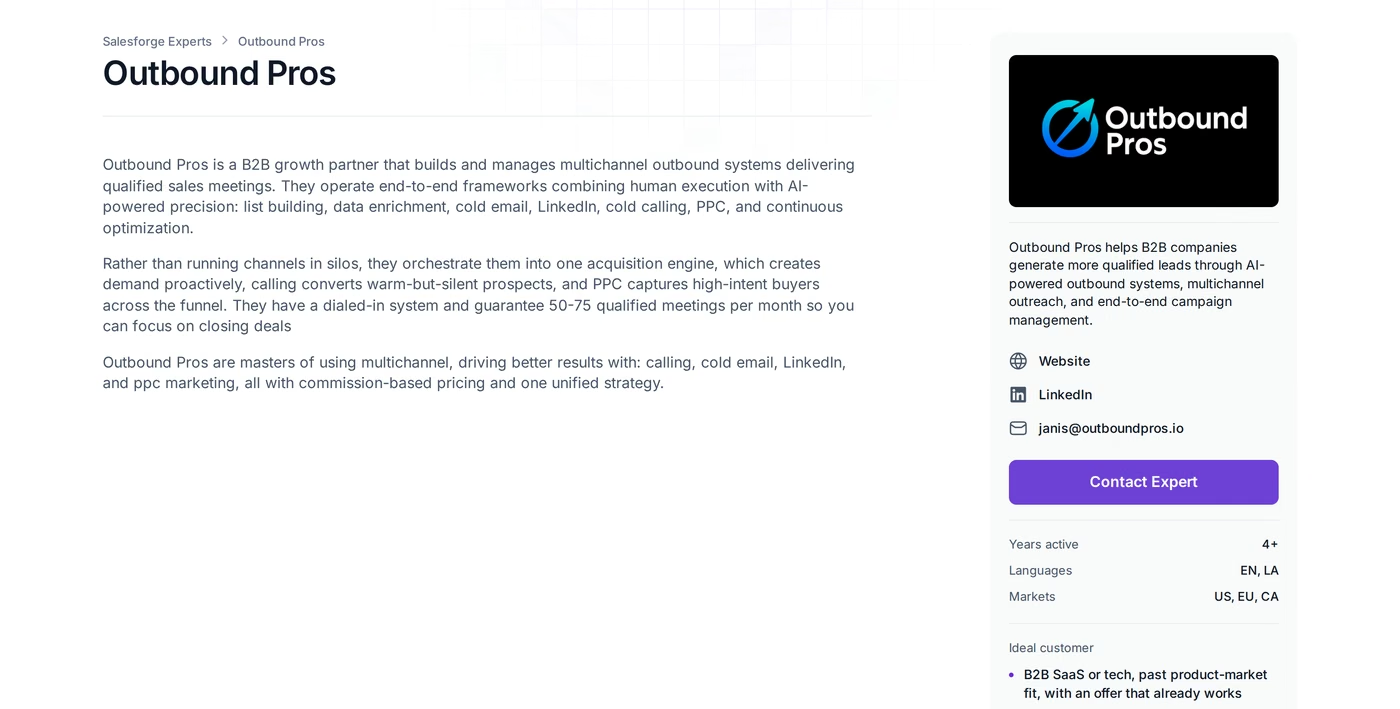
Their Outbound Pros case study adds operating detail: founder Jānis Plūme reports zero downtime across client campaigns and onboarding new clients without extra licenses. Commission-based pricing means they only get paid when you do.
2. Growth Alliance
Best for: $5M to $50M ARR companies that want to keep the system afterwards.
This is the one if the rent-versus-own problem bothers you. With memoryBlue you pay again to keep the reps, whereas Growth Alliance states its systems are built to become the client's own.
Their profile publishes the terms memoryBlue does not: programs from $10K per month, a 60-day rolling cancellation, and a 90-day sprint. It caps at four to six clients with 100 to 120 hours each per month.
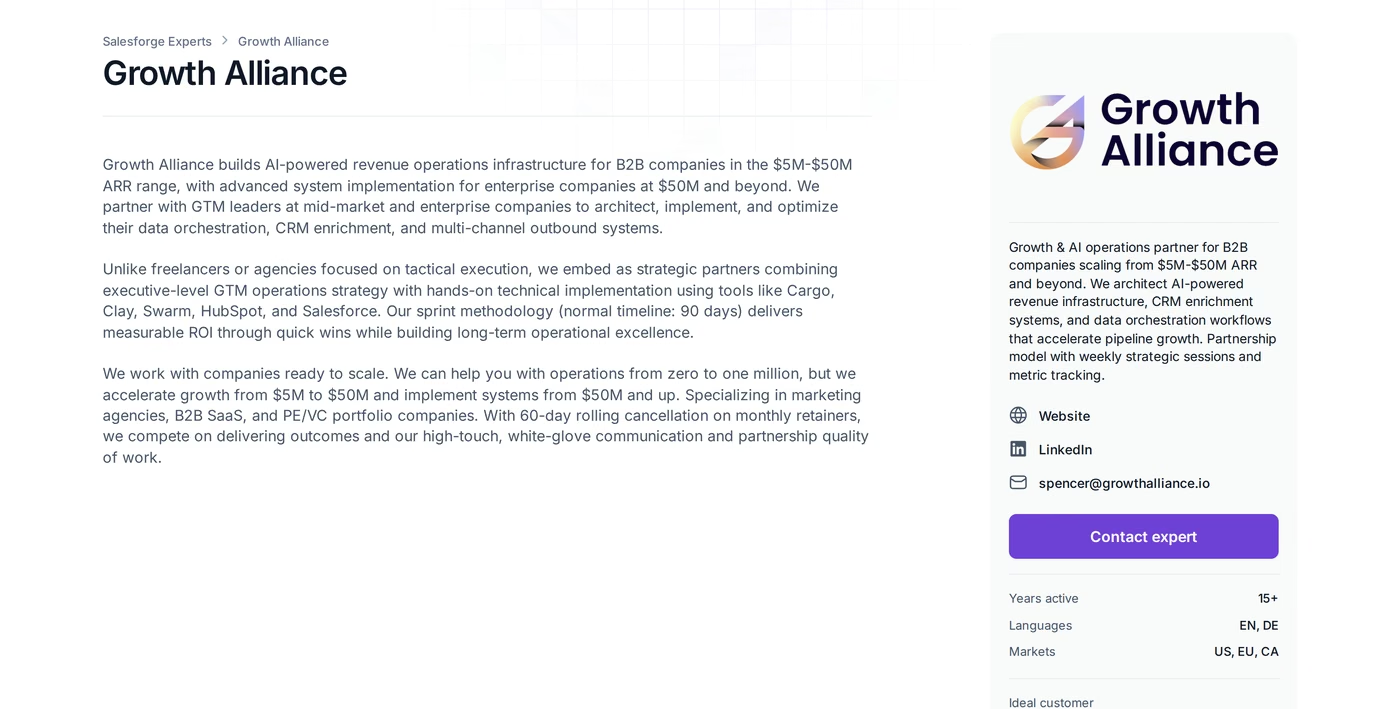
Their site names the client. For enterprise video studio Lemonlight it reports at least $1M closed and six times that in demand, and claims proven results across more than 40 engagements.
The Growth Alliance case study shows the infrastructure behind it: founder Spencer Tahil reports over 1,000 client domains and mailboxes running at a Heat Score™ above 89.
3. RevSculpt
Best for: teams wanting precision targeting instead of a headcount pod.
memoryBlue's model is people at scale, priced by headcount. RevSculpt takes the opposite approach, and its profile says plainly it is not a staffing agency or SDR outsourcer but a revenue systems builder.
Their profile reports more than 6,000 qualified meetings across 15 or more B2B verticals, with most clients seeing a first meeting within 18 days, and pricing from $5k per month.
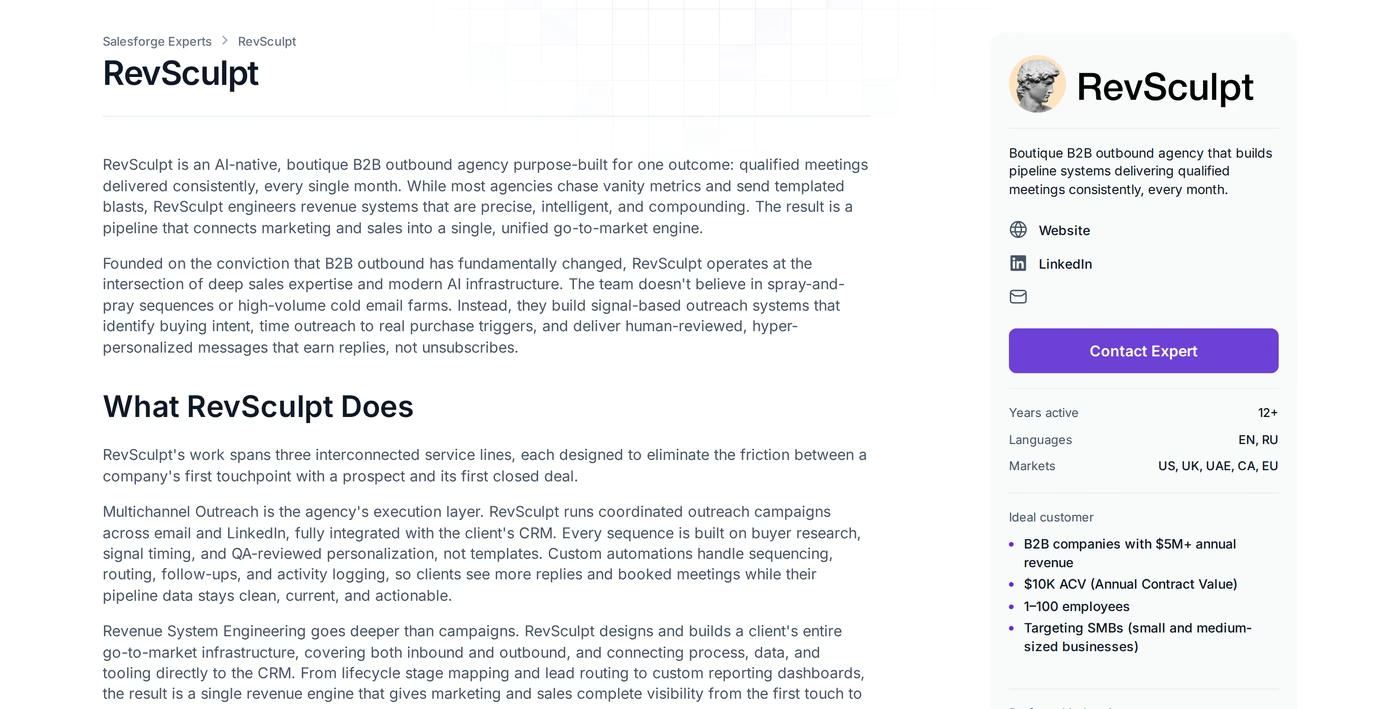
Their success cases name both clients. They report 300 or more qualified meetings in six months for AEO agency betteranswer.ai, and a 14x return on outbound spend for digital asset firm Finassets.
Prefer Not to Hire an Agency at All?
Two routes if a pod feels like too much. Run outbound yourself with Salesforge, which starts at $48 per month with unlimited mailboxes and free warmup included, plus a 14-day free trial. This outbound sales guide is a good start.
Or hire Agent Frank, Salesforge's autonomous AI SDR, from $499 per month billed quarterly. He handles prospecting, sequencing, replies, and meeting booking on his own.
He is a separate subscription, and he needs a demo plus a two-week warm-up before sending. This AI SDR explainer covers how it works.

in Action
Questions to Ask Before Hiring memoryBlue
- How do you define a sales-qualified lead, and who scores it? Show me the rubric behind those averages.
- Who owns the sending domains, mailboxes, and lead lists at the end?
- What is the total monthly cost per SDR, including data, domains, setup, and ramp?
- What is the fee to hire one of your SDRs at month six, and at month twelve?
- What is the minimum commitment and notice period, in writing?
- What is average rep tenure on accounts like mine, and what if my rep leaves in month three?
- What monthly meeting target will you commit to, and the remedy if you miss it?
- Which named clients in my vertical can I speak to, and can you send the source case study?
Their answers will tell you more than any review, including this one.
Final Verdict: Is memoryBlue Worth It?
memoryBlue is worth serious consideration if you are a funded B2B tech, cybersecurity, or public-sector vendor buying a dedicated SDR pod with a path to hiring those reps.
Two things set them apart. The outcomes are specific and independently reviewed at scale: 988 SQLs over 33 months for CentralSquare, and 4.6 out of 5 from just over 300 G2 reviewers. And the live lead score feed, at a reported 7.9 average with low scores visible, is transparency almost no competitor offers.
I would shortlist them for a US public-sector or cybersecurity vendor with a five-figure contract value that needs five or more dedicated SDRs and wants a hire-out option. That is their best documented work.
If you need published pricing, a short commitment, or a system you keep, compare certified agencies that answer those questions before the first call.
Compare Certified AgenciesFrequently Asked Questions
1. Is memoryBlue a Legitimate Company?
Yes. memoryBlue, LLC is a sales development firm founded in 2002 in Tysons, Virginia. Its UK arm, Operatix Limited, is registered at Companies House under number 07906966, incorporated in January 2012 and listed as active, with accounts filed to December 2024. Its registered office in Fleet matches the UK address on their site. Scale figures are self-reported.
2. How Much Does memoryBlue Cost?
memoryBlue does not publish pricing. Their site names three structures: fixed-fee, which they call most popular, pay-for-performance, and a hybrid, with a cost calculator instead of a rate card. Cost scales with pod size, because you buy dedicated headcount. The retainer is not the full price, so confirm data, domains, setup, and the conversion fee first.
3. Does memoryBlue Guarantee Leads?
No. There is no lead or meeting guarantee anywhere on their site. Instead they publish client-submitted lead scores live, reporting a 7.9 average across the 1,000 most recent. That measures quality after delivery but commits them to no volume. Their case studies imply roughly 6 to 13 meetings per SDR per month, so agree a written target and a remedy.
4. Who Owns the Lead Data and Campaign Assets?
memoryBlue's site does not say. Nothing public addresses who keeps the sending domains, mailboxes, CRM records, or lead lists when an engagement ends. Domain ownership matters most: if the agency holds your domains, leaving means rebuilding deliverability from zero. Ask for a written handover clause covering domains, mailboxes, data, and copy.
5. What Are the Best memoryBlue Alternatives in 2026?
Three certified agencies in the Forge Expert Network answer memoryBlue's gaps. Outbound Pros states a 50 to 75 qualified meetings per month guarantee on commission-based pricing. Growth Alliance publishes a 60-day rolling cancellation and builds systems the client keeps. RevSculpt is signal-based, reporting a first meeting within 18 days. For smaller volumes, running Salesforge yourself from $48 per month is cheaper.
6. Should You Hire a Lead Generation Agency or Build Outbound In-House?
Hire an agency when you need pipeline fast and do not want to recruit and train SDRs. Build in-house when you want to own the system, the data, and the learning. The middle path is running Salesforge yourself or hiring Agent Frank, then moving to an agency once volume justifies it. memoryBlue's direct hire route is a genuine hybrid. This B2B lead generation guide compares the options.
.jpg)

.jpg)
.jpg)
