
Personalized Outbound Strategy
Get The Right Outbound Strategy In Minutes
Enter your email to get a custom plan & stack recommendation for your business
It's being carefully crafted by AI
Please check your mailbox in 5 minutes
Leadium asks you to choose a budget starting at $2,500 to $3,500 when you request a consultation. For that kind of spend, the question is not whether Leadium can send emails or make cold calls. It is whether the team can consistently put the right prospects on your sales calendar.
That is where the Leadium reviews show an important trade-off. Leadium has a 4.7/5 G2 rating from 62 reviews, but some customers say getting the targeting right took time. One reviewer said appointment quality was inconsistent during the early learning period. Another said initial outreach was too broad.
Others mention having to revise messaging, tighten qualification, or temporarily slow campaigns while the target audience was refined.
But reviewers also say Leadium actually makes those changes. Customers describe the team rebuilding prospect lists when the wrong companies were coming through, adjusting messaging after sales calls, and prioritizing qualification over simply increasing meeting volume.
So if you are considering Leadium, I would focus less on how many meetings it can book and more on who is showing up to those meetings and how quickly Leadium can improve that quality.
In this Leadium review, I’ll break down its outbound service, pricing, real customer feedback, and meeting quality to help you decide whether outsourcing your SDR work to Leadium is worth it in 2026.
My take: Leadium is worth considering if you want to outsource outbound sales instead of managing SDRs yourself. But you should expect some back and forth on targeting and messaging before the campaign finds the right fit.
Leadium gives you a managed outbound service rather than just access to sales software. You get a dedicated SDR who works on prospecting, outreach, qualification, and appointment setting.
The service covers cold calling, cold email, and LinkedIn. Leadium also works on your ICP and prospect data before outreach starts. This means much of the work behind finding and contacting prospects sits with its team.
The difference becomes clearer when you compare it with Salesforge. Leadium is mainly a human-led SDR service. Salesforge is an outbound platform for running email and LinkedIn campaigns. You can also use Agent Frank, Salesforge’s AI SDR, to take more of the manual work off your team’s plate.
It can find prospects based on your criteria, write personalized outreach, follow up, and help move conversations toward booked meetings. You can run it in Auto-Pilot or Co-Pilot mode, depending on how much control you want.
That gives Salesforge two flexible ways to support your sales motion. Your team can run campaigns themselves, or Agent Frank can handle much of the repetitive SDR work so they can spend more time on real sales conversations and closing deals.
Leadium's biggest advantage is the human service behind the campaigns. You are paying for an SDR who can research prospects and make calls. They can also qualify opportunities before handing them to your sales team. That does not mean campaigns work perfectly from day one.
Several Leadium reviewers say their targeting or messaging needed changes after launch. Some also mention slower activity while the team refined qualification.
The reviews for Leadium are positive overall. But G2 gives you a much better picture than Trustpilot because it has far more reviews.
Users often praise the targeting, lead quality, and campaign support. The main complaints are about the time it can take to get the targeting and messaging right.
Leadium has a 4.7/5 rating from 62 G2 reviews. Users often praise its understanding of their market, lead generation, and data quality. One reviewer liked that Leadium did not stick with a campaign that was not working. The team looked at the results and changed the outreach. However, one of the target industries did not perform well at first. The campaign had to be adjusted before things improved.

Another reviewer liked how Leadium changed its targeting and messaging based on results. But appointment quality was not consistent at the start. His team had to give Leadium more feedback about the businesses they wanted to reach.
Other reviewers mention similar problems. Some had to change their messaging a few times. Others said the first target lists were too broad. Campaign activity could also slow while Leadium worked on better targeting.

The good part is that Leadium seems willing to fix these issues. Many reviewers say the targeting and meeting quality improved as the team learned more about their market.
Leadium has a 3.7/5 TrustScore on Trustpilot based on just one review. That customer gave Leadium five stars. They said the company provided quality leads and was responsive.
But one review is not enough to spot any real pattern. There is no useful feedback on common issues like onboarding, targeting, meeting quality, or campaign results.
Leadium is not like a typical outbound tool where you sign up, set up campaigns, and manage everything yourself. It is more of a done-for-you service, where you pay a team to handle a big part of the outbound process for you.
So instead of looking at it like software, I looked at it the way a buyer probably would: what parts of the sales development work does Leadium actually take off your plate, and where do you still need to stay involved?
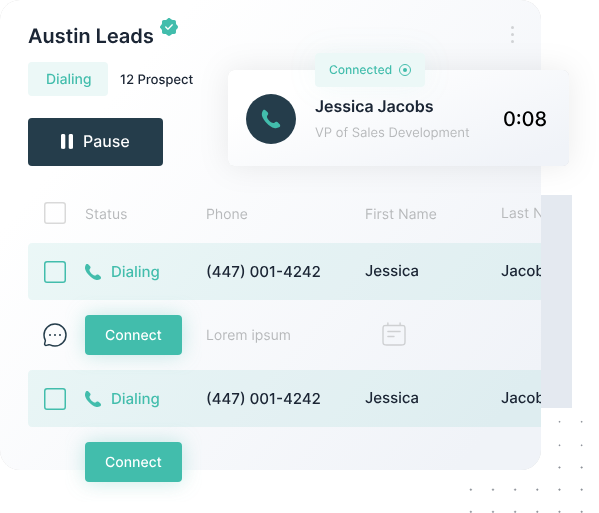
Everything starts with the list. If the wrong people go into the campaign, better emails and more calls will not fix it. Leadium uses human researchers alongside software to find prospects. Its team pulls data from public and private sources. It also uses the open web instead of depending on a single contact database.
Once you have the right prospects, Leadium can handle the email side too. This includes targeting, messaging, follow-ups, automation, and deliverability.
Cold calling is where Leadium starts to feel less like a marketing service and more like an actual outsourced SDR team. Instead of just helping with emails or prospect lists, Leadium gives you U.S.-based SDRs who can call prospects directly using scripts tailored to your target audience.
Not everyone replies to cold email, and that is where Leadium’s multichannel approach can help. Some prospects may be more likely to respond to a phone call, a LinkedIn message, an SMS, or even a thoughtful gift. Leadium brings all of those touchpoints together as part of its appointment-setting service.
I would not expect the first version of any outbound campaign to be perfect. What matters more is how the team responds when the numbers show that something is not working. Leadium’s service includes ICP development, prospecting strategy, sequence writing, sales tech setup, analytics reviews, and SDR coaching. So I looked at whether Leadium simply executes the campaign, or whether it also helps improve it over time.
The biggest difference with Leadium is pretty simple: you are paying for people to do the outbound work, not just for software that helps you do it yourself. That can save your team a lot of internal effort if you need help with prospecting, cold email, calling, and appointment setting. But you still need to be clear on who you want to sell to. Leadium can run the process, but your team still has to point it in the right direction.
Leadium doesn’t show fixed packages on its pricing page. Instead, the price depends on the service you need and the size of your outbound program. When you request a consultation, Leadium asks you to pick a budget range.
These prices are more like budget ranges than fixed Leadium plans. What you’ll actually pay depends on the kind of support you need. Leadium can help with things like booking sales appointments, finding contact data, improving email deliverability, or advising on outbound strategy. Because of that, two companies could end up paying very different amounts depending on the scope of work.
Setup time also depends on the service. Leadium says appointment setting usually takes 7 to 10 days to launch. Lead generation can be set up in 1 to 3 days, while outbound consulting typically takes 1 to 2 days.
Leadium is a strong fit for companies that want to outsource outbound sales rather than build and manage an in-house SDR team. They can take care of prospect research, cold email, cold calling, LinkedIn outreach, and appointment setting. It can also be useful for teams that already have salespeople but do not want them spending most of their time prospecting. In that case, Leadium can handle the early outbound work and pass qualified meetings over to your sales team.
That said, Leadium may not be the best choice if you already have SDRs and mainly need software to manage outbound yourself. It is a managed service, so you are paying for the team, strategy, and execution, not just access to a prospecting or outreach platform.
It may also be a less ideal fit if you want full control from day one. Several G2 reviews you provided mention that targeting, messaging, and qualification needed some fine-tuning during the early stages of campaigns.
Best for: Companies that want an outsourced team to handle prospecting, outreach, and appointment setting.
Look elsewhere if: You already have an outbound team and mainly need software to find leads, manage outreach, and run campaigns yourself.
Salesforge is a strong Leadium alternative if you want to keep outbound in-house instead of working with an agency. The two take different approaches. Leadium is a managed outbound service, so its team can handle prospect research, cold email, cold calling, LinkedIn outreach, and appointment setting. It also offers outbound strategy and consulting.
Salesforge is an outbound software platform. Your team can use it to run email and LinkedIn outreach from one place.
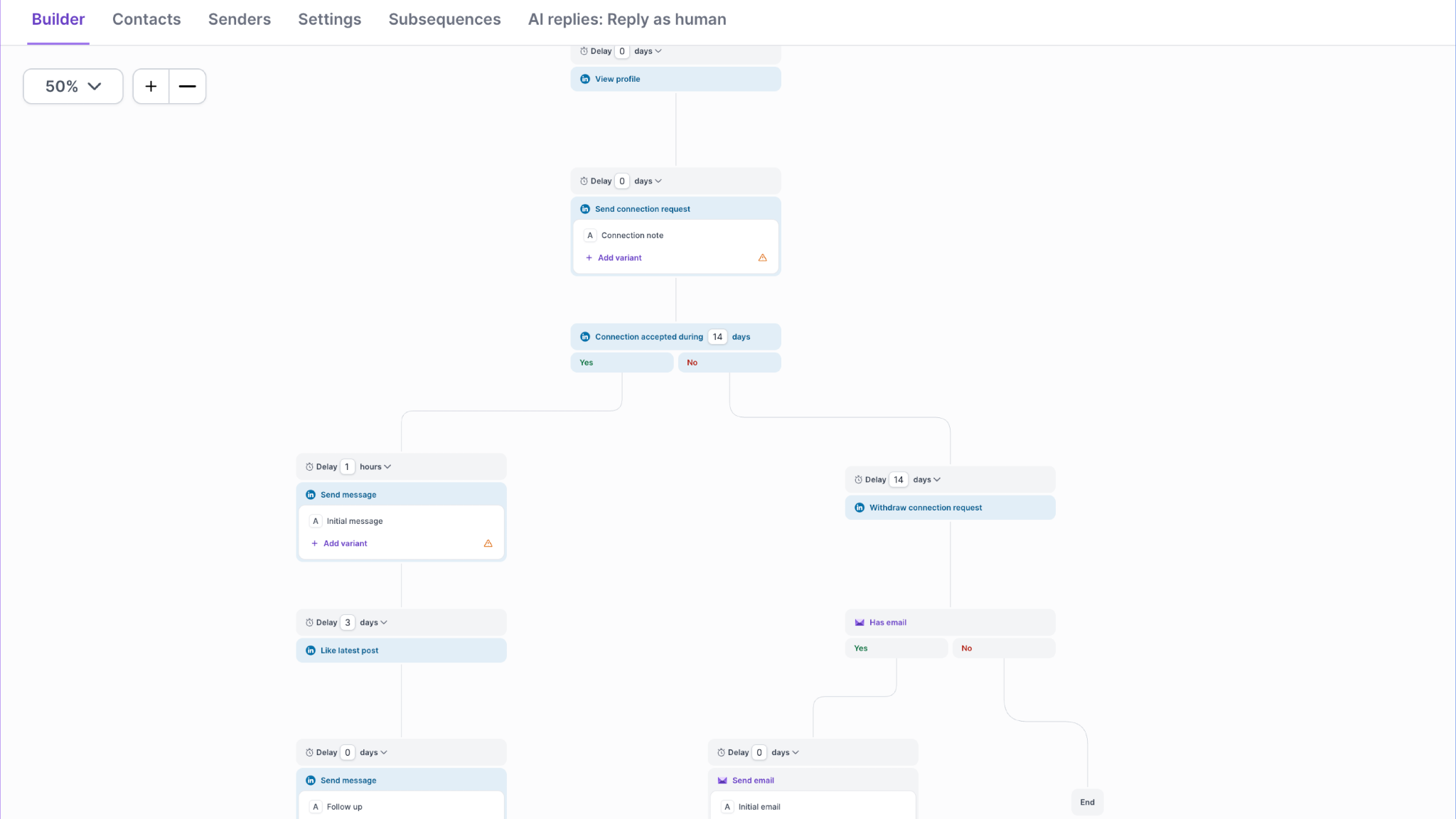
The Pro plan includes unlimited connected mailboxes and one LinkedIn sender, while Growth adds unlimited LinkedIn senders and more advanced campaign features.
Salesforge becomes a more interesting Leadium alternative when you factor in Agent Frank. Instead of hiring another SDR to take care of repetitive prospecting and outreach, you can use Agent Frank as an AI SDR.
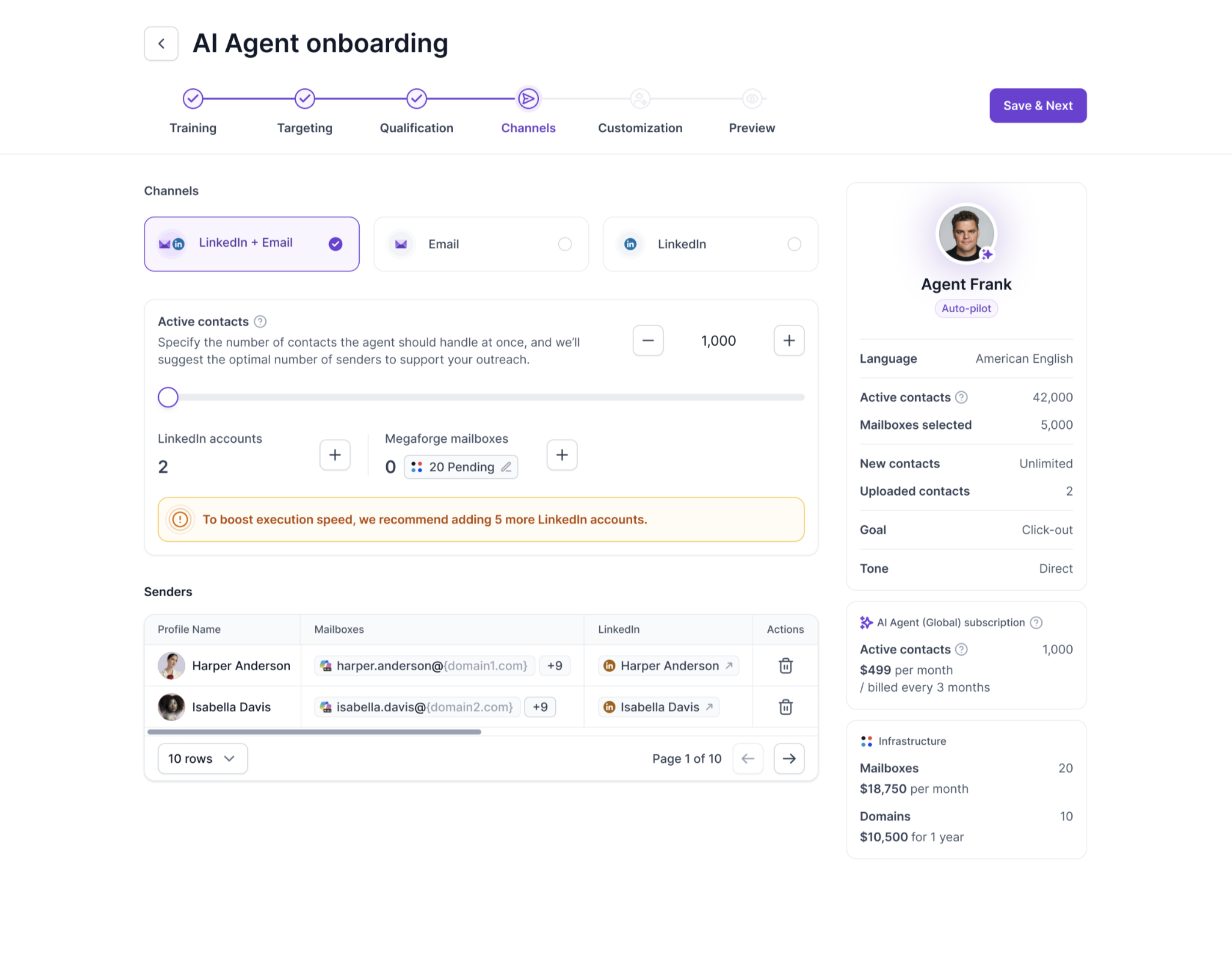
It can find prospects, personalize messages, manage follow-ups, and help book meetings. It is completely optional, so you can keep using Salesforge with your own team or bring in Agent Frank when you need extra SDR capacity.
The biggest difference is who actually does the outbound work. With Leadium, a human SDR team handles much of the execution for you. That can be a good fit if you do not want to hire, train, and manage SDRs in-house.
With Salesforge, you get more flexibility. Your existing sales team can run campaigns directly in Salesforge. The Pro plan starts at $48/month on monthly billing and includes email and LinkedIn outreach, unlimited connected mailboxes, and unlimited premium Warmforge warm-up.
If your main challenge is SDR capacity, Agent Frank can help you scale without adding another human SDR. It can handle prospecting, personalize outreach, manage follow-ups, and work toward turning interested prospects into meetings.
That frees up your sales team to spend more time on the conversations that happen after a prospect shows interest.
Enter your email to get a custom plan & stack recommendation for your business
Please check your mailbox in 5 minutes
Leadium is worth a look if your biggest challenge is simply not having enough people to run outbound consistently. Instead of handing you another sales tool to figure out, Leadium gives you a team that can help with prospect research, cold email, cold calling, LinkedIn outreach, and appointment setting.
The main trade-off is that you’re giving up some control, and it can be expensive. You should also expect a bit of fine-tuning early on, especially around targeting and messaging. Some G2 reviewers mentioned that their campaigns needed a few adjustments before Leadium found the right audience and approach.
That makes Leadium a better fit for companies that want someone else to handle the SDR work for them. But if you already have a sales team and mainly need better tools to help them find prospects, run campaigns, and manage replies, it may not be the best fit.
In that case, Salesforge is the stronger option. Your team can run email and LinkedIn outreach in-house while keeping control over targeting, sequences, and conversations. Plans start at $48 per month, and you can add Agent Frank separately if you want an AI SDR to take on more of the prospecting and follow-up work.
If you want to keep outbound in-house instead of paying for a managed SDR team, try Salesforge and build your first campaign.


.jpg)

.jpg)