An empty truck still burns fuel, insurance, and wages. The load it is not carrying is the difference between a profitable month and a scramble to cover the payments. So the real job of running a transport business is not driving. It is keeping trucks full.
That part catches most operators off guard. You sort the fleet, hire drivers, pass the inspections, then realize nobody is calling with freight. The market is huge, the auto transport segment alone sits above 10 billion dollars, but everyone else knows that too. You are competing with owner-operators running one truck and carriers running hundreds.
Here is the pattern I keep seeing. The operators who stay full treat client acquisition as a system of channels, not a single lucky contract. They run outbound, they control, work the boards and brokers, and turn every delivered load into the next referral.
This guide is for that system. Eleven ways to get clients for a transport business in 2026, explained by how much control you have over the volume, starting with the outbound engine you own.
Short on time? Here is the whole guide in six lines.
Every channel below works better once these two are in place. Skip them and even good outreach lands flat, because a shipper has no reason to trust a carrier who looks like everyone else.
"I move freight" is forgettable. "I run refrigerated LTL between Texas and the Midwest" is not. Pick a lane, a freight type, or an industry you can own. A tight niche makes every pitch sharper and every referral easier to pass on, because the person hearing it knows exactly who to send your way.
Shippers are handing you their cargo and their deadlines, so they need a reason to trust you first. A simple site, a few verifiable references, your MC and DOT numbers, insurance details, and on-time stats do more than any sales line. Proof is what turns a cold introduction into a booked load.
Cold email is the first channel I reach for, because it is the one where I decide how many prospects hear from me this week.
A shipper or broker does not know you exist until you tell them, and cold email scales that introduction without waiting for anyone to find your website. The economics work in transport because one steady lane can be worth thousands a month, which justifies real research per account.
The message is where most operators lose. A pitch that opens with your company history gets deleted. What lands is short and specific: name the lane you cover, the freight type you specialize in, and one problem you solve, then make a soft ask. If you want structures that already convert, a set of proven cold email templates is a good starting point.
Two things decide whether those emails get seen. First, the list: fifty well-chosen shippers beat a blast to five hundred random inboxes. Second, deliverability. New sending domains get flagged fast, so I warm every mailbox with Warmforge for about two weeks before real volume, and I keep the sending infrastructure clean with Mailforge for shared IPs or Infraforge for dedicated ones.
I run the sending itself through Salesforge, which handles cold email automation, sender rotation, and email validation in one place.
LinkedIn is where logistics managers, supply chain leads, and brokers actually spend time, which makes it the second channel I build.
Freight decisions run through people with titles like head of supply chain, logistics manager, and procurement lead. Most of them are on LinkedIn, and a well-timed message there often reads warmer than a cold email, because your profile shows a face and a track record.
The approach is different from email. I keep messages short and question-led, and I send a plain connection request without a pitch attached, because acceptance rates drop the moment it looks like a sale. Once someone accepts, I wait a day, then ask a single question about how they move freight today. Salesforge runs six native LinkedIn actions inside the same tool, so the connection requests, messages, and follow-ups stay organized instead of living in browser tabs.
The operators who book the most meetings do not pick email or LinkedIn. They run both as a single coordinated motion.
A prospect who ignores an email might reply to a LinkedIn message three days later. Running the two channels separately means stitching that timing together by hand for every contact. Running them as one sequence means the tool does it for you.
This is the core of what Salesforge does. Email steps and LinkedIn steps sit in one sequence with if/then logic: if a connection request gets accepted, send a message; if not, fall back to email. Every reply, from either channel, lands in Primebox, one inbox with Auto-Pilot and Co-Pilot modes, so I can either let AI handle routine replies or approve each one before it sends.
When the outreach itself becomes the bottleneck, I hand the repetitive load to Agent Frank. He is an AI SDR who prospects, writes, follows up across email and LinkedIn, and books meetings, which frees me to actually run the trucks. Personalization holds up across markets, too, since he writes in 21+ languages if I am selling cross-border freight.
I can stand the whole outbound engine up in an afternoon.
Start with Salesforge on a 14-day free trial, no credit card required.
The best time to pitch a shipper is right when their freight volume is about to jump, and buying signals tell me exactly when that is.
Timing beats persistence. A company that just raised funding is about to scale operations and move more product. A company that just hired a new head of logistics has a decision maker who is actively reviewing carriers. A company that was just acquired is reorganising its supply chain. Each of those is a buying window.
Leadsforge surfaces those windows. Its Signals sourcing path builds lead lists from real events, funding rounds, acquisitions, job changes, and active investors across a database of 500M+ contacts. I filter funding signals by location, industry, and company size to find, say, recently funded manufacturers in my region, then read the evidence behind each match before I spend a credit. From there, the list feeds straight into a Salesforge sequence, with no CSV export in between.
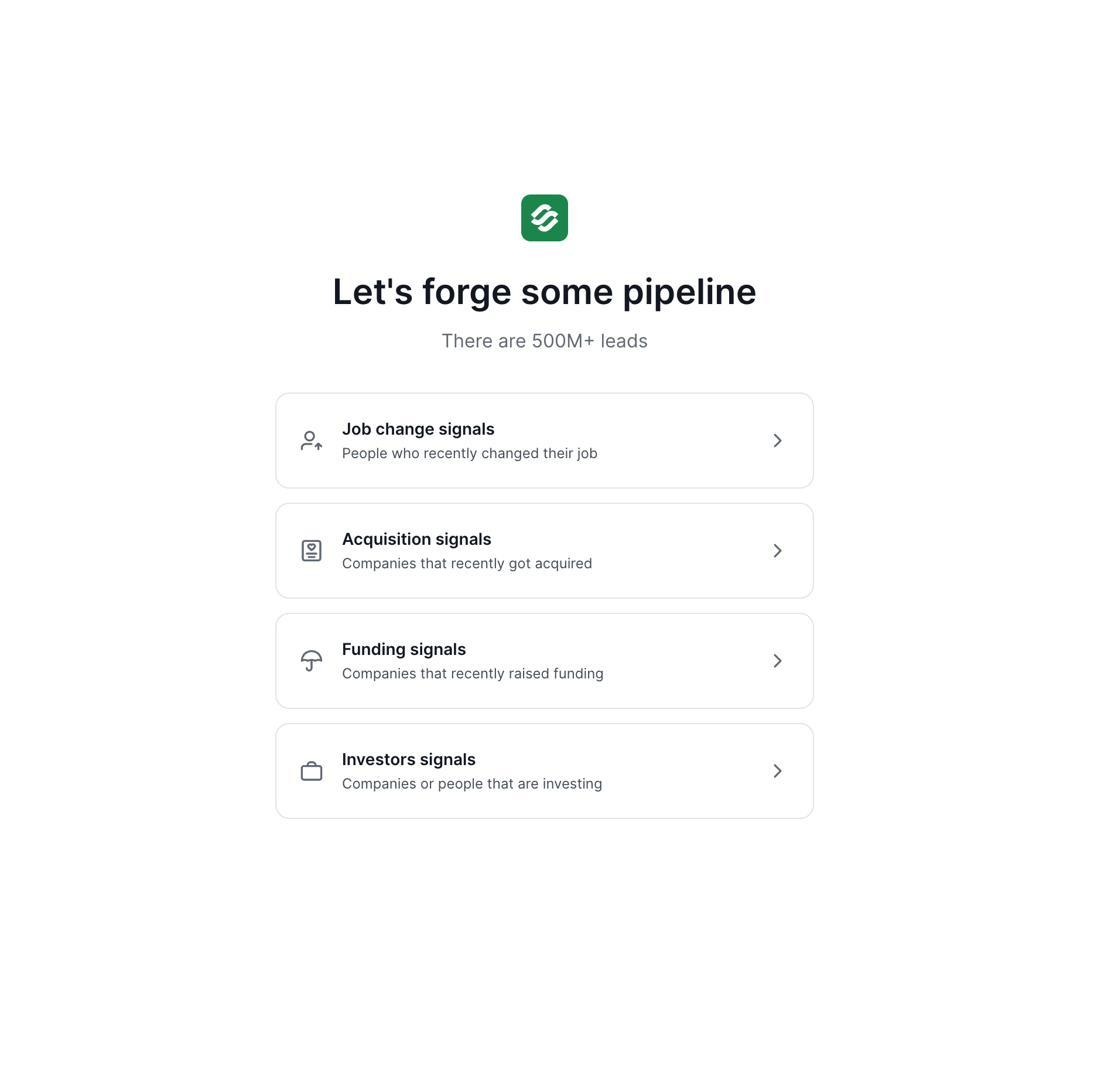
Leadsforge Signals: sourcing leads from job change, acquisition, funding, and investor events.
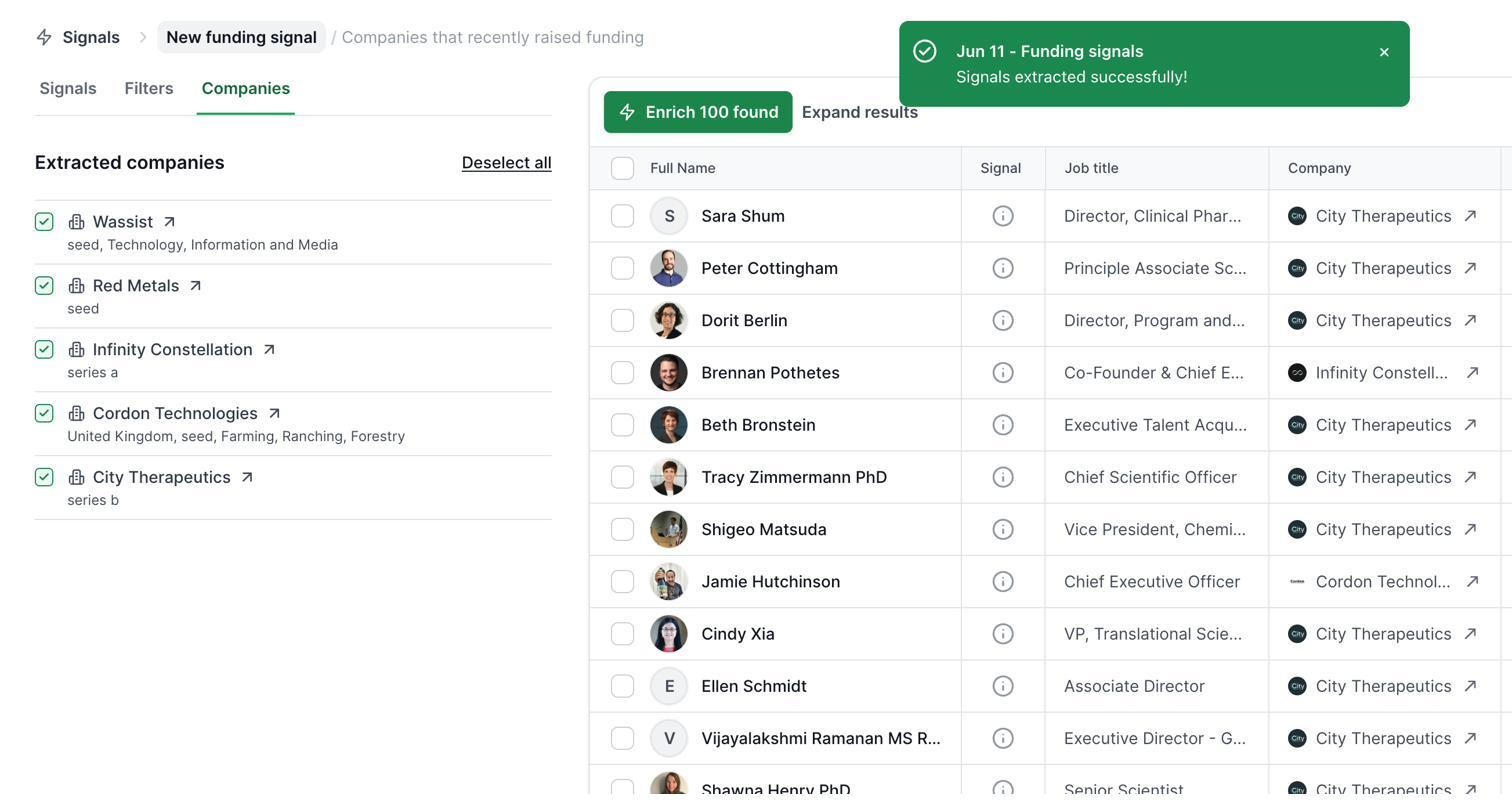
A funding-signal pull in Leadsforge, with the companies and contacts ready to enrich and push into Salesforge.
Load boards are the fastest way to put freight on an empty truck this week, as long as you treat them as a floor, not a strategy.
When a truck is sitting, a load board fills it. They connect carriers with thousands of daily shipments, and for a new operator, they are often the first paying work. That speed is real and worth using.
The catch is the margin. Boards compete on price, so the loads that come off them rarely pay the best rates, and the relationships are transactional. I use boards to keep cash flowing and trucks moving while I build the higher-margin channels that do not depend on being the cheapest bid.
Brokers and third-party logistics partners handle freight for many shippers at once, which makes each relationship a source of steady, repeatable loads.
A broker who trusts you will call you first when a lane opens. Brokers and 3PLs value consistency over rock-bottom pricing, so once you prove reliability, they route regular work your way at better rates than a board ever will.
Breaking in takes proof and persistence. I reach out directly, lead with the lanes and freight types I cover, and back it with on-time numbers. One solid broker relationship can fill a truck for months, and the logistics world is small enough that a good reputation with one opens doors with others.
Companies that make or distribute products ship on predictable schedules, and many of them prefer a local carrier that understands their needs.
Manufacturers, wholesalers, and distributors move freight week in and week out. They often prefer a local carrier who offers personal service over a faceless national one, which is exactly the edge a smaller transport business has.
The old tactic still works: drive the local industrial parks, note the company names, then research who handles their shipping. Breaking in means proving clear value, whether that is better service, tighter communication, or a competitive rate. Smaller shippers get overlooked by the big carriers, so they are often the most open to a call.
A carrier who delivers on time has already earned the one thing that wins the next client, and most operators never ask for it.
In freight, word of mouth carries weight that no pitch can match. Dispatchers move between companies, shippers compare notes, and brokers talk. A clean delivery record is a marketing asset.
So I ask, specifically. Not "do you know anyone who needs a carrier," which gets ignored, but "do you know another shipper moving freight on this lane who I could help?" Making the request easy and specific is what turns a happy client into a second one.
When a shipper searches for a carrier in your area, a simple site that ranks is the difference between getting the call and never being found.
Plenty of freight still starts with a Google search. A clear, mobile-friendly site with your lanes, freight types, service area, and contact details works as a round-the-clock salesperson. It does not need to be fancy. It needs to answer what a shipper is checking for.
Local SEO does the heavy lifting. A complete Google Business Profile, consistent listings, and a few real reviews push you up the local results where nearby shippers are actually looking. This is slower than outreach, but the leads it brings arrive already interested.
Industry directories and associations put your business in front of shippers who are already looking for a carrier they can trust.
Trade associations, load-matching directories, and regional logistics groups exist because shippers use them to vet carriers. Being listed, verified, and active in them adds credibility that a cold pitch cannot buy on its own.
Events matter for the same reason. Freight runs on trust, and a face-to-face conversation at a regional logistics meetup shortens the path to it. I treat these as relationship channels, not lead-blasting, and I follow up afterwards with something useful rather than a pitch.
Useful content earns trust before the first conversation, and it keeps working long after you publish it.
Shippers ask the same questions before they hand over freight: how you handle delays, what your insurance covers, and how you price a lane. Answering those clearly on a blog or FAQ positions you as a knowledgeable partner, not just another truck.
Content compounds. A single page that answers a real question can bring in interested shippers for years, and it gives your outreach something credible to point to. It is the slowest channel here, and the one that keeps paying.
Here is how the eleven channels stack up on the three things that matter when a truck is sitting empty: how fast they produce a client, what they cost, and how much control you have over the volume.
If I had to fill trucks starting today, I would not spread across all eleven channels at once.
I would put a load board under the trucks for immediate cash, then spend the real effort on the outbound engine, because it is the only channel where I control the volume. A tight list of shippers and brokers, warmed mailboxes, and one sequence running email and LinkedIn together is what turns client acquisition from luck into a system.
That is the setup Salesforge is built for: unlimited mailboxes, free warmup through Warmforge, leads and buying signals from Leadsforge, one inbox in Primebox, and Agent Frank to run it when you would rather be moving freight.
Try Salesforge on a 14-day free trial, no credit card required.
The questions I hear most from operators are about trying to fill their trucks.
Most start with a load board to put freight on the truck immediately, then build direct outreach to shippers and brokers in parallel. The board covers cash flow, while cold email and LinkedIn build the higher-margin relationships that last.
Load boards produce a paying load the fastest. For clients who stick and pay better, cold email and LinkedIn outreach to shippers and brokers is the fastest channel you actually control, especially when you target companies showing buying signals like new funding.
Prospect local manufacturers, wholesalers, and distributors, since they ship on regular schedules. A lead finder like Leadsforge lets you search a large contact database and filter by industry, location, and buying signals, so you reach the person who books freight rather than a general inbox.
Yes, for speed and cash flow. They fill empty trucks quickly, but they compete on price and the relationships are transactional. Treat them as a floor while you build outreach, referrals, and direct shipper relationships that pay more.
Less than most operators expect. The main costs are sending domains, mailboxes, and a sending tool. A single retained lane usually covers that many times over, which is why outbound has one of the lower client-acquisition costs in transport.
Deliver on time, communicate proactively, and ask every satisfied shipper for a referral on the lane you cover. Repeat business and referrals lower acquisition costs and help you plan loads in both directions, which is what cuts empty miles.
![How to Use Jev for Cold Email Agents [Step-by-Step Guide]](https://cdn.prod.website-files.com/6436c3ac9f9fd0594d00b9fc/6acbd25fa19716f481a8dc43_Duplicate-me-open-graph%20(67).jpg)

![How to Use Jev for LinkedIn Outreach [Step-by-Step Guide]](https://cdn.prod.website-files.com/6436c3ac9f9fd0594d00b9fc/6acbc875da442e046e263670_Duplicate-me-open-graph%20(66).jpg)

![How to Use Jev for Cold Email Outreach [Step-by-Step Guide]](https://cdn.prod.website-files.com/6436c3ac9f9fd0594d00b9fc/6acbc7c2c1eea5af07ff181b_Duplicate-me-open-graph%20(65).jpg)