Outbound sales agencies in Japan look nothing like their European counterparts. Four of the ten here are large corporations or BPOs rather than boutique cold email shops.
That reflects how Japanese B2B actually works. Institutional credibility opens doors a cold sequence will not, and outsourcing at scale is culturally normal.
I judged them on what they genuinely deliver, Japanese-language execution, and how honestly they report. One is a certified Forge Expert and takes the top slot.
Three of these agencies exist specifically to help foreign companies enter Japan. For nearby markets, I also have breakdowns of agencies in Australia and outbound sales agencies in Singapore.

SalesCaptain is an outbound marketing and go-to-market agency built specifically for B2B companies that want to reach buyers at the right moment. Their innovation lies in using data to trigger outreach when real buyer signals appear, not from static lists.
Their system runs three simultaneous layers: AI-insight campaigns that target accounts not yet problem or solution aware; intent-signal campaigns that engage prospects already showing demand signals like hiring activity or funding rounds; and inbound reactivation campaigns that convert accounts already familiar with your brand but not yet sold.
What separates SalesCaptain from other outbound sales agencies is how they align messaging, timing, and offer to where each prospect sits in their buying journey. They also build market-specific offers that differentiate you from competitors, then run outbound like performance marketing: test fast, scale what works, cut what doesn't.
The result is consistent pipeline generation regardless of TAM size or market saturation. SalesCaptain performs best in environments where innovation matters, which is why B2B SaaS companies are typically the strongest fit.
Clutch ranks them the number one B2B outbound and GTM agency. They have no Japanese base, so pair them with a local partner rather than treating them as a substitute for one. Their targeting leans on B2B intent data rather than static lists.

dentsu is the largest and most recognisable Japan-founded name on this list. It is also the least like a cold email agency. Including them needs that caveat stated plainly.
The relevance comes from brand strategy, customer experience and business transformation sitting in one place. Messaging, targeting, data and performance marketing all connect into the pipeline. Few partners anywhere can hold all four at once.
For companies scaling across regions they bring a full team rather than a single-platform play. At enterprise scale that breadth is genuinely hard to ignore. Regional coordination is where most smaller agencies fall short.
It is also slower and more expensive than a boutique. Enterprise procurement tends to suit enterprise partners, and the reverse is equally true. A ten-person startup will not get their best people.
Where the outreach itself belongs is a separate question. My breakdown of GTM channels covers how those choices trade off. Brand and outbound draw from very different budgets.
Symphony Marketing is a Tokyo B2B agency built around demand generation rather than brute-force outreach. That distinction is deliberate and worth respecting.
Their Demand Center framework generates marketing qualified leads and hands them cleanly to sales. Clean handoff is where most Japanese outbound programmes leak. Leads arriving without context get ignored internally.
That suits companies wanting better response rates instead of more contacts touched. Quality over volume is the correct instinct for this market. Messaging, follow-ups and nurturing are part of the same system.
Alignment with the sales function is the recurring theme. Less wasted time on low-quality prospects is the stated benefit. Sales teams notice that difference quickly.
If you would rather build that engine internally, my guide to B2B lead generation maps out the steps. A demand centre is a system rather than a campaign.

Best Effort Marketing is a Tokyo agency positioned as a marketing outsourcing partner for foreign companies in Japan. That positioning is unusual and useful.
That framing is the reason to shortlist them. Very few Japanese agencies write their own copy for an overseas audience. Communication friction is what usually derails these engagements.
A dedicated team handles list building, lead sourcing and outreach without you building anything in-house. One-stop outsourcing is how they describe it. Time saved is the real product.
Coordinated support across marketing, content and execution suits teams with no Japanese staff yet. Japan market entry is the natural use case. Local execution without local headcount is hard to buy elsewhere.
Agree the outbound sales strategy before they start. Outsourcing works better when the positioning decisions are already made. Otherwise you outsource the confusion too.

Yakumo Marketing is built for overseas companies trying to win in the Japanese market. Their entire proposition points outward rather than inward.
One-stop support from strategy through execution is the pitch. Their materials name lead generation and nurturing in Japan specifically. Naming the market matters when everyone claims global reach.
That matters because Japanese B2B needs careful research, localised messaging and disciplined follow-up. A list and a cold sequence will not convert here. Japanese buyers read effort as respect.
They help identify the right prospects rather than handing over a database. Turning prospects into conversations is framed as the hard part, correctly. Identifying the right contact takes longer here than sending to them.
Skipping localisation is one of the common cold outreach mistakes that ends a Japanese launch early. Machine-translated outreach is spotted immediately.

I&D is the clearest match for a modern outbound agency on this list. Everything else here is broader or larger.
Their site explicitly covers lead generation, account-based marketing, telemarketing and lead nurturing. That combination is rare in Japan. ABM in particular is still uncommon locally.
They report completing more than 3,000 projects, with a focus on technology and manufacturing. Those two sectors dominate Japanese B2B. Sector fit reduces the ramp considerably.
A dedicated team supports the SDR function with cold outreach and data-backed targeting. Better calendar fill is the practical outcome. Cold outreach sits alongside telemarketing rather than replacing it.
The targeting work rests on data enrichment rather than volume. In a relationship market that ordering matters more than usual. Bad data wastes an introduction you cannot repeat.

transcosmos is one of Japan's biggest outsourcing names, and the sales support goes well past customer service. The scale here dwarfs everything else on this list.
Their materials describe outbound services spanning data and digital marketing through to lead generation, nurturing and closing support. Closing being in scope is unusual. Very few outsourcers will carry a deal that far.
One operating partner managing outreach, chat and phone at scale is the proposition. Large, process-driven delivery across regions is what you get. Consistency rather than flair is the offer.
That suits organisations needing structure rather than creativity. Boutique attention is not what a BPO of this size sells. Match the partner to the size of the problem.
My roundup of multichannel outreach tools covers running the same channel mix with a smaller team. Owning the tooling keeps the process visible.
BELLSYSTEM24 is a Tokyo BPO and contact-centre company with a long operating history. Longevity counts for a great deal in Japan.
They are better known for contact centre work than pure cold outreach, and it is fair to say so. Scale and CRM services are the actual draw. Positioning them otherwise would be misleading.
Structure around customer conversations, follow-ups and sales operations is what they provide. Reliable process management is the value. Predictability is genuinely worth paying for.
Cost reduction and tighter management sit alongside keeping conversations moving. This is an operational partner rather than a growth partner. Expect discipline instead of experimentation.
If pipeline is the only goal, read my AI SDR vs agency comparison before buying contact centre capacity. Service scale and prospecting skill are different purchases.

tele-net is an Osaka company describing itself as a sales-boosting call centre. The self-description is refreshingly direct.
Outbound calling, appointment setting and direct sales support are the core services. Their pages name outbound service explicitly rather than burying it. Plenty of call centres hide their outbound work.
The company has been operating since 1994, which counts for something in a relationship market. Osaka also gives coverage outside the Tokyo orbit. Kansai buyers are a distinct market.
A phone-first sales process suits Japanese buyers better than most Western markets. Live follow-up and fast qualification are the strengths. Speed of response decides more here than copy does.
In Japan the cold email vs cold call question resolves toward the phone more decisively than anywhere in this series. Email works as the follow-up, not the opener.
HITO-Communications is a major Japanese sales support company with explicit outsourcing and nationwide coverage. Genuine national reach is rarer than it sounds.
Their site breaks out outbound services including new customer origination and promotion to existing customers. That split is more precise than most. Existing-customer promotion is a real revenue line.
Real operational scale sits behind the sales process. Teams wanting a full dedicated function rather than a campaign will find the fit. Operational scale is the thing they sell.
Outbound campaigns, phone work and field or retail support are designed to work together. Japan still runs meaningful field sales. Retail and phone working together is a genuine advantage.
Before buying that much headcount, weigh the AI SDR vs SDR economics against your actual coverage needs. Nationwide costs more than most companies require.
Japan is the market where a partner earns their fee on language and relationships. The machinery underneath is the part you can own.
The Forge stack handles the infrastructure and sequencing, for a fraction of one monthly retainer.
Building intent-based lead lists before running outbound sequences with Salesforge.
All the agencies on this list can run effective outbound sales on your behalf. But if your goal is to own the process, control the data, and scale without growing headcount, Salesforge gives you the infrastructure to do it. Try the 14-day free trial - no credit card required.
Hire the language. Own the machine.
Try Salesforge free →14-day trial. No credit card, no commitment.
Or if you're still weighing agencies, browse the certified Forge experts for vetted partners.
| Agency | Location | Best For | Key Focus |
|---|---|---|---|
| SalesCaptain ✓ Forge Certified | London, UK | Intent-Triggered B2B Outbound | Intent Signals, GTM Strategy |
| dentsu | Tokyo, Japan | Enterprise Brand And Demand | Brand Strategy, CX |
| Symphony Marketing | Tokyo, Japan | Demand Generation Alignment | Demand Centre, MQL Handoff |
| Best Effort Marketing | Tokyo, Japan | Foreign Companies In Japan | Marketing Outsourcing, List Building |
| Yakumo Marketing | Japan | Japan Market Entry | Market Entry, Localisation |
| I&D | Japan | Tech And Manufacturing Outbound | Lead Generation, ABM |
| transcosmos | Tokyo, Japan | Multi-Channel Outsourcing At Scale | BPO, Multi-Channel |
| BELLSYSTEM24 | Tokyo, Japan | Process-Managed Contact Centres | Contact Centre, BPO |
| tele-net Corporation | Osaka, Japan | Phone-First Sales Support | Cold Calling, Appointment Setting |
| HITO-Communications | Japan (nationwide) | Nationwide Sales Coverage | Sales Outsourcing, Nationwide |
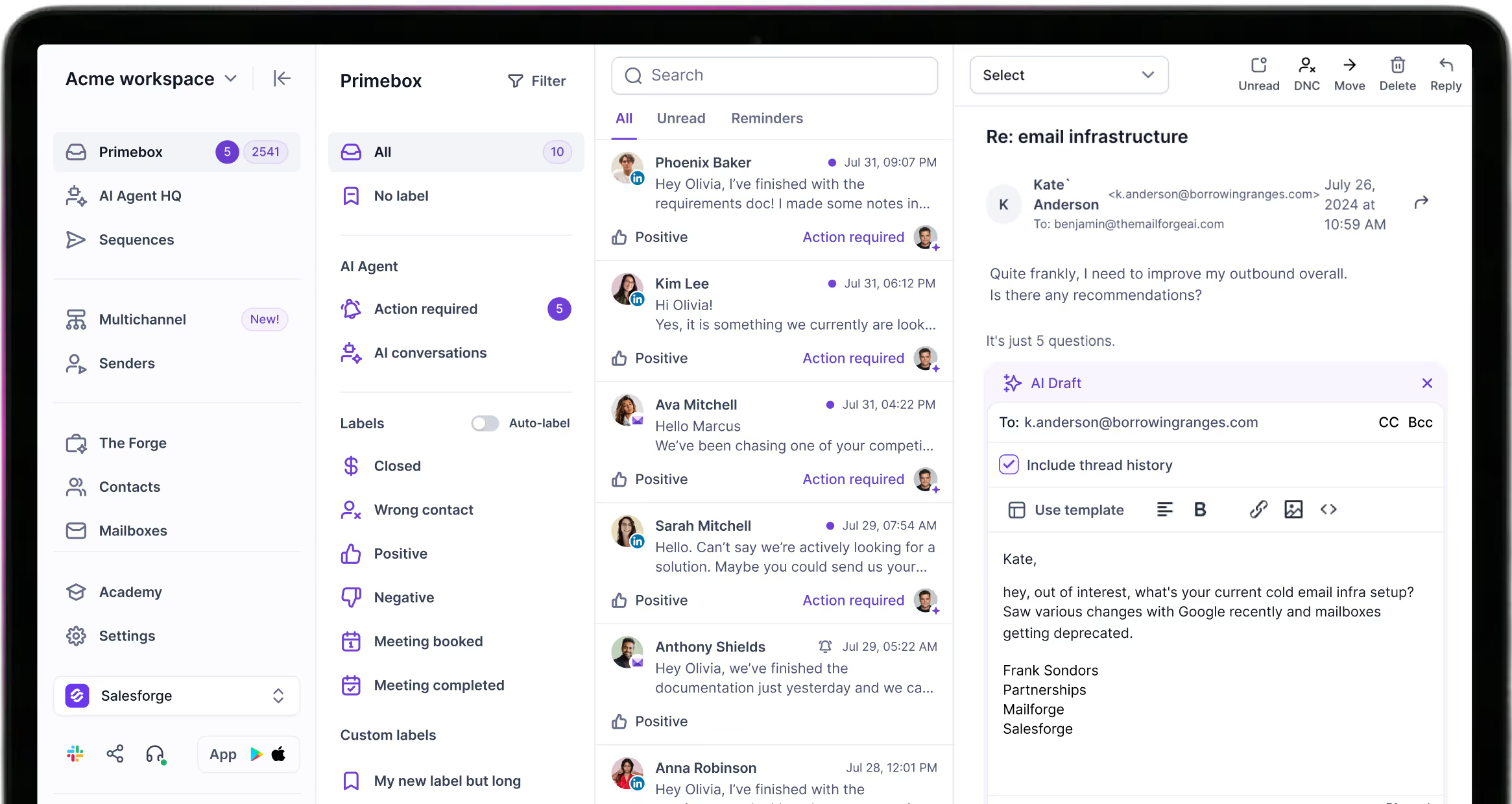
Rather put an AI SDR on the team?
Hire Agent Frank →He prospects, writes and books meetings around the clock.
Japan punishes shortcuts more than any market in this series. Localisation and patience are the price of entry.
SalesCaptain is the strongest signal-led pick and the only certified Forge Expert here. For genuine SDR work go to I&D, for market entry Yakumo or Best Effort, and for phone-led coverage tele-net.
If you would rather own the machinery and buy only the language, that route works too. Two weeks of warmup and a fortnight of sending tells you a lot.
Fourteen days, and you will know.
Start your free trial →

.jpg)

.jpg)
