
Personalized Outbound Strategy
Get The Right Outbound Strategy In Minutes
Enter your email to get a custom plan & stack recommendation for your business
It's being carefully crafted by AI
Please check your mailbox in 5 minutes


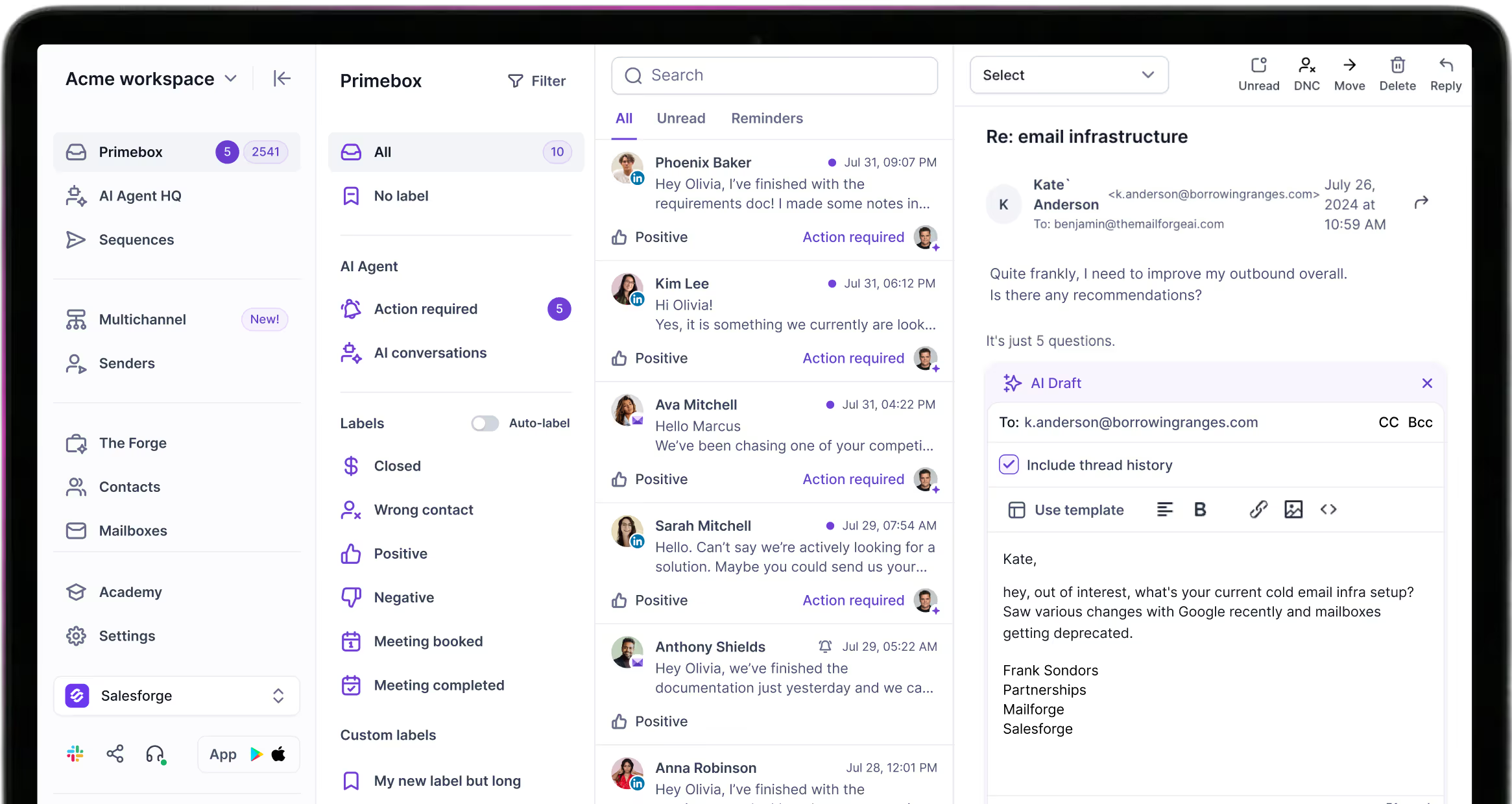
Both platforms present themselves as outreach tools first and foremost. Salesflow emphasizes social and email outreach that automates LinkedIn actions and layered email sequences, while Salesforge promotes multi-channel outreach with broad sender capacity and a deliverability-first approach.
Alternatively, you can just let Salesforge's results demonstrate its capabilities:

These core positioning statements are important to any sales process decision because they indicate each vendor’s priorities: Salesflow leans into social + email user experience and safety; Salesforge leans into scale, deliverability, and centralized reply handling.
Salesforge provides 2 plans oriented around outreach scale, as well as a 14-day free trial.
The plans are as follows (with 2 free months granted when using annual billing):
Salesflow provides 3 plans oriented around outreach scale, as well as a 7-day free trial.
The monthly plans are as follows (discounts when billed annually):
Salesflow also offers a Done-With-You one-off add-on for $199 (campaign build / onboarding / copywriting services)
LinkedIn is central to modern cold outreach. While both tools support sending connection requests, automated messages, and simple profile engagements, they tackle it in different ways:
For teams focused on generating prospects via LinkedIn navigator-style search and then layering messages and connection requests, both platforms offer useful automation - but Salesforge’s emphasis on adding many senders and consolidating replies makes it especially strong for organizations that want multiple accounts working in parallel.
Salesflow offers multi-channel outreach that includes email layering over social outreach, and stresses keeping messages out of spam with cloud-based security and scheduled sends.
Salesforge, however, emphasizes deliverability: it calls out premium deliverability tools, free built-in warm-up and mailbox health monitoring, and explicit guidance on domain, DKIM, SPF and DMARC setup to keep open and reply rates high.
For sales teams and agencies trying to generate leads with email outreach, a platform that makes low manual effort of setup and actively protects inbox placement tends to produce higher response rates and better conversion rate outcomes.
Effective cold outreach depends on well-designed message sequences and personalization.
Salesflow allows you to create sequences and schedule when and where messages go out, combining social and email steps to maximize conversions.
Salesforge provides conditional multi-channel sequences that let teams blend LinkedIn touches with email follow up messages and conditional branches so outreach becomes more like a sales conversation than a broadcast. When your goal is to automate outreach yet keep it conversational, conditional sequences reduce manual effort while increasing the chance a potential customer responds.
Enter your email to get a custom plan & stack recommendation for your business
Please check your mailbox in 5 minutes
Running multiple campaigns at once is typical for agencies and larger sales teams to target different audiences and clients, personalize messaging, optimize performance, and scale outreach while managing deliverability and reporting.
Practically, campaign management is about speed and repeatability. Salesflow reduces manual effort with a clean workflow, while Salesforge reduces structural friction when your organization wants to run dozens of campaigns across multiple accounts, helping teams generate leads faster and keep their sales pipeline full.
For many sales teams and agencies, a reliable CSV file workflow that preserves contact fields, personalization tokens, and exclusion rules is critical to avoid wasted outreach, duplicate messages, or sending connection requests to the wrong contacts.
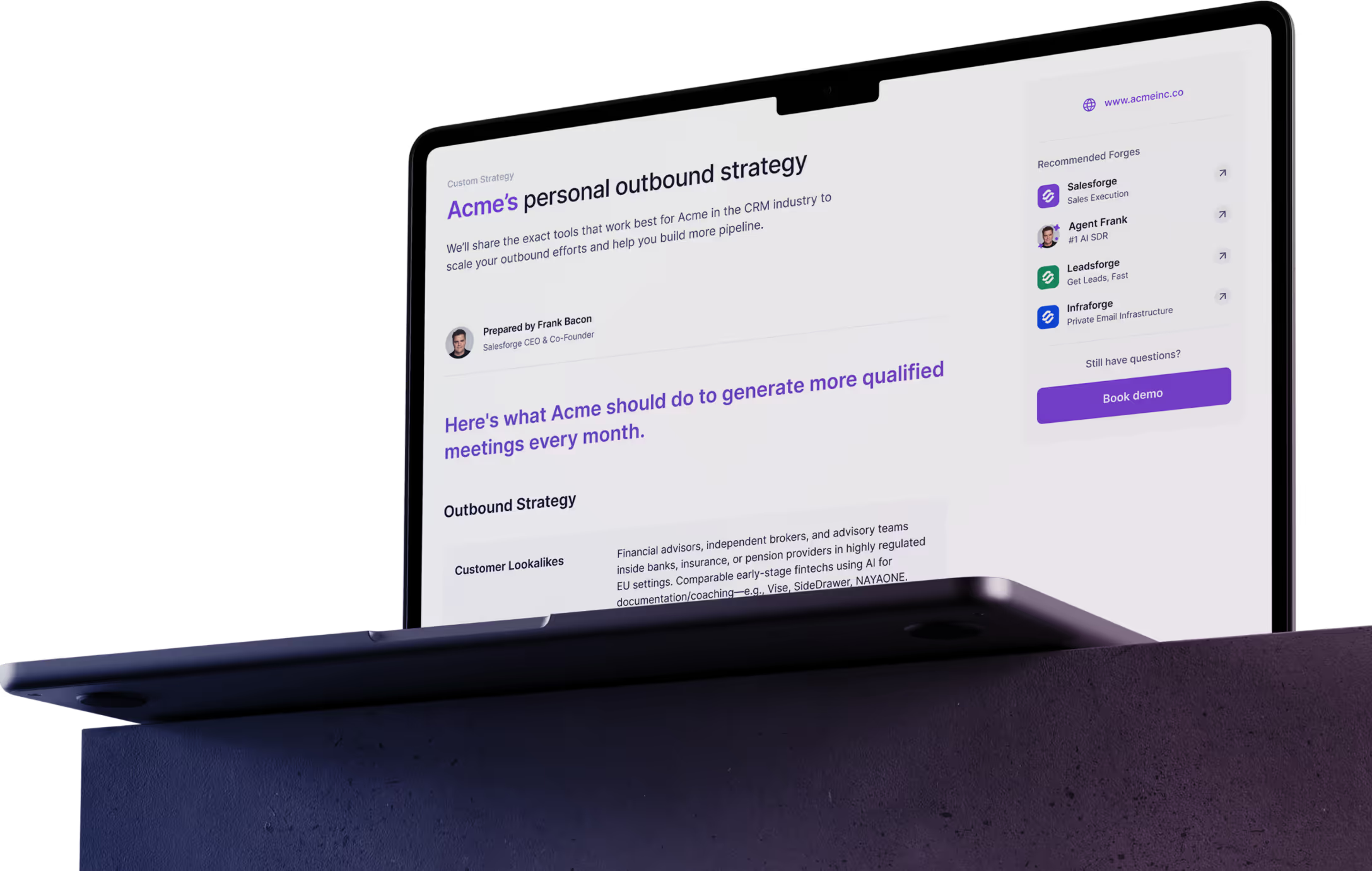
Worth a mention is Leadsforge - a tool in the Forge stack dedicated entirely to generating leads. With an search engine-like user interface, finding prospects from the proprietary database of 500M+ leads is as easy as talking to a friend. Just like the other Forge tools, it seamlessly integrates with Salesforge.
A centralized inbox for campaign conversations can be a game-changer for conversion rate and follow-up discipline.
Centralized inboxes reduce lost leads, increase timely follow ups, and help maintain consistent messaging across reps. For teams that treat timely follow up as the difference between a lead and a closed deal, Salesforge’s strong reply-capture and reply-management focus helps convert more of the pipeline into qualified prospects.
Team-based features matter when multiple reps run outreach, hand off conversations, or coordinate sequences:
Salesflow highlights the admin dashboard and a “bird’s eye view” to monitor multiple accounts and campaigns - useful for sales managers to see how campaigns perform across the sales process.
Salesforge emphasizes adding everyone on the team with unlimited seats to avoid seat friction and allow each rep to run outreach within a controlled, centralized system. Salesforge also supports unlimited shared workspaces - helping avoid cross-contamination between users and letting teams collaborate more seamlessly.
Integrations streamline the handoff from outreach to CRM and closing deals. Without them, connecting data sources, automating tasks, enabling hyper-personalization, measuring performance, and improving deliverability-boosting response rates would become much more difficult.
Salesflow provides extensive native integrations (major CRMs, LinkedIn Sales Navigator, Zapier, webhooks, API access, etc.) and, importantly, syncs CRM records with LinkedIn activity so outreach stays coordinated.
Salesforge also offers robust integrations + API access, but also ties CRM data into deliverability-aware outreach for guaranteed spam folder avoidance. Salesforge integrations include:
And many more. Salesforge is built to play cleanly with existing pipelines while keeping inbox and sender infrastructure consolidated.
Following up is where cold outreach becomes effective.
Across outreach tools, speed and the right follow-up cadence drive conversion rate and more deals. A tool that improves deliverability and reduces manual delay in follow up will typically improve response rates. That combination of deliverability and consolidated reply workflows gives Salesforge a practical advantage for teams obsessed with improving conversion rate through consistent follow up.
Salesflow provides admin dashboards and campaign-level stats, while highlights metrics like invites sent, connection rate, replies and connections made over recent windows.
Salesforge too offers reporting and analytics that focus on deliverability, engagement and campaign performance.
Advanced reporting should surface the key metrics that matter for cold outreach: connection requests accepted, replies per campaign, deliverability and conversion rate through your sales pipeline. Salesforge’s reporting emphasizes all of this.
Automated LinkedIn outreach must balance volume with account safety, otherwise the entire outreach flow can break apart.
Salesflow stresses safe automation practices for LinkedIn senders:
Salesforge emphasizes:
Scaling outreach often means managing multiple accounts across geographies or seller territories.
Operationally, removing seat limits and letting more team members run outreach simultaneously reduces per-user manual effort, speeds up lead generation, and lets agencies scale campaigns across clients more predictably. If your strategy depends on running a lot of simultaneous sequences across many accounts, Salesforge’s model is definitely more directly aligned with that growth pattern.
If your priority is quick social-first prospecting and you value a simple automation tool that prioritizes LinkedIn and gets campaigns running fast, Salesflow is an excellent pick - it’s built to automate outreach, save time and produce measurable connection and reply rates.
But if your priority is building an affordable, durable, high-volume outreach engine where email deliverability, unlimited sender scale, consolidated conversations and deep personalization matter, Salesforge is the better choice.
Salesforge’s architecture and inbox-first approach reduce the manual effort of maintaining high-quality outreach at scale and make it easier for sales teams and agencies to generate leads, protect sender reputation, and convert prospects into clients.
For teams aiming to maximize pipeline coverage and long-term conversion rate, Salesforge pulls ahead, but it's important to remember that different tools work for different teams. There's no "one size fits all" solution.
Yes - Salesforge’s plans remove seat friction so your whole team can run campaigns across separate workspaces. “Unlimited workspaces” means isolated project/client areas (contacts, sequences, mailboxes) so teams avoid cross-contamination while scaling outreach and generating new connections from one platform.
Salesforge bundles deliverability-first tools (built-in warm-up, mailbox health, IP strategies) so your sales process sends to inboxes - helping produce quality leads and protect long-term sender reputation, which saves time and improves conversion versus simpler automation-only tools.
Salesforge plugs into CRMs, Zapier, webhooks, APIs and dozens more so Sales and customer success teams sync contacts, pipeline stages and activity automatically - reducing manual handoffs and keeping potential customers and potential leads in-step across systems.
Primebox consolidates replies from email and LinkedIn into one inbox so teams see conversations in context, act faster on replies, and avoid lost follow-ups - improving lead generation efficiency and helping the whole team convert prospects into customers.
Salesforge is built for scale: native lead-generation integrations (e.g., Clay), deliverability infrastructure and unlimited senders suit agencies or growth teams. For social-first users, a LinkedIn automation tool like Salesflow may still appeal. Salesforge focuses on scalable, inbox-first outreach that targets quality leads and pipeline coverage.