
Personalized Outbound Strategy
Get The Right Outbound Strategy In Minutes
Enter your email to get a custom plan & stack recommendation for your business
It's being carefully crafted by AI
Please check your mailbox in 5 minutes


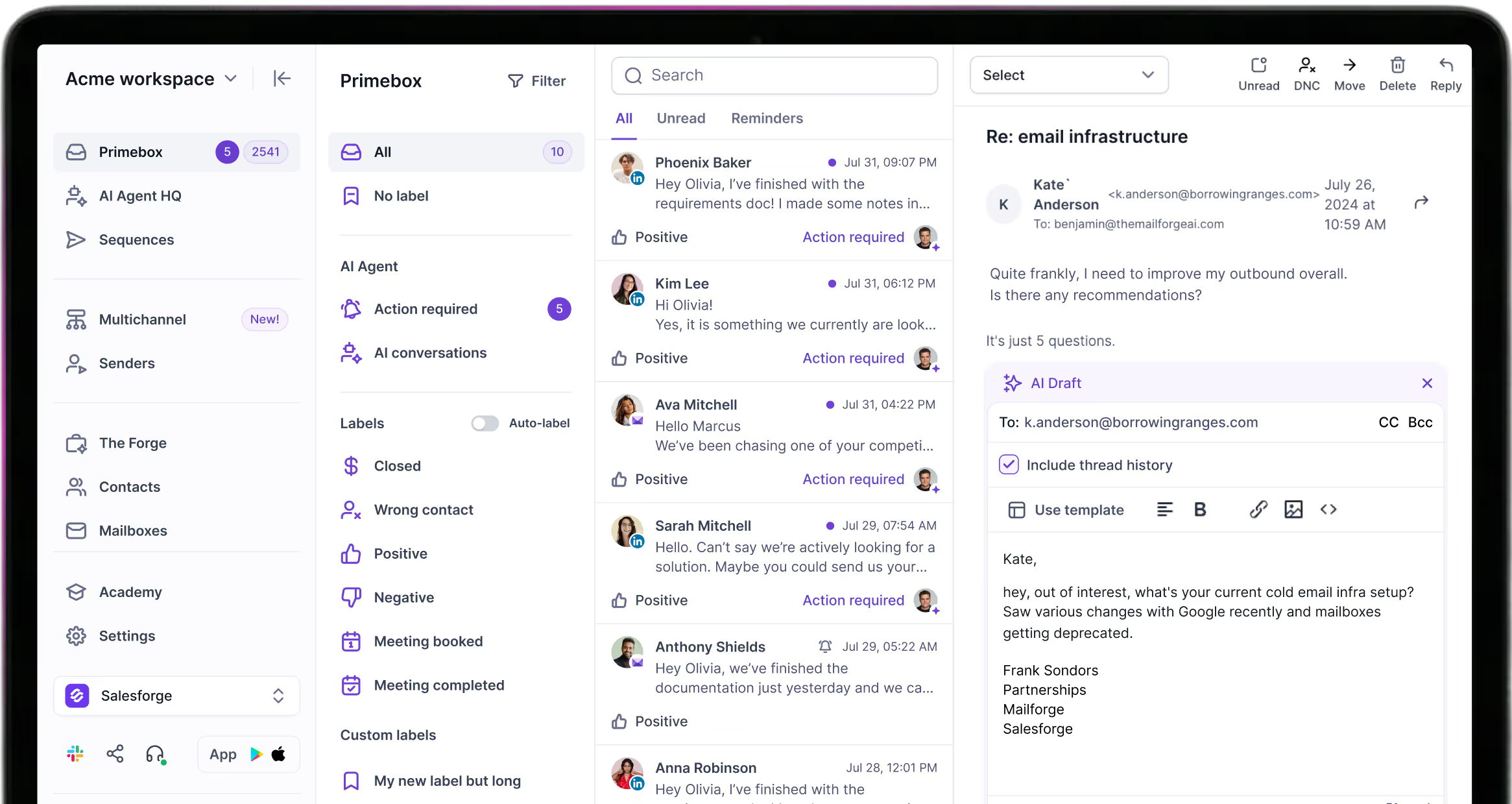
When you’re choosing a sales tool for cold email outreach and multi-channel outreach campaigns, the first question is whether you need a platform that prioritizes immediate ease-of-use or one that prioritizes deliverability and infrastructure control:
Mailshake markets itself squarely as an AI-powered sales engagement and B2B lead platform focused on getting messages into prospect inboxes fast while providing a user friendly interface, Data Finder, and features like LinkedIn automation and a phone dialer so sales reps can run automated email sequences and phone sequences from one place.
Salesforge, built by a former Googler and VP of sales, is part of a larger Forge Stack dedicated to streamlining the entire outbound sales outreach process (Warmforge, Mailforge, Infraforge, Leadsforge, Primeforge and the Agent Frank AI SDR). One of Salesforge's highlights is the extensive control over deliverability and personalization it grants its users (plus unlimited LinkedIn senders, mailboxes and seats for teams that want to scale without any friction.)
Alternatively, you can just let Salesforge's results speak for themselves:

Salesforge provides 2 plans oriented around outreach scale, as well as a 14-day free trial.
The plans are as follows (with 2 free months granted when using annual billing):
Mailshake provides 3 plans oriented around outreach scale with discounts offered at annual billing, but no free trial available. The plans are:
Deliverability is the backbone of any cold email campaign: if your messages sit in spam folders or never reach prospect inboxes, great subject lines and personalized outreach don’t matter.
Mailshake advertises several built-in deliverability features:
All aimed at helping new users avoid spam filters and optimize campaigns quickly.
Salesforge, on the other hand, doubles down on deliverability by offering:
If your priority is to avoid spam filters across dozens of domains and mailboxes, Salesforge's major emphasis on building and maintaining sender reputation can be a real advantage for established teams running cold email outreach campaigns.
Modern outreach rarely lives in email alone: effective sales outreach blends email outreach with LinkedIn messages.
The practical difference: Mailshake’s interface (and paid add-on Data Finder) are built to stitch channels together quickly for sales teams and new users, while Salesforge’s approach is focused on scaling those channels with robust mailbox and sender management - useful when you’re running multiple different tools or multi-domain campaigns at scale.
If you plan to send at scale, you’ll constantly juggle email setup, DKIM/SPF/DMARC entries, mailbox creation, and domain monitoring.
Salesforge, however, makes mailbox and domain setup a first-class part of the stack.
Both platforms excel at constructing automated email sequences and follow ups, but they take slightly different approaches.
Mailshake’s automated follow ups and mail merge capability are designed for sales reps who need to send personalized messages at scale without wrestling with complex setup.
Where Salesforge pulls ahead is in campaign management for large outbound programs.
Enter your email to get a custom plan & stack recommendation for your business
Please check your mailbox in 5 minutes
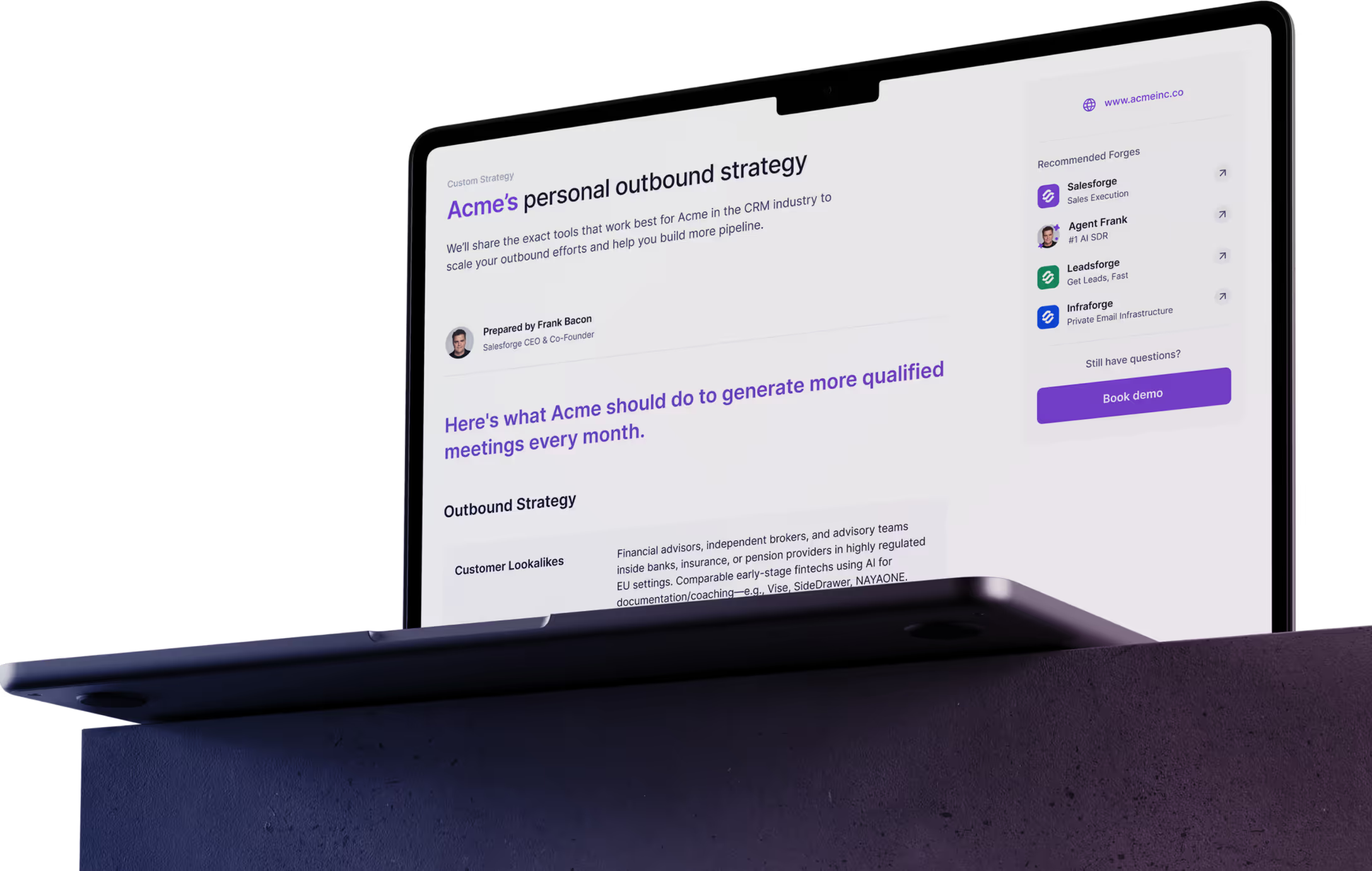
Prospecting and data management are central to campaign ROI.
If you want to centralize lead generation inside the same vendor family and combine lists with high deliverability infrastructure, Salesforge’s integrated lead drivers dashboard and Leadsforge engine are an attractive combination.
For teams that prioritize standard internal lead generation, Mailshake’s Data Finder is valuable, but for teams that couple effortless prospecting with next level infrastructure and multi-channel dispatch, Salesforge + Leadsforge is the preferable option.
Understanding which subject lines and sequences convert is crucial to optimizing cold email campaigns.
If your primary need is to surf quality leads quickly and coach reps, Mailshake’s dashboards are strong. For deeper deliverability-first analytics tied to domain health and inbox placement, Salesforge’s tools and free deliverability tests give a fuller picture.
A big practical factor is how quickly new users can understand a tool and launch a campaign.
That said, for teams that want to learn deliverability best practices and optimize campaigns over time, Salesforge’s academy and superior customer support messaging can convert initial investment into long-term wins. If your main goal is immediate outbound volume with minimal technical skills and questionable results, Mailshake is friendlier.
Both platforms understand that outreach doesn’t live in a vacuum: you’ll want to push engaged leads into CRM systems and integrate with other sales tools.
Mailshake explicitly lists integrations with various major CRMs and offers a documented API so you can automate record-keeping and pipeline updates. Mailshake’s Chrome Extension and Lead Catcher also reduce context switching by surfacing prospects and capturing engagement inside your workflow.
Salesforge takes integrations to the next level. Just to name a few:
And many more. Salesforge is built to play cleanly with existing pipelines while keeping inbox and sender infrastructure consolidated.
If you’re a small team or a new sales rep who needs to run cold email campaigns fast and values easy templates, Mailshake’s simple interface and Data Finder make it a natural fit - fast time-to-first-send, a sending calendar to try avoiding spam folders, and dedicated onboarding help so new users become productive in a day (though be weary - quick deployment generally means low quality outcomes)
Whether you're a massive agency, a small team, or even an established team that runs multiple campaigns, needs multiple mailboxes, or must maintain strict deliverability and domain hygiene across clients, Salesforge’s Forge Stack and unlimited mailbox/sender/workspace/seat approach gives you the infrastructure, deliverability and scale advantages that sustain outreach over time. For teams with an appetite to optimize deliverability and avoid spam filters across domains, Salesforge is the stronger long-term bet.
If you need a crisp actionable recommendation:
If you’re budget-conscious about seat costs or you plan to run multiple different tools and mailboxes in parallel, Salesforge’s Growth plan and Primebox consolidation offer a lot of practical upside at just $96/mo.
Salesforge and Mailshake both help sales teams send personalized cold emails and follow ups. Salesforge emphasizes AI-driven personalization and workflow automation to help sales reps scale outreach efforts; Mailshake is known for a user friendly interface. Results depend on lists, messaging, and cadence - combining personalized emails + smart follow ups typically leads to more meetings.
Many platforms, including Salesforge, support CSV/API imports and webhooks so Mailshake users can migrate lists, sequences, and prospects. If you use an email provider tied to Mailshake or a paid plan with export limits, ask your support team about exact steps. Always validate personal data and re-run email validation before sending personalized cold emails.
No tool guarantees more meetings, but Salesforge focuses on advanced features (AI prospecting, cadence optimization, reply triage) to improve reply rates. Combined with targeted lists, clear call-to-actions, and persistent follow ups, these features can boost outreach efforts and convert more replies into meetings compared with basic cold email sequences.
Advanced features - AI personalization, multi-step cadences, CRM syncs, extra Data Finder credits - are typically gated behind paid plans on both sides. If you rely on high-volume sending, integrated analytics, or managed deliverability, expect to use a paid plan. Contact each vendor’s support team to compare which paid plan unlocks the specific tools you need.
Deliverability depends on infrastructure (email provider), warm-up, SPF/DKIM, content and follow ups. Salesforge offers inbox-health tooling and sending best practices; Mailshake users similarly get warm-up and deliverability guidance. The best approach: use validated lists, gradual sending, domain warm-up, and monitor analytics to protect sender reputation and maximize inbox placement.