
Personalized Outbound Strategy
Get The Right Outbound Strategy In Minutes
Enter your email to get a custom plan & stack recommendation for your business
It's being carefully crafted by AI
Please check your mailbox in 5 minutes


Both platforms position themselves as sales engagement tools built for cold outreach and campaign management - but they aim at slightly different priorities:
For teams who value multiple email accounts, inbox rotation and unlimited senders, Salesforge purposefully structures pricing and features around that need.
Alternatively, you can just let Salesforge's results speak for themselves:

Salesforge provides plans oriented around outreach scale, as well as a 14-day free trial:
Lemlist provides plans oriented around personalized, multichannel outreach and a 14-day free trial as well:
Lemlist also offers a paid WhatsApp add-on at an additional cost.
A major operational pain point for scaling teams is seat and mailbox management:
Both vendors provide ways to surface contact details and populate lists, but their emphases differ.
Lemlist is widely known for cold emailing, advanced features like liquid syntax and hyper personalized messages (custom variables and personalized images), strong template support and a chrome extension for convenience.
It’s great when your playbook is hyper-personalized cold emailing and sophisticated subject lines plus creative assets.
Salesforge also supports conditional multi-channel sequences (email + LinkedIn, with phone capabilities planned in the future), inbox rotation and campaign orchestration across many email accounts.
Where Lemlist shines in creativity, Salesforge pulls ahead in operational campaign management - particularly when teams run complex sequences that require tight coordination across many mailboxes, email accounts and follow ups to keep deliverability healthy.
LinkedIn automation is table stakes for modern outreach. Lemlist supports LinkedIn visits, connection requests and LinkedIn messages as part of its multichannel sequences (auto visits, invites and messages are native to their Multichannel Expert plan).
Salesforge emphasizes unlimited LinkedIn senders and tight multi-channel orchestration so LinkedIn outreach can be run in the same campaign alongside email and phone touches.
If your playbook depends heavily on LinkedIn connection requests and synchronized outreach across channels, both tools are great options, although Salesforge’s unlimited-sender approach reduces the friction of adding many sales reps and scaling LinkedIn outreach in parallel with email campaigns.
Lemlist’s Lemwarm is a widely cited built-in warm-up tool included for free with seats and marketed as a deliverability booster that routes messages through a premium network to help your messages avoid the spam folder.
Salesforge also includes free warm-up mechanisms via Warmforge and highlights deliverability tooling (dynamic IPs, mailbox rotation, ESP matching, sender reputation management) as part of keeping large-scale outbound programs off spam filters.
Where Lemlist makes warmup accessible and seat-based, Salesforge’s deliverability features are more comprehensive and scalable.
Enter your email to get a custom plan & stack recommendation for your business
Please check your mailbox in 5 minutes
For teams that use multiple email accounts and want to distribute sends, Lemlist provides strong guidance about custom tracking domains, aliases and domain configuration to manage spam filters and good sender reputation, but scaling many email accounts can still mean extra operational work (linking SMTPs, juggling seats and credit limits).
Salesforge’s value proposition centers on unlimited mailboxes plus explicit inbox rotation support to keep sender reputation stable across accounts. That means less manual per-account management and fewer worries about individual mailboxes tripping spam folder triggers during heavy cold outreach.
Personalization is Lemlist’s hallmark:
Lemlist even exposes AI features like the LemAI Sequence Generator to help craft campaigns and tailored messages in multiple languages.
Salesforge doesn't stagger behind though, with an emphasis on personalization through conditional sequences and custom fields inside campaigns, while focusing on scaling multi-source AI personalized touches across infinite email accounts and senders.
If your highest priority is creative personalized images and bespoke content, Lemlist is a great choice, but if you want highly personalized AI generated messages that are unique per-lead and easier to scale across many agents and inboxes, Salesforge’s campaign-first approach tends to be friendlier for sales operations.
Successful outreach depends on follow ups and complex sequences:
If your sequences are complex and you must keep many agents synchronized in the same campaign, Salesforge’s operational design makes campaign management less brittle. Lemlist remains a top notch option for creative sequence design, but Salesforge is easier to maintain when complexity and headcount grow.
Lemlist’s ecosystem includes an email finding and contact enrichment element that sources from Lemlist's proprietary database and uses a credit system. Plans include monthly scraping credits for emails and phone numbers.
Salesforge presents its lead generation and enrichment capabilities through Leadsforge - an extremely user-friendly 500M+ contact database that seamlessly integrates with Salesforge. Finding leads becomes as easy as talking to a friend. Leadsforge also offers contact data enrichment (firmographics, phone numbers, emails, etc.), intent signals and lookalike search.
Lemlist provides handy chrome extension features for quick personalization and prospect research while browsing; its UI focuses on message crafting and personalized images.
Salesforge markets itself around easy campaign orchestration and fewer per-seat hassles; the interface is built around adding mailboxes, configuring inbox rotation and launching campaigns from a central dashboard.
Which is more user friendly depends on your workflow: marketing or SDRs who craft personalized, creative cold emails may prefer Lemlist’s composer and chrome extension, while ops and sales leaders who prioritize multiple email accounts, phone numbers and unified inbox-style management frequently find Salesforge’s layout more aligned with their needs.
Both platforms integrate with common CRMs and tools, but implementation and emphasis differ:
For sales leaders who want a single place to monitor campaigns, good sender reputation and all the features linked together, Salesforge’s all-in-one framing reduces the number of tools in the stack.
Lemlist gives campaign-level dashboards with per-channel metrics (opens, clicks, replies), customizable reports and widgets, A/B testing support, and CSV export for deeper analysis.
Salesforge provides built-in campaign dashboards (opens/replies/clicks), consolidates multi-mailbox data, surfaces AI recommendations and includes an email-placement tester - suited to teams needing mailbox-level reporting and large-scale sequence insights.
Lemlist’s user friendly interface, personalization features, chrome extension and seat-based plans (including a free trial and different tiers) make it an excellent option for smaller teams and individual sellers who prioritize creative, personalized cold emailing and LinkedIn connection requests.
Salesforge also offers plans suitable for solopreneurs and smaller teams, but it also caters to teams that expect to scale rapidly and want to avoid per-seat complexity - unlimited mailboxes and senders within unlimited workspaces mean smaller admin overhead as you grow. For pure solo sellers focused on personalization features and custom images, lemlist remains a compelling option.
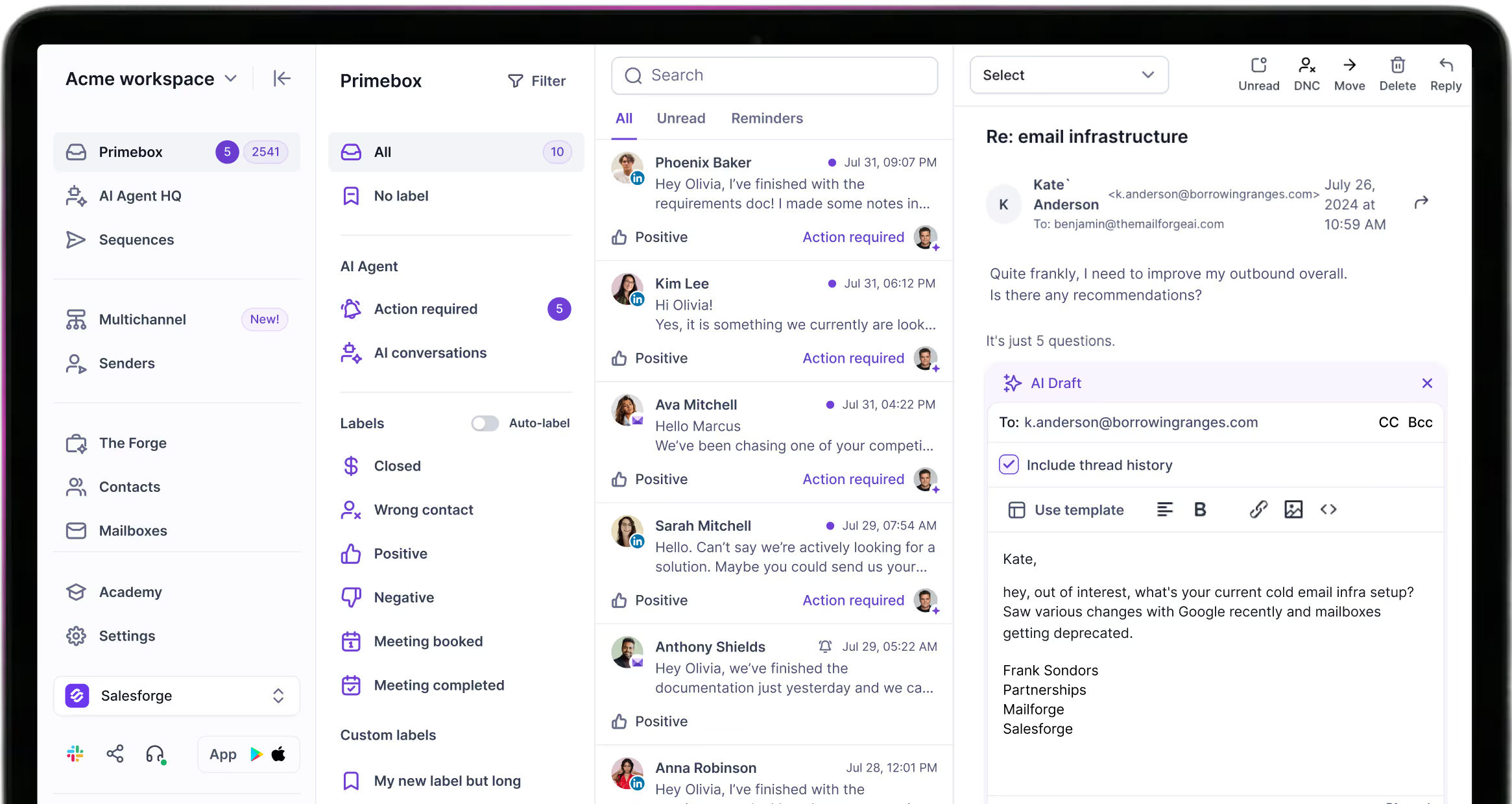
For larger sales teams who need predictable scaling, Salesforge stands out: Unlimited mailboxes, senders, workspaces, mailbox rotation, dynamic IPs, a unified inbox (Primebox) for multi-channel messages and campaign orchestration - this lets you expand outreach without reworking licensing or hitting credit ceilings.
Lemlist’s pricing plans (including Lemlist’s pricing plans that use credits and add-ons) can be excellent for focused programs, but at scale, the administrative work of managing many seats, credits and multiple email accounts can add operational friction. Salesforge’s model deliberately reduces those frictions, so larger organizations chasing more leads and closing deals faster often find fewer scaling pain points on Salesforge.
If your target audience is best reached with personalized emails, custom images and carefully crafted subject lines, and you care most about creative uplift and A/B testing of email campaigns, Lemlist is a specialist tool that has built many key features around that use case.
If your target audience requires broad coverage, more mailboxes, more senders, and more reps running the same campaign - plus the operational simplicity of unified campaign management, fewer per-seat headaches and multi-source AI personalized messaging at scale - Salesforge tends to be the better fit for scaling sales teams focused on consistent pipeline growth.
Both platforms are capable sales engagement platforms, but the right tool is different for each business:
Choose Lemlist if you want an easy-to-use multi-channel tool with strong campaign-level dashboards, A/B testing, customizable reports and CSV exports - great for SMBs and smaller teams focused on creative outreach and per-campaign insights.
Choose Salesforge if you run many accounts and need large-scale mailbox/inbox rotation, unlimited mailboxes & LinkedIn senders, centralized multi-channel reporting, and deliverability/warm-up built into your platform - great for larger teams prioritizing scale, mailbox orchestration and inbox-level analytics at prices accessible even by smaller teams.
Yes for email and LinkedIn, not yet for phone calls - Salesforge runs multi-channel outreach campaigns (email outreach + LinkedIn automation) with unlimited mailboxes and senders.
Salesforge uses Warmforge (their deliverability center) to provide free, unlimited warm-up, placement tests and mailbox health monitoring for all Salesforge users, so your email deliverability improves across ESPs - valuable for large cold outreach programs.
Salesforge offers tiered pricing (Pro/Growth etc.), a free trial, and published starter pricing around the $40–$48/month range (prices vary by billing cycle). Annual billing options are shown on the pricing page and reduce per-month costs.
Yes - Salesforge includes Leadsforge (a large lead database) and multi-source AI personalization; you can use AI variables and custom fields to scale unique messages per lead across many inboxes.
Salesforge is a sales engagement/sales tool focused on outreach campaigns, campaign analytics, Primebox unified inbox and AI recommendations - it integrates with marketing tools and CRMs but doesn’t primarily function as a landing-page builder. Use it for large-scale email campaigns and analytics, then connect your landing pages via integrations.