
Personalized Outbound Strategy
Get The Right Outbound Strategy In Minutes
Enter your email to get a custom plan & stack recommendation for your business
It's being carefully crafted by AI
Please check your mailbox in 5 minutes


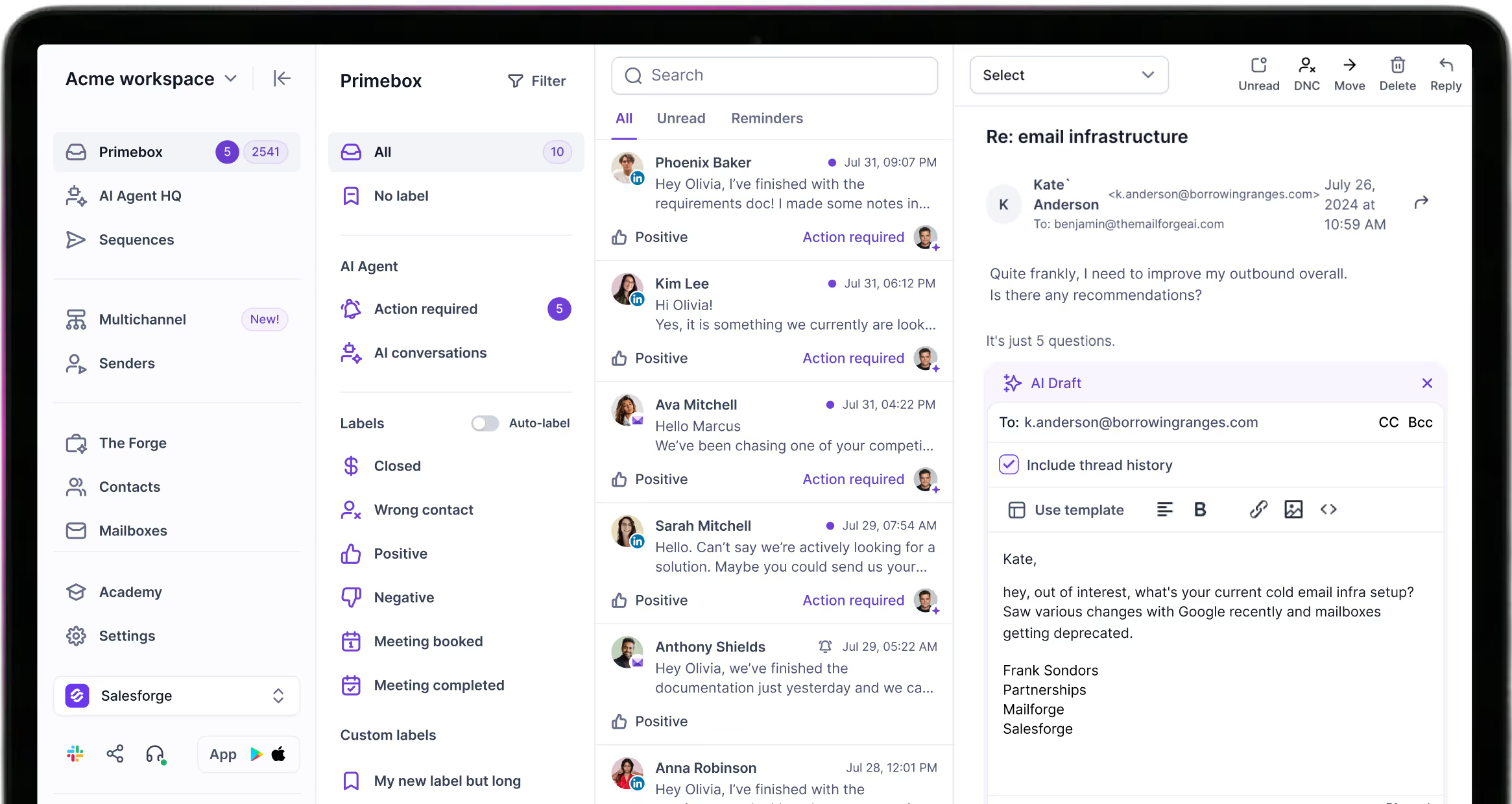
For a thorough understanding of what each option offers, a simplified comparison table isn't enough to grasp all intricacies that come with each tool, so let's dive deeper into what makes Lavender's Ora and Salesforge's Agent Frank unique.
Salesforge positions Agent Frank, built by a former Googler and VP of sales, as a full, production-ready AI SDR that’s part of a cohesive Forge stack where prospecting, deliverability and infrastructure are bundled together seamlessly. Agent Frank highlights include:
This centers on augmenting or replacing routine SDR tasks so teams can generate more pipeline with fewer human hours and more predictable deliverability control.
Alternatively, you can let Agent Frank's results speak for themselves:

Agent Frank provides flexible pricing oriented around outreach scale. Pricing is charged by Active Contacts (the number of prospects the Agent is processing at any given time), and annual billing includes 2 months free. There is no free trial and demos are required before purchase.
Note that infrastructure to process those contacts via email is not included in this base price. The Salesforge Stack offers multiple infrastructure options based on your budget/needs, so you don't need to stitch third-party products to make it work. The best options for Agent Frank include:
The Forge team will help set up the mailboxes and, additionally, the Mailforge (shared IP) and Primeforge (Gmail and Outlook) email infrastructure options are also available. Teams can also connect their own mailboxes from other providers if desired.
Ora requires contacting them for pricing details.
Deliverability is crucial for cold outreach success - a brilliant sequence is worthless if emails land in spam - and this is one area where Agent Frank differentiates itself.
And more. Building sender reputation gradually while spreading volume across addresses and IPs to avoid single-mailbox throttles or sudden reputation hits is crucial for a scaling business. And that's paired with proprietary infrastructure options:
Those infrastructure features reduce the risk of landing in spam and make multi-channel outreach more reliable, especially when you have a leads database and want to integrate email at scale.
For sales teams or lead generation agencies focused on large scale operations and high-volume cold outreach, Agent Frank’s model minimizes the operational burden of maintaining email metrics, domain health, and warm-up cycles so teams can scale sends across many mailboxes with less risk.
When assessing autonomy - the very thing many buyers mean by “AI SDR” - both pages describe modes that let the product operate with varying levels of human control, but they present slightly different trade-offs.
Salesforge frames the offering as an assistant that can be tuned for autonomy and provides a Dedicated Account Manager to steer the agent’s operating parameters as needed (everything from basic account setup to help in deciding on infrastructure type and volume).
Ora’s framing is tightly focused on two named modes:
Ora stresses time-savings and positions LFG/OCD as ways to scale while maintaining personalization.
Both approaches are valuable:
For teams whose priority is a fully managed outbound engine with infrastructure baked-in, Salesforge's Agent Frank underlines operator-level continuity.
Enter your email to get a custom plan & stack recommendation for your business
Please check your mailbox in 5 minutes
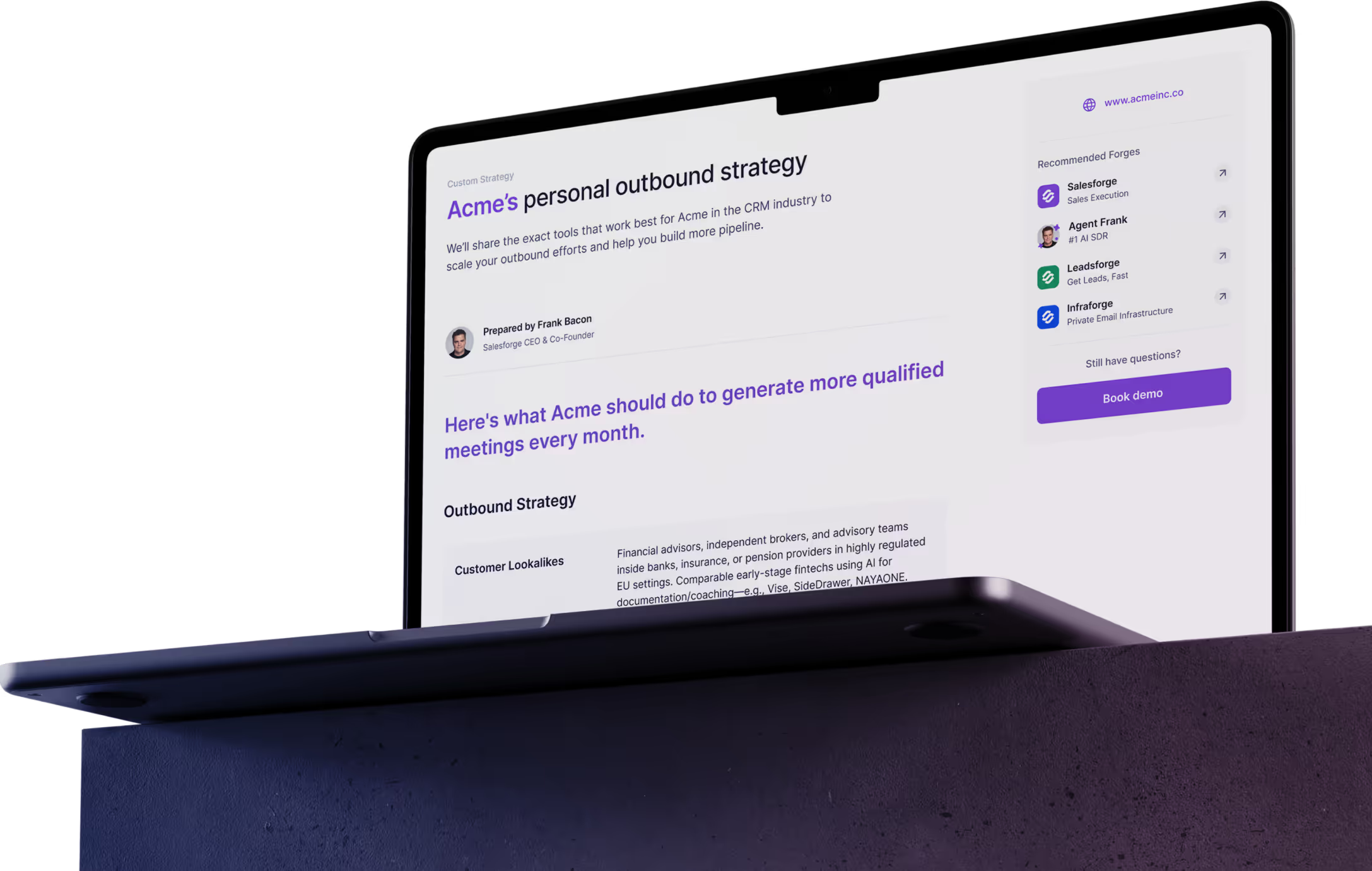
Both product pages make personalization and research central to their value proposition, but they emphasize different sources and methods.
The agent can also be customized with tonalities and goals to make sure the agent reflects brand voice and quality.
While Ora promises fast, AI-first personalization out of the box, Agent Frank promises arguably stronger and more customizable personalization AI sales agent.
Customer support and onboarding resources materially change how quickly GTM teams, reps, and revenue leaders can extract value from an AI SDR - and they also shape how confidently businesses scale the technology across pipelines and CRM processes.
Salesforge takes customer support & resources very seriously, while coupling product tooling with a people-first enablement stack that’s designed to reduce onboarding friction.
Salesforge focuses on customer support and convenience and reduces the manual tasks sales teams often struggle with - no separate deliverability vendor, fewer manual data entry steps, and a partner focused on ironing out initial list hygiene and infrastructure.
Besides that, Agent Frank customers get:
For growing sales teams and lead generation agencies that prefer to shift heavy operational overhead away from internal staff, Agent Frank’s model is a strong fit.
They offload the manual tasks that consume SDR time and let reps focus on higher-value activities like closing deals and handling qualified leads.
Agent Frank explicitly calls out unlimited senders, infra options, warm-up automation, dedicated account management and much more.
Both products are AI SDR options with different emphases, Agent Frank's operational control and deliverability at scale emphasis gives it a solid edge.
Agent Frank is positioned as a vertically integrated AI SDR: it bundles deliverability tools, warm-up, and mailbox/IP controls so organizations don’t stitch platforms together. Ora embodies rapid, research-driven personalization; Agent Frank emphasizes operational control, quality, and a people-first commitment (dedicated account manager). For companies weighing competitors, Agent Frank delivers predictable inbox placement, platform-level support, and the power to scale outreach without losing brand voice or data ownership.
Yes. Agent Frank is built to nurture prospects autonomously and surface full-context histories to users and human SDRs, improving relationship continuity. The agent prioritizes qualified conversations, hands off warm leads, and supports a strategy where automation does prospecting while reps focus on relationship-building and closing deals across markets and accounts.
Agent Frank accepts uploaded knowledge bases and CRM data, and Salesforge emphasizes platform security, access controls, and auditability. Teams can review personalization sources, inspect message history, and tune the agent’s behavior. This lets companies optimize outreach quality while maintaining governance, data access, and the ability to review what the agent delivered before or after campaigns run.
Agent Frank requires a demo and sales engagement before purchase (no public free trial), but Salesforge often runs pilot programs and tailored onboarding for startups and larger organizations. Contacting Salesforge to request early access or a demo is the usual path - this gives teams the ability to evaluate fit, review performance history, and confirm the platform’s commitment to deliver results.
Agent Frank optimizes by combining multi-source personalization, deliverability tooling, and iterative tuning via a dedicated account manager. The platform analyzes engagement data and message history to refine sequences, helping marketers and sales teams align strategy, increase response rates, and convert more pipeline. Its integrated tools power scalable outreach while preserving the company’s ability to shape tone, review performance, and protect relationship quality.