
Personalized Outbound Strategy
Get The Right Outbound Strategy In Minutes
Enter your email to get a custom plan & stack recommendation for your business
It's being carefully crafted by AI
Please check your mailbox in 5 minutes


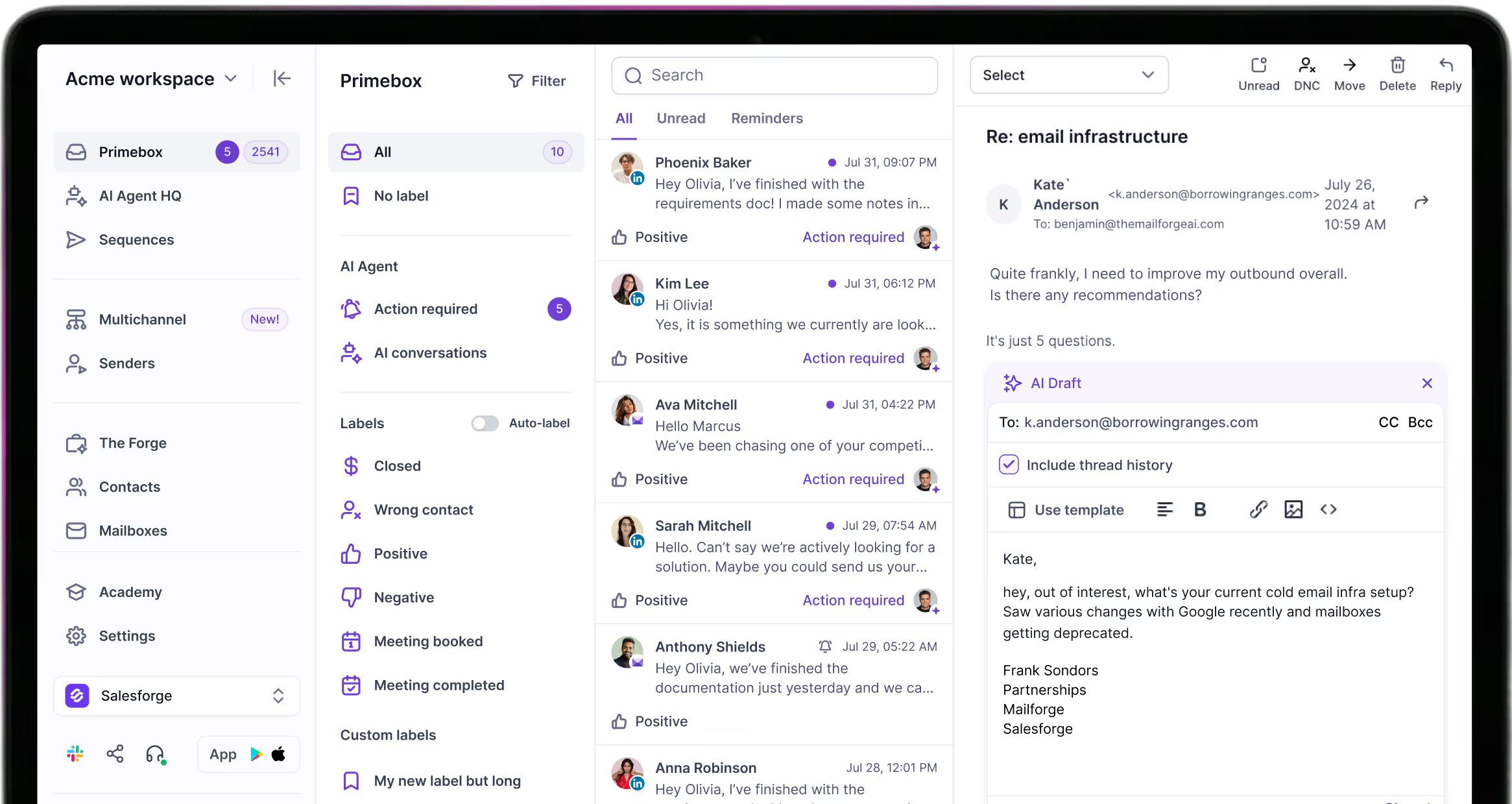
For a thorough understanding of what each option offers, a simplified comparison table isn't enough to grasp all intricacies that come with each tool, so let's dive deeper into what makes Laxis and Salesforge's Agent Frank unique.
Agent Frank, built by a former Googler and VP of sales, is the #1 AI SDR to forge pipeline & book more meetings and is tightly tied to the Forge stack. Agent Frank highlights include:
This centers on augmenting or replacing routine SDR tasks so teams can generate more pipeline with fewer human hours and more predictable deliverability control.
Alternatively, you can let Agent Frank's results speak for themselves:

The Laxis AI SDR, by contrast, is an AI sales agent that automates lead generation, qualification and personalized outreach at scale with access to a large contact database and multi-channel outreach.
Laxis highlights:
Agent Frank provides flexible pricing oriented around outreach scale. Pricing is charged by Active Contacts (the number of prospects the Agent is processing at any given time), and annual billing includes 2 months free.
Note that infrastructure to process those contacts via email is not included in this base price. The Salesforge Stack offers multiple infrastructure options based on your budget/needs, so you don't need to stitch third-party products to make it work. The best options for Agent Frank include:
The Forge team will help set up the mailboxes and, additionally, the Mailforge (shared IP) and Primeforge (Gmail and Outlook) email infrastructure options are also available. Teams can also connect their own mailboxes from other providers if desired.
Laxis requires booking a demo for AI SDR pricing details.
Both products advertise always-on automation but differ in how they package control.
Additionally, Agent Frank offers various customization adjustments to take the multi-source hyper-personalization even further, such as:
That process shows a model where autonomy can be paired with human governance and infrastructure choices that influence sending cadence and deliverability, all while maintaining an accurate depiction of your brand voice.
Practically, Agent Frank’s autonomy is framed inside a managed, adjustable and infra-aware rollout, while Laxis frames autonomy as product-first and integrated with meeting intelligence and CRM flows.
Deliverability is crucial for cold outreach success - a brilliant sequence is worthless if emails land in spam - and this is one area where Agent Frank differentiates itself.
And more. Building sender reputation gradually while spreading volume across addresses and IPs to avoid single-mailbox throttles or sudden reputation hits is crucial for a scaling business. And that's paired with proprietary infrastructure options:
Those infrastructure features reduce the risk of landing in spam and make multi-channel outreach more reliable, especially when you have a leads database and want to integrate email at scale.
For sales teams or lead generation agencies focused on large scale operations and high-volume cold outreach, Agent Frank’s model minimizes the operational burden of maintaining email metrics, domain health, and warm-up cycles so teams can scale sends across many mailboxes with less risk.
Enter your email to get a custom plan & stack recommendation for your business
Please check your mailbox in 5 minutes
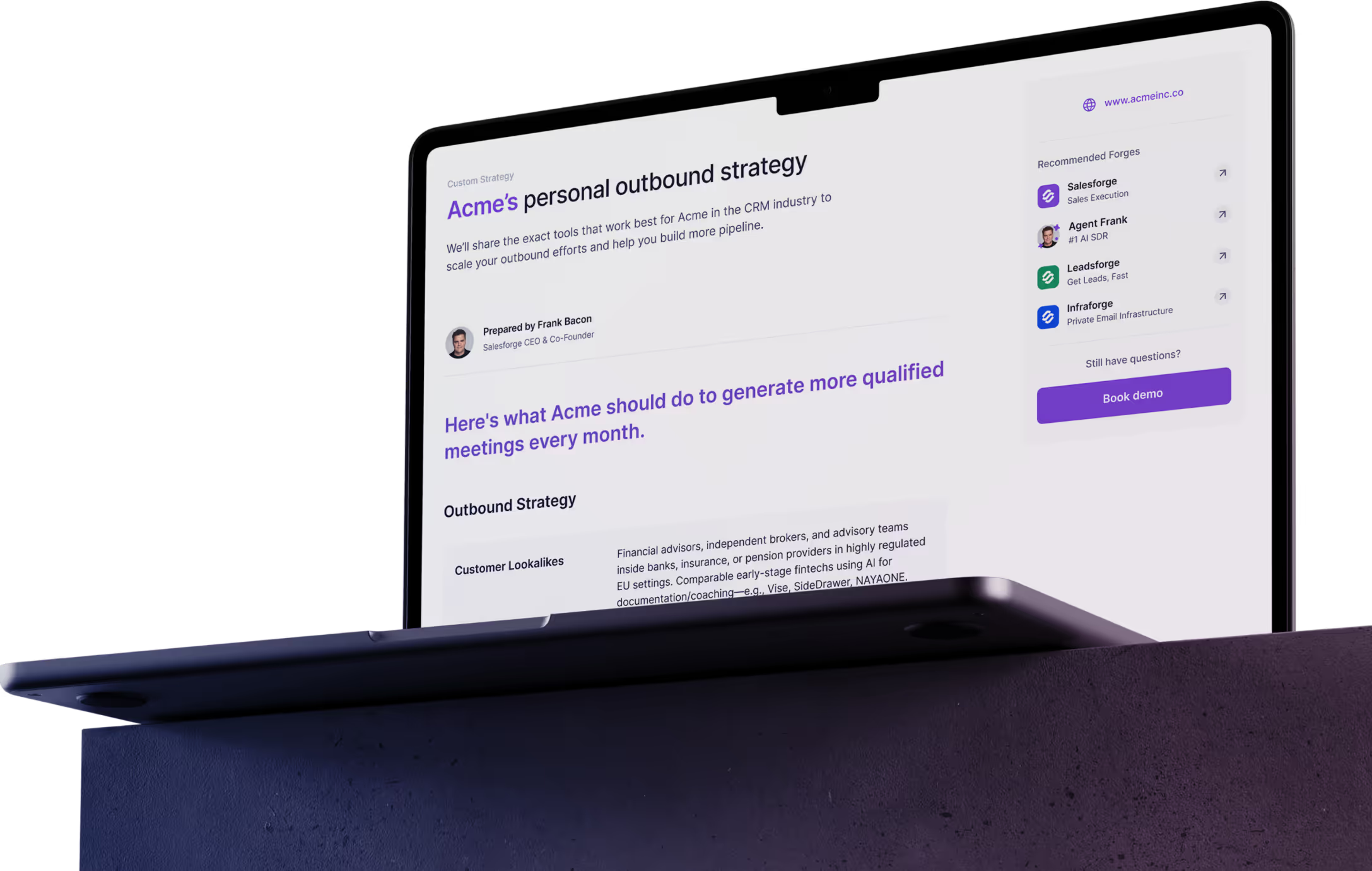
Laxis and Agent Frank take slightly different approaches to lead prospecting.
Laxis emphasizes personalized sequences, campaign analytics and CRM integration.
But Agent Frank emphasizes turnkey scalability for high-volume outbound - unlimited mailboxes/senders, integrated warm-up and multiple email infrastructure tiers designed to protect deliverability as you scale with high quality and reliable leads.
Another noticeable strength of Agent Frank is the offering of:
That framing makes it straightforward to map desired pipeline volume to mailbox budgets and warm-up timelines.
Laxis emphasizes scalability via automation and multi-channel outreach that additionally includes phone as a channel, but does not advertise the same "unlimited" features as Agent Frank.
Customer support and onboarding resources materially change how quickly GTM teams, reps, and revenue leaders can extract value from an AI SDR - and they also shape how confidently businesses scale the technology across pipelines and CRM processes.
Salesforge takes customer support & resources very seriously, while coupling product tooling with a people-first enablement stack that’s designed to reduce onboarding friction.
Salesforge focuses on customer support and convenience and reduces the manual tasks sales teams often struggle with - no separate deliverability vendor, fewer manual data entry steps, and a partner focused on ironing out initial list hygiene and infrastructure.
Besides that, Agent Frank customers get:
For growing sales teams and lead generation agencies that prefer to shift heavy operational overhead away from internal staff, Agent Frank’s model is a strong fit.
They offload the manual tasks that consume SDR time and let reps focus on higher-value activities like closing deals and handling qualified leads.
When you line the two products up side-by-side, both Laxis and Agent Frank deliver powerful AI-driven ways to automate prospecting and nurture pipeline, but they clearly target slightly different needs.
Agent Frank, however, is the more practical pick for high-velocity outbound programs.
In short: choose Agent Frank if you’re scaling cold outreach and want an infra-aware, managed approach that protects sender reputation and offloads deliverability headaches.
Agent Frank is an AI SDR focused on outbound prospecting, while Laxis (and Laxis AI) doubles as an AI prospect research agent + meeting notes assistant for Google Meet. If reps get distracted taking notes, Laxis captures meeting notes, key points and past conversations; Agent Frank instead feeds those signals into outreach - creating an accurate record in your CRM and syncing with Google Calendar so customer conversations turn into follow-ups and customer interaction history you can act on. Use Laxis for live capture; use Agent Frank to gather intelligence and convert that into pipeline.
Yes. Agent Frank uses multi-source inputs to surface relevant and valuable insights from past conversations, job posts, and web signals, then drives hyper-personalized outreach with AI-written templates and follow-ups. Where a separate prospect research agent might verify contacts, Agent Frank pairs verified contacts, personalized templates, and automation to save time, reduce repetitive tasks, and help revenue teams send better messages that lead to more deals.
Agent Frank slots into your digital dream team: marketing teams feed signals (ads, campaign data) while revenue teams get clear and consistent actions - tasks, meeting invites, and prioritized prospects. It can gather intelligence across sources, enrich contacts, and sync with Google Calendar so AI agents and human SDRs coordinate seamlessly. The result: fewer manual handoffs, less time lost stitching tools, and faster movement from interest to qualified pipeline.
Absolutely. Agent Frank preserves full context (past conversations, key points, and interaction history) so human reps step into better conversations. It automates follow-ups, creates personalized templates from meeting notes, and hands an accurate record to reps so they spend less than the at least two hours often wasted on admin. That cohesion improves customer interaction quality and increases the chance of converting interest into meetings and deals.
Agent Frank emphasizes infra-aware deliverability, unlimited senders, verified contacts, Auto-Pilot/Co-Pilot modes, and a Dedicated Account Manager - so organizations get platform-level onboarding and ongoing tuning. Laxis support focuses more on meeting intelligence and self-serve flows. For organizations that want to save time, reduce repetitive tasks, and deploy AI agents that both gather intelligence and deliver outreach, Agent Frank’s managed stack and commitment to quality make it easier to scale and drive more deals.