

Personalized Outbound Strategy
Get The Right Outbound Strategy In Minutes
Enter your email to get a custom plan & stack recommendation for your business
It's being carefully crafted by AI
Please check your mailbox in 5 minutes
Ask your reps why a lead went nowhere, and you’ll usually hear the same answer: nothing was happening at that company when they reached out. Timing, not targeting, kills most outbound lists.
HakuLabs watches for those moments. You describe what a buying signal looks like in your market, and it scans hiring pages, funding news, court records, and Glassdoor to find them.
That costs £1,150 a month for 1,000 leads, and you’ll need to sit through a demo before seeing the product.
I dug into what those leads include, how the monthly lead allowance works, and what Haku’s four customers actually reported. I’ll also show you what the same budget gets you with Leadsforge.
Haku doesn’t sell you a static database. It watches the market for moments that make a company worth contacting, then builds your list around them.
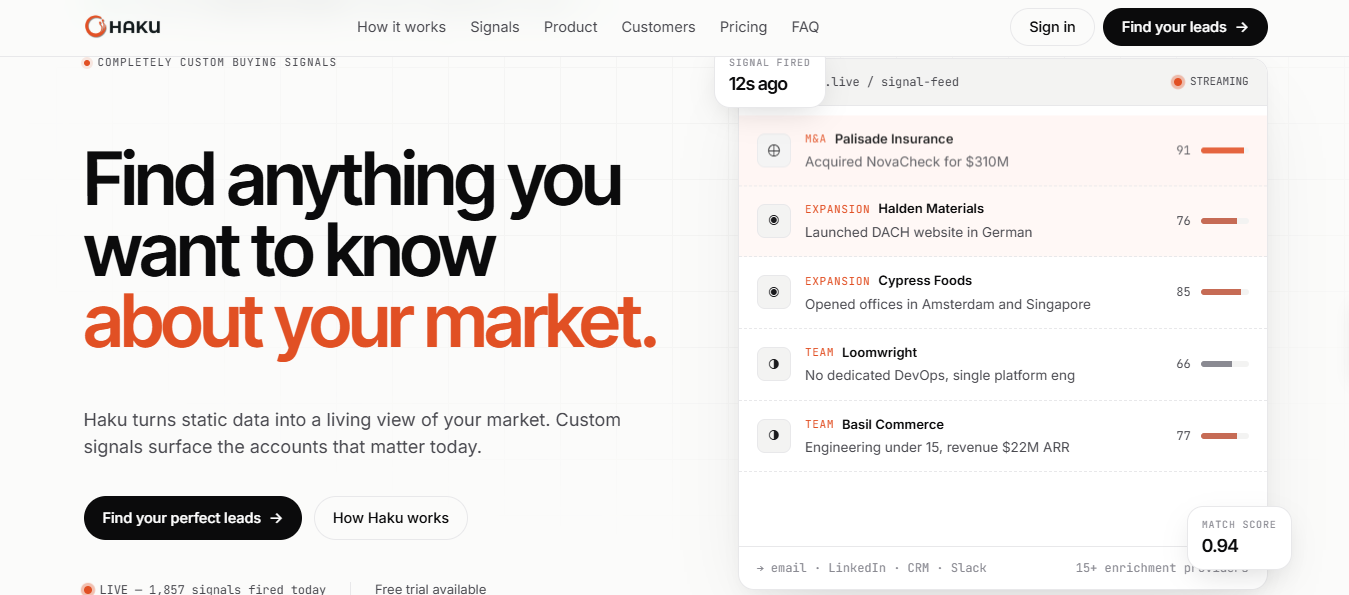
Describe what you need in plain English, for example, "UK manufacturers hiring engineers," and Haku turns it into an active signal. It checks Companies House, Crunchbase, Glassdoor, LinkedIn, court records, and technology fingerprinting tools, saving your reps from researching each account.
The feature I’d value most is the reasoning behind every lead. You can see why an account matched, which trigger fired, and which verified sources confirmed it.
Once an account matches, Haku maps the buying committee and validates contacts through more than 15 providers. It then drafts your outreach and runs cadences across email, LinkedIn, and calls, with sending domains, AI warm-up, and inbox rotation included.
What you don’t get is access without speaking to sales. Every plan says “Book a demo,” and although the pages mention a free trial, they don’t explain its length or lead allowance.
You don’t get a shared inbox either. Haku runs the cadence, but replies land in your own inbox, so your team must track conversations somewhere else.
There’s no low-cost self-serve plan. The cheapest option is £1,150 monthly, and each tier charges for a fixed lead allowance whether your team uses it or not.
Leadsforge takes the opposite approach. You buy credits, use them when you need leads, and receive 100 free credits when you sign up.
I couldn’t find a single independent Haku review. There’s nothing on G2, Capterra, or Trustpilot, and no customer posts on Reddit or LinkedIn.
That leaves four case studies, all published by Haku. Three name actual founders, which is more than most tools at this price provide, so I checked exactly what each one claims.
Founder Nigel Watts says, “We stopped buying static data.” The page reports a 42% increase in outbound engagement, twice as many qualified meetings, nine days from kickoff to results, and eight hours saved per user each week.
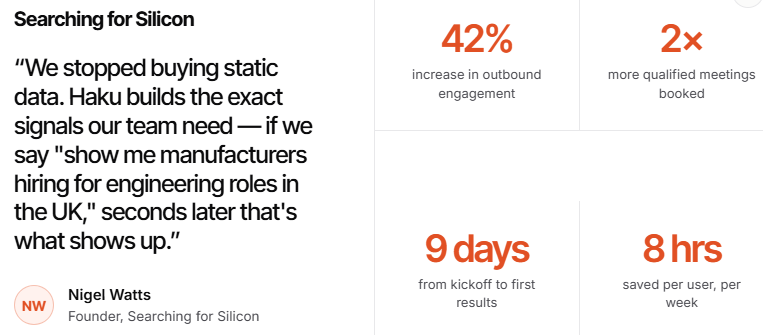
The nine-day figure is the most useful because it gives you a rough setup timeline. The percentages have no baseline, so I can’t tell whether 10 meetings became 20 or two became four.
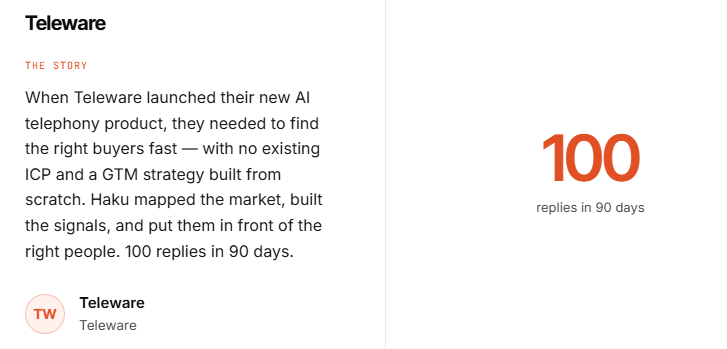
Teleware had a new AI telephony product but no ICP or go-to-market plan. Haku mapped the market, built the signals, and reportedly generated 100 replies in 90 days.
That’s where I’d trust Haku most because there’s no existing list to buy for a new product. However, the page doesn’t say how many contacts generated those 100 replies.
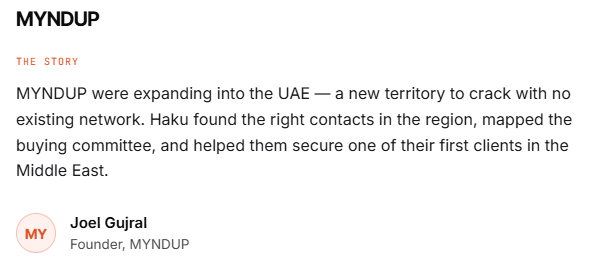
Joel Gujral’s team was expanding into the UAE without an existing network. Haku found contacts, mapped the buying committee, and helped secure one of its first Middle Eastern clients.
This case study includes no numbers.
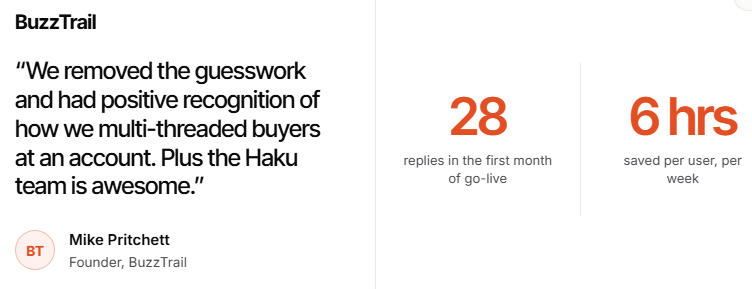
Mike Pritchett reports 28 replies in the first month and six hours saved per user each week. He also says the team behind the product is good to work with.
Nobody shares what they paid, how many leads their plan includes, or how many leads became pipeline. Nobody describes a bad signal, a bounced contact, or what happens when the monthly lead allowance runs out.
At £1,150 monthly with a required demo, I’d ask Haku to connect you directly with two of these founders.
I couldn’t test Haku directly because there’s no self-serve signup and every plan begins with a demo. Instead, I reviewed the product screens, signal library, and cadence builder to understand what a typical week might look like.
Before running any signals, you connect your CRM, add your ICP, and upload examples of deals you’ve already won. Haku uses them to learn which accounts actually buy from you.
That makes your CRM history a requirement rather than a bonus. If you’re launching something new, as Teleware did, Haku has less information to learn from.
Enter a trigger, such as "companies that replaced Oracle with Snowflake," and Haku builds it. The site provides ten examples, while Haku’s team configures anything beyond them.
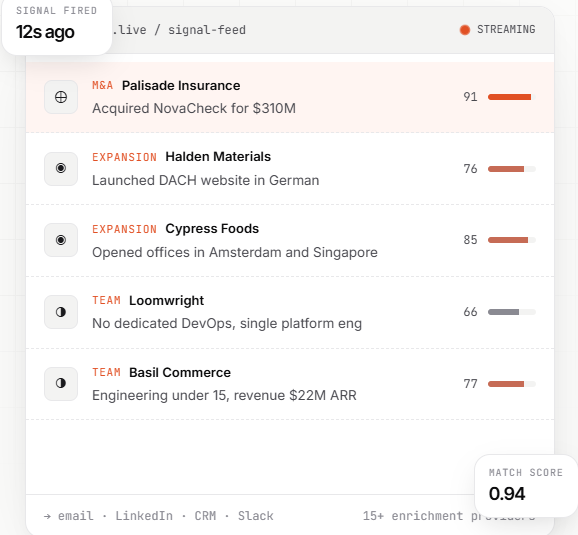
That means creating a new signal involves Haku’s team, not just yours. I’d ask how long setup takes before making a campaign depend on it.
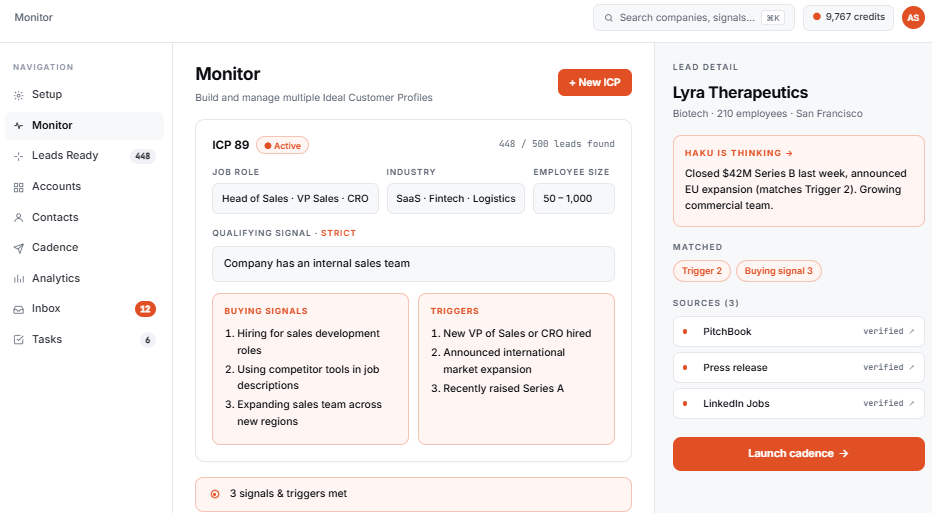
The Monitor screen holds your ICPs and shows which leads matched. Open any lead to see Haku’s reasoning, the triggers it matched, and the verified sources supporting it.
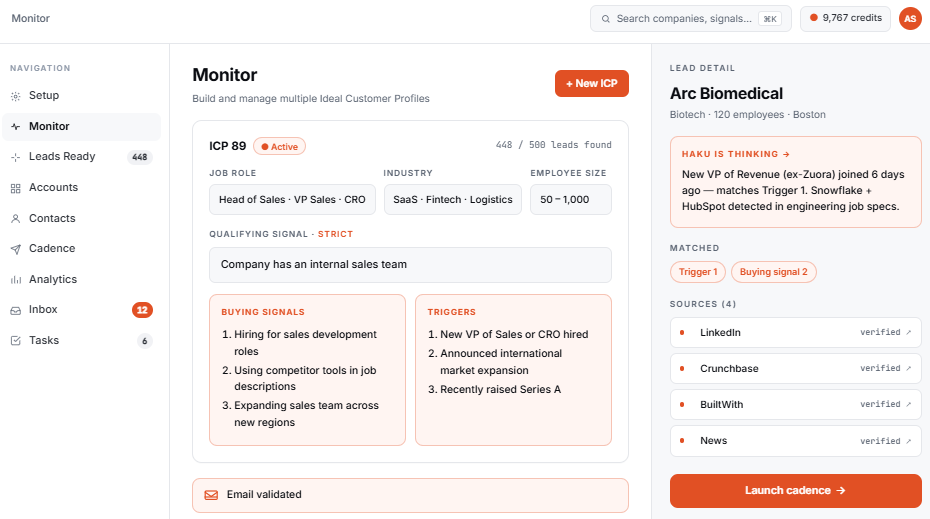
One example shows Arc Biomedical matching because a new VP of Revenue joined six days earlier from Zuora, while its job listings mentioned Snowflake and HubSpot. That gives a rep something specific to open with.
The pricing page sells monthly leads, but the product screen shows a credit balance of 9,767 alongside 448 of 500 leads found for one ICP.
The material doesn’t explain how credits relate to leads or whether each ICP has its own limit. That’s the first question I’d ask during the demo because it determines how much you can actually run each month.
The drag-and-drop builder includes LinkedIn connection requests, emails, calls, LinkedIn messages, post likes, and voice notes. WhatsApp is marked as coming soon.
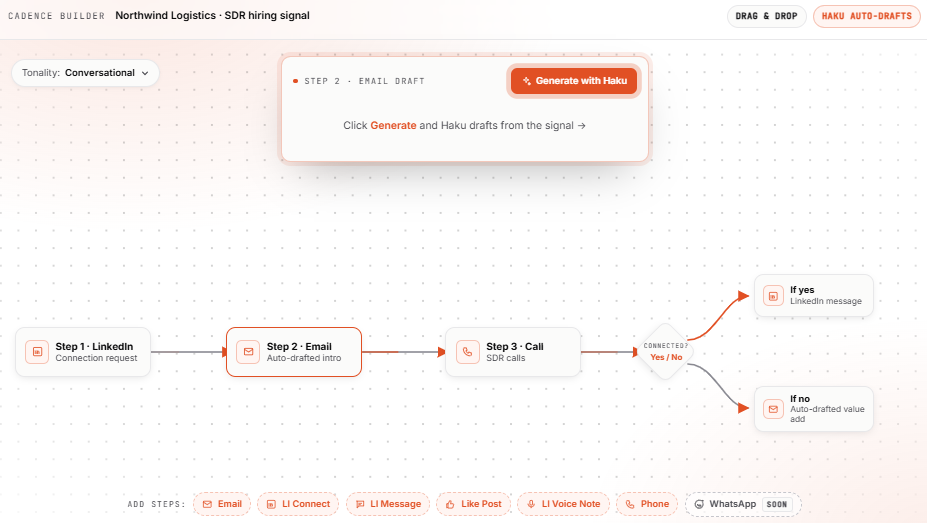
Haku drafts emails using the signal itself.
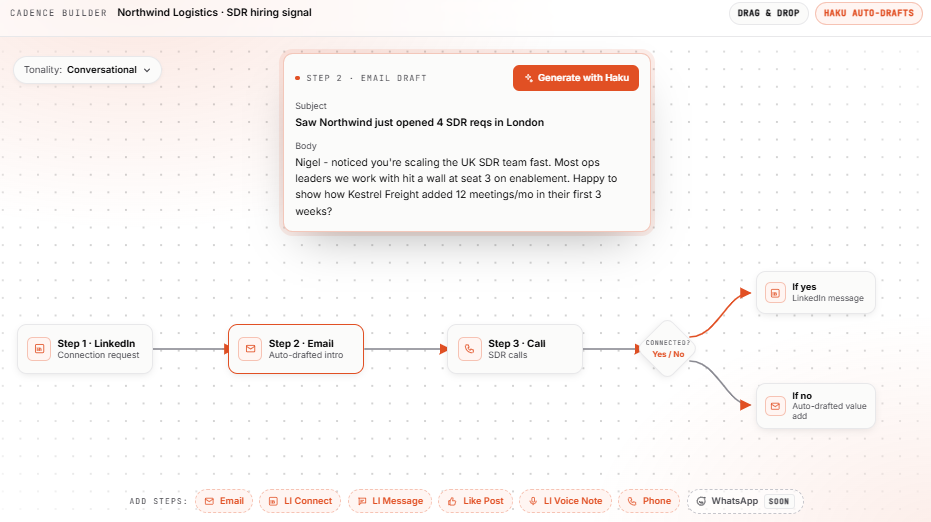
One example opens by mentioning four SDR roles the company recently posted in London, then references a similar customer. After a call, the sequence branches based on whether you connected.
Once someone replies, Haku’s role ends. Responses go to your inbox, and the available material mentions no shared inbox, reply tagging, or internal handoff.
For a sales team, that means managing replies in another tool.
Haku can target companies experiencing financial distress, including county court judgments and late payments, or those with low Glassdoor ratings where reviews mention burnout.
Both use legal, public information. I’d still decide as a team whether you want your name attached to an opening message about a company’s debt or unhappy employees.
Haku charges by lead volume rather than seats, so your entire team shares one monthly allowance.
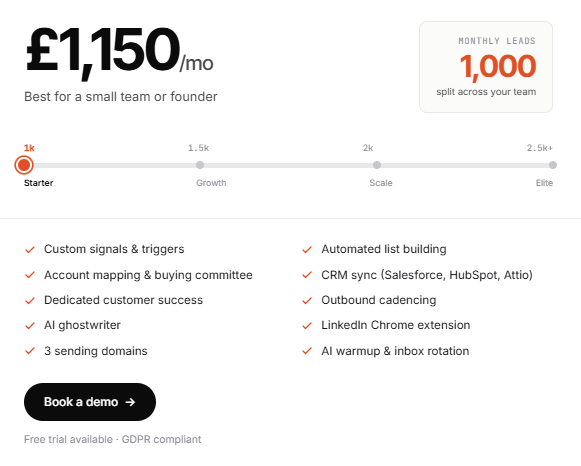
Starter costs £1.15 per lead, Growth costs £1, and Scale costs £0.90. Moving from Starter to Scale costs 57% more but doubles your lead volume.
Only lead volume and sending domains change between tiers. Your plan choice depends on volume, not features.
Nothing in Haku’s material says unused leads roll over or explains what happens when you run out mid-month. I’d ask about both before choosing a tier.
Every plan directs you to book a demo. The free trial mentioned under each price has no published length or lead allowance.
Haku publishes no annual pricing, so I’d ask what you save by committing for a year before signing.
Haku works best when you need to know which accounts to contact this week and have the budget to pay for that answer.
If you already run outbound and only need better data, Haku charges for the entire workflow rather than the missing piece.
Haku’s real product is the list. You’re paying for research, contact data, and the reasoning behind each match, with cadences included on top.
If that’s what you need, Leadsforge handles the same core job without a £1,150 starting price or a sales call.
Haku charges for 1,000 leads whether your team uses them or not. Leadsforge charges one credit per verified email or LinkedIn profile and 10 credits for a phone number.
That means a slower month costs less, and you choose which contacts are worth enriching.
Haku directs every plan to a demo. Leadsforge gives you 100 free credits at signup, letting you run your ICP through it today and judge the data yourself.
Enter something like: heads of sales at European B2B SaaS companies with 50 to 200 employees. If the results look wrong, refine them in your next message.
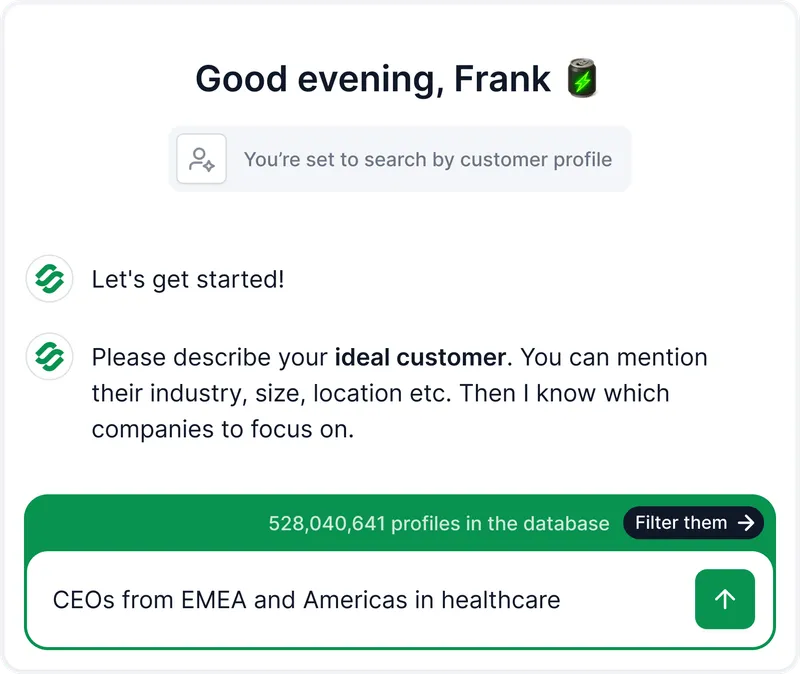
You don’t need to wait for someone to configure a new search.
Beyond ICP searches, you can enter a customer’s domain to find similar companies, pull followers from a competitor’s LinkedIn page, or build lists around signals such as funding, acquisitions, and job changes.
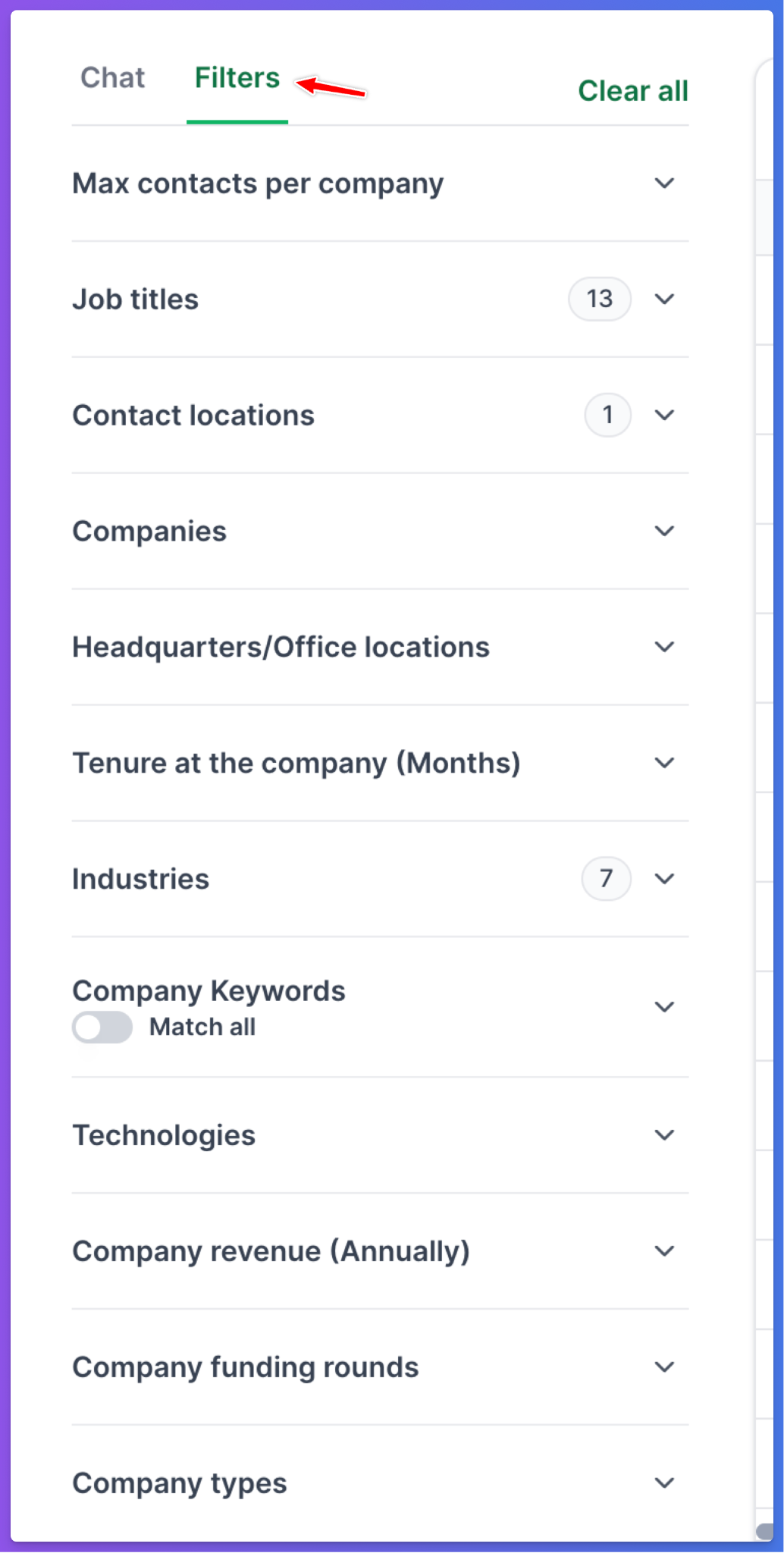
I’d begin with competitor followers. They already understand the category, so your opening message doesn’t need to explain it.
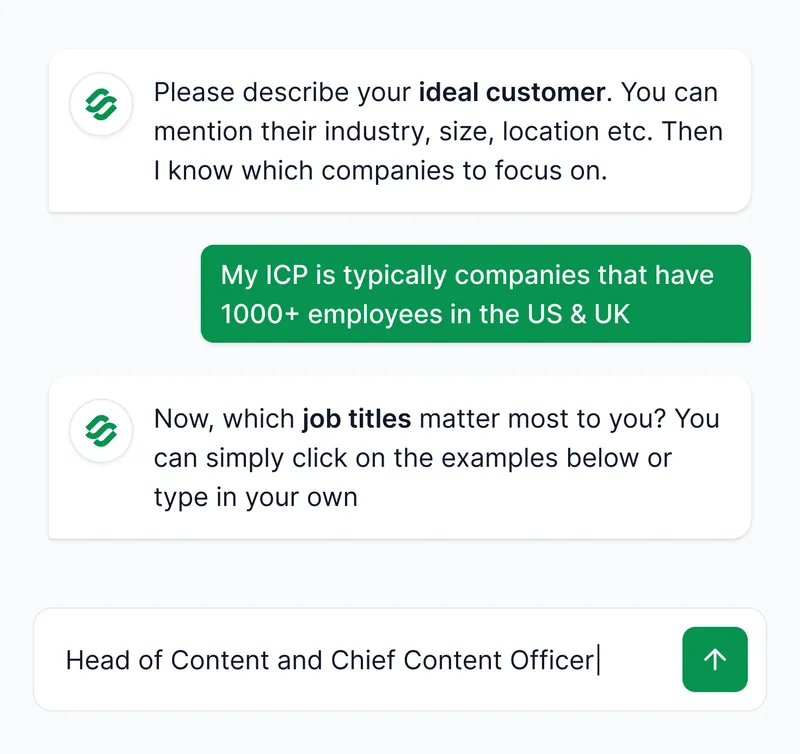
Leadsforge runs your qualification prompts against each contact, searches public sources for buying intent and recent activity, then returns a yes or no with the reasoning behind it.
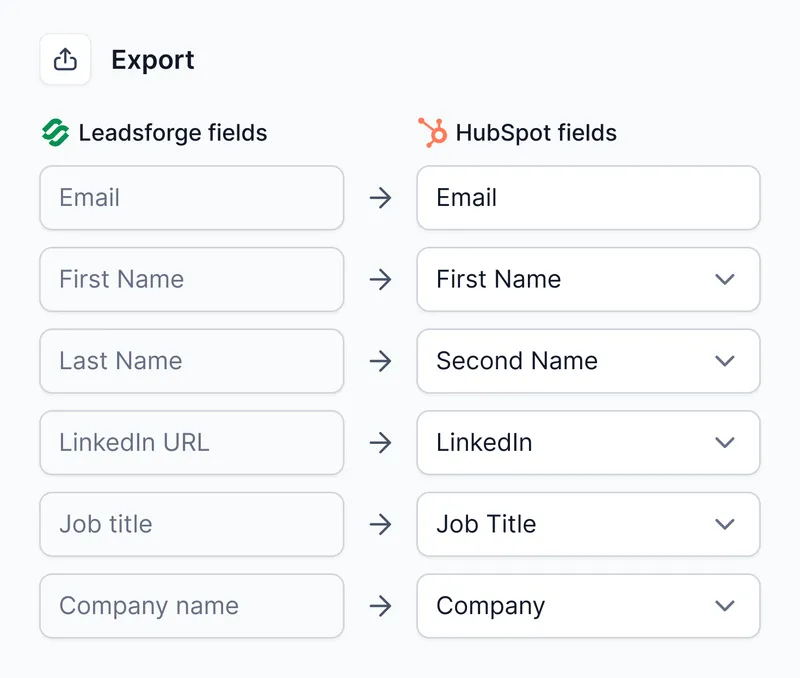
Upload a CSV from your CRM, an event, or an older provider, and Leadsforge fills in missing emails, LinkedIn URLs, and phone numbers. You only spend credits on successfully resolved records.
One click sends a list to a Salesforge workspace, where email and LinkedIn steps run in the same sequence, and replies arrive in Primebox.
You can also export to CSV, connect through the API, or let Claude run searches using the MCP server.
Haku's ghostwriter drafts from the signal that fired. That's a good opening line, but the draft quality stays where it started.
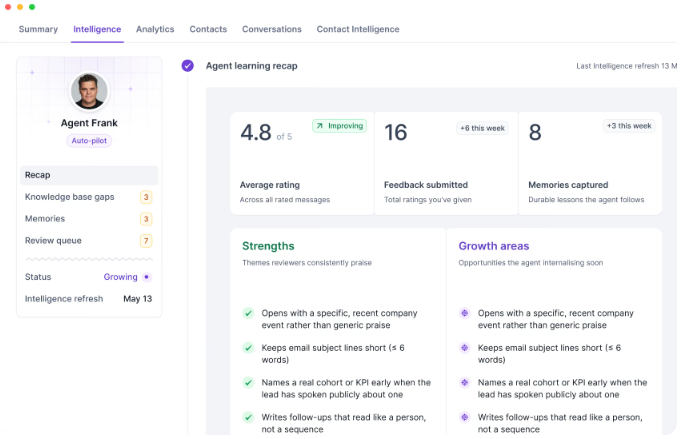
Agent Frank researches each prospect first, including their company, buying signals, timing and likely objections, then writes from that.
Every message you rate turns into a memory he follows next time, and you can see the running list: what reviewers praise, what he's still working on, and how many lessons he's kept.
So the part Haku charges £1,150 a month for, research before outreach, is built into the agent that sends your sequences.
Enter your email to get a custom plan & stack recommendation for your business
Please check your mailbox in 5 minutes
Start with one question: do you already have a sequencer, sending domains, and warm-up? If so, much of what Haku includes duplicates tools you already pay for.
What remains is the research, and that part looks genuinely valuable. You get unusual signals, a mapped buying committee for each account, and sources you can open and verify. For a team entering a market with no list available, £13,800 a year could be a defensible expense.
For everyone else, it’s a significant price for contact data, especially with no independent reviews and a mandatory demo.
Leadsforge sells the data separately. Describe your buyer, find verified emails, LinkedIn profiles, and phone numbers across more than 500 million records, and pay per result instead of £1.15 per lead.
Use the 100 free sign-up credits to test it, then send the results directly into your sequences from Leadsforge.
.jpg)

.jpg)

.jpg)
