Want better cold email results? Start segmenting by geography.
Sending the same email to prospects in New York, London, and Tokyo without adjusting for local time zones, languages, or regulations can hurt your reply rates. Geographic segmentation solves this by tailoring your emails to match local preferences, boosting open rates by 14% and click-through rates by over 100%.
Here’s what you need to know:
Whether you're a small team or a global enterprise, geographic segmentation can transform your cold email campaigns into high-performing outreach strategies.

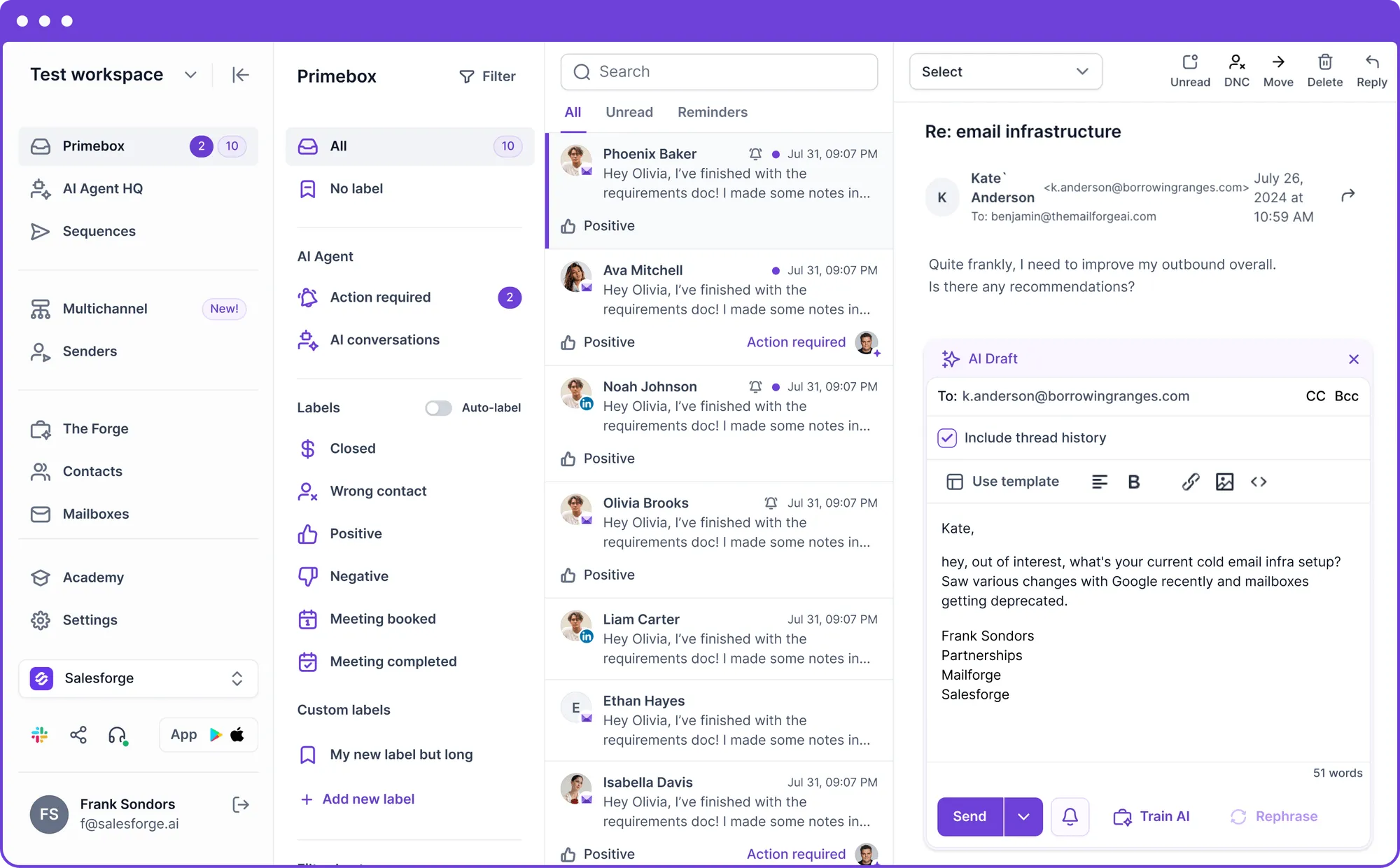
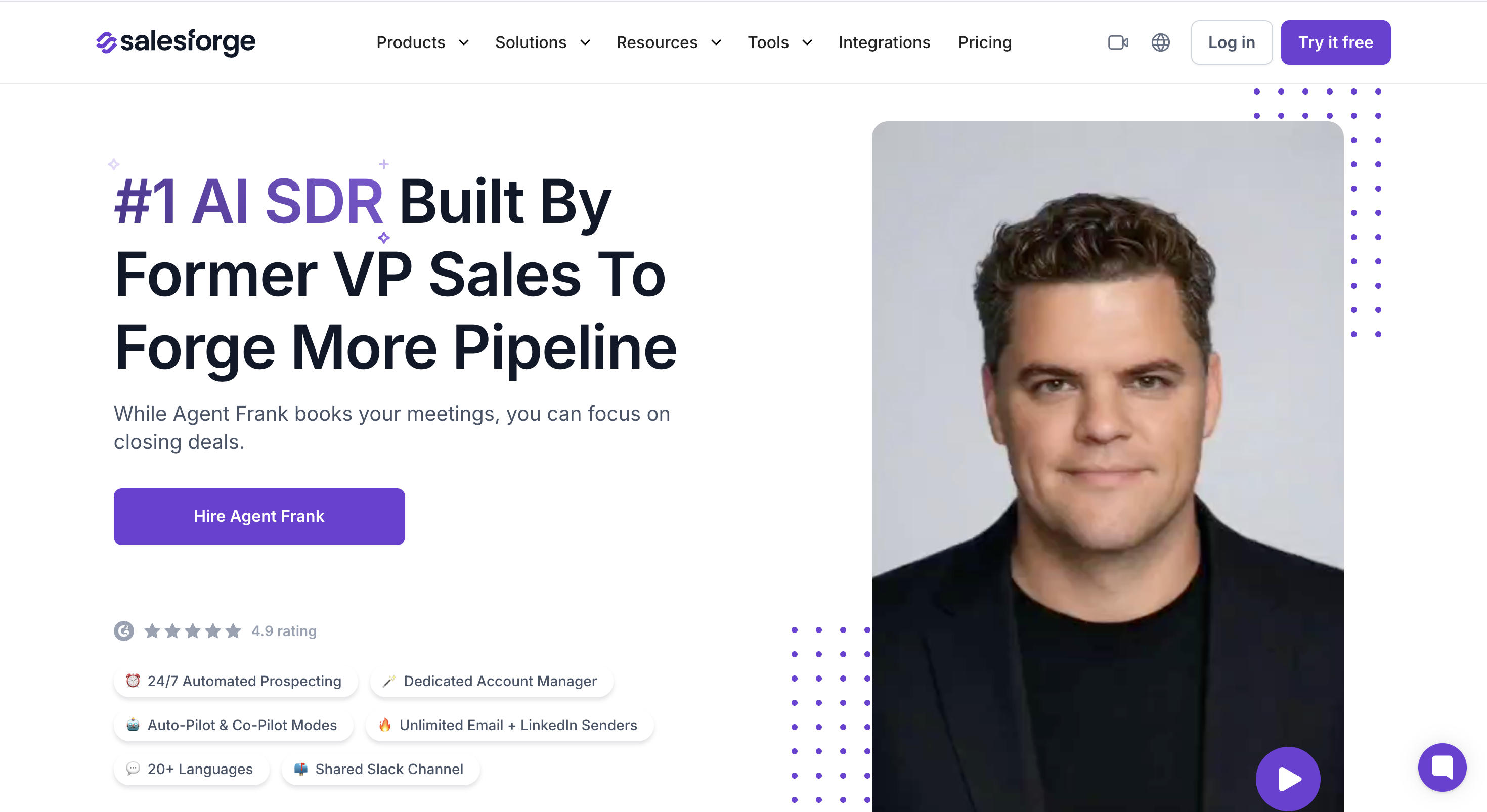
Salesforge is a comprehensive cold email platform tailored for campaigns that require geographic segmentation. Priced at $40 per month (billed annually), it offers a suite of tools, including AI-driven personalization, unlimited email warm-up through Warmforge, email validation, and multi-mailbox management. This setup eliminates the need to juggle multiple tools.
Salesforge takes the guesswork out of scheduling emails by detecting recipient time zones using location data or firmographics. Emails are then sent during local business hours, typically between 8:30 and 10:30 a.m., a practice that has been shown to improve open rates by about 20%.
For example, a U.S.-based sales team can upload a lead list covering Eastern, Pacific, and European time zones, and Salesforge will handle the rest. Prospects in New York receive their emails at 9:00 a.m. EST, while those in London get theirs at 9:00 a.m. GMT. This staggered delivery ensures optimal timing without requiring manual adjustments for each region.
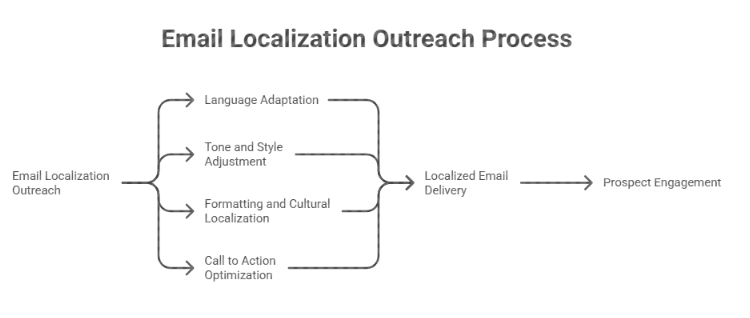
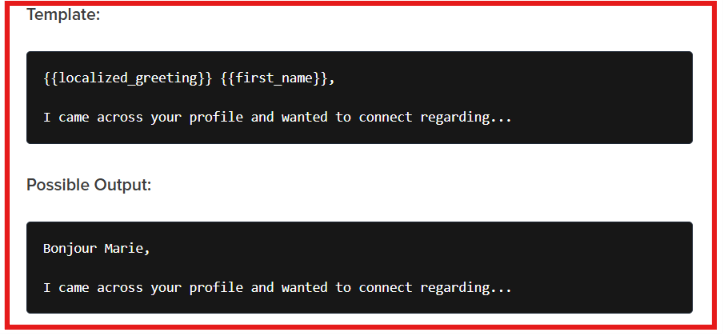
Salesforge supports cold email campaigns in 20+ languages, enabling teams to reach multilingual audiences without hiring translators or local sales reps. From the same dashboard, you can create tailored sequences for Spanish-speaking prospects in Latin America, German contacts in the DACH region, and English-speaking leads across North America.
What sets Salesforge apart is its ability to do more than just translate content - it adapts tone and references to fit the local context. For instance, prospects in one region might receive a direct, results-oriented message, while another market might respond better to a more collaborative and nuanced approach.
When targeting prospects across multiple regions, compliance with local regulations like GDPR (EU), CAN-SPAM (U.S.), and CASL (Canada) becomes critical. Salesforge addresses these complexities with built-in safeguards.
The platform includes unlimited email warm-up via Warmforge, which gradually builds sender reputation by simulating interactions with active mailboxes before launching a campaign. It also provides email validation with credit allocations per plan, helping teams filter out invalid addresses. Since even minor bounce rates can harm sender reputation, this proactive validation is key to maintaining strong deliverability.
For industries with strict regulatory requirements, Salesforge offers region-specific compliance workflows. For example, campaigns targeting EU contacts can automatically include GDPR-compliant unsubscribe options, while U.S. campaigns emphasize CAN-SPAM opt-out mechanisms. This ensures adherence to local laws across global campaigns.
Salesforge’s AI personalization engine, powered by its virtual assistant Agent Frank, takes a smarter approach to crafting emails. Instead of relying on basic merge-tags, the platform analyzes factors like firmographics, industry, and location to create tailored openers, value propositions, and calls-to-action.
For instance, AKOOL reached over 214,000 prospects with a 16%+ positive reply rate, crediting the platform for its ability to segment and personalize at scale:
"Outreach at our scale requires speed, segmentation, and precision - Salesforge gave us the infrastructure to do it all at once."
Similarly, UniteSync achieved an 85.26% positive reply rate and a $2.86 customer acquisition cost, with CEO Carlos Palop Moliner noting:
"Our tech identifies music creators with unclaimed royalties. That's the core of our message - and it resonates, but cold email only works when it lands. That's where Salesforge and Mailforge have made the difference."
For geographically segmented campaigns, the platform’s AI ensures messages are tailored to regional needs. For example, it can highlight compliance details for EU prospects or emphasize domestic service benefits for U.S. leads. With its multilingual capabilities, Salesforge ensures that messages are not only translated but also culturally relevant.
Agent Frank streamlines the entire outbound process, from prospecting to follow-ups and meeting scheduling, while keeping geographic and cultural nuances in mind. Teams can set specific parameters - like prioritizing prospects in EST and PST time zones or customizing messaging for APAC markets - and let the AI handle the rest.
Next, we’ll explore how other platforms deliver similar precision in their campaigns.

Outreach is a sales engagement platform tailored for B2B teams, offering tools to streamline email, call, and social outreach. Similar to Salesforge, it uses geographic segmentation to enhance cold email campaigns on a global scale. Designed as an all-in-one solution, it focuses on features like time zone scheduling and regional targeting to align outreach efforts with local business norms. Pricing generally ranges from $50 to $100 per user per month, though custom quotes are common for enterprise and mid-market teams with specific requirements.
One standout feature of Outreach is its ability to optimize email delivery based on time zones. It automatically schedules emails to arrive during recipients' peak business hours - typically between 8:30–11:00 a.m. or 2:00–4:00 p.m. For instance, sending an email at 9:00 a.m. PT ensures it lands in East Coast inboxes at noon, a busier time for email activity. U.S.-based teams can boost their efficiency by mapping contacts to their respective time zones using CRM fields or data enrichment tools, then creating sequences tailored for Eastern/Central and Mountain/Pacific clusters.
Outreach supports localized email templates and snippet libraries, enabling teams to address region-specific needs. For example, you can create separate templates for markets like the U.S., UK/Ireland, DACH, and Nordic regions. These templates can include localized objections, regulatory references, and case studies relevant to each area. While this helps tailor communications, Outreach doesn’t offer built-in multilingual capabilities or automatic cultural adjustments. This means teams need to manually create and maintain these regional templates as their outreach efforts expand.
Running international cold email campaigns requires strict adherence to regulations like CAN-SPAM (U.S.), CASL (Canada), GDPR (EU), and CCPA (California). Outreach simplifies compliance by offering region-specific legal templates and footers that include essential details, such as a physical address and unsubscribe language. The platform also provides real-time deliverability insights through its dashboard and employs features like daily send limits, throttling, and randomized send times to mimic human behavior, improving email deliverability. For high-volume campaigns, segmenting sending domains and IP addresses by region and automating the handling of bounces and complaints further enhances deliverability. Synchronizing suppression lists between Outreach and your CRM is another recommended step to maintain compliance.
Outreach leverages AI to enhance email personalization. Its dynamic templates and content suggestions allow teams to craft messages tailored to geographic and role-specific data. For example, it can generate opening lines referencing local events, regulations, or trends, and incorporate region-specific case studies or testimonials. This level of personalization goes beyond basic tokens like a recipient's first name. According to Mailchimp, segmented campaigns see a 14.31% increase in open rates and a 100.95% boost in click-through rates compared to non-segmented campaigns, which average a 1.68% click-through rate versus 2.32% for segmented efforts. However, maintaining AI-driven personalization requires regular updates to templates, variables, and snippet libraries. Tools like Salesforge can complement Outreach by automating the creation of geo-aware, AI-personalized emails and syncing them with Outreach sequences, making large-scale personalization more manageable.
Start by auditing and enriching your contact data to include details like country, state, city, and time zone. Then, divide your sequences by U.S. time zones, such as Eastern/Central and Mountain/Pacific, and tailor your social proof to reflect regional market dynamics. To safeguard deliverability, set daily send limits for each mailbox and monitor performance data over a 4–6 week period. This step-by-step approach ensures a smooth transition to a time zone-optimized, geo-aware outreach strategy without disrupting ongoing campaigns.

Salesloft is a platform designed to streamline sales engagement, focusing on multi-channel outreach and deep CRM integration. It offers tools for geographic segmentation, helping cold email campaigns perform better across different regions. The platform emphasizes process control and standardized workflows, with pricing starting around $100–$125 per user per month. Higher pricing tiers unlock advanced analytics, AI features, and governance tools tailored for enterprise needs. Custom pricing is available for larger teams or deployments.
One of Salesloft's standout features is its ability to schedule emails based on each prospect's local time zone. By using CRM location data, it ensures emails are sent during business hours that make sense for the recipient. For example, you can configure a cadence to send emails between 8:30–10:30 a.m. local time, ensuring your message lands in their inbox at an optimal moment.
For U.S.-based teams, dividing regions into time zones like Eastern/Central, Mountain/Pacific, EMEA, and APAC can help refine outreach. Creating cadence variations or steps with region-specific sending windows and running them for 4–6 weeks allows teams to analyze results. Salesloft's reporting tools can help you compare open and reply rates by time band, ensuring you're not sending emails at inconvenient hours, which could frustrate recipients and hurt your deliverability. According to a Forrester Consulting study, companies using Salesloft saw a 394% ROI over three years and a 20% boost in meeting conversion rates for outbound sales teams. These time zone tools align with similar features in other platforms, offering an effective way to localize outreach.
Adapting content to align with local customs, holidays, and business priorities can significantly improve engagement. Salesloft allows teams to create region-specific cadences using dynamic content, swapping in localized references such as case studies, currency formats, or measurement units.
The tone of communication also plays a big role. What resonates in the U.S. - often direct and informal - might not work in European or APAC markets where a more formal tone is preferred. Salesloft's shared template libraries help sales teams maintain messaging tailored to specific regions, while SDRs can personalize opening lines based on the prospect's role or company. For non-U.S. audiences, avoid U.S.-centric references like American football or Thanksgiving. Instead, use local sports, holidays, or regulatory frameworks, such as GDPR for EU contacts, to make your content more relatable.
Running cold email campaigns across regions means navigating various regulations, including CAN-SPAM (U.S.), CASL (Canada), GDPR (EU), and CCPA/CPRA (California). Salesloft helps teams stay compliant by offering features like opt-out links, access controls, and standardized templates. Admins can enforce governance policies globally or by team, ensuring regional legal requirements are met.
To stay compliant, segment contacts by jurisdiction using CRM fields like country and state, and set up rules to exclude non-compliant records from cadences. Templates should include location-specific identification and opt-out mechanisms. While Salesloft tracks bounces, replies, and spam complaints, maintaining clean contact lists is essential for good deliverability. The platform also supports send throttling to mimic human behavior, reducing the risk of being flagged as spam.
Salesloft incorporates AI tools like "Coach" and "Conductor" to assist with prioritizing accounts, recommending next steps, and improving messaging. While human reps remain central to personalization, AI helps speed up tasks like crafting icebreakers tailored to a prospect's role, company, or local market.
When combined with regional templates, AI can enhance geographic segmentation by generating opening lines that reference local events, regulations, or trends. It can even pull in region-specific case studies or testimonials. Segmented campaigns often outperform generic ones, achieving open rates over 14% higher and click-through rates up to 100% higher. Studies show that breaking global cadences into region-specific sequences can increase meeting setups by more than 20%.
To measure the success of your time zone and localization strategies, track metrics like open rates, reply rates, click-through rates, bounce rates, and spam complaints by region and time band. With typical cold email open rates ranging from 27–40% and reply rates around 5%, underperforming segments may need adjustments in timing or localized content. Use Salesloft's dashboards to analyze performance by country, region, and cadence, and refine your strategies monthly for continuous improvement.
Integrating AI-powered SDR tools can further enhance regional personalization, making your outreach even more effective.

Lemlist is a platform designed for cold email and multichannel outreach, catering primarily to sales teams and agencies. It emphasizes creating personalized, human-like emails using features like dynamic images and custom variables, which help boost reply rates. Pricing ranges from $59 to $99 per user per month, depending on the features you choose, such as multichannel capabilities, team collaboration tools, and advanced reporting. It's worth noting that Lemwarm, the platform's deliverability tool, is sold separately with its own pricing.
Unlike larger platforms like Outreach or Salesloft, Lemlist focuses on small to medium-sized businesses (SMBs) and agencies that need a straightforward cold email tool without the complexity of heavy CRM integrations. Over time, it has expanded beyond email to include multichannel engagement options, like LinkedIn steps and task automation. On G2, Lemlist scores between 4.3 and 4.6 out of 5, with users appreciating its ease of use, powerful personalization options, and responsive customer support. However, some reviews mention occasional bugs, CRM syncing challenges, and the possibility of outgrowing the platform as email volumes increase. Lemlist also stands out for its ability to simplify geographic segmentation, helping users avoid duplicate efforts.
One of Lemlist's standout features is the ability to schedule emails based on the recipient's local time zone. This ensures your emails reach prospects during their business hours, significantly improving open and reply rates.
To make the most of this feature, upload leads with accurate country or region data and group them by time zone - such as US East, US West, UK, or DACH (Germany, Austria, Switzerland). Create separate campaigns for each group and schedule emails to send within specific time windows, like 9:00–11:30 a.m. local time. Be mindful of daily sending limits to avoid spam filters, and for B2B audiences, stick to sending emails between 8:00 a.m. and 6:00 p.m. local time.
A/B testing different time slots, such as early versus late morning, can provide valuable insights into the best times to reach your audience and maximize engagement.
Lemlist also supports localized email sequences, allowing you to tailor subject lines, currencies, and references to specific regions. You can clone and customize templates for each region, ensuring that merge fields like city, state, or country align with the recipient's context.
For instance, a US-based SaaS company might run three different sequences: one for US prospects focusing on CCPA and state-specific data laws, another for EU prospects emphasizing GDPR compliance, and a third for UK prospects referencing UK GDPR and FCA guidelines. Each sequence can have unique subject lines (e.g., "US data audit costs" vs. "GDPR fines" vs. "UK compliance overhead"), appropriate currencies (USD, EUR, or GBP), and region-specific send times.
Tracking these campaigns might reveal interesting trends, such as EU prospects responding better to shorter, formal emails in the morning, while US prospects prefer longer, benefit-driven messages. Similarly, weekend emails might perform better in Europe compared to the US. Segmented email campaigns often achieve around 14% higher open rates and can more than double click-through rates compared to non-segmented campaigns.
Geographic segmentation not only boosts reply rates but also simplifies compliance with regional regulations, as shown in earlier case studies.
Running cold email campaigns across different regions means navigating regulations like CAN-SPAM (US), CASL (Canada), GDPR (EU), and CCPA/CPRA (California). Lemlist helps ensure compliance by including unsubscribe links, guidance on domain setup, and bounce tracking.
To maintain deliverability, the platform offers inbox rotation, which spreads your sending volume across multiple email accounts to reduce the risk of being flagged as spam. Lemwarm, another feature, prepares new domains and protects sender reputation by gradually increasing mail volumes through automated exchanges with a network of inboxes. To further safeguard your reputation, keep daily send limits low and regularly clean your lists by removing hard bounces and unengaged contacts.
Lemlist takes personalization to the next level with AI-driven features that make emails feel uniquely tailored. Its dynamic image personalization tool, for example, can automatically add recipient-specific text or screenshots to your emails. These dynamic elements, combined with custom fields, can boost response rates by two to three times compared to plain text emails.
By adding details like role-, industry-, or city-specific hooks, you can make your outreach even more targeted. For example, you might reference a recipient's recent Boston office expansion or their company's new London headquarters. Testing different levels of personalization by region can help identify where visual elements resonate most.
AI tools also enable you to craft opening lines that reflect local events, regulations, or trends. A campaign targeting California prospects, for instance, might mention state privacy laws, while one aimed at Texas could highlight growth in the local energy sector. With cold email reply rates averaging between 4% and 6%, standing out is essential. For teams looking to scale their efforts further, pairing Lemlist with AI-powered platforms like Salesforge - which offers fully AI-generated, regionally adaptive emails and an AI SDR to automate workflows - can take personalization and segmentation to new heights.
Each platform brings its own strengths to the table when it comes to geographic segmentation. Choosing the right one depends on your team size, technical expertise, and how much customization you need for outreach across different regions. Below is a breakdown of what each platform offers, highlighting their advantages and limitations.
| Platform | Time Zone Optimization | Localization | Compliance & Deliverability | AI Personalization | Best For |
|---|---|---|---|---|---|
| Salesforge | Pros: Uses AI SDR (Agent Frank) to handle outreach from prospecting to follow-ups with geo-targeted data. Cons: Lacks advanced recipient-specific scheduling found in some enterprise platforms. | Pros: Supports 2–20 languages with AI-generated content tailored to regions, reducing the need for translators or local SDRs. Cons: Limited ability to adapt to deeper cultural nuances. | Pros: Built-in email validation, unlimited warm-up via Warmforge, and safe sending volumes ensure high deliverability; LinkedIn account management aids compliance. Cons: Limited detail on GDPR/CCPA-specific measures. | Pros: Agent Frank automates everything from lead generation to meeting scheduling, with AI analysis in Primebox™ enhancing replies and multilingual messaging. Cons: Requires a separate subscription and demo booking. | Ideal for AI-focused teams aiming to scale geo-aware campaigns with minimal manual effort, especially across multiple regions. |
| Outreach | Pros: Offers enterprise-grade scheduling with strong multi-time-zone support and regional analytics. Cons: Requires more manual configuration for time-zone-based sequences compared to fully automated systems. | Pros: Features robust template management for region-specific variants and workflows. Cons: Relies more on manual template creation than AI-driven cultural adaptation. | Pros: Comprehensive compliance tools for GDPR, CCPA, and CAN-SPAM, including consent tracking and regional suppression lists. Cons: Advanced compliance features often require higher-tier plans and significant IT setup. | Pros: Includes AI-assisted copy suggestions and engagement scoring, integrating with sales intelligence tools. Cons: Lacks end-to-end AI SDR functionality, with personalization mostly rule-based. | Best for large enterprises with complex sales structures needing CRM integration and multi-team coordination across regions like North America, EMEA, and APAC. |
| Salesloft | Pros: Provides structured, multi-channel cadences with time-zone awareness and governance for global sending policies. Cons: Requires upfront setup and ongoing management, making it less automated than AI-first platforms. | Pros: Includes a robust template library and A/B testing for regional campaigns. Cons: Relies on manual localization, with cultural adaptation requiring additional input from regional experts. | Pros: Offers compliance features for major regulations, list hygiene tools, and unsubscribe management. Cons: Advanced options like regional data residency may require enterprise-level plans, posing challenges for smaller teams. | Pros: Uses conversation intelligence and engagement analytics to refine messaging, with third-party AI tool integration. Cons: AI personalization is less comprehensive, requiring manual effort for deeper geographic customization. | Suited for mid-to-large B2B teams with mature sales processes needing structured, multi-channel workflows and detailed analytics across multiple regions. |
| Lemlist | Pros: Simple time-zone scheduling at the campaign level ensures emails are sent during recipient business hours - perfect for smaller teams managing international outreach. Cons: Lacks the programmatic orchestration depth of enterprise platforms and offers limited AI-driven send-time optimization. | Pros: Strong in creative personalization using dynamic visuals and region-focused templates. Cons: Deep geographic and cultural personalization requires more manual effort, with less advanced AI capabilities than Salesforge. | Pros: Includes essential compliance features like unsubscribe links, bounce tracking, and Lemwarm for sender reputation. Cons: Some features, such as Lemwarm, are sold separately, and tools for managing complex regional compliance are limited. | Pros: Focuses on creative visual elements and AI tools for personalized content. Cons: AI personalization is more about creative elements than automating the entire outreach process. | Ideal for SMBs and agencies prioritizing creative, visually engaging campaigns with straightforward time-zone scheduling over heavy enterprise features. |
Performance metrics consistently highlight the benefits of segmented, localized campaigns. For example, MailChimp data shows that optimizing send times based on recipient time zones can boost open rates by 20%.
For U.S.-based teams targeting multiple regions, the decision often hinges on organizational scale and maturity. Salesforge has shown strong reply rates in large-scale campaigns, emphasizing the value of AI-driven geographic targeting.
Outreach and Salesloft are excellent choices for enterprises needing robust governance and coordination across global teams, especially in regions like North America, EMEA, and APAC. Meanwhile, Lemlist appeals to smaller teams looking for creative personalization and ease of use, though it may lack the automation needed for large-scale workflows.
Compliance is another critical factor. Platforms with built-in tools save time and reduce risks when working in regulated regions.
Finally, smaller, highly targeted campaigns often outperform mass outreach. Campaigns targeting fewer than 100 recipients achieve reply rates of about 5.5%, while focusing on just 1–2 contacts per company can push reply rates to 7.8%. In contrast, contacting 10 or more individuals per company results in a lower 3.8% reply rate. This reinforces the importance of personalization over sheer volume.
Geographic segmentation transforms cold emails from generic blasts into meaningful, high-impact outreach. By tailoring timing, language, and local context, you can not only improve open rates but also make your messages feel more relevant to recipients. Segmented campaigns show impressive results, with open rates increasing by 14% and click-through rates more than doubling, while optimizing for time zones can boost opens by 20%.
The platform you choose plays a key role in how effectively you can implement geographic segmentation. Salesforge stands out for its ability to scale AI-powered, multilingual campaigns without requiring additional resources. Its tools automate everything from outreach to compliance across regions. For example, Agent Frank handles tasks like prospecting and booking meetings in 2–20 languages. Features like Warmforge for unlimited warm-ups, built-in email validation, and unified mailbox and LinkedIn management make it a strong choice for U.S. teams expanding internationally.
Meanwhile, Outreach and Salesloft cater to enterprise-level needs, offering advanced governance, territory management, and CRM integration. These platforms are ideal for large sales teams working across multiple U.S. states or global regions. They provide the structure needed for compliance tracking, analytics, and team coordination. Although they require more manual setup for localization, they give users detailed control over sending policies and performance metrics.
For smaller teams or agencies, Lemlist offers a simpler approach. It focuses on creative personalization and time-zone scheduling, making it easy to test region-specific messaging. For instance, you could use NYC-focused imagery or references tailored to the Midwest. However, as campaigns grow in complexity - like managing dozens of languages or strict compliance workflows - you might need a more robust platform.
When targeting regulated markets, compliance tools are a must. GDPR in Europe, CCPA in California, and CAN-SPAM in the U.S. all have distinct requirements for consent and suppression list management. Platforms with built-in compliance features can save time and reduce risk.
The key to successful geographic segmentation lies in combining location data with other factors like industry, role, and behavior. For example, a U.S. tech company targeting SaaS buyers in California will need different messaging than one reaching manufacturing executives in Texas. It’s not just about time zones - it’s about understanding local economic conditions, regulations, and business priorities. Smaller, focused campaigns often outperform mass outreach: reaching out to just 1–2 contacts per company can yield 7.8% reply rates, while contacting 10+ drops that number to 3.8%.
Geographic segmentation lets you customize your cold emails to match the preferences, time zones, and unique traits of your audience in different regions. By addressing specific challenges or using language that resonates locally, your emails feel more personal and relevant - making it more likely that recipients will open and engage with them.
Timing also plays a big role. Sending emails when your audience is most likely to check their inbox ensures your message gets noticed. Tools like Salesforge make this process easier by automating personalized, region-specific outreach at scale, helping your emails connect with leads across various locations.
When running cold email campaigns with geographic segmentation, it's crucial to follow local laws such as the CAN-SPAM Act in the United States, GDPR in the European Union, and CASL in Canada. These regulations govern how you collect consent, manage opt-outs, and handle personal data.
It's also important to tailor your email content to fit the cultural norms and expectations of your target regions. Things like tone, language, and even the timing of your emails can differ widely depending on the location. Tools like Salesforge can simplify this process by offering features like email validation and AI-powered personalization designed for specific regions. This way, your campaigns can stay both effective and compliant with local rules.
AI tools such as Salesforge simplify the process of geographic segmentation by customizing email content to align with specific locations, industries, and local preferences. With AI-driven personalization, you can create messages that genuinely connect with recipients across various regions, leading to better engagement and higher response rates.
On top of that, features like automated prospecting and multilingual email creation make your outreach more efficient and tailored. These capabilities ensure you reach the right audience, no matter where they're located, giving your cold email campaigns a much-needed edge.