AI in Lead Scoring: Benefits and Risks

AI is transforming lead scoring by offering more accurate, real-time insights into which prospects are most likely to convert. Unlike manual methods that require constant updates, AI analyzes vast amounts of data, adjusts automatically, and delivers 2–3x better accuracy. Key platforms like Salesforge, HubSpot, and 6sense each bring unique strengths to the table, tailored for different business needs.
- Salesforge: Designed for outbound sales, it automates prospecting and outreach with tools like Agent Frank. It tracks real-time engagement and intent signals, making it ideal for small to mid-sized teams ($499/month).
- HubSpot: Best for businesses already using its CRM, it offers AI-driven lead scoring based on lifecycle transitions and engagement data. However, advanced features start at $800/month.
- 6sense: Focused on enterprise-level account-based marketing, it uses predictive modeling and intent data to prioritize leads. Pricing is custom and targets larger teams.
Quick Comparison
| Platform | Best For | Key Features | Pricing |
|---|---|---|---|
| Salesforge | Outbound sales teams | Real-time engagement tracking, multi-channel outreach | $499/month |
| HubSpot | Inbound marketing teams | CRM-based scoring, lifecycle analysis | $800/month+ |
| 6sense | Enterprise account-based marketing | Predictive modeling, intent data | Custom pricing |
Each platform has its strengths and trade-offs. Your choice depends on your sales strategy, budget, and team size. For outbound automation, Salesforge is a cost-efficient pick. HubSpot works well for inbound-focused teams, while 6sense excels at intent-driven precision for enterprises.

AI Lead Scoring Platforms Comparison: Salesforge vs HubSpot vs 6sense
1. Salesforge
Accuracy and Data Sources
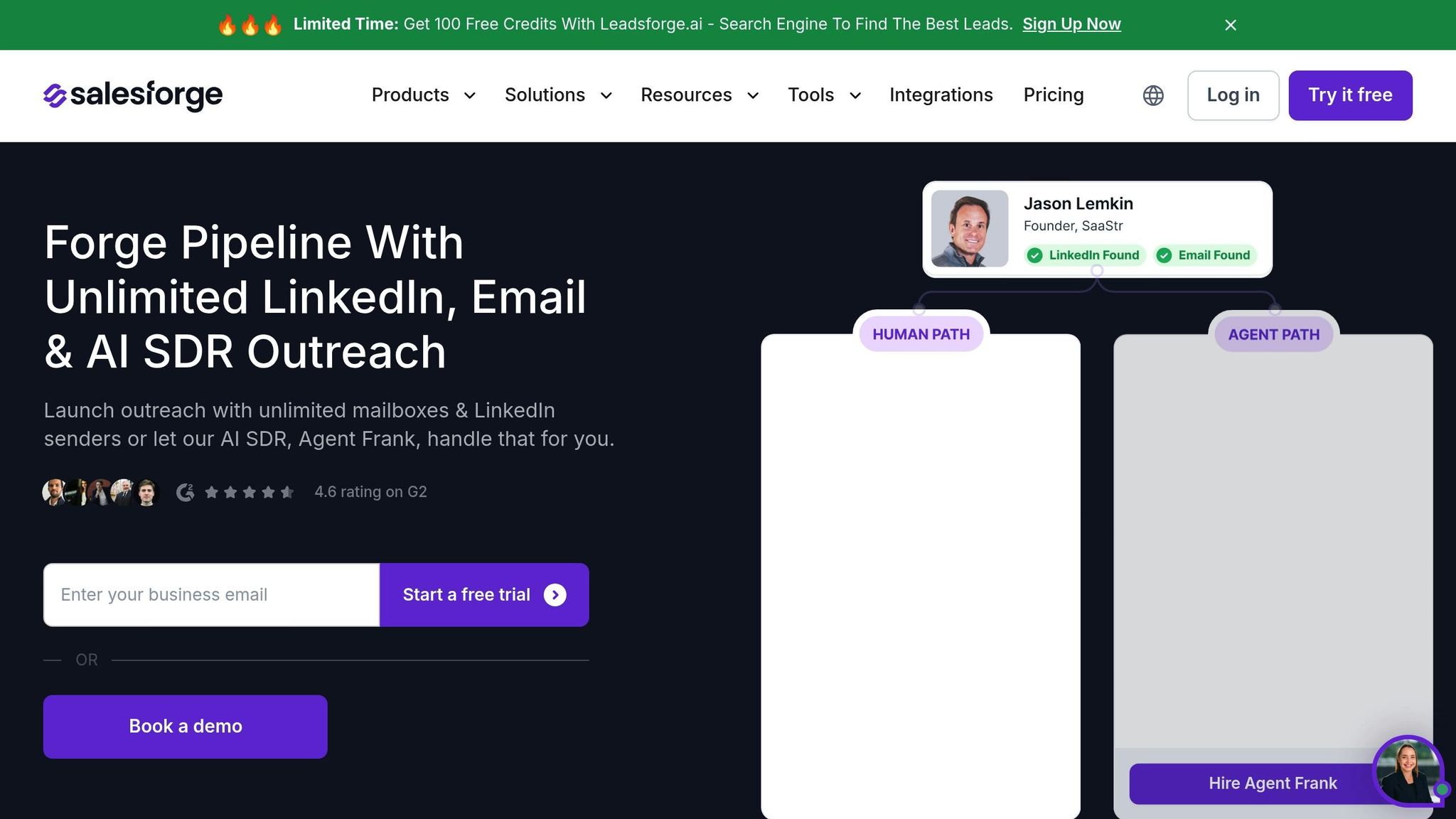
Salesforge's AI SDR, Agent Frank, is designed to track real-time engagement metrics, such as email opens, clicks, website visits, and downloads. What sets it apart is its ability to prioritize recent interactions over older data, ensuring outreach stays relevant. Agent Frank also evaluates intent signals like job postings, funding announcements, and visits to pricing or demo pages. Additionally, it leverages technographic data to spot expiring competitor contracts, enabling perfectly timed outreach efforts.
With access to a database of over 500 million contacts, Agent Frank enriches lead profiles using firmographic details like company size, revenue, and industry. These data-driven insights form the backbone of its automation capabilities, making lead workflows more efficient and targeted.
Scalability and Automation
Agent Frank takes the hassle out of sales outreach by automating the entire process. You can search for leads in plain language - think queries like "marketing managers at B2B SaaS companies in New York" - without needing to fiddle with complex filters. This approach slashes the time spent on manual list building, freeing up sales teams to focus on meaningful, high-priority conversations.
Integration with Multi-Channel Outreach
Salesforge goes beyond automation by seamlessly integrating across email and LinkedIn. Its unified lead scoring system tracks engagement across both platforms, offering a single, cohesive view of prospect behavior. This eliminates the need to juggle multiple tools or manually reconcile data, streamlining the entire outreach process for sales teams.
<script>(function(d,u,ac){var s=d.createElement('script');s.type='text/javascript';s.src='https://a.omappapi.com/app/js/api.min.js';s.async=true;s.dataset.user=u;s.dataset.campaign=ac;d.getElementsByTagName('head')[0].appendChild(s);})(document,372145,'tu1or50rqqejh816h1cm');</script>
2. HubSpot
Accuracy and Data Sources
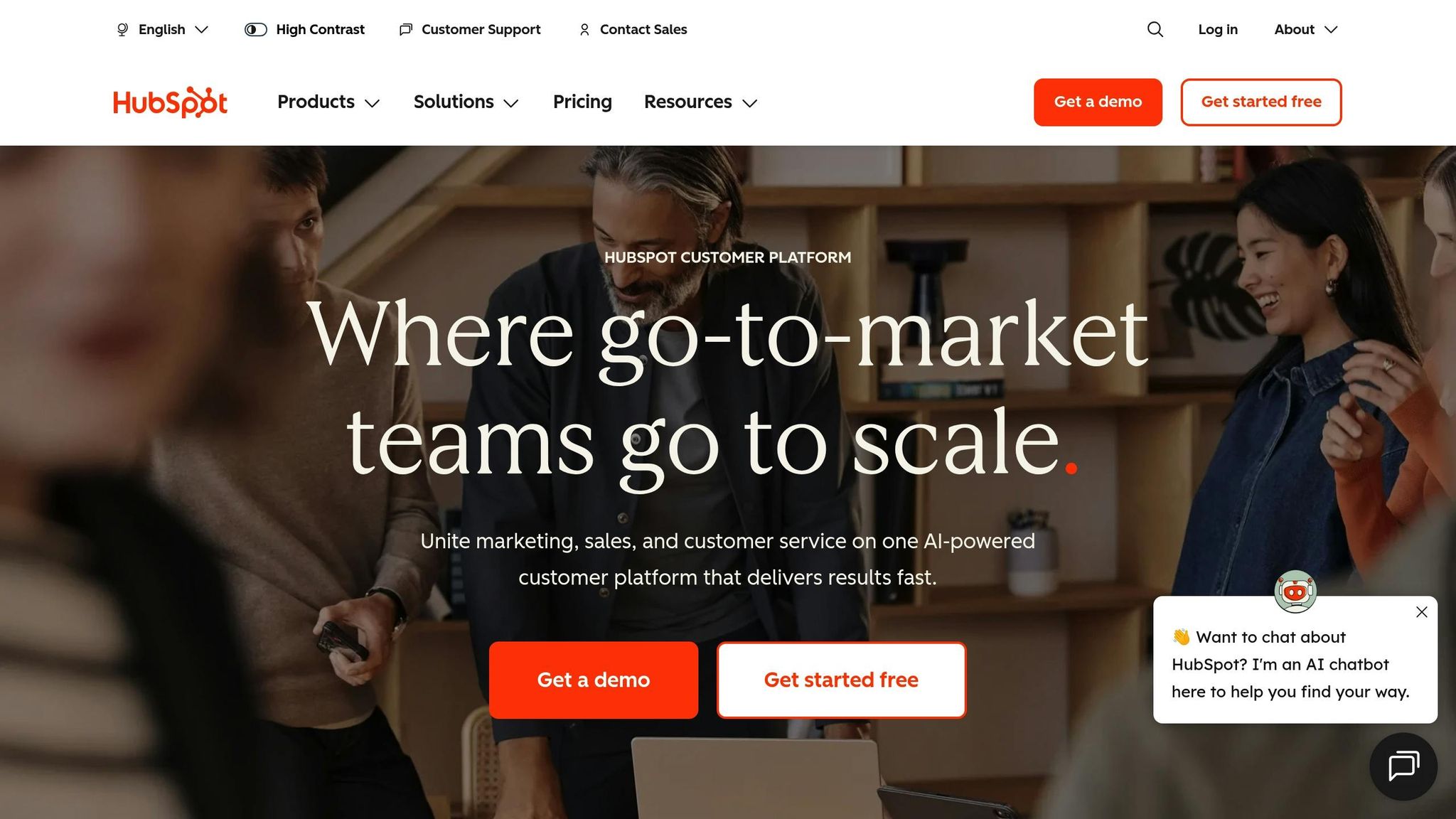
HubSpot's AI lead scoring system relies heavily on the data already stored in its CRM. It trains its models using real conversion patterns, specifically lifecycle transitions, over a set timeframe. This ensures that the AI bases its learning on actual conversion data, making it more relevant to your business.
The platform generates two distinct AI-driven scores: Contact Engagement (which tracks behavioral signals) and Contact Fit (which evaluates firmographic details). As explained in HubSpot's documentation:
To build a lead score with AI recommendations based on your existing contacts, you can create contact engagement and fit scores with AI. When you create an AI score, your contacts are evaluated to train the AI model.
The process typically takes about an hour to complete. Once the evaluation is done, you can review and fine-tune the scoring criteria before activating it. Compared to Salesforge’s real-time, multi-channel data aggregation, HubSpot’s approach is more focused on analyzing CRM data already present in the system.
Scalability and Automation
HubSpot simplifies lead scoring by automating tasks like assigning points and adjusting rules manually. However, this feature is only available to Marketing Hub Enterprise users, making it better suited for organizations managing large-scale contact databases. Once set up, the system continuously updates lead scores based on recent activity and lifecycle changes.
For businesses with a wealth of historical data - especially those managing thousands of contacts - HubSpot’s method stands out. It uses clear lifecycle stage transitions, such as moving from Lead to Sales Qualified Lead, to define what success looks like in the lead scoring process.
Integration with Multi-Channel Outreach
Although HubSpot’s automation makes lead scoring more efficient, it does have limitations in multi-channel integration. For example, it doesn’t offer native tracking for platforms like LinkedIn, meaning you’ll need third-party tools to bridge the gap. HubSpot operates as a central hub, pulling in data from external tools through two-way synchronization.
For businesses running multi-channel campaigns, external AI SDR tools can enhance HubSpot’s capabilities by providing real-time intent signals and verified contact information. However, this requires additional integrations to ensure that interactions across all channels are reflected in your lead scores.
3. 6sense
Accuracy and Data Sources
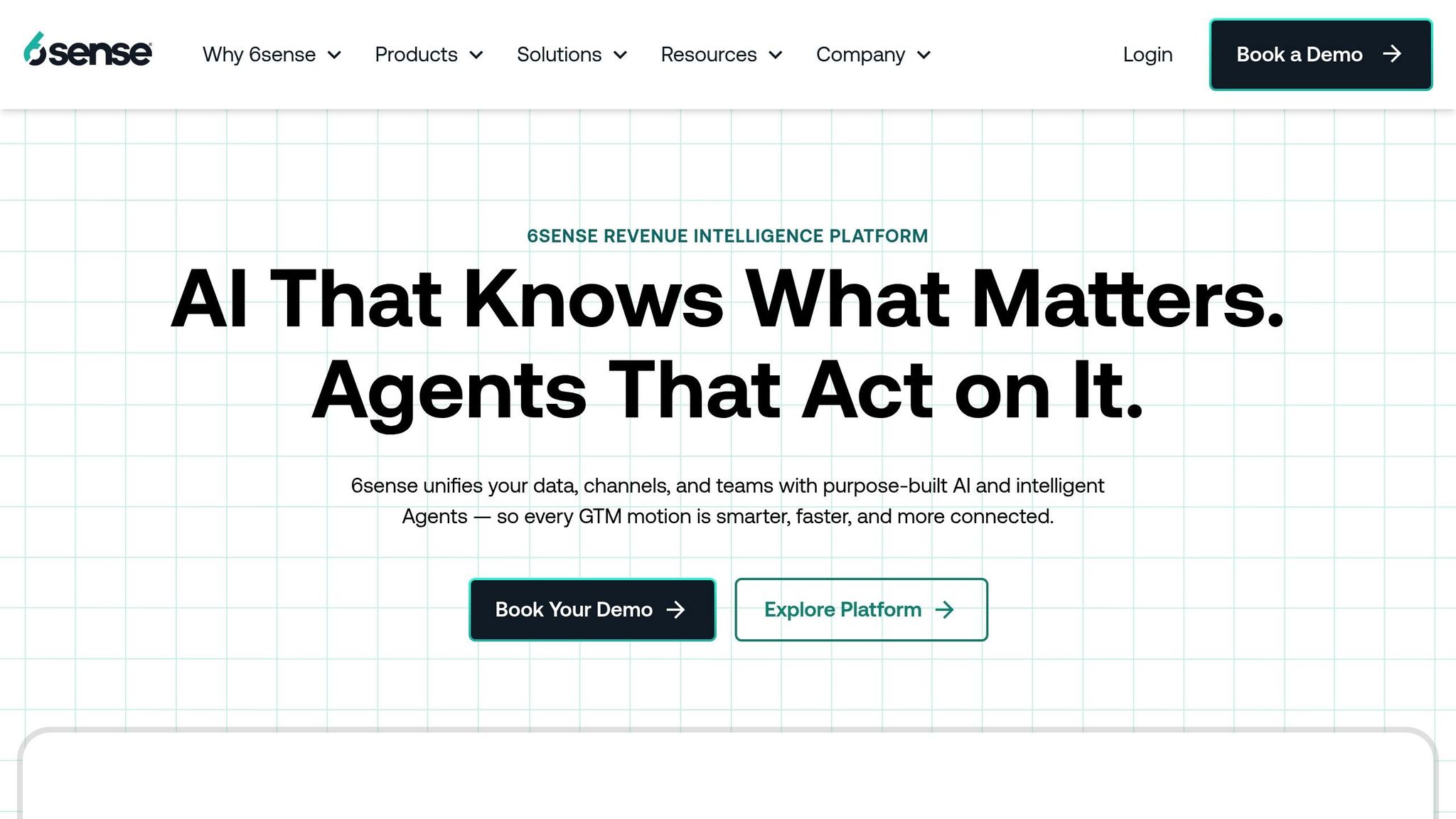
6sense takes a modern approach to lead scoring by using predictive modeling instead of static rules. With machine learning, it creates a dynamic Ideal Customer Profile (ICP) based on historical customer behavior and previous sales cycles. One of its standout features is its ability to track the "dark funnel" - the anonymous research prospects conduct on third-party sites like G2 or TrustRadius. Using its Signalverse data engine, 6sense captures these early buying intent signals long before a prospect fills out a contact form.
This approach significantly boosts accuracy. Traditional manual lead scoring methods typically cap out at 30–40% accuracy, while AI-powered platforms like 6sense can achieve an impressive 80–90% accuracy. In fact, 98% of sales leaders say AI improves lead prioritization. The platform also keeps its contact databases up-to-date, reducing errors and ensuring the data remains actionable. This predictive model sets the stage for highly scalable automation.
Scalability and Automation
6sense simplifies lead scoring with its Intelligent Workflows and 6AI Agents, which automate tasks like email outreach and account prioritization. Unlike systems that primarily depend on CRM data, 6sense digs deeper by analyzing intent signals, anonymous online behavior, and third-party data to uncover patterns that drive successful conversions. Beyond scoring, its automation tools - like Email Agents and Sales Copilots - handle outreach and guide sales teams on which accounts to focus on. This eliminates much of the manual effort involved in updating scoring models and routing leads.
However, 6sense is considered a premium platform, with pricing details not publicly available. This may make it less accessible for smaller businesses.
Integration with Multi-Channel Outreach
6sense excels at integrating intent data across various channels, including advertising, email, and sales intelligence tools. It tracks buying intent through activities like webpage visits, media consumption, demo requests, and form submissions. This data is then used to trigger workflows via its API, ensuring sales and marketing teams stay aligned on lead priorities through real-time scoring.
The platform's Sales Intelligence tools provide alerts and account prioritization features, helping sales reps focus on the most promising prospects at the right time. For teams running campaigns across email and LinkedIn, 6sense offers a competitive edge by identifying high-potential accounts based on anonymous research, rather than relying solely on known contact data. This unified approach reflects a broader trend in AI platforms, where lead scoring is closely tied to multi-channel outreach strategies.
Benefits and Drawbacks
Salesforge, HubSpot, and 6sense each bring their own strengths and challenges to the table when it comes to AI-powered lead scoring. Choosing the right one depends on your company’s size, tech stack, and whether your focus is on inbound marketing, outbound sales, or account-based strategies.
Let’s break down what each platform offers and where they might fall short.
Salesforge stands out with its Agent Frank feature, which automates the entire outbound sales process - from generating leads to booking meetings. At $499/month (annual plan) for handling 2,000+ contacts, it’s a cost-effective solution for small to mid-sized businesses and growing sales teams. The platform also includes Warmforge for email warm-up and built-in email validation to tackle deliverability issues early. However, because it’s specifically designed for outbound prospecting, it doesn’t cover full CRM functionalities. This means you might need to integrate it with other tools to get complete visibility into your sales cycle.
HubSpot, on the other hand, is a solid choice for companies already using its ecosystem. It integrates seamlessly with its Marketing Hub and Sales Hub, offering predictive lead scoring that analyzes both fit and engagement data - no minimum historical data required, which is a big plus for newer businesses. Its visual reporting also helps sales teams understand why certain leads are prioritized. That said, advanced features come with a hefty price tag, starting at $800/month. Additionally, its customization options for scoring criteria may feel limited compared to solutions tailored for larger enterprises. HubSpot works best for teams focused on inbound sales who prioritize ease of use over deep customization.
6sense takes a data-driven approach, leveraging intent data to deliver highly accurate lead scoring - boasting 80–90% accuracy, compared to the 30–40% typical of traditional methods. It continuously updates its data to keep contact information current. However, its custom pricing and focus on sophisticated account-based marketing make it more suitable for mid-market to enterprise-level B2B companies. For smaller teams, it might feel like overkill.
"98% of sales leaders believe AI will improve the prioritization of leads, resulting in increased time efficiency and revenue." - Salesforce State of Sales Report
Across all three platforms, AI tools help mitigate common risks by retraining models regularly and cleaning data. Businesses using these systems have reported a 25% reduction in sales cycle time and a 15% boost in productivity. Ultimately, success depends on selecting a platform that aligns with your strategy, budget, and integration needs, while keeping your data clean to ensure the AI performs at its best.
Conclusion
AI lead scoring has become a game-changer for outbound sales teams. Companies leveraging these tools have reported over a 50% boost in leads and appointments - a statistic that speaks volumes. However, choosing the right platform means carefully weighing factors like cost, functionality, and how well it fits into your existing workflow. Each platform offers distinct advantages, whether it's outbound automation, inbound integration, or intent-driven precision.
Salesforge stands out for outbound-focused teams. With Agent Frank, it streamlines everything from prospecting to meeting bookings, making it ideal for cold emails and multi-channel outreach. However, keep in mind it may require separate CRM integrations. On the other hand, HubSpot is a great choice for teams already invested in its ecosystem, especially those prioritizing inbound marketing. That said, its AI features come with a higher price tag. For enterprise-level teams focused on account-based marketing, 6sense shines with its intent-based scoring capabilities.
The key is to align your tool with your sales strategy. If high-volume cold outreach is your focus, look for platforms with built-in deliverability tools and AI-driven personalization features. Start with higher scoring thresholds and, most importantly, respond quickly - research shows teams that respond within an hour are seven times more likely to have meaningful conversations.
FAQs
How does AI enhance lead scoring compared to traditional methods?
AI takes lead scoring to the next level by ditching outdated, static methods that rely on simple factors like job titles or company size. Instead, it taps into machine learning to analyze real-time engagement signals - things like email opens, website visits, and content downloads - paired with behavioral data. This approach allows AI to constantly learn and refine its predictions, identifying which leads are most likely to turn into customers.
With these smarter insights, businesses can focus their energy on high-potential leads, streamlining their sales process and boosting overall efficiency.
What should businesses consider when choosing between Salesforge, HubSpot, and 6sense for AI-driven lead scoring and outreach?
When choosing between Salesforge, HubSpot, and 6sense, it’s important to weigh three main factors:
- AI capabilities: Salesforge stands out with its AI-driven features, including Agent Frank, which delivers real-time lead scoring by analyzing actions like email opens and website engagement. This allows you to prioritize leads dynamically. Compare this to the AI tools offered by HubSpot and 6sense to determine which aligns better with your sales strategy.
- Outreach channels and automation: Salesforge focuses on large-scale cold email campaigns and is expanding into LinkedIn outreach. It offers AI-personalized messaging, email warm-up, and multi-mailbox management. HubSpot provides an integrated approach, combining email, social media, and CRM workflows, while 6sense emphasizes intent-based account targeting. Decide whether you need a specialized email-first tool or a broader multi-channel solution.
- Cost and scalability: Salesforge offers pricing starting at $80 per month, with advanced plans reaching $499 per month. In contrast, HubSpot and 6sense are generally aimed at larger enterprises and come with higher costs. Consider your budget, team size, and the scale of your outreach efforts when making a decision.
By focusing on these factors - AI capabilities, outreach tools, and pricing - you can identify the platform that best aligns with your sales objectives.
How does Agent Frank from Salesforge use real-time data to rank and prioritize leads?
Agent Frank uses real-time engagement data - like email opens, link clicks, website visits, and content downloads - to continuously evaluate and rank leads. By keeping track of the most recent interactions, it helps you zero in on the most interested prospects, making it easier to prioritize your outreach and close deals more efficiently.