If you take a look around the sales scene these days, you’ll see a clear picture:
Today, inbound vs. outbound sales isn’t really the debate anymore. The real question is how you can combine both without burning your team out or doubling the budget.
In this guide, we’ll summarize what’s changed in 2026 and how you can build a hybrid sales strategy that actually brings the conversions you need.
Long story short:
No matter what you think about each of these approaches, both work. They just do it in their own style. Here is a quick side-by-side comparison to summarize the main differences:
Now that you’ve seen how different outbound and inbound sales are, it becomes obvious: why choose between the two in the first place?
Exactly! You don’t need to choose because it isn’t a battle. Your customers aren’t linear. They might google to find their answers and ignore cold emails. And then, once they might actually answer a cold call and buy. You never know, so you just have to put yourself out there.
Your true sales power lies in the overlap. When combining both tactics, you get the benefits of each and compensate for the downsides of the other.
Everything is shifting lately. And while it seems like more changes are yet to come, we already see some major transformations in sales:
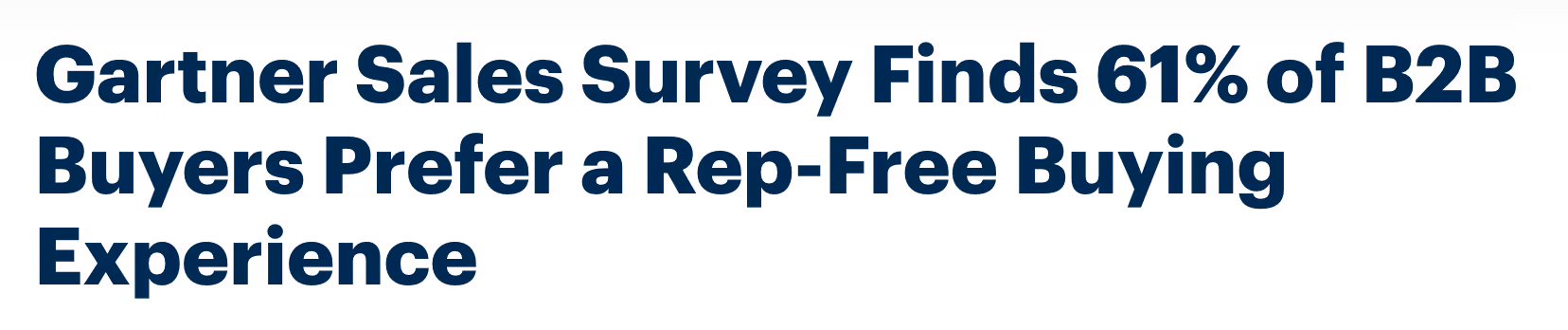
Many users prefer a rep-free buying experience. According to a Gartner study, 61% of B2B clients choose self-service over sellers. Likely, even without this study, you’ve noticed this trend.
AI in sales changes the scene (most definitely). It creates more noise for inbound because you can generate tons of content. And on the outbound side, users get far more cold outreach because of automation, so you have to stand out and be extra relevant.
This is exactly why your sales tactics need to adapt to these changes in an oversaturated space.
It’s time to get more practical. First, let’s see what inbound sales strategies work best in 2026, and how you can easily use them.
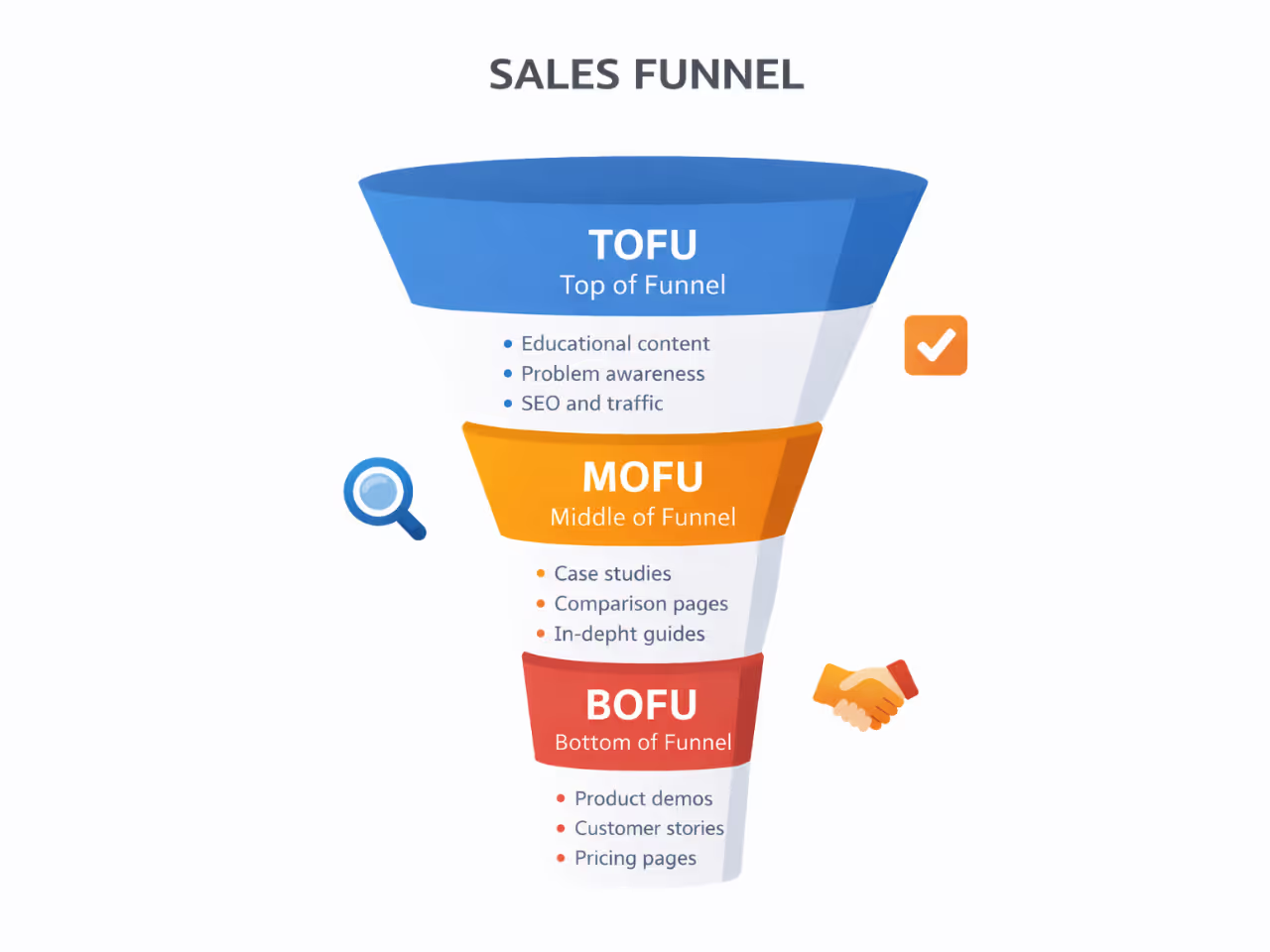
People who consume your content have different needs, and they are also at different stages of their buyer’s journey. That’s why it’s so important to target every stage of the sales funnel. This is how it could look in real life:
It also applies to any content you post outside of your website.
You won’t be seeing quick results if your article distribution is random. So, it’s important to make sure that every brand mention or backlink you get from other websites is relevant to the topic, audience, and stage of their buyer journey.
When it comes to SEO, many focus on keywords alone. Sure, it’s important to target relevant search queries and check their volume and difficulty. But your SEO also has to consider search intent.
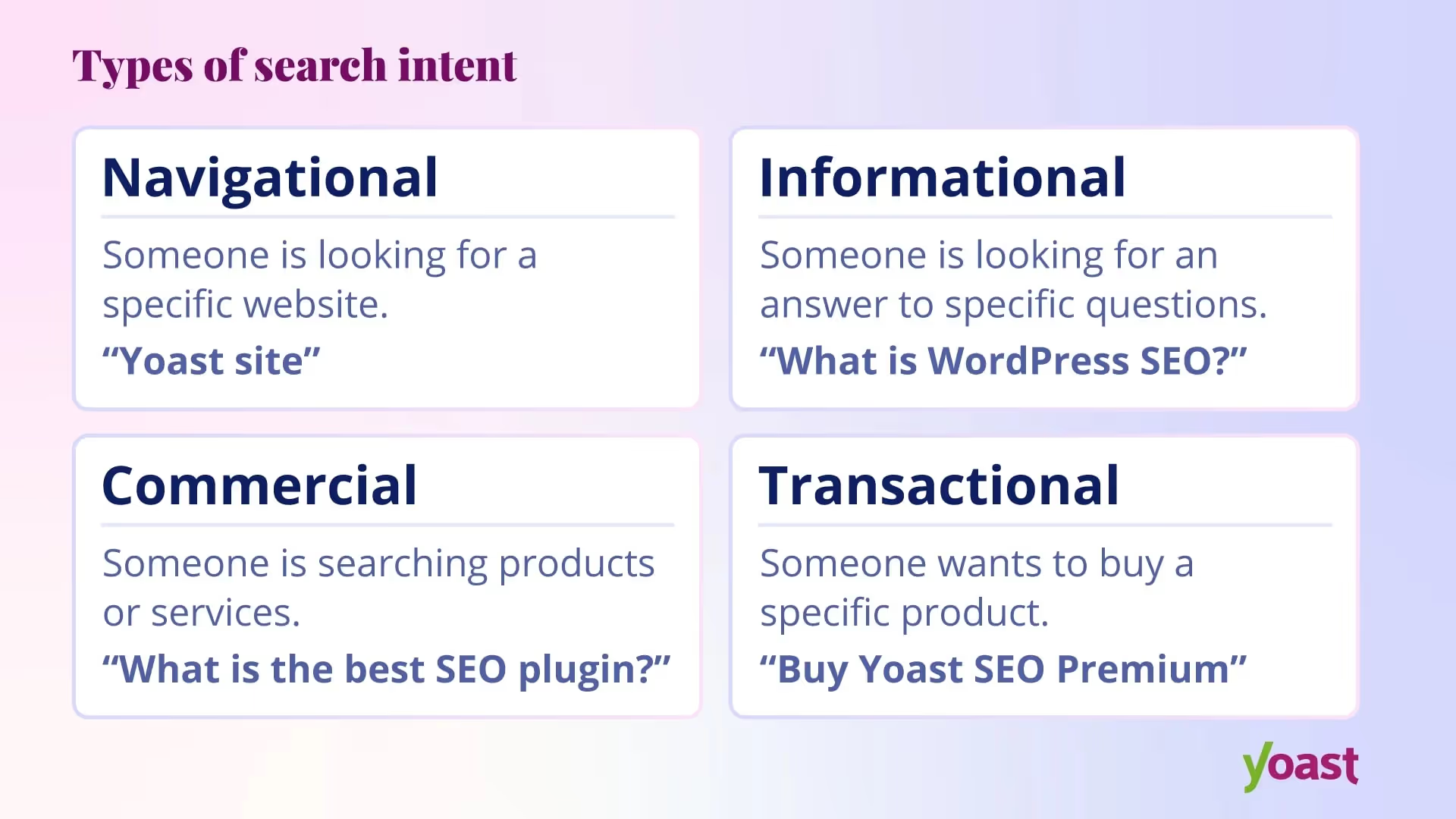
In one form or another, many businesses offer a lead magnet. But a good inbound strategy is to use qualifying lead magnets.
You see, often, companies don’t want to add pricing to their pages or create some highly specific content because they don’t want to “scare off” some website visitors. Yet, the reality is this: you only scare off irrelevant website visitors.
And that’s what a good inbound sales strategy should do. Because why waste your team’s time on someone who won’t convert anyway?
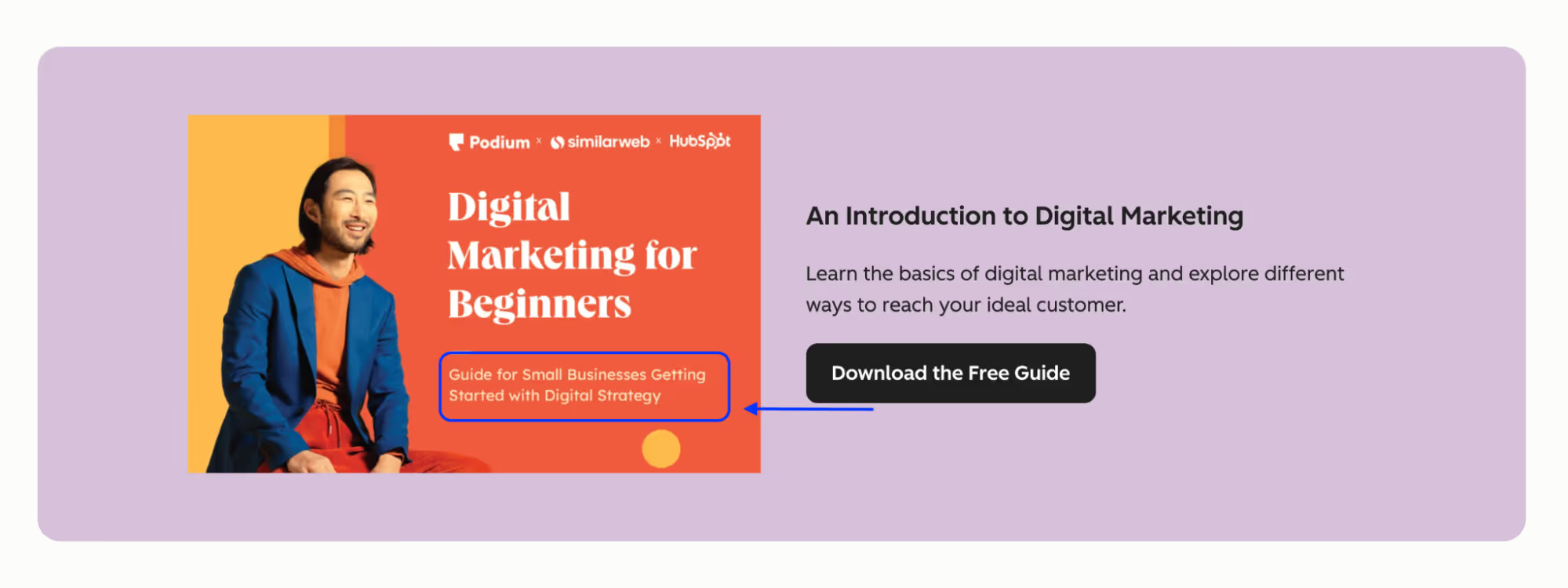
Take a look at this HubSpot example. They offer a guide “for small businesses getting started with digital strategy.” This way, they make it clear that if you’re a junior marketer working in one of the enterprises, this isn’t for you.
Do they lose some people here? Of course, they do. But they also get highly relevant downloads.
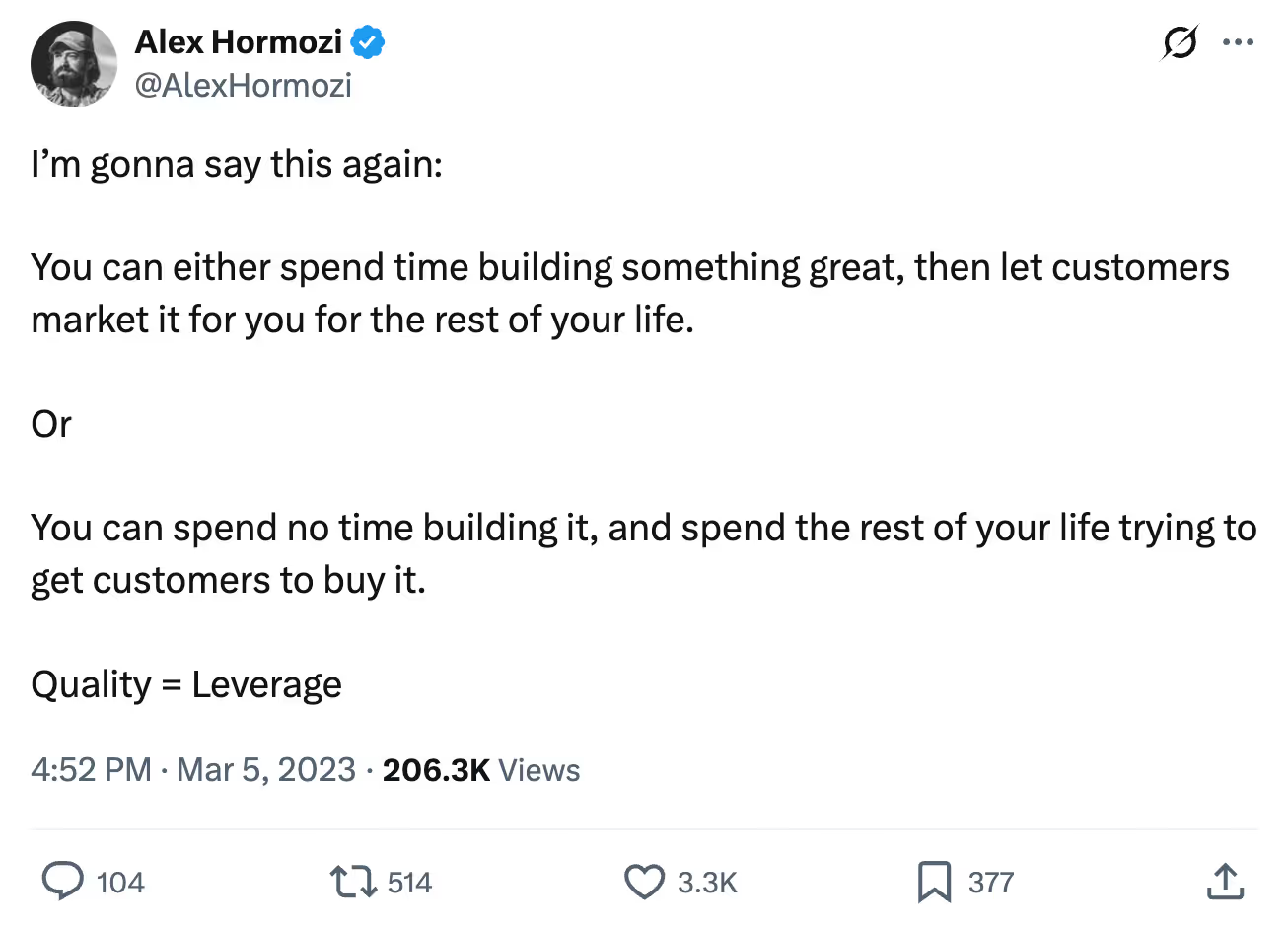
There is this quote by Alex Hormozi that says it all:
Your product is your biggest asset.
And if it’s truly good (and let’s hope it is), the product itself (i.e., freemium models, product demos, free trials, etc.) can become one of your best sales strategies. This is especially true if you know that:
For instance, if you're offering something like a white label website builder, letting prospects see the interface in action can be far more convincing than a slide deck alone.
Sales are usually associated with cold outreach. And there is nothing wrong with that. But your sales will only get stronger when you add nurturing email marketing.
For this to work, you need 3 things:
If all this sounds overwhelming, you can try using AI instead of manual email scheduling. It can really save your team’s time and help with scalability,
What about the outbound sales? What are the tactics that still work and deliver the best results?
Here is one of the biggest misconceptions of outbound sales: the more people you target, the more replies you get.
It’s an illusion.
But emails targeting a clear ICP get 52% higher reply rates. And that’s not an illusion. This is hard data. So, making your outbound sales strategies as relevant to your ICP as possible is one of the best things you can do.
This point aligns perfectly with the previous one. The more informed your outreach is, the more replies and, ultimately, conversions you’ll get.
So, it’s important to track things like:
The idea is simple: use your CRM data for personalized outreach. Buyer signals are what give you the connection with your prospects. And this connection is something most outreach really lacks.
You know how marketers keep telling us to be everywhere. But it isn’t just about going multichannel. It’s about creating a unified experience across platforms.
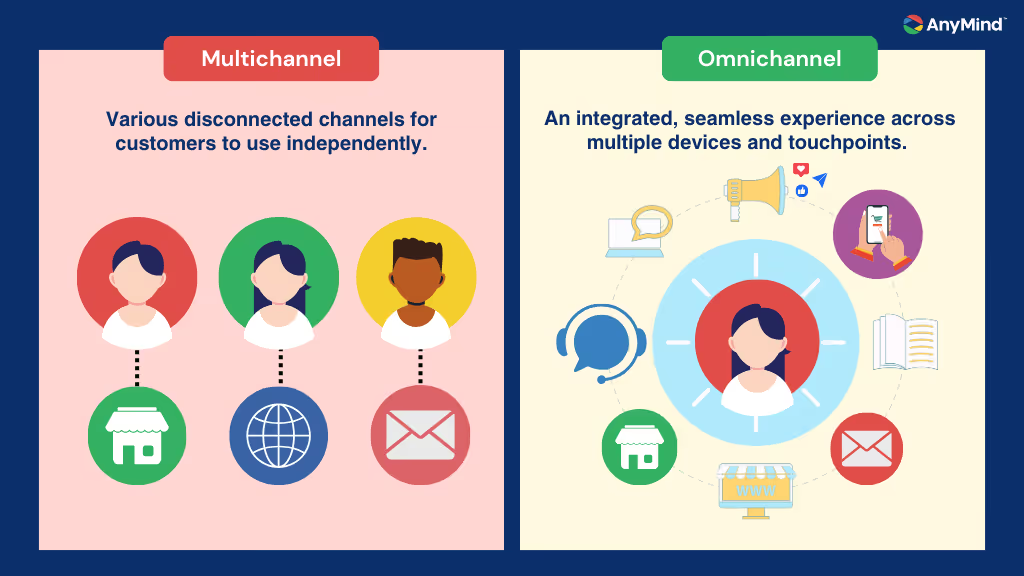
You can start with cross-channel prospecting, but later consider taking it to the next level:
Still, all that needs to have the same style and values. Every communication channel you use should feel like your brand.
These might not be obvious for some businesses, but you can get a much warmer response when you already have something in common.
This one is, really, between inbound and outbound sales strategies. It’s like you’re being introduced to your prospect by someone they already trust. This “someone” could be your:
The way you arrange it will depend on your business type and personal preferences. But when it’s interesting for everyone involved, it works.
There is so much said about follow-ups. But it is for a good reason. Crafting a perfect follow-up email isn’t an easy task. So, as a general rule of thumb, always remember these simple tips:
AI platforms like Salesforge can simplify this process, as they automate and personalize your emails based on recipient actions.
Now that we’ve covered outbound and inbound sales tactics, it’s time to understand how to merge all these into one hybrid marketing strategy. There are 6 essential steps to it:
The topic of this guide highlights how we love to handle prospects by channel or approach. But instead of saying, “Oh, this is inbound, let marketing handle that,” or vice versa, it’s much more effective to build your tactics around buyer intent.
This means focusing on buying signals.
Imagine marketing sees that one of your ICP companies is:
And your sales team knows that they’ve just raised funding and are looking to expand.
When teams exchange this information, your sales reps can reach out, reference those case studies, and explain how this company could benefit from your solution at this expansion stage.
That’s the hybrid approach at its best.
Everything we’ve covered above about the intent is great. But it’s still theoretical. And this is where it gets practical. Look, most likely, you already have some scoring system in place, but is it really hybrid and effective? Do your teams trust it? Well…
So, your main goal here is to create a clear system that helps both marketing and sales evaluate every lead. Ideally, it requires 4 elements:
Different leads need different things. It’s rather obvious.
But we all know how it usually goes in real life: things get messed up, and your marketing and sales try to hunt prospects they really shouldn’t. That’s why you need clear scenarios that both teams know about. For example:
All the data your marketing team has can be a real game-changer for sales. When they see who opens newsletters, who downloads lead magnets, and who visits your website regularly, they can make their communication more relevant.
And this is usually a “trick” for successful outreach.
Ideally, you want to make this work both ways. So, as much as possible, encourage collaboration between your marketing and sales teams. Maybe they could benefit from:
Often, when a lead comes through inbound, they already have a very specific perception of your brand. If your sales team doesn’t communicate the same ideas and tone, it only creates confusion.
Once you develop a positioning strategy, Roketto recommends getting all teams aligned. Because no matter their role, everyone should understand how your business wants to present itself to the world.
Inbound vs. outbound sales isn’t a competition. It’s a collaboration. And the way your business operates has to highlight that.
So, try to arrange the following.
Here, though, you have to be careful not to overdo it because it might get overwhelming.
Your sales team doesn’t need to know about Facebook optimization or guest blogging sites marketing picks for their next SEO campaign. Similarly, marketing can perfectly live without knowing every cold-call script variation or how many follow-up emails your sales rep sends.
A hybrid sales-marketing strategy is far from micro-management. It’s much more about context and shared goals. And this is what can really move everything forward.
It might seem like outbound and inbound sales are two different worlds. But that only happens until you connect them and see the benefits it brings.
Besides, once you encourage both teams to collaborate, you might be surprised by how much they really appreciate all the insights they get. Still, be prepared that the organizational part will likely take more time and effort than expected.
It depends. Most startups rely more on the outbound strategies because they produce faster results. But it’s best to add at least some targeted inbound strategies from the very beginning.
Normally, you don’t need any additional tools if you already do outbound and inbound sales. So, it often comes down to:
Treating inbound and outbound as two separate things. As simple as that. If you want your sales and marketing to be truly effective, you have to lean into the hybrid approach.
.jpg)