Personalized Outbound Strategy
Get The Right Outbound Strategy In Minutes
Enter your email to get a custom plan & stack recommendation for your business
It's being carefully crafted by AI
Please check your mailbox in 5 minutes
Getting clients for a staffing agency is much harder now than it was a few years ago. Most hiring managers already receive hundreds of recruiter emails, LinkedIn messages, and cold calls every month. The problem is that most agencies say the exact same things:
That type of outreach rarely works anymore. What actually gets replies today is relevance. For example, if a company has just raised funding, is hiring SDRs aggressively, or keeps reposting the same engineering role for weeks, there is a strong chance they need external hiring help.
Agencies that use these hiring signals in their outreach usually perform much better than agencies sending generic recruiter pitches.
I recently noticed this while reviewing outbound campaigns from smaller recruitment firms. The agencies that were getting meetings were not sending more emails.
They were targeting better companies, personalizing outreach around active hiring roles, and focusing on one niche instead of trying to recruit for every industry.
That is why getting staffing and recruitment clients in 2026 is less about mass outreach and more about timing, positioning, and targeted prospecting.
In this guide, you will learn 5 proven ways staffing agencies are getting clients today, including cold email outreach, LinkedIn prospecting, hiring signal tracking, referrals, SEO, and niche positioning.
Getting clients for a staffing agency has become much harder because hiring managers already receive too many recruiter pitches every week. Most agencies send the same type of outreach without any real context about the company’s hiring situation, which makes their messages easy to ignore.
Another major problem is poor targeting. Many staffing agencies contact companies without checking whether they are actively hiring, struggling to fill roles, or even relevant to their niche. But companies that:
They are usually far more likely to need external hiring support.
A lot of agencies also try to recruit for every industry instead of building expertise in one area. But companies usually prefer recruiters who already understand their hiring market, candidate availability, salary benchmarks, and role requirements.
Many staffing agencies also rely too heavily on referrals. While referrals help, they usually do not create a predictable client acquisition system. Without consistent outbound prospecting and follow-ups, growth becomes difficult.
Another thing agencies underestimate is online credibility. Before replying, hiring managers often check:
If your agency looks too generic online, it becomes harder to stand out from competitors. That is why staffing agencies getting clients consistently in 2026 are focusing more on niche specialization, personalized outreach, hiring intent signals, and structured outbound systems instead of mass outreach.
Most staffing agencies get clients from the same few channels repeatedly: cold outreach, referrals, LinkedIn, and hiring intent signals. The difference is that successful agencies use these channels with better targeting and stronger positioning instead of sending mass recruiter pitches to random companies.
Here are 5 client acquisition strategies staffing agencies are actively using in 2026.
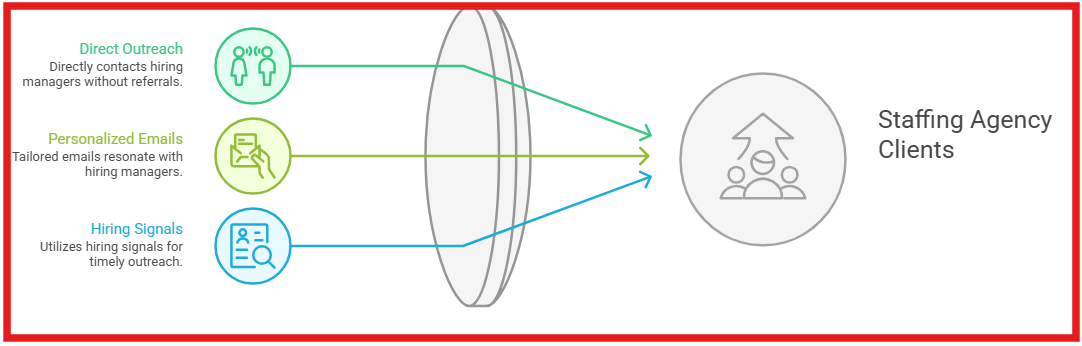
Cold email is still one of the most effective ways for staffing agencies to get clients because it allows you to directly reach hiring managers, founders, and HR teams without waiting for referrals or inbound leads.
But most staffing agencies fail with cold outreach because their emails sound too generic, for example, like “We provide top talent” or “We can help you hire faster,” which usually get ignored.
What actually works now is sending outreach based on real hiring situations inside the company.
For example, if a startup recently raised funding, is expanding its sales team, or keeps reposting the same engineering role, there is a strong chance they need hiring support urgently.
Outreach around these hiring signals usually gets much better response rates because it feels relevant and timely. Many staffing agencies also use AI recruiting software to quickly identify qualified candidates before reaching out.
Start by finding companies that are actively hiring within your niche instead of sending emails to random businesses. You can use Leadsforge.ai to track these signals and focus on building a targeted lead list of:
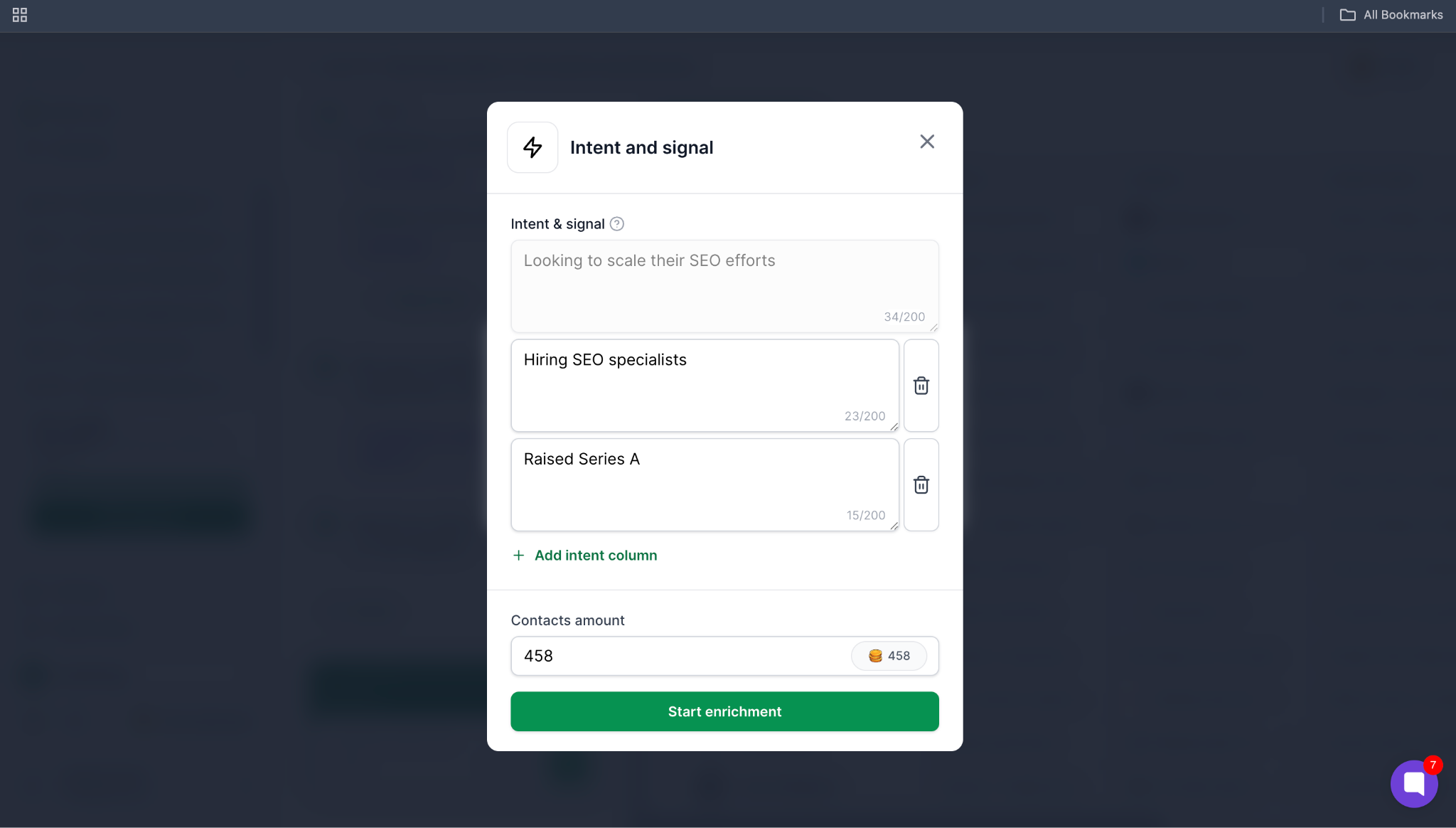
Once your lead list is ready, you can use Salesforge to send personalized cold emails on autopilot.
Note: Keep your emails short and conversational. Long recruiter pitches usually perform poorly because hiring managers skim emails quickly.
Follow-ups are equally important. Most staffing agencies lose opportunities because they stop after one email. Consistent follow-ups over a few days usually increase reply rates significantly.
Bonus Tip: Do not try to sell your staffing agency in the first email. Your goal should be to start a conversation around the hiring role they are struggling to fill. Here’s a quick example:
Hi [First Name],
I noticed your team is actively hiring for [role] positions.
We recently helped a similar SaaS company fill 7 outbound sales roles in under 3 weeks and thought this might be relevant to your hiring plans.
Open to a quick conversation sometime this week?
Best,
[Your Name]
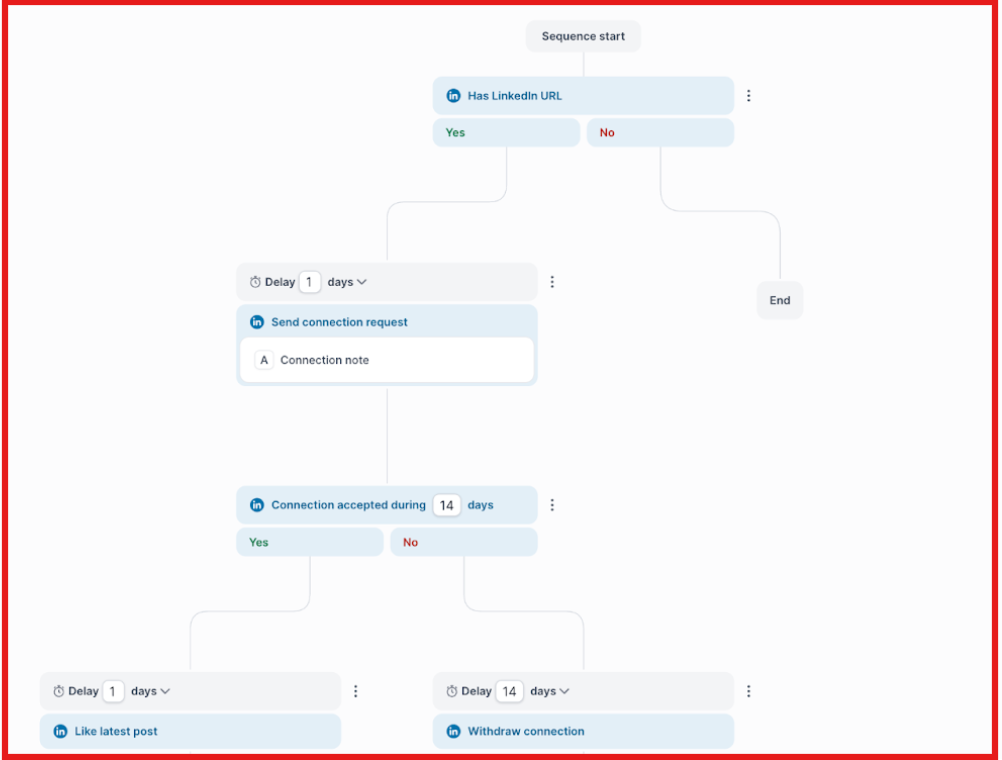
LinkedIn works well for staffing agencies because it helps you identify companies actively hiring and directly reach the people responsible for those hires.
For example, if a SaaS startup founder posts, “We are hiring 15 SDRs this quarter”, that is a much stronger prospect than randomly messaging companies with no visible hiring activity. Similarly, if a VP of Engineering posts about slow hiring pipelines or candidate shortages, that usually signals active recruitment pressure internally.
This is where LinkedIn becomes valuable for staffing agencies. It gives you access to hiring signals, hiring managers, company growth updates, recruiter activity, and expansion announcements all in one place.
You should start by searching for companies within your niche that are actively hiring. Then identify:
Again, you can use Leadsforge to track all these and build a strong, verified lead list.
Instead of sending immediate recruiter pitches, first engage with hiring-related activity. For example:
Your outreach should feel connected to an actual hiring situation, not random prospecting.
Bonus Tip: You can use Salesforge to combine LinkedIn prospecting with email outreach sequences. This helps recruiters engage prospects across multiple touchpoints instead of depending on only one channel.
One of the biggest mistakes staffing agencies make is trying to recruit for every industry and every role. A company hiring SDRs for a SaaS startup has very different hiring needs compared to a hospital hiring nurses or a manufacturing company hiring plant workers.
When an agency tries to serve everyone, it becomes difficult for companies to see them as experts in any one area. That is why niche staffing agencies usually grow faster. For example, a recruiter focused only on tech hiring understands:
much better than a general recruitment agency. The same applies to healthcare, finance, logistics, or executive hiring.
You must begin by identifying:
Then build your positioning around that niche. For example:
This makes your outreach, LinkedIn profile, website, and client conversations much stronger because companies immediately understand what you specialize in.
A lot of staffing agencies rely completely on outbound outreach to get clients. The problem is that once outreach stops, lead flow slows down too.
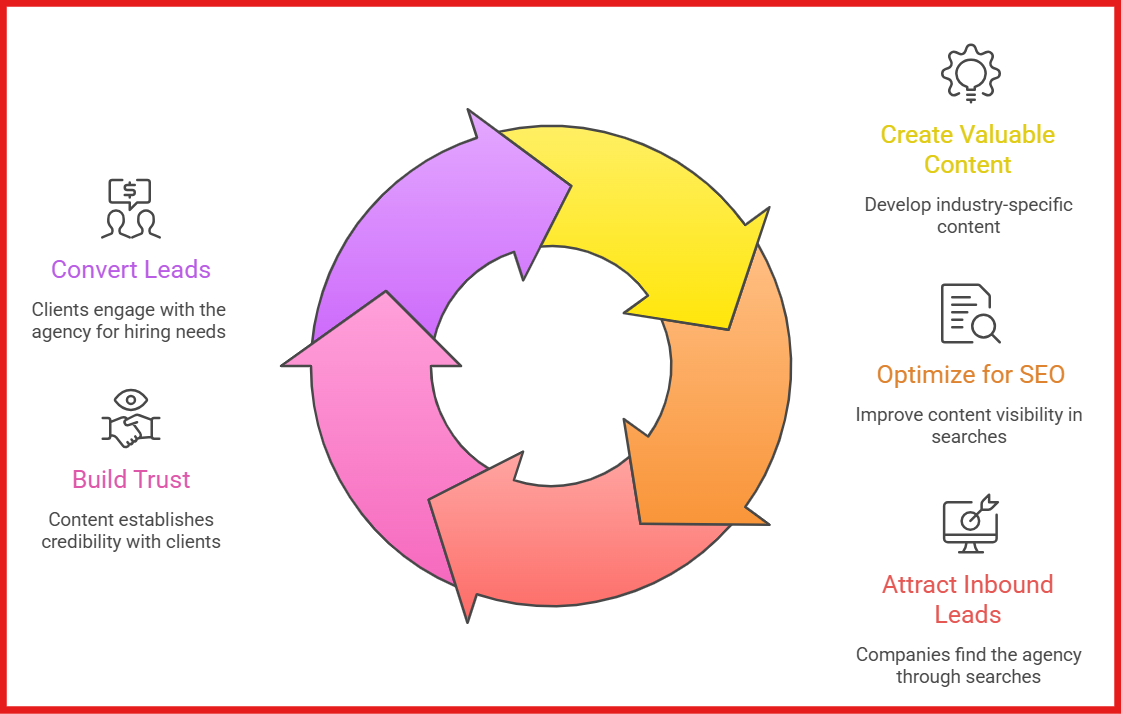
That is why many recruitment agencies are now investing in SEO and content marketing to generate inbound leads consistently.
Companies already search Google for recruiters and staffing agencies when they urgently need hiring help.
For example, a startup hiring SDRs may search for a SaaS sales recruitment agency, while a healthcare company may look for recruiters specializing in nurse staffing.
If your agency appears during these searches, you start attracting companies already looking for hiring support instead of manually chasing every lead.
Content also helps build trust faster. Before replying, many hiring managers check your website, LinkedIn, hiring insights, and case studies to understand whether your agency actually knows their industry and hiring challenges.
You should start by creating content around the hiring problems companies in your niche already face. This can include salary benchmarks, hiring trends, candidate shortages, or common hiring mistakes within your industry.
Your website should also clearly explain:
This makes it easier for companies to understand whether your agency is relevant to their hiring needs. Niche hiring content usually attracts better staffing leads than broad recruitment content because it speaks directly to a specific hiring problem.
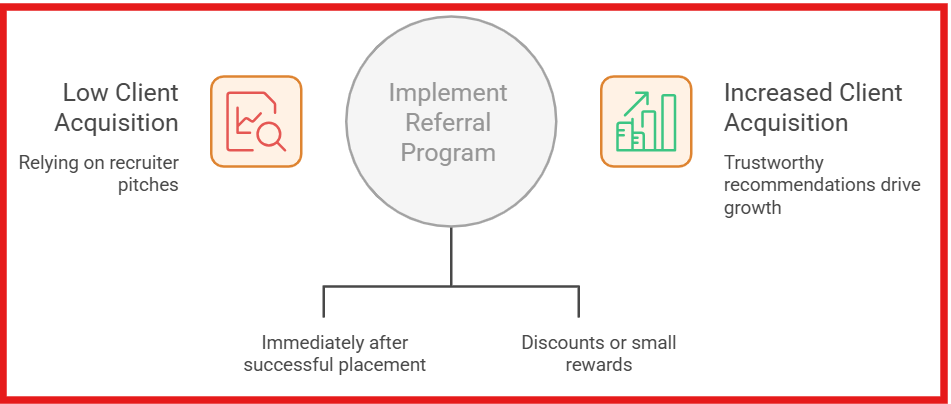
Referral marketing is still one of the best ways to get staffing clients because companies trust recommendations much more than recruiter pitches. In fact, many staffing agencies get their highest-paying clients through referrals from founders, HR leaders, or previous clients.
Instead of waiting for referrals to happen naturally, growing staffing agencies actively encourage happy clients to recommend them to other companies. For example, if you helped a SaaS startup close SDR roles quickly, there is a strong chance that founder knows other startups hiring for similar positions too.
The best time to ask for referrals is immediately after a successful placement, when the client is happy with the hiring results. Instead of asking, “Can you refer us to someone?”, ask something more specific like, “Do you know any other startups currently hiring SDRs or AEs?” You can also offer referral incentives like discounts on future placements or small rewards for successful introductions.
Before working with a staffing agency, most companies want to know whether the recruiter actually understands their hiring challenges and can close roles efficiently. Generic claims like “we provide top talent” usually do not build much trust anymore.
Here are some of the biggest things companies usually evaluate before choosing a staffing or recruitment agency:
The best way for staffing agencies to get clients is by targeting companies already facing hiring pressure.
For example, if a company keeps reposting SDR or engineering roles for weeks, expands hiring after funding, or suddenly opens multiple positions together, there is a strong chance they need external hiring support. Outreach around these situations usually performs much better than generic recruiter pitches because it connects directly to an active hiring problem.
That is why cold outreach still works very well for staffing agencies, especially when combined with LinkedIn networking, referrals, and niche positioning. Many recruitment agencies now use platforms like Salesforge to identify hiring signals, manage outbound campaigns, and automate follow-ups while keeping outreach personalized.
Enter your email to get a custom plan & stack recommendation for your business
Please check your mailbox in 5 minutes
Getting clients for a staffing agency in 2026 is no longer about sending mass recruiter pitches and hoping for replies. Companies already receive too many generic outreach emails every week, which is why relevance and timing matter much more now.
The staffing agencies growing consistently are usually the ones focusing on companies with real hiring demand, building expertise in a specific niche, and creating repeatable outbound systems instead of depending only on referrals.
Cold email outreach still remains one of the fastest ways to get staffing clients because it allows you to directly reach hiring managers already struggling to fill roles. But outreach works much better when it is personalized around actual hiring situations instead of generic recruiter messaging.
At the same time, channels like LinkedIn, referrals, SEO, and hiring signal tracking help staffing agencies stay visible and build trust over time. The goal is to consistently reach the right companies at the right time with the right context.
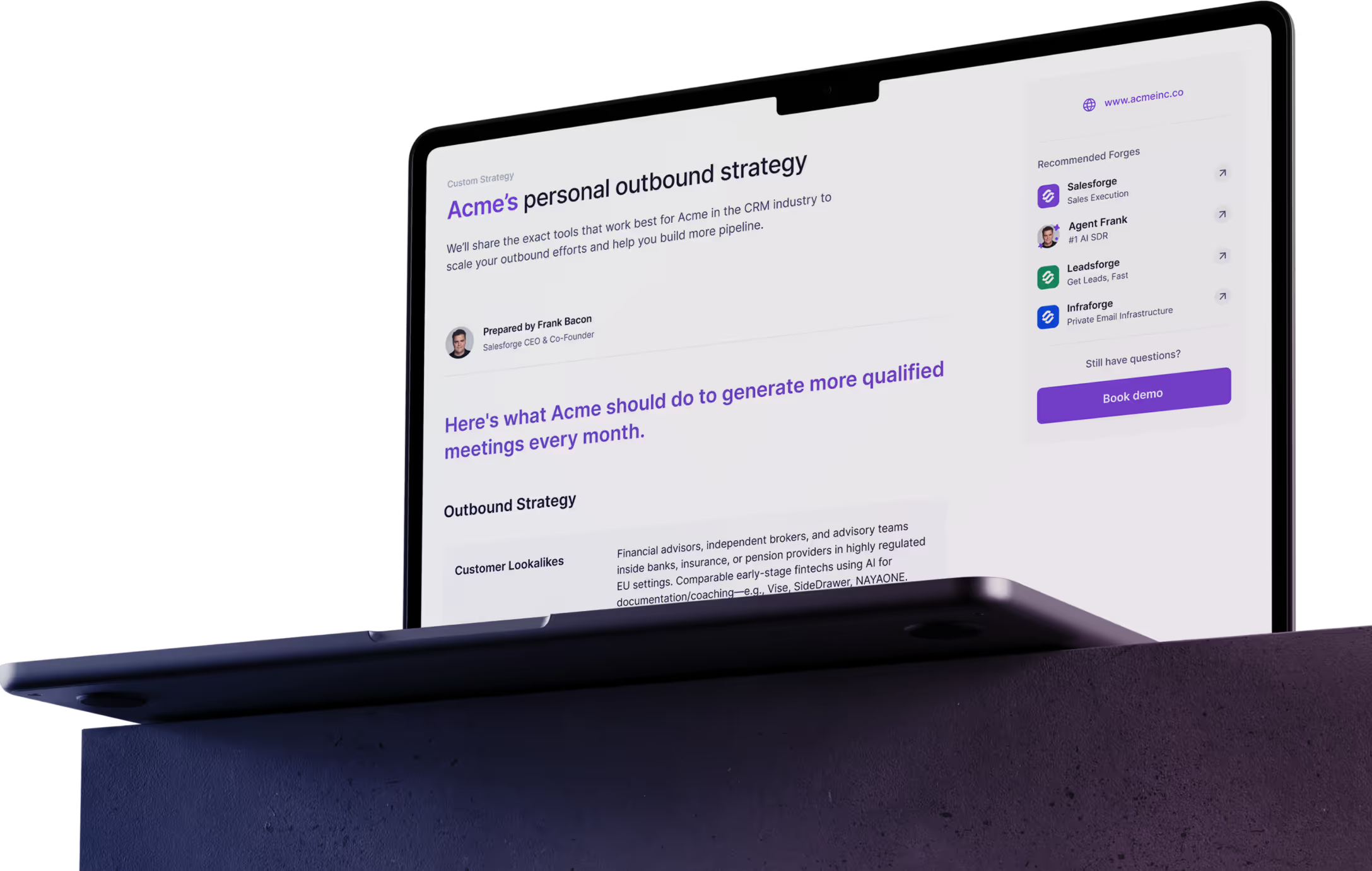
And if you want to scale personalized outbound prospecting without manually handling every follow-up, platforms like Salesforge can help staffing agencies run cold outreach campaigns, automate follow-ups, and build a more predictable client pipeline.
.jpg)