Personalized Outbound Strategy
Get The Right Outbound Strategy In Minutes
Enter your email to get a custom plan & stack recommendation for your business
It's being carefully crafted by AI
Please check your mailbox in 5 minutes
If you are searching for Topo.io SDR alternatives, you are likely asking a simple question.
Is Topo.io enough for outbound, or do you need a tool that runs more of the SDR job?
I tested Topo.io in real outbound workflows.
I also compared other AI SDR tools that teams use when outbound volume grows.
Topo.io is strong at helping you find leads faster and reduce list work.
It is not built to run the full SDR loop end to end.
This article breaks down five Topo.io SDR alternatives based on what matters in daily outbound.
If you want the quick answer, here is what I found.
Topo.io works well when the main problem is lead discovery and signal-based prospecting.
Most teams switch when they need replies, warm-up, and bookings handled in one place.
Topo helps answer who to contact.
Scaling outbound creates different problems.
These are the usual reasons teams look elsewhere.
This is where many teams outgrow research-first setups.
They start wanting a system that runs outreach, not just planning.
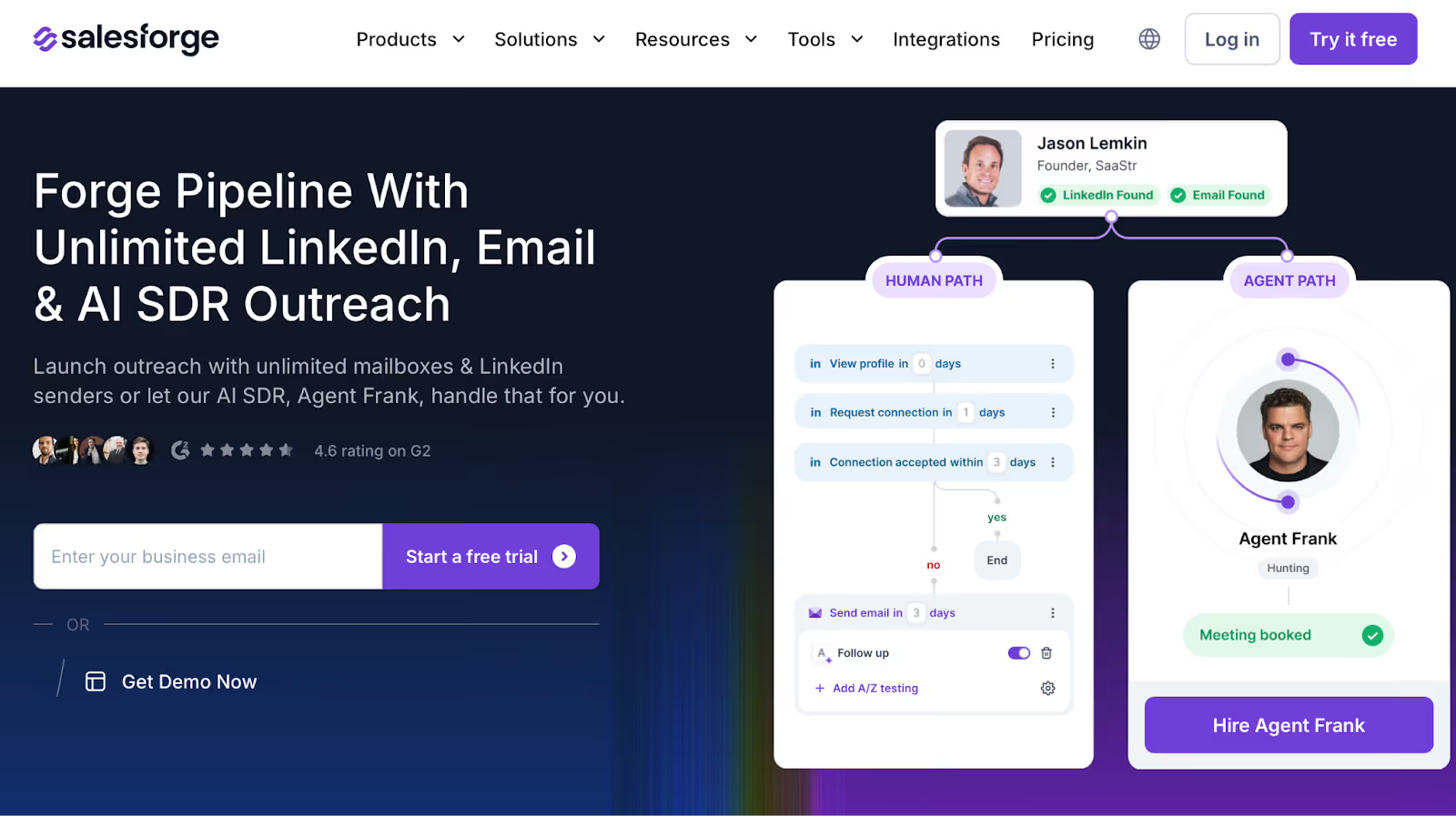
When I needed a tool that could run outbound end-to-end, Salesforge fit better than Topo.io.
Topo helped me find leads faster.
Salesforge helped me run the whole motion daily.
Salesforge is built for multi-channel outreach.
Email and LinkedIn sequences run from one platform.
Agent Frank is the AI SDR inside Salesforge.
I treat him like an SDR teammate, not a feature.
What I found in real use case
Once I set an ICP, Agent Frank could keep prospecting.
That reduced time spent on list work.
Once I added a Knowledge Base, messaging stayed accurate.
It stopped sounding like generic outreach.
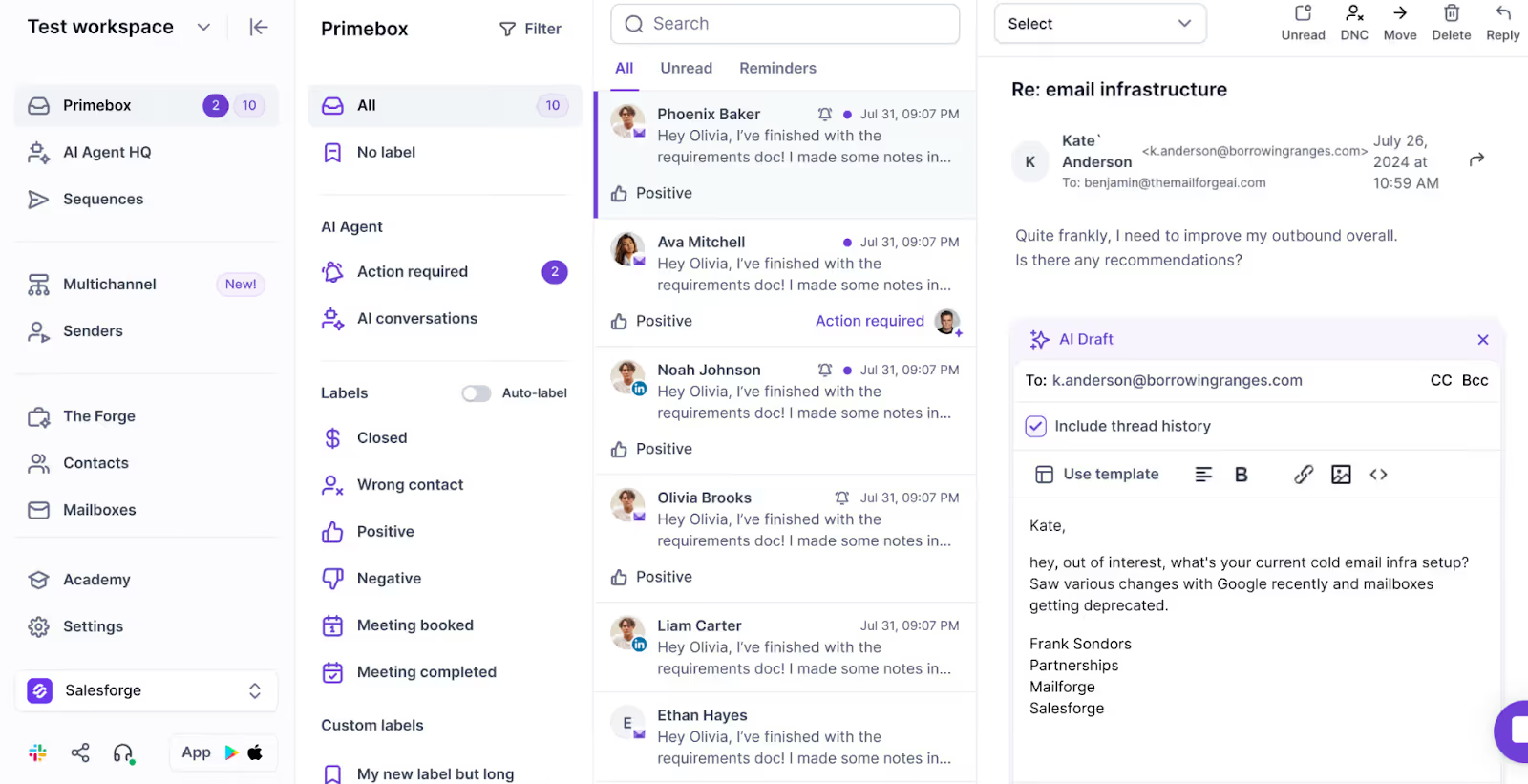
Replies landed in Primebox.
That mattered once I had more senders running.
Warm-up ran through Warmforge.
That removed a lot of manual deliverability work.
When I needed leads, I pulled them from Leadsforge.
Then I sent sequences through Salesforge without extra exporting.
This “find → warm → send → reply → book” loop felt connected.
That is the main difference I felt day to day.
Topo.io is strongest at lead discovery and outbound organization.
Salesforge is built to run the workflow after lead discovery.
Salesforge covers:
Topo.io does not try to be that system.
It solves a different part of outbound.
Salesforge fits best when outbound is a core growth channel.
It also fits agencies running many campaigns across many senders.
If you want a simple way to start, I would begin with a small ICP slice.
Then scale only after reply quality looks stable.
Enter your email to get a custom plan & stack recommendation for your business
Please check your mailbox in 5 minutes
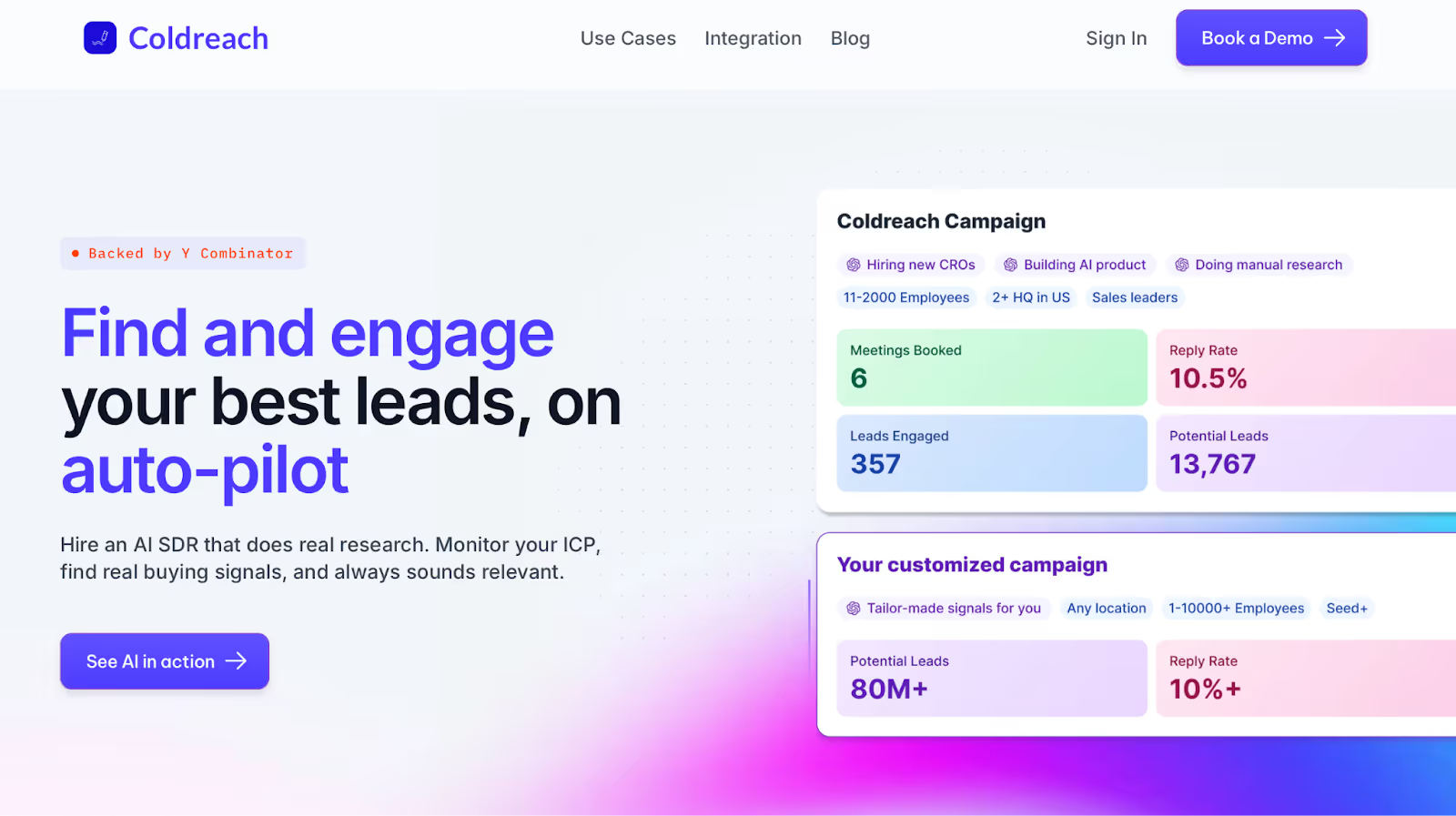
When I tested Coldreach, the biggest difference I noticed was how much it leans into buying signals and timing.
It is built around the idea that outbound works better when you reach people right after something changes.
Coldreach positions its AI SDR as a research engine first.
It monitors millions of companies and looks for triggers you define as “intent” for your product.
Once a signal hits, Coldreach personalizes outreach based on that signal.
This makes messages feel less random than static list outreach.
Topo.io helps with lead discovery and outbound planning.
Coldreach goes deeper into when to reach out.
Coldreach is stronger when:
Topo.io surfaces signals and leads.
Coldreach ties those signals directly to message creation and sending.
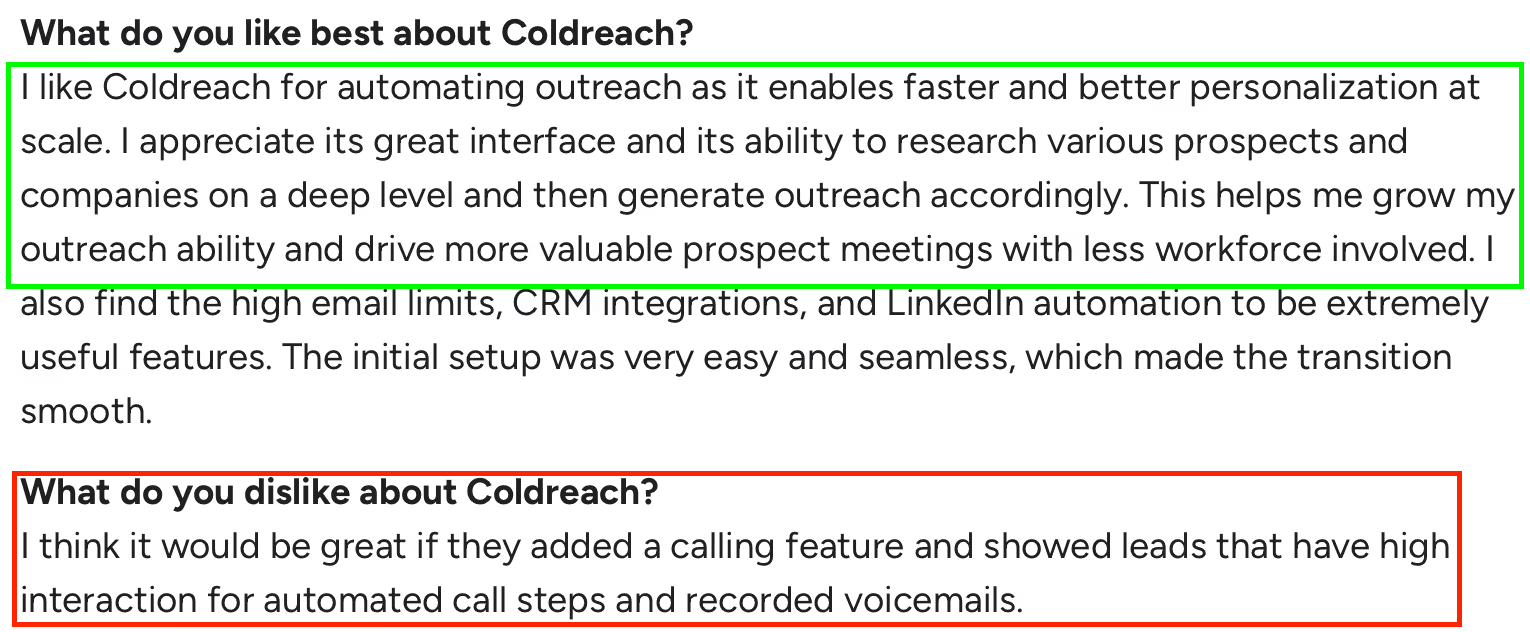
Coldreach fits teams that sell into markets where timing changes outcomes.
It also fits solo founders who want research, writing, and sending in one tool.
If your biggest bottleneck is finding the right moment to reach out, Coldreach does that well.
If your bottleneck is running replies, inbox warm-up, and multi-channel execution at scale, you will still need a stronger execution layer.
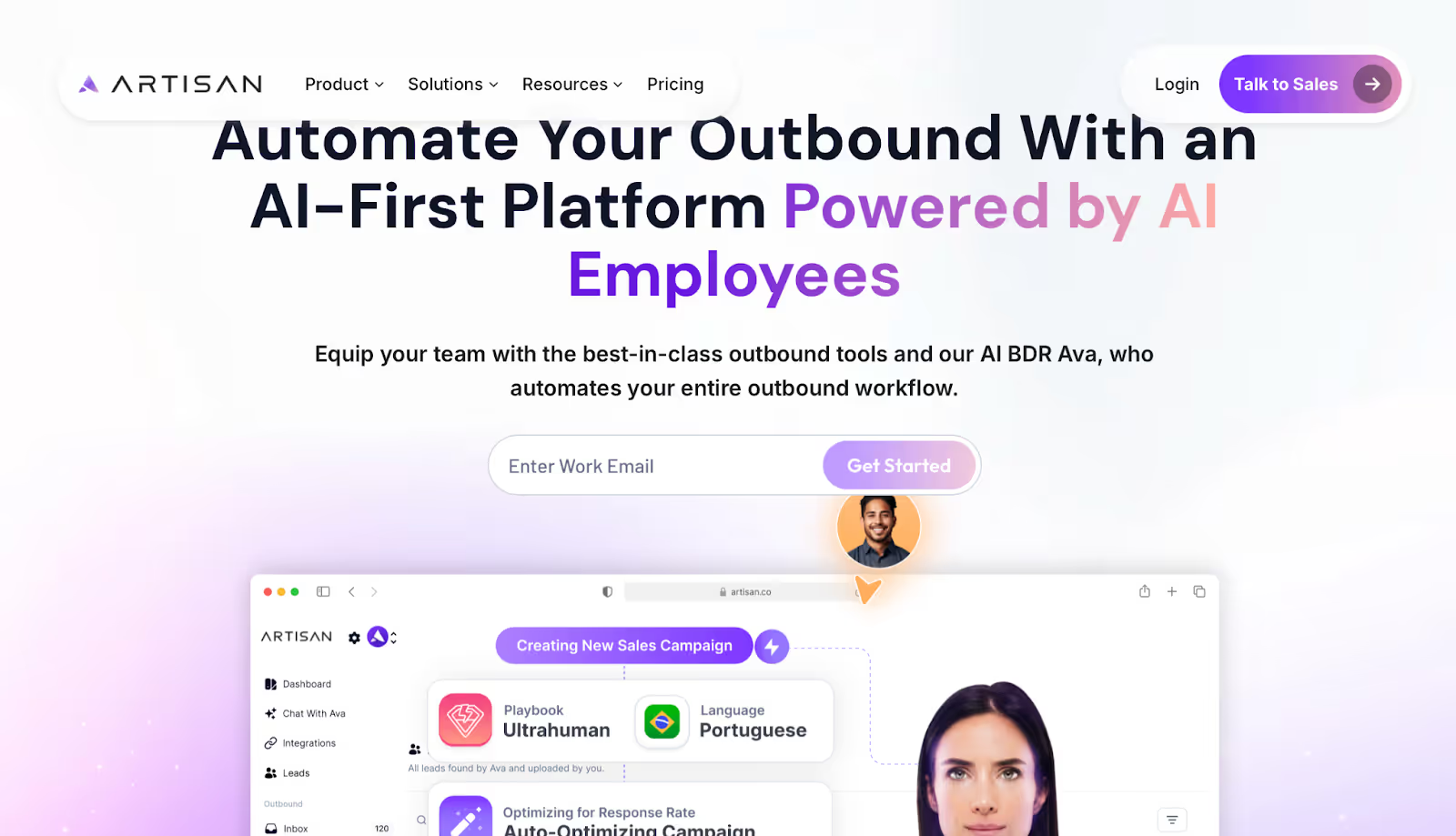
When I tested Artisan AI, the first thing I noticed was how much it tries to bundle outbound into one platform.
Artisan positions Ava as an AI BDR who handles prospecting, research, writing, and sending.
The product leans into consolidation.
Lead data, intent signals, email warm-up, and sequences live in one place.
This can feel attractive if your current stack is spread across many tools.
Artisan’s pitch is clear: reduce tool switching and let Ava run more of the busy work.
Topo.io helps with lead discovery and outbound planning.
Artisan tries to run outbound from lead to send inside one system.
Artisan fits better when:
Topo.io does not try to manage warm-up or sending.
Artisan takes on more of that execution layer.
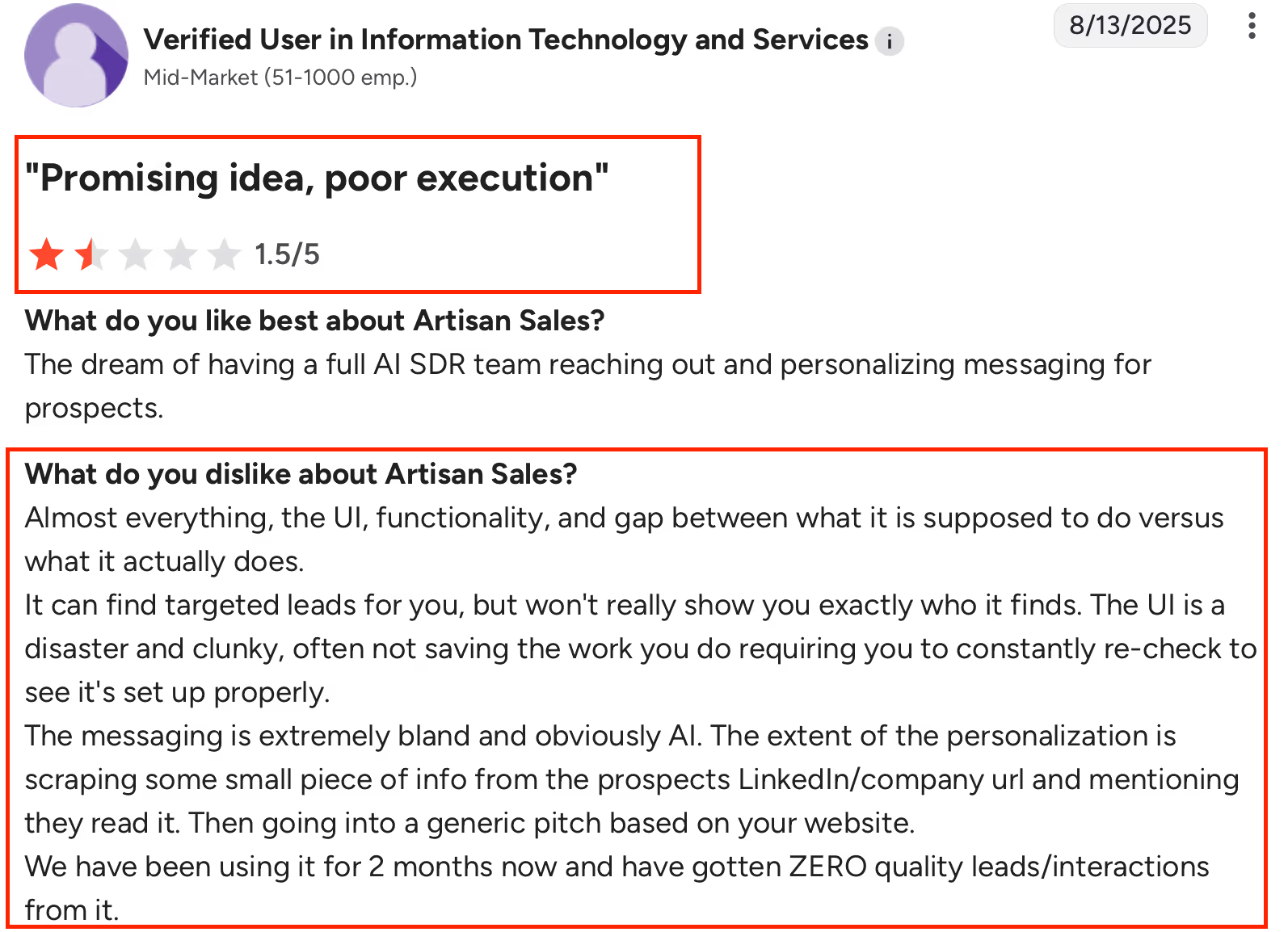
Artisan AI fits teams that want to launch outbound quickly without building a stack.
It also fits teams that value support and guided setup over deep control.
If your main pain is managing too many tools, Artisan simplifies the surface area.
If your main pain is controlling replies, scaling inboxes, and running multichannel flows with more tuning, you may want a stronger execution layer as volume grows.
3 Tested Artisan AI Alternatives For Email Outreach in 2025
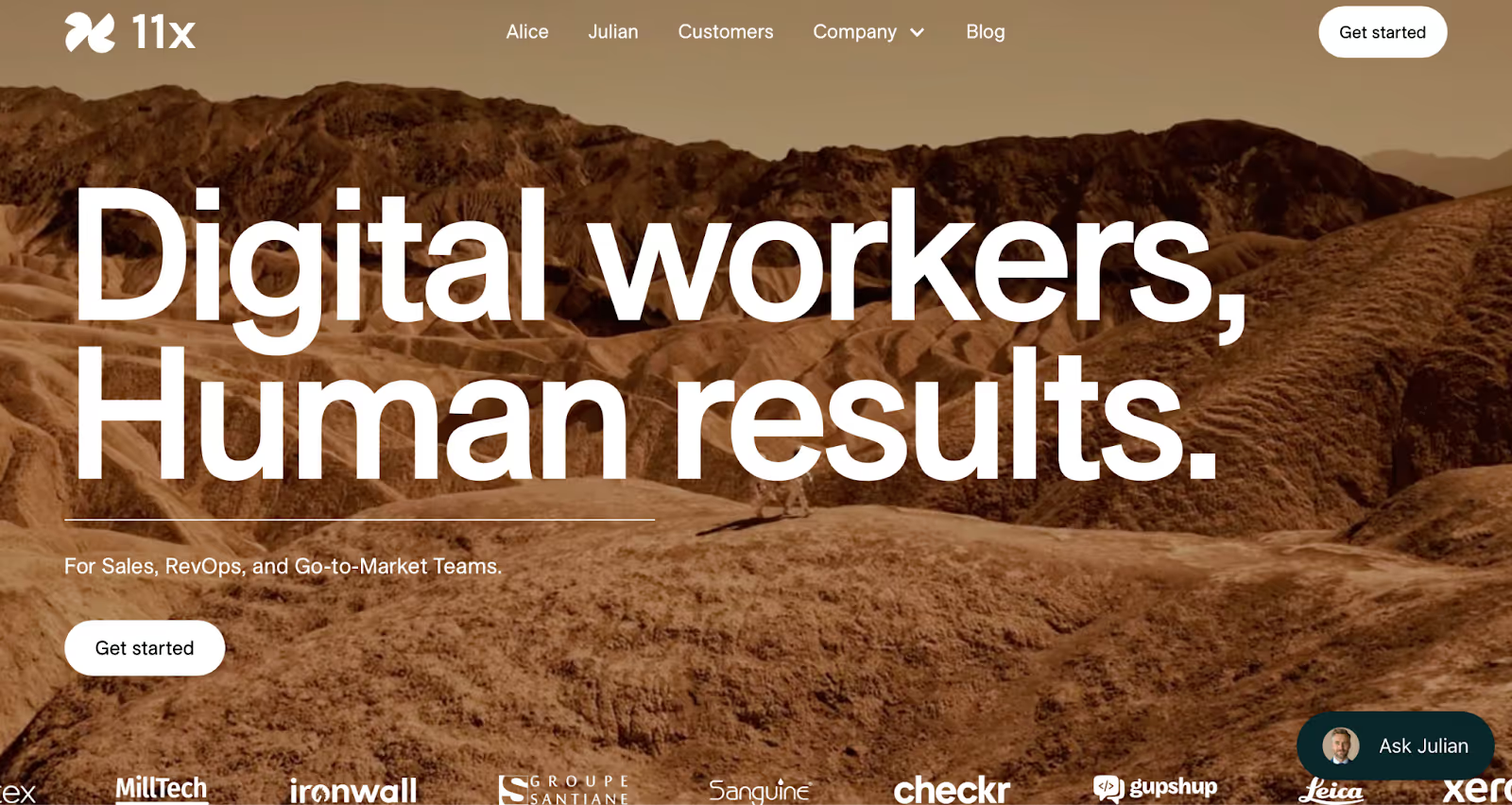
When I tested 11x.ai, the main difference I felt was the agent model.
Instead of one AI doing everything, 11x.ai splits work across digital workers.
Alice handles outbound SDR work.
Julian handles phone calls and inbound conversations.
This setup is built for teams that want fast coverage across channels.
It leans into the idea of a 24/7 digital workforce.
Topo.io helps with lead discovery and outbound planning.
11x.ai focuses more on running outreach through agents.
11x.ai fits better when:
Topo.io does not manage sending or calls.
11x.ai goes further into execution.
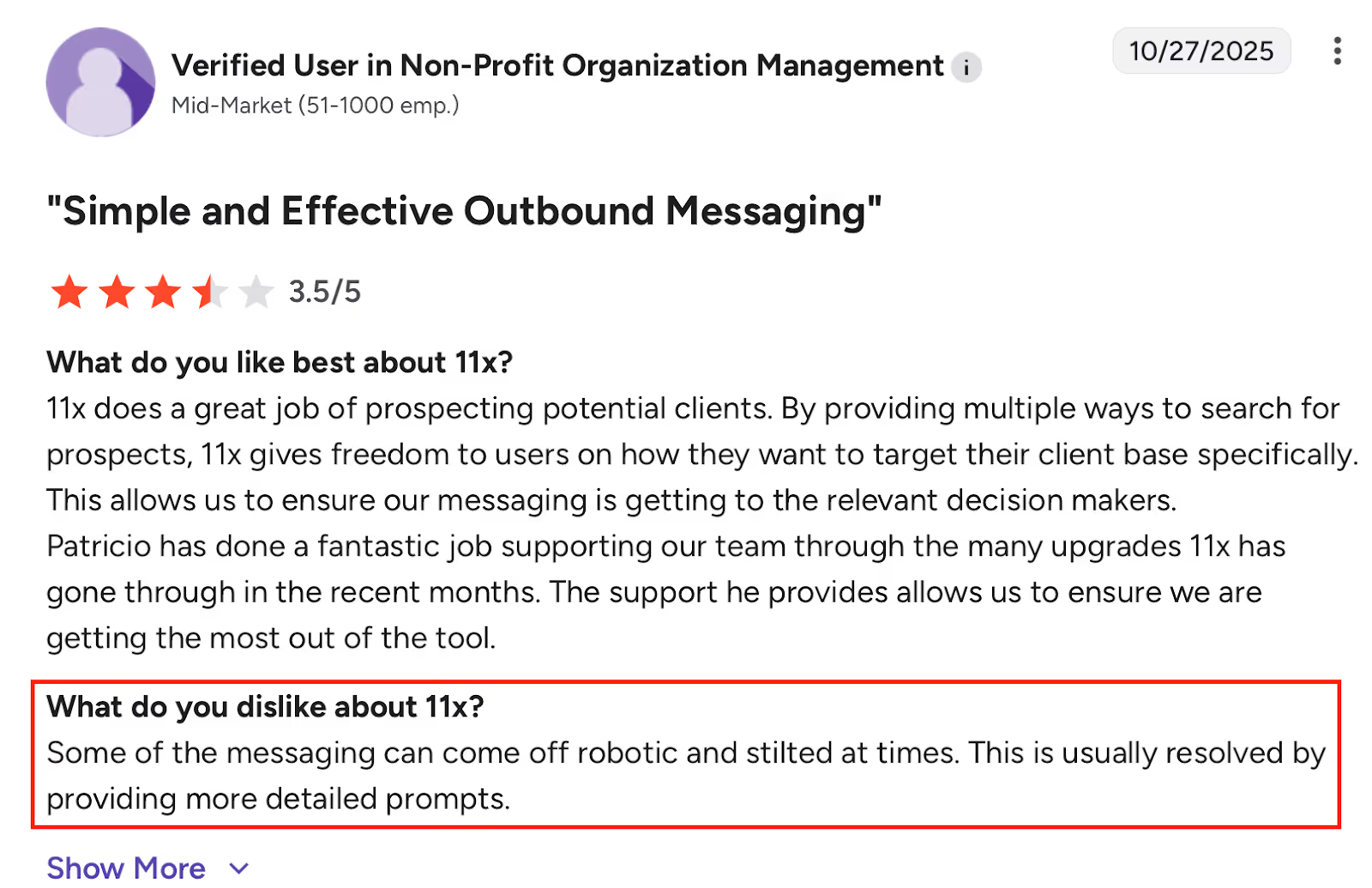
11x.ai fits mid-market and enterprise teams that want fast SDR coverage.
It also fits teams that value hands-on support during rollout.
If you want a simple way to deploy AI agents across channels, 11x.ai can work.
If you want deeper control over inbox warm-up, sender rotation, and multichannel sequences inside one platform, a dedicated execution layer tends to fit better as volume grows.
5 Best 11x.ai Alternatives and Competitors for Effective Outreach
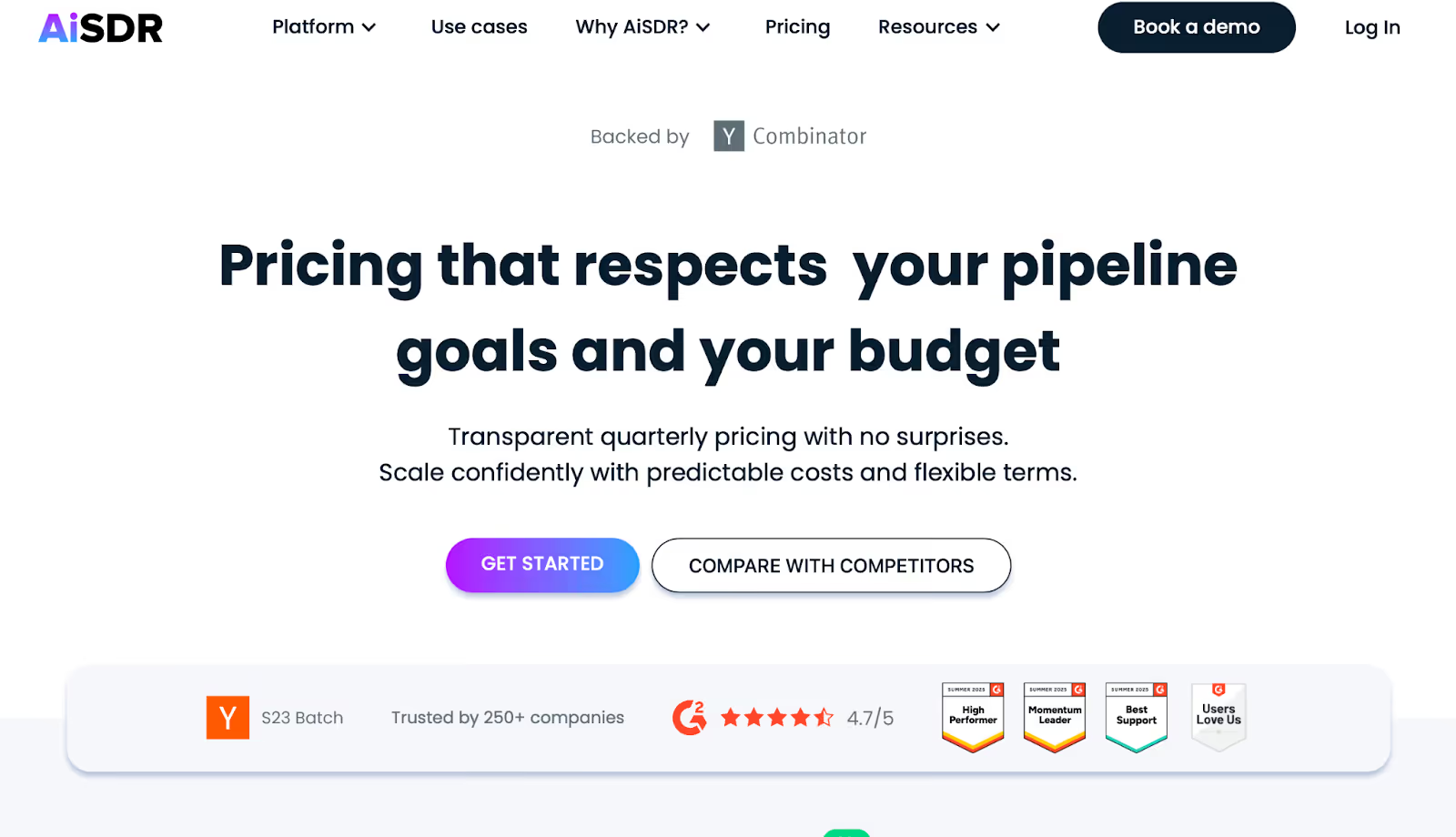
When I tested AiSDR, what stood out first was how much of the full outbound setup is bundled in one place.
It handles lead search, message writing, sending, warm-up, and CRM sync without needing a long tool chain.
AiSDR positions itself as an AI SDR that runs end-to-end outreach.
The platform is built to get teams live fast and then improve results over the first few weeks.
Pricing is quarterly, which matches how long warm-up and early testing usually take.
That structure felt realistic for outbound.
Topo.io helps with lead discovery and outbound planning.
AiSDR handles lead discovery plus execution.
AiSDR fits better when:
Topo.io stops at lead discovery and signals.
AiSDR goes further into running campaigns.
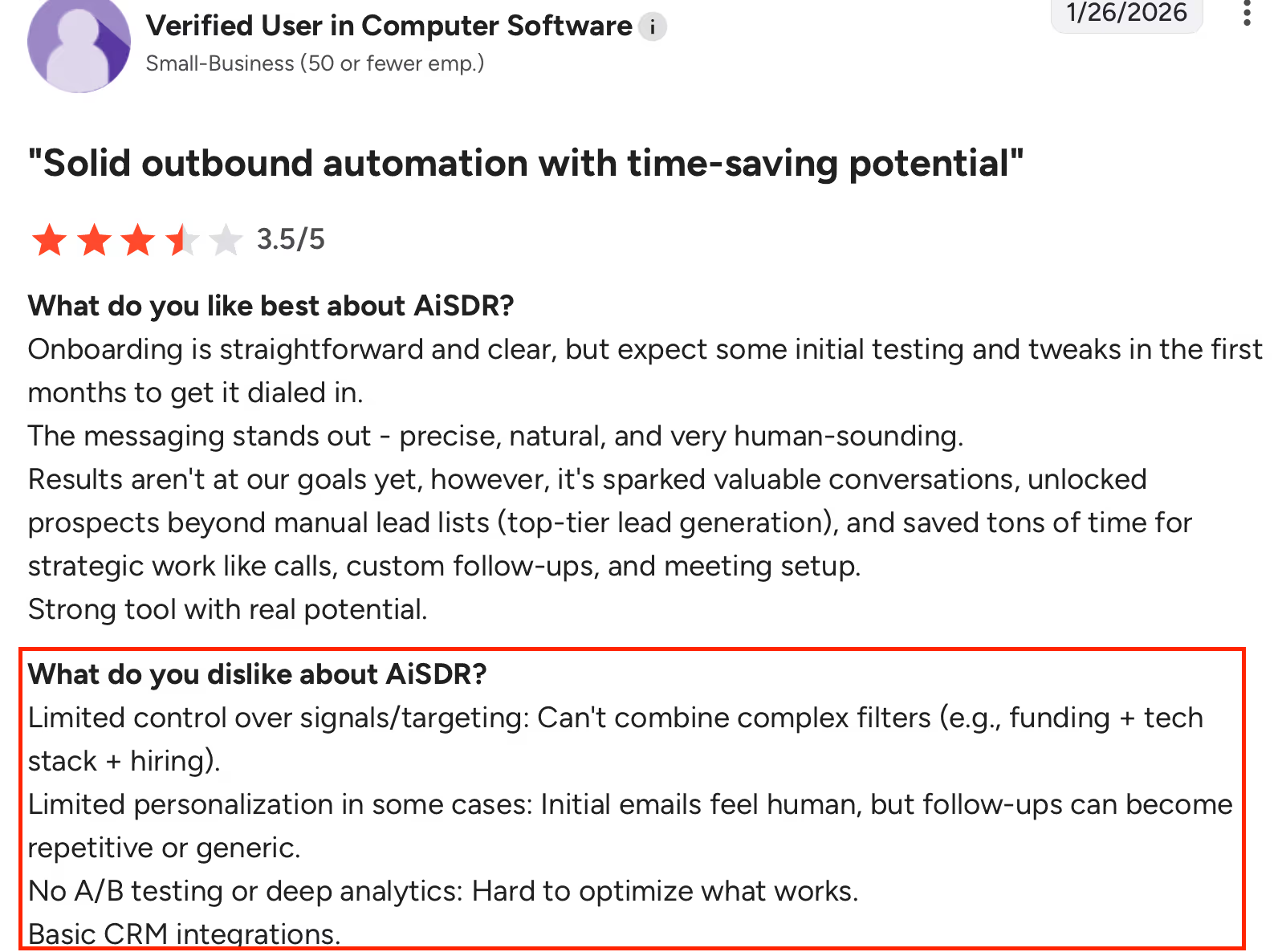
AiSDR fits teams that want to replace a scattered outbound stack.
It also fits teams that value onboarding and guided setup.
If your main goal is to launch AI outbound quickly without building infrastructure, AiSDR does that well.
If your main goal is to control inbox rotation, reply handling, and multi-channel execution at scale, a dedicated execution layer tends to fit better once volume increases.
Topo.io is strong when the problem is finding the right leads and signals.
Most teams outgrow it when the problem becomes running outbound every day.
Here’s the simple way I look at it:
Enter your email to get a custom plan & stack recommendation for your business
Please check your mailbox in 5 minutes
Choose Salesforge (Agent Frank) if outbound is a core growth channel and you need one place to run email, LinkedIn, replies, and warm-up together.
That’s the point where a full execution layer starts to matter more than just better lead discovery.
There isn’t one “right” tool for everyone. It depends on where your bottleneck is today.
If you’re still in the discovery phase, start with the tool that helps you find and time leads better.
If you’re already sending daily and want fewer moving parts, it’s worth trying a platform that can run the full loop.
That’s why I usually suggest starting small with Salesforge, setting up one focused ICP, and seeing how Agent Frank handles prospecting, sending, and replies in one flow.

.jpg)